Tag: Nepal

  • Nepal to hold donor conference on post-quake reconstruction

    KATHMANDU (TIP): External Affairs Minister Sushma Swaraj will be among a host of leaders who will attend an international donor conference here for reconstruction efforts following the devastating earthquake that hit Nepal in April.

    The International Conference on Nepal’s Reconstruction (ICNR) 2015 is scheduled to take place here on June 25 to raise international assistance for rebuilding the country ravaged by the April 25 earthquake and its aftershocks.

    Besides Swaraj, foreign ministers from China and Norway, finance ministers from Bhutan and Bangladesh and disaster management minister from Sri Lanka have confirmed their participation in the international conference, Nepalese finance minister Ram Shara Mahat said today.

    Nepal had initially invited PM Narendra Modi to attend the conference. President of the Manila-based Asian Development Bank, vice-president of the World Bank, president of Japan International Technical Cooperation (JAICA), commissioner of the European Union and the UN deputy general secretary of the United Nations have also confirmed their participation.

  • ‘Ekal Vidyalaya Foundation’ Committed Rs. 2 Crores for Nepal Victims

    ‘Ekal Vidyalaya Foundation’ Committed Rs. 2 Crores for Nepal Victims

    NEW YORK (TIP): On April 25, 2015 when the 7.8 magnitude earthquake hit Himalayan range nation of Nepal, it took one of the worst catastrophic tolls in human history in terms of lives destroyed, lives lost and the economic damage it inflicted on all facets of poor country’s life. At last count, more than 9,000 people had reportedly lost their lives, 28,000 were injured, almost 40,000 people were homeless, millions were displaced and tens of thousands businesses were destroyed. Worst hit were the Villages. Unlike other rescue-relief Organizations that converged on Nepal in the aftermath of earthquake, ‘Ekal Vidyalaya’ already had deep roots in Nepal for years and therefore had personal stake in rebuilding this nation and its lives. As of April’2015, Ekal had 1,500 schools operating in Nepal’s rural areas. Ekal, was not only familiar with its people, its culture and life’s necessities, but also, had well-established rapport with the local governments.

    Ekal Vidyalaya Foundation 1Shri Shyamji Gupta, Founder-Chairman of “Ekal-India” happened to be in Nepal when the earthquake struck and so he personally initiated the relief efforts after witnessing the tragedy first-hand that unfolded. As the news of destruction hit the world, ‘Ekal Orgz’ under the leadership of Shri Ravidevji Gupta sprang into action to start coordinating rescue, relief, and rehabilitation efforts with its selfless volunteering force of 1,600 Nepali regulars, within hours. A comprehensive plan for helping out victims was charted. Food and water were made available immediately. Medicines and shelter equipment for the displaced were dispatched overnight from India.

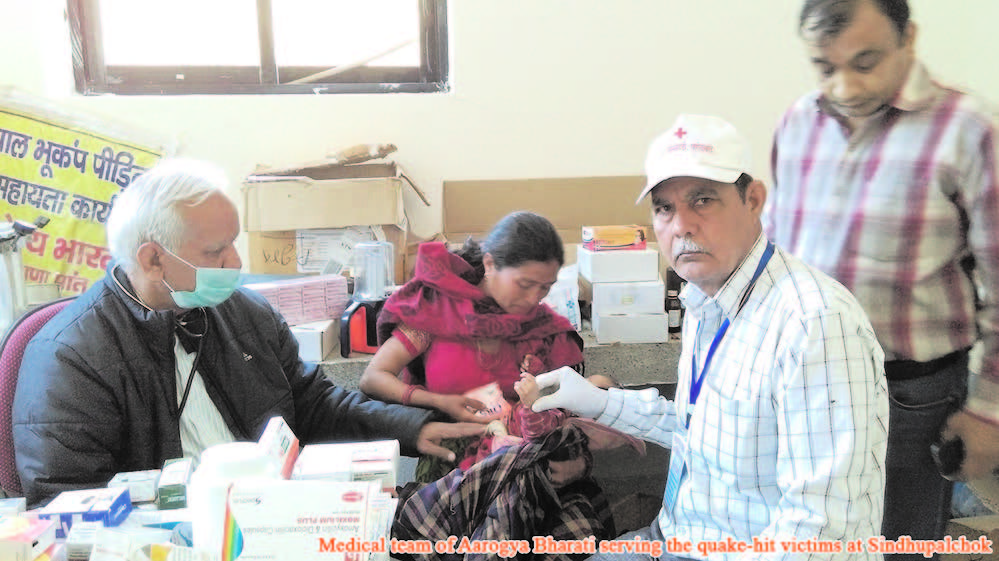
    Considering the extent of mind-boggling human toll, Shri Bajrangji Bagra, President, Ekal-India immediately allocated Rs. 1 Crore for this humanitarian work. Within a couple of days, its own survey indicated that 626 Ekal-Villages were affected, 365 Ekal teacher’s housings were destroyed and over 250 Ekal schools were badly damaged. In earthquake ravaged regions, Ekal extended help irrespective of people’s personal affiliations, caste, region and creed as its motto is. Besides, essential food items and medicines, 9743 tarpaulin, and 11,500 blankets were distributed through Ekal-Parivar, which benefited approximately 5,000 families in 400 villages. The team of Doctors also treated 500 patients in ‘Sindupalchowk’ district and 400 patients in ‘Lalitpur’ district alone for wounds, gastric problems, psychiatric interventions and orthopedic injuries.

    Ekal-USA, through its appeals to Donors raised hundred thousand Dollars for Nepal-relief. According to Subhashji Gupta, an Advisor to Ekal-USA, Ekal’s total commitment in Nepal is likely to exceed Rs. 2 Crores. Ekal-Pariwar’s future plans include building 4 hostels for earthquake-afflicted children where they could be appropriately looked after and groomed and also establishing community centers in badly affected village for collective activities. Ekal is also exploring possibilities of adopting ‘villages’ for rehabilitations. This is going to require lot more funding. Therefore, Ekal is currently seeking generous financial support from our community-at-large. Pl donate generously at www.ekal.org. “Ekal Vidyalaya Foundation” is tax-exempt duly registered charity Organization in USA.

  • Putting India Emphatically on Global Map – Part 1

    Putting India Emphatically on Global Map – Part 1

    Prime Minister Modi has surprised his own people and, no doubt, external observers, by his foreign policy activism since he took office. In his year in power he has travelled abroad 16 times- and 19 if the forthcoming visits to China, Mongolia and South Korea are included- inviting some criticism that these peregrinations have meant less attention devoted to domestic affairs. This is misplaced criticism because today, with the change in the nature of diplomacy, the heads of governments play a critical role in external affairs. Frequent personal contacts at the highest political level have now become the norm, leaders often are on first name terms and difficult knots are untied by exertions at their level, sometimes in an unorthodox manner. Modi, even if seemingly inexperienced in the foreign policy domain, has had to, therefore, wade into the deep waters of diplomacy as soon as he took over because his position has demanded this. But no one was prepared for a Modi with a natural flair for diplomacy, to which he has brought a surprising degree of imagination and self-assurance. From the start, he seemed to have a clear idea of where the interests of his country lay and the initiatives needed to advance them.

    All Indian Prime Ministers on taking over give priority to ties with neighbouring countries. The belief is that either India has neglected its neighbours or has been insensitive and overbearing, leading to their alienation and consequent opportunities for external powers to intervene at the cost of India’s interests. Modi too began by reaching out to the neighbours, but in a manner not anticipated. He invited all the SAARC leaders to his swearing-in, with the intention no doubt to signal that his elevation to power would usher in a new era of South Asian relations, that the clear victory in elections of a supposedly nationalist party did not denote a more muscular policy towards neighbours and that, on the contrary, India intended to work together with them to move the whole region forward towards peace and prosperity. This gesture had most meaning for India-Pakistan relations, and Nawaz Sharif’s decision to attend the swearing-in was “rewarded” with the announcement of FS level talks between the two countries.

    Continuing the emphasis on the neighbourhood, he chose Bhutan as the first country to visit in June 2014. This made sense as Bhutan is the only neighbour that has not played an external card against us or politically resisted building ties of mutual benefit. His August 2014 visit to Nepal made a notable impact in local political and popular thinking about India as a well-wisher. His extempore address to the Nepalese parliament was a tour de force. He handled sensitive issues during his visit with finesse and played the cultural and religious card dextrously. External Affairs Minister Sushma Swaraj visited Bangladesh in June 2014. A very notable development is the approval of the Land Boundary Agreement with Bangladesh approved by the Indian parliament in May 2015. Modi visited Myanmar in November 2014 to take part in the East Asia summit and for bilateral discussions with this strategically placed neighbour whose honeymoon with China is waning.

    SAARC figures prominently in Modi’s foreign policy vision. He invited all SAARC leaders to his swearing-in ceremony, which was unprecedented. It is true that SAARC is one of the least integrated regions economically speaking, which means that the potential of the region remains unexploited. This also means that external actors find it easier to intrude into the loose equations in the subcontinent. While in terms of aspirations for the region, Modi is right in imagining a more tightly textured SAARC, India’s capacity to do this is limited in the face of Pakistani recalcitrance. A strengthened SAARC means a stronger Indian role in it, which is anathema to a Pakistan that is obsessed with countering Indian “hegemony” in South Asia. Pakistan will be reduced to its true importance if it ceases to confront India, which is why it will continue its confrontational policies. it also means that Afghanistan will not be adequately integrated into SAARC structures as that is contingent on Pakistan’s willingness to facilitate access to this landlocked country. At the Kathmandu SAARC summit in November 2014, Modi encouraged neighbours to benefit from opportunities provided by India’s growth, promised a special funding vehicle overseen by India to finance infrastructure projects in the region and announced India’s readiness to develop a satellite specifically for the region by 2016. He warned at the Kathmandu summit that regional integration will proceed with all or without some, which suggested that if Pakistan did not cooperate, others could go ahead without it, though under the SAARC charter this is not possible and other countries may not support a strategy of isolating Pakistan.

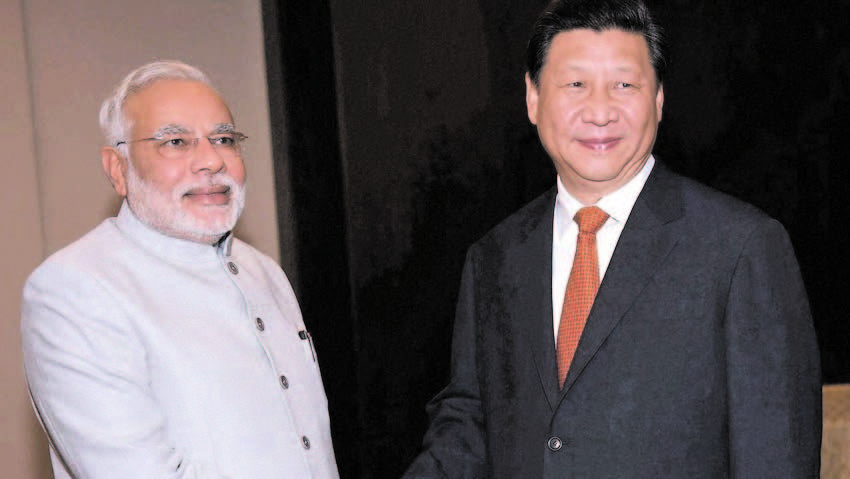
    Modi seems to admire China’s economic achievements, which would not be surprising given China’s spectacular rise. His several visits to China as Gujarat Chief Minister no doubt gave him familiarity with the country and take its pulse. His view that economic cooperation is the key driver in relations between countries and that all countries give more importance to economic growth and prosperity for their peoples than creating conditions of conflict evidently guides his thinking towards China. He was quick to court China after assuming power, with reinforcement of economic ties as the primary objective. The huge financial resources at China’s disposal, its expertise in infrastructure building, its need for external markets for off-loading the excess capacity it has built in certain sectors has made cooperation with China a theoretically win-win situation. The Chinese Foreign Minister was the first foreign dignitary to be received by Modi. He invited the Chinese President to make a state visit to India in September 2014, during which unprecedented personal gestures were made to him in an informal setting in Ahmedabad on Modi’s birthday. This imaginative courting was marred by the serious border incident in Ladakh coinciding with Xi’s visit- one more case of China reaching out to India and simultaneously staging a provocation so that India remains unsure about China’s intentions and finds it difficult to make a clear choice about what policy to pursue, and in the process has to accept faits accomplish that are to China’s advantage.

    Unlike the timidity of the previous government to treat such incidents as acne on the beautiful face of India-China relations, Modi raised the border issue frontally with XI at their joint press conference, expressing
    “our serious concern over repeated incidents along the border”. His call for resuming the stalled process of clarifying the Line of Actual Control (LAC) and mention of “India’s concerns relating to China’s visa policy and Trans Border Rivers” while standing alongside Xi Jinping at the joint press conference indicated a refreshing change from the past in terms of a more open expression of India’s concerns. With regard to Bangladesh-China-India-Myanmar Economic Corridor that China has been pushing hard, Modi was cautious. Why we accepted to discuss such a proposal in a working group in the first place is a puzzle. Engagement with China ought not to mean that we let it set the agenda when the downsides to us of what it seeks are clear. Equally importantly, he did not back another pet proposal of Xi: the Maritime Silk Road, which is a repackaged version of the notorious “string of pearls” strategy, as the joint statement omitted any mention of it. Since then China is pushing its One Belt One Road (OBOR) proposal which seeks to tie Asian and Eurasian economies to China, create opportunities for Chinese companies to bag major projects in this region financed by the Asian Infrastructure Investment Bank (AIIB) that China has floated. This ambitious concept is intended to establish China’s hegemony in Asia and outflank India strategically.

    On a more positive side, during Xi’s visit, the two sides agreed to further consolidate their Strategic and Cooperative Partnership, recognised that their developments goals are interlinked and agreed to make this developmental partnership a core component of this partnership.

    Read More : Putting India Emphatically on Global Map – Part 2

  • 4 moderate tremors jolt Nepal

    4 moderate tremors jolt Nepal

    KATHMANDU (TIP): Four moderate earthquakes with magnitudes between 4 and 5.2 jolted Nepal early on June 17, taking the total number of aftershocks to 320 after the devastating earthquake struck the country on April 25. The first aftershock of 4.4 magnitude was recorded at 5.58 am (local time) with epicenter at Ramkot, 7 kilometers west of the capital Kathmandu.

    The aftershock was strong enough to get people out of their houses. A 5.2 magnitude tremor recorded at 6.14 am (local time) with epicenter at Sindhupalckowk district was shortly followed by another aftershock of magnitude 4 with epicenter in the same area. The fourth tremor of 5.1 magnitude was recorded at 8 am (local time) with epicenter at Sindhupalchowk-Tibet border area.

    Nepal is still recovering from two major quakes and several aftershocks that have killed 8,800 people and left a trail of destruction.

  • Nepal to ink transport deal with India, Bangladesh, Bhutan

    KATHMANDU (TIP): Nepal will sign the Bangladesh, Bhutan, India and Nepal (BBIN) Motor Vehicles Agreement in Thimphu on Monday to facilitate transportation of both people and goods among the four Saarc member countries. Minister for Physical Infrastructure and Transport Management Bimalendra Nidhi is leaving for the Bhutanese capital tomorrow to sign the agreement on behalf of the Nepal government.

    “With endorsement from the cabinet, I am visiting Thimphu to sign the motor vehicles agreement, which is part of the Saarc Motor Vehicles Agreement,” Nidhi told PTI. “Once the BBIN is signed, it would pave way for signing the Saarc Motor Vehicle Agreement,” he pointed out. The BBIN agreement is expected to help revive the stalled South Asian Association for Regional Cooperation motor vehicles agreement, which was approved during the Saarc Summit here in November, 2014.

    “This is a sub-regional motor vehicle agreement which is not parallel to the Saarc motor vehicle agreement,” he said. The BBIN will facilitate transportation of both people and goods among the four Saarc member countries.

    The signing of the BBIN would promote safe, economical, efficient and environmentally sound road transport in the region and would further help each country in creating an institutional mechanism for regional integration. Nidhi said Nepal is still negotiating for the Saarc motor vehicles agreement as early as possible but a meeting could not be convened due to the April 25 quake.

  • Four mild aftershocks recorded in Nepal

    KATHMANDU (TIP): Four mild aftershocks were recorded in Nepal June 5, nearly five weeks after the country’s worst quake killed nearly 9,000 people.

    A 4.5 magnitude tremor was recorded at 5.38 pm with epicentre at Dolakha district, according to the National Seismological Centre.

    A second aftershock measuring 4.5 on the Richter scale was recorded at 2.37 pm with epicentre at Dolakha.

    The number of aftershocks with 4 or more magnitude following the April 25 earthquake has reached 295.

    The aftershocks had decreased over the past three days. There was one aftershock each on May 31 and June 1 and two aftershocks on June 2.

    Many activities have been back to normal five weeks after two deadly earthquakes struck Nepal, leaving nearly 9,000 people dead and injuring over 21000.


  • A way with the world

    A way with the world

    The Prime Minister, Narendra Modi, scored most in foreign policy in his first year in power. No one anticipated Modi’s natural flair for diplomacy, to which he has brought imagination and self-assurance. Modi has been more emphatic than his predecessors in giving improvement of relations with neighbors greater priority. He invited all the SAARC leaders to his swearing-in, to signal that the decisive election victory of a supposedly nationalist party did not denote a more muscular policy towards neighbors. On the contrary, India would take the lead in working for shared regional peace and prosperity.

    Bhutan, the only neighbor that has not politically resisted building ties of mutual benefit, was the first country he visited in June, 2014. He handled his August 2014 visit to Nepal with sensitivity and finesse, and followed it up with exceptional leadership in providing immediate earthquake relief to Nepal in May, 2015. In obtaining Parliament’s approval of the land boundary agreement with Bangladesh in May, 2015, Modi showed his determined leadership again.

    He did falter with Pakistan, seemingly unsure about whether he should wait for it to change its conduct before engaging it, or engage it nevertheless in the hope that its conduct will change for the better in future. He announced foreign-secretary-level talks during Nawaz Sharif’s visit to Delhi, but cancelled them precipitately. He ordered a robust response to Pakistan’s cease-fire violations, yet sent the foreign secretary to Islamabad in March, 2015, on an unproductive SAARC Yatra. Relations with Pakistan remain in flux. In Afghanistan, President Ashraf Ghani’s tilt towards Pakistan and China has challenged the viability of India’s Afghanistan policy. Ghani’s delayed visit to India in April 2015 did not materially alter the scenario for us, but India has kept its cool.

    Modi’s foreign policy premise, that countries give priority today to economics over politics, has been tested in his China policy, which received a course correction. After courting China economically, Modi had to establish a new balance between politics and economics. President Xi’s visit to India in September, 2014, was marred by the serious border incident in Ladakh. Modi showed a sterner side of his diplomacy by expressing serious concern over repeated border incidents and calling for resuming the stalled process of clarifying the Line of Actual Control. During his China visit in May, Modi was even more forthright by asking China to reconsider its policies, take a strategic and long-term view of our relations and address “the issues that lead to hesitation and doubts, even distrust, in our relationship”. He showed firmness in excluding from the joint statement any reference to China’s One Road One Belt initiative or to security in the Asia-Pacific region. The last minute decision to grant e-visas was puzzling, especially as the stapled visa issue remains unresolved. The economic results of his visit were less than expected, with no concrete progress on reducing the huge trade deficit and providing Indian products more market access in China. The 26 “agreements” signed in Shanghai were mostly non-binding MoUs involving the private sector and included the financing of private Indian companies by Chinese banks to facilitate orders for Chinese equipment.

    Modi’s visit to Seychelles, Mauritius and Sri Lanka in March, 2015, signified heightened attention to our critical interests in the Indian Ocean area. Modi was the first Indian prime minister to visit Seychelles in 33 years. His visit to countries in China’s periphery in May, 2015, was important for bilateral and geopolitical reasons. During his visit to South Korea the bilateral relationship was upgraded to a “special strategic partnership’, but Korea nevertheless did not support India’s permanent membership of the United Nations Security Council. Modi’s visit to Mongolia was the first by an Indian prime minister to a country whose position is geopolitically strategic from our point of view.

    Belying expectations, Modi moved decisively towards the United States of America on assuming office. He set an ambitious all-round agenda of boosting the relationship during his September, 2014, visit to Washington. In an imaginative move, he invited Obama to be the chief guest at our Republic Day on January 26, 2015. To boost the strategic partnership with the US, he forged a “breakthrough understanding” on the nuclear liability issue and for tracking arrangements for US-supplied nuclear material. Progress on the defense front was less than expected with four low-technology “pathfinder” projects agreed under the defense technology and trade initiative. The important US-India joint strategic vision for the Asia-Pacific and Indian Ocean region, issued as a stand-alone document, high-lighted the growing strategic convergences between the two countries, with China in view. A special feature of Modi’s September, 2014, US visit was his dramatic outreach to the Indian community, which has since then become a pattern in his visits abroad, whether in Australia, Canada or Beijing. No other prime minister has wooed the Indian communities abroad as Modi has done.

    President Putin’s visit to India in December, 2014, was used to underline politically that Russia remains India’s key strategic partner. Modi was effusive in stating that with Russia we have a “friendship of unmatched mutual confidence, trust and goodwill” and a “Strategic Partnership that is incomparable in content”. He was careful to convey the important message that even as India’s options for defense cooperation had widened today, “Russia will remain our most important defense partner”. Civilian nuclear cooperation with Russia got a boost with the agreement that Russia will build “at least” ten more reactors in India beyond the existing two at Kudankulam. All this was necessary to balance the strengthened strategic understanding with the US and its allies.

    Modi bolstered further our vital relations with Japan, which remains a partner of choice for India. Shinzo Abe announced $35 billion of public and private investment in India during Modi’s visit to Japan in September 2014, besides an agreement to upgrade defense relations.

    Modi’s visit to France and Germany in April, 2015, recognized Europe’s all-round importance to India and was timely. He rightly boosted the strategic partnership with France by ensuring concrete progress in the key areas of defense and nuclear cooperation by announcing the outright purchase of 36 Rafale jets and the MoU between AREVA and L&T for manufacturing high-technology reactor equipment in India. Modi’s bilateral visit to Canada in April, 2015, was the first by an Indian prime minister in 45 years. Bilateral relations were elevated to a strategic partnership and an important agreement signed for long-term supply of uranium to India.

    Relations with the Islamic world received less than required attention during the year, although the Qatar Emir visited India in March, 2015, and the political investment we made earlier in Saudi Arabia aided in obtaining its cooperation to extract our people from Yemen. Gadkari went to Iran in May, 2015, to sign the important agreement on Chabahar. Modi did well to avoid any entanglement in the Saudi-Iran and Shia-Sunni rivalry in West Asia. He met the prime minister of Israel, Benjamin Netanyahu, on the sidelines of the UN general assembly meeting in September, last year, to mark the strength of India-Israel ties. So, Modi’s handling of India’s foreign policy in his first year is impressive. He has put India on the map of the world with his self-confidence and his faith in the nation’s future.

  • EVEREST GLACIERS MAY DISAPPEAR BY 2100

    EVEREST GLACIERS MAY DISAPPEAR BY 2100

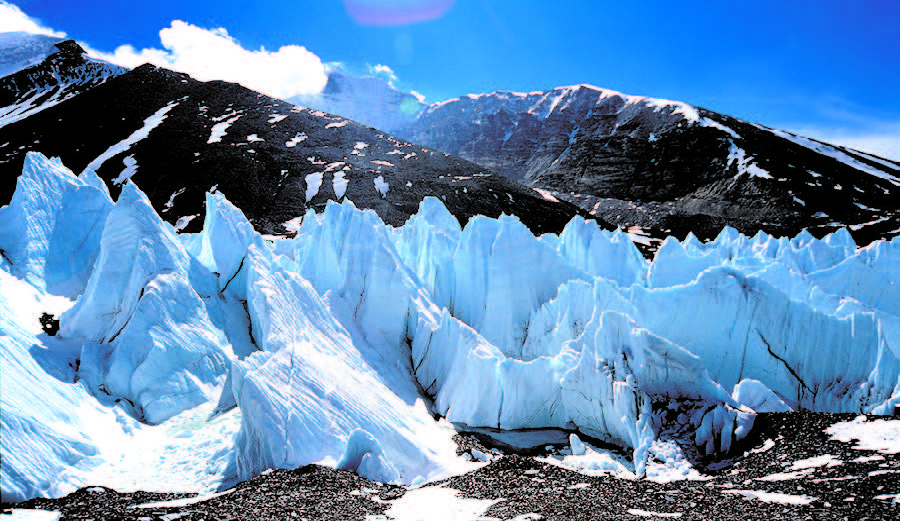
    KATHMANDU(TIP) : Glaciers in Nepal’s Everest region could shrink at least 70% or even disappear entirely by the end of the century as a result of climate change, scientists warned.

    Researchers in Nepal, the Netherlands and France came to the conclusion after studying studied weather patterns on the roof of the world and then created a model of conditions on Everest to determine the future impact of rising temperatures on % its glaciers.

    “The worst-case scenario shows a 99% loss in glacial mass… but even if we start to slow down emissions somewhat, we may still see a 70% reduction,” said Joseph Shea, who led the study. Shea was also part of a team that published a major study research team last year, using who used satellite imagery to show how Nepal’s glaciers had already shrunk by nearly a quarter between 1977 and 2010.

    But The latest study, published Wednesday in international scientific journal in The Cryosphere, paints a grim picture of the impact of climate change on the world’s highest peak by 2100. “Once we had tested our model and got the weather patterns right, we increased temperatures according to different emission scenarios for a look at future scenarios,” Shea said.

    Shea, a glacier hydrologist at the Kathmandu-based International Centre for Integrated Mountain Development, said melting glaciers could form deep lakes which could burst and flood mountain communities living downstream. The centre is considered by experts to be the leading authority on glaciers in the Himalayas.

    The impoverished Himalayan nation was devastated this month by two major earthquakes. The first tremor also triggered an avalanche which killed 18 people on the 8,848-metre (29,035-foot) high peak.

    Shea said shrinking glaciers could Besides it would also affect water supplies in the Everest region, with lower volumes of snowmelt flowing into the Dudh Kosi river, which provides water for Nepalis downstream, Shea warned. “The decline during the pre-monsoon period will probably have an impact on any future hydropower projects due to lack of because there wont be enough rainwater to meet power needs,” he added.

    Glacial loss in Nepal raises concerns over future access to water resources, particularly in regions where groundwater is limited and monsoon rains are erratic.The IPCC, a group of scientists convened by the United Nations to warn governments around the world about the effects of climate change, was forced to apologise in 2009 for claiming that the Himalayan glaciers would melt by 2035.

  • Aftershocks jolting Nepal one month after deadly quake

    KATHMANDU (TIP): Two tremors struck Nepal on May 25, keeping people on the edge as the country struggled to rehabilitate millions of people affected by a devastating earthquake one month ago that killed nearly 9,000 people.

    A 5.0-magnitude tremor was felt at 3.23am with epicentre at Gorkha district. Another 4.1-magnitude earthquake hit western Nepal with epicentre at Dolakhan. A 7.9-magnitude earthquake on April 25 killed nearly 9,000 people and injured thousands more. It was followed by a 7.3-magnitude quake on May 12 and about 265 aftershocks. For families across Nepal who have been left homeless, the aftershock damaged their hopes of piecing their lives together anytime soon. Beyond the physical damage, uncertainty about the future unsettles millions of Nepalese.

  • Nepal bans children travelling without parents or guardian

    KATHMANDU (TIP): The Nepalese government announced on Tuesday that all children travelling in the country will need to be accompanied by their parents or a legal guardian to prevent the trafficking of young people who lost their homes in the powerful earthquake on April 25 this year, which was followed by hundreds of aftershocks.

    The ministry of women, children and social welfare said the ban is aimed at protecting homeless children who are living in tent camps where there are large numbers of people.

    Ministry official Ram Prasad Bhattarai said an approval letter issued by a district child welfare board will be needed for any other adults traveling with children from one district to another.

    The ban comes days after police stopped two groups of children who were being taken by unrelated adults by bus in different districts. The children are being held in government shelters and police are still investigating the cases.

    International adoptions have also been suspended, he said.

    Thousands of children are taken from Nepal to neighboring India every year to work as child laborers or in brothels. The earthquakes on April 25 and May 12 killed at least 8,673 people in Nepal.

  • Inspired by ‘sewa’, an Englishman making shelters in Nepal

    AMRITSAR (TIP): Inspired by Sikh’s sewa (voluntary service) that transformed his flood affected village overnight in 2014, Jim Winksworth, an Englishman, is now helping victims of earthquake in Nepal by building shelters for them along with group of Sikh’s of UK based NGO Khalsa Aid.

    Jim told TOI from Nepal on Wednesday that his village Burrowbridg, a sleepy, quintessentially English, village in Somerset, had no contact with the Sikh community and had no knowledge of ‘sewa’ until February 2014 when chief executive officer of Khalsa Aid, Ravi Singh called him to offer help in reconstructing his flood devastated village.

    “The whole village was in shock and was trying to deal with the floods, and I didn’t pay much attention to this guy who called and offered to help. I told him we needed all hands he could spare. Imagine my shock when the next morning the whole village appeared magically inhabited by these tall bearded guys with their turbans looking for me. And within minutes they had taken over, from organization to physical labour to paying for the valuable sand we needed”, he said.

    The voluntary service resulted in a bond between Jim, a pub owner and an agriculturist, and Ravi. Jim said for last 2 weeks, he has been in the earthquake affected Nepal on behalf of Khalsa Aid, using his experience to build shelters for the Nepalese people. Ravi Singh, who is currently in UK told that Jim had been working tirelessly to make sure that the shelters were in place before the monsoons arrive in full swing. He had also been instructing the local people and other volunteers so that they learn valuable skills and the job gets done in time, he added.

  • Mild tremors hit Kathmandu, surrounding areas

    KATHMANDU (TIP): Three mild tremors on May 21 struck Kathmandu and surrounding areas, keeping people on the edge in Nepal, battered by the April 25 earthquake and aftershocks that killed nearly 9,000 people.

    A tremor measuring 4 on the Richter Scale hit the city and its surrounding areas at 7.30 pm with the epicentre at Dhading district, according to the National Seismological Centre.

    Two other mild earthquakes measuring 4. 2 and 4 on the richter scale were recorded in afternoon at 2.11 pm and 2.56 pm. The epicentre of these two tremors were Dolakha and Nuwakot districts. No casualties were reported.

    Over 250 aftershocks of over 4 magnitude were recorded since the April 25 and May 12 powerful earthquakes killed at least 8,622 people and damaged 756,000 houses and other buildings.

    Nepal has announced a USD 2 billion earthquake reconstruction and rehabilitation fund, with the government contributing USD 200 million and seeking the remainder from donor agencies and nations.

    The government plans to hold an international conference next month to seek financial support.

  • A FORTHRIGHT MODI IN CHINA

    A FORTHRIGHT MODI IN CHINA

    During his China visit, Prime Minister Modi has been unusually forthright in speaking about the problems that hold back the India-China relationship. He probably feels that his desire to strengthen ties with China being so clear, he has earned the confidence of the Chinese leaders enough to be able to pinpoint India’s concerns about some aspects of China’s policies that we find difficult to digest. This is a new approach Modi has fashioned. Our earlier approach has been to soft pedal differences, avoid airing them in public and pretend they are more manageable than they actually are. There has been a tendency also to explain China’s behaviour to ourselves by becoming their spokespersons to our own people, and in the process accept some of the blame for the problems that endure.

    Modi is following a different tack, that of creating consciousness in the Chinese public that China has a responsibility of addressing outstanding issues if it wants the bilateral relationship to move forward and bring about the Asian century that its leadership visualises. This is a more self-confident approach. Whether this more robust attitude will produce the results we want is not certain. China is used to such exhortations by the US, which, unlike our case, are also backed by US power. Yet, China both bends and defies to the degree necessary to manage the relationship with the US, but without changing its fundamental course of building its national power and commensurately raising the level of its strategic challenge to the US. In other words, China does not get cowed down, nor is willing to yield on essentials even when its policies do not make sense always in the light of its own self-interest as seen by external observers.

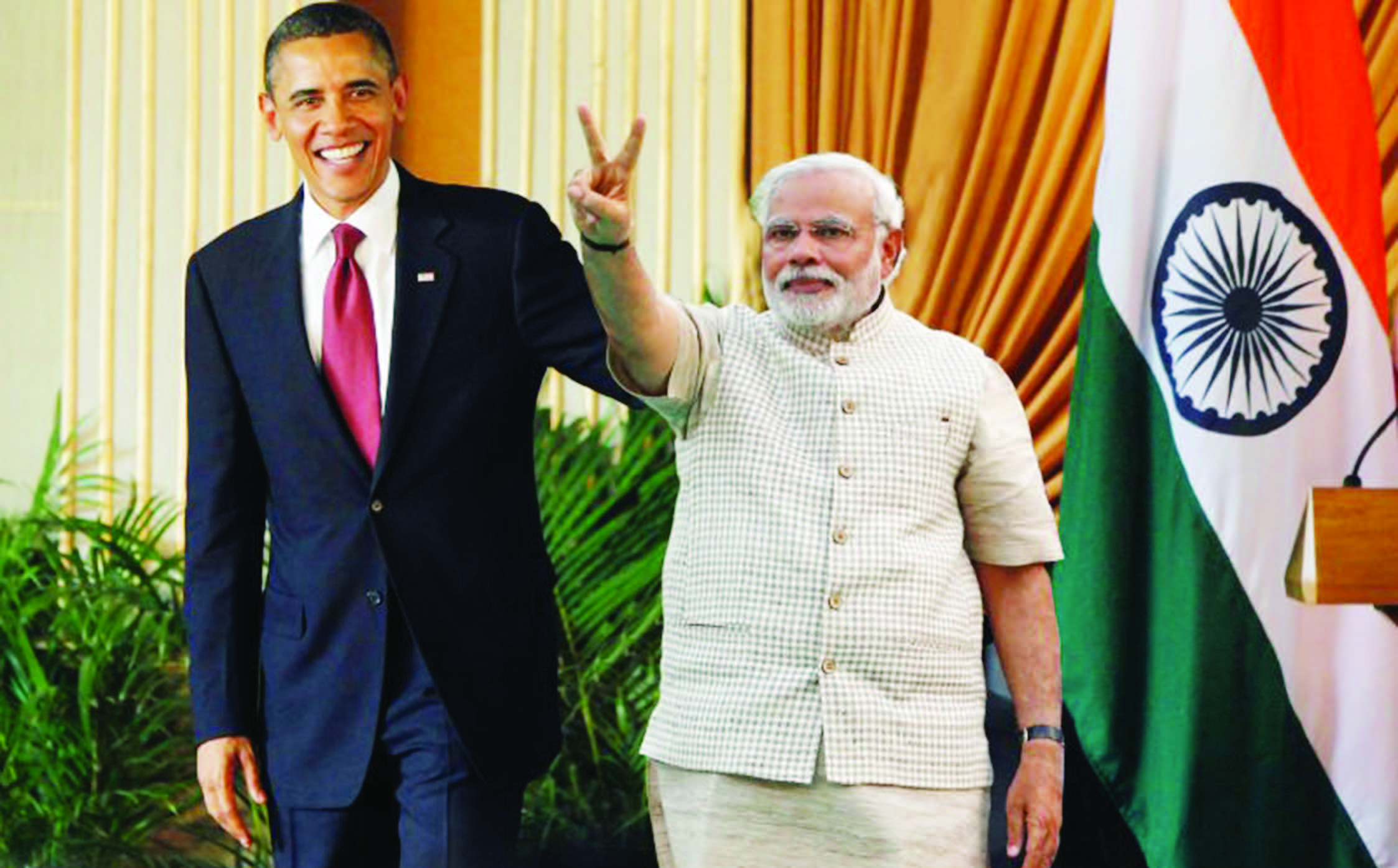
    Prime Minister Modi interacts with people at the India China business forum  (Photo courtesy: Twitter/PIB)
    Prime Minister Modi interacts with people at the India China business forum (Photo courtesy: Twitter/PIB)

    Whatever the caveats, Modi is moving the Chinese out of their present comfort zone and dealing with China with greater self-assurance which cannot but have some impact on how it treats India in the future. This is a new balance that Modi is establishing between leveraging economically the China connection for India’s development and not losing politically by diffidence in mentioning differences that endure. There are some indications that China believes that of all the partners that India is wooing for investments, it is the one best placed to meet India’s needs, especially in modernising its poor infrastructure. In other words, India’s choices are limited and this gives China a strong hand to play even in the economic field. Modi is implicitly making China reexamine its assumptions

    By choice or consequence, Modi is linking the economic to the political by his double messaging in Beijing. On the one hand, the joint statement issued during the visit explicitly says that outstanding differences, including on the boundary question, should not be allowed to come in the way of continued development of bilateral relations. On the other, Modi stressed in his joint press conference with Chinese premier Li Keqiang that China needed to “reconsider its approach on some of the issues that hold us back from realising the full potential of our partnership” and “take a strategic and long term view of our relations”. This suggested that the long term relationship could be either jeopardised or impeded if China continued with its present approach. It is interesting that in asking China to think long term he summarily debunked the widely accepted myth that China thinks not years but decades ahead in policy making. Standing alongside Li Keqiang, Modi reiterated the “importance of clarification of the Line of Actual Control”, a point he had made in Xi’s presence during the latter’s September visit to India, and “tangible progress on issues relating to visa policy (stapled visa issue, no doubt) and trans-border rivers”. He also alluded to “some our regional concerns” (undoubtedly China’s policies in our neighbourhood, especially in Pakistan). It is clear that Modi raised all these issues in his private conversations with Xi and Li Keqiang, as otherwise publicly mentioning them in the latter’s presence would have seen as a form of political ambush by the Chinese premier. Modi’s intention was obviously to make public his political expectations from China in the years ahead.

    Modi expatiated further on these points in his address at the Tsinghua University. He put more pressure on the Chinese government by stating publicly that if the two countries “have to realise the extraordinary potential of our relationship, we must also address the issues that lead to hesitation and doubts, even distrust, in our relationship”. This is extraordinary plain speaking. He spoke of trying “to settle the boundary question quickly” in a way that does “not cause new disruptions”- an allusion no doubt to China’s unreasonable demands in the eastern sector. This amounts to, again, asking the Chinese publicly to rethink its posture on the package deal on the border. To remove “a shadow of uncertainty” that “hangs over the sensitive areas of the border region” because “neither side knows where the Line of Actual Control is in these areas”, he recalled his proposal to resume the process of clarifying the LAC
    “without prejudice to our position on the boundary question”. This is a via media he is seeking between, on the one hand, stabilising the border and eliminating periodic stand-offs that damage the political relationship and make headway in other areas that much more difficult and, on the other, a permanent solution to the boundary question. It is doubtful whether China would accept this option that was always open. indeed, China was committed to this process but abandoned it favour of the Special Representatives (SR) mechanism. It is unclear, moreover, how the LAC clarification process and the SR mechanism can proceed simultaneously.

    Voicing concerns about China’s increased engagement “in our shared neighbourhood”, Modi, in his Tsinghua address, called for “deeper strategic communication to build mutual trust and confidence” so as to “ensure that our relationships with other countries do not become a source of concern to each other”. In talking of “shared neighbourhood” Modi is talking about South Asia and not the western Pacific, and this is significant. To strengthen our international cooperation, he frontally sought China’s support for India’s permanent membership of the UN Security Council and India’s membership of export control regimes like the Nuclear Suppliers Group. This was unusual as such a public appeal does not normally come from his elevated position. A prime Minister should not seen as a supplicant. Anyhow, by stating all this, Modi has, in a sense, laid out the political agenda of the relationship in the years ahead from his side, which if not achieved in some measure in a reasonable time frame can become a source of criticism and could even make the economic agenda with China even more controversial as a one-sided strategic compromise.

    The joint statement and the Tsinghua speech contain some notable formulations, omissions and iterations, some curious, many positive and a few negative. If the India relationship was for president Obama a defining one for the 21st century, the joint statement notes, as a rhetorical balance, that the “India-China relations are poised to play a defining role in the 21st century in Asia and, indeed, globally”. A China that supposedly rejects an equal status for India accepts in the joint statement that the two countries are “major poles in the global architecture”. On the boundary question, the old, cliched language is repeated and the emphasis remains on improved border management. No mention is made to China’s self-serving One Road One Belt
    (OBOR) initiative to which Xi attaches much importance, and which figured prominently in his recent Pakistan visit. Our neighbours like Sri Lanka and Nepal would have particularly noted this omission. Significantly, the joint statement contains no reference to security in the Asia-Pacific region, unlike in September 2014, which suggests a failure to agree on language on this sensitive issue. Maritime cooperation too does not figure in it, which suggests difficulties in drafting the joint statement.

    We have again thanked China’s Foreign Ministry and the government of “the Tibetan Autonomous Region of the People’s Republic of China” for facilitating the Kailash Manasarovar Yatra. It would have been sufficient to have simply thanked “China” in September 2014 and now, but the Chinese obviously press us to include formulations that recognise TAR as part of the PRC in our joint statements- a practice that was discontinued by the UPA government in the face of China’s increasingly strident claims on Arunachal Pradesh. These offensive claims unfortunately continue and therefore do not justify such politically one-sided gestures by us. Maybe we think this is too sensitive a subject for us to reticent about and to keep the relationship on even keel we feel we can keep giving China comfort over Tibet even when China cynically uses Tibet to make outlandish territorial claims on us. This gesture could also have been a quid pro quo for the stronger formulation on terrorism in the joint statement that could not have pleased Pakistan (though it should be noted that the statement refers not to “cross-border terrorism” which is a formulation India uses to accuse Pakistan, but to “cross border movement of terrorists” which has a different connotation), as well as the separate joint statement on Climate Change that fully reflects India’s position and assumes importance in the context of the Climate Change summit in Paris where the effort would be to isolate India and use the US-China agreement to that end. The question though remains how India will reconcile its commitment to work closely with the US to make the Paris Conference a success with the enunciation of a common position with China which conflicts with the basic US approach.

    The reference in the joint statement to the “commonalities” in the approach of the two countries to global arms control and nonproliferation is puzzling as it conflicts with reality and whitewashes China’s historical and current proliferation activities in Pakistan. To have China in return “note” our aspirations to join the NSG, is an altogether insufficient reason to make this concession and lose a political card against China and Pakistan. Opening ISRO to China through a Space Cooperation Outline (2015-2020) Cooperation may also seem premature to some, given the actual state of India-China relations.

    In his Tsinghua speech, Modi noted pointedly that while both countries seek to connect a fragmented Asia, “there are projects we will pursue individually”, which implies cold shouldering China’s idea of linking our Mausam and Spice Route projects with OBOR. Progress in the BCIM (Bangladesh, China, India, Myanmar) Economic Corridor is mentioned in the joint statement, despite the danger of opening up our inadequately nationally integrated northeast to more economic integration with China. Why Modi mentioned this corridor again in his university speech is unclear, but then, having participated in the joint working group discussions on the project for some time now, it might have been tactically difficult to close the door on it abruptly.

    That Modi himself announced at the last minute at Tsinghua the grant of e-visas to the Chinese after the Foreign Secretary had told the media earlier that no decision had been taken, raises questions about policy making, especially as the stapled visa issue remains unresolved. Of course, enhanced economic engagement requires easier visas and to that extent such a decision can be seen as pragmatic, but we have given up a valuable card touching upon sovereignty issues without sufficient return. No wonder the Chinese Foreign Minister was delighted by this gift from the Prime Minister.

    The driving force behind Modi’s wooing of China being trade and investment, the progress achieved on that front was of principal interest in terms of outcomes. Here, the results have been less than expected. In a sense this was to be expected as too little time had elapsed between Xi’s visit to India and Modi’s visit to China to produce dramatic results. The $20 billion of investment five years promised by Xi would take time to materialise under any circumstances, but more so in the case of China as it has so far invested little in the country, its investors have limited experience of working in India, its leaders are looking for preferential treatment and want a better understanding of the legal conditions. The joint statement largely repeats what was said in September 2014 during Xi’s visit on taking joint measures to alleviate the problem of deficit and cooperate in providing Indian products more market access in China. The language is very noncommittal and it is left to the India-China Joint Economic Group to work on these issues. It was agreed that the next meeting of the Strategic Economic Dialogue, co-chaired by Vice Chairman of NITI Aayog of India and Chairman of NDRC of China, will be held in India during the second half of 2015. On the other hand, China’s economic interests in India are treated more concretely, with satisfaction expressed with the progress achieved in the Railway sector cooperation including the projects on raising the speed on the existing Chennai-Bengaluru-Mysore line, the proposed feasibility studies for the Delhi-Nagpur section of high speed rail link, the station redevelopment planning for Bhubaneswar & Baiyappanahalli, heavy haul transportation training and setting up of a railway university.

    Although 24 agreements were signed during the visit and the number is impressive, in reality the most significant one relates to the opening of our respective consulates in Chengdu and Chennai and space cooperation. There is no economic agreement of note that figures in the list. Surprisingly, the joint statement contains no reference to the two industrial parks that China will be setting up in India, even if it were to merely record some progress in implementing this initiative. Even the figure of $20 billion of Chinese investments in India in the next 5 years- if nothing but for its positive optical effect- is not mentioned this time. No doubt 26 “agreements” were signed during the visit to Shanghai- mostly MOUs involving the private sector that have no binding value- in the areas of renewable energy, power, steel etc. These are sectors in which China is either already strongly present in India or is a global player as in the case of solar power. Its aim would be to capture the Indian market in what would be a highly fecund area for Chinese business given India’s massive plans in developing the solar power sector. A point to consider is whether the unfettered entry of Chinese firms would suffocate Indian enterprise in the renewable industry sector as has happened in the power and telecom sectors. Even financing of private Indian companies by Chinese banks has been put on the positive ledger in projecting the results of Modi’s visit, even though all that is meant is that China will lend money to Indian companies to buy more Chinese products and only add to the burgeoning trade deficit between the two countries. That these MOUs, if and when implemented ( many are in the form of intentions only) are potentially worth $ 22 billion is a PR exercise, which all countries resort to in order to embellish the economic “success” of visits by their leaders abroad, and can therefore be excused as standard diplomatic practice.

    All in all, the China challenge for India has not been reduced by Modi’s visit. On the contrary, Modi has highlighted the political challenges ahead, as China has remained reticent on the points raised by him. Modi is to be commended for largely making the right points during the visit. There were some slippages, but this was perhaps inevitable because China holds the stronger hand. The attempt always is to enlarge the areas of real or potential convergences rather than get bogged down over contentious issues and create a situation where it becomes difficult to issue any meaningful joint statement. The problem in the India-China case is that we are not strategic partners in reality and yet claim that we are. At the end of the day, making the right points and winning them the are two different things.

    As for personal chemistry between Xi and Modi, it would have been better if Xi too had avowed publicly that the two had a “plus one” friendship, otherwise the psychological advantage is with the side that remains silent. Let us also note personal chemistry can have a short shelf life in the face of hard political and strategic realities. Obama and Xi have had a shirtsleeves meeting in Palm Springs in California in 2013, Bush read Putin’s soul in Slovenia in 2001 and Obama had hamburgers with Medvedev in Washington in 2010, but these get-to-know informal meetings intended to create a personal rapport do not help resolve issues beyond a point. It remains though that both Xi and Li Keqiang made unprecedented personal gestures to Modi.

    (The author is a former Foreign Affairs Secretary and Dean, Centre for International Relations and Diplomacy, Vivekananda International Foundation. He can be reached at sibalk@gmail.com)

    (British English)

  • BUDDHA JAYANTI

    BUDDHA JAYANTI

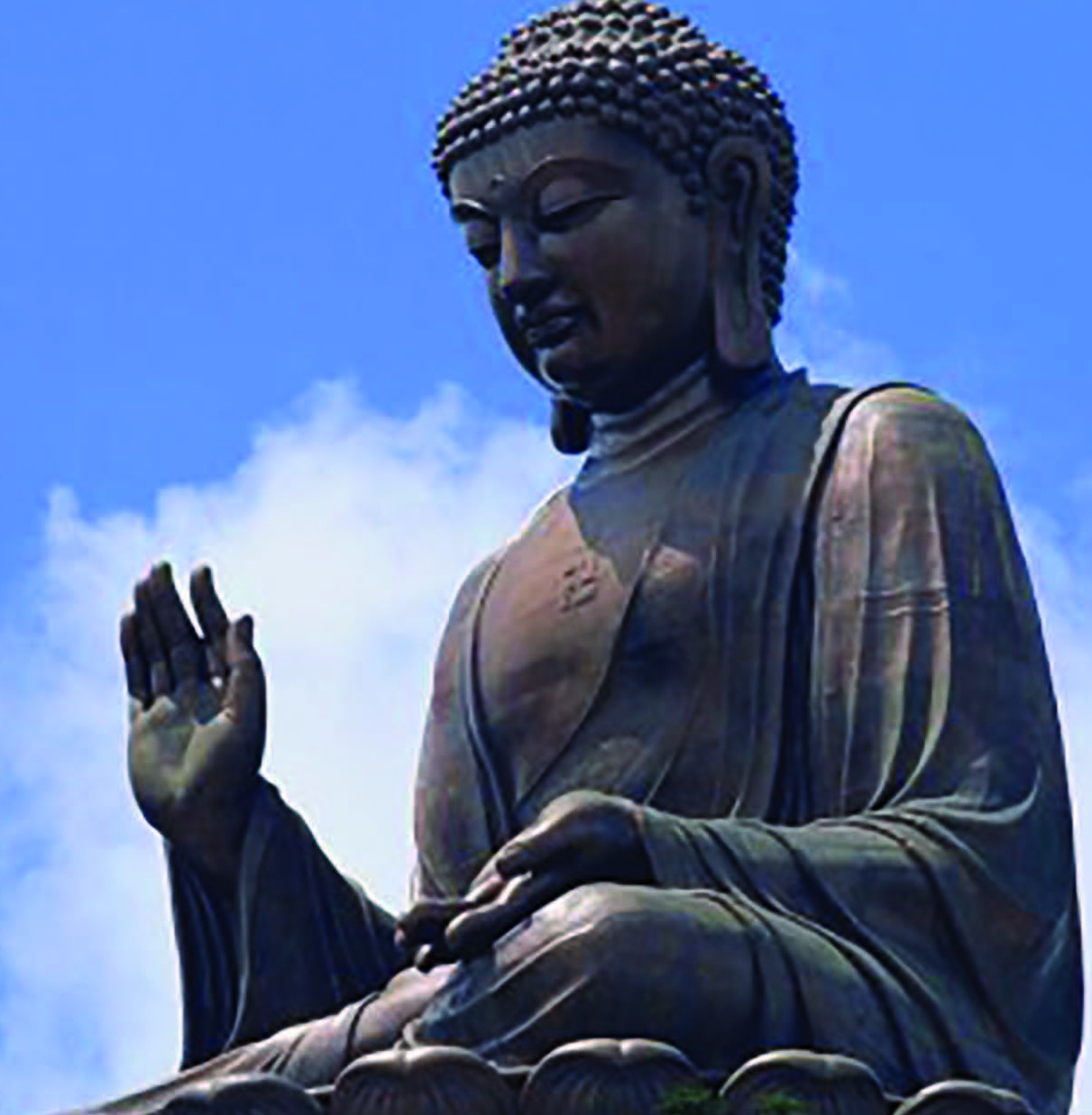
    Buddha Jayanti, also known as Buddha Purnima, celebrates the birthday of Lord Buddha. It also commemorates his enlightenment and death. It’s the most sacred Buddhist festival.

    Buddhists regard Lumbini (which is now part of Nepal) to be the birthplace of Buddha. Named Siddhartha Gautama, he was born as a prince into a royal family sometime in the 5th or 6th century BC. However, at the age of 29 he left his family and began his quest for enlightenment after seeing the extent of human suffering outside the walls of his opulent palace.

    He became enlightened at Bodhgaya in the Indian state of Bihar, and is believed to have lived and taught mostly in eastern India.

    Buddha Jayanti is celebrated at the various Buddhist sites across India, particularly at Bodhgaya and Sarnath (near Varanasi, where Buddha gave his first sermon). Celebrations are widespread in predominantly Buddhist regions such as Sikkim, Ladakh, and Arunachal Pradesh as well.

    The festival is also celebrated in Buddha Jayanti Park, Delhi. The park is located on Ridge Road, towards the southern end of Delhi Ridge.

    How is the Festival Celebrated?

    Activities include prayer meets, sermons and religious discourses, recitation of Buddhist scriptures, group meditation, processions, and worship of the statue of Buddha.

    At Bodhgaya, the Mahabodhi Temple wears a festive look and is decorated with colorful flags and flowers. Special prayers are organized under the Bodhi Tree (the tree under which Lord Buddha attained enlightenment).

    Rituals Performed During Festival

    Many Buddhists visit temples on Buddha Jayanti to listen to monks give talks and recite ancient verses. Devout Buddhists may spend all day in one or more temples. Some temples display a small statue of Buddha as a baby. The statue is placed in a basin filled with water and decorated with flowers. Visitors to the temple pour water over the statue. This symbolizes a pure and new beginning. Other statues of Buddha are worshiped by offerings of incense, flowers, candles and fruit.

    Buddhists pay special attention to Buddha’s teachings Buddha Jayanti. They give money, food or goods to organizations that help the poor, elderly, and those who are sick. Caged animals are bought and set free to show care for all living creatures, as preached by Buddha. The usual dress is pure white. Non-vegetarian food is normally avoided. Kheer, a sweet rice porridge is also commonly served to recall the story of Sujata, a maiden who offered the Buddha a bowl of milk porridge.

    The Birth of the Buddha

    Twenty-five centuries ago, King Suddhodana ruled a land near the Himalaya Mountains.

    One day during a midsummer festival, his wife Queen Maya retired to her quarters to rest, and she fell asleep and dreamed a vivid dream. Four angels carried her high into white mountain peaks and clothed her in flowers. A magnificent white bull elephant bearing a white lotus in its trunk approached Maya and walked around her three times.

    Then the elephant struck her on the right side with its trunk and vanished into her.

    When Maya awoke, she told her husband about the dream. The King summoned 64 Brahmans to come and interpret it. Queen Maya would give birth to a son, the Brahmans said, and if the son did not leave the household he would become a world conqueror. However, if he were to leave the household he would become a Buddha.

    When the time for the birth grew near, Queen Maya wished to travel from Kapilavatthu, the King’s capital, to her childhood home, Devadaha, to give birth. With the King’s blessings she left Kapilavatthu on a palanquin carried by a thousand courtiers.

    On the way to Devadaha, the procession passed Lumbini Grove, which was full of blossoming trees. Entranced, the Queen asked her courtiers to stop, and she left the palanquin and entered the grove. As she reached up to touch the blossoms, her son was born.

    Then the Queen and her son were showered with perfumed blossoms, and two streams of sparkling water poured from the sky to bathe them.

    And the infant stood, and took seven steps, and proclaimed “I alone am the World-Honored One!”

    Then Queen Maya and her son returned to Kapilavatthu. The Queen died seven days later, and the infant prince was nursed and raised by the Queen’s sister Pajapati, also married to King Suddhodana.

    Aspects of this story may have been borrowed from Hindu texts, such as the account of the birth of Indra from the Rig Veda. The story may also have Hellenic influences. For a time after Alexander the Great conquered central Asia in 334 BCE, there was considerable intermingling of Buddhism with Hellenic art and ideas. There also is speculation that the story of the Buddha’s birth was “improved” after Buddhist traders returned from the Middle East with stories of the birth of Jesus.

    There is a jumble of symbols presented in this story. The white elephant was a sacred animal representing fertility and wisdom. The lotus is a common symbol for enlightenment in Buddhist art. A white lotus in particular represents mental and spiritual purity. The baby Buddha’s seven steps evoke seven directions – north, south, east, west, up, down, and here.

    In Asia, Buddha’s Birthday is a festive celebration featuring parades with many flowers and floats of white elephants. Figures of the baby Buddha pointing up and down are placed in bowls, and sweet tea is poured over the figures to “wash” the baby.

    Newcomers to Buddhism tend to dismiss the Buddha birth myth as so much froth. It sounds like a story about the birth of a god, and the Buddha was not a god. In particular, the declaration “I alone am the World-Honored One” is a bit hard to square with Buddhist teachings on nontheism and anatman.

    However, in Mahayana Buddhism it is said the baby Buddha was speaking of the Buddha-nature that is the immutable and eternal nature of all beings. On Buddha’s birthday, some Mahayana Buddhists wish each other happy birthday, because the Buddha’s birthday is everyone’s birthday.

    The Enlightenment of the Buddha

    Siddhartha sat beneath a sacred fig (Ficus religiosa), known ever after as the Bodhi Tree, and settled into meditation.

    The work of Siddhartha’s mind came to be mythologized as a great battle with Mara, a demon whose name means “destruction’ and who represents the passions that snare and delude us. Mara brought vast armies of monsters to attack Siddhartha, who sat still and untouched. Mara’s most beautiful daughter tried to seduce Siddhartha, but this effort also failed.

    Finally, Mara claimed the seat of enlightenment rightfully belonged to him. Mara’s spiritual accomplishments were greater than Siddhartha’s, the demon said. Mara’s monstrous soldiers cried out together, “I am his witness!” Mara challenged Siddhartha–who will speak for you?

    Then Siddhartha reached out his right hand to touch the earth, and the earth itself roared, “I bear you witness!” Mara disappeared. And as the morning star rose in the sky, Siddhartha Gautama realized enlightenment and became a Buddha.

  • Nepal PM lends helicopter to woman badly hurt in earthquake

    CHARIKOT (TIP) : A Nepali woman seriously injured by falling debris in Tuesday’s earthquake was airlifted to a Kathmandu hospital on Thursday in the Prime Minister’s helicopter, after two British paramedics pleaded with officials to help save her life.

    Prime Minister Sushil Koirala was on a visit to Charikot town in Dolakha district, around 70km east of Kathmandu and one of the areas worst affected by the latest tremor to hit the Himalayan nation still reeling from a massive quake last month.

    As Koirala sat in an army tent where he was being briefed on the rescue effort, a few metres away two advanced paramedics were hand-pumping oxygen into an elderly woman at a makeshift medical camp, keeping her alive.

    The woman had been taken to Charikot from her village on Thursday morning after being hit on the head by falling debris during this week’s quake. Her family said her condition had deteriorated.

    The paramedics told Reuters they had spent an hour pleading with army officials to tell Koirala that his helicopter was needed to transport the woman to a hospital in the capital.

    “I said ‘If I stop doing this, this lady will die. Do you understand?’,” paramedic Phil Llewellyn, who arrived on May 5 to help the Nepal Red Cross Society, recalled telling a Nepalese army official.

    The paramedics eventually spoke to the helicopter’s pilot, who informed the Prime Minister.

  • New Nepal quake cuts off China-Nepal highway

    BEIJING (TIP) : Chinese authorities are trying to reopen a section of China-Nepal highway which was blocked by 40,000 cubic meters of debris in the latest 7.3-magnitude temblor that struck Nepal.

    Over 120 police officers together with 18 excavators are cleaning the debris on the 13-km section between Zham Township and Zham Port in Tibet, as the segment has caved in at nine points, Liu Guorong, head of the operation, was quoted as saying by state-run Xinhua news agency.

    Early this morning, Chinese reporters saw rocks falling from the mountain along the blocked road due to aftershocks, the report said.

    The fresh earthquake has killed 65 people in Nepal and one person in Tibet.

    Another section of the China-Nepal highway between Zham Port and Kathmandu, the Nepalese capital, was cut off by the 7.9-magnitude quake that jolted Nepal on April 25.

    Two weeks later, Chinese armed police helped reopen it. The previous temblor had claimed over 8,000 lives in Nepal and left 26 dead in southwest China’s Tibet.

  • Another Earthquake strikes Nepal & India

    Another Earthquake strikes Nepal & India

    [vc_row][vc_column width=”1/2″][vc_column_text]

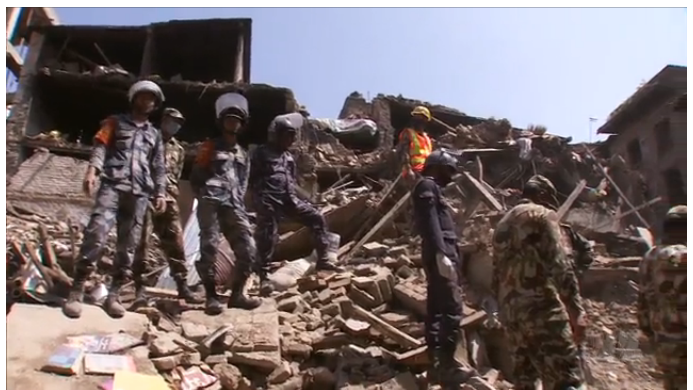
    Nepal: A powerful earthquake jolted mountainous Nepal today (May 12th), killing 42 people, bringing down buildings and triggering landslide less than three weeks after a devastating temblor left a swathe of destruction in the Himalayan nation.

    Hundreds of terrified people rushed out of their homes and buildings toppled as the 7.3-magnitude earthquake, centred 68km west of the town of Namche Bazaar near Mount Everest, sent ripples in India all the way from the border states of Bihar and West Bengal to Gujarat and Delhi.

    At least 17 people died in India in the fresh quake.

    “I was taking my afternoon nap after lunch and somehow managed to rush out with my baby. My house is safe but I am afraid to go inside,” said Bimala Magar, a resident of Kathmandu’s Dhumbarahi.

    More than 1,000 people were injured as the quake flattened buildings in Kathmandu and other parts of Nepal already weakened by the 7.9-magnitude April 25 earthquake.

    The fresh tremors, which lasted nearly a minute, came just as residents of Kathmandu and other districts were picking up the pieces after last month’s quake that killed about 8,000 people and uprooted millions.

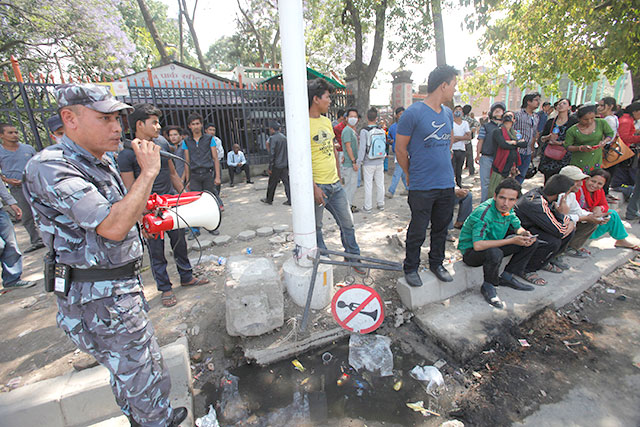
    Nepal Police sent out tweets asking residents to clear the roads for movement of rescue workers while police also asked people not to clog the mobile network with calls and use text messages for sending information.

    Operations at Kathmandu’s Tribhuwan International Airport were suspended and Nepal’s parliament, which was in session when the quake struck, was also adjourned.

    “Search and rescue teams have been sent to all affected districts. These are difficult times for Nepal, I appeal for all friends to help us and urge our citizens to stay strong,” Prime Minister Sushil Koirala said.

    (With agency inputs)

    [/vc_column_text][/vc_column][vc_column width=”1/2″][vc_column_text]Patna: Sixteen persons were killed and 21 others injured in incidents of wall and roof collapse after two high intensity quakes and five more of moderate intensity rattled Bihar today May 12th, over a fortnight after the April 25 temblor that claimed 58 lives in the state.

    Two deaths have been reported from Darbhanga while one each have been confirmed from Patna, Siwan, East Champaran and Samastipur.

    There has been report of 21 people being injured in different parts of the state in the wake of the temblor. Darbhanga district magistrate Kumar Ravi confirmed the death of one person at Manigachi in the quake, while additional district magistrate Jay Chand Yadav confirmed death of another at Khagaul village in the district.

    According to state Meteorological department, the first temblor measuring 7.3 on the Richter scale was felt in Patna and other parts of the state at 12.35 PM. A second quake was experienced at 1.09 PM which measured 6.2 on the Richter scale, the Met office said adding five more temblors of moderate intensity were recorded in the state after this.[/vc_column_text][/vc_column][/vc_row]

  • Nepal asks India to provide only much-needed items

    Nepal asks India to provide only much-needed items

    NEW DELHI (TIP): As tonnes of relief goods sent by India pile up in quake-hit Nepal, the Himalayan country has requested New Delhi to ensure that further supply of such material is only need-based.

    According to Nepalese ambassador Deep Kumar Upadhyay, Kathmandu has asked Indian agencies not to send items like water or clothes, and focus instead on supplying tarpaulin sheets and dry rations for its citizens rendered homeless by the unprecedented disaster.

    “The Nepalese embassy is coordinating with the Indian government to make sure that supply (of relief material) is need-based,” Upadhyay said at a felicitation event for National Disaster Response Force
    (NDRF) personnel back from Nepal after a much-lauded rescue and relief operation.

    Stating that Nepal would continue to work closely with India in the reconstruction phase, Upadhyay said the emphasis would be on preserving the country’s cultural heritage. “We would like to rebuild the nation as it stood before the quake, and restore our heritage sites to their original state,” he said.

    Earlier, home minister Rajnath Singh described Nepal as a sovereign state that India considers like a family member.
    “Whatever help is sought by Nepal, we are willing to extend,” he said even as he lauded the NDRF for its “exemplary” rescue work in the quake-ravaged nation.

    “I am proud of the NDRF. They have carved a niche for themselves as an able rescue force, having rescued alive 11 of the total 16 people and recovering 133 bodies in all. This, when rescue agencies from 34 different countries had been working in Nepal,” Singh said.

    NDRF chief O P Singh, while lauding his boys, mentioned how they had braved after-shocks and partially-collapsed structures to complete their rescue mission in Nepal. He made a special mention of two incidents, one involving a 43-year-old woman who was buried under the rubble for 36 hours before being rescued by NDRF men, and the other involving extrication of the body of a serving major in the Nepalese Army after a 12-hour operation.

    All 780 NDRF personnel engaged in the rescue mission are back home, with the last group landing here on May 06 night.

  • Nepal bans drones in its skies fearing leak of sensitive info

    KATHMANDU (TIP): Nepal has banned flying of drones in its skies following the devastating earthquake, suspecting leakage of sensitive information through the use of the unmanned aerial vehicle, authorities said today.

    After the April 25 quake, some foreign media and other aid agencies used drones to track the loss of human lives and damages to properties.

    Civil Aviation Authority of Nepal said in a statement that Nepal has banned the use of drones as they could leak sensitive information and pictures of its valuable heritage sites clicked illegally.

    One such drone has been intercepted by Nepalese security agencies and handed over to the authorities concerned, said Nepal Police spokesperson Sarvendra Khanal.

    The civil aviation agency officials said that it is learnt that some organisations used drones to take pictures and videos of Nepals’ valuable heritage sites which could be misused later.

  • Nepal earthquake death toll rises to 8,413

    KATHMANDU (TIP): The death toll from the devastating earthquake in Nepal has risen to 8,413, the Nepal Red Cross Society said on May 6.

    A Red Cross report put the number of injured at 17,576, adding 260 people were still missing following the 7.9 magnitude quake. The temblor, the worst to hit Nepal after 1934, has also caused widespread destruction in the Himalayan nation.

  • Beijing pulls up PLA over India’s swift rescue operations

    Beijing pulls up PLA over India’s swift rescue operations

    BEIJING (TIP): The Indian military’s swift evacuation of thousands of Indians from earthquake-hit Nepal has put China’s PLA on the defensive with questions raised as to why its efforts to rescue stranded Chinese nationals did not match those of India.

    The media in China has questioned why air force planes were not deployed to airlift over 8,000 Chinese, many of whom are still stranded in Nepal.

    In a rare comparison of India’s military with the People’s Liberation Army (PLA), the world’s largest, Chinese defence spokesman Geng Yansheng was on Thursday confronted with the question at a briefing as to why the military did not use planes to airlift stranded Chinese when India had done so to ferry its nationals.

    There is considerable annoyance in China over the slow process of airlifting of Chinese tourists as well as workers employed in various Beijing-funded projects in Nepal as the task was given to a number of civilian airlines. There were also reports of some airline companies demanding heavy fares, but they were subsequently denied.

    Besides airlifting thousands of its citizens, the Indian Air Force also transported about 170 foreign nationals from 15 countries to India. Several others were also transported through special buses from across the border to Bihar.

    Defending the move to use civilian aircraft, Geng said “Whether to use military aircraft to transport people from a disaster area — this is to be decided by various factors.”

    He said that after the earthquake, the Chinese government had organized a number of civilian commercial flights to evacuate Chinese citizens stranded in Nepal. He added that soon after the quake, three helicopters from Tibet flew in food and water to a number of Chinese employees working on a hydel project and some of them were even airlifted.

    India’s quick response to send search and rescue teams besides relief supplies has been reported by sections of the Chinese media, while China too dispatched rescue teams and planes with supplies, by which time the Indian presence on the ground had swelled. Earlier, the Chinese foreign ministry had played down reports of competition with India to assist quakehit Nepal and offered to work with New Delhi “positively” in the relief efforts to help the Himalayan nation overcome the crisis.

  • EU humanitarian chief sounds warning on Iraq

    BAGHDAD (TIP): The head of the European Union’s humanitarian aid department warned on Thursday that the situation in Iraq is deteriorating rapidly while the world is preoccupied with crises elsewhere.

    Jean-Louis de Brouwer told The Associated Press that the number of displaced people in Iraq has quadrupled in the last year and shows no signs of decreasing.

    “The worst is still to come,” he said. “The situation is deteriorating, humanitarian aid is becoming even more essential than it was, the problem is funding.”

    Iraq is convulsed in a battle between the government, its militia allies and forces of the Islamic State group that have taken over large parts of the north and west in the country.

    The fighting has displaced some 2.7 million people inside the country, including 110,000 who fled from renewed fighting in and around the city of Ramadi in the western Anbar province in the past two weeks.

    Many of these are living with other families, inside mosques or in makeshift camps around the western periphery of Baghdad. Meanwhile, there are hundreds of thousands more in the Kurdish northern regions.

    “This is quite a matter for concern as the needs are skyrocketing and the resources are not increasing,” said de Brouwer. “I’m afraid there is also — not donor fatigue — but donor exhaustion.”

    An even larger refugee problem in neighboring Syria and most recently and earthquake in Nepal has drawn attention away from the slow building crisis in Iraq, he said.

    In June, the EU is to co-host with the UN a new call for humanitarian aid for Iraq in Brussels. The EU has nearly doubled its allocation for Iraq from$22 million in 2014 to $43 million this year.

    De Brouwer also criticized the practice of not allowing those displaced from Sunni areas into Baghdad or the Kurdish region without sponsorship, leaving most people stranded.

    “If they keep on with this kind of practice, they will end up with the kind of ethnic division that will not be good for the country,” he said.

  • Chinese rescue Indian mountaineers

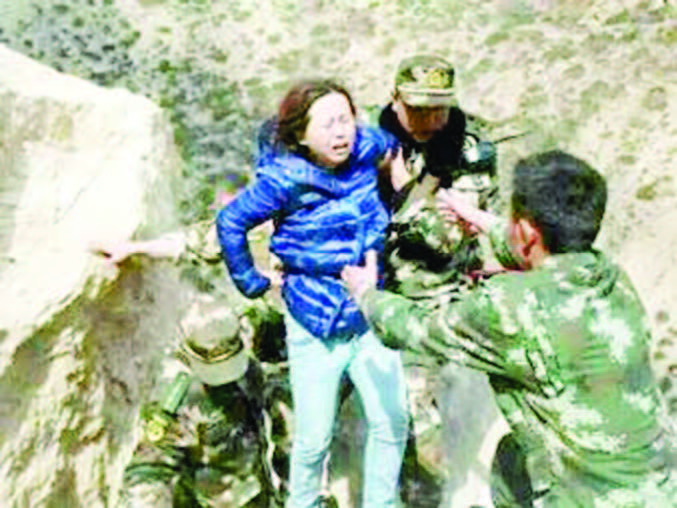
    HYDERABAD (TIP): Over 20 mountaineers from Andhra Pradesh and Telangana were on their way home via Lhasa after Chinese Mountaineering Association (CMA) on April 30 rescued them from Everest base camp, where they had been stranded following the Nepal earthquake.

    Nalgonda resident Shekhar Babu-led climbers planned to scale the world’s highest mountain from dangerous North Col.

    They had stayed put at the camp as avalanches triggered by the earthquake had blocked the highway connecting Nepal and China.

    “The team is safe and will be reaching Lhasa on Friday evening,” said a representative from Hyderabad’s Transcend Adventures that had organized the expedition. He said the climbers would be flown from Lhasa to India.

    As posted on the adventure club’s Facebook wall, Nima Tsering, vice-chairman, CMA, visited the base camp and told the climbers that they will be taken down, much to the relief of team leader Shekhar Babu and his boys.

    Tsering also carried some good news with him, which brought some cheer and relief to the mountaineers who pay huge sums to plan a trip to Everest. The CMA said the registration fee of the climbers for this year would hold good for the next three years.

    “We are grateful for this gesture,” said Prithvi Raj, a representative from the adventure club.

    Anxious family members have been calling the club with queries about their loved ones. “We have informed them and they are relieved that they are safe and are being escorted to safety,” said Raj. The team will return to India in a few days time.

  • India, China win hearts, minds in quake-hit Nepal

    India, China win hearts, minds in quake-hit Nepal

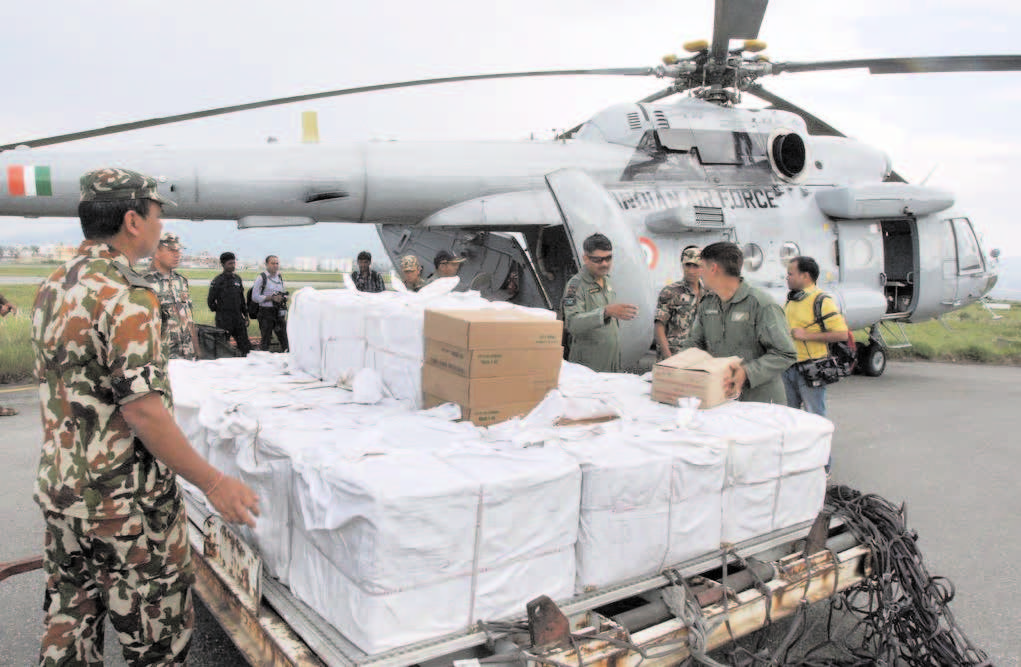
    POKHARA (TIP): At Pokhara airport in the Himalayas, Indian soldiers race back and forth loading rice, blankets, tarpaulins and other aid onto waiting helicopters for delivery to Nepal’s quake-devastated villages.

    In the ruined ancient town of Bhaktapur outside the capital Kathmandu, Chinese rescuers in blue uniforms search for survivors in the rubble of toppled temples and homes.

    Nepal’s overwhelmed government has been criticised by frustrated residents, hundreds of thousands of whom are desperate for assistance after Saturday’s monster quake.

    But foreign countries, with their medics, specialist rescuers and helicopter sorties, have won applause, with giant neighbour India sometimes singled out for praise as the biggest provider.

    “We are hungry, we have no food, and we’ve had no help from our own government,” Arjun Budhathoki, 30, said as he queued, along with thousands of others, for a bus out of Kathmandu this week.

    “The Indian government is the only one helping our citizens, they are doing so much for us,” Budhathoki said.

    India and economic powerhouse China have long vied for influence in the impoverished Himalayan country which was ripped apart by the quake, leaving more than 6,200 people dead.

    China has dispatched about 300 personnel to Nepal and announced about $10 million in aid so far, according to state media.

    Indian Prime Minister Narendra Modi has promised to “wipe the tears of every Nepali” while the country’s air force alone has sent 950 personnel and dropped more than 400 tonnes of aid across the country.

    India’s hyperactive media have devoted hours to the country’s assistance, including plucking stranded climbers from Everest base camp. But analyst Rajrishi Singhal said India’s efforts involved a degree of self-interest.

    “We share a long border with Nepal and any turmoil there can spill into India,” Singhal, senior fellow at the Gateway House think-tank in Mumbai, said.

    “It is in our interest to see that Nepal gets back on its feet as soon as possible.”

    Singhal said both India and China could play a significant role in Nepal’s reconstruction once the relief effort has concluded.

    “Affordable housing is one area where India can really help Nepal because we have seen the large-scale devastation and the way houses have been destroyed,” he said.

    “In that sense when it comes to rebuilding and reconstruction, both India and China must be prepared for the long haul in Nepal.”

    Beijing has swept aside any suggestion it is being overshadowed by its rival in the quake zone, although it says it is planning to “intensify our efforts in disaster relief”.

    “The assistance shows that all the Asian countries are part of the community of common destiny and we will work together with Nepal to help them rebuild their homeland as soon as possible,” foreign ministry spokesman Hong Lei said in Beijing on Thursday.

    Nepal’s foreign minister Mahendra Bahadur Pandey has attempted to strike a balance, saying his government is grateful to its “very good friend” India, but also quick to mention China.

    “They (China) too are sending teams of people and medicines,” Pandey said in an interview with the Indian Express newspaper on Tuesday.

    “They are trying their best to rescue our people. We have divided areas between India and China.”

    Modi has made clear since being elected last May that boosting India’s influence in its backyard is a priority.

  • Pakistan sends food with beef masala to Nepal, blames Indian media for row

    Pakistan sends food with beef masala to Nepal, blames Indian media for row

    ISLAMABAD (TIP): Pakistan on Aprl 30 blamed the Indian media for maligning its relief efforts for survivors of the devastating earthquake in Nepal.

    According to media reports, the food items in relief aid sent by Pakistan to Nepal included beef content (beef masala) in the food packets. Eating beef is prohibited in Hindu religion. Nepal is a majority-Hindu nation.

    During a weekly press briefing, Tasneem Aslam, Pakistan’s foreign office spokeswoman, said it was unfortunate that Indian media has not even spared a humanitarian mission and has, unnecessarily, tried to inject controversy into it.

    “The Meal Ready to Eat (MRE) is a pre-packed kit of 20 items for a full day’s meals. On each and every packet inside the kit the name of the dish is clearly written in English and Urdu so that people may choose whatever they like to eat or discard,” she said.

    “Both the languages are understood in Nepal,” she added.

    The Nepalese authorities, Tasneem Aslam said, found the MREs so effective that they specially requested for a full planeload of MREs on priority.

    The Pakistan foreign office reaction came the same day after Pakistan Prime Minister Nawaz Sharif contacted his Indian counterpart, Narendra Modi, to offer condolences over the loss of lives and devastation caused by the earthquake in India.

    Earlier, the spokesperson had said that she was not aware of the issue. “I am not responsible for the dispatch. The relief aid is sent by the National Disaster Management Authority,” Mail Today had quoted Aslam as saying.

    The controversy started when packets with “beef masala” and “potato bhujia”, were found in the food aid package sent for quake survivors by Pakistan. Pakistan’s National Disaster Management Authority (NDMA) sent the relief goods, according to the official handout, in collaboration with the army, Pakistan air force and ministry of foreign affairs.

    While the NDMA spokesman was not available to speak on the issue, another senior official requesting anonymity, said: “Beef and mutton are essential parts of the meal in most of the countries in Asia except large in India and Nepal which have a large Hindu population.”

    “If beef masala was really sent to Nepal, it may have been out of negligence. But making it controversial is like the proverb ‘making a mountain out of a molehill’,” he added.