KATMANDU: Doctors say Nepal’s former king has suffered a heart attack and has been hospitalized. Dr Bharat Rawat at the Norvic Hospital in Katmandu said Gyanendra Shah was brought to the hospital Saturday night. He was recovering in the intensive care unit and was out of danger. Hundreds of his supporters crowded the hospital on October 22. Gyanedra was the last king to rule Nepal before the Constitution Assembly abolished the centuries-old monarchy from the Himalayan nation and turned the country into a republic.
Tag: Nepal
-

Gift of Life (New Delhi) India
20 percent of infant mortality is due to Congenital Heart Diseases (CHD). Poor children have no access to quality medical care and cannot afford high cost of surgery. 3000 children (India, Uganda, Kenya, Sudan, El Salvador, Sri Lanka, Nepal, Pakistan) benefited from GOL India New Delhi project alone. PRID Rtn Sushil Gupta (Advisor), PDG Ravi Bhooplapur (Chair) and Dr AC Peter (National Coordinator) monitor this life saving project. Rotary (Delhi NCR) Gift of Life Trust is auxiliary. This project was launched in New Delhi India in July 2005. Our partner hospitals are Escorts, NHI and PCH in Delhi. PRID Jackson Hsieh, D3460 to D3520 are also MG Donors. Children were given medicine, food and accommodation, conveyance etc. free of cost. Rotarians visit the children in the hospital and offer motherly care. Past and current RI Presidents, TRF Trustee, Ministers, Ambassadors etc visited the project. This is truly an international peace project signifying “service above self”
-

Nepal closes trekking route after 38 die in storm
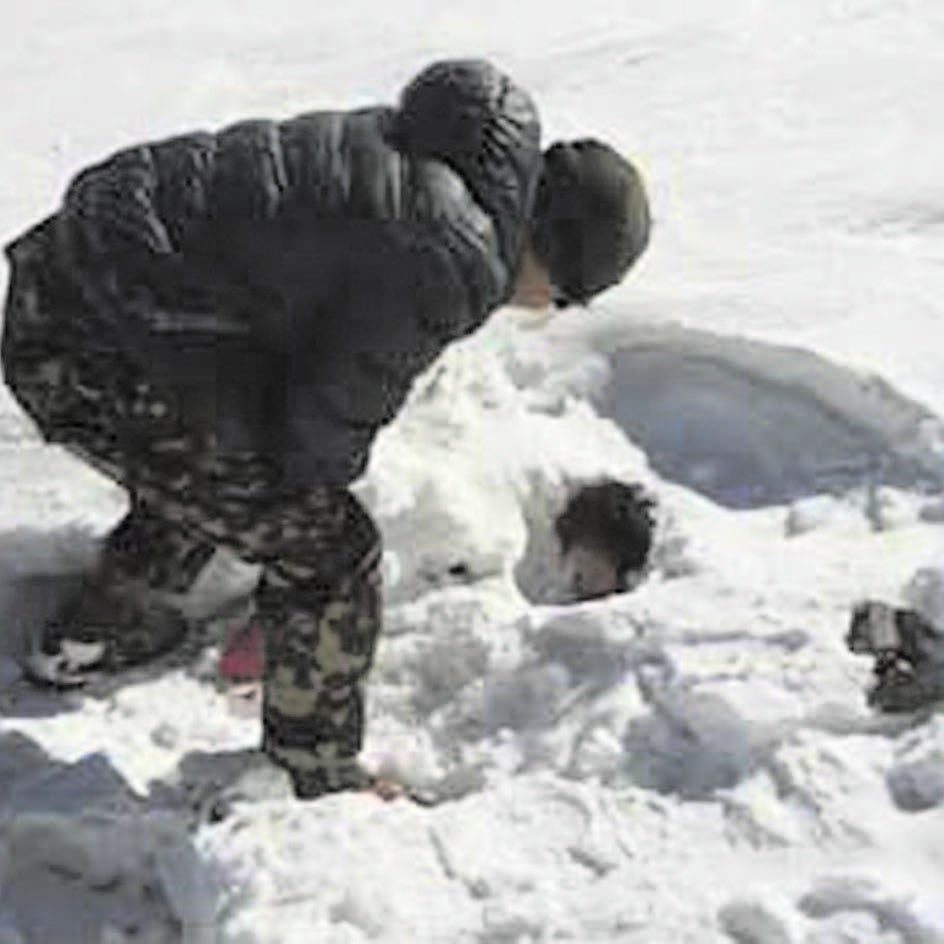
KATMANDU (NEPAL) (TIP): Nepalese officials closed a section of a popular Himalayan trekking route on October 20 after rescuers, overwhelmed with last week’s snowstorms that killed 38 hikers, had to bring to safety new climbers who set out on the same mountain trails where the blizzards struck. The dead from the blizzards and avalanches that hit the upper section of the Annapurna Circuit in northern Nepal included foreign trekkers, local guides and villagers.
Most among the hundreds of trekkers who had been stuck in the snow have been brought to safety, and government official Yama Bahadur Chokhyal said rescue helicopters were winding down flights. As the weather cleared, new climbers were already making their way up the same trail despite obvious dangers, prompting the government to close the route, Chokhyal said. “Our rescuers and helicopters ended up having to bring down these new people while we were still trying to reach the ones who were stranded by the blizzard,” he said. “It was burdening and confusing the rescuers so they had to be stopped,” he said. The route was deemed unsafe and invisible in many sections because of the snow dumped by the blizzard.
The death toll from last week’s disaster — the worst in Nepal’s recent history — went up Saturday after a rescue helicopter spotted nine more bodies. Ram Chandra Sharma of the Trekking Agents Association of Nepal, who is also coordinating the rescue operation, said there were no immediate plans to retrieve the bodies believed to be of Nepalese porters at the Shanta pass area, located at an altitude of 5,100 meters (16,730 feet).
The steep terrain made it impossible for the helicopter to land to pick up the bodies, said Yadav Koirala from the Disaster Management Division in Katmandu. So far, 25 of the fatalities have been identified, including those from Canada, India, Israel, Slovakia, Poland and Japan. Eight of the dead were Nepalese. Thirteen others have not yet been identified, The snowstorms were whipped by the tail end of a cyclone that hit the Indian coast a few days earlier. The blizzards swept through the Annapurna trekking route and hikers were caught off-guard when the weather changed quickly. -

DEEPAVALI, THE ‘FESTIVAL OF LIGHTS’
Deepavali or Diwali period is celebrated universally by Indians residing globally. It has significance to all major religions of India.
Lord Rama’s return to Ayodhya from 14 years exile along with wife Sita, brother Lakshman, and devout Hanuman brought immense joy to the people who lighted lamps to illuminate the entire city
Lord Vishnu as Vaman avatar, rescued Lakshmi from the prison of King Bali who was banished to the underworld on this day
The Pandavas returned to Hastinapur after 12 years of banishment. Happy citizens lit earthen lamps in celebration
Bandi Chorr Devas, festival of Sikhs celebrates the release of their sixth guru – Guru Hargobind Singh from the Gwalior Fort along with 52 other Hindu princes in 1619
Foundation stone of Golden Temple was laid on the day of Diwali in 1577
Ashok Vijaydashmi celebrates the conversion of emperor Ashoka to Buddhism on this day with prayers and decoration of the monasteries
Diwali in Nepal is known as Tihar and celebrated with splendor
Lord Mahavira, the last of the Jain Tirthankar of the era, attained eternal bliss or release of the soul viz. Nirvana or Moksha on this day at Pavapuri on lunar Chaturdashi of Kartika on 15 October 527 BC.
According to the Kalpasutra by Archarya Bhadrabahu, 3rd century BC, many Gods were present there, illuminating the darkness with their divine light
Diwali marks the end of harvest season in most of India. Farmers pray for a good harvest for the year to come
Hindus pray to Lord Ganesha and Goddess Lakshmi to remove all the darkness and poverty from everyone’s lives, and to fill all our hearts with the sparkling golden light of peace, love, truth, and spiritual joy.
The illumination of homes with lights and the skies with firecrackers is an expression of obeisance to the heavens for the attainment of health, wealth, knowledge, peace and prosperity.
Deepavali delivers us from Darkness unto Light to commit ourselves to good deeds and thus approach divinity.
FIVE DAYS OF DEEPAV

DAY 1: Dhanteras/Dhanvantari Trayodashi Goddess Lakshmi is worshiped to provide prosperity and well being. Dhanvantri, physician of the Gods is remembered for health and hygiene.
DAY 2: Choti Deepawali / Narak Chaturdashi Naraka Chaturdasi marks the vanquishing of the demon Narakasur by Lord Krishna and his wife Satyabhama. Narakasur and his mother Bhudevi or Mother Earth wished his death to be occasion for rejoicing, rather than mourning.
DAY 3: Main Deepawali / Lakshmi Puja Amavasya or new moon night marks the worship of Lakshmi, the goddess of wealth in her most benevolent mood, fulfilling the wishes of her devotees. Lord Vishnu, in his dwarf’s incarnation, vanquished the tyrant Bali to rescue her. Bali was allowed to return to earth once a year, on this day to light millions of lamps to dispel darkness and ignorance, and spread the radiance of love and wisdom.
DAY 4: Pratipat / Padwa Puja / Govardhan Puja / Annakoot Mount Govardhan lifted by Lord Krishna on one finger formed an umbrella to protect people of Gokul from a deluge sent by Lord Indra. Annakoot means mountain of food. Prayers for plentiful are offered with obeisance to Lord Krishna on this day.
Day 5: Yama Dvitiya / Bhai Dooj Yamraj, the Lord of death visited and gave his sister Yamuna a boon that whosoever visits her on this day shall be liberated from all sins. Traditionally, brothers visit their sisters. Lord Mahavir, the founder of Jainism had attained nirvana, or heaven. His brother King Nandivardhan was very distressed, and was comforted by their sister Sudarshana. Sisters have been revered since, symbolized by Bhai Dooj. In India, respect for women is seen in every aspect of festivals and celebrations. The creator is shown as sublime, divine, feminine force of Shakti, venerated in several Goddess forms like Durga on a lioness, or Kali, the fiery dark Goddess of strength. The myriad Gods and Goddesses depict the undefinable and limitless dimensions and facets of eternal divinity -

WORLD CELEBRATES DIWALI with prayers, bright lights and fireworks
WASHINGTON (TIP): The five-day Indian festival – Diwali – symbolic of victory of good over evil was celebrated , from October 22 , the world over with great enthusiasm Amid chanting of Vedic mantras and lighting of the traditional ‘diya’ by US Secretary of State John Kerry, Diwali was celebrated for the first time at the State Department. “As the days grow shorter, the Diwali reminds us that spring always returns – that knowledge triumphs over ignorance, hope outlasts despair, and light replaces darkness.
Diwali is a time for the revitalization of mind and spirit,” said Kerry who was joined by India’s Ambassador S Jaishankar. “It affords a chance to reflect on how we can bring light to others. It is an opportunity for us all, regardless of our own traditions, to renew a shared commitment to human dignity, compassion, and service – and it is a commitment, I think, at the heart of all great faiths,” he said. Some 300 guests, including a large number of eminent Indian-Americans and envoys from other South Asian countries, were present to celebrate Diwali for the first time at the State Department’s historic Benjamin Franklin room, which was lit with many small diyas and candles.
The top Indian-American US officials, including Assistant Secretary of State for South and Central Asia Nisha Desai Biswal and USAID Administrator Raj Shah, were also present. “We worked hard to prove that we were, in fact, natural partners, which I believe we are. We are two optimistic nations who believe that history doesn’t shape us, but that we have the power to shape history. And that spirit of hope and optimism is really at the center of the Diwali celebration,” Kerry said and greeted people with Saal Mubarak. The guests were served the traditional Indian dishes – including sweet dishes like Jalebi, Gulab Jamun, different varieties of burfi, kaju katli and kheer. Some of the dishes were in fact were made inside the State Department kitchen, while other dishes were procured from a popular Indian restaurant in Washington DC.
It was also one of the rarest occasions that no alcohol was served. It was all soft drinks, juices and not to miss the traditional mango ‘lassi’. In Birmingham, UK, Bhangra music filled the air as hundreds of people flocked to Diwali celebrations in Birmingham. Food stalls and dancing also entertained families as they turned out in their droves for Soho’s Festival of Lights.
It was the first time the event had been staged after being organized by the newly-formed Soho Road BID. The BID is home to 560 predominantly independent businesses stretching from Holyhead Road to Soho Hill – with an estimated local population of 250,000. BID manager Craig Bucky said: “We were so excited to be able to run our first community event. “It’s been a lot of hard work and determination but it was a great celebration that the community can be proud of.” BID chairman Dipak Patel said that more events were in the pipeline in a bid to improve the area.
“The long-term strategy is to make Soho Road an exciting place to work and live,” he said. Diwali was celebrated with enthusiasm and vigor in Sri Lanka, the land where the epic happened. Distribution of misri and lighting a lamp was a traditional fix. Locals offer prayers along the beach. In Thailand, Diyas or lamps made of banana leaves with candles and incense were placed in the river to float. People greeted each other and distributed sweets. Diwali was celebrated with full aplomb in Malaysia. Even the locals indulged in the festivities wholeheartedly. Diwali is an official holiday in Malaysia. People invite each other to their homes and celebrate it with their friends and family.
The Hindu community of Malaysia constitutes about 8% of its total population. The community celebrates it under the name of Hari Diwali. Nepal is a multi ethnic land with diversity in culture. Nepal celebrated Diwali with bright lights, gift exchanges, fireworks, and elaborate feasts to welcome Lakshmi, the goddess of light and wealth. Diwali in Nepal is known as Tihar. In Australia, Diwali was celebrated publicly amongst the people of Indian origin and the local Australians in Melbourne.
The cultural kaleidoscope of India was depicted as Indians in Melbourne showcased Indian art, culture, style, traditions and food via various activities, seminars, festivals, fairs and events. Diwali was also celebrated in Guyana, Fiji, Mauritius, Myanmar, Singapore, Trinidad & Tobago, Indonesia, Japan, Thailand and Africa, among the Hindus across the world. -

Featured: He CAME, he SPOKE, he CONQUERED
NEW YORK (TIP): Yes, it is Narendra Modi, Prime Minister of India. All Indian Americans are familiar with that name, for good or for bad, mostly for good, though.
Modi was in New York from September 26 to 29th afternoon, before he left for Washington to enjoy the hospitality of US President Barack Obama in the evening and a bilateral talk the next day, before flying back to India.
Much before he arrived in the US, Indian Americans had set out to give him a hero’s welcome. A trusted friend of Modi, Dr. Bharat Barai, was tasked with arranging a massive community reception to Modi which he did, with the help and cooperation of a devoted band of people. It was a colossal effort to have around 20,000 people come to Madison Square Garden to give a rousing reception to Modi, an icon for many, particularly from his community and place, Gujarat, a state which he governed with appreciable growth for around 12 years.
And why not! Modi was coming as Prime Minister of India to a country which had denied him a Visa since 2005 for his alleged role in not preventing killings of people from a particular community in Gujarat when he was the chief minister of that state in 2002. His admirers here gloated that US had no option but to welcome him now that he was coming to the United Nations as India’s Prime Minister, whose party had got a massive support of the people of India and was catapulted in to power, with total command over government, without having to depend on allies’ support as was the case when Atal Behari Vajpayee formed a BJP led government in 1999 which lasted its full term of 5 years, to 2004.
So, here was a man who represented a democratic country -the largest democracy in the world- with 1.25 billion people. How could the US ignore Modi whose country was poised to become an Asian giant and the second largest economic power in the world by 2050? No way! So, Obama invited Modi over to the White House for a private dinner. It was another matter that the invited dignitary was fasting on account of Hindu festival of Navratras and he would not eat. By the way, Modi has been observing Navratra fasts for the past 40 years, insiders said.
So, Prime Minister Narendra Modi arrived on September 26. He was given a rousing welcome at the JFK airport in New York. My good friends, Narain Kataria, Arish Sahani and Jagdish Sewhani arranged to have a large number of people gather at the airport to give a warm welcome to Modi. So, we had the chant of “Modi, Modi” which surely pleased the man, given to showmanship, which explains his admiration for film actors, like Amitabh Bachchan, and of course, some others.
And while in New York, Prime Minister of India, Narendra Modi left no one in doubt that he was a better performer than any in the world. A perfect juggler, a consummate magician, a pied piper of India.
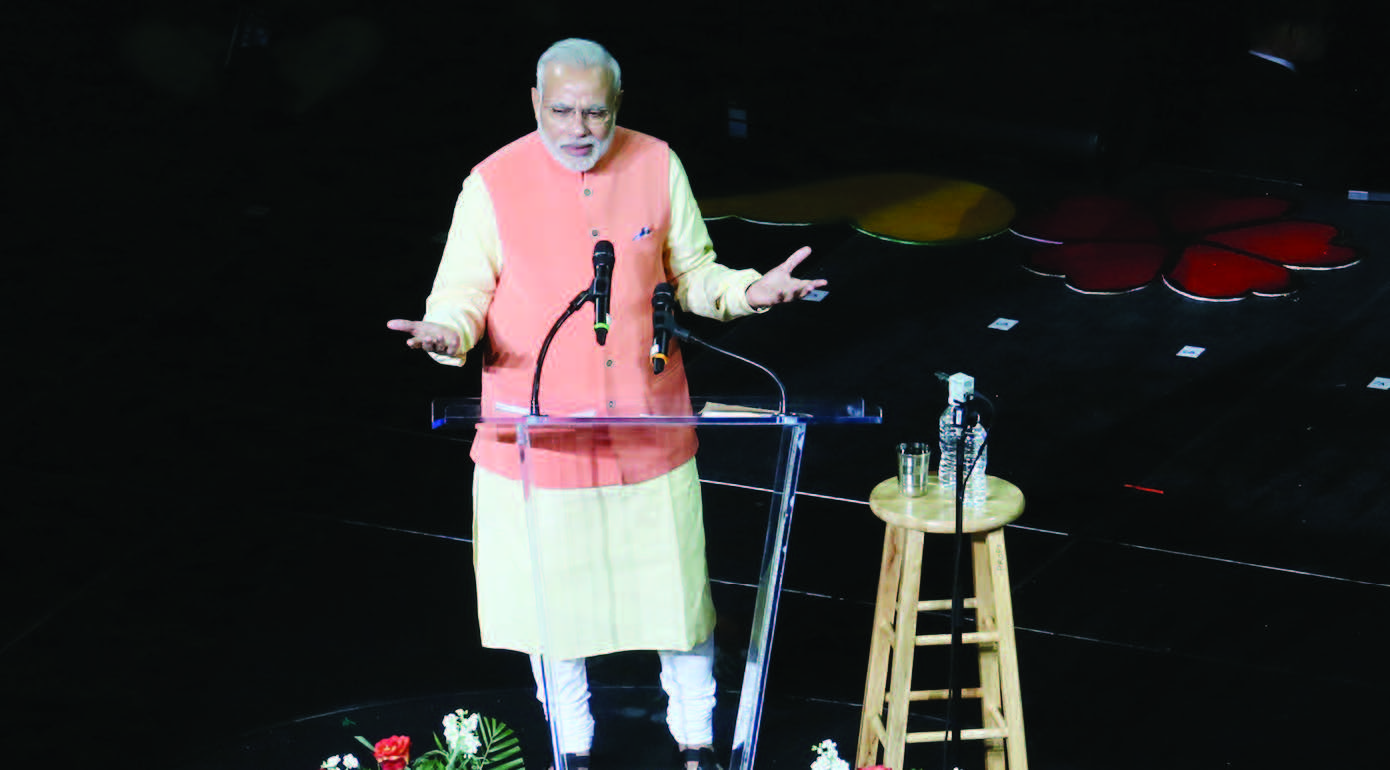
I found many acknowledging Modi’s felicity of expression which allowed him to connect with people immediately. He speaks in the language and diction that people at all levels commonly understand. He relies on simple words and home truths to deliver his ideas home. Again, he has mastered the art of delivery. His body language is extremely expressive and impressive. During the more than 90 minutes speech he delivered at the Madison Square Garden on September 28th, not a soul could have looked at the watch. Not one could have yawned, out of boredom. None would have thought of anything but what Modi was saying. The eyes of all remained fixed on the man in the center of the arena. Such was the grip of the man. And whatever he said seemed to come straight out of his heart. He pumped into his speech his heart, his mind and his vocal cords-delivering the “very best”.
Now see what he said. First, India can and will achieve the greatness that it once had. Second, we have a huge human resource capital in the form of a young India, with 60% of population under the age of 35. No other country in the world has such human resource. Third, we have brains. Example, our scientists succeeded in the Mars mission in the first attempt itself, a feat which even US could not perform. Modi took pride in mentioning that India’s Mars mission cost peanuts when compared with the money spent by countries like USA on similar missions.
Yes, we can. But how can we do it? He did offer Namo Mantra for that. He spoke of the defects in the system in the country and said the system that stood in the way of quick progression had to be demolished. He spoke of the futile, cumbersome and irrelevant laws which needed to be consigned to dust bin. He spoke of the massive investment required for development. And he invited Indian Americans as also the whole world to come and invest in India. Also, he gave a call to “make in India”.
Modi was particularly appreciative of the Sikhs, in his speech. He spoke of the great sacrifices the Sikh Gurus had made. He also recalled the sacrifices of the Sikhs in the freedom struggle of India. He spoke of the brave Sikh soldiers in the Indian armed forces and said the nation is proud of the Sikhs who have always stood by their motherland, come what may.
Modi simply created a vision. He came up with ideas that won attention and admiration of many. He wove dreams that all would love to own. He assured the gathering of around 20,000 at the famous Madison Square Garden which somebody christened as “Modison” Square Garden that India was on a fast track to development. Then he made some announcements to please the locals, too. He told them he was taking care to ensure there is no harassment at the airports in India of Indian Americans visiting India. He also said he knew of problems with getting visas. He said there will be no delays any more in obtaining a visa. Also, he said the clubbing together of OCI and PIO was being worked out and soon the problems arising out of OIC/PIO will be over. He also announced visa on arrival for US nationals on the pattern of some 9 countries whose citizens are entitled to get tourist visa on arrival in India. Surely, the local crowd was pleased.
The magician Modi wielded his wand for more than 90 minutes and left the gathering charmed and captivated. Yes, he came, he spoke , he conquered the hearts of Indian Americans who had come from far and near to have his darshan and hear him speak. But before he left, the gathering burst in to Modi chant, just as it had when he had arrived. And, believe me, Modi must have enjoyed the chant. The “Modi” chant must have been music to his years.
During the course of his stay in New York from 26th September to 29th September afternoon, Modi attended a large number of events, met a number of people from all walks of life which included world leaders, his counterparts from neighboring countries Sri Lanka and Nepal, US lawmakers and officials, captains of business and industry, community leaders, religious leaders and eminent people- both Indian Americans and others, and discussed a variety of issues.
We bring our readers here a few pictures of Modi’s New York visit. All pictures have been provided by The Indian Panorama special photo journalist Mohammed Jaffer.
-

Nepal PM Koirala free of cancer after treatment
KATHMANDU (TIP): Nepal’s Prime Minister Sushil Koirala, who was diagnosed with first stage lung cancer and underwent radiotherapy sessions in the US, has fully recovered from the disease, his close aide said on October 02. Koirala, 75, had undergone radiotherapy sessions for lung cancer in New York’s Memorial Sloan Kettering Cancer Centre after spots and lesions were detected in June.
Koirala, currently in New York for the UN general assembly, visited the hospital on Monday for a follow-up, six weeks after receiving radiotherapy, Nepal News reported. “After an analysis of the blood test, Chest CT scan and PET scan reports, Koirala’s private physician Dr Karbir Nath Yogi and Dr Manjit Bains of the cancer centre declared that the Prime Minister had recuperated,” Koirala’s press co-ordinator Prakash Adhikari said in a statement. Yogi said the patch on Koirala’s chest was gone after he received treatment and his health condition was good, according to the statement.
After his treatment in the US, Koirala had said he conquered the disease due to the prayers and good wishes of the entire Nepali community as well as foreigners, including his Indian counterpart Narendra Modi, who had personally wished him speedy recovery.
Koirala was a habitual cigarette smoker until he was diagnosed with tongue cancer eight years ago and has been visiting the New York medical facility for annual follow-ups after undergoing surgery.
-

Rajnath to Koirala: Border areas now ISI, jihadi hubs
NEW DELHI (TIP): Home minister Rajnath Singh on September 18 raised the issue of growing radicalization among Muslims in Nepal settled near Indo-Nepal border with Nepal PM Sushil Koirala and Home Minister Bam Dev Gautam. Certain pockets in these areas are learnt to have become fishing pools for Pakistan’s ISI and is suspected of being used against India. Singh is on a visit to Kathmandu for SAARC summit in Nepal. An official statement released by his office said, “The Indian HM (home minister) expressed his concern on the growth of religious fundamentalism in the border areas.” Intelligence agencies have been warning for the past few years that a string of madrasas coupled with large-scale settling of Muslims has been systematically taking place in Nepal along its border with India. These colonies, says security establishment sources, are being tapped by ISI fopr anti-India activities.
-

Nepal flood toll hits 101, fears of disease rise
KATMANDU (TIP): Nepalese authorities said Monday they feared an outbreak of diseases as they attempt to reach thousands of people stranded by flooding that has already killed more than 100 people. The swirling floodwaters have even crossed into neighboring India, submerging farmland and hundreds of villages. At least 84 Indians have died, either from the floodwaters or from torrential rains, authorities said. Jhanka Nath Dhakal of Nepal’s National Emergency Operation Center said four helicopters with food, emergency supplies, medicine and medical workers were sent to villages in the west of the country. Rescuers were also attempting to reach the villages by road. However, most of the highways and rural roads are either submerged or damaged by the flooding, preventing vehicles from passing.
-

Basics very much in Indian economy’s favor
INDIA’S JOURNEY TO DEVELOPMENT AND CHALLENGES
The economy of India is the tenthlargest in the world by nominal GDP and the third-largest by purchasing power parity (PPP).The country is one of the G-20 major economies, a member of BRICS and a developing economy that is among the top 20 global traders according to the WTO.
India was the 19th-largest merchandise and the 6th largest services exporter in the world in 2013. India’s economic growth slowed to 4.7% for the 2013-14 fiscal year, in contrast to higher economic growth rates in 2000s. However, India’s decisive election outcome has created the potential for further structural reform that could result in a near 7 per cent GDP growth rate over the coming decade, and bank capital injections could enable banks to facilitate funding for that growth.

This would have meaningful implications for India’s fixed income markets. It is believed that the next decade for India’s foreign exchange (FX) and fixed income markets will be marked by policy-driven reforms driving accelerated growth with increasing market liberalization. Recent figures already appear more encouraging than the dynamics that have been supporting stagflationary recession conditions: The country’s balance of payments has improved, spurred by FX depreciation and the Reserve Bank of India’s (RBI’s) non-conventional measures. The growth outlook has turned moderately positive, helped by a global recovery; and bad loan formation, even at state-owned banks, may now be moderating.

The narrative for Indian markets began to brighten even before the elections. Following the second stage of India’s economic liberalization and the foreign direct investment (FDI) reforms initiated in September 2012, foreign investment will likely be a major contributor to a jump in private investment. However, despite liberal FDI limits, it has remained moderate, constrained, in part, by administrative hurdles. As the obstacles are reduced, we expect FDI to lead an investment boom over the next decade, similar to China’s mid-1990s experience. We project FDI will rise to an average of 2.5 per cent of GDP (FY2014-24) from an average of 1.5 per cent of GDP (FY2008-14). We believe such foreign capital flow will lend significant support to India’s balance of payments trajectory.
Improving public health
Health care services in India have undergone a vast change over the past few decades and encompass the entire nation. The industry is expected to supersede China by 2030 in terms of population expansion. Hence, it becomes one of the essential duties of the state to raise the nutrition level, the standard of living of the people together with improving public health.
Health care Industry of India The rapidly increasing health care industry of India is one of country’s largest sectors, both in terms of revenue and employment. It has been estimated that the healthcare industry of India is will grow by & 40 billion. The continuous increase in the population of India is considered one of the principal reasons for the growth in the healthcare industry of India. The rise in the infectious as well as chronic degenerative diseases has contributed to the rise in the healthcare sector of India. Additionally, because of diseases like AIDS and several lifestyle diseases of India, the healthcare sector of India will have a constant growth.In spite of the fact that the Indian healthcare industry is rapidly expanding, healthcare infrastructure in India is very poor. A noticeable percentage of India suffers from poor standard of healthcare services. Most of the healthcare facilities of India provided by the various healthcare services are limited and of low standard. In order to understand the current status of the healthcare services in India, it is important to know about the different healthcare services found in the country.
Public health services, essential public health services, preventive health services, mental healthcare services, home health services, magellen health service and school health services are some of the healthcare services found in India. Companies providing Health Insurance in India The various companies providing health insurance policies in India can also be put under the healthcare services of India. Some of the companies that provide health insurance coverage in India are Appollo DKV Insurance Company Ltd., Bajaj Alliance General Insurance Co. Ltd., Birla Sun Life Insurance, Aviva Life Insurance and the like.
Points to note
1).It has been found out that while the private health services have been rising for meet the needs of the rich citizens and foreigners, public health services in India are lagging behind and suffering in a major way.
2).It has also been found out that less than 1% of the GDP is spent on the public health care services in India.
3).Surveys made throughout India points out that 65% of the Indian population cannot access to modern medicines.
4).In addition, a number of drugs and even many diagnostic tests are still unavailable in the public health care sector of India.
5).Most of the hospitals, one of the prime healthcare services in India, are located in the urban areas, thereby making it almost impossible for the rural people to access.
Indian industry sees green shoots of manufacturing growth
A green shoots of revival have started to appear in the manufacturing sector, which is critical for job creation, with a majority of segments likely to post higher output, according to industry bodies. The survey conducted by CII-Ascon for the April-June quarter indicates positive growth in important sectors like consumer durables including the vehicle industry and white goods industry, which recorded a growth of 5- 10 per cent, leading to improvement in the overall industry growth.
The FICCI survey found that eleven out of fourteen sectors are likely to show improvement in production during the second quarter (Jul-Sept) of the current fiscal. Over 64 per cent respondents are not likely to hire additional workforce in the next three months, though this proportion is less than that of the previous quarter (75 per cent), indicating improvement in hiring outlook in coming months.
The survey gauges the expectations of manufacturers for Q2 for fourteen major sectors namely textiles, capital goods, metals, chemicals, cement, electronics, automotive, leather and footwear, machine tools, FMCG, tyre, textile machinery and more. Responses have been drawn from 392 manufacturing units from both large and small and medium (SME) segments with a combined annual turnover of over Rs 4 lakh crore.
An upturn in demand condition is also reflected in the improved order books of the manufacturers, said Ficci survey. While only 36 per cent respondents reported higher order books for the April-June quarter in the last survey, 43 per cent respondents reported higher order books for July-September quarter.
Foreign relations
Soon after the 2014 Lok Sabha election results declared a thumping victory for the BJP-led NDA government, Prime Minister Narendra Modi invited the heads of all the SAARC countries including Pakistan, Bangladesh, Sri Lanka, Nepal, Maldives, Bhutan and Afghanistan, for his oath-taking ceremony, sending a major diplomatic signal to the global community.
Credited with being a focused administrator, Modi signalled that his decisive win would reshape India’s foreign relations and leverage the diaspora to increase investments, business opportunities and better relations. Modi went on to choose neighbouring country Bhutan over others for his first foreign visit.
“I will follow the (foreign) policies of the Vajpayee-led NDA government, and that also applies to the relationship with the United States. I don’t think a decision taken by any individual or one event should impact the overall policy,” Modi said in an interview. The winds of change were clearly being felt at home and abroad.

SAARC: A refocus on the neighbourhood
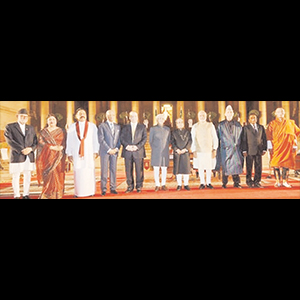
For the first time, leaders of all South Asian Association Regional Corporation (SAARC) countries were invited for the swearing-in ceremony of an Indian Prime Minister. The presence of all seven countries, Pakistan Prime Minister Nawaz Sharif, Afghanistan President Hamid Karzai, Sri Lanka President Mahinda Rajapaksa, Bhutan Prime Minister Tshering Tobgay, Maldives President Abdulla Yameen Abdul Gayoom, Nepal Prime Minister Sushil Koirala, Speaker of Jatiyo Sangshad in Bangladesh Shirin Sharmin Chaudhury, was a welcome step towards strengthening India’s relations with the SAARC countries. However, political parties in Tamil Nadu voiced their displeasure at Sri Lanka’s president Mahinda Rajapaksa attending the ceremony and held demonstrations against him.

Bhutan visit: Asserting influence in South Asia
PM Narendra Modi’s maiden foreign trip to Bhutan was intended to show that in the new scheme of things, the neighbourhood enjoys high priority. Inaugurating Bhutan’s Supreme Court building that was built with India’s assistance, Modi also laid the foundation stone of the 600MW Kholongchu Hydro-electric project, a joint venture between the two countries.
He also proposed to hold a joint sports festival between Bhutan and north-eastern states of India, doubling scholarships for Bhutanese students in India and establishing e-libraries in 20 districts in Bhutan Though his faux pas of referring to Bhutan as Nepal while addressing the Bhutan Parliament caused some embarrassment, Modi went ahead to say that “when Bhutan calculates its happiness quotient, having a friend in India is also a major factor.”
Meet with Pakistan Prime Minister Nawaz Sharif: Picking up the threads
Relations between India and Pakistan have always been tense, but differences between the two countries had escalated after the 26/11 Mumbai terror attack. Modi’s invitation to Pakistan’s Prime minister Nawaz Sharif for his oath ceremony was seen as an attempt at cooperation rather than confrontation, which was reciprocated by his Pakistani counterpart.
In their first meeting, Modi pressed for confidence-building measures, peace and security as well as enhancing bilateral trade, sending a positive message among the people of both the countries. Modi struck a pragmatic note with Sharif, underlining India’s concerns on terrorism and urging his Pakistani counterpart to crack down on militants and speed up trial of the 2008 Mumbai attack suspects.
Sharif also responded to the meeting positively, accepting the fact that the two countries must strive for better cooperation. In the interaction which was widely seen as an “icebreaker”, the leaders also decided that their foreign secretaries would be in touch and discuss a way forward on talks that had been suspended since January 2013.
BRICS Summit: New inroads
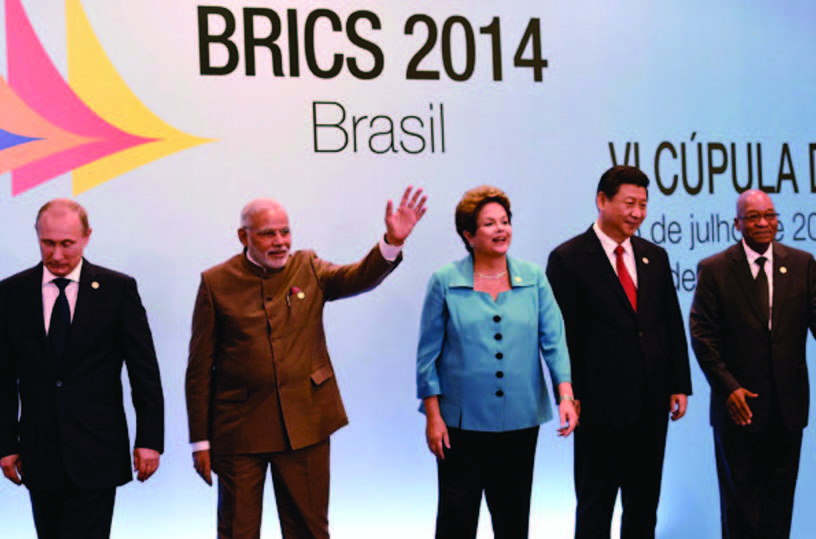
Pushing for better international governance, Narendra Modi said he favoured an open, rule-based, international trading regime which is critical for global economic growth. Modi’s first BRICS summit saw significant inroads towards the establishment of the New Development Bank and though the headquarters of the bank is slated to be in China, its first President will be from India.
Addressing the BRICS leaders, Modi also pressed for zero tolerance towards terrorism. He also met Chinese President Xi Jinping and both addressed the need for a solution to the boundary question. Further, Modi also favoured broadening the strategic partnership with Russia in nuclear, defence and energy sectors and invited President Vladimir Putin to visit the Kudankulam atomic power project during his trip in December.
India poised to make further progress on UN’s development goals
India has made progress on different indicators such as health and nutrition under the UN’s Millennium Development Goals and is expected to improve further upon them. “There has been progress in all the indicators and further progress is expected to be made in the remaining period up to 2015,” Planning Minister Rao Inderjit Singh had said recently.
Challenges
As far as India is concerned, 8 MDGs with 12 targets are relevant which are sought to be achieved during the period 1990 to 2015, the minister said. MDGs are international development goals that UN member states and numerous international organizations, including India, have agreed to achieve by the year 2015.
Eradicating poverty
These include eradicating extreme poverty and hunger; achieving universal primary education; promoting gender equality; reducing the child mortality rate and ensuring environmental sustainability. The minister’s said India had achieved the MDG target regarding poverty eradication. India had to halve the proportion of people whose income is less than one dollar a day between 1990 and 2015.
In 1990, India had 47.8 per cent such poor people and thus the proportion of this population is to be reduced to 23.9 per cent. However, India’s poverty ratio was 21.92 per cent for 2011-12. Similarly, India has to half the proportion of people who suffer from hunger by 2015 to 26 per cent. However, the latest figure for 2004-05 reveal that the percentage of such population was 40 per cent.
Education: Improving enrolment ratio
In the education sector, India has to improve the net enrolment ratio in primary schools to 100 per cent by 2015. The country achieved 99.89 per cent enrolment in primary education in 2011-12. The proportion of pupils starting grade 1 who reach grade 5 was 86.05 per cent in 2011- 12 against the target of 100 per cent. The literacy rate in India was 61 per cent in 1990. It went up to 86 per cent in 2017-08.
The ratio of girls to boys in primary education was 0.73 in 1990 which went up to 1.01 in 2011-12. Similarly the ratio of literate women to men (15-25 years) was 0.67 in 1990, which was 0.88 in 2007-08. MDGs target for both ratios is 1. The mortality ratio among children under the five-year age was 126 per 1,000 live births in 1990 which was brought down to 52 in 2012. The MDGs target is 42 for that.
Infant mortality ratio
The infant mortality ratio was 80 per 1,000 live births in 1990 which was brought down to 42 in 2012 against the MDGs target of 27. The proportion of one year old children immunized against measles was 42.2 per cent in 1990 which was improved to 74.1 per cent against targeted 100 per cent coverage.
Similarly, the maternal mortality ration per 1,00,000 live births was 437 in 1990 which was brought down to 178 by 2011-12 against targeted 109 by 2015. -

NEPAL HIKES INSURANCE FOR SHERPAS AFTER EVEREST AVALANCHE
KATHMANDU (TIP):
Foreign mountaineers will have to spend more for the insurance cover of their Sherpa guides to climb any Himalayan peak in Nepal including Mount Everest, the government said. Wedged between India and China, Nepal is home to more than 1,300 Himalayan peaks – 414 of them, including Mount Everest, are open to foreign climbers who turn up in hundreds every year.
An ice avalanche on Mount Everest in April killed 16 Sherpa guides in the biggest disaster in the history of the world’s tallest mountain, highlighting concerns that the Sherpas were paid too little compared to the risks they take in guiding their clients on the dangerous slopes of Mount Everest. Dipendra Paudel, a tourism ministry official, said the insurance cover for the guides would be raised to $15,000 from $10,000.
Medical insurance for each guide has also been increased to $4,000 from $3,000. The new rates, to apply for all mountains including the 8,850 metre (29,035 feet) Everest, will come into force from next month, Paudel told Reuters. “The hike will address to some extent the demand by Sherpas for better compensation,” said Dambar Parajuli, chief of the Expedition Organisers’ Association, said on Friday.
Following the Everest avalanche Sherpas criticised the government for doing little for their welfare compared to the hefty amount of money it collected from climbers as permit fees. They also called for a climbing ban out of the respect for their fallen colleagues forcing 334 foreign climbers to call off their attempts to scale Everest this year. The government said their permits would remain valid for five years as authorities moved to encourage climbers to return. Sherpas earn up to $7,000 or more every year — 10 times Nepal’s per capita income. -

NEPAL LANDSLIDE: Death toll touches 156, search called off
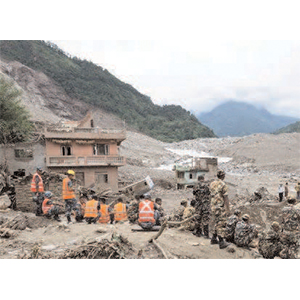
KATHMANDU: Nepal government on Wednesday declared dead the 123 people missing in the country’s worst landslide in over a decade, taking the death toll from the disaster to 156, as the search for the bodies buried under the debris was called off. The landslide, triggered by heavy rains, hit Sindhupalchowk district on Saturday after the Sunkoshi river, which flows across the border into Bihar as the Kosi river, was blocked creating an artificial lake near Nepal-Tibet border.
Chief district officer Gopal Parajuli confirmed that all 123 missing in the landslide were dead on the basis of data submitted by local people. “The missing persons were declared dead after the nature of the site showed no possibilities of finding the bodies,” said Parajul. He said rescue work has been called off for the time being as the deployment of heavy machinery and earth pullers may trigger more landslides. Earlier, 33 were pulled out from the rubble laid bare by Nepal’s worst landslide in over a decade.
Police and army personnel carried out search and rescue operations for the past five days to locate the missing persons. They drained out water from the artificial lake using controlled explosions. About 5,000 people across 11 districts have been affected due to the landslide; more than 1,000 have been displaced. Over 60 houses in three villages were swept away and dozens of other structures damaged.
The government has distributed Rs 40,000 as relief to the families of dead and missing in the disaster. Those whose houses were damaged were given Rs 5,000. Eighteen people were rescued by Nepal Army. The district has been evacuated and some 600 stranded tourists, including Indian nationals, have been moved to safer locations. In July 2002, over 150 people were killed when multiple mudslides struck two villages in the eastern district of Khotang. -

Nepal ex-prince arrested for drugs in Thailand
BANGKOK (TIP): Former Nepalese crown prince Paras Shah has been arrested on drugs charges in Thailand for a second time and could face up to five years in prison, police said on July 16. Shah was detained with about 13 grams (0.5 ounces) of marijuana at a hotel in Bangkok, according to an officer at Thonglor police station who did not want to be named. “He borrowed a flash drive from hotel security and when the security guard entered his room to get his flash drive back he saw marijuana on the counter so he told police,” the officer told AFP.
He said Shah, who is visiting Thailand on a tourist visa, had admitted illegal drug possession and was remanded in custody. It is not the first time the former royal has been in trouble with the law in Thailand. Shah, who as crown prince was unpopular for his playboy lifestyle, was arrested for possession of about three grams of marijuana on the island of Phuket in October 2012. He was detained again later the same year for smashing property at a luxury apartment in Bangkok.
In February 2013 Shah was admitted to intensive care in Thailand after suffering a heart attack. Shah became heir to the throne in 2001 after his cousin Crown Prince Dipendra killed nine members of his family including the king and queen in a drink-and-drugs-fuelled rampage, before apparently turning his gun on himself.
-

Nepal PM diagnosed with tuberculosis: Party spokesman
KATHMANDU (TIP): US doctors treating Nepalese Prime Minister Sushil Koirala have ruled out lung cancer and diagnosed the 75-year-old with tuberculosis, a spokesman for the premier’s Nepali Congress party said on June 26. Koirala travelled to New York’s Memorial Sloan- Kettering Cancer Center last week for treatment after routine tests showed up a spot on his lungs, prompting cancer fears.
“The doctors have diagnosed the PM with tuberculosis, not cancer, and have told him that it can be cured quite easily,” said Dilendra Prasad Badu, spokesman for the ruling Nepali Congress party. “I spoke to the PM today, he is feeling good and expects to be back in Nepal within a week to ten days,” Badu told AFP in Kathmandu. Koirala, who was a habitual cigarette smoker until he was diagnosed with tongue cancer eight years ago, will undergo radiation treatment to prevent a recurrence of that illness before returning to Nepal, Badu said.
The prime minister, who heads the Nepali Congress, took office in February after winning elections on a pledge to deliver a long-delayed constitution to the Himalayan nation within a year.
-

It’s a new era in India’s foreign policy as countries compete to woo Modi
“The new majority government in power in New Delhi, freed from debilitating coalition politics and attaching priority to economic development, has aroused external interest”, says the author.
In foreign policy, Prime Minister Modi has hit the ground running, taking unexpected initiatives. He reached out to our neighbors, taking the unprecedented step of inviting their leaders to his swearing-in ceremony. While invitations to Bangladesh, Nepal, Bhutan, Maldives and Afghanistan carried only positive connotations, those to Prime Minister Nawaz Sharif and President Rajapakse carried mixed political implications. It was felt that the plus points in extending invitations to Pakistan and Sri Lanka outweighed the negatives.
Engagement
In Pakistan’s case the dilemma is whether we should engage it at the highest level without any ground-clearing move by Nawaz Sharif on terrorism, the Mumbai trial and trade. The Pakistani premier has been, on the contrary, aggressive over Kashmir, invoking the UN resolutions and self-determination as a solution, seeking third party intervention, permitting tirades by Hafiz Saeed against India, maintaining the pitch on water issues and reneging on granting MFN status even under a modified nomenclature.
In these circumstances, the move to invite him risked suggesting that, like the previous government, the new government too was willing to open the doors of a dialogue in the hope of creating a dynamics that would yield some satisfaction on the terrorism issue. In other words, practically delinking dialogue from terrorism, despite having taken a position to the contrary while in opposition.
In Sri Lanka’s case, the whipped-up sentiments in Tamil Nadu against President Rajapakse for his triumphalist rather than reconciliatory policies on the Tamilian issue have upset the overall balance of India’s foreign policy towards Sri Lanka that requires that we adequately weigh the need to counter powerful adversarial external forces are at play there against our interests. Inviting President Rajapakse to New Delhi obviously risked provoking a strong reaction in Tamil Nadu, but the new government had to decide whether, like its predecessor, it would get cowed down by such regional opposition, or it would act in the greater interest of the country even when according importance to the sentiments of a section of our population.
This dramatic outreach to the neighbors has elicited praise internally and externally, primarily focused on the invitation to the Pakistan president and its implication for the resumption of the Indo-Pak dialogue. Internally, those pro-dialogue lobbies that have espoused the previous government’s placative policies towards Pakistan have naturally welcomed the surprise move by Modi. Externally, India has always been counseled to have a dialogue with Pakistan irrespective of its conduct and its terrorist links, the argument being that these two South Asian nuclear armed neighbors with unresolved territorial conflicts risked sliding into a nuclear conflict unless they found a way to settle their differences for which a dialogue was an inescapable necessity. Such praise from within and without from predictable quarters should neither be surprising nor worth much attention.
Outreach
The new majority government in power in New Delhi, freed from debilitating coalition politics and attaching priority to economic development, has aroused external interest. The sentiment outside the country- as well as inside it – has been that the previous government lost its way, leading India into the quagmire of high fiscal deficits and tumbling growth, belying international expectations about its economic rise paralleling that of China.
If India can be steered back into a high growth trajectory with stronger leadership and improved governance, more economic opportunities will open up for our foreign partners. This would also draw renewed attention to India’s geo-political importance which, though an accepted reality now, has receded from the foreground lately.
Reassurance
Modi is seen as the man of the moment. This would explain the telephone calls from world leaders to Modi and the invitations given and received. India is being courted, and Modi’s choice of the countries he first visits or foreign leaders he first receives, is drawing external attention as an indication of his diplomatic priorities.
On this broader front too, Modi is following an unanticipated script of his own. He is being generous to the US despite its reprehensible conduct in denying him a visa, by prioritizing national interest over his individual feelings. He has not waited for the stigma of visa refusal to be erased by a US executive order removing his name from the State Department black-list. He is planning to meet President Obama in Washington in September – the first external visit to be announced – quickly relieving the Americans of fears that the visa issue could become a hurdle in engaging him.
In another remarkable gesture that the State Department would have noted for its political import, he has agreed to a book launch by an American think-tank at Race Course Road. China wants to complicate moves by Japan to strengthen strategic ties with India. Its decision to send its Foreign Minister to India after the swearing-in seems to have been motivated by this rivalry, apart from seeking to build on the personal contacts established by China with Modi when he was Chief Minister. If the Chinese FM was allowed to be the first consequential foreign leader to meet Modi, it appears Japan may be the first foreign country – barring Bhutan – the latter may visit en route to the BRICS meeting in July in Brazil.
The Bhutan visit underscores the importance Modi intends attaching to neighbors. Russia’s Deputy Prime Minister is visiting Delhi on June 18. It would seem that Modi’s immediate priority is to reassure all his important interlocutors, friends or adversaries, that they should have no misgivings about him and the direction of his policies, and that he seeks to engage with all power centers in a balanced manner.
-

18 Indian pilgrims killed in Nepal
KATHMANDU (TIP): At least 18 Indian pilgrims were killed and 53 others injured when an overloaded bus carrying them veered off a mountain road and rolled about 100m before plunging into a river in Nepal, officials said on Tuesday. “All 18 people who died in the accident were Indian nationals, mostly from Uttar Pradesh,” chief district administrator Ram Bahadur Purumbang said. A total of 56 people were injured in the accident when the bus plunged into the Madi river in Pyuthan district, 750km west of Kathmandu on Monday night.
There were 74 passengers and all except three people —the bus driver, his helper and a lady — were Indian nationals who were returning from a Hindu pilgrimage in Swargadwari, Purumbang said. Fifteen died on the spot and three breathed their last while undergoing treatment at a local hospital, he said.
-

Hundreds rally in Nepal to mark 61st anniversary of Everest conquest
KATMANDU (TIP): Hundreds of people in Nepal’s capital have held separate rallies to mark the 61st anniversary of the first conquest of Mount Everest and to remember the 16 Sherpa guides who died in an avalanche last month on the world’s highest mountain.
New Zealander Edmund Hillary and his Sherpa guide, Tenzing Norgay, became the first climbers to reach the top of Everest on May 29, 1953. More than 500 people, including mountaineers and trekking guides, marched in Katmandu on May 29 to mark the day. A separate rally was held May 28 night in memory of the 16 guides killed in an April 18 avalanche just above Everest’s base camp. Participants held candles and pictures of the guides who died in the disaster.
-

BJP leaders greet SAARC Presidents and Prime Ministers
NEW DELHI (TIP): OFBJP Global Convener Vijay Jolly stated, May 28, that the visiting SAARC Presidents & Prime Ministers at the Indian Prime Minister Narendra Modi’s oath taking ceremony, were separately welcomed & greeted with courtesy calls by senior Bharatiya Janata Party leaders in New Delhi.
BJP General Secretary (Organization) Ram Lal, BJP MP Vijay Goel, BJP Spokeswomen Meenakshi Lekhi (MP) & Nirmala Seetharaman (now Union State Minister), senior RSS Pracharak Indresh Kumar, OFBJP Co- Conveners Dr. Rajni Sarin & Amit Thakar accompanied by Vijay Jolly called on the visiting SAARC leaders in New Delhi recently.
SAARC leaders President of Maldives Abdulla Yameen Abdul Gayoom, Prime Minister of Bhutan Tshering Tobgay, Prime Minister of Nepal Sushil Koirala, Speaker of Bangladesh Parliament Shirin Sharmin Chowdhury, Prime Minister of Pakistan Nawaz Sharif, Prime Minister of Mauritius Dr. Navin Ramgoolam, President of Sri Lanka Mahindra Rajapaksa & President of Afghanistan Hamid Karzai attended the oath taking ceremony of BJP & Prime Minister Mr. Narendra Modi govt.
The BJP leaders conveyed to the visiting SAARC leaders the strong resolve of the party to strengthen ties with India’s neighboring friendly nations. The historic decision to invite all the SAARC leaders by Prime Minister Modi will promote friendship, understanding, businesscommerce & enhance regional ties in the region, stated OFBJP Convener.
OFBJP leaders from 35 nations of the world attended the oath taking ceremony. Nearly 95 overseas delegates attended a specially convened meeting at the BJP headquarters to honor them. They were presented with “Ganesh statues” & “safron lotus scarfs”. BJP leaders Ram Lal and Vijay Jolly addressed & greeted them for their special efforts to visit India and witness the historic event of BJP govt. formation in New Delhi.
-

US man falls 70ft into crevasse in Nepal, survives
KATMANDU: An American climber said he fell into a crevasse on a Himalayan mountain in Nepal but managed to crawl to his tent despite broken ribs and an arm before being rescued the next morning. John All of Western Kentucky University said on Thursday that he thought he was going to die after falling some 22 meters (70 feet) into the crevasse with no hope of rescue.
It took him six hours to crawl out of the hole and another three hours to reach his tent and spent the night in pain before rescuers reached him the next morning, he said in an interview in a Katmandu hotel where he is recovering. All and his research team had moved to Mount Himlung in north central Nepal because the Mount Everest area was closed last month after the death of 16 Sherpa guides in an avalanche. One of those Sherpa guides was from All’s team.
They were planning to climb Mount Lhotse, a sister peak of Everest. Climbers attempting to scale both the peaks share much of the route. “I thought I was going to die, there was no way out. I was alone,” All said describing his first thoughts after falling into the crevasse on Monday. “I landed on an ice ledge probably 3 feet wide which saved me from falling further into the crevasse.” He broke five ribs and an arm, dislocated his shoulders, suffered internal bleeding and bruised his face and knees.
He crawled out of the hole using his ice axe but because of his broken ribs and right arm he could only move very slowly. His teammates were in lower camps and would take two days to get to him. Once he got out of the crevasse, he did not have a radio to call for help so he struggled his way back to the tent and barely made it inside. He texted for help on his satellite messenger. His friends responded and arranged for a helicopter rescue.
-

Nepal opens 104 new peaks to climbers: Officials
KATHMANDU (TIP): Nepal has opened 104 new, unconquered peaks to mountaineers, in an attempt to boost tourism after a deadly avalanche effectively ended this year’s lucrative Mount Everest climbing season, the government said on May 22. Climbers can now scale a total of 414 peaks in the Himalayan nation, including two named after Edmund Hillary and Tenzing Norgay, the first men to successfully summit the world’s tallest mountain in 1953, the tourism ministry said. The newly opened peaks have not been tackled before, officials said, meaning climbers have the chance to be the first to summit them.
“The government felt that we should open new areas to attract more climbers and promote tourism,” senior tourism ministry official Madhusudan Burlakoti said in a statement. The government has also waived climbing fees — currently $100 for an individual mountaineer — for peaks under 5,800 metres (19,000 feet), Burlakoti said. All of the unconquered peaks were open for business immediately except for Yalung Khang West, which is awaiting approval from the Bern-based International Mountaineering and Climbing Federation, because it is above 8,000-metres. The new peaks include the 7,681-metre Hillary Peak and the 7,916-metre Tenzing Peak.
Mountaineering officials welcomed the announcement, saying it would revive Nepal as a climbing destination, after the April 18 avalanche saw the effective closure of the climbing season, a key revenue earner for the impoverished country. “This will help improve Nepal’s image in the mountaineering community, which has suffered after the Everest avalanche,” Ang Tshering Sherpa, president of the Nepal Mountaineering Association told AFP.
Tourism ministry official Burlakoti said the government was keen to open more of its over 1,300 Himalayan peaks in future, depending on demand from climbers.”Some peaks have cultural and religious significance — we have to keep that in mind before deciding which ones to open for climbers,” he said.
-

After talks, Sherpas set to resume work
KATHMANDU (TIP): Nepal’s agitating Sherpa mountain guides on April 25 agreed to resume work on Mount Everest following negotiations with the government on their demands in the wake of the avalanche that killed 16 of their colleagues in the worst disaster on the world’s highest peak.
The mountain guides had halted work for a week to mourn the death of those who died in the avalanche on the 8,848-metre Everest on last April 18. The Sherpas had threatened to halt work indefinitely if their demands of increasing insurance facilities, providing compensation and ensuring safety were not met.
-

12 killed in deadliest Mount Everest disaster
KATHMANDU (TIP): In one of the most distressing tragedies ever en route Mount Everest, 12 Nepalese Sherpa guides were killed and four missing after an avalanche swept down on them on Friday. Officials said the Sherpas had gone up to fix ropes and were carrying tents and food ahead of the main climbing season starting later this month when they came under the heavy snowslide.
The death toll is expected to rise as several bodies are yet to be retrieved from under the snow because of inclement weather. The avalanche hit an area called Popcorn Field below Camp 2 at an elevation of around 6,400m on the 8,848m-tall peak. The area has boulders of ice on the way leading to the treacherous Khumbu icefall. A news agency quoted an injured survivor as telling his relatives that the path up the mountain was unstable just before the avalanche.
The survivor was among four injured who were airlifted to a hospital in Kathmandu. Climbers with less serious injuries were treated at the base camp. Rescuers plucked survivors from under mounds of snow and ice and were looking for four more missing guides when deteriorating weather conditions forced them to pull back. “The search for the missing will continue on Saturday morning,” said mountaineering official Dipendra Poudel. He said the toll was feared to rise as eyewitnesses said they could see more bodies but which could not be retrieved given the hostile terrain and bad weather. Eight climbers had died in the last major disaster on way to the Everest on May 11, 1996, when a team of adventurists had run into a snowstorm.
US mountaineer Jon Krakauer’s best-selling book “Into Thin Air” had immortalized that tragedy and is the subject of an under production Hollywood film. Hundreds of climbers, guides and support crews are currently at the Everest base camp preparing to climb up to the summit when weather conditions improve early next month. They have been setting up camps at higher altitudes, and guides have been fixing routes and ropes on the slopes above.
The Sherpas are one of the main ethnic groups in Nepal’s mountainous region, and many make their living as guides to the Everest and other Himalayan peaks. Some foreign climbers were part of the group going up the mountain to get acclimatized, but they were not among the fatalities. Dipendra Poudel said 334 foreign climbers have been permitted to climb the peak in the spring season that lasts till end of May. Around 400 Sherpa guides would accompany them. More than 4,000 climbers have summited Everest since 1953, when New Zealander Edmund Hillary and Sherpa Tenzing Norgay first conquered it. Over 300 people have died on the mountain since the first summit.