Inspired by true events, Netflix India’s upcoming crime drama Bhakshak premieres on February 9. The film is a Red Chillies Entertainment production, directed by Pulkit and produced by Gauri Khan and Gaurav Verma. It stars Bhumi Pednekar, Sanjay Mishra, Aditya Srivastava and Sai Tamhankar in pivotal roles. The makers released the teaser of the film on Thursday, January 17.
Bhakshak explores the journey of an unwavering woman’s quest to seek justice. Bhumi Pednekar as Vaishali Singh portrays the role of an investigative journalist who wants to bring to light a heinous crime, laying bare the ground reality of crimes against women. While the teaser doesn’t reveal much, it features Bhumi back in a deglamourised avatar after her urban comedy Thank You For Coming last year.
At the end of the teaser, Bhumi is seen telling a girl, “Bachchon ke adhikar ke liye lad rahe hain hum, samajh rahi ho? (We’re fighting for girls’ rights, do you get it?)” In a statement, director Pulkit echoed the thoughts. “Our aim was to shed light on the harsh realities of society and spark conversations that lead to meaningful change. I’m looking forward to more people joining this important dialogue,” he said.
Red Chillies Entertainment, the production house owned by Shah Rukh Khan, has been busy making the superstar’s last two global blockbusters, Atlee’s crime thriller Jawan and Rajkumar Hirani’s Dunki, which released in cinemas last year. Bhakshak marks the banner’s first digital release in a couple of years. Its last digital output was Jasmeet K Reen’s 2022 dark comedy Darlings, which was a co-production with lead actor Alia Bhatt’s Eternal Sunshine Productions, and also released on Netflix India.
Gaurav Verma, Producer at Red Chillies Entertainment, said in a statement, “We believe in storytelling that not only entertains, but also enlightens. Source: HT
Tag: Netflix
-
Bhakshak teaser: Bhumi Pednekar plays an investigative journalist
-

Cameron Diaz ‘angry’ over rumors that Jamie Foxx was ‘crazy’ on Netflix film set
Cameron Diaz appeared on a recent episode of the “Lipstick on the Rim” podcast and pushed back against rumors that Jamie Foxx was “crazy” on the set of their Netflix movie “Back in Action” (via People). Foxx was in the midst of production when he was hospitalized for a medical emergency. Diaz said reports surfaced afterwards saying Foxx was “making everyone miserable and that I was never gonna make another movie again because of him.”
“I really hate all of the things that were being said about our set at the time,” Diaz continued. “You just want to scream at the top of your lungs, like, ‘What are you talking about?’ … Jamie is, like, the cheerleader for the entire crew. Everybody loves him. We have so much fun on the set with him and he’s just a professional on every level.”
Diaz said she “had a blast” working with Foxx on “Back in Action,” which is notable for being her first leading role in nearly a decade.
“Jamie is the best. I love that guy so much. He’s such a special person and he’s so talented, so much fun,” Diaz said. “The hiccups that happened throughout production are the natural kinds of things that happen. But nothing got delayed other than, obviously, toward the end. And that’s something that is not my place to speak about.” Diaz declined to discuss Foxx’s medical incident, but she said that the Oscar-winning actor is “thriving” now. “When I see and hear people trying to take another person down like that … [Jamie is] so classy. He’s like, ‘Nope. Just let them [talk],’” Diaz added. “Still, it just really made me angry.”
“Back in Action” reunites Diaz and Foxx, who worked together on 1999’s sports drama “Any Given Sunday” and 2014’s “Annie” remake, which was Diaz’s final film role until now. Seth Gordon (“Horrible Bosses”) is directing the movie from a script he wrote with Brendan O’Brien (“Neighbors”). The film is expected to be released in 2024.
Source: Variety.com -

Will Gal Gadot essay the role of Wonder Woman again?
Actor Gal Gadot, who is currently gearing up for the release of their upcoming action film ‘Heart of Stone’, recently spilled beans on the future of ‘Wonder Woman’. According to Deadline, a US-based media house, during Netflix’s Tudum fan festival, the actor was questioned about whether she will reprise her role as Diana Prince. Gadot said, “Things are being worked behind the scenes and once the right moment arrives, you’ll know about it,” Citing ET’s interview, Deadline stated.
The third Wonder Woman movie, in which Gadot was supposed to reprise her superhero role, was cancelled after Peter Safran and James Gunn changed the course of the DC Universe. Gadot pondered back on her Wonder Woman casting towards the end of 2022 and posted her reflections online. Last year in December, Gadot tweeted, “A few years ago it was announced that I was going to play Wonder Woman. I’ve been so grateful for the opportunity to play such an incredible, iconic character and more than anything I’m grateful for YOU. The fans. Can’t wait to share her next chapter with you.”
Gadot recently shared how uncertain it is for Wonder Woman’s future that she feels “empowered” to tell new storylines. Coming back to her movie, ‘Heart of Stone’, the makers of the film unveiled the trailer. Source: ANI -
75 Years of Indian Cinema: A Walk Down the Memory Lane

By Murtaza Ali Khan Coinciding with 75 years of Independence, noted film critic Murtaza Ali Khan scanned for The Indian Panorama the 75 years of Indian Cinema. The article here will give readers a fairly good idea of the beginnings and the growth of Indian Cinema, the impact of government policies, the contribution of the Indian Diaspora, the influence of the NRI film makers, the difference the rise of web and the OTT platforms made to mainstream Indian Cinema, and the contribution of certain film makers. The author has also dwelt on the historical phases in the Indian cinema’s 75-year journey. Please send in your comments to murtaza.jmi@gmail.com – EDITOR

Satyajit Ray behind the camera. (Photo: courtesy Ray Society) Storytelling is undeniably one of the most powerful tools known to mankind. It also happens to be one of the oldest art forms. Storytelling is not merely a means of indulgence but also a great source of learning. Since times immemorial, storytellers have spun yarns with the hope of delighting mankind. Be it the Iliad and the Odyssey of Homer, the Jataka tales, the Mahabharata of Vyasa, the One Thousand and One Nights, or the plays of Shakespeare, each of these sprawling sagas, above all, has proven to be a consummate manifestation of the human expression. Storytelling shares an intimate relationship with performing arts. As far as India is concerned, the history of performing arts can be traced back to Bharatmuni’s Natya Shastra, which describes art as the search for truth. Human life too is a pursuit for truth and happiness. It is this connection that makes life and art inseparable. While discussing art in the context of the 20th and the 21st centuries, it is essential to explore cinema as a mass medium of storytelling that’s often looked upon as the definitive art form that seamlessly combines elements of storytelling, performing arts, and science.
Post-Independence, Indian cinema started evolving at a breakneck pace. While the film industry did suffer huge losses in terms of actors, writers, and technicians who decided to move to Pakistan, the industry greatly gained from the nation building campaigns helmed by Jawaharlal Nehru. For, many of these campaigns revolved around film stars whose mass appeal was leveraged upon by Nehru to give impetus to what came to be known as the Nehruvian idea of India. There is no denying that we have come a long way as a nation over the last 75 years: from bullock carts to jeeps to airplanes to space to the internet. As far as cinematic storytelling is concerned, OTT is the new buzz word, even as the jury is still out on whether cinema the way we know it would survive or not. So, let’s take a look at the journey of cinema since independence.
The origins of the cinematic medium
At the turn of the 19th century, cinema became a phenomenon across Europe thanks to the exploits of the Lumière brothers who conducted private screenings of projected motion pictures in the world’s major cities such as Paris, London, New York, Montreal, and Buenos Aires. It was in July 1896 that the Lumière films finally got screened in Bombay (now Mumbai). A couple of years later, an Indian photographer named Hiralal Sen made India’s first short film, A Dancing Scene, from the scenes of a stage show, The Flower of Persia. It was followed up by H S Bhatavdekar’s The Wrestlers (1899) – a recording of a wrestling match at the Hanging Gardens in Mumbai – which was also India’s first documentary film. In 1912, Dadasaheb Torne made a silent film titled Shree Pundalik – a photographic recording of a popular Marathi play.
A year later in 1913, Dadasaheb Phalke made India’s first feature-length motion picture – a silent film in Marathi titled Raja Harishchandra. Phalke, who is often referred to as the Father of Indian Cinema, had mastered the art of integrating centuries old narrative techniques, borrowed from the indigenous epics, with the emerging technique of making motion pictures. In 1916, R Nataraja Mudaliar made Keechaka Vadham, the first silent film in Tamil. Bangla motion pictures soon followed. The year 1931 proved to be a landmark for Indian cinema as it marked the end of the silent era with Ardeshir Irani making India’s first sound film Alam Ara, made in Hindi/Urdu.

A Still from India’s First Feature Film Raja Harishchandra. Unfortunately, there is no surviving print of the same. And that’s what brings to me to this wonderful documentary by Shivendra Singh Dungarpur called Celluloid Man about the erstwhile director of the Nation Film Archive of India (NFAI), P K Nair who devoting his life collecting and preserving films. Of course, in the documentary we learn how Ardeshir Irani’s son disposed off the Alam Ara reels himself, after extracting silver from them. It would be due to the efforts of Nair that prints of Raja Harishchandra could be retrieved from Phalke’s daughter kept in Phalke’s Nasik house in a wooden box. Sometimes Nair world look for films in cowsheds and godowns. Of course, now we are becoming more aware about the importance of film preservation. The National Museum of Indian Cinema (NMIC) was inaugurated by the Indian Prime Minister. Narendra Modi on 19th January, 2019 at the Films Division Complex, Pedder Road, Mumbai.The Museum is open to the public from Tuesday to Sunday (11 AM to 6 PM) and is closed on Mondays and Public Holidays. It is housed in two buildings – the New Museum Building and the 19th century heritage building, Gulshan Mahal. The Museum showcases history of India Cinema and has ample artefacts, digital elements including kiosks, interactive digital screens, information-based screen interfaces, etc. It is frequently visited by leading personalities from the world of cinema. Film properties and costumes, vintage equipment, posters, copies of important films, promotional leaflets, soundtracks, trailers, transparencies, old cinema magazines, statistics covering film making & distribution etc. are displayed in a systematic manner depicting the history of Indian cinema in a chronological manner. NMIC not only provides a store house of information to the laymen, but also help filmmakers, students, enthusiasts and critics to know and evaluate the development of cinema as a medium of artistic expression.
Independence and further
On 15 August 1947 India became independent from the British Empire. The early commercial success of Phalke’s films not only paved the way for more such motion pictures but also set the ball rolling for cinema as a commercial art form. In the years to come, cinema in India evolved further as a potent art form capable of mirroring socio-political and economic issues plaguing India with films like Achhut Kanya (1936) and Sujata (1959). Hindi cinema gained international visibility with Chetan Anand’s Neecha Nagar (1946) and Bimal Roy’s Do Bigha Zamin (1953), which won the Grand Prix and Prix International awards at the Cannes Film Festival in 1946 and 1954, respectively.
Nehruvian socialism and post-independence Hindi cinema

(L to R): Madhubala, Nargis, and Meena Kumari National Award-winning film critic, M K Raghavendra, highlights in his book, The Politics of Hindi Cinema in the New Millennium: Bollywood and the Anglophone Indian Nation, how Hindi cinema, post-independence, played a big part in helping Indians imagine themselves as an entity binding them together – the Indian nation. Evidently, the first couple of decades after independence saw the influence of Nehruvian socialism on Hindi cinema. It is sometimes argued that popular films of the 1950s failed to capture the prevalent reality of the times owing to the filmmakers’ compulsion to fortify the nationalistic myths created by the newly appointed Jawaharlal Nehru government. However, if one tries to closely examine some of the most important films made during this period such as Raj Kapoor’s Awaara (1951), Bimal Roy’s Do Bigha Zamin (1953), Mehboob Khan’s Mother India (1957), and Guru Dutt’s Pyaasa (1957), it becomes evident that the Hindi films of this period were not always in harmony with Nehru’s vision of India. But, it is also true that other important films from this era like Andaz (1949), Naya Daur (1957), and Howrah Bridge (1958) did succeed in depicting the dichotomy associated with Nehru’s ideals of modern India – the good side of modernity shown through the doctors, engineers, etc. and the bad side through the caricatures of the gamblers, cabaret dancers, etc.
Guru Dutt
Vasanth Kumar Shivashankar Padukone, better known as Guru Dutt, is lauded for his artistry, notably his usage of close-up shots, lighting, and depictions of melancholia. He is often referred to as the Orson Welles of Indian cinema. He directed a total of 8 Hindi films, several of which have gained a cult following internationally. This includes Pyaasa (1957), which made its way onto Time magazine’s 100 Greatest Movies list, as well as Kaagaz Ke Phool (1959), Chaudhvin Ka Chand (1960), and Sahib Bibi Aur Ghulam (1962), all of which are frequently listed among the greatest films in Hindi cinema.
Raj Kapoor
Raj Kapoor is often described as the Charlie Chaplin of Indian cinema. He was greatly inspired by Charlie Chaplin and played characters based on The Tramp in films such as Awaara (1951) and Shree 420 (1955). The song ‘Awara Hoon’ (which translates to I am a Vagabond/Tramp) from his movie Awaara becoming an anthem for protest against oppression in so many places across the globe: In China, in Soviet Union, In Middle East. It’s popularity led to creation of localized versions of the songs in Greece, Turkey, Romania, Soviet Union, and China. It is still considered a timeless song in South Asia, Balkans, Russia, and Central Asia.
Speaking of the leading ladies, Suraiya, Madhubala, Meena Kumari, Nargis, Wahida Rehman, Vyjayanthimala, Nanda, Nutan, Hema Malini, Rekha, Sridevi, Madhuri Dixit, Kajol, Aishwarya Rai, Vidya Balan, Deepika Padukone, Kangana Ranaut, and Alia Bhatt are amongst the most important Bollywood actresses to have graced the silver screen.

Indian cinema’s leading men Dilip Kumar, Raj Kapoor, and Dev Anand with India’s First Prime Minister Pandit Jawaharlal Nehru Indian cinema beyond Nehru
While these trends continued, Hindi cinema never eschewed from capturing the nerve of the important historical events in post-colonial India such as highlighting the gloomy reality of the Sino-Indian war, the euphoria associated with green revolution of the mid-1960s, Indira Gandhi’s meteoric rise in the late 1960s, her growing populism in the 1970s and her crushing defeat in the 1977 general elections following the 21 dark months of Emergency, emergence of regional conflicts during the 1980s like the Khalistan movement, and the economic liberalization during the early 1990s under the prime minister ship of P V Narasimha Rao, ushering in a new era of globalization.
Satyajit Ray and Indian Neo-Realism
Bengali filmmaker Satyajit Ray, the father of Indian neo-realistic cinema, is widely regarded as one of the greatest auteurs of the 20th century. It wouldn’t be a hyperbole to call Satyajit Ray the most consummate filmmaker of all time, for when it came to the different aspects of filmmaking, he himself practically took care of everything: be it casting, scripting, direction, music, cinematography, art direction, editing, or marketing and publicity. An alumnus of Nobel Laureate Rabindranath Tagore’s Visva-Bharati University at Santiniketan, Ray was born in a Calcutta based Bengali family noted for their long legacy of art and literature. It was in Santiniketan that Ray, under great painters like Nandalal Bose and Benode Behari Mukherjee, fell in love with the Oriental art. However, Satyajit Ray’s love for cinema and Indie filmmaking was sparked by his interaction with the legendary French filmmaker Jean Renoir who had come to Calcutta to scout locations for his forthcoming movie. After establishing Calcutta Film Society in 1947, Ray embarked on a six-month-long trip to Europe, as part of his job assignment in an advertising agency, during which he religiously explored the different facets of cinema, watching as many as 100 international films including Vittorio de Sica’s neorealistic masterpiece Bicycle Thieves (1948). Greatly inspired by the concept of realistic cinema that promoted a whole new degree of realism through the use of an amateur cast in place of a professionally trained one and real shooting locations instead of the custom-built sets and studios, Ray was more determined than ever to start a new chapter in Indian Cinema.
After facing many hardships including a major financial crunch, Ray finally managed to complete his adaptation of Bibhutibhushan Bandyopadhya’s celebrated novel Pather Panchali in 1955. The movie was presented with several international awards, including Best Human Documentary at the 1956 Cannes film festival. Just like Akira Kurosawa had managed with Rashomon in 1950, Ray succeeded in introducing the Indian Cinema to the whole world with Pather Panchali. Pather Panchali is the first part of Ray’s now world renowned The Apu Trilogy—the other two being Aparajito [The Unvanquished,1956] and Apur Sansar [The World of Apu, 1959]—that chronicles the troubled, poverty-stricken life (from childhood to maturity) of the movie’s protagonist, Apu, in the backdrop of the early 20th century Bengal. During the next few decades, Satyajit Ray continued with his merry ways making influential movies like Jalsaghar [The Music Room, 1958], Postmaster (1961), Abhijan [The Expedition, 1962], Mahanagar [The Big City, 1963], Charulata (1964), Days and Nights in the Forest (1969), and Pikoo [Pikoo’s Diary, Short, 1980] that dealt with the cultural, religious and socio-economic ambiguities of the Indian middle class. In the 70s, Ray went on to make the Calcutta trilogy: Pratidwandi [The Adversary, 1970], Seemabaddha [Company Limited, 1971] and Jana Aranya [The Middleman, 1975]. In 1977, Ray made his first Hindi film named Shatranj Ke Khiladi [The Chess Players], an adaptation of a story by the famous Hindi novelist Munshi Premchand. In 1980, Satyajit Ray made Hirok Rajar Deshe [The Kingdom of Diamonds], a political allegory written in the backdrop of Emergency to castigate the totalitarian political regime under Mrs. Indira Gandhi. During his long and illustrious career, Ray was a beneficiary of a multitude of meritorious awards, national and international, including the Bharat Ratna (Republic of India’s highest civilian award) and an Academy Honorary Award (an Oscar for his lifetime contribution to cinema) in 1992. Such has been the extent of influence of Ray’s multifaceted humanistic works that even today the global audience relates to the Indian Cinema mostly through the means of his oeuvre.
Ritwik Ghatak
Satyajit Ray’s contemporary, Ritwik Ghatak is best known for his films such as Nagarik (1952), Ajantrik (1955), Madhumati (1958), Meghe Dhaka Tara (1960), Subarnarekha (1965), and Titash Ekti Nadir Naam (1973), among others.
Ghatak’s cinema is primarily remembered for its meticulous depiction of social reality, partition and feminism. Ghatak moved briefly to Pune in 1966, where he taught at the Film and Television Institute of India (FTII). His students included filmmakers Mani Kaul, Kumar Shahani, Adoor Gopalkrishnan, Saeed Akhtar Mirza, andJohn Abraham. Although his stint teaching film at FTII was brief, his students who would go on to become noted filmmaker themselves such as Mani Kaul, John Abraham, and especially Kumar Shahani, carried Ghatak’s ideas and theories, which were elaborated upon in his book ‘Cinema and I,’ which was described by Satyajit Ray as a book that covers all aspects of filmmaking. As opposed to Ray who succeeded in creating an audience outside India during their lifetime, Ghatak and his films were appreciated primarily within India. But, it has changed in the recent decades as Ghatak’s work continues to get discovered globally.
Mrinal Sen
Along with Satyajit Ray and Ritwik Ghatak, Mrinal Sen pioneered the parallel cinema movement in India, as a counterpoint to the mainstream fare of Hindi cinema. Sen’s cinema is primarily known for its artistic depiction of social reality.
Sen is one of the very few filmmakers to have won an award or recognition at all the major cinematic forums. In addition to a barrage of National Awards, Mrinal Sen’s immensely thought-provoking films have been recognized at Cannes Film Festival (Jury Prize for Kharij, 1983), Berlin International Film Festival (Grand Jury Prize for Akaler Sandhane, 1981), Venice Film Festival (Honourable Mention for Ek Din Achanak, 1989), Montreal World Film Festival (Special Prize of the Jury for Khandhar, 1984), Moscow International Film Festival (Silver Prize for Chorus, 1975), Cairo International Film Festival (Silver Pyramid for Best Director for Aamaar Bhuvan, 2002), Chicago International Film Festival (Gold Hugo for Khandhar, 1984), etc.
In 1981, the Government of India awarded him with the Padma Bhushan. In 1985, President Francois Mitterrand, the President of France awarded him the Commandeur de Ordre des Arts et des Lettres the highest civilian honor conferred by that country. In 2005, he was conferred with the Dadasaheb Phalke Award. In 2000, President Vladimir Putin of the Russian federation honored him with the Order of Friendship.
Regarded by many as Sen’s greatest film, Bhuvan Shome’s sardonic humor and its realistic depiction of rural India made it a landmark of Indian cinema. In his Calcutta trilogy, Sen explored the civil unrest in contemporary Calcutta through stylistic experiments and fragmented narratives. Sen examined middle-class morality in his films Ek Din Pratidin and Kharij.
A recipient of countless national and international film awards, Sen was instrumental in drawing youth to theatre as a member of the Indian People’s Theatre Association. Unlike his contemporaries, Sen succeeded in breaking the language barrier by making films in languages other than Bangla. Some of his prominent films are in Oriya and Telugu, as well as in Hindi. Sen is regarded as the pioneer of political cinema in India. Before Sen, filmmakers usually stayed away from politics, thinking it to be a taboo subject. But Sen never eschewed from depicting the unrest, angst and deprivation of the Indian society. And perhaps that’s what inspired his successors to make films heavily laced with socio-political commentary.
Tapan Sinha
Tapan Sinha was one of the most prominent Indian film directors of his time forming a legendary quartet with Satyajit Ray, Ritwik Ghatak and Mrinal Sen. He was primarily a Bengali filmmaker who worked both in Hindi cinema and Bengali cinema, directing films like Kabuliwala (1957), Louha-Kapat, Sagina Mahato (1970), Apanjan (1968), Kshudhita Pashan and children’s film Safed Haathi (1978) and Aaj Ka Robinhood.
Amitabh Bachchan and the Rise of the Angry Young Man

Amitabh Bachchan in a still from Yash Chopra’s DeewaarAmitabh Bachchan While during the late ’60s and early ’70s Hindi cinema witnessed the dominance of romantic movies with actors like Dev Anand, Rajesh Khanna, Shashi Kapoor, Dharmendra and actresses like Sharmila Tagore and Asha Parekh becoming household names, by the mid-1970s a new kind of hero emerged who was not identified by his chocolate boy image but by his rugged machismo. Popularly described as the ‘Angry Young Man’, this new protagonist actually represented the anger and frustration of an entire generation exploited by those in power. For, this was a period of political, social, and economic upheaval in India with the issues of poverty, unemployment, and political violence plaguing the common man more than ever.
While Amitabh Bachchan made this character his own (with the grand success of films like Zanjeer, Deewaar, and Sholay) through the ’70s and the ’80s, actors like Anil Kapoor and Sunny Deol carried the mantle forward into the ’90s. The ’70s and ’80s also marked the advent of the Indian New Wave or Parallel Cinema with films like Ankur (1973), Nishant (1975), Manthan (1976), and Saaransh (1984). Mrinal Sen’s Bhuvan Shome (1969) is widely considered as the starting point of this movement. Shyam Benegal, Mani Kaul, Ketan Mehta, and Govind Nihalani are some of the prominent names of the Indian New Wave.
The ‘90s and the Khan Trio

Kajol and Shah Rukh Khan in Dilwale Dulhaniya Le Jayenge. The late ’80s and the ’90s witnessed commercial Hindi cinema go from strength to strength with blockbusters like Mr. India (1987), Tezaab (1988), Qayamat Se Qayamat Tak (1988), Maine Pyar Kiya (1989), Khiladi (1992), Darr (1993), Mohra (1994), Hum Aapke Hain Koun..! (1994), Karan Arjun (1995), Dilwale Dulhaniya Le Jayenge (1995), Raja Hindustani (1996), Dil To Pagal Hai (1997), Kuch Hota Hai (1998), Pyaar To Hona Hi Tha (1998), and Mann (1999) setting new box office records. Many of these films starred Anil Kapoor, Shah Rukh Khan, Salman Khan, Akshay Kumar, Aamir Khan, Ajay Devgan, Madhuri Dixit, Karisma Kapoor, and Kajol.

Kangana Ranaut and R. Madhavan in Anand L. Rai’s Tanu Weds Manu At the turn of the 21st century, parallel cinema underwent a revival of sorts with the arrival of filmmakers like Ram Gopal Varma, Madhur Bhandarkar, and Anurag Kashyap, whose cinema mainly dealt with depiction of organized crime. The success of Satya (1998), Chandni Bar (2001), Company (2002), Black Friday (2004), and Sarkar (2005) proves beyond doubt the changing tastes of the Hindi film audiences during this phase.
The growing influence of the Indian Diaspora on Bollywood filmmakers
If we study Hindi cinema closely, we observe that the 1990s proved to be the tipping point with Nehruvian socialism making way for economic liberalization in India. As the Indian economy gradually opened up to the world, the Hindi cinema underwent an Anglicization of sorts owing to the growing influence of the Indian Diaspora – a trend that is best demonstrated by films like Dilwale Dulhania Le Jayenge (1995), Pardes (1997), Kabhi Khushi Kabhie Gham (2001), and Namastey London (2007). During this period, Bollywood started catering more and more to the English-speaking Indians. The trend perpetuated with the multiplex boom.
Subsequently, filmmakers like Vishal Bhardwaj, Anurag Kashyap, and Tigmanshu Dhulia made efforts to bring about a change to this trend by making films such as Matru Ki Bijlee Ka Mandola (2013), Gangs of Wasseypur (2012), Paan Singh Tomar (2012), etc.
Bollywood and the 100 Crore Club
During this phase, Hindi cinema continued to take new leaps in terms of revenue generation but there appeared to be a stagnation of sorts in terms of creative thinking. The success of a Hindi film started depending on whether it entered the ‘100 Crore Club’ or not. Even the most successful films would run only for a few weeks as opposed to the ‘Jubilee Era’, when success was measured in terms of the number of weeks a movie ran in the theatres: 25 weeks (Silver Jubilee), 50 weeks (Golden Jubilee), or 75 weeks (Platinum Jubilee).
Hindi cinema and the Hindi heartland

Manoj Bajpayee as Bhikhu Mhatre in Ram Gopal Varma’s Satya Building on the trend that was started by the likes of Anurag Kashyap, Tigmanshu Dhulia, Vishal Bhardwaj, and Aanand L. Rai, Hindi films subsequently started focusing consciously on stories based in the Hindi heartland. The diaspora no longer remained the primary target of Hindi filmmakers and as a result as the industry witnessed a surge in the number of films that are set in north-central India which enjoys a Hindi-speaking majority. But, a lot of the mainstream Hindi films since Lagaan (2001) seemed to lack the impetus needed to march in the global arena. It is true that there have been Hindi films like Miss Lovely (2012), Titli (2014), and Masaan (2015) which have made it to the Un Certain Regard Section at Cannes.
The rise of web and the OTT platforms
Speaking of the audiences, the rise of various OTT platforms has had a dramatic impact on the nature of content produced. Today, we have audiences with such diverse tastes that content creators are forced to create content targeted at different segments of audiences. The COVID-19 pandemic has further given a fillip to OTT platforms. With cinemas indefinitely shut down more and more viewers are forced to shift to one or more of these platforms for their daily dose of entertainment. This has also given rise to what is described as binge-watching. But before we try and examine this in detail, it is first important to decipher the nuances of binge-watching. For the uninitiated, binge-watching is a way of consuming content all in one go as opposed to consuming it in serialized weekly installments. It’s an effective way to watch plot-heavy shows. Now that we have a basic understanding of this novelty we will try and analyze its various aspects. For years cinema has been enjoying an undisputed status over its poor cousin television. While one agrees with the classification of cinema and television as two different mediums it cannot be denied that with the advent of new age content the line between the two is fast fading. In fact, today we can easily look at the majority of binge-worthy international television / web series as 8 or 10 hour films and that’s primarily because of the topnotch production values and the cinematic grammar associated with them.

A still from SonyLiv show Rocket Boys The advent of streaming services like Netflix and Amazon Prime has given rise to Indian original shows like Delhi Crime, The Family Man, Special Ops, Sacred Games, Scam 1992, Rocket Boys, Mirzapur, Apharan ,Inside Edge, Panchayat, Undekhi, Aashram, and Kota Factory, among others. The rapid emergence of binge-worthy content is proving to be a real game changer for the Indian entertainment industry at large. This is in stark contrast to some of the daily soaps we have grown accustomed to watching on Indian television over the years. But there is an interesting flip side to this trend. Often the viewer is in such a hurry to finish off a season that he / she often ends up overlooking some important details. Perhaps, this is a price that most viewers are willing to pay.
The emergence of binge culture is not just impacting the end consumers it is also pushing the artists to expand their horizons. The rise of binge culture poses a big challenge for the artists to make themselves platform agnostic. Putting together an 8 to 10 hours of quality content for every season requires a different level of creative commitment. However, at the same time, it provides them with a wonderful opportunity to reinvent themselves as per the changing needs of time. Now, India’s entertainment industry has a great scope for embracing new trends, the rise of binge culture is bound to have a strong impact on cinema viewing in the longer run once normalcy returns post-pandemic. While the opinions surrounding binge culture may widely vary, even the staunchest critics wouldn’t deny that the rise of new platforms like Netflix has led to greater accessibility, reach, and creative freedom.
The contribution of NRI filmmakers to Indian cinema

A still from Tirlok Malik’s Khushiyaan While discussing Indian cinema post-independence one would be remiss to overlook the contributions of NRI filmmakers whose multifaceted work offers a unique blend of cinema that binds the Indian Diaspora with the general populace. Emmy-nominated Indian-American filmmakerTirlok Malik is best known for making films about Indian immigrants in the US. Malik’s filmmaking journey started with his pioneering work Lonely in America (1990) which he wrote and produced while also acting in it. The film was shown in over 70 countries and screened at several leading festivals all across the globe. Since then he has made several other films about issues pertaining to the Indian diaspora such as Love Lust and Marriage, On Golden Years, and Khushiyaan which he shot in India with an ensemble cast that featured the likes of Jasbir Jassi, Tisca Chopra, Kulbhushan Kharbanda, and Rama Vij. Many internationally acclaimed filmmakers have also contributed wholeheartedly to the growth and development of Indian cinema in the global arena—most notably Mira Nair (Salaam Bombay!, Kama Sutra: A Tale of Love, Monsoon Wedding, The Namesake, The Reluctant Fundamentalist, A Suitable Boy), Deepa Mehta (Fire, Earth, Midnight’s Children, Leila), and Gurinder Chadha (Bend it Like Beckham, Bride and Prejudice, Viceroy’s House, Beecham House). Also, filmmakers Raj & DK deserve a special mention here as they too started their filmmaking journey outside India with their 2003 film Flavors about Indian immigrants living in America. In the recent years, Raj & DK have emerged as two of the most sought-after filmmakers in India. Their Amazon Prime Video web show The Family Man starring Manoj Bajpayee in the role of an Indian intelligence officer named Srikant Tiwari has emerged one of the most popular shows in the Indian web space.
The journey of Indian cinema since 1947 has had its share of ebbs and flows and the path forward is laden with difficulties and challenges. While there are opportunities galore, there are also many obstacles. Amit Khanna, the writer, director, and producer who has been an integral part of the Hindi film industry for the last five decades, recollects how he convinced his filmmaker friends to join him for a meeting he had set up with Federation of Indian Chambers of Commerce & Industry (FICCI) during the early ‘90s which proved to be instrumental in helping Bollywood get an industry status. “After our studio system got dismantled around WWII, it took us almost five decades to once again get a little organized and corporatize things. I remember when I took my close friends such as Yash Chopra, Manmohan Shetty, Ramesh Sippy and others to a meeting with FICCI they all questioned the rationale behind it. Then over time the people realized the importance of the corporate connect. Back then I was the lone voice pushing for institutional financing and recognition as an industry. Through repeated representations with the government and relentless efforts we finally succeeded in securing the industry status that paved the way for the entry of the larger corporate players while some of the smaller ones also started getting institutionalized as funding became a lot more transparent,” explains Khanna who began his career as an executive producer with actor-producer Dev Anand’s Navketan Films in 1971. “In the ‘70s the video came in and kind of disturbed the equilibrium. There was a lot of resistance from producers and distributors against video. Also, there was a video piracy which continued well into the ‘80s. From a peak cinema screen count of 13,000 the number went down drastically by the ‘90s to less than 9,000. It was only towards the end of the 90s with the multiplex boom that things changed,” recollects Khanna.
Award-winning filmmaker and author Dr. Bhuvan Lall feels that the rich diversity that the Indian cinema continues to enjoy is seen nowhere else in the world. “A healthy cinema culture with regional flavors can only exist in a democratic setup where the artists are free to speak. India is a striking example of the largest producer of content on earth today. There is no denying that despite all the problems that we face as a country, our film industry is totally secular, totally based on Indian ethos, and capable of producing a vast array of content ranging from realism to fantasy. Here people love to say what they want to say. In any other country this is not possible as the population size doesn’t allow it. At the end of the day, you need to have a market for such diverse content and most countries in the world don’t enjoy the same luxury,” explains Lall.
Noted Indian critic Ajit Rai, however,feels that European audiences need to know more about Indian cinema, especially beyond the works of Satyajit Ray. In the past, most of our commercial films to have tasted global success outside of the Indian Diaspora actually had a strong melodramatic appeal which greatly worked to their advantage,” opines Rai whose book on the Hinduja Family and the Indian Cinema titled ‘Hindujas and Bollywood,’ which tells the untold story of the global journey of over 1200 Hindi films as undertaken by the Hinduja brothers, starting with the 1950s, establishing Bollywood as a global brand, was launched in London, back in July 2022.
(Murtaza Ali Khan is an Indian Film & TV Critic / Journalist who has been covering the world of entertainment for over 10 years. He tweets at @MurtazaCritic and can be mailed at: murtaza.jmi@gmail.com).
-

Netflix partners with Microsoft to launch a cheaper, ad-supported subscription plan
New Delhi (TIP)- Netflix and Microsoft have announced a partnership to launch the streaming giant’s first ad-supported subscription. The development comes months after Netflix announced a new ad-supported offering amid the company’s shrinking subscriber base. Both companies shared the latest news in separate blogs, though it still remains unclear when the new ad-supported model will roll out. Details of the subscription are also yet to be revealed. Microsoft says the company is “thrilled” to be named Netflix’s technology and sales partner. Marketers looking to Microsoft for their advertising needs will have access to the Netflix audience and connected TV inventory. All ads served on Netflix will be exclusively available through the Microsoft platform. Netflix claims that its existing ads-free basic, standard and premium plans will continue to be available to new and old customers. Speaking more about the partnership, Netflix COO Greg Peters said, “It’s very early days, and we have much to work through. But our long-term goal is clear: More choice for consumers and a premium, better-than-linear TV brand experience for advertisers.”.
Earlier this month, Reuters reported Netflix started talks with Warner Bros, Universal, and Sony Pictures Television to introduce the ad-supported subscription model. It may mean that the new model may not cover its entire catalogue, but only select titles from its in-house production unit and big Hollywood studios. However, it is just speculation, and more details are awaited.
Netflix had said it lost 200,000 subscribers in its first quarter, falling well short of its forecast of adding 2.5 million subscribers. The company is facing formidable competition from Disney and Amazon amid a weakening economy, the Russia-Ukraine war where it lost 700,000 members, and high subscription prices. Source: India Today
-

Netflix cancels Meghan Markle’s animated series ‘Pearl’
Streaming platform Netflix Inc (NFLX.O) said on Sunday it had decided to stop work on Meghan Markle’s family series “Pearl” as it reviewed animated content. Dropping several projects, including Markle’s, was part of strategic decisions on production of animated series, the company said in a statement, without providing further details on its decision. Archewell Productions, the company formed by Markle and her husband, Prince Harry, said last year that she would be an executive producer of “Pearl”. The series was to be centered on the adventures of a 12-year-old girl who is inspired by influential women from history. The couple is formally known as the Duke and Duchess of Sussex. Archewell did not immediately respond to a request for comment.
Netflix also decided not to move forward with the two animated children’s series “Dino Daycare” and “Boons and Curses.” The decision to cancel these shows comes after Netflix reported a loss of 200,000 subscribers in the first quarter, falling well short of its forecast of adding 2.5 million.
Last year, Netflix extended a deal for animation films with Comcast subsidiary Universal Pictures, a move that was expected to help Netflix hold on to child viewers.
Netflix said on Sunday it would continue to work on projects with Archewell, including the previously announced documentary series “Heart of Invictus”. This will focus on athletes competing in the Invictus Games for injured veterans in The Hague in 2022. Netflix did not respond to a query on whether it would cut more animated shows. Source: Reuters
-

Netflix rocked by subscriber loss, may offer cheaper ad-supported plans
Netflix Inc said inflation, the war in Ukraine and fierce competition contributed to a loss of subscribers for the first time in more than a decade and predicted deeper losses ahead, marking an abrupt shift in fortune for a streaming company that thrived during the pandemic. The company said it lost 200,000 subscribers in its first quarter, falling well short of its forecast of adding 2.5 million subscribers. Suspending service in Russia after the Ukraine invasion took a toll, resulting in the loss of 7,00,000 members.
Wall Street sent Netflix’s stock tumbling 26% after the bell on Tuesday and erased about $40 billion of its stock market value. Since it warned in January of weak subscriber growth, the company has lost nearly half of its value.
The lagging subscriber growth is prompting Netflix to contemplate offering a lower-priced version of the service with advertising, citing the success of similar offerings from rivals HBO Max and Disney+. “Those who have followed Netflix know that I’ve been against the complexity of advertising, and a big fan of the simplicity of subscription,” said Netflix CEO Reed Hastings. “But, as much as I’m a fan of that, I’m a bigger fan of consumer choice.”
-
Netflix may soon charge a fee for sharing your account
Popular video streaming platform Netflix is planning to pause password sharing outside a single household by charging users extra for doing so. “While these have been hugely popular, they have also created some confusion about when and how Netflix can be shared. As a result, accounts are being shared between households impacting our ability to invest in great new TV and films for our members,” Chengyi Long, Netflix’s Director of Product Innovation, said in a statement. The main account owner will receive an email with a code, to enable the new sub-accounts. The user must use the code to verify the additional devices are a part of their household. The firm will launch and test two new features in select markets, where members will have to pay an additional $2 to $3 for sharing their passwords with people outside their homes. Netflix recently bumped up its subscription prices for the UK and Ireland. The video streaming giant has around 14 million subscribers in the UK and around six lakh in Ireland, according to Ampere Analysis. The most popular package is the standard subscription, which offers streaming in HD quality to up to two devices. It used to cost $7.82 but has now gone up to $9.13 in the UK. This change applies to new subscribers, while current subscribers will be notified 30 days before the new prices affect their account. In January, Netflix also increased the price of its monthly subscription plans in the US and Canada.
Source: IANS
-

Corporate margins aiding rising inflation curve

By Devinder Sharma “Simply put, corporates never had it so good. From groceries to pharmaceuticals, from coffee to consumer products to fuel, so much so that even Netflix and Amazon Prime have increased subscription despite logging a huge increase in net profits and paying the lowest tax. When it comes to fuel, all major oil companies – Exxon Mobil, British Petroleum, Shell, and Chevron – have recorded highest profits in past seven years, and still have expressed helplessness when it comes to high petrol and diesel prices consumers are being made to pay.” As retail inflation swings out of proportion, the world is witnessing a new phenomenon. In lot many ways, it was known to exist earlier, but not so starkly. As inflation rises, so does the profit of companies, this time recording a historic increase. While the company’s profits soar, the CEOs and other top executives walk away with hefty salary increases, stock buybacks, and rise in dividend payments.
Although the companies say there is nothing they can do, consumers are being told that “off the chart” inflation they are faced with is the outcome of higher wages, and a crazy rise in production costs. There is no denying that the pandemic had caused supply chain disruptions, but the high and steady rise in inflation the world encounters defies the simple logic of supply-demand distortions. It hides more than what it reveals.
In January, retail inflation in the US has hit the highest in 40 years, rising to a peak of 7.5 per cent. In the UK, inflation has already touched a 30-year-high at 5.4 per cent, and the Bank of England warns of inflation further rising to 7.1 per cent by April. As the retail inflation in India soars to 6.1 per cent, fears are already being expressed that imported inflation may drive the consumer prices high. “India does need to be wary of imported inflation, especially from elevated global energy prices,” Economic Survey 2022 had warned.
In the midst of rising inflation, a headline in international business newspaper The Financial Times (February 7) caught my attention: ‘Tyson Foods loves Inflation’. And left me wondering, whether the high inflation rate the world is witnessing is because of economic reasons beyond control or more so by simply repackaging and marketing corporate greed as inflation.
The more I researched, the more it became clear as to how greed is very conveniently being packaged as inflation. To understand, let’s first begin with Tyson Foods, one of the four livestock companies controlling 85 per cent of the US meat market, and whom US President Joe Biden had earlier accused of “pandemic profiteering”. Another explainer in Forbes pointed to how Tyson Foods is spending less to earn more. Even agreeing that the feed and shipping costs have risen, but the fact is that operating profit margins for Tyson Foods too has almost doubled since the pre-pandemic days.
While the profits of the four livestock companies jumped 300 per cent, the retail meat prices too recorded a steep hike, touching almost 20 per cent for beef. This is happening at a time when prices being paid to livestock farmers are the lowest in the past 50 years.
If you are a beer drinker, here is some bad news. The Guardian reports the sale of the popular Heineken beer brand in Europe to have increased by 4.3 per cent, recording 80 per cent jump in overall profits. With profits touching a record $2.26 billion in 2021, the company has announced that its beer prices will go up significantly in the months to come. This is despite already having raised the beer prices a couple of times during the two years of the pandemic. Meanwhile, another popular beer brand Cobra has also announced that consumers should be ready to shell out extra given the “vicious cycle” of increase in its production costs.
Now, let’s take the case of Starbucks. Surely, it’s more than just coffee, it’s also about the price you pay. While its profits increased by 31 per cent in the last quarter of 2021, it has also announced plans to further hike coffee prices. This is despite Starbucks turnover exceeding $8.1 billion in 2021. Interestingly, the compensation package of its CEO grew by 39 per cent, reaching a total of $20.4 million. While coffee bean growers are among the lowest paid, the rise in salary packets and bonuses for the top executives remains limitless. It’s like privatizing the profits andsocializing the costs.
Senator Bernie Sanders cites another example. In a tweet, he says: “Corporate greed is Chipotle increasing its profits by 181 per cent last year to $764 million, giving its CEO a 137 per cent pay raise to $38 million in 2020 and blaming the rising cost of a burrito on a minimum wage worker who got a 50 cent pay raise. That’s not inflation. That’s price gouging.” Chipotle is a restaurant chain.
In another tweet by Dan Price, the founder of the Seattle-based credit card processing company Gravity Payments, quoting a New York Times report, asks: “Why are groceries so expensive? Kroger (US-based retail company) profits are at record highs. Its stock is up 36 per cent in a year. Its CEO got a 45 per cent raise to $22 million and makes 909 times the median worker. 75 per cent of its workers are food insecure. 63 per cent can’t pay their bills. Many are on food stamps.” Simply put, corporates never had it so good. From groceries to pharmaceuticals, from coffee to consumer products to fuel, so much so that even Netflix and Amazon Prime have increased subscription despite logging a huge increase in net profits and paying the lowest tax. When it comes to fuel, all major oil companies — Exxon Mobil, British Petroleum, Shell, and Chevron — have recorded highest profits in past seven years, and still have expressed helplessness when it comes to high petrol and diesel prices consumers are being made to pay.
Surprisingly, despite increased production costs, reports say US corporate profits soared to a record $2.8 trillion in the second quarter of 2021. So did the corporate profits in India. But while the working class and the poor bear the brunt of increasing inflation, the top 1 per cent has gained. A whopping increase by
77 per cent in the sale of super yachts this year and an increase in chartered flights bear testimony to the trend. While a section of market economists will not like to draw any link between inflation and corporate greed, it shouldn’t surprise us anymore.
(The author is a Food & Agriculture specialist)
-

Riteish Deshmukh to make his digital debut with Netflix film Plan A Plan B
Actor Riteish Deshmukh on Monday announced he is set to make his digital debut with a quirky coming-of-age Netflix film Plan A Plan B co-starring Tamannaah Bhatia. Directed by Shashanka Ghosh and written by Rajat Arora, the film also stars veteran actor Poonam Dhillon and Kusha Kapila.
According to the streamer, the film follows the story of a matchmaker who believes marriage is for everyone–except herself– and a successful divorce lawyer with a secret. “What happens when they cross paths? Can opposites coexist, let alone attract?” the synopsis read. Deshmukh, who was last seen on the big screen in the 2020 action movie Baaghi 3, said he was thrilled to be making his digital debut with Plan A Plan B.
-

Amazon buys MGM for $8.45 bn
Amazon is going Hollywood. The online shopping giant is buying MGM, the movie and TV studio behind James Bond, ‘Legally Blonde’ and ‘Shark Tank’, with the hopes of filling its video streaming service with more stuff to watch.
Amazon is paying $8.45 billion for MGM, making it the company’s second-largest acquisition after it bought grocer Whole Foods for nearly $14 billion in 2017. The deal is the latest in the media industry that’s aimed at boosting streaming services to compete against Netflix and Disney+. AT&T and Discovery announced on May 17 that they would combine media companies, creating a powerhouse that includes HGTV, CNN, Food Network and HBO.
-

Netflix plans $500 million Korea budget this year to crack Asia
Netflix Inc. plans to spend $500 million on original movies and TV shows in South Korea this year, boosting investment in content that’s been key to the streaming giant’s success in one of its fastest-growing markets.
Since entering the country in 2016, the U.S. company has invested $700 million in local content, creating about 80 original series and films in South Korea, co-Chief Executive Officer and Chief Content Officer Ted Sarandos said at a virtual event on Thursday. Disclosing the market’s user numbers for the first time, Netflix said it had 3.8 million paid subscribers in South Korea at the end of 2020. “Over the last two years, we’ve seen the world falling in love with the incredible Korean content,” Sarandos said. “Made in Korea and watched by the world on Netflix.”
The Los Gatos, California-based company has identified South Korea as one of the keys to its success in Asia, a vast region home to more than half of the world’s population. Asia is Netflix’s smallest region at the moment, trailing North America, Latin America and Europe. But Netflix has signed up more than half of the available customers in many of its largest markets. Adding customers in Asia is crucial in the years ahead if Netflix has to sustain its recent growth. Netflix, which just started to crack Asia over the past couple years, has created more than 200 original films and series in Asia, Sarandos said. The service added 9.2 million customers in the region last year, bringing its overall total to more than 25 million. Most of that growth has come from four territories: Australia, Japan, India and South Korea.
-

Priyanka Chopra Jonas announces sequel of ‘We Can Be Heroes’
Actor Priyanka Chopra Jonas on Tuesday announced the sequel of her recently released superhero film We Can Be Heroes. Written and directed by Robert Rodriguez, the film is a spin-off of his The Adventures of Sharkboy and Lavagirl in 3-D and the Spy Kids franchise. It released on Netflix on Christmas Day 2020 in the US.
The streamer said 44 million households viewed We Can be Heroes in the movie’s first 28 days on the service.
Chopra Jonas said a follow-up to the movie is in development at Netflix, with Rodriguez set to return.
Heroics Headquarters projection: 44 MILLION FAMILIES will have suited up for WE CAN BE HEROES in its first 4 weeks!! And… BREAKING NEWS: The Heroics are coming back for round two. Sequel is in development with @rodriguez and @Netflix! #WeCanBeHeroes,” she wrote. According to The Hollywood Reporter, Netflix counts viewership based on just two minutes of viewing time by a subscriber. -

Netflix Matchmaking Show Seeks Single South Asian Millennials
NEW YORK(TIP): A new Netflix Global documentary series is offering a select group of single South Asian men and women the chance to find their perfect match by working with India’s most elite matchmaker.
The series will follow upwardly mobile millennials in North America and India as they search for their perfect partner. If selected, they will have the opportunity to work with the top desi matchmaker in the world, who will present them with curated matches from her extensive database of global clientele. All services will be free of charge to selected candidates.
Those who are single and serious about getting married and want the opportunity to work with one of the world’s top matchmakers should send an email to:
MatchmakingProject2018@gmail.com
More info: https://matchmakingproject.wixsite.com/2018
-

Indian American Hasan Minhaj to host a weekly comedy show on Netflix
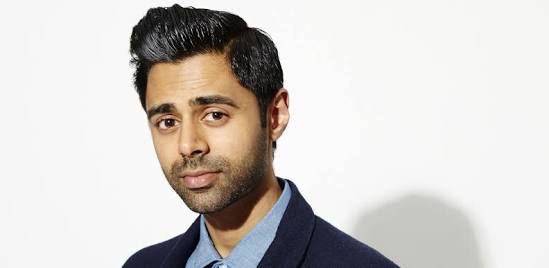
WASHINGTON (TIP) : Indian American comedian Hasan Minhaj is all set to host his first weekly comedy show on Netflix. Minhaj, a correspondent with The Daily Show, is the first Indian American to host a weekly comedy show.
The comedian marked another milestone last year as his stand-up show Homecoming King debuted as a Netflix Original.
According to the report, Netflix has already ordered 32 episodes of the show, which will start streaming later this year. Netflix, which reportedly outbid the Comedy Central, home of The Daily Show, considers it as an opportunity for Minhaj to explore the modern cultural and political landscape.
“I’m thrilled to be joining the Netflix family as the country braces for another election season — and like you, I cannot wait to find out who Putin picks this time,” Minhaj was quoted as saying by Hollywood Reporter.
Minhaj will executive produce in addition to hosting. Prashanth Venkataramanujam, Michelle Caputo and Shannon Hartman of Art & Industry and Jennie Church-Cooper of Haven Entertainment will also join him to executive produce the show.
“I’ve been a big fan of Hasan’s for many years,” Netflix’s VP of Content Bela Bajaria said. “He’s a phenomenal writer with a distinct point of view [and] he is a brilliant performer, who is hilarious both onstage and off. And more importantly, he isn’t afraid to share his thoughtful voice and unique perspective.”
With the introduction of the new show, Netflix aims to expand its global presence, especially to countries like India, where the company started offering its service a few years back.
Minhaj, 31, first gained national attention when he joined the Comedy Central’s Daily Show as a correspondent in 2004.
The next year, he made his Off-Broadway debut with Homecoming King, which is based on autobiographical incidents from the comedian’s experience as a first-generation Indian American.
Minhaj has also appeared on Netflix’s Arrested Development, HBO’s Getting On and Comedy Central’s @midnight, among other shows.