Tag: NHRC

  • Prioritize humanitarian concerns

    Prioritize humanitarian concerns

    India, Pakistan must strive to ensure that the two juveniles’ case is not repeated

    “The entire gamut of the India-Pakistan bilateral ties covers issues relating to (i) cooperation, such as in trade and commerce; (ii) addressing contentious matters such as Sir Creek, terrorism and J&K; and (iii) humanitarian concerns. When the bilateral relations were revived in early 1997 after a hiatus of over four years, the Pakistanis insisted that all issues should be addressed in an integrated manner. At that stage, Pakistan thought that India was interested in focusing on commercial and economic cooperation instead of resolving outstanding issues because if a strong pro-bilateral trade lobby developed in Pakistan, it would exert pressure on the establishment to put contentious issues, including J&K, on the back burner. Amidst this dichotomy, the political and diplomatic authorities did not give the attention to humanitarian issues that they deserved. Consequently, delays in releasing fishermen and civilian prisoners were overlooked. Sometimes, though, the courts in both countries have acted positively to help the victims.”

    By Vivek Katju

    A report in The Tribune (March 30) gave an account of two Pakistani boys who are languishing in the Faridkot Observation Home for convicted juveniles and undertrials. The boys had ‘strayed’ into Indian territory in the Tarn Taran area on August 31, 2022. They were acquitted by the Juvenile Justice Board on

    July 18, 2023. There was no indication of the action taken by the board or the Punjab authorities to ensure their early repatriation to their home country.

    The NHRCs of both countries would be able to give this category of humanitarian matters higher priority than the diplomatic establishment.

    According to the report, Justice NS Shekhawat of the Punjab and Haryana High Court inspected the observation home in January this year. He found the boys’ presence unwarranted and asked the authorities to make arrangements to send them back to Pakistan. They were taken to the Attari border on March 29, but Pakistani immigration officials declined to accept them because they did not have any directions from their authorities. The report stated that the Faridkot District and Sessions Judge had taken up the matter with the Ministry of External Affairs so that the juveniles could be sent home.

    I have given a detailed account of this report as it vividly illustrates the fate of Indians and Pakistanis who inadvertently enter the other country’s territory. There were times, especially when the bilateral relationship was going through a less hostile phase, when the Border Security Force and Pakistani Rangers, after ascertaining that the persons concerned had mistakenly strayed, informally handed them over to the other side. The officials on the ‘other side’ questioned them, and if they were satisfied with their bona fides, they allowed them to cross over and go to their homes.

    Once the border crossers are handed over to the police, the immigration laws are invoked and they are prosecuted and sentenced to imprisonment. This results in their spending many years in jail. That is sad for inadvertent border crossers. What is worse, they are compelled to spend time in custody even after they have served their sentences, or, as in this case, the Juvenile Justice Board has ordered that they be repatriated. Their cases are not given priority by the respective foreign ministries or other authorities. They simply become victims of the India-Pakistan relationship, which in such cases follows the time-honored tradition of organizing collective exchanges from time to time.

    The fate of fishermen, civilian prisoners and inadvertent border crossers is part of what in the India-Pakistan diplomatic lexicon is considered to be a humanitarian issue. Other matters within this rubric pertain to Indians and Pakistanis who wish to visit the other country for religious reasons or to meet relatives. Another issue is the intention of some Pakistanis to travel to India for medical treatment. The absence of effective diplomatic ties between the two countries since Pakistan’s irrational response to the constitutional changes in Jammu and Kashmir in August 2019 has adversely impacted these humanitarian issues. The only partial exception has been the visit of Sikh jathas to Pakistan on religious occasions.

    The entire gamut of the India-Pakistan bilateral ties covers issues relating to (i) cooperation, such as in trade and commerce; (ii) addressing contentious matters such as Sir Creek, terrorism and J&K; and (iii) humanitarian concerns. When the bilateral relations were revived in early 1997 after a hiatus of over four years, the Pakistanis insisted that all issues should be addressed in an integrated manner. At that stage, Pakistan thought that India was interested in focusing on commercial and economic cooperation instead of resolving outstanding issues because if a strong pro-bilateral trade lobby developed in Pakistan, it would exert pressure on the establishment to put contentious issues, including J&K, on the back burner. Amidst this dichotomy, the political and diplomatic authorities did not give the attention to humanitarian issues that they deserved. Consequently, delays in releasing fishermen and civilian prisoners were overlooked. Sometimes, though, the courts in both countries have acted positively to help the victims.

    This writer has had experience of dealing with India-Pakistan matters during his diplomatic career. I had advocated that humanitarian issues relating to fishermen, civilian prisoners and inadvertent border crossers should be seen through the prism of human rights and that the National Human Rights Commissions (NHRCs) of the two countries should be given the responsibility to handle them. This may require that Pakistan enact legislation to create an official body for this purpose, with its remit limited only to these matters.

    The two bodies can decide, with the approval of other ministries and agencies concerned, on matters concerning consular access to confirm the national identity of fishermen and civilian prisoners. They can, thereafter, focus on how they would monitor cases of these categories of persons so that they can return very early after serving their sentences. This would naturally be in cases where citizens of the other country have been convicted.

    The NHRCs of both countries would be able to give this category of humanitarian matters higher priority than the diplomatic establishment. This would also insulate these issues from the status of the bilateral relationship. Beginning with these issues, they may also generate confidence to offer suggestions on matters relating to visas for relatives and other categories too. Naturally, those accused of or convicted of espionage or terrorism would not be within the remit of the suggested mechanism.

    The two countries must strive to ensure that a case such as that of the two Pakistani juveniles in Faridkot is not repeated. And Pakistan should take them back immediately so as to reunite them with their families

    (The author is a former Secretary, Ministry of External Affairs, Government of India)


  • Modi’s Europe tour: High on symbolism, what about substance?

    Modi’s Europe tour: High on symbolism, what about substance?

    By Suhasini Haidar

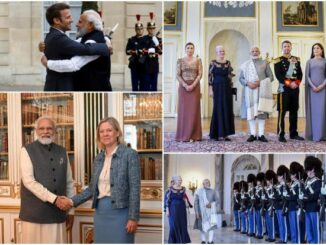
    3 days, 3 countries and meetings with 7 heads of government– PM Narendra Modi certainly packed some pace in his tour of Europe- but did the meetings lack punch? We are going to tell you about the agreements and the areas of disagreement during his visits to Germany, France, and Denmark. Remember, the visit also took place just after European Commission President Ursula Von Der Leyen visited Delhi last week for the Raisina Dialogue  and held talks with the PM.

    PM’s visits to each of the three European capitals had a specific focus:

    1 In Berlin PM was meeting new German Chancellor Olaf Scholz for the biennial Inter Governmental Commission talks between the two countries

    2 In Denmark, he attended the Second Nordic Summit with leaders of Denmark, Finland, Iceland, Norway and Sweden

    3 In France, he was meeting newly re-elected President Emmanuel Macron, with the old bonhomie between the two leaders quite visible This was the PM’s first visit abroad this year after a number of high level meetings were cancelled due to the Omicron virus outbreak. It is also his first visit to Europe since the big war in Ukraine, which has changed Europe’s entire course, began. I will come to that shortly, but broadly, the outcomes of all three visits were seen in these areas:

    1 Green partnership: India’s partnerships with the EU have always had a strong emphasis on countering climate change.

    – In Germany, Chancellor Scholz announced an advance commitment of 10 Billion Euros for a green partnership. They also agreed to a 7 point agenda on Renewable energy and Sustainable growth cooperation and decided to set up a biennial Ministerial mechanism to lead these initiatives.

    – In Denmark, the PM spoke to each of his Nordic counterparts about boosting cooperation in the wind and solar energy, pollution control and urban renewal projects and other green projects. PM also repeated commitments made at COP26- 500 gigawatts of non-fossil fuel by 2030, 50% of energy capacity to come from renewable energy by 2030, reduction of 1 billion tons in projected carbon emissions by 2030, the carbon intensity of India’s economy to reduce by 45% by 2030 and net zero by 2070. However, 6 months later these remain verbal commitments, as India has not yet updated its Nationally Determined Commitments (NDCs)- awaiting climate finance.

    – And in France, PM Modi called for French investment in making India a Green hydrogen hub, while both countries agreed to an integrated approach on supply chains for solar energy production in Europe and Asia. In addition, a statement from French power group EDF after the visit said it hopes to make progress on the long pending deal for six nuclear power reactors at Jaitapur.

    2 Defense and Security partnerships:

    – With Germany, India agreed to step up high-tech transfer collaborations, and signed a joint declaration of intent for an agreement on exchange of classified information

    – The Nordic stop did not have a security component but focused on new technologies

    – In France, the two sides set up a strategic dialogue on Space issues, strengthen a cyber dialogue and find more ways for France to invest in building India’s defense industry

    3 Finally, India and the EU have now begun to discuss cooperation in the Indo-Pacific. What is also significant is a sort of triangular engagement with Japan just in the past few weeks. German Chancellor Scholz was in Japan just before PM Modi’s visit to Germany. The next EU Japan summit will be held in Tokyo next week. PM Kishida was in Italy, followed by the Italian FM visit to Delhi. And PM Modi will travel to Japan later this month for the Quad summit.

    While these were all areas of discussion, the PM’s Europe tour was marked by some disagreements too:

    1 To begin with, while there were several joint statements and joint declarations of intent, there were very few actual agreements signed during the visit.

    2 Disagreement on Ukraine: This has been a recurring theme over the last few weeks, whether it was in the US, or with European leaders in Delhi, or during the PM’s visit to Europe, India’s position on Ukraine and Russia remains a far distance from the West’s position, and this was reiterated during this week’s stops.

    The differences will possibly come up again next month- as Germany has Invited India to the G7 summit in June, PM Modi has not yet confirmed his attendance.

    3 Energy from Russia: This is going to be an area of greater divergence in the future, as the EU has begun a new round of negotiations aimed at cancelling Russian oil imports by bringing forward a cut off date for European countries to the end of 2022.

    India has not only refused to join EU sanctions, but it has also accelerated its oil imports from Russia- According to a Reuters report based on collating information from crude oil importers and traders- India has ordered at least 40 million barrels of Russian oil between February 24-April 24 meaning that – India has taken in two months more than double what it did all of last year- 16 million barrels

    4 India EU FTA: When PM Modi visited Berlin last for the Inter-Governmental Commission in 2018, he and then Chancellor Merkel had committed to restarting talks between India and the European Union for a Bilateral Trade and Investment Agreement or FTA, that have been suspended since 2013. Despite dozens of similar promises, the talks have yet to restart. As India has fast tracked other FTAs with UAE, Australia, UK and others, many had thought they would see movement on the India EU FTA as well, but apart from a stray mention during the visit to Denmark, the talks between trade negotiators didn’t get much fillip during the visit. The EU is India’s 3 largest trading partner, after China and US, and its 2 largest export destination, but its potential is far more, which an FTA might help in achieving.

    5 Human Rights and Press Freedom in India– Like the US meetings last month, the European countries, which conduct their foreign policy through the EU have also expressed concerns about human rights violations allegations in India, and a decline in press freedom- the difference is the EU made its statement prior to the PM’s visit- as European Union Special Representative of Human Rights Eamon Gilmore was in Delhi for the Raisina Dialogue. In separate tweets about his meetings with the NHRC and Minority Affairs Minister Naqvi, Mr. Gilmore said he had discussed many specific issues including “the use of FCRA laws to ban funding for NGOs, use of sedition and anti-terrorism laws, detentions, the situation of minorities, communal violence, situation in Jammu Kashmir, and individual cases.”

    (The author is an editor with The Hindu)