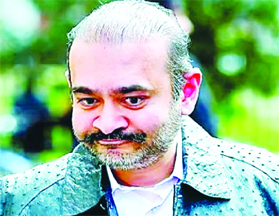
Tag: Nirav Modi

  • Gujarat High Court dismisses Rahul Gandhi’s plea against his conviction in defamation case

    Gujarat High Court dismisses Rahul Gandhi’s plea against his conviction in defamation case

    Rahul Gandhi to move Supreme Court

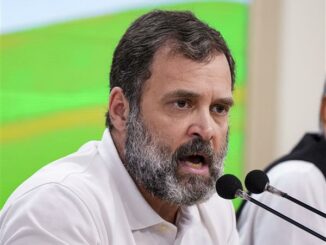
    AHMEDABAD/ NEW DELHI  (TIP): In a setback to former Congress President Rahul Gandhi, the Gujarat High Court on July 7 declined to stay his conviction in a criminal defamation case in which he was sentenced to two years in jail by a Surat court. The High Court noted that the Congress leader used Prime Minister Narendra Modi’s name in his speech at a poll rally to “add sensation” and with an intention to “affect the result” of the 2019 Lok Sabha election. “The accused did not stop there but imputed that ‘saare choro ke naam Modi hi kyu hai (why do all thieves have the Modi surname in common)’. Thus, the present case would certainly fall within the category of seriousness of the offence,” the order said. The court also underlined that he faced as many as 10 criminal cases across the country, including one filed by the grandson of V.D. Savarkar, and held that “it is now the need of the hour to have purity in politics”.

    The case relates to Mr. Gandhi’s remarks while campaigning for the 2019 Lok Sabha poll in Karnataka. The High Court upheld the Surat Sessions Court’s ruling in which Mr. Gandhi’s plea seeking a stay on his conviction was rejected. The Surat court’s ruling led to his disqualification as a member of the Lok Sabha.

    Justice Hemant Prachchhak, who dismissed the plea, held that the trial court’s sentence of a two-year jail term was “just, proper and legal”. He noted that a stay on a conviction is not the rule, but an exception reserved for rare cases only, and held that the present case did not fall into that category.

    “He [Mr. Gandhi] was trying to stay the conviction on absolutely non-existent grounds. It is a well-settled principle of law that staying of conviction is not a rule, but an exception, resorted only in rare cases. Disqualification is not only limited to MPs, MLAs. Moreover, as many as 10 criminal cases are pending against the applicant,” the HC noted in the judgement.

    ‘Purity in politics’

    Referring to the cases Mr. Gandhi is facing, the High Court further observed, “It is now the need of the hour to have purity in politics. Representatives of people should be men of clear antecedent.”

    The High Court judge pointed out that after the current complaint was filed, another complaint was submitted to a court in Pune by the grandson of Hindutva ideologue V.D. Savarkar for the Congress leader’s “defamatory utterance against Veer Savarkar at Cambridge”. A separate complaint against him has also been filed in a Lucknow court, he said.

    Given this backdrop, a refusal to stay the conviction would not in any way result in injustice to the applicant, the court noted. “The impugned order passed by the appellate court (in Surat) is just, proper and legal, and does not call for any interference. However, it is hereby requested the concerned learned district judge to decide the criminal appeal on its own merits and in accordance with law as expeditiously as possible,” the HC said.

    ‘Serious offence’

    The court also disagreed with Mr. Gandhi’s submission that the offence for which he was convicted was not serious, with the judge noting that his conviction was a “serious matter affecting a large segment of the society and needs to be viewed by this court with the gravity and significance it commands”. The court maintained that it was not an “individual-centric defamation case”, but something which affected a “large section of the society”.

    “The offence of Section 499 (dealing with defamation) can certainly be considered to be a serious offence of having a large public character thereby affecting the society at large in a given case wherein a large number of persons of the society have been defamed,” the HC order said.

    Rahul Gandhi will now move the Supreme Court of India against Gujarat High Court’s judgement.

    Rahul Gandhi will not be arrested until he has exhausted all legal appeals as his arrest was put on hold.

    Addressing a press conference later in the day, party leader and lawyer Abhishek Manu Singhvi said the case was “a matter of free speech and expression”.

    These complaints have been filed by the workers of the ruling Bharatiya Janata Party (BJP), he said.

    “The aim of this government is to control the freedom of expression,” he said. “That is why the law of defamation has been misused.”

    Party president Mallikarjun Kharge said Rahul Gandhi was “fighting for truth” and would continue this fight.

    The party criticized  Rahul Gandhi’s conviction and accused the governing BJP of political vendetta. The BJP denied this, saying that due judicial process was followed in the case.

    The defamation case against Gandhi, brought by BJP lawmaker Purnesh Modi, revolved around comments   Gandhi made in Karnataka state in 2019 during an election rally. “Why do all these thieves have Modi as their surname? Nirav Modi, Lalit Modi, Narendra Modi,” he said.

    Nirav Modi is a fugitive Indian diamond tycoon while Lalit Modi is a former chief of the Indian Premier League who has been banned for life by the country’s cricket board.

    In his complaint, Purnesh Modi alleged that the comments had defamed the entire Modi community. However, Gandhi said that he made the comment to highlight corruption and it was not directed against any community.

    A lower court had granted Gandhi bail to appeal against his conviction, but it’s the stay or suspension of his conviction that’s crucial to reinstating him as an MP.

  • Modi speaks to Sunak, raises embassy attack

    Modi speaks to Sunak, raises embassy attack

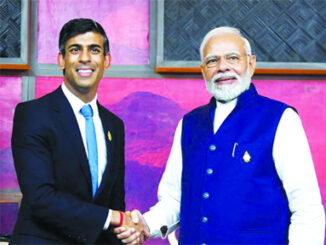
    New Delhi (TIP)- Prime Minister Narendra Modi sought “strong action against anti-India elements” in the UK and progress in the return of economic offenders who have taken refuge in Britain, during a phone conversation with his British counterpart Rishi Sunak on Thursday, April 13.
    The two leaders also agreed on the need to speedily conclude a free trade agreement (FTA) between both countries, according to an Indian readout of the conversation, which came against the backdrop of anger in New Delhi over the activities of pro-Khalistan groups in Britain.
    Sunak and Modi reviewed progress in several bilateral issues that are part of the India-UK Roadmap 2030 and expressed satisfaction at recent high-level exchanges and growing cooperation, especially in the trade and economic sectors, the readout said.
    Modi “raised the issue of security of Indian diplomatic establishments in the UK and called for strong action against anti-India elements by the UK government”, according to the readout.
    Sunak reiterated his condemnation of the “unacceptable violence” outside the Indian mission in London and “stressed that extremism had no place in the UK”, according to a statement from the UK Prime Minister’s Office.
    Sunak updated Modi on steps being taken to ensure the security of Indian high commission staff.
    The Indian readout said Modi raised the “issue of economic offenders who have sought refuge in the UK” and “sought progress on the return of these fugitives so that they can appear before the Indian judicial system”.
    The readout didn’t provide details on the offenders. The list of high-profile fugitives in the UK wanted by Indian authorities, whose current location are known and against whom extradition proceedings are either completed or are at an advanced stage, includes former liquor baron Vijay Mallya, Nirav Modi, Sanjay Bhandari, Iqbal Mirchi’s wife Hajra Memon and their sons Asiq Iqbal Memon and Junaid Iqbal Memon. Modi and Sunak further “agreed on the need for early conclusion of a mutually beneficial Free Trade Agreement between the two countries”, according to the readout.
    Source: HT

  • Vijay Mallya, Nirav Modi, Mehul Choksi coming back to face law, says Sitharaman

    Finance Minister Nirmala Sitharaman  said that fugitive businessmen Vijay Mallya, Nirav Modi and Mehul Choksi are “coming back” to India to face the law. The government is pursuing extradition of Vijay Mallya and Nirav Modi from the UK while Mehul Choksi is believed to be in Antigua and Barbuda. “Vijay Mallya, Nirav Modi, Mehul Choksi all of them are coming back to face the law of this land…One after other everybody is coming back to this country to face the law of this country,” Ms Sitharaman said while responding to a discussion on Insurance (Amendment) Bill, 2021 in Rajya Sabha. Vijay Mallya, an accused in bank loan default case of over Rs 9,000 crore involving his defunct Kingfisher Airlines, is in the UK since March 2016. He is on bail on an extradition warrant executed three years ago by Scotland Yard on April 18, 2017. Nirav Modi and Mehul Choksi, are accused in a scam involving fake guarantees in the name of state-run PNB to secure overseas loans. Both fled India in 2018, before the CBI began probe. Last month, Nirav Modi, the diamond merchant wanted on charges of fraud and money laundering in the estimated $2-billion Punjab National Bank (PNB) scam case, had lost his legal battle against extradition as a UK judge ruled that he does have a case to answer before the Indian courts.

  • UK judge orders Nirav Modi to be extradited to India

    UK judge orders Nirav Modi to be extradited to India

    Nirpal Singh Shergill

    LONDON (TIP): A UK court on Thursday, Feb 25, ruled that fugitive diamantaire Nirav Modi can be extradited to India to face charges of fraud and money laundering amounting to an estimated USD 2 billion.

    In a comprehensive extradition win for the Indian authorities, the judge has ruled that Nirav Modi not only has a case to answer in the Indian courts but that there is no evidence to suggest he would not receive a fair trial in India. Nirav Modi, wanted in India on charges of fraud and money laundering in the estimated $2-billion Punjab National Bank (PNB) scam case, lost his legal battle against extradition on all grounds as District Judge Samuel Goozee also concluded that there are no human rights concerns that his medical needs would not be addressed as per several Indian government assurances.

    The 49-year-old appeared via video link at Westminster Magistrates’ Court from Wandsworth Prison in south-west London, dressed in a formal suit and sporting a thick beard, and showed no emotion as excerpts of the judgment were read out in court.

    “I am satisfied that there is evidence upon which Nirav Deepak Modi could be convicted in relation [to] the conspiracy to defraud the PNB. A prima facie case is established,” the judge noted.

    He similarly concludes a prima facie case to have been established on all counts of charges brought by the Central Bureau of Investigation (CBI) and Enforcement Directorate (ED) — money laundering, intimidation of witnesses and disappearance of evidence.

    “I am not required to exclude all Mr Modi’s various alternative theoretical possibilities and narratives; nor exclude his personal interpretation of the evidence, in order to find a prima facie case has been established,” the judge noted, referring to the extradition case of former Kingfisher Airlines boss Vijay Mallya as precedent.

    He accepted that while Nirav’s mental health had deteriorated due to the lengthy incarceration in a London prison, exacerbated by the COVID-19 pandemic, his risk of suicide does not meet the high threshold to satisfy him that his mental state is such that it would be “unjust or oppressive” to extradite him.

    Under the UK Extradition Act 2003, the judge will now send his findings to the Secretary of State for Home Affairs, Priti Patel. It is the UK Cabinet minister who is authorized to order an extradition under the India-UK Extradition Treaty and has two months within which to make that decision. The Home Secretary’s order rarely goes against the court’s conclusions, as she has to consider only some very narrow bars to extradition which are unlikely to apply in this case, including the possible imposition of a death penalty.

    Whatever the ministerial decision, the losing side — Nirav Modi — has up to 14 days within which to approach the High Court and seek leave to appeal after the Home Secretary has made her decision known.

    Nirav’s legal team did not immediately confirm if he intends to appeal against Thursday’s ruling. Any appeal, if granted, will be heard at the Administrative Division of the High Court in London.

    Nirav Modi, meanwhile, remains on remand at Wandsworth Prison until the Home Secretary’s decision to sign off on the extradition order. The flashy diamond merchant was arrested on an extradition warrant on March 19, 2019 and has appeared via video link from Wandsworth Prison for a series of court hearings in the extradition case. His multiple attempts at seeking bail have been repeatedly turned down, both at the Magistrates’ and High Court level, as he was deemed a flight risk. Nirav is the subject of two sets of criminal proceedings, with the CBI case relating to a large-scale fraud upon PNB through the fraudulent obtaining of letters of undertaking (LoUs) or loan agreements, and the ED case relating to the laundering of the proceeds of that fraud. He also faces two additional charges of “causing the disappearance of evidence” and intimidating witnesses or “criminal intimidation to cause death”, which were added on to the CBI case.

    In the judgment clearing the path to extradition, the judge accepted the arguments put forth by the Crown Prosecution Service (CPS) — arguing in court on behalf of the Indian government — that Nirav in collusion with bank officials oversaw a “Ponzi-like scheme” structure where LoUs were used to repay earlier ones.

    “I do not accept the submissions that NDM was involved in legitimate business and using the LoUs in a permissible fashion…I find there is no evidence of genuine import transactions and the applications for the LoUs was being done dishonestly,” the ruling notes.

    “Considering the entirety of the evidence, the dummy directors’ evidence in their statements supports the Ponzi-like scheme and the operation of the fraud set out in the statements from the PNB officials,” it adds. The judge highlighted how he had received 16 volumes of evidence from the government of India (GOI), as many as 16 bundles of expert reports and defense evidence and a total of 32 lever-arch folders of documents, all of which he has considered in his ruling. He was, however, extremely critical of the “poorly presented” documentation by the Indian authorities and stressed: “I hope the GOI take these observations on board in relation to future requests.”

    The judge also noted that given the high public and media interest in the case, he did not believe there was any reason for him to doubt the Indian government’s assurances.

    “I am also required to consider the length and strength of relations between India and this country…There is no reliable evidence of the GOI breaching their solemn diplomatic assurance,” the judge concluded.

    Chronology of Nirav Modi’s case

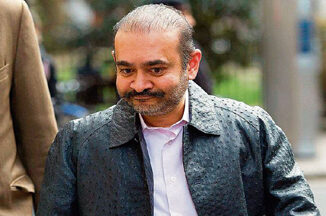
    Nirav Modi in his younger days                                                                       Photo / Courtesy PTI 

    January 29, 2018: Punjab National Bank (PNB) files police complaint against Nirav Modi, Mehul Choksi and others accusing fraud to the tune of Rs 2.81 billion.

    February 5, 2018: The Central Bureau of Investigation (CBI) launches an investigation into the alleged scam.

    February 16, 2018: The Enforcement Directorate (ED) seizes a cumulative Rs 56.74 billion worth of diamonds, gold and jewelry from Nirav Modi’s home and offices.

    February 17, 2018: The CBI makes first arrest in the case. Two PNB employees and an executive of Nirav Modi’s group were detained.

    February 17, 2018: Government suspends passports of Nirav Modi and Mehul Choksi for four weeks in connection with the PNB fraud.

    February 21, 2018: CBI arrests CFO of Nirav Modi’s firm and two other senior executives of his firms. It also seals his farmhouse in Alibaug.

    February 22, 2018: The ED seizes nine luxury cars belonging to Nirav Modi and his firms.

    February 27, 2018: A magistrate’s court issues a bailable arrest warrant against diamond trader Nirav Modi.

    June 2, 2018: The Interpol issues Red Corner Notice against Nirav Modi for money laundering.

    June 25, 2018: The ED moves to a special court in Mumbai seeking Nirav Modi’s extradition.

    August 3, 2018: The Indian Government sends a request for the extradition of Nirav Modi to the UK authorities.

    August 20, 2018: The CBI officials request Interpol Manchester to detain Nirav Modi after the latter informs about his presence in London to Indian authorities.

    December 27, 2018: The UK informs India that Nirav Modi is living in the country.

    March 9, 2019: British newspaper ‘The Telegraph’ confronts Nirav Modi on London’s streets and confirms his presence in the country.

    March 9, 2019: The ED says the government of the UK has sent an extradition request of fugitive diamantaire Nirav Modi to a UK court for further proceeding.

    March 18, 2019: Westminster Court in London issues arrest warrant against fugitive Nirav Modi after the Indian government request was forwarded to the court by the UK Home Office.

    March 20, 2019: Nirav Modi arrested in London and produced in Westminster Court, which denies him bail.

    March 20, 2019: Nirav Modi sent to Her Majesty’s Prison (HMP) Wandsworth till March 29.

    March 29, 2019: A Westminster Magistrates Court in London rejects Nirav Modi’s second bail application, saying there are “substantial grounds” to believe that he will fail to surrender. The judge fixes April 26 as the next date of hearing when he will appear via video link from jail.

    May 8, 2019: Nirav Modi denied bail for a third time, to remain in UK jail.

    June 12, 2019: UK court rejects Nirav Modi’s bail for the fourth time over fears he would abscond.

    August 22, 2019: Nirav Modi’s remand extended till September 19; UK extradition trial expected in May 2020.

    November 6, 2019: UK court rejects Nirav Modi’s new bail application.

    May 11, 2020: Nirav Modi’s five-day extradition trial in PNB fraud case begins in UK.

    May 13, 2020: Indian government submits more proof against Nirav Modi in money laundering case.

    September 7, 2020: UK court given fresh video tour of Mumbai’s Arthur Road Jail.

    December 1, 2020: Nirav Modi’s remand extended, final hearings in 2021.

    January 8, 2021: UK court decides to pronounce judgement in Nirav Modi’s extradition case on February 25.

    February 25, 2021: UK court rules Nirav Modi can be extradited to India to face charges of fraud and money laundering.

    (With inputs from PTI)