Tag: Nobel Peace Prize

  • A Christmas Wish for a World at Peace

    A Christmas Wish for a World at Peace

    By Prof. Indrajit S. Saluja

    As the world prepares to merrily celebrate Christmas on December 25, with carols, candles, gifts and gatherings my kids have been so enthusiastic about, my thoughts drift, inevitably and uneasily, to people across continents who will mark this season not with joy, but with fear, deprivation and grief. When one surveys the globe today, a grim common thread binds distant lands and diverse societies: conflict. It manifests in many forms—economic, political, ethnic, ideological and military—but its consequences are uniformly cruel. Peace, despite humanity’s bitter experiences, continues to elude us.

    History offers no shortage of warnings. The twentieth century alone witnessed two World Wars whose scale and savagery reshaped the world. World War I, sparked by nationalism, imperial rivalries and diplomatic failure, left nearly 20 million dead and shattered empires. Instead of ushering in lasting peace, it sowed the seeds of resentment and economic despair that gave rise to fascism and World War II. That second conflagration, the most destructive in human history, claimed over 60 million lives, devastated Europe and Asia, and culminated in the nuclear annihilation of Hiroshima and Nagasaki, grim reminders of humanity’s capacity for self-destruction.

    In the aftermath of World War II, leaders vowed “never again.” Institutions such as the United Nations were created to resolve disputes through dialogue, not arms. Yet the decades that followed tell a sobering story. The Cold War divided the world into hostile blocs, bringing proxy wars in Korea, Vietnam, Afghanistan, Africa and Latin America. While nuclear deterrence prevented direct confrontation between superpowers, millions perished in regional conflicts fueled by ideological rivalry.

    The end of the Cold War briefly raised hopes for a “peace dividend.” Instead, the world entered a new phase of instability. Ethnic conflicts tore apart Yugoslavia. Genocide scarred Rwanda. The Middle East remained trapped in cycles of war and retaliation. The US-led interventions in Iraq and Afghanistan, launched in the name of security and democracy, produced long wars whose human and economic costs far outweighed their gains. Terrorism emerged as a global threat, feeding on unresolved grievances and failed states.

    Today, conflict has returned with alarming intensity to Europe itself, a continent that once prided itself on having learned the lessons of history. The war between Russia and Ukraine has inflicted immense suffering on ordinary people: cities reduced to rubble, millions displaced, families torn apart, and an entire generation growing up amid sirens and uncertainty. Whatever the geopolitical arguments advanced by either side, the human cost is undeniable and indefensible.

    This is not an isolated tragedy. From Gaza to Sudan, from the Sahel to Myanmar, violence continues to uproot lives. Economic conflict, too, is pervasive: trade wars, sanctions, debt crises and widening inequality pit nations and classes against one another. Even societies not directly at war feel the consequences through inflation, refugee flows, energy shortages and a growing sense of global insecurity.

    One might ask: how, after centuries of bloodshed, does humanity still fail to learn? Part of the answer lies in the persistence of ego, power politics and short-term thinking among leaders. War is often justified in the language of national interest, honor or security, yet it is invariably paid for by civilians. Children lose schools, the sick lose hospitals, and the poor lose whatever fragile stability they possess. Reconstruction takes decades; trauma lasts generations.

    Christmas, at its core, is a celebration of peace, compassion and goodwill. The image of a child born in a manger has endured precisely because it speaks to humility and humanity, not conquest. At this moment, therefore, it is worth articulating a simple, perhaps unfashionable wish: that this Christmas brings wisdom to leaders who command armies and shape destinies.

    In particular, one hopes that Russia’s President Vladimir Putin and Ukraine’s President Volodymyr Zelensky pause, even briefly, to reflect not on strategy or prestige, but on their people, the soldiers in trenches, the civilians in bomb shelters, the parents who bury their children. History will not judge them by how long they fought, but by whether they found the courage to stop.

    Peace, contrary to popular belief, is not weakness. It requires moral strength to shed ego, to compromise, and to accept that no victory built on ruins can truly be called a triumph. Europe learned this lesson after 1945; it must not be forgotten now.

    In this context, any genuine effort toward peace deserves encouragement, regardless of who undertakes it. If President Donald Trump seeks to play a role in ending the conflict, one can only wish him success. The world has seen enough failed wars and broken promises. A negotiated settlement, however imperfect, is infinitely preferable to endless bloodshed. If peace were to come to a ravaged region through such efforts, it would indeed be a gift worthy of global recognition.

    One might even indulge in a Christmas metaphor: Santa Claus, bearer of goodwill, presenting the Nobel Peace Prize not as a personal accolade, but as a symbol of what humanity values most, the saving of lives. Such symbolism matters, because it reminds leaders that history honors peacemakers long after warriors are forgotten.

    Ultimately, however, responsibility does not rest with leaders alone. Citizens, media and institutions must resist the idea that war is something normal. We must question narratives that glorify violence and demand accountability for decisions that destroy futures. Future generations will inherit the world we leave behind. They should not look back on us as idiotic warmongers who knew the costs of conflict yet chose it anyway.

    As candles are lit this Christmas, let them illuminate not just homes, but consciences. Let the season renew our collective commitment to dialogue over destruction, empathy over enmity, and peace over pride. For without peace, no celebration—Christmas or otherwise—can ever be complete.

    Merry Christmas, and may it bring the world closer to the peace it so desperately deserves!

  • Modi’s Christmas shocker hurts the poor and disadvantaged in India during the Covid

    Modi’s Christmas shocker hurts the poor and disadvantaged in India during the Covid

    By George Abraham

    “These calls have an eerie familiarity with what has happened to the Jews in Germany during World War II. Even Hitler has used euphemism instead of direct appeal to annihilate a community. However, the religious extremists in India have gone even a step further and made their open call. Undoubtedly, India is at an inflection point in history, and the question is whether the current leadership acquiesce to the sounds and fury from these diabolical mindsets by keeping their deafening silence!”

    Like many other nations globally, India has been navigating through an economic crisis while battling an onslaught of Covid-19 and its variants. However, one may find it hard to pin down a leadership anywhere bent upon augmenting that misery for its own people through arbitrary and quirky actions. That is probably what the Modi administration has done by canceling about 6000 of FCRAs (Foreign Currency Remittance Act) of NGOs and various religious organizations that serve the poorest of the poor and disadvantaged in the educational, charitable, and healthcare arena. These leaders appear to be unimpressed with the vital work done by many of these civic organizations in blunting the fury of the pandemic by providing food and assistance when the government was found missing in action. Missionaries of Charity, an organization founded by Mother Teresa, is one of the impacted organizations and might have garnered the most attention. However, so many of those organizations on that list might soon be depriving a dying patient of urgent medical care due to their inability to pay or denying a meal to a hungry person from the ranks of the poor and disadvantaged. It is bizarre to learn that one of the reasons for cutting off funds for the Missionaries of Charities was that the inspectors had found copies of Bibles on the premises! Missionaries of Charities have had a long record of distinguished humanitarian service that began in 1950 on the streets of Calcutta. The group is revered worldwide for its work under Mother Teresa, an Albanian Christian nun who made India her home. She was awarded the Nobel Peace Prize for her dedicated work over a lifetime, and her legacy inspires so many to carry on with similar missions.

    The published list contains organizations belonging to various religious affiliations. Although one can fully understand the need for transparency and accountability in these organizations, this discretionary decision may have a far-reaching effect of closing their doors for good, resulting in a denial of services to the most vulnerable needy. Moreover, by releasing this list on the eve of Christmas, the Modi administration may also be sending a clear message to the Christians in India that you are no longer welcome as a partner in the social development arena. They may look at the Christian community as having undue influence in the society-at-large through their educational and charitable work and are determined to shut it down. While people worldwide are on edge dealing with variants of this virus, only a wicked mindset could think of this type of ordinance in a time such as these.

    Thanks to the rising antagonism of the authorities towards minorities, we have also seen a spate of attacks on Christians during this holiday season. The right-wing extremists, who are emboldened by the words and deeds of the current leadership, went on a rampage disrupting Carol services and destroying church properties in several parts of India. A group of men led by a politician barged into a Gurgaon private school and disrupted the Christmas carnival. They also chanted slogans of “Jai Shri Ram and Bharat Ki Jai,” and the videos of the incident show a man addressing the gathering, stating that “Christianity is not acceptable here.”

    In another incident, a statue of Jesus Christ was vandalized at the Holy Redeemer Church entrance, a century-old building with great historical importance. In the Chandmari district of Varanasi, Uttar Pradesh, a group of right-wing men carrying saffron flags protested outside the Matridham Ashram before a Christmas event was to take place. The group of 20-30 people raised the “Jai Shri ram” slogan along with “Church murdabad” (death to the church) and “stop conversion.” In Assam, the Bajrang Dal was also involved in impeding the Christmas midnight mass celebrations in Silchar. The men allegedly forced their way into the church and demanded that the celebration be shut down because it was also ‘Tulsi Diwas.’

    The action against Missionaries of Charity also happened in the backdrop of an anti-conversion bill passed in the Karnataka Assembly that has stoked anxieties among Christians in that southern state, the IT hub of India. The first anti-conversion law was passed in Odisha in 1967, leading to an attack on Christians, culminating in the Kandhamal violence in 2008. Six other states followed suit resulting in increased violence against Christians. Rev. Peter Machado, Archbishop of Bengaluru, summed up his heartfelt feelings this way: “This is frightening and a sad commentary on secularism, signals are suggesting it is not a good time to be a Christian in Karnataka.” One also wonders that if there is such a rampant conversion as alleged, why has the Christian population in Karnataka decreased from 1.91% as per the 2001 census instead of 1.87% as per the 2011 one?
    Why are these attacks occurring at an increased frequency now? For those observers, it becomes apparent that it is part of the BJP efforts to promote their long-cherished goal of a majoritarian rule under the banner of a Hindu Rashtra. The recently held Dharam Sansad in Haridwar in the name of Sanatana Dharma indicated what extent they are willing to go to accomplish that goal. One of the main organizers of the Sansad, Prabodhhanand Giri, was heard praising the Myanmarese people for killing and driving out Rohingya Muslims. The Swami wants the Hindus in India to imitate the Buddhists and drive out the Muslims from the country. A female speaker went even further, asking every Hindu to wield the sword and start killing Muslims. Christians may be considered collateral damage in their quest to fulfill that dream in the whole scheme of things.

    These calls have an eerie familiarity with what has happened to the Jews in Germany during World War II. Even Hitler has used euphemism instead of direct appeal to annihilate a community. However, the religious extremists in India have gone even a step further and made their open call. Undoubtedly, India is at an inflection point in history, and the question is whether the current leadership acquiesce to the sounds and fury from these diabolical mindsets by keeping their deafening silence!
    (Author is a former Chief Technology Officer of the United Nations and the Vice-Chairman of the Indian Overseas Congress, USA)

  • Are we losing the war against the obscenity of hunger?

    Are we losing the war against the obscenity of hunger?

    By Prabhu Dayal

    The World Food Programme may have got the Nobel Peace Prize, but the world is not winning against hunger

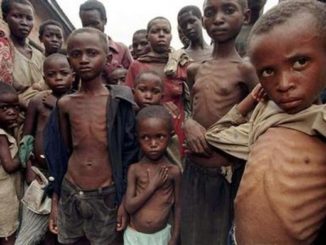
    As the humanitarian organization Mercy Corps puts it, “Hunger and malnutrition are the biggest risks to health worldwide – greater than AIDS, malaria and tuberculosis combined. Globally, food deprivation still claims a child’s life every three seconds and nearly half of all deaths in children under five are attributable to undernutrition”. Eveyone.org, another charity organization says “Every hour of every day, 300 children die because of malnutrition. It’s an underlying cause of more than a third of children’s deaths – 2.6 million every year”. There is an urgent need to take action on war footing against such a situation.

    Since its establishment, the WFP has responded to natural disasters and conflicts around the world. Currently, it is working in a number of countries, and it faces its severest challenges in three conflict-torn countries, namely Yemen, Afghanistan and South Sudan.

    As Mahatma Gandhi had said, there are people in the world so hungry, that God cannot appear to them except in the form of bread. Hunger is one of mankind’s worst enemies and has driven millions of people to desperation; it has also provided the subject-matter for some powerful literature, an outstanding example being the French writer Victor Hugo’s classic ‘Les Misérables’.

    In her article Let Them Eat Bread: The Theft That Helped Inspire ‘Les Misérables’ which appeared in the ‘npr’ (National Public Radio) in March 2017,Nina Martyris wrote:

    On a bitterly cold day in February 1846, the French writer Victor Hugo was on his way to work when he saw something that affected him profoundly. A thin young man with a loaf of bread under his arm was being led away by police. Bystanders said he was being arrested for stealing the loaf. He was dressed in mud-spattered clothes, his bare feet thrust into clogs, his ankles wrapped in bloodied rags in lieu of stockings.

    It made me think,” wrote Hugo. “The man was no longer a man in my eyes but the specter of la misère, of poverty.” In his novel, Hugo portrays the family’s circumstances in these few, short lines: “A very hard winter came. Jean had no work. The family had no bread. No bread literally. Seven children!”

    Jean Valjean is sentenced to five years’ hard labor for stealing a loaf of bread! He attempted to escape four times, and each time his sentence was lengthened by three years; he also received an extra two years for once resisting recapture during his second escape. After nineteen years in prison, he was released, but by law had to carry a yellow passport that announced that he is an ex-convict, an outcast. Hugo uses that loaf to attack society’s criminal indifference to poverty and hunger and to highlight the injustice of the penal system.

    ‘Les Misérables’ should have awakened mankind’s conscience, but one must ask oneself if it has succeeded in doing that. As former US President Dwight Eisenhower said, “Every gun that is made, every warship launched, every rocket fired, signifies in the final sense a theft from those who hunger and are not fed, those who are cold and not clothed”.

    As the humanitarian organization Mercy Corps puts it, “Hunger and malnutrition are the biggest risks to health worldwide – greater than AIDS, malaria and tuberculosis combined. Globally, food deprivation still claims a child’s life every three seconds and nearly half of all deaths in children under five are attributable to undernutrition”. Eveyone.org, another charity organization says “Every hour of every day, 300 children die because of malnutrition. It’s an underlying cause of more than a third of children’s deaths – 2.6 million every year”. There is an urgent need to take action on war footing against such a situation.

    “India is home to a quarter of all undernourished people worldwide, making the country a key focus for tackling hunger on a global scale.”
    India ranks 94 among 107 countries in 2020 Global Hunger Index, even below neighbors like Bangladesh, Nepal and Pakistan
    Picture / Courtesy Akshaya Patra

    We, as individuals, also have a great responsibility. In such trying times, the words of Mother Teresa should guide us: ” If you cannot feed a hundred people, then feed just one.” 

    Thus, the announcement by the Norwegian Nobel Committee on October 9 that the World Food Programme( WFP) has been awarded the Nobel Peace Prize in 2020 is indeed most welcome. The award has been given for its efforts to combat hunger, for its contribution to bettering conditions for peace in conflict-affected areas and for acting as a driving force in efforts to prevent the use of hunger as a weapon of war and conflict.

    The World Food Programme(WPF) has indeed been doing God’s work by providing food aid through the UN system since 1961. Its website mentions: “Every day too many men and women across the globe struggle to feed their children a nutritious meal. In a world where we produce enough food to feed everyone, 690 million people still go to bed on an empty stomach each night. Acute food insecurity affected 135 million people in 55 countries in 2019. Even more – one in three – suffer from some form of malnutrition”.

    Since its establishment, the WFP has responded to natural disasters and conflicts around the world. Currently, it is working in a number of countries, and it faces its severest challenges in three conflict-torn countries, namely Yemen, Afghanistan and South Sudan.

    Announcing the Nobel Peace Prize, the Chairperson of the Committee, Berit Reiss-Andersen said at a news conference: “The World Food Programme plays a key role in multilateral co-operation in making food security an instrument of peace”. She also said that with this year’s award, the committee wanted to “turn the eyes of the world to the millions of people who suffer from or face the threat of hunger”.

    In 2015 the global community adopted the 17 Global Goals for Sustainable Development to improve people’s lives by 2030. Goal Two is ‘Zero Hunger’ which pledges to end hunger, achieve food security, improve nutrition and promote sustainable agriculture. Achieving this goal is the priority of the WFP; if present trends continue, the number of people affected by hunger will surpass 840 million by 2030, or 9.8 percent of the global population.

    It may be mentioned that India has enjoyed steady economic growth and has achieved self-sufficiency in grain production in recent years. Despite this, high levels of poverty, food insecurity and malnutrition persist. The WFP’s website mentions that it has been working in India since 1963, with work transitioning from food distribution to technical assistance since the country achieved self-sufficiency in cereal production. It also says something that should prick our conscience: “India is home to a quarter of all undernourished people worldwide, making the country a key focus for tackling hunger on a global scale. In the last two decades, per capita income more than tripled, yet the minimum dietary intake fell. The gap between rich and poor increased during this period of high economic growth”.

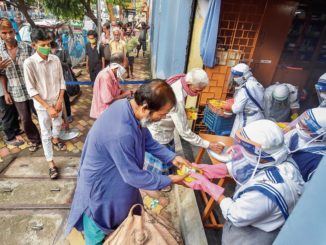
    Coronavirus has further multiplied the challenges which India faces. In the second week of April 2020 itself, the International Labour Organization (ILO) had said that about 400 million workers from India’s informal sector are likely to be pushed deeper into poverty due to Covid-19. There is no doubt that during the past six months, poverty in the country has worsened; so too, has hunger. The Government as well as many NGO’s are grappling with the colossal problem of feeding millions of impoverished people who have lost even their means of earning a livelihood.

    We, as individuals, also have a great responsibility. In such trying times, the words of Mother Teresa should guide us: ” If you cannot feed a hundred people, then feed just one.”

    (The author is a retired career diplomat of India. He can be reached at Prabhu_dayal70@hotmail.com)

    (Courtesy OPOYI)