Tag: Nuclear deal

  • U.S.-North Korea: a deal that can be done

    U.S.-North Korea: a deal that can be done

    By Zorawar Daulet Singh

    The Korean imbroglio reflects America’s fear of any meaningful adjustment to the global balance of power

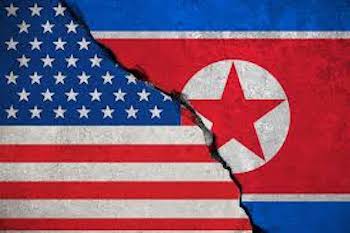
    The whirlwind U.S.-North Korean bromance hit a temporary roadblock last week. If American President Donald Trump’s decision to open direct talks with North Korean leader Kim Jong-un a few months ago came as a surprise, last Thursday’s dramatic somersault to pull the plug on a summit that could have ushered in a transformed Northeast Asia will not leave too many scratching their heads. After all, Mr. Trump’s foreign policy since the outset of his administration has swayed erratically between his own pragmatism and the hawkish elements in the larger security establishment. At almost every stage, we have seen Mr. Trump succumb to the default worldview inside his administration and across the broader political spectrum.

    If we accept the proposition that Mr. Trump remains stifled in a national security system still largely dominated by the traditionalists, the question then turns to what the calculus is of the policymakers really playing the strings. The traditionalists, in essence, fear change. Having been accustomed to a unipolar moment — fleeting as it was — when the U.S. held sway over all geopolitical and geoeconomic matters, the changes in the past decade have come as a psychological shock to this self-belief in global preponderance. Mounting evidence of an emerging multipolar world and waning of American relative strength should have prompted a strategic reassessment of the U.S.’s role in the world. Instead, the establishment, despite a popular domestic revolt in the 2016 U.S. presidential election that catapulted Mr. Trump to office, has scoffed at any meaningful adjustment to the global balance of power.

    A viable deal

    North Korea’s search for state security and regime survival is well known. Nuclear weapons, as in most other cases, were deemed the only reliable card to security. Since 2006, when the Democratic People’s Republic of Korea (DPRK, North Korea’s official name) conducted its first nuclear test, the process of nuclearization saw sustained progress over a decade along with ballistic missile testing to demonstrate a path towards a credible deterrence capacity. But it was not until the July 2017 intercontinental ballistic missile (ICBM) test that Washington awoke to the reality of its own homeland being part of a deterrence equation with Pyongyang. The North Koreans shrewdly realized that only the possibility of a direct threat would stir the U.S. into serious talks. And it seemed to work. For after the usual “fire and fury” charade, Washington responded positively to the prospect of a nuclear deal.

    The DPRK, for its part, was actively encouraged by its great power benefactors to pursue such an opening. As direct neighbors of the DPRK, both Russia and China have a self-interest in stabilizing the Korean peninsula and closing an unfinished chapter of the Cold War. South Korean domestic politics too was geared to tap this moment. In short, the regional context was conducive at all levels for a détente and bargaining process to ensue.

    What a deal could look like

    The contours of a deal remain viable. Pyongyang would cease its quest for intercontinental nuclear weapons capability in lieu of a gradual normalization of ties with the U.S. along with a lifting of multilateral economic sanctions. As a result, the DPRK would gain regime and national legitimacy, assurance of survival and an opportunity to economically transform itself. The U.S. could also claim success on several fronts. A deal would confine the DPRK to a regional nuclear power, which also enables Pyongyang to preserve a degree of autonomy from Beijing; it would stabilize the broader Northeast Asian setting and thereby increase the security of its two key allies, South Korea and Japan; and finally, it would eliminate a major potential flashpoint in China-U.S. relations. Such outcomes hardly seem adverse for the US.

    Much attention has also been drawn to the mutually incompatible bargaining postures: the U.S.’s maximalist position of complete de-nuclearization versus the DPRK’s bottom line, which probably reserves the right to retain an undefined level of nuclear weapon capability as an insurance measure of last resort. The issue, however, runs much deeper. The traditionalists in the U.S. establishment fear a shifting status quo that might produce new regional re-alignments or interdependent equations that gradually diminish the cohesiveness of U.S. military alliances in East Asia. For example, it is likely that China and Russia would actively leverage peace on the peninsula to pursue their ambitious geoeconomic plans for the region. Koreans on both sides of the Demilitarized Zone would be spoilt for choice after living under the shadow of prolonged tension and conflict. Put plainly, in the image of an American hawk, successful U.S.-DPRK talks translate to the U.S. no longer being the top dog in Northeast Asia and being compelled to share power and influence with others. But this is precisely what a multipolar world will look like in the foreseeable future.

    An open window

    The rhetoric from both sides suggests that the window for talks remains wide open. Even as he called off the summit on May 24, Mr. Trump maintained a high measure of respect for Mr. Kim and spoke about how a “wonderful dialogue was building up” between the two leaders and that he “very much” looked forward to meeting Mr. Kim in the future. In his oral remarks, Mr. Trump closed by intriguingly hinting that the “existing summit could take place or at a future date”. The DPRK’s response the following day was equally effusive in portraying Mr. Trump as a rousing advocate for change. Pyongyang has drawn a sharp distinction between a “bold” Mr. Trump who dared to tread in a new direction and his hardline advisers. Not mincing its words, the DPRK had previously expressed a “feeling of repugnance” towards National Security Adviser John Bolton and described Vice President Mike Pence as a “political dummy”. Echoing Mr. Trump, Pyongyang concluded its May 25 statement by expressing “an intent to sit with the U.S.” in any format “at any time”, prompting Mr. Trump to welcome the “warm and productive statement” that could “lead, hopefully to long and enduring prosperity and peace.”

    (The author is a Fellow at the Centre for Policy Research, New Delhi)

  • Trump scraps the Iran nuclear deal, calling it ’embarrassment’

    Trump scraps the Iran nuclear deal, calling it ’embarrassment’

    Iran will remain in N-deal, says Rouhani

    European leaders call on Washington to let them carry on with pact

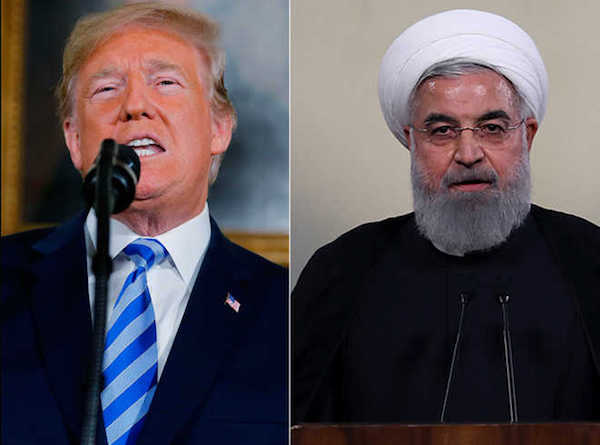
    WASHINGTON(TIP): US President Donald Trump on Tuesday, May 8, pulled out of the landmark nuclear deal with Iran, an Obama-era accord which he has repeatedly criticized.

    “It is clear to me that we cannot prevent Iran’s nuclear bomb. The Iran deal is defective at its core. Therefore, I am announcing today that the United States would withdraw from the Iran nuclear deal,” Trump said.

    Moments later he signed a fresh set of sanctions against Iran and warned countries against any cooperation with Iran on its nuclear weapons program.

    Ever since his election campaign, Trump has frequently criticized the Obama-era Iran nuclear deal, also known as the Joint Comprehensive Plan of Action or JCPOA.

    France, Germany, and the UK regret the U.S. decision to leave the JCPOA. The nuclear non-proliferation regime is at stake.

        — Emmanuel Macron (@EmmanuelMacron) May 8, 2018

    He had described the agreement, which was negotiated by then US secretary of state John Kerry, as a bad deal.

    I am deeply concerned by today’s announcement that the US will be withdrawing from the JCPOA & will begin reinstating US sanctions, says @antonioguterres. Full text here: https://t.co/LqC2WFJfAC

        — UN Spokesperson (@UN_Spokesperson) May 8, 2018

    The Iran nuclear deal was reached in Vienna in July 2015 between Iran and the P5 (the five permanent members of the UN Security Council) plus Germany and the European Union.

    Trump’s decision would have global ramifications, straining Iranian economy and heightening tensions in the Middle East.

    Iran will remain in N-deal, says Rouhani

    Meanwhile, Iranian President Hassan Rouhani said on Tuesday, May 8, that Iran would remain committed to a multinational nuclear deal despite US President Donald Trump’s decision to withdraw from the 2015 agreement designed to deny Tehran the ability to build nuclear weapons.

    “If we achieve the deal’s goals in cooperation with other members of the deal, it will remain in place… By exiting the deal, America has officially undermined its commitment to an international treaty,” Rouhani said in a televised speech.

    “I have ordered the foreign ministry to negotiate with the European countries, China and Russia in coming weeks. If at the end of this short period we conclude that we can fully benefit from the JCPOA with the cooperation of all countries, the deal would remain,” he added.

    The Joint Comprehensive Plan of Action (JCPOA) is the full name for the nuclear deal, struck in 2015 between Iran, the five permanent members of the U.N. Security Council — the United States, Russia, China, Britain and France — and Germany.

    Rouhani added that Iran was ready to resume its nuclear activities after consultations with the other world powers which are part of the agreement.

    Trump’s announcement was hailed by Washington’s principal allies in the Middle East, Israel and Saudi Arabia, both sworn foes of Iran.

    Under the deal, Iran curbed its nuclear activities in return for the lifting of most sanctions imposed on the country.

    Trump said he would reimpose economic sanctions on Tehran immediately. His decision puts pressure on his European allies, who are key backers of the deal and reluctant to join the United States in reimposing sanctions on Iran.

    Banking turmoil

    Some Iranians had been cashing in their savings even before Trump’s announcement he would pull out from the international deal with Iran, straining a banking system weighed down by bad loans and years of isolation.

    An official with Iran’s biggest state-owned Melli Bank told Reuters savings had declined by an unspecified amount, although he said this was a temporary phenomenon and that they would recover once the uncertainty over Trump’s decision passed.

    “When there is political uncertainty, its psychological impact on people causes a drop in savings. But it will pass after Trump’s deadline,” the official said before the announcement, declining to be named. A senior Iranian central bank official said conditions within the banking system had deteriorated in the past year, and “we have still not passed the danger zone” but added that the central bank had “all the measures ready to prevent any crisis”.

    EU will stand by Iran

    Europe will stand by the international nuclear accord with Iran, EU Foreign Policy chief Federica Mogherini said in a live press statement in Rome on Tuesday. “The EU is determined to preserve it,” she said. “We expect the rest of the international community to continue to preserve it, for the sake of collective security.” “The nuclear accord belongs to the whole of the international community,” Mogherini added. “To the Iranian people I say: do not let anyone dismantle this deal, one of the greatest achievements of the international community.”  “I am particularly worried about tonight’s announcement of further sanctions,” she said, adding that the deal with Iran “is the culmination of 12 years of diplomacy.”

    Most Americans reject move

    Less than one in three Americans agrees with President Donald Trump’s decision to pull the US out of an agreement to limit Iran’s nuclear program, according to a Reuters/Ipsos national opinion poll released on Tuesday, May 8.

    The poll, conducted on May 4-8, ahead of the President’s announcement to end the deal, found that 29 per cent of adults wanted to end the deal with Iran and five other world powers to ease sanctions and limit Iran’s nuclear program. Another 42 per cent said the US should remain in the deal, and the remaining 28 per cent said they “don’t know”. Even among those who are registered as Republicans, less than half — 44 per cent — advocated ending the US involvement in the deal. Another 28 per cent wanted to remain, and the remaining 28 percent said they did not know. — Agencies

    ‘US undermined commitment to treaty’

    If we achieve the deal’s goals in cooperation with other members of the deal, it will remain in place… By exiting the deal, America has officially undermined its commitment to an international treaty. Hassan Rouhani, Iranian President

    ‘Will work collectively’

    We will work collectively on a broader framework, covering (Iran’s) nuclear activity, the post-2025 period, ballistic activity, and stability in the Middle-East, notably Syria, Yemen, and Iraq. Emmanuel Macron, French President

    ‘It’s a historic move’

    Israel thinks that Trump made a historic move, and this is why Israel thanks him for his commitment to confront the terrorist regime in Tehran, and his commitment to ensure that Iran never gets nuclear weapons. Benjamin Netanyahu, Israeli Prime Minister

    ‘Decision misguided’

    Donald Trump’s decision to withdraw from the deal is misguided. I believe that the decision to put the JCPOA at risk without any Iranian violation of the deal is a serious mistake. Barack Obama, former US President.

    (Source: PTI and agencies)