

-
I.S. Saluja
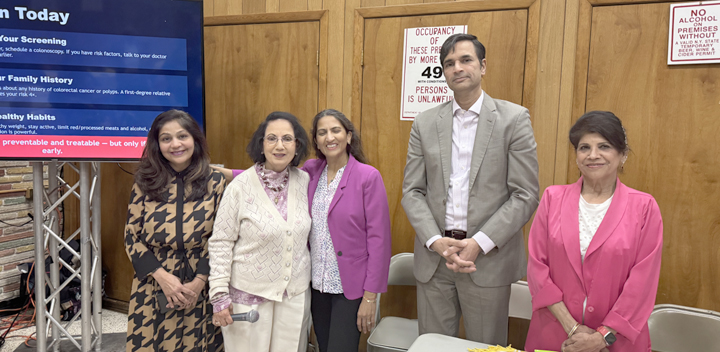
HICKSVILLE, NY (TIP): In a significant community outreach initiative aimed at promoting preventive healthcare, the Indian American Forum—one of the oldest Indian American associations on Long Island—organized an informative session on colon cancer awareness on Thursday, March 26. Indu Jaiswal, President of the IAF, the moving spirit behind the commendable initiative, was ably supported by Dr. Jag Kalra and other members of the IAF. The event brought together a large number of predominantly elderly Indian Americans, reflecting growing concern within the community about age-related health issues.
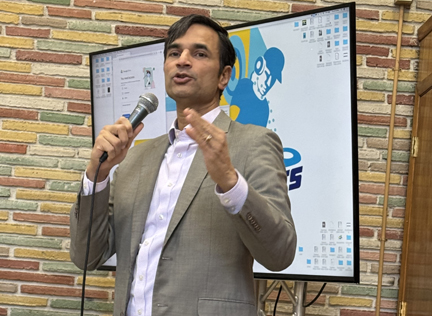
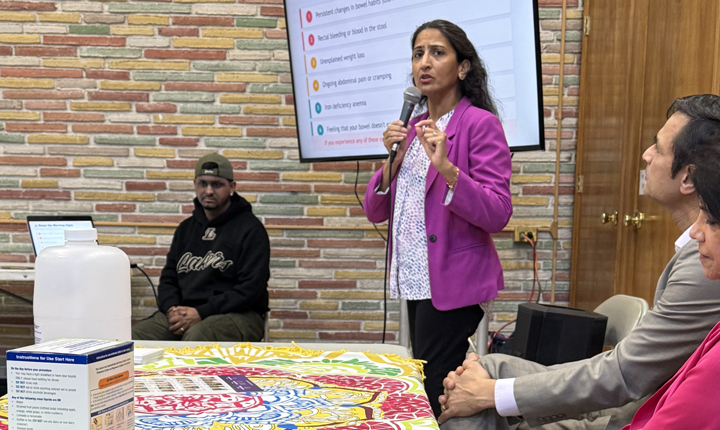
The session featured two eminent gastroenterologists from Digestive Disease Care—Dr. Nilesh Mehta, MD, and Dr. Preeti Mehta, MD—who delivered a comprehensive and highly engaging presentation on colon cancer, its risk factors, symptoms, prevention, and the critical role of early screening.
A central takeaway from the discussion was the revised guideline recommending that colon cancer screening begin at age 45, lowered from the earlier benchmark of 50. The doctors emphasized that this change reflects a worrying rise in cases among younger individuals. They also underscored the importance of family history in determining an individual’s risk profile, advising those with a history of colon cancer in the family to undergo screening even earlier.
Colon cancer, the speakers noted, is one of the most common cancers affecting both men and women. Alarmingly, it often develops without noticeable symptoms in its early stages, making routine screening essential. “Many patients feel perfectly healthy until the disease has progressed,” the doctors explained, reinforcing the need for vigilance even in the absence of symptoms.
Highlighting the effectiveness of colonoscopy, the physicians described it as the “gold standard” for detecting colon cancer. They explained that the procedure is not merely diagnostic but preventive as well. By identifying and removing precancerous polyps—small growths in the colon that can become malignant over time—colonoscopy can reduce the risk of colon cancer by as much as 80 to 90 percent.
The discussion also delved into various risk factors associated with colon cancer. These include genetic predisposition, diets high in red and processed meats, obesity, sedentary lifestyles, smoking, alcohol consumption, and exposure to environmental pollutants. The doctors pointed to emerging research linking microplastics, heavy metals, and certain industrial chemicals to increased cancer risk, urging the audience to be mindful of environmental and dietary influences.
Diet and lifestyle, they stressed, play a pivotal role in prevention. The speakers advocated for a shift toward natural, home-cooked meals and a reduction in ultra-processed foods. Regular physical activity, maintaining a healthy weight, and avoiding harmful habits such as smoking and excessive drinking were highlighted as key preventive measures.
Addressing concerns about the colonoscopy procedure itself, Dr. Nilesh Mehta and Dr. Preeti Mehta reassured attendees that modern techniques have made the process significantly more comfortable and convenient. Advances in bowel preparation—once considered the most challenging aspect—now include easier options such as pill-based regimens and low-volume liquid preparations, improving patient compliance and experience.
The doctors also emphasized the importance of proper preparation and the role of a skilled physician in ensuring accurate results. A clean colon, they explained, is essential for detecting abnormalities, and patients must carefully follow pre-procedure instructions.

During the interactive question-and-answer session, attendees raised a wide range of queries—from warning signs such as changes in bowel habits, blood in stool, unexplained weight loss, and abdominal pain, to concerns about medications and genetic conditions like Lynch syndrome and familial adenomatous polyposis (FAP). The doctors addressed each question with clarity, encouraging individuals to seek prompt medical advice if any concerning symptoms arise.
A particularly reassuring point for the audience was the clarification that most health insurance plans cover colon cancer screening, including colonoscopy. The doctors strongly urged attendees not to let financial concerns deter them from undergoing this potentially life-saving procedure.
The session also resulted in practical follow-up initiatives, including plans to organize a group colonoscopy program for community members who have not yet undergone screening, thereby simplifying access and encouraging participation.
Community leaders and attendees expressed deep appreciation for the Indian American Forum’s efforts in organizing such a meaningful event. For many in the audience—especially seniors who may not have had exposure to preventive healthcare practices earlier in life—the session proved both enlightening and empowering.
The overarching message from the experts was clear and unequivocal: colon cancer is largely preventable, and early detection through timely screening can save lives. As awareness grows within the community, such initiatives are expected to play a vital role in fostering a culture of proactive healthcare.
The event concluded with a renewed sense of responsibility among attendees—not only to safeguard their own health but also to spread awareness within their families and the wider community.
About Digestive Disease Care
Digestive Disease Care (DDC) is a leading gastroenterology practice serving communities across New York, with multiple offices in Suffolk, Nassau, and Queens. The organization brings together a team of highly trained, board-certified gastroenterologists and hepatologists dedicated to comprehensive digestive health. DDC offers a wide range of services, including colonoscopy, endoscopy, and advanced diagnostic testing, focusing on the prevention, early detection, and treatment of gastrointestinal conditions such as colorectal cancer, Crohn’s disease, and acid reflux. With a patient-centered approach, modern facilities, and broad insurance acceptance, DDC aims to deliver accessible, compassionate, and high-quality care across Long Island and New York City.
For more information, please visit www.DigestiveDisearseCare.com
Phones:
631-450-1500 (Suffolk Office); 516-204-4242 (Nassau Office) ; 718-313-0051 (Queens Office)



Be the first to comment