Tag: NYSNA

  • NYC HEALTH + HOSPITALS SHARES ITS 2023 ACCOMPLISHMENTS

    NYC HEALTH + HOSPITALS SHARES ITS 2023 ACCOMPLISHMENTS

    Highlights include opening the new $923 million Ruth Bader Ginsburg Hospital on the campus of NYC Health + Hospitals/South Brooklyn Health; answering the need for asylum seeker care and services; and investing in loan repayment for behavioral health staff

    NEW YORK, NY (TIP): NYC Health + Hospitals, on December 21, shared an overview of its accomplishments for the year. Highlights include being recognized for the delivery of high-quality care to patients, new state of the art facilities, answering the need for asylum seeker care and services, and investing in the NYC Health + Hospitals’ workforce.

    “NYC Health + Hospitals has so much to be proud of this year, and I want to thank our staff across the health system for the hard work they do every day to serve our patients and New Yorkers,” said NYC Health + Hospitals President and CEO Mitchell Katz, MD. “We joined our sister agencies in the response to the asylum seeker crisis. In the face of a neighborhood power outage, we safely evacuated all of our patients from NYC Health + Hospitals/Woodhull and brought them back when it was safe. We opened a beautiful new hospital, the Ruth Bader Ginsburg Hospital at NYC Health + Hospitals/South Brooklyn Health. And we made deep investments in our staff, with a salary increase for our nurses and loan repayment for some of our behavioral health staff.”

    A list of the health system’s accomplishments for 2023 are below:

    Delivering Award-Winning, High-Quality Care

    • Newsweek ranked Seaview the #1 Nursing Home in New York State. Three of the health system’s other skilled nursing facilities ranked in the top ten, and the fifth was ranked in the top 30 out of 600 nursing homes statewide.
    • NYC Health + Hospitals was once again recognized by the American Heart Association and American Medical Association for providing high quality care in several areas, including type 2 diabetes, high blood pressure, heart failure, stroke, and resuscitation.
    • For the first time, nine NYC Health + Hospitals sites were recognized by Planetree International for excellence in person-centered care.
    • NYC Health + Hospitals’ Accountable Care Organization earned $8M from the federal government for reducing avoidable costs and meeting high standards of quality care for patients – $4M more than last year’s shared savings. NYC Health + Hospitals is the only health system in New York State to achieve savings for ten years in a row.
    • NYC Health + Hospitals expanded its DaVinci Surgical Robot program. To offer equitable access to all patients, the health system added nine surgical robots for a total of 12 across the system.
    • A new Lung Cancer Screening Program launched at three pilot hospital sites. To date 3,961 patients have been screened. The health system’s screening rate for patients is 24% of all those eligible, which is significantly higher than the national rate of 6%. Of those screened, 23% were Black; 25% were Hispanic; 24% were White; and 26% were Asian, Native Hawaiian, Pacific Islander.

    New spaces and services

    NYC Health + Hospitals opened a new hospital. The $923 million Ruth Bader Ginsburg Hospital on the campus of NYC Health + Hospitals/South Brooklyn Health is a bright, beautiful space for patients to receive care. The 11-story building was designed to withstand the next 500-year storm. Hospital staff successfully transferred over 170 patients in an operation that began at 1am on a Sunday morning.

    NYC Health + Hospitals/Correctional Health Services opened the first-ever reentry service center on Rikers Island, a resource hub for the hundreds of people who are released from Rikers each year as well as members of the public and staff. Correctional health is also providing free smartphones and wireless plans to clinically vulnerable patients upon their release from jail to help them remain engaged in care as they return to the community.

    • The health system launched telehealth abortion access through Virtual ExpressCare — becoming the first public health system in the nation to do so.
    • Seven new murals can be found around NYC Health + Hospitals thanks to the Arts in Medicine department’s Community Mural Project at NYC Health + Hospitals/Kings County; NYC Health + Hospitals/Gotham Health, Sydenham; NYC Health + Hospitals/Queens; NYC Health + Hospitals/Coler; NYC Health + Hospitals/Carter; and NYC Health + Hospitals/Gotham Health, Morrisania. Two more murals will arrive after the new year at NYC Health + Hospitals/Harlem and NYC Health + Hospitals/Lincoln.
    • NYC Health + Hospitals successfully advocated for $95.1 million in city, state, and federal funding for medical equipment and structural upgrades for its facilities, including radiology equipment at NYC Health + Hospitals/Metropolitan, substance use treatment at NYC Health + Hospitals/Jacobi, and infrastructure improvements at NYC Health + Hospitals/Woodhull.

    Meeting Challenges Head On

    • NYC Health + Hospitals remained at the forefront of the city’s response to the historic asylum seeker crisis, providing shelter, health care, casework, and social services to tens of thousands of asylum seekers at our humanitarian relief centers. Staff at the city’s Arrival Center registered and provided medical services to more than 85,000 asylum seekers since the facility opened in May. This year, our clinicians have completed over 30,000 visits to patients who are known to be migrants or asylum seekers.

    In response to a neighborhood power failure, NYC Health + Hospitals/Woodhull successfully and safely evacuated all of its patients and brought them back when it was safe.

    Finding Homes for Our Patients

    • 300 patients found permanent housing working with NYC Health + Hospitals’ Housing for Health team this year.
    • The health system broke ground on a new housing development on the NYC Health + Hospitals/Woodhull campus that will have 93 apartments, including 56 units of supportive housing for our patients.

    Food as Medicine

    The Lifestyle Medicine Program, launched at NYC Health + Hospitals/Bellevue in 2019, began its citywide expansion. NYC Health + Hospitals/Jacobi, NYC Health + Hospitals/Woodhull, and NYC Health + Hospitals/Kings County all kicked off their Lifestyle Medicine programs this fall, with NYC Health + Hospitals/Elmhurst, NYC Health + Hospitals/Lincoln, and NYC Health + Hospitals/Gotham/Vanderbilt to come in the spring.

    • All of the health system’s hospitals began serving plant-based meals as the primary choice for dinner, encouraging patients to eat tasty food that promotes better health outcomes.

    Investing in Behavioral Health

    • The health system opened a new Extended Care Unit at NYC Health + Hospitals/Kings County for patients who are discharged from psychiatric inpatient care and want continued support. Patients stay in the ECU for up to 90 days to work on rehabilitation and reintegrating into the community. The ECU at Kings County Hospital joins a successful program at NYC Health + Hospitals/Bellevue launched in 2020.
    • NYC Health + Hospitals finished converting back medical units to psychiatric units after COVID and are on track to have nearly 1,000 psychiatric beds online by the New Year.
    • NYC Health + Hospitals expanded our services for survivors of domestic violence by bringing behavioral health services to the city’s domestic violence shelter system, providing on-site services to adults and children. The initiative started in 9 shelters in 2023. The health system also opened two specialized mental health clinics for survivors at NYC Health + Hospitals/Lincoln and NYC Health + Hospitals/Kings County.

    Supporting our staff

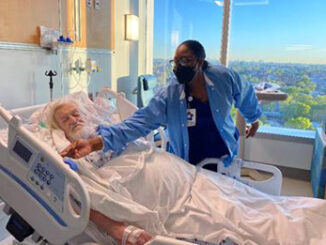
    • NYC Health + Hospitals’ nurses had a big year: they gained pay parity with private hospitals thanks to a new NYSNA contract; celebrated with Mayor Adams at NYC Health + Hospitals/Gotham Health, Gouverneur for the citywide milestone of 5,000 nurses trained through the Nurse Residency Program in NYC; and were recognized with the American Association of Critical Care Nurses Beacon award (NYC Health + Hospitals/Bellevue, NYC Health + Hospitals/Woodhull, NYC Health + Hospitals/Queens, and NYC Health + Hospitals/Lincoln), DAISY Awards for Post-Acute Care Facilities, American Nurses Credentialing Center Pathway to Excellence designation (NYC Health + Hospitals/Kings County, NYC Health + Hospitals/Queens, and NYC Health + Hospitals/South Brooklyn Health), and the Emergency Nurses Association Lantern Award (South Brooklyn Health).
    • NYC Health + Hospitals distributed $1 million in debt relief to 27 behavioral health providers in exchange for a three-year commitment to serving our health system.

    Using Creativity to Connect and Heal Our Patients

    • NYC Health + Hospitals/Harlem CEO Georges Leconte let cameras follow him into his colonoscopy to destigmatize the procedure and encourage more people to get screened for colorectal cancer with help from Harlem Hospital Chief of Gastroenterology Dr. Joan Culpepper-Morgan.
    • Artist Modesto “Flako” Jimenez completed his yearlong residency with NYC Health + Hospitals’ gun violence prevention programs and the youth involved in them, leading to a new mural about Guns Down, Life Up at NYC Health + Hospitals/Lincoln, a modern adaption of Romeo and Juliet, a gallery exhibit at Materials for the Arts in Queens, a showcase at Carnegie Hall, and a short video about the collaboration.
    • NYC Care almost reaches the 125,000 members milestone. This fall, the program partnered with the Mayor’s Public Engagement Unit to engage 30,000 NYC Care members who had not yet scheduled a primary care appointment, and connected them to care.
  • New York nurses strike ends after tentative deal reached with hospitals

    New York nurses strike ends after tentative deal reached with hospitals

    NEW YORK (TIP): A nurses strike at two private New York City hospital systems has come to an end after 7,000 nurses spent three days on the picket line. CNN has reported that the New York State Nurses Association union reached tentative deals with Mount Sinai Health System and Montefiore Health System, which operates three hospitals in the Bronx that had been struck. The nurses had been arguing that immense staffing shortages have caused widespread burnout, hindering their ability to properly care for their patients.

    The union said the deal will provide enforceable “safe staffing ratios” for all inpatient units at Mount Sinai and Montefiore, “so that there will always be enough nurses at the bedside to provide safe patient care, not just on paper.” At Montefiore, the hospital agreed to financial penalties for failing to comply with agreed-upon staffing levels in all units.

    Montefiore said the agreement also includes 170 new nursing positions, a 19% increase in pay over the three year life of the contract, lifetime health coverage for eligible retirees and adding “significantly more nurses” in the ER.

    The deals were announced in the early hours Thursday morning, January 12 at 3 a.m. ET for Montefiore and about 30 minutes later at Mount Sinai. The nurses returned to the job for the 7 a.m. ET shift Thursday, and Montefiore Medical Center said all surgeries and procedures and outpatient appointments for Thursday and after will proceed as scheduled. Nurses will need to vote to approve the deal before it is finalized. But the union said the tentative deal will help put more nurses to work and allow patients to receive better care. “Through our unity and by putting it all on the line, we won enforceable safe staffing ratios at both Montefiore and Mount Sinai where nurses went on strike for patient care,” the nurses’ union said in a statement. “Today, we can return to work with our heads held high, knowing that our victory means safer care for our patients and more sustainable jobs for our profession.”

    Mount Sinai called the agreement “fair and responsible.”

    “Our proposed agreement is similar to those between NYSNA and eight other New York City hospitals,” Mount Sinai said in a statement. “It is fair and responsible, and it puts patients first.”

    “From the outset, we came to the table committed to bargaining in good faith and addressing the issues that were priorities for our nursing staff,” Montefiore said in a statement. “We know this strike impacted everyone — not just our nurses — and we were committed to coming to a resolution as soon as possible to minimize disruption to patient care.”

    The hospitals had stayed open during the three-day strike, using higher-cost temporary nursing services to provide care, and transferring other employees to take care of non-medical nursing duties. They had also diverted and transferred some patients to other hospitals and postponed some elective procedures.

    The striking nurses have said they are working long hours in unsafe conditions without enough pay — a refrain echoed by several other nurses strikes across the country over the past year. They said the hours and the stress of having too many patients to care for is driving away nurses and creating a worsening crisis in staffing and patient care.

    The union representing the nurses had reached tentative agreements offering the same 19% pay hikes at other New York hospitals, avoiding strikes by about 9,000 other nurses spread across seven hospitals in the city. But the nurses at the hospitals that went on strike said the pay raises weren’t the main problem, that the more severe staffing shortages at Mount Sinai and Montefiore needed to be addressed before a deal could be reached. Both hospitals had criticized the union for going on strike rather than accepting offers they described as similar to those the union accepted at other hospitals in the city.