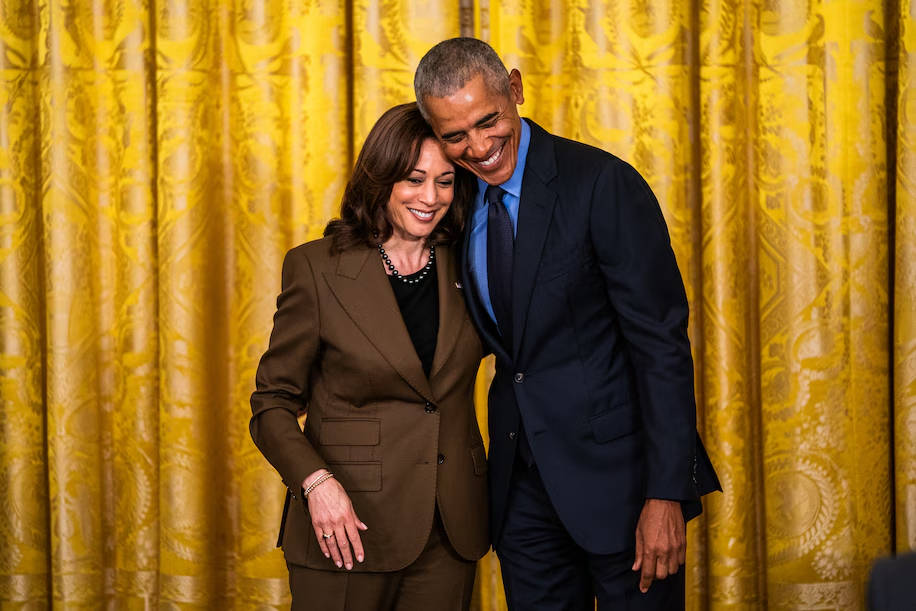
The Obamas are the final key leaders in the Democratic Party to unite behind Harris after President Biden ended his bid for a second term
WASHINGTON, D.C. (TIP): Former president Barack Obama and first lady Michelle Obama endorsed Vice President Harris for president on Friday, becoming the final key leaders in the Democratic Party to unite behind Harris after President Biden abandoned his bid for a second term.
A video posted on social media shows the Obamas calling Harris to inform her of their endorsement.
“We called to say Michelle and I couldn’t be prouder to endorse you and to do everything we can to get you through this election and into the Oval Office,” the former president says to Harris.
Michelle Obama adds, “I can’t have this phone call without saying to my girl Kamala: I am proud of you. This is going to be historic.” In a separate statement, the Obamas pledged to “do everything we can” to elect Harris and called on their legions of supporters to join the effort.
They praised Harris’s record of accomplishments, listing each of her previous roles in what could be interpreted as a rejoinder to Republicans who have labeled her a “DEI hire” — a reference to “diversity, equity and inclusion” initiatives often used derisively to suggest that Harris only reached the upper echelon of American politics because of her race and gender.
“But Kamala has more than a résumé. She has the vision, the character, and the strength that this critical moment demands,” they wrote. “There is no doubt in our mind that Kamala Harris has exactly what it takes to win this election and deliver for the American people. At a time when the stakes have never been higher, she gives us all reason to hope.”
Their call with Harris took place on Wednesday, July 24. Barack Obama said the Democrats would be “underdogs” but pledged to work hard for her election. “Bottom line is, we are ready to get to work,” he said during the call, according to a transcript. “We are telling everybody to kick off those bedroom slippers and get off the couch and start knocking on doors and making phone calls.”
Many Republicans seized on the fact that Obama did not mention or endorse Harris in his initial statement responding to Biden’s abrupt exit from the race Sunday. “We will be navigating uncharted waters in the days ahead,” he said in that statement. “But I have extraordinary confidence that the leaders of our party will be able to create a process from which an outstanding nominee emerges.”
On Thursday, July 25, Donald Trump’s campaign seized on Obama’s lack of an endorsement to make the case that Harris’s path to the nomination was not a done deal. Steven Cheung, a campaign spokesman, said Trump would not agree to debate Harris until she was officially the Democratic nominee, suggesting without evidence that Obama and other top Democrats were considering backing a different candidate.
“There is a strong sense by many in the Democrat Party — namely Barack Hussein Obama — that Kamala Harris is a Marxist fraud who cannot beat President Trump, and they are still holding out for someone ‘better,’” Cheung said in a statement Thursday evening. “Therefore, it would be inappropriate to schedule things with Harris because Democrats very well could still change their minds.”
The Obamas’ endorsement comes after Harris already secured enough pledges from delegates to become the likely nominee. Biden exited the race on Sunday and immediately endorsed Harris, who quickly coalesced much of the Democratic Party behind her bid. Just before Biden dropped out of the race, Obama told allies that the president’s path to victory had greatly diminished and he thought the president needed to seriously consider the viability of his candidacy, according to multiple people briefed on his thinking, who spoke on the condition of anonymity to discuss confidential conversations. In those conversations, Obama emphasized he felt protective over Biden as a friend and was concerned about his legacy.
(Source: Washington Post)
WASHINGTON, D.C. (TIP): President Joe Biden warned Prime Minister Benjamin Netanyahu on April 4 that U.S. policy on Israel depends on the protection of civilians in Gaza, in his strongest hint yet of possible conditions on military aid after an Israeli strike killed seven aid workers.
In their first call since the deaths of the employees of the U.S.-based World Central Kitchen group on Monday, April 1, Mr. Biden also called for an “immediate ceasefire” after the “unacceptable” attack and wider humanitarian situation in Gaza.
Democrat Biden is facing growing pressure in an election year over his support for Israel’s Gaza war – with allies pressing him to consider making the billions of dollars in military aid sent by the United States to its key ally each year dependent on Mr. Netanyahu listening to calls for restraint.
Mr. Biden “made clear the need for Israel to announce and implement a series of specific, concrete, and measurable steps to address civilian harm, humanitarian suffering, and the safety of aid workers”, the White House said in a readout of the call.
“He made clear that U.S. policy with respect to Gaza will be determined by our assessment of Israel’s immediate action on these steps.”
A key Biden confidant had earlier urged him to use the leverage afforded by the huge military aid that Washington gives Israel – something Biden has resisted for the past six months. “I think we’re at that point,” Chris Coons, a Democratic senator from the president’s home state of Delaware, told CNN.
If Israel began its long-threatened full-scale offensive in the southern city of Rafah, without plans for some 1.5 million people sheltering there, “I would vote to condition aid to Israel,” Mr. Coons said.
“I’ve never said that before, I’ve never been there before,” he added.
Mr. Biden also reportedly faces pressure from even closer to home — from First Lady Jill Biden.
“Stop it, stop it now,” she told the president about the growing toll of civilian casualties in Gaza, according to comments by Mr. Biden himself to a guest during a meeting with members of the Muslim community at the White House, and reported by The New York Times. Mr. Biden has supported Israel’s six-month-old war sparked by Hamas’s October 7 attack but has increasingly voiced frustration with Israel’s right-wing premier over the soaring death toll and dire humanitarian situation in Gaza.
In his strongest statement since the war began, he said that he was “outraged and heartbroken” by Israel’s killing of the seven aid workers, who included a U.S.-Canadian citizen.
Israel has said the deaths were “unintentional”.
But Mr. Biden’s words have not been matched by any concrete steps to limit the billions of dollars in military aid that Washington supplies to its bedrock regional ally.In a sign of business as usual, Biden’s administration approved the transfer of thousands more bombs to Israel on the same day as the Israeli strikes that killed the seven aid workers, The Washington Post reported on Thursday, April 4.
Many Democrats fear the controversy could hurt Biden’s chances of re-election in November against Republican Donald Trump, as Muslim and younger voters express their anger over Gaza.
A former senior aide to Barack Obama – the president under whom Biden served as vice president – called for Biden’s actions to back his words.
“The U.S. government is still supplying 2-thousand-pound bombs and ammunition to support Israel’s policy,” Ben Rhodes, a former deputy national security advisor in Obama’s administration, wrote on X.
“Until there are substantive consequences, this outrage does nothing. Bibi (Netanyahu) obviously doesn’t care what the U.S. says, it’s about what the U.S. does.”
U.S. voters are also increasingly turning against Israel’s Gaza offensive.
A majority of 55% now disapprove of Israel’s actions, compared to 36% who approve, according to a Gallup poll released on March 27.
(Agencies)
MOBILE, AL (TIP): : Indian American businessman Vimal Patel is vying for Democratic nomination for US Congress from Alabama’s redrawn 2nd district which spans south Alabama and includes Montgomery County and a portion of Mobile County.
Patel, 39, is one of 13 Democrats who joined the race after a federal court approved a new map that changed the 2nd District from safely Republican to one where a Democrat can win. The primary is March 5. There are eight Republicans running.
Patel told Al.com the Great Recession of more than a decade ago taught him how to sustain his family businesses during lean times, skills that he believes would make him a problem-solver in Washington.
Patel said he believes the business skills would make him effective in Congress and help tackle issues like the federal deficit and the long-range outlook for Social Security. He said those in Washington have responded to those foundational problems with complacency.
“That’s ridiculous, for us to know the Titanic’s hitting the iceberg and to say that we’re just going let two political parties take us right into it,” Patel said.
“The real issue is, what kind of changes need to take place to keep it solvent,” Patel said. “Right now, you’re just having people throw up bullets in the air. You’re going to want to elect people who have numbers in mind, who know how to do those things. You cannot spend money that you don’t have.”
Patel ran for the 2nd District seat in 2022, losing in the Democratic primary to Phyllis Harvey-Hall, who is also running again this time.
Patel said he has always leaned toward a Democratic viewpoint on certain issues. Patel supported the Affordable Care Act passed by Congress under former President Barack Obama and says its emphasis on preventive healthcare was commonsense.Patel disagrees with Republican candidates for Congress who call for abolishing the federal Department of Education. He said he thinks he knows why, but said the answer is to fix it, not eliminate it.
Patel said he would support a federal initiative to improve education that would not take decision-making away from the state and local levels.
Patel said if he goes to Congress, he will have a staff member whose job is to inform small businesses about federal programs that can help them.
Patel said he saw the need for that effort during the Covid pandemic, when he said he only learned about a federal grant program from a chamber of commerce Facebook post.
Patel manages his family’s hotels in Troy, Montgomery, and Dothan and a laundromat in Eufaula. He lives in an apartment built into one of the family hotels in Troy. He is married and has an 11-year-old daughter. He shares his home and office with his father, Pravin Patel, who built three of the hotels.
Patel’s family immigrated from India in 1980. The first one in his family born in America, Vimal Patel graduated from Charles Henderson High School in Troy and earned a political science degree from Auburn in 2007.
He said he assumed management responsibilities for the family businesses around 2009 to 2010, a time when the recession and its aftermath was squeezing the economy in Alabama and across the nation.
WASHINGTON, D.C. (TIP): Maju Varghese, a former senior official in the Biden and Obama administrations, has been named Principal at NEWCO Strategies, a woman and LGBTQ-led, majority-minority strategic consulting firm. The son of immigrants from Kerala, India, has held senior positions on the staffs of two Presidents, Joe Biden and Barack Obama, presidential campaigns, dynamic non-profit organizations, and the legal industry.
Over the last two decades, Varghese has led teams across industries through adversity and change to achieve history-making results, according to his company profile.
Varghese most recently served as the Chief Operating Officer (COO) of the National Endowment for Democracy (NED), an organization that supports democracy work around the world with a staff of 300 employees and a budget of over $300 million.
In this role, Varghese spearheaded operational improvements, leveraging technology to make critical processes more efficient. He also led NED through the critical post-pandemic period by leading the work to finalize a hybrid return to office policy and the completion of NED’s first collective bargaining agreement with its staff union.
Prior to that, Varghese served as Deputy Assistant to the President and Director of the White House Military Office, overseeing an organization of nearly 3,000 military and civilian personnel who provide essential services to the White House and ensure worldwide, daily, uninterrupted functioning of the presidency.
In this role, he managed the Presidential Airlift Group, the Marine Helicopter Squadron, Camp David, the White House Communications Agency, and the White House Medical Unit.
Before joining the Biden administration, Varghese was Executive Director of the 59th Presidential Inaugural Committee, navigating the Covid-19 pandemic and heightened security concerns following the January 6, 2021 attack on the US Capitol. Varghese led the planning of all inaugural events, including driving the development of the “Field of Flags” on the National Mall which garnered international attention for its creativity and symbolism. Varghese oversaw the logistics of inaugural programming, including a National Covid-19 Memorial Event at the Lincoln Memorial and “Celebrating America—An Inauguration Night Special”—an Emmy-nominated, nationally televised concert on Jan 20, 2021, that drew over 20 million viewers.
Varghese also served as Chief Operating Officer and Senior Advisor on the Biden Campaign, with oversight of national operations, personnel, travel, vetting, and compliance from the primaries through the general election. When Covid-19 began, Varghese worked with health advisers to develop safety protocols for the campaign, including the shift of staffers to remote work and from in-person events to virtual formats. He also led the negotiation of the campaign’s collective bargaining agreement with the union representing the campaign’s field organizers, the first such agreement for the staff of a major party nominee.
Prior to serving on the campaign, he was Chief Operating Officer of the Hub Project, a Washington, DC-based non-profit, and senior advisor at Dentons, a multinational law firm.
Previously in his career, Varghese was a senior member of Obama’s staff at the White House. He oversaw day-to-day White House operations, including oversight of the budget, personnel, and facilities as Assistant to the President for Management and Administration.
Varghese also served as Special Assistant to the President and Deputy Director of Advance, helping to lead the team that coordinates the President’s events and travel.
In this capacity, he worked closely with the National Security Council, the US Department of State, foreign governments, the White House Military Office, and the United States Secret Service to plan and execute the President’s overseas travel. Prior to his time at the White House, Varghese practiced law, serving as a litigation associate in a New York City law firm.
Varghese is an alumnus of the University of Massachusetts Amherst, where he received a Bachelor of Arts in Political Science and Economics, and the Maurice A. Dean School of Law at Hofstra University, where he earned his Juris Doctor.
Varghese was born in the US to parents who immigrated from Thiruvalla, Kerala. His mother, Saroja Varghese, came alone first as a nurse in 1972 after working with the Indian Air Force. She was later joined by her husband and elder daughter, Manju.
He lives in Arlington, Virginia, with his wife Julie and their son Evan.
This week we are looking at Prime Minister Narendra Modi’s visit to Washington, which saw US President Joseph Biden roll out the red carpet for him. PM Modi’s visit included a private dinner at the White House, a ceremonial welcome, a state banquet, an address to the US Congress joint session and lunch at the State Department.
PM Modi is the third international leader, after French President Macron and South Korean President Yoon Suk Yeol to be invited as a State guest to the Biden White House. He is also the third Indian leader to be invited as a State visitor to Washington. In 2009, Prime Minister Manmohan Singh was invited by President Barack Obama, and in 1963, President Sarvepalli Radhakrishnan was invited by President John F Kennedy.
“Decades from now — decades from now, people will look back and say the Quad bent the arc of history toward “global good,” as the Prime Minister describes it. Together, India and the United States are working closely on everything from ending poverty and expanding access to healthcare to addressing climate change to tackling food and energy insecurity stoked by Russia’s unprovoked war on Ukraine,” U.S President Joe Biden said.
“We were strangers in defense cooperation at the turn of the century. Now, the United States has become one of our most important defense partners. Today India and the US are working together, in space and in the seas, in science and in semi-conductors, in start-ups and sustainability, in tech and in trade, in farming and finance, in art and artificial intelligence, in energy and education, in healthcare and humanitarian efforts, PM Narendra Modi said.
High-Tech partnership
The big deal announced during this visit was the MoU for a co-production deal between GE and HAL to manufacture GE-F414 jet engines in India for Tejas Light Combat Aircraft
Semiconductor supply chains: Micron Technology will invest $800 million toward a new $2.75 billion semiconductor assembly and test facility in Gujarat- the Indian Semiconductor mission will fund the rest of the project
Under the newly launched Initiative on Critical and Emerging Technology (iCET), a number of innovation partnerships, also on India and the United States have established a Joint Indo-U.S. Quantum Coordination Mechanism to facilitate joint research looking at Quantum, Advanced Computing, and Artificial Intelligence
India to join the 11-nation minerals security partnership (msp) meant to reduce dependence on China for critical minerals
Defense cooperation
India will buy 16 Drones- armed MQ-9B SeaGuardian UAVs.
The US Navy has concluded a Master Ship Repair Agreement (MSRA) with Larsen and Toubro Shipyard in Kattupalli (Chennai) and is finalizing agreements with Mazagon Dock Limited (Mumbai) and Goa Shipyard (Goa).
Placing Indian liaison officers at 3 US commands
Launch of India-U.S. Defense Acceleration Ecosystem (INDUS-X)— between private defense industries in US and India
Space cooperation:
India signed the Artemis Accords, joining 26 other countries working on exploration of the Moon, Mars, and beyond.
NASA will provide advanced training to Indian Space Research Organization (ISRO) astronauts with the goal of launching a joint effort to the International Space Station in 2024.
NASA and the ISRO are developing a strategic framework for human spaceflight cooperation by the end of 2023
Trade and Consular issues
Resolution of six of seven outstanding WTO disputes between the two countries through mutually agreed solutions, market access
India to set up consulate in Seattle, 2 other US cities. US to set up new consulates in Ahmedabad and Bengaluru
Relaxation in H1B visa norms for in country renewal and more availability of visas
The broad geopolitical takeaways of the Modi visit
Reaffirmation of India-US strategic ties, also within Quad and the Indo-Pacific, although no specific messaging on China.
High technology partnerships will drive the next phase of the relationship, just as the nuclear deal, or the defense agreements, or the search for an FTA once did. In particular, the Jet engine deal if it goes through could pave the way for more technology transfer that has thus far eluded the relationship
Leadership level summits and meetings continue to ensure India-US ties grow year on year as they have over the past two decades. Biden will visit India for the G20 summit in September, and there’s speculation PM Modi will be invited to California for the APEC summit in November, where leaders of 21 countries including US and China will meet.
Reading the fine print- the left-outs
The big-ticket item on this visit- for the GE F414 jet engines to be co-produced in India still has a long regulatory road ahead- a manufacturing license agreement has now been submitted for Congressional Notification. US Congress will need to clear the deal on two counts of Export Administration Regulations (EAR) and International Traffic in Arms Regulations (ITAR). Questions are still open on just how much technology will actually be transferred- and whether India will accept conditions attached to that….some of the reasons previous attempts on jet engine tech transfer, as the two countries attempted from 2010-2019 under DTTI, failed.
Indian regulations have similarly held up the Indo US nuclear deal between Nuclear Power Corporation of India Limited (NPCIL) and Westinghouse Electric Company (WEC) for the construction of six nuclear reactors in Kovvada, Andhra Pradesh. 8 years after Modi-Obama announced the nuclear deal is done, and worked a way around the CLNDA, there’s still no techno-commercial offer. ‘
The Biden administration has made it clear it has no interest in continuing the Trump-era FTA talks, and the Modi government has made it clear it still expects the Biden administration to restore India’s GSP status for exports. But no movement during this visit
The big ticket deal from 2019 on an Indian investment in a US LNG plant- specifically the $2.5 bn planned by Petronet in Tellurian’s Driftwood LNG project- has not been revived, nor was any announcement made on GAIL India’s plans to invest in US LNG plants.
India and US agreed to disagree, but differences over the Russian war in Ukraine remained- while Biden referred to what he called Russia’s brutal war on two occasions, PM Modi didn’t, nor did the Joint statement reflect it.
Human Rights-this remains as prickly an issue as it was in 2014, when PM Modi visited India for the first time after his visa was revoked in 2005. Ahead of this visit as many as 75 members of the US Congress wrote to President Biden demanding that he raise concerns over human rights and democracy in India publicly, which he did not.
And former President Obama said this in an interview that released the same day as the State visit:
“I think it is true that if the President meets with Prime Minister Modi, then the protection of the Muslim minority in a majority Hindu India, that’s something worth mentioning. Because, and by the way, if I had a conversation with Prime Minister Modi, who I know Well, part of my argument would be that if you do not protect the rights of ethnic minorities in India, then there is a strong possibility, and at some point, starts pulling apart. And we’ve seen what happens when you start getting those kinds of large internal conflicts”
When asked at a rare press event with – where he answered a few questions from the media, here’s what PM Modi said
“We have proven that democracy can deliver, and there is no discrimination in India on the issues of cast, creed, religion”
World View Take
Quite aside from the moment at hand, the underlying logic for India-US relations, especially between its people has always been strong- and is the reason relations remained close despite cold war tensions. PM Modi’s state visit to Washington is one more step in ties that have grown year on year over 2 decades and are poised to take the next leap on technology transfer. When it comes to questions over Indian democracy, that are internal to India, PM Modi made a rare exception in taking questions in the US, but it is the answers he gives to Indians in India on democratic freedoms that will actually count.
“History is not the past. It is the present. We carry our history with us. We are our history. If we pretend otherwise, we are literally criminals.” – James Baldwin
July 29
Benito Mussolini
Birthday – Benito Mussolini (1883-1945) was born in Dovia, Italy. He ruled Italy from 1922-1943, first as prime minister and then as “Il Duce,” the absolute dictator.
July 30
July 30, 1975 – Former Teamsters Union leader James Hoffa was last seen outside a restaurant near Detroit, Michigan. His 13-year federal prison sentence had been commuted by President Richard M. Nixon in 1971. On December 8, 1982, seven years after his disappearance, an Oakland County judge declared Hoffa officially dead.
Henry Ford
Birthday – Automotive pioneer Henry Ford (1863-1947) was born in Dearborn Township, Michigan. He developed an assembly-line production system and introduced a $5-a-day wage for automotive workers. “History is bunk,” he once said.
July 31
July 31, 1776 – During the American Revolution, Francis Salvador became the first Jew to die in the conflict. He had also been the first Jew elected to office in Colonial America, voted a member of the South Carolina Provincial Congress in January 1775.
July 31, 1790 – The U.S. Patent Office first opened its doors. The first U.S. patent was issued to Samuel Hopkins of Vermont for a new method of making pearlash and potash. The patent was signed by George Washington and Thomas Jefferson.
August 1
August 1, 1838 – Slavery was abolished in Jamaica. It had been introduced by Spanish settlers 300 years earlier in 1509.
August 1, 1944 – Anne Frank penned her last entry into her diary. “[I] keep on trying to find a way of becoming what I would like to be, and what I could be, if…there weren’t any other people living in the world.” Three days later, Anne and her family were arrested and sent to Nazi concentration camps. Anne died at Bergen-Belsen concentration camp on March 15, 1945, at age 15.
August 1, 1944 – The Warsaw Uprising began as the Polish Home Army, numbering about 40,000 Polish patriots, began shooting at German troops in the streets. The Nazis then sent eight divisions to battle the Poles, who had hoped for, but did not receive, assistance from the Allies. Two months later, the rebellion was quashed.
Francis Scott Key.
Birthday – Star-Spangled Banner author Francis Scott Key (1779-1843) was born in Frederick County, Maryland. After witnessing the British bombardment of Fort McHenry on the night of September 13-14, 1814, he was enthralled to see the American flag still flying over the fort at daybreak. He then wrote the poem originally entitled Defense of Fort McHenry which became the U.S. National Anthem in 1931.
Birthday – Moby Dick author Herman Melville (1819-1891) was born in New York.
August 2
August 2, 1776 – In Philadelphia, most of the 55 members of the Continental Congress signed the parchment copy of the Declaration of Independence.
August 2, 1923 – President Warren G. Harding died suddenly in a hotel in San Francisco while on a Western speaking tour. His administration had been tainted by the Teapot Dome political scandal and his sudden death prompted many unfounded rumors. He was succeeded the next day by Calvin Coolidge.
August 2, 1939 -Albert Einstein wrote a letter to President Franklin D. Roosevelt concerning the possibility of atomic weapons. “A single bomb of this type carried by boat and exploded in a port, might very well destroy the whole port together with some of the surrounding territory.” Six years later, on August 6, 1945, the first Atomic Bomb, developed by the U.S., was dropped on the Japanese port of Hiroshima.
August 2, 1990 – The Iraqi army invaded Kuwait amid claims that Kuwait threatened Iraq’s economic existence by overproducing oil and driving prices down on the world market. An Iraqi military government was then installed in Kuwait which was annexed by Iraq on the claim that Kuwait was historically part of Iraq. This resulted in Desert Shield, the massive Allied military buildup, and later the 100-hour war against Iraq, Desert Storm.
August 3
Christopher Columbus
August 3, 1492 – Christopher Columbus set sail from Palos, Spain, with three ships, Nina, Pinta and Santa Maria. Seeking a westerly route to the Far East, he instead landed on October 12th in the Bahamas, thinking it was an outlying Japanese island.
Ernie Pyle
Birthday – War correspondent Ernie Pyle (1900-1945) was born in Dana, Indiana. His syndicated column offered sympathetic insights into the experiences of common soldiers during World War II. He received a Pulitzer Prize for his reports of the bombing of London in 1940 and later war reports from Africa, Sicily, Italy and France. He was killed by machine-gun fire near Okinawa in the South Pacific on April 18, 1945.
Maggie Kuhn
Birthday – Gray Panthers founder Maggie Kuhn (1905-1995) was born in Buffalo, New York. After she was forced into mandatory retirement at age 65, she founded the Gray Panthers organization to fight age discrimination and succeeded in the banning of mandatory retirement in most professions.
August 4
Nelson Mandela
August 4, 1962 – Apartheid opponent Nelson Mandela was arrested by security police in South Africa. He was then tried and sentenced to five years in prison. In 1964, he was placed on trial for sabotage, high treason and conspiracy to overthrow the government and was sentenced to life in prison. A worldwide campaign to free him began in the 1980s and resulted in his release on February 11, 1990, at age 71 after 27 years in prison. In 1993, Mandela shared the Nobel Peace Prize with South Africa’s President F.W. de Klerk for their peaceful efforts to bring a nonracial democracy to South Africa. In April 1994, black South Africans voted for the first time in an election that brought Mandela the presidency of South Africa.
August 4, 1964 – Three young civil rights workers, James Chaney, Andrew Goodman and Michael Schwerner, were found murdered and buried in an earthen dam outside Philadelphia, Mississippi. They had disappeared on June 21 after being detained by Neshoba County police on charges of speeding. They were participating in the Mississippi Summer Project organized by the Student Nonviolent Coordinating Committee (SNCC) to increase black voter registration. When their car was found burned on June 23, President Lyndon Johnson ordered the FBI to search for the men.
Louis Armstrong
Birthday – Jazz trumpet player Louis Armstrong (1901-1971) was born in New Orleans, Louisiana. Known as “Satchmo,” he appeared in many films and is best known for his renditions of It’s a Wonderful World and Hello, Dolly.
Raoul Wallenberg
Birthday – Swedish diplomat Raoul Wallenberg (1912-1947) was born in Stockholm. During the Holocaust, Wallenberg saved an estimated 33,000 Jews by issuing thousands of protective documents, by securing the release of Jews from deportation trains, death march convoys, labor service brigades, and by establishing the International Ghetto, a network of 31 protected houses. He was detained by Soviet agents on January 17, 1945 and is believed to have died in prison in 1947.
Barack Obama
Birthday – Barack Obama the 44th U.S. President was born in Honolulu, Hawaii, on August 4, 1961. His father was from Kenya, Africa, while his mother was originally from Kansas. Upon completing his college education, young Obama moved to Chicago, becoming active in community affairs. He then attended Harvard Law School, becoming the first African-American president of the Harvard Law Review in 1990. He returned to Chicago, worked in a law firm, then entered politics. Elected to the Illinois State Senate in 1996, he went on to become a U.S. Senator in 2004. Four years later, he successfully challenged former First Lady Hillary Rodham Clinton for the Democratic presidential nomination and went on to defeat Republican John McCain in the general election, November 4, 2008, thus becoming the first President of African-American origin.
US President Joe Biden ordered flags at the White House and other federal buildings and grounds to be flown at half-staff
WASHINGTON, D.C. (TIP): Madeleine Albright, a child refugee from Nazi- and then Soviet-dominated Eastern Europe who rose to become the first female secretary of state and a mentor to many current and former American statesmen and women, died on Wednesday of cancer, her family said. A lifelong Democrat who nonetheless worked to bring Republicans into her orbit, Albright was chosen in 1996 by President Bill Clinton to be America’s top diplomat, elevating her from the US ambassador to the United Nations, where she had been only the second woman to hold that job.
As secretary of the state, Albright was the highest-ranking woman in the history of the US government. She was not in the line of succession to the presidency, however, because she was born in what was then Czechoslovakia. Still, she was universally admired for breaking a glass ceiling, even by her political detractors.
“We have lost a loving mother, grandmother, sister, aunt and friend,” her family said in a statement. President Joe Biden ordered flags at the White House and other federal buildings and grounds to be flown at half-staff until March 27. Outpourings of condolences came quickly. Biden said, “America had no more committed champion of democracy and human rights than Secretary Albright, who knew personally and wrote powerfully of the perils of autocracy.” “When I think of Madeleine,” Biden added, “I will always remember her fervent faith that America is the indispensable nation.”
Secretary of State Antony Blinken said Albright was “a brilliant diplomat, a visionary leader, a courageous trailblazer, a dedicated mentor, and a great and good person who loved the US deeply and devoted her life to serving it.”
Clinton called her “one of the finest Secretaries of State, an outstanding UN Ambassador, a brilliant professor, and an extraordinary human being.” “And through it all,” Clinton added, “even until our last conversation just two weeks ago, she never lost her great sense of humor or her determination to go out with her boots on, supporting Ukraine in its fight to preserve freedom and democracy.”
Former President George W. Bush said Albright “lived out the American dream and helped others realize it…She served with distinction as a foreign-born foreign minister who understood firsthand the importance of free societies for peace in our world.”
Linda Thomas-Greenfield, US envoy to the United Nations, honored Albright as a “trailblazer and a luminary” in remarks on the General Assembly floor. In 2012, President Barack Obama awarded Albright the Medal of Freedom, the nation’s highest civilian honor, saying her life was an inspiration to all Americans.
Albright remained outspoken through the years. After leaving office, she criticized Bush for using “the shock of force” rather than alliances to foster diplomacy and said Bush had driven away moderate Arab leaders and created potential for a dangerous rift with European allies.
As a refugee from Czechoslovakia who saw the horrors of both Nazi Germany and the Iron Curtain, she was not a dove and played a leading role in pressing for the Clinton administration to get militarily involved in the conflict in Kosovo. She also took a hard line on Cuba, famously saying at the United Nations that the Cuban shootdown of a civilian plane was not “cojones” but rather “cowardice”. Albright advised women “to act in a more confident manner” and “to ask questions when they occur and don’t wait to ask”. “It took me quite a long time to develop a voice, and now that I have it, I am not going to be silent,” she told HuffPost Living in 2010.
“History is a cyclic poem written by time upon the memories of man.” – Percy Bysshe Shelley
July 30
July 30, 1975 – Former Teamsters Union leader James Hoffa was last seen outside a restaurant near Detroit, Michigan. His 13-year federal prison sentence had been commuted by President Richard M. Nixon in 1971. On December 8, 1982, seven years after his disappearance, an Oakland County judge declared Hoffa officially dead.
Henry Ford
Birthday – Automotive pioneer Henry Ford (1863-1947) was born in Dearborn Township, Michigan. He developed an assembly-line production system and introduced a $5-a-day wage for automotive workers. “History is bunk,” he once said.
July 31
July 31, 1776 – During the American Revolution, Francis Salvador became the first Jew to die in the conflict. He had also been the first Jew elected to office in Colonial America, voted a member of the South Carolina Provincial Congress in January 1775.
July 31, 1790 – The U.S. Patent Office first opened its doors. The first U.S. patent was issued to Samuel Hopkins of Vermont for a new method of making pearlash and potash. The patent was signed by George Washington and Thomas Jefferson.
August 1
August 1, 1838 – Slavery was abolished in Jamaica. It had been introduced by Spanish settlers 300 years earlier in 1509.
August 1, 1944 – Anne Frank penned her last entry into her diary. “[I] keep on trying to find a way of becoming what I would like to be, and what I could be, if…there weren’t any other people living in the world.” Three days later, Anne and her family were arrested and sent to Nazi concentration camps. Anne died at Bergen-Belsen concentration camp on March 15, 1945, at age 15.
August 1, 1944 – The Warsaw Uprising began as the Polish Home Army, numbering about 40,000 Polish patriots, began shooting at German troops in the streets. The Nazis then sent eight divisions to battle the Poles, who had hoped for, but did not receive, assistance from the Allies. Two months later, the rebellion was quashed.
Francis Scott Key
Birthday – Star-Spangled Banner author Francis Scott Key (1779-1843) was born in Frederick County, Maryland. After witnessing the British bombardment of Fort McHenry on the night of September 13-14, 1814, he was enthralled to see the American flag still flying over the fort at daybreak. He then wrote the poem originally entitled Defense of Fort McHenry which became the U.S. National Anthem in 1931.
Herman Melville
Birthday – Moby Dick author Herman Melville (1819-1891) was born in New York.
August 2
August 2, 1776 – In Philadelphia, most of the 55 members of the Continental Congress signed the parchment copy of the Declaration of Independence.
August 2, 1923 – President Warren G. Harding died suddenly in a hotel in San Francisco while on a Western speaking tour. His administration had been tainted by the Teapot Dome political scandal and his sudden death prompted many unfounded rumors. He was succeeded the next day by Calvin Coolidge.
August 2, 1939 – Albert Einstein wrote a letter to President Franklin D. Roosevelt concerning the possibility of atomic weapons. “A single bomb of this type carried by boat and exploded in a port, might very well destroy the whole port together with some of the surrounding territory.” Six years later, on August 6, 1945, the first Atomic Bomb, developed by the U.S., was dropped on the Japanese port of Hiroshima.
August 2, 1990 – The Iraqi army invaded Kuwait amid claims that Kuwait threatened Iraq’s economic existence by overproducing oil and driving prices down on the world market. An Iraqi military government was then installed in Kuwait which was annexed by Iraq on the claim that Kuwait was historically part of Iraq. This resulted in Desert Shield, the massive Allied military buildup, and later the 100-hour war against Iraq, Desert Storm.
August 3
Christopher Columbus
August 3, 1492 – Christopher Columbus set sail from Palos, Spain, with three ships, Nina, Pinta and Santa Maria. Seeking a westerly route to the Far East, he instead landed on October 12th in the Bahamas, thinking it was an outlying Japanese island.
Birthday – War correspondent Ernie Pyle (1900-1945) was born in Dana, Indiana. His syndicated column offered sympathetic insights into the experiences of common soldiers during World War II. He received a Pulitzer Prize for his reports of the bombing of London in 1940 and later war reports from Africa, Sicily, Italy and France. He was killed by machine-gun fire near Okinawa in the South Pacific on April 18, 1945.
Birthday – Gray Panthers founder Maggie Kuhn (1905-1995) was born in Buffalo, New York. After she was forced into mandatory retirement at age 65, she founded the Gray Panthers organization to fight age discrimination and succeeded in the banning of mandatory retirement in most professions.
August 4
August 4, 1962 – Apartheid opponent Nelson Mandela was arrested by security police in South Africa. He was then tried and sentenced to five years in prison. In 1964, he was placed on trial for sabotage, high treason and conspiracy to overthrow the government and was sentenced to life in prison. A worldwide campaign to free him began in the 1980s and resulted in his release on February 11, 1990, at age 71 after 27 years in prison. In 1993, Mandela shared the Nobel Peace Prize with South Africa’s President F.W. de Klerk for their peaceful efforts to bring a nonracial democracy to South Africa. In April 1994, black South Africans voted for the first time in an election that brought Mandela the presidency of South Africa.
August 4, 1964 – Three young civil rights workers, James Chaney, Andrew Goodman and Michael Schwerner, were found murdered and buried in an earthen dam outside Philadelphia, Mississippi. They had disappeared on June 21 after being detained by Neshoba County police on charges of speeding. They were participating in the Mississippi Summer Project organized by the Student Nonviolent Coordinating Committee (SNCC) to increase black voter registration. When their car was found burned on June 23, President Lyndon Johnson ordered the FBI to search for the men.
Louis Armstrong
Birthday – Jazz trumpet player Louis Armstrong (1901-1971) was born in New Orleans, Louisiana. Known as “Satchmo,” he appeared in many films and is best known for his renditions of It’s a Wonderful World and Hello, Dolly.
Birthday – Swedish diplomat Raoul Wallenberg (1912-1947) was born in Stockholm. During the Holocaust, Wallenberg saved an estimated 33,000 Jews by issuing thousands of protective documents, by securing the release of Jews from deportation trains, death march convoys, labor service brigades, and by establishing the International Ghetto, a network of 31 protected houses. He was detained by Soviet agents on January 17, 1945 and is believed to have died in prison in 1947.
Barack Obama
Birthday – Barack Obama the 44th U.S. President was born in Honolulu, Hawaii, on August 4, 1961. His father was from Kenya, Africa, while his mother was originally from Kansas. Upon completing his college education, young Obama moved to Chicago, becoming active in community affairs. He then attended Harvard Law School, becoming the first African-American president of the Harvard Law Review in 1990. He returned to Chicago, worked in a law firm, then entered politics. Elected to the Illinois State Senate in 1996, he went on to become a U.S. Senator in 2004. Four years later, he successfully challenged former First Lady Hillary Rodham Clinton for the Democratic presidential nomination and went on to defeat Republican John McCain in the general election, November 4, 2008, thus becoming the first President of African-American origin.
August 5
August 5, 1583 – The first British colony in North America was founded by Sir Humphrey Gilbert, a British navigator and explorer. He sighted the Newfoundland coast and took possession of the area around St. John’s harbor in the name of the Queen. He was later lost at sea in a storm off the Azores on his return trip to England.
August 5, 1861 – President Abraham Lincoln signed into law the first Federal income tax, a 3 percent tax on incomes over $800, as an emergency wartime measure during the Civil War. However, the tax was never actually put into effect.
Marilyn Monroe
August 5, 1962 – Film star Marilyn Monroe died at age 36 from an overdose of sleeping pills. She made 29 films during her career and came to symbolize Hollywood glamour.
August 5, 2011 – Standard & Poor’s credit rating agency downgraded the United States debt from its highest rating of AAA to a lesser AA+ rating, marking the first-ever decline of credit worthiness for the U.S. The agency cited America’s $14 trillion in outstanding debt and ineffective political leadership regarding debt reduction.
Birthday – John Eliot (1604-1690) was born in Hertfordshire, England. Known as the “Apostle to the Indians,” his translation of the Bible into an Indian tongue was the first Bible to be printed in America.
WASHINGTON (TIP): Education is an important pillar of India-US partnership, India’s top diplomat in the United States said after a virtual meeting with the Chancellor of the University of California, Davis. Good discussion this afternoon with Chancellor Gary May and his team on the big potential for knowledge and research partnership in agriculture, health, digital and climate change, said Taranjit Singh Sandhu, India’s Ambassador to the US.
“Education is an important pillar of India-United States partnership,” Sandhu said in a tweet after the meeting with Chancellor May.
Chancellor May is known as a highly engaged educational leader with a passion for helping others succeed.
In 2015, the then President Barack Obama honored him with the Presidential Award for Excellence in Mentoring students in science, technology, engineering and maths. In 2021, he received the prestigious Lifetime Mentor Award from the American Association for the Advancement of Science for demonstrating extraordinary leadership to increase the participation of underrepresented groups in the fields of science and engineering.
The university is located in the heart of the region which has historical ties with the US Sikh community, which includes many immigrants from Punjab.
Today, half of the Sikh population in the US resides in California.
To preserve the stories and history of the immigrants from Punjab and share their contributions to the state of California, the university has created an archive of videos, photos and other documents. The ambassador’s interaction with Chancellor May is part of his continuing outreach to US universities.
WASHINGTON (TIP): Indian American Seema Nanda is set to return to the Department of Labor, where she served for 40 months as Chief of Staff, Deputy Chief of Staff and Deputy Solicitor during the Obama administration.
President Joe Biden announced his intent to nominate her as the Solicitor of the Department of Labor on March 26, 2021. The Arlington, VA, resident is currently a Visiting Fellow at Harvard Law School Labor & Worklife Program.
Nanda, who grew up in Connecticut, served as the CEO of the Democratic National Committee, an apex party body that coordinates strategy to elect its candidates various federal, state and local offices, from June 2018 to April last year. During her tenure as the DNC chief, the party captured the House of Representatives in the 2018 mid-term election, propelling Rep. Nancy Pelosi back to the House speaker position.
As the DNC CEO, she worked closely with Chair Tom Perez, who was also her former boss at the Department of Labor, managing the group’s day-to-day operations.
Prior to joining the DNC, she served as the Chief Operating Officer and Executive Vice President at the advocacy group Leadership Conference on Civil and Human Rights.
During President Obama’s first term, Nanda served at the Civil Rights Division at the Department of Justice, initially as a Senior Trial Attorney and then as a Deputy Special Counsel.
From 2007 to 2010, she served as a supervisor attorney in the Division of Advice at the National Labor Relations Board. Nanda earned her bachelor’s degree from Brown University and law degree from Boston College Law School.
Nanda was one of the six nominees announced by Biden on Friday.
WASHINGTON (TIP): The Justice Department on Thursday, March 4, asked the Supreme Court to dismiss three lawsuits over a Trump-era immigration policy that led some areas to declare themselves “sanctuary cities.”
The policy was part of an effort to get police departments to tell federal authorities when non-citizens were about to be released from custody. In what began half-heartedly under former President Barack Obama and ratcheted up under former President Donald Trump, the Justice Department sought to withhold federal grants from local governments that refused to tell immigration agents when people in the custody were about to be released. The government also wanted access to local jails so immigration agents could question non-citizens in custody.
In brief letters to the Supreme Court, the Justice Department said the cases should be dismissed, indicating that the government will no longer seek to enforce that policy.
The Trump administration was at odds with many major cities over federal detainer requests, issued by U.S. Immigration and Customs enforcement, asking local police and sheriff’s offices to hold jail inmates for up to 48 hours after they have completed serving their sentences. The requests applied to people in the U.S. illegally who were convicted of committing local crimes and could be deported after they were released.
After federal courts blocked that effort, the Justice Department instead sought advance notice before non-citizens were released, spawning a new round of lawsuits.
Several lower federal courts said that local officials have no duty to help immigration agents enforce federal law, and some states and cities passed what are known as sanctuary laws expressly forbidding police to provide information about non-citizens in their custody. Supporters said the laws make communities safer by encouraging undocumented victims of crime to cooperate with police.
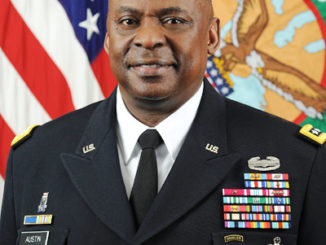
WASHINGTON (TIP): The Senate on Friday, January 22, confirmed Lloyd J. Austin III as defense secretary, filling a critical national security position in President Biden’s cabinet and elevating him as the first Black Pentagon chief.
The 93-2 vote came a day after Congress granted General Austin, a retired four-star Army general, a special waiver to hold the post, which is required for any defense secretary who has been out of active-duty military service for fewer than seven years. It reflected a bipartisan consensus on Capitol Hill that it was urgent for Mr. Biden to have his defense pick rapidly installed, a step normally taken on a new president’s first day. “It’s an extraordinary, historic moment,” said Senator Jack Reed, Democrat of Rhode Island and the chairman of the Armed Services Committee. “A significant portion of our armed forces today are African-Americans or Latinos, and now they can see themselves at the very top of the Department of Defense, which makes real the notion of opportunity.” Mr. Austin, 67, is the only African-American to have led U.S. Central Command, the military’s marquee combat command, with responsibility for Iraq, Afghanistan, Yemen and Syria. He retired in 2016 after 41 years in the military and is widely respected across the Army. Lawmakers in both parties initially had been uneasy at the prospect of granting General Austin an exception to the statutory bar against recently retired military personnel serving as Pentagon chiefs, a law intended to maintain civilian control of the military. They had already done so four years ago for President Donald J. Trump’s first defense secretary, Jim Mattis, a retired four-star Marine officer, and many had vowed not to do so again. But facing intense pressure from officials from Mr. Biden’s transition team and top Democrats, and after receiving assurances from General Austin that he was committed to the principle of civilian control, lawmakers rallied behind a barrier-shattering nominee. Two Republicans, Senators Josh Hawley of Missouri and Mike Lee of Utah, voted against the confirmation. Even though 43 percent of the 1.3 million men and women on active duty in the United States are people of color, the leaders at the top of the military’s chain of command have remained remarkably white and male. When President Barack Obama selected General Austin to lead the United States Central Command, he became one of the highest-ranked Black men in the military, second only to Colin L. Powell, who had been chairman of the Joint Chiefs of Staff. Mr. Austin will be the first Black Pentagon chief since the position was created in 1947 — just nine months before President Harry S. Truman ordered the desegregation of the armed forces, Representative Anthony Brown, Democrat of Maryland and a Black retired colonel in the Army Reserve, noted. “Secretary Austin’s confirmation is a historic first and symbolizes the culmination of the nearly 75-year march toward genuine integration of the department,” Mr. Brown said. “He is well positioned to draw upon his experiences as a seasoned military commander, respected leader and as a Black man who grew up amid segregation to drive progress forward as our next Secretary of Defense.”
The Presidential Election on November 3, 2020 between Donald Trump and Joe Biden, in a perverse way, was somewhat akin to 9/11 – albeit, the conflict was internal – as our Republic was convulsing, our divisions deep
and open, and the very fabric of our nation laid bare and in conflict. Despite being the
preeminent nation of laws in human history, Law & Order was unwelcome to too many of our neighbors and fellow Americans. And a nation that was inhabited by those who abandoned a society encrusted with landed gentry for one that defined “fate” and “destiny” on the wings of “merit” alone – and called it the American Dream – was now seriously flirting with Communism’s more appealing sibling, Socialism – where all get what they need and want, by just taking it from those who got ahead. Sweet and Godly “compassion,” however, is not Socialism. Thrown in the dustbin created by hubris, these new American Leaders, like the Evil Queen in “Snow White” asking the “mirror,” “who is the fairest of them all,” these new Leaders – elected or community loud mouths – fancy themselves “perfect,” and issue mandates for removal of Monuments – even of George Washington; my favorite, Thomas Jefferson; the scoundrel, Alexander Hamilton; and even Abraham Lincoln, the Great Emancipator. And then there are folks who have no chance like General Robert E. Lee, who honorably accepted defeat in our great Civil War, or John Newtown, a slave-trader, who found God, became a Preacher, authored “Amazing Grace,” and helped cause slavery to be outlawed in Great Britain. Amazing Grace today defines hope itself. You need not be a devout Christian to know that Judas, who in a singular act of betrayal, gave up Jesus to the Romans and caused Him to be crucified, and, later became the well-loved “Saint Jude” – the Saint, who helps you find things you lost. Indeed, we are lost – in materiality, ego and self, which Mother Nature, heated up by global warming, is ready to eradicate humanity to save the planet – which many leaders fight about what started the fire, when every firefighter knows first “put out the fire,” then look for arsonists. I know that hubris comes easily to the ignorant or the wicked. For our cherished Republic, a gift from Founders like Ben Franklin, either do harm; both together, are an existential threat – which about eighty (80) million Biden Voters and seventy-four (74) million Trump Voters have tasted together. It is now the American Spring, in full blossom – in ways similar to the Arab Spring, and yet, in answer to it.
President Donald J. Trump at a MAGA Rally
The Great Disrupter – has achieved much good, from Criminal Justice Reform to kick-starting Middle East Peace to Warp Speed Vaccine for a battle-weary population, and our fiscal house anemic and bleeding jobs and souls. But his cadre of disruption-amplifiers, from Steve Bannon, Steve Miller, and our own Rudy Giuliani, are headed for positions – personal and policy – that are more distant from “honor” and “truth,” but closer to the always sought-after “loyalty,” which weaves a path to the ever-attractive “consolidated power” – the very concept, and a goal – our cherished and honorable Founders deemed un-American, as it devalues American Exceptionalism – built, as it is, on the genius of purposefully separating “power,” by constitutional design, at every turn, and then again for benefits of redundancy – so as to deny “tyranny” a residence in these united States of America (“united,” being the humble lower case, yet more powerful, as an “adjective” always is over the proud and useless “noun.” Our original name was lower-case; our current, a noun).
To not concede the election, and to even block the Biden Transition from full access to government resources, as federal law mandates, is pure Trumpian joy to his base. By that simple statement, we have upon us a new Civil War, where slavery is not the bone of contention – for there can be no proponents of that economic model, even as slavery was not originally racist, but an aftermath of victory in war: pillage & plunder. As slaves could be of the same race. It is later, about 500 years ago that slave-trading, like Blood Diamonds, became an evil enterprise in, and with, Africa. Indeed, the bronze door knocker to my office in Manhattan is of William Wilberforce – the enlightened soul who successfully campaigned to abolish the African Slave Trade in England, supported as he was, by John Newton. Sadly, not a single person has recognized that Great Abolitionist door-knocker in my office..
This 2020 Civil War – is about Law & Order, and keeping the American Dream. They say, “[p]olitics makes strange bedfellows.” Well, no one can truly argue that Joe Biden is against Law & Order, or isn’t a great supporter of the American Dream, even as New York State Attorney General Tish James and New York County District Attorney Cy Vance Jr. appear to not only argue, but are in court dealing with President Trump, for his actions as a civilian. Of course, POTUS’ Attorney General Bill Barr has until 11:59a.m. January 20, 2021 to do likewise to President Barack Obama and inter alia, then-Vice President Joe Biden, for their official acts, etc. We are in a Twilight Zone, in more ways that desirable.
President-elect Joe Biden at a campaign rally
There is no doubt that Joe Biden will be sworn in on January 20, 2021, and Kamala Harris, as an African-American woman (and situationally, also Indian-American) as our President and Vice President, respectively. The world leadership has collectively let go and breathe deeply – independent of Eric garner and George Floyd who made that act famous, as each came loaded with baggage – as normalcy, defined by centuries of wisdom embedded in protocols, will re-emerge, an state secrets will again separate policy errors from policymakers, and leave public “respect,” at maximum strength as a calibrated tool, all the way to public “insult,” leaving “private insult” to be candidly used, with the percussion effect of a table smacked in anger for emphasis. But, I write to issue a “Surgeon General’s Warning” to the body politic here at home, and across the world: Donald J. Trump may have come down the escalator almost alone on June 15, 2015 to throw his hat in the ring to be POTUS 45, but on January 20, 2021 he takes with him almost 75 million Trump Voters, and 88.9 million Twitter followers. Poetically, I note that Trump-the-POTUS has 32.8 million Twitter followers. All prior Presidents over last 50 years or more, have largely remained silent and kept quiet after leaving the White House, and declining, in the main, to opine on their successor.
“Normalcy,” at Least Political and Geopolitical, Is Now Consigned to History.
Well I hate to say this, but President-Elect Joe Biden and leaders across the world, buckle up!
As Donald J. Trump, to the great delight of his large and effusive base, will not go quietly into the night and instead, will opine even more freely on matters big and small, public and private. Republicans, let alone Mitch McConnell and Kevin McCarthy, also are not free to go back to “normalcy,” as Trump “owns” the Republican party’s base.
We are now blessed with an activated citizenry, which makes governance more transparent, and responsive. That, used to be good. It still will be, not because we, as Americans are better than other human beings, but because we live in a nation that our Founders created with an architectural design that exceeds the Pyramids, Parthenon, Colosseum, Great Wall of China, and the Taj Mahal. America is designed to harness competing and ambition-driven energy for self-gain, and turn it into enhancing the public good. Pure alchemy.
Politicians who wish to be shepherds of quiet and distracted sheep, as before, will have to be on top of their game, to figure out where the public wants to go, and then get there first, so as to lead. Perhaps, Lincoln’s Gettysburg recipe, Government of, by and for the people, will finally pay dividends to the most elusive of that trilogy: “for the people.”
The lab of global suffering -The Wuhan Lab
The great battle upon us is: Can Americans be safe without the Police, and can the merit-based American Dream co-exist with Socialism? And, in addition, another battle rages: Social Media, be it Big Tech or individual users, will they destroy representative democracy, as they did the media, and render it into merely Mob Rule, aka direct democracy – the one that killed the great Socrates in Athens for being a “nag” and asking the question, “why.” And, then, there is yet another battle that will render the above two irrelevant: the Chinese Communist Party (CCP) Chairman Mao, a mastermind and globally under-estimated, created a 100 year plan, that included their “Golan Heights” (well before Golda Meir, born in Kyiv, seized it in 1973, and Bibi Netanyahu recently renamed, Trump Heights), with the secret 1949 Karachi Agreement land acquisition, the size of which would leave one breathless; followed up, by swallowing Tibet in 1958, etc.; and reviving Chinese’s Ming Dynasty’s Tribute System – as opposed to Western Nations’ Feudalism – is Commercial favoritism and tributes paid to China, the superior nation. Their OBOR, BRI, and inter alia, AIIB, has weaponized money-giving into land-grabbing in exchange for non-payment of debt – converting unpaid loans to seizure of land and assets that a traditional war could not achieve for China. Having weaponized debt, they weaponized reefs, as in Mischief Reef, and since late last year, they weaponized Viruses by lab-engineering them to bypass human auto-immune system with a “master key,’ the spike glycoprotein, a Trojan Horse, and gave it a deceptively harmless name of coronavirus or Covid-19, and used it to start an undeclared war against us, and the rest of the world.
Unleashing this Virus is a crime against humanity. It’s like a Bond movie, where they are playing for the world. Well, sadly and infuriatingly, 250,000 Americans have died, and more will in CCP’s Undeclared War on all of us. And yet, we do nothing, other than try to find a vaccine and accuse each other of not fighting the virus correctly. Leaving China unpunished and worse, un-stopped. I tried, and failed, to get Trump as president to cancel China’s debt here, as well as globally, just to offset, in part, the damage and injury China caused. War reparations can only occur – if we are willing to stand up – or will we profit our way into slavery, Ming Style?
The recent election was a fraud on the Voters. They were told we are fighting “an invisible enemy” (or “we were not fighting the Virus correctly”) No we are not. The virus is invisible; the enemy isn’t. Indeed, look at any map – from 1949 – and all of us can all find it. Show me a current map issued by China, aside from its breathless growth, partially, illegally, it is hard to miss.Hat tip to Marcus Aurelius: Neville Chamberlain Was an Honorable and Reasonable Man.
Finally, Neville Chamberlain was the epitome of normal leadership, and saw in Hitler, our own mistakes that created the disastrous Weimar Republic and gave birth to the Third Reich. He dealt with him, in a calibrated way. He lost. Churchill begged FDR to get involved, joined up with Stalin, no angel, and faced Hitler down. Chairman Mao, and his hand-picked successors, an unbroken line of the faithful High Priests of Maoism, with President Xi Jinping being an exceptional leader worthy of not only rejuvenating the Ming Tribute system, but a reincarnation of Chairman Mao in a Brooks Brothers Business Suit.
POTUS Must Do More.
President Trump – will you ignore the Trademarks given to you and the lovely Ivanka – and use your remaining days as America’s fiduciary and defend us – as FDR did after Pearl harbor – when we have now suffered more deaths than 100 Pearl Harbors?
Wolf Warriors Stay at Home and Safe, While Virus Kills Relentlessly.
President-Elect Joe Biden – will you stand up and defend us from the Wolf Warriors that stay comfortably at home, as their Virus does its damage unrelentingly, including, Denmark’s recent discovery of a mutant strain, Cluster 5, which the WHO says is drug resistant. That means the current vaccines – Pfizer’s and Moderna’s 95% effective – are not effective against it.
We are on the precipice of an Armageddon, death-by-virus and starvation-by-lockdown, while China seizes property and assets in exchange of “debt” for “equity.” Exactly what we didn’t teach the Russians after the Berlin Wall came down, which our CPAs and Attorneys know so well to keep the capital markets robust for capitalism to work, China created a different system, just as they are creating at every level, including, making our use of sanction-capacity as a punishment irrelevant. Just ask Russia, Iran and China how they do business, and settle the business accounts outside of “SWIFT”.
n God We Trust
Time to heal – may be premature – unless, President Biden can assure 74 million Trumpers that Law & Order is necessary for Public Safety, which is even more important than Public Health, and that the American Dream – meritocracy – is what our cherished separated-powers regime aimed to achieve in perpetuity. And, then, and only them, will E Pluribus Unum be a fact, instead of a slogan.
(The author is an eminent attorney based in New York. He can be reached at ravi@ravibatralaw.com Twitter @RaviBatra)
NEW YORK (TIP): Two prominent Indian Americans are among Democratic Presidential nominee Joe Biden’s “core advisors” who have been guiding him on issues ranging from the coronavirus pandemic, economic recovery to foreign policy and climate change, a media report said.
Biden, “plotting an ambitious presidency that would begin amid twin health and economic crises, is leaning on veteran advisers with high-level governmental experience rather than outsiders and ideological rivals to help guide him on subjects including the coronavirus pandemic and the country’s diminished standing in the world,” a report in The New York Times said.
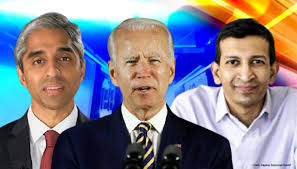
Among those advising him on the pandemic are Dr Vivek Murthy, former US Surgeon General who was appointed by President Barack Obama and Harvard economist Raj Chetty is among those who have briefed Biden on economic issues, the report said.
Murthy and former head of the Food and Drug Administration David Kessler were among those present on a conference call convened by the Biden campaign when it learned that two people who had travelled with Senator Kamala Harris had tested positive for the coronavirus.
“Biden has spoken often of his briefings with experts, and Dr Murthy and Dr Kessler have been two of the most prominent medical figures whose counsel Biden has sought during the public health crisis,” the NYT report said.
The NYT report quoted Kessler as saying that in the early days of the pandemic, he and Murthy would brief Biden “every day, or four times a week.”
“We would send in 80- to 90-page documents, take him through the epidemic from epidemiology, therapeutics, vaccines, testing. Staff would join, originally by phone but they soon shifted to Zoom,” Kessler said, according to the NYT report. “The docs,” as Biden calls Kessler and Murthy, also “pore over research and data on the virus and consult with modelers, vaccinologists and other experts so they can provide Biden with projections about the coming months.”
The report added that Biden has signaled that the government’s top infectious disease expert Anthony Fauci will have a prominent role in a Biden administration.
On economy, Joe Biden has cast a wide net for economic advice, soliciting input from several hundred policy experts, the report said. Among those who have briefed Biden on the economy are Chetty, “who has produced pathbreaking research on economic mobility and its roots in the last several years” and former chair of the Federal Reserve Janet Yellen.
On the issue of foreign policy, the NYT report said Biden would come to “office with more foreign policy experience than any president in memory”.
While some in his inner circle of foreign policy and national security advisers have worked for him through the years, Biden’s aides understand that “assumptions that governed Obama policymaking have changed, including the prospects for cooperation with China and the importance of the Middle East.”
Among the most influential foreign policy adviser for Biden is Antony Blinken, who has previously worked for Biden on the Senate Foreign Relations Committee and served as a deputy national security adviser and deputy secretary of state under Obama.
“Known more for his diplomatic touch than any fixed ideas, he is considered a likely candidate for national security adviser or secretary of state,” the NYT report said.
WASHINGTON (TIP): Wells Fargo and TD Bank have turned over President Trump’s financial records to the House Financial Services Committee, Fox News confirmed on Thursday, May 23, amid a contentious legal battle between the Trump administration and congressional Democrats seeking access to sensitive files.
The committee, led by Chairwoman Maxine Waters, D-Calif., is one of several panels that have issued subpoenas and requests for Trump’s financial files.
NBC News first reported that Wells Fargo turned over a few thousand documents to the committee, and TD Bank provided a handful.
The banks are two of the nine financial institutions with which congressional Democrats are seeking cooperation. The push has led to an escalating legal battle on multiple fronts.
On Wednesday, May 22, a federal judge in New York ruled that two other banks, Deutsche Bank and Capitol One, were required to comply with congressional subpoenas seeking access to Trump’s financial records.
The House Financial Services Committee and the House Intelligence Committee both have requested the documents from Deutsche Bank and Capitol One in their investigations of possible “foreign influence in the U.S. political process.”
“We remain committed to providing appropriate information to all authorized investigations and will abide by a court order regarding such investigations,” Deutsche Bank said in a statement to Fox News after the ruling.
Meanwhile, the House Ways and Means Committee is seeking the president’s tax returns and has issued subpoenas for the files.
Treasury Secretary Steven Mnuchin said he would not comply with the subpoena for the president’s tax returns last week, but this week, a confidential draft IRS memo was revealed calling the disclosure “mandatory” unless the president asserts executive privilege over the financial documents.
The Washington Post first reported on the 10-page memo, which does not mention Trump by name, but appears to add a new level of pressure to the White House. Mnuchin, though, has maintained that the Democrats’ requests for Trump’s tax returns “lacks a legitimate legislative purpose” and said his department will not “disclose the requested returns and return information.”
The IRS on Wednesday, May 22, pushed back on that report, stating the memo does not represent an official position for the agency.
The standoff between the congressional Democrats and the administration is likely to lead to a court battle, with Trump reportedly indicating he’s prepared to fight all the way to the Supreme Court.
Trump declined to reveal his tax returns during the 2016 presidential election, claiming he was under audit. Political candidates aren’t required to disclose their tax returns, though traditionally all candidates do.
Meanwhile, President Donald Trump’s fight to stop the release of his financial records is on the fast track for a key court decision after a three-judge appellate panel agreed Thursday to hear oral arguments later this summer, according to a May 23 Politico report.
In a two-page order, the D.C. Circuit Court of Appeals’ judges scheduled oral arguments for July 12 in the case that pits the president’s attorneys against House Democrats, who issued a subpoena to the accounting firm Mazars USA for eight years of Trump’s financial records.
The court date will come several weeks after a lower court rejected the president’s attempts to block the subpoena, arguing that the request was politically motivated. Trump’s lawyers immediately appealed the ruling, and the president called the opinion “ridiculous” and “totally wrong,” and noted Judge Amit Mehta was an appointee of President Barack Obama.
In the next round of legal sparring, Trump will go before a panel of judges that includes another Obama appointee, Patricia Millett, as well David Tatel, a Bill Clinton appointee, and Neomi Rao, who joined the D.C. Circuit in March as a Trump appointee.
Under the order approved Thursday, Trump’s first round of legal briefs spelling out its arguments are due June 10, followed by a response from lawyers for the House committee and Mazars by July 1. A final reply brief from the Trump attorneys is due July 9.
Democrats have said they will suspend the deadlines in their subpoena for production of the Trump financial documents while the president’s appeal works its way through the courts. Mazars, meantime, has said it will still keep working to collect and prepare the documents but won’t turn over any until the judges’ render an opinion.
House Oversight Chairman Elijah Cummings (D-Md.) sent the subpoena to Mazars last month as part of the panel‘s investigation into whether Trump committed financial crimes before he became president.
The panel’s focus has been on trying to corroborate claims made by Trump’s former personal attorney Michael Cohen, who earlier this year gave the committee documents purporting to show Trump artificially inflated and deflated the value of his assets for his personal financial benefit.
MONTREAL (TIP): Canadian Prime Minister Justin Trudeau tweeted his thanks to former US President Barack Obama after the two shared a private dinner at a Montreal restaurant.
Trudeau posted a picture of the pair talking in the eatery, with the caption “How do we get young leaders to take action in their communities? Thanks Barack Obama for your visit & insights tonight in my hometown.”
A crowd cheered the two leaders as they left. Last year, Obama hosted Trudeau for a state dinner at the White House, the first for Canada since 1997.
Obama spoke to the Montreal Board of Trade yesterday and decried what he called the lack of American leadership on climate change, a swipe at new President Donald Trump’s administration .
WASHINGTON: Former US president Barack Obama and his wife Michelle initially decided to stay in Washington once he left the White House so their daughter Sasha could finish high school.
Now, their presence in the US capital looks more permanent. The couple paid $8.1 million to buy the mansion in Washington’s swank Kalorama neighborhood that they have been renting since January, The Washington Post reported Wednesday.
The eight-bedroom, nine-and-a-half-bath home is in the same neighborhood as the home of President Donald Trump’s daughter Ivanka and her husband Jared Kushner. Other Kalorama residents include Secretary of State Rex Tillerson and Amazon founder Jeff Bezos, who also owns The Washington Post. “Given that President and Mrs. Obama will be in Washington for at least another two and a half years, it made sense for them to buy a home rather than continuing to rent property,” Obama spokesman Kevin Lewis told the paper.
The posh neighborhood has a long history as home to government ministers, Supreme Court justices, Treasury secretaries, and other powerful figures in government and business. Obama and his wife have signed a contract with Penguin Random House to publish their memoirs, reportedly worth more than $60 million. (AFP)
NEW YORK (TIP): CRY (Child Rights & You) America Inc, a non-profit that works towards ensuring underprivileged children their basic rights, is hosting their Annual Gala Dinners across New York, Bay Area, Orange County, & Houston to create an opportunity to bring concerned people together for the cause of children’s rights.
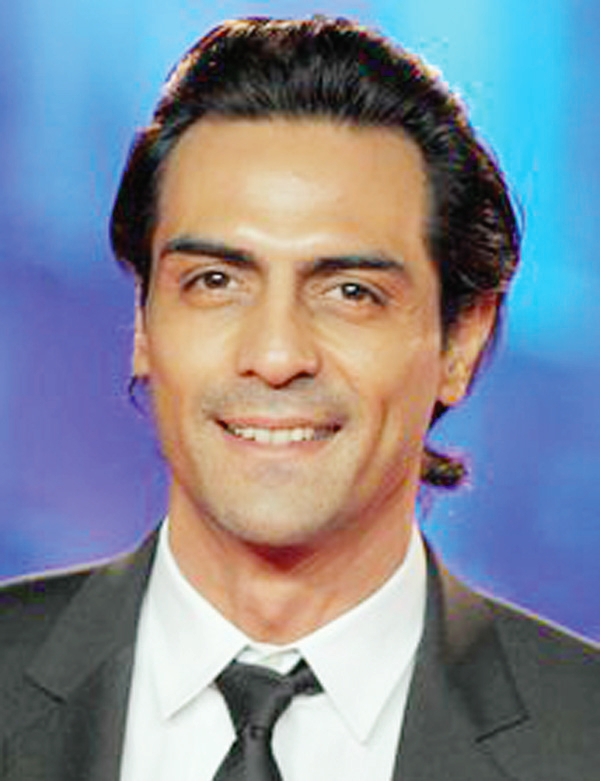
This year, the CRY Gala Dinner in New York is being organized on Friday, June 9, 2017 at the Taj Pierre Hotel. First ever dinners are being organized in Bay Area on June 3 & Orange County on June 4, 2017. Celebrity guest Indian actor Arjun Rampal joins CRY America to support the cause & amplify the voices of underprivileged children. Speakers include Arjun Rampal, Shefali Sunderlal, President of CRY America and Dr. Rolee Singh, Program Director of Shambhunath Singh Research Foundation (SRF).
Apart from raising awareness for this worthy cause, plans include a live auction. Auction items featured are generous donations such as cricket bats autographed by Saurav Ganguly & Virender Sehwag, paintings by noted Indian artists Ramkumar, Badri Narayan, JMS Mani, Vrindavan Solanki, Anuradha Thakur, Vasudev, Vaikuntam, Joydeep Chatterjee, Vani Chawla and fashion ensembles by Ritu Kumar, Abu Jani- Sandeep Khosla, JJ Valaya, Manish Malhotra, Neeta Lulla, Tarun Tahiliani and an evening clutch by Sabyasachi.
Historic American Memorabilia up for auction such as a baseball signed by Barack Obama, Beatles Album autographed by Paul McCartney and Ringo Star, Apollo 11 Photograph autographed by Neil Armstrong, Buzz Aldrin and Michael Collins, will go a long way in raising funds for CRY Projects across India.
Shefali Sunderlal, President says “CRY America believes that “YOU” have the power to change children’s futures and your support allows us to ensure that thousands of children are able to go to sleep educated, healthy and protected.Your participation in events like the CRY Gala Dinners is needed today, more than ever.” She appealed for people to join CRY America as donors, volunteers and supporters.
WASHINGTON (TIP): A bill passed by US House Republicans would cause 23 million people to lose healthcare coverage by 2026 while de-stabilizing health insurance markets in some states and making it hard for sick people to buy insurance, a budget watchdog agency said on May 24.
The Congressional Budget Office, a non-partisan group of experts who analyze US legislation, said the bill would reduce federal deficits by $119 billion between 2017 and 2026.
The report could give added ammunition to Democrats who have accused President Donald Trump and congressional Republicans of putting sick and low-income people at risk with their effort to roll back former President Barack Obama’s signature 2010 healthcare law, formally known as the Affordable Care Act but often called Obamacare.
The report also complicates the job of Senate Republicans – some of whom already have doubts about the House bill – as they craft their own healthcare legislation. Republicans have sought to unravel Obamacare since its passage and Trump promised on the campaign trail to repeal it, saying it is too costly and an overreach by government in the healthcare market.
As Trump and Republican leaders sought to bring wavering lawmakers on board with the House bill, they added a controversial last-minute amendment that would give states leeway to drop an Obamacare requirement that forces insurers to charge sick and healthy people the same insurance rates.
Another change would allow states to decide whether to require insurers to cover health benefits such as maternity care and prescription drugs that are mandatory under current law.
But the CBO report said the amendment would make it difficult or impossible for people in poor health to purchase comprehensive coverage in some states. “People who are less healthy (including those with preexisting or newly acquired medical conditions) would ultimately be unable to purchase comprehensive non-group health insurance at premiums comparable to those under current law, if they could purchase it at all,” the CBO report said.
The CBO said markets for people to buy individual insurance plans could then become “unstable” in states that choose to waive the Obamacare requirements for coverage of pre-existing medical conditions and essential health benefits.
Even before the report, many Republican senators were wary of the House version of the healthcare bill, saying it unraveled Obamacare too much and too quickly. About 20 million people gained insurance under Obamacare. The House bill would eliminate most Obamacare taxes that help subsidize private health coverage for individuals, roll back the government’s Medicaid health plan for the poor and disabled and replace the law’s income-based tax credits for buying medical coverage with credits based on age.
A group of 13 Republican senators led by Senate Majority Leader Mitch McConnell is expected to draft its own version of the healthcare bill in the coming months. McConnell, however, told Reuters on Wednesday he does not yet know how Republicans will get the necessary votes. “This is a very challenging undertaking,” McConnell said. Republican opposition After the release of the CBO report, several Republican senators said they could not support the House bill. (Reuters)
“Mr. Rouhani’s decisive victory is a shot in the arm for the moderates coming after the elections in February last year for the Parliament and the Assembly of Experts where the moderates and the reformists had registered significant gains”, says the author.
By Rakesh Sood
After a difficult campaign, President Hassan Rouhani won a crucial second term in Iran’s presidential elections held on May 19. A high turnout of 73% helped him score a convincing victory over his principal challenger Ebrahim Raisi, a conservative cleric, in the first round itself, winning 57% of the votes compared to Mr. Raisi’s 38.5%. More than two-thirds of Iran’s voters are in urban areas and most of them are Rouhani supporters; therefore, as voting hours got extended to midnight indicating a high turnout, the mood in the Rouhani camp turned jubilant.
A DIFFICULT CAMPAIGN:
In 2013, Mr. Rouhani had campaigned and won on a platform that focused on bringing sanctions to an end,which he was able to achieve in July 2015 with the Joint Comprehensive Plan of Action (JCPOA), a nuclear agreement concluded with the P-5 + 1. The sanctions relief has had a positive impact on the economy with oil exports up and GDP growth hitting 6% last year though expectations were higher. In a TV debate in the run-up to the election, Mr. Raisi described the JCPOA as ‘a check that Rouhani had failed to cash’. Opinion polls had favored Mr. Rouhani, because Mr. Raisi, though close to the Supreme Leader,Ayatollah Ali Khamenei, was considered a relative newcomer to politics. However, concern grew when Mohammad Bagher Ghalibaf, a former Iranian Revolutionary Guards Corps (IRGC) pilot and the Mayor of Tehran since 2005, withdrew from the race in support of Mr. Raisi, who had spent most of his life in the judiciary before being appointed custodian of the shrine of Imam Reza in Mashhad last year. He also controls Astan-e-Quds Razavi, one of the wealthiest foundations, and is seen a possible successor to the present Supreme Leader who is 77 and in poor health.
Therefore Mr. Rouhani’s decisive victory is a shot in the arm for the moderates coming after the elections in February last year for the Parliament and the Assembly of Experts where the moderates and the reformists had registered significant gains.
ROUHANI’S CONSTRAINTS:
However, given Iran’s complex governance structures, President Rouhani will have to tread carefully as his powers and those of the directly elected 290- member Parliament are constrained by the non-elected authorities. The key power center is the Supreme Leader who is appointed by the Assembly of Experts and in turn appoints the heads of radio and TV, the armed forces and the IRGC, the Supreme National Security Council, the 51-member Expediency Council and the higher judiciary. He also chooses six members of the powerful Guardian Council, with the other six nominated by the judiciary. The Guardian Council in turn vets candidates for all elections, presidential, parliamentary and the 88-member Assembly of Experts. It cleared only six candidates out of the more than 1,600 who filed nominations for the presidential contest; rejections included former President Mahmoud Ahmadinejad’s nomination. In addition, it approves all legislation passed by Parliament to ensure its consistency with Islamic jurisprudence. A dispute between Parliament and the Council is resolved by the Expediency Council. The Assembly of Experts is directly elected and its primary role is to appoint the Supreme Leader, critical during Mr. Rouhani’s second term.
Mr. Rouhani’s principal challenge will be to sustain economic growth and nudge the reform process forward in order to tackle unemployment, currently running at over 12%, and higher among the youth. He has promised to expand individual and political rights, enlarge women’s role and ensure greater accountability.
Some of these will be challenged. While his victory margin is a clear endorsement for reform, the Supreme Leader will play a critical balancing role. It is interesting that, in his immediate remarks, he praised the Iranian people for the impressive turnout, but did not congratulate the winner.
In foreign policy, Mr. Rouhani will present the image of a moderate and more outward-oriented Iran. He is no stranger to Iran’s complex politics. From 1989 to 2005, he was Secretary of the Supreme National Security Council, reporting to the Supreme Leader, and handled the nuclear negotiations during 2003-05.
During this period, he also served a term each as Deputy Speaker of Parliament and as member of the Expediency Council. Following Mr. Ahmadinejad’s election in 2005, he quit. After being elected in 2013, he persuaded the Supreme Leader to shift responsibility for the nuclear negotiations to the Foreign Ministry and let Foreign Minister Mohammad Javad Zarif take the lead.
In addition to managing his home front, the other challenge for Mr. Rouhani will be keep the JCPOA going in the face of the U.S. Congress’s and now President Donald Trump’s declared hostility.
DEALING WITH TRUMP:
During the election campaign, Mr. Trump had called it the ‘worst deal ever’ and threatened to tear it up as soon as he was elected! Subsequently, he seems to have modified his position, realizing perhaps that it is not just a bilateral agreement with Iran but also includes Russia, China, the U.K., France, Germany and the European Union. In April, the Trump administration certified that Iran was abiding by its obligations but Secretary of State Rex Tillerson added that a 90- day policy review would be undertaken in view of ‘Iran’s alarming ongoing provocations’.
More recently, on May 17, the Trump administration continued the sanctions waiver (under Section 1245 of the National Defense Authorization Act 2012), needed every 120 days even while imposing sanctions on seven Iranian and Chinese individuals and entities on account of missile proliferation activities.
In April, a slew of human rights related sanctions were imposed. In mid- June another waiver, this time under the Iran Freedom and Counter-Proliferation Act, will need to be renewed if the JCPOA is to be sustained. These are necessary because in 2015, the Republican-dominated Congress rejected the JCPOA and U.S.
President Barack Obama used executive authority to waive U.S. sanctions but these waivers need to be renewed periodically. The JCPOA was the outcome of protracted negotiations over more than a decade, during which Iran had steadily built up its nuclear capabilities, especially in the enrichment domain, and in 2015 was estimated to be only months away from acquiring enough Highly Enriched Uranium to produce one device (approximately 25 kg) though Iran consistently maintained that its program was exclusively for peaceful purposes. Given deep suspicions however, the JCPOA with its extensive inspection and reporting obligations was the best way to prevent Iran from developing a military nuclear capability for the next 10-15 years.
Opponents say that while cheating is unlikely, they fear that Iran will retain its nuclear appetite after abstaining during the 10-15 year period and resume its activity once the inspection obligations expire.
THE SAUDI FACTOR:
Perhaps the most troubling problem is the new embrace of Saudi Arabia that was in evidence during Mr. Trump’s visit. It raises the prospects of greater U.S. involvement in the war in Yemen and can push relations with Iran into a confrontation. In 2016, there were 19 ‘incidents at sea’ between U.S. and Iranian vessels in the Persian Gulf. The most serious was in January 2016 when the IRGC held two U.S. vessels and 10 servicemen, accused of trespassing in Iranian waters. The crisis was resolved within hours, thanks to some quick phone conversations between U.S. Secretary of State John Kerry and Mr. Zarif. That link is missing today.
It is all the more ironic because Iran is the one country that is opposed to the Islamic State. Yet the U.S. is keener to bless the Saudi-created Islamic Military Alliance to Fight Terrorism, a grouping of 41 Sunni nations, under the command of former Pakistani Army Chief, General Raheel Sharif. It remains unclear what the role of this coalition is, to fight the IS or Iran or in Yemen, or to secure the Gulf monarchies!
For the last quarter century, the U.S. practiced dual containment of Iran and Iraq, a policy that suited both Israel and Saudi Arabia. Mr. Obama’s push for the JCPOA was driven by a desire to extricate U.S. policy from this stranglehold and expand options. If a return to the Saudi embrace creates additional tensions and a collapse of the JCPOA, it could push Iran to cross the nuclear threshold with much wider regional implications.Mr. Rouhani’s challenges are just beginning.
(The author is a former diplomat and currently Distinguished Fellow at the Observer Research Foundation. He can be reached at rakeshsood2001@yahoo.com)
Trump decries special counsel’s appointment as ‘single greatest witch-hunt’ in US history
WASHINGTON (TIP): Former FBI director Robert Mueller has been appointed as special counsel to investigate alleged Russian interference in the 2016 US election and possible collusion between President Donald Trump’s campaign and Moscow.
The decision by deputy attorney general Rod Rosenstein to appoint Mueller, 72, as special counsel came on Wednesday, May 17, following a week of turmoil for the White House after Trump fired FBI Director James Comey, who had been leading a federal probe into the matter.
Rosenstein said he had taken the decision “to ensure a full and thorough investigation of the Russian government’s efforts to interfere in the 2016 presidential election,” including “any links and/or coordination between the Russian government and individuals associated with the campaign of President Donald Trump.”
President Donald Trump on Thursday, May18, decried the appointment of a special counsel to lead the Russia probe as “the single greatest witch-hunt” in US history, hours after he said he looked forward to a thorough investigation.
In the face of rising pressure from Capitol Hill, the US Justice Department named former FBI Director Robert Mueller on Wednesday as special counsel to investigate alleged Russian interference in the 2016 US election and possible collusion between Trump’s campaign and Moscow.
Trump said in a statement on Wednesday night that “a thorough investigation will confirm what we already know – there was no collusion between my campaign and any foreign entity.” In a pair of Twitter posts on Thursday morning, Trump made clear he was unhappy with the latest development to roil his administration. “With all of the illegal acts that took place in the Clinton campaign & Obama Administration, there was never a special councel appointed!” Trump wrote, misspelling the word counsel as he referred to former President Barack Obama and former presidential candidate Hillary Clinton. “This is the single greatest witch hunt of a politician in American history!”
The comments mirrored a speech by Trump on Wednesday, before Mueller’s appointment was announced, in which he said no politician in history “has been treated worse or more unfairly.”
Considering the unique circumstances of this matter, Rosenstsein said a special counsel is necessary in order for the American people to have full confidence in the outcome. “Special Counsel Mueller will have all appropriate resources to conduct a thorough and complete investigation, and I am confident that he will follow the facts, apply the law and reach a just result,” he added.
Mueller served as FBI director for 12 years after his nomination by President George W Bush in 2001. Cutting across party lines, top American lawmakers welcomed Mueller’s appointment for the investigation.
“The appointment of former FBI director Robert Mueller as special counsel for the Russia investigation is a positive development and will provide some certainty for the American people that the investigation will proceed fairly and free of political influence,” Senator Richard Burr said and Mark Warner, chairman and ranking member of Senate Select Committee on Intelligence, said.
Democratic Senator from Minnesota Al Franken said appointing Mueller is an important step that will help restore the public trust and result in a thorough and comprehensive investigation.
Mueller, a no-nonsense man Known by some as “Bobby Three Sticks” because of his full name – Robert Mueller III, the former FBI director is famous for his no-nonsense style and independence in high-profile government investigations.
“The Mueller appointment and the surrounding
controversy around Trump and Russia remains as
much a political issue as a legal one”, says the author.
The appointment of ex-FBI director Robert Mueller as special counsel overseeing an investigation into Russian interference in the 2016 election – and potential Russian connections to President Trump and his allies – is another surprising development after a week full of them. Consider: Trump fired FBI Director James Comey, who was investigating the potential Russia-Trump ties, only to now have Comey’s predecessor at the FBI take over the investigation. And Trump’s deputy attorney general, Rod Rosenstein, who was being mocked by Democrats for his role in Comey’s firing, has now made an appointment that is being praised by Eric Holder, Barack Obama’s attorney general. The president, whose aides were advocating that the Russia investigation end soon, must now watch as Mueller quits his law firm job to devote himself full time to this assignment.
So, what does this all mean? We won’t ultimately know for some time. But the Mueller appointment and the surrounding controversy around Trump and Russia remains as much a political issue as a legal one. So, let’s look at how this affects the relevant political players.
Why this is good for Trump:
Although the simple case is that Mueller’s appointment is not welcome news for Trump – the White House was surprised by the announcement – it does have some plausible benefits for the president, especially in the near term. The Russia investigation had been dogging the Trump administration, and his firing of Comey had turned into a debacle.
Trump can now say there is an independent investigation going on, by someone he did not personally appoint and who is not beholden to his party. And Mueller has very strong credentials. The president and his team, in theory, can turn the focus to governing, while deferring questions about the investigation. And maybe Comey, who appears to have notes of every conversation he has had with the president, will share them with Mueller and not The New York Times. (That said, as of late Wednesday, Trump had not yet reacted to Mueller’s appointment – a poorly worded Twitter rant could mitigate any short-term benefit for Trump.)
It’s also possible Mueller will interpret his mandate as limited to Russia and the election. It’s not clear Mueller would be investigating, for example, the details of Comey’s firing. That would be to Trump’s benefit.
Most importantly, Mueller can exonerate the president. If this is a high risk development for Trump, it also comes with a big reward if Trump hasn’t done anything seriously wrong.
Why this is bad for Trump:
Mueller’s appointment ensures that the Russia controversy won’t just go away – at least not anytime soon. And he could gravely threaten Trump’s presidency if he finds clear, improper connections between the president’s campaign and Russian officials. There was a reason that Republicans on Capitol Hill and the Trump administration were trying to stop the appointment of a special counsel. Prosecutors with broad authority to investigate can cause major problems. Just ask Bill Clinton.
Trump could in theory order Rosenstein to fire Mueller. But that would be exactly what Richard Nixon did, ordering his Justice Department to dump the special prosecutor investigating the president.
Why this is good for congressional Republicans:
Republican members were being repeatedly asked about the Trump investigation. Like Trump, they can now defer to Mueller’s probe. This will make them very happy. And in the long run, Mueller helps them avoid the awkward circumstance of investigating their own president. A damning report will make it easier to call for Trump’s resignation, if strong evidence emerges. Alternatively, a report that absolves Trump could take the Russia issue off the table without Republicans looking like they’d engaged in a partisan cover-up.
More importantly, Republicans now have more room to get back to their policy goals, such as tax reform and Obamacare repeal. Mueller’s investigation is likely to take months. While that unfolds, Trump can sign into law bills passed by Republicans in the House and the Senate.
Why this is bad for congressional Republicans:
We’re not going to do fake balance here. This may or may not end up as good news for Trump – but it’s almost certainly good news for congressional Republicans.
The one problem?
Mueller is only investigating the Russia issue. It’s likely Trump will do something else controversial – in the past two weeks alone, he allegedly shared highly classified intelligence with the Russians, and he fired Comey in a clumsy way that created all kinds of political problems. Republicans will still have to answer for Trump’s other controversial moves.
Why this is good for Democrats:
Just reread the “bad news for Trump” paragraph from above. An investigation of the 2016 election, Trump and his allies could turn up damaging information. A report written by Mueller will have credibility. It’s far more likely that Mueller, as opposed to GOP-led congressional committees, will release information damaging to the president. And the timing of the investigation could be good for Democrats, keeping Russia in the news through the midterm year, even if it results in a slowdown in headlines now.
But we should not ignore real-world impacts or lose sight of the big picture. Democrats strongly disagree with Republicans like Mitch McConnell and Paul Ryan on policy, including on sweeping issues currently on the congressional docket such as health care and taxes. In the eyes of many Democrats, Trump and the potential laws he might sign could damage the country for years to come. A process that could (in the long run) lead to Trump’s removal from office is a major step for liberals.
Why this is bad for Democrats:
In the short term, they may have lost an issue. Polls showed an overwhelming majority of Americans (78 percent, according to a recent NBC News/Wall Street Journal survey) wanted some kind of investigation of Trump’s alleged ties to Russia from outside of Congress. Democrats could have pounded Trump and Republicans on their lack of accountability every day till next year’s midterms.
Mueller has a reputation for independence, like Comey. How he approaches this investigation is unpredictable, and that has risks for Democrats. (Ask Hillary Clinton.) And because Democrats have effusively praised Mueller’s appointment, they’ll have trouble criticizing him later on – or re-litigating the Russia issue – if he exonerates Trump.
What would have been more predictable?
A House Judiciary Committee investigation in 2019 led by Democratic Chairman John Conyers, being cheered on by Democratic Speaker Nancy Pelosi. Make no mistake: If Democrats had won control of Congress next year and Trump had blocked a special counsel up until then, impeachment would have been on the table. Now, Democrats have to wait and see what Mueller concludes.
Why this is good for the public. By all accounts, Mueller seems to be respected by all sides.
The author is a senior writer for FiveThirtyEight. (Source: Five ThirtyEight)
China’s Silk Road forum latest effort to boost Xi Jinping’s stature
BEIJING (TIP): China will seek to burnish President Xi Jinping’s stature as a world-class statesman at an international gathering centered on his signature foreign policy effort envisioning a future world order in which all roads lead to Beijing.
The “Belt and Road Forum” opening on Sunday is the latest in a series of high-profile appearances aimed at projecting Xi’s influence on the global stage ahead of a key congress of the ruling Communist Party later this year. All feed a fundamental yearning among ordinary Chinese: to see their country’s prestige and status rise.
“Xi is now seen as a world leader with a lot of influence and respect internationally and that will definitely boost his domestic appeal,” said Joseph Cheng, a long-time observer of Chinese politics now retired from the City University of Hong Kong.
Leaders from 28 countries are set to attend, including Presidents Vladimir Putin of Russia and Rodrigo Duterte of the Philippines. The most prominent attendee from the West will be Prime Minister Paolo Gentiloni of Italy.
Other Western nations, including the United States, will be represented by officials of significantly lower standing. Washington is sending a delegation led by Eric Branstad, senior White House adviser in the Department of Commerce. Britain, Germany and France are to be represented by finance officials.
That’s partly because of developments at home, but also is a reflection of concerns that China may be exporting its standards on human rights, the environment and government transparency, while leaving poor countries with unsustainable levels of debt.
Yet the forum is as much about promoting Xi’s image at home as it is about pushing his vision abroad.
Chinese state media outlets have linked Xi inextricably to the two-day gathering in Beijing, which will be centered around their president’s plan for a vast network of ports, railways and roads expanding China’s trade with Asia, Africa and Europe. Xi has even popped up in a series of English language promotional videos produced by the official China Daily called “Belt and Road Bedtime Stories.”
“He’s showing vision. Leaders have to be visionary. He’s showing hope in their economic future by proposing a very significant economic plan,” former U.S. ambassador to China Max Baucus told The Associated Press. “I think it’s going to help him very much ahead of the next party congress.”
The party will hold its twice-a-decade congress this fall at which Xi will oversee an infusion of fresh blood in leading bodies, most importantly the all powerful Politburo Standing Committee. Xi rose to the top of an intensely competitive system riven by factions and rivalries to take the reins of the party in 2012, and has steadily accrued powers well beyond those of his predecessors in areas such as defense, internal security and the economy.
He’s also fallen back on the hallowed tradition of political campaigns and sloganeering, preaching the “Chinese Dream” of prosperity and national rejuvenation, pushing a sweeping anticorruption campaign and cracking down on the infiltration of “Western” democratic values that could threaten party control.
In the international sphere, he’s presided over both the Asia-Pacific Economic Cooperation forum and the G- 20 meeting of industrialized states, both of which were attended by former President Barack Obama. In January, Xi sought to portray himself as a champion of globalization and free trade at the World Economic Forum in Davos, in contrast to President Donald Trump’s protectionist rhetoric. On an entirely different level though is his signature initiative formally known as “One Belt, One Road.”
It aims to reassert China’s past prominence as the dominant power in Asia whose culture and economy deeply influenced its neighbors as far as Africa and Europe. It speaks deeply to Chinese pride in their country’s explosive economic growth and political clout after a century of humiliation at the hands of foreign powers that formally ended with Mao Zedong’s communist revolution in 1949.
The initiative also furthers the Xi administration’s reputation for muscular foreign policy. Under Xi, China has strongly asserted its claim to virtually the entire strategic South China Sea and established the Asian Infrastructure Development Bank as a global institution alongside such bodies as the World Bank, Asian Development Bank and International Monetary Fund.
And unlike APEC and Davos, it involves the disbursal of potentially trillions of dollars in contracts, expanding both China’s economic reach and Xi’s personal authority as holder of the purse strings. The Asian Development Bank says the region, home to 60 percent of the world’s people, needs more than $26 trillion of infrastructure investment by 2030 to keep economies growing. (AP)
‘Obama warned Trump against Flynn as national security adviser’
WASHINGTON (TIP): Former U.S. President Barack Obama warned then- President-elect Donald Trump not to give the post of national security adviser in his administration to Michael Flynn who was eventually fired in a controversy about ties to Russia, a former Obama aide said. Obama gave the warning in an Oval Office meeting with Trump just days after the Republican’s surprise election win last Nov. 8. The warning, first reported by NBC News, came up during a discussion of White House personnel.
White House spokesman Sean Spicer, responding to the reports, told a news briefing: “It’s true that the president, President Obama, made it known that he wasn’t exactly a fan of General Flynn’s” during a one-hour meeting on Nov. 10 with Trump.
An Obama spokesman initially declined to comment.
Flynn has emerged as a central figure in probes into allegations of Russian meddling in. the 2016 U.S. election and possible collusion between Trump’s campaign and Moscow.
He had been pushed out by Obama in 2014 from his job as director of the Defense Intelligence Agency, or DIA, during the Democratic president’s term in office.
A former U.S. deputy attorney general, Sally Yates, is expected to tell a Senate Judiciary subcommittee later Monday that she had warned the White House counsel after Trump took office that Flynn had not told the truth about conversations he had held with Russia’s ambassador to Washington.
Trump fired Flynn, a retired general, in February for failing to disclose talks with Ambassador Sergei Kislyak about U.S. sanctions on Moscow and then misleading Vice President Mike Pence about the conversations.
Congressional committees began investigating after U.S. intelligence agencies concluded that Russian President Vladimir Putin had ordered hacking of Democratic political groups to try to sway the election toward Trump. Moscow has denied any such meddling.
Trump has also dismissed the allegations, suggesting instead that Obama might have wiretapped Trump Tower in New York or that China may have been behind the cyber attacks. He has provided no evidence and neither scenario has been supported by intelligence agencies.
Hours before Monday’s Senate hearing, Trump insinuated that Yates, an Obama administration appointment, had leaked information on Flynn to the media. “Ask Sally Yates, under oath, if she knows how classified information got into the newspapers soon after she explained it to W.H. Council,” Trump wrote on Twitter, apparently mis-spelling the word counsel.
In another Twitter post, Trump noted that Flynn had been granted top security clearance while working in the Obama administration. Flynn was fired from the DIA in 2014 for what officials familiar with the issue said was a disruptive management style that included instructing analysts to find intelligence substantiating improbable theories that some subordinates came to call “Flynn facts.” He also advocated an overhaul of the DIA that ignited resistance from veteran intelligence officials, the officials said.
James Clapper, Obama’s former Director of National Intelligence, will also testify to the Senate panel on May 9. (TOI)
Emmanuel Macron’s win, a triumph for French liberalism
By Emile Chabal
“To say that this was a victory by default would be grossly unfair. In the space of a few years, Mr. Macron has gone from a rather bland minister to President of one of Europe’s most powerful nations. There is a fair chance that he will also have created a large political movement that will win a hundred or more seats in Parliament. Whatever one thinks of his politics, there is no doubting his achievement”, says the author.
Emmanuel Macron represents the powerful, liberal electorate that has emerged since the 1990s
It is tempting to see Emmanuel Macron’s victory in the French presidential run-off on Sunday as little more than a coronation. Yes, he won 66% of the vote but he did so with one of the highest rates of abstention in recent history and a record number of spoiled ballots. Even those who voted for him often did so by default in order to prevent the far-right candidate, Marine Le Pen, from winning.
More importantly, say critics, this unusual presidential runoff had two important consequences. First, that Mr. Macron’s ideas were never really discussed in depth. Second, that the new President has no proper electorate. Instead, many believe that his supporters are little more than an uncomfortable coalition of ill-matched groups and individuals. They do not share a common vision and they certainly do not agree with each other. When the parliamentary election rolls around in June, they will disperse and Mr. Macron’s self-proclaimed “movement” will fall apart.
It is quite possible that the new President will fail to gain a majority of seats in the French Parliament. But are all of these accusations about his campaign true? The evidence suggests otherwise. For a start, Mr. Macron won this election by a huge margin and achieved substantially better results than the polls predicted. Most commentators agreed that, in the circumstances, he would need more than 60% of the vote to appear legitimate. He got over this figure easily.
His success was also geographically diverse. Mr. Macron carried all but two of France’s 101 départements (administrative regions) and he did so with remarkable consistency. His scores were strong from French Guiana in Latin America to small hamlets in central France. In the capital city, Paris, more than 90% of voters chose Mr. Macron. By contrast, Ms. Le Pen did well in rural parts of northern and eastern France but she lost in every major city and did worse than expected in traditionally strong Front National areas in the south and south-east.
Finally, Mr. Macron can take pride in the fact that he came ahead of his opponent in every age, sex and socio-professional category, except industrial workers. Despite strong misgivings amongst the youngest voters and the unemployed, a large proportion of whom abstained, spoiled their ballots or voted for Ms. Le Pen, he still came out on top everywhere. For better or for worse, industrial workers are no longer a significant power base in French politics.
In short, Mr. Macron’s political strategy worked. With his message of stability, pro-Europeanism and technocratic governance, he attracted a wide range of voters. Not to mention that he did so at a time when left-leaning centrism seemed to be a toxic brand after François Hollande’s unsuccessful presidency. He unexpectedly mobilised Mr. Hollande’s former electoral base, achieving some of his best scores in the outgoing President’s fiefdoms – and he benefited from massive vote transfers from far left, moderate left and right-wing voters.
After all this, to say that this was a victory by default would be grossly unfair. In the space of a few years, Mr. Macron has gone from a rather bland minister to President of one of Europe’s most powerful nations. There is a fair chance that he will also have created a large political movement that will win a hundred or more seats in Parliament. Whatever one thinks of his politics, there is no doubting his achievement.
As for Mr. Macron’s supporters, are they simply incoherent and opportunistic? There is certainly a strong element of political inexperience amongst his core campaign team, the vast majority of whom are under the age of 40. But this is not the same as saying that they have no ideas and no unified vision. In fact, Mr. Macron’s victory is entirely consistent with deeper transformations in French politics.
Several years ago, I argued that French liberalism was a vital – and growing – part of contemporary French political culture. I suggested that Nicolas Sarkozy and François Hollande’s presidential victories in 2007 and 2012, respectively, drew on particular aspects of France’s liberal tradition. And I maintained that an ever-growing number of people identified with liberalism. At the time, this seemed like a rather tendentious claim. But not today.
Historians of France have had much to say about its liberal tradition, which has included such brilliant political and intellectual figures as Benjamin Constant, Alexis de Tocqueville, Raymond Aron and Valéry Giscard d’Estaing. By and large, however, they have recognised that liberalism has not been nearly as successful in France as it has elsewhere in Europe since the 19th century. There has never been a liberal party and few French politicians openly claim to be ‘liberal’. But this has been changing since the 1970s. Over the past four decades, more and more French people have identified with a specifically French brand of liberalism that emphasises reform of the state, a greater openness to non-French ideas, a recognition of the plural character of French society, and market-orientated economic reform. Elements of these liberal ideas were taken up by Mr. Sarkozy and Mr. Hollande, but Mr. Macron has them all.
This means that France’s newest President – who, significantly, was born in 1977 – is a perfect embodiment of contemporary French liberalism. So too is his core electorate: young or middle-aged, multicultural, urban, European. Anyone who says that such a constituency is little more than a coalition of convenience has missed the emergence of a powerful, liberal electorate since the 1990s.
It is no coincidence that one of the most important issues for Macron voters was the way France was perceived in the wider world. Macron supporters, unlike those of Ms. Le Pen, are the sort of outward-looking people who care about what is happening beyond the borders of France.
Parts of the far left and much of the far right are correct to identify these people as the beneficiaries of globalisation, but the reality is that this group is now at least as influential as other, more traditional, French voting blocs like farmers, elderly conservatives, Catholics, and industrial workers.
This does not, of course, mean that Mr. Macron’s presidency will be problem-free. Since the early 19th century, most French liberals have been elitist and highly suspicious of the masses. Whether terrified of revolution in the 1830s or fearful of Communism in the 1950s, they have usually preferred to make compromises with conservatives rather than complete their ambitious plans for administrative and economic reform. At key moments – such as the 1848 Revolution, the Paris Commune of 1871 or the Socialist landslide victory in 1981 – well-meaning liberals have been completely overtaken by events.
Mr. Macron could find himself in the same bind. With the persistent threat of the far right and the real possibility of a left-wing social movement opposed to his economic ideas, he may well be consigned to the same fate as his liberal predecessors: a brilliant mind, with brilliant ideas, but too scared of the mob. Or he could buck the trend and become France’s answer to Barack Obama. One thing at least is clear: his failures, as much as his successes, will define a whole generation of French liberals.
(The author is a Chancellor’s Fellow in History at the University of Edinburgh and the author of ‘A Divided Republic: Nation, State and Citizenship in Contemporary France’. E-mail: emile.chabal@ed.ac.uk. Source: The Hindu)
Signup to our Newsletter!
Don’t miss out on all the happenings around the world