Tag: Barack Obama

  • China plans army parade with Putin as chief guest

    China plans army parade with Putin as chief guest

    BEIJING (TIP): Close on the heels of India inviting US President Barack Obama for its Republic Day parade, China on January 28 announced plans to hold a major military parade and inviting Russian President Vladimir Putin.


    Departing from a practice of conducting such events once in a decade, China will hold the military parade this year in Beijing to celebrate the 70th anniversary of the victories of World War II, official media here reported. China will tighten security for the event, Fu Zhenghua, chief of the Beijing Public Security Bureau was quoted as saying by state run China-org.cn.


    The Chinese foreign ministry has confirmed that Russian state leaders will attend the war commemoration, making this the first time that foreign state leaders will attend a Chinese military parade. President Vladimir Putin 8%is likely to be present at the event.


    China usually holds a military parade every 10 years to celebrate the founding of the People’s Republic of China in 1949. The most recent parade was held in 2009

  • OBAMA 2016 BUDGET PROPOSES 7% SPENDING INCREASE OVER CAPS

    OBAMA 2016 BUDGET PROPOSES 7% SPENDING INCREASE OVER CAPS

    WASHINGTON (TIP): US President Barack Obama’s fiscal 2016 budget proposes a roughly 7% increase in spending over mandatory levels set in spending caps known as “sequestration,” a White House official said on January 29.


    The budget proposes $530 billion in non-defense discretionary spending, which is $37 billion above the caps, and $561 billion in defense outlays, which is $38 billion above the limits, the official said.

  • Love’s labour lost between Taj and US first couple

    Love’s labour lost between Taj and US first couple

    WASHINGTON/NEW DELHI (TIP): They were scheduled to commiserate Mumtaz Mahal’s death and celebrate Shah Jehan’s love for her. But Michelle and Barack Obama will instead be condoling the death of Saudi monarch King Abdullah and possibly cursing India’s rule-bound judiciary.


    Whether our Supreme Court was upholding the majesty of law and regulations even for the powerful, or cussedly undermining the Indian ethos of “atithi devo bhava” (guest is God) may be debated for long years, but the immediate upshot is the US first couple’s plans for a brief romantic interlude at the Taj has been scuppered.


    The White House confirmed shortly before the Obamas emplaned for India that the Agra leg of the visit was off and the President regretted not being able to visit the Taj. It made no reference to the Supreme Court’s directive that led to the Taj sortie being spiked, but offered a tortured explanation for how the president would instead leave Delhi on Tuesday morning soon after a speaking engagement to be in Riyadh, Saudi Arabia, to “meet with King Salman and other Saudi officials and offer his condolences on behalf of the American people,” a job that was initially entrusted to vice-president Joe Biden.


    “The vice-president was originally to have led a delegation to Saudi Arabia on the president’s behalf. As the president’s and vice-president’s travel schedules baecame clearer, we determined that the window when the vice-president would be on the ground in Riyadh coincided with the president’s departure from India,” read a labored statement from the White House.


    “Accordingly, we adjusted the schedule in coordination with the Indian Government so that the president would be able to depart India following his speech on Tuesday to stop in Riyadh during the return trip,” it added in a statement, without any reference to the reported security kerfuffle and Supreme Court intervention that led to scrapping of the Agra visit.


    On a lighter note, one positive outcome of this episode is that Agra got a tune-up without the burden of a suffocating, security-laden visit by the American president and his spouse. The snafu also means the Obamas may well return to India for a third visit, even if it is post-presidency, particularly since their daughters Sasha and Malia could not accompany them because of school.

  • OBAMA INDIA VISIT: INDIA IS THE BIG LOSER

    OBAMA INDIA VISIT: INDIA IS THE BIG LOSER

    “The only thing PM Modi can claim as his legacy from Obama visit in history books would be that under his government for the first time a US President was the Chief Guest at the Republic Day Parade and it was the first time a US President visited India twice”, says Dave Makkar

    Right from day one America was in the lead. John Kerry, the US secretary of state set the US Corporate lobby dictated agenda with 5 broader issues – with liability issue in civil nuclear deal to limit US corporate liability to a certain cap on the top followed by defense, trade, renewable energy and climate change.

    The US is the clear winner when Modi lead BJP government signed the nuclear deal by removing the unlimited liability clause. It was the BJP that brought/joined the No Confidence Motion against Dr.Manmohan Singh’s Government on the issue of liability clause and then the infamous cash for vote scam happened in the Parliament. However, as usual BJP under Modi took U – turn on that & decided to create a pool of insurance to be used to pay the compensation. The 50%of Insurance amount will be borne by the Government of India & the remaining 50% by the 4 public sector units, which in other words will also be borne by the Government of India aka Citizens of India.

    Yes the Modi Government have got a breakthrough in avoiding US inspection in the Indian reactors, but that was the issue of second stage & the liability clause couldn’t allow UPA Government to reach there. I leave it to the people of India to decide that who should be given credit for selling India. Because in the first place when Germany and Japan have promised their citizens to phase out all the nuclear power plants; why India wants to put new nuclear power plants that too with the help of USA that has not put any new nuclear power plant since 1950?

    As far as defense technology transfer and co-production in India is concerned all the talks will be the matter for discussion for future historians. It is an open secret that US on this count is very protective and when it does not share technology with its close NATO allies why they will share it with India? The only country that have unlimited access to defense technology and hardware is Israel that too because it practically owns by virtue of financing campaigns of all the politicians across the aisles in Washington and state houses and Senates of America.

    By signing (if India has signed) Communications Interoperability and Security Memorandum of Understanding (CISMOA) India will be allowing access to USA to its entire communication system. USA has a long history of spying on their friends and allies except Israel. The reason is Israel/MOSSAD is better equipped to spy on America; materially and has vast support of prominent Americans in high places as its friends. Indians feel proud with the presence of US junk/heath hazard industry like McDonald, Starbucks, Coke, Pepsi, Pizza Hut, Burger King, Kentucky Fried Chicken, Cargill, Monsanto etc in India for killing the local food and beverage industry, creating low paid jobs and draining foreign exchange with their massive outflow in royalties. Indians also consider it progress with Ford, GM, Honda, Hyundai, Toyota, Mercedes, Audi etc assembling cars in India without critical components technology transfer and are responsible for massive out flow of foreign exchange in royalties. PM Modi as CM of Gujarat gave Ford USA Rs 18,000.00 crores to create 2,000 jobs with no clause that they have to transfer critical component technology! No one in India wants to talk about China where Honda and Audi are using 100% local contents. No one wants to criticize Suzuki established in 1984 and still the use of local components have not crossed 50% and still the critical component technology has not been transferred.

    Three cheers for lame duck President Obama with lowest domestic approval rating that was not in a position to deliver anything of consequence to India for achieving a big win in India for US corporations. With struggling US economy with 50 mil people on food stamps and high unemployment; US corporations need new markets. What could be a better place to sell their junk industry and have control on food supply and communication than India with 350 million middle class that out numbered 310 million total US population. It may improve Obama’s domestic rating and if it goes above 50% it may pave the way for a 3rd Democrat Term in the White House.

    On the other hand PM Modi was more busy in projecting himself as the Fashion Icon of the world by wearing a suite with his name “Narendra Damodardas Modi” written in English all over it like the suits of world famous dictator Hosni Mubarak of Egypt with his name written on them. That made Modi a laughing stock in the international media and Washington Post tweeted that “Prime Minister Modi wore a suit that takes personalization to a “ridiculous extreme”. According to Reuters Obama also dig in by saying “Move aside, Michelle Obama. The World has a new fashion icon….”. May be PM Modi was promoting English against the teachings of his mentors RSS that wants to promote Hindi in India and abroad. Just few months back it was the same PM Modi who insisted on speaking in Hindi at UN. Even that was not enough PM Modi made another statement to the world by wearing a headgear that he is the PM of Gujarat/Gujaratis only not every Indian on the Republic Day of India. He forgot that the headgear he is wearing is not an article of faith like in Sikhism. Then he is not attending a local function in Gujarat but Republic Day Parade of India that represents 29 states of India and their residents from every religion and sect.

    The only thing PM Modi can claim as his legacy from Obama visit in history books would be that under his government for the first time a US President was the Chief Guest at the Republic Day Parade and it was the first time a US President visited India twice.

    (The author is a community activist and contributes regularly to the columns of The Indian Panorama. He can be reached at davemakkar@yahoo.com)

  • NUCLEAR DEAL AMONG FIVE KEY TAKEAWAYS FROM OBAMA VISIT

    NUCLEAR DEAL AMONG FIVE KEY TAKEAWAYS FROM OBAMA VISIT

    NEW DELHI (TIP): US President Barack Obama’s India visit was initially seen as more about symbolism than substance, but as it turned out, this was one of the most substantive engagements between the two countries with senior foreign ministry officials describing it as historic. Obama backed India to play a bigger role on global issues as he reiterated support to India’s candidature for a permanent membership of UN Security Council. The following are some of the most important takeaways:


    Nuclear Deal 


    The end of the nuclear logjam was a big takeaway because it was alone acting as an impediment in deepening strategic ties. India didn’t give in to any intrusive monitoring of its nuclear facilities and supplies and removed the liability hurdle through an insurance pool without diluting its liability law. It remains to be seen though if a nuclear accident victim retains the right to sue suppliers as envisaged in the law. But with the governments out of the way, it is over to businesses to do a cost-benefit analysis for building nuclear reactors in India.


    Asia-Pacific Vision 


    The two governments issued a joint strategic vision for Asia Pacific and Indian Ocean in what may be one of the most significant foreign policy statements by the Modi government. Coupled with last year’s Modi-Obama joint statement, it shows that Prime Minister Narendra Modi is not averse to an eventual amalgamation of India’s Act East and US’ Asia pivot. Modi is himself said to have been very keen on signing the China-centric strategic vision after he shared his fear of an “expansive” China with Obama. This is a considerable shift from the stand of the UPA administration which was more inhibited about endorsing the US pivot to Asia.


    Defense Ties 


    India and the US renewed their broad 10-year defense framework, with the Defense Trade and Technology Initiative (DTTI) being the key new element. Under it, the two have chosen four relatively modest military products – Raven mini-UAVs, aircraft reconnaissance modules, mobile electric power sources & soldier protective gear – for co-development and production. Plus, the two nations have also agreed to set up two working groups to explore development of aircraft carrier technologies and jet engines, which are more high-end.


    Best Partners 


    The decision to elevate the strategic partnership with a Declaration of Friendship strengthens and expands the relationship between India and the US. Among other things, it also envisages regular summit meets. Signaling the natural affinity enjoyed by the two nations, as the White House said in a press release, this declaration proclaims a higher level of trust and coordination that will
    “continue to draw the two governments and people together across the spectrum of human endeavor for a better world”.


    Thinly Veiled Warning 


    Obama may have handed another takeaway in the form of a thinly veiled warning that religious tolerance is imperative for India’s success. Coming from a country the Modi government sees as indispensable for its own economic success and overall global standing, it may not be easy to just wish Obama’s assertion away. If this leads Modi to, at some stage, publicly shun fringe elements associated with BJP and their controversial religious conversion program, it will only help raise India’s and his stature.

  • Ernie Banks nicknamed  ‘Mr. Cub’ & and “Mr. Sunshine” dies at 83

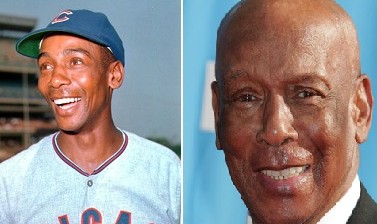
    Ernie Banks nicknamed ‘Mr. Cub’ & and “Mr. Sunshine” dies at 83

    Ernie Banks nicknamed  ‘Mr. Cub’ & and “Mr. Sunshine” dies at 83

    Ernie Banks nicknamed  ‘Mr. Cub’ & and “Mr. Sunshine died of a heart attack at a Chicago hospital on January 23, 2015, seven days before his 84th birthday.

    Tributes for Banks were widespread throughout Chicago & Dallas. Banks born in Dallas on January 31, 1931 was an professional baseball player in Major League Baseball (MLB) and played his entire MLB career with the Chicago Cubs. He was a National League All-Star for 11 seasons, playing in 14 All-Star Games. Banks entered Baseball sports through Negro league baseball in 1950, played for the Kansas City Monarchs. He also served in the US military for two years and before returning  to the Monarchs before beginning his major league career in September 1953.

    Banks actively took part in the Chicago community during and after his tenure with the Cubs. He also founded a charitable organization, became the first black Ford Motor Company dealer in the United States.

    He was inducted into the National Baseball Hall of Fame in 1977 and was awarded the Presidential Medal of Freedom for his contribution to sports in 2013.

     President Barack Obama and his wife, Michelle, called Banks “an incredible ambassador for baseball, and for the city of Chicago.”

    Chicago Mayor Rahm Emanuel said in a statement: “Ernie Banks was more than a baseball player. He was one of Chicago’s greatest ambassadors. He loved this city as much as he loved — and lived for — the game of baseball.”

  • Obama cancels Agra Visit |Air Force One takes off from Andrews Air Base

    Obama cancels Agra Visit |Air Force One takes off from Andrews Air Base

    US President Barack Obama just (saturday Morning 24th January) embarked on his highly watched three-day landmark trip to India where is he a special special for the Indian Republic Day. He is the first US president who has been invited and participating in the Indian grand event of the year.


    Earlier today, the White House issued a statement confirming that The US President Barack Obama regrets the cancellation of his visit to the Taj Mahal during his three-day visit to India. 


    Barack Obama is scheduled to fly to Saudi Arabia on 27th January instead to meet the new Saudi king following the demise of King Abdullah.


    The US President is being accompanied by multiple members of his cabinet, influential business leaders and lawmakers, including Nancy Pelosi, the minority leader of the US House of Representatives during the Historic India Visit.

    Air Force One will have a refuelling halt in Germany (Ramstein) and will touch down in Delhi at 10 am on Sunday at Air Force Station, Palam

  • The Indian Panorama Photojournalist in Obama entourage

    The Indian Panorama Photojournalist in Obama entourage

    NEW YORK (TIP): Mohammed Jaffer, The Indian Panorama Photojournalist and Photo Editor of SnapsIndia  will travel  as a member of the White House Press Corps on the President’s trip to India, Jan24-28th 2015


    Jaffer is the only Indian American photojournalist who has traveled with President Bill Clinton to South Asia, including India and Pakistan  in 2000. He also traveled with  President Obama in November, 2010 to India. He has also covered many visits of secretary of State, Hillary


    Clinton to India. He also covered Prime Minister Manmohan Singh’s State visit and , earlier, Prime Minister Vajapyee ‘s visit to the White house.


    Jaffer  hails from Hyderabad, Telangana in India. His father late  M.A.Rahim was  the founder of SnapsIndia News photo Service established  58 years ago. The news photo service has offices in Dubai, Toronto and New York.


    Former President Bill Clinton had  inaugurated Jaffer’s photo exhibition at  Regent Wall Street hotel, in New York, on June 12, 2001. That same year, Jaffer covered the inauguration and oath ceremony of President George W. Bush in Washington  DC.


    Jaffer’s photo of Clinton sitting cross legged  under a tree in Gandhi’s Sabarmati Ashram  adorns  the Presidential Library.


    Mohammed Jaffer was honored by the New York City Council with the ‘Outstanding Citizen’ award in August, 2007 for his ‘exemplary services’ to media in the US and India.

  • Obama outlines India vision – from natural to global partners

    Obama outlines India vision – from natural to global partners

    NEW DELHI (TIP): As he arrives in India for a three-day visit, his second in six years, US President Barack Obama has exuded hope about enhanced ties with “natural partner” India, saying he would like to think that the stars are aligned to finally realize his vision of the two countries being “global partners”.


    In an email interview with India Today weekly magazine, which is to be published in its upcoming issue, the US president, who arrives January 25, touched on several issues, including his relationship with former Prime Minister Manmohan Singh, acknowledging that the two countries have differences and can work around them, his appreciation of Prime Minister Narendra Modi’s desire for wanting to take the relationship forward, and also the reason for accepting the invite.


    ‘ Obama, who is the first US president to be chief guest at the Republic Day parade, also spoke strongly on terror emanating from Pakistan, saying that Washington has made it clear that “even as the US works with Pakistan to meet the threat of terrorism, safe havens within Pakistan are not acceptable and that those behind the Mumbai terrorist attacks must face justice”.


    He said Modi’s “remarkable life story – from tea-seller to Prime Minister – is a reflection of the determination of the Indian people to succeed”.


    Obama said Modi has a “clear vision of the big things he wants India to achieve, and I’ve been impressed with his energy and his readiness to address many of the barriers that have stood in the way of greater economic growth… In particular, I appreciate the prime minister’s eagerness to take the India-us partnership to the next level”.


    On former prime minister Singh, with whom he had interacted several times during bilateral summits, Obama said he had “a strong relationship with prime minister Singh, and he was a close partner”.


    “Now, Prime Minister Modi’s election and his commitment to a new chapter in the relationship between our countries gives us an opportunity to further energies our partnership.” 


    “I’d like to think that the stars are aligned to finally realize the vision I outlined in Parliament – India and America as true global partners,” he said.


    “That’s why I accepted the generous invitation to become the first US president to attend Republic Day as the chief guest,” he said and added that he was deeply honored to join in celebrating the 65th anniversary of the Indian Constitution.


    Acknowledging the differences between the two nations, the US president said: “No two nations agree on everything, and so, of course, sometimes India and the United States will disagree. But I believe that we can work through any differences in a spirit of mutual respect. Moreover, whatever differences we may have are greatly outweighed by the many interests we have in common.” 


    He said that for this, “good communication and coordination” is required not just between the leaders but between governments.


    “When those of us at the leadership level agree on a course of action, our governments have to actually implement our decisions. We have to make sure that words are matched by deeds,” he said, in a tacit indication of the delay in implementation of the Indo-US civil nuclear deal. The deal was inked in 2005 and the US Congress approved of the 123 agreement bill and it was signed into law in 2008. But India’s tough civil nuclear liability law, which puts the onus on suppliers, has held up implementation of the mega deal.


    Obama also voiced keenness in working together with India in multilateral fora, saying no country can alone meet the challenges thrown up by the world. “That’s why I’m committed to forging a greater partnership with India, both on a bilateral basis and within multilateral organizations.” 


    “And even as we expand our cooperation on a bilateral basis, we have to keep working to make sure that multilateral institutions are effective. That’s why I pushed for elevating the role of the G20 to give emerging economies, including India, a greater voice in global economic decision making. And that’s why I believe that a reformed UN security council should include India as a permanent member.” 


    On ways to improve the bilateral relationship, Obama said the specific areas that both can improve ties in include creating jobs, improving education and creating more opportunities, including for girls and women. He called for reducing the barriers to trade, investment, and high-tech collaboration.


    “American companies are ready to help build the infrastructure that will be the catalyst for the next wave of Indian growth,” he said and outlined other areas of cooperation including deeper security cooperation, including in maritime security in the Asia-Pacific, and climate change.

  • INDIA’S RELATIONS WITH THE US MUST NOT BE ONE-SIDED

    INDIA’S RELATIONS WITH THE US MUST NOT BE ONE-SIDED

    ‘It is in the interest of both sides that the visit is seen as being successful. Both sides have invested considerable political capital in it…….This rapid exchange of visits and the decisions taken have to be justified, beyond the symbolism, which is no doubt important in itself. This opportunity to impart a fresh momentum to ties should not be missed………. What we need is a pragmatic approach by both sides. On the side this is assured by Modi. He has shown that he is essentially pragmatic. The only principle he is attached to is India First”, says the author. 


    Prime Minister Narendra Modi’s ready acceptance of United States President Barack Obama’s invitation to visit Washington in September 2014 came as a surprise against the background of the visa denial humiliation heaped on him for nine years.


    Modi’s invitation to Obama to visit India as chief guest at our 2015 Republic day celebrations came as an equal surprise, as did Obama’s acceptance at such short notice.


    The messaging from both sides is clear. Modi wants to give a fresh impetus to the India-US relationship, seen as languishing for some time now. Obama has conveyed that he is ready to respond.


    Now that Obama is coming and the two sides want to reinvigorate the relationship, the outcome of the visit will be watched closely not only in India and the US, but internationally too.


    To look ahead, we should look backwards a little bit so that the potential for the future can be seen through a better understanding of the past.


    There are no instant solutions to the issues in India-US relations. The US demands in many cases require policy, legislative and administrative responses by India, not to mention care by us that a balance in our external relations is maintained.


    Obama had said during his visit to India in 2009 that he saw the India-US relations as potentially a ‘defining partnership of the 21st century.’ It is very hard to define what a defining partnership is, but what he meant presumably is that relations between the oldest and the largest democracy, between the world’s foremost economic power and, in time, the third biggest economy will define the contours of international relations in the decades ahead.


    Our leaders say that India and the US are natural partners. This is not borne out objectively by the history of the relationship, the differences that currently exist on a whole host of issues and the inherently unequal nature of the relationship.


    The US is the world’s only superpower with global interests whose contradictory pulls and pressures they have to manage even in our region, and we are not even a credible regional power yet.


    If the argument is that it is the shared values of democracy, pluralism and respect for human rights make us natural partners, then the US relationship with Pakistan and China — often at our cost — which are not democracies, has to be explained. US interests often take precedence over its declared values.


    Even if rhetoric does not measure up to realities, the fact remains that improvement of India-US ties has been the most important development in India’s external relations in the last decade.


    It is the 2005 nuclear deal that opened the doors to a transformative change in bilateral ties. Reflecting the new intensity of bilateral engagement, about 28 dialogues were set up between the two sides covering the fields of energy, health, education, development, S&T, trade, defence, counter-terrorism, nonproliferation, high technology, innovation etc.


    The US now supports India’s permanent membership of the UN Security Council in principle. It is backing India’s membership of the four international export control organisations — the Nuclear Suppliers Group, the Missile Technology Control Regime, the Wassenaar Arrangement and the Australia Group.


    Trade in goods and services between the two countries has grown to almost $100 billion (about Rs 620,000 crore).


    A big breakthrough has been made in defence. In the last five or six years the US has bagged defence orders worth about $10 billion (about Rs 62,000 crore). These include C-130, C-17 and P-80 I aircraft and heavy lift, attack and VIP helicopters. The US has emerged as the biggest supplier of arms to India in this period.


    The US has proposed joint manufacture of several defence items in India under its Defence Trade and Technology Initiative. While India has overcome its mistrust of the US and fears that at critical moments the US may cut off spares for its equipment as part of its liberally used sanctions instrument, India has been reticent in its response to the DTTI, possibly because it is still not convinced that the US will transfer the technologies that India would want or not tag unacceptable conditions to it.


    The US proposed at one time three ‘foundational’ agreements covering the areas of logistics, interoperability and access to high technology equipment, but India has been cautious, presumably because it was concerned about slipping into the US defence orbit and losing its autonomy.


    To balance this, India and the US have been conducting a large number of military exercises, far more than with any other country. The naval exercises in the Indian Ocean to protect the sea lanes of communication are particularly important because of their geopolitical implications. Trilateral India-US-Japan naval exercises have obvious significance.


    In Obama’s second term, however, the ties lost momentum for various reasons. Economic reforms in India slowed down, its growth rates fell, India was seen as reluctant to deepen the strategic partnership, it was lukewarm to the US pivot towards Asia, US nuclear firms saw their business opportunities in India blocked because of our Nuclear Liability Act, major US corporations began campaigning against India’s trade, investment and intellectual property rights policies in the US Congress and instigated investigations into them by the US International Trade Commission and the US Trade Representative.


    The US began criticising India for being a fence sitter, a free-loader on the international system because of its reluctance to uphold it even at the cost of its interests as other Western powers were supposedly doing. This was the sense of the ‘burden sharing’ demand of the US.


    India had its own complaints against the US regarding the implications of the new US immigration legislation for India’s IT industry, the movement of its professionals, the increase in cost of H1B and L1 visas, the totalisation agreement and outsourcing.


    During his Washington visit, Modi struck an unexpectedly good rapport with Obama who accompanied him personally to the Martin Luther King Jr Memorial and later in Myanmar described him as a ‘man of action.’


    Modi clearly signalled during the visit that he intends to reinvigorate bilateral ties and that he views them as vital for his development agenda at home.


    The joint press conference by the two leaders and their joint statement set an ambitious agenda, with many positives, if all goes according to plan.


    The two leaders agreed to increase the bilateral trade five-fold to $500 billion (about Rs 36 lakh crore).


    Modi asked publicly for more openness and ease of access to the US market for Indian IT companies, even if Obama failed to give any response.


    In order to raise investment by institutional investors and corporate entities, it was agreed to establish an Indo-US Investment Initiative led by India’s finance ministry and the US department of treasury, with special focus on capital market development and financing of infrastructure.


    It was also agreed to establish an Infrastructure Collaboration Platform convened by the ministry of finance and the US department of commerce to enhance participation of US companies in infrastructure projects in India.


    Modi invited the US to send two trade missions to India in 2015 focused on India’s infrastructure needs with US technology and services.


    It was decided to activate the Trade Policy Forum that had not been convened for a long time. An empowered annual working group was approved for addressing IPR issues and it was agreed to set up a contact group for implementing the India-US civil nuclear deal.


    US involvement was sought in the railways sector and in smart city projects (Ajmer, Visakhapatnam and Allahabad).


    It was also agreed that USAID will serve as knowledge partner to support Modi’s 500 Cities National Urban Development Mission and Clean India Campaign.


    Obama offered to reinvigorate the higher education dialogue, which has languished. He welcomed India’s proposal to establish the Global Initiative of Academic Networks under which India would invite and host up to 1,000 American academics each year to teach in centrally-recognised Indian universities, at their convenience.


    The decisions and understandings reflected in the joint statement on the energy front are potentially problematic as they could give the US more handle to put pressure on India on climate change issues.


    Both leaders expressed their commitment to work towards a successful outcome in Paris in 2015 of the conference of the UN Framework Convention on Climate Change, including the creation of a new global agreement on climate change.


    The two leaders, in recognition of the critical importance of reducing greenhouse gas emissions and improving resilience in the face of climate change, agreed to ‘a new and enhanced strategic partnership’ on energy security, clean energy, and climate change, to further which a new US-India Climate Fellowship Programme to build long-term capacity to address climate change-related issues in both countries was launched.


    A MoU was concluded between the Export-Import Bank and the Indian Renewable Energy Development Agency, which would make up to $1 billion (about Rs 6,200 core) in financing available to bolster India’s transition to a low-carbon and climate-resilient energy economy, while boosting US renewable energy exports to India.


    Modi and Obama stated their intention to expand defence cooperation to bolster national, regional, and global security. This broad-based formulation has important geopolitical implications. They agreed to renew for ten more years the 2005 Framework for the US-India Defence Relationship with plans for more ambitious programs and activities.


    They welcomed the first meeting under the framework of the DTTI in September 2014 and its decision to establish a task force to expeditiously evaluate and decide on unique projects and technologies for enhancing India’s defence industry and military capabilities.


    To intensify cooperation in maritime security, the two sides considered enhancing technology partnerships for India’s Navy, besides upgrading their existing bilateral exercise Malabar.


    They committed to pursue provision of US-made mine-resistanta ambush-protected vehicles to India.


    On terrorism, they stressed the need for dismantling of safe havens for terrorist and criminal networks, to disrupt all financial and tactical support for networks such as Al Qaeda, Lashkar-e-Tayiba, Jaish-e-Mohammad, the D-Company, and the Haqqani Network.


    The two countries also expressed the intention to start a new dialogue on space situational awareness.


    Obama affirmed that India met MTCR requirements and was ready for NSG membership. Noting India’s ‘Act East’ policy and the United States’ rebalance to Asia, the leaders committed to work more closely with other Asia Pacific countries through consultations, dialogues, and joint exercises. They underlined the importance of their trilateral dialogue with Japan and decided to explore holding this dialogue among their foreign ministers.


    Modi spoke of great convergence on the issue of peace and stability in Asia-Pacific and more joint exercises with Asia-Pacific countries.


    Very significantly, he stated that the US was intrinsic to India’s Look East and Link West policies, according thus a central role for the US in India’s foreign policy.


    They agreed to continue close consultations and cooperation in support of Afghanistan’s future.


    The principal points agreed during Modi’s visit will serve as a guide to what can be realistically achieved during Obama’s visit. To assess that, we should take into account some limitations and negatives that mark the India-US relationship.


    Already, what was agreed to is mostly not capable of quick implementation or rapid results. These are largely medium term objectives and not always clear in implications. In the course of implementation, many issues will provoke internal political debates, will require detailed processing and negotiations, parliamentary approval and intensive diplomatic effort on the international front by both parties. In some cases real differences have been glossed over by use of diplomatic language.


    On IPR issues it will not be easy to reconcile US demands on IPRs and our position that our IPR policies are in conformity with the World Trade Organisation’s Trade-Related Aspects of Intellectual Property Rights agreement. Legal issues involving our courts are involved.


    The USTR decided to put unilateral pressure on India by investigating India’s IPR policies under Section 301, but this has been halted in November 2014 in view of some forward looking announcements by the Modi government. The USTR’s ‘cautiously optimistic’ statements during his Delhi visit in November suggest that the US will wait and watch what the Modi government actually delivers.


    The US Congress has extended the investigation of India’s investment, trade and IPR policies by the USITC by another year.


    On climate change issues, under cover of its ‘political’ agreement with China, the US seems determined to put pressure on India to agree to some reduction commitments. In actual fact, this is political pressure unrelated to the merits of India’s case. Climate change is a multilateral issue, but the US is making it a bilateral one, with the commercial interests of its companies in mind.


    While the US claims that what it is offering under the DTTI has the green light from all those in the US who control technology exports, it can be doubted whether the US will be as liberal in transfer of technologies as it would have us believe. The US record in this regard with even its allies and partners is not inspiring.


    The US has shown no activism in pushing for India’s membership of NSG or MTCR as a start. It is to be hoped that it is not looking


    for a resolution of the nuclear liability issue and the finalisation of the vexed question of ‘administrative arrangements’ that is needed to complete the India-US nuclear deal before


    it does the heavy lifting again to promote India’s membership of the cartels in question.


    Surprisingly, the list of terror organisations against whom US and India have agreed to work together excludes the Taliban, pointing to a crucial difference between the two countries on the issue of accommodating this extremist force with its close Pakistani links into the power structure in Afghanistan.


    In reaching out to the Taliban the US gives priority to orderly withdrawal of its forces from Afghanistan, treating India’s concerns as secondary. The language on Afghanistan in the Modi-Obama joint statement in Washington was remarkably perfunctory.


    Worse, the US wants to retain complete freedom of action in dealing with Pakistan, irrespective of India’s concerns about its continuing military aid to that country. General Raheel Sharif, the Pakistani army chief, was accorded high level treatment during his recent visit to the US, meeting Secretary John Kerry who indirectly endorsed the role of the Pakistani army in nation building and politics by terming it as a truly binding force.


    It is worth recalling that after accepting the invitation to visit India, Obama felt diplomatically obliged to phone Premier Nawaz Sharif to say he could not visit Pakistan now and would do so later.


    The US involvement in developing our inadequate infrastructure — our ports, airports, railways highways etc — seems unrealistic as its companies are hardly likely stand up to international competition in India.


    As regards our nuclear liability legislation, it appears that the US government may be moving away from its fundamentalist position that supplier liability cannot be accepted and may be open to some practical solution to the issue in terms of limiting the liability in time and costs. The lawyers at Westinghouse and General Electric will, of course, have to be convinced.


    This is a highly charged issue politically and it is doubtful whether the decks can be cleared before Obama’s visit. The larger question of the economic viability of US-supplied nuclear power plants remains, not to mention the fact that GE does not have as yet a certified reactor.


    Work on a bilateral investment treaty will take time It appears that our side wants to be able to announce a couple of projects under the DTTI during Obama’s visit. In this connection anti-tank missiles, naval guns, pilotless aircraft and magnetic catapult for our aircraft carrier are being mentioned as possibilities.


    The US would want at least one project to be announced. Defence Minister Manohar Parrikar has let it be known publicly that US proposals are being seriously examined.


    The announcement of a more ambitious Defence Cooperation Framework Agreement valid for another 10 years is a certainty.


    The government’s decision on the GST, raising the FDI ceiling in insurance, the amendment to the land acquisition law are advance signals of its commitment to reform and attracting FDI, which is a positive from the US point of view.


    The emphasis on Make in India and developing India’s manufacturing sector, coupled with a commitment to ease doing business in India, have begun to change investor sentiment towards India, and this creates a better atmosphere for Obama’s visit.


    It is in the interest of both sides that the US President’s visit is seen as being successful. Both sides have invested considerable political capital in it.


    This rapid exchange of visits between the two leaders, leaving little time to process the decisions taken in Washington in September, has to be justified, beyond the symbolism, which is no doubt important in itself. This opportunity to impart a fresh momentum to ties should not be missed.


    But there is need also to be clear-headed about the relationship that is not easy to manage given US power, expectations, impatience and constant endeavour to do things the way it wants.


    It is a bit disturbing that an atmosphere has been created in which the focus is on what we can do for the US and Obama and not what the US must do to meet our needs and concerns. The agenda has become one-sided.


    The US should not expect India to support all its demands and polices, however questionable. India does not have to prove it is a responsible country by supporting even irresponsible US policies. Of course, India too should not expect the US to always adjust its policies to suit us.


    What we need is a pragmatic approach by both sides. On the side this is assured by Modi. He has shown that he is essentially pragmatic. The only principle he is attached to is India First.


    (By Kanwal Sibal who is a former Foreign Secretary of India)
    (British English)

  • India-US strategic partnership

    India-US strategic partnership

    In future, India may be willing to conduct joint military operations with the US in its area of strategic interest in a contingency in which India’s vital national interests are threatened, preferably as a Chapter 7 intervention under the UN flag and failing that, as part of a “coalition of the willing”, says the author.


    President Barack Obama’s forthcoming visit as the chief guest on Republic Day is likely to give a fresh impetus to the Indo-US strategic partnership. While the relationship is substantive and broad based, the impressive achievements of the strategic partnership are to a large extent attributable to the successful implementation of the 10-year Defence Framework Agreement signed in June 2005. The renewal of this agreement will be a major item on the bilateral agenda during the summit meeting.


    During the Obama-Narendra Modi meeting in September 2014, the two leaders had stated their intention to expand defence cooperation to bolster national, regional, and global security. It was agreed that the two countries would build an enduring partnership in which both sides treat each other at the same level as their closest partners, including defence technology transfers, trade, research, co-production, and co-development.


    Prime Minister Modi and President Obama welcomed the first meeting under the framework of the Defence Trade and Technology Initiative in September 2014 and endorsed the decision to establish a task force to expeditiously evaluate and decide on unique projects and technologies which would have a transformative impact on bilateral defence relations and enhance India’s defence industry and military capabilities.


    For several decades, India’s procurement of weapons platforms and other defence equipment had remained mired in disadvantageous buyer-seller, patron-client relationships like that with the erstwhile Soviet Union and Russia. While India has been manufacturing Russian fighter aircraft and tanks under licence, the Russians never actually transferred weapons technology to India.


    The country has now diversified its acquisition sources beyond Russia to Western countries and Israel. From the US, India has purchased weapons platforms and other items of defence equipment worth around US $10 billion over the last five years. However, none of the recent deals with the US have included the transfer of technology clauses. There is now a growing realisation in India that future defence acquisitions must simultaneously lead to a transformative change in the country’s defence technology base and manufacturing prowess. Hence, it is imperative that whatever India procures now must be procured with a transfer of technology clause being built into the contract even though it means having to pay a higher price. The aim should be to make India a design, development, manufacturing and export hub for defence equipment in two to three decades.


    In September 2013, Deputy Secretary of Defence Ashton Carter, now the US Defence Secretary designate, had offered India a “Defence Trade and Technology Initiative” under which the US will share sensitive cutting-edge defence technology and permit US companies to enter into joint production and co-development ventures in India. Carter had then said, “We changed our mindset around technology transfer to India in the Department of Defence from a culture of presumptive no to one of presumptive yes.” 


    The Javelin anti-tank guided missile is another key candidate for joint production, though so far the US has been hesitant to offer its seeker and warhead technology. India is also looking for high-end counter-IED technologies. In future, the two countries will conduct joint research and development for new weapons systems and the US may offer even nuclear power packs for submarines and aircraft carriers and fighter aircraft engines. Cooperation of such a high order will raise India’s technology base by an order of magnitude and help the country move several notches higher in its quest for self-reliance in defence production. stepping down as Secretary of Defence, Chuck Hagel had nominated Frank Kendall, the Department’s Undersecretary for Acquisition, Technology and Logistics, as the defence initiative’s American lead. With Ashton Carter soon to become Secretary of Defence, the initiative will get a fresh boost. The biggest boost will come from a show-piece joint development project like the BrahMos supersonic cruise missile jointly developed with Russia.


    The extended Defence Framework Agreement should take stock of the goals of the 2005 agreement that have not been fully achieved. For example, there has been no progress in cooperation on BMD technology. This needs to be rectified. Intelligence sharing is limited to ongoing counter-terrorism operations at present. It should be extended to the sharing of data bases as well, particularly the terrorism data base maintained by the US NCTC and India’s NATGRID.


    Prime Minister Modi’s government has raised the FDI limit for defence joint ventures to 49 per cent equity participation. It is likely to be open to modifying the offsets policy and amending export laws, which are considered a stumbling block. The agreement should take into account the Indian PM’s exhortation to industry to “Make in India”. The two governments should act as facilitators for their public and private sector companies to form joint ventures for the design and development, co-production and export of future weapons platforms.


    There is a mutual recognition of the adverse implications of China’s increasing assertiveness in the South China Sea and in dealing with the dispute over the Senkaku (Diaoyu) islands with Japan. This has undermined international and regional confidence in China’s desire to resolve disputes peacefully. There is need to work in unison with the international community to uphold the unfettered use of the global commons. India is building robust military intervention capabilities and the armed forces are engaged in the process of formulating a doctrine to give effect to these capabilities.


    Though India values its strategic autonomy and recognises that each bilateral relationship is important in its own way, the policymakers realise that the geo-political contours of the 21st century and peace and stability, particularly in the India-Pacific region, will be shaped through cooperative security. In future, India may be willing to conduct joint military operations with the US in its area of strategic interest in a contingency in which India’s vital national interests are threatened, preferably as a Chapter 7 intervention under the UN flag and failing that, as part of a “coalition of the willing”.

  • Resolving the nuclear liability deadlock

    Resolving the nuclear liability deadlock

    “By putting in place a comprehensive, fair and pragmatic legislation on civil nuclear liability, there is no reason why India cannot reap the long-term benefits of civilian nuclear energy and resolve a prickly foreign policy issue”, say the authors. 


    On January 26, Barack Obama will become the first U.S. President to attend India’s Republic Day celebrations. It will also mark nearly 10 years since the first announcement on the India-U.S. civil nuclear agreement. In contrast to those heady days when the promise of nuclear power meeting India’s gargantuan energy needs was in the air, the present situation is bleak. A target of installing 63 Gigawatts of nuclear capacity by 2032 has been reduced to 27.5 Gigawatts and none of the landmark deals envisaged has been struck. The Civil Liability for Nuclear Damage (CLND) Act, 2010 which contains a speedy compensation mechanism for victims of a nuclear accident has been deemed responsible for this deadlock. Specifically, provisions on recourse liability on suppliers (Section 17(b)) and concurrent, potentially unlimited liability under other laws (Section 46) have been viewed as major obstacles in operationalising nuclear energy in India and bilateral relations with key supplier countries.


    A question of recourse


    Under Section 17(b), a liable operator can recover compensation from suppliers of nuclear material in the event of a nuclear accident if the damage is caused by the provision of substandard services or patent or latent defects in equipment or material. This is contrary to the practice of recourse in international civil nuclear liability conventions, which channel liability exclusively to the operator. Specifically, it contradicts Article 10 of the Annex to the Convention on Supplementary Compensation for Nuclear Damage (CSC), an international treaty which India has signed.


    “U.S. President Barack Obama’s visit is an opportunity to address misgivings over the nuclear liability law and to also meet foreign governments and the supplier community halfway on the issue.”


    That Section 17(b) is contrary to the global norm is undeniable. However when the global norm itself is inequitable, there are justifiable reasons to depart from it. The inclusion of Section 17(b) recognises historical incidents such as the Bhopal gas tragedy in 1984 for which defective parts were partly responsible. The paltry compensation paid to the victims was facilitated by gaps in legislation and an extraordinarily recalcitrant state machinery. This is not a peculiarly Indian phenomenon – accidents such as Three Mile Island occurred partially due to lapses on the part of suppliers. More recently, forged quality certificates were detected for parts supplied to nuclear plants in South Korea. That Section 17(b) incentivises supplier safety and reduces the probability of a recurrence of such instances is equally undeniable.


    A step too far


    India can retain Section 17(b) while ensuring compliance with its international legal obligations in two ways. First, the CSC allows countries to make reservations to certain provisions in treaties despite being signatories to them. India could make a reservation to Article 10 of the Annex to the CSC since it satisfies the requisite criteria for making a valid reservation under the Vienna Convention on the Law of Treaties, thereby excluding its application. Second, Article XV of the CSC implies that the rights and obligations of States under general rules of public international law are exempt from the application of the CSC. One such principle of international law is the “polluter pays principle” – applicable both to the state and private entities. The principle comes into operation via the mechanism through which compensation can be recovered from a polluting entity for the environmental harm it causes. Exercising either of these options will allow India to retain Section 17(b) without violating the international treaty regime.

    However in pursuing the safety of supply, Section 17(b) goes too far in keeping liability for suppliers entirely open-ended. If liability on suppliers is unlimited in time and quantum, the possibility of getting adequate insurance cover will reduce. Even if such insurance is available, it could make  nuclear energy economically unviable. To address this, Rule 24 of the CLND Rules dilutes the right of recourse conferred by Section 17(b) by limiting compensation payable by suppliers to a specified amount and for a specified time period. Both these are made standard terms of the contract entered into between the supplier and operator.


    Though the end that Rule 24 seeks to achieve is justifiable, the means adopted are questionable. Rule 24 arguably violates Article 14 of the Constitution of India because there is no specific power in the CLND Act to limit liability in the manner that Rule 24 does. Further, the terms of the contract potentially dilute Section 17(b), which gives operators an untrammelled right to proceed against the supplier by way of recourse. It is a basic principle of law that a contract cannot violate the provision of a statute – if it does so, it is opposed to public policy. For these reasons, Rule 24 should be deleted. The limitation on time during which the supplier can be held liable should be inserted by means of a provision in the main Act. This will ensure that not just the end but also the means of limiting liability are legally tenable.


    As far as the limitation on the amount is concerned, without Rule 24, the liability for each supplier potentially extends to the general liability cap of Rs.1,500 crore. If all suppliers have to be insured up to this value, insurance costs will be unnecessarily pyramided. To address this, countries with a history of nuclear power have in place mechanisms to provide for insurance coverage through international insurance pools where insurers, operators and states share the risks of an accident, providing access to a wide pool of compensation. There are about 26 such pools in existence, which also provide reinsurance to each other. Insurance pools typically require members to be signatories to an international convention (such as CSC), and to allow reasonable inspections of their nuclear installations.


    While provisions for the creation of a domestic insurance pool for operators exist in Sections 7 and 8 of the Act and Rule 3, they need to be made explicit and amended to include suppliers in order to prevent the pyramiding of insurance premiums. This is particularly relevant to India’s domestic nuclear suppliers who would otherwise need to individually take out coverage, which would be prohibitively expensive. In order to access international reinsurance pools, the Central government could utilise the provisions in Section 43 and 44 of the CLND Act (Power to Call for Information from Operators) to establish a satisfactory inspections regime.


    Sanctity of a special mechanism


    Finally, Section 46 of the CLND Act contradicts the Act’s central purpose of serving as a special mechanism enforcing the channelling of liability to the operator to ensure prompt compensation for victims.


    Section 46 provides that nothing would prevent proceedings other than those which can be brought under the Act, to be brought against the operator. This is not uncommon, as it allows criminal liability to be pursued where applicable. However, in the absence of a comprehensive definition of the types of ‘nuclear damage’ being notified by the Central Government, Section 46 potentially also allows civil liability claims to be brought against the operator and suppliers through other civil law such as the law of tort. While liability for operators is capped by the CLND Act, this exposes suppliers to unlimited amounts of liability. Obtaining insurance coverage for any future liability costs on account of claims by victims in such a case would be next to impossible.


    Section 46 should thus be limited to criminal liability, and should clarify that victims who suffer on account of ‘nuclear damage’ can institute claims for compensation only under the CLND Act and not by recourse to other legislations or Courts. A clarification issued by the Attorney General’s office, if not an amendment to the law itself, will provide much needed assurance to suppliers while furthering national interest.


    The issue of the liability law has, for far too long, been a thorn in India’s bilateral relations especially with the United States. Mr. Obama’s visit provides a historic opportunity to address these misgivings and meet foreign governments, as well as the entire supplier community, Indian and foreign, halfway on the issue. This will signal the seriousness of the Government of India in setting its own house in order and put the ball firmly in the court of the supplier community. By putting in place such a comprehensive, fair and pragmatic legislation on civil nuclear liability, there is no reason why India cannot reap the long-term benefits of civilian nuclear energy and resolve a prickly foreign policy issue, the time for whose resolution has come.


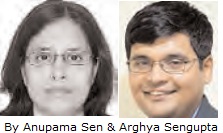
    (Anupama Sen is Senior Research Fellow, Oxford Institute for Energy Studies and Arghya Sengupta is Research Director, Vidhi Centre for Legal Policy. They are co-authors of a report, “Operationalising India’s Nuclear Agreements: Issues and Solutions on Nuclear Liability”.) (British English) 

  • Obama’s India visit an opportunity to tap real potential in ties: Biswal

    Obama’s India visit an opportunity to tap real potential in ties: Biswal

    WASHINGTON (TIP): US President Barack Obama’s unprecedented second visit to India offers an “incredibly important opportunity” for the world’s two largest democracies to tap the “real potential” of their strategic ties, a top American diplomat has said.


    The “real potential” of Indo-US strategic and economic relationship, which leaders of the two countries have been striving for the past two decades, is coming to “fruition” after Narendra Modi became the Prime Minister of India with an impressive mandate, Assistant Secretary of State for South and Central Asia Nisha Desai Biswal said.


    “We are starting to see that strategic importance actually manifested in the quality of our engagements. In the nature of the conversations we are having on the whole – they are not just bilateral, but also regional and global issues. That has always been and that is what both countries have aspired to, but I think, we are now achieving it in real and tangible ways.


    “The pace and the level of engagement is the most intense and at the most senior level, that I have ever seen,” Biswal told media ahead of Obama’s visit to New Delhi.


    At the invitation of Modi, Obama will be in New Delhi as the chief guest of the Republic Day parade on January 26, making him the first US President to visit India twice while in office.


    The Obama Administration’s top diplomat for South and Central Asia was in India recently along with Secretary of State John Kerry. After the September 30 White House meeting between Obama and Modi, there has been an unprecedented level of engagement between the two countries. In the last three months, at least three dozen high-level meetings have taken place both in India and the US, with several of them as late as this week and a few of them scheduled for the next week as well.


    Biswal said Kerry’s recent visit to attend the Vibrant Gujarat Summit, a state-level meeting, in Ahmedabad “represents the importance that the United States places on India’s economic transformation”.


    “We want to be partner in this endeavor,” Biswal said, noting that though the meeting was on investing in Gujarat, but was also on economic agenda for India as well.


    The occasion as also used by Kerry to meet Modi in Ahmedabad and give a final shape to the agenda of talks for the Obama-Modi summit in New Delhi later this month.


    “It was also an opportunity, two weeks before the President’s visit to be able to engage with the Prime Minister and members of his cabinet on the important agenda for the President’s visit. “We see this as an incredibly important opportunity,” she said, adding that the two leaders were able to have good conversations about the priorities for Obama’s visit as well as to be able to talk about the bilateral and the economic relationship.

  • Rep. Crowley to Travel with President Obama for Historic Visit to India

    Rep. Crowley to Travel with President Obama for Historic Visit to India

    WASHINGTON DC (TIP): Rep. Joe Crowley, Vice Chair of the Democratic Caucus and former co-chair of the Congressional Caucus on India and Indian Americans, announced, January 22 that he will travel with President Barack Obama aboard Air Force One to India on Saturday. The delegation will hold a series of meetings, including participating in the country’s Republic Day celebration, which marks the enactment of India’s constitution.


    “The principles of India’s democratic constitution serve as a shining example for the world, and what better time for the President of the United States to make this historic visit than to join India in celebrating its Republic Day,” said Rep. Crowley. “It is an honor to join President Obama on this trip and I look forward to robust discussions on how we can open the next chapter in U.S.-India relations. I strongly believe that the United States-Indian relationship should and will serve as a key building block of U.S. foreign policy in the decades ahead. Working together, the United States and India can be a transformational force in meeting global challenges.”


    Crowley will depart on Saturday with President Obama to Delhi, India, where the delegation will attend Republic Day events as well as meet with Indian officials to discuss strengthening and expanding the U.S.-India strategic partnership.


    Crowley, who served as co-chair of the India Caucus in the 112th and 113thCongresses, is a recognized leader on Indian issues in the House of Representatives. Formed in 1993, the India Caucus is a bipartisan group of members that is dedicated to championing strong ties between the U.S. and India and supporting the Indian-American community.


    During his term, Crowley has helped grow the India Caucus to become one of the largest caucuses in the House and initiated several key events, including the first-ever Congressional Diwali celebration in 2013.


    Crowley also led the Democratic whip effort as part of the Congressional push to secure the enactment of the U.S.-India Civil Nuclear Agreement, a landmark agreement that brought U.S.-India relations into the century after decades of distance during the Cold War. A recognized leader in Congress on issues related to the Hindu and Sikh-American communities, Crowley spearheaded a multi-year, successful effort to convince the federal government to begin collecting data on hate crimes committed against Sikh-Americans and Hindu-Americans, an important issue brought to the national spotlight by the massacre of Sikhs worshipping at a temple in Oak Creek, Wisconsin. He is also the leading voice calling for an end to the presumptive ban on Sikhs serving in the U.S. military.


    Congressman Crowley is the nine-term representative from the 14th Congressional District of New York, which includes sections of Queens and the Bronx. He is a member of the powerful Ways and Means Committee and serves as Vice Chair of the Democratic Caucus in the House of Representatives.

  • Modi to Present 100 Banarasi Sarees to Michelle Obama

    Modi to Present 100 Banarasi Sarees to Michelle Obama

    New Delhi (TIP): Prime Minister Narendra Modi plans to present 100 Banarasi silks sarees to Michelle Obama when she and President Obama visit India this weekend. 


    “Banarasi silk sarees with old, unique designs and finest quality Banarasi dress material for the U.S. first lady from PM’s constituency are on its way to New Delhi,” a senior BJP leader of Varanasi, now closely associated with the PM, said. 


    Michelle Obama’s “love for Indian silk is no secret,” and she has “been spotted wearing Jacquard silk dresses designed by international bigwigs Tracy Resse, Naeem Khan and Alexander McQueen.”


    Jacquard silk is a specialty of weavers of Banaras, the constituency Modi represents in parliament.


    The Ministry of Textiles also has sent a separate request to the Varanasi Vastra Udyog Sangh with details about the Banarasi silk sarees and fabric to be presented to Michelle Obama. 

  • OBAMA ITINERARY A MIX OF EXPERIENCES

    OBAMA ITINERARY A MIX OF EXPERIENCES

    NEW DELHI (TIP): U.S. President Barack Obama will finish his first day of a landmark India trip on Sunday, Jan. 25, at a star-studded ceremonial banquet within the Rashtrapati Bhavan — the official residence of India’s President Pranab Mukherjee — where the guest list boasts up to 200 of India’s leading industrialists, politicians, academics, physicians, and actors . Expected guests include Bollywood legend Amitabh Bachchan, cricket star Sachin Tendulkar, Tata Sons Chairman Emeritus Ratan Tata, and a host of other top industry leaders. The business-heavy invitation list reflects the high priority the United States and India are placing on reviving bilateral trade ties.


    Sunday’s grand affair will follow a lunch between Obama and Indian Prime Minister Narendra Modi and a series of bilateral meetings spanning a range of issues at Hyderabad House.


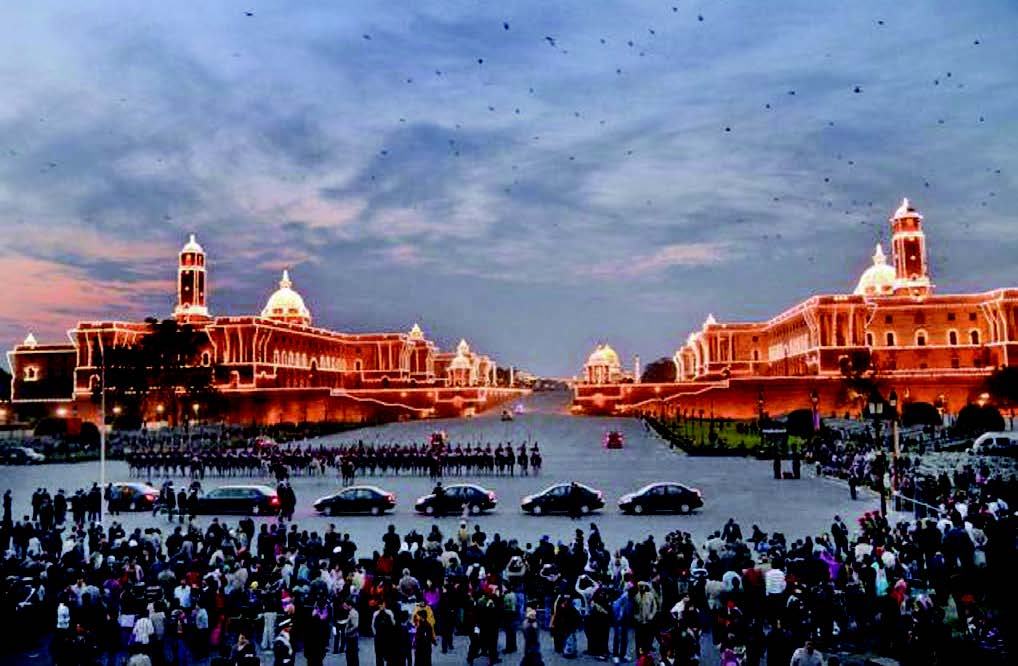
    On Monday, Obama will attend India’s Republic Day Parade alongside Modi, becoming the first U.S. president to attend this occasion. Obama is then expected to join Modi for back-to-back meetings with Indian business leaders: the Indo-U.S. CEO Forum and the India-U.S. Business Council.


    Obama will visit Agra to have a look at the monument of love and the 8th wonder of the world The Taj Mahal, the following day, before returning to Washington.

  • UNPRECEDENTED SECURITY ARRANGEMENTS FOR OBAMA

    UNPRECEDENTED SECURITY ARRANGEMENTS FOR OBAMA

    NEW DELHI (TIP): A seven-layer security ring will be thrown around the VVIP enclosure on Rajpath for the Republic Day parade to be witnessed by US President Barack Obama and the airspace over the area would be monitored by a radar to be specially set up. This will form part of the planned unprecedented ground-to-air security drill that will turn the national capital into an impregnable fortress during the visit of Obama as Chief Guest for the main Republic Day celebrations on January 26 – the first by any American President.


    A multi-agency control room will monitor the surveillance operations in every area of the national capital which has been put on the highest alert because of the visit of the US President. Obama is arriving here on January 25 on a three-day visit to the country. Threat perception is the highest for the event but there is no specific intelligence input about a possible terror strike, officials engaged with the preparations said today while giving a broad overview of the security drill.


    American Secret Service personnel, who have landed in the capital and Agra, have already conducted a preliminary survey of the routes to be taken by the US President and Rajpath where Obama will be seated along with President Pranab Mukherjee, Prime Minister Narendra Modi and hosts of other VVIPs to watch the annual parade.


    There is a possibility that the chief guest, for the first time, will arrive at the venue separately rather than with the President in his bullet proof limousine. If he does come with the President, he will be possibly the first US President not to travel in his own highly-secured ‘Beast’.


    A seven-layer security ring will be thrown around the VVIP enclosure with elite Special Protection Group and Secret Services personnel forming a part of the Close Proximity ring, official sources said, adding a radar has been exclusively kept for monitoring air space over the VVIP enclosure. Central Security agencies have brought in their Concealed Anti-Terrorists (CAT) squads to the national capital who form part of teams that carryout surprise checks at hotels, guest houses and vulnerable localities.


    The ITC Maurya hotel, where the US President will be staying, has been taken over by the Secret Services personnel and multi-frequency control room manned by the US officials have been set up. American security personnel will also be part of the teams manning the control rooms set up to watch footage of nearly 15,000 CCTVs installed in the capital.


    A power-point presentation of the Republic Day was given to the US officials about the events of the day including the cultural programme that will be performed by various artists before the VVIPs at Rajpath. Besides the 80,000-member strong Delhi Police, additional 20,000 paramilitary personnel and armed police forces from neighbouring states including Haryana, Rajasthan and India Reserve Battalions have been pressed into service to ensure fool-proof security in the capital especially around Rajpath where the main Republic day function will be held.


    Anti-aircraft guns have been placed at strategic locations to thwart attempts to violate the air space over the venue, which has been traditionally a no-fly zone. Metro underground and offices around the Rajpath area will be taken over 72 hours in advance at the request of the US security personnel. Snipers will take up positions at vantage points while Indian Air Force(IAF) will provide air cover to the parade area and the VVIPs on the ground.

  • SOME MUSLIMS TRYING TO ‘COLONIZE’ WEST: GOV. BOBBY JINDAL

    SOME MUSLIMS TRYING TO ‘COLONIZE’ WEST: GOV. BOBBY JINDAL

    WASHINGTON (TIP): Louisiana Gov. Bobby Jindal on Wednesday, January 21, stood by his controversial comments about “no go zones” in European cities, insisting that some Muslim immigrants are trying to “colonize” European cities and “overtake the culture.”

    And the United States could be next, warned Jindal, a Republican who is considering a 2016 presidential run.

    “They may be second, third, fourth generation, they don’t consider themselves part of that country. They’re actually going in there to colonize, to overtake the culture,” Jindal said. “If people don’t want to come here to integrate and assimilate, what they’re really trying to do is … overturn our culture.”

    Jindal ratcheted up his controversial take on Muslim immigration during an appearance Wednesday, January 21, on Fox News, the same network that originally reported the existence of “no go zones” in the U.K. and France before pulling its reporting and issuing four separate apologies on air.

    The network had originally reported that the British city of Birmingham was a Muslim-only city and that neighborhoods in European cities like Paris were no-go zones controlled by radical Islamists.

    Fox News host Neil Cavuto told Jindal, “We reported the same and we were wrong. We botched it and we apologized for it.”

    But Jindal stood by his comments, incorrectly claiming that Fox only apologized for reporting that entire cities were “no go zones.”

    “There are absolutely neighborhoods where the police are less likely to go in,” Jindal said, claiming that there are neighborhoods in the UK where Muslim immigrants are imposing Sharia law.

    Asked whether he was still calling those areas “no go zones,” Jindal said, “You can call it whatever term you want, but there are neighborhoods, we have communities of people who don’t want to integrate, don’t want to assimilate.”

    The potential 2016 contender has racked up significant media coverage since he first said he first talked about “no go zones” in European cities on Monday, January 19. He has also continually emphasized that his comments are indeed controversial.

    Jindal also criticized President Barack Obama, accusing him of not labeling the attackers in Paris as terrorists, though Obama had swiftly condemned the attacks as a terrorist act.

    Obama has however taken heat from Jindal and other Republicans for staying away from labeling the terrorist threat as radical Islam.

    “We’re at war with radical Islam whether he wants to call it or not,” Jindal said on Wednesday, January 21.

    Drawing on his Indian heritage, Jindal insisted that the race or religion of immigrants is not what’s important, but that immigrants to the U.S. must learn English and integrate and assimilate to American culture.

    “It used to be OK to call America the melting pot, now the politically correct one wants to say, look we can’t impose our culture on others, we can’t impose our values on others, that’s nonsense,” Jindal said.

    (Source: CNN)

  • Obama’s visit to India: what’s at stake?

    Obama’s visit to India: what’s at stake?

    U.S. President Obama’s visit to India as the chief guest for the Republic Day celebrations underscores the determination of both administrations to revitalise the bilateral relationship. This visit might not be high on deliverables but emphasises the efforts being made to create a common ground for cooperation


    President Barack Obama’s upcoming visit to India, his second as a serving president, is historic for both its optics and the potential to fast track the slow moving train of India-U.S. relations.


    Obama as the chief guest for India’s Republic Day parade-the first U.S. president to be invited for the occasion-has great symbolism. The White House recognised the significance of the first-ever invitation and acted despite difficulties of scheduling. The president’s State of the Union address to the U.S. Congress, typically in the last week of January, was brought forward so Obama could be in New Delhi.


    The U.S. establishment rightly determined that accepting Prime Minister Narendra Modi’s invitation and clocking this “first” was important. Also important was to reinforce Modi’s bold move-the invitation effectively jettisoned traditional Indian reluctance to go public with the Americans. By honoring the U.S. president thus, the Indian government has taken a step to shed some of the past insecurities to finally catch up with the people.


    That’s all for the good. Obama’s visit is also an acknowledgment that the India story is resonating once again in the world and the Americans ought to be in front not behind other countries. The U.S. Administration has responded well to the new energy coming out of official India despite being pulled in different directions by multiple foreign crises. Foreign crises will form a big part of the discussion between Obama and Modi-the turmoil in the Muslim world at large, the rise of ISIS, the recruitment of youth through the internet, the Afghanistan-Pakistan situation and China. All of these point for greater cooperation between the US administration and India.


    Secretary of State John Kerry was in India last week-his second visit since Modi became prime minister-to attend the Vibrant Gujarat summit where the U.S. was a partner country for the first time. Kerry’s trip was meant to nail down concrete progress in the India file that can be showcased during Obama’sJanuary 25-26 visit.


    It’s worth noting that the Obama Administration has significantly toned down the harsh rhetoric on India’s trade policies. Recognising the progress made recently, the U.S. Trade Representative last month closed its “301 out-of-cycle” review of India’s intellectual property (IP) laws, giving this perennial sword over bilateral relations a rest, even if temporarily. Discussions on contentious issues such as IP are being held in private rather than in the public domain, which has led to an automatic improvement in the atmospherics.


    The level of activity between the two governments since Modi became prime minister has gone up by leaps and bounds. Various bilateral groups, which hadn’t met for nearly three years but were always counted as proof that we had a “strong” relationship, have actually been meeting. These include the Trade Policy Forum, the Defence Trade and Technology Initiative and the High Technology Cooperation Group.


    Then there are newly established contact groups-one to sort differences on India’s nuclear liability law, an investment forum and an infrastructure platform. The US side is happily surprised at the responsiveness of the Modi government.


    Potential areas of progress include a finalised text for a Bilateral Investment Treaty (BIT), an agreement on climate change and a renewal of the Defence Framework Agreement for another 10 years. In addition, India and the US are likely to further enhance their intelligence cooperation but without public pronouncements.


    Aligning the needs of the two systems sometimes has proven difficult but what’s different this time is the desire to find solutions. And that is a definite change after losing nearly three years in limbo. The question is how much can India push the United States to change its systems and make exceptions.


    The U.S. has its way of negotiating-what it says is normally accepted by other countries. India, which doesn’t fall in an easy category, has its perspective. Its positions are well argued and can’t be easily dismissed. The Americans, often unwilling to change their processes, find it frustrating to have to justify themselves.


    it is differences on intellectual property protection or obtaining basic development needs for Indians but also curbing emissions, buying high-end U.S. defence technology but without signing basic agreements the Pentagon requires-every tussle brings out the difference in worldview.


    The Americans want India to promise not to use the tool of compulsory license (CL) to force prices of life-saving drugs down except in an emergency. India is unlikely to commit to the demand because no government would give up a policy instrument, especially when it has not abused it. India has used CL only once.


    Indian IP laws are TRIPS-compliant under the World Trade Organization rules. In essence, what the U.S. is demanding on behalf of its pharma industry is something that can be described as “TRIPS plus” which would go beyond WTO agreements. More discussions may yield a new fuzzy position but the fundamental Indian stand will likely remain.


    Similarly, the requirements of the U.S. system hamper transfer of sensitive U.S. defence technologies to India because New Delhi has refused to sign what Washington calls
    “foundational agreements”. There are at least five but two are seen as key to getting over regulatory hurdles-CISMOA or the Communications Interoperability and Security Memorandum of Agreement and LSA or the Logistics Support Agreement.


    Even though U.S. officials are “working around them”-as former deputy defence secretary Ash Carter put it-they say life would be a lot simpler if India just signed the agreements which all other U.S. partners have. The flow of defence technology would be a lot smoother.


    But New Delhi remains constant in its refusal-it feels it doesn’t need to tie itself down with these agreements, which may allow U.S. an entre it is unwilling to grant as yet.


    Another suggestion from Washington is for India to buy more off-the-shelf technology instead of trying to reinvent every wheel and make a quick “qualitative” jump in defence capability. Border security can be improved in new ways with what’s already available on the market.


    Whether there are many breakthroughs or none, the fact that Obama and Modi are meeting again within a short span will keep the two systems focused and geared for progress.


    (Seema Sirohi is a Washington-based analyst and a frequent contributor to Gateway House: Indian Council on Global Relations. Seema is also on Twitter and her handle is @seemasirohi.

    This feature was written exclusively for Gateway House: Indian Council on Global Relations. It is being republished with permission from Reetika Joshi (joshi.reetika@gatewayhouse.in)


    © Copyright 2014 Gateway House: Indian Council on Global Relations. All rights reserved. Any unauthorised copying or reproduction is strictly prohibited.(British English)

  • Nuclear deal stuck on US demand ahead of Obama visit

    Nuclear deal stuck on US demand ahead of Obama visit

    NEW DELHI (TIP): Ahead of US President Barack Obama’s arrival in India, a specific US demand seeking “flag rights in perpetuity” for any material or equipment used in a US-built reactor has thrown, to use an American expression, a monkey wrench into the nuclear contact group meeting underway in London.


    The information is  that it is the main sticking point preventing the two sides from announcing successful conclusion of the talks, something which both the sides wanted to achieve as the main takeaway from the visit. This was even as some progress was made over the liability issue.


    The talks in London saw the US side insisting on rights to forever monitor use of any material or equipment in a US reactor even if it is sourced from a third country. While MEA spokesperson Syed Akbaruddin said in a media briefing that progress had been made over the nuclear issue, it is learnt that this one issue was threatening to derail the talks. The negotiating teams have now left it to Obama and Modi to take the final call.


    This administrative arrangement which the US has been seeking is based on its reading of the civil nuclear agreement which the two countries had signed. Indian officials told their counterparts in London that it was an extremely intrusive measure and India would never agree to it as it would impinge on its nuclear sovereignty. They cited the example of the nuclear agreement with Canada, which was initially stalled after the US neighbor insisted on similar conditions but finally materialized after concessions made by Prime Minister Stephen Harper. The Canadian PM acknowledged India’s strong non-proliferation commitments and agreed to inspections only by IAEA.


    The Indian side had gone to London hoping that the US officials would also show similar understanding of India’s position and agree to inspections by IAEA only. What India is particularly upset about is that under the arrangement US is seeking, US authorities will have rights to forever monitor uranium, or any other material or equipment, sourced even from a third country like Kazakhstan or Australia if it is used in reactors built by American companies like Westinghouse or GE Hitachi.


    As Times of India had reported Tuesday, January 20, the third contact group meeting was the last chance for the 2 countries to find a way to operationalize the nuclear agreement ahead of the Modi-Obama summit by addressing the liability and other issues. But while the US seems to be coming round to the Indian proposal for setting up an insurance pool to provide cover to suppliers, the talks have come unstuck over an administrative issue with neither side relenting. The Indian government is keen to ensure a breakthrough in the contact group meeting as a means to convince the US about its commitment to the civil nuclear deal.

  • Meet Padma Shri Dr. Dattatreya Nori – Featured Indian American

    Meet Padma Shri Dr. Dattatreya Nori – Featured Indian American

    NEW YORK (TIP): Dr. Dattatreya Nori, an internationally renowned Oncologist is a recipient of one of India’s highest civil awards, “Padma Shri”. The award was announced on the eve of India’s Republic Day, January 26, 2015.

    Government of India recognizes excellence and contributions of Indians within  India and abroad every year on the eve of Republic Day.

    Dr. Nori, Professor and Executive Vice Chairman of the Radiation  Oncology Department at the New York- Presbyterian Hospital/Weill Cornell Medical College in New-York City is passionately committed to help the less fortunate.

    Meet Padma Shri Dr. Dattatreya Nori, the renowned Oncologist

    Man does not live by bread alone. What else does one need depends on the thinking of the person.

    To Dr. Dattatreyudu Nori, it is a touch of spirituality that lends strength to him as a medical professional. A derivative of the spirituality that he possesses and practices is the desire to serve and help the less fortunate in society. In Dr. Nori one sees  a glorious combination of material success and spiritual excellence.

    Dattatreya Nori2

    Dr. Nori’s professional excellence and humanitarian approach have endeared him in both USA and India, the country of his origin. Here he is seen sharing lighter moments with President of USA Barack Obama. Dr. Dattatreyudu Nori M.D., FACR, FACRO, is Professor and Executive Vice Chairman of the Radiation Oncology Department at The NewYork-Presbyterian Hospital/Weill Cornell Medical College in New York City. In addition, Dr. Nori is Chairman of Radiation Oncology at The New York Hospital Medical Center of Queens. He is also the Director of the Cancer Center at the New York Hospital Queens, in which capacity he heads that organization’s cancer program. Dr. Nori completed his undergraduate training at Kurnool Medical College and received his postgraduate medical degree from Osmania University in India. He then joined the staff of Memorial Sloan-Kettering Cancer Center in New York City, where he became Chief of the Brachytherapy Service before accepting the current position as Chairman of Radiation Oncology at Cornell.


    Dr. Dattatreyudu Nori, Professor and Executive Vice Chairman of the Radiation Oncology Department at the New York – Presbyterian Hospital / Weill Cornell Medical College in New York City is passionately committed to help the less fortunate. In recognition of  his professional excellence and tremendous contribution, Government of India, on 66th Republic Day of India on the January 26, 2015,  honored Dr. Nori with “Padma Shri”, one of the highest civilian awards of the country.  We, at The Indian Panorama, congratulate Dr. Nori on getting the prestigious award and wish him many more honors in times to come.

    Dr. Nori has an international reputation as a pioneer and authority in radiation oncology and brachytherapy. He was instrumental in introducing the current techniques and clinical concepts of High Dose Rate Brachytherapy for gynecological, genitourinary, thoracic and head and neck tumors. His research also included efforts to improve the outcome for patients with prostate cancer, lung cancer, pancreas, breast and other cancers. Dr. Nori has served as principal investigator for numerous clinical trails sponsored by the National Cancer Institute and has received several national and international awards for his contributions to cancer research, including the Distinguished Alumnus Award of the Memorial Sloan-Kettering Cancer Center Alumni Society. He has been called “a recognized leader in his specialty” by the prestigious New England Journal of Medicine. 

    Dr. Nori served in the American Cancer Society in various positions including Chairmanship of the Professional Education Committee. The American Cancer Society honored him with their highest prestigious award “Tribute to Life” for his accomplishments in cancer research.


    Dattatreya Nori4
    Dr. Nori inaugurated the Brachytherapy Department of Indo-American Cancer Institute

    Dr. Nori has trained more than 150 residents and fellows, some of whom have become Chairman of academic departments in the U.S. Dr. Nori is a Fellow in the American College of Radiology, Fellow in the American College of Radiation Oncology, past President of the American Brachytherapy Society, and a current member of several national and international oncology societies. He is also an Associate Editor of three oncology journals as well as a Visiting Professor to many universities in the U.S. and abroad. He has published three books and more than 200 scientific articles. He has given several prestigious lectureships such as the Probstein Oncology lecture at Washington University in St. Louis. He received a Gold Medal from the Indian Medical Association for his contributions to cancer research and training Indian physicians in the U.S. He also received the Excelsior Award from the Network of Indian Professionals in the United States and many Indian Organizations in the U.S., such as the Nargis Dutt Cancer Foundation and the Federation of Indian Associations have honored him for his contributions to cancer research.

    Dattatreya Nori3 Dattatreya Nori5Dr. Nori has provided technical and scientific help to many cancer centers in India, South America and Israel, and he is also the Founding Member of the Indo-American Cancer Institute for Women and Children, a state-of-the art 250 bed cancer and research institute located in Hyderabad, A.P. which was inaugurated by the Prime Minister of India in 2001. In addition, Dr. Nori is a Consultant to the United Nations International Atomic Energy Agency, advising on the formulation of guidelines for the treatment of cancer in developing countries. In a recent survey conducted by the reputable Castle Connolly Medical Ltd and published in America’s Top Doctors, Dr. Nori has been selected as one of the top doctors in America. In this survey, more than 250,000 leading doctors were asked to name the nation’s best physicians in various specialties -those “to whom you would send members of your family”. The most important criterion for physician selection was excellence in patient care, education, residency, board certification, fellowships, professional reputation, research, hospital affiliation, academic stature and medical school faculty appointment and experience. In a more recent survey done by the most popular woman’s magazine in the U.S., The Ladies’ Home Journal, Dr. Nori has also been named as one of the top doctors in America for the treatment of cancers in women. Dr. Nori was also honored by Senator Jon Corgine, Chairman of the Democratic Senatorial Committee and by Council Speaker Gifford Milller for his contributions to cancer research.

    Dattatreya Nori8 Dattatreya Nori7 Dattatreya Nori6Dr. Nori continues to be active as clinician, teacher, researcher and administrator of two large Radiation Oncology Departments and the Cancer Center at New York Hospital Queens.

    As I write his profile here in New York Dr. Nori is away to India  where he is  addressing  a Global Health Summit in Kochi from January 2 to 5. Dr. Nori is there to talk about prevention of Cervical cancer in India. He is there to give out the message that it can be prevented in India just as well as it is prevented in USA. Dr. Nori is a visiting professor to many universities across the globe and is frequently traveling.


    In India, which is his country of origin, he has helped set up a number of hospitals. One  such hospital – Indo American Cancer Hospital  with 500 beds is state of the art cancer hospital in Hyderabad. It was founded in 2002 and was inaugurated by the then Prime Minister of India Mr. Atal Behari Vajpayee.


    Dr. Nori lives with his wife Subhadra in Scarsdale, New York. His wife is a physician, academician and chairperson of the Department of Rehabilitation at Jacobi Medical Center affiliated with Albert Einstein College of Medicine in New York. His son, Sateesh and daughter-in- law Joy, are both attorneys and his daughter, Priya and son-in-law Himanshu, are both physicians.


  • TEXAS URGES U.S. JUDGE TO DELAY OBAMA IMMIGRATION SHIFT

    TEXAS URGES U.S. JUDGE TO DELAY OBAMA IMMIGRATION SHIFT

    BROWNSVILLE, TEXAS (TIP): Federal immigration officials will be breaking the law if they carry out President Barack Obama’s executive order to let at least 4 million undocumented immigrants stay in the country, attorneys for Texas argued as they urged a U.S. judge to block the policy now while he decides whether it’s legal.

    Texas, joined by half the states, asked U.S. District Judge Andrew Hanen at a hearing Thursday, January 15 in Brownsville to block Obama’s immigration policy until they’ve had a chance to fully challenge it in court. Hanen didn’t issue a ruling.

    “The president does not get to decide what the law is,” Andrew Oldham, an attorney for Texas, told Hanen at the hearing.

    Obama’s Nov. 20 order grants quasi-legal status to more than a third of the estimated 11 million undocumented immigrants already in the U.S. Undocumented immigrants must have been in the country for more than five years or have a child who is a U.S. citizen, or have been brought here themselves as children, to qualify for U.S. work permits and be protected from deportation under the new policy. They must also pass a criminal background check.

    Thursday’s hearing follows the Jan. 14 vote in the Republican-led U.S. House of Representatives to slash funding for the immigration programs at the heart of Obama’s policy.

    At issue in court is whether the president can “unilaterally suspend federal immigration laws,” create a “massive” bureaucracy and hand out millions of dollars in benefits, and then insulate that decision from review “by any court at any time by calling it executive action,” Oldham said. “States representing half of this country say he cannot.”

    A dozen more U.S. states, in court papers filed last week, urged Hanen, whose courthouse is less than a mile from the Mexican border, to reject attacks on the president’s immigration order. States backing Obama say the policy will benefit the economy, law enforcement and immigrant families.

    Texas filed its case at the state’s southernmost tip, where issues concerning illegal immigration have dominated headlines for more than a year. Brownsville has a front-row seat to the “humanitarian crisis” that has swept more than 1,000 undocumented immigrants a day – many of them unaccompanied children – across its border in the past year, according to the states’ complaint.

    “We’re where the rubber meets the road,” Hanen told lawyers Thursday. “Within a few miles of this courthouse, there are probably thousands of illegal aliens doing nothing more than trying to make a better life for their families.”

    Unless Hanen blocks them, immigration officials will soon begin processing paperwork to protect certain immigrants from deportation and provide them with temporary work permits and some federal benefits including Social Security and Medicare, a process the states say will be tough to stop once it starts.

    “Granting an injunction would preserve the status quo,” Oldham said. “And give 25 states a day in court” before the policy takes effect, he added.

    Texas, which sued the Obama administration on Dec. 3, seeks to overturn the president’s policy, which was made without approval of Congress. The states say Obama violated the Constitution and lacks authority to grant federal benefits to people who enter the country illegally.

    U.S. lawyers on Thursday urged Hanen to deny the states’ bid, arguing that the federal government has broad discretion under the Constitution to “prioritize enforcement resources.”

    “The purpose of this policy is to continue to focus on our priorities, which are to stop border crossings and remove threats to our nation,” Kathleen Hartnett, a Justice Department lawyer, told Hanen.

  • The Obama Enigma

    The Obama Enigma

    Is it a handicap for a leader to be cerebral? This is a question that admirers of President Barack Obama are asking as they ponder over the remaining two years of his not so successful Presidency.

    And for us in India, the issue is topical too as Obama comes calling at the end of the month to engage with our PM, a very different personality type, as we shall see.

    Obama in 2015 is a different personality than the “Yes, we can” trail-blazer that captivated the world in 2008. He had changed American polity then, by becoming the first ‘black’ President, by transcending the racial prejudice, and in some ways by his sober and ultra- rational approach to divisive issues.

    He was sure-footed in winning the Presidential race, and once in office seemingly resolute to clean up the mess left by his predecessor. However, as the quip goes, the biggest challenges for any leader are the ‘events’ that impinge. Starting with the financial crisis that soon engulfed America in 2008, it has been a difficult ride in one way or the other for Obama.

    As 2015 dawns and as we get ready to receive him, his persona is more of an enigma. In the US, his detractors seem to be more vociferous than his supporters. What are the opponents saying, how fair is the criticism, and delving deeper, are there underlying traits that characterize his functioning?

    Obama is accused by his critics of presiding over an America that is in decline. On the external front, he gets blamed for the continued problems of the US in the conflicts in Iraq and Afghanistan though Obama’s effort has been to gradually disengage from these theatres.

    He is seen as having vacillated with regard to American policies in West Asia, specially Libya, Egypt, and Syria. He is blamed for not being robustly aggressive with Putin’s Russia, an inexorably rising China, or an unbeaten Cuba.

    On all these, if his hawkish opponents on the Republican right accuse him of weakness, his erstwhile liberal supporters believe that he has turned too centrist and has compromised on his core values.

    Internally, Obama is perceived as having accomplished little by not having had the stamina to bring closure to his agenda. The health care reforms that he did bring about have not enjoyed wide support; he failed in efforts to push through immigration reforms or regulate guns; minorities including blacks feel that he has not done much for them.

    While this is the public perception, largely based on prejudices, the reality is different. Compared to the stagflation of 2008, the economy is growing and analysts talk of an American resurgence, supported by its innovation, technological competitiveness, and successes in shale gas.

    Externally, America continues to be a pre-eminent power, though it is more meaningful today to envisage a multi-polar rather than a unipolar world order.

    It will be reasonable then to assess that the doubts and criticism about Obama are more due to partisanship and polarization in American polity than an impartial evaluation of his track record.

    Washington has been deeply divided between Republican conservatives and Democrats with little space for compromise or consensus. This mistrust and hostility has steadily grown worse and for the last six years, Obama’s efforts have been frustrated by a determined opposition in the US Congress.

    Much needed reforms whether on fiscal discipline, balancing the budget, or immigration have been prevented because of the gridlock between the President and the legislative branch.

    There are deeper structural issues in American society and politics that underlie the impasse on many fronts which may continue.

    What could have Obama done in spite of them? It is here, that his Hamlet like personality, a widely held pejorative description, comes into the picture.

    Sympathetic observers of Obama-admirers of his intellectual caliber and enlightened world view -acknowledging his lack of popular support and tangible success, voice the view that there are personality traits that have compounded the predicament that he faces.

    The two aspects often noted are: disengagement from the political process, and the inclination to see many sides of an issue to the point of being indecisive.

    With his professorial intellect, Socratic instinct for debate, and fondness for nuanced positions, Obama is certainly interested in public policy, but is weary of the political process involved in transforming that policy to legislation.

    He has shown a tendency to stay above the fray, is allergic to the give and take and to arrive at unsatisfactory half-solutions that seem inescapable when consensus is impossible.

    As a result, he has been unable to make breakthroughs in some of the areas mentioned. This disinclination has made him an aloof player unable to determine outcomes. Added to this factor is the seeming self- doubt natural in a cerebral figure, but apparently not a virtue in a ruler.

    No doubt, Obama was resolute in a crucial test, the decision to ‘take out’ Osama, but he has shown a sensitivity to see nuance and complexity where it exists as in the case of Syria or Ukraine.

    From what we can fathom so far, Modi, again an extremely intelligent and capable personality, relishes the political process. He does not appear to be troubled by self-doubt or a have a tendency to look over his shoulder.

    For amateur observers like us, the encounter between the two leaders should be as interesting as the engagement between the two countries.

    (The author is a former Ambassador and a visiting Professor)

  • US UNVEILS NEW TRAVEL AND TRADE RULES ON CUBA

    US UNVEILS NEW TRAVEL AND TRADE RULES ON CUBA

    WASHINGTON (TIP): The United States rolled out a sweeping set of measures on January 15 to significantly ease the half-century-old embargo against Cuba, opening up the country to expanded travel, trade and financial activities.

    Defying hardline critics in Congress, President Barack Obama made good on a commitment he made a month ago to begin loosening some US economic sanctions against the communist-ruled island as part of an effort to end decades of hostility.

    The treasury and commerce departments issued a package of new rules that will allow US exports of telecommunications, agricultural and construction equipment, permit expanded travel to Cuba and authorize some kinds of banking relations.

    It was the first tangible US step to implement the changes Obama pledged on December 17 when he and Cuban President Raul Castro announced plans to restore diplomatic relations between the old Cold War foes.

    “Today’s announcement takes us one step closer to replacing out-of-date policies that were not working and puts in place a policy that helps promote political and economic freedom for the Cuban people,” US treasury secretary Jacob Lew said in a statement. The new regulations, which take effect on Friday, will allow Americans to travel to Cuba for any of a dozen specific reasons, including family visits, education and religion, without first obtaining a special license from the US government, as was the case.

    Though general tourism will still be banned, those US travelers who do visit will be allowed to bring back small amounts of the Cuban cigars that are highly rated by aficionados.

  • India well prepared to thwart possible terror attack: Parrikar

    India well prepared to thwart possible terror attack: Parrikar

    New Delhi/Nagrota (TIP): Defence Minister Manohar Parrikar has said India is well prepared to thwart any possible terror attack in the backdrop of intelligence inputs that strikes could be carried out on soft targets in Jammu and Kashmir ahead of US President Barack Obama’s visit here this month.

    “They (terrorists) may try to do something to create news. But we are well prepared,” Parrikar said.

    He was replying to a question about the statement by a top army officer that there were inputs about possibility of attacks on “soft targets” by Pakistan-based terror groups such as schools, religious places, military convoys and civilian areas in the militancy-hit state ahead of Obama’s visit.

    General Officer Commanding (GOC), 16 Corps, Lt Gen K H Singh said that 200 heavily armed militants were waiting in 36 launching pads across the Line of Control (LoC) on the other side of Pir Panjal range and there is every possibility that Pakistan might try to divert the fringe elements of the home-grown terrorist outfits on this side of the border.

    “There are general inputs that terrorists might try to attack soft targets, including schools, religions places, army convoys and other civilian areas,” he told reporters in Nagrota.

    Asked if the killing of five hardcore militants of Jaish-e-Mohammad (JeM) and Hizbul Mujahideen (HM) in a fierce gunbattle in Shopian district of south Kashmir today was related to Obama visit, he said, “No, that (encounter) is a different thing.”

    He said the encounter showed the success of information gathering by the security forces.

    Talking to reporters on the sidelines of a reception hosted by Army Chief Gen Dalbir Singh on occasion of Army Day, Parrikar said Pakistan will have to put words into action for bilateral dialogue process to begin.

    “Let things cool down at the borders also. If things are quite now, it is not because of Pakistan Army. It is because we reacted in a certain way when they fired first,” he said, when asked about media reports from Pakistan that it’s government plans to ban 10 terror outfits, including 26/11 mastermind Hafiz Saeed-led Jamaat-ud-Dawa (JuD).