Tag: Barack Obama

  • Obama visits French embassy after Charlie Hebdo attack

    Obama visits French embassy after Charlie Hebdo attack

    WASHINGTON (TIP): US President Barack Obama visited the French embassy in Washington on Thursday to honour the 12 victims of the Islamist attack on the satirical magazine Charlie Hebdo in Paris.

    Obama, fresh from a trip to Phoenix, Arizona, signed a book of condolence at the embassy after Wednesday’s attack in the French capital that has sparked an ongoing manhunt for two suspected gunmen.

  • Obama plan would help many go to Community College free

    Obama plan would help many go to Community College free

    WASHINGTON (TIP): President Obama said Thursday,January 8, that he would propose a government program topay the tuition of many community college students, anambitious plan that would expand educational opportunitiesfor millions of Americans, says a New York Times report.The initiative, which the president plans to officiallyannounce Friday, January 9, at a Tennessee communitycollege, aims to transform publicly financed higher educationin an effort to address growing income inequality.The plan would be funded by the federal government andparticipating states, but White House officials declined todiscuss how much it would cost or how it would be financed.It is bound to be expensive and likely a tough sell to aRepublican Congress not eager to spend money, especially ona proposal from the White House.

    “With no details or information on the cost,this seems more like a talking point than aplan,” said Cory Fritz, a spokesman for HouseSpeaker John A. Boehner, Republican ofOhio.Mr. Obama’s advisers acknowledgedThursday that the program’s goals would notbe achieved quickly. The president, however,was more upbeat. “It’s something that we canaccomplish, and it’s something that will trainour work force so that we can compete withanybody in the world,” Mr. Obama said in avideo posted Thursday night by the WhiteHouse.The proposal would cover half-time andfull-time students who maintain a 2.5 gradepoint average – about a C-plus – and who”make steady progress toward completing aprogram,” White House officials said. Itwould apply to colleges that offered credittoward a four-year degree or occupationaltrainingprograms that award degrees inhigh-demand fields. The federal governmentwould cover three-quarters of the averagecost of community college for those students,and states that choose to participate wouldcover the remainder. If all states participate,the administration estimates, the programcould cover as many as nine million students,saving them each an average of $3,800 a year.Mr. Obama will include the program,which would need congressional approval, inhis budget for the coming year, his adviserssaid, and detail it in his State of the Unionaddress Jan. 20.The plan is modeled after Tennessee’s freecommunity college program, called theTennessee Promise, which will be available tostudents graduating high school this year. Ithas drawn 58,000 applicants, almost 90percent of the state’s high school seniors, andmore than twice as many as expected.The program has gone a long way towardmaking community college attainable for allstudents. In addition, the proportion ofapplicants who are African-American and Hispanic is higher than their proportioncurrently enrolled in Tennessee colleges. Theprogram is backed by the state’s Republicangovernor, Bill Haslam, and largely financedfrom lottery funds.Still, Tennessee Promise has beencriticized by some who say it is structured tobenefit middle-income students more thanthe neediest.It is designed as a “last dollar” scholarship,paying only for tuition costs not covered byother programs. A low-income student who iseligible for a maximum Pell Grant of $5,730would not receive assistance under theTennessee program, because that amountwould already cover tuition. A more affluentstudent, however, could get full tuition paidby the program.Mr. Obama’s plan, by contrast, would covertuition costs up front, White House officialssaid.Representative Diane Black, Republican ofTennessee, said despite the success of herstate’s program, she was skeptical of theObama initiative, calling it “a top-downfederal program that will ask already cashstrappedstates to help pick up the tab.”Chicago, too, has a new free communitycollege initiative starting this year. Theprogram initiated by Mayor Rahm Emanuel,a Democrat, will give Chicago Public Schoolstudents who graduate with at least a 3.0grade-point average waivers to cover tuition,books and fees at the city’s seven communitycolleges.White House officials acknowledged in aconference call with reporters that theprogram was unlikely to win quick approvalin Congress. Still, they said, in proposing it,Mr. Obama was seeking to press states andcommunity colleges to beef up theirinvestments in high-quality education inways that would have a lasting effect evenbefore federal legislation was enacted.”We don’t expect the country to betransformed overnight, but we do expect thisconversation to begin tomorrow,” said CeciliaMuñoz, the president’s domestic policy chief.About 7.7 million Americans attendcommunity college for credit, of whom 3.1million attend full time, according to theAmerican Association of CommunityColleges, relying on 2012 data. Over all, thefederal government provides about $9.1billion to community colleges, or about 16percent of the total revenue the collegesreceive. Tuition from students provides $16.7billion a year, or nearly 30 percent ofrevenue.Senator Lamar Alexander of Tennessee, aformer education secretary, will attend the announcement at Pellissippi StateCommunity College in Knoxville, Tenn., onFriday.In an op-ed published on Thursday, heexpressed concern about the federal role insuch a program. Tennessee has beenhindered by federal bureaucracy, he wrote inThe Knoxville News Sentinel. “Let otherstates emulate Tennessee’s really good idea,”he wrote.

    (Source: New York Times)

  • Armed forces women to march on  for first time

    Armed forces women to march on for first time

    NEW DELHI (TIP): The armed forces for the first time will have all-women marching contingents, apart from their regular ones, in the Republic Day parade on the majestic Rajpath this year, which will have US President Barack Obama as the chief guest.

    It has been quite a scramble for the Army, Navy and IAF to look for 148 women each – one contingent commander, three platoon commanders and 144 in the marching block -since they still constitute a miniscule minority in the predominantly male environs of the over 13-lakh strong armed forces.

    “The orders came from the top since PM Narendra Modi was keen on women empowerment and ‘Naari Shakti’ as the main theme for the parade. Women officers, with proper turnout, drill standards and fit enough for the 10-km march, have been pulled out from different stations across the country,” said a source.

    Unlike paramilitary and police forces, the armed forces cannot draw women from other ranks for the parade since they induct them only as officers. Moreover, though women have been allowed to join the armed forces since the early-1990s, they currently number just about 3,000 of the 59,400 officers. The Army has around 1,300 women officers, IAF 1,350 and Navy 350.

    Women officers till recently could serve just a maximum of 14 years in branches like signals, engineers, aviation, intelligence, ordnance, air traffic controller and air defence due to what were called “operational, practical and cultural problems”. They can now opt for permanent commission but only in a few wings like legal, naval constructor, accounts and education.

  • US gives Pakistan a free pass — and $1 billion — by ignoring LeT, LeJ

    US gives Pakistan a free pass — and $1 billion — by ignoring LeT, LeJ

    WASHINGTON (TIP): The United States may well have subscribed to Pakistan’s policy of “bad terrorists” (from its Afghan front, who mostly attack Pakistan and US) versus “good terrorists” (from West Punjab, who mostly attack India).

    A defence authorization bill signed by President Barack Obama last week that provides for $1 billion in aid to Pakistan in 2015 conditions it on Islamabad taking steps to disrupt the Haqqani Network and eliminating safe havens of al-Qaida and Tehrik-i-Taliban Pakistan.

    However, it makes no mention of the Punjab-centric terror groups such as the Laskar-e-Taiba (LeT) aka Jamaat-ul-Dawa (JuD), Lashkar-e-Jhangvi (LeJ) and others that are considered proxies of the Pakistani state.

    A review of the 1640-page text of S.1847, formally known as the Carl Levin and Howard P ‘Buck’ McKeon National Defense Authorization Act for Fiscal Year 2015, shows US emphasis on calling Pakistan to account for terrorist activity on its western flank, mainly through the Taliban, which impacts the US drawdown in Afghanistan.

    It makes the $1 billion US aid contingent on Pakistan taking steps that have “demonstrated a commitment to ensuring that North Waziristan does not return to being a safe haven for the Haqqani network.” It also seeks a description of any strategic security objectives that the US and Pakistan have agreed to pursue and an assessment of the effectiveness of any US security assistance to Pakistan to achieve such strategic objectives.

    But missing from the legislation is any concern, let alone any conditions, about Pakistan’s fostering of the Punjabi terror groups such as LeT that not only attacked Mumbai on 26/11 (an incident in which six Americans were also killed), but also the Lashkar-e-Jhangvi, a sectarian outfit that has killed hundreds of Pakistani Shias.

    Both groups are patronized by Pakistan’s military and political establishments, which derive their power from the country’s heartland of west Punjab, much like the terror groups themselves.

    A charitable explanation for the legislative oversight (or lack of it) maybe to take into account the broad and fleeting reference to “other militant extremist groups” in the text of the legislation. But in a remarkable coincidence, the Pakistan establishment began freeing its so-called “good terrorists” from Punjab even as President Obama signed the defense authorization bill on December 19. The easing up also followed the Pakistani army chief Gen Raheel Sharif’s visit to Washington DC last month.

    In a series of moves demonstrating the Pakistani establishment was easing up on its own terrorist proxies in return for acting on US concerns, the Pakistani courts first released 26/11 planner Zaki-ur Lakhvi from prison, temporarily holding him back following Indian outrage; Islamabad then dawdled over filing replies in court in the case against JuD chief Hafiz Mohammad Saeed and his deputy Hafiz Abdur Rehman Makki, saying it is yet to get response to its questions from the US; most recently, it released LeJ head Malik Ishaq, who is accused of scores of sectarian murders inside Pakistan, before extending his incarceration for two weeks following outrage within Pakistan.

  • Obama on Christmas: World safer due to US troops

    Obama on Christmas: World safer due to US troops

    KANEOHE BAY (TIP): US President Barack Obama says Afghanistan has a chance to rebuild thanks to the extraordinary service of US troops.

    Obama is honoring troops on Christmas at Marine Corps Base Hawaii. It’s an annual tradition for Obama during his family vacation on the island.

    Obama says the world is more prosperous and the American homeland is protected because of the sacrifices made by US military members and their families.

    Obama points out that the US has been at war in Afghanistan for more than 13 years. He says this year is an important one because the US combat mission there will end next week. Obama says the U.S. is safer and that Afghanistan will never again be the source of terrorist attacks.

  • Indian American  Vivek Murthy is confirmed as surgeon general

    Indian American Vivek Murthy is confirmed as surgeon general

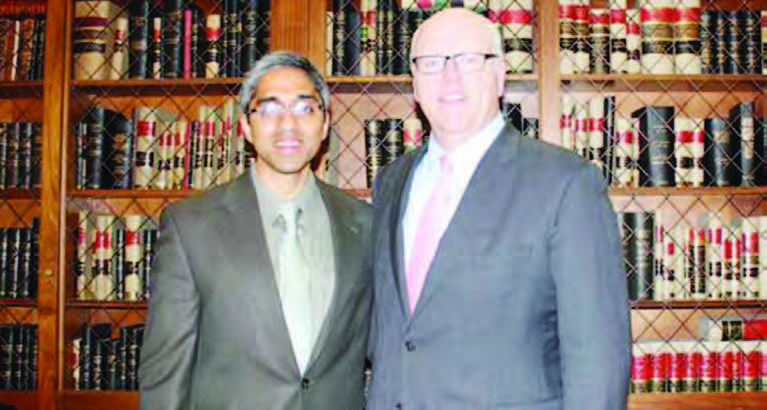
    WASHINGTON (TIP): The US Senate has at long last confirmed Vivek Murthy, M.D., M.B.A., to be the 19th surgeon general of the United States. An educator and practicing internal medicine physician, Murthy has been an outspoken champion on a number of public health issues of keen importance to family medicine.

    The 37-year-old Indian-American physician Vivek Hallegere Murthy is youngest person and first person of Indian-origin to hold the post.

    The upper house of US Congress confirmed Murthy’s nomination by 51 votes to 43 more than a year after President Barack Obama had nominated him to this top administration post on public health issues in November 2013 which saw a strong opposition from the powerful pro-gun lobby National Rifle Association (NRA).

    The final voting came yesterday soon after the Senate invoked cloture – a procedural hurdle – by same numbers (51 to 43 votes)

    href=”theindianpanorama.news/wp-content/uploads/2014/12/Vivek-Murthy2.jpg”>Vivek Murthy2

    Pitching strongly for Murthy’s confirmation, Senator Dick Durbin praised Murthy for his dedication to fighting obesity, tobacco related diseases and other chronic diseases that account for seven out of the top 10 causes for death in America and make up for 84 per cent of America’s health care costs.

    “I believe Dr Murthy understands the importance of the national crises before him, and feel confident that his experiences, his training, and his tenacity have provided him the qualifications he needs to tackle these issues, and the many more he’s sure to face, head-on,” Durbin said.

    “Not only is Dr Murthy an outstanding doctor and public health expert, but he also remains closely connected to his community and family,” he said.

    “There is no question about the qualification of Dr Murthy to do his job,” said another Senator Chris Murphy, adding that Murthy has a really impressive history of commitment to international public health, building two international organizations, one that empowers hundreds of youths in the US and India to educate over 45,000 students on HIV prevention.

    Senator Richard Blumenthal said Murthy has addressed some of the nation’s most pressing health problems over the times. “Dr Murthy’s credentials are without question. They are impeccable, unquestionable and indisputable”.

    Coming out in support of Murthy, senator Daniel Markey said he has developed a skill set which is much needed for the 21st century and in an era where disease cross international boundaries.

    “It is an opportunity to put a real leader in this position,” he said.

    Senator Mazie Hirono said Murthy would make an effective surgeon general.

    On the one hand, when several senators have lauded Murthy’s nomination there were others who continued to oppose his confirmation.

    “The American people deserve a surgeon general who has proven, throughout his or her career that their main focus is a commitment to patients, not a commitment to politics.

    Murthy’s confirmation has been widely applauded.

    Rep. Joe Crowley (D-Queens, the Bronx), Vice Chair of the Democratic Caucus and Co-Chair of the Congressional Caucus on India and Indian-Americans, released the statement below following the U.S. Senate’s confirmation of Vivek Hallegere Murthy as the next surgeon general

    “I congratulate Dr. Murthy on his confirmation as our nation’s next surgeon general. He is a dedicated fighter for public health and I know he will work tirelessly to improve the health of all Americans. I was proud to stand with him during his confirmation process, and I look forward to working with him in his new role.

    “I’m glad that this nomination didn’t fall victim to partisan bickering and pressure from special interests, but this is more than a political victory. The confirmation of the first surgeon general of Indian descent is a victory for the entire Indian-American community, whose young children will grow up knowing that anything is within their reach.

    “It’s a victory for our medical community, with a dynamic and skilled physician leading our public health policies as our nation’s top doctor.

    “And, this is a victory for the American people and ensuring better health for all.”

    Rep. Tulsi Gabbard in her Statement on Confirmation of Vivek Murthy as Surgeon General, said “I extend my sincere congratulations to our new Surgeon General, Dr. Vivek Murthy, who has demonstrated dedication to serving others. Dr. Murthy has shown his commitment and passion for improving healthcare, especially in the areas of mental health, obesity, chronic disease, and vaccinations. I look forward to working with him to serve the health and wellness needs of the American people.”

    Dr. Murthy’s parents are originally from Karnataka, India. He was born in Huddersfield, England and the family relocated to Miami, Florida when he was three years old. Dr. Murthy attended college at Harvard University, where he graduated magna cum laude in three years with a bachelor’s degree in Biochemical Sciences. He received an MD from the Yale School of Medicine and an MBA in Health Care Management from the Yale School of Management. He is currently a practicing physician at Brigham and Women’s Hospital in Boston, as well as the Hospitalist Attending Physician and Instructor in Medicine at Harvard Medical School.

  • National counter to terror

    National counter to terror

    Bipartisan security policy is of paramount importance

    The Indian government’s seasoned response to the horrific killing of students in Pakistan has been commendable; it’s not the time to score points or point fingers. Expressing deeply-felt sorrow over an unspeakable tragedy next door was the need of the hour. Pakistan will do what it has to for dealing with the terror knots it has tied itself in. Realism now calls for New Delhi having a serious look within. The Peshawar attack, coming a day after the Sydney cafe siege, is a grim reminder of the dangers that lurk at just an arm’s length. A national bipartisan security policy thus should become a priority of utmost importance and urgency. A knee-jerk undocumented reaction to any activity that threatens security just won’t do anymore.

    Reaching out to the states and making them partners in countering terrorism for firming up internal security can no longer be ignored by the Centre. If the proposed National Counter Terrorism Centre needs changes, deal with it and get it running. An all-India institution like this is imperative for the national security management system. The country’s security apparatus planning and working in one voice and direction and not at cross purposes is no more a fancy idea; unitary, with all in it together, is the only approach that can work.

    The United States of America may falter in how it gets on with the world, but the way it handles security on its own soil is a lesson for all. Just hours after the Taliban attack, President Barack Obama convened a meeting with his National Security Council to review potential threats to the US homeland personnel and those overseas ahead of the busy travel season and public gatherings expected during the holidays. Such is the planning that goes into making America secure. Given the vast economic and social challenges that India faces, a national security doctrine is the essential step forward, its contours shaped by a holistic construct of strengthening the country.

  • Govt taking steps for security ahead of Obama’s visit: Rajnath

    Govt taking steps for security ahead of Obama’s visit: Rajnath

    New Delhi (TIP): In the wake of terror attack in Peshawar, Home Minister Rajnath Singh on December 18said the government is taking allpossible steps for security during theensuing visit of US President BarackObama.”Whatever high preparation isrequired, we are doing it. We have sentalerts too,” Singh told reporters here.His comments came when askedabout the steps taken for security afterthe Peshawar terror attack in which 148people, including 132 children werekilled.Asked about the possibility of terrorattacks in the capital, the HomeMinister said all possible action isbeing taken as “nothing can be ruledout”.The Home Ministry yesterday alertedthe states to the heightened possibilityof terror attacks ahead of the USPresident’s visit to India next month.In a country-wide advisory, the HomeMinistry has asked the law enforcementagencies to take all measures towards”target hardening” of vulnerable placesand installations.”This includes public places withhigh footfalls, public transportincluding railways and schools inparticular. “In the light of the attack ona school in Pakistan, there appears tobe an immediate requirement to scaleup security around schools and othereducational institutions which areconsidered more vulnerable due to avariety of factors,” the Home Ministryadvisory said.Also in another related advisory, theHome Ministry said there have beenreports that LeT is looking for targetingtwo unspecified hotel in New Delhi andan unspecified highway between NewDelhi and Agra.

  • Obama signs bill to sanction Venezuelan officials

    Obama signs bill to sanction Venezuelan officials

    WASHINGTON (TIP): President Barack Obama has signed legislation into law allowing him to sanction Venezuelan government officials who were involved in a crackdown on anti-government protesters.

    The bill authorizes sanctions that would freeze the assets and ban visas for anyone accused of carrying out acts of violence or violating the human rights of those opposing the South American nation’s socialist government. Last summer, the State Department imposed a travel ban on Venezuelan officials who were accused of abuses during street protests that left dozens of people dead. Venezuela criticized the legislation as it moved through Congress.

  • Pope Benedict helped free American from Cuba

    Pope Benedict helped free American from Cuba

    VATICAN CITY (TIP): Pope Francis rightly got credit for helping bring the US and Cuba together and free US government subcontractor Alan Gross. But it was actually Francis’ predecessor, Emeritus Pope Benedict XVI, who made the first high-level Vatican manoeuver to release Gross, spurred in part by an unlikely group of papal lobbyists.

    The American Jewish Committee was one of several Jewish groups that approached the Vatican in the months before Benedict’s March 2012 visit to Cuba to ask that the German pontiff raise the issue on humanitarian grounds with President Raul Castro, The Associated Press has learned.

    “I was told to rest assured that it would be and that it was raised,” the AJC’s Rabbi David Rosen told the AP on Thursday.

    An official familiar with the Holy See’s diplomacy confirmed that Benedict did indeed discuss the Gross case with Castro during their March 27, 2012, meeting in Havana. That encounter, followed a day later by a tete-a-tete between Benedict and Fidel Castro, came exactly two years before Francis and President Barack Obama discussed the Gross detention at the Vatican.

    Soon thereafter, Francis wrote letters to both Obama and Castro, asking them to resolve the “humanitarian questions of common concern, including the situation of some prisoners,” and offering up the Vatican as a facilitator to seal the deal to restore relations, the Vatican said December 17.

    The negotiations were concluded at the Vatican in October in the presence of Francis’ top diplomat, Cardinal Pietro Parolin, who until 2013 was the Vatican’s ambassador to Cuba’s top ally, Venezuela.

    Gross was released Wednesday and returned home to the US in a prisoner swap for three Cubans held as spies, part of an historic decision to normalize diplomatic ties severed during a half-century of Cold War acrimony.

  • Senate confirms Verma as envoy to India

    Senate confirms Verma as envoy to India

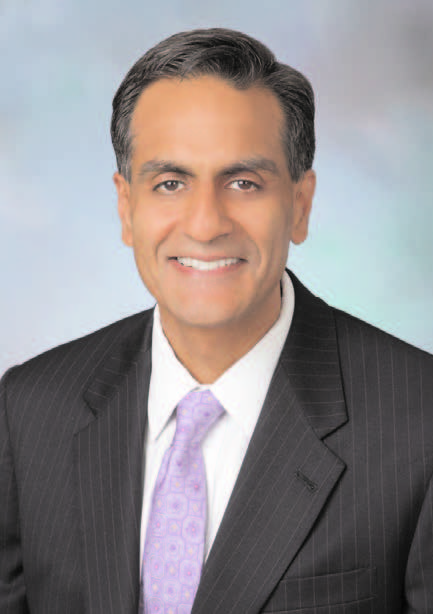
    WASHINGTON (TIP): U.S. Senate on Wednesday, December 10, unanimously confirmed Richard Rahul Verma as the next US ambassador to India. Verma becomes the first-ever Indian-American to hold the post. Verma’s nomination was approved by the Senate by a voice vote, reflecting a sense of bi-partisan support to the Indo-US ties and his popularity among senators across the aisle. The Senate raced through his nomination process ahead of more than 50 ambassadorial nominations to make sure that he is in New Delhi when US President Barack Obama travels to India for the Republic Day.

    Verma had played an important role in the Congressional passage of civil nuclear deal with India and had advocated for strong Indo-US ties when in the administration and recently started “India 2020” project at Centre for American Progress – a top American think tank. He will replace Nancy Powell, who resigned in March after a damaging row over the treatment of diplomat Devyani Khobragade over visa fraud charges. The US embassy in New Delhi is currently headed by charge d’affaires Kathleen Stephens. Verma is currently a senior counselor at Steptoe & Johnson law firm and the Albright Stonebridge Group – a business advisory company led by former US secretary of state Madeleine Albright. Verma’s association with Obama goes back to 2008 when he worked on presidential debate preparations for the then Illinois senator.

  • CIA chief challenges Senate torture report

    CIA chief challenges Senate torture report

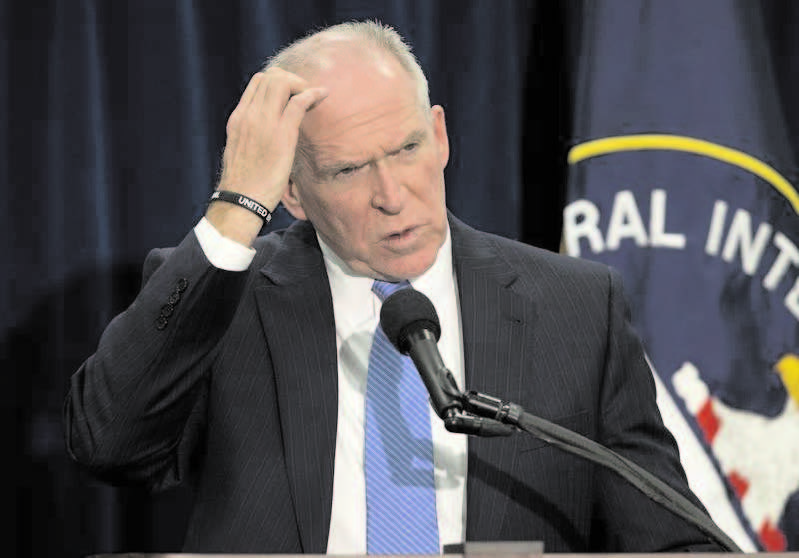
    WASHINGTON (TIP): CIA director John Brennan threaded a rhetorical needle in an unprecedented televised news conference at CIA headquarters on December 11 acknowledging that agency officers did “abhorrent” things to detainees but defending the overall post-9/11 interrogation program for stopping attacks and saving lives. At the heart of Brennan’s case is a finely tuned argument: that while today’s CIA takes no position on whether the brutal interrogation tactics themselves led detainees to cooperate, there is no doubt that detainees subjected to the treatment offered “useful and valuable” information afterward.

    Speaking to reporters and on live television— something no one on the CIA public affairs staff could remember ever happening on the secretive agency’s Virginia campus —Brennan said it was “unknown and unknowable” whether the harsh treatment yielded crucial intelligence that could have been gained in any other way. He declined to define the techniques as torture, as President Barack Obama and the Senate intelligence committee have done, refraining from even using the word in his 40 minutes of remarks and answers.

    Obama banned torture when he took office. He also appeared to draw a distinction between interrogation methods, such as water boarding, that were approved by the Justice Department at the time, and those that were not, including “rectal feeding,” death threats and beatings. He did not discuss the techniques by name. “I certainly agree that there were times when CIA officers exceeded the policy guidance that was given and the authorized techniques that were approved and determined to be lawful,” he said. “They went outside of the bounds. … I will leave to others to how they might want to label those activities.

    But for me, it was something that is certainly regrettable.” But Brennan defended the overall detention of 119 detainees as having produced valuable intelligence that, among other things, helped the CIA find and kill al-Qaida leader Osama bin Laden. A 500-page Senate intelligence committee report released Tuesday exhaustively cites CIA records to dispute that contention. The report points out that the CIA justified the torture — what the report called an extraordinary departure from American practices and values — as necessary to produce unique and otherwise unobtainable intelligence.

    Those are not terms Brennan used Thursday to describe the intelligence derived from the program. The report makes clear that agency officials for years told the White House, the Justice Department and Congress that the techniques themselves had elicited crucial information that thwarted dangerous plots. Yet the report argues that torture failed to produce intelligence that the CIA couldn’t have obtained, or didn’t already have, elsewhere. Although the harshest interrogations were carried out in 2002 and 2003, the program continued until December 2007, Brennan acknowledged. All told, 39 detainees were subject to very harsh measures.

    Former president George HW Bush, CIA director in 1976-77, supported the agency. “I felt compelled to reiterate my confidence in the agency today, and to thank those throughout its ranks for their ongoing and vitally important work to keep America safe and secure,” Bush said in a statement.

  • US House passes $1.1 trillion government funding bill

    US House passes $1.1 trillion government funding bill

    WASHINGTON (TIP): The US House of Representatives passed a $1.1 trillion spending bill late on December 11 to fund most federal agencies through September 30, the end of the current fiscal year. By a vote of 219-206, the House approved the bill, which would fund the Department of Homeland Security only through February to give Republicans a chance early next year to try to stop President Barack Obama’s immigration reforms that are largely carried out by DHS. The legislation still must be passed by the Senate before it can be sent to Obama for signing into law. A separate bill to fund the government for two days is likely to be passed by the House, according to a Republican leadership aide. The measure is needed to give the Senate time to pass the $1.1 trillion bill and also avoid a government shutdown at midnight on Thursday when current funding expires.

  • Nobel Peace Prize for ‘Indian Father & Pakistani Daughter’

    Nobel Peace Prize for ‘Indian Father & Pakistani Daughter’

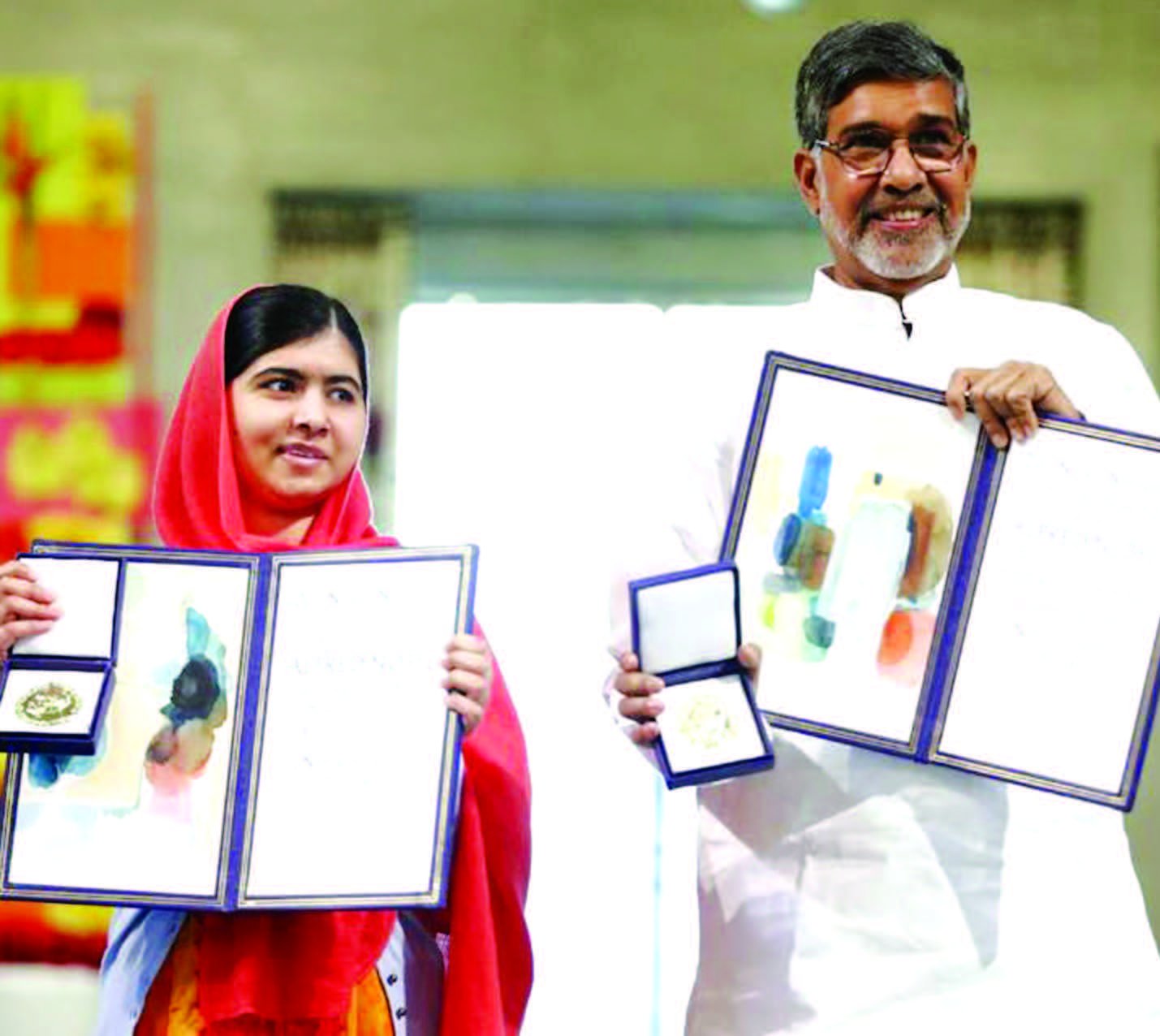
    OSLO (TIP): It was a proud moment for an “Indian father and a Pakistani daughter” to stand together to accept the applause of a gathering of royals, dignitaries, family members and others in the vast and ornate chamber at the Oslo City Hall , Wednesday, December 10. The 60 year old Kailash Satyarthi of India and the 17 year old Malala Yousafzai of Pakistan shared the Nobel Peace Prize. Standing side by side to receive medals and diplomas, the two winners drew a standing ovation from the audience before them.


    1
    Malala Yousafzai at the U.N. on July 12, 2013


    Speaking at the ceremony, his speech steeped in emotion, Kailash Satyarthi, declared that he represented “the sound of silence, the cry of innocence, and the face of invisibility.” “I have come here to share the voices and dreams of our children, because they are all our children,” he said. “There is no greater violence than to deny the dreams of our children,” he said. “I refuse to accept that the shackles of slavery can ever be more stronger than the quest for freedom,” he added. “The single aim of my life is that every child is free to be a child.” “We live in an age of rapid globalization,” he continued. “We are connected through high-speed Internet.We exchange goods and services in one single global market.


    3
    Kailash Satyarthi attends a human trafficking special session during the 2009 Clinton Global Initiative


    Thousands of flights every day connect us to every corner of the globe. “But there is one serious disconnect. It is the lack of compassion,” he said, adding: “Let us globalize compassion.” Malala Yousafzai began her speech with acknowledging her gratitude to her parents and teachers. Malala went on to say the Nobel Prize “is not just for me.” “It is for those forgotten children who want education,” she continued. “It is for those frightened children who want peace.


    4
    Kailash Satyarthi: “Let us globalize compassion.”


    It is for those voiceless children who want change.” “This is where I will begin, but it is not where I will stop,” she said. “I will continue this fight until I see every child in school.” She added: “Why is it that countries which we call so strong are so powerful in creating wars but so weak in bringing peace? Why is it that giving guns is so easy but giving books is so hard? Why is it that making tanks is so easy, but building schools is so hard?” Even before the ceremony, Ms. Yousafzai and Mr. Satyarthi seemed intent on using the occasion not simply as a platform for acknowledgment of their achievements, but also as a podium from which to renew their campaigns.


    5
    “We are here to tell children, especially, that you need to stand up. You need to speak up for your rights. It is you who can change the world”, said Malala .


    “We are not here just to accept our award, get this medal and go back home,” Ms. Yousafzai told a news conference on the eve of the ceremony, according to Agence France-Presse. “We are here to tell children, especially, that you need to stand up. You need to speak up for your rights. It is you who can change the world.” “In this world, if we are thinking we are modern and have achieved so much development,” she said on Tuesday, “then why is it that there are so many countries where children are not asking for any iPad or computer or anything? What they are asking for is just a book, just a pen, so why can’t we do that?”


    6
    The Indian father and the Pakistani daughter greet people before the start of the ceremony


    Pakistani youth activist Malala Yousafzai was awarded the 2014 Nobel Peace Prize on Wednesday, December 10, an honor she shares with Kailash Satyarthi, who has long been campaigning against child exploitation in neighboring India. But until about two years ago, Malala was just a 15-year old blogger on a school bus with her friends. It was Oct. 9, 2012, when armed Taliban men boarded Malala’s bus and shot her in the head, transforming her from a minor Internet celebrity into an international symbol.

    It’s hard to believe that she’s accomplished so much – including recovery from her injuries – in only two years, but Malala’s story actually started long before the assassination attempt that launched her to worldwide fame. She was born in the Swat valley in Pakistan, in 1997, to parents who encouraged her love for education from a young age. As a toddler, Malala would sit in classrooms in her father’s school and follow lessons for 10-year olds. Aryn Baker wrote in her 2012 profile of Malala for TIME: By the time she was 2½, she was sitting in class with 10-yearolds, according to a close family friend and teacher at the school founded by Malala’s father.

    The little girl with the huge hazel eyes didn’t say much, but “she could follow, and she never got bored,” says the teacher, who asked to remain anonymous for fear that she too might become a Taliban target. Malalaloved the school, a rundown concrete-block building with a large rooftop terrace open to views of the snowcapped mountains that surround the Swat Valley. As she grew older, she was always first in her class. “She was an ordinary girl with extraordinary abilities,” says the teacher, “but she never had a feeling of being special.” In 2008, everything changed.

    The Taliban gained control of the Swat region, banning DVDs, dancing, and beauty parlors. By the end of the year, over 400 schools were closed. Ziauddin took Malala to Peshawar, where she made a famous speech in front of national press titled “How Dare the Taliban Take Away My Basic Right to Education?” She was only 11. In early 2009, Malala started blogging anonymously for the BBC about what it was like to live under the Taliban. Just a few days after she started, all girls schools were closed. In retrospect, some parts of Malala’s blog seem like ominous foreshadowing: “On my way from school to home I heard a man saying ‘I will kill you’,” she wrote on Jan. 3, 2009. “I hastened my pace and after a while I looked back if the man was still coming behind me. But to my utter relief he was talking on his mobile and must have been threatening someone else over the phone.” But there are also humorous parts that remind us that, at the time, she was only 11: “My mother liked my pen name ‘Gul Makai’ and said to my father ‘why not change her name to Gul Makai?’ I also like the name because my real name means ‘grief stricken’.” In December 2009, Ziauddin publicly identified his daughter, even though her real name has been widely suspected for months. That proved to be a dangerous move.

    “We did not want to kill her, as we knew it would cause us a bad name in the media,” Sirajuddin Ahmad, a senior commander and spokesman for the Swat Taliban, told TIME for the 2012 magazine profile. “But there was no other option.” In 2012, armed men boarded the converted truck that Malala and her classmates used as a makeshift school bus. “Which one is Malala?” one of them asked. “I think we must have looked at her,” Malala’s classmate Shazia Ramzan told TIME’s Aryn Baker. “We didn’t say anything, but we must have looked, because then he shot her.” Malala took a bullet to the head.

    She endured a traumatic operation in Pakistan that left her with a (temporary) metal plate in her head while they stored a piece of her skull in her abdomen, to reattach when she’s healed enough. She was then airlifted to a hospital in Birmingham, England, where she had more medical treatment and extensive rehabilitation. The rest of her story has played out in the public eye. Nine months after she was shot, Malala gave a now-famous speech at the UN. “They thought that the bullets would silence us. But they failed,” she said. “And then, out of that silence came thousands of voices.… Weakness, fear and hopelessness died.

    Strength, power and courage was born.” Now relocated to England, Malala goes to Edgbaston School for Girls. She’s continued her high-profile campaign for girls’ education with The Malala Fund, which raises money to promote girls’ education. She’s used the fund as a platform to confront Barack Obama about drone strikes, help Syrian refugee children and demand the return of the Nigerian girls kidnapped by Boko Haram. And this September, she announced a $3 million multi-year commitment to partner with Echidna Giving to support girls education in developing countries.

    Malala won Pakistan’s National Youth Peace Prize in 2011, before she was shot, but the prize been since renamed in her honor; it’s now the National Malala Peace Prize. She was shortlisted for TIME’s Person of the Year in 2012, and was one of the TIME 100 in 2013. She won a Mother Teresa Memorial Award for Social Justice in 2012 and the 2013 Simone de Beauvoir Prize for international human rights work on behalf of women’s equality.

    India’s Kailash Satyarthi , born on January 11, 1954, is a human rights activist who has been at the forefront of the global movement to end child slavery and exploitative child labor since 1980 when he gave up a lucrative career as an Electrical Engineer for initiating crusade against Child Servitude. As a grassroots activist, he has led the rescue of over 78,500 child slaves and developed a successful model for their education and rehabilitation. As a worldwide campaigner, he has been the architect of the single largest civil society network for the most exploited children, the Global March Against Child Labor, which is a worldwide coalition of NGOs, Teachers’ Union and Trade Unions.

    As an analytical thinker, he made the issue of child labor a human rights issue, not a welfare matter or a charitable cause. He has established that child labor is responsible for the perpetuation of poverty, unemployment, illiteracy, population explosion and many other social evils. He has also played an important role in linking the fight against child labor with the efforts for achieving ‘Education for All’. Mr. Satyarthi is a member of a High Level Group formed by UNESCO on Education for All comprising of select Presidents,

    Prime Ministers and UN Agency Heads. As one of the rare civil society leaders he has addressed the United Nations General Assembly, International Labour Conference, UN Human Rights Commission, UNESCO, etc and has been invited to several Parliamentary Hearings and Committees in USA, Germany and UK in the recent past. As an advocate for quality and meaningful education, Mr. Kailash Satyarthi has addressed some of the biggest worldwide congregations of Workers and Teachers Congresses, Christian Assembly, Students Conferences, etc. as a keynote speaker on the issue of child labor and education.

    He is on the Board and Committee of several International Organizations. Amongst all the prominent ones being in the Center for Victims of Torture (USA), International Labor Rights Fund (USA), etc.Mr. Satyarthi is an executive Board Member of International Cocoa Foundation with the Headquarters in Geneva representing the global civil society. He has survived numerous attacks on his life during his crusade to end child labor, the most recent being the attack on him and his colleagues while rescuing child slaves from garment sweatshops in Delhi on 17 March 2011.

    Earlier in 2004 while rescuing children from the clutches of a local circus mafia and the owner of Great Roman Circus,Mr. Satyarthi and his colleagues were brutally attacked. Despite of these attacks and his office being ransacked by anti social elements a number of times in the past his commitment to stand tall for the cause of child slaves has been unwavering. He has set up three rehabilitation-cumeducational centers for freed bonded children that resulted in the transformation of victims of child servitude into leaders and liberators. His life and work has been explicitly covered in hundreds of programs on all the prominent television and radio channels including Wall Street Journal, BBC, CNN, ABC, NHK, Japan Broadcasting Corporation, Canadian T.V., ARD, Austrian News, Lok Sabha TV etc. and profoundly featured in several magazines like The Time, Life, Reader’s Digest, Far Eastern Economist,Washington Post, New York Times, Times London, Los Angeles Times, Guardian, Independent, The Times of India, etc.

    In addition, to the Global March Against Child Labor, other organizations he has founded and/or led include Bachpan Bachao Andolan, the Global Campaign for Education, and the Rugmark Foundation now known as Goodweave. He is the Chair of another world body International Center on Child Labor and Education (ICCLE) in Washington, D.C. ICCLE is one of the foremost policy institution to bring authentic and abiding southern grassroots perspective in the US policy domain.

    “The Global March Against Child Labour is a movement to mobilize worldwide efforts to protect and promote the rights of all children, especially the right to receive a free, meaningful education and to be free from economic exploitation and from performing any work that is likely to be harmful to the child’s physical, mental, spiritual, moral or social development.” Global March Against Child Labour is a movement born out of hope and the need felt by thousands of people across the globe – the desire to set children free from servitude. Bachpan Bachao Andolan (BBA) founded by Mr. Kailash Satyarthi is the ray of hope in millions of hearts, the first dream in their eyes, and the first smile on their faces.

    It is the sky and wings together for innumerable children, excluded from human identity and dignity, with a desire to fly in freedom. It is the tears of joy of a mother who finds her rescued child back in her lap after years of helplessness and hopelessness. It is a battle to open the doors of opportunities, a fire for freedom and education in the hearts and souls of thousands of youth committed to wipe out the scourge of slavery and ignorance from the face of mankind. ” http://www.bba.org.in/ Rugmark (brainchild of Mr. Kailash Satyarthi) (now known as Goodweave) is an international consortium of independent bodies from a dozen carpet exporting and importing countries, which take part in a voluntary social labeling initiative to ensure that rugs have not been produced with child labor.

    The International Center on Child Labor and Education (ICCLE) is a 501 (c) 3 nonprofit organization dedicated to mobilizing worldwide efforts to advance the rights of all children, especially to receive a free and meaningful education and to be free from economic exploitation and any work that is hazardous, interferes with a child’s education, or is harmful to a child’s health or physical, mental, spiritual, moral or social development. The Center serves as the international advocacy office of the Global March Against Child Labor, a movement representing some 2,000 organizations in 140 countries intended to highlight child slavery and hazardous child labor. The Center also serves as a clearinghouse – for the dissemination and sharing of information and knowledge on global child labor issues.

    ICCLE has built up a great deal of goodwill and respect by being a key player in the establishment of the Global Task Force on Child Labor and Education with UNESCO, the World Bank, ILO, UNICEF, and the Global March.Mr. Kailash Satyarthi is the founder of ICCLE and is on the Board. The life and work of Kailash Satyarthi have been the subject of a number of documentaries, television series, talk shows, advocacy and awareness films,Magazines and news items of all leading print and electronic media worldwide. Satyarthi’s contribution has been recognized through several prestigious international awards. These include the recently awarded Nobel Peace Prize 2014. Satyarthi lives in New Delhi, India. His family includes his wife, a son, daughter-inlaw, a daughter, children , friends and colleagues.

  • DELHI ON ALERT OVER POSSIBLE LET ATTACK AHEAD OF OBAMA VISIT: REPORTS

    DELHI ON ALERT OVER POSSIBLE LET ATTACK AHEAD OF OBAMA VISIT: REPORTS

    NEW DELHI (TIP): The Delhi police and other security agencies have sounded a high-alert in the Capital after they received inputs suggesting a possible terror attack before the scheduled US President Barack Obama, according to reports. American President Obama will be visiting India next month as the chief guest for Republic Day celebrations. “Pakistan-based Lashkar-e-Taiba jihadis were planning a ‘sensational terror attack’ in the run-up to Obamaâ ™s two-day visit during the Republic Day next month. The alert has been communicated to the highest levels of the Modi government,” according to Hindustan Times.

    The report also suggested that based on the intelligence, Delhi police and other security agencies have advanced security drills. The agencies would start initiating security arrangements from this week. Meanwhile, another report suggested that US Secret Service (USSS), the agency responsible for the safety of American presidents and vice-presidents, will fly down to India in next few days, to take stock of the security measures undertaken by the Indian authorities.

    “The USSS experts will hold consultations with a team of Delhi Police besides senior officials on the route that the president will take from airport to the hotel where he will be staying, besides the route on which Obama will travel to various venues in the city,” according to an Economic Times report. US President Obama last month accepted the invitation of PM Modi to grace the Republic Day functions as the chief guest, as a sign of significantly expanding ties between two countries. Obama is also the first US President to attend the Republic Day celebrations.

  • Racism and Law enforcement

    Racism and Law enforcement

    Agrand jury’s exoneration of Darren Wilson, the white police officer who on August 9 shot dead an unarmed teenager on the streets of Ferguson, Missouri, sent shock waves across the United States this week. The fact that 18-year-old Michael Brown died violently on the streets of the quiet St. Louis suburb and no one will be held accountable for his death has left Americans of all colors once again searching their souls for answers. Some of them made their anger known to the world.

    Thousands took to the streets across major cities, braving the likelihood of yet another heavy-handed crackdown by the police and the National Guard. In Ferguson, the rage spilled over and took an ugly turn as gunfire erupted across the night, dozens of buildings and police cars were set ablaze, and looters had a free run in parts of the city.

    President Barack Obama reiterated his muted call for calm on all sides, but had clearly not sensed the mood of collective anguish that was engulfing the African-American community, or did not wish to confront the questions that they were asking: why had a behindclosed- doors grand jury that was 75 per cent white decided that there was no probable cause to take the case to trial? Why was police officers’ use of deadly force, especially against minorities, considered an acceptable practice? The Brown-Wilson case holds up a mirror unto the troubling state of race relations in America.

    First, it is only the latest in a long list of flashpoints triggered by law enforcement brutality towards unarmed African- Americans, including the 2012 shooting of Trayvon Martin (17) and the videotaped 1991 beating of Rodney King, both cases in which the accused officers were acquitted. Second, it shows how public prosecutors or other government officials may maneuver juridical proceedings in a manner that renders a plaintiff victory effectively impossible. Since the verdict was announced, the St. Louis County Prosecutor, Robert McCulloch, has come under fire for his decision to use a grand jury in this highly sensitive case, thus precluding a transparent and exhaustive trial involving detailed cross-examination.

    Third, the imprint of the racist stereotyping of African-Americans amongst police officers, which was arguably evident in the testimony of Mr. Wilson, has a wider echo in terms of relatively higher incarceration rates. The searing racism in the U.S. has often made it an uncomfortable place for minorities, as it was for Muslims, Sikhs and even Hindus in the aftermath of the 9/11 terror attacks. African- Americans of all backgrounds, however, face a daily, ongoing threat to their lives and security, given the toxic mix of historical prejudice and law enforcement’s gun culture.

    (The Hindu)

  • Modi’s new pitch for NRIs

    Modi’s new pitch for NRIs

    Harnessing a potential for the country’s good

    Harnessing the potential of Indians living abroad for long is a tried method for Mr. Modi. As Chief Minister of Gujarat, he tapped into the rich Non-Resident Indian’s deep pockets to induce him to invest in his state by institutionalizing the policy through annual jamborees lauding the role the NRI is playing. The underlying theme is that far from being looked down upon for his adventurous ventures around the world, he is welcome for having fought arduous battles to emerge on top,” says the author.

    Perhaps the most significant aspect of Mr. Narendra Modi’s tours abroad as Prime Minister is his employment of the considerable number of Indians and persons of Indian origin settled around the world as instruments of Indian foreign policy. No previous Indian Prime Minister has tackled the potential of Indians abroad as assiduously as Mr. Modi.

    This was clear yet again during his Australian tour. There is a measure of stage management involved, but the formula has become standard after his American visit. You gather Indians in their various avatars in a metropolis, enthuse them about the properties of the self-made Prime Minister, give him a rock-star reception and you have the ingredients of the gracious guest announcing goodies such as visas on arrival and no police reporting even for those with other passports.

    And everybody goes home happily singing praises of Modi. In a sense, the Prime Minister is following a path trod by China for generations. Perhaps because the Chinese have distinctive racial and facial characteristics, they do not easily meld into local populations. But several shades of different Chinese governments have used their compatriots as instruments of their foreign policy. In independent India, on the other hand, the Nehruvian philosophy was to tell Indians who had left home shores to settle abroad to give their full allegiance to their new countries whose passports they had taken.

    At the same time, he advised expatriate Indians to retain their cultural links with their original homes. Mr. Modi is now turning this approach on its head by following the Chinese model. There has always been great Indian pride in the achievements of Indians in the new homes they have adopted. Look at the columns of publicity in the print medium on an exceptional student or scientist who shines, an original Indian or his progeny making it to the political and administrative heights in his adopted home.

    Indians living abroad, however remote their connection, have for their part observed Indian religious and cultural traditions, sometimes to an anachronistic extent. This is particularly true of Gujaratis in view of their distinctive dietary habits and taboos. As is true of all countries, Indian missions abroad seek to promote their merits through cultural centers and trade promotion initiatives.

    The Indian dancing Siva, for instance, is a staple of all Indian embassies around the world. But no other Indian Prime Minister other than Mr. Modi has mined the potential of the born Indian or his progeny as he is setting out to. On the contrary, the typical attitude of the ordinary Indian is that there is an element of guilt and disloyalty in anyone’s decision to give up the homeland for pieces of silver and rosier prospects abroad. This is, of course, not true of the humble migrant worker who goes abroad to keep his family’s head above water. Harnessing the potential of Indians living abroad for long is a tried method for Mr. Modi.

    As Chief Minister of Gujarat, he tapped into the rich Non- Resident Indian’s deep pockets to induce him to invest in his state by institutionalizing the policy through annual jamborees lauding the role the NRI is playing. The underlying theme is that far from being looked down upon for his adventurous ventures around the world, he is welcome for having fought arduous battles to emerge on top. Perhaps the tinge of envy many Indians feel towards the successful NRI is sublimated by the latter’s decision to share his fortune with his original home. One striking aspect of the NRI’s success is the new trend in countries extending from the United States to Fiji in deciding to send persons of Indian origin to their original homes as their ambassadors.

    The jury is still out on how successful this experiment will be, but there can be no doubt of the success of these Indians who have reached the top in the diplomatic pecking order to merit the honor. As far as Mr. Modi is concerned, the Indian living abroad in his or her various forms is an asset to be cultivated and honored. He might have his cheer leaders to lionize him. Cheers of “Modi, Modi” at the big gatherings of NRIs in New York and Sydney are well rehearsed. His by now familiar theme of discourse of his own humble origin is meant to strike a chord with his audience who boast similar stories.

    And in announcing goodies, he makes the point that he is a leader who keeps his word. In other words, he is the leader his overseas audiences have been waiting for. Judging by the unrehearsed reactions in New York, Sydney and elsewhere, Mr. Modi’s theme song seems to be working. For some, he is the decisive Indian leader they have been waiting for. For others, the promise of greater prosperity and less rule-bound administration are welcome steps. And despite the dark clouds of 2002 in Gujarat hanging over him, the world from President Barack Obama to Prime Minister Tony Abbot has accepted his new credentials as the dynamic leader of India set to take the country forward more in keeping with its true potential.

    There are, of course, some dangers in lionizing the Indian settled abroad. India does not offer double passports, unlike many other countries, despite Mr. Modi’s audiences’ demands in New York, Sydney and elsewhere. But Nehru’s constant advice to his countrymen settled abroad to offer full loyalty to their new home governments, despite their cultural and emotional attachment to India, has some merit. Essentially, it is a question of finetuning what Mr. Modi expects from persons of Indian origin, apart from the obvious advantage of exploiting their wealth for the country’s development. But the new mantra is there to stay.

    The NRI is not merely an honored guest but one who has a special responsibility of helping the country in various ways in whatever job he is doing in his adopted home. If Mr. Modi can combine his new evangelism without raising suspicions, he would have achieved a purpose.

  • Obama’s Welcome Courage

    Obama’s Welcome Courage

    Disregarding threats of non cooperation from Republican Speaker Boehner and his overzealous colleagues, President Obama has exhibited courage and announced executive actions to fix at least a part of the universally recognized broken immigration system. Obama has not endeared himself to the Republicans and may have annoyed some Democrats, too, but his determination to go forward with whatever little relief he could provide to the millions of illegal immigrants is praiseworthy.

    He rightly defined amnesty when he said, “Amnesty is the immigration system we have today – millions of people who live here without paying their taxes or playing by the rules, while politicians use the issue to scare people and whip up votes at election time.” Even though one wished Obama could do a little more, his constraints are understandable. He realizes that it is not for him to be offering citizenship. That is in the domain of the Congress. And he said that quite frankly.” It (the executive reform proposal)does not grant citizenship, or the right to stay here permanently, or offer the same benefits that citizens receive – only Congress can do that. All we’re saying is we’re not going to deport you.”

    More than 11 million undocumented immigrants have been living in shadows, always afraid of being picked up for deportation. With what Obama is offering, it may help half of them to come out of the shadows and lead a life of freedom which they did not experience for years. I would expect both the Republicans and the Democrats to shed their inhibitions and reservations and take a step forward to work for a legislation which will provide each soul on this “land of the free and the brave” the opportunity to seek citizenship. After all, as President Bush had said, “They are a part of American life”.

  • US increasing non-lethal military aid to Ukraine

    US increasing non-lethal military aid to Ukraine

    WASHINGTON (TIP): The United States plans to increase non-lethal military assistance to Ukraine, including deliveries of the first Humvee vehicles, having decided for now not to provide weapons, US officials said. The increase in non-lethal aid to Ukraine, which is grappling with a Russian-backed separatist movement in its east, is expected to be announced on Thursday during a visit to Kiev by vice president Joe Biden.

    The officials, who spoke to Reuters on condition of anonymity, described it as an expansion of US support for Ukraine’s armed forces, but one that was unlikely to significantly alter the conflict. The aid falls short of what Ukrainian President Petro Poroshenko requested during a visit to Washington in September when he appealed for lethal aid — a request echoed by some US lawmakers in response to what Nato allies say is Russia’s movement of tanks and troops into eastern Ukraine. Officials in the Obama administration had said Washington believed Ukraine had enough lethal aid and the types of weaponry requested for Ukraine would be of only marginal value.

    They had also emphasized the need for a diplomatic outcome. The United States and its European allies have imposed several rounds of economic sanctions on Russia for its seizure of Crimea and incursion into eastern Ukraine. The new non-lethal aid Biden will present in Kiev includes Humvees from excess supplies in the Pentagon’s inventory, as well as the delivery of previously promised radars that can detect the location of enemy mortars, officials said. They did not specify a dollar value for the assistance. Previous non-lethal aid to Ukraine includes $53 million announced in September for military equipment such as counter-mortar detection units, body armor, binoculars, small boats and other gear for Ukraine’s security forces and border guards in the east.

    Long debate

    President Barack Obama’s administration has long debated providing weapons to the Kiev government, but has so far concluded that it might only prompt Russia to escalate its aid to the separatist rebels. Lethal assistance “remains on the table. It’s something that we’re looking at,” Obama’s deputy national security adviser and nominee for deputy secretary of state, Tony Blinken, said at his Senate confirmation hearing on Wednesday.

    In response to Blinken’s comment, Russia warned the United States on Thursday against supplying arms to Ukrainian forces. Hours before Biden was due to arrive in Kiev, Russian Foreign Ministry spokesman Alexander Lukashevich cautioned against “a major change in policy of the (US) administration in regard to the conflict” in Ukraine. US Senator John McCain, an Arizona Republican, said he had not been briefed on the new non-lethal aid but called it “a continuation of the ridiculous.” “They are fighting against people with lethal weapons. They need lethal weapons to fight back. It is disgraceful and shameful that we won’t give them lethal weapons,” McCain told Mediapersons.

  • War in Iraq ‘different’ this time: US MILITARY CHIEF

    War in Iraq ‘different’ this time: US MILITARY CHIEF

    WASHINGTON (TIP): US military action in Iraq has a better chance of success than the last war there because American troops are playing a supporting role to local forces from the start, top officer General Martin Dempsey has said. The chairman of the Joint Chiefs of Staff also voiced cautious optimism yesterday that Iraqi forces were gaining strength and predicted they would make progress on the battlefield in the coming months against the Islamic State group. Asked at a Washington conference why Americans should expect the latest US intervention in Iraq to go better this time, Dempsey said “we think we’re taking a different approach.” “Instead of grabbing a hold of it, owning it and then gradually transitioning it back, we’re telling them from the start, look, that is about you, this has to be your campaign plan,” the general said at a conference organised by the Defence One website.

    As an example, Dempsey cited an episode that played out during his recent visit to Iraq over the weekend. The Iraqi army asked for US assistance to parachute supplies to about 1,300 Kurdish forces on Mount Sinjar in the country’s north, he said. But the American commander in Baghdad pointed out that the Iraqis had a C-130J cargo plane and trained pilots that were capable of carrying out the mission. “As this unwound, what the commander on the ground … said was, ‘We’ll provide you with the expertise for what you don’t have, but you have what you need to accomplish this mission,’” Dempsey said. “And so the only thing we provided at that point was the expertise to actually rig the parachute extraction system that would do the air drop.”

    The outcome reflected the difference in the US approach compared to the 2003 US invasion and the occupation that followed, he said. “So they do what they can do, and we fill in the gaps and continue to build their capability,” said Dempsey, who led troops in Iraq in the previous conflict. President Barack Obama has ruled out a large US ground force in Iraq but has backed air raids against the IS group and sent in hundreds of military advisers to help Iraqi forces. US-trained Iraqi army units suffered humiliating defeats earlier this year when they were overrun by Islamic State jihadists in the west and north, but Dempsey said Baghdad’s forces had been shored up and new commanders were being named.

  • OBAMA’S SPEECH ON IMMIGRATION REFORMS

    OBAMA’S SPEECH ON IMMIGRATION REFORMS

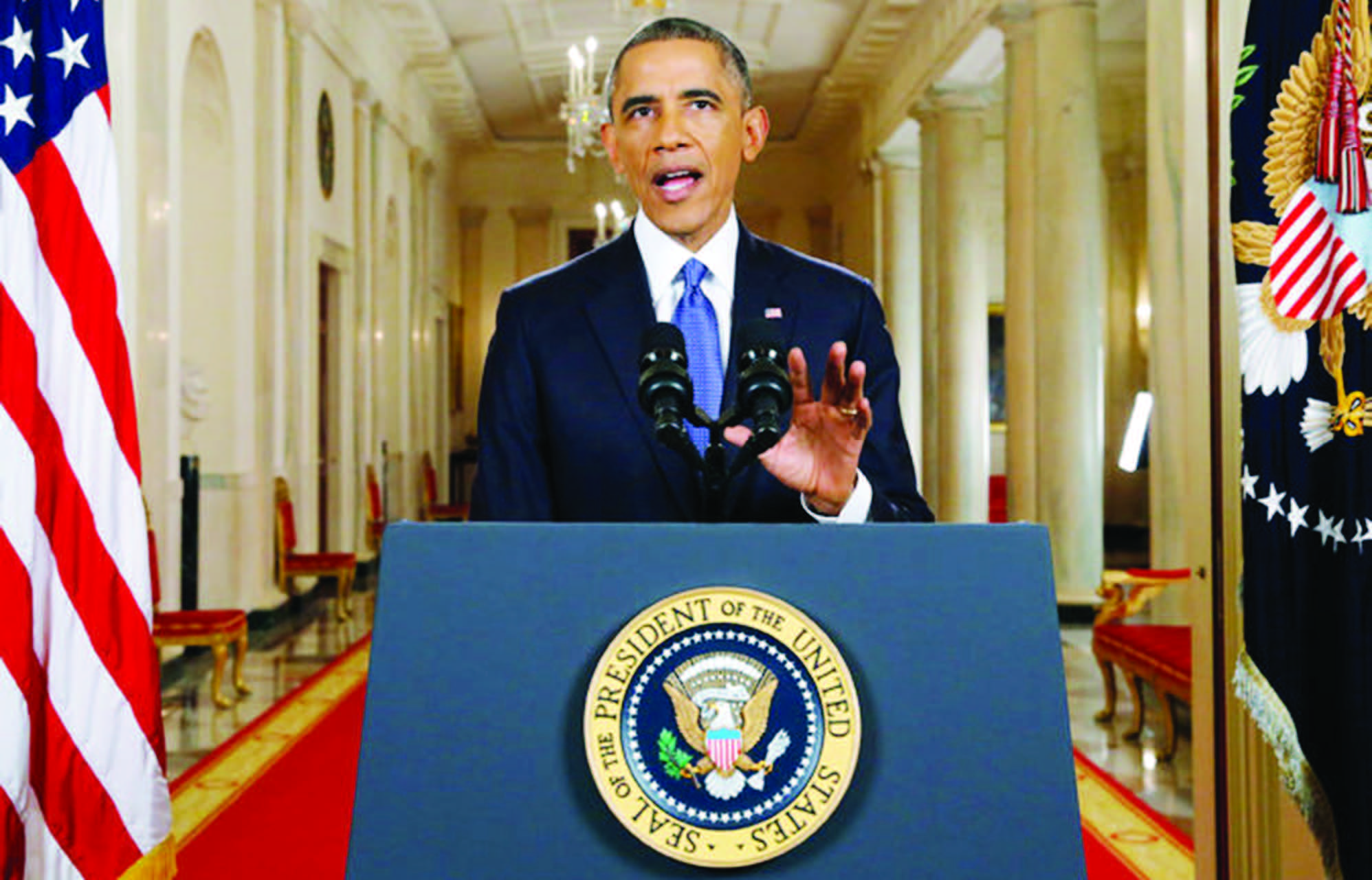
    MYfellow Americans, tonight, I’d like to talk with you about immigration. For more than 200 years, our tradition of welcoming immigrants from around the world has given us a tremendous advantage over other nations. It’s kept us youthful, dynamic, and entrepreneurial. It has shaped our character as a people with limitless possibilities – people not trapped by our past, but able to remake ourselves as we choose. But today, our immigration system is broken, and everybody knows it.

    Families who enter our country the right way and play by the rules watch others flout the rules. Business owners who offer their workers good wages and benefits see the competition exploit undocumented immigrants by paying them far less. All of us take offense to anyone who reaps the rewards of living in America without taking on the responsibilities of living in America. And undocumented immigrants who desperately want to embrace those responsibilities see little option but to remain in the shadows, or risk their families being torn apart. It’s been this way for decades.

    And for decades, we haven’t done much about it. When I took office, I committed to fixing this broken immigration system. And I began by doing what I could to secure our borders. Today, we have more agents and technology deployed to secure our southern border than at any time in our history. And over the past six years, illegal border crossings have been cut by more than half. Although this summer, there was a brief spike in unaccompanied children being apprehended at our border, the number of such children is now actually lower than it’s been in nearly two years.

    Overall, the number of people trying to cross our border illegally is at its lowest level since the 1970s. Those are the facts. Meanwhile, I worked with Congress on a comprehensive fix, and last year, 68 Democrats, Republicans, and Independents came together to pass a bipartisan bill in the Senate. It wasn’t perfect. It was a compromise, but it reflected common sense. It would have doubled the number of border patrol agents, while giving undocumented immigrants a pathway to citizenship if they paid a fine, started paying their taxes, and went to the back of the line.

    And independent experts said that it would help grow our economy and shrink our deficits. Had the House of Representatives allowed that kind of a bill a simple yes-or-no vote, it would have passed with support from both parties, and today it would be the law. But for a year and a half now, Republican leaders in the House have refused to allow that simple vote. Now, I continue to believe that the best way to solve this problem is by working together to pass that kind of common sense law. But until that happens, there are actions I have the legal authority to take as President – the same kinds of actions taken by Democratic and Republican Presidents before me – that will help make our immigration system more fair and more just.

    Tonight, I am announcing those actions. First, we’ll build on our progress at the border with additional resources for our law enforcement personnel so that they can stem the flow of illegal crossings, and speed the return of those who do cross over. Second, I will make it easier and faster for high-skilled immigrants, graduates, and entrepreneurs to stay and contribute to our economy, as so many business leaders have proposed. Third, we’ll take steps to deal responsibly with the millions of undocumented immigrants who already live in our country.

    I want to say more about this third issue, because it generates the most passion and controversy. Even as we are a nation of immigrants, we are also a nation of laws. Undocumented workers broke our immigration laws, and I believe that they must be held accountable – especially those who may be dangerous. That’s why, over the past six years, deportations of criminals are up 80 percent. And that’s why we’re going to keep focusing enforcement resources on actual threats to our security. Felons, not families. Criminals, not children. Gang members, not a mother who’s working hard to provide for her kids.

    We’ll prioritize, just like law enforcement does every day. But even as we focus on deporting criminals, the fact is, millions of immigrants – in every state, of every race and nationality – will still live here illegally. And let’s be honest – tracking down, rounding up, and deporting millions of people isn’t realistic. Anyone who suggests otherwise isn’t being straight with you. It’s also not who we are as Americans. After all, most of these immigrants have been here a long time. They work hard, often in tough, lowpaying jobs. They support their families. They worship at our churches. Many of their kids are American-born or spent most of their lives here, and their hopes, dreams, and patriotism are just like ours.

    As my predecessor, President Bush, once put it: “They are a part of American life.” Now here’s the thing: we expect people who live in this country to play by the rules. We expect that those who cut the line will not be unfairly rewarded. So we’re going to offer the following deal: If you’ve been in America for more than five years; if you have children who are American citizens or legal residents; if you register, pass a criminal background check, and you’re willing to pay your fair share of taxes – you’ll be able to apply to stay in this country temporarily, without fear of deportation. You can come out of the shadows and get right with the law. That’s what this deal is.

    Now let’s be clear about what it isn’t. This deal does not apply to anyone who has come to this country recently. It does not apply to anyone who might come to America illegally in the future. It does not grant citizenship, or the right to stay here permanently, or offer the same benefits that citizens receive – only Congress can do that. All we’re saying is we’re not going to deport you. I know some of the critics of this action call it amnesty. Well, it’s not. Amnesty is the immigration system we have today – millions of people who live here without paying their taxes or playing by the rules, while politicians use the issue to scare people and whip up votes at election time.

    That’s the real amnesty – leaving this broken system the way it is. Mass amnesty would be unfair. Mass deportation would be both impossible and contrary to our character. What I’m describing is accountability – a commonsense, middle ground approach: If you meet the criteria, you can come out of the shadows and get right with the law. If you’re a criminal, you’ll be deported. If you plan to enter the U.S. illegally, your chances of getting caught and sent back just went up. The actions I’m taking are not only lawful, they’re the kinds of actions taken by every single Republican President and every single Democratic President for the past half century. And to those Members of Congress who question my authority to make our immigration system work better, or question the wisdom of me acting where Congress has failed, I have one answer: Pass a bill.

    I want to work with both parties to pass a more permanent legislative solution. And the day I sign that bill into law, the actions I take will no longer be necessary. Meanwhile, don’t let a disagreement over a single issue be a dealbreaker on every issue. That’s not how our democracy works, and Congress certainly shouldn’t shut down our government again just because we disagree on this. Americans are tired of gridlock. What our country needs from us right now is a common purpose – a higher purpose. Most Americans support the types of reforms I’ve talked about tonight.

    But I understand the disagreements held by many of you at home. Millions of us, myself included, go back generations in this country, with ancestors who put in the painstaking work to become citizens. So we don’t like the notion that anyone might get a free pass to American citizenship. I know that some worry immigration will change the very fabric of who we are, or take our jobs, or stick it to middle-class families at a time when they already feel like they’ve gotten the raw end of the deal for over a decade. I hear these concerns. But that’s not what these steps would do. Our history and the facts show that immigrants are a net plus for our economy and our society.

    And I believe it’s important that all of us have this debate without impugning each other’s character. Because for all the back-and-forth of Washington, we have to remember that this debate is about something bigger. It’s about who we are as a country, and who we want to be for future generations. Are we a nation that tolerates the hypocrisy of a system where workers who pick our fruit and make our beds never have a chance to get right with the law? Or are we a nation that gives them a chance to make amends, take responsibility, and give their kids a better future? Are we a nation that accepts the cruelty of ripping children from their parents’ arms? Or are we a nation that values families, and works to keep them together? Are we a nation that educates the world’s best and brightest in our universities, only to send them home to create businesses in countries that compete against us? Or are we a nation that encourages them to stay and create jobs, businesses, and industries right here in America? That’s what this debate is all about. We need more than politics as usual when it comes to immigration; we need reasoned, thoughtful, compassionate debate that focuses on our hopes, not our fears.

    I know the politics of this issue are tough. But let me tell you why I have come to feel so strongly about it. Over the past few years, I have seen the determination of immigrant fathers who worked two or three jobs, without taking a dime from the government, and at risk at any moment of losing it all, just to build a better life for their kids. I’ve seen the heartbreak and anxiety of children whose mothers might be taken away from them just because they didn’t have the right papers.

    I’ve seen the courage of students who, except for the circumstances of their birth, are as American as Malia or Sasha; students who bravely come out as undocumented in hopes they could make a difference in a country they love. These people – our neighbors, our classmates, our friends – they did not come here in search of a free ride or an easy life. They came to work, and study, and serve in our military, and above all, contribute to America’s success. Tomorrow, I’ll travel to Las Vegas and meet with some of these students, including a young woman named Astrid Silva.

    Astrid was brought to America when she was four years old. Her only possessions were a cross, her doll, and the frilly dress she had on. When she started school, she didn’t speak any English. She caught up to the other kids by reading newspapers and watching PBS, and became a good student. Her father worked in landscaping. Her mother cleaned other people’s homes. They wouldn’t let Astrid apply to a technology magnet school for fear the paperwork would out her as an undocumented immigrant – so she applied behind their back and got in. Still, she mostly lived in the shadows – until her grandmother, who visited every year from Mexico, passed away, and she couldn’t travel to the funeral without risk of being found out and deported.

    It was around that time she decided to begin advocating for herself and others like her, and today, Astrid Silva is a college student working on her third degree. Are we a nation that kicks out a striving, hopeful immigrant like Astrid – or are we a nation that finds a way to welcome her in? Scripture tells us that we shall not oppress a stranger, for we know the heart of a stranger – we were strangers once, too. My fellow Americans, we are and always will be a nation of immigrants.

    We were strangers once, too. And whether our forebears were strangers who crossed the Atlantic, or the Pacific, or the Rio Grande, we are here only because this country welcomed them in, and taught them that to be an American is about something more than what we look like, or what our last names are, or how we worship. What makes us Americans is our shared commitment to an ideal – that all of us are created equal, and all of us have the chance to make of our lives what we will. That’s the country our parents and grandparents and generations before them built for us. That’s the tradition we must uphold. That’s the legacy we must leave for those who are yet to come. Thank you, God bless you, and God bless this country we love.

  • President Obama Announces Immigration Reform Plans

    President Obama Announces Immigration Reform Plans

    “Our immigration system is broken, and everybody knows it”: Obama

    I.S. Saluja

    WASHINGTON (TIP): Ignoring dire warnings of Republicans to “Emperor Obama” that his planned executive action to grant deportation relief to millions of undocumented immigrants would “poison the well” in Congress, Obama announced his immigration reform plans to the country on Thursday, November 20 to help build a system that “lives up to our heritage as a nation of laws and a nation of immigrants.” Stating “Americans are tired of gridlock”, Obama offered to “work with both the parties” to fix the “broken system”. However, he said that he had tried to work with Congress, and blamed the House of Representatives for a bipartisan Senate bill never seeing a yes-no vote.

    Still, the president said, he hopes to eventually “pass that kind of common sense law.” “This plan, which will be enacted by executive action, “will help secure the border, hold nearly 5 million undocumented immigrants accountable, and ensure that everyone plays by the same rules,” the White House said in a press release. Obama announced the actions on immigration in an address from the White House. He is expected to sign the actions at a rally in Las Vegas on Friday, November 21. “Our immigration system is broken, and everybody knows it,” he said, later adding that his critics call the plan a form of amnesty. “Well, it’s not.” Obama said. “Amnesty is the immigration system we have todaymillions of people who live here without paying their taxes or playing by the rules, while politicians use the issue to scare people and whip up votes at election time.” Obama emphasized in his address that he is instead pushing for the accountability of undocumented immigrants.

    “That’s the real amnesty-leaving this broken system the way it is. Mass amnesty would be unfair. Mass deportation would be both impossible and contrary to our character. What I’m describing is accountability-a commonsense, middle ground approach: If you meet the criteria, you can come out of the shadows and get right with the law,” the president said. “If you’re a criminal, you’ll be deported. If you plan to enter the U.S. illegally, your chances of getting caught and sent back just went up.” The three main elements of the actions will be cracking down on illegal immigration at the border; deporting felons, but not families; and establishing criminal background checks and taxes for undocumented immigrants.

    “By registering and passing criminal and national security background checks, millions of undocumented immigrants will start paying their fair share of taxes and temporarily stay in the U.S. without fear of deportation for three years at a time,” the White House release said. If undocumented immigrants submit to these background checks, register with the government, pay fees and show they have a child born in the U.S., then they “will have the opportunity to request temporary relief from deportation and work authorization for three years at a time.” These reforms will actually make it more difficult to enter the country without documentation, Obama said, but some did not agree.

    Texas Governor Rick Perry said in a statement that Obama’s “decision tonight will lead to more illegal immigration, not less.” Obama addressed critics of the plan, explaining that “tracking down, rounding up, and deporting millions of people isn’t realistic. Anyone who suggests otherwise isn’t being straight with you.” “By providing individuals with an opportunity to come out of the shadows and work legally, we will also help crack down on companies who hired undocumented workers, which undermines the wages of all workers, and ensure that individuals are playing by the rules and paying their fair share of taxes,” the release said. The president’s executive actions will also expand the existing Deferred Action for Childhood Arrivals program. The rule currently offers temporary relief from deportation to children who had been in the country for at least five years and meet certain criteria.

    Now, anyone who came to the U.S. as a child can apply if they entered before Jan. 1, 2010-no matter how old they are now. The White House also said that DACA relief will be granted for three years in the country going forward. Obama’s reforms will also cover a wide swath of issues related to immigration such as shifting more resources to the border, streamlining the immigration court process, and implementing a new Priority Enforcement Program that removes criminals. Additionally, Secretary of Homeland Security Jeh Johnson will issue a memorandum making “clear that the government’s enforcement activity should be focused on national security threats, serious criminals, and recent border crossers,” as opposed to families.

    In his address, Obama cited scripture: “We shall not oppress the stranger, for we know the heart of a stranger.” He went on to add “We were strangers once, too”. He said that this country is a country of immigrants, no matter what ocean they had crossed. He also quoted his predecessor Bush who had said about illegal immigrants, ” They are a part of American life”. The president’s actions will also cover several other facets of immigration and naturalization, including “enhancing options for foreign entrepreneurs” and “streamlining the process for foreign workers and their employers.”

  • OBAMA MEETS MYANMAR LEADER AMID FEARS OF BACKSLIDE

    OBAMA MEETS MYANMAR LEADER AMID FEARS OF BACKSLIDE

    NAYPYITAW, MYANMAR (TIP): President Barack Obama received a hero’s welcome two years ago during his historic visit to Myanmar, whose rapid rebirth after decades of repression was a source of hope for the region and beyond. Yet when he meets on Thursday with President Thein Sein in the nation’s sparking new capital, Obama will carry a far grimmer message as he warns of a worrisome backslide in the country’s march toward a freer and fairer society.

    A nationwide cease-fire with armed ethnic groups has yet to materialize. Myanmar’s prodemocracy opposition figure, Nobel laureate Aung San Suu Kyi, is banned from next year’s pivotal elections. Scores of Rohingya Muslims are fleeing for fear of violence at the hands of Buddhist mobs, while roughly 1,40,000 more remain trapped in camps under dismal conditions. This was not the Myanmar that Obama had hoped for when he made US engagement with the nation, also known as Burma, a centerpiece of his efforts to promote human rights and expand US influence in Asia. “The work is not yet done,” Obama said after meeting with members of Myanmar’s parliament. To be sure, the country has made great strides.

    But the optimism that once radiated here has faded, tempered by the realization that, to transition successfully away from five decades under a military junta, Myanmar needs more than just the right words from its leaders and high-profile visits from an American president. So when Thein Sein hosts Obama for a sitdown at his new marbled, moat-enclosed palace, all eyes will be on how hard a line Obama will toe. After all, Obama has staked part of his legacy overseas on Myanmar’s success, and Obama is facing tough questions about why he’s rewarding Myanmar with a second presidential visit when the progress Thein Sein promised has, in many cases, been slow to emerge.

    “It’s a very fluid situation right now inside of Burma,” Obama’s deputy national security adviser, Ben Rhodes, said Thursday before the meeting. “We have significant concerns that there has to be further follow-through.” Obama’s meeting with Thein Sein, himself a former member of the junta, offers Obama his first major opportunity to address Myanmar’s state of affairs since he set off Sunday on a weeklong tour of Asia and Australia. But in China, on the first leg of the trip, Obama treaded lightly on human rights issues and other areas where pushing a firm stance could have upset his hosts. On his first full day in Myanmar, Obama announced the US would start sending Peace Corps volunteers there in late 2015.

    The White House said the volunteers would train for three months to learn Myanmar’s language, culture and technical needs, then serve at sites in Myanmar for two years. Obama’s first encounter with Suu Kyi during his visit came on Thursday at a sparsely equipped building in Naypyitaw, a city whose very existence is an ode both to Myanmar’s aspirations for democracy and its challenges in making it work. Carved from scratch out of scrubland in the early 2000s, Naypyitaw has the lush hotels and grandiose public buildings of a modern capital, but its vast empty spaces and eerily empty multilane highways have led to its reputation as a ghost town.

    At the parliamentary resource center, a hub for aid organizations, Obama told Suu Kyi and her fellow parliamentarians he was heartened by their determination to move ahead with the transition. He said in some ways, the questions facing Myanmar echo those that Americans have faced, like how to include minorities or prevent institutional discrimination. “There are times when we’ll offer constructive criticism about a lack of progress,” Obama said. “But our consistent aim and goal will be to see that this transition is completed so that it delivers concrete benefits for the people” Soe Thane, and former high-ranking junta leader now in Thein Sein’s government, said in an op-ed on Thursday that Myanmar was determined to confront its challenges, including ending armed conflict with a groups, holding fair elections and addressing the humanitarian crisis in Rakhine state, home to the Rohingya people.

    “All people in Myanmar, regardless of ethnicity or religion, deserve the same fundamental rights and freedoms,” he wrote in The New York Times. White House officials said Myanmar’s treatment of the Rohingya would be high on Obama’s agenda when he meets with Thein Sein. Another key US concern is the need for constitutional reforms, such as the elimination of a rule that is keeping Suu Kyi off the ballot because her sons hold British citizenship. In a sign of Obama’s high regard for the opposition leader, when Obama called Thein Sein late last month to lay the groundwork for the visit, he placed a call the same day to Suu Kyi.

    And when Obama flies on Friday to Yangon, Myanmar’s largest city, he’ll not only meet with Suu Kyi but hold a joint news conference with her and visit the secretariat, the infamous building where her father, Gen. Aung San, was assassinated.

  • US internal review cites secret service failures in White House intrusion

    US internal review cites secret service failures in White House intrusion

    WASHINGTON (TIP): An intruder was able to scale the White House fence and enter the executive mansion in September because of major secret service failures including an agent who was distracted by a personal cellphone call, according to an internal review released on Thursday. Iraq war veteran Omar Gonzalez, 42, is accused of breaking into the heavily guarded complex on Sept 19 armed with a knife in one of the most significant security breaches since President Barack Obama took office in 2009.

    The suspect was not stopped until he entered the main floor of the White House. In addition to the knife he was carrying, officers found more weapons in his car. The incident helped spur the resignation of Secret Service Director Julia Pierson. According to the review by the US department of homeland security, the suspect climbed over the 7-foot (2- metre) fence where a “trident,” or ornamental spike was missing. Several uniformed secret service agents were stationed in the area but were unable to see the intruder because of a construction project along the fence line, the report said, which also cited breakdowns in radio communications.

    A canine officer stationed on the White House driveway with a guard dog was on his personal cellphone at the time of the intrusion and was not wearing his earpiece, the review said. After spotting the intruder, the officer moved toward him and gave the dog the command to apprehend the suspect. But the canine “did not have enough time to lock onto” the intruder and “may not have seen him at all,” according to the report’s executive summary.

    “This report indicates that the Secret Service’s response at the White House was significantly hampered on September 19th because of critical and major failures in communications, confusion about operational protocols and gaps in staffing and training,” the review said. “While some of these problems can be attributed to a lack of resources, others are systemic and indicative of secret service culture.” Michael McCaul, who chairs the US House of Representatives homeland security committee, introduced legislation on Thursday to form a panel “to conduct a top-to-bottom review” of the Secret Service. House judiciary committee chairman Bob Goodlatte said the review “reads as a comedy of errors by the U.S. Secret Service and confirms that fundamental reform is needed to improve both the security of the White House grounds and staff training.”

  • Republicans elect Mitch McConnell as US Senate leader

    Republicans elect Mitch McConnell as US Senate leader

    WASHINGTON (TIP): Republican lawmakers re-elected Mitch McConnell as their leader in the US Senate on November 12, ensuring him the powerful role of majority leader in the new Congress that begins in January. Meanwhile, President Barack Obama’s Democrats, who lost control of the Senate with their crushing defeat in this month’s mid-term elections, re-elected their own leader in the chamber.

    McConnell, the 72-year-old senior senator from Kentucky, will take over from current Senate Majority Leader Harry Reid at the start of the new congressional session on January 3. “We are eager to work towards bipartisan agreements and to implement real legislative accomplishments,” McConnell said. But shortly afterwards he blasted Obama for several unilateral steps the president has taken since the midterms. “I had maybe naively hoped the president would look at the results of the election and decide to come to the political center and do some business with us,” McConnell told reporters.

    “I still hope he does at some point, but the early signs are not good.” McConnell has coveted the majority leader role for decades. The position will put him in control of the legislative agenda of the 100-member Senate and require close coordination with the top Republican in Congress’s lower chamber, House Speaker John Boehner, who was also re-elected Thursday to lead his caucus. Senate Democrats, meanwhile, re-elected Reid as their leader, although not without some opposition. At least two Democrats, Senators Claire McCaskill and Joe Manchin, voted against Reid, saying they wanted to chart a new course of bipartisan cooperation.

    “There’s a lot of us who feel that it’s time for us to not mimic what the Republicans did, but rise above that and try to work together,” McCaskill told reporters. , 74, has been majority leader since his party won the Senate eight years ago, but must now trade places with McConnell. He insisted he was not going to stall Republican legislative action, following a particularly partisan and bitter two years. “This is not get-even time. I do not intend to run the Democratic caucus like the Republican caucus has been running the minority,” he said, referring to the heightened number of blocking procedures known as filibusters used while McConnell has been minority leader.

    Reid signalled a potential shift by announcing he was creating a special leadership post in the Democratic caucus for first-term Senator Elizabeth Warren. The former Harvard professor, a populist progressive, will be a strategic Democratic policy adviser, helping to shape the party’s policy positions and priorities. Warren will also serve as a liaison to progressive groups to ensure they have a voice in leadership meetings and discussions, according to a source familiar with the role. “Wall Street is doing very well, CEOs are bringing in millions more, and families all across this country are struggling. We have to make this government work for the American people,” she said.

    Progressives see Warren as posing a credible challenge from the left against Hillary Clinton should the former secretary of state choose to seek the White House in 2016. Republicans re-elected John Cornyn as Senate Republican whip and John Thune as Senate Republican Conference chairman. In a secret ballot, they also chose Senator Roger Wicker of Mississippi to helm the National Republican Senatorial Committee. As head of the party’s campaign arm, Wicker will oversee campaigns in the run up to the 2016 polls, when Republicans will be defending 24 of the 34 Senate seats up for election.