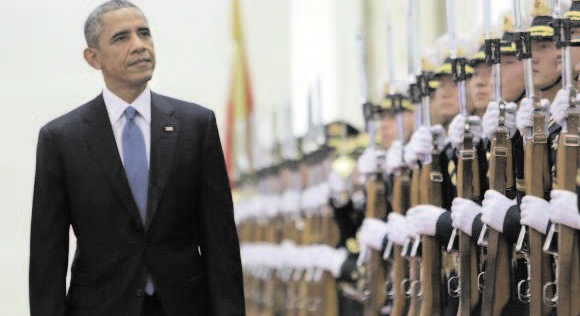
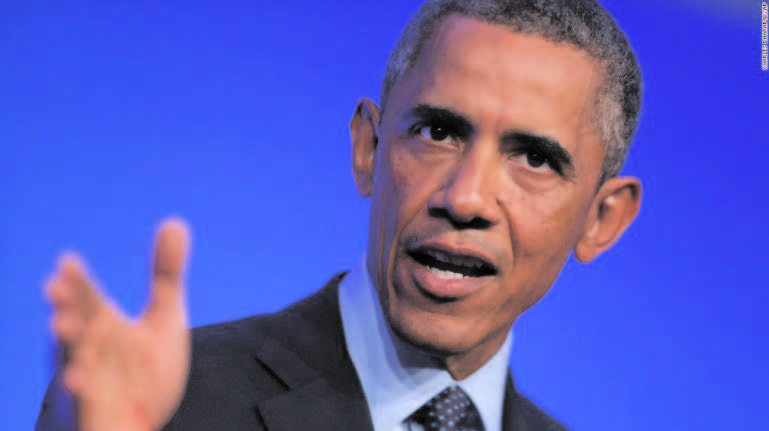
HONG KONG (TIP): Hong Kong students plan to occupy roads surrounding the city’s British consulate in anger at a lack of support from London for their pro-democracy movement, as authorities ramp up pressure on protesters to go home. The new plan emerged as President Barack Obama said the United States had played no role in Hong Kong’s mass demonstrations, despite Chinese accusations that foreign forces are involved.
The city’s government has urged protesters to leave the main rally sites that have brought parts of Hong Kong to a standstill for more than six weeks, with police authorised Monday to back up bailiffs charged with clearing barricades. Activists say they want to show their anger at Britain for not standing up to China over “breaches” of the agreement the two countries made before Hong Kong was handed back to China by Britain in 1997, designed to protect Hong Kong’s social systems and way of life. “We are angry at the way that the British government has for many years denied that China has actually breached the declaration by interfering with Hong Kong politics,” Anna-Kate Choi, the coordinator for the Occupy British Consulate group told AFP.
“They have the responsibility to make sure that the joint declaration has been implemented properly and that democracy and the high degree of autonomy of Hong Kong has been protected,” Choi said. She said she hopes for a turnout of hundreds and “maybe even thousands”. The group is a new offshoot of the protest movement, Choi added, with around 10 organizers from all walks of life including a secondary school student. Protesters in Hong Kong are demanding fully free leadership elections for the semi-autonomous city in 2017. But Beijing has refused to back down on its insistence that candidates must be vetted by a loyalist committee.
Bailiffs are expected to start a clearout operation in the next few days, with thousands of officers put on standby over the weekend, according to local media. But seemingly undaunted, activists have put up large posters around the protest areas announcing the consulate occupation on November 21 and a Facebook page for the event has more than 700 likes. The British consulate said they had no comment. President Obama met Chinese President Xi Jinping for talks in Beijing on Wednesday. “I was unequivocal in saying that the US had no involvement in fostering the protests that took place in Hong Kong,” Obama told reporters at a joint press conference. Xi said that the Occupy Central movement is illegal and that Beijing “firmly supports” the Hong Kong authorities in their efforts to control the situation. “Law and order must be maintained in any case, not only in Hong Kong but everywhere in the world,” he said.
Hong Kong residents enjoy rights not seen on the mainland, including freedom of expression and assembly. However there are signs some of those rights are being curtailed, including physical and cyber-attacks on Hong Kong-based journalists critical of Beijing. Activists say a policy “white paper”, published by China in June, backtracked on the joint declaration by warning the city not to overstep the boundaries of its autonomy. Britain and China are signatories of the 1984 Sino-British Joint Declaration, an agreement that enshrines the “one country, two systems” principle and states that until 2047 “the current social and economic systems in Hong Kong will remain unchanged.” British Prime Minister David Cameron said he was “deeply concerned” about escalating protests in the former British colony after police used tear gas on protesters at the end of September. But activists feel that Britain is turning a blind eye and that China is eroding Hong Kong’s freedoms. Posters for the British consulate occupation bear the slogan: “China breaches the joint declaration, UK government respond now” with the prodemocracy movement’s umbrella symbol emblazoned with the British flag.
Tag: Barack Obama
-

HONG KONG PROTESTERS PLAN TO OCCUPY BRITISH CONSULATE
-

Obama plans to shield up to 5 million immigrants from deportation
WASHINGTON (TIP): President Obama will ignore angry protests from Republicans and announce as soon as next week a broad overhaul of the nation’s immigration enforcement system that will protect up to five million undocumented immigrants from the threat of deportation and provide many of them with work permits, according to administration officials who have direct knowledge of the plan.
Asserting his authority as president to enforce the nation’s laws with discretion, Mr Obama intends to order changes that will significantly refocus the activities of the government’s 12,000 immigration agents. One key piece of the order, officials said, will allow many parents of children who are American citizens or legal residents to obtain legal work documents and no longer worry about being discovered, separated from their families and sent away.
That part of Mr Obama’s plan alone could affect as many as 3.3 million people who have been living in the United States illegally for at least five years, according to an analysis by the Migration Policy Institute, an immigration research organization in Washington. But the White House is also considering a stricter policy that would limit the benefits to people who have lived in the country for at least 10 years, or about 2.5 million people. Extending protections to more undocumented immigrants who came to the United States as children, and to their parents, could affect an additional one million or more if they are included in the final plan that the president announces.
Mr Obama’s actions will also expand opportunities for immigrants who have high-tech skills, shift extra security resources to the nation’s southern border, revamp a controversial immigration enforcement program called Secure Communities, and provide clearer guidance to the agencies that enforce immigration laws about who should be a low priority for deportation, especially those with strong family ties and no serious criminal history. A new enforcement memorandum, which will direct the actions of Border Patrol agents and judges at the Department of Homeland Security, the Justice Department and other federal law enforcement and judicial agencies, will make clear that deportations should still proceed for convicted criminals, foreigners who pose national security risks and recent border crossers, officials said.
White House officials declined to comment publicly before a formal announcement by Mr Obama, who will return from an eight-day trip to Asia on Sunday. Administration officials said details about the package of executive actions were still being finished and could change. An announcement could be pushed off until next month but will not be delayed into next year, officials said. “Before the end of the year, we’re going to take whatever lawful actions that I can take that I believe will improve the functioning of our immigration system,” Mr Obama said during a news conference a day after last week’s midterm elections.
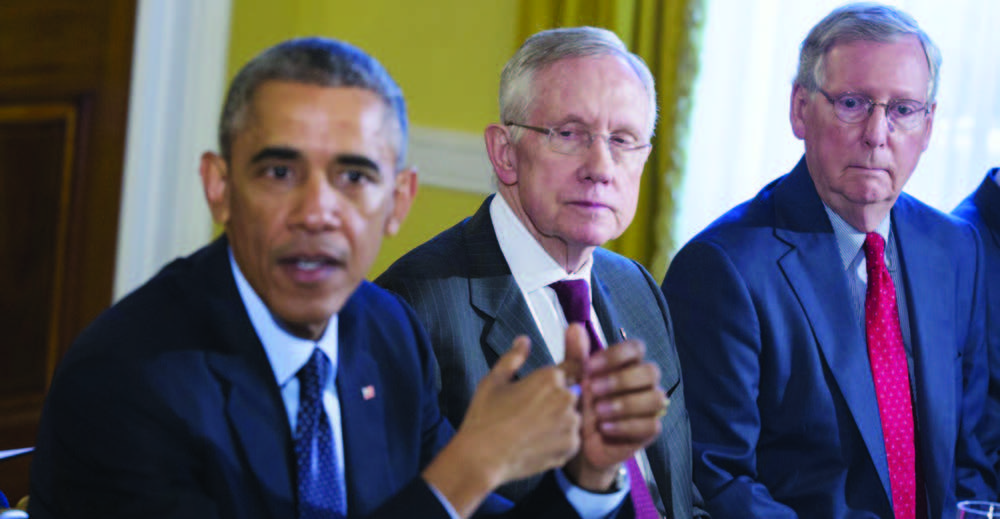
“What I’m not going to do is just wait.” The decision to move forward sets in motion a political confrontation between Mr Obama and his Republican adversaries that is likely to affect budget negotiations and debate about Loretta E. Lynch, the president’s nominee to be attorney general, during the lame-duck session of Congress that began this week. It is certain to further enrage Republicans as they take control of both chambers of Congress early next year. -

Obama authorizes 1,500 additional military personnel to Iraq
WASHINGTON (TIP): President Barack Obama has authorized the deployment of up to 1,500 more US troops for Iraq, roughly doubling the number already there to advise and retrain Iraqi forces battling Islamic State militants, US officials said on November 7. The United States has about 1,400 troops in Iraq, slightly below a previous limit of 1,600. The Pentagon said it planned to establish several sites across the country to train nine Iraqi army brigades and three brigades of Kurdish Peshmerga fighters.
They will be set up in northern, western and southern Iraq. US military would also establish “advise and assist” operations centers, adding to similar centers already set up in Baghdad and Arbil. Alarmed by the advance of Islamic State militants across Iraq, Obama began sending non-combatant troops back to Iraq in the summer for the first time since US forces withdrew from the country in 2011. One US military official said one location military advisors would head to soon was western Anbar province, which borders Syria and where Islamic State fighters are still on the offensive.
Iraq’s main military divisions in Anbar – the seventh, eighth, ninth, tenth and twelfth – have been badly damaged. At least 6,000 Iraqi soldiers were killed through June and double that number have deserted, say medical and diplomatic sources. The announcement came the same day that US President Barack Obama met members of Congress at the White House, where he updated them on the fight against Islamic State in Iraq and in Syria. The White House will ask Congress for $5.6 billion for the operations in Iraq and Syria, which includes $1.6 billion for the new “Iraq Train and Equip Fund,” the White House Office of Management and Budget said. Obama has launched air strikes against Islamic State targets in both Syria and Iraq, but he has ruled out sending ground troops into combat.
-

Obama picks Brooklyn US prosecutor Lynch for attorney general
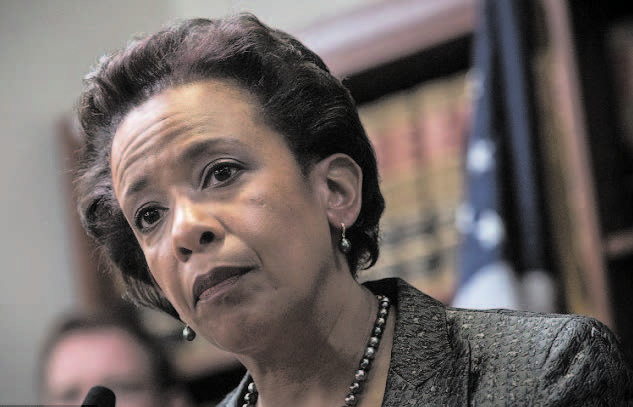
WASHINGTON (TIP): President Barack Obama plans to nominate veteran New York federal prosecutor Loretta Lynch to succeed Eric Holder as US attorney general, the White House said on November 7. If confirmed by the Senate, Lynch would be the first African-American woman to serve as the nation’s top law enforcement officer. Obama will make the announcement at the White House on Saturday, with Lynch and Holder — who announced his resignation in late September — at his side, spokesman Josh Earnest announced.
Lynch’s confirmation potentially could be difficult after Republicans seized control of the Senate earlier this week in a midterm election rout of Obama’s Democrats. But she is not seen as a member of Obama’s inner circle — which may help her in the confirmation process. “Ms Lynch is a strong, independent prosecutor who has twice led one of the most important US attorney’s offices in the country,” Earnest said in a statement. The spokesman praised Holder — a close friend of Obama — saying his “tenure has been marked by historic gains in the areas of criminal justice reform and civil rights enforcement.”
Lynch, who is in her mid-50s, will be the second African-American attorney general, after Holder. She is in her second stint as the top federal prosecutor for the Eastern District of New York. She earned Senate confirmation under president Bill Clinton and again in 2010 under Obama. Lynch oversees federal prosecutions in three New York boroughs — Brooklyn, Queens, Staten Island — as well as two suburban counties on Long Island.
“Loretta Lynch will make a terrific AG,” Senator Chuck Schumer of New York said on Twitter. Lynch first came to prominence as a member of the legal team that prosecuted and won convictions in a high-profile case against uniformed New York City police officers who beat and sexually assaulted Haitian immigrant Abner Louima after arresting him. The North Carolina native has both undergraduate and law degrees from Harvard University. Before her return to the US Attorney’s office in Brooklyn, Lynch was a partner in the New York office of law firm Hogan & Hartson LLP, where she focused her practice on commercial litigation, white-collar criminal defense and corporate compliance issues.
She also served as Special Counsel to the Prosecutor of the International Criminal Tribunal for Rwanda, according to her official biography on the Department of Justice website. In that capacity, Lynch “conducted a special investigation into allegations of witness tampering and false testimony at the Tribunal,” the biography says. In September, Obama called Holder’s departure “bittersweet,” but said he empathized with the sacrifices Holder and his family had made as he served in one of the toughest jobs in government. Holder — who agreed to stay on until his successor is confirmed — is seen as a champion of civil rights by supporters but reviled as an ideologue by Republicans.
He is one of just three original cabinet members still serving in the job they took when Obama assumed power in 2009, alongside Education Secretary Arne Duncan and Agriculture Secretary Tom Vilsack. Only three other US attorneys general have served longer than Holder, whose tenure was notable for significant inroads made in the civil rights arena, including gains in rights and benefits for same-sex couples and reductions in prison sentences for certain drug offenses.
-

EYE ON CHINA, INDIA AND US SET TO RAMP UP JOINT NAVAL DRILLS
NEW DELHI: India and the US are set to deepen and broaden their bilateral military exercises to include more warfare components involving nuclear submarines and aircraft carriers. They would also invite more countries to join the Malabar exercises as the two nations share concerns about the growing Chinese naval presence in the Indian Ocean. Both the Indian and US navies have been warily watching the growing Chinese naval presence in the Indian Ocean, especially its submarine manoeuvres.
In the recent weeks, India conveyed its displeasure to the Sri Lankan government at least twice over its decision to permit Chinese submarines to dock in its ports. According to dependable sources, India and US officials have had detailed discussions, including at the Defence Policy Group meeting in Washington DC, on stepping up the bilateral naval exercises. The decision involves a series of steps, starting with increasing the nuclear submarine and aircraft carrier warfare components. The two sides are also looking at adding both army and air force components to the traditionally naval exercise. Sources said the two sides are looking at inviting more countries, thus expanding them mostly into trilateral exercises.
In July 2014, India and the US invited Japan to the exercises held in north-western Pacific. Malabar has featured Australia and Singapore, besides Japan, in 2007. Through most of the UPA tenure, especially under defence minister AK Antony, Malabar exercises off Indian coast have mostly been bilateral affairs, in an effort not to raises Chinese hackles. However, under the new regime in New Delhi there is a noticeable shift in the strategic posturing, especially vis-a-vis China. In Washington DC in October, the joint statement issued by Narendra Modi and Barack Obama had referred to the situation in South China Sea. It was the first time that the two sides had so explicitly referred to the issue in an Indo-US joint statement.
The move to deepen and broaden the Malabar exercises flow from Modi’s declared strategic vision, especially reflected in the joint statement. The move comes even as the government is warily looking at the growing Chinese submarine activities in the region. It has for sometimes been uncomfortable about Chinese sending its submarines as part of their anti-piracy patrols.When INS Vikramaditya was sailing from Russia starting November 2013, a Chinese submarine was in Indian Ocean observing the carrier.
-

Obama will act on immigration despite GOP warnings to hold off- White House
WASHINGTON (TIP): Leaving no one in doubt about his stout resolve to act on immigration, President Obama firmly rejected advice from top congressional Republicans on Friday, November 7 that he delay his promised executive action on immigration reform to allow Congress to debate the issue next year.
The new focus on Obama’s plans to revamp the immigration system by executive fiat came as the president is reportedly reviewing proposals to allow as many as 5 million illegal immigrants to stay in the United States at least temporarily, according to several people familiar with his plans.He is expected to announce his intentions after returning from a visit to China, Burma and Australia, either this month or in early December, said those familiar with the subject,who spoke on the condition of anonymity because they were not authorized to speak publicly on the matter.
White House press secretary Josh Earnest said Friday that Obama “is very focused on” immigration and that Republicans can do only one thing to stop him.”They can allow that common-sense, bipartisan bill from the Senate to come to the floor of the House of Representatives,” he said. “And if the House passes that Senate bill, the president won’t take executive action.Maybe the republic will be saved.Maybe the ego of the House Republicans will not be bruised.
Certainly, the United States of America would benefit significantly from them taking that step.”Earnest was referring to a 2013 Senate bill passed with bipartisan support that would make sweeping changes to the nation’s immigration and border-security system. But Boehner and House Republicans rejected the measure.Boehner did not rule out introducing immigration legislation if Obama decided not to act. “This immigration issue’s become a political football over the last 10 years or more. It’s just time to deal with it,” he told reporters this week.
-

US nurse defies Maine’s Ebola quarantine, takes bike ride
WASHINGTON (TIP): A nurse who treated Ebola patients in Sierra Leone but has tested negative for the virus ventured out of her home in Maine and took a bike ride on October 30 night, defying a quarantine order and setting up a legal collision with state authorities. Attorneys for Kaci Hickox, 33, said they had not yet been served with a court order to enforce a 21-day quarantine — matching the virus’s maximum incubation period — but remained prepared to fight such an order if necessary.
Hickox left her home in the small Maine town of Fort Kent, along the Canadian border, and television news images showed her taking a morning bicycle ride with her boyfriend. Hickox has given the state a deadline of Thursday to lift an order that she remain at home until Nov 10, or she will go to court. It’s a beautiful day for a bike ride,” said Hickox, dressed in bike gear including a helmet as she headed out for a three-mile (5 km) ride while police stationed outside her house stood by without trying to stop her, according to local media. Maine governor Paul LePage, a Republican locked in a tough re-election battle, said he is seeking legal authority to keep Hickox isolated at home.
President Barack Obama, who has criticized state mandatory quarantine policies for returning medical workers like Hickox, was scheduled to arrive in Maine later on Thursday to campaign for Democratic candidates including Mike Michaud, who is trying to unseat LePage in Tuesday’s mid-term elections. Norman Siegel, one of Hickox’s lawyers, defended her decision to go for a bike ride as a public statement but noted that she avoided the center of town so as not to “freak people out.” “Since there’s no court order, she can be out in public,” Siegel said. “Even if people disagree with her position, I would hope they respect the fact that she’s taking into account the fear, which is based on misinformation about the way the disease is transmitted.” Medical professionals say Ebola is difficult to catch and is spread through direct contact with bodily fluids from an infected person and is not transmitted by asymptomatic people.
Ebola is not airborne. Siegel also criticized LePage for stoking fear of Ebola rather than using his office to educate the public about the disease. “People tell me politics isn’t involved in this?” Siegel said. “Give me a break.” Concern about Ebola is high in the United States even though there is only one person in the country currently being treated for it, a New York doctor who cared for patients in West Africa. But with elections next Tuesday, Republicans aiming to take full control of the US Congress have made criticism of Obama’s response to Ebola — they call it inept and too weak — a part of their campaign message.
The nurse’s confrontation with Maine officials highlights how states have been struggling to protect their citizens from Ebola without resorting to overzealous, useless precautions or violating civil rights. Hickox says she is completely healthy and has been monitoring her condition and taking her temperature twice a day. Hickox tested negative for Ebola after returning from working with the humanitarian group Doctors Without Borders in Sierra Leone, one of the three impoverished countries at the heart of an outbreak that has killed about 5,000 people, all but a handful in West Africa. The disease causes fever, bleeding, vomiting and diarrhea. -

US, Canada air defences on alert after Ottawa shooting
WASHINGTON (TIP): US and Canadian air defenses were put on heightened alert on October 23 following a shooting in Canada’s parliament, and the American embassy in Ottawa was placed on lockdown, officials said. The North American Aerospace Defense Command (NORAD) “is taking appropriate and prudent steps to ensure we are adequately postured to respond quickly to any incidents involving aviation in Canada,” said a US defense official, who spoke on condition of anonymity.
The move came as a precaution after a gunman suspected of killing a Canadian soldier guarding a war memorial in Ottawa stormed the Canadian parliament, before being shot dead by police. NORAD spokesman Captain Jeff Davis declined to provide details but said steps had been taken to ensure defenses were “adequately postured.” State Department deputy spokeswoman Marie Harf confirmed the US embassy in the Canadian capital was on lockdown, and staff movements had been restricted.
Just outside the US capital at Arlington National Cemetery, military commanders “authorized additional security to be implemented at the Tomb of the Unknown Soldier” as a precautionary measure.President Barack Obama spoke by telephone with Canadian Prime Minister Stephen Harper, while Secretary of State John Kerry was also briefed as he flew home from a visit to Germany. “Our thoughts and prayers are with the victims and their families,” Harf said, adding all US embassy staff had been accounted for.
While the shooting incident in Ottawa raised fears of a potential link to extremists, NORAD’s Davis said there were no signs of possible hijackings or imminent threats to aviation.”We’re not aware of any current, specific threats against the aviation system,” he told AFP. US intelligence officials were not immediately available to comment as to whether there were any suspected links to extremists in the shooting in Canada. NORAD, founded during the Cold War, is a combined US and Canadian military command designed to safeguard the air space over the two countries, with its headquarters at Peterson Air Force Base in Colorado. -

Canada to raise surveillance after attack on parliament
OTTAWA (TIP) : Canadian Prime Minister Stephen Harper pledged more surveillance and detention powers for security forces in Canada on october 23 after a gunman killed a soldier and rampaged through parliament before being shot dead. Addressing the house of commons just metres away from where the gunman, a reported convert to Islam, was shot dead on Wednesday, Harper said lawmakers would expedite new powers to counter the threat of radicals.
“The objective of these attacks was to instill fear and panic in our country,” Harper said. “Canadians will not be intimidated. We will be vigilant, but we will not run scared. We will be prudent but we will not panic.” Harper also pledged to speed up a plan already under way to bolster Canadian laws and police powers in the areas of “surveillance, detention and arrest.” The killing of the Canadian soldier was the second this week with a possible link to Islamist militants. A convert to Islam on Monday ran over two Canadian soldiers with his car, killing one, near Montreal, before being shot dead by police. US President Barack Obama has condemned the shootings and offered assistance.
“We are all shaken by it, but we’re going to do everything we can to make sure that we’re standing side by side with Canada during this difficult time,” he said. The attacks in Ottawa and Quebec took place as the Canadian government prepared to boost the powers of its spy agency, the Canadian Security Intelligence Service. Public safety minister Stephen Blaney said last week the new legislation would let the agency track and investigate potential terrorists when they travel abroad and ultimately prosecute them.At the start of parliament’s session on Thursday, the guard credited with killing a gunman in Canada’s parliament received a prolonged standing ovation, reopening debate in the house of commons dressed in his usual ceremonial garb and struggling to maintain. -

Obama picks PIO as head of US civil rights department
WASHINGTON (TIP): When she was barely into her mid-20s and just couple years out of law school (NYU), Vanita Gupta represented 46 African- Americans who had been convicted by an all-white jury in Texas in 2003 on drug dealing charges. In that unheralded case from Tulia, a small desert town in West Texas, the young Indian-American lawyer won their release after showing that the undercover white agent who filed the charges was utterly incompetent, and possibly racist.
The prosecution was forced to admit it had made a terrible mistake, and the 46 accused were not only released after four years of incarceration, but Gupta also won them a $ 5 million settlement by which time the case was being reported nationwide. She celebrated her win by putting up a sticker on her door from the town’s chamber of commerce that read, ”Hallelujah, I’m from Tulia.” Residents of the town thanked her with a plaque for ”doing justice, loving mercy and walking humbly in Tulia, Texas.” Media reports at that time even spoke of her landing up one day in the nation’s Supreme Court, a projection that had her laughing — she has only just passed the New York bar.
More fabulous legal victories down the line, including a case that resulted in improving the condition of immigrant children and their families in detention centers, only strengthened the expectation that she was destined for greater things. It came as no surprise therefore that President Obama this week decided to nominate Vanita Gupta, now 39, to head the civil rights division of the Justice Department, a high-profile job that will throw her into the middle of volatile issues such as the shooting of young black men in Ferguson and other places, and into the ferment about African-Americans being disenfranchised. She will formally be known as the Assistant Attorney General for Civil Rights when she is confirmed.
But the nomination, coming on the heels of fervid speculation that the top job of Attorney General could go to Preet Bharara or Kamala Harris, is a vivid demonstration of the strides Indian-Americans have made in public life in the United States. Civil rights, including racism, discrimination, disenfranchisement, are areas that Gupta has expertly navigated in her stellar 15-year career that got a rousing start in Tulia, Texas.
She has challenged racial disparities in high school graduation rates in Florida and fought for passports to Mexican Americans born to midwives in southern border states. Although she was born in the City of Brotherly Love (Philadelphia), in one interview she attributed her sensitivity to racial issues to what she herself went through while eating with her Indian family, including a grandmother who was visiting from India, at a restaurant.
Gupta’s choice is seen as a particularly skilled one by President Obama because she has the reputation as a consensus builder and unifier who works well on both sides of the political rift in a town that is often bitterly divided. Even the National Rifle Association, which shot down Obama’s nomination of Indian- American Vivek Murthy as Surgeon General, welcomed her appointment. ”Vanita is a very good person,” NRA’s David Keene told the Washington Post, which first reported the story of her nomination. ”Most of the Obama administration people have been so ideologically driven that they won’t talk to people who disagree with them.
Vanita is someone who works with everyone. She both listens to and works with people from all perspectives to accomplish real good.” -

Obama approves reservists for Ebola fight, government under fire
WASHINGTON (TIP): President Barack Obama authorized calling up military reservists for the US fight against Ebola in west Africa on October 16, as lawmakers criticized his administration’s efforts to contain the disease at home. Obama’s move came after lawmakers held a congressional hearing to probe the federal response to the virus. Amid criticism of perceived missteps by the administration, many House of Representatives members joined calls for a ban on travel from the hardest-hit West African countries: Liberia, Sierra Leone and Guinea.
Obama signed the executive order authorizing the use of US military reservists to support humanitarian aid efforts in those countries, highlighting the need to launch an all-out attack against the disease. The order did not specify how many personnel would be involved. A congressional hearing on Thursday came as concerns about the virus in the United States intensified after two Texas nurses who cared for Liberian patient Thomas Eric Duncan contracted the virus.
After the hearing, the White House said Obama met with top administration officials handling the government’s response to Ebola. News that one of the nurses, Amber Vinson, traveled aboard a commercial airliner while running a slight fever ratcheted up public health concerns on Wednesday, prompting several schools in Ohio and Texas to close because people with ties to the schools shared the flight with Vinson. The US National Institutes of Health (NIH) said it would take over the care of the first Texas nurse diagnosed with Ebola, Nina Pham, who contracted the virus while caring for Duncan, who later died.
Lawmakers focused questions and pointed criticism at the hearing on Dr. Thomas Frieden, director of the Centers for Disease Control and Prevention. “The administration did not act fast enough in responding in Texas,” Democratic Representative Bruce Braley of Iowa told the hearing. “We need to look at all the options available to keep our families safe and move quickly and responsibly to make any necessary changes at airports.” Several Republicans said flights from west Africa, where the virus is widespread, should be stopped. Ebola has killed nearly 4,500 people in West Africa, predominantly in Sierra Leone, Liberia and Guinea, since March.
On Thursday, Sierra Leone’s government said the virus had spread to the last healthy district in the country, killing at least two people. The virus is spread through direct contact with bodily fluids from an infected person showing symptoms of Ebola. Frieden argued, as he has before, that closing US borders would not work and would leave the country less able to track people with Ebola entering. Moreover, cutting flights to Africa would hit the US ability to stop the virus at its source, he said.
His comments came before it was announced that Obama had sent a letter to leaders of Congress saying an unspecified number of reservists would be used to help active-duty personnel in support of the US Ebola mission in West Africa. The vast majority of engineers, transport units, civil affairs personnel, military police and medical units are in the reserves or National Guard. Frieden told the hearing, “I will tell you, as director of the CDC, one of the things I fear about Ebola is that it could spread more widely in Africa.
If that were to happen, it could become a threat to our health system and the healthcare we give for a long time to come.” Frieden said he has spoken to the White House about the issue of dealing with people traveling with Ebola. Asked if the White House had ruled out a travel ban, the CDC chief did not answer directly, saying, “I can’t speak for the White House.” However, Federal Aviation Administration chief Michael Huerta told reporters separately that the government was assessing whether to issue a travel ban “on a day-to-day basis.” -

EBOLAPHOBIA: Obama open to appointing Ebola ‘czar,’ opposes travel ban
he was considering appointing an Ebola “czar” to coordinate the fight against the virus in the United States, but he remained opposed to a ban on travel from West Africa. Obama’s administration is facing sharp criticism from lawmakers over its efforts to contain the disease at home. Obama authorized calling up military reservists for the U.S. fight against Ebola in West Africa on Thursday. U.S. concerns have intensified after two Texas nurses who cared for a dying Liberian patient contracted the virus that has killed nearly 4,500 people.
Federal health officials said they were broadening their outreach to people who may have come into contact with one of the workers. Spain is also grappling with the spread of the disease, with four new patients with suspected Ebola symptoms admitted to hospitals. The disease continues to spread in West Africa where the outbreak began in March, and reached the last remaining district in Sierra Leone that had not been affected by Ebola. U.S. lawmakers held a congressional hearing about the administration’s handling of the Ebola outbreak in the United States. Some have called for a czar and a ban on travel from West Africa.
“It may be appropriate for me to appoint an additional person” to oversee efforts to contain Ebola, Obama told reporters after meeting aides involved in the fight against the disease. Obama said experts have told him “a flatout travel ban is not the way to go” because current screening measures at airports are working. He said he had no philosophical objection to a travel ban but that some travelers might attempt to enter the United States by avoiding screening measures, which could lead to more Ebola cases, not fewer -

DEALING WITH THE US ALWAYS TESTS OUR DIPLOMACY
At the end of the day, India and the US have to find common ground that protects their respective interests. The US as a global power should not force India to support it in its geopolitical mistakes. India should not act irresponsibly about its own interests to prove to the US that it is a responsible power”, says the author.
By Kanwal Sibal
Prime Minister Narendra Modi’s US visit presented him with a difficult challenge. At the rhetorical level, projecting the India-US relationship as between two democracies is easy. The US calls its relationship with India a defining one in the 21st century, though actual US policies belie such rhetoric. Our hype about the US being our ‘natural partner’ is not justified by the record of our relations with it since Independence. And so, the general perception continues to be that the rhetoric is disconnected from reality.
Will the US develop industrial corridors like Japan or competitively build highways, ports and airports? India has “offered” US industry lead partnership in developing three Smart Cities…
America’s grouse is that India has not adequately requited Washington’s decision to lift nuclear sanctions on it. American nuclear firms expect to get business in India and want the Indian nuclear liability law amended. They eye a big share of the Indian Defence procurement pie as another reward. On the economic side, US corporations have launched a campaign against India’s intellectual property, trade and investment policies, especially in the pharmaceutical sector. On WTO issues, the US government turns differences at a multilateral forum into bilateral pressure points against India. Modi and US President Barack Obama have not announced any closing of differences on these issues. In the joint press briefing, Modi simply said that he “believes” that with the change in Indian policies and processes, the India-US economic partnership will grow rapidly. On IT-related issues, Modi said he sought Obama’s support “for continued openness and ease of access for Indian services companies in the US market”, without in dicating the latter’s response. On the “candid discussion” on the WTO stand-off, he maintained that while India supports trade facilitation, he expected a solution “that takes care of our concern on food security”.
The joint statement was not more elucidative. Both sides, it says, “will facilitate” actions to increase trade five-fold, unachievable in any realistic time-frame. They “pledged” to establish an Indo-US Investment Initiative and an Infrastructure Collaboration Platform to develop and finance infrastructure. Will the US develop industrial corridors like Japan or competitively build highways, ports and airports? India has “offered” US industry lead partnership in developing three Smart Cities, while offering similar cooperation to Japan, China in this area.
On the WTO stand-off, the officials were “directed to consult urgently” on the next steps. The two leaders “committed to work” through the Trade Policy Forum to promote an “attractive” business environment (how and what are the metrics?) and to establish an annual high-level Intellectual Property (IP) Working Group with appropriate decision-making and technical-level meetings (will this bridge real differences, when the US is too demanding and India insists that our policies are TRIPS-compliant?). They “reaffirmed their commitment to “implement fully the US-India civil nuclear cooperation agreement” and establish a Contact Group to advance this (will we revise the liability law?). They “stated their intention” to expand Defence cooperation to bolster national, regional, and global security. It’s unrealistic when, even in the case of “regional security”, the US-Pakistan military ties and its talks with the Taliban stick in our craw. While deciding to renew for 10 more years the 2005 Framework for US-India Defence Relations, they directed their Defence teams “to develop plans” for more ambitious programmes.
The mere mention of IS in the joint statement is being applauded by some as a decisive step by India to shed its non-aligned inhibitions and assume international responsibility. They forget that Modi did not mention IS in his speech at the UN – where, in fact, he expressed reservations about the combat against terror not being inclusive – or in his speech at the Council on Foreign Relations. The stress on the need for joint efforts to dismantle safe havens for terrorist and criminal networks, to disrupt all financial and tactical support for networks such as al-Qaeda, Lashkar-e-Toiba, Jaish-e-Mohammed, the D-Company and the Haqqanis is welcome, but one sees little US pressure on Pakistan to curb Hafiz Saeed or flush out al-Qaeda’s Ayman al Zawahiri. The omission of the Taliban from the list is striking.
Obama notably affirmed that India meets Missile Technology Control Regime requirements and is ready for membership in the Nuclear Suppliers’ Group and supported India’s early application and eventual membership in all four regimes, without setting any time-table. He merely repeated the formulation he used in 2010 on India’s permanent membership of the UN Security Council.
On Asia-Pacific, the joint statement shows a more substantial convergence of interests. The joint commitment to work more closely with other Asia-Pacific countries, including through joint exercises, points towards Japan and potentially Australia. The concern expressed about rising tensions over maritime territorial disputes, and affirmation of the importance of safeguarding maritime security and ensuring freedom of navigation and overflight throughout the region, especially in the South China Sea, are significant in the context of China’s disruptive policies in this area. The trilateral dialogue with Japan and the decision to consider raising it to Foreign Ministers’ level assumes significance. Also significant is the stated intent to consider enhanced technology cooperation for the Indian Navy.
Overall, though, Modi’s visit to the US has been a huge publicity success, both for him and for India. Modi conducted himself with confidence, projecting in the process a new and confident India. He spoke to Obama as an equal and did not feel compelled to earn the latter’s goodwill by yielding on essentials. At the end of the day, India and the US have to find common ground that protects their respective interests. The US as a global power should not force India to support it in its geopolitical mistakes. India should not act irresponsibly about its own interests to prove to the US that it is a responsible power. Dealing with the US will always test our diplomacy.
(The author is a former Foreign Secretary of India)
-

Indian American Professor Wins U.S. National Medal of Science
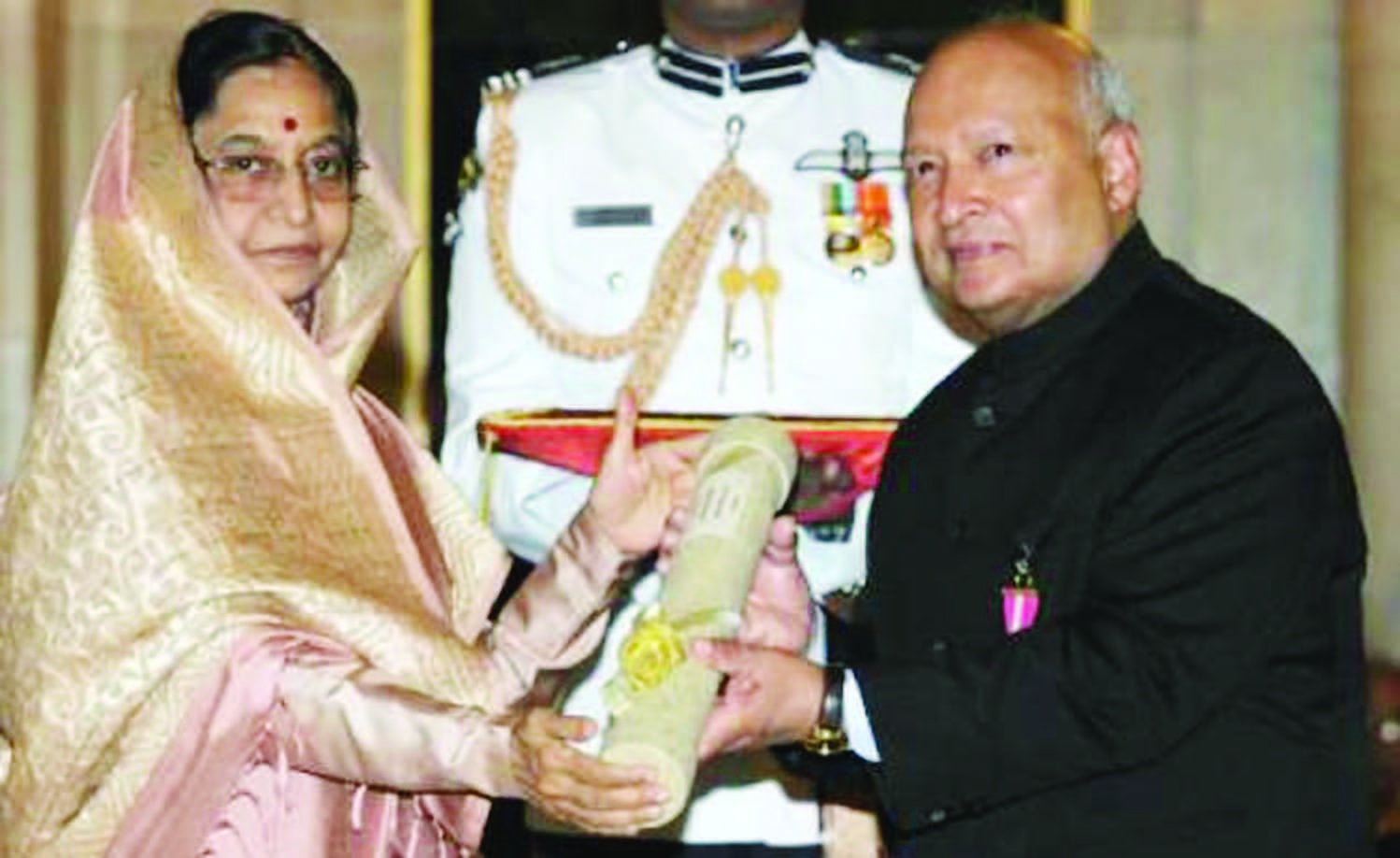
WASHINGTON (TIP): Thomas Kailath, a Pune-educated Indian American engineering professor at Stanford University, is one of the recipients of the U.S. National Medal of Science, announced by President Barack Obama Oct. 3. Kailath is also a recipient of the Padma Bhushan, one of India’s high civilian awards and is a member of major science and engineering academies in India. He received his BE (telecom) degree from the College of Engineering, Pune, before getting his SM and ScD degrees in electrical engineering from the Massachusetts Institute of Technology.
He then worked at the Jet Propulsion Labs in Pasadena, Calif., before joining Stanford University as associate professor of electrical engineering in 1963.
Kailath’s research and teaching at Stanford have ranged over several fields of engineering and mathematics, with a different focus roughly every decade, according to his profile on the university Web site.
These included information theory, communications, linear systems, estimation and control, signal processing, semiconductor manufacturing, probability and statistics, and matrix and operator theory.
Kailath was promoted to professor in 1968, and was appointed the first holder of the Hitachi America Professorship in 1988. He assumed emeritus status in 2001, but remains active with his research and writing activities.
Kailath is a Fellow of the IEEE and has received the IEEE Medal of Honor in 2007 for contributions to the development of powerful algorithms for communications, control, computing and signal processing.
Among his other major honors are the Shannon Award of the IEEE Information Theory Society; the IEEE Education Medal and the IEEE Signal Processing Medal; Guggenheim, Churchill and Humboldt Fellowships.
He is also a member of the U.S. National Academy of Engineering, the U.S. National Academy of Sciences, the American Academy of Arts and Sciences; and foreign member of the Royal Society of London and the Royal Spanish Academy of Engineering.
Obama also announced recipients of the National Medal of Technology and Innovation. The new awardees will receive their medals at a White House ceremony later this year.
“These scholars and innovators have expanded our understanding of the world, made invaluable contributions to their fields, and helped improve countless lives,” Obama said, according to a White House announcement.
-

Featured: He CAME, he SPOKE, he CONQUERED
NEW YORK (TIP): Yes, it is Narendra Modi, Prime Minister of India. All Indian Americans are familiar with that name, for good or for bad, mostly for good, though.
Modi was in New York from September 26 to 29th afternoon, before he left for Washington to enjoy the hospitality of US President Barack Obama in the evening and a bilateral talk the next day, before flying back to India.
Much before he arrived in the US, Indian Americans had set out to give him a hero’s welcome. A trusted friend of Modi, Dr. Bharat Barai, was tasked with arranging a massive community reception to Modi which he did, with the help and cooperation of a devoted band of people. It was a colossal effort to have around 20,000 people come to Madison Square Garden to give a rousing reception to Modi, an icon for many, particularly from his community and place, Gujarat, a state which he governed with appreciable growth for around 12 years.
And why not! Modi was coming as Prime Minister of India to a country which had denied him a Visa since 2005 for his alleged role in not preventing killings of people from a particular community in Gujarat when he was the chief minister of that state in 2002. His admirers here gloated that US had no option but to welcome him now that he was coming to the United Nations as India’s Prime Minister, whose party had got a massive support of the people of India and was catapulted in to power, with total command over government, without having to depend on allies’ support as was the case when Atal Behari Vajpayee formed a BJP led government in 1999 which lasted its full term of 5 years, to 2004.
So, here was a man who represented a democratic country -the largest democracy in the world- with 1.25 billion people. How could the US ignore Modi whose country was poised to become an Asian giant and the second largest economic power in the world by 2050? No way! So, Obama invited Modi over to the White House for a private dinner. It was another matter that the invited dignitary was fasting on account of Hindu festival of Navratras and he would not eat. By the way, Modi has been observing Navratra fasts for the past 40 years, insiders said.
So, Prime Minister Narendra Modi arrived on September 26. He was given a rousing welcome at the JFK airport in New York. My good friends, Narain Kataria, Arish Sahani and Jagdish Sewhani arranged to have a large number of people gather at the airport to give a warm welcome to Modi. So, we had the chant of “Modi, Modi” which surely pleased the man, given to showmanship, which explains his admiration for film actors, like Amitabh Bachchan, and of course, some others.
And while in New York, Prime Minister of India, Narendra Modi left no one in doubt that he was a better performer than any in the world. A perfect juggler, a consummate magician, a pied piper of India.
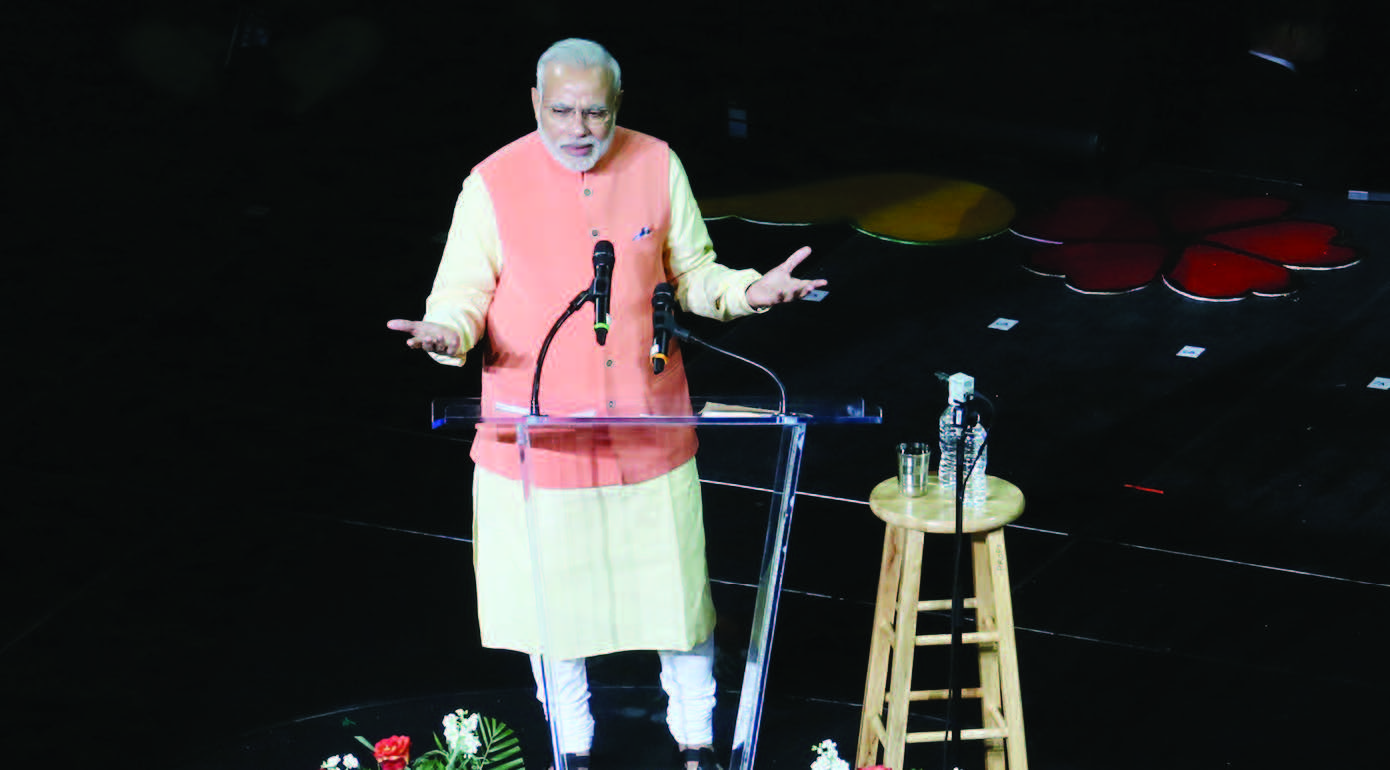
I found many acknowledging Modi’s felicity of expression which allowed him to connect with people immediately. He speaks in the language and diction that people at all levels commonly understand. He relies on simple words and home truths to deliver his ideas home. Again, he has mastered the art of delivery. His body language is extremely expressive and impressive. During the more than 90 minutes speech he delivered at the Madison Square Garden on September 28th, not a soul could have looked at the watch. Not one could have yawned, out of boredom. None would have thought of anything but what Modi was saying. The eyes of all remained fixed on the man in the center of the arena. Such was the grip of the man. And whatever he said seemed to come straight out of his heart. He pumped into his speech his heart, his mind and his vocal cords-delivering the “very best”.
Now see what he said. First, India can and will achieve the greatness that it once had. Second, we have a huge human resource capital in the form of a young India, with 60% of population under the age of 35. No other country in the world has such human resource. Third, we have brains. Example, our scientists succeeded in the Mars mission in the first attempt itself, a feat which even US could not perform. Modi took pride in mentioning that India’s Mars mission cost peanuts when compared with the money spent by countries like USA on similar missions.
Yes, we can. But how can we do it? He did offer Namo Mantra for that. He spoke of the defects in the system in the country and said the system that stood in the way of quick progression had to be demolished. He spoke of the futile, cumbersome and irrelevant laws which needed to be consigned to dust bin. He spoke of the massive investment required for development. And he invited Indian Americans as also the whole world to come and invest in India. Also, he gave a call to “make in India”.
Modi was particularly appreciative of the Sikhs, in his speech. He spoke of the great sacrifices the Sikh Gurus had made. He also recalled the sacrifices of the Sikhs in the freedom struggle of India. He spoke of the brave Sikh soldiers in the Indian armed forces and said the nation is proud of the Sikhs who have always stood by their motherland, come what may.
Modi simply created a vision. He came up with ideas that won attention and admiration of many. He wove dreams that all would love to own. He assured the gathering of around 20,000 at the famous Madison Square Garden which somebody christened as “Modison” Square Garden that India was on a fast track to development. Then he made some announcements to please the locals, too. He told them he was taking care to ensure there is no harassment at the airports in India of Indian Americans visiting India. He also said he knew of problems with getting visas. He said there will be no delays any more in obtaining a visa. Also, he said the clubbing together of OCI and PIO was being worked out and soon the problems arising out of OIC/PIO will be over. He also announced visa on arrival for US nationals on the pattern of some 9 countries whose citizens are entitled to get tourist visa on arrival in India. Surely, the local crowd was pleased.
The magician Modi wielded his wand for more than 90 minutes and left the gathering charmed and captivated. Yes, he came, he spoke , he conquered the hearts of Indian Americans who had come from far and near to have his darshan and hear him speak. But before he left, the gathering burst in to Modi chant, just as it had when he had arrived. And, believe me, Modi must have enjoyed the chant. The “Modi” chant must have been music to his years.
During the course of his stay in New York from 26th September to 29th September afternoon, Modi attended a large number of events, met a number of people from all walks of life which included world leaders, his counterparts from neighboring countries Sri Lanka and Nepal, US lawmakers and officials, captains of business and industry, community leaders, religious leaders and eminent people- both Indian Americans and others, and discussed a variety of issues.
We bring our readers here a few pictures of Modi’s New York visit. All pictures have been provided by The Indian Panorama special photo journalist Mohammed Jaffer.
-

MODI, OBAMA LOOK AHEAD
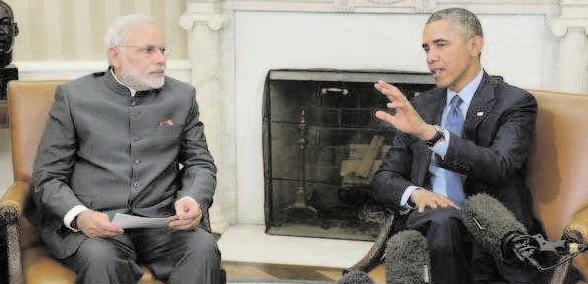
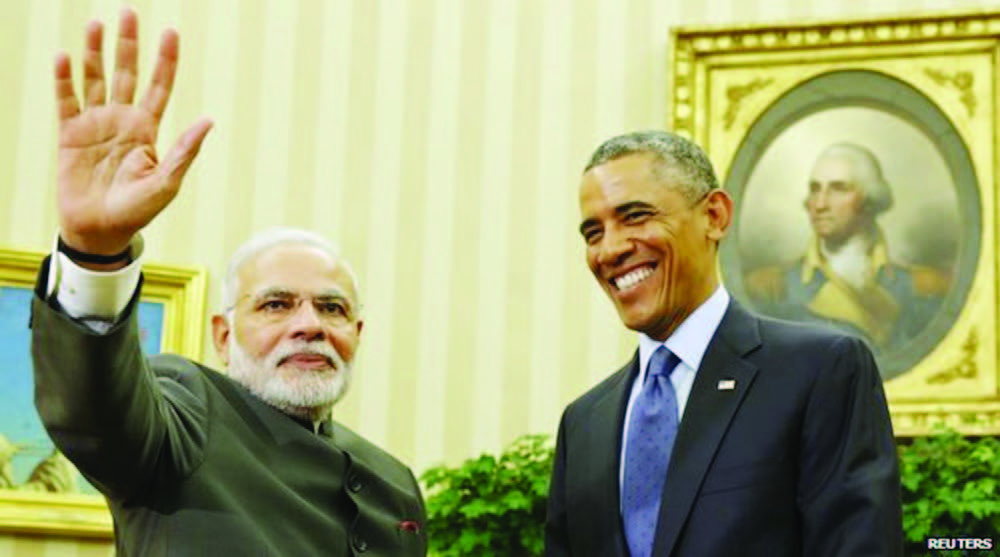
U.S. President Barack Obama and India’s Prime Minister Narendra Modi in the Oval Office at the White House. The two leaders have pledged to work to forge stronger ties.
WASHINGTON (TIP): India’s Prime Minister, after a hectic three days in New York, proceeded to Washington, September 29, to be with President Obama. The US president hosted a dinner for the visiting Prime Minister on Monday, September 29, in Washington and held official talks with the Indian leader on Tuesday, September 30.
Addressing the daily White House press briefing, on Wednesday, October 1, Josh Earnest, the White House spokesman told journalists, “The President was very pleased with the opportunity that he had to visit with Prime Minister Modi. It reflects that depth of the strong relationship between the United States and India that the two leaders were able to come together and discuss a broad array of topics. Each of those topics represents an area of important cooperation between our two countries.”
Ties between the two countries deteriorated last year after an Indian diplomat in the US was arrested over allegations of visa fraud and underpaying her Indian maid.
The US administration allowed her to leave the country after she was granted diplomatic immunity.
Modi and Obama appear to have made a fresh start in an attempt to bury old hatchets when they met for the first time over dinner on Monday in the East Wing of the White House.
The Times of India says both leaders looked prepared “to jettison all personal, bureaucratic, and diplomatic baggage to focus on elevating the overused expression of the underachieving ‘strategic partnership’”.
Apart from discussing issues related to terrorism, security and trade, the leaders highlighted the partnership between the two countries in a vision statement titled “Chalein Saath Saath” (Forward Together We Go) and a jointly written article in the Washington Post.
The Times of India says that the article “largely echoed the vision statement, which, while short of announcing a formal US-India alliance, is redolent of a transcendental partnership aimed at elevating the relationship to an even higher plane than it enjoys now”.
Some papers, however, feel that it remains to be seen if the initial camaraderie will result in a strong working relationship.
“The question now is whether the good vibes generated in the meeting between Mr. Modi and Mr. Obama translate into an excellent working relationship between the two leaders,” the Economic Times says.
-

US readies 4,000 troops for Ebola mission
WASHINGTON (TIP): The US military expects to increase the number of troops deployed to Liberia to fight the Ebola outbreak to nearly 4,000, up from a planned 3,000-strong force, the Pentagon said on October 3.
About 200 soldiers are already in Liberia setting up a headquarters for the US mission, which is aimed at training health care workers and setting up medical facilities for international aid teams.
President Barack Obama earlier this month announced that about 3,000 troops would eventually head to West Africa to help with efforts against the deadly virus.
But the Pentagon said officials were looking at ramping up the size of the force if necessary.
“We project that there could be nearly 4,000 troops deployed in support of this mission, but we’re obviously assessing the requirements on a daily basis. It may not go that high,” spokesman Rear Admiral John Kirby told reporters.
He said an additional 1,800 US Army troops, including engineers, medical and aviation specialists, received orders to deploy to Africa in coming weeks.
This was in addition to 1,400 already headed to Monrovia this month, including the troops already on the ground.
The deployment will bring the total number of American forces in Liberia and neighboring states to 3,200, officials said.
-

Obama ‘strongly condemns’ killing of Alan Henning
WASHINGTON (TIP): US President Barack Obama strongly condemned on October 2 the killing of British citizen Alan Henning by Islamic State militants fighting in Iraq and Syria and said the United States would seek to bring his killers to justice.
“The United States strongly condemns the brutal murder of United Kingdom citizen Alan Henning” by the Islamic State group, Obama said in a statement.
“Standing together with our UK friends and allies, we will work to bring the perpetrators of Alan’s murder —as well as the murders of Jim Foley, Steven Sotloff and David Haines — to justice,” Obama said, referring to other captives killed by Islamic State militants.
-

Barack Obama expresses interest in yoga
WASHINGTON: Impressed by the “energy and vigour” of Prime Minister Narendra Modi during his recent visit to the US despite being on fast, President Barack Obama has expressed his interest in yoga, officials have said.
While the First Lady has been instrumental in introducing yoga inside the White House, Obama appeared to be very impressed by the energy and vigour shown by Modi when he hosted the latter over a private working dinner in the Blue Room of the White House on Monday.
“They joked about the fact that the rest were eating and the Prime Minister (Modi) was fasting. The president expressed admiration for the energy and the vigour with which the Prime Minister was able to maintain this rigorous schedule on a diet of only warm water,” assistant secretary of state for south and central Asia, Nisha Desai Biswal told reporters on October 2.
-

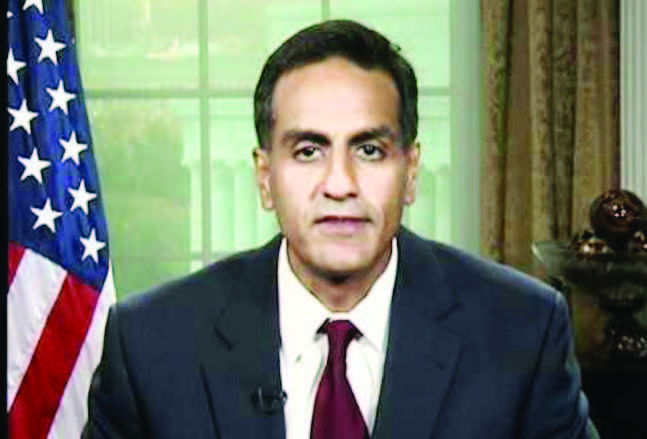
OBAMA NOMINATES INDIAN AMERICAN RICHARD RAHUL VERMA AS NEXT US AMBASSADOR TO INDIA
WASHINGTON (TIP): In what appears to be history in the making, President Barack Obama on Thursday, September 18, nominated an Indian American to be the next US ambassador to India. When Richard (Rich) Rahul Verma takes over as US ambassador to India, he will be the first ever Indian American to hold this position. Richard Rahul Verma is a former state department official.
Most recently, he served in the Obama Administration as the Assistant Secretary of State for Legislative Affairs. In that capacity, he was Secretary of State Clinton’s principal advisor on congressional affairs and successfully led the department through a number of key budget and policyrelated battles. He played a lead role in securing the Senate’s ratification of the New START Treaty with Russia, guided nearly 200 Presidential nominees through the Senate confirmation process, and oversaw and managed the Administration’s response to several major congressional investigations.
He was also the lead U.S. Administration negotiator handling the development and passage of the most recent set of comprehensive sanctions against Iran. Earlier in his career, Mr. Verma served as Senior National Security Advisor to Senate Majority Leader, Harry Reid. He shaped many consequential legislative initiatives in the post- 9/11 era involving counterterrorism, homeland security, and intelligence reform matters. Mr. Verma has served as an officer in the U.S. Air Force Judge Advocate General Corps.
His military decorations include the Meritorious Service Medal and Air Force Commendation Medal. He also worked in the U.S. House of Representatives for the late Congressman John P. Murtha and served as a Country Director for the National Democratic Institute for International Affairs in Eastern Europe. Mr. Verma is also a Senior Counselor at the law firm of Steptoe & Johnson. He is a member of the Council on Foreign Relations, serves on the boards of the National Democratic Institute and Human Rights First, and is a Senior National Security Fellow at the Center for American Progress.
He has served on the National Academy of Sciences Panel on Critical Infrastructure Protection and the Law, and was appointed to the Commission on the Prevention of Weapons of Mass Destruction Proliferation and Terrorism. Mr. Verma holds degrees from the Georgetown University Law Center, American University’s Washington College of Law, and Lehigh University.
At present, Richard Verma serves as Senior Counselor to ASG and supports the firm’s global trade, regulatory, and policy capabilities. Mr. Verma draws on his most recent experience in the Obama Administration, and previously in the private sector, to help clients succeed in a range of legal and policy issues in foreign jurisdictions. He also advises on U.S. trade sanctions, export controls, and on responses to government investigations and crisis situations. He has a particular expertise in South Asia. It may be recalled that the previous US ambassador to US, Nancy Powell, left in less than pleasant circumstances, having fallen foul of the Indian government during the Khobragade controversy.
With Verma’s appointment as ambassador in Delhi, US state department’s South Asia desk, which oversees relations with India, will have a distinctly Indian feel to it. Nisha Biswal, an Indian-American from Gujarat, heads the desk. And Atul Keshap, also of Indian descent, who served at the US embassy in Delhi, is one of her assistant deputy secretaries. Welcoming the nomination of Richard (Rich) Verma, Congressman Crowley, who is Vice Chair of Democratic Caucus, issued the following statement. “With over two decades of senior foreign policy experience, Rich Verma is a skilled and accomplished professional who will make an excellent ambassador to India. From his time serving in the Air Force to high-ranking positions in government, Rich brings with him a wealth of experience.
I’ve had the pleasure of working with Rich for many years and I deeply value his expertise and judgment. He is committed to building the U.S.-India relationship, has access to the highest levels of the White House, and is exactly who we need at the helm as we look to further strengthen U.S.-India relations. I look forward to continuing to work with him.” A prominent New York attorney Ravi Batra lauded the nomination of Richard Verma as the next US ambassador to India. He said, in a statement sent to The Indian Panorama: “President Obama’s nomination of Richard Rahul Verma as our Ambassador to India is an act of historic joy, and proof that Indian-Americans are trusted to protect vital American interests abroad in an unconflicted manner.
To paraphrase Neil Armstrong, one small step for Ambassador Verma, and a giant leap for bilateral intimate ties between United States and India. It seems United States is paying a handsome royalty for the use of Indian Tea at the 1773 Boston Tea Party that started the American Revolution.” -

US edges up to Mission Creep in Middle East
WASHINGTON (TIP): Mission Creep, a term that has come to describe a gradual shift in objectives during the course of a military campaign, often resulting in unplanned long-term commitment, came into the American lexicon during the Somali civil war in the 1990s. On Tuesday, it crept back into US parlor talk after a top American general suggested ground forces may be required to meet President Barack Obama’s pledge to degrade and destroy the Islamic State terrorists in Iraq and Syria.
US Army Gen. Martin Dempsey, the chairman of the Joint Chiefs of Staff and the President’s top military adviser, laid it out tactfully. ”My view at this point is that this (American-led) coalition is the appropriate way forward.
I believe that will prove true,” General Dempsey said at a Congressional hearing, expressing confidence that the IS could be defeated. ”But if it fails to be true, and if there are threats to the United States,” he added, he would go back to the President and ”make a recommendation that may include the use of US military ground forces.” The remarks jolted the capital’s punditry, which has been stewing about an American return to the Middle-East minefield just three years or so after Obama fulfilled his campaign pledge to pull out US troops from the region after a decade-long war that cost the country more than a trillion dollars.
On his part, Dempsey acknowledged that recommending re-induction of US forces would run counter to the president’s policy, but the President, he said, ”has told me as well to come back to him on a case-by-case basis.” The White House demurred about any change in policy, saying, ”It’s the responsibility of the president’s military advisers to plan and consider all the wide range of contingencies,” and what Dempsey was referring to was a ”hypothetical scenario.” Obama has repeatedly said there will be no boots on the ground in the sense of US troops having combat missions, but administration officials have indicated that military advisors and special forces may be inducted on a case-by-case basis to train and guide Iraqi and Kurdish forces taking on the ISIS.
Already, the US has inducted more than 1,600 military advisors and special troops, ostensibly to safeguard US diplomatic missions and personnel. But some are also believed to be helping pinpoint airstrikes and train pro- American forces. The fear in the capital and across the country is that this may creep up to tens of thousands. Some war enthusiasts are already asking how the 5000 Syrian rebels the US is training can take on an Islamic State force that the CIA estimates to be more than 30,000. -

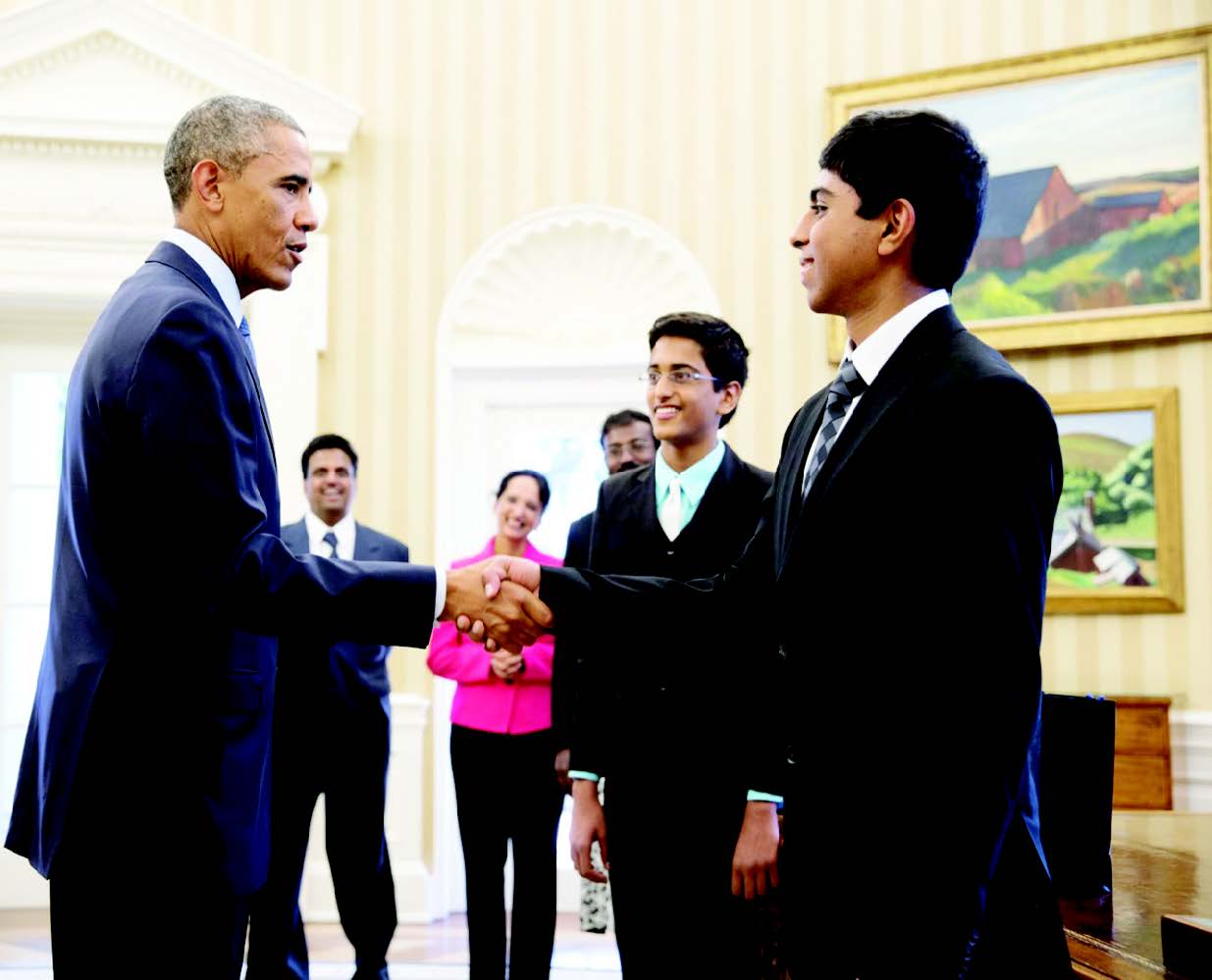
President Obama meets Indian-American Spelling bee champs
Ansun Sujoe from Fort Worth, Texas and Sriram Hathwar from Painted Post, New York
WASHINGTON (TIP): US President Barack Obama might be one of the world’s most powerful man but he is no spelling champion as he failed to spell two words correctly given to him by this year’s Indian-American cochampions of the prestigious Spelling Bee contest. “He (the President) is very humble. I think he (Obama) is appropriate for the job,” Sriram Hathway from New York told PTI in an interview, moments after he and co-champion of Scripps National Spelling Bee Ansun Sujoe from Texas met the US President at his Oval Office, Monday, September 15. The two co-champions were accompanied by their proud parents in their interaction with Obama, who had invited them to the White House.
Soon after Sriram, 14, and Ansun, 13, were declared co-champions of this year’s Spelling Bee, Obama had tweeted, “Congrats to Ansun and Sriram, the incredible co-champs of the #ScrippsNationalSpellingBee. You make us all proud!”. This was for the first time since 1962 that the annual spelling contest had ended in a tie. “The President greeted us. He is very nice. He talked to us little bit. He gave us some advice. He also spelled a couple of words for us. Like the two words we misspelled — corpsbruder and antigropelos. He did not spell them correctly.
But it was quite fun to hear it and to talk with the President and interact,” Ansun told PTI outside the White House after his memorable meeting with Obama. During the spelling bee competition this year both Sriram and Ansun stumbled one time with the words “Corpsbruder (a close comrade)” and “Antigropelos (waterproof leggings)” respectively. And both passed on these words to Obama for spelling. For the Spelling bee champions, this was not a surprise. “He (tried) to spell those two words. We got to shake hands with him. He greeted us very humbly…very welcoming. It was an honor to meet him,” Sriram said.
Obama presented the two young Indian- Americans a book of constitutional amendments in which he wrote “Dream, Big Dreams.” For the past several years, Indian Americans have dominated the annual spelling bee contest. “Just try to give your best. Do not give up your passion,” Sriram said when asked about his message to other young Indian- Americans. “Without hard work, you can’t succeed. If anybody is interested in spelling or any other competition, I would just tell them to persuade. Do not give up. Work hard at it and try the best,” said Ansun, who wants to become a computer engineer like his father. Sriram said he wants to become an ophthalmologist. “I have always been interested in the eye,” he said. -

Appeals court weighs stay on ruling over Texas abortion law
AUSTIN, TX (TIP): Most of the abortion clinics in Texas could close by the weekend depending on what happens in a New Orleans courtroom Friday, September 12. The U.S. 5th U.S. Circuit Court of Appeals will get its first look at the latest challenge to Texas’s tough new abortion law Friday morning as a three-judge panel weighs half an hour of arguments each from supporters and opponents of two regulations under dispute.
At stake is the fate of at least a dozen abortion clinics that were saved from closure or allowed to reopen, thanks to an Austin-based federal judge’s ruling last month against provisions requiring clinics to meet the standards of hospital-style surgical centers and abortion doctors to obtain admitting privileges at a nearby hospital. State lawyers appealing the district judge’s decision are asking permission to enforce the requirements as the case continues. If the appellate court agrees, all but seven of the abortion facilities in the state are expected to close almost immediately.
“I think we’re all just holding our breath,” said Amy Hagstrom Miller, CEO of Whole Woman’s Health, which operates two of the clinics hanging in the balance and filed the lawsuit in April along with other abortion providers. Legal briefs filed by lawyers for the providers and the state show that the arguments Friday likely will mirror those during the week-long trial here last month: the providers will argue the requirements severely reduce abortion access without improving women’s health, while the state will say the requirements protect women and leave enough access to satisfy federal law.
The state will have the burden of showing why it is important for the appeals court to step in and allow enforcement of the law to continue while the trial court judge’s ruling is appealed. “The State will suffer irreparable injury absent a stay because the district court’s injunction prevents the State from enforcing a duly enacted statute,” Attorney General Greg Abbott wrote in his motion for an emergency stay.
Esha Bhandari, an attorney for the providers, said they will argue there is no irreparable harm because one of the provisions at issue has not yet been enforced and enforcement is “not the type of thing a few months down the road can’t be rectified.” The district judge already has rejected a long-shot request by the state to stay his own ruling. While Friday’s arguments in New Orleans will concern only the request for a stay, advocates on both sides will be watching closely for any indication of how the court may be leaning on the overall appeal.
The 5th Circuit is considered one of the most conservative courts in the country, and it acted last fall to uphold a separate part of the tough new Texas law. Both sides acknowledge the state likely caught a break with the outcome of a random selection of the threejudge panel that will hear the arguments Friday. One of the judges on the panel, George W. Bush appointee Jennifer Walker Elrod, was on the panel that unanimously upheld the law last year. Another, Ronald Reagan appointee Jerry E. Smith, was on the panel that upheld another Texas law requiring women seeking an abortion in Texas to first get a sonogram. The third judge, Stephen A. Higginson, is an appointee of President Barack Obama who recently voted to strike down a Mississippi law that was similar to the Texas measure. -

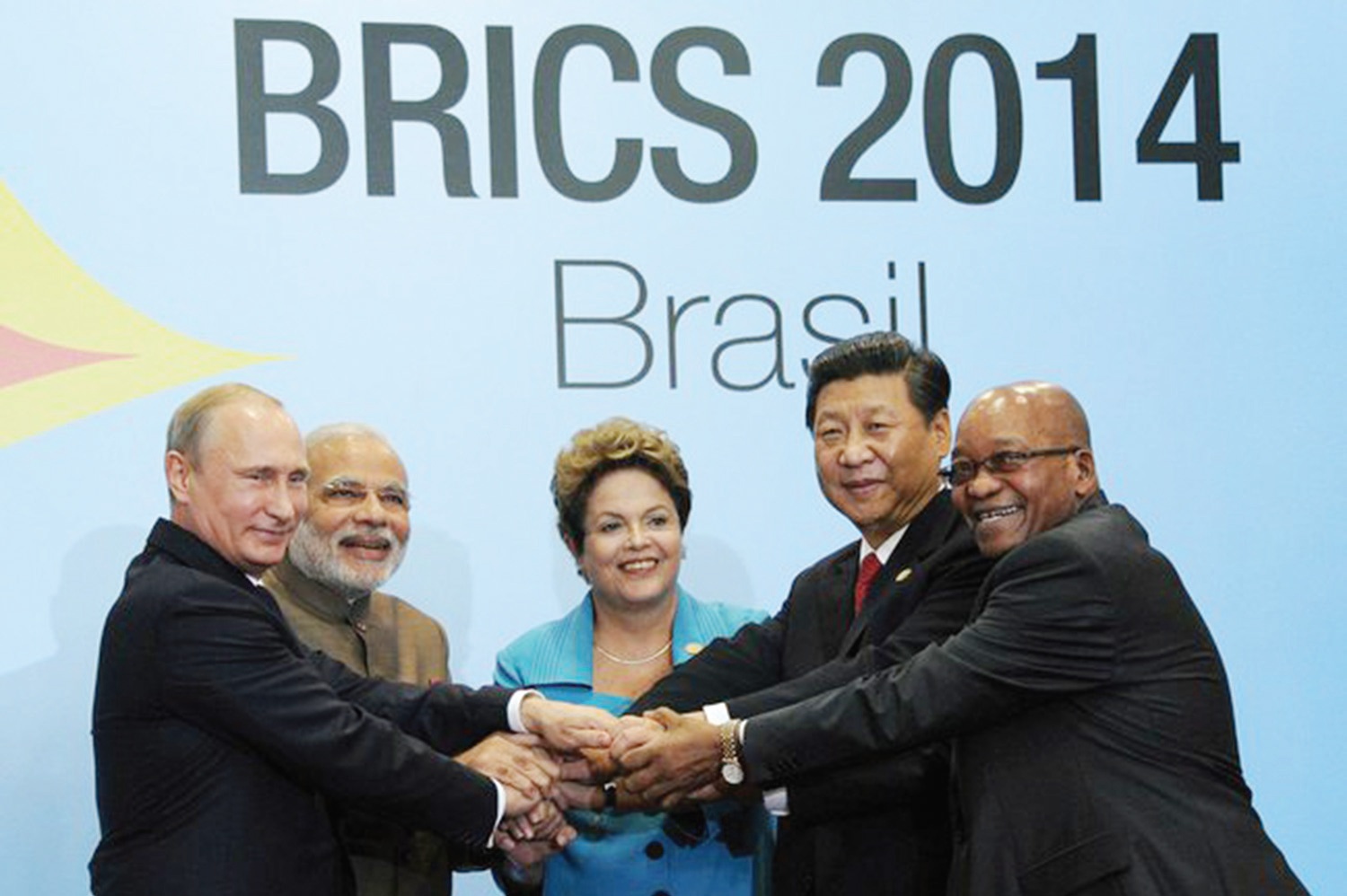
INDIA: THE ODD BRIC OUT
India must strike a balance between its new emerging partners and beneficial Western ties
India would be foolish to join an anti-Western bloc as India’s rise is inherently tied to the West. Given the popular view that the BRICS are opposed to the West, India finds itself in the unique position of being a part of the BRICS collective as well as having overtly friendly relations with the U.S., a relationship that is likely to further improve in the future as Modi visits the U.S. and ties strengthen.
By Stephen Junor The BRICS nations have rapidly evolved from a group of emerging economies into political contenders in a new world, driven by the search for an alternative to Western hegemony. Recent Western failures have also helped to launch the BRICS concept as an alternative, and have possibly pushed the countries closer together than they may have initially intended.
There are also differences (the China-India border disputes for example) that would have seriously tested the relationship between other countries, but for now they are responsible for the multi-polar world that appears to be emerging. The Western approach toward BRICS has generally been one of skepticism, but when it comes to India there is a conspicuously different portrayal in the media compared to the rest of the countries. Although the recent U.S.-Africa summit suggests friendly relations, South Africa has always seen itself as a member of the global South and champions countries that don’t acquiesce to U.S. dominance. The conflict between the U.S. (somewhat supported by much of Europe) and Russia is well-known, and the media consistently highlights the conflict and difference between the U.S. and China.
American interference in Latin America has made relations between Brazil and the U.S. touchy, and the rhetoric from Brazil in the wake of NSA spying last year was scathing. Despite relations taking a hit last year when Indian diplomat Devyani Khobragade was arrested in New York, U.S. and Western media have generally been friendly toward India, exemplified by President Barack Obama’s invitation to newly elected Prime Minister Narendra Modi to visit the U.S., despite Modi previously being blocked from the U.S. over his failure to stop sectarian violence as Gujarat’s chief minister in 2002, when more than 1,000 people were killed. It is likely that the U.S. views India as a potential foothold in Asia.
India is often heralded in the Western media as the world’s largest democracy, in an attempt to provide common ground and a nod of disapproval to the likes of China and Russia. In contrast to the other BRICS members, Indian elites aspire to the wealth and influence of the U.S., and it is only natural that this aspiration would manifest itself in the politics of the country. Modi is a proponent of free market capitalism and this bodes well for relations with the U.S., which will see him as an accessible figure.
There are further important differences between India and the rest of the BRICS nations.World Bank data shows that India’s GDP per capita severely lags behind the rest at around $1,500, four times less than China and South Africa, seven times less than Brazil and almost 10 times less than Russia. India hasn’t replicated the rapid growth of the other BRICS countries since the turn of the millennium, and this is also reflected in a slower reduction in the poverty gap. Just under 25 percent of the population still live on less than $2 a day, compared to 10 percent or less for the other countries. Such a severe development problem will hinder Indian growth in the near future and will see it fall further behind.
Modi will be expected to implement reforms that improve growth and lift hundreds of millions out of crippling poverty. Growth alone will not solve the poverty problem in India however. When it comes to literacy rates in adults, the 2011 Indian census recorded a figure of 74 percent while the rest of the BRICS nations record over 90 percent. Literacy among women is even lower at 64 percent. Infrastructure in India is also sub-standard. An overburdened transport systems and insufficient electricity grids that are overly reliant on coal contribute to the poverty problem while hindering growth. Rapid urbanization is also putting pressure on these systems, making the problem more acute.
India also has a digital problem as only 15 percent of the population uses the internet, compared to upwards of 40 percent for the other BRICS. Connectivity is important, particularly for those often marginalized in society, as evidence points towards benefits for education and health. India has a distinctive set of problems that the other BRICS countries have largely moved beyond. Given the political and economic clout of the BRICS collective, India could soon find itself left behind within the group. Indeed the statistics above and the obvious clout of China and Russia suggest that India may lack influence within the group already, despite efforts to spread power within the recently announced New Development Bank.
This is where the U.S. could become more influential with India. In a recent interview with The Diplomat, Sadanand Dhume, a resident fellow at the American Enterprise Institute (AEI) and Wall Street Journal columnist, said that India would be foolish to join an anti-Western bloc as India’s rise is inherently tied to the West. Given the popular view that the BRICS are opposed to the West, India finds itself in the unique position of being a part of the BRICS collective as well as having overtly friendly relations with the U.S., a relationship that is likely to further improve in the future as Modi visits the U.S. and ties strengthen.
India will need to manage its relationships carefully, as it will not want to find itself isolated from either the U.S. or the BRICS. It is also important that India doesn’t become geopolitically caught between the two sides: Any point of tension between the West and an individual BRICS country could reflect on the rest of the group. Indeed if India wants to achieve strong growth and solve its development crisis, then it will need to harness relationships with both sides. The next few years will be crucial for Indian development, and as the international political situation slowly evolves, it will be interesting to see how India locates itself in relation to the West and the other BRICS countries.
(Stephen Junor writes on the rise of BRICS and geopolitics) (Source: The Diplomat)