Tag: Barack Obama

  • CIA triples estimate of Islamic State strength

    CIA triples estimate of Islamic State strength

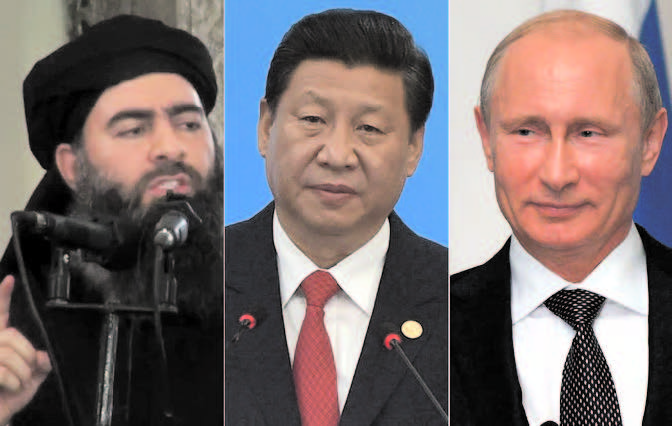
    WASHINGTON (TIP): Islamic State militants in Iraq and Syria now have about 20,000 to 31,500 fighters on the ground, the Central Intelligence Agency said on Sep 11, much higher than a previous estimate of 10,000. Among those in Syria are 15,000 foreign fighters including 2,000 Westerners, some of whom have joined IS, a US intelligence official told AFP.

    The figures were revealed one day after President Barack Obama vowed to expand an offensive against IS extremists, a plan which foresees new air strikes against IS in Syria, expanded attacks in Iraq and new support for Iraqi government forces. “CIA assesses the Islamic State of Iraq and the Levant (IS) can muster between 20,000 and 31,500 fighters across Iraq and Syria, based on a new review of all-source intelligence reports from May to August,” CIA spokesman Ryan Trapani said in a statement. “This new total reflects an increase in members because of stronger recruitment since June following battlefield successes and the declaration of a caliphate, greater battlefield activity, and additional intelligence,” he said.

    Senior US officials have voiced concern at the presence of foreign fighters among the Sunni extremists who hold Western passports, potentially enabling them to return from the battlefield prepared to carry out terror attacks in Europe or the United States. IS militants have seized large swathes of territory in Iraq in recent months, displaying brutal tactics and releasing videos of the grisly executions of two American reporters. The White House has insisted that President Barack Obama is authorized to strike IS in Iraq and Syria under a law passed by Congress after the September 11 attacks in 2001.

  • John Kerry downplays talk of ‘war’ against IS

    John Kerry downplays talk of ‘war’ against IS

    WASHINGTON (TIP): US Secretary of State John Kerry warned against “war fever” on September 11 and said the new American campaign against the so-called “Islamic State” should be understood as a counter-terrorism mission. Speaking the day after President Barack Obama announced a “relentless” campaign of air strikes against IS militants in Iraq and ultimately in Syria, Kerry declined to call the operation a war.

    “What we are doing is engaging in a very significant counter-terrorism operation,” Kerry told CNN in Jeddah, Saudi Arabia, during a tour of regional allies to drum up support for joint action. “It’s going to go on for some period of time,” he warned. “If somebody wants to think about it as being a war with ISIL, they can do so, but the fact is it’s a major counter-terrorism operation that will have many different moving parts.” Separately, CBS reporter Margaret Brennan tweeted that Kerry had told her: “I don’t think people need to get into war fever on this.” Meanwhile, the Pentagon announced that US warplanes would start using a base outside the Iraqi Kurdish capital Arbil, having previously been operating from airbases and carriers outside the country.

  • Leaders: US, UK will ‘not be cowed’ by militants

    Leaders: US, UK will ‘not be cowed’ by militants

    NEWPORT, WALES (TIP): Faced with a mounting militant threat in the Middle East, US President Barack Obama and British Prime Minister David Cameron declared on Thursday that their nations will “not be cowed” by extremists who have killed two American journalists. “We will be more forthright in the defense of our values, not least because a world of greater freedom is a fundamental part of how we keep our people safe,” the leaders wrote in a joint editorial in the Times of London.

    Their comments come as world leaders gather at a golf resort in Wales for a high-stakes NATO summit. While the official agenda will focus on the crisis in Ukraine and the drawdown of the NATO combat mission in Afghanistan, the rise of the Islamic State group in Iraq and Syria will dominate discussions on the sidelines of the summit. The militants have claimed responsibility for murdering two American journalists, releasing gruesome videos of their beheadings.

    Both the US and Britain are deeply concerned about the potential threat to their homelands that could come from the foreign fighters who have joined the violent Islamic State group. Cameron on Monday proposed new laws that would give police the power to seize the passports of Britons suspected of having traveled abroad to fight with terrorist groups. Obama and Cameron appear to suggest that NATO should play a role in containing the militants, but were not specific in what action they would seek from the alliance.

    The two leaders were to visit with students at a local school Thursday morning before joining their counterparts from France, Germany and Italy to discuss the crisis in Ukraine. New Ukrainian President Petro Poroshenko was also to join the discussion in a show of Western solidarity with his embattled nation. Ukraine and Russia have been locked in a standoff for months, with pro- Moscow forces stirring instability in eastern Ukrainian cities. On the eve of the NATO summit, Russia and Ukraine said they were working on a deal to halt the fighting, but Western leaders expressed skepticism, noting it wasn’t the first attempt to end the deadly conflict.

    NATO leaders are expected to agree this week on the creation of a rapid response force that would set up in nations in the alliance’s eastern flank to serve as a deterrent to Russia. Baltic nations and others in the region fear Moscow could set its sights on their borders next. “We must use our military to ensure a persistent presence in Eastern Europe, making clear to Russia that we will always uphold our Article 5 commitments to collective self-defense,” Obama and Cameron wrote.

    Under Article 5 of the NATO charter, an attack on one member state is viewed on an attack on the whole alliance. Obama reiterated his support for that principle Wednesday during a visit to Estonia, one of the newer NATO members set on edge by Russia’s provocations.

  • COMMITMENTS ON 3 FRONTS TEST OBAMA’S FOREIGN POLICY

    COMMITMENTS ON 3 FRONTS TEST OBAMA’S FOREIGN POLICY

    WASHINGTON (TIP): In vowing in Estonia on Wednesday to defend vulnerable NATO nations from Russia, President Obama has now committed the United States to three major projections of its power: a “pivot” to Asia, a muscular presence in Europe and a new battle against Islamic extremists that seems likely to accelerate.

    American officials acknowledge that these commitments are bound to upend Mr Obama’s plans for shrinking the Pentagon’s budget before he leaves office in 2017. They also challenge a crucial doctrine of his first term: that the use of high technology and only a “light footprint” of military forces can deter ambitious powers and counter terrorists.

    And the commitments may well reverse one of the key tenets of his two presidential campaigns, that the money once spent in Iraq and Afghanistan would be turned to “nation-building at home.” But the accumulation of new defensive initiatives leaves open the question of how forcefully Mr Obama is committed to reversing the suspicion, from Europe to the Middle East to Asia, that the United States is in an era of retrenchment.

    In his travels in Europe this week and to Asia this fall, the president faces a dual challenge: convincing American allies and partners that he has no intention to leave power vacuums around the globe for adversaries to fill, while convincing Americans that he can face each of these brewing conflicts without plunging them back into another decade of large military commitments and heavy casualties.

    “There is a growing mismatch between the rhetoric and the policy,” said Richard N. Haass, the president of the Council on Foreign Relations and a senior American official during the fall of the Berlin Wall in 1989, and again as the war with Iraq loomed a dozen years ago. “If you add up the resources needed to implement the Asian pivot, recommit to the Middle East and increase our presence in Europe, you can’t do it without additional money and capacity.

    The world has proved to be a far more demanding place than it looked to this White House a few years ago.” So it is no surprise that at a moment when Mr Obama is still answering critics for saying last week that “we don’t have a strategy yet” to combat the Islamic State in Iraq and Syria, he now needs several strategies, each tailored to problems that in the past year have taken on surprising complexities.

    In facing the more than 10,000 ISIS fighters, he must find a way to confront a different kind of terrorist group, one determined to use the most brutal techniques to take territory that the backwash from the Arab Spring has now put up for grabs.

    The American bombing campaign against ISIS targets in Iraq is nowhere close to approaching the costs of the invasion and occupation of that country, but the weapons, fuel and other expenses are running up anticipated bills of about $225 million a month, according to Pentagon officials. ISIS “is not invincible,” Matthew G Olsen, the director of the National Counterterrorism Center, said in a talk at the Brookings Institution on Wednesday, and does not yet pose the kind of direct threat to the United States that Al Qaeda did before the attacks of Sept. 11, 2001.

    It is “brutal and lethal,” he said, and defeating it will require a long-term commitment of a kind Mr Obama clearly did not anticipate earlier this year. In the Russia of President Vladimir V. Putin, Mr Obama faces a declining power — afflicted by a shrinking population, a strident nationalism and an economy highly dependent on oil exports — that he is betting cannot sustain Mr Putin’s appetites. But the arguments inside the administration have been over how directly and where to draw the line — and not surprisingly, in Tallinn, Estonia, on Wednesday, he drew it at NATO’s own boundaries.

    The question is whether Mr Putin believes him. And in China, the president faces an entirely different kind of challenge: a rising power with growing resources and a sense that this is China’s moment to reassert influence in Asia in a way it has not in hundreds of years.

    Here the surprise to Mr Obama has been the aggressiveness with which Xi Jinping, China’s president, has embraced efforts to press territorial claims against Japan, South Korea, Vietnam and the Philippines, rather than focus on the domestic economy. “We didn’t see this coming,” one former member of Mr Obama’s national security team said this summer, “and there’s a lot of debate about how to counter it.”

    The statement could be true for each of the challenges Mr Obama is confronting. And it explains why the administration is having such a difficult time explaining how this combination will affect its future plans. Defense Secretary Chuck Hagel was put in his job in part to find ways to shrink the military, especially after the official combat mission in Afghanistan ends this year. But Mr Hagel has been either unable or unwilling to articulate the long-term implications.

    There are plans afoot to shift the American presence to the Pacific over the next six years, aiming toward the moment when 60 percent of America’s forces abroad are in the region. But many Asian leaders question whether Mr Obama and his successor will carry through. “We hear a lot of planning,” said one Southeast Asian diplomat, “but the actual manifestations of the pivot are hard to detect.” Many fear that the Chinese sense the same thing, and that may explain the recent incidents in which American aircraft have been buzzed by the Chinese, and the continued pace of cyberattacks on American targets.

    The uncertainty about Russia’s ambitions add another element. Mr Obama mentioned several responses in his speech in Tallinn, including enhanced missile defenses. It was an interesting allusion, because until now he had insisted that the American missile defenses planned in Europe were entirely aimed at deterring Iran, not Russia, whose nuclear capabilities could overwhelm the kind of defenses that the Pentagon is currently deploying. But the bigger question is what the cost will be of a sustained American training and exercising presence in the region.

  • Obama seeks allies for action in Syria as first American Jihadi reported dead

    Obama seeks allies for action in Syria as first American Jihadi reported dead

    WASHINGTON (TIP): President Obama has begun to seek and mobilize allies for possible US action in Syria and Northern Iraq even as reports emerged of an American jihadi dying in Syria fighting for extremists, coincidentally at the same time an Indian jihadi was also reported killed in the region.

    The American, Douglas McCain, was an African-American malcontent from Minneapolis who had converted to Islam and signed up with extremist forces in Syria. He is one of scores of American who have done so over the past year, terrifying Washington that they may return to the US mainland to launch attacks at home. McCain was reportedly killed in an internecine militants’ fight near Aleppo, but the incident has galvanized the Obama administration into reminding Americans that the country cannot afford to take a hands off approach to the messy quagmire many are reluctant to return to.

    To make it more palatable domestically, Washington is returning to the old formula of seeking allies. President Obama indicated as much on Tuesday when he told a meeting of the American Legion that the US was building a coalition to “take the fight to these barbaric terrorists,” and that the militants would be no match for a united international community. ”Rooting out a cancer like ISIL won’t be easy, and it won’t be quick,” Obama said, preparing Americans for a possible incremental involvement that is expected to begin with airstrikes.

    Separately, administration officials are telling the media in background briefings that Washington is reaching out Australia, Britain, Jordan, Qatar, Saudi Arabia, Turkey and the United Arab Emirates to provide support for potential US operations. While Australia and Britain are the usual Anglophone allies, the Gulf/Middle East countries all have stakes in the scrap; some like US allies Saudi Arabia and Qatar have connection to various extremist groups, needing Washington to manage and moderate their involvement.

    US bete noires Iran and Syria, both of which are opposed to the extremist ISIS and are technically on the same side as Washington (as opposed to the Saudis who back the extremists) have been disdained, at least publicly. The diplomatic action began even as Theo Curtis, the American journalist freed by the radical group Nusra Front, returned to the US after Qatar intervened on his behalf. It has since been revealed that ISIS is holding as hostage a young American woman who was Syria as a humanitarian aid worker, demanding a $ 6.6 million ransom from her family.

    US officials have asked that the 26-year old woman’s name not be used fearing for her safety but she is one of many Americans kidnapped in the region, including Steven Sotloff, the journalists ISIS had threatened to execute if the US does not call off its involvement in the region. Some American families have begun to take matters into their own hands given Washington’s policy of not negotiating directly with terrorists or considering their ransom demands in pursuit of its larger aims.

    On Tuesday, the mother of Steven Sotloff, the journalist who was paraded with executed scribe James Foley, issued a tearful appeal on TV begging his captors to free her son. “Steven has no control over actions of the US government,” she said in an emotional message to Abu Bakr al- Baghdadi, the leader of ISIS and the selfproclaimed caliph of the Islamic State. “He is an innocent journalist and I ask you to please release my child. I ask you to use your authority to spare his life.”

  • Obama’s phone call thawed US-Modi relations: US interim envoy

    Obama’s phone call thawed US-Modi relations: US interim envoy

    AHMEDABAD (TIP):
    US President Barack Obama’s congratulatory telephone call to Narendra Modi after the Lok Sabha results brought about a thaw in the frosty relationship between the US and the Prime Minister, interim US Ambassador to India Kathleen Stephens said on Aug 20. She said the US president made the call even before Modi was sworn in and that set the tone for future engagement between the US and the PM.

    She was responding to a question on what changed the US stance towards the Indian leader particularly in light of the fact that he was labelled persona non grata and denied US visa in 2005 over the 2002 riots in Gujarat and alleged human rights violations under his watch. Stephens said the US holds India high in importance as is evident from top-level visits of US officials like Senator John McCain, John Kerry (Secretary of State), Penny Pritzker (Secretary of Commerce) and Chuck Hagel (Secretary of Defence).

    “So we are placed well and signals from the (Indian) government are very clear. Not only at the prime ministerial level but at the level of the government also…a great priority has been given to the India-US relationship which President Obama has called a defining relationship,” Stephens said.

  • Kerry arrives in Afghanistan to meet candidates

    Kerry arrives in Afghanistan to meet candidates

    KABUL, AFGHANISTAN (TIP): The US and its allies are growing increasingly concerned as Afghanistan shows signs of unraveling in its first democratic transfer of power from President Hamid Karzai. With Iraq wracked by insurgency, Afghanistan’s dispute over election results poses a new challenge to President Barack Obama’s effort to leave behind two secure states while ending America’s long wars. US Secretary of State John Kerry made a hastily arranged visit to Afghanistan on Friday to help resolve the election crisis, which is sowing chaos in a country that the US has spent hundreds of billions of dollars and lost more than 2,000 lives trying to stabilize. He was to meet with the two candidates claiming victory in last month’s presidential election runoff.

    “I’ve been in touch with both candidates several times as well as President (Hamid) Karzai,” Kerry said before leaving Beijing, where he attended a USChina economic meeting. He called on them to “show critical statesmanship and leadership at a time when Afghanistan obviously needs it.” “This is a critical moment for the transition, which is essential to future governance of the country and the capacity of the (US and its allies) to be able to continue to be supportive and be able to carry out the mission which so many have sacrificed so much to achieve.” With Iraq wracked by insurgency, Afghanistan’s power dispute over the election results is posing a new challenge to President Barack Obama’s 5 1/2-year effort to leave behind two secure nations while ending America’s long wars in the Muslim world.

  • US official: More airstrikes in Iraq

    US official: More airstrikes in Iraq

    WASHINGTON (TIP):
    American fighter jets and drones continued to pound Islamic State militants in Iraq on August 20, and military planners weighed the possibility of sending a small number of additional US troops to Baghdad, US officials said, even as the insurgents threatened to kill a second American captive in retribution for any continued attacks.

    The airstrikes came in the hours after militants released a gruesome video Tuesday showing US journalist James Foley being beheaded and underscored President Barack Obama’s vow on Wednesday afternoon to continue attacks against the group despite its threats. According to a senior US official, the number of additional troops currently under discussion would be fewer than 300, but there has been no final decision yet by Pentagon leaders.

    Officials said that the forces were requested by the State Department and, if approved, would mainly provide extra security around Baghdad. The 14 latest airstrikes were in the area of the Mosul Dam and were aimed at helping Iraqi and Kurdish forces create a buffer zone at the key facility. The strikes, which now total 84 since operations began, have helped Iraqi and Kurdish troops reclaim the dam from the insurgents.

    The militants threatened to kill Steven Sotloff, an American journalist who is also being held captive, if the US continued to conduct airstrikes.The officials were not authorized to discuss the ongoing operations publicly and spoke on condition of anonymity.

    It was not clear Wednesday if Obama would have to adjust his recent notifications to Congress under the War Powers Act to accommodate the higher US troop level in Iraq if more soldiers and Marines are deployed. There are about 748 US forces in Iraq, in addition to the approximately 100 troops that have routinely been assigned to the Office of Security Cooperation in Baghdad.

  • Obama unlikely to deepen Iraq military involvement, say US officials

    Obama unlikely to deepen Iraq military involvement, say US officials

    WASHINGTON (TIP):
    Despite outrage at home and abroad over the grisly beheading of an American journalist, President Barack Obama is unlikely to deepen military involvement in Iraq or Syria and will instead stay the course with US air strikes, US officials say. US officials appeared rattled by the video posted on social media on Tuesday showing a masked, black-clad militant executing James Foley, 40, and declaring war against the United States in retaliation for nearly two weeks of US air strikes on jihadist targets in Iraq.

    But several administration officials said there were no plans to significantly alter the US campaign against Islamic State militants who have seized a third of Iraq since June, or to expand military action to neighboring Syria, where the group has gained strength during its brutal civil war. “From a military perspective, I don’t think this is going to change anything,” a US official said on condition of anonymity.

    “The military objective never was to degrade ISIL,” the official said, using another name for the militant group. “It was to protect US personnel and facilities.” Obama called Islamic State a “cancer” with a bankrupt ideology at a news conference on Wednesday. He described Iraqis waging a fight against Islamic state, with US support. Not long after he spoke, the Pentagon said US aircraft conducted 14 air strikes in the vicinity of Iraq’s Mosul Dam, destroying or damaging militants’ Humvees, trucks and explosives.

    Obama’s decision to forego a direct military response to the killing underscores the White House’s aversion to becoming more entangled in the mayhem gripping both Iraq and Syria. Since the uprising against Syrian President Bashar al-Assad began in 2011, the White House has stressed the limitations of US power to shape events in the Middle East, pushing back against criticism of its muted response to bloodshed there.

    In Syria, where an estimated 170,000 people have died in three years, the president has shied away from using US military might, even after accusing Assad of using chemical weapons against civilians. US officials instead have tried to broker a diplomatic deal and, with more success, sought to eliminate Assad’s chemical stockpiles.

  • Attorney for Indian National Congress Party opposes appeal by the SFJ in 1984 riots case

    Attorney for Indian National Congress Party opposes appeal by the SFJ in 1984 riots case

    NEW YORK (TIP):
    Indian-American attorney Ravi Batra, on behalf of Indian National Congress party, filed opposition in federal court to the appeal by the Sikhs for Justice (SFJ). He has opposed an appeal filed by a Sikh group that challenged dismissal of the 1984 rights violation case against it, saying the group does not represent the victims and US courts cannot rule on cases involving an incident that took place in India 30 years ago. SFJ had in May challenged the dismissal of the 1984 rights violation case against the Congress party saying that the case “concerns” the US and it has “institutional standing” to seek judgment on behalf of the Sikh community.

    Batra said US federal judge Robert Sweet was right to dismiss SFJ’s case in April since the rights group is no victim and neither does it represents the victims of the 1984 anti-Sikh riots .He argued that US courts must “honor India’s sovereignty in a matter that arose 30 years ago in India by and between Indians,” and so it must be dealt with in India alone. Batra said that the Indian National Congress (INC), as a legal corporate entity and not a natural living breathing person, is incapable of extra-judicial killings or torture.

    “SFJ’s cases seek mere publicity and not justice, as SFJ cannot legally be a plaintiff, and a genuine victim, precious to the law, deserves a better champion,” Batra said. Batra also criticized SFJ for “making noises” against Prime Minister Narendra Modi’s upcoming visit to the US and said the group had improperly sued former Prime Minister Manmohan Singh also last year, “despite his head-of-state immunity.”

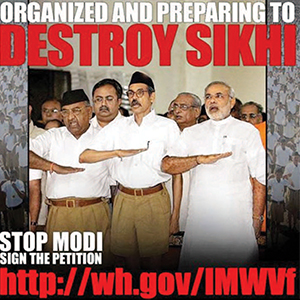
    SFJ has launched an online petition campaign urging President Barack Obama to cancel invitation to Modi for the 2002 communal riots in Gujarat. He said SFJ’s actions are “unbecoming, and at worst an exposure of SFJ’s unlimited hunger for publicity while it indiscriminately dishonors India and all Indians in these United States without cause.” The US Court of Appeals has granted SFJ time till August 22 to file its brief against Congress party’s arguments.

  • PENTAGON CONFIRMS US GENERAL KILLED IN KABUL ATTACK

    PENTAGON CONFIRMS US GENERAL KILLED IN KABUL ATTACK

    WASHINGTON: The Pentagon on Tuesday confirmed that a US general was killed in an attack in Afghanistan — the highest-ranking American fatality since the 9/11 attacks. The US defence department also identified the assailant, who was wearing a uniform, as an Afghan soldier and said that he was killed after he opened fire on coalition forces, his supposed allies.

    “I can … confirm among the casualties was an American general officer who was killed,” Pentagon spokesman, Rear Admiral John Kirby, told reporters. Kirby said that he would not give the general’s name pending notification of next of kin. The Washington Post identified the deceased as Major General Harold J Greene, who served as the deputy for systems acquisitions at the US army headquarters. Greene’s official biography said that the New York State native held a doctorate in materials science from the University of Southern California as well as three master’s degrees.

    The general was the highest-ranking US officer killed since the September 11, 2001 attacks when Lieutenant General Timothy Joseph Maude was killed by a hijacked airliner that crashed into the Pentagon. No US general has been killed in combat since the Vietnam War, with topranking service members spared during the Iraq war and, until now, the Afghanistan conflict. President Barack Obama plans to withdraw most troops from Afghanistan later this year.

    A US official, speaking to AFP on condition of anonymity, said that around 15 people were injured including eight Americans. The nationalities of the other victims were unclear, but the German army said that one of its generals was wounded and the US official said that the injured included Afghans. The Pentagon spokesman said that the assailant was killed, although he did not have more detail on how the incident unfolded. “We believe that the assailant was an Afghan soldier,” Kirby said.

    Kirby said it was too early to assess whether US forces needed to improve vetting of Afghan troops. But he described the attack as an isolated incident and credited Afghan troops for their work in securing national elections. “I’ve seen no indication there’s a degradation of trust between coalition members and their Afghan counterparts,” Kirby said.

    “It’s impossible to eliminate, — completely eliminate — that threat, I think, particularly in a place like Afghanistan, but you can work hard to mitigate it,” Kirby said of insider attacks. “As terrible as today is — and it is a terrible day, a terrible tragedy — we haven’t seen in the course of the last year or so… a ‘spate’ of these insider threat attacks. I think that’s testament to the good work authorities have done,” he said in response to a question.

  • Questions about Nuclear Weapons

    Questions about Nuclear Weapons

    Non-Proliferation Ayatollahs are again chasing India

    In a partisan and condescending editorial in early July 2014, New York Times wrote: “If India wants to be part of the nuclear suppliers group, it needs to sign the treaty that prohibits nuclear testing, stop producing fissile material, and begin talks with its rivals on nuclear weapons containment.” The newspaper is sharply critical of India’s efforts to acquire membership of the Nuclear Suppliers Group (NSG).

    It bases its criticism on a report by IHS Jane’s, a US-based research group, that India is in the process of enhancing its capacity to enrich uranium – ostensibly to power the nuclear reactors on the INS Arihant and future SSBNs, but much in excess of the requirement. This, the editorial says, is causing anxiety to the Pakistanis and has raised the spectre of an arms race in southern Asia.

    It is obvious that the editorial writer understands neither the background to nor the present context of India’s nuclear deterrence. As stated in a letter written by the then Prime Minister A B Vajpayee to US President Bill Clinton after India’s nuclear tests at Pokhran in May 1998 (in an unfriendly act, the letter was leaked to the media by the White House), the primary reason for India’s acquisition of nuclear weapons was the existential threat posed by two nuclear-armed states on India’s borders, with both of which India had fought wars over territorial disputes.

    The China- Pakistan nuclear and missile nexus, including the clandestine transfer of nuclear materials and technology from China to Pakistan, has irrevocably changed the strategic balance in southern Asia. It has enabled Pakistan to neutralise India’s superiority in conventional forces and wage a proxy war under the nuclear umbrella. Since then, the nuclear environment in southern Asia has been further destabilised. China’s ASAT test, BMD programme, efforts aimed at acquiring MIRV capability and ambiguity in its ‘no-first-use’ commitment, while simultaneously modernising the PLA and establishing a ‘string of pearls’ by way of ports in the Indian Ocean, are a cause for concern for India.

    Similarly, Pakistan is engaged in the acquisition of ‘full spectrum’ nuclear capability, including a triad and battlefield or tactical nuclear weapons, which invariably lower the threshold of use. Pakistan has stockpiled a larger number of nuclear warheads (110 to 120) than India (90 to 100) and is continuing to add to the numbers as it has been given unsafeguarded nuclear reactors by China. Mujahideen attacks on Pakistan’s armed forces recently have led to the apprehension that some of Pakistan’s nuclear warheads could fall into Jihadi hands. Some statements made by IHS Jane’s in its report are factually incorrect.

    The research group has assessed that the new Indian uranium enrichment facility at the Indian Rare Metals Plant near Mysore will enhance India’s ability to produce ‘weapons-grade’ uranium to twice the amount needed for its planned nuclear-powered SSBN fleet. The report does not say how the research group arrived at this deduction. Also, the nuclear power reactors of SSBNs require uranium to be enriched only up to 30 to 40 per cent.Weapons-grade uranium must be enriched to levels over 90 per cent. For the record, the Government of India has denied reports that it is ‘covertly’ expanding its nuclear arsenal.

    An Indian official told The Hindu (Atul Aneja, “India trashes report on covert nuclear facility”, June 22, 2014) that the report was ‘mischievously timed’ as it came just before a meeting of the NSG. He said, “It is interesting that such reports questioning India’s nuclear credentials are planted at regular intervals.” The US Government also dismissed the report as ‘highly speculative’ (“US dismisses report on India covertly increasing nukes”, The Hindu, June 21, 2014).

    The US State Department spokesperson said, “We remain fully committed to the terms of the 123 agreement and to enhancing our strategic relationship…” The 123 agreement signed after the Indo-US Civil Nuclear Cooperation Agreement of July 2005 gives an exemption to India’s nuclear weapons facilities and stockpiles of nuclear weapons fuel from inspections by the International Atomic Energy Agency (IAEA). India has agreed to bring 14 nuclear power reactors under international safeguards.

    Eight military facilities, including reactors, enrichment and reprocessing facilities, will remain out of the purview of IAEA safeguards. India is at liberty to set up additional military facilities using unsafeguarded materials if these are considered necessary. India has been a responsible nuclear power and has a positive record on non-proliferation. India has consistently supported total nuclear disarmament and is in favour of negotiations for the Fissile Material Cut-off Treaty (FMCT).

    For both technical and political reasons, it is important for India to keep its option to conduct further nuclear tests open; hence, it cannot sign the CTBT at present even though it has declared a unilateral moratorium on nuclear tests. Non-proliferation ayatollahs should channel their efforts towards identifying and shaming the real proliferators. Influential newspapers like New York Times should review the progress made by the P-5 nuclear weapons states (NWS) on the implementation of the commitments made by them during the 2010 NPT Review Conference (RevCon) as RevCon 2015 is coming up.

    The commitments made at the 2010 RevCon include progress in the implementation of the New Start Treaty; disposal of HEU extracted from nuclear warheads; steps towards early entry into force of the CTBT, monitoring and verification procedures and its universalisation; efforts to revitalise the Conference on Disarmament (CD) by ending the impasse in its working and, the immediate start of negotiations on a legally binding, verifiable international ban on the production of fissile material by way of the FMCT; and, measures to strengthen the non-proliferation regime.

    In April 2009, in his first major foreign policy speech, popularly known as the ‘Prague Spring’ speech that won him the Nobel Peace prize, President Barack Obama had committed the US to work towards a world free of nuclear weapons in line with the growing bipartisan consensus expressed by Henry Kissinger, George Shultz,William Perry, and Sam Nunn, in their famous 2007 Wall Street Journal article. The New York Times should enquire how well that commitment is being fulfilled.

  • Sikh Rights Group Seeks Info on Obama’s Invite to PM Modi

    Sikh Rights Group Seeks Info on Obama’s Invite to PM Modi

    NEW YORK (TIP): A New York based Sikh rights group has filed a request under the Freedom of Information Act (FOIA) seeking documents relating to the Obama administration’s decision to invite Prime Minister Narendra Modi for a meeting at the White House here in September. In its FOIA filed before the State Department, the New York-based Sikh for Justice (SFJ) has also sought documents related to the visa ban of Modi after August 2005.

    In 2005, the US State Department had revoked a visa that Modi had for traveling to the US in the wake of the 2002 riots in Gujarat. He never applied for an American visa after the US move. Following his historic win in the general elections this year, President Barack Obama called Modi personally and invited him for a meeting in September. White House officials say, Obama is looking forward to welcoming Modi.

    Urging the Department of State to expedite, the SFJ’s FOIA states that “Modi’s visa was canceled/revoked by the US government in 2005 for his involvement in serious human rights violations during 2002 massacre in the state of Gujarat while he was the Chief Minister of that state. “Since Modi is due to arrive in the United States during September 2014 and is scheduled to attend a summit at the White House, it is urgent that public be aware of how and under what US law a decision was taken to reverse ban on the issuance of visa to Modi, a known human rights violator”.

    “The law requires USDOS to respond to such FOIA requests within 20 business days,” the rights group said. Last year, SFJ had filed a human rights violation case against the then Prime Minister Manmohan Singh. While the case is still pending in a Washington DC court, the US Government has ruled that Singh enjoys immunity from the case.

  • US House of Representatives votes to sue Obama

    US House of Representatives votes to sue Obama

    WASHINGTON (TIP):
    A sharply divided US House of Representatives on Wednesday approved a Republican plan to file an election-season lawsuit against President Barack Obama contending that he has exceeded his constitutional powers in the way he has enforced the 2010 health care law. Democrats say the lawsuit is a campaign-year stunt designed to draw conservative voters to the polls in congressional elections in November.

    They also say it may be a prelude to an effort to impeach Obama, a suggestion which top Republicans say is groundless. Republicans say Obama has gone too far in selectively enforcing parts of the healthcare overhaul, the signature legislation of his presidency, such as by delaying the requirement that many employers provide health insurance for their workers. They say they are protecting the Constitution’s division of powers. Republicans have not laid out a timetable for actually filing the suit.

    The House vote was 225 to 201. No Democrats voted for the plan. Speculation about impeachment of Obama has been popular among conservative activists and some lawmakers, despite House Speaker John Boehner’s dismissal of the idea. Democrats have capitalized on the speculation, sending fund-raising pleas to their own supporters warning that Republicans are out to impeach Obama and ruin his presidency. Republicans,who are expected to keep their House majority after November’s elections and hope to gain control of the Senate, say Obama has enforced laws as he wants to, dangerously shifting power to the presidency from Congress.

  • 112 arrested at protest against US deportations

    112 arrested at protest against US deportations

    WASHINGTON (TIP):
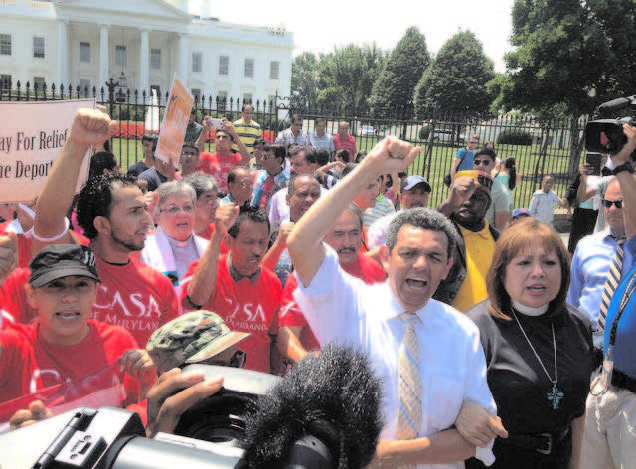
    Immigrant activists and religious leaders massed outside the White House on July 31 to protest against US policies on deporting migrants in the country illegally, and police arrested 112 demonstrators for blocking traffic. The protesters urged President Barack Obama to immediately halt all deportations.

    They also called on him to extend relief for migrants by decree and to protect Central American children crossing into the US unaccompanied by adults. Minerva Carcano, a bishop for the United Methodist Church in Los Angeles, said such protests are needed to “raise a moral voice, because you do not hear from either Congress or the White House.”

    “The two parties only think of immigrants for their political games, when elections come or to hurt their rivals,” she said. “But immigrants are not balls, nor ciphers. They are people.” Pedro Palomino, a Peruvian journalist living in Baltimore, said he had put aside his fears and decided to publicly declare that he is in the US without authorization by joining in the protest. He said it’s time for Obama “to provide a solution for millions of immigrants” who are fearful of deportation.

    An estimated 2 million people have been deported since Obama took office in 2009, and Palomino said he wants to keep that from happening to his family. He said that he, his wife and two of their three children have lived in the US since their tourist visa expired in 2002. “This is a fight for the rights of immigrants,” Palomino said. The protest took place as Republican leaders withdrew legislation aimed at the immigration crisis from consideration in the U.S. House. Before the legislation stalled, White House officials said the president plans to decree relief for immigrants next month.

  • US State Department: ‘No American is proud’ of CIA tactics

    US State Department: ‘No American is proud’ of CIA tactics

    WASHINGTON (TIP):
    The US State Department has endorsed the broad conclusions of a harshly critical Senate report on the CIA’s interrogation and detention practices after the 9/11 attacks that accuses the agency of brutally treating terror suspects and misleading Congress, according to a White House document. “This report tells a story of which no American is proud,” says the four-page document, which contains the State Department’s preliminary proposed talking points in response to the classified Senate report, a summary of which is expected to be released in the coming weeks.

    “But it is also part of another story of which we can be proud,” adds the document, which was circulating this week among White House officials and which the White House accidentally emailed to an Associated Press reporter. “America’s democratic system worked just as it was designed to work in bringing an end to actions inconsistent with our democratic values.” It’s not clear who wrote the document or how influential it will be in tailoring the Obama administration’s ultimate response to an investigation that has been the subject of bitter disputes. It is common practice for the White House to solicit talking points from key agencies involved in responding to a major news event, which the release of the Senate report will be.

    The Senate report concludes that CIA’s techniques on al-Qaida detainees captured after the 2001 attacks were far more brutal than previously understood. The tactics failed to produce life-saving intelligence, the report asserts, and the CIA misled Congress and the Justice Department about the interrogation program. Current and former CIA officials hotly dispute those findings, as do some Senate Republicans. The fight over the report has poisoned the relationship between the CIA and Democrats on the Senate Intelligence Committee, and left the White House in a delicate position.

    President Barack Obama has branded some CIA techniques torture and ordered them stopped, but he also relies heavily on the spy agency, which still employs hundreds of people who were involved in some way in the interrogation program. The report does not draw the legal conclusion that the CIA’s actions constituted torture, though it makes clear that in some cases they amounted to torture by a common definition, two people who have read the report said.

    They spoke on condition of anonymity because they were not authorized to discuss the still-classified document publicly by name. The Senate report, the State Department proposes to say, “leaves no doubt that the methods used to extract information from some terrorist suspects caused profound pain, suffering and humiliation. It also leaves no doubt that the harm caused by the use of these techniques outweighed any potential benefit.” Those methods included slapping, humiliation, exposure to cold, sleep deprivation and the near-drowning technique known as water boarding.

    The White House document is significant because it also reveals some of the State Department’s concerns about how CIA’s tactics will be portrayed around the world. The document lists a series of questions that appear to be designed to gauge what reporters, members of Congress and others might ask about the Obama administration’s response to the Senate report.

    The document focuses in particular on the State Department’s role. “Doesn’t the report make clear that at least some who authorized or participated in the RDI program committed crimes?” the document asks, referring to the program’s formal internal name, the Rendition, Detention and Interrogation program. “Will the Justice Department revisit its decision not to prosecute anyone?” And: “Until now the (U.S. government) has avoided conceding that the techniques used in the RDI program constituted torture. Now that the report is released is the White House prepared to concede that people were tortured?”

  • US snooping on BJP unacceptable, SUSHMA TELLS KERRY

    US snooping on BJP unacceptable, SUSHMA TELLS KERRY

    NEW DELHI (TIP):
    Alarmed by the disclosure last month that US authorities spied on BJP when it was not in power, foreign minister Sushma Swaraj raised the issue with visiting secretary of state John Kerry on July 31 saying this was totally unacceptable to India. India had registered a protest with senior US diplomats after the disclosure which was based on documents provided by whistleblower Edward Snowden but officials said Swaraj took up the issue with Kerry to drive home the point that there was anger in the country over alleged snooping by the National Security Agency (NSA). “I told Secretary Kerry that this was completely unacceptable to us as India and US are friendly countries.

    Friends don’t snoop on each other,” Swaraj told reporters after the 5th India-US strategic dialogue and what was also the first high-level engagement between the two countries after the Narendra Modi government took over. In his response, Kerry sought to assuage India’s concerns as he said President Barack Obama had undertaken a unique and unprecedented exercise to review all intelligence activities carried out by US agencies. He also said the US valued its relations with India and also the partnership between the two countries in counter-terror operations. “We don’t discuss intelligence matter publicly.

    But we value sharing of information regularly on counter-terrorism with India. US President Barack Obama clearly articulated that we fully respect and understand feelings expressed by Indian nationals,” Kerry said. The two leaders discussed all issues cutting across trade, energy, climate change, security and counter-terror operations. On the controversy over India’s stand at WTO over trade facilitation, Kerry expressed hope that a compromise deal would be worked out.

    According to documents leaked by Snowden, BJP figured in the list of non-US political parties — along with Lebanon’s Amal which has links with Hezbollah, Egypt’s Muslim Brotherhood and the Pakistan Peoples Party — which were spied on by the NSA after an official authorization by the US government. In fact, Swaraj’s predecessor Salman Khurshid too had mentioned the issue of snooping on the Indian embassy in the US to Kerry last year but later seemed to defend it saying it was actually not snooping and that such information was used by the US to prevent serious terror strikes.

    It was also discovered last year that India was the fifthmost- tracked country by US agencies which used a clandestine “data-mining programe” to monitor worldwide internet data. A joint statement issued later said that faced with a common threat from terrorism, including in South Asia, the two leaders committed to intensify efforts to “combat terrorism, proliferation of WMDs, nuclear terrorism, cross-border crime and address the misuse of the internet for terrorist purposes, in compliance with respective laws.”

    On terrorism, the two leaders reiterated their condemnation of terrorism in all its forms and reaffirmed their commitment to eliminating terrorist safe havens and infrastructure, and disrupting terrorist networks including al-Qaida and the Lashkar-e-Taiba. “The leaders called for Pakistan to work toward bringing the perpetrators of the November 2008 Mumbai attacks to justice,” said the statement. The two leaders welcomed the continuation of the Counter-Terrorism Joint Working Group process, sustained exchanges of senior experts, and the upcoming meeting of the Working Group in 2014.

  • Obama, Netherlands’ Rutte agree more sanctions needed on Russia

    Obama, Netherlands’ Rutte agree more sanctions needed on Russia

    WASHINGTON (TIP):

    US President Barack Obama spoke by phone with Netherlands Prime Minister Mark Rutte on July 24 and the White House said both agreed on the need to impose more sanctions on Russia for continuing to arm pro-Russian separatists in Ukraine. According to a White House statement, the two leaders said Russia still had not taken steps to deescalate the situation in eastern Ukraine a week after a Malaysian passenger jet was shot down by what US officials believe were pro-Russian separatists using Russian weapons.

    All 298 people on board were killed. “Instead of de-escalating the situation, they agreed that all evidence indicates Russia is still arming and supplying separatists who continue to engage in deadly acts of aggression against Ukrainian armed forces,” the White House said.

    As a result, Obama and Rutte believe Russia must not be permitted “to destabilize the situation in Ukraine without incurring costs and that, accordingly, the international community will need to enact additional sanctions.” Obama also spoke with Australian Prime Minister Tony Abbott. The White House said they agreed on the need for immediate access to the crash site by international investigators.

  • Obama takes on ‘corporate deserters’

    Obama takes on ‘corporate deserters’

    WASHINGTON (TIP): President Barack Obama called companies that re-incorporate overseas to avoid taxes “corporate deserters” on Thursday, July 24, stepping up a drive to close a tax loophole that could affect deals already in the works for Walgreens and AbbVie, two giant firms headquartered in Chicago’s suburbs. At issue are mergers between U.S. corporations and smaller foreign companies that legally allow a U.S. company headquarters to relocate – mainly on paper – to a nation with lower tax rates.

    It is a perfectly legal tax-avoidance strategy, but one that Obama and many Democrats find indefensible. Taking on “inversion” – the technical term for the overseas relocations – is becoming a rallying cry of the progressive wing of the Democratic family and could prove potent in the run-up to the November elections. Republicans counter that businesses are justified in taking logical steps to enhance profitability in the wake of high U.S. corporate tax rates and say the government should keep out of the way.

  • Actress jailed for 18 years after mailing ricin-spiked letters to US president, NY mayor

    Actress jailed for 18 years after mailing ricin-spiked letters to US president, NY mayor

    WASHINGTON (TIP) : An actress and former beauty queen who sent ricin-laced letters to US President Barack Obama and the New York City mayor has been sentenced to 18 years in prison. Shannon Guess Richardson was arrested in June 2013 after she posted letters to the president, the then-mayor Michael Bloomberg as well as a gun control advocate – a bizarre act she blamed on her husband. The 36-year-old Texan, who had bit parts in ‘The Vampire Diaries’ and movie ‘The Blind Side’, pleaded guilty to possessing and producing a biological toxin and received the maximum sentence yesterday. She was also ordered to pay a fee of $367,000 (£214,000). “I never intended for anybody to be hurt,” she told the court. “I’m not a bad person. I don’t have it in me to hurt anyone.

    ” Richardson, who gave birth while in custody, had attempted to frame her estranged husband in the crime after obtaining a PayPal account and post office box in his name. A signed plea document details how she had ordered castor beans from the internet, learnt how to turn them into ricin and then waited patiently for her husband, Nathan Richardson, to go to work on 20 May 2013 being escorted out of the courthouse yesterday Richardson being escorted out of the courthouse yesterday She printed address labels for each of the recipients – the third of which was Mark Glaze, Director of Mayors Against Illegal Guns.

    The letter to Obama read: “What’s in this letter is nothing compared to what I’ve got in store for you Mr President. “You will have to kill me and my family before you get my guns. Anyone wants to come to my house will get shot in the face.” Before sentencing, Richardson appealed to the judge for “mercy and compassion” saying that she had already been “punished dearly” by being separated from her six children. “The sentiments expressed in those letters were not mine,” Richardson added. She reportedly thought that security measures at each of the victim’s addresses would have prevented them from opening the letters. Her husband has since filed for divorce

  • Gov. Cuomo Brokers Deal to Avert LIRR Strike

    Gov. Cuomo Brokers Deal to Avert LIRR Strike

    Commuters heave a Sigh of Relief

    I.S. Saluja:

    NEW YORK (TIP): The MTA and LIRR unions signed a sixand-a-half year agreement with 17 percent wage hikes on Thursday, July 17, after Gov. Andrew Cuomo brokered a deal in his Midtown offices, averting a devastating strike that would have stranded hundreds of thousands of people, officials said. Gov. Andrew Cuomo announced there is a tentative deal between the MTA and the Long Island Rail Road unions, averting a strike that could have come this weekend. With MTA Chairman Thomas Prendergast and the unions’ chief negotiator Anthony Simon seated by his side, Cuomo said Thursday, July 17, that a “compromise by both parties” had been reached.

    “It is my pleasure to announce today that we have settled a four-year dispute dealing with the Long Island Rail Road labor unions,” Cuomo said. The LIRR’s unions representing 5,400 workers were threatening to strike starting at 12:01 a.m. Sunday, July 20, if a deal wasn’t reached and a strike seemed likely earlier this week when negotiations broke down. The two sides returned to the table Thursday at Cuomo’s Manhattan office, who said he began participating in talks directly after the two sides met Wednesday but failed to come to an agreement.


    6
    New York State Comptroller Thomas P. DiNapoli said in a statement: “The New Yorkers who ride the LIRR are vital to our regional economy, and have been another economic setback for the region if the LIRR had come to a grinding halt. I commend the MTA, the LIRR unions and Governor Cuomo for steering negotiations to an agreement.”

    The governor had previously said he wouldn’t intervene in the contract dispute. The unions have been working without a contract since 2010. Throughout negotiations, the main sticking point had been whether LIRR employees would have to contribute to pensions and health insurance. Under the terms of the deal reached Thursday, LIRR employees will receive 17 percent raises over six and a half years and contribute to their health insurance costs. New employees will also have different wage progressions and pension plan contributions. The contract will have no impact on MTA fares and will be accommodated within revisions to the MTA financial plan, Cuomo said.


    7
    Nassau County Executive Edward P. Mangano said: “I commend Governor Cuomo for averting a Long Island Rail Road strike, protecting our commuters and safeguarding our economy. The MTA’s longterm financial stability is critical and so is the vital transportation route they provide to Long Island commuters.”

    “The agreement reached today provides a fair and reasonable contract,” Prendergast said Thursday. “In a way that protects the commuter as well as the long-term fiscal stability of the MTA.” “We cared about the financial stability of the railroad as well as the members and their financial stability,” Simon said. President Barack Obama had appointed two emergency boards to help resolve the dispute, but the MTA rejected both non-binding recommendations and the unions voted to authorize a strike set to begin on July 20.


    8
    NY State Senate candidate and a former New York City Comptroller and former City Council Transportation Committee Chair John Liu said: “The tentative agreement between the MTA and the LIRR unions is welcome news for commuters, workers and the economy of the metropolitan region. Over 10,000 commuters in our district and hundreds of thousands of other riders rely on the LIRR service every day and we are all grateful that this crisis has been averted. Governor Cuomo deserves a great deal of credit for bringing both sides together and helping to reach a fair agreement.”

    If a deal wasn’t reached by the strike deadline, the MTA had a contingency plan in place for the LIRR’s 300,000 daily commuters. Options for commuters included shuttle buses, ferries and car pools, but officials were also urging people to telecommute if possible. State comptroller Thomas DiNapoli had estimated that a strike would cause economic losses of $50 million a day. Cuomo said the tentative agreement is still subject to approval by the eight LIRR unions’ executive boards, ratification by their membership and approval by the MTA Board.

    Commuters heaved a sigh of relief to hear the news that the MTA and the Unions had reached an agreement and that the threatened strike would not happen. Had the strike taken place it would have upset daily commute of 300, 000 and resulted in a loss of $50M a day for the region. Meanwhile, a number of officials and politicians have applauded the Governor for his effort to bring about the agreement.

  • Obama invites Modi to the US

    Obama invites Modi to the US

    NEW DELHI (TIP): Prime Minister Narendra Modi was on July 10 invited by US President Barack Obama to visit Washington in September, saying he wants to “work closely with Prime Minister to makeIndia-US relations a defining partnership for the 21st century”. This should be music to the ears of a man who was told, after the Gujarat riots of 2002, that he would be unwelcome in the US, if he were to visit to address Gujaratis in that country on a tourist visa. Subsequently the US cancelled his tourist visa.But things have changed.

    US Deputy Secretary of StateWilliam Burns called on Modi and delivered Obama’s invite. “The prime minister thanked President Obama for the invitation and looked forward to a result-oriented visit with concrete outcomes that imparts new momentum and energy to the India-US strategic partnership,” stated the Press Information Bureau. “The relationship between the world’s oldest and largest democracies should not only be for the benefit of the two countries but should emerge as a powerful force of good for peace, stability and prosperity in the world,” Modi was quoted as saying, in the press release.

    Modi is to go to the US to attend the UN General Assembly, sometime in September. Soon after the Lok Sabha election results, chatter had started in the Bharatiya Janata Party (BJP) that Modi should not go to the US unless that country apologised for denying him a visa. However, that was put down firmly by the party’s senior leadership. The bilateral aspect of Modi’s visit will be an important milestone for Indo-US relations. It was quite clear from the statement by the government that this would be a focussed results-oriented visit, not just a networking exercise or a pleasure trip.

    The is whether Modi will meet Pakistan Prime Minister Nawaz Sharif in the US. In 2013, a meeting between the two PMs turned into a media disaster with Nawaz Sharif supposedly likening the Indian PM to a “dehaati aurat” (village woman) who would bring in third parties to settle disputes with her husband.With hardly any formal forward movement in relations with Pakistan after Sharif’s visit to attend Modi’s oath-taking ceremony, exactly what if anything such a meeting will achieve will have to be assessed. The Sangh family will also give its inputs on such a meeting.

  • Kerry arrives in Afghanistan to meet candidates

    Kerry arrives in Afghanistan to meet candidates

    KABUL, AFGHANISTAN (TIP): The US and its allies are growing increasingly concerned as Afghanistan shows signs of unraveling in its first democratic transfer of power from President Hamid Karzai. With Iraq wracked by insurgency, Afghanistan’s dispute over election results poses a new challenge to President Barack Obama’s effort to leave behind two secure states while ending America’s long wars. US Secretary of State John Kerry made a hastily arranged visit to Afghanistan on Friday to help resolve the election crisis, which is sowing chaos in a country that the US has spent hundreds of billions of dollars and lost more than 2,000 lives trying to stabilize. He was to meet with the two candidates claiming victory in last month’s presidential election runoff. “I’ve been in touch with both candidates several times as well as President (Hamid) Karzai,” Kerry said before leaving Beijing, where he attended a US-China economic meeting.

    He called on them to “show critical statesmanship and leadership at a time when Afghanistan obviously needs it.” “This is a critical moment for the transition, which is essential to future governance of the country and the capacity of the (US and its allies) to be able to continue to be supportive and be able to carry out the mission which so many have sacrificed so much to achieve.” With Iraq wracked by insurgency, Afghanistan’s power dispute over the election results is posing a new challenge to President Barack Obama’s 5 1/2-year effort to leave behind two secure nations while ending America’s long wars in the Muslim world. Obama wants to pull out all but about 10,000 US troops from Afghanistan by the end of the year, and the election of a new Afghan president was supposed to enshrine the progress the nation has made since the US-led invasion after the 9/11 terrorist attacks.

    The preliminary results of the presidential election runoff suggested a massive turnaround in favor of former Finance Minister Ashraf Ghani Ahmadzai, a onetime World Bank economist who lagged significantly behind former Foreign Minister Abdullah Abdullah in first-round voting. Abdullah, a top leader of the Northern Alliance that battled the Taliban before the American-led invasion, claims the runoff was a fraud, and his supporters have spoken of establishing a “parallel government,” raising the specter of the Afghan state collapsing. Abdullah was runner-up to Karzai in a fraud-riddled 2009 presidential vote before he pulled out of that runoff.

    Chief electoral officer Zia ul-Haq Amarkhail has resigned, denying any involvement in fraud but saying he would step down for the national interest. Kerry will seek to persuade both candidates to hold off from rash action while the ballots are examined and political leaders are consulted across Afghanistan’s ethnic spectrum. The US wants to ensure that whoever wins will create a government that welcomes all ethnic factions. If neither candidate gains credibility as the rightful leader, the winner could be the Taliban.

    Many Afghans fear the insurgent forces will only gain strength as the US military presence recedes. Internal instability could aid the insurgency. Abdullah and Ghani each have said that as president they’d sign a bilateral security agreement with the United States, granting American forces immunity from local prosecution. Without such an agreement, the Obama administration has said it would have to pull all US troops out of Afghanistan, a scenario that played out in Iraq three years ago. Karzai has refused to finalize the deal, leaving it to his successor. James Dobbins, the State Department’s special representative for Afghanistan and Pakistan, said this week some degree of fraud was expected, but it’s believed the fraud was “quite extensive.

    ” Speaking in Washington, Dobbins said the Abdullah campaign particularly mistrusts the impartiality of the Afghan electoral institutions. Both campaigns and Karzai have asked the Un for help, he noted, and the Un has been designing a plan for deciding how ballots can be reviewed and which ones would be reviewed for possible fraud. A Un audit, however rudimentary, probably could be done within two weeks, US officials believe. The focus would be on clear fraud indicators, including districts with high turnout or more women going to the ballots than men.

  • US House of Representatives backs resolution supporting Israel

    US House of Representatives backs resolution supporting Israel

    WASHINGTON (TIP): The US House of Representatives has backed a resolution expressing support for Israel and its right to self-defence. Lawmakers endorsed the non-binding measure by a voice vote on Friday. It condemns Hamas for unprovoked rocket attacks on Israel. The bipartisan resolution is sponsored by Democratic congressman Steve Israel and Republican congressman Tom Cole. Israel has intensified its broad military offensive in the Gaza Strip to stop rocket fire from Palestinian militants targeting Israel.

    The death toll from the 4-day-old conflict has exceeded 100, and President Barack Obama has told Israel the United States is willing to negotiate a cease-fire between Israel and Hamas. The measure includes a provision by Republican congressman Ed Royce highlighting Iran’s role in supporting Hamas.

  • When US President Barack Obama jumped the queue

    When US President Barack Obama jumped the queue

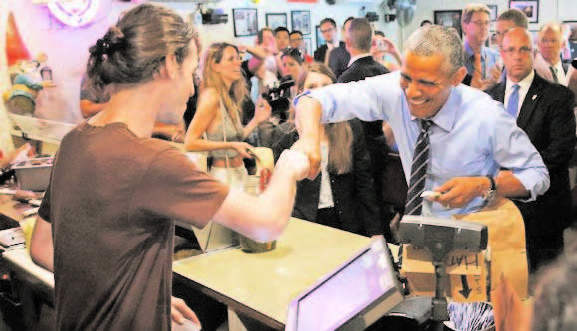
    HOUSTON (TIP): US President Barack Obama apologetically jumped the queue at a famous barbecue joint in Austin, where no one cuts the line, so he could order takeout for his official travel party and paid for the two people he jumped ahead of. After a campaign-style speech in Austin on Thursday to raise money for the Democratic Party, Obama made a stop by Franklin Barbecue and was quickly ushered to the front of the line. It’s common practice to let a president cut to the front of the line at a dining establishment.

    After all, the president arguably has the busiest schedule on the planet. Owner of this ten-year-old joint, Aaron Franklin said no one is allowed to cut the line at his restaurant, but he made an exception for the President. Franklin and his daughter took a picture with the President. Apologizing to two people at the front of the line for cutting in front of them, Obama offered to buy them lunch, along with a big order of takeout to take on Air Force One. The total order came to over $300.

    “I feel real bad, but, I’m gonna cut,” Obama said. “Because these folks were in front of me, I’m buying for them,” he told the workers behind the counter. The President ordered around 8 pounds of meat, 6 pounds of which went for Bruce Finstad of Houston and his daughter Faith Finstad of Austin, the lucky pair at the front of the line, and their two seated companions.