Tag: Barack Obama

  • GAZA DEATH TOLL NEARS 100, ISRAEL DOES NOT RULE OUT GROUND OFFENSIVE

    GAZA DEATH TOLL NEARS 100, ISRAEL DOES NOT RULE OUT GROUND OFFENSIVE

    GAZA/JERUSALEM (TIP): Israel said on July 12 it would not bow to international pressure to end air strikes in Gaza that officials there said had killed almost 100 Palestinians, despite an offer by US President Barack Obama to help negotiate a ceasefire with militants. Asked if Israel might move from the mostly aerial attacks of the past four days into a ground war in Gaza to stop militant rocket fire, Prime Minister Benjamin Netanyahu replied, “we are weighing all possibilities and preparing for all possibilities.” “No international pressure will prevent us from acting with all power,” he told reporters in Tel Aviv a day after a telephone conversation with Obama about the worst flare-up in Israeli- Palestinian violence in almost two years.

    On Friday Washington affirmed Israel’s right to defend itself in a statement from the Pentagon. But defence secretary Chuck Hagel told Israeli defence minister Moshe Ya’alon he was concerned “about the risk of further escalation and emphasized the need for all sides to do everything they can to protect civilian lives and restore calm.” A rocket caused the first serious Israeli casualty — one of eight people hurt when a fuel tanker was hit at a service station in Ashdod, 30 km (20 miles) north of Gaza, and Palestinian militants warned international airlines they would fire rockets at Tel Aviv’s main airport.

    Medical officials in Gaza said at least 75 civilians, including 23 children, were among at least 99 people killed in the aerial bombardments which Israel began on Tuesday. They included 12 killed on July 12. Palestinian President Mahmoud Abbas urged the United Nations security council to order an immediate truce. But Israel said it was determined to end cross-border rocket attacks that intensified last month after its forces arrested hundreds of activists from the Islamist Hamas movement in the occupied West Bank following the abduction there of three Jewish teenagers who were later found killed.

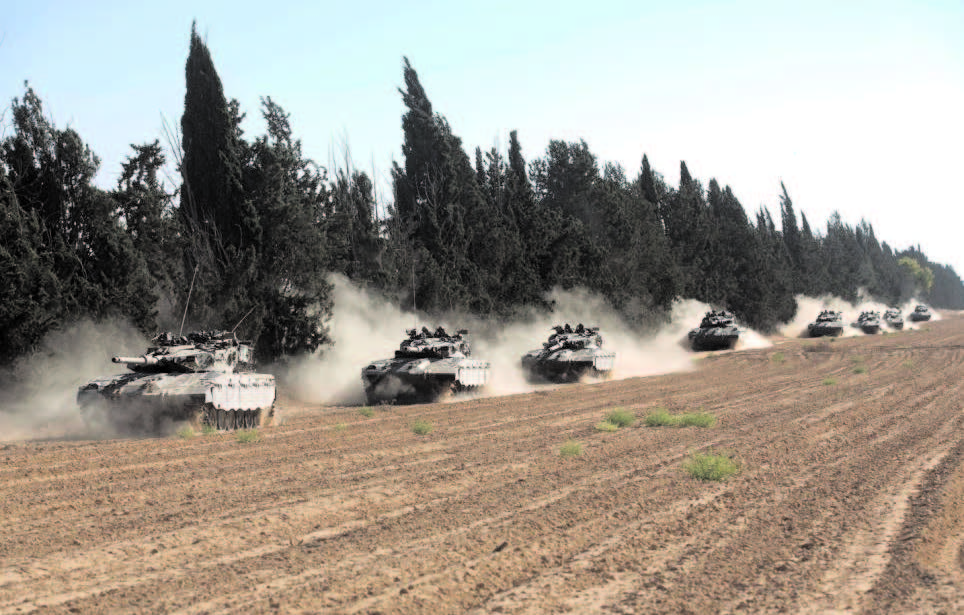
    A Palestinian youth was killed in Jerusalem in a suspected Israeli revenge attack. Israel’s campaign “will continue until we are certain that quiet returns to Israeli citizens”, Netanyahu said. Israel had attacked more than 1,000 targets in Gaza and there were “more to go.” Israel’s military commander, Lieutenant-General Benny Gantz, said his forces were ready to act as needed — an indication of a readiness to send in tanks and other ground troops, as Israel last did for two weeks in early 2009.

    “We are in the midst of an assault and we are prepared to expand it as much as is required, to wherever is required, with whatever force will be required and for as long as will be required,” Gantz told reporters. Western-backed Abbas, who is based in the West Bank and agreed a powersharing deal with Gaza’s dominant Hamas in April after years of feuding, called for international help: “The Palestinian leadership urges the security council to quickly issue a clear condemnation of this Israeli aggression and impose a commitment of a mutual ceasefire immediately,” he said.

    Race for shelter
    After the failure of the latest USbrokered peace talks with Israel, Abbas’s accord with Hamas angered Israel. The rocket salvoes by the hardline movement and its allies, some striking more than 100 km (60 miles) from Gaza, have killed no one so far, due in part to interception by Israel’s partly-US funded Iron Dome aerial defence system. But racing for shelter had become a routine for hundreds of thousands of Israelis and their leaders have hinted they could order troops into the Gaza Strip, a 40-km sliver of coastline that is home to nearly two million people. Some 20,000 reservists have already been mobilized, the army says.

    Hamas’s armed wing said it would fire rockets at Tel Aviv’s Ben-Gurion international airport and warned airlines not to fly to Israel’s main gateway to the world. The airport has been fully operational since the Israeli offensive began and international airlines have continued to fly in, with no reports of rockets from Gaza — largely inaccurate projectiles — landing anywhere near the facility, inland of the coastal metropolis. It is within an area covered by Iron Dome. The Israeli military said it launched fresh naval and air strikes early on Friday on Gaza, giving no further details.

    An air strike on a house in the city of Gaza killed a man described by Palestinian officials as a doctor and pharmacist. Medics and residents said an aircraft also bombed a three-storey house in the southern town of Rafah, killing five people. Later a four-year-old boy killed when a neighbour’s house was targeted by an Israeli raid, a Palestinian hospital official said. Two other people aged 70 and 80 were killed in a missile strike elsewhere in Gaza, the Palestinian Heath Ministry said.

    Homes, many belonging to militants, have been targeted frequently in attacks that have sent Palestinian families living nearby running into the streets in panic. Explosions echo constantly across the densely populated territory. The Palestinian interior ministry in Gaza said an Israeli strike targeted the home of a senior Islamic Jihad leader after darkness fell, at a moment when Israel reported heavy rocket barrages on its southern cities. There were no reports of any casualties in these raids. White streaks arcing into a blue sky, ending abruptly in flashes and dark puffs of smoke marked what the military said was the interception of three rockets over Tel Aviv.

    Lebanese rockets
    Fire was also exchanged across Israel’s northern border. Lebanese security sources said two rockets were fired into northern Israel on Friday but they did not know who had fired them. Israel responded with artillery fire. Palestinian groups in Lebanon have often fired rockets into Israel in the past.

  • Foreign funding and the Maharajas among NGOs

    Foreign funding and the Maharajas among NGOs

    “At the heart of the dilemmas presented by the evolving situation is the kind of Middle East major regional and world powers want to see. More importantly, where will the present series of conflicts take the region, with the escalating Shia-Sunni conflict and the dislocation of millions, either internally displaced or living as refugees in neighboring countries?” the author wonders

    Behind the frenzied diplomacy over the future of Iraq are new assumptions taking shape. First, is the division of the country among its Shia, Sunni and Kurdish areas a matter of time? Second, how far will the Islamic State of Iraq and Syria (and its variant the Levant), collectively known as the ISIS, spread from its present swathe in Syria and Iraq? What is being debated is the future shape of the Middle East some hundred years after the French-British division of the spoils of the disintegrating Ottoman Empire.

    There are no clear answers because of the variety of regional and world powers pursuing differing policies. Of the regional actors, the most important are Saudi Arabia, Iran and Turkey. Here is a conflict not only between Sunni and Shia countries but the very different inflections of the two Sunni powers and Shia Iran’s interest in seeking the destruction of the ISIS as it protects its influence in Iraq, now being governed by the majority Shias.

    The United States has an obvious interest in seeking to check the onslaught of the ISIS and to save a scrap of investment in all that it put into Iraq starting with its invasion in 2003.

    But the ISIS represents a danger also to its vital interest in Israel’s security, with the present ruling dispensation there bent on colonizing the land of Palestine in perpetuity.

    The dilemma for President Barack Obama is that having won his election and reelection on the strength of ending America’s wars in Iraq and Afghanistan, he has been forced to re-introduce American military power in the shape of 300 military advisers and the threat of air strikes. Washington cannot allow a terrorist outfit of the shape of the ISIS to hold sway over Iraq.

    Here Iranian and U.S. interests coincide, despite their backing of opposite sides in neighbouring Syria. At the heart of the dilemmas presented by the evolving situation is the kind of Middle East major regional and world powers want to see.

    More importantly, where will the present series of conflicts take the region, with the escalating Shia-Sunni conflict and the dislocation of millions, either internally displaced or living as refugees in neighbouring countries? A few pointers can be tabulated. If the present crisis in Iraq continues to take its toll, what is being described as the soft partition of its three main regions is inevitable.

    Second, the Gulf monarchies led by Saudi Arabia will draw closer even as they have been disheartened by the hesitation shown by President Obama over effectively dealing with the Syrian crisis. It remains to be seen whether the vast differences that separate Iran and the US over resolving the Iranian nuclear portfolio can be bridged in the near future.

    But Tehran has been signaling for some time under the Presidency of Mr. Hassan Rouhani that it wants to play a constructive role in the region and beyond it. Future steps taken by President Obama and Iran, among others, will decide the shape of the region. Egypt, the traditional regional heavyweight, is too involved in its domestic transition and economic woes to be of much assistance in the immediate crisis facing the region.

    Indeed, we are entering a new phase in the affairs of the region and the Arab world. The days of the Arab Spring are but a distinct memory although the hopes of a better world will not die down for ever.

    The problem for the liberals and secular reformers is that they are in a minority and religion-based politics and the destructive uses of religion in its distorted forms have taken their toll. Basically, the peoples of much of the region are conservative and God-fearing in their outlook even as the younger generation, vast sections of whom are unemployed, are looking for work and the goodies promised in a television – and internet-generated age.

    Besides, it would be imprudent to forget after the Arab romanticism introduced by Gamal Abdel Nasser in Egypt, the dream was snuffed out and disillusionment set in, accentuated by the Arabs’ humiliating defeat in the 1967 war with Israel.

    Even as the Palestinians are seeking to recover some of their land and dignity, Israel shows no sign of obliging, enjoying as it does uncritical American support, thanks to the powerful American Jewish lobby. For the most part, the Arab world has been ruled by absolute monarchies or, as in Egypt’s case, by armed forces officers donning the lounge suit, as in the case of three decades of Hosni Mubarak rule, until his overthrow.

    Tunisia, the originator of the Arab Spring, is the only country that is trying to make a success of the spirit of the original revolution. Indeed, the prospects for the Arab world look gloomy but, as the old adage has it, time does not wait for people and countries and the question before the world is where the currents of history are taking the region. In installing another armed forces man in the shape of ex-Field Marshal Abdel el-Sisi as the new President, Egypt offers no solution.

    Nor can President Bashar al-Assad of Syria fighting a vicious civil war to safeguard his office and the rule of his minority Alawite rule offer a solution. In Algeria, an incapacitated President Abdelaziz Bouteflika has won yet another show election. If the region’s leadership does not provide the answer, where will the peoples and the world look for answers?

    For one thing, the ISIS has helped concentrate minds because this is one thing neither the majority in the region nor outside powers want. The threeyear savagery of the Syrian civil war first gave rise to it even as President Assad interested outside powers to help the fight for, or against, him. In Iraq, the rapidity of the ISIS’s advance was determined in part by Prime Minister Nouri al-Maliki’s marginalization of Sunnis and the disaffection of Kurds. But the question remains: Where does the Middle East go from here? (Courtesy The Tribune)

  • This Independence day, resolve to change the course of history

    This Independence day, resolve to change the course of history

    As the nation prepares to celebrate 4th of July I am reminded of the long and grim struggle that American people had to wage to secure their independence.

    The indomitable spirit of those who led the struggle fills every generation with awe and admiration for their spectacular achievement. 1776 to 2011 has been a long period. America has moved on from strength to strength.

    From a bipolar world a couple of years ago the world seems to have become unipolar, with America dictating the rest of the world. The world has witnessed time and again the heroism of American people. Drawn into conflicts, and there have been many, America has always given enough evidence of its resolve to win and stay on top, minor debacles notwithstanding.

    A proud nation, America has taken adversities in its stride. However, it is not that America does not make mistakes. But there have always been amends post mistakes too. But the last couple of years found America piling up these mistakes and inviting trouble.

    It is necessary that American leadership makes amends for the terrible chain of mistakes having been made during the last few years. One, America has realized the futility of engaging in avoidable conflicts abroad. Barack Obama deserves all appreciation for the gradual disengagement in these conflicts which has caused loss of valuable American lives and drained the resources of the country.

    These conflicts have been a serious drain on the shrunk resources of a nation that has huge debt burden. These conflicts have taken a heavy toll of lives of sons and daughters of America. These conflicts have created enemies of America. America must say no to fighting wars of and for others. The economic scenario as of today offers no satisfaction.

    The unemployment rate, though steadily improving in the last couple of months, is quite disturbing. The real estate is in a shambles, with foreclosures mounting and families losing their homes which they had made with such great love. Businesses are closing and jobs are vanishing. Then there are social welfare aspects. Education and healthcare.

    If America cannot come up with better educational facilities for its children and healthcare for all its citizenry, all claims of America being number one nation of the world amount to empty bragging. American lawmakers on both sides of the aisle, instead of dying to push their ideological agenda, need to introspect and look only at what America and Americans need.

    If they cannot do enough for America when it is passing through hard times they are doing a great disservice to our forefathers who dreamed of an America where each could realize his dream. On this 4th of July, let each American pledge to emulate the spirit of our founding forefathers, resolving to overcome all obstacles to the happiness of the common American man, woman and child. Let each American realize that it is in him to change the course of history and that he will change it. Yes, he can. Happy Independence Day!

  • US discloses secret Somalia military presence, up to 120 troops

    US discloses secret Somalia military presence, up to 120 troops

    WASHINGTON (TIP): US military advisors have secretly operated in Somalia since around 2007 and Washington plans to deepen its security assistance to help the country fend off threats by Islamist militant group al Shabaab, US officials said.

    The comments are the first detailed public acknowledgement of a US military presence in Somalia dating back since the US administration of George W. Bush and add to other signs of a deepening US commitment to Somalia’s government, which the Obama administration recognized last year.

    The deployments, consisting of up to 120 troops on the ground, go beyond the Pentagon’s January announcement that it had sent a handful of advisors in October. That was seen at the time as the first assignment of US troops to Somalia since 1993 when two US helicopters were shot down and 18 American troops killed in the “Black Hawk Down” disaster.

    The plans to further expand US military assistance coincide with increasing efforts by the Somali government and African Union peacekeepers to counter a bloody seven-year insurgent campaign by the al Qaeda-linked al Shabaab to impose strict Islamic law inside Somalia.

    Those US plans include greater military engagement and new funds for training and assistance for the Somali National Army (SNA), after years of working with the African Union Mission in Somalia, or AMISOM, which has about 22,000 troops in the country from Uganda, Kenya, Sierra Leone, Burundi, Djibouti and Ethiopia.

    “What you’ll see with this upcoming fiscal year is the beginning of engagement with the SNA proper,” said a US defense official, who declined to be identified. The next fiscal year starts in October. An Obama administration official told Reuters there were currently up to 120 US military personnel on the ground throughout Somalia and described them as trainers and advisors.

    “They’re not involved in combat,” the official told Reuters, speaking on condition of anonymity, adding that until last year, US military advisors had been working with AMISOM troop contributors, as opposed to Somali forces. President Barack Obama last year determined that Somalia could receive US military assistance.

    Another official said American forces over the years had provided advice and assistance in areas related to mission planning, small unit tactics, medical care, human rights and communications. The official said US forces in Somalia have also facilitated coordination, planning and communication between AMISOM troop contributors and Somali security forces

    Special operations

    The comments expand upon a little noticed section of a speech given early in June by Wendy Sherman, under secretary of state for political affairs. She publicly acknowledged that a “small contingent of US military personnel” including special operations forces had been present in parts of Somalia for several years.

    Still, it was not immediately clear from her remarks the extent to which US personnel had been operating. US special operations forces have staged high-profile raids in the past in Somalia, including an aborted attempt in October to capture an al Shabaab operative in the militant group’s stronghold of Barawe. US officials have acknowledged Washington’s support for AMISOM and Somalia’s struggle against al Shabaab.

    US Central Intelligence Agency officials have been known to operate in the country. US troop numbers on the ground in Somalia vary over time, the officials told Reuters. Deployments are “staggered” and “short-term,” one official said. But the Obama administration official added that there was overlap in the deployments to allow for a persistent presence on the ground.

  • OBAMA WORST US PRESIDENT SINCE WORLD WAR II: POLL

    OBAMA WORST US PRESIDENT SINCE WORLD WAR II: POLL

    WASHINGTON (TIP): Barack Obama is the worst US President since World War II, 33 per cent of Americans have said in a new poll released on July 2 which gave negative grades for him for his handling of key issues like the economy, foreign policy, terrorism, heatlhcare and environment.

    America would be better off if Republican Mitt Romney had won the 2012 presidential election, 45 per cent of voters say, while 38 per cent say the country would be worse off, according to the Quinnipiac University National Poll. American voters say 54 – 44 per cent that the Obama Administration is not competent running the government.


    6

    The president is paying attention to what his administration is doing, 47 per cent say, while 48 per cent say he does not pay enough attention, according to the poll. 52-year-old Obama, now in his second term, is the worst president since World War II, 33 per cent of American voters say while another 28 per cent pick his predecessor in the White House, President George W Bush.

    Ronald Reagan is the best president since WW II, 35 per cent of voters say, with 18 per cent for Bill Clinton, 15 per cent for John F Kennedy and 8 per cent for Obama, the independent Quinnipiac University poll finds.Among Democrats, 34 per cent say Clinton is the best president, with 18 per cent each for Obama and Kennedy. Obama has been a better president than George W Bush, 39 per cent of voters say, while 40 per cent say he is worse. Men say 43 – 36 per cent that Obama is worse than Bush while women say 42 – 38 per cent he is better.

    Obama is worse, Republicans say 79 – 7 per cent and independent voters say 41 – 31 per cent. Democrats say 78 – 4 per cent that he is better. Voters say by a narrow 37 – 34 per cent that Obama is better for the economy than Bush. Missing Mitt are Republicans 84 – 5 per cent and independent voters 47 – 33 per cent, while Democrats say 74 – 10 per cent that the US would be worse off with Romney.

    “Over the span of 69 years of American history and 12 presidencies, President Barack Obama finds himself with President George W Bush at the bottom of the popularity barrel,” said Tim Malloy, assistant director of the Quinnipiac University Poll. “Would Mitt have been a better fit? More voters in hindsight say yes,” the Quinnipiac press release says. A series of political controversies, economic woes and foreign policy crises have hit Obama’s reputation.

  • NSA internet spying legal, says Obama-appointed privacy board

    NSA internet spying legal, says Obama-appointed privacy board

    WASHINGTON (TIP)The National Security Agency programmes that collect huge volumes of Internet data within the United States pass are constitutional and employ “reasonable” safeguards designed to protect the rights of Americans, an independent privacy and civil liberties board has found.

    In a report released on Tuesday night, the bipartisan, five-member Privacy and Civil Liberties Oversight Board, appointed by President Barack Obama, largely endorsed a set of NSA surveillance programmes that have provoked worldwide controversy since they were disclosed last year by former NSA systems administrator Edward Snowden.

    Under a provision known as Section 702, added in 2008 to the Foreign Intelligence Surveillance Act of 1978, the NSA uses court orders and taps on fibre optic lines to target the data of foreigners living abroad when their emails, web chats, text messages and other communications traverse the US.

    Section 702 includes the so-called PRISM programme, under which the NSA collects foreign intelligence from Google, Facebook, Microsoft, Apple and nearly every other major US technology firm. Because worldwide Internet communications are intermingled on fibre optic lines and in the cloud, the collection inevitably sweeps in the communications of Americans with no connection to terrorism or foreign intelligence.

    Since the Snowden disclosures, activists have expressed concern that a secret intelligence agency is obtaining private American communications without individual warrants. Some have questioned how such a programme could be legal under the Constitution.

    The board, including a Democratic federal judge, two privacy experts and two former Republican justice department officials, found that the NSA monitoring was legal and reasonable and that the NSA and other agencies take steps to prevent misuse of Americans’ data.

  • Rebuking Obama, US top court limits presidential appointment powers

    Rebuking Obama, US top court limits presidential appointment powers

    WASHINGTON (TIP): The US Supreme Court reined in presidential power on June 26, ruling that President Barack Obama went too far when he filled senior government posts without seeking US Senate approval, but the justices stopped short of a more sweeping decision limiting executive authority. In a ruling that will constrain future presidents, the court held on a 9-0 vote that the three appointments Obama made to the US National Labor Relations Board (NLRB) in 2012 were unlawful.

    The decision limits the ability of presidents to make so-called recess appointments without Senate approval. Although the court was unanimous on the outcome, the nine justices were divided 5-4 on the legal reasoning. Justice Antonin Scalia wrote a fiery opinion, joined by his conservative colleagues, saying he would have gone further in limiting the recess appointment power. Justice Anthony Kennedy, the court’s regular swing vote, joined liberal colleagues in the majority. The ruling comes at a time of partisan political fighting in Congress between Republicans and Obama.

    Republicans have fought virtually every major Obama initiative since he took office in 2009 and they have accused the Democratic president of overstepping his constitutional authority. The Supreme Court upheld the president’s power to make recess appointments in between Senate sessions or recesses during a legislative session. Its narrow ruling said there is no recess when the Senate holds socalled pro forma sessions during which no business is conducted but the Senate is not formally adjourned.

    “The only remaining practical use for the recess appointment power is the ignoble one of enabling presidents to circumvent the Senate’s role in the appointment process, which is precisely what happened here,” Scalia read from a court statement. Thursday’s majority decision, written by justice Stephen Breyer, could especially hamper the Obama administration if Republicans win control of the Senate in Nov. 4 elections. They already control the House of Representatives.

    White House spokesman Josh Earnest said Obama was “deeply disappointed” by the ruling but noted that the decision “does preserve some important elements of the president’s executive authority, and he will not hesitate to use it.” The ruling has little immediate impact because Democrats, who currently control the Senate, pushed through a rule change in November 2013 that made it harder for Republicans to block the president’s nominees. Senate Majority Leader Harry Reid, a Democrat from Nevada, said the ruling “underscores the importance” of the Senate rule change last year.

    “Without that reform and with today’s ruling, a small but vocal minority would have more power than ever to block qualified nominees from getting a simple up-or-down vote,” he said. Kentucky Republican Mitch McConnell, the Senate minority leader, said: “All Americans should be grateful for the court’s rebuke of the administration.” Republican senators had filed papers urging the court to rule against the administration.

    Senators have the ability to delay or block altogether a president’s nominees, meaning they might never be confirmed. Presidents of both parties have regularly used recess appointments. For example, Obama’s predecessor, Republican George W. Bush, used this power to appoint John Bolton – a hero to many conservatives – as his U.N. ambassador in the face of staunch Democratic opposition in the Senate.

    Serious institutional friction

    Breyer wrote that the recess appointment power is only triggered once the Senate has been in recess for 10 days. He rejected the Obama administration’s argument that the appointment power needed to be expansive to overcome political differences between branches of government that prevent nominees from being confirmed. The recess appointments clause “is not designed to overcome serious institutional friction,” Breyer wrote. The majority was hesitant to issue a broader ruling because it would have brought into question hundreds of appointments made over the years, Breyer said. Reading from the bench, Scalia was insistent that the court should have gone further, saying that presidents have over the years treated the need to have nominees confirmed by the Senate as an “unreasonable burden.”

    Scalia would have favored ruling that the president could only make recess appointments in formal recesses between Senate sessions when vacancies arose during that recess. Scalia said the majority “sweeps away the most important limitations the Constitution places on the president’s recess appointment power.” The court ruled in a case in which soft drink bottler Noel Canning Corp challenged an NLRB ruling against it. The company argued the ruling was invalid because some of the NLRB board members on the panel that issued it were recess appointees improperly picked by Obama.

    The US Chamber of Commerce and other business interests has intervened in the Yakima, Washington-based company’s case. Obama used his recess appointment power to name three members to the five-member NLRB in January 2012. The appointments are valid for up to two years. Labor lawyers said Thursday’s ruling raised questions about the validity of more than 1,000 NLRB decisions made with the recess appointees serving on the board, but predicted that any cases the board reconsiders will likely end with similar outcomes.

    A Senate deal in July 2013 paved the way for the confirmation of five NLRB members, which limits the practical impact of the decision. The board will, however, have to reassess all the decisions that were made when the temporary appointees were in office. The Obama administration said it was following the long-established interpretation of the recess appointments clause of the US Constitution, dating back to President George Washington.

    Noel Canning and its backers contended that Obama ignored the original intent of the Constitution’s drafters, who included the recess appointments clause to ensure the government could continue to function when the Senate was in recess for months at a time and senators would travel to Washington on horseback.

  • White House sends $60 billion war-funding request to Congress

    White House sends $60 billion war-funding request to Congress

    WASHINGTON (TIP): The White House sent Congress a 2015 war-funding request on Thursday of nearly $60 billion, a drop of $20 billion from the current fiscal year after President Barack Obama decided to withdraw all but 9,800 troops from Afghanistan by Dec 31. Obama, in a letter to the House of Representatives Speaker John Boehner, asked for $58.6 billion for the war in Afghanistan and other overseas military activity, the smallest Pentagon war-funding request in a decade.

    In addition to funding the Afghanistan war, the request also seeks $500 million to support Syria’s moderate opposition, $1.5 billion to support stability in the countries bordering Syria that have been flooded with refugees and $140 million for non-operational training in Iraq. The administration request was about $20 billion less than the current fiscal year, which ends on Sept 30, and $20 billion less than the $79.4 billion place-holder figure in its budget submission to Congress in February.

    The request to Boehner also included $1.4 billion in Overseas Contingency Operations funds for the state department, bringing its total request to $7.3 billion. The department had asked for $5.9 billion for overseas operations in its February budget. The Overseas Contingency Operations request on Thursday included $5 billion for a new Counterterrorism Partnership Fund and $1 billion for a European Reassurance Initiative. About $5 billion of the total would fall under the Pentagon’s budget and the remainder under the state department. The White House said the counterterrorism fund would be used to respond to emerging threats by “empowering and enabling our partners around the globe.”

    About $2.5 billion would go to train and equip nations fighting terrorist groups that threaten the United States and its allies. The fund, for example, would cover the cost of sending US commandos to train troops in other countries. The administration proposed spending up to $140 million to provide assistance to Baghdad, including non-operational training to help Iraqi forces address shortfalls in intelligence gathering, air sovereignty, logistics, maintenance and combined arms operations. Senator Carl Levin, the Democratic chairman of the Senate Armed Services Committee, welcomed the funding request, saying the $500 million to support Syrian opposition members matched language supported by members of his panel.

  • Michelle Obama criticised for allegedly using racial slur

    Michelle Obama criticised for allegedly using racial slur

    WASHINGTON (TIP) : Michelle Obama has come under some fire for allegedly using a racial slur during a recent interview. The First Lady of the USA was being questioned about her experience as a working mother by ABC news reporter Robin Roberts at the White House Summit on Working Families on June 22 when she apparently used the term “gypped”. Speaking about living on a part-time wage, she said: “The first thing I tried to do, which was a mistake, was that I tried the part-time thing… I realized I was getting gypped on that front.

    “What happened was that I got a parttime salary but worked full-time.” Derived from the word “gypsy” in reference to the Romani people, “gypped” is often thought of as derogatory term because it means to cheat someone out of something. A number of media outlets and political blogs, including the Daily Caller, have criticized the First Lady’s seemingly light use of the word. The slur refers to the act of defrauding or robbing through practices such as swindling or cheating,” political blogger Ariel Cohen wrote.

    “The correct usage of the term is most certainly not synonymous to ‘slighted’ or ‘cut short’. “Defenders of Romani point out that the abbreviation, ‘gyp,’ is nothing more than a callous slur used by the culturally insensitive. Similar slurs to ‘gypped’ include ‘Jewed down’ or calling someone an ‘Indian giver’. “All offensive. Definitely not something that the first lady of the United States of America should be saying in interviews.” President Barack Obama has also previously used the word “gypped” in public.

    Obama used the term during a town hall meeting in Pennsylvania in 2009. He told the audience present that he intended to regulate companies providing health insurance to make sure their customers were not “gypped”. A spokesperson for the First Lady Michelle Obama is yet to respond to a request for comment.

  • President Obama asks Congress for $500 million to train rebels in Syria

    President Obama asks Congress for $500 million to train rebels in Syria

    WASHINGTON (TIP): Even as he has refused to intervene militarily in Iraq where the future of the US installed and supported Maliki government faces a big question mark, President Obama asked Congress, Thursday, June 26, to approve direct U.S. military training for Syrian rebels, according to US officials. Obama asked for $500 million to “train and equip” opposition fighters in Syria who will be vetted by the U.S. to ensure they have no ties to militant Islamists who now control vast territory in Syria and Iraq.

    However, U.S. officials said that the program will not begin until basic questions are resolved, such as whether the Pentagon has legal authority to train Syrian rebels, what types of weapons and other assistance they would receive and who would get the training. Those decisions could take months, the officials said. “All that is yet to be worked out, assuming Congress passes it,” said an official, who asked for anonymity. The request for funds was a “place holder,” meant to signal to lawmakers that the administration is considering stepped-up involvement at a time of growing concern in the region and in Congress that the U.S. is staying on the sidelines while instability is spreading, the official said.

    If approved, the expenditure would be part of a regional stabilization initiative for which the administration is seeking $1.5 billion, and which would involve collaboration with Jordan, Lebanon, Turkey and Iraq. The CIA has already been providing smallscale training to small numbers of Syrian rebels, but even if the training goes ahead, the Pentagon plan does not envision converting moderate rebel groups into a fighting force that is capable of winning back territory lost to the government of President Bashar Assad and to militant groups such as the Islamic State of Iraq and Syria, or ISIS. Rather, the training would be aimed at improving the U.S.-backed rebels’ ability to hang on to the territory they now hold, in hopes of eventually producing a negotiated settlement to the conflict, official said.

  • US cuts aid to Uganda, cancels military exercise over anti-gay law

    US cuts aid to Uganda, cancels military exercise over anti-gay law

    WASHINGTON (TIP): The United States on June 19 cut aid to Uganda, imposed visa restrictions and canceled a regional military exercise in response to a Ugandan law that imposes harsh penalties on homosexuality.

    The White House said in a statement the measures were intended to “reinforce our support for human rights of all Ugandans regardless of sexual orientation or gender identity.” Homosexuality is taboo in most African countries and illegal in 37, including in Uganda where it has been a crime since British rule.

    Uganda’s new law, signed by President Yoweri Museveni in February, imposes jail terms of up to life for “aggravated homosexuality” which includes homosexual sex with a minor or while HIVpositive. Widely condemned by donor countries, the law also criminalizes lesbianism for the first time and makes it a crime to help individuals engage in homosexual acts. Western donors, including the United States, had halted or re-directed about $118 million in aid to the east African nation’s economy before Thursday’s announcement.

    The White House said on Thursday the United States would impose visa restrictions on Ugandans it believes have been involved in human rights violations, including gay rights. The United States will halt $2.4 million in funding for a Ugandan community policing program in light of a police raid on a US-funded health program at Makerere University and reports of people detained and abused while in police custody.

    In addition, Washington will shift some funding for salaries and travel expenses of Ugandan health ministry employees to non-governmental agencies involved in health programs. It will also reallocate $3 million in funding for a planned national public health institute in Uganda to another African country, which it did not name.

    A National Institutes of Health genomics meeting would be moved from Uganda to South Africa, the White House said. It also canceled plans for a US-sponsored military exercise in Uganda that was meant to include other East African countries. A date had not yet been set for the exercise.

    Uganda is a key Western ally in the fight against Islamic extremism in Somalia, where Ugandan troops for the backbone of the African Union force battling al Qaeda-aligned militants. US special forces have also been involved in the hunt for Joseph Kony, the elusive rebel commander seeking to topple the Ugandan government. Kony is believed to be hiding in the jungles of central Africa.

    In Kampala, a government official asked about the US measures said that Uganda would not alter its decision to toughen laws against homosexuals. “Uganda is a sovereign country and can never bow to anybody or be blackmailed by anybody on a decision it took in its interests, even if it involves threats to cut off all financial assistance,” government spokesman Ofwono Opondo said. US President Barack Obama previously told Museveni the law would complicate relations between the two countries. Since then Washington has been reviewing its funding to Uganda, while privately pressing Museveni’s government to repeal the law.

  • John Kerry denies Obama has been too passive in Iraq

    John Kerry denies Obama has been too passive in Iraq

    WASHINGTON (TIP): Secretary of state John Kerry brushed aside criticism of Obama administration’s Middle East policy on June 19, taking exception to assertions that Washington has been doing too passive in the face of surging terrorism in the region. Kerry noted the failure of the United States to secure a continuing military arrangement with Iraq’s government after US combat forces left.

    “We didn’t have operational theatre capacity at the time” of the surge in violence spawned by al-Qaida-inspired Islamic State militants, he said in an interview on NBC. On the broader issue of Mideast policy, Kerry said that the administration has been “deeply engaged” in the region and is the largest source of humanitarian assistance. He said violence is on the rise in Iraq because Syria’s Bashir Assad, who has been under siege for at least three years, “is a magnet for terrorists of all walks.”.

    Asked about former Vice President Dick Cheney’s assertion that President Barack Obama has been wrong all along about the Mideast, Kerry replied, “This is a man who took us directly into Iraq. Please.” He reiterated that air strikes have not been ruled out, saying that “nothing is off the table” in administration discussions. Kerry didn’t signal any details of involvement beyond what is already known, but did say that whatever assistance is forthcoming won’t necessarily be aimed at bailing out embattled Iraqi Prime Minister Nouri al-Maliki.

    The efforts will be “focused on the people of Iraq”, he said. Kerry said the militant Islamic State of Iraq and the Levant, or ISIL, is “more extreme than even al-Qaida and they are a threat to the United States and Western interests.”

  • US military advisers to be in and around Baghdad: OFFICIALS

    US military advisers to be in and around Baghdad: OFFICIALS

    WASHINGTON (TIP): The major focus of the initial tranche of US military advisers to be sent to Iraq would be in and around Baghdad, a senior official has said. He, however, did not rule out that they were being sent to other parts of the strife-torn country as well.

    “The major focus of this initial tranche will be in and around Baghdad, but can’t rule out that they would be sent to higher headquarters at several other places,” the Obama Administration official said. Several teams of a dozen each would be sent to Iraq to assist the Iraqi forces against expanding influence of Islamic State in Iraq and the Levant (which is also translated as the Islamic State in Iraq and Syria or Islamic State in Iraq and al-Sham), the official said.

    “We are going to start with several teams of a dozen each, .. the initial estimate would be in the several dozen in the initial tranche here that are going in to assess the situation. “Most of these teams will come from units that are already in the Central Command area of responsibility. They’re already in the region,” the official said, without announcing an exact date when they’ll get there.

    President Barack Obama at the White House said, “we are prepared to send a small number of additional American military advisers – up to 300 – to assess how we can best train, advise and support Iraqi security forces going forward.” “American forces will not be returning to combat in Iraq, but will help Iraqis as they take the fight to terrorists who threaten the Iraqi people, the region and American interests as well,” he said.

    The President, said another administration official, is focused on a number of potential contingencies that may demand US direct military action. “One of those is the threat from ISIL and the threat that that could pose not only to Iraq’s stability but to US personnel and to US interests more broadly, certainly including our homeland,” he said.

    According to another senior official, the US currently has some military advisory personnel in Iraq based out of its embassy in Baghdad. “They have the protections that are necessary for them to be there, and we are confident that these additional forces would have the necessary protections and authorities to be there, particularly as Iraq has requested them,” the official said.

  • White House hails undocumented Delhi girl as ‘Champion of Change’

    White House hails undocumented Delhi girl as ‘Champion of Change’

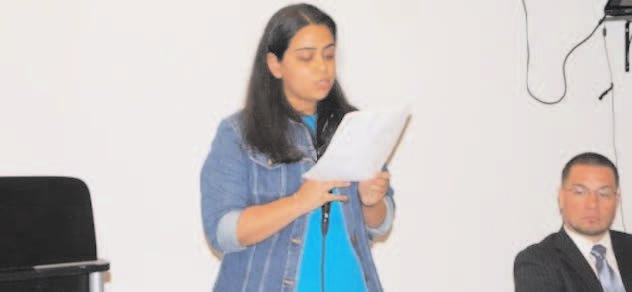
    WASHINGTON: New Delhi-born Pratishtha Khanna, who came to the US illegally at the age of ten, is one of ten local “Champions of Change” honoured by the White House for their exemplary leadership in their communities. All the ten honoured on Tuesday were what are called Deferred Action for Childhood Arrival (DACA) recipients under a programme initiated by President Barack Obama through a memo signed on June 15, 2012.

    The programme requires the US immigration authorities to defer removal action for certain undocumented young people who came to the US as children and have pursued education or military service here.

    They are also often referred to as “DREAMers” as most of them meet the general requirements of the Development, Relief, and Education for Alien Minors (DREAM) Act “These DACA recipients serve as success stories and role models in their academic and professional spheres,” the White House said.

    Khanna from Laurel, Maryland for one, is currently a senior at the University of Maryland, Baltimore County (UMBC) and will graduate in May with a BS in Biology. She is an active member of the API Youth Convening-DACA Collaborative planning committee and the Maryland Dream Youth Committee (MDYC). She is also a member of Dreamers for DREAMers student organization at UMBC.

    After graduation, Khanna will be working (thanks to DACA) as an Emergency room medical scribe and will pursue a Certified Nursing Assistant Programme at Howard Community College. She hopes to attend medical school in fall 2017.

    “These champions distinguished themselves through their community involvement and the hard work they put into helping other members of their academic and professional communities succeed,” White House said. The White House event was intended to “showcase these inspirational young leaders and highlight the importance of providing talented young people with the opportunity to realize their full potential”.

  • Brent trading around $115, near nine-month high

    Brent trading around $115, near nine-month high

    SINGAPORE (TIP): Brent crude held near $115 a barrel on June 20, close to a nine-month high and headed for its second weekly gain on increased risks of supply disruptions from Iraq. Iraqi government forces battled Sunni militants for control of the country’s biggest refinery on Thursday.

    If the 300,000 barrels per day refinery stays closed, Baghdad will need to import more oil products to meet its own domestic consumption, further tightening oil markets. Fields south of Baghdad, where most of Iraq’s 3.3 million barrels per day (bpd) of oil is produced, as well as exports remain unaffected. But heavy fighting north of the capital and foreign oil firms beginning to pull out staff pose a risk to supplies from OPEC’s number two producer.

    “This raises the risk of production halts in the near future, so although there are no disruptions at the moment, we do see further upside to prices,” said Ken Hasegawa, a Tokyo-based commodity sales manager at Newedge Japan. Brent crude LCOc1 slipped 8 cents to $114.98 a barrel at 0333 GMT, after ending 80 cents higher at $115.06 a barrel, the highest settlement since Sept. 6, 2013. The contract was up 1.3 percent for the week, after rising 4.4 percent last week.

    The U.S. crude oil contract CLc1, which expires on Friday, increased 27 cents to $106.70 a barrel. The contract settled 46 cents higher in the previous session, but was on course for a third weekly decline in four. “Brent is at a high for the year, triggering some short covering and possibly adding further long positions,” said Hasegawa. “The contract may go to a previous high of around $117.30 hit last August.” President Barack Obama said he was sending up to 300 U.S. military advisers to Iraq. Speaking after a meeting with his national security team, Obama said he was prepared to take “targeted” military action later if deemed necessary, although insisted U.S. troops would not return to combat in Iraq.

  • OBAMA CONSIDERS OPTIONS TO HELP IRAQ

    OBAMA CONSIDERS OPTIONS TO HELP IRAQ

    Options include drones and air strikes but not the reinsertion of U.S. ground troops into Iraq
    WASHINGTON (TIP): President Obama said Thursday, June 12, that Iraq needs “more help” as it battles insurgents threatening to attack Baghdad, and he is considering various options. “I don’t rule out anything because we do have a stake in making sure that these jihadists are not getting a permanent foothold in either Iraq or Syria for that matter,” Obama said in the Oval Office. Options include drones and air strikes but not the reinsertion of U.S. ground troops into Iraq.

    Obama said, “There will be some shortterm immediate things that need to be done militarily, and our national security team is looking into all the options.” He didn’t provide details. A senior administration official, speaking on condition of anonymity about internal deliberations, said Obama is not ruling out the use of drones and air strikes, but the United States is not considering “boots on the ground” in Iraq. White House spokesman Jay Carney said, “We are not contemplating ground troops” in Iraq.

    After a meeting with Australian Prime Minister Tony Abbott, Obama said, “In the short term, we have to deal with what is clearly an emergency situation in Iraq.” Obama said his team has consulted with Iraq’s government, and the United States has provided help in past months, including military equipment and intelligence. “What we’ve seen over the last couple of days indicates the degree to which Iraq is going to need more help,” Obama said. “It’s going to need more help from us, and it’s going to need more help from the international community.”

    An al-Qaeda-inspired Islamic insurgent group has taken major cities in Iraq and vowed to march on the capital, Baghdad. Obama said, “This is an area that we’ve been watching with a lot of concern, not just over the last couple of days but over the last several months.” Congressional Republicans criticized the Obama administration as al-Qaedainspired insurgents marched across Iraq.

    “They’re 100 miles from Baghdad,” said House Speaker John Boehner, R-Ohio. “And what’s the president doing? Taking a nap.” The White House said that Vice President Biden spoke by phone Thursday with Iraq Prime Minister Nouri al-Maliki, pledging “solidarity” in its fight against the insurgent group, the Islamic State of Iraq and the Levant. Biden said the U.S. is prepared to “intensify and accelerate security support and cooperation with Iraq,” said a White House statement, but also told Maliki that the different factions in Iraq must “reach a lasting political accommodation and to be united in order to defeat their common enemy.”

  • US depends on India, Pakistan for stability after US pullout from Afghanistan

    US depends on India, Pakistan for stability after US pullout from Afghanistan

    WASHINGTON (TIP): As President Barack Obama announced plans for Afghanistan after ending US combat mission by year end, the US hoped India, Pakistan and Afghanistan would help provide greater stability and security in the region. India’s new Prime Minister Narendra Modi and his Pakistani counterpart Nawaz Sharif had set a “constructive tone from the very beginning,” a senior administration official told reporters Tuesday in a background briefing on Obama’s plans.

    Under Obama’s plan to “bring America’s longest war to its responsible end,” the US which currently has 32,000 troops in Afghanistan will keep 9,800 troops there after December 2014. The US will then gradually withdraw troops keeping only a small residual force by the end of 2016 — just three weeks before his presidency ends. Obama said Americans have learned it was harder to end a war than to start one. “We have to recognize Afghanistan will not be a perfect place, and it is not America’s responsibility to make it one.”

    The role of US troops in Afghanistan after this year will be aimed at “disrupting threats caused by Al Qaeda, supporting Afghan security forces and giving the Afghan people the opportunity to succeed as they stand on their own,” he said. However, the US plan depends on the Afghans signing a bilateral security agreement. While current Afghan President Hamid Karzai has refused to sign such an agreement, both the candidates in next month’s runoff presidential election have indicated a willingness to do so.

    “With respect to India, I think we’ve seen a constructive tone set from the very beginning by Prime Minister Modi and by Prime Minister Sharif, who was one of the first leaders to speak to” Modi after his election victory, the US official noted. Noting that Sharif had traveled to India for Modi’s swearing in and the two had met Tuesday, he said: “We always encourage India and Pakistan to pursue dialogue that can reduce tension.” “We believe that that is in the interest of the entire region.

    And so we’ll continue to encourage that.” “So with that new leadership in India, the new leadership in Pakistan, and the new president coming to office in Afghanistan this year, I think we have an opportunity to have that discussion about how all the countries in the region can provide for a greater stability and security,” the official said. “And that’s certainly something we’re going to pursue,” he said. People have been wondering how “the region is going to respond in kind as the international community draws down in Afghanistan,” the official said as “regional dynamics, particularly with regards to their proxies, matters considerably to future stability in Afghanistan.”

    “But in recent and operational terms, the attack against the Indian consulate in Herat raised that very question,” he said. However, the US was “hopeful that the initial indication between both Islamabad and New Delhi is a positive one” he said taking note of Sharif’s attendance at the swearing in. Sharif’s “first such visit in many years” was “reminiscent of the last time there was significant progress” between the two countries when the Bharatiya Janata Party (BJP) came to power during Sharif’s previous term as Prime Minister in the late ’90s, the official said. “They made progress along lines that looked very much like what we have now,” he said. “So we’re cautiously hopeful that that could be a positive indicator, but we’re also mindful that this will be very important to the dynamic going forward,” the official said.

  • Obama health care nominee withdraws

    Obama health care nominee withdraws

    WASHINGTON (TIP): President Barack Obama’s choice to be the top health official at the embattled veterans affairs department has withdrawn his nomination. The news comes amid a firestorm over long patient waits at military veterans’ medical facilities and covering up delays, a headache for Democrats ahead of November congressional elections.

    Murawsky now oversees seven VA hospitals and 30 clinics, including one in suburban Chicago where there are allegations that its staff used secret lists to conceal long patient wait times for appointments. The White House said in a statement that Murawsky feared a prolonged fight over his confirmation, adding that he believes the role is too important not to be filled quickly. Obama accepted Murawsky’s withdrawal and will move quickly to find a replacement, the White House statement said.

    Murawsky’s withdrawal comes as the Senate reached agreement for a bipartisan bill expanding veterans’ ability to get government-paid medical care outside veterans affairs hospitals and clinics. The framework agreement was announced on Thursday on the Senate floor by veterans affairs committee chairman Bernie Sanders and Republican Sen. John McCain.

  • Hillary Clinton recalls foreign policy disagreements with Obama in book: Report

    Hillary Clinton recalls foreign policy disagreements with Obama in book: Report

    WASHINGTON (TIP): Potential presidential candidate Hillary Clinton writes in her new book that she raised concerns about a swap of Taliban prisoners when she was President Barack Obama’s secretary of state and disagreed with his decision not to arm Syrian rebels, CBS News reported. CBS News said it obtained a copy of her forthcoming memoir, “Hard Choices,” on Thursday, before its planned publication next Tuesday.

    Clinton is widely considered the Democratic front-runner if she enters the 2016 White House race. With controversy swirling over Obama’s move to swap five Taliban militants held at the US prison at Guantanamo Bay, Cuba, for captive US army sergeant Bowe Bergdahl, the book discloses that a much earlier discussion about him took place among top foreign policy advisers, including Clinton.

    “I acknowledged, as I had many times before, that opening the door to negotiations with the Taliban would be hard to swallow for many Americans after so many years of war,” she wrote. The excerpts published by CBS News also reveal Clinton’s disagreement with Obama over his decision not to arm Syrian rebels fighting the government of Syrian President Bashar al-Assad. “The President’s inclination was to stay the present course and not take the significant further step of arming rebels.

    No one likes to lose a debate, including me,” Clinton wrote. In a speech last week, Obama said he would increase support for the Syrian opposition, but he did not provide details. Clinton’s book, a memoir of her tenure at the State Department, is being published by Simon and Schuster, a unit of CBS’ parent company, CBS Corp. She will then launch a high-profile book tour across the country. Russia reset? As the top US diplomat from 2009 to 2013, Clinton also acknowledged making a linguistic misstep in declaring a “reset” in American relations with Russia. Russia’s annexation of Crimea in March has raised questions about the so-called reset.

    In the book, Clinton calls Russian President Vladimir Putin “thin-skinned and autocratic, resenting criticism and eventually cracking down on dissent and debate.” In March, she drew parallels at a closed-door fundraiser between Putin’s actions and those of Nazi dictator Adolf Hitler before World War Two. She later backtracked from those comments. Asked in an interview on Wednesday about Clinton’s comments comparing him with Hitler, Putin said: “It’s better not to argue with women.

    “When people push boundaries too far, it’s not because they are strong but because they are weak. But maybe weakness is not the worst quality for a woman,” he added. Clinton also addressed her experiences surrounding the 2012 attacks on the US diplomatic post in Benghazi, Libya, saying: “There will never be perfect clarity on everything that happened.” Republican critics have condemned her handling of the incident, in which four Americans, including Ambassador Chris Stevens, were killed.

    The book also details Clinton’s meeting with Obama after she lost the Democratic presidential nomination to him in 2008. “We stared at each other like two teenagers on an awkward first date, taking a few sips of Chardonnay,” she writes.

  • Obama makes ‘no apologies’ for Taliban hostage deal

    Obama makes ‘no apologies’ for Taliban hostage deal

    BRUSSELS (TIP): President Barack Obama vehemently refused to apologize on Thursday for doing a prisoner trade with the Taliban to free a US soldier, despite a fierce political storm over the deal in Washington. Critics, both Republican and Democratic, have asked whether the transfer of five Taliban prisoners from Guantanamo Bay for the release of US army sergeant Bowe Bergdahl was even legal, and question both the price paid and the principle of a swap.

    But Obama, asked about the row raging in Washington at the G7 summit in Brussels was unapologetic, repeating that he had a duty as commander-in-chief to get Bergdahl home. “We have a basic principle, we do not leave anybody wearing the American uniform behind, Obama said, adding that he had acted last week because the health of Bergdahl, held captive for nearly five years was deteriorating.

  • IN PRIMARIES, TWO PIOS MAKE THE CUT IN CALIFORNIA

    IN PRIMARIES, TWO PIOS MAKE THE CUT IN CALIFORNIA

    WASHINGTON (TIP): Two Indian- American political rookies in California chalked up modest victories in nationwide primary elections on Tuesday for a long-shot challenge at established veterans in mid-term polls slated for November. In one of the most watched races nationally, Democrat Ro Khanna came a distant second to fellow Democrat Mike Honda in California’s 17th district, polling only about 25% votes to Honda’s 50%.

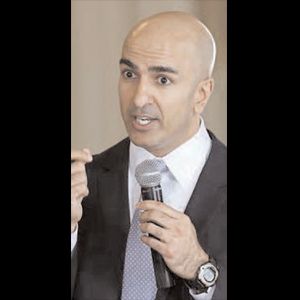
    But the top two candidates, regardless of party affiliation, qualify for the November poll, so there will be another face-off for the House of Representatives seat that Honda has won some half dozen times. Another Indian- American, Republican Vanila Singh, a professor at Stanford Medical Center, came third with 16.2% votes. In another race that has attracted nationwide interest, Indian-American Neel Kashkari, a former Treasury official and a moderate Republican, defeated a Tea Party favorite Tim Donelly in the primaries for the governorship of California to earn the right to challenge the incumbent three-term governor Jerry Brown in the general election in November.

    Brown, a Democrat seeking a fourth term, took 55% of the votes to run out an easy winner, with Kashkari a distant second with 18 per cent votes, and Donelly polling 15%. Both Kashkari and Khanna are long shots to displace the incumbents. The Japanese- American Honda, 72, is a political veteran endorsed by the party old guard, including President Barack Obama, House minority leader Nancy Pelosi, and the state’s two Senators Dianne Feinstein and Barbara Boxer. Khanna, 37, has strong support from the tech community in a Congressional district that includes the heart of the Silicon Valley, including endorsements from Yahoo CEO Marissa Mayer, Facebook Chief Operating Officer Sheryl Sandberg, and Google Chairman Eric Schmidt.

    Which is how Khanna has outraised and outspent Honda in one of the costliest Congressional primaries in the country, but he would still need to bridge the nearly 25% gap if he is to oust the labor union-backed incumbent. Kashkari has an even slimmer chance against Jerry Brown, who was one of California’s youngest governors when he was elected for the first time in 1975, and also the oldest governor when he re-elected in 2010 with a 28-year gap between his second and third terms.

    His father Pat Brown was also a two-term California governor in the 1960s. Although Kashkari is a moderate Republican, registered Republicans account for only 28.5% of California’s voters, compared with the Democrats’ 43.5%. Both races were marked by snide, raciallytinged attacks. Tea Party’s Donelly accused Kashkari of ties to Islamic fundamentalism all because he once participated in a Treasury department conference about Islamic Finance.

    Khanna, in a thinly disguised reference to his Indian origin, was attacked in campaign mailers over the possibility that he would outsource jobs if he won. Another Indian-American candidate, sitting Democratic Congressman Ami Bera of California’s 7th district, has a more realistic chance of winning a second term after a comfortable victory in the primaries. Some other Indian-American candidates, including Upendra Chivukula in New Jersey and Swati Dandekar in Iowa, failed to make the cut.

  • Karzai refused to meet Obama at Bagram Air Base in Afghanistan

    Karzai refused to meet Obama at Bagram Air Base in Afghanistan

    KABUL (TIP): In their latest disconnect, Afghan President Hamid Karzai declined an offer to meet Barack Obama when the US President landed at Bagram Air Base outside Kabul on an unannounced visit, American media reported on May 30.

    American officials travelling with Obama said Karzai, who is currently in New Delhi to attend the swearing-in ceremony of Prime Minister-designate Narendra Modi, was given the opportunity to join Obama at the sprawling Bagram base, but the Afghan leader turned it down. “As we said, we weren’t planning for a bilateral meeting with President Karzai or a trip to the palace, as this trip is focused on thanking our troops,” the official said. “We did offer him the opportunity to come to Bagram, but we’re not surprised that it didn’t work on short notice,” the official said.

    But a statement from Karzai’s office was terse about the last minute invitation: “The president of Afghanistan said that he was ready to warmly welcome the president of the United States in accordance with Afghan traditions,” it said, “but had no intention of meeting him at Bagram,” The New York Times reported. Obama, 52, and Karzai, 56, have a frosty relationship and the White House has repeatedly expressed frustration over Karzai’s refusal to ink a bilateral security agreement that would allow the US to keep some forces in the war-torn country to train Afghans and launch counter-terrorism operations even after the drawdown of US troops later this year.

    Obama has been considering keeping up to 10,000 troops in Afghanistan and is expected to announce his plans shortly. But US officials told reporters that Obama did talk by phone to Karzai for 15 to 20 minutes before leaving Afghanistan.

    They said Obama praised Karzai for progress being made by the Afghan security forces and for the recent presidential voting in the country. “The President will likely be speaking by phone with President Karzai in the days to come, and also looks forward to working with Afghanistan’s next President after the election is complete,” the US official said.

    Obama, in his remarks to troops in Afghanistan yesterday, made it clear that he still wanted the bilateral security deal signed, allowing the United States to keep a small military force in Afghanistan beyond 2014. “Once Afghanistan has sworn in its new president, I’m hopeful we will sign a bilateral security agreement that lets us move forward,” Obama said.

  • 10 things to remember about author Maya Angelou

    10 things to remember about author Maya Angelou

    Ten things to remember about poet and writer Maya Angelou, who died Wednesday at age 86:

    1. How she got her name
    “Maya” was a childhood nickname bestowed upon her by her brother. “Angelou” was inspired by the last name of her Greek-American first husband, Tosh Angelos.

    2. She was in love with language,but spent years in silence
    After being raped by her mother’s boyfriend at age 7, she stopped talking, because she thought her words had led to his death (the man was found beaten to death shortly after being sentenced to prison).

    3. How she learned to use her voice again
    A family friend, Mrs. Flowers, took Angelou under her wing and gave her poems to memorize and recite. She was writing her own poems by age 9.

    4. She worked with Malcolm X,Martin Luther King Jr.
    Angelou helped organize Malcolm X’s Organization of Afro-American Unity, though it dissolved soon after his death. She also served as the northern coordinator for the Southern Christian Leadership Conference, headed by King.

    5. Why OPrah remembers her as a mentor
    “She moved through the world with unshakeable calm, confidence, and a fierce grace … She will always be the rainbow in my clouds.”

    6. A poet of the people
    Angelou’s poems “And Still I Rise” and “Phenomenal Woman” regularly made the rounds of social media, and she collaborated on a collection of greeting cards and gift items with Hallmark. “If I’m the people’s poet then I ought to be in people’s hands – and I hope in their heart,” Angelou said in a 2002 AP interview.

    7. Poet Laureate of presidents
    Angelou was only the second poet to perform at a presidential inauguration when she read at Bill Clinton’s ceremony in 1993. She also read a poem at the White House’s Christmas tree lighting in 2005 under George W. Bush and was given the Presidential Medal of Freedom by President Barack Obama.

    8. “I’m not a writer who teaches. I’m a teacher who writes.”
    Angelou described herself this way in a 2008 USA Today interview. At Wake Forest University, she taught courses like “Race in the Southern Experience” and “Shakespeare and the Human Condition.”

    9. She created food for the belly as well as the soul
    Angelou’s oeuvre includes two cookbooks, both of them incorporating anecdotes from her life. She said food was central “in my desire to understand who I am and where I am.”

    10. Her rule to live by
    Angelou was known to quote the Roman poet Terence: “I am a human being. Nothing human can be alien to me.”

  • Obama urges Democrats to vote in midterms, attacks Republicans

    Obama urges Democrats to vote in midterms, attacks Republicans

    CHICAGO (TIP): US President Barack Obama on May 22 urged Democrats to vote in November elections, saying the chance to pass immigration reform is at risk if Republicans gain control of both houses of Congress. “We have a congenital defect to not vote in midterm elections,” he said at a fundraising reception for Democratic Senate candidates. “The midterm comes and we fall asleep.” Democrats hold a 55-45 seat majority in the Senate, but many analysts give the Republicans an even chance of picking up the six seats they would need to seize control of the chamber.

    The Republican majority in the House of Representatives is not considered to be in play. Obama was using an overnight stop in his adopted hometown to attend two fundraisers organized by the Democratic Senatorial Campaign Committee. Tickets for the events, where he was joined by Illinois Senator Dick Durbin and Colorado Senator Michael Bennet, the DSCC chairman, cost between $1,000 and $35,000. Obama blamed Republicans for congressional gridlock and said they were hostage to an extreme wing and uninterested in compromise.

    “What’s broken right now is a Republican party that repeatedly says no to proven time-tested strategies to grow the economy,” he said. At stake is the ability to pass immigration reform, reduce emissions that contribute to climate change, and the chance to raise the minimum wage, he said.

  • Indian-American Obama critic pleads guilty to campaign finance fraud

    Indian-American Obama critic pleads guilty to campaign finance fraud

    NEW YORK (TIP): Dinesh D’Souza, an Indian-American conservative commentator and author who shot to fame with a highly critical 2012 documentary of US President Barack Obama, has pleaded guilty to violating federal campaign finance law. D’Souza, 53, of San Diego, admitted to exceeding donor limits in 2012 by arranging for others to give to the New York Senate campaign of Republican candidate Wendy Long, Manhattan’s Indian-American US Attorney Preet Bharara said on Tuesday, May 20. He also admitted to making false statements about those donations.

    A former policy advisor to President Ronald Reagan, D’Souza directed a 2012 documentary, “2016: Obama’s America,” that was highly critical of President Barack Obama and based on his book “The Roots of Obama’s Rage”. According to the indictment, D’Souza and his wife contributed $10,000 to Long’s campaign. He then directed associates to contribute on behalf of themselves and their spouses, totaling $20,000.

    D’Souza was to reimburse them. Federal election law limits individual campaign contributions to a federal candidate to $2,500 each for a primary and general election campaign. The law also bars any person from making contributions in the name of others or reimbursing another person’s contribution. Long lost to Democratic incumbent Kirsten Gillibrand in 2012. She and other Republicans, like Senator Ted Cruz, have argued that the government was unfairly targeting D’Souza for his political affiliation, according to CNN.

    D’Souza argued for the charges to be dismissed on grounds of selective prosecution. Last week, a judge denied that motion, citing “no evidence” to support it. “Following the court’s ruling denying Dinesh D’Souza’s baseless claim of selective prosecution, D’Souza now has admitted, through his guilty plea, what we have asserted all along — that he knowingly and intentionally violated federal election laws,” Bharara said in a statement.

    “As our Office’s record reflects, we will investigate and prosecute violations of federal law, particularly those that undermine the integrity of the democratic electoral process, without regard to the defendant’s political persuasion or party affiliation. That is what we did in this case and what we will continue to do.” Meanwhile, Deadline Hollywood cited D’Souza’s producer Gerald Molen as saying the indictment was politically motivated but that it would not stop the upcoming sequel to “2016: Obama’s America”, which has already set a July 4 release date.

    D’Souza says his film imagines what today’s world would be like if America had never existed because “we are now living in the America that we warned our fellow citizens could come to pass if President Obama were re-elected”. Considered the second-mostsuccessful political documentary in US box office history, “2016” has made more than $33 million since it was released in July 2012 during the heat of the presidential elections, according to Deadline.