Tag: Barack Obama

  • Nancy Powell leaves India, Kathleen Stephens to be interim envoy

    Nancy Powell leaves India, Kathleen Stephens to be interim envoy

    NEW DELHI (TIP): US Ambassador to India Nancy Powell on Thursday, May 22, headed back to her country after an eventful stint here and will be replaced temporarily early next month by Kathleen Stephens, a career diplomat. Powell, 67, who assumed charge as US Ambassador here in April, 2012, had announced ending of her tenure in India in March this year.

    Stephens will serve as the charge until a new permanent ambassador is nominated and confirmed by the US Senate. President Barack Obama has not yet nominated anyone for this important diplomatic posting. A career foreign service officer, Stephens is expected to arrive in New Delhi early June. She was US ambassador to South Korea from 2008 to 2011 and previously served in senior positions in Washington, Asia and Europe.

  • 9/11 MUSEUM OFFERS SIGHTS AND SOUNDS OF TRAGEDY

    9/11 MUSEUM OFFERS SIGHTS AND SOUNDS OF TRAGEDY

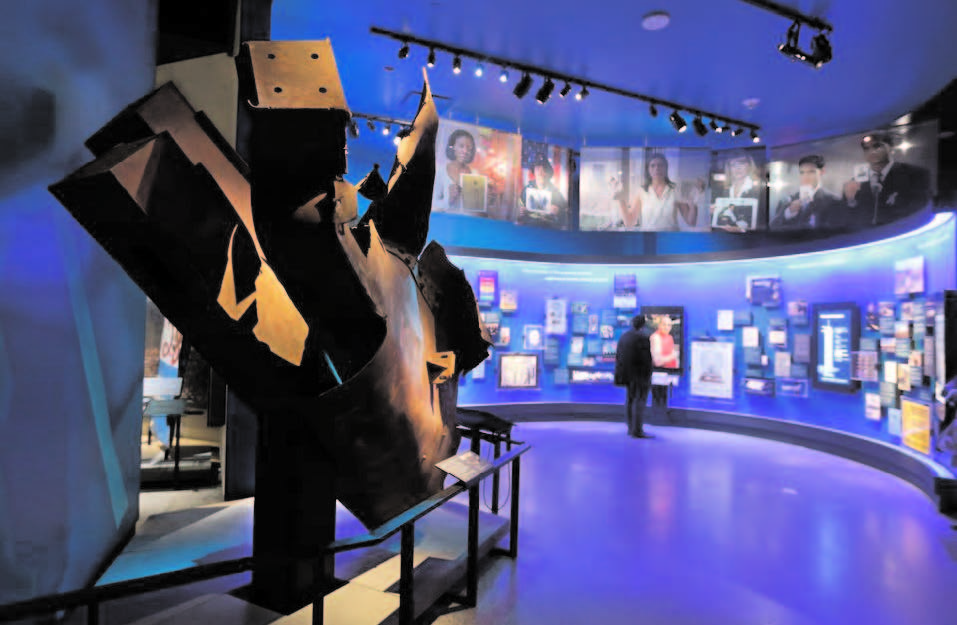
    NEW YORK (TIP): The museum devoted to the story of September 11 tells it in victims’ last voicemails, in photos of people falling from the twin towers, in the scream of sirens, in the dust-covered shoes of those who fled the skyscrapers’ collapse, in the wristwatch of one of the airline passengers who confronted the hijackers.

    By turns chilling and heartbreaking, a place of both deathly silence and distressing sounds, the National September 11 Memorial Museum opens this week deep beneath ground zero — 12-and-a-half years after the terrorist attacks.


    2

    The project was marked by construction problems, financial squabbles and disputes over the appropriate way to honour the nearly 3,000 people killed in New York,Washington and the Pennsylvania countryside. Whatever the challenges in conceiving it, “you won’t walk out of this museum without a feeling that you understand humanity in a deeper way,” museum President Joe Daniels said May 19.


    3

    The privately operated museum — built along with the memorial plaza above for $700 million in donations and tax dollars — will be dedicated on Thursday with a visit from President Barack Obama and will be open initially to victims’ families, survivors and first responders.


    4

    It will open to the public on May 21. Charles G Wolf, who lost his wife, Katherine, planned to be at the ceremonial opening. “I’m looking forward to tomorrow, and I’m dreading tomorrow,” he said on Wednesday. “It brings everything up.” Visitors start in an airy pavilion where the rusted tops of two of the World Trade Center’s trident-shaped columns shoot upward.


    5

    From there, stairs and ramps lead people on an unsettling journey into 9/11. First, a dark corridor is filled with the voices of people remembering the day. Then visitors find themselves looking over a cavernous space, 70 feet below ground, at the last steel column removed during the ground zero cleanup — a totem covered with the numbers of police precincts and firehouses and other messages.


    6

    Descend farther — past the battered “survivors’ staircase” that hundreds used to escape the burning towers — and there are such artifacts as a mangled piece of the antenna from atop the trade centre and a fire truck with its cab shorn off. And then, through a revolving door, visitors are plunged into the chaos of September 11: fragments of planes, a teddy bear left at the impromptu memorials that arose after the attacks, video of the twin towers collapsing and people running from plumes of dust, footage of an astronaut solemnly describing the smoke plume from high above Earth (“I just wanted the folks to know that their city still looks very beautiful from space,” Frank Culbertson says), and the sounds of emergency radio transmissions and office workers calling loved ones. Sprinkled among stories of heroism are snippets about the hijackers, including photos of all 19 on an inconspicuous panel.

    “I’m still processing” the impact of seeing the museum, said Anthony Garner, who lost his brother Harvey on 9/11 and visited on Wednesday. He said it will show visitors “that they’re in a very sacred place and a very historic place”.

  • US judge halts force-feeding of Guantanamo prisoner

    US judge halts force-feeding of Guantanamo prisoner

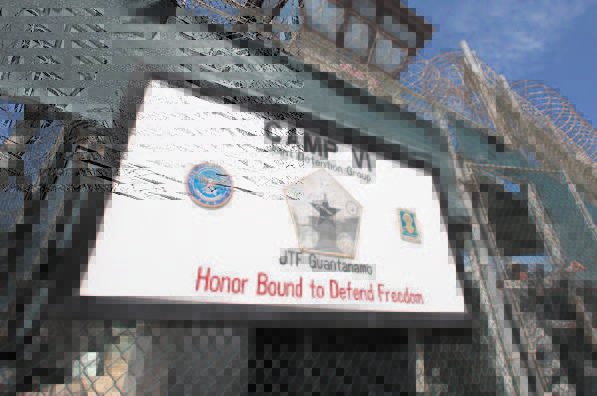
    WASHINGTON (TIP): A US federal judge on May 16 temporarily blocked the military from force-feeding a Syrian prisoner on hunger striker at the Guantanamo Bay prison camp. It was the first time a judge ordered a halt to force-feeding of a prisoner in Guantanamo, where last year during a hunger strike, as many as 46 of 166 inmates were force-fed at least some of their meals.

    Several sued. US District Court Judge Gladys Kessler ordered the US government to stop force-feeding Abu Wa’el Dhiab until a hearing on May 21. She also ordered the military to stop extracting him from his cell if he refuses to go to feedings. The judge said the government also must preserve all videotape evidence of forcible cell extractions and forcefeeding until the hearing next Wednesday. Human rights advocates and many doctors call force-feeding a violation of personal liberty and medical ethics.

    The procedure, designed to keep hunger strikers alive, involves feeding them liquid meals via tubes inserted into their noses and down into their stomachs. “While the department follows the law and only applies enteral feeding in order to preserve life, we will, of course, comply with the judge’s order here,” Defense Department spokesman Lieutenant Colonel Todd Breasseale said in reaction to the ruling.Last July, Kessler, based in Washington DC, denied Dhiab’s request to halt the force-feeding, saying she would be overstepping her authority if she issued an injunction and adding that only President Barack Obama had the power to intervene.

    But in February, the US Court of Appeals for the District of Columbia Circuit ruled that Guantanamo prisoners have the right to sue over force-feeding and that judges have the authority to consider petitions challenging aspects of how the US military treats them. Dhiab’s attorney’s hailed the decision as a turning point. “This is a major crack in Guantanamo’s years-long effort to oppress prisoners and to exercise total control over information about the prison,” one of Dhiab’s attorneys, Cori Crider said. “I am glad Judge Kessler has taken this seriously, and we look forward to our full day in court to expose the appalling way Dhiab and others have been treated,” Crider added.

  • Obamas list assets between $1.8 million and $7 million

    Obamas list assets between $1.8 million and $7 million

    WASHINGTON (TIP): President Barack Obama and first lady Michelle Obama reported assets worth between $1.8 million and $7 million for last year, little changed from their previous year’s holdings, according to financial disclosure forms released on May 15. The forms, required by law, permit public officials to list their assets in broad ranges.

    As a result, a precise net worth is difficult to ascertain. The forms show the largest jointly owned assets by the president and the first lady were Treasury notes worth between $1 million and $5 million. While the value of their assets is certainly higher than that of most Americans, their mix reflects the financial demands of a 50-something couple with two daughters. Their assets include Vanguard retirement funds and college savings plans.

  • Obama invites Modi to US

    Obama invites Modi to US

    WASHINGTON (TIP): US President Barack Obama on Friday, May 17, called Narendra Modi to congratulate him on the Bharatiya Janata Party’s electoral success. Obama invited Modi to visit Washington “at a mutually agreeable time to further strengthen our bilateral relationship”, the White House said in its readout of the phone call. Obama “noted he looks forward to working closely with Modi to fulfill the extraordinary promise of the US-India strategic partnership, and they agreed to continue expanding and deepening the wide-ranging cooperation between our two democracies,” the White House said.

    The George W Bush administration had barred Modi from receiving a US visa in 2005 following the 2002 Gujarat riot accusations, which Modi denies. With Modi’s election the visa issue has become a nonissue. State Department spokeswoman Jen Psaki said Modi, as head of government, would be eligible for an A-1 US visa. On Friday, White House spokesman Jay Carney referred to the State Department a question about the wisdom of the decision to deny Modi a US visa. “Once the government is formed, we look forward to working closely with the prime minister and the Cabinet to advance our strong bilateral relationship based on shared democratic values,” he added.

  • US: House panels approve anti-surveillance bill

    US: House panels approve anti-surveillance bill

    WASHINGTON (TIP): US lawmakers on Thursday advanced a measure that reins in NSA surveillance, signaling final passage of reforms aimed at ending bulk data collection could come quicker than expected.

    Easing what was shaping up to be a showdown between reformers and hawkish National Security Agency reformers, the House Intelligence Committee abandoned its own surveillance bill and unanimously approved the measure that sailed through the House Judiciary Committee on May 7.

    The proposal could soon be brought to the House floor, although no date has been set. It would then go to the Senate, where committees have yet to agree on NSA reform measures. “We look forward to working with the Judiciary Committee, House and Senate leadership, and the White House to address outstanding operational concerns and enact the USA Freedom Act into law this year,” House Intelligence Committee Chairman Mike Rogers and the panel’s top Democrat Dutch Ruppersberger said in a statement.

    The bill would end the practice of scooping up Americans’ telephone metadata — including numbers dialed, duration and times of calls, but not content. The program was disclosed last year by fugitive NSA contractor Edward Snowden. The White House called the bill “a very good step” and hoped to see a House vote “in the near future.” Lawmakers are concerned that US intelligence agencies are also gathering the content of personal email messages, an issue Senator Ron Wyden wants addressed in the final legislation.

    The House measure would boost privacy safeguards by requiring a secret surveillance court to determine that there is “reasonable articulable suspicion” that a person has terror connections before intelligence agencies can pull his or her records from a phone company’s database.

    It would also increase transparency of the secret Foreign Intelligence Surveillance Court, create a panel of legal experts to ensure the FISA court adheres to privacy and constitutional rights and allow communications firms, such as those ordered by the government to hand over data, to release more information about such requests. The proposal is similar to plans laid out by President Barack Obama in March, when he called on Congress to act to end the federal government’s collection and storage of metadata.

  • Barack Obama nominates ambassadors for key Egypt and Iraq posts

    Barack Obama nominates ambassadors for key Egypt and Iraq posts

    WASHINGTON (TIP): President Barack Obama said on May 8 he would nominate two career diplomats with extensive experience in the Middle East as ambassadors to Egypt and Iraq. Robert Stephen Beecroft, who has been US ambassador in Baghdad since 2012, was nominated for the Cairo post, the White House said.

    US ties with Egypt, a key Middle East ally, have been strained since the Egyptian army’s ouster of an elected president last year. US officials disclosed on May 7 that the administration planned to nominate Beecroft. Stuart Jones, who has been ambassador to Jordan since 2011, was picked as the new envoy to Iraq.

    The Obama administration is concerned about spiraling violence in Iraq, where bloodshed has returned to levels not seen since the height of the sectarian conflict that followed the US-led invasion in 2003. Both nominations are subject to Senate confirmation.

  • Driver who followed Obama daughters’ motorcade was lost, confused

    Driver who followed Obama daughters’ motorcade was lost, confused

    WASHINGTON: A driver unfamiliar with Washington, DC, appeared to have been lost and confused when he followed a motorcade carrying President Barack Obama’s daughters through a White House checkpoint on Tuesday, a law enforcement source said.

    “It appears at this point that the driver was confused, not familiar with DC, and essentially got lost and followed the car in front of him,” said the law enforcement source, who spoke on condition of anonymity because the investigation was continuing.

    The unusual incident prompted a security lockdown at the White House. The driver, an Internal Revenue Service employee identified as Mathew Evan Goldstein, 55, was charged with unlawful entry, a misdemeanor offense.

  • Obama sends Vietnam nuclear deal to Congress

    Obama sends Vietnam nuclear deal to Congress

    WASHINGTON (TIP): The US Congress on Thursday began its review of a nuclear agreement with Vietnam which advocates say would create billions of dollars in trade but has triggered human rights concerns.

    President Barack Obama sent to Congress the text of the agreement which would allow the United States to transfer reactors and know-how to Vietnam, which has ambitious plans to build a nuclear network from virtually scratch to meet rising energy demand and reignite economic growth.

    The agreement will come into force after Congress is in session for 90 working days — likely meaning late 2014 — unless lawmakers approve a resolution that objects to the deal. Vietnam’s relations have warmed markedly with former war foe Washington since they re-established relations in 1995. But the US Congress is a hotbed of criticism of the communist nation with lawmakers, often from districts with large Vietnamese American communities, concerned about human rights.

    At a hearing on the agreement in January, several senators said that Congress should approve a separate bill on human rights in Vietnam to accompany the nuclear deal. Vietnam has detained at least 34 bloggers, more than any country except China, according to Reporters Without Borders. The Nuclear Energy Institute, which represents the US industry, has said that the nuclear agreement would advance US interests unrelated to human rights.

    It said that the deal could result in $10 to $20 billion in new US exports to Vietnam and create more than 50,000 jobs in the United States. If Congress blocks the agreement, other nations “will readily fill this void” with Russia and Japan already having secured deals with Vietnam, it said.

    But some lawmakers who may otherwise be supportive have charged that the Vietnam deal does not meet the “gold standard” of recent deals with the United Arab Emirates and Taiwan which barred them from sensitive enrichment or reprocessing that could be used in producing nuclear weapons.

  • US condemns N Korea’s ‘ugly’ racist Obama remarks

    US condemns N Korea’s ‘ugly’ racist Obama remarks

    WASHINGTON (TIP): The United States has condemned “ugly and disrespectful” racist comments directed towards President Barack Obama by North Korea’s official news agency. “While the North Korean Government-controlled media are distinguished by their histrionics, these comments are particularly ugly and disrespectful,” National Security Council spokeswoman Caitlin Hayden told AFP.

    Hayden was referring to a diatribe attacking Obama, published in Korean by KCNA last week, extracts of which were reported by the Washington Post yesterday. According to the Post’s translation, KCNA unleashed a barrage of racist insults at Obama, describing him as a “crossbreed with unclear blood” who had “the figure of a monkey.”

    “It would be perfect for Obama to live with a group of monkeys in the world’s largest African natural zoo and lick the bread crumbs thrown by spectators,” the Post cited the commentary as saying. KCNA has taken its often bombastic rhetoric to new levels in recent weeks, last month decrying South Korean President Park Geun-Hye as a “prostitute” in thrall to her “pimp” Obama, while declaring it was ready for “full-scale nuclear war.”

  • US has proven its will to take fight to militants in Af-Pak: Top Obama administration official

    US has proven its will to take fight to militants in Af-Pak: Top Obama administration official

    WASHINGTON (TIP): The United States has proven its will to take the fight to terrorists in Afghanistan and Pakistan, a top Obama administration official has said. “I think we have proven our will to take the fight to terrorists in Afghanistan and Pakistan,” US treasury secretary Jacob Lew told a Congressional hearing when asked why the US should provide financial aid to the two countries which continue to be safe haven for terrorists.

    “I am just asking why we are lending money to… economies in terrorist states,” Congressman Steve Pearce asked. “I think we have been involved through two administrations or multiple administrations of both parties in trying to make sure that there is no haven for terrorists to plan attacks on the United States in that part of the world,” Lew said.

    “And our efforts of that are really aimed at making sure that there is not that kind of a haven. Part of it is making sure that there is an economy that works for people who are not (part of terrorist groups),” the treasury secretary said.

  • Obama, Merkel talks focus on Ukraine as rebellion spreads

    Obama, Merkel talks focus on Ukraine as rebellion spreads

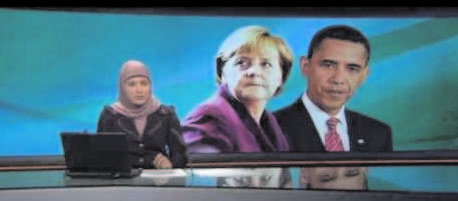
    KIEV (TIP): US President Barack Obama and German chancellor Angela Merkel will discuss the escalating Ukraine crisis on May 2 after Kiev brought back military conscription and a pro-Russian rebellion in the east threatened the ex-Soviet republic with disintegration.

    The White House meeting between Obama and Merkel will be their first since the start of the unrest and Russia’s annexation of Crimea in March. Kiev’s decision to reinstate conscription, decreed by interim president Oleksandr Turchynov, came after insurgents tightened their grip over more than a dozen eastern cities and towns.

    Around 300 militants hurling petrol bombs and bricks stormed the sixstorey prosecutor’s building in Donetsk, beating up outnumbered riot police and stripping them of their shields and batons. Ukrainian media reported that a prosecutor’s office in the town of Horlivka and a police station in Krasnoarmiysk were also overrun. The violence took place as mass pro- Russia rallies were held in Donetsk and in annexed Crimea.

    Gunfire and heavy detonations were heard on Friday just to the north of Ukraine’s rebel-held town of Slavyansk, insurgents and AFP journalists said. A helicopter was earlier also seen circling low in what appeared to be part of an attack by Ukrainian forces, said the rebels, who had set a roadblock on fire to produce cloaking smoke. Kiev’s Western-backed government has admitted its security forces are helpless to halt the expanding rebellion it accuses Moscow of masterminding. Turchynov on Wednesday accused law enforcement units in the east of “inaction” or even working with the rebels in an act of “treachery”.

    He also put Ukraine’s current army of 130,000 on “full combat alert” because of fears an estimated 40,000 Russian troops massed on the border for the past two months could invade. In his conscription order Thursday for Ukrainian male reservists aged 18- 25, Turchynov said his government was trying to counter “the deteriorating situation in the east and the south”. The mounting insurgency and building seizures “threaten territorial integrity”, a statement from his office said. Russia’s foreign ministry said any effort by Kiev to intensify its military operation “against its own people” in the east could have “catastrophic consequences”. Amid the spiralling crisis, Germany stepped up its appeal to Russian President Vladimir Putin to help free seven OSCE inspectors held in Slavyansk by the rebels — four Germans, a Pole, a Dane and a Czech.

    In a phone call, Merkel “reminded President Putin of Russia’s responsibilities as an OSCE (Organisation for Security and Cooperation in Europe) member and called on him to use his influence”, her spokesman said. The Kremlin said both leaders emphasised the “mediating potential of the OSCE” in calming the crisis in Ukraine. German Foreign Minister Frank- Walter Steinmeier was to discuss the hostage crisis with his Swiss counterpart Didier Burkhalter, the current OSCE chief, in Bern on Friday. Putin reiterated his call for Kiev to end its military operation trying to counter the pro-Russian rebellion. That drew an incredulous reaction from the White House. A spokesman said: “That was a rather remarkable statement… (that) called on Ukraine to remove its forces from its country, which is preposterous, if you think about it.”

  • Indian elections influenced US decision on Special 301 Review

    Indian elections influenced US decision on Special 301 Review

    WASHINGTON (TIP): The desire of the Obama Administration to start its relationship with the new Indian government after the general elections on a positive note is believed to have been one of the major reasons for the US Trade Representatives not putting India on its punitive Priority Foreign Country list, says PTI report. This was despite intense pressure and lobbying efforts in this regard by a section of the influential American businesses. By taking such a decision, it is understood that the long-term strategic relationship with India, which US President Barack Obama has described as the defining partnership of the 21st century, prevailed over the short-term goal of addressing the issues of alleged violation of intellectual property rights inside India and Indian policies with regard to pharma sector, which has angered the strong American pharma lobby and a section of the US lawmakers. For not naming India as a Foreign Priority Country, the Obama Administration is expected to receive a lot of flak from the pharma sector and also at the Hill. In a statement, the USTrade Representative said in the coming months, it will redouble its efforts to seek opportunities for meaningful, sustained, and effective engagement on IPrelated matters with the “new government”, including at senior levels, the report said. “India remains on the Priority Watch List in 2014. In making this determination, the US recognizes not only the concerns…, but also the critical role that meaningful, constructive, and effective engagement between India and the U S should play in resolving these concerns,” US Trade Representative said in the 2014 Special 301 report. It is learnt that Froman, on taking such a decision, argued that the Administration would like to make sure that whoever the new government is can be engaged in a constructive manner. Putting India at this point of time in the middle of elections, and weeks ahead of formation of the new government, would not serve any purpose and in fact would have an adverse impact on establishing a positive and constructive relationship with the new leadership in New Delhi, it was argued. From day one of the Obama Administration, Froman – in his previous capacity as the Deputy National Security Advisor – has been a strong advocate of India US strategic relationship and has played a key role in the shaping the economic ties between the two countries in the last five year, during which the bilateral trade has increased significantly. The USTrade Representative also clarified that the out of review cycle is not “revisiting” India as a Priority Foreign Country or a short-term arrangement, neither an effort to continue the pressure building tactics for the new government in India.

    This is to “evaluate the nature and depth” of the India US relationship, Froman is believed to have argued while taking such a decision. The out of cycle review is expected to be completed in the Fall. While the USTR report makes it clear that the American concerns about certain Indian policies remain, but its decision was driven by the consideration that it should not create difficulties for new government.

    Declaring India as a Priority Foreign Country, it was felt, would have a “negative and adverse” impact on the relationship with the new government, which is not the objective of the United States, it was argued. As the USTR was going through its motion of Special 301 Review, the Indian Embassy is understood to have conveyed to its counterparts in the US Government on the negative impact that such a decision would have on India-US ties. The Indian Ambassador of India, S Jaishankar, is believed to have met Froman several times in the past few months.

    In the past few months, Jaishankar is believed to have had a series of meetings with lawmakers, who had raised the issue in the past, and also with representatives of the American businesses, in particular those from the pharma sector and IPR. In all these meetings, the Indian diplomat is understood to have articulated that putting India on the list of Priority Foreign Country was not in the best interest.

    This might also result in retaliatory steps from India, he is understood to have cautioned. He is believed to have said that going public with its differences rather than attempting it to resolve quietly through sitting across the table, is not the best way to address differences with a strategic country like India.

  • North Korean nuclear threats are useless: Obama

    North Korean nuclear threats are useless: Obama

    SEOUL (TIP): North Korea will gain “nothing” by making threats, US President Barack Obama said on Friday, warning it of sanctions with “more bite” if it went ahead with a fourth nuclear test. Speaking in South Korea as satellite images revealed the North could be preparing for another test, Obama stressed that Washington and Seoul stood “shoulder to shoulder” in their refusal to accept a nuclear North Korea.

    Even China, the North’s only major ally, was becoming alienated by its provocative behaviour, he said on the second leg of his Asian tour. “Threats will get North Korea nothing, other than greater isolation,” Obama said at a joint press conference with South Korean President Park Geun-Hye.

    “China is beginning to recognise that North Korea is not just a nuisance but a significant problem for their own security,” he added. North Korea-watchers have puzzled over whether the test preparations at the Punggyeri test site they have seen via satellite images are real, or bravado aimed at stealing the limelight during the US president’s tour.

  • It’s official: Would save drowning Putin, Obama says

    It’s official: Would save drowning Putin, Obama says

    SEOUL (TIP): It’s official: even though they are involved in the worst east-west clash since the Cold War, Barack Obama would save Vladimir Putin from drowning. Obama on Friday delivered his answer to a question posed to Putin during a live television appearance earlier this month — would his US rival come to his rescue? Putin answered by saying that though he did not have a special personal relationship with Obama he thought the US leader was “a decent and brave person.”

    “And of course, he would.” In a rare moment of humour at an alarming moment of the Ukraine crisis, Obama confirmed he would indeed throw the Russian leader a lifeline, when questioned by a US journalist. “I absolutely would save Mr Putin if he were drowning,” Obama said. “If anybody is out there drowning, I would save them. “I used to be a pretty good swimmer, I grew up in Hawaii,” Obama said, before adding with a rueful smile: “I am a little bit out of practice.”

    South Koreans might have been puzzled by the question — given the national mourning over the loss of a ferry packed with high school children less than two weeks ago and the grim search for bodies in the upturned vessel. In a news conference with South Korean President Park Geun-Hye, Obama also cast his own judgement on Putin’s character. “Mr Putin is not a stupid man,” Obama said, reasoning that the Russian leader had acknowledged that Western sanctions imposed as a result of Russia’s annexation of Crimea were having an impact on the Russian economy.

    Even before the Ukraine showdown, Putin and Obama had a difficult relationship and had endured several photo-ops after summits noted for stilted body language. Obama once compared Putin to a “bored kid” slouching at the back of the class, and wondered whether the Kremlin chief’s public persona was just a “tough guy” act and a “shtick” to impress his domestic political constituency.

  • Barack Obama nominates 3 Indian-Americans to advisory commission

    Barack Obama nominates 3 Indian-Americans to advisory commission

    WASHINGTON (TIP): US President Barack Obama has announced his intent to appoint three Indian- Americans to his 14-member advisory commission on Asian Americans and Pacific Islanders (AAPIs). The Indian-Americans include, US Air Force officer Lt Col Ravi Chaudhary, prominent community leader Shekar Narasimhan and popular film and television actor Maulik Pancholy. N Nina Ahmad of Bangladeshi-origin has also been nominated to the AAPIs.

    “I am pleased to announce that these experienced and committed individuals have agreed to join this Administration, and I look forward to working with them in the coming months and years,” said Obama in a statement issued by the White House. Obama is currently on a four-nation tour to Asia. Chaudhary is an Air Force officer, currently serving as Executive Officer to the Commander, Air Force District of Washington, Joint Base Andrews, Maryland. He has logged over 3,000 flight hours as a pilot and flight test engineer, including over 700 combat hours, it said.

    Currently managing partner at Beekman Advisors since 2003 and chairman of Papillon Capital since 2012, Narasimhan previously was the managing director at Prudential Mortgage Capital company from 2000 to 2003 and the chairman and CEO of the WMF group Ltd from 1988 to 2000. Narasimhan is also a co-founder of the Emergent Institute (formerly known as the Indian Institute for Sustainable Enterprise) in Bangalore, a nonprofit institution training entrepreneurs to build social ventures.

    He received a B S from IIT Delhi and an MBA from the Katz Graduate School of Business at the University of Pittsburgh. While, a film, television, and stage actor Pancholy is widely known for playing the role of Jonathan for six seasons on NBC’s award-winning series 30 Rock. He also appeared in six seasons of the showtime series Weeds and played Neal on the first season of the NBC series Whitney. Pancholy is active with a number of non-profit and social policy organisations such as Asian-Americans Advancing Justice, the New York City Anti-Violence Project, and the International Gay and Lesbian Human Rights Commission. Bangladeshi-origin Ahmad is coowner and executive vice president of government Affairs for JNA Capital, a real estate finance and development company based in Philadelphia.

  • Barack Obama to bolster US ‘rebalance’ to Asia

    Barack Obama to bolster US ‘rebalance’ to Asia

    WASHINGTON (TIP): President Barack Obama will use an Asian tour beginning next week to bolster US alliances in the region at a time of increased geopolitical tension. Obama is scheduled to visit Japan, South Korea, Malaysia and the Philippines, and will be under duress to address maritime territorial disputes between US allies and China. Aides said on Friday that the president would restate staunch US support for its friends, underline its role as a Pacific power, and seek to reassure the region that his Asia “rebalancing” strategy is not running out of steam.

    Obama will also attempt to make progress in dragged out negotiations over the Trans Pacific Partnership (TPP) trade deal, and reassure potential partners that he could get it endorsed by a reluctant Congress. Obama is set to travel to Asia on Tuesday, but will certainly remain preoccupied by simmering foreign policy crises elsewhere, especially in Ukraine and in the Middle East. “The president’s trip to Asia is an important opportunity to underscore our continued focus on the Asia-Pacific region,” said Obama’s national security advisor Susan Rice. “At a time of ongoing regional tensions, particularly with regard to North Korea and territorial disputes, the trip offers a chance for the United States to affirm our commitment to a rules-based order in the region.

    “There’s a significant demand for US leadership in that region, and our strategy of rebalancing to Asia includes economic, political, security and cultural interests in Northeast and Southeast Asia,” she said. Obama would emphasize that Washington wants maritime disputes in the South and East China seas settled peacefully, in accordance with the rule of law, Rice said. Washington does not take a position on the various territorial claims of regional powers, but has in the past angered China by suggesting that these claims should be solved through a multi-lateral process. China, taking advantage of its size and influence, prefers to discuss the maritime rows in a bilateral fashion with individual nations. Obama’s trip will be his first to the region since Beijing declared an Air Defense Zone in the South China Sea last year, which Washington branded as illegitimate.

    The president begins his fifth official trip to Asia when he lands in Japan for a state visit on Wednesday, and has a private dinner with Prime Minister Shinzo Abe. The next day, after an official arrival ceremony at the Imperial Palace and then formal talks, he will hold a press conference with Abe. After several engagements during the day, including a meeting with business leaders, Obama will attend a state dinner hosted by Emperor Akihito. Senior US officials said Friday, speaking on condition of anonymity, that both Japanese and US trade officials were working to narrow gaps on market access in the auto and agricultural sectors that have slowed wider TPP talks. They declined to put a timetable on the talks, but the rest of the region will be looking to Obama and Abe to at least demonstrate concrete progress in the discussions in Tokyo.

    In Seoul, Obama will hold talks with South Korean President Park Geun-Hye that focus on North Korea’s belligerence. The US president will also attempt to ease tensions between Seoul and Tokyo. Ben Rhodes, a deputy US national security advisor, said Obama will also address the US-South Korean Combined Forces Command and be briefed on efforts to meet North Korean “provocations.” Obama will then travel to Malaysia, where he will become the first US president to visit since Lyndon Johnson stopped by in 1966 as part of an Asian tour designed to check the spread of communism. Obama begins his Malaysia program with a state dinner on April 26. The next day he will hold talks with Prime Minister Najib Razak and visits the National Mosque in Kuala Lumpur. In one of the keynote moments of the trip, he will host a town hall style meeting with young leaders across Southeast Asia at Malaya University.

  • White House names Indian-American “Solar Champion of Change”

    White House names Indian-American “Solar Champion of Change”

    WASHINGTON (TIP): White House has named Indian- American professor Rajendra Singh as one of ten “Solar Champions of Change” who are taking the initiative to spur solar deployment across America. Rajendra Singh is D Houser Banks Professor of Electrical and Computer Engineering and director of Clemson University’s Centre of Silicon Nanoelectronics in South Carolina.

    “Today, the White House is celebrating ten Solar Champions of Change who are driving policy changes at the local level to expand energy choices for Americans, grow jobs, and add new clean energy to the grid,” a White House announcement said The champions include community leaders helping to reduce permitting times, business owners looking for a cleaner energy source, or homebuilders looking to offer new, renewable options for their customers, it said According to a Clemson University release Singh is leading the charge across the country to create jobs and economic opportunity in solar power and driving policy changes at the local level to further advance solar deployment.

    Singh devoted his doctoral thesis research to solar cells in 1973 during the Arab oil embargo and in the last 40 years he has served as a visionary leader to advance the technology of photovoltaic (PV) module manufacturing. “The vision I had in 1980 is happening only now, 30 years later,” Singh said.

    “The economic crisis of 2008, followed by recession or low economic growth in developed economies and high growth in emerging economies, has changed the landscape of energy business all over the world.” As part of the Climate Action Plan launched by President Barack Obama in 2013, the US has observed a recordbreaking year for new solar installations, increasing almost 11-fold, which is enough to power more than 2.2 million American homes.

    Solar power now is a cost-competitive option that offers financial and environmental benefits and yields new economic opportunities for many Americans. To transform global electricity infrastructure, Singh is providing leadership to use photovoltaics as the source of local direct-current electricity in the US and emerging and underdeveloped economies. He is also actively involved with civic groups to bring legislation and regulations in South Carolina that will lead to the growth of solar-generated electricity, the university said.

  • Obama threatens fresh sanctions against Russia

    Obama threatens fresh sanctions against Russia

    WASHINGTON (TIP): US President Barack Obama told German Chancellor Angela Merkel on April 10 that the United States and its allies should prepare new sanctions against Russia if it escalates the crisis over Ukraine.

    “The president underscored the need for the United States, European Union and other global partners to be prepared to meet further Russian escalation with additional sanctions,” the White House said in a statement about the phone call. Pro-Russian separatists in eastern Ukraine, “apparently with support from Moscow, continue an orchestrated campaign of incitement and sabotage to undermine and destabilize the Ukrainian state”, it added.

    “The leaders again called for Russia to move its troops back from the border region.” Earlier in the day at World Bank/IMF meetings in Washington, US treasury secretary Jacob Lew delivered the same warning to his Russian counterpart finance minister Anton Siluanov, ramping up the pressure on Moscow. Ukraine is facing a new secession crisis following its loss of Crimea to Russia, and relations between Moscow and the west have hit new post-Cold War lows.

  • Obama marks 50th anniversary of Civil Rights Act

    Obama marks 50th anniversary of Civil Rights Act

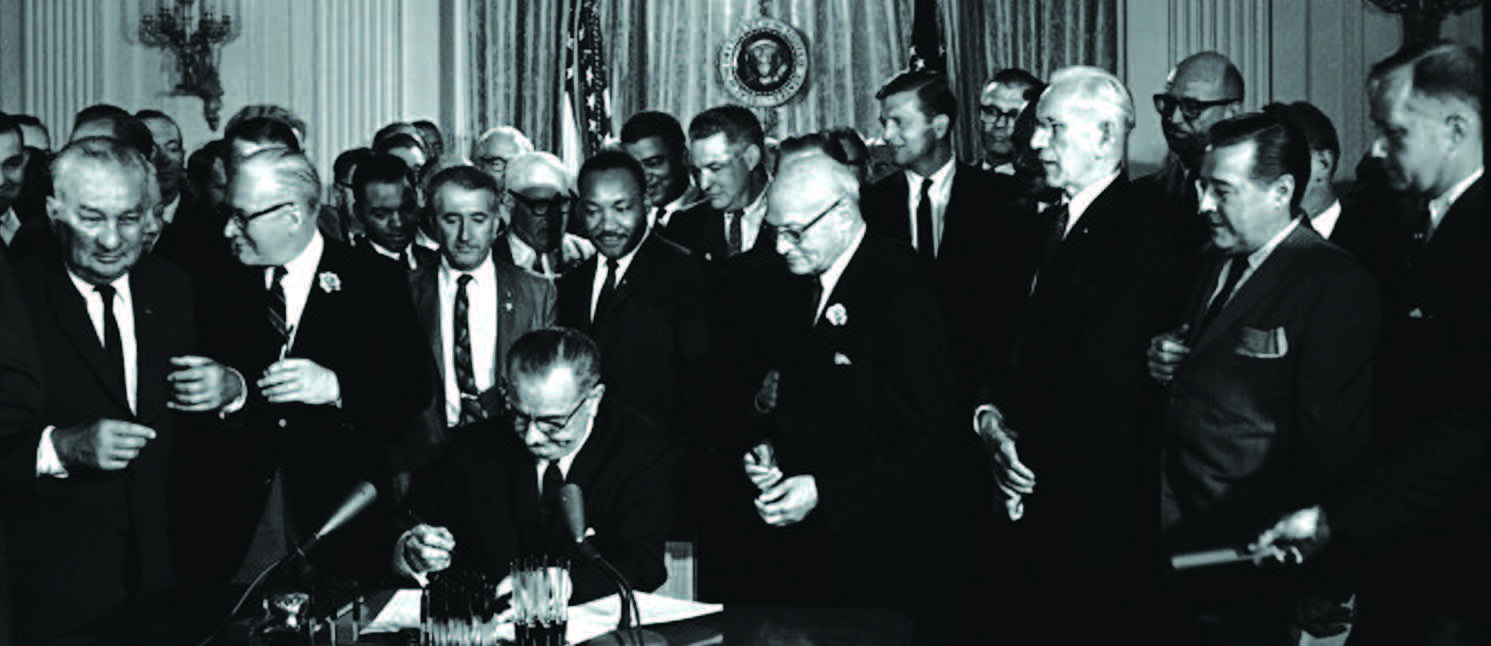
    AUSTIN, Texas: Barack Obama, America’s first black president, declared on April 10 that he had “lived out the promise” envisioned by Lyndon B. Johnson, the president who championed the push for greater racial equality with sweeping civil rights legislation a half century ago.

    Marking the 50th anniversary of the Civil Rights Act, which Johnson signed into law, Obama lauded his Democratic predecessor’s ability to grasp like few others the power of government to bring about change and swing open the doors of opportunity for millions of Americans. “They swung open for you and they swung open for me,” he said. “That’s why I’m standing here today.” Obama spoke at the end of a three-day summit commemorating the landmark law that ended racial discrimination in public places.

    The anniversary has spurred a renaissance of sorts for Johnson’s domestic agenda, which included the creation of Medicare for the elderly, Medicaid for the poor, and the Voting Rights Act. Johnson’s ambitious domestic agenda, following the assassination of President John F. Kennedy in 1963, has been overshadowed for decades by the legacy of the war in Vietnam, where Johnson escalated American military involvement to over 500,000 US troops by 1968.

    Against the backdrop of Obama’s own troubled relationship with Congress, there have also been fresh bouts of nostalgia for Johnson’s mastery of congressional deal-making. “No one knew politics and no one loved legislating more than President Johnson,” Obama said. “He was charming when he needed to be, ruthless when required.” Obama also offered rare personal insights into his views on the office he has held for more than five years, casting it as a humbling perch with powerful possibilities.

    “Those of us who’ve had the singular privilege to hold the office of the presidency know well that progress in this country can be hard and it can be slow, frustrating. And sometimes you’re stymied,” he said. “You’re reminded daily that in this great democracy, you are but a relay swimmer in the currents of history, bound by decisions of those who came before, reliant on the efforts of those who will follow to fully vindicate your vision,” he continued.

    “But the presidency also affords a unique opportunity to bend those currents by shaping our laws and by shaping our debates, by working within the confines of the world as it is, but also by reimagining the world as it should be.” As America’s first black president, Obama faced criticism from some African-Americans in his first term for doing too little to help minorities. He’s used his second term to focus more acutely on issues of inequality and economic opportunity, an effort that dovetailed with the commemoration of the Civil Rights Act. Using Johnson’s domestic successes as a model, Obama made the case that the government can still play a role in enacting social programs that can address inequalities.

    “If some of this sounds familiar, it’s because today we remain locked in the same great debate about equality and opportunity and the role of government,” Obama said, noting that there were those who dismissed LBJ’s “Great Society” as a failed experiment that encroached on liberty. Amid the celebrations, Obama said he sometimes worries that decades after the civil rights struggles it becomes easy to forget the sacrifices and uncertainties that defined the era. “All the pain and difficulty and struggle and doubt, all that’s rubbed away,” Obama said.

    “And we look at ourselves and say, `Oh, things are just too different now, we couldn’t possibly do now what they did then, these giants.’ And yet they were men and women, too. It wasn’t easy then.” Obama and first lady Michelle Obama arrived in Austin Thursday morning. Ahead of the president’s remarks, the Obamas toured the LBJ library’s “Cornerstones of Civil Rights” exhibit, which includes the Civil Rights Act signed by Johnson, as well as a copy of the Emancipation Proclamation signed by Abraham Lincoln and one of Lincoln’s trademark stovepipe hats. The Obamas also met privately with members of Johnson’s family.

  • Celebrating LBJ’s Legacy: A Reminder of Texas’ Civil Rights Challenges Today

    Celebrating LBJ’s Legacy: A Reminder of Texas’ Civil Rights Challenges Today

    DALLAS, TX (TIP): This week, the civil rights legacy of President Lyndon B. Johnson is being celebrated and every Texan should be proud.

    President Barack Obama and three living former U.S. Presidents — George W. Bush, Bill Clinton and Jimmy Carter — are visiting the LBJ Presidential Library in Austin to discuss such issues as same-sex marriage, immigration policy, race, women, and education and to honor President Johnson’s tremendous leadership in winning passage of the Civil Rights Act in 1964 and the Voting Rights Act in 1965.

    Together, these laws set out to ban discrimination based on race, color, sex, religion, or national origin and our nation is better, stronger and more righteous because of LBJ’s courage, vision and iron will. In the years since the passage of these benchmark symbols of American progress, other Texas leaders — Senator Lloyd Bentsen, Congresswoman Barbara Jordan, Congressman Henry B. Gonzalez, Governor Ann Richards, Speaker Jim Wright and many others — have honored Johnson’s legacy by continuing to work on behalf of all Texans.

    It is important, though, that this occasion in Austin also acknowledge the shadow hanging over the Lone Star state because of how some Texas political leaders continue to engage in ugly and overt discrimination against Texas Hispanics and African Americans. Our current Governor, our Attorney General and some leaders in the State House and State Senate are marring Texas’ proud legacy of civil rights heroes like Lyndon B. Johnson.

    In Texas two years ago, a three-judge federal court ruled that Texas leaders intentionally discriminated against Hispanic and African American Texans when they drew up and adopted discriminatory congressional and legislative district lines. Less than a year later, a different federal court found that Texas leaders discriminated against Hispanic and African American Texans in enacting a restrictive new Voter ID law. No other state in the country has adopted a redistricting plan or a voter ID law that has been found to violate the Voting Rights Act.

    This didn’t happen 50 years ago or even 15 years ago. It happened two years ago — and it happened because legislative leaders passed these laws under the guidance of Attorney General Greg Abbott, with the support and encouragement of Governor Rick Perry. Back in 1964, when LBJ passed the Civil Rights Act, Hispanics and African Americans combined made up less than 20 percent of the Texas population. Today, these Texans and other minorities constitute more than half of our state’s citizens. Abbott, Perry and GOP legislative leaders should be working to win the support of this rapidly growing part of the Texas electorate.

    Instead, they have chosen to undermine and suppress the strength and influence of minority voters — to cheat these Texans out of their chance to vote for candidates they care about and policies they believe in. In Texas today, those fighting for civil rights don’t wield fire hoses in the streets or collect taxes and administer tests at the polls.

    But the Texas politicians who fight voting fairness today use the Texas Attorney General’s office and legislative weapons that have the same effect, often using them against the same minority senior citizens who fought the early civil rights battles. It is profoundly important to honor President Johnson’s historic contributions to justice and democracy — and to appreciate how hard he fought for the rights of every Texan and every American. We cannot properly honor President Johnson or his legacy, however, unless we are also unafraid to call out the current state leaders who somehow see their own ambitions and political future dependent upon discounting and suppressing the precious voting rights of Texas voters.

  • Students Protest Ahead of Obama’s Civil Rights Speech

    Students Protest Ahead of Obama’s Civil Rights Speech

    AUSTIN (TIP): The day before President Obama gives his keynote address at the LBJ Presidential Library’s Civil Rights Summit, a group of about 30 protesters took aim at the president’s record on deportations during a demonstration at the University of Texas at Austin.

    “I want to show my community that I’m here for them, that I will fight for them,” said Juan Belman, 21, an engineering major and one of four protesters who chained themselves to a statue of Martin Luther King Jr. during Tuesday’s demonstration on the east side of campus.

    An immigrant himself, Belman said his father went through deportation proceedings three years ago and that he has several close friends who have been deported. “Too many families are being separated, and we cannot stand for children being left behind,” he said. The Obama administration is on track to oversee a record number of deportations.

    During President George W. Bush’s time in office, just over 2 million people were deported. During Obama’s time in office, 1.8 million people have been deported so far. The administration has said that it’s following the law and that deportations target criminals first.

    At Wednesday’s protest, organized by United We Dream, a national youth-led organization devoted to immigrants rights, and UT-Austin’s University Leadership Initiative, students and local activists rallied with signs that read “Obama’s civil rights legacy: 2,000,000 deportations” and classic protest songs, including “We Shall Overcome.” Immigrant advocates at the protest said the deportations are tearing families apart.

  • INDIA GOT 93,000 US WORK VISAS IN 2013

    INDIA GOT 93,000 US WORK VISAS IN 2013

    CHENNAI (TIP): US President Barack Obama was not too far off the mark when he told students at Maryland recently that Americans would have to compete against Indians and Chinese for good jobs in the present and near future. Consider this: India is slated to get nearly 60 per cent of all H-1B work visas that the US issues worldwide. India alone got 93,000 H-1B visas out of an estimated 1,48,000 visas issued worldwide by the US in 2013.

    The Chennai Consulate General alone issued 37,000 visas, which means just one consulate in India is issuing nearly 24 per cent of all H-1B visas issued worldwide, top officials of the US Consulate General said. The rest 55,000 visas were shared by scores of other countries competing with India. The other consulates in India taken together issued the rest 56,000 visas.

    This means around 30-32 per cent of all visas issued in India come from the Chennai consulate alone, indicating the enormous number of people waiting to travel to the US. The IT sector is strong in Southern India which explains the demand. While 65,000 H-1B visas is the worldwide limit approved by the US Congress, the number of visas actually issued shoots up because there are H-1B visas that do not fall under the 65,000 cap and because hundreds of visas come up for renewal, consulate officials said.

  • City Council moves to ban credit checks in hiring

    City Council moves to ban credit checks in hiring

    NEW YORK, NY (TIP): Employers would be banned from considering the credit histories of job applicants under a bill introduced in the City Council. A similar bill failed to gain traction last year, but is more likely to pass under the new, more left-leaning city government.

    Mayor Bill de Blasio’s campaign platform last year included prohibiting credit checks as a factor in employment decisions. In a rally on the steps of City Hall Thursday, the bill’s sponsors said the legislation would end a “deeply discriminatory” practice of denying employment based on poor credit scores, and would serve notice to the credit bureaus, which they charged with wielding a disproportionate amount of power over the unemployed. “There is simply no evidence of any correlation between peoples’ credit history and their job performance,” said Councilman Brad Lander, who co-sponsored the bill.

    “None.” Councilman Mark Levine said credit bureaus often treat customers like “products” and are generally unaccountable to any government agency. Ten other states have similar laws on the books, and Massachusetts Sen. Elizabeth Warren recently submitted such a bill at the federal level. Even President Barack Obama has spoken in support of banning the use of credit checks in hiring. Mr. Lander and his council colleagues were joined by dozens of advocates from unions, think tanks, legal service centers and other progressive groups, as well as a handful of New Yorkers who could personally attest to the problems that a bad credit score has caused in their search for employment.

    Most companies do not use credit scores when hiring, but business leaders, particularly those on Wall Street, said the bill has the potential to make life harder for many employers. They worry that it would open employers to greater liability and limit their ability to evaluate potential job candidates. Kathryn Wylde, president of the Partnership for New York City, lumped it in with other recent bills passed by the council that impose further regulations on the private sector. “Proposals that make it more difficult and expensive to do business in the city are in direct conflict with the progressive goal of more and better jobs,” she said.

    “It is hard to understand why council members are pushing measures that will discourage job creation and increase employer exposure to costly litigation. Each bill may seem modest, but cumulatively, the impact can really damage the city.” Other states with credit-check bans have carve-outs to let financial service companies make credit checks before granting employees access to sensitive customer information. Mr. Lander denounced those laws as “riddled with loopholes” that exempt all financial institution employees, even custodians. His bill would offer no such exemptions, except as mandated by state and federal law. “This would be the strongest legislation of its kind,” he said.

  • U.S. may allow H1B spouses to work during green card wait

    U.S. may allow H1B spouses to work during green card wait

    WASHINGTON (TIP): In a rare move that flies in the face of anti-immigrant rhetoric in some corners of the U.S. the Department of Homeland Security announced in recent weeks that it was proposing to provide employment authorization to H-4 visa holders, who are spouse-dependents of principal H-1B “non-immigrant” visa holders.

    In taking this progressive step the DHS has however clarified that it planned to extend employment authorization only to those within the H4 population who “have begun the process of seeking lawful permanent resident status through employment and have extended their authorized period of admission,” in the U.S. The DHS in its notification of proposed amendments to the law appeared to cognize an important point made in the articles, that restrictions on the right of H4 spouses to work in the U.S. could affect the decision of the principal H1B worker to remain in employment here.

    In this regard the DHS said that it “recognizes that the limitation on the period of stay is not the only event that could cause an H-1B worker to leave his or her employment and cause disruption to the employer’s business, inclusive of the loss of significant time and money invested in the immigration process… This rule will encourage H-1B skilled workers to not abandon their adjustment application because their H-4 spouse is unable to work.” The proposed rules granting employment rights to some H4 visa holders were also “intended to mitigate some of the negative economic effects of limiting H-1B households to one income during lengthy waiting periods in the adjustment of status process,” the DHS noted.

    Calls for relaxing the restrictions placed on H4 visa holders have come amidst growing expectations that President Barack Obama may address the complex issue of comprehensive immigration reform during his second term in office. While opposition to reform has primarily been rooted in concerns over further loss in American jobs to new immigrants, proponents have made the case that fewer work restrictions for H-4 dependent spouses, for example, might encourage “professionals with high demand skills to remain in the country and help spur the innovation and growth of U.S. companies,” and the DHS appeared to support this view in its notes. Applicants seeking to obtain the right to work in the U.S. on this basis should however bear in mind that the proposed changes would only impact spouses of H-1B workers who have been admitted or have extended their stay under the provisions of the American Competitiveness in the Twenty- First Century Act of 2000 or AC21.

    Also it may take at least six months or more for the new rule to get formalized given that the rule is only in the proposal stage and would need to be discussed and passed by the government. Pre-emptively addressing any suggestions that the new rules could take away jobs from American residents the DHS said, “Allowing certain H-4 spouses the opportunity to work would result in a negligible increase to the overall domestic labor force. The benefits of this rule are retaining highly-skilled persons who intend to adjust to lawful permanent resident status. This is important when considering the contributions of these individuals to the U.S. economy, including advances in entrepreneurial and research and development endeavors, which are highly correlated with overall economic growth and job creation.” It added that the proposed amendments would also bring U.S. immigration laws more in line with other countries that seek to attract skilled foreign workers.