Tag: Barack Obama

  • US Supreme Court strikes down caps on campaign donations

    US Supreme Court strikes down caps on campaign donations

    WASHINGTON (TIP): The US Supreme Court on April 2 struck down a key pillar of campaign finance law by allowing wealthy donors to give money to as many political candidates, parties and committees as they wish. On a 5-4 vote, the court struck down the overall limits on how much individuals can donate during the federal two-year election cycle.

    Before the ruling, donors could not exceed a $123,200 overall limit during the two-year period. The ruling allows donors to contribute nearly $6 million in the same period, according to public advocacy groups. Wednesday’s Supreme Court decision is the latest in a series of rulings by the conservative-led court to give bigmoney donors more influence in US elections. Republicans, who generally favor lifting finance limits, hailed the decision.

    Democrats typically argue for tighter restrictions, fearing that wealthy individuals could otherwise hold undue influence over the political process. The ruling leaves in place base limits on how much a donor can give each candidate, committee and party, limiting the scope of the decision. In the current two-year election cycle (2013-14), an individual can give $2,600 to each candidate or committee and $32,400 to a national political party. Election lawyers said the ruling means wealthy donors can give to more candidates ahead of this November’s mid-term congressional elections than was previously allowed.

    FREE SPEECH
    The court said the aggregate limits violated the First Amendment of the US Constitution, which protects free speech. The majority rejected the contention of President Barack Obama’s administration that the limits are needed to fight corruption. The caps “do little, if anything, to address that concern, while seriously restricting participation in the democratic process,” wrote Chief Justice John Roberts, appointed by former President George W. Bush, a Republican.

    “What I think this means is that freedom of speech is being upheld,” Republican John Boehner, speaker of the House of Representatives, told reporters. Fred Wertheimer, an advocate for campaign finance limits, said the court had “continued its march to destroy the nation’s campaign finance laws, which were enacted to prevent corruption and protect the integrity of our democracy.” The 5-4 split was along party lines, with the five justices appointed by Republican presidents joining the majority and the four appointed by Democratic presidents dissenting.

    The decision comes four years after the court’s landmark Citizens United v. Federal Election Commission ruling that cleared the way for increased independent corporate and union spending during federal elections. In a dissenting opinion, Justice Stephen Breyer said the ruling, along with Citizens United, “eviscerates our nation’s campaign finance laws.” Laws that require candidates, parties and political action committees to disclose information about donors are also not affected.

  • Obama clears way for South Sudan sanctions

    Obama clears way for South Sudan sanctions

    WASHINGTON (TIP): President Barack Obama is warning that the United States may levy sanctions on individuals and entities involved in stoking violence and instability in South Sudan.Obama signed an executive order on Thursday clearing the way for possible visa bans and asset freezes.

    Officials said the move reflected White House frustration with the lack of progress in ending the violent clashes in South Sudan that broke out more than three months ago. “Those who threaten the peace, security or stability of South Sudan, obstruct the peace process, target UN peacekeepers or are responsible for human rights abuses and atrocities will not have a friend in the United States and run the risk of sanctions,” the White House said in a statement.

    While no individuals or entities were actually sanctioned Thursday, the executive order is necessary for the US to take that step. Officials said the European Union, Britain, Norway and the United Nations Security Council are also in the process of considering similar actions. The massive violence in South Sudan erupted in December after a dispute among the country’s presidential guards.

    That dispute soon pitted backers of South Sudan’s president against the former vice president, who now commands the loyalty of a large number of rebel troops who control significant parts of the country.The politically fueled ethnic violence has continued despite a Jan. 23 cease-fire agreement.The White House called on both sides to end to the violence, saying there is “no room for excuses or delay.”

  • US warns China not to attempt Crimea-style action in Asia

    US warns China not to attempt Crimea-style action in Asia

    WASHINGTON: China should not doubt the US commitment to defend its Asian allies and the prospect of economic retaliation should also discourage Beijing from using force to pursue territorial claims in Asia in the way Russia has in Crimea, a senior US official said on April 3.

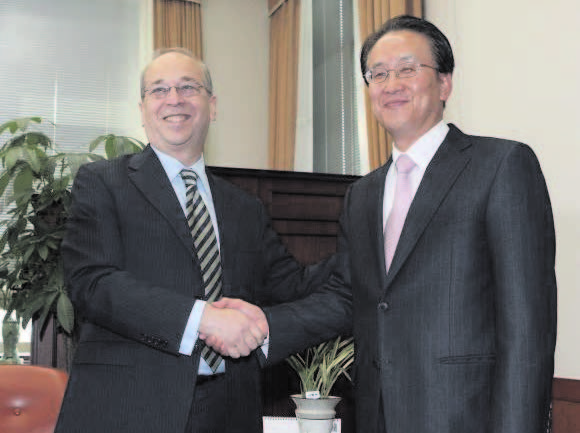
    Daniel Russel, President Barack Obama’s diplomatic point man for East Asia, said it was difficult to determine what China’s intentions might be, but Russia’s annexation of Crimea had heightened concerns among US allies in the region about the possibility of China using force to pursue its claims.

    “The net effect is to put more pressure on China to demonstrate that it remains committed to the peaceful resolution of the problems,” Russel, the US assistant secretary of state for East Asia, told the Senate Foreign Relations Committee. Russel said the retaliatory sanctions imposed on Russia by the United States, the European Union and others should have a “chilling effect on anyone in China who might contemplate the Crimea annexation as a model.”

    This was especially so given the extent of China’s economic interdependence with the United States and its Asia neighbors, Russel said. Russel said that while the United States did not take a position on rival territorial claims in East Asia, China should be in no doubt about Washington’s resolve to defend its allies if necessary. “The president of the United States and the Obama administration is firmly committed to honoring our defense commitments to our allies,” he said.

    While Washington stood by its commitments – which include defense treaties with Japan, the Philippines and South Korea – Russel said there was no reason why the rival territorial claims could not be resolved by peaceful means. He said he hoped the fact that the Philippines had filed a case against China on Sunday at an arbitration tribunal in The Hague would encourage China to clarify and remove the ambiguity surrounding its own claims.

    Russel termed the deployment of large numbers of Chinese vessels in its dispute with the Philippines in the South China Sea “problematic” and said that Beijing had taken “what to us appears to be intimidating steps.” “It is incumbent of all of the claimants to foreswear intimidation, coercion and other non-diplomatic or extra-legal means,” he said. In Asia, China also has competing territorial claims with Japan and South Korea, as well as with Vietnam, Malaysia, Brunei and Taiwan in potentially energy-rich waters. Obama is due to visit Japan, South Korea, Malaysia and the Philippines from April 22, when he is expected to stress his commitment to a rebalancing of US strategic and economic focus towards the Asia-Pacific region in the face of an increasingly assertive China.

  • Senators vote to declassify CIA interrogation report

    Senators vote to declassify CIA interrogation report

    WASHINGTON (TIP): The US Senate’s intelligence panel voted 11-3 on Thursday to declassify hundreds of pages of its detailed report on the CIA’s controversial Bush-era interrogation program.

    The move allows Senator Dianne Feinstein, the powerful chair of the Intelligence Committee, to send the 400-page executive summary as well as key conclusions and recommendations to the White House for review. Senator Saxby Chambliss, the committee’s top Republican, said he opposed the exhaustive investigation in the first place, but reluctantly voted to declassify parts of it so that the American people can assess the program’s legacy for themselves.

    “We need to get this behind us,” Chambliss told reporters. If President Barack Obama gives the green light, as he is expected to do, intelligence agencies would embark on a process of redacting certain details they determine should remain classified. Feinstein said she hoped the redactions would be “as few as possible,” and that she believed the process would take at least a month. She said it was important to expose the brutal interrogation program, which she described as “a stain on our history.”

  • Obama agents sent home from Europe for boozing

    Obama agents sent home from Europe for boozing

    WASHINGTON (TIP): In a new embarrassment for the US Secret Service, three agents were sent home from Amsterdam for drunkenness, after one was found passed out in a hotel hallway. The agents were in The Netherlands ahead of US President Barack Obama’s trip there this week as part of the elite unit tasked with protecting the president in the event of an attack.

    Secret Service spokesman Brian Leary confirmed to AFP Wednesday that “three employees were sent home for disciplinary reasons,” without giving any further details. The story was first reported in the Washington Post newspaper, which said the agents have been placed on administrative leave, citing three unnamed people familiar with the case. The incident comes two years after a scandal involving Secret Service agents and prostitutes in the Colombian Caribbean resort of Cartagena.

    Then, a dozen agents and officers drank heavily and brought prostitutes to their hotel before the president’s arrival for an economic summit. Their activities came to light when one of the call girls had an argument in a hotel hallway after an agent refused to pay her. Colombia reported the incident to the US embassy in Bogota. In the new case, the alleged behavior would violate Secret Service rules adopted after the Cartagena scandal, the Post reported.

    Obama’s visit to the Netherlands started with a brief stop at the Rijksmuseum in Amsterdam, before he attended a nuclear security summit in The Hague and met fellow G7 leaders for talks on the Ukraine crisis. Obama flew to Brussels on Tuesday for his first ever visit to the European Union’s headquarters, and he is also due to visit Rome and the Vatican before heading to Saudi Arabia. The Post said the three people sent home were members of the Secret Service’s Counter Assault Team. That unit goes into action if the president or his motorcade comes under attack -they aim to fight off any assailants and draw fire while the president’s protective detail removes him from the area.

    The Post said hotel staff alerted the US embassy in the Netherlands after finding the unconscious agent Sunday morning, the day before Obama arrived in the country. The embassy then alerted Secret Service managers on the presidential trip, which included the agency’s director, Julia Pierson. Under the new post-Colombia rules, staff on an official trip are banned from drinking alcohol in the 10 hours leading up to an assignment. CAT members would have been called to duty sometime Sunday for a classified briefing ahead of the president’s arrival on Monday so drinking late into the night Saturday evening and Sunday morning would have violated that rule. Two former agency employees with experience on foreign assignments described the counter-assault team as one of the most elite units in the agency, responsible for the president’s life.

    CAT staff are required to be highly skilled shooters and extremely physically fit, with a demanding training regimen, the ex-employees told the Post. White House spokesman Jay Carney, speaking to reporters traveling with Obama on Air Force One from Brussels to Rome, said the president had been briefed on the incident. “Generally, the president believes – as he has said in the past – that everybody representing the United States of America overseas needs to hold himself or herself to the highest standards,” Carney said. Obama supports Pierson’s “zerotolerance approach on these matters,” the spokesman added. In the Colombia incident, 10 agents were removed from their jobs. Several investigations were launched, and the new rules were designed to prevent a repeat of such activity.

  • Obamacare tops 6 million signups

    Obamacare tops 6 million signups

    NEW YORK (TIP):
    More than 6 million people have signed up for Obamacare, as a crush of people raced to get health insurance before the March 31 deadline. President Obama announced the milestone Thursday, March 27, in a call with enrollment counselors and outreach volunteers, who are undertaking an intense marketing drive in the final days of open enrollment. There were more than 1.5 million visits to HealthCare.gov and more than 430,000 calls to the call centers on Wednesday.

    Those who’ve started the application by next Monday but are unable to finish because of technical issues will receive more time to complete the process, officials have said. Reaching 6 million is a symbolic victory for the Obama administration following the botched launch in October. It is short of the initial goal of 7 million, which was based on a projection by the Congressional Budget Office and adopted by the administration. But it shows considerable gains from the first month when just 106,000 people had signed up.

    Last month, the CBO revised its projection down to 6 million because of the rocky initial rollout. Things were looking pretty grim when Obamacare launched on October 1. The exchange websites didn’t work, and internal notes showed that only 6 people signed up initially. The Obama administration had to bring in a SWAT team of tech experts to overhaul the federal exchange site.

    What a difference six months makes. More than 5 million Americans have selected policies on the state and federal exchanges, with the final push coming before open enrollment closes March 31. Sign-ups are nearing the Congressional Budget Office projection that 6 million people would enroll for 2014.

  • Michelle Obama stirs Tibet pot during China visit

    Michelle Obama stirs Tibet pot during China visit

    BEIJING (TIP): US first lady Michelle Obama, who had signaled that she’ll steer clear of controversy during her recent China tour, ended up creating a storm by visiting a Tibetan restaurant in Sichuan province, prompting thousands of Chinese to ask if she meant to indulge in domestic politics. Michelle visited the restaurant in Chengdu city of Sichuan, a province which has witnessed a large number of self-immolation by protesting Tibetan monks, along with her two daughters and mother over the weekend. She met some local Tibetans and sought to promote education and boost cultural ties.

    The visit caused sharp reactions in the Chinese internet with many asking if she had a sinister goal in mind. “When it’s plain that the aim is to dictate to China, can you still say that the US first lady’s trip is just innocent travel?” asked user on Weibo, China’s Twitter. “This carries strong political overtones, meant to communicate that the US is paying close attention to politics in Tibet,” another Weibo post said. Some asked if the restaurant trip was part of the Chinaapproved itinerary or she had deviated from it.

    An Obama aide did not help matters when he tried to defend the restaurant visit saying, “Tibetans are an important minority group, and there is a sizeable number of Tibetans in Sichuan.” Another aide said the restaurant was chosen because of her interest in the rights of minorities in China. In February, US President Barack Obama had met the Dalai Lama drawing severe criticism from the Chinese government, which regards the Buddhist leader as “a wolf in monk’s clothing”. The American first lady spun a row of prayer wheels as she walked the entry bridge to the restaurant, according to the US government’s pool report.

    She also received the family ceremonial white scarves – symbolizing purity in Tibetan culture-from a group of Tibetan students. are Tibetan traditional foods, including yak meat pie, boiled yak ribs, bread made with barley and yak butter tea. Obama’s China tour was preceded by American officials indicating she won’t raise any controversial and human rights issues because it was meant to enhance Sino-US relationship. But she later talked about the importance of media and Internet freedom in her speech to students of Peking University. China has banned thousands of websites including Twitter, Facebook and YouTube.

  • US Senate confirms Indian-American Puneet Talwar for key state department post

    US Senate confirms Indian-American Puneet Talwar for key state department post

    WASHINGTON (TIP): Puneet Talwar has been confirmed by the US Senate to a key diplomatic position, becoming the second Indian-American to join the state department. Talwar, who was a key aide of President Barack Obama on the Middle East, would now serve as the assistant secretary of state for political-military affairs.

    He was confirmed on thursday by voice vote. In September last year Obama nominated Talwar, who played a key role on negotiations with Iran, to this top diplomatic position in the state department. After being sworn-in, Talwar would be the second Indian- American serving as assistant secretary in the state department after Nisha Desai Biswal, who is the assistant secretary of state for South and Central Asia.

    Talwar would provide policy direction in the areas of international security, security assistance, military operations, defence strategy and plans, and defence trade. The Bureau of Political-Military Affairs is the department of state’s principal link to the department of defence. Since 2009, Talwar has been a special assistant to the US President and senior director for Iran, Iraq, and the Gulf States on the White House National Security Staff.

    Prior to this, Talwar served as a senior professional staff member on the Committee on Foreign Relations of the US Senate (SFRC) from 2001 to 2009 and from 1997 to 1999, and was the chief adviser on the Middle East to then senator Joseph R Biden in his capacity as the chairman of the Senate Foreign Relations Committee. He served as a member of the department of state’s policy planning staff from 1999 to 2001. From 1992 to 1995, he served as a foreign policy adviser to Representative Thomas C Sawyer, and from 1990 to 1992 as an official with the United Nations. Talwar received a BS from Cornell University and an MA from Columbia University’s School of International and Public Affairs.

  • Obama expands sanctions, threatens Russian economy

    Obama expands sanctions, threatens Russian economy

    WASHINGTON (TIP): US President Barack Obama imposed sanctions on more Russian officials and a bank on Thursday and threatened to target the broader Russian economy if Moscow escalates its actions against Ukraine.

    “Russia must know that further escalation will only isolate it further from the international community,” Obama said at the White House. The new measures targeted a new list of 20 lawmakers and senior government officials in addition to 11 people already sanctioned by Washington.

    Obama made his announced just hours after Russian lawmakers rubberstamped a treaty signed by President Vladimir Putin to absorb the Ukrainian region of Crimea into Russia. The US move freezes assets within American jurisdiction and bars US firms from conducting business with those concerned. The US treasury department identified the financial institution involved as Aktsionerny Bank of the Russian Federation, also known as Bank Rossiya.

    Senior officials said the bank held significant assets of the Russian ruling elite and key figures around Russian President Vladimir Putin. “Bank Rossiya’s shareholders include members of Putin’s inner circle associated with the Ozero Dacha Cooperative, a housing community in which they live,” the US treasury said.

    Obama said: “Now we’re taking these steps as part of a response to what Russia has already done in Crimea.” But he also raised the prospect of tougher future action if Russian behavior does not change, adding he had signed a new executive order that would allow him to target specific sectors of the Russian economy. “This is not our preferred outcome,” Obama said, warning that the moves would have a “significant impact” on the Russian economy.

  • Obama backs interim Ukraine PM, rebukes Putin

    Obama backs interim Ukraine PM, rebukes Putin

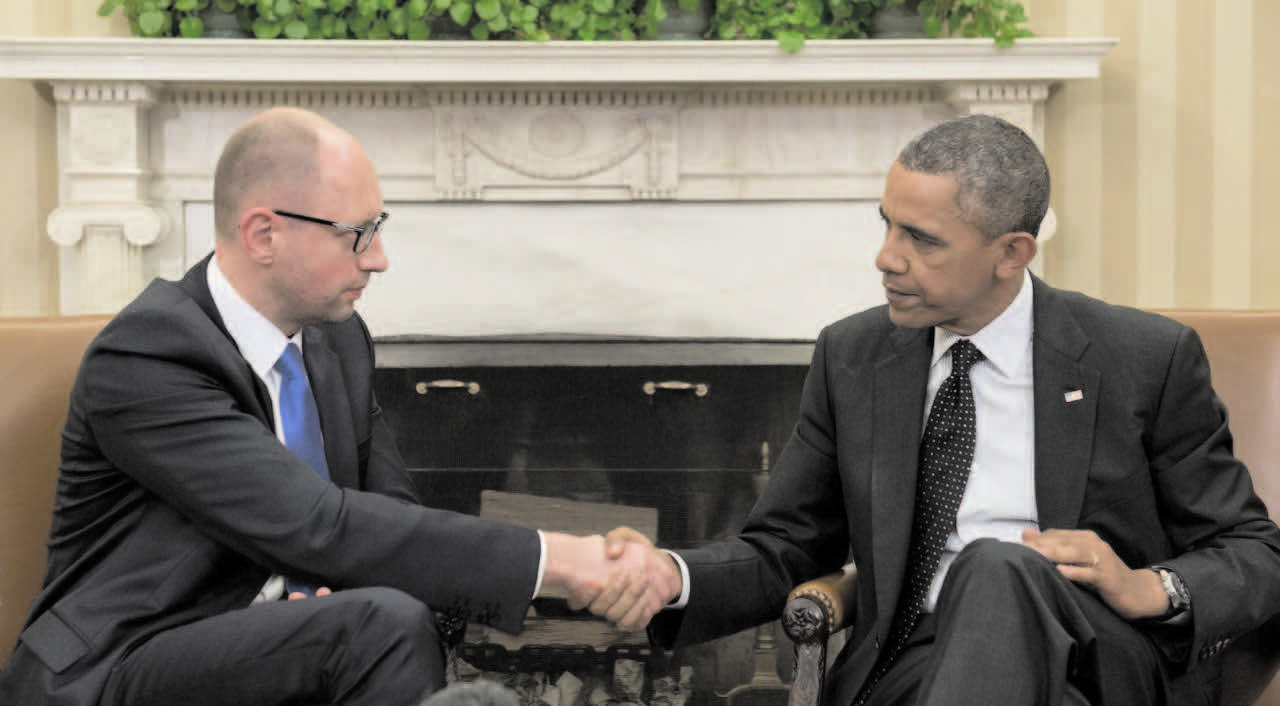
    WASHINGTON (TIP): President Barack Obama told Ukraine’s Prime Minister on March 12 that the United States would stand by his country’s defense of its sovereignty, conferring symbolic legitimacy on the Kiev government in a direct rebuke to Russia. Obama also said after meeting interim Prime Minister Arseniy Yatsenyuk that he hoped US diplomacy with Moscow over the next few days could cause a “rethinking” of plans for a secession referendum in Crimea on March 10.

    Obama said that Russia had infringed international law with its incursion into Ukraine and warned that if President Vladimir Putin did not change course, he would face “costs” from the United States and the international community, which has already threatened economic sanctions. Obama told Yatsenyuk in the Oval Office — in a visit intended to confer symbolic legitimacy on the Kiev government — that he had been impressed by the courage of the people of Ukraine during the ouster of president Viktor Yanukovych and the political turmoil that followed.

    “We have been very clear that we consider the Russian incursion into Crimea… to be a violation of international law,” Obama said. “We have been very firm in saying that we will stand with Ukraine and the Ukrainian people in ensuring that territorial integrity and sovereignty is maintained,” Obama said. Yatsenyuk told reporters in the Oval Office that Ukraine would “never surrender” in its fight for territorial integrity, but also that it wanted to be a good partner to Russia.

    Obama added that the United States would not recognize the results of the referendum in Crimea on joining Russia. He said the vote was a “patchedtogether” exercise but hinted that he hoped talks between Secretary of State John Kerry and his Russian counterpart Sergei Lavrov later this week in London could change the situation. “My hope is that as a consequence of diplomatic efforts over the next several days that there will be a rethinking of the process that has been put forward.”

  • US and India could accomplish a lot together: Obama

    US and India could accomplish a lot together: Obama

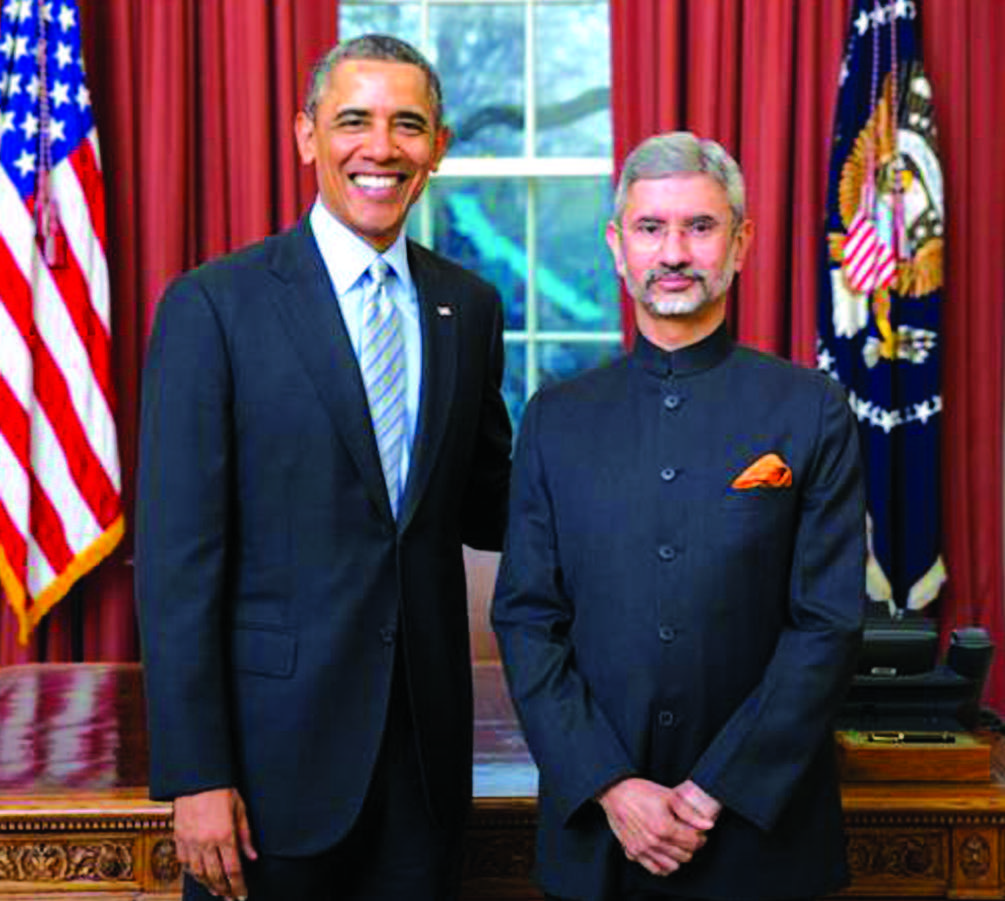
    WASHINGTON (TIP): India’s new ambassador to the United States, Dr S Jaishankar, presented his credentials to President Obama at the White House on Monday in a formal ceremony at which the American President essayed an anodyne ”the U.S and India could accomplish a lot together,” at a time New Delhi has largely fallen off Washington’s radar, in part because of India’s pre-occupation with the general elections.

    The credentialing process is a mostly ceremonial and familial occasion, but everyone watches for little signs that indicate the health of bilateral ties. From all accounts, Jaishankar, an old U.S hand, four generations of whose family has engaged Washington, got a warm welcome, with President Obama genially connecting with each member of the family and wishing them a good time in the US.

    Six other foreign envoys, including Pakistan’s new ambassador to Washington Jalil Abbas Jilani, who has also served in New Delhi, also presented their credentials. The Indian ambassador was accompanied by his wife Kyoko, and the children — daughter Medha, an executive with Reliance Entertainment, son Dhruva, a Senior Fellow with the German Marshall Fund, and his wife Cassandra, a PhD scholar at Brandeis Univeristy, and Arjun, 14.

    ”As you know, I presented my credentials to President Obama and he seems to have checked out the credentials and found it OK,” the ambassador joked to guests from the state department, Congress, and media he had invited for lunch at his home following the ceremony. ”He allowed us to have a nice photograph and we had great conversation and he mentioned that his administration looks forward to working with me.” ”This is really what makes for our relationship, and as I am formally signing on today.

    I thought the best thing to do would be to really call all the people I hope to work with for the rest of my tenure, and say, ‘I am counting on you to get my job done,” he added. On a more serious level, the ambassador’s energies in Washington, at a time when India is busy navelgazing due to elections at home, will be directed at averting punitive US trade sanctions that could welcome the new government in New Delhi.

    A powerful trade lobby in Washington led primarily by big pharma, is striving to designate India as a ”priority foreign country” under the Special 301review aimed at punishing India for inadequate intellectual property rights. The two sides are also still struggling with resolving the nitty-gritty details of the Devyani Khobragade case, while larger geo-political issues have taken a backseat. India has been conspicuously out of the loop on the Ukraine crisis, with the leadership in New Delhi not among those President Obama has phoned for discussions — a list that includes all other major powers.

  • Indian ambassador presents credentials to Obama

    Indian ambassador presents credentials to Obama

    WASHINGTON (TIP): The new Indian ambassador to the US, Dr. S Jaishankar formally presented his credentials to President Barack Obama at his oval office at the White House on March 10. Jaishankar was second of the six ambassadors who presented their credentials to Obama one by one in a traditional ceremony that marks the formal beginning of an ambassador’s service in Washington.

    Pakistan’s Ambassador Jalil Abbas Jilani also presented his credentials along with the new envoys of Tunisia, Papua New Guinea, Belgium and Qatar. Although he formally presented his credentials to Obama only March 10, Jaishankar spent the last couple of months since his arrival here on Christmas eve to put the India-US relations back on track after the diplomatic row over the Khobragade affair.

    Jaishankar, who played a key role in negotiating the landmark India-US civil nuclear deal and other initiatives, used his wide contacts with the Washington bureaucracy dealing with South Asia to defuse the crisis over the December 12 arrest and strip search of India’s then consul general in New York, Devyani Khobragade. Coming to Washington after four years as the Indian ambassador in China, he succeeded Nirupama Rao, whom he had replaced in Beijing too when she returned to New Delhi to become foreign secretary.

    Son of India’s leading strategic thinker, the late K.Subrahmanyam, Jaishankar comes to Washington, DC with more than three decades of diplomatic experience. Joining the Indian Foreign Service in 1977, he spent three years from 1985 to 1988 as first secretary handling political affairs at the Indian embassy in Washington.

    He has also served as India’s ambassador to the Czech Republic, High Commissioner to Singapore and as head of Americas division in the ministry of external affairs. Jaishankar holds a Ph.D and M.Phil in International Relations and a Master in Political Science. He is a member of the International Institute for Strategic Studies in London. He is married to Kyoko Jaishankar and they have two sons and a daughter.

  • Michelle Obama felicitates Indian acid attack victim Laxmi

    Michelle Obama felicitates Indian acid attack victim Laxmi

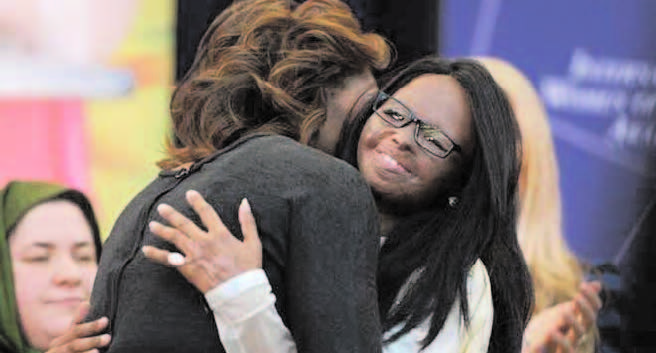
    WASHINGTON (TIP): US First Lady Michelle Obama has felicitated Indian acid attack victim Laxmi after she won the International Women of Courage Award for successfully leading the campaign against acid attacks on women in India.

    Michelle Obama and the large crowd at the US State Department auditorium was moved and touched when Laxmi, a standard-bearer of the movement to end acid attacks, recited a poem recounting her experience on the occasion on march 4. “You haven’t thrown acid on my face; you threw it on my dreams.

    You didn’t have love in your heart; you had acid in it,” Laxmi recited soon after receiving the prestigious award along with several other women from different parts of the world including Afghanistan and Fiji. The original poem was in Hindi. Laxmi was 16 when an acquaintance threw acid on her face while she waited at a bus stop in New Delhi’s busy Khan Market in 2005, disfiguring her permanently.

    Her attacker, a friend’s 32-year-old brother, threw the acid to destroy Laxmi’s face after she refused to respond to his romantic advances. Recognition for her effort through this award, is a great encouragement and motivation for the girls and women of India, many of whom still are not able to speak out against the atrocities inflicted upon them, Laxmi said soon after receiving the award. “After this award, girls of India would think, if Laxmi can do this, I can also raise my voice against injustice,” Laxmi told in an interview.

    Last year, Nirbhaya, the courageous 23-year-old girl whose brutal gang rape and murder on a moving bus in Delhi in December 2012 triggered widespread protests, was honoured with the award. Ruing that acid is still being sold without following the recent Supreme Court order in this regard; Laxmi demanded the creation of a high level committee at the national level to prevent acid attacks against women.

    “Victims of acid attacks not only be given compensation, but also the entire medical expense be meted by the government. The victim should be given a government job and given justice through fast track courts,” Laxmi said and urged the political parties to incorporate this in their election manifesto for the forthcoming elections. “There was never any love in your eyes. They burn me with caustic glance. I am sad that your corrosive name will always be the part of my identity that I carry with this face. Time will not come to my rescue.

    Every Thursday will remind me of you,” Laxmi said reciting her poem with the First Lady and other top US officials on the dais. “When we see these women raise their voices and move their feet and empower others to create change, we need to realize that each of us has that same power and that same obligation,” the First Lady said in her speech. “And as I learned about this year?s honorees and I thought about how we could support their work, I realized that for most of these women, there is a common foundation for their efforts. It’s a foundation of education,” she said.

    Observing that she always walks away feeling inspired by these women, determined to reflect their courage in her own life, Obama said she is not alone in that feeling because every day with every life they touch and every spirit they raise, these women are creating ripples that stretch across the globe. “Last year on this stage, we honoured the memory of a tremendous young Indian woman known simply as Nirbhaya. This tragedy sparked outrage and inspired people all over the world to come together to say no more looking the other way when genderbased violence happens, no more stigma against victim or survivors,” said Deputy Secretary of State, Heather A Higginbottom.

    “That is also the message of Laxmi from India. Acid attacks are committed almost exclusively on women, particularly on young women,” she said. “Many of the victims feel they have no choice but to withdraw from society or even commit suicide, and they’re more common than you might realise, in part because it’s such an easy weapon to get your hands on. Until recently, anyone could walk into a store and buy a litre of acid as cheaply and as easily as a bottle of window cleaner,” she said.

    “But after her attack, Laxmi became a tireless campaigner against acid attacks. Thanks to her hard work and tremendous diligence, Laxmi was successful in petitioning the Supreme Court to order the Indian government to regulate the sale of acid and to make prosecutions of acid attacks easier to pursue. And she continues to push for progress still today,” she said. “For fearless advocacy on behalf of victims of acid attacks and for bringing hope to survivors of gender-based violence and disfigurement, we name Laxmi a Woman of Courage,” Higginbottom said.

  • Obama unveils election year ‘growth and jobs’ budget

    Obama unveils election year ‘growth and jobs’ budget

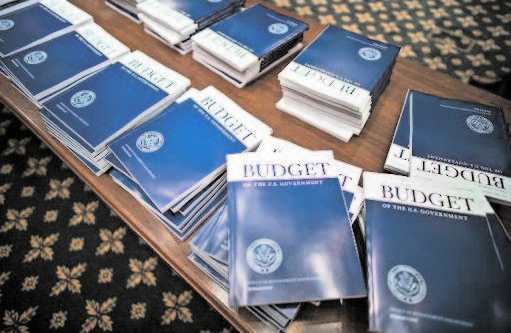
    WASHINGTON (TIP): President Barack Obama proposed a budget on Tuesday for the coming fiscal year that has less to do with managing US finances than with stemming his party’s losses in congressional elections.

    The mildly expansionary $3.9-trillion plan has little chance of passing Congress but Obama will use it as a platform to underline his populist voter-friendly narrative ahead of the polls in November.

    Obama’s Democrats have almost no chance of winning back the House of Representatives and are in grave peril of losing the Senate — a scenario that would guarantee a miserable last two years in office for the president. A Washington Post/ABC News poll on Tuesday revealed the challenge, showing that of 34 states with Senate races, 50 percent of voters favor Republicans and 42 percent favor Democrats.

    Obama, however, sought to stay positive and reiterated the vision that saw him reelected in 2012, telling supporters in a speech at a Washington elementary school, that the budget was about “choices” and “values”. “As a country, we have to make a decision, if we are going to protect tax breaks for the wealthiest Americans, or create jobs, grow our economy, and expand opportunity for every American,” he said.

    Senior White House officials admit the budget document is largely aspirational, given that the president’s top priorities are routinely blocked by Republicans in Congress. Broad spending levels have also already been set by a two year budget agreement reached by top Democratic and Republican negotiators in Congress in December. But Obama used the budget to showcase ideas he thinks will give him, and his beleaguered supporters in Congress, the edge, despite his 41 percent approval rating which is heavily attributed to an unpopular health care law.

    The president’s budget director Sylvia Matthews Burwell, hailed the document as a “fiscal road map for accelerating economic growth, expanding opportunity and ensuring fiscal responsibility.” “It includes fully paid for investments in infrastructure, job training, preschool and pro-work tax cuts,” she said. “At the same time it reduces deficits and strengthens our long-term fiscal outlook through additional health care reforms, tax reform and by fixing our broken immigration system.”

    Obama proposed an extra $56-billion in spending above agreed budget levels, to be financed by closing tax loopholes which benefit the rich and in mandatory spending reform. The budget foresees the American economy growing by 3.1 percent this year and by 3.4 per cent the next, with inflation remaining under control, rising to only 2.0 per cent in 2015. It also predicts growing revenue, so that the government can reach a primary surplus — spending excluding debt service — by 2018. It suggests the country’s budget deficit, which boomed after the 2008 crisis, can be brought down to $564-billion, or 3.1 per cent of GDP, in the fiscal year beginning October 1, and to 2.2 per cent by 2020.

    While the absolute level of US debt — now $17.3 trillion — will continue to grow, its ratio to the overall size of the economy will fall, from nearly 75 perc ent this year to 69 per cent by 2024. The White House said the budget would expand the Earned Income Tax credit, which would cut taxes for 13.5 million working Americans and expand tax cuts to finance child care and college education. And the plan would close a loophole that allows wealthy people to treat investment income as capital gains, and thus avoid the 40 per cent top federal tax rate on this income.

    Obama is also pinning his hopes for November’s poll, in which a third of the Senate and all of the House of Representatives is up for grabs, on a rise to the federal minimum wage from $7.25 to $10.10. The proposal is popular with voters but opposed by Republicans, who say it would squeeze small businesses and cost jobs. The spending blueprint effectively rescinds an offer from Obama to Republicans to recalculate inflation in a way that would gradually reduce benefits to senior citizens from social programs.

    The offer — known as chained CPI — was included in the budget last year as Obama held out hope of concluding a “grand bargain” on taxes, spending and the deficit with Republicans on Capitol Hill. But negotiations have collapsed, and senior Obama aides say they have omitted the concession. In effect, the move means that there is now little chance of a lasting fiscal agreement between Obama and his Republican foes for the rest of his presidency, which ends in January 2017.

  • Vince Chhabria to be the first Indian-American judge in California

    Vince Chhabria to be the first Indian-American judge in California

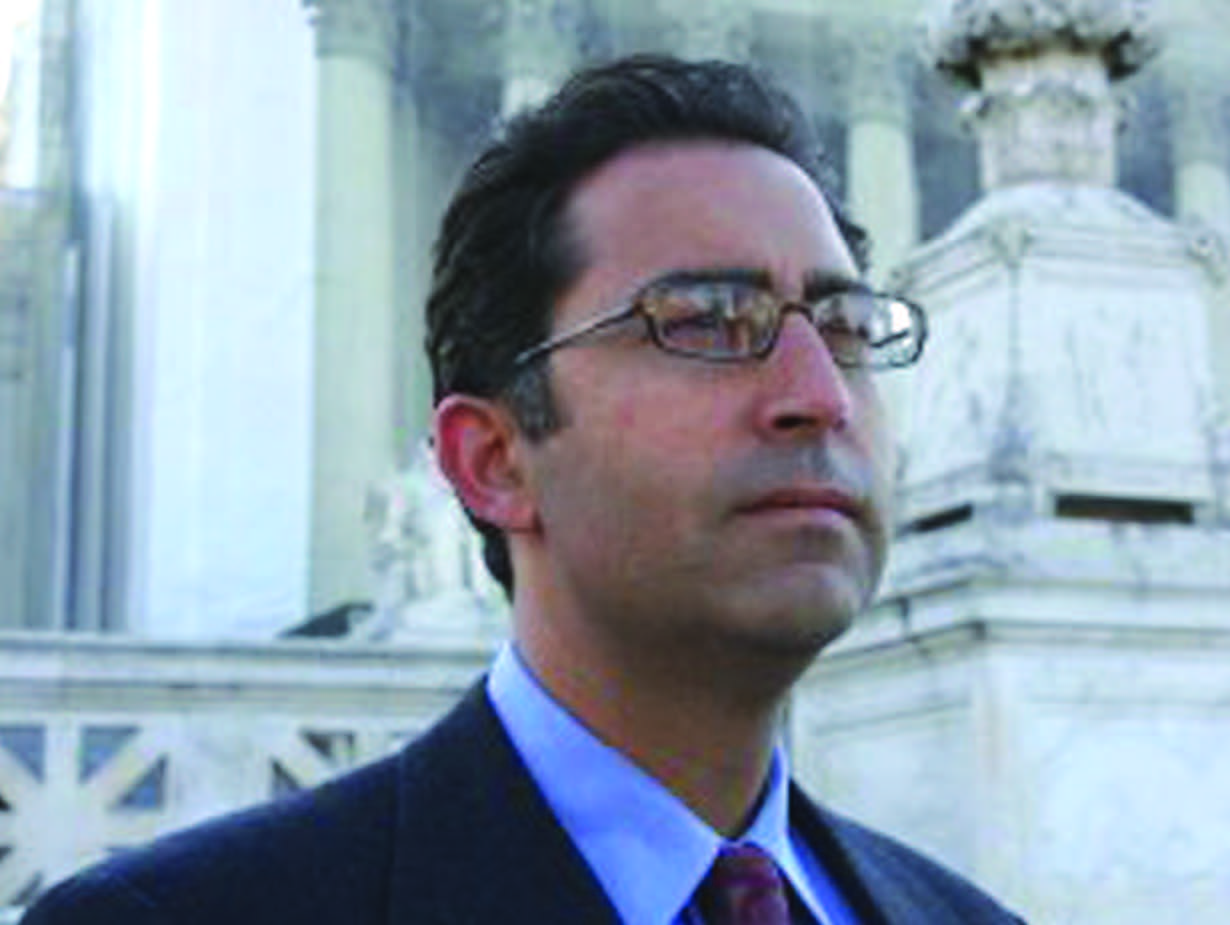
    WASHINGTON (TIP): Indian- American attorney Vince Chhabria, who has represented San Francisco in defense of its health insurance law, adoption rights of same-sex couples and other major cases, has won Senate confirmation for a federal judgeship.

    Chhabria, 44, who presently serves as the deputy attorney of San Francisco City, will become California’s first federal judge of South Asian descent and one of only a few South Asian federal judges across the US. The Senate vote on Wednesday, March 5, was 58-41, with four Republicans joining Democrats in approving President Barack Obama’s nomination of Chhabria.

    A University of California Berkeley Law School graduate, he fills the last of three vacancies on the Bay Area’s 14- member US District Court. Born to Indian parents, who are Mumbai natives, Chhabria is currently visiting family in India. “I am thrilled to begin this new chapter of my career in public service, and to set up shop down the hall from my greatest mentor, Judge Charles Breyer,” he said in a press statement.

    “While I had high expectations when I started here nine years ago, I never dreamed I would be lucky enough to work on so many exciting cases, for so many dynamic clients, with so many dedicated and high-caliber public lawyers.” Chhabria also thanked the members of the South Asian legal community saying: “The fact that I have been confirmed while traveling in India with my family makes this an especially proud moment for me.”

    He began his legal career by clerking for Judge Charles R. Breyer of the US district court for the Northern District of California from 1998 to 1999. The South Asian Bar Association of North America and the South Asian Bar Association of Northern California have applauded Chhabria’s historic confirmation to the US district court.

    The lone Indian-American member of the US House of Representatives, Ami Bera, the Congressional Asian Pacific American Caucus chair, Judy Chu, and CAPAC chair emeritus, Mike Honda, also applauded Chhabria’s confirmation. “Vince Chhabria will make an excellent judge for the US district court. I’m delighted that he was confirmed,” Bera said. “As the first South Asian to serve on the federal bench in California, he has also made California’s Indian-American and South Asian community proud.”

  • US Senate blocks Obama pick for civil rights post

    US Senate blocks Obama pick for civil rights post

    WASHINGTON (TIP): Bipartisan Senate opposition blocked swift confirmation on Wednesday for President Barack Obama’s choice to head the US justice department’s civil rights division, the emotional residue of the long-ago murder of a policeman and the legal representation his killer received.

    The vote against advancing Debo Adegbile toward confirmation was 47- 52, short of the majority needed under new procedures Democrats put in place earlier this year to overcome Republican stalling tactics. In this case, all 44 voting Republicans and eight Democrats lined up to block confirmation, leaving the nomination is grave jeopardy. Obama swiftly condemned the vote.

    In a statement, he called it a “travesty based on wildly unfair character attacks.” Administration officials declined to say if they would seek a second vote in the hopes they could change the minds of a few Democrats. The vote was a victory for Republicans and the National Fraternal Order of Police, who said Adegbile’s connection with the legal case of Mumia Abu-Jamal disqualified him from holding high public office.

    Abu-Jamal was sentenced to death for the 1981 murder of Philadelphia Officer Daniel Faulkner. Prosecutors agreed to a life term after a federal appeals court ordered a new sentencing hearing, citing flawed jury instructions. Abu-Jamal, a one-time radio journalist and former Black Panther, garnered worldwide support for his claims that he was the victim of a racist justice system. Shortly before the vote, Sen.

    Pat Toomey, a Pennsylvania Republican, read from a letter written by Maureen Faulkner, the widow of the policeman. “Today, as my husband lies 33 years in his grave, his killer has become a wealthy celebrity,” she wrote. “Old wounds have once again been ripped open, and additional insult is brought upon our law enforcement community in this country by President Obama’s nomination of Debo Adegbile.” Supporters also noted that Adegbile was working at the NAACP Legal Defense Fund at the time it intervened in the case — years after Abu-Jamal had been convicted, but that he had not made the decision to join the effort on his behalf.

  • INDIA TO BLOCK US TRADE PROBES, READY FOR FIGHT AT WTO

    INDIA TO BLOCK US TRADE PROBES, READY FOR FIGHT AT WTO

    NEW DELHI (TIP): India has decided to block investigations by the United States into its trade policies and patent laws, and prepare for a battle at the World Trade Organization (WTO), a move that could escalate alreadystrained tension between the two countries.

    New Delhi is furious about a threat of trade sanctions made by the US trade representative’s (USTR) office over its protection of intellectual property rights (IPR), preference for domestic producers and non-trade barriers.

    Ahead of a general election, Prime Minister Manmohan Singh’s government does not want to be seen as bowing to US pressure, amid lingering tension over the recent arrest and strip search of a female diplomat, Devyani Khobragade, in New York suspected of visa fraud. On Wednesday, February 26, the National Association of Manufacturers (NAM) – which represents about 50 US business groups – asked the USTR to designate India a “priority foreign country” in its 2014 report.

    “This designation appropriately would rank India among the very worst violators of intellectual property rights and establish a process leading to concrete solutions,” NAM said in a letter to US trade representative Michael Froman. The USTR is holding public hearings for its annual report due in April.

    The report will provide details on nations denying protection of IP rights or fair market access to US firms. India is widely perceived in Washington as a serial trade offender, with US firms unhappy about imports of everything from shrimp to steel pipes they say threaten jobs, as well as a lack of fair access to the Indian market for its goods. This month, Washington said it was filing its second case at the WTO over domestic content requirements in India’s solar program, which aims to ease energy shortages in Asia’s third-largest economy.

    There are 14 past or current WTO cases between India and the United States, whose bilateral trade in goods measured $63.7 billion last year, not including the latest case. India has since hardened its stance, instructing officials not to entertain any request from the United States international trade commission (USITC) – a quasi-judicial federal agency – to examine its trade practices. India’s trade ministry has also “advised” US deputy trade representative Wendy Cutler to put off a visit to India that had been scheduled for late March due to the parliamentary election due in April or May, a senior official told Reuters.

    The official said India had asked for alternative dates for the visit, possibly after the elections, adding that the decision was not linked with the trade tension. The USTR listed in a February 12 report markets in Delhi, Mumbai and Hyderabad as being among the worst offenders globally for the sale of pirated software and counterfeit goods.

    A visit by the USITC delegation to meet officials from the Indian commerce, industry, health, telecom and finance ministries has also been put on hold. A USITC spokeswoman confirmed the delay, saying they were looking for “other windows” for a visit, but declined to comment on the reasons for the delay. Newly appointed trade secretary Rajeev Kher, who pushed India’s stand on food security issues at a WTO meeting in Bali, as chief WTO negotiator, has told his officials to tackle bilateral trade disputes preferably through multi-lateral forums.

    India has also urged President Barack Obama’s administration not to fall prey to special interest groups and consider trade issues in the context of the wider economic and strategic relationship between the two countries. Officials say any move towards putting India on a priority foreign countries list would hurt bilateral relations. “There are clear stresses in the India-US trade, economic relations,” said another government official who, like others who spoke to Reuters, declined to be identified due to the sensitivity of the matter.

  • OBAMA SAYS UGANDA ANTI-GAY BILL WOULD BE ‘STEP BACKWARD’

    OBAMA SAYS UGANDA ANTI-GAY BILL WOULD BE ‘STEP BACKWARD’

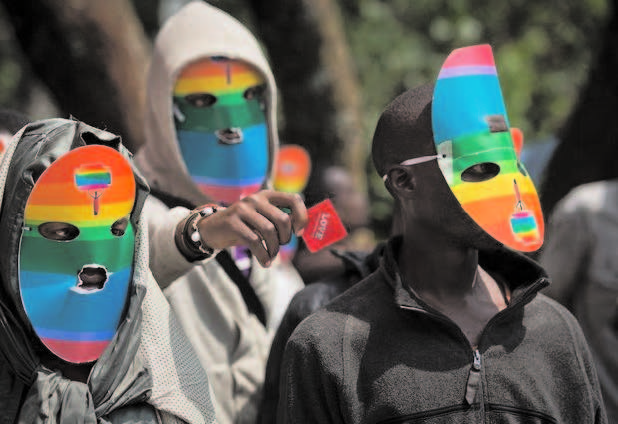
    WASHINGTON (TIP): US President Barack Obama warned Ugandan leader Yoweri Museveni against enacting anti-gay legislation Sunday, calling it a “step backward” that would complicate ties with Kampala. Obama, who was in California for a holiday weekend of golf, issued a strong statement saying he was “deeply disappointed” in the Ugandan leader’s apparent plans to move forward with the bill. “We believe that people everywhere should be treated equally, with dignity and respect, and that they should have the opportunity to reach their fullest potential, no matter who they are or whom they love,” Obama said in a statement.

    “That is why I am so deeply disappointed that Uganda will shortly enact legislation that would criminalize homosexuality,” he added. “The Anti-Homosexuality Bill in Uganda, once law, will be more than an affront and a danger to the gay community in Uganda. It will be a step backward for all Ugandans and reflect poorly on Uganda’s commitment to protecting the human rights of its people.” The anti-gay legislation cruised through parliament in December after its architects dropped an extremely controversial death penalty clause. The measure, which has been greeted with international condemnation, would criminalize the promotion or recognition of homosexual relations. Obama suggested that the Ugandan president — a key regional ally for both the United States and the European Union — risks damaging his country’s ties with Washington if he signs the bill into law.

    “As we have conveyed to President Museveni, enacting this legislation will complicate our valued relationship with Uganda,” Obama said. Obama’s National Security Adviser Susan Rice wrote in a series of tweets that enacting the law “will put many at risk and stain Uganda’s reputation.” Rice added that she had urged Museveni to not sign the bill. Former president Bill Clinton, who has worked on health initiatives in the country through his Clinton Foundation, said he was “strongly opposed to its move to criminalize homosexuality.” “It is a setback for personal freedom and equal rights and a rebuke to Uganda’s own commitment to protecting the human rights of its people,” Clinton added.

    “I want to salute and encourage the brave Ugandans committed to the fundamental dignity of all people and urge the government to reverse this decision.” Museveni, a devout evangelical Christian, has expressed the view that gays are “sick” and “abnormal.” He suggested in a letter to parliament that homosexuality was caused by a genetic flaw, or a need to make money. Nevertheless, he refused to sign the antigay legislation last month. “He does not approve of homosexuality but he believes that these people have a right to exist,” presidential spokesman Tamale Mirudi told AFP at the time, explaining why the bill had been rejected. Homophobia is widespread in Uganda. Gay men and women face frequent harassment and threats of violence, and rights activists have reported cases of lesbians being subjected to “corrective” rapes.

  • VENEZUELA PROTESTS ESCALATE AS STUDENTS, SECURITY FORCES CLASH

    VENEZUELA PROTESTS ESCALATE AS STUDENTS, SECURITY FORCES CLASH

    CARACAS (TIP): Venezuelan security forces and demonstrators faced off in streets blocked by burning barricades in several provincial cities on February 20 as protests escalated against President Nicolas Maduro’s socialist government. At least five people have died since the unrest turned violent last week, with scores of injuries and arrests. The demonstrators, mostly students, blame the government for violent crime, high inflation, product shortages and alleged repression of opponents. They want Maduro to resign. In middle-class areas of Caracas overnight, security forces fired teargas and bullets, chasing youths who threw Molotov cocktails and blocked streets with burning trash.

    It was one of the worst bouts of violence the capital has seen in nearly three weeks of unrest across Venezuela, and trouble also flared in other urban centres. Many Caracas residents banged pots at windows in a traditional form of protest, and knots of demonstrators were out again early on Thursday. “I declare myself in civil disobedience,” read one banner held up by demonstrators spread across a Caracas road. The government said a funeral parade for deceased folk singer Simon Diaz, a beloved figure who died on Wednesday aged 85, was held up due to “violent groups” blocking roads. There was unrest too in the western Andean states of Tachira and Merida that have been especially volatile since hardline opposition leaders called supporters onto the streets in early February demanding Maduro’s departure.

    In the city of San Cristobal, which some residents are describing as a “war zone”, many businesses remained shut as students and police faced off in the streets again on February 20. Maduro said “special measures” would be taken to restore order in Tachira. “We won’t let them turn it into a Benghazi,” he said, referring to the violence-wracked Libyan city. Tensions have escalated since opposition leader Leopoldo Lopez, a 42-year-old Harvard-educated economist, turned himself in to troops this week. He is being held in Caracas’ Ramo Verde jail on charges of fomenting the violence.

    “Change depends on every one of us. Don’t give up!” Lopez’s wife Lilian Tintori said via Twitter on Thursday. Local TV channels are providing almost no live coverage of the unrest, so Venezuelans are turning to social media to swap information and images, though falsified photos are circulating. Both sides rolled out competing evidence of the latest violence on Thursday, with ruling Socialist Party governors showing photos and video of charred streets and torched vehicles, while the opposition posted footage of brutal behavior which they said was by national guard troops. Caracas was calmer by lunchtime on Thursday, though there was less traffic than normal and some businesses were closed, in a further drag on the already ailing economy.

    Coup allegations
    Maduro, narrowly elected last year to succeed socialist leader Hugo Chavez after his death from cancer, says Lopez and others are in league with the US government and want a coup. The latest direct victim of the unrest, college student and local beauty queen Genesis Carmona, 22, was shot in the head during a demonstration in the central city of Valencia. Maduro says “fascist groups” are trying to create a crisis to topple his administration. “There is an international campaign to justify a foreign intervention in Venezuela,” he said in a combative, nationally televised address late on Wednesday.

    Speaking in Mexico, US President Barack Obama criticized Maduro’s government for arresting protesters and urged it to focus on addressing the “legitimate grievances” of its people. Street protests were the backdrop to a short-lived coup against Chavez in 2002 before military loyalists and supporters helped bring him back. There is no evidence the military, which was the decisive factor in 2002, may turn on Maduro now. Detractors call Lopez a dangerous hothead. He has frequently squabbled with fellow opposition leaders and was involved in the 2002 coup, even helping arrest a minister.

    Though the majority of demonstrators have been peaceful, an increasingly prominent radical fringe has been attacking police, blocking roads and vandalizing buildings. Though the Caracas protests began and are still strongest in middle-class neighbourhoods, sporadic demonstrations have also spread to poorer areas of the city, residents say. Rights groups say the police response has been excessive, and some detainees say they were tortured. Venezuela’s main opposition leader, Henrique Capriles, who was narrowly beaten by Maduro in last year’s presidential election, disagrees with Lopez’s street tactics but backs protesters’ grievances and has condemned the government response. “How many more deaths do they want?” he told reporters on Thursday, urging opposition activists to avoid violence.

  • Barack Obama says Ukraine truce welcome ‘if implemented’

    Barack Obama says Ukraine truce welcome ‘if implemented’

    TOLUCA, Mexico: US President Barack Obama and Canadian Prime Minister Stephen Harper said on Wednesday that news of a truce between Ukraine’s government and opposition would be welcome if it leads to dialogue.

    The two leaders “strongly condemned” the violence in Ukraine during a North American summit in Toluca, Mexico, according to the White House. “The leaders noted reports of a truce between the government and the opposition which, if implemented, would be a welcome step forward in pursuing that meaningful dialogue,” a statement added.

    “They agreed they will continue to monitor the situation closely to ensure that actions mirror words,” it said in a readout of the leaders’ 30-minute meeting. Ukrainian President Viktor Yanukovych announced the start of direct talks with the opposition after receiving three top anti-government lawmakers in a presidential office less than a block from the site of the unrest.

    The embattled leader was under mounting pressures after clashes between police and anti-government protesters left at least 26 people dead in Kiev on Tuesday. The White House warned that it was considering possible sanctions against those behind the unrest. The 28-nation European Union will hold emergency talks Thursday to mull sanctions in the wake of clashes between police and anti-government protesters in Kiev that left at least 26 people dead.

    The White House said Obama and Harper “both resolved to work closely with European allies on options for additional measures, including measures to hold those responsible for violence accountable.” Obama and Harper said the Ukrainian military should show restraint and refrain from getting involved in issues that should be resolved by civilians.

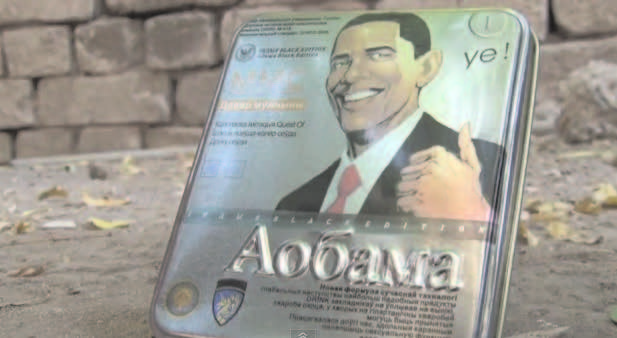
  • Obama becomes the unwitting face of fake Viagra in Pakistan

    Obama becomes the unwitting face of fake Viagra in Pakistan

    ISLAMABAD (TIP)Barack Obama has unwittingly become the face of contraband Viagra, which is currently seeing booming sales in conservative northern Pakistan.

    A Peshawar market has pills and gels available emblazoned with the US president’s image that promise to boost libido and sexual function, according to news agency Agence France Presse. Four of the fake Viagra pills cost $1 and sales are on the up, despite being banned in Pakistan.

    The drug is instead smuggled in from Afghanistan and is sold in pharmacies. Although some versions of the contraband drug are simple copies, others are made from unknown chemicals and can produce potentially harmful side effects. The use of the drug has become increasingly popular among the younger generations – or the people who would not typically need to use it.

    Some users have reported side effects that doctors in the area have been unqualified to treat. Afghanistan’s close proximity means the drug is likely to remain on sale in the region thanks to a steady and readily available supply.

  • President Obama signs debt ceiling measure into law

    President Obama signs debt ceiling measure into law

    FRESNO (TIP): President Barack Obama has signed separate measures lifting the federal debt limit and restoring full cost of living benefits for military retirees. Obama signed the bills into law Saturday, February 15 during a weekend golf vacation in Southern California.

    The debt limit measure frees the government to borrow the money it needs to pay bills, such as Social Security benefits. Earlier, the GOP-controlled House backed away from a battle over the government’s debt cap and passed a measure extending Treasury’s borrowing authority with overwhelming support from President Barack Obama’s Democratic allies.

    The 221-201 vote came hours after Speaker John Boehner announced that his fractured party would relent and not seek to add other items to the mustpass legislation. Twenty-eight Republicans voted yes. The bill permits Treasury to borrow normally for another 13 months and diffuses the chance of a debt crisis well past the November elections. Just Monday, February 10, Republicans had suggested pairing the debt measure with legislation to roll back a recent cut in the inflation adjustment of pension benefits for working age military retirees.

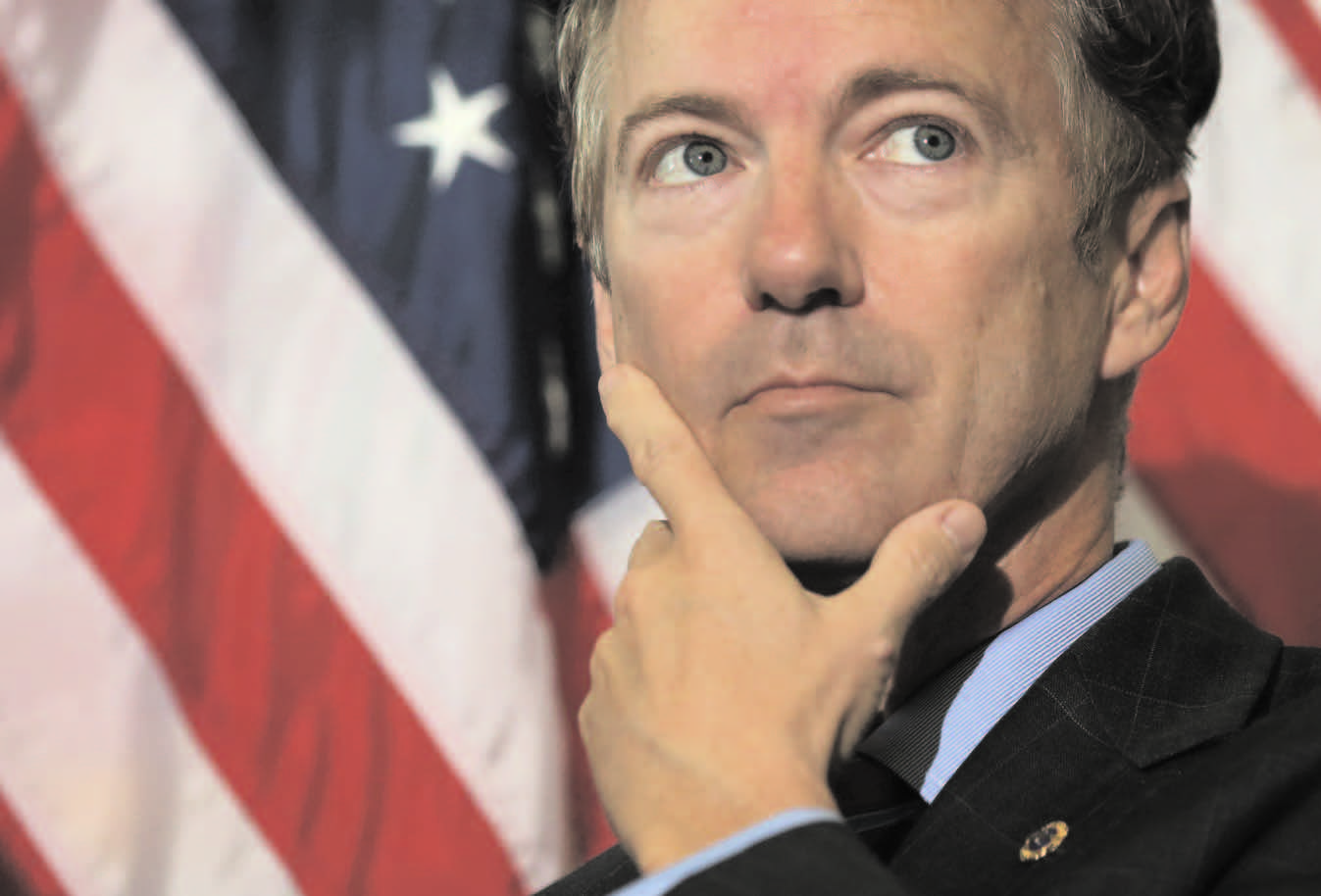
  • SENATOR RAND PAUL sues Obama over NSA surveillance

    SENATOR RAND PAUL sues Obama over NSA surveillance

    WASHINGTON (TIP): Senator Rand Paul, a possible Republican presidential candidate, sued the Obama administration on February 12 over the National Security Agency’s mass collection of millions of Americans’ phone records. The senator said he and the conservative activist group FreedomWorks filed the suit for themselves and on behalf of “everyone in America that has a phone”.

    The lawsuit argues that the bulk collection program that’s been in existence since 2006 violates the US Constitution’s Fourth Amendment right against unreasonable searches. It calls for an end to the program, which was revealed by former National Security Agency analyst Edward Snowden. The Obama administration maintains that the program, begun under President George W Bush, is legal. Courts have largely sided with the government.

    President Barack Obama has called for reforms to the program in an effort to regain public trust. Others, like Paul, have called for the end of this kind of surveillance. Paul dodged a question about his presidential ambitions during a news conference on Wednesday. But his lawsuit is the latest effort to propel the debate over the once-secret surveillance program into the 2016 presidential campaign. The surveillance debate has exposed intra-party tensions for Republicans. The party split on this issue between its leadership, which backs the program on security grounds, and libertarianminded members who are more wary of government involvement in Americans’ private lives.

    The Republican National Committee, last month, approved a resolution to end the surveillance programs. While some Republicans played down its significance, the nonbinding vote was seen as a nod to Republicans like Paul. The White House and justice department did not comment on the lawsuit specifically, but said they believe the bulk collection of phone records is legal. “This, we believe, will be a historic lawsuit,” Paul said after filing the complaint in US district court in the District of Columbia.

    “We believe that this lawsuit could conceivably represent hundreds of millions of people who have phone lines in this country or cellphones.” Ken Cuccinelli, the former attorney general of Virginia, is the lead counsel for Paul and FreedomWorks on the suit. Paul appeared at campaign rallies last October to support Cuccinelli’s unsuccessful bid for Virginia governor. In December, Paul’s advisers approached Cuccinelli about participating in the lawsuit. “This is a constitutional challenge primarily,” Cuccinelli told The Associated Press.

    “We’re not debating national security policy.” Cuccinelli has sued the Obama administration before — he was the first state attorney general to mount a legal challenge to the constitutionality of the president’s signature health care overhaul. The bulk collection program, which is authorized in Section 215 of the USA Patriot Act, sweeps up what’s known as metadata for every phone call made in the US. It collects the number called, the number from which the call is made and the duration and time of the call. The intelligence community says having this data is key to preventing terrorism.

    While there is little evidence the program has been integral in preventing an attack, the Obama administration argues that being able to rule out a US connection is important because it provides “peace of mind”. Paul’s suit cites arguments made in another lawsuit filed last year by conservative lawyer Larry Klayman. In response to Klayman’s suit, US district court judge Richard Leon ruled that the bulk collection program was likely unconstitutional. It was the first time a judge did not side with the government on the issue. Paul’s lawsuit was filed against Obama; director of national intelligence James Clapper; NSA director Keith Alexander; and FBI director James Comey.

  • Congress extends US borrowing authority until 2015

    Congress extends US borrowing authority until 2015

    WASHINGTON: Lawmakers approved a 13-month extension of US borrowing authority with no strings attached on February 12, shelving a fractious political debate over the nation’s debt ceiling until after November’s mid-term elections. With last-minute help from Republican leaders to overcome a blocking effort, the Senate passed the legislation 55-43, marking a dramatic victory for President Barack Obama, who had demanded a debt ceiling hike with no political riders or other legislation attached.

    The measure, which cleared the House of Representatives Tuesday, now goes to the White House for Obama’s signature. An uncomplicated extension of borrowing authority without other conditions would mark a shift away from recent confrontations that brought the world’s largest economy to the brink of default, culminating in the US government being shuttered for 16 days in October. It could also avoid the turmoil that rocked US and international markets during the previous debt limit fights.

    But the bill was nearly torpedoed in a tense procedural vote minutes earlier, when the Senate’s Republican leaders struggled to help muster the 60 votes necessary to overcome a blocking tactic known as a filibuster from fiscal conservatives within their ranks. By the end of an unusually long vote that lasted a full hour, 12 Republicans joined all Democrats to advance the bill. However, no Republicans backed its final passage, which required a simple majority in the 100-seat chamber.

    “What needed to get done, got done,” said Senator Bob Corker, one of the dozen Republicans who helped move the bill forward. “At the end of the day there was no stated outcome by any way other than a clean debt ceiling.” US debt stands at $17.3 trillion, and the Treasury estimates it would exhaust borrowing capacity on February 27 without new authority. With Congress fleeing Washington early to avoid a looming snow storm, and a recess scheduled for next week, lawmakers had precious few legislative days to reach a solution before the deadline. Corker said he and other Republicans had to swallow the bitter pill of allowing a debt ceiling bill to move ahead without any federal spending cuts attached.

    In recent years, Republicans led by House Speaker John Boehner have sought to link debt ceiling hikes to measures that slashed spending. But with House conservatives recoiling from various sweeteners floated by Boehner in recent weeks, and party leadership loathe to be blamed for another fiscal crisis, the speaker capitulated Tuesday and moved to raise the debt ceiling with no spending cuts attached. Several Senate Republicans knew they would need to allow the bill’s passage or risk potential fiscal chaos. “We can put the country through two weeks of turmoil, or we can get this vote behind us,” Corker said.

    Focus back on Obamacare –
    Some Republicans, mindful of the bruising their party received when a majority of Americans blamed them for the government shutdown and other recent fiscal crises, said suspension of the debt ceiling allows them to focus on a more politically viable talking point during this year’s congressional campaigns: the disastrous rollout of the president’s health care reform law.”We think Obamacare is a very important issue,” Senator John McCain told reporters.Republicans stand united in their effort to repeal or defund the legislation that has become the president’s landmark domestic initiative. “We have an alternative, we want to push that alternative, and that’s what we want the conversation to be about.

  • Obama to tour Japan, South Korea, Malaysia, Philippines in April

    Obama to tour Japan, South Korea, Malaysia, Philippines in April

    WASHINGTON (TIP): President Barack Obama will seek to ease questions over the staying power of his strategic shift to increasingly tense East Asia in April with stops in Japan, Malaysia, the Philippines and South Korea.

    Obama’s visits to Manila and Kuala Lumpur are intended to make up for his no-show when he cancelled a previous Asia tour in October amid domestic political strife in Washington. A subtext to his visit will be rising territorial tensions between several US allies and China, which deepened over Beijing’s recent declaration of an “air defense identification zone” in the East China Sea.

    Beijing was also angered last week when Washington stiffened its line on territorial disputes in the South China Sea, calling for it to adjust or clarify its claims. Obama’s stops in Japan and South Korea will also bolster close US alliances, at a time of aggravated political tensions between its two Northeast Asian friends. It was an open secret that Obama would call in Japan in April, to take up an invitation from Prime Minister Shinzo Abe, who took office in December 2012.

    But the decision to add South Korea to the trip came after rising pressure from Seoul and from the Asia policy community in Washington. The move also reflects a desire to signal to North Korean leader Kim Jong-Un that there are no gaps in US and South Korean resolve to counter Pyongyang’s nuclear program and belligerent rhetoric. It also indicates that Obama is keen to avoid dealing a political slight to South Korean President Park Geun-Hye that could result from a presidential visit to Tokyo and not one to Seoul.

    Relations between the two nations were severely rattled by Abe’s December visit to the Yasukuni Shrine, which honors war criminals among Japan’s war dead. Obama’s Asia itinerary also includes one noticeable exception — a stop in China. But he is expected to return to the region later in the year for regional summits in Australia, Beijing and Myanmar.

    The White House said in a statement that Obama’s April trip will highlight his “ongoing commitment to increase US diplomatic, economic and security engagement with countries in the Asia- Pacific region.” He is certain to try to push negotiations on a vast Trans-Pacific Partnership free trade pact that would include 12 nations, and is seen by some observers as an attempt to meet the economic challenge of a rising China.