Tag: Barack Obama

  • Top US leadership feels diplomat row ‘most stupid thing to do’

    Top US leadership feels diplomat row ‘most stupid thing to do’

    WASHINGTON (TIP): Recognizing the damage that the diplomat row has done to the India-US relationship, there is a realisation in the top American leadership that “it was the most stupid thing to do” on their part and that they would now have to “work overtime” to bring back the ties on track. As Indian diplomat Devyani Khobragade landed in New Delhi last night, there was a sense of relief in the US government, with officials expressing their determination to move forward the relationship, which President Barack Obama has described as the defining partnership of the 21st century. “The US and India enjoy a broad and deep friendship, and this isolated episode is not indicative of the close and mutually respectful ties that we share,” White House Press Secretary Jay Carney said.

    Obama, sources said, was regularly updated on the development and National Security Advisor Susan Rice too was monitoring the situation; so was Secretary of State John Kerry, it is believed. “This has clearly been a challenging time in the US-India relationship. We expect and hope that this will now come to closure and the Indians will now take significant steps with us to improve our relationship and return it to a more constructive place,” State Department spokesperson Jen Psaki told reporters. Arrested on December 12, Khobragade, 39, was strip- searched and held with criminals, triggering a row between the two countries with India retaliating by downgrading privileges of certain category of US diplomats among other steps.

    Now that the Khobragade has returned to India, sources told that there was “furious” reaction in the top American leadership when this was first brought to their notice on December 12, the day Khobragade was arrested in New York on charges of visa fraud and misrepresentation of facts. “It was one of the most stupid thing to do,” a top American leadership is learnt to have said, referring to the damage the diplomat case has done to the India-US ties. In fact a source pointed that the level of “furious reaction” in the top American leadership was similar to that of India. “If the Indians were furious, so were we.” It is one of the reasons why, Kerry in the middle of his overseas trip, made it a point to reach out to external affairs minister Salman Khurshid and since he could not be available at that time, he spoke with National Security Advisor Shivshankar Menon. During the conversation, Kerry is believed to have apologised for the incident, sources said. But the public statement issued by the State Department noted that Kerry expressed his regret to Menon.

  • Iran signed

    Iran signed

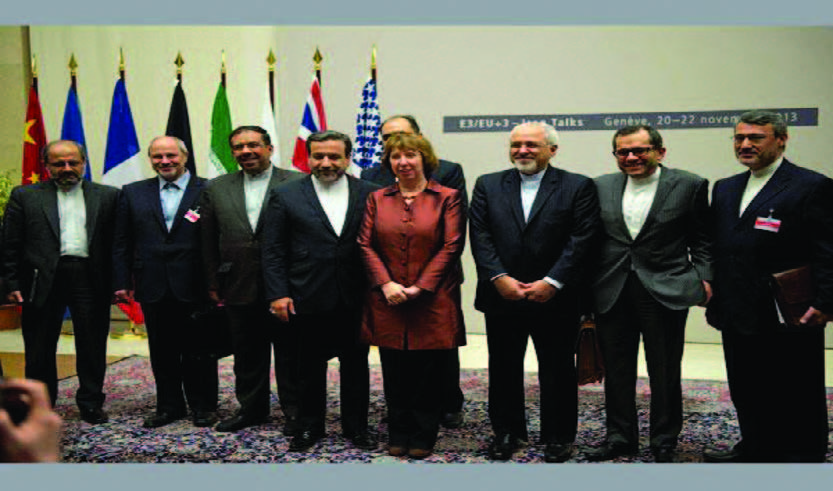
    Iran signed a crucial nuclear deal with the USA and five other world powers on November 24, marking it as a significant foreign policy achievement of the Barack Obama Presidency.

  • 2013: A CHALLENGING TIME FOR INDIA-US RELATIONS

    2013: A CHALLENGING TIME FOR INDIA-US RELATIONS

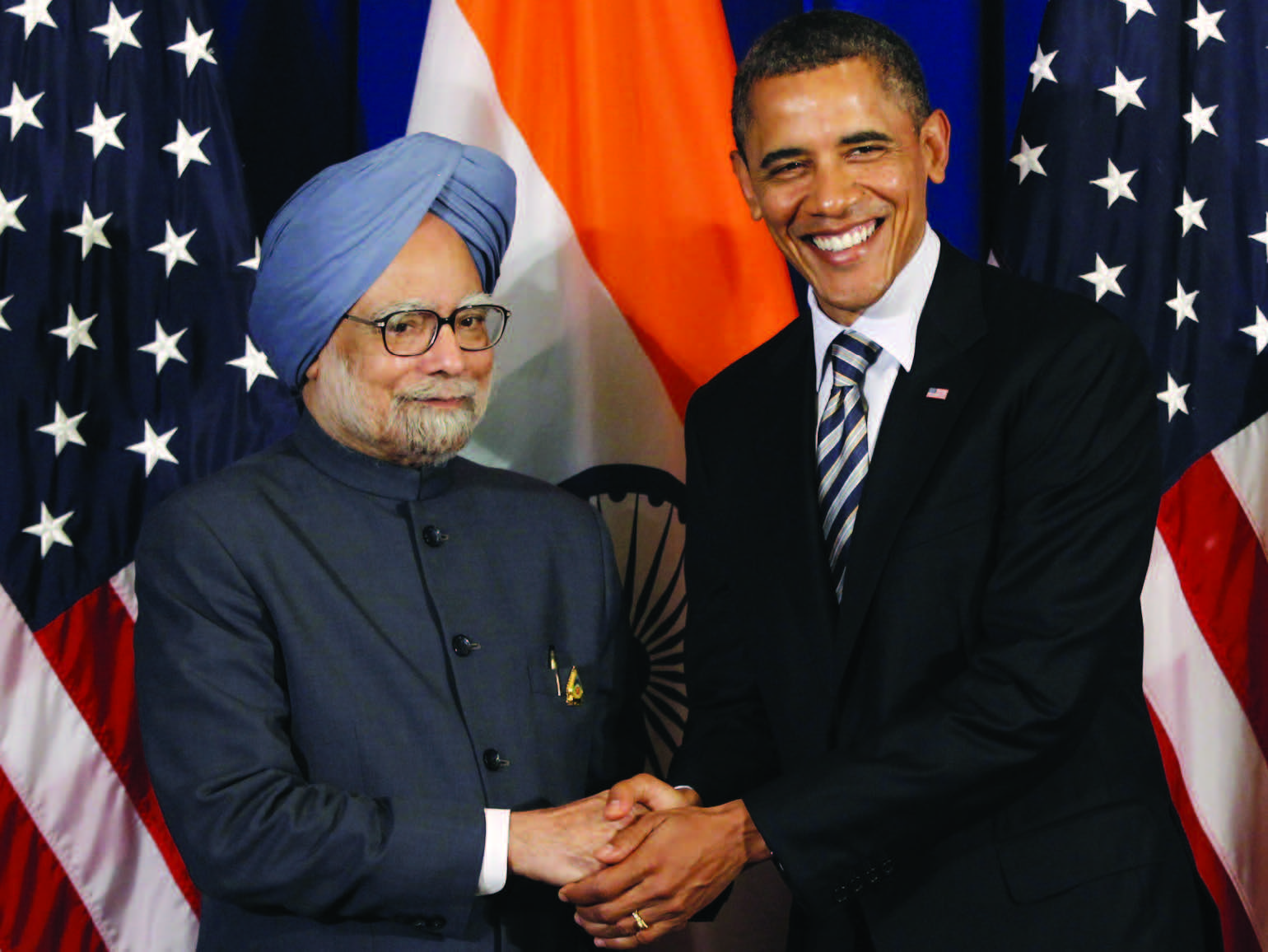
    The year 2013 will be remembered for the challenges it threw up for the ties between the world’s two largest democracies, including a row triggered by the arrest and strip-search of an Indian diplomat in the US. Prime Minister Manmohan Singh held a successful meeting with US President Barack Obama at the White House and Vice President Joe Biden made a rare trip to India, but the strain in bilateral relations was evident throughout 2013 especially over India’s nuclear liability act.

    Also, over 200 American lawmakers made an unprecedented move to vent their ire against India’s economic policies. However, the events of the year were capped by the arrest of senior diplomat Devyani Khobragade, the Deputy Consul General in New York, on visa fraud charges. While the US asserted that by arresting her, it was enforcing the law of the land, India fought back by taking a series of reciprocal measures like withdrawing special privileges of US Embassy personnel in New Delhi.


    41 copy

    Following the arrest, one of the rare occasions when an Indian diplomat was detained overseas, the India-US ties came to a standstill. Even earlier, many experts had said that it has plateaued. This was mainly because both the Congress and the influential American industry – the main drivers of India-US ties in the past decade – openly expressed their anger and anguish over India’s economic policies. Through a series of letters, more than 240 Congressmen and Senators and Corporate America sought Obama’s help to address what they described as policy paralysis in India.

    But when Prime Minister Singh held his highly successful meeting with Obama in September, which was preceded by India visits by Vice President Biden and Secretary of State John Kerry, it looked like the two countries were working together to address their differences and take steps to strengthen bilateral ties. With Obama himself showing personal interest in deepening ties with India, which he considers central to re-balancing his policy for the Asia-Pacific region, the White House meet resulted in a US-India Joint Declaration on defence cooperation.

    The joint declaration, a product of what is being called the “Clinton-Menon” initiative, put India at par with the closest American allies and paved the way for joint defence codevelopment and co-production. The year also saw for the first time visits by the heads of all the three wings of India’s armed forces to the US. The US Army Chief Raymond Odierno too made a rare visit to India. While defense cooperation grew by leap and bounds, sharp differences between the two sides on key economic issues gradually came out in the open.

    The US raised the issue of foreign direct investment, intellectual property rights and taxation, and sought reforms in key sectors like insurance. India and Indian companies were upset over the comprehensive immigration bill, which they argued would be harmful to the Indian economy and badly hit Indian companies in the US. Despite repeated efforts, the US did not offer any concrete promise on the issue.

    Also, the US lawmakers expressed their concerns over nuclear liability act. The act, passed by both houses of Indian parliament, aims to provide a civil liability for nuclear damage and prompt compensation to the victims of a nuclear incident through a nofault liability to the operator.

  • Barack Obama ponders limiting NSA access to phone records

    Barack Obama ponders limiting NSA access to phone records

    WASHINGTON (TIP): President Barack Obama is expected to rein in spying on foreign leaders and is considering restricting National Security Agency access to Americans’ phone records, according to people familiar with a White House review of the government’s surveillance programs. Obama could unveil his highly anticipated decisions as early as next week. On Thursday, the president met with congressional leaders at the White House to discuss the review, while White House staff planned to meet with privacy advocates.

    Representatives from tech companies are meeting with White House staff on January 10. The White House says Obama is still collecting information before making final decisions. Among the changes Obama is expected to announce is more oversight of the National Intelligence Priorities Framework, a classified document that ranks U.S. intelligence-gathering priorities and is used to make decisions on scrutiny of foreign leaders.

    A presidential review board has recommended increasing the number of policy officials who help establish those priorities, and that could result in limits on surveillance of allies. Documents released by former National Security Agency systems analyst Edward Snowden revealed that the U.S. was monitoring the communications of several friendly foreign leaders, including German Chancellor Angela Merkel.

    The revelations outraged Merkel as well as other leaders, and U.S. officials say the disclosures have damaged Obama’s relations around the world. The president also is said to be considering one of the review board’s most aggressive recommendations, a proposal to strip the NSA of its ability to store telephone records from millions of Americans and instead have phone companies or a third party hold the records. The NSA would be able to access the records only by obtaining separate court approval for each search, though exceptions could be made in the case of a national security emergency.

    It’s unclear whether Obama will ultimately back the proposal or how quickly it could be carried out if he does. A House Intelligence Committee member, Rep. Peter King, R-NY, said he believes the surveillance changes under consideration go too far. But he said if Obama does decide to transfer U.S. phone metadata to a third party, he would work to salvage what he could of the program. “It would be a question of the lesser of two evils,” King said.

    “If by doing that, it protects the program or preserves it, I would do it, even though I don’t think these reforms are necessary.” That White House review followed disclosures from Snowden, who leaked details of several secret government programs. He faces espionage charges in the U.S. but has been granted temporary asylum in Russia. On Thursday, the senior lawmakers on the House Intelligence Committee said a classified Pentagon report showed that Snowden stole approximately 1.7 million intelligence files.

    Most of those documents concern current military operations and could potentially jeopardize U.S. troops overseas, according to Rep. Mike Rogers, R-Mich., and Rep. C.A. “Dutch” Ruppersberger, D-Md. Before making his final decisions, the president is supposed to receive a separate report from a semiindependent commission known as the Privacy and Civil Liberties Oversight Board, which was created by Congress. However, that panel’s report has been delayed without explanation until at least late January, meaning it won’t reach the president until after he makes his decisions public.

    Members of that oversight board met with Obama on Wednesday and have briefed other administration officials on some of their preliminary findings. In a statement, the five-member panel said its meeting with the president focused on the NSA phone collection program and the Foreign Intelligence Surveillance Court, which oversees the data sweeps. It’s unclear why Obama will announce his recommendations before receiving the report from the privacy and civil liberties board.

    One official familiar with the review process said some White House officials were puzzled by the board’s delay. The report would still be available to Congress, where lawmakers are grappling with several bills aimed at dismantling or preserving the NSA’s authority. That official and those familiar with the White House review insisted on anonymity because they were not authorized to discuss the process by name. Obama also met Wednesday with members of the U.S. intelligence community, which largely supports keeping the NSA surveillance programs intact. Shortly after receiving the review board recommendations last month, Obama signaled that he could be open to significant surveillance changes, including to the bulk collecting of phone records.

    “There are ways we can do it, potentially, that gives people greater assurance that there are checks and balances — that there’s sufficient oversight and sufficient transparency,” Obama said at a Dec. 20 news conference. He added that programs like the bulk collection “could be redesigned in ways that give you the same information when you need it without creating these potentials for abuse.

    ” The president also has backed the idea of adding a public advocate position to the Foreign Intelligence Surveillance Court, which rules on many of the domestic surveillance decisions. The court typically hears only from the government as it decides cases, and the advocate would represent privacy and civil liberties concerns.

  • Removal of a foreign citizen from a foreign sovereign: the durable injustice

    Removal of a foreign citizen from a foreign sovereign: the durable injustice

    The author who is an eminent attorney pleads for a graceful resolution, with no lasting after-taste of excessive legalities in the tangled case of Indian diplomat Devyani Khobragde. “Nuremberg Laws taught us that law alone isn’t enough to be right, as history is always a better judge, and millions lost their lives to coldly calculated laws that aided efficiently engineered deaths in the Holocaust”, says he.

    The impressive Mission Impossiblelike clockwork in the removal of the Richards family, two days prior to the public arrest of DCG Devyani Khobragade, albeit, with warm coffee and courtesies extended, leaves one scratching one’s head while suffering a legal headache caused by a “Gordian” tumor – competing sovereignty and competing legal actions. If these events were not ill-advised and tragic, they could make for a great paraphrased performance of “Who’s on First” by famed comedians Bud Abbott & Lou Costello. After all, no one has cited the existence of an empowering or enabling prior-judicial determination in the United States adjudicating Sangeeta Richards as a “human trafficking victim,” and an issuance of a court judgment granting her a “T” visa – such a determination would at a bare minimum, given our cherished adversarial system of justice, have required Devyani, given her physical and VCCR-availability, to be notified and given an opportunity to be heard in such a civil or administrative court proceeding.

    To further grant, as reported, Sangeeta’s husband, Philips, and their children, Jannifar and Jatin, also a “T” visa, human trafficking victims, while they were all physically in their homeland, on foreign soil and a territory of a foreign sovereign, let alone a friendly one, seems to do un-needed violence to the rule of law and the comity of nations, and is perhaps the most durable injustice that must not be allowed to become a precedent – if meritbased legal sovereignty is to survive in our world of 194 countries. Even though most witnesses take the oath seriously and tell the truth, because sometimes witnesses will exaggerate or outright commit perjury, our Founding generation, a gender-neutral term adopted by our Chief Justice Roberts, created the Confrontation Clause, enshrined in the Sixth Amendment, to fillet open and expose falsity in court. Nobody can argue that a domestic worker in India, making market wages, given a chance to get to be “legal” in the United States may tell a tall tale to win the immigration lottery.

    While witness-intimidation or witnesskilling is one of the worst offenses to any judicial system in any country, and United States and India are no exception; law enforcement is always authorized to protect witnesses within its own territory. To do so on foreign soil, requires informed consent by the foreign sovereign. Those who leave India, via a scheduled commercial flight, are required to fill out and sign immigration and custom forms required by the Republic of India. It has been widely reported that there was then pending, weeks if not months prior to American proceedings, legal proceedings in Indian Court that enjoined Sangeeta, and an arrest warrant had been issued for her, given her alleged violation of the terms and conditions of carrying an official Indian passport, rather than a mere citizenpassport. Just as a soldier who goes AWOL is subject to being court-martialed and dishonorably discharged from the service, an Indian carrying an Official passport is subject to face charges in India.

    It would be relevant to any court, that Sangeeta, given her current tale of victim-hood, wins a T-visa and backdoors into a Green Card. Motive evidence is powerful. Surely, the persons who were removed could have material evidence relevant to prior-initiated judicial proceeding in India, in addition to Sangeeta obviously having material evidence for such Indian proceedings. In that context, and history, the extra-judicial removal of foreign citizens of a foreign sovereign, with potential fraud being perpetrated in the exiting-paperwork at the Indian airport, leaves one breathless at the audacity and scope of the acts taken to vindicate the alleged violation of our wages & hours laws and related visa-fraud, consciously and purposefully aided and abetted by Sangeeta. If one believes Devyani, than Sangeeta was happy to make much more money working in New York than in India. The immediate resolution of this selfinflicted wound is a graceful resolution, with no lasting after-taste of excessive legalities.

    Nuremberg Laws taught us that law alone isn’t enough to be right, as history is always a better judge, and millions lost their lives to coldly calculated laws that aided efficiently engineered deaths in the Holocaust. The long-term solutions are two fold: 1. create a new category of foreign diplomatic domestic workers, who must be treated at least as well as required by their own nation’s laws; and 2. every nation on earth, despite Ricardo’s comparative advantage, adopts our labor laws, including, hours & wages. Given the Arab Spring, and every person on earth wanting their version of the American Dream, including, American freedom, we should all work towards such a beautiful day. Meanwhile, the T-visa is not an appropriate way to grant amnesty to 11 million illegal aliens in the United States, especially, with criminal cases pending against them in their country of citizenship; nor is it proper, at taxpayer expense, to have our diplomats locate the family members of such illegal aliens on foreign soil and fly them all here – 11 million may well mushroom to 50 million legal T-visa holders. Methinks, the AFLCIO and even cities and states, already under fiscal budget pressures, may loudly object.

    It is one think to always invite a few Einsteins of the world here, it’s another to add millions more to the un-employed ranks. Hopefully, given the proven legal brilliance and sound prosecutorial discretion of Preet Bharara, and the deep, history-rich and lofty experience of our Secretary of State John Kerry, a distinguished lawyer and former warrior, chairman of Senate Foreign Relations Committee and a presidential candidate, and a history-making president Barack Obama, re-elected to prove history right while washing our constitutional original sin, a resolution can and will be crafted to find grace and renewed dignity for all. Luckily, India, speaking with one voice, itself exceptional and note-worthy, is represented by: a lawyer-poet-author Foreign Minister Salman Khurshid, a kind and courtly gentleman, fully at ease with the need to calibrate power and reciprocity, and whom I have gotten to know and respect, as I already do Secretary Kerry and said so; Prime Minister Singh, who has earned worldrespect, including, singular honors from President Obama, and I and my wife have witnessed the body-hug in the East Room of the White House in November 2009; President Mukherjee, a powerful and proven governmentalist and an India-patriot; and principled and capable opposition leaders, in sync with their constitution, to deliver a robust democracy to India.

    If with this cast of superb bilateral leadership at this time of needless crisis, if we remain mired in an endless well filled with conflicts of law, as if it was mud, then leadership and wisdom would have failed us all. As a superpower, it is incumbent upon us, the United States, to remain a beacon in human history and light the way to a better day. As Christmas and the new year is upon us, I am sure we will, and accordingly, wish everyone a world that is just and fair, legal and proper, and the pursuit of happiness with equal protection of the law everywhere

  • A Two-Year Deal on Spending Reached: Conservative Republicans not happy

    A Two-Year Deal on Spending Reached: Conservative Republicans not happy

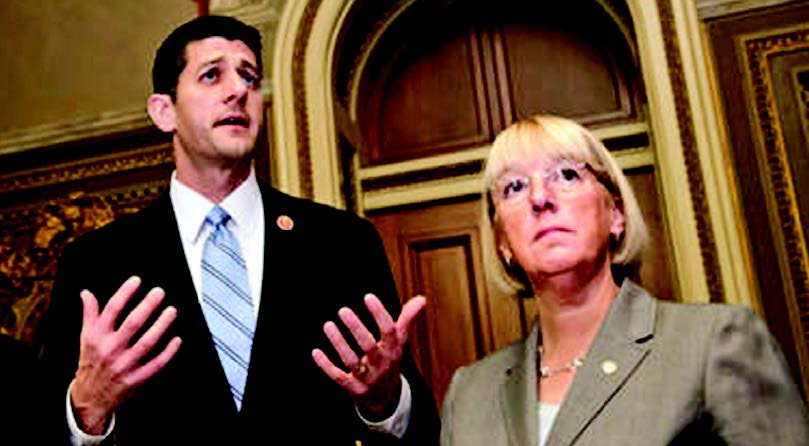
    WASHINGTON (TIP): A compromise federal budget plan that would remove the threat of a government shutdown for two years won easy approval Thursday, December 12, from the Republicancontrolled U.S. House. The deal worked out by House Budget Chairman Rep. Paul Ryan and Senate Budget Committee Chairwoman Patty Murray passed on a 332-94 vote and now goes to the Democratic-led Senate, which is expected to approve it next week in a very close vote. It represented rare convergence between the two parties on government spending after two years of bitter debate and political brinksmanship that included the 16-day shutdown in October. President Barack Obama hailed the agreement as a sign of rare bipartisan cooperation in the strife-filled US legislature.

    “It’s a good sign that Democrats and Republicans in Congress were able to come together and break the cycle of shortsighted, crisis-driven decision-making to get this done,” the president said shortly after the deal was announced. The agreement’s main brokers, Democratic Senator Patty Murry and House Republican Paul Ryan, said it sets the new annual budget caps for 2014 and 2015 at just over $1 trillion — slightly higher than current levels — and at least partially repeals the automatic, widely loathed budget cuts known as “sequestration.” “I see this agreement as a step in the right direction,” Ryan, the 2012 Republican vice presidential nominee and chairman of the House Budget Committee, told reporters, noting that the deal does not raise taxes on Americans. “We have broken through the gridlock and reached a bipartisan budget compromise that will prevent a government shutdown in January,” added Murray, the Senate’s top budget chief, who said she and Ryan set aside their political differences to reach a compromise over weeks of negotiations.

    “We agree that our country needs some certainty and we need to show that we can work together,” she added. House Speaker John Boehner acknowledged the measure amounted to only a small step toward the GOP goal of deficit reduction and balancing the budget, but he rejected opposition by some conservatives in his caucus as well as outside groups on the political right. “Is it perfect? Does it go far enough? No, not at all,” Boehner said in urging his colleagues to back the plan, noting it resulted from “doing what the American people expect us to do — coming together and finding common ground.” Ryan noted that Washington politicians have “been at each other’s throats for a long time” over budget issues, and Republicans must first win some elections in order to get all the deficit reduction and spending cuts they want. Democrats also hailed the budget proposal as a “small positive step forward,” in the words of Rep. Chris Van Hollen of Maryland.

    He and other Democrats called for Congress to also extend long-term unemployment benefits for more than 1 million Americans set to expire after Christmas, but their support for the budget plan showed they dropped any demand to link the issues in Thursday’s vote. In the House vote, 169 Republicans voted for the spending plan while 62 opposed it, with 163 Democrats in favor and 32 against. While most Republicans supported the plan, Boehner needed help from Democrats to get the 217-vote threshold needed for passage. Top GOP Senate aides said they expect the budget to pass the Senate but it could be by a razor thin margin. This could also change if momentum against the bill grows. GOP conservatives including Ted Cruz of Texas, Kelly Ayotte of New Hampshire and Lindsey Graham of South Carolina, said they will oppose the measure, which would need some Republican support for Democrats to overcome an expected filibuster.

  • Need strong ties with US to fight terror: Shinde

    Need strong ties with US to fight terror: Shinde

    NEW DELHI (TIP): Conceding that both India and the US were leading targets of transnational terror groups, Union home minister Sushilkumar Shinde on Wednesday sought enhanced cooperation between the two countries to “secure our cities and our people”. Addressing the India-US police chiefs’ conference — the first ever mega-city policing cooperation between the Americans and another country — Shinde said most attacks in India were launched from across the border, an indirect reference to Pakistan, and intended to cause greatest disruption of peace.

    Recalling the 9/11 attacks in New York as well as the 26/11 Mumbai strikes, the minister underlined how terrorists would typically target large and densely populated urban areas to inflict maximum damage. “An effective megacity policing system must serve as an effective deterrent against terrorists and their masters, who launch targeted attacks on the nerve centres of a country… our objective must be to make our cities safe, and therefore our countries, safe by reducing our vulnerability to such challenges,” he told the gathering of police chiefs from various key cities in the US and from across India.

    The two-day police chiefs’ conference is being organized by the Union home ministry as part of the India-US Homeland Security Dialogue, an outcome of US President Barack Obama’s discussions with Prime Minister Manmohan Singh during the former’s visit here in November, 2010. The dialogue has seen four ministeriallevel meetings and more than a 100 bilateral engagements covering training, briefings, exchanges and visits. While Shinde and home secretary Anil Goswami are leading the Indian side, assistant secretary for policy, US department of homeland security, David Heyman, heads the US delegation of police chiefs.

    Also present at the inaugural session on Tuesday was US ambassador to India, Nancy Powell, who described the Indo-US homeland security dialogue as one of the most robust pillars of bilateral cooperation between the two countries. The visiting side comprises representatives of leading American companies offering technological solutions for policing in the US, who will explore business opportunities in India. Heyman said that while the US was working to facilitate and expedite sharing of log details by prominent American internet giants like Google, Facebook and Twitter to aid investigations here, it expected reciprocity in terms of India offering opportunities for the US companies to succeed here.

    Shinde, in his inaugural address on Tuesday, exhorted the two sides to share the unique and innovative solutions that police forces of either side have developed while dealing with mega-city policing challenges. “There is…a need for better integration of security inputs and information that different law enforcement agencies generate, as well as mechanisms by which regional and federal agencies work with each other,” he told the police chiefs. The home minister also raised the issue of application of enhanced technological solutions in policing.

    “Increasingly, sophisticated technologies are being adapted…to assist police forces in early detection of crimes, identification of perpetrators, improved coordination among agencies and expedited response time… there is much we can do together as partners to enhance the use of appropriate technology for our police forces,” he said.

  • I am not allowed iPhone because of security reasons: Barack Obama

    I am not allowed iPhone because of security reasons: Barack Obama

    WASHINGTON (TIP): US President Barack Obama used a youth event to promote his signature healthcare plan while ruing that he is not allowed to keep an iPhone because of security reasons, unlike his two daughters who spend a lot of time on the popular Apple gadget. “Now, I am not allowed, for security reasons, to have an iPhone. I don’t know what your bills are. I have noticed that Sasha and Malia seem to spend a lot of time on it,” Obama said in his remarks at a youth summit at the White House on Wednesday. Obama’s remarks were accompanied with laughter and a round of applause.

    “My suspicion is that for a lot of you, between your cable bill, your phone bill, you’re spending more than 100 bucks a month,” he said. “The idea that you wouldn’t want to make sure that you’ve got the health security and financial security that comes with health insurance for less than that price, you guys are smarter than that. And most young people are, as well,” Obama said while pushing for his showpiece affordable healthcare act. Obama said about half a million people across the country already are poised to gain health coverage on January 1, some for the very first time.

    “The law works. Most young people without insurance can now get covered for under 100 bucks a month,” he said. According to the White House, the event brought together 160 local and national youth leaders who will help promote the benefits of the Affordable Care Act, popularly known as ‘Obamacare’.

  • Young Americans unhappy with Barack Obama’s job performance: Poll

    Young Americans unhappy with Barack Obama’s job performance: Poll

    BOSTON (TIP): Young Americans are unhappy with virtually every major thing President Barack Obama has done since he was re-elected, but they would still vote for him today, according to the results of a Harvard University survey released on December 4. The national poll by Harvard’s Institute of Politics of more than 2,000 people aged 18 through 29 is intended to provide insight into the political views of the youngest US voters. This increasingly influential demographic known as the “millennial generation” has been a traditional base of Obama’s support.

    More than 50 percent of respondents in the survey, taken between October 30 and November 11, said they disapproved of how the Democratic president handled key issues in his second term, including Syria, Iran, the economy, healthcare and the federal budget deficit. Most cited the economy as their top concern. Still, disapproval ratings were higher for both Republicans and Democrats in Congress. And a plurality of respondents, 46 percent, said they would still vote for Obama for president if they could recast their 2012 ballots, compared with 35 percent who said they would vote for the then-Republican nominee, Mitt Romney.

    Some 55 percent of the survey respondents who reported casting ballots in the 2012 presidential election said they had voted for Obama, compared with 33 percent for Romney. Institute of Politics Director Trey Grayson said the poll revealed cracks forming in Obama’s base. “This isn’t a problem for Obama because he’s not coming up for election again,” Grayson said in a conference call with reporters. “But it is a potential problem for any Democratic candidate seeking to mobilize young Americans.

    ” The results follow a CNN/ORC poll released on November 25 that showed a growing number of Americans doubted Obama’s ability to manage the nation, amid ongoing problems plaguing the president’s signature domestic policy achievement, the healthcare reform law known as Obamacare. Obama’s administration has also come under fire. Critics claim it is dealing poorly with the Syrian government over its alleged use of chemical weapons and Iran over its nuclear ambitions, and has failed to rein in US public spending or revive the economy.

    Some 57 percent of respondents in the Harvard poll said they disapproved of the Obamacare law, with 40 percent expecting the quality of healthcare to worsen and about half expecting such costs to rise. “Among the 22 percent in our survey who report that they have no insurance, less than one-third tell us they are likely to enroll,” according to the report detailing the survey findings. “A plurality however are 50-50 and are therefore open to enrolling under the right circumstances.” Unhappy with everyone The Harvard survey respondents spread out the blame for Washington’s shortcomings beyond Obama and the Democratic Party.

    In terms of job performance, 54 percent said they disapproved of the president, 59 percent disapproved of Democrats in Congress, and a whopping 75 percent disapproved of Republicans in Congress. Conservative US Republicans took a hard line in the fight over October’s US government shutdown, which was waged over the party’s demands to stop the launch of Obamacare. But delays in pay to some public workers, closings of national parks and reductions in public services only deepened Americans’ frustration. “Nobody was happy with anybody after the shutdown,” Grayson said.

    Asked which proposals they would prefer to see enacted to cut the federal deficit, respondents tended to favor increasing taxes for the wealthy and cutting certain types of military spending – including on the nuclear arsenal and the size of the Navy fleet. More than 70 percent also said they would prefer not to see any cuts to education spending on kindergarten through high school, the poll showed. In a sign of ambivalence over the role of Edward Snowden, a contractor for the National Security Agency, in unveiling details of the US spying program, 52 percent of survey respondents said they were not sure if he was a traitor or a patriot.

    Some 22 percent labeled him a traitor and an equal 22 percent labeled him a patriot. Snowden is living in Russia as a fugitive after President Vladimir Putin granted him asylum against Washington’s wishes. “The Snowden stuff shows that these 18-to- 29-year-olds are not that supportive of giving up personal information for the interests of national security,” Grayson said.

  • 26/11 intended to provoke Indo-Pak war: US expert

    26/11 intended to provoke Indo-Pak war: US expert

    WASHINGTON (TIP): As the fifth anniversary of 26/11 Mumbai terror attacks approaches, US counter-terrorism expert Bruce Riedel says the horrific Lashkar-e- Tayyeba assault, aided and abetted by Pakistan’s Inter-Services Intelligence (ISI) and Al Qaeda, was intended to change dramatically the future of South Asia, perhaps even by provoking a war between rising nuclear powers India and Pakistan.

    “Five years after Mumbai, justice has yet to be served,” writes Riedel in The Daily Beast, pointing out how Hafiz Saeed, the LeT founder and mastermind of the Mumbai plot, roams freely in Pakistan and remains “a darling of the ISI and regularly calls for more attacks on India and America”. Riedel, a former CIA analyst who has advised four US presidents on South Asia, termed the Mumbai attack the most important terror strike since 9/11, noting: “The targets were the same, Indians, Americans, and Jews, the targets of the global jihad started by al-Qaeda in the late 1990s.

    I pointed this out to President-elect Barack Obama and his transition team at the time in several briefings in my role as South Asia transition director after his election (in 2008).” “We know a great deal more today than ever about the attack, its planners, and the critical American hand in the plot,” Riedel says, while going into the “most shocking” role played by Pakistani-American jihadi David Coleman Headley who helped plot the attack by mapping the targets during his five visits to Mumbai between 2005 and 2008 – and each time stopping in Pakistan on the way back to report his surveillance results to LeT and the ISI, and get new instructions.

    In his confession of guilt under a plea bargain deal with the US investigators, Headley said the raid also was planned with active ISI involvement at every stage, pointing out that at each of his meetings in Pakistan, he used to meet ISI officers as well as the LeT leaders. “Sometimes the ISI gave him particular assignments separate from what the LeT asked,” Riedel notes, citing the example of the agency tasking Headley with taking photos of an Indian nuclear facility near Mumbai.

  • Afghanistan-US reach draft security agreement

    Afghanistan-US reach draft security agreement

    KABUL/WASHINGTON (TIP): The United States and Afghanistan on November 20 reached a draft agreement on a crucial security pact, a day before thousands of Afghan elders are set to debate whether to allow US troops to stay in the country after 2014. Without the accord, the United States has warned it could withdraw its troops by the end of next year and leave Afghan forces to fight a Taliban-led insurgency without their help.

    Thousands of Afghan dignitaries and elders are due to convene in a giant tent in the capital Kabul on Thursday to debate the fate of US forces after a 2014 drawdown of a multinational Nato force. “We have reached an agreement as to the final language of the bilateral security agreement that will be placed before the Loya Jirga tomorrow,” Kerry told reporters. Intense negotiations between Kabul and Washington have provoked frustration among the Afghan tribal and political elders who made perilous journeys from all over the country to the capital Kabul for a grand assembly to debate the pact.

    Efforts to finalize the pact stalled on Tuesday amid disagreement over whether US President Barack Obama had agreed to issue a letter acknowledging mistakes made during the 12-year Afghan war. Kerry denied there had been any discussion about the possibility of a US apology to Afghanistan for US mistakes or Afghan civilian casualties during the 12-year US military presence in Afghanistan. Such an apology would draw widespread anger in the United States. “The important thing for people to understand is there has never been a discussion of or the word ‘apology’ used in our discussions whatsoever,” Kerry said, adding that Afghan President Hamid Karzai had also not asked for an apology.

    State Department spokeswoman Jen Psaki said the possibility of a letter, or some other kind of correspondence, would seek to reassure the Loya Jirga of the importance of the US-Afghan relationship and to address concerns over civilian casualties. The Afghan government said it had received assurances that an Obama letter would be provided this week to the grand council of Afghan elders, known as a Loya Jirga. But Susan Rice, Obama’s national security adviser, insisted on Tuesday that an apology was “not on the table.”

    NATIONAL INTERESTS

    The drawdown of Western troops has allowed tentative peace overtures between Kabul and the Taliban to gather pace, and Afghan officials arrived in Pakistan on Wednesday to initiate talks. The Taliban have nonetheless condemned the Loya Jirga as a farce, and security has been tight in Kabul following a suicide bomb attack near the assembly ground over the weekend. Insurgents fired two rockets at the tent where the last Loya Jirga was last held in 2011, but missed the delegates. If the two sides cannot agree on a pact, Karzai has suggested submitting different versions of the document for the Loya Jirga to decide on. That caused confusion among Jirga members.

    Khan Ali Rotman, who runs a Kabul youth organization, said if the pact was not in Afghanistan’s national interests, “we will raise our voice and not vote for it”. But a Kabul senator, Khan Mohammad Belaghi, said Afghanistan had no choice but to sign: “We have to have a partnership with a country like the United States and we will vote in favor of it because it can protect us from threats from neighboring countries, especially Pakistan, and the Taliban.” Violence spiraled on the eve of the meeting, with the Taliban attacking two high-ranking police officials.

    Gunmen ambushed and killed the police chief of Marja district in the southern province of Helmand on his way to work, said Omar Zwak, a spokesman for the provincial governor. Also in the south, guards shot dead a suicide bomber trying to force his way inside the house of the Kandahar provincial police chief, said Hamid Zia Durrani, a spokesman for the police. Later a bomb exploded at a hotel a few doors away, killing three and wounding 14, he said.

  • Historic call: UK PM rings up Rouhani

    Historic call: UK PM rings up Rouhani

    LONDON (TIP): In a historic first, David Cameron on November 19 became the first British PM to call an Iranian president in more than a decade. Cameron spoke to Hassan Rouhani by telephone on Tuesday afternoon ahead of negotiations over Tehran’s nuclear ambitions in Geneva this week. A Downing Street spokesman said “The two leaders discussed the bilateral relationship between Britain and Iran welcoming the steps taken since President Rouhani took office, including the appointment of non-resident Charges d’Affaires last week”.

    On Iran’s nuclear programme, the Downing street spokesman said “both leaders agreed that significant progress had been made in the recent Geneva negotiations and that it was important to seize the opportunity presented by the further round of talks”. The PM underlined the necessity of Iran comprehensively addressing the concerns of the international community about their %nuclear programme including the need for greater transparency. On Syria, there was agreement on the need for a political solution to end the bloodshed”. Rouhani also gave details of the phone call on his Twitter feed, saying the two leaders discussed “way to create a positive atmosphere to address concerns on both sides on the nuclear issue”.

    Three days of highlevel talks between representatives from Iran and the P5+1 %group of nations earlier this month failed to achieve a breakthrough. In September, President Barack Obama and Rouhani made history with a phone call, thawing three decade freeze between US and Iran. It was the first time that leaders from the US and Iran had directly communicated since the 1979 Iranian revolution. UK said is committed to negotiating a peaceful diplomatic settlement that gives the world confidence that Iran’s nuclear programme is for purely peaceful purposes. UK recently appointed Ajay Sharma as the UK’s non-resident Charge d’Affaires to Iran.

    On October 8, Britain’s foreign secretary Willian Hague announced that the UK and Iran had agreed to appoint nonresident Charges d’Affaires as an important step towards improving the bilateral relationship. “Mr Sharma’s appointment will enable the UK to have more detailed and regular discussions with Iran on a range of issues, including conditions under which our Embassies could eventually be reopened. Mr Sharma will be based in the UK but will travel regularly to Iran.” UK said. Mr Sharma has significant experience of Iran and the region.

    He is currently head of Iran department at the Foreign and Commonwealth Office and served previously as deputy head of mission in Tehran. On his appointment, Mr Sharma said “I am very much looking forward to renewing direct UK contact with the Iranian Government and society. This is very much in the interests of both our countries. I hope to make my first visit to Tehran as non-resident Charge later this month”.

  • Karzai wants US president to acknowledge army’s errors

    Karzai wants US president to acknowledge army’s errors

    NEW YORK (TIP): Afghan President Hamid Karzai wants a letter written by US President Barack Obama that will acknowledge military mistakes made during 12-year war in his country in return for allowing American counterterrorism raids on private Afghan homes, a media report said. Karzai’s spokesman Aimal Faizi has said the letter would be tantamount to an apology, though not directly using that word, a report in the New York Times said.

    In return for a letter from Obama, that will be a display of contrition by the President for military mistakes that have hurt Afghans, Karzai would end his strong opposition to American counterterrorism raids on private Afghan homes, an issue that has become very contentious between the two allies. According to Faizi, US secretary of state John Kerry has offered to write the letter but Karzai wants the letter from Obama instead. Faizi said Kerry has agreed to those terms, the NYT report added. However, US National Security Adviser Susan Rice has flatly denied that there would be any presidential apology.

  • 26/11 ATTACKS / Five years on, Pak’s ‘sham’ trial continues

    26/11 ATTACKS / Five years on, Pak’s ‘sham’ trial continues

    NEW DELHI (TIP): Exactly a month back when Pakistan Prime Minister Nawaz Sharif met US President Barack Obama in Washington, the first thing the American leader inquired about was the progress in the trial of the seven accused in the 26/11 Mumbai terror attacks case in a Pakistani anti-terror court. Even the Americans are concerned over the fact that Pakistan has done precious little to bring to justice the masterminds of the audacious serial attacks on India’s financial capital, which left at least 166 persons killed and nearly 300 injured.

    Obama was only giving vent to his sense of frustration over the unending trial since there were four Americans among those killed. But the frustration is much more palpable in the corridors of power in New Delhi over the ‘sham trial’ as ties between India and Pakistan continue to plummet over justice being denied to the victims of the horrific attacks. As India observes the fifth anniversary of the Mumbai mayhem, Pakistan says New Delhi should not get fixated with Mumbai attacks while claiming that it was determined to take the Mumbai trial to its logical conclusion.

    There is little evidence to suggest that Pakistan is sincere about pursuing the trial while making tall claims about its commitment to proceed in the case. Not once but on several occasions in the past five years, Islamabad has complained that India has not provided it with sufficient evidence to proceed against the guilty. But an analysis of the amount of evidence India has submitted to Islamabad raises suspicions about Pakistan’s true intentions. Last month, India turned over five key documents to Pakistan, completing the full list of documents asked for by the neighbouring country for the trial of the accused.

    The Pakistan Judicial commission, which is probing h Mumbai attacks, was provided access to two key witnesses during its visit to Mumbai in September. The anti-terror court, which is conducting the trial of the seven accused presently in the custody of Pakistani authorities, has seen the change of judge on at least five occasions. Every time the court meets, it adjourns almost immediately without proceeding any further in the case.

  • Afghanistan-US reach draft security agreement

    Afghanistan-US reach draft security agreement

    KABUL/WASHINGTON (TIP): The United States and Afghanistan on November 20 reached a draft agreement on a crucial security pact, a day before thousands of Afghan elders are set to debate whether to allow US troops to stay in the country after 2014. Without the accord, the United States has warned it could withdraw its troops by the end of next year and leave Afghan forces to fight a Taliban-led insurgency without their help.

    Thousands of Afghan dignitaries and elders are due to convene in a giant tent in the capital Kabul on Thursday to debate the fate of US forces after a 2014 drawdown of a multinational Nato force. “We have reached an agreement as to the final language of the bilateral security agreement that will be placed before the Loya Jirga tomorrow,” Kerry told reporters. Intense negotiations between Kabul and Washington have provoked frustration among the Afghan tribal and political elders who made perilous journeys from all over the country to the capital Kabul for a grand assembly to debate the pact. Efforts to finalize the pact stalled on Tuesday amid disagreement over whether US President Barack Obama had agreed to issue a letter acknowledging mistakes made during the 12-year Afghan war.

    Kerry denied there had been any discussion about the possibility of a US apology to Afghanistan for US mistakes or Afghan civilian casualties during the 12- year US military presence in Afghanistan. Such an apology would draw widespread anger in the United States. “The important thing for people to understand is there has never been a discussion of or the word ‘apology’ used in our discussions whatsoever,” Kerry said, adding that Afghan President Hamid Karzai had also not asked for an apology. State Department spokeswoman Jen Psaki said the possibility of a letter, or some other kind of correspondence, would seek to reassure the Loya Jirga of the importance of the US-Afghan relationship and to address concerns over civilian casualties.

    The Afghan government said it had received assurances that an Obama letter would be provided this week to the grand council of Afghan elders, known as a Loya Jirga. But Susan Rice, Obama’s national security adviser, insisted on Tuesday that an apology was “not on the table.”

    NATIONAL INTERESTS

    The drawdown of Western troops has allowed tentative peace overtures between Kabul and the Taliban to gather pace, and Afghan officials arrived in Pakistan on Wednesday to initiate talks. The Taliban have nonetheless condemned the Loya Jirga as a farce, and security has been tight in Kabul following a suicide bomb attack near the assembly ground over the weekend. Insurgents fired two rockets at the tent where the last Loya Jirga was last held in 2011, but missed the delegates. If the two sides cannot agree on a pact, Karzai has suggested submitting different versions of the document for the Loya Jirga to decide on.

    That caused confusion among Jirga members. Khan Ali Rotman, who runs a Kabul youth organization, said if the pact was not in Afghanistan’s national interests, “we will raise our voice and not vote for it”. But a Kabul senator, Khan Mohammad Belaghi, said Afghanistan had no choice but to sign: “We have to have a partnership with a country like the United States and we will vote in favor of it because it can protect us from threats from neighboring countries, especially Pakistan, and the Taliban.” Violence spiraled on the eve of the meeting, with the Taliban attacking two high-ranking police officials.

    Gunmen ambushed and killed the police chief of Marja district in the southern province of Helmand on his way to work, said Omar Zwak, a spokesman for the provincial governor. Also in the south, guards shot dead a suicide bomber trying to force his way inside the house of the Kandahar provincial police chief, said Hamid Zia Durrani, a spokesman for the police. Later a bomb exploded at a hotel a few doors away, killing three and wounding 14, he said.

  • Historic call: UK PM rings up Rouhani

    Historic call: UK PM rings up Rouhani

    LONDON (TIP): In a historic first, David Cameron on November 19 became the first British PM to call an Iranian president in more than a decade. Cameron spoke to Hassan Rouhani by telephone on Tuesday afternoon ahead of negotiations over Tehran’s nuclear ambitions in Geneva this week. A Downing Street spokesman said “The two leaders discussed the bilateral relationship between Britain and Iran welcoming the steps taken since President Rouhani took office, including the appointment of non-resident Charges d’Affaires last week”.

    On Iran’s nuclear programme, the Downing street spokesman said “both leaders agreed that significant progress had been made in the recent Geneva negotiations and that it was important to seize the opportunity presented by the further round of talks”. The PM underlined the necessity of Iran comprehensively addressing the concerns of the international community about their %nuclear programme including the need for greater transparency. On Syria, there was agreement on the need for a political solution to end the bloodshed”.

    Rouhani also gave details of the phone call on his Twitter feed, saying the two leaders discussed “way to create a positive atmosphere to address concerns on both sides on the nuclear issue”. Three days of highlevel talks between representatives from Iran and the P5+1 %group of nations earlier this month failed to achieve a breakthrough. In September, President Barack Obama and Rouhani made history with a phone call, thawing three decade freeze between US and Iran.

    It was the first time that leaders from the US and Iran had directly communicated since the 1979 Iranian revolution. UK said is committed to negotiating a peaceful diplomatic settlement that gives the world confidence that Iran’s nuclear programme is for purely peaceful purposes. UK recently appointed Ajay Sharma as the UK’s non-resident Charge d’Affaires to Iran.On October 8, Britain’s foreign secretary Willian Hague announced that the UK and Iran had agreed to appoint nonresident Charges d’Affaires as an important step towards improving the bilateral relationship.

    “Mr Sharma’s appointment will enable the UK to have more detailed and regular discussions with Iran on a range of issues, including conditions under which our Embassies could eventually be reopened. Mr Sharma will be based in the UK but will travel regularly to Iran.” UK said. Mr Sharma has significant experience of Iran and the region. He is currently head of Iran department at the Foreign and Commonwealth Office and served previously as deputy head of mission in Tehran. On his appointment, Mr Sharma said “I am very much looking forward to renewing direct UK contact with the Iranian Government and society. This is very much in the interests of both our countries. I hope to make my first visit to Tehran as non-resident Charge later this month”.

  • Karzai wants US president to acknowledge army’s errors

    Karzai wants US president to acknowledge army’s errors

    NEW YORK (TIP): Afghan President Hamid Karzai wants a letter written by US President Barack Obama that will acknowledge military mistakes made during 12-year war in his country in return for allowing American counterterrorism raids on private Afghan homes, a media report said. Karzai’s spokesman Aimal Faizi has said the letter would be tantamount to an apology, though not directly using that word, a report in the New York Times said. In return for a letter from Obama, that will be a display of contrition by the President for military mistakes that have hurt Afghans, Karzai would end his strong opposition to American counterterrorism raids on private Afghan homes, an issue that has become very contentious between the two allies.

    According to Faizi, US secretary of state John Kerry has offered to write the letter but Karzai wants the letter from Obama instead. Faizi said Kerry has agreed to those terms, the NYT report added. However, US National Security Adviser Susan Rice has flatly denied that there would be any presidential apology.

  • Nuclear talks begin, Iran warns of limits

    Nuclear talks begin, Iran warns of limits

    GENEVA (TIP): A new round of Iran nuclear talks began in fits and starts November 10, with the two sides ending a first session just minutes after it began amid warnings from Iran’s supreme leader of “red lines” beyond which his country will not compromise. Still, both sides indicated a first-step agreement was possible on a deal to roll back Iran’s nuclear program in exchange for limited sanctions relief, despite strong opposition from Israel and unease in both Congress and among Iranian hard-liners. President Barack Obama appears determined to reach such an agreement, which could be a major step toward reconciliation between the United States and a former ally that turned adversary after the Islamic Revolution of 1979. But America’s longtime allies Israel and Saudi Arabia fear a deal will fall short of ending the Iranian threat and that a resurgent Iran will transform the balance of power in the Middle East.

    A senior US official said Wednesday’s brief plenary was only a formality and that bilateral meetings would continue through the evening to try to hammer out the first steps of a deal. She demanded anonymity under US government briefing rules. However, there was also tough talk, reflecting tensions from nearly a decade of negotiations that have begun to make headway only recently. While voicing support for the talks, Iran’s supreme leader, Ayatollah Ali Khamenei, insisted there are limits to the concessions Tehran will make.

    And he blasted Israel as “the rabid dog of the region” comments rejected by French President Francois Hollande as “unacceptable.” French spokeswoman Najat Vallaud-Belkacem told reporters in Paris that such statements complicate the talks, but France still hopes for a deal and its position has not changed. At the previous round earlier this month, France said it wanted tough conditions in any preliminary deal with Iran, and those negotiations then ended with both sides speaking of progress but continued differences on a final agreement. Khamenei gave no further details in a speech to a paramilitary group aimed at both placating hard-liners and showing his backing for the Iranian officials meeting with international negotiators in Geneva.

    But his mention of Iran’s “nuclear rights” was widely interpreted as a reference to uranium enrichment. For his part, Israeli Prime Minister Benjamin Netanyahu pushed ahead with criticism of what he asserts is a deal in the making that will give Iran too much for too little in return. Netanyahu, in Moscow to meet with President Vladimir Putin, renewed his demand for a full stop to all Iranian nuclear programs that could be turned from peaceful uses to making weapons. He said that Israel wants to see a negotiated settlement, but added that it must be “genuine and real.” “Israel believes that the international community must unequivocally ensure the fulfillment of the UN security council’s decisions so that uranium enrichment ends, centrifuges are dismantled, enriched material is taken out of Iran and the reactor in Arak is dismantled,” Netanyahu said, referring to Iran’s plutonium reactor under construction. Putin had no public reaction to Netanyahu’s comments.

    “We expect that mutually acceptable solutions will be found shortly,” he told reporters. If the talks produce a deal to freeze Iran’s nuclear efforts, negotiators will pursue a more comprehensive agreement that would ensure that Tehran’s program is solely for civilian purposes. Iran would get some sanctions relief under such a first-step deal, without any easing of the harshest measures, those crippling its ability to sell oil, its main revenue maker. Iran has suggested it could curb its highest-known level of enrichment, at 20%, in a possible deal that could ease the US-led economic sanctions. But Iranian leaders have made clear that their country will not consider giving up its ability to make nuclear fuel, the centerpiece of the talks since the same process used to make reactor stock can be used to make weapons-grade material.

    Details of sanctions relief being discussed have not been revealed. But a member of Congress and legislative aides on Wednesday put the figure at $6 billion to $10 billion, based on what they said were estimates from the US administration. The aides and the member of Congress demanded anonymity because they weren’t authorized to divulge the estimate publicly.The senior US administration official declined comment beyond saying that envisaged sanctions would give Iran only limited relief and they could be rolled back if Iran reneges on terms of any initial deal.

    “We will not allow this agreement, should it be reached … to buy time or to allow for the acceptance of an agreement that does not properly address our core, fundamental concerns,” Secretary of state John Kerry told reporters in Washington The talks are being convened by Catherine Ashton, the European Union’s top diplomat. Her spokesman, Michael Man, said there is “room for flexibility” on sanctions relief if Iran’s concessions warrant it. In Washington, department spokeswoman Jen Psaki expressed optimism, saying the Obama administration believes “we have an opportunity to move forward on a diplomatic path with the Iranians.”

  • 26/11 intended to provoke Indo-Pak war: US expert

    26/11 intended to provoke Indo-Pak war: US expert

    WASHINGTON (TIP): As the fifth anniversary of 26/11 Mumbai terror attacks approaches, US counter-terrorism expert Bruce Riedel says the horrific Lashkar-e- Tayyeba assault, aided and abetted by Pakistan’s Inter-Services Intelligence (ISI) and Al Qaeda, was intended to change dramatically the future of South Asia, perhaps even by provoking a war between rising nuclear powers India and Pakistan.

    “Five years after Mumbai, justice has yet to be served,” writes Riedel in The Daily Beast, pointing out how Hafiz Saeed, the LeT founder and mastermind of the Mumbai plot, roams freely in Pakistan and remains “a darling of the ISI and regularly calls for more attacks on India and America”. Riedel, a former CIA analyst who has advised four US presidents on South Asia, termed the Mumbai attack the most important terror strike since 9/11, noting: “The targets were the same, Indians, Americans, and Jews, the targets of the global jihad started by al-Qaeda in the late 1990s.

    I pointed this out to President-elect Barack Obama and his transition team at the time in several briefings in my role as South Asia transition director after his election (in 2008).” “We know a great deal more today than ever about the attack, its planners, and the critical American hand in the plot,” Riedel says, while going into the “most shocking” role played by Pakistani-American jihadi David Coleman Headley who helped plot the attack by mapping the targets during his five visits to Mumbai between 2005 and 2008 – and each time stopping in Pakistan on the way back to report his surveillance results to LeT and the ISI, and get new instructions.

    In his confession of guilt under a plea bargain deal with the US investigators, Headley said the raid also was planned with active ISI involvement at every stage, pointing out that at each of his meetings in Pakistan, he used to meet ISI officers as well as the LeT leaders. “Sometimes the ISI gave him particular assignments separate from what the LeT asked,” Riedel notes, citing the example of the agency tasking Headley with taking photos of an Indian nuclear facility near Mumbai.

  • Karzai wants US president to acknowledge army’s errors

    Karzai wants US president to acknowledge army’s errors

    NEW YORK: Afghan President Hamid Karzai wants a letter written by US President Barack Obama that will acknowledge military mistakes made during 12-year war in his country in return for allowing American counterterrorism raids on private Afghan homes, a media report said. Karzai’s spokesman Aimal Faizi has said the letter would be tantamount to an apology, though not directly using that word, a report in the New York Times said.

    In return for a letter from Obama, that will be a display of contrition by the President for military mistakes that have hurt Afghans, Karzai would end his strong opposition to American counterterrorism raids on private Afghan homes, an issue that has become very contentious between the two allies. According to Faizi, US secretary of state John Kerry has offered to write the letter but Karzai wants the letter from Obama instead. Faizi said Kerry has agreed to those terms, the NYT report added. However, US National Security Adviser Susan Rice has flatly denied that there would be any presidential apology.

  • Obama thanks Lakshmi Mittal for investing in America

    Obama thanks Lakshmi Mittal for investing in America

    WASHINGTON (TIP): US President Barack Obama has thanked London-based Indian steel tycoon Lakshmi Mittal for investing in America and creating jobs in the country. “I want to thank your CEO, Lakshmi Mittal, for investing in America and the Cleveland area,” Obama said during his visit to the ArcelorMittal Cleveland Steel Factory in Cleveland, Ohio on November 14. This year alone, the company has invested $70 million resulting in creation of 150 new jobs, Mittal said. “It’s a great honor for all of us at ArcelorMittal Cleveland to welcome President Obama here today. We’ve been making steel in Cleveland for one hundred years,” Mittal said in his welcome address. “The link between Cleveland’s success and our investment in advanced high strength steel has been very important to our success,” he said.

  • Obama’s popularity at all-time low: Survey

    Obama’s popularity at all-time low: Survey

    WASHINGTON (TIP): US President Barack Obama’s popularity has slumped to an all-time low, with a majority of Americans for the first time believing him to be dishonest and untrustworthy, a new survey showed. The respected Quinnipiac University Poll found that Obama’s approval rating had nosedived to the level of unpopularity faced by Republican predecessor George W. Bush at the same stage of his presidency. Overall, the poll said 54 percent disapproved of the job Obama was doing against 39 percent who approved. The findings mark a significant downturn from an October 1 survey which put Obama’s disapproval rating at 49 percent to 45 percent approval. It caps a turbulent few weeks for Obama, whose administration has come under heavy fire for the chaotic roll-out of his signature health care legislation, the Affordable Care Act. American voters had also reacted strongly against Obama’s misstated pledge to allow voters to keep the health care plans they already had, the survey revealed. “Like all new presidents, President Barack Obama had a honeymoon with American voters, with approval ratings in the high 50s,” said Tim Malloy, assistant director of the Quinnipiac University Polling Institute.

    “As the marriage wore on, he kept his job approval scores in the respectable, though not overwhelming 40s. Today for the first time it appears that 40 percent floor is cracking.” Malloy said the plunging approval amongst women voters was also a concern for Obama. Only 41 percent of women approved of the job he was doing against 51 percent who disapproved. The survey indicated that most Americans remain deeply pessimistic about the effect the Affordable Care Act, or “Obamacare” as it has become known, will have on their health care choices. Only 19 percent of voters expect the quality of care to improve in the next year as a result of the legislation, 43 percent expect it to get worse and 33 percent say it will make no difference. Obama’s image had also taken a battering after he said people could keep their existing health insurance plans if they wished. “President Obama’s misstatement, ‘If you like your health plan you can keep it,’ left a bad taste with a lot of people,” Malloy said. “Nearly half of the voters, 46 percent, think he knowingly deceived them.” The poll was conducted amongst 2,545 registered voters nationwide between November 6-11, with a margin of error of plus-minus 1.9 percentage points.

  • Hawaii set to legalize same-sex marriages

    Hawaii set to legalize same-sex marriages

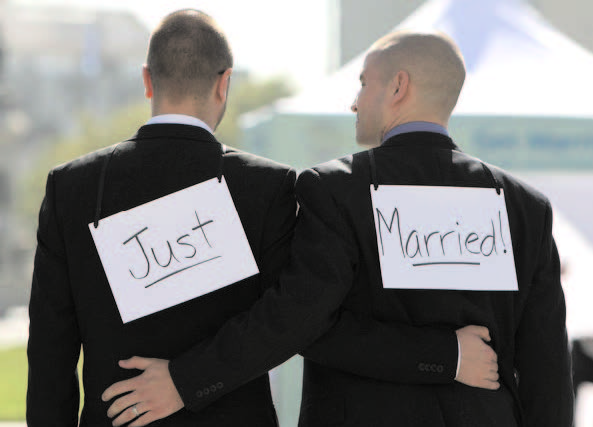
    HONOLULU (TIP): The Hawaii Senate gave final legislative approval on November 12 to a bill extending marriage rights to same-sex couples in a state popular as a wedding and honeymoon destination and regarded as a pioneer in advancing the cause of gay matrimony. The measure cleared the Democraticcontrolled state Senate on a 19-4 vote to cheers and applause from hundreds of supporters in flowered garland leis who filled the visitor galleries and the Capitol rotunda. Hundreds more danced for joy on the sidewalks in front of the Capitol building. Governor Neil Abercrombie, a Democrat who called a special session to consider the bill, is expected to sign it into law on Wednesday, an aide to the governor said. That would make Hawaii the 15th US state to legalize gay marriage. The measure, set to take effect on December 2, rolls back a 1994 statute defining marriage as a union between a man and a woman. President Barack Obama, who was born in Hawaii, hailed passage of the bill. He is the first US president to support gay marriage.

  • Malia, Malala top influential-teen list

    Malia, Malala top influential-teen list

    US President Barack Obama’s elder daughter Malia and Pakistani girls’ education activist Malala Yousafzai have been named among the 16 most influential teens of 2013 by Time magazine. The magazine said Malia, 15, and her younger sister Sasha act with the “poise of adults” at high-profile events.

  • Low Obamacare enrolment figures turns up heat on White House

    Low Obamacare enrolment figures turns up heat on White House

    WASHINGTON (TIP): About 106,000 people signed up for insurance coverage nationally under President Barack Obama’s healthcare law during October, the government said on Wednesday, a tiny fraction of the millions of people that had been expected to enroll for next year. The Obama administration had signaled enrollment would be very low in October because of technical failures that have hobbled the HealthCare.gov website used for signing people up in 36 states. But the reported figures show how far the White House has to go to build a new individual market of millions of consumers in 2014 to keep the healthcare program financially viable. The enrollment in private plans amounts to 1.5 percent of a forecast 7 million people who were expected to sign up by the time enrollment wraps up in the end of March. Nearly 1 million people have successfully checked whether they are eligible for government subsidies toward the new insurance, but have not selected a plan, according to the US Department of Health and Human Services. The release of the low enrollment numbers for the first month coincided with Obama’s fellow Democrats in the US House of Representatives demanding that the White House swiftly help people whose existing insurance policies are being canceled and to fix the broken website by the end of the month. The sign-up figures reflect people who have picked a new insurance plan but may not have paid their premiums yet.

    Some 26,794 people signed up for private health insurance plans through the technologically-challenged federal marketplace and 79,391 who signed up through state-based exchanges. The figures showed 396,261 people were deemed eligible for the government’s Medicaid program or the Children’s Health Insurance Program for the poor. House Democrats, seething over the problems, met with administration officials for more than an hour on Wednesday, angry that the botched rollout could become a major political liability for the party during the 2014 mid-term elections. A senior House Democratic aide said lawmakers called for Obama to announce a remedy to the canceled policies before a vote on Friday on a Republican bill allowing people to keep their current health insurance plans if they like them. House Democratic leaders have urged their members to vote against it, saying it is merely another attempt to repeal the 2010 Patient Protection and Affordable Care Act, Obama’s biggest domestic policy achievement, commonly known as Obamacare. Senate Majority Leader Harry Reid told reporters he had a long conversation with Obama on Tuesday night.