Tag: Barack Obama

  • ‘India, US destined to be partners on world stage’, says US Deputy Defense Secretary Ashton Carter

    ‘India, US destined to be partners on world stage’, says US Deputy Defense Secretary Ashton Carter

    WASHINGTON (TIP): India and the US are destined to be partners on the world stage because of shared values and outlooks, a top US official told Indian officials ahead of Prime Minister Manmohan Singh’s visit to the US. US Deputy Defense Secretary Ashton Carter conveyed this message to India during his just concluded visit to India in preparation of Manmohan Singh’s Sep 27 meeting here with President Barack Obama, according to Pentagon Press Secretary George Little. Carter, who met with National Security Advisor Shivshankar Menon, Foreign Secretary Sujatha Singh and Defence Secretary Radha Krishna Mathur also discussed “steps toward deepening the multifaceted US-Indian defense relationship,” he stated.

    “They discussed steps the United States and India are taking to streamline their respective administrative processes and make bilateral defense trade more responsive and effective,” Little said. Carter also hosted a meeting of senior representatives from the US and Indian defense industries that focused on additional steps the United States can take to remove barriers to bilateral defence trade, he added. Carter himself told US traveling media on way back home that a central topic of discussion with India was the Defense Trade and Technology Initiative, which is intended to increase defence industrial and technology cooperation. The agreement isn’t just about selling defence equipment to India; it’s about fostering joint ventures he said. “They don’t want to just buy our stuff,” a story on Pentagon website quoted him as saying. “They want to build our stuff with us and they want to develop new things with us, and they want to do research with us.”

    The joint C-130J Super Hercules transport aircraft venture between the Indian multinational conglomerate Tata and Lockheed Martin is a perfect model of co-production, he said. “India is now part of the supply chain [for the aircraft], and has the economic benefit-the jobs benefit-of being part of that,” Carter said. Future defence projects between the two countries will include both codevelopment and co-production, the official said. “We want India to have all the capabilities it needs to meet its security needs, and we want to be a key partner in that effort,” Carter was quoted as saying. When you look at pictures of the Indian air force’s C-130s participating in the recent flood relief efforts in the north, that tells us we’re on the right track,” he added. Carter, who also visited Afghanistan and Pakistan before India said the principal threat to Pakistan is terrorism, not its neighbors. “The government of Pakistan has flirted over time with using terrorism as an instrument of state policy,” Carter was quoted as saying. “It is coming to the realization that terrorism is a boomerang, and it comes back on you when you try to use it for your own purposes.” “Their neighbor to the east is running away from them economically,” Carter said referring to India. To develop its economy, Pakistan first needs peaceful relations with India to begin trading with them, he said.

  • Obama may meet with Iranian president

    Obama may meet with Iranian president

    WASHINGTON (TIP): The White House said on September 19it was possible that President Barack Obama would meet with Iranian President Hassan Rouhani in New York next week if Tehran signaled it was serious about giving up its nuclear programme. Obama and Rouhani will be in New York to attend the United Nations General Assembly, and speculation has grown that the two leaders might have an encounter of some type. White House spokesman Jay Carney has deflected questions all week about whether the two leaders would meet during the U.N. gathering. On Thursday, he acknowledged a change in tone between Iran and the West since Rouhani took office and said a meeting was possible, though one was not scheduled. “It’s possible, but it has always been possible,” Carney said. “The extended hand has been there from the moment the president was sworn in.”

    When Obama first ran for president in 2008, he said he would hold direct negotiations with Iran under certain conditions. Carney said Obama still holds that position. Rouhani said in a television interview broadcast on Thursday that his country did not seek war. He said Iran would never develop nuclear weapons and that he had complete authority to negotiate with Western powers. Carney told reporters that Rouhani delivered some positive-sounding rhetoric in an NBC News interview but “actions are more important than words.” The United States and its western allies believe Iran is working towards developing a nuclear weapons. Iran says its nuclear program is peaceful and aimed at power production. Carney reiterated that Obama would be willing to have bilateral negotiations provided the Iranians were serious about addressing the international community’s insistence that Tehran give up its nuclear weapons program. “That is the position we hold today,” Carney said.

  • Indian-American author Jhumpa Lahiri in Booker shortlist for her fiction ‘The Lowland’

    Indian-American author Jhumpa Lahiri in Booker shortlist for her fiction ‘The Lowland’

    NEW YORK (TIP): Indian-American author Jhumpa Lahiri has made it to this year’s Man Booker Prize shortlist for her new fiction ‘The Lowland’, an intimate portrayal of two brothers set in Kolkata of the 1960s. Her tale, set in the suburban streets of Calcutta of the 1960s and told through the eyes of brothers Subhash and Udayan in ‘The Lowland’, will compete alongside five other works of fiction for the coveted literary award worth 50,000 pounds to be announced here next month. Born in London and based in New York, 46-year-old Lahiri is the daughter of Indian immigrants from West Bengal. She is also a member of US President Barack Obama’s Committee on the Arts and Humanities. She won the 2000 Pulitzer Prize for Fiction with her debut short story collection ‘Interpreter of Maladies’ (1999) and her first novel ‘The Namesake’ (2003) was adapted into a popular film of the same name by filmmaker Mira Nair.

    Her writing is rooted in the Indian milieu and attempts to capture dislocation and ambivalence with a unique play of words. ‘The Lowland’, released this month, is already being pitched as an easy front-runner among literary circles here. Birmingham-based Jim Crace is also being touted as among the 2013 favorites for ‘Harvest’, a novel about the fragile social eco-system of a remote English village, which the author has claimed, will be his last. Like Crace, Colm Toibin is also a previous nominee and is heading the list with ‘The Testament of Mary’ – about the mother of Jesus grieving angrily years after her son’s crucifixion. If it wins, it will be the shortest novel to win the Booker with just 104 pages. Eleanor Catton, 28, is the youngest to make the cut with her book ‘The Luminaries’, while Ruth Ozeki with ‘A Tale for the Time Being’ and No Violet Bulawayo ‘We Need New Names’ complete this year’s selection. Robert Macfarlane, chair of the judges, said the shortlist was “instantly striking because of its global range”. “It shows the English language novel to be a form of world literature,” he said.

    “We looked for books that sought to extend the power and possibility of the form. This is in keeping with the history of the novel. We wanted novel novels,” he added. Each of the six shortlisted writers will receive 2,500 pounds and a handbound edition of their book. This year marks the 45th year of the prize, which will be announced on October 15 at an awards ceremony at London’s Guildhall. Last year, Hillary Mantel’s ‘Bring Up the Bodies’ took home the prize. Mantel became only the third author, after Peter Carey and J M Coetzee, to win the prize twice. In 2008, Indian author Aravind Adiga won the Booker for ‘The White Tiger’ and Kiran Desai took home the prize in 2006 for her novel ‘The Inheritance of Loss’. “Global in its reach, this exceptional shortlist demonstrates the vitality and range of the contemporary novel at its finest,” Macfarlane said.

    “These six superb works of fiction take us from gold-rush New Zealand to revolutionary Calcutta, from modernday Japan to the Holy Land of the Gospels, and from Zimbabwe to the deep English countryside. “World-spanning in their concerns, and ambitious in their techniques, they remind us of the possibilities and power of the novel as a form,” he said. In ‘The Lowland’, Jhumpa explores the heart of family life and the immigrant experience. Her publisher Bloomsbury has described the book “epic in its canvas and intimate in its portrayal of lives undone and forged anew”. The Man Booker Prize for Fiction is a literary prize awarded each year for the best original full-length novel, written in English, by a citizen of Commonwealth of Nations, Ireland, or Zimbabwe.

  • Obama nominates Indian-American Puneet Talwar to key diplomatic position

    Obama nominates Indian-American Puneet Talwar to key diplomatic position

    WASHINGTON (TIP): US President Barack Obama has nominated Indian- American Puneet Talwar as Assistant Secretary of State for Political Military Affairs, a top diplomatic post. Talwar, who was Obama’s top advisor on the Middle East region for over four years was nominated for the position by Obama yesterday. He is the second Indian-American to be nominated as the Assistant Secretary position in the State Department. In July, Nisha Desai Biswal was nominated as the Assistant Secretary of State for South and Central Asia. Both the positions need to be confirmed by the Senate. Obama announced his intent to nominate Talwar to the top State Department position along with nearly 30 senior administration positions. “I am grateful that these talented and dedicated individuals have agreed to take on these important roles and devote their talents to serving the American people,” Obama said. “I look forward to working with them in the coming months and years,” he added. If confirmed by the Congress, Talwar, in his capacity as the Assistant Secretary of State for Political Military Affairs, will provide policy direction in the areas of international security, security assistance, military operations, defense strategy and plans, and defense trade.

  • Obama makes case for Syria strike, British house votes no

    Obama makes case for Syria strike, British house votes no

    WASHINGTON/BEIRUT (TIP): The British parliament on August 29 rejected a motion supporting military action in Syria, reflecting deep divisions about using force to punish President Bashar al- Assad for what Western governments believe was his use of chemical weapons against civilians. U.S. officials conceded on August 29 that they lacked conclusive evidence that Assad personally ordered last week’s poison gas attack, and some allies have warned that military action without U.N. Security Council authorization risks making the situation worse. President Barack Obama’s top national security officials were due to brief Congress on Syria later on Thursday, but any intervention looked set to be delayed at least until U.N. investigators report back after leaving Syria on Saturday.

    The British parliament’s rejection of the largely symbolic motion proposed by Prime Minister David Cameron, which would have given authorization in principle for action subject to a second vote, was a setback for Obama’s efforts to build a coalition for action. Cameron said afterward he would not override the will of parliament and approve such action, saying it was clear that parliament did not want to see a military strike on Syria to punish it for chemical weapons use and that he would act accordingly. White House spokesman Josh Earnest suggested before the British vote that the United States might be willing to act on its own. “When the president reaches a determination about the appropriate response … and a legal justification is required to substantiate or to back up that decision, we’ll produce one on our own,” Earnest said.

    Syrian opposition sources said Assad’s forces had removed several Scud missiles and dozens of launchers from a base north of Damascus, possibly to protect them from a Western attack, and Russia was reported to be moving ships into the region. But expectations of imminent turmoil eased as the diplomatic process was seen playing out into next week, and the White House emphasized that any action would be “very discrete and limited,” and in no way comparable to the Iraq war. The United States and its allies have “no smoking gun” proving Assad personally ordered the attack on a rebel-held Damascus neighbourhood in which hundreds of people were killed, U.S. national security officials said. In secret intelligence assessments and a still-unreleased report summarizing U.S. intelligence on the alleged gas attack on August 21, U.S. agencies expressed high confidence that Syrian government forces carried out the attack, and that Assad’s government therefore bears responsibility, U.S. national security officials said. Syria denies blame for the gas attacks and says they were perpetrated by rebels. Washington and its allies say the denial is not credible. Secretary of State John Kerry and Secretary of Defense Chuck Hagel were among senior U.S. officials expected to brief congressional leaders later on Thursday. Some lawmakers complained they had not been properly consulted. While U.N. chemical weapons inspectors spent a third day combing the rebel-held area where the attack took place, traffic moved normally elsewhere in Damascus, with some extra army presence but little indication of any high alert.

    An extended parliamentary debate in London revealed deep misgivings stemming from the 2003 invasion of Iraq. After pressure from lawmakers, the British government – a key player in any proposed air assault on Syria – had promised parliament that even if it voted in favor, there would be a second decisive vote once the U.N. weapons inspectors report their findings. Even that motion was defeated by 285 to 272 votes. ‘MONSTROUS CRIME’ The United Nations said its team of inspectors would leave Syria on Saturday and report to Secretary-General Ban Ki-moon. France and Germany urged the world body to pass its report on to the decision-making Security Council as soon as possible “so that it can fulfil its responsibility with regards to this monstrous crime.” The United States, Britain and France say they can act with or without a U.N. Security Council resolution, which would likely be vetoed by Russia, a close ally of Assad. But some countries are more cautious: Italy said it would not join any military operation without Security Council authorization. Western diplomats say they are seeking a vote in the 15-member Council to isolate Moscow and demonstrate that other countries are behind air strikes.

    A report from Moscow that Russia is sending two warships to the eastern Mediterranean underscored the complications surrounding even a limited military strike, although Russia has said it will not be drawn into military conflict. The ambassadors of the five veto-wielding permanent U.N. Security Council members appeared to have made no progress at a meeting on Thursday, a council diplomat said. The five – the United States, Russia, China, Britain and France – had held an inconclusive meeting on Wednesday to discuss a draft Security Council resolution that would authorize “all necessary force” in response to the alleged gas attack. Cameron told Britain’s parliament it would be “unthinkable” to proceed if there was overwhelming opposition in the Security Council. But he published legal advice given to the government under which military action would be lawful for humanitarian reasons even if a Security Council resolution were blocked by a veto. The International Committee of the Red Cross joined a chorus of international voices urging caution. “Further escalation will likely trigger more displacement and add to humanitarian needs, which are already immense,” said Magne Barth, head of the ICRC delegation in Syria. Increasing expectations that any action will be delayed ended a three-day selloff on world share markets on Thursday, although investors were still on edge over fears of future turmoil in the Middle East.

    ‘SHOT ACROSS THE BOW’ Obama sought to win over a war-weary American public on Wednesday evening by saying intervention in Syria, where more than 100,000 people have been killed in 2 1/2 years of civil war, would serve U.S. national security interests. “If we are saying in a clear and decisive but very limited way, we send a shot across the bow saying, ‘Stop doing this,’ this can have a positive impact on our national security over the long term,” he told “PBS Newshour” in a televised interview. According to the U.S. national security officials, evidence that forces loyal to Assad were responsible goes beyond the circumstantial to include electronic intercepts and some tentative scientific samples from the site. “This was not a rogue operation,” one U.S. official said. Western leaders are expected in Russia next Thursday for a meeting of the Group of 20 big economies, an event that could influence the timing of any strikes. The hosts have made clear their view that Western leaders are using human rights as a pretext to impose their will on other sovereign states. A spokesman for the main Syrian opposition umbrella group, the Syrian National Coalition, said the opposition was confident Western leaders were prepared to act.

    SNC leader Ahmed Jarba met French President Francois Hollande. An SNC spokesman said they discussed a two-wave intervention to first target installations used to launch chemical weapons and then hit other government bases in Syria. “We are very happy. France and its partners are quite decided to punish the Syrian regime,” SNC envoy Monzer Makhous told Reuters after the talks. “Then there will be military aid to help the opposition to change the balance of power.” Hollande urged Jarba to create a credible military force, highlighting Western concern that the mainstream opposition is unable to control al Qaeda-linked militias on the ground in Syria. Syrian officials say the West is playing into the hands of its al Qaeda enemies. In Damascus, residents and opposition forces said Assad’s forces appeared to have evacuated most personnel from army and security command headquarters in the centre in preparation for Western military action. People unable to decide whether to leave for neighboring Lebanon said the border was already jammed. “We’re hearing people are spending hours – like 12 or 14 hours – waiting in line at the border,” said Nabil, who was considering leaving town for Beirut with his wife and young daughter, “just until the strike is over.”

    Diplomats based in the Middle East told Reuters the removal of some of Assad’s Scud missiles and launchers from the foothills of the Qalamoun mountains, one of Syria’s most heavily militarized districts, appeared to be part of a precautionary but limited redeployment of armaments. Despite opinion polls showing most Americans oppose deeper involvement in the Syrian conflict, Obama has been under pressure to enforce a “red line” against chemical weapons use, which he declared just over a year ago. “I have no interest in any open-ended conflict in Syria, but we do have to make sure that when countries break international norms on weapons like chemical weapons that could threaten us, that they are held accountable,” Obama said. The likeliest option, U.S. officials say, would be to launch cruise missiles from U.S. ships in the Mediterranean in a campaign that would last days. A fifth U.S. destroyer, the USS Stout, was headed toward the coast off Syria, according to one defense official. That would bring the total of U.S. destroyers in the eastern Mediterranean to five, although the Stout is likely to relieve the USS Mahan, which had been due to return to its U.S. base but stayed in the region due to the situation in Syria. Still the decision to replace the Mahan with another destroyer means the United States will be maintaining an expanded presence in the region.

  • International Raise the cost for Pakistan army’s proxy war order be damned

    International Raise the cost for Pakistan army’s proxy war order be damned

    The West’s attempt to ride roughshod over the United Nations Security Council with a hastily drafted proposal to authorize the use of force in Syria sets the stage for its second military intervention in West Asia and North Africa in as many years. The resolution, drafted by the United Kingdom and backed by the United States and France, seeks two things from the Council: one, a condemnation of President Bashar al-Assad for using chemical weapons on his people and two, its blessings to deploy “all necessary measures” to protect Syrians. If the first asks the U.N. for a leap of faith on a premature claim, the second requires it to turn a blind eye to history.

    While acknowledging there exists no “smoking gun” to establish Mr. Assad’s culpability, the West has tried its best to impede the working of the U.N.’s team in Syria investigating claims if chemical weapons were used at all. The charade now unfolding before the UNSC reflects the West’s desperation to have its way with a military intervention that has few takers. If the Arab League, including key members and U.S. allies like Egypt, has expressed its reluctance to support the imminent assault, public opinion in the U.S., Britain and France too is overwhelmingly opposed to a new war. After the disastrous 2011 NATO bombing of Libya, which began with the objective of protecting civilians but ended up being a full-blown attack on the Muammar Qadhafi regime, the Security Council is rightly wary of the Anglo-American plans for a “limited” intervention in Syria. Expecting the world to believe a military attack will destroy Mr. Assad’s chemical weapons arsenal without inflicting unacceptable civilian casualties is silly.

    If anything, a targeted attack is not so much a guarantee of minimal damage, but an attempt to fulfill President Barack Obama’s vain promise to punish the Assad regime if it used chemical weapons. After proffering sketchy evidence in support of this grave allegation, the President is now being forced to walk his talk by the liberal interventionists who populate his administration and by a trigger-happy British Prime Minister. One senior U.S. official let slip that the planned assault will be “just muscular enough not to get mocked,” revealing how this issue is now entirely about American “credibility,” as opposed to the humanitarian tragedy in Syria. The Council’s likely rejection of the draft resolution will be portrayed as Russian and Chinese intransigence. The fact remains, however, that influential powers like India, Brazil and South Africa too are against military intervention pending a complete investigation of WMD claims. The West’s failure to act through the U.N. not only betrays the Syrian people but also reflects its contempt for the international order.

  • OBAMA AT 50TH ANNIVERSARY EMBODIES KING’S DREAM

    OBAMA AT 50TH ANNIVERSARY EMBODIES KING’S DREAM

    WASHINGTON (TIP): President Barack Obama was set to lead civil rights pioneers on Aug 28 in a ceremony for the 50th anniversary of the March on Washington, where Dr Martin Luther King’s “I Have a Dream” speech roused the 250,000 people who rallied there decades ago for racial equality. Large crowds gathered at the Lincoln Memorial, where the first black US president was expected to speak just after 1900 GMT _ the time when King delivered his spellbinding speech early in the turbulent 1960s.

    The landmark Civil Rights Act and Voting Rights Act to outlaw discrimination were signed into law in the next two years. Obama has said King is one of two people he admires “more than anybody in American history.” The other is Abraham Lincoln. Obama will be joined by former Presidents Jimmy Carter and Bill Clinton, with thousands of people expected to attend. Obama will offer his personal reflections on the civil rights movement, King’s speech, the progress achieved in the past 50 years and the challenges that demand attention from the next generation. International commemorations will be held at London’s Trafalgar Square, as well as in the nations of Japan, Switzerland, Nepal and Liberia. London Mayor Boris Johnson has said King’s speech resonates around the world and continues to inspire people as one of the great pieces of oratory.

    On Aug. 28, 1963, as King was ending his speech, he quoted from the patriotic song, “My Country `tis of Thee” and urged his audience to “let freedom ring.” “When we allow freedom to ring _ when we let it ring from every city and every hamlet, from every state and every city, we will be able to speed up that day when all of God’s children, black men and white men, Jews and Gentiles, Protestants and Catholics, will be able to join hands and sing in the words of the old Negro spiritual, `Free at last, free at last, great God almighty, we are free at last,” King said. The civil rights leader was assassinated five years later. The Rev Bernice King opened the celebration Wednesday at an interfaith service.

    King said that her father is often remembered as a freedom fighter for equal rights and human rights, but he was most importantly a man of faith. Obama considers the 1963 march part of his generation’s “formative memory.” A halfcentury after the march, he said, is a good time to reflect on how far the country has come and how far it still has to go, particularly after the recent acquittal of George Zimmerman in the fatal shooting of Trayvon Martin, an unarmed black teenager. Race isn’t a subject Obama likes to talk about in public, but the Martin case is one time he has done so. In an interview Tuesday on Tom Joyner’s radio show, Obama said he imagines that King “would be amazed in many ways about the progress that we’ve made.” He listed advances such as equal rights before the law, an accessible judicial system, thousands of African-American elected officials, African- American CEOs and the doors that the civil rights movement opened for Latinos, women and gays. “I think he would say it was a glorious thing,” he said.

    But Obama noted that King’s speech was also about jobs and justice. “When it comes to the economy, when it comes to inequality, when it comes to wealth, when it comes to the challenges that inner cities experience, he would say that we have not made as much progress as the civil and social progress that we’ve made, and that it’s not enough just to have a black president, it’s not enough just to have a black syndicated radio show host,” Obama said.

  • US-India ties hit a Plateau

    US-India ties hit a Plateau

    It has now been confirmed that before going to New York to participate in the UN General Assembly deliberations in New York, Prime Minister Manmohan Singh will be visiting Washington in September for his second bilateral engagement with US President Barack Obama. Though New Delhi was very keen on the visit and the US President had extended an invitation to Manmohan Singh earlier this year, it’s not entirely clear what a lame-duck Prime Minister is likely to achieve during this visit.

    That US-India ties have hit a plateau has been evident from the lackluster engagements between the two sides in recent months. It was the turn of US Vice President Joseph – a month after Secretary of State John Kerry’s visit — to India to reassure New Delhi how Washington remains keen on a robust partnership with India. Biden’s four-day visit to India last month, first for a US Vice President in three decades, was aimed at laying the groundwork for the Indian Prime Minister’s visit to the US in September. Though it was clear from the very beginning that Biden’s trip will not result in any ‘deliverables’, it also remains a mystery as to what an Indian Prime Minister at the fag-end of his term and with hardly any political capital left will be able to do to galvanize this very important relationship with a perfunctory visit to the US.

    These are difficult times for the USIndia bilateral relationship which has been flagging for quite some time now and there is little likelihood of it gaining momentum anytime soon. The growing differences between the two today are not limited to one or two areas but are spread across most areas of bilateral concern. These include market access issues, the problems in implementing the US-India civil nuclear accord, the US immigration changes, changing US posture towards Afghanistan, defense cooperation and trade. Biden’s visit was specifically focused on trying to give a push to economic ties, enhancing cooperation on defense issues, pushing India for a greater role in the Asia-Pacific and addressing climate change. That the US is clearly concerned about Indian economic slowdown was reflected in Biden’s comments.

    He exhorted New Delhi to try to take bilateral trade with the US to $500 billion by removing trade barriers and inconsistencies in the tax regime. He recommended more measures like recent relaxation in the FDI rules by underlining “caps in FDI, inconsistent tax system, barriers to market access, civil nuclear cooperation, bilateral investment treaty and policies protecting investment.” Investor confidence in the Indian economy, Asia’s third largest, is at an all-time low with growth slowing down to its lowest level in a decade. Foreign direct investment slid about 21 per cent to $36.9 billion last fiscal year compared with 2011-12. The US is keen to see India remove investment caps in sectors like finance, retail and insurance. The US corporate sector has been up in arms in recent months about India’s trade policies, complaining that American firms are being discriminated against and the US intellectual property rights are being undermined by India.

    Sporadic outbursts of reform measures from New Delhi have not been enough to restore investor confidence in India even as Indian policymakers are now busy trying to secure their votes for the next elections. Policy-making in India remains paralyzed and haphazard with Washington getting increasingly frustrated with the Indian government’s lackadaisical public policy. For his part, Biden went out of his way to assuage the concerns of the Indian corporate sector by suggesting that Washington plans to increase the number of temporary visas and green cards to highly skilled workers from India. The concerns, however, continue to persist because the US Senate has already cleared the much talked-about immigration Bill that will significantly restrict Indian IT companies in the US. If the House of Representatives ends up endorsing it, then the Obama Administration will have to do some heavy lifting to mollify India. Meanwhile, the civil nuclear deal is floundering as the US companies remain wary of Indian laws on compensation claims in the event of a nuclear accident. India’s nuclear liability law is aimed at ensuring that foreign companies operating in Indian nuclear sector assume nearly unlimited liability for accidents, a condition that all but precludes the participation of US firms. After all the political and diplomatic investment that Washington made in making the nuclear deal happen, there is a pervading sense in the US that the returns have not been at all impressive.

    On climate change where the Obama Administration is focusing significantly, Biden pushed India to work with the US to reduce the flow of hydroflurocarbons and provide opportunities to the scientific establishment to work on green technology options. The US is already working with China on a joint effort to curb greenhouse gases. Biden also tried to ease Indian concerns on Afghanistan by underlining that the Taliban would have to give up ties with Al Qaeda and accept the Afghan constitution as part of the reconciliation process. New Delhi remains concerned about the impact of US withdrawal from Afghanistan for Indian security. The recent bombing outside the Indian consulate in Jalalabad merely highlights the challenges India faces in Afghanistan. According to Biden, “there are no obvious places where Indian interests and American interests diverge worldwide, regionally or domestically.” That may well be true but in the absence of a big idea to push the relationship forward strategically, the tactical issues where there are significant differences between Washington and New Delhi continue to shape the trajectory of the US-India bilateral ties. The relationship stands at a serious inflection point.

    The two sides need to start thinking seriously about bringing it back on track. New Delhi, in particular, needs to acknowledge the importance of what Biden suggested when he said that “there is no contradiction between strategic autonomy and strategic partnership.” In the name of ‘strategic autonomy’ New Delhi has become quite adept at scuttling its own rise. At this moment of significant geostrategic flux in the Indo-Pacific, India and the US need each other like no other time in the past. Biden’s visit has underlined India’s importance in US strategic calculus. It is now for India to decide what role it sees for the US in its foreign policy matrix and as a corollary what role it sees for itself in the rapidly changing global order.

  • India, the Land Columbus Set out to Find

    India, the Land Columbus Set out to Find

    What is it about India, that its tryst with destiny is still on-going? Why does India keep moving forward despite the doers and the naysayers, the empire builders and the colonized? The answer, I submit, lies in the glorious amalgam of history and hope, glory and defeat, education and renunciation, family and loneliness, accomplishment and worthlessness, ego and doubt, government and the governed, “East” and “West,” nuclear energy and organic linen; in short, India is a living contradiction – old and young, religious and secular, Eastern and Western, proud and humble, poor and rich, stranger and friend. On India’s Independence Day, one cannot but thank the British empire for all of its managerial excellence and vision, for it is they who did what no maharaja was able to do short of Ashoka the Great: create a Greater India, a unified India.


    img145

    That there was a Great Partition, with untold stories of misery and heroism, courage and slaughter, so that a few “Royals,” domestic and foreign, could uproot so much humanity for mapmakers’ joy rather than compel sovereign governments to give equal protection to the governed, remains an irksome lesson for would-be nation-makers. Arab Spring’s lessons are both forward-looking, as they are rear-view looking, and given the world being conquered, as a whole, by the unstoppable digital binary code, the great denominator, the world has indeed gone “flat,” and time “instantaneous”: lost are the curves of the globe and the hands of time on the alter of digital transparency – more controlled by multinational corporations than by analogue sovereign governments desperately seeking to harness the binary code to defend against “enemies, foreign and domestic.” What is to become of India, one may ask. Beware, I say to all who thought that China would counter-balance the Soviets.

    Like China’s core greatness lay sub-rosa unseen by the likes of Henry Kissinger, so, I fear is true of India, albeit, mercifully, only in part. In part, I say, because India’s investment in democracy’s warts is full-throttle and every citizen, poor and rich alike, sees themselves as the master of the public trust. Just ask The New York Times’ columnist Thomas Friedman as to why he is so in love with India, and why India, a Hindu-majority nation, effortlessly and confidently rests its position in the comity of nations in the gentle, strong and erudite hands of Salman Khurshid.


    img147

    It is as if Ashoka the Great, Akbar the Great, Guru Nanak, and Mother Teresa, not just Gandhi, Jinnah and Nehru, wrought this continuing tryst with destiny. For us in the United States, where each of the 50 states are a laboratory of policy for the nation to embrace or reject, India, I submit, given its diverse religious content and in the main peaceful co-existence, economic growth that defies the weight of regulations, may well be a laboratory to the world – for there, East and West, greed and charity, ambition and detachment live in substantial harmony. Since Secretary John Kerry is working overtime to seize the moment decreed by destiny, as he races to the Middle East to jumpstart the cob-webbed peace process between Israel and Palestine, no matter the profit of the status quoers, and harder yet, to re-order the Afgan-Subcontinent equation, each of the affected nations and citizenry, in the exercise of their enlightened selfinterest, owe a good faith response – for destiny awaits, in an infinite variety of shades and colors, the outstretched-hand’s state of loneliness or girth, given the many amalgamated hands reaching for the same sweet spot of history. Moreover, the dynamic of Israel’s meddlesome Thomas Dewey-like preference in last year’s presidential elections when Barack Obama won the “imperial term” in a resounding Harry Truman-like fashion, presents the Middle East a better shot than ever before.

    However, multi-lateral frustration infecting the Afgan- Subcontinent recalibrated process requires a critical mass of trilateral leadership, which ignores the interlopers’ inflammatory excesses, so as to bring the blessings of liberty and prosperity to their populace, unhappily aware of their common ancestry and uncommon present. For them I recall the example of the European Union’s birth, when jealous pride of many a nation, that claimed the world as its own, was overcome – surely those in the sub-continent can bequeath to their childrens’ children a gentle neighborhood where all are free to worship as they see fit and prosper per individual effort, as they have the benefit of cross-pride “across the border.” It may well be that the United Nations, created with the ink of World War II victory and a subsequent switcheroo a la ROC with PRC, needs the reforms that many have pushed for, including, Prime Minister Manmohan Singh, and his then-Permanent Representative Hardeep Singh Puri, after winning an unprecedented near-unanimous electoral victory to a rotational seat on the Security Council.

    It may well be that the “bubbling” South China Sea needs to bubble less, even as it starts the Kabuki dance of a future theater of avoid-able war and remilitarization. India’s attention, then, must be Eastward, Upward, and Westward. As an American, I can only hope that the land Columbus set out to find, India, and the nation he caused to be born, the United States, find in each other a common soul, aided by the rule of law and abetted by a democratic republic, such that Jefferson’s Declaration of Independence, “When in the Course of human events, it becomes necessary for one people to dissolve the political bands which have connected them with another, and to assume among the powers of the earth, the separate and equal station to which the Laws of Nature and of Nature’s God entitle them, a decent respect to the opinions of mankind requires that they should declare the causes which impel them to the separation. We hold these truths to be self-evident, that all men are created equal, that they are endowed by their Creator with certain unalienable Rights, that among these are Life, Liberty and the pursuit of Happiness.–

    That to secure these rights, Governments are instituted among Men, deriving their just powers from the consent of the governed, — That whenever any Form of Government becomes destructive of these ends, it is the Right of the People to alter or to abolish it, and to institute new Government, laying its foundation on such principles and organizing its powers in such form, as to them shall seem most likely to effect their Safety and Happiness. …” and Jawaharlal Nehru’s “Tryst with Destiny” speech loudly resonates to this day: “Long years ago we made a tryst with destiny, and now the time comes when we shall redeem our pledge, not wholly or in full measure, but very substantially. At the stroke of the midnight hour, when the world sleeps, India will awake to life and freedom. A moment comes, which comes but rarely in history, when we step out from the old to the new, when an age ends, and when the soul of a nation, long suppressed, finds utterance. It is fitting that at this solemn moment we take the pledge of dedication to the service of India and her people and to the still larger cause of humanity. At the dawn of history India started on her unending quest, and trackless centuries are filled with her striving and the grandeur of her success and her failures.

    Through good and ill fortune alike she has never lost sight of that quest or forgotten the ideals which gave her strength. We end today a period of ill fortune and India discovers herself again. The achievement we celebrate today is but a step, an opening of opportunity, to the greater triumphs and achievements that await us. Are we brave enough and wise enough to grasp this opportunity and accept the challenge of the future?” The world is better that Columbus lived, dreamed and strove. For we are here, dear Cristoforo Columbo, to prove you were never map-lost.

  • PM TO MEET OBAMA ON SEPTEMBER 27

    PM TO MEET OBAMA ON SEPTEMBER 27

    NEW DELHI (TIP): US President Barack Obama will meet Prime Minister Manmohan Singh at the White House on September 27 in a meeting aimed at dispelling a common narrative in Washington and New Delhi that the Indo-US relationship has gone adrift. The visit will provide the two leaders an opportunity to chart a course toward enhanced trade, investment, and development cooperation between the US and India, said National Security Council spokeswoman Caitlin Hayden. The announcement coincided with Indian National Security Adviser Shivshankar Menon’s visit to Washington. Menon told reporters on Tuesday evening he was confident that preparations were underway for a “successful working visit”. “You must expect it to be a substantive meeting,” he said.

    Menon met National Security Adviser Susan Rice, Defence Secretary Chuck Hagel, Deputy Secretary of State William Burns, Energy Secretary Ernest Moniz and members of the intelligence community in Washington. Menon dismissed suggestions that the Indo-US relationship had gone adrift saying: “In every area we are doing more together.” Menon said there had been “steady” progress on the Indo-US civilian nuclear deal, but acknowledged that there were some people who would like it to move faster. In his meetings in Washington, Menon discussed the recent deadly incidents along the Line of Control (LoC). Amid the LoC flare-up, India has not taken any decision on whether Manmohan will meet Pakistan Prime Minister Nawaz Sharif when the two leaders attend the UN General Assembly session in New York next month. Menon said he discussed the violence along the LoC with his US interlocutors, but that the Americans did not share their opinion on a possible Manmohan- Sharif meeting.

    The US is “very correct about not getting involved in other people’s business,” he said. Hayden said the Manmohan- Obama meeting would “highlight India’s role in regional security and stability”. Menon and Rice reviewed the Indo-US strategic partnership. “Ambassador Rice reaffirmed US’ commitment to further expanding and strengthening our bilateral relationship, including economic and commercial ties,” Hayden said. “The two exchanged ideas on enhancing our security cooperation, reviewed progress on our civil nuclear and clean energy cooperation and explored greater collaboration on climate change.” The two officials also discussed India’s support for a stable, secure and prosperous Afghanistan. On proposed defence talks, he said: “It (defence ties) could be (path breaking). It is still a work in progress. But it is significant.”

  • Consul General of India, New York

    Consul General of India, New York

    Dynaeshwar M.Mulay,
    On the occasion of the 66th anniversary of Independece of India, i extend congratulation and best wishes to the readers of the Indian Panorama! India today represents a unique model of development in the world. India’s journey as a vibrant democracy, its model of democrative governance together with its economic strength, resilience and dynamism of its people have shaped India’s significat role on the global stage today.

    Our strategic relations with the United States have matured to a very significat bilateral visits at the level of President Barack Obama and Primie Minister Manmohan Singh. our economic and commercial relations have reached new heights crossing the hundred billion dollar mark. The cooperation between the two countries in the fields of Science & Technology, Educaion and Culture is very strong. We have more than three million strong Indian Diaspora in the United States, which was contributed significaly towards these strong relations.

    The Consulate Geneat of India, new York, has been working in the region towards strengthening the relations between the two countries particularly in terms of rendering large number of cunsular services, faciliating trade and investment in both the countries and organising various public outreach activities towards promoting India in the region. The India Diaspora in the region has been immensely helpful, positive and complementary towards our efforts in the region.

    My Independence Day massage to the readers of the Indian Panorama is “Let us work together towards making the India-US relations stronger and better, with our indivisual and collective efforts. We need to create a new vision that would make our democrative destinies mutually beneficial.

  • Sanjay Gupta backs medical marijuana, apologizes for previous views

    Sanjay Gupta backs medical marijuana, apologizes for previous views

    NEW YORK (TIP): One of America’s most prominent doctors says he has shifted his stance in support of medical marijuana. Dr. Sanjay Gupta, chief medical correspondent at CNN and a CBS News contributing medical correspondent, wrote a post on CNN.com called,

    “Why I changed my mind on weed,” in which he describes his change of heart that occurred while filming a documentary, aptly titled, “Weed.” “Long before I began this project, I had steadily reviewed the scientific literature on medical marijuana from the United States and thought it was fairly unimpressive,” wrote Gupta. “Well, I am here to apologize.” Gupta says he was too dismissive of the “loud chorus” of legitimate patients whose symptoms improved with help from medical marijuana. He now says,

    “I mistakenly believed the Drug Enforcement Agency listed marijuana as a schedule 1 substance [a category of dangerous drugs] because of sound scientific proof.” “They didn’t have the science to support that claim, and I now know that when it comes to marijuana neither of those things are true,” wrote Gupta, citing patient cases including a 3-year-old whose seizures were dramatically reduced from 300 a week to three a month with medical marijuana’s help.

    He adds that marijuana does not have a high potential for addiction compared to cocaine, or even cigarettes. Gupta is a faculty member in the department of neurosurgery at Emory University School of Medicine in Atlanta and in 2009, reports suggested he was offered the post of Surgeon General by President Barack Obama. In the doctor’s new post, he did reference concerns about the drug. As a father, he worried about marijuana’s effects on the developing brain.

    Recent research suggests marijuana may affect a teen’s IQ or raise risk for psychiatric disorders like schizophrenia. He says he wouldn’t permit his own kids to try it until they are adults. Gupta also lamented on the challenges facing more research into medical marijuana for treating pain, including a stricter approval process that has to go through health agencies like the National Cancer Institute and the National Institute on Drug Abuse (NIDA).

    He pointed out tolerance is a real problem in existing medications: People are likely to overdose from a prescription drug every 19 minutes, but he couldn’t come across one case of a marijuana overdose. “We have been terribly and systematically misled for nearly 70 years in the United States, and I apologize for my own role in that,” said Gupta. Medical marijuana is currently legalized in 20 states and the District of Columbia: Alaska, Arizona, California, Colorado, Connecticut, Delaware, Hawaii, Illinois, Maine, Massachusetts, Michigan, Montana, Nevada, New Hampshire, New Jersey, New Mexico, Oregon, Rhode Island, Vermont and Washington State. Illinois became the most recent state to approve a law Aug. 1, according to the Marijuana Policy Project.

    Maryland also has a hospital-based medical marijuana program. Quantity limits and approved conditions vary by state, but can include chronic pain, epilepsy, HIV/AIDS and cancer. A recent survey in the New England Journal of Medicine also indicated support for medical marijuana. When told about a hypothetical case of a 68-year-old woman with breast cancer that had spread to her lungs, chest and spine, 76 percent of doctors surveyed said they would favor the use of marijuana for medicinal purposes. But support is not universal.

    The prestigious Mayo Clinic has come out and said it does not support the use of medical marijuana for young people with chronic pain, citing a link to psychological disease and that people under 25 are more prone to become addicted. New York City mayor Michael Bloomberg made headlines in June when he called medical marijuana one of the “great hoaxes of all time.” Recreational marijuana use is currently legalized in Colorado and Washington State, following the November 2012 elections.

  • Obama cancels meeting with Putin over asylum to Snowden

    Obama cancels meeting with Putin over asylum to Snowden

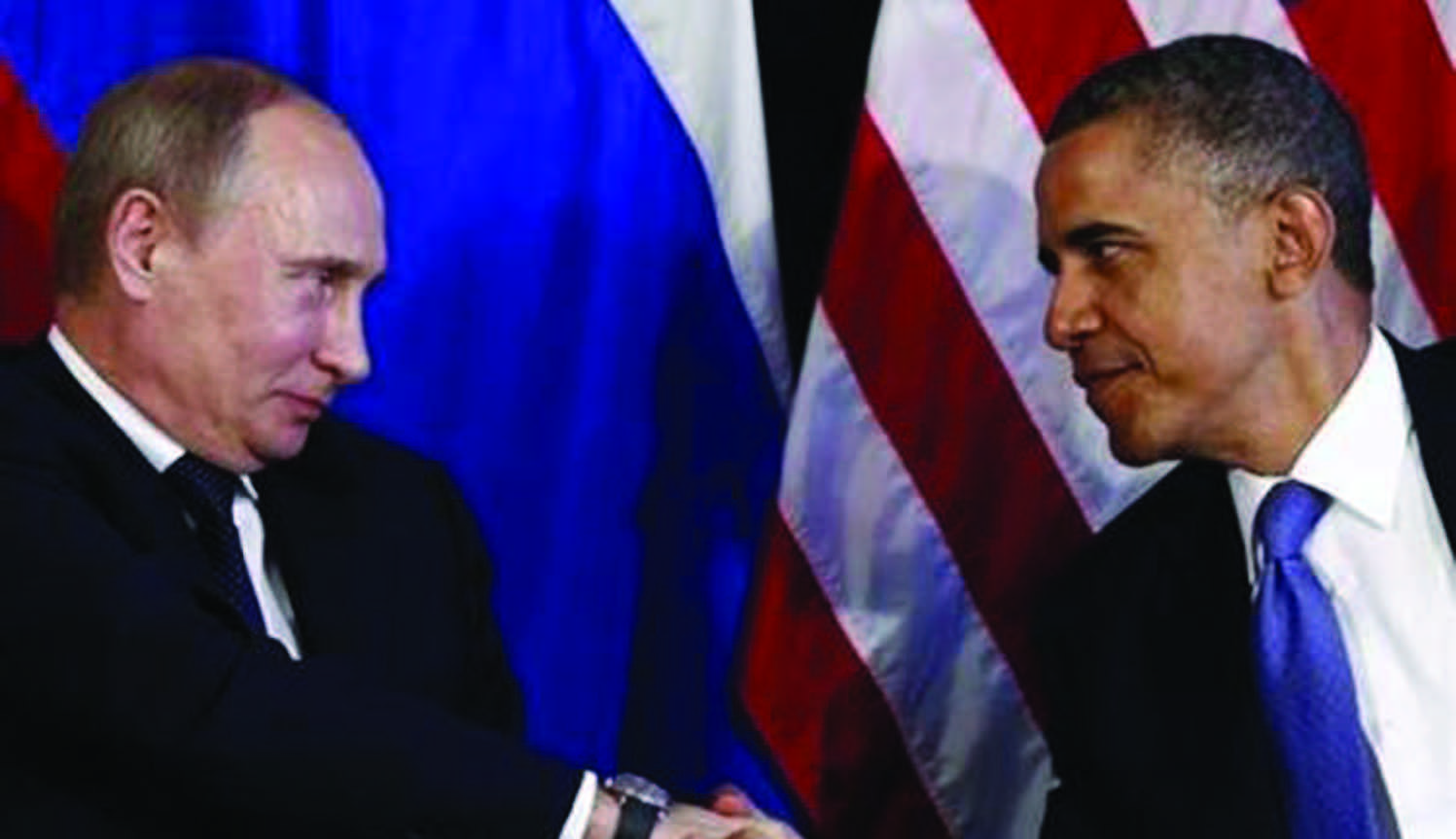
    WASHINGTON (TIP): Relations between the United States and Russia deteriorated further on Wednesday, August 7 when Barack Obama abandoned a presidential summit with Vladimir Putin that was due to be held next month, amid fury in Washington over Moscow’s decision to grant asylum to the NSA whistleblower Edward Snowden.

    US President Barack Obama has canceled his scheduled visit to Moscow to meet his Russian counterpart Vladimir Putin, as tension builds up between two countries over fugitive intelligence leaker Edward Snowden.

    The mini-summit had been scheduled for early September, days before the G-20 meeting of world economic leaders in St. Petersburg, Russia. Obama still plans to attend the main G-20 summit. Authorities in Moscow last week granted temporary asylum to Snowden, who is wanted by U.S. authorities for leaking classified intelligence information to newspapers. That decision infuriated Washington. Sen. John McCain, R-Ariz., called on the U.S. “to fundamentally rethink our relationship with Putin’s Russia.”

    In a statement Wednesday, the White House noted cooperation in some areas, such as policies toward Afghanistan and Iran, but said Moscow’s decision to help Snowden was “disappointing.” “Given our lack of progress on issues such as missile defense and arms control, trade and commercial relations, global security issues, and human rights and civil society in the last twelve months, we have informed the Russian Government that we believe it would be more constructive to postpone the summit until we have more results from our shared agenda,” the White House said. Senator Charles E. Schumer, who had urged Obama to cancel the summit, welcomed the White House decision. State Department spokeswoman Jen Psaki said the decision to abandon the summit was made after a unanimous decision by the White House national Security Council.

    A meeting between defense secretary Chuck Hagel, secretary of state John Kerry and their Russian counterparts will go ahead in Washington on Friday as planned. In a separate announcement, the White House said Obama will visit Sweden instead, traveling to Stockholm the day before the St Petersburg summit. “Sweden is a close friend and partner to the United States,” it said in a statement. “[It] plays a key leadership role on the international stage including in opening new trade and investment opportunities.” Speaking on Tuesday night, Obama said he was disappointed that Russia had allowed Swowden to stay instead of sending the former government contractor back to the US to face espionage charges.

    In his first direct comments about Snowden since Russia’s decision last week, the president said the situation reflected “underlying challenges” in dealing with Moscow. “There have been times where they slip back into cold war thinking and a cold war mentality,” Obama said on NBC’s Tonight Show. The decision to cancel the meeting was greeted with little surprise in Moscow, where analysts and lawmakers have been predicting such a step.

    Presidential aide Yuri Ushakov said the Kremlin was disappointed that Obama cancelled the meeting with Putin, state news agency RIANovosti reported. “It’s obvious that this decision is connected to the situation with the American intelligence services employee Snowden, which was not created by us,” he said.

  • US Drone Strikes In Pakistan Will End ‘Very Soon’: JOHN KERRY

    US Drone Strikes In Pakistan Will End ‘Very Soon’: JOHN KERRY

    ISLAMABAD (TIP): US secretary of state John Kerry told Pakistanis on August 1 that Washington planned to end drone strikes in their country soon – a message aimed at removing a major source of anti-American resentment in the strategically important country. After meeting Prime Minister Nawaz Sharif, Kerry said they had agreed to reestablish a “full partnership”, hoping to end years of acrimony over the drone strikes and other grievances including the US raid that killed Osama bin Laden.

    In a television interview later, Kerry said of the drone strikes: “I think the program will end as we have eliminated most of the threat and continue to eliminate it.” “I think the president has a very real timeline and we hope it’s going to be very, very soon,” he told Pakistan Television, when asked whether the US had a timeline for ending drone strikes, aimed at militants in Pakistan. US drone missiles have targeted areas near the Afghan border including North Waziristan, the main stronghold for various militant groups aligned with al-Qaida and the Taliban, since 2004.

    Pakistanis have been angered by reports of civilian casualties and what they see as an abuse of their sovereignty. It is unclear if, in their face-to-face talks, Sharif asked Kerry to halt the drone attacks. But when asked at a news conference whether Pakistan wanted the US to curtail the strikes, his foreign affairs adviser, Sartaj Aziz, replied: “We are asking them to stop it, not just curtail it.”

    Besides the drones and the killing of bin Laden in 2011, relations have been strained by Pakistan’s support for Taliban insurgents fighting Western troops in Afghanistan as well as a NATO air attack in which 24 Pakistani soldiers were killed. “I want to emphasize the relationship is not defined simply by the threats we face, it is not only a relationship about combating terrorism, it is about supporting the people of Pakistan, particularly helping at this critical moment for Pakistan’s economic revival,” Kerry told reporters.

    A new government in Pakistan and a new secretary of state in Washington have increased hopes the two sides can settle their grievances – something both hope to gain from, with Pakistan’s economy badly needing support and the United States aiming to withdraw the bulk of its troops from Afghanistan next year. Speaking after talks with Sharif in Islamabad, Kerry – who as a senator sponsored legislation to provide $7 billion in assistance to Pakistan over 5 years – said he had invited Sharif to visit the United States, Pakistan’s biggest donor, for talks with President Barack Obama.

    “What was important today was that there was a determination … to move this relationship to the full partnership that it ought to be, and to find the ways to deal with individual issues that have been irritants over the course of the past years,” he said. “And I believe that the Prime Minister is serious about doing that. And I know that President Obama is also.”

  • US Senate Approves Samantha Power As New UN Ambassador

    US Senate Approves Samantha Power As New UN Ambassador

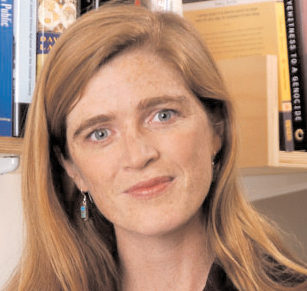
    WASHINGTON (TIP): The US Senate easily confirmed President Barack Obama’s selection for ambassador to the United Nations on August 1. The Irish-born Samantha Power, a former Obama foreign policy adviser and outspoken human rights advocate, moves into the job formerly held by Susan Rice, who is now Obama’s national security adviser. “As a long-time champion of human rights and dignity, she will be a fierce advocate for universal rights, fundamental freedoms and US national interests,” Obama said in a statement.

    Power, a one-time journalist who has a Harvard Law School degree, has reported from many of the world’s trouble spots. She won a 2003 Pulitzer Prize for a book on the meek US response to many 20th century atrocities, including those in Rwanda and Bosnia in the 1990s. She has long backed intervention — including military force — to halt human rights violations. Power’s past outspokenness has included her 2002 call for a “mammoth protection force” to prevent Middle East violence, from which she has distanced herself.

    Two weeks ago, Venezuela said it was calling off efforts to restore normal relations with the US after Power said at her Senate confirmation hearing that the South American country was guilty of a “crackdown on civil society.” She also called the UN’s inaction to end the large-scale killing in Syria’s civil war “a disgrace that history will judge harshly.” In 2008, she resigned as an adviser to Obama’s presidential campaign after calling then-rival Hillary Rodham Clinton a “monster.”

  • Obama Calls Netanyahu And Abbas On Resumption Of Peace Talks

    Obama Calls Netanyahu And Abbas On Resumption Of Peace Talks

    WASHINGTON (TIP): US President Barack Obama called on Israeli Prime Minister Benjamin Netanyahu and Palestinian President Mahmoud Abbas, on this week’s resumption of the final status negotiation of the peace talks, the White House said. “The president reaffirmed that the United States stands ready to support the parties in achieving a just and lasting peace based on the two state solutions, and will continue to work closely with the Palestinian Authority to achieve this goal,” a statement released by the White House has said.

    “The president underscored that while the parties have much work to do in the days and months ahead, the United States will support them fully in their efforts to achieve peace,” it added

  • PM Manmohan Singh To Visit US In September, To Strengthen Ties

    PM Manmohan Singh To Visit US In September, To Strengthen Ties

    NEW DELHI (TIP): Prime Minister Manmohan Singh will participate in the United Nations General Assembly(UNGA) in New York in the month of September but the highlight of his visit will be his bilateral meeting with President Barack Obama in Washington DC. The US has finally confirmed the dates for PM Manmohan Singh’s visit from September 25 to 30, government sources said.

    The confirmation of the dates has come as a huge relief for the Indian side as south block wanted the bilateral meeting to take place during Singh’s visit for United Nations General Assembly. This is what Indian officials had conveyed to US after Obama invited Singh for what is going to be their second bilateral meeting in US capital. The meeting in September, they said, would spare PM the trouble of traveling to the US for the second time in quick succession as his participation in UNGA was certain.

    As secretary of state John Kerry said during his visit to India in June, India and U.S. are looking to finalize a commercial agreement between NPCIL and Westinghouse for a nuclear reactor in Gujarat. If the 2 countries can circumvent India’s contentious nuclear liability law and conclude negotiations by then, it would be the main takeaway from Singh’s meeting with Obama.

    Both sides are trying hard to fight the gloom enveloping the ties between them and realize that one way of doing this is by encashing the civil nuclear agreement. Talking about the significance of Obama’s invite to Singh, foreign minister Salman Khurshid had said earlier that it is only befitting Singh’s reputation as having nurtured the India-US relations that he visit the US in the final year of UPA II.

  • President Nominates Indian-American To Key Judiciary Post In California

    President Nominates Indian-American To Key Judiciary Post In California

    WASHINGTON (TIP): Indian-American legal luminary Vince Girdhari Chhabria has been nominated by US President Barack Obama to a key judiciary post in California. Chhabria, nominated to be US district judge for the Northern District of California, is currently deputy city attorney for government litigation and the co-chief of appellate litigation at the San Francisco city attorney’s office, where he has worked since 2005.

    Obama announced his nomination along with five other judicial posts, all of which requires Senate confirmation. “These men and women have had distinguished legal careers and I am honoured to ask them to continue their work as judges on the federal bench,” Obama said, adding that they will serve the American people with integrity and an unwavering commitment to justice.

    “This is a proud moment for NASABA as another deserving South Asian has been nominated to the judiciary,” president of North American South Asian Bar Association Nadeem Bezar said. Once confirmed, Chhabria would be the first South Asian Article III judge in California, and the fourth South Asian Article III judge in the nation following Amul Thapar at the US district court for the Eastern District of Kentucky, Cathy Bissoon at the US district court for the Western District of Pennsylvania, and Sri Srinivasan at the US court of appeals for the DC Circuit.

    Chhabria began his legal career by clerking for Judge Charles R Breyer of the US district court for the Northern District of California from 1998 to 1999. He also worked as an associate at the law firm Covington & Burling LLP from 2002 to 2004. From 2001 to 2002, he clerked for Justice Stephen G Breyer on the US Supreme Court. In 2001, Chhabria worked at the law firm of Keker & Van Nest, LLP, after completing a one-year clerkship for Judge James R Browning of the United States court of appeals for the Ninth Circuit.

    A member of the South Asian Bar Association of Northern California and NASABA, he was a speaker at the 2011 NASABA Convention in Los Angeles. Chhabria received his JD in 1998 from Boalt Hall School of Law at the University of California, Berkeley and his BA in 1991 from the University of California, Santa Cruz.

  • Indian-American Nominated For Key Post In Obama Administration

    Indian-American Nominated For Key Post In Obama Administration

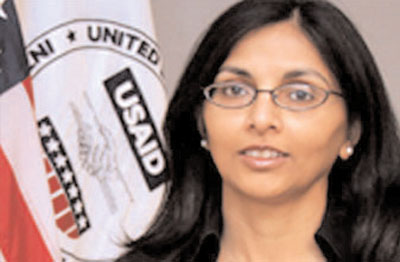
    WASHINGTON (TIP): US state department’s heavy hitter for India will be an Indian origin bureaucrat, Nisha Desai Biswal, a first for both the community and the administration. President Barack Obama on Thursday, July 18, sent a proposal to the senate to appoint Biswal assistant secretary of state for South Asia, top US diplomat for India.

    If confirmed Biswal will replace Robert Blake, an impossibly gangly career diplomat who liked to joke at India-US events his speeches were almost always the same as Indian ambassador’s. Biswal’s appointment was welcomed by the Indian American community, its experts and non-experts. “Great news … she is a terrific role model,” said a Facebook post.

    “This is a landmark appointment for Indian- Americans, the first time someone from the community has been chosen for the top diplomatic job dealing with South Asia,” said Sadanand Dhume, an Indian origin expert with conservative think tank American Enterprise Institute. “Nisha Biswal is an excellent choice for the position. She’s well-informed about the region and has many friends and admirers in both the executive and legislative branches of government.”

    Biswal is currently assistant administrator for Asia at the US Agency for International Development (USAID), a position she has held since September 2010. At USAID, her boss was administrator Raj Shah, another Indian American. who remains the senior most Indian American in the Obama administration. From 2005 to 2010, Biswal was the Majority Clerk for the State Department and Foreign Operations Subcommittee on the Committee on Appropriations in the House of Representatives.

    Biswal and her husband Subrat Biswal have two daughters. The position of assistant secretary of state – roughly the equivalent of additional secretary – is a crucial one, with responsibilities including Bangladesh and Sri Lanka. It wasn’t clear from the White House announcement if she would also hold charge of Central Asia, as was Blake’s brief, along side South Asia. She would most likely. But South Asia will not include Pakistan and Afghanistan, which have been entrusted to a special representative since the creation of that office in 2008, with Richard Holbrooke in charge.

  • No Ground To Stand On

    No Ground To Stand On

    Race has once again torn a deep gash through the conscience of the United States. Protesters took to the streets across the U.S. this week after a Florida jury acquitted a gun-toting “neighborhood watch officer” of second-degree murder despite his shooting dead an unarmed 17- year-old African-American, Trayvon Martin, in February last year.

    The decision to set George Zimmerman free raises troubling questions about whether this multiracial nation can ever transcend its painful history of slavery and ugly, persisting racial hatred. There are two aspects of this polarizing case that matter to the debate. The first relates to the limitations of the criminal justice system stemming from the formidable legal protections that many U.S. States have instituted favoring ultra-liberal gun ownership rights.

    The success of conservative lobbies in hectoring into law some version of the “Stand Your Ground” provision in Florida and 33 other States has hobbled the prosecution of ‘white on black’ gun crimes. In Florida, Stand Your Ground imposed no legal duty upon Mr. Zimmerman to retreat, but granted the right to apply deadly force if he “reasonably believed” that it was necessary to prevent his death or bodily harm.

    Further, the Florida police anticipated Mr. Zimmerman’s sound legal standing under the aegis of this law and refused to arrest him for an astonishing 44 days after the killing, until a major national campaign forced their hand. By that time, however, some evidence was lost. When the judge banned prosecution lawyers from describing Mr. Zimmerman’s intention in going after Mr. Martin as “racial profiling,” acquittal was all but certain.

    The second undercurrent – and one that President Barack Obama’s call for post-verdict calm conveniently sidestepped – is the deeper narrative of crime and punishment in the U.S., which is intimately interwoven with the fabric of racism and manifested in everything from capital sentencing to incarceration rates. What about Mr. Martin’s right to stand his ground as he faced down his abuse-hurling stalker? If the roles were reversed, would an armed African-American man have faced the same odds of acquittal? The statistics behind this sort of encounter would terrify any African-American parent.

    According to data compiled by the Malcolm X Grassroots Movement, an African-American is killed by state-sanctioned violence every 28 hours. In 2012 alone 313 African-Americans were reportedly killed by the police, security guards and vigilantes, most of whom got off lightly. The message that emerged from this verdict was only one: if you’re African-American and are set up against someone who isn’t, then there is literally not a square inch of ground for you to stand on.

  • US Gov’t Reports $116.5 Billion Surplus In June

    US Gov’t Reports $116.5 Billion Surplus In June

    WASHINGTON (TIP): The federal government on july 11 reported a rare surplus of $116.5 billion in June, the largest for a single month in five years. The gain kept the U.S. on track for its lowest annual deficit in five years. The June surplus was due in part to $66.3 billion in dividend payments from Fannie Mae and Freddie Mac.

    The mortgage giants were taken over by the government at the height of the 2008 financial crisis and are now repaying taxpayers for the support they received. Through the first eight months of the budget year, the deficit has totaled $509.8 billion, according to the treasury. That’s nearly $400 billion lower than the same period last year. The Congressional Budget Office forecasts the annual deficit will be $670 billion when the budget year ends on Sept. 30.

    If correct, that would be well below last year’s deficit of $1.09 trillion and the lowest since President Barack Obama took office. It would still be the fifth-largest deficit in U.S. history. The Obama administration also estimates a lower annual deficit, although it projects a slightly higher figure of $759 billion. Steady economic growth and higher tax rates have boosted the government’s tax revenue this year.

    At the same time, government spending has fallen. The dividend payments from Fannie and Freddie have also helped. The government has collected $2.09 trillion in revenue so far this budget year, according to the June report. That’s 14% more than the first eight months of the previous budget year. It has spent $2.6 trillion so far, or nearly 5% less than the same stretch last year. The decline partly reflects the impact of the automatic spending cuts that began in March.

    Defense spending is down 7%. A better job market has also helped lower spending for unemployment benefits almost 25%. Interest payments on debt are 4% lower than the same period last year. The improvement reflects the break the government is getting from recordlow interest rates. But those payments will rise in coming years as the Federal Reserve allows interest rates to return to more normal levels.

    The federal deficit represents the annual difference between the government’s spending and the tax revenues it takes in. Each deficit contributes to the national debt, currently $16.7 trillion.

  • Obama, Bush Leap Into US Immigration Fight

    Obama, Bush Leap Into US Immigration Fight

    WASHINGTON (TIP): President Barack Obama and former President George W Bush are leaping into the immigration debate, but their attempts to add momentum to the search for a possible path to citizenship for millions face strong opposition in the Republican-controlled House of Representatives.

    As Bush delivered a rare political speech on Wednesday in favor of immigration reform and Obama prepared for a bipartisan meeting with prominent senators at the White House, Republicans who control the House bluntly challenged Obama and appeared unimpressed by Bush’s advice to carry a “benevolent spirit” into the debate. Emerging from a closed-door meeting, Republican leaders affirmed a step-by-step approach to immigration but offered neither specifics nor a timetable — nor any mention of possible citizenship for an estimated 11 million immigrants living in the US unlawfully.

    Lawmakers streaming out of the twohour meeting said Bush’s long-distance advice had not come up in a discussion that focused instead on the importance of securing the US borders and a general distrust of Obama. The meeting in the Capitol was the House Republicans’ first such gathering since the Senate approved sweeping legislation last month on a bipartisan vote of 68-32.

    Obama is to meet on Thursday with two authors of the Senate measure, Republican John McCain and Democrat Chuck Schumer, in the president’s Oval Office. The legislation faces a steep challenge in the House, and the former president’s ability to sway a new generation of conservatives was a matter of considerable doubt, especially because many of the conservative tea party movement-backed lawmakers have risen to power since he left the White House and are strongly on record in opposition to any citizenship provision.

    “We care what people back home say, not what some former president says,” declared Rep. Tim Huelskamp, a second-term Republican who has clashed with the party leadership in the House. Still, the timing and substance of Bush’s remarks were reminders of the imperative that many national party leaders feel that Republicans must broaden their appeal among Hispanic voters to compete successfully in future presidential elections.

    Obama took more than 70 percent of their votes in winning a second term last year. “America can be a lawful society and a welcoming society at the same time,” Bush said at a naturalization ceremony at his presidential library in Dallas. For their part, Democrats quickly embraced the former president’s message, challenging House Speaker John Boehner to proceed in the same spirit.

    In a written statement noting that the White House recently delayed a key part of Obama’s health care reform law, Boehner and other leaders said that action raised concerns that the administration “cannot be trusted to deliver on its promises to secure the border and enforce laws as part of a single, massive bill like the one passed by the Senate.” Lawmakers said after the session there was strong support for a bill to create a path to citizenship for immigrants who were brought to the country as children illegally by family members, an idea advanced by Majority Leader Eric Cantor.

    Republican Rep. Robert Goodlatte, chairman of the House Judiciary Committee, said his panel would soon begin work on legislation covering that group. Several members of the rank and file said Republican Paul Ryan had made a particularly strong appeal for a comprehensive approach, which includes possible citizenship for the 11 million. But others emphasized there was virtually no support for the Senate’s approach of one sweeping measure that dealt with immigration in all its forms.

  • US Set To Deliver F-16s To Egypt: Officials

    US Set To Deliver F-16s To Egypt: Officials

    WASHINGTON (TIP): The United States is pressing ahead with plans to deliver four F-16 fighters to Egypt despite a military coup against President Mohammed Morsi, a US official said. “It’s still the status quo,” the official, who spoke on condition of anonymity, told mediapersons. There was no decision to halt the scheduled transfer of the warplanes or to cut off other security assistance to Egypt, the official said, even though the US government has announced a review of all aid to Cairo.

    President Barack Obama’s administration has said it is examining whether the military takeover constitutes a coup, which under US law would force Washington to freeze any aid to Egypt. The state department said previously planned assistance would continue to flow to Egypt. “We’re still paying our bills, of course, and all of the programs are still moving forward,” spokeswoman Jen Psaki told reporters.

    The Pentagon said it remains dedicated to maintaining longstanding military ties with Egypt and that the United States wants to see a prompt return to civilian, democratic rule. “Looking forward, we will work with the Egyptian people to support a quick and responsible return to a sustainable, democratically elected civilian government,” the Pentagon said in a statement.

    “Given the events of last week, the president has directed relevant departments and agencies to review our assistance to the government of Egypt.” The F-16s are part of an arms deal with Egypt approved in 2010 that calls for the supply of 20 of the fighter jets. Eight of the warplanes were delivered earlier this year and four more are scheduled to be delivered in August, with another eight due later in the year, officials said.

    Egypt has received more than 220 F-16 fighters since 1980 and has the world’s fourth largest F-16 fleet, behind the United States, Israel and Turkey. With Egypt gripped by intense political turmoil, the Obama administration has relied on the US military’s deep ties with the Egyptian armed forces as its main channel for diplomacy and communication. Since July 2, defense secretary Chuck Hagel has had eight phone conversations with Egyptian army chief General Abdel Fattah al-Sisi, including one that lasted 45 minutes, Pentagon spokesman George Little told reporters.

    “We believe that it’s appropriate to use this important channel we have with the Egyptians to convey our insights, thoughts and our views on the situation that’s occurring in Egypt,” Little said on july 10. The United States provides $1.5 billion of mostly military aid to Egypt every year.

  • Could Taliban Talks Lead To Partition Of Afghanistan?

    Could Taliban Talks Lead To Partition Of Afghanistan?

    The big question for the Afghans is: what happens in the long term? What will Kabul require to maintain the Afghan form of security and peace after the US/NATO troops leave, or will Afghanistan willy-nilly pitch itself right into yet another bloodletting civil war – like what followed the Soviet troop withdrawal in 1989? “, says the author.
    The much-expected talks between the Taliban and the United States in Doha have not yet begun, and there is no clear indication when the two parties, busy settling their list of pre-negotiation do’s and don’ts, will finally sit down to discuss the features of post-2014 Afghanistan and determine role of various parties in the future. Meanwhile, some within Afghanistan have expressed concern that if indeed talks progress between the Taliban and the Americans, it may lead to the partition of Afghanistan.

    As of now it seems that one important party, the Government of Afghanistan led by President Hamid Karzai, has suspicions that the Americans are working toward allowing the Taliban to carve out some territory of its own as part of the so-called solution to the Afghan imbroglio, and has remained unwilling to participate in these talks. President Karzai demands Afghan-to- Afghan talks unfettered by the presence of foreigners – particularly those who invaded, fought the Taliban unsuccessfully for more than a decade, and are now looking for a conditional getaway.

    President Karzai’s hard stance may change. After all, he also knows that he will have to depend on these foreigners’ money to keep Kabul secure after the 100,000-plus foreign troops leave Afghanistan by mid-2014. What happens next? However, these are short-term logistical problems. What is certain at this point is that the vast majority of foreign troops will leave Afghanistan according to the timetable set by US President Barack Obama.

    The big question for the Afghans is: what happens in the long term? What will Kabul require to maintain the Afghan form of security and peace after the US/NATO troops leave, or will Afghanistan willy-nilly pitch itself right into yet another bloodletting civil war – like what followed the Soviet troop withdrawal in 1989? At that time, the Afghan strongman Najibullah, a friend of the Soviets and a gritty Pushtun, had held on to power for almost five years fighting various Mujahideen groups.

    Most of those groups were propped up by the West, the Saudis and Pakistan in the 1980s using “Islamic Jihad” as the battle cry to fight the Soviet military. After the Soviets left, some of these groups continued to receive active Pakistani help to topple Najibullah, then the Afghan symbol of the godless Soviets. The question is: Will the withdrawal in 2014 usher in the same players that we saw in 1989, killing at random to get control of Kabul? Who knows? The current tiff between Kabul and Washington that is receiving attention in the mainstream media is part of a power play in progress between President Karzai and the United States.

    This, too, will pass. But what is not certain is what the talks will in fact bring in. Will they bear the fruit that the Obama administration is hoping for? Max Fisher of the New York Times noted that the so-called peace talks are already on shaky ground for three reasons. First, on the same day Washington announced the opening of “peace talks,” the Taliban claimed responsibility for an attack that killed four Americans.

    Second, Afghan President Hamid Karzai announced he was no longer planning to participate in either the talks or a separate troop-level negotiation with the United States. And, third, the Taliban’s new office in Doha flew a banner labeled “Islamic Emirate of Afghanistan” and a flag from its days of ruling the country. “All three are individually bad signs that represent much larger challenges for peace in Afghanistan,” said Fisher.

    “In some ways, though, it’s the flag that’s most serious” (“The ultimate symbol of why Afghan peace talks will be so difficult,” Max Fisher, New York Times, June 19, 2013). Maybe Fischer is overstating here. This little summer thunderstorm may pass in no time. But, the problem is that even if the talks turn out to be “successful,” will that be any good for the Afghans? There is no reason to believe that President Obama is losing sleep over that.

    As far as he is concerned, a peaceful withdrawal from Afghanistan – unlike the kind of withdrawal from Vietnam that resembled so starkly the fearful retreat of a defeated military – is all that he cares about, even if that means supping with the devil. All the rest of the verbiage that comes out of Washington is rhetoric.

    Appeasing the Taliban? That, however, also means that Washington needs to keep the Taliban in good humor, and that means allowing the group to have some sort of authority in Kabul when the foreigners are gone – or, most of them. There is a distinct possibility that the upcoming talks will include this as an important item. Some in Washington have long claimed that the Taliban is not really that bad.

    In a December 2011 interview with Newsweek/Daily Beast, US Vice President Joseph Biden said as much. “We are in a position where if Afghanistan ceased and desisted from being a haven for people who do damage and have as a target the United States of America and their allies, that’s good enough. That’s good enough. We’re not there yet,” said Biden. “Look, the Taliban per se is not our enemy. That’s critical,” he insisted.

    “There is not a single statement that the president has ever made in any of our policy assertions that the Taliban is our enemy because it threatens US interests…” What Biden says is clear. The United States has zero problem with the Taliban. But it has loads of problems with the al- Qaeda. In Afghanistan, however, those problems have been mostly resolved.

    In fact, Washington claims that it has virtually decimated al-Qaeda – the real bad guys – and the upcoming deal with the Taliban will include the condition that the Taliban cannot allow al-Qaeda to set up shop in Afghanistan once again. If all these negotiating points work out, the Taliban could have a legitimate presence in Kabul.

    Some in Afghanistan claim that long before that becomes a reality, talks with the Taliban – who have a put up a plaque in Doha claiming themselves to be the representatives of the “Islamic Emirate of Afghanistan,” as opposed to the citizens of the Islamic Republic of Afghanistan, the actual name of the Afghan Government – will pave the way for partition of Afghanistan.

    Afghanistan’s Weesa Daily, in its June 19 editorial referring to these developments, said attention should be paid to several major points: First, the opening of the office is an understanding between the Taliban and the United States, and the Taliban now think that US forces in Afghanistan have been defeated and are escaping while the US considers how to leave the ongoing war to Afghans so that it can merely watch.

    If there is no crisis following President Karzai’s term and if peace talks advance as planned, the Taliban, according to their recent statement, will hold talks with all involved sides. But, notes Weesa Daily, “these talks of the Taliban with all involved sides would resume based on the plans suggested by US Senator Dana Rohrabacher and US Vice- President Joe Biden, who have suggested Afghanistan’s division – which may result in civil war.”

    Partition of Afghanistan? Well, US Vice President Biden has talked about the “soft partition” of Iraq, but never about the partition of Afghanistan; while Congressman (not Senator) Rohrabacher has participated in deliberations where partition/decentralization of Afghanistan was addressed as an issue. But before Rohrabacher got into the act, former US Ambassador to India and US National Security Council Deputy for Iraq (2003-2004) Robert Blackwill, a neo-con, had identified the partition of Afghanistan as Plan B.

    In a July 2010 article in Politico, Blackwill was highly critical of the Karzai administration (“Afghan President Hamid Karzai’s deeply corrupt government – as unpopular as the Taliban – shows no sign of improvement”) and implied that the “corrupt governance” of Kabul was the prime reason behind US/NATO’s failure to “win” the war in Afghanistan. He called for a ‘de facto partition’ of Afghanistan and urged the Obama administration to “accept that the Taliban will inevitably control most of its historic stronghold in the Pashtun south.”

    But, Blackwill added, “Washington could ensure that north and west Afghanistan do not succumb to jihadi extremism, using US air power and special forces along with the Afghan army and likeminded nations.” Blackwill also stated: “Given the number of US combat forces now fighting, the Taliban cannot be sufficiently weakened in Pashtun Afghanistan to drive it to the negotiating table on any reasonable timeline. True, the Afghan Pashtun are not a unified group. But they do agree on opposing foreign occupation and wanting Pashtun supremacy.”

    In January 2012, Chairman of the Europe, Eurasia, and Emerging Threats Subcommittee of the US House Foreign Affairs Committee Dana Rohrabacher (RCalifornia) went to Berlin at the head of a bipartisan congressional group represented by Reps. Louie Gohmert (R-Texas), Steve King (R-Iowa) and Loretta Sanchez (DCalifornia).

    In Berlin, the delegation met with well-known National Front leaders such as Ahmed Zia Massoud, chairman of the National Front [Jebha-e-Melli]; General Abdul Rashid Dostum, leader of the National Islamic Movement of Afghanistan [Jumbesh-e-Milli]; Haji Mohammad Mohaqiq, leader of the People’s Unity Party of Afghanistan [Hezb-e Wahdat-e Mardom]; and Amrullah Saleh, former director of the Afghan National Security Directorate.

    Together, they had signed a document advocating major changes in the Afghan constitution, designed to create a federal system which would devolve power from the centre to the provinces. Of the existing governmental arrangements in Afghanistan they had the following to say: “The current system has fatally concentrated decision-making to whoever is president of the country. The Afghan president appoints the governors of each province and district, the mayor of every town, every provincial chief of police, one third of the entire Senate, and even every judge in Afghanistan.”

    “This centralized power has led to massive corruption, disenfranchisement of a large segment of the Afghan people, obstacles to economic development, massive abuses of power, increasing political instability, poor governance, and a vast undermining of law and order.” Almost instantly Kabul reacted sharply to the statement. In April 2012, Rep. Rohrabacher was stopped in Dubai as he was leading a delegation to Kabul.

    Officials say that while the other members of the delegation had visas for Afghanistan, Rohrabacher was denied a visa. Afghan officials had told the BBC that in addition to his criticisms of the president, Rohrabacher was being shunned because of meetings he had held in Berlin with Afghan politicians about the creation of a decentralized form of government.

    According to the BBC, Afghan officials viewed that as tantamount to interference in the country’s internal affairs. “Anyone who speaks against the good of Afghanistan and tries to interfere in our internal affairs is ineligible for an Afghan visa,” one official told the BBC. Though strong, President Karzai’s reaction was not impulsive. At the time of the Berlin meetings – in fact, two meetings took place over three days (Jan. 9-11) – he had made known his discontent.

    Given the lack of clarity in the US strategy on Afghanistan, Karzai had every reason to suspect that the Berlin outcome could become the official strategy one day, particularly since Blackwill had already called for a ‘de-facto partition’ of Afghanistan a few months before. According to available reports, there was also another reason why President Karzai reacted so sharply.

    Accompanying Rohrabacher and the three other representatives was an American confidant of Gen. Dostum, Charles Santos. Santos, who had been advocating the concept of federalism and the powerful role of democratically elected local and regional governments in Afghanistan through various articles, was not listed among the participants in Berlin.

    President Karzai might have wondered: what was that all about? Reports indicate that an angry President Karzai personally called the German Foreign Office, though the meeting was already over, and leaned on then US Ambassador Ryan Crocker to de-legitimize the Berlin proceedings. On Jan 10, Ambassador Crocker issued a short statement, titled “The United States Supports Afghan Unity.”

    The statement said: “In response to recent press [sic] reports, the US Embassy reaffirms the longstanding support of the United States for a unified Afghanistan based on the Afghan Constitution. Any assertions to the contrary are entirely without foundation. Reconciliation and the political process in Afghanistan are led by the elected government and the Afghan people.

    Any statement to the contrary is inaccurate.” Subsequently, at a Jan. 21 press conference in Kabul, then-US Af-Pak envoy Marc Grossman made efforts to cool down the Afghan president by reiterating that a peace deal could only be negotiated by Afghans and would not be hijacked by US officials, despite current appearances to the contrary. It is evident from many reactions within Afghanistan that the Afghans do not want partition of their country, and some news editorials express fear that the Taliban-US talks could lead to just that.

    Afghan analysts point out that the country suffered the pains of partition when the British Raj drew a border (known as the Durand Line) between Afghanistan and then British- India in 1893. The aim of that partition was to divide and weaken the Afghan tribes. More than a century later, the Durand Line remains one of the most disputed borders in the world. Further, Afghans rightly note that during the past three decades, Afghanistan has had no functioning government, yet nonetheless remained united against foreign invasions.

    Except for two or three of the country’s 33 provinces, each province has a distinct ethnic mix; and, perhaps because of this phenomenon, separatism has never raised its ugly head in Afghanistan. During Afghanistan’s civil war in the early 1990s, when a fierce internal competition for control of Kabul was raging, no ethnic group and no warlord ever called for partition. The anti-Soviet resistance in the north remained always as strong as in the south.

    “And let’s not forget that there are millions of Pushtun in the north as well,” as one analyst pointed out. In other words, should Washington try to partition Afghanistan to provide the Taliban a permanent home and hope that will prevent an all-out civil war, it might ensure US troops a peaceful retreat; but it could also lead to huge opposition within Afghanistan, triggering a civil war.

  • 6 Indian-American kids’ culinary skills feted at White House

    6 Indian-American kids’ culinary skills feted at White House

    WASHINGTON (TIP): Six Indian-American kid chefs have been honored for their fabulous culinary skills by US First Lady Michelle Obama at the White House’s “Kids State Dinner” as part of her initiative to tackle obesity and promote healthy eating among American children.

    Anisha Patel from Ohio, Ganesh Selvakumar from Pennsylvania; Devanshi H Udeshi from Texas; Emma Scielzo from Maryland, Vijay I Dey from North Carolina and Shefali Singh from Massachusetts were among 54 children invited by the First Lady for the event at the White House yesterday where they also had a chance encounter with President Barack Obama. “Now, first of all, usually at a state dinner, I get invited.

    So I don’t know what happened on this one — somehow the invitation slipped through somewhere. But it looks like you guys are having fun,” the President said amid laughter. Selected from over 13,000 contestants nationwide, the six Indian Americans probably constituted the largest number of kids from any ethnic group. So far, Indian Americans have been known for winning various science and math competitions and those like Spelling Bee and Geography Bee.

    “And we’re really proud of you winning this challenge — because, frankly, I’m not a great cook and — I’m not bad, but I don’t do it that much. Its hard to find the time,” the President said. “But when I do cook, I’m following a recipe.

    And to think that all of you have invented all this fabulous food just shows how creative you are and it shows that food that tastes good can be healthy, too,” Obama said. 10-year old Emma Scielzo, a third generation Indian American who attributes her winning recipe of “Chicken Masala Wrap” to her Indian grandparents who immigrated to the US several decades ago from Punjab, was one of three children who were selected to shoot short cooking videos.