Tag: Barack Obama

  • Us Senate Oks Bill To End Air Traffic Control Furloughs

    Us Senate Oks Bill To End Air Traffic Control Furloughs

    WASHINGTON (TIP): The Senate approved hurry-up legislation on Thursday night to end air traffic controller furloughs blamed for inconveniencing large numbers of travelers as flight delays mounted. A House of Representatives vote on the measure was expected as early as Friday, with lawmakers eager to embark on a weeklong vacation. For the White House and Senate Democrats, the discussions on legislation relating to one relatively small slice of the $85 billion in automatic spending cuts that took effect last month after Washington failed to reach a long-term deal to rein in deficit spending.

    But it marked a shift in position in a long-running struggle with Republicans over budget issues. Similarly, the turn of events marked at least modest vindication of a decision by Republicans in the House of Representatives last winter to finesse some budget struggles in order to focus public attention on the across-the-board cuts in hopes they would gain leverage over President Barack Obama. Under the legislation, the Federal Aviation Administration would gain authority to transfer up to $253 million from accounts that are flush into other programs, to “prevent reduced operations and staffing” through the Sept. 30 end of the fiscal year. In addition to restoring full staffing by controllers, Senate officials said the available funds should be ample enough to prevent the closure of small airport towers around the country.

    The FAA has said it will shut the facilities as it makes its share of $85 billion in across-the-board spending cuts that took effect last month at numerous government agencies. The Senate acted as the FAA said there had been at least 863 flights delayed on Wednesday “attributable to staffing reductions resulting from the furlough.” There was no immediate reaction at the White House, although administration officials participated in the negotiations that led to the deal and evidently registered no objections.

    Senate approval followed several hours of pressure-filled, closed-door negotiations, and came after most senators had departed Congress on the assumption that the talks had fallen short. Officials said a small group of senators insisted on a last-ditch effort at an agreement before Congress adjourned for a vacation that could have become politically problematic if the flight delays continued. The Professional Aviation Safety Specialists, a union that represents FAA employees, reported a number of incidents it said were due to the furloughs.

    In one case, it said several flights headed for Long Island MacArthur Airport in New York were diverted on Wednesday when a piece of equipment failed. “While the policy for this equipment is immediate restoral, due to sequestration and furloughs it was changed to next-day restoral,” the union said. It added it was “learning of additional impacts nationwide, including open watches, increased restoration times, delays resulting from insufficient funding for parts and equipment, modernization delays, missed or deferred preventative maintenance, and reduced redundancy.” The airlines, too, were pressing Congress to restore the FAA to full staffing. In an interview Wednesday, Robert Isom, chief operations officer of US Airways, likened the furloughs to a “wildcat regulatory action.” He added, “In the airline business, you try to eliminate uncertainty.

    Some factors you can’t control, like weather. It (the FAA issue) is worse than the weather.” In a shift, first the White House and then senior Democratic lawmakers have signaled a willingness in the past two days to support legislation that alleviates the budget crunch at the FAA, while leaving the balance of the $85 billion to remain in effect. Obama favors a comprehensive agreement that replaces the entire $85 billion in across-the-board cuts as part of a broader deficit-reduction deal that includes higher taxes and spending cuts.

  • Transition in Afghanistan: A War of Perceptions

    Transition in Afghanistan: A War of Perceptions

    Abstract:
    A decade after the military intervention that dislodged the Taliban-Al Qaeda combine, peace and stability continues to elude Afghanistan. There is still no consensus in Western capitals on what constitutes the ‘end-state’ in Afghanistan. The Western public’s frustration with a long-drawn war has coalesced with the global economic slowdown, the Euro crisis and the pressures of electoral campaign politics in the United States – thereby complicating the efforts for the long-term stabilization of Afghanistan. Premature announcements of exit and dwindling financial assistance have added to the Afghan anxieties of being ‘abandoned’ once again. This paper brings to light the divergent perceptions among the key stakeholders in Afghanistan and in the international community (IC) on the trajectory of the ‘inteqal’ (transition) process. The paper argues that the war in Afghanistan is essentially a war of perceptions on progress made thus far. This widening gap in perceptions is bound to complicate the transition and long term stabilization process
    The Af-Pak Strategy, Surge & Exit
    President Barack Obama, in emphasizing on a renewed focus and more resources to the ‘good war’ in Afghanistan, announced a troop surge in his speech at West Point on 1 December 2009. Along with the surge, by setting the end of 2014 as the date for drawdown of forces, he ended speculations of the United States’ intent in that country and at the same time provided some clarity to his domestic constituency.

    It assuaged the concerns of the civilian team, led by Vice-President Joe Biden who had opposed the military commanders’ (General Stanley McChrystal and General David Petraeus) request of deploying additional troops for a population-centric counter-insurgency (COIN) campaign. However, the announcement of a date of drawdown sent a different message to the ‘friends and foes’ in the region. While it evoked concerns particularly among the Afghans, the message fed into the propaganda of the Taliban-led insurgency. The US Secretary of Defense Leon Panetta exacerbated the situation in early 2012 by stating that the transition process could be completed by 2013, a year earlier than 2014. Likewise, calls for early withdrawal by NATO allies have further added to the concerns inside Afghanistan and the region.

    Although the declaration arrived at the 2010 Lisbon summit had stated that the ‘transition will be conditions-based, not calendar-driven, and will not equate to withdrawal of ISAF-troops’, there was a perceived turn around at the Chicago Summit in May 2012. President Obama and the NATO leaders agreed to end their role in the Afghan war, stating it is time for the Afghan people to take responsibility for their own security and for the US-led international troops to go home. The Summit decision called for the beginning of full transition in all parts of Afghanistan by mid- 2013 and the Afghan forces taking the lead for security nation-wide.

    As per the plan, the ISAF will gradually draw down its forces to complete its mission by 31 December 2014. Such hasty announcements of early troop drawdown, largely perceived as ‘exit’, have been the source of obvious concerns inside Afghanistan, especially when the insurgency is perceived to be growing in strength and the capacity of the Afghan National Security Forces (ANSFs) to withstand the insurgent onslaught remains suspect. Analysts in the West posit that the withdrawal of Western forces, in such a situation, would lead to a collapse of the evolving security system. Others point out that transition will either fail or be determined by Afghanistan’s internal dynamics and the role of regional states, regardless of what the US, Europe, and other aid-donors do.

    Amid such pessimistic assessments, the talks and attempts of actualizing an effective transition and stabilization process appear to be a mere lip service. It is, thus not surprising that Afghans view the inteqal (transition) process as a last opportunity for the international community to set the course right in their country.

    The paper is an exercise at stock-taking of the ground realities vis-a-vis the varying perceptions among the Afghans and the international community on the progress and challenges for Afghanistan’s transition and long-term stabilization. While the West in its haste to ‘exit’ wants to demonstrate progress, there remain concerns on the ground on the fragility of these achievements. The Afghans, while acknowledging progress, seek longer international commitment to address the grey areas that could undermine gains achieved thus far. More importantly, ‘unity of effort’ and an appropriate strategic communications strategy is imperative to address this widening perception gap. Unlike pessimistic analyses that predict a return of the Taliban in post-2014 Afghanistan, the paper argues against such possibility.

    The paper highlights the tangible gains made in the security, political, governance and economic sectors during the decade-long international presence in the country and also, the areas where gains remain fragile and reversible. Unless unified effort is made to shore up the state and institution building processes before the drawdown date of 2014, the dangers of reversal are imminent resulting in a civil war (worse case scenario) or the continuation and intensification of chaos and instability (stalemate), with the external power interventions and the regional proxies further exacerbating the internal-external conflict dynamics (internecine warfare).

    The Evolving Security Situation and the Taliban led Insurgency Afghanistan continues to encounter a fragile security situation.
    While the 2010 troop surge achieved notable security gains on the ground, analysts argue that such gains are reversible and almost un-sustainable by the ANSFs alone. According to the drawdown plan, the additional troops of 33,000 have been withdrawn in September 2012 leaving behind 68,000 US troops in the country. As the debate on the usefulness of the surge continues, the US-Afghan Strategic Partnership Agreement signed on 1 May 2012 has ensured a minimal troop presence (20- 30,000) for limited counter-terrorism, train and assist mission. While the security situation is said to have improved in south-western Afghanistan, eastern Afghanistan, primarily provinces of Paktika, Paktia, and Khost (known as the P2K region), bordering Pakistan’s Federally Administered Tribal Areas (FATA), and area of operations of the Haqqani Network, remain deeply insurgency infested. The campaign of violence by the insurgents has been lethal and continues to sap the nascent institutions of the Afghan state.

    By employing asymmetric tactics with increasing use of improvised explosive devices (IEDs) and suicide bombers, the insurgents have managed to keep the levels of troop deaths high. High-profile attacks on symbolic targets like the Intercontinental hotel in Kabul (June 2011), British Council (August 2011), the American embassy (September 2011), Kabul Star Hotel (April 2012), Qargah attack (June 2012), Camp Bastion (September 2012) demonstrate their deep strike capability and intent to garner instant and worldwide media attention. The Taliban have adopted brutal tactics of violent retribution and intimidation of the population, targeting those deemed to be associated with, or sympathetic to, the government.

    This strategy witnessed rampant killing and abduction of government officials, aid workers, teachers, religious and tribal leaders. . Systematic targeting and elimination of power brokers, government officials and police chiefs in 2011 added new set of complexities and raised the specter of civil war in the north. Likewise, elimination of key government officials and power brokers in the South, has led to a power vacuum in the Pashtu areas. The Taliban have established shadow governments in areas where the writ of the Afghan government was limited or nonexistent. Much of the insurgent strength is derived from the sense of safety the insurgents are accorded across the Durand line, within Pakistan. Taliban recruits and enjoys safe havens in that country.

    The Pentagon’s April 2012 report to Congress on Security and Stability in Afghanistan stated that despite progress, international efforts to stabilize the country ‘continued to face both long-term and acute challenges’. ‘The Taliban-led insurgency and its Al Qaeda affiliates still operate with impunity from sanctuaries in Pakistan,’ the report said. ‘The insurgency’s safe haven in Pakistan, as well as the limited capacity of the Afghan Government, remain the biggest risks to the process of turning security gains into a durable and sustainable Afghanistan’, it added. The heightened tensions between Pakistan and the US over the assassination of Osama bin Laden by American Special Forces in the garrison town of Abbottabad in May 2011 and the subsequent accidental killing of 28 Pakistani security forces during a NATO air raid in Salala in November 2011, the increase in drone strikes inside Pakistani territory, have added complexities and limited the scope of the counter-terrorism cooperation with Pakistan. This has also resulted in Pakistan being at the ‘margins’ in the evolving end game in Afghanistan.

    Security Sector Reform (SSR) and Preparedness of ANSF

    At the 2010 Lisbon Summit, NATO provided a road map to transfer security responsibility to the Afghans. The first tranche of provinces, districts, and municipalities, which has 25 per cent of Afghanistan’s population, was handed over to the Afghans in July 2011. The second and third tranches were announced in November 2011 and March 2012 respectively.While the second tranche put the Afghans in the lead of providing security for more than 50 per cent of the country’s population, with the beginning of the third tranche, 75 per cent of the Afghan population will be living in areas where the ANSF have lead security responsibility.

    As per the decisions arrived at the May 2012 Chicago Summit, full transition in all parts of Afghanistan will begin by mid- 2013. The natural corollary of the ANSF taking charge of the security of Afghanistan is a change in NATO mission – from combat to an advisory role. The shift to ‘train and assist’ mode has further compounded the complexities and brought to sharp focus the levels of preparedness of the Afghan forces for independent action. The contours of post- 2014 security assistance to Afghanistan will be mentoring, training, and funding the ANSF. Although numerically, both the Afghan National Army (ANA) the Afghan National Police (ANP) are impressive, with 194,466 troops and 149,642 policemen respectively, widespread reservations have been expressed on their capacities.Will the ANSF, product of a rushed, under-resourced and frequently revamped recruitment and training procedure, be able to deliver, remains a critical question.

  • Obama praises Indian-American student for her science project

    Obama praises Indian-American student for her science project

    WASHINGTON (TIP): US President Barack Obama has praised a 17-year-old Indian- American student for her science project at the third annual White House science fair here. “We’re so proud of you. Keep up the good work,” Obama said to Meghana Rao from Portland, Oregon, after she explained her project based on ‘biochar’ (charcoal) to the US president at the fair in which around 30 student teams from across the country exhibited their projects. American Natural History Museum Young Naturalist Award winner, Meghana, is a Jesuit High School student who-in addition to researching the ability of ‘biochar’ also directs a student-run nonprofit organization, Portland Junior Scientists (PJS).

    According to the White House, her organization connects high school students with underprivileged youths through collaborative hands-on science experiments, with the aim of inspiring all participants to pursue higher education. Meghana started PJS in 2011, after learning that severe budget cuts where forcing local elementary schools to cut back on science curricula. Through her organization, local students can attend weekly onehour after school science programs, participate in science fairs and attend summer science programs. “Her hard work helped her earn a 2013 Young Naturalist Award from the American Natural History Museum, and brought PJS $ 5,000 grant from the Pepsi Refresh Project and an USD 11,500 grant from the Case Foundation’s Finding Fearless program,” the White House said.

  • US man charged with threatening Obama, others

    US man charged with threatening Obama, others

    CORINTH, MISSISSIPPI (TIP): A man accused of mailing letters with suspected ricin to national leaders believed he had uncovered a conspiracy to sell human body parts on the black market and claimed “various parties within the government” were trying to ruin his reputation. Paul Kevin Curtis, 45, is charged with threatening President Barack Obama and others, according to a Thursday news release from the US department of justice. He is scheduled to appear in federal court on the two charges later on April 18, and if convicted could face up to 15 years in prison An affidavit says the letters sent to Obama, U.S. Sen.

    Roger Wicker and a judge in Mississippi told the recipients: “Maybe I have your attention now even if that means someone must die.” Curtis was arrested April 17 at his home in Corinth, Mississipi. Curtis had been living in Corinth, a city of about 14,000 in extreme northeastern Mississippi, since December, but local police had not had any contact with him prior to his arrest, Corinth Police Department Capt. Ralph Dance told The Associated Press on Thursday. Dance said the department aided the FBI during the arrest and that Curtis did not resist being taken into custody. Since Curtis arrived in the town, he had been living in “government housing,” Dance said. He did not elaborate.

    Police maintained a perimeter Thursday around Curtis’ home, and federal investigators were expected to search the house later in the morning, said local officers on the scene who declined to be identified. Four men who appeared to be investigators were in the neighborhood to speak to neighbors. There didn’t appear to be any hazardous-material crews, and no neighbors were evacuated. The material discovered in a letter to Wicker has been confirmed through field testing and laboratory testing to contain ricin, said Senate Sergeant-at-Arms Terrance Gainer.

    The FBI has not yet reported the results of its own testing of materials sent to Wicker and to President Barack Obama. “Our field tests indicate it was ricin. Our lab tests confirm it was ricin. So I don’t get why others are continuing to use equivocal words about this,” Gainer said. Preliminary field tests can often show false positives for ricin. Ricin is derived from the castor plant that makes castor oil. There is no antidote, and it’s deadliest when inhaled.

    The material sent to Wicker was not weaponized, Gainer said. An FBI intelligence bulletin obtained by The Associated Press said the two letters were postmarked Memphis, Tennessee. Both letters said: “To see a wrong and not expose it, is to become a silent partner to its continuance.” Both were signed, “I am KC and I approve this message.” The letters had Washington on edge in the days after the Boston Marathon bombing. As authorities scurried to investigate three questionable packages discovered in Senate office buildings on April 17, reports of suspicious items also came in from at least three senators’ offices in their home states. The items were found to be harmless. In addition, a Mississippi state lawmaker, Democratic Rep.

    Steve Holland, said Wednesday night that his 80- year-old mother, Judge Sadie Holland, received a threatening letter last week with a substance that has been sent to a lab for testing. He said this letter was also signed “K.C.” “She opened it herself” on April 11 and told Holland about it three days later, Holland said. He said she had not been to the doctor, but he planned to take her on April 18. “She’s fine,” Holland said. “She’s had no symptoms.” Curtis’ neighbors, who said he did not seem violent, were concerned about their safety on April 18 and worried by the idea that someone was making poison in a house that sits so close to their bedrooms and front yards.

  • Survivors Sought In Texas Fertilizer Plant Blast

    Survivors Sought In Texas Fertilizer Plant Blast

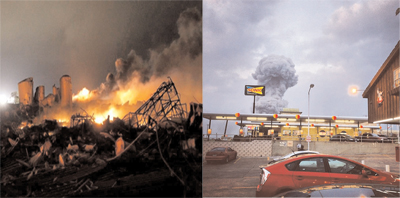
    WEST, TEXAS (TIP): Rescuers worked in cold rain on April 18 to find survivors amid the rubble of houses destroyed in a fiery explosion at a Texas fertilizer plant filled with hazardous chemical tanks. The death toll in West, Texas ranged from five to 15 people and was likely to change as rescuers went from house to house along the burned-out streets after the West Fertilizer Co. blew up on Wednesday night, said Sgt. William Patrick Swanton of the police department in nearby Waco. The cause of the fire and explosion, which occurred just before 8 p.m. and injured more than 160 people, was not known. Officials said no evidence of foul play had been found. The US Chemical Safety Board, a federal agency charged with investigating industrial chemical accidents, was on the scene, as was the Bureau of Alcohol, Tobacco, Firearms and Explosives.

    Firefighters had been battling a fire at the plant on Wednesday night for about 20 minutes before the blast rocked the town of 2,700 people about 20 miles north of Waco. Three to four volunteer firefighters were still missing, Swanton said. “They were actively fighting the fire at the time the explosion occurred,” he said at a news conference held in a cattle auction house, where cows lowed behind him. Swanton said the plant was storing huge tanks of anhydrous ammonia. Anhydrous ammonia is used by farmers as fertilizer to boost nitrogen levels in soil and increase crop production.

    According to the Centers for Disease Control, anhydrous ammonia and water produces a poisonous cloud. When ammonia mixes with air, it forms an explosive mixture, and containers may explode when heated, according to the CDC. The West plant is one of thousands of sites across rural America that store and sell hazardous materials such as chemicals and fertilizer for agricultural use, many within close range of residences and schools. Privately owned by 83-year-old Donald Adair, the company has fewer than 10 employees. The plant had not been inspected by state officials since 2006, when a complaint of an ammonia smell was resolved, said Zak Covar, executive director of the Texas Commission on Environmental Quality. State inspections are done only when there is a complaint, Covar said. The federal Environmental Protection Agency fined the firm $2,300 in 2006 for failing to implement a risk management plan. The plant’s owner could not be reached for comment.

    Fire, evacuations before blast
    The firefighters had been evacuating several blocks around the fire before the blast out of concern for dangerous fumes, Swanton said. That threat had abated, he said. In West, the middle school, which was badly damaged, was one fifth of a mile from the plant and the high school was one-third of a mile away.

    The blast destroyed 60 to 80 houses, reduced a 50-unit apartment complex to what one local official called “a skeleton standing up” and left a horrific landscape of burnedout buildings and blackened rubble. “Last night was truly a nightmare scenario,” said Texas Governor Rick Perry. “This tragedy has most likely hit every family.” Perry declared McLennan County a disaster area and said he would request federal disaster aid from President Barack Obama. Texas is no stranger to industrial disasters. In 1947, 3,200 tons of ammonium nitrate fertilizer detonated aboard a ship in a Texas City port, killing almost 600 people. It is believed to be the deadliest industrial accident in US history. More recently, a 2005 explosion at a BP refinery in Texas City killed 15 people and injured more than 170 others when hydrocarbon vapors exploded in a processing plant.

    The operation in West remained a search and rescue mission, Swanton said. “They have not gotten to the point of no return where they don’t think that there’s anybody still alive,” he said. He said rain and cooler temperatures were a concern. At early afternoon, the temperature was just 50 degrees Fahrenheit, or 10 degrees Centigrade. The average temperature for the area in April is closer to 67 degrees F. “With the temperature getting a little cooler, with the weather raining here – pretty significant rains came through – we certainly want to find folks,” he said. Bodies had been taken to a nearby ball field and then a community center, he said. Officials said they had moved 133 people out of a nearby nursing home.

    If it was an industrial accident, investigators would look at whether firefighters ignited the blast by pouring water on a volatile substance. Nim Kidd, chief of the Texas Division of Emergency Management, said it was too early to speculate. “A lot of firefighters will use their No. 1 tool, which is water, in a hazardous materials chemical situation to cool the surrounding environment,” he told a briefing in Austin. Obama, who flew to Boston for a memorial service for victims of the Boston Marathon bombing, offered support and prayers to the victims in Texas. Three hospitals in Waco and Dallas reported treating more than 160 injuries from the blast. Ground motion from the blast registered as a magnitude 2.1 seismic tremor and created a jolt felt 80 miles away in Dallas, the US Geological Survey reported.

  • Gun background check compromise, assault weapon ban fail in Senate

    Gun background check compromise, assault weapon ban fail in Senate

    WASHINGTON (TIP): The centerpiece proposal on background checks in the proposed changes to a gun control bill failed to win enough support in the Senate April 17. The vote on the so-called Manchin-Toomey amendment was 54 in favor, 46 against – failing to reach the 60-vote threshold needed to move ahead. Four Republicans supported it, and four Democrats voted no. A controversial Democratic plan to ban dozens of military-style assault weapons was also defeated by a vote of 40 to 60.

    The votes were a setback for President Obama, who angrily blasted Republicans for defeating the background check compromise, saying “the gun lobby and its allies willfully lied about the bill.” “All in all, this was a pretty shameful day for Washington,” Obama said, promising that “this effort is not over.” A number of other amendments also failed to earn the 60 votes necessary to pass: A GOP proposal including a number of changes, 52 to 48; a bipartisan amendment to stiffen penalties for “straw purchasers,” 58 to 42; a GOP-backed amendment that would have permitted “national reciprocity” of state-issued concealed carry permits, 57 to 43; and a GOP plan to extend gun rights for veterans, including those deemed unable to manage their financial affairs, 56-44.

    The raw emotion of the background check amendment defeat played out in the Senate gallery just after Vice President Biden read the vote count. “Shame on you!” at least two women were heard shouting. “We’re sick and tired of the death in this country and these legislators stand up there and think it’s a bunch of numbers,” said Haas, whose daughter, Emily, was wounded in the April 2007 shooting at Virginia Tech. “It’s a shame, it’s appalling, it’s disgusting,” she added. The chief architects of the plan to expand the national gun background check system, Sens. Joe Manchin III (D-W. Va.) and Patrick Toomey (R-Pa.), acknowledged in interviews early Wednesday, April 17 that their proposal lacked sufficient support. After the vote, Toomey expressed regret, but said that it was time to move on. “I did what I thought was the right thing for our country.

    I sought out a compromise position that I thought could move the ball forward on an important matter of public safety,” he said in a statement, adding later, “We have a lot of other very important issues to deal with such as getting the economy back on track, dealing with the debt ceiling and creating more jobs for Pennsylvanians.” Before the voting began, Biden, who is leading the Obama administration’s gun control effort, sounded quite frustrated with misinformation being spread by opponents to the bipartisan compromise Wednesday.

    Speaking during a “Google Hangout,” Biden reiterated that the proposal would not create or lead to the creation of a federal gun registry. “Nothing can be further from the truth,” he said. Biden also dismissed suggestions that the measures would infringe upon people’s constitutional right to bear arms. “There is no – zero – no infringement on the Second Amendment, not one single thing being proposed,” he said. In the hours before the vote, Senate Majority Leader Harry M. Reid (D-Nev.) also attempted to rally last-minute support for the bill by issuing an ominous warning to his colleagues. “If tragedy strikes again…if innocents are gunned down in a classroom, theater or restaurant, I would have trouble living with myself as a senator, as a husband, a father, or grandfather and friend, knowing that I didn’t do everything in my power to prevent that incident,” Reid said. Shortly before the vote, Sen.

    John McCain (R-Ariz.) said he would support the background check plan, saying that while he was a staunch defender of Second Amendment rights, the bipartisan proposal is “not overly burdensome or unconstitutional.” “Is this a perfect solution? No. will it prevent all future acts of gun violence? Of course not,” McCain said. “Would it have prevented the most recent acts of gun violence? In all likelihood, no. But it is reasonable, and it is my firm conviction that it is constitutional.” Meanwhile, only one day after suffering defeat, Senate Majority Leader Harry Reid on Thursday, April 18, set aside President Barack Obama’s plan to curb gun violence but promised to keep searching for a compromise.

    Reid said Democrats would keep negotiating on the proposals, even though the Senate rejected all the vital elements of the legislation prompted by the December massacre of 20 children and six adults at a school in Newtown, Connecticut.

  • Looking East, Looking West: U.S. Support for India’s Regional Leadership

    Looking East, Looking West: U.S. Support for India’s Regional Leadership

    Today, I’d like to talk about India’s growing influence, felt in the East through its “Look East” policy and in the west, particularly as we move toward the transition in Afghanistan. I’ll highlight how India’s engagement in these areas is crucial to U.S. foreign policy objectives and our pursuit of a stable, secure and prosperous region. India’s leadership has powerful implications that extend beyond its immediate neighborhood – as a beacon of democracy, stability, and growth. India has much to offer all of us, including communities right here in Cambridge. Harvard University’s increased engagement with India, through events like this, through its South Asia Institute, its research center in Mumbai, President Faust’s 2012 visit to India, through over 1,500 Harvard alumni in India, as well as a myriad of research projects, academic collaborations and student and faculty exchanges, testify to India’s growing prominence and our recognition of its increasing importance in the global arena. Massachusetts, likewise, has become a pioneer in forging closer relations with this key partner.

    The State Department strongly champions and supports state-to-state and cityto- city engagement,which is now a vital part of advancing our economic and people-to-people relationships. This year alone, at least eight American Governors are leading trade and other missions to India, not only to develop new markets but to attract job-boosting investments. Massachusetts was an early pioneer: back in 1995,when then-Governor Weld announced plans to forge an alliance with Karnataka, such engagement was a novel concept and a new approach. Governor Weld had the foresight to know that those who didn’t pursue ties with India would miss out on the many rewards this relationship has to offer. His delegation, consisting of 22 U.S. companies, paved the way for numerous U.S. firms to open in and around Bangalore. Today, Massachusetts is one of India’s top 25 trading partners in the world, and last year India received nearly $300 million of this state’s exports. But I hardly need to tell this audience how critical the U.S.-India relationship is.

    Those of you involved in collaborations with India, particularly in academia and research, are fully aware of the benefits. But our bilateral partnership benefits not only our two nations; it is of vital importance to a global vision for a future of shared prosperity. During his visit to India in 2010, President Barack Obama recognized the promise of our shared future and hailed the U.S.-India relationship as “one of the defining partnerships of the 21st century.” We and our Indian friends have taken significant steps to realize that vision. We established a Strategic Dialogue chaired by the Secretary of State and External Affairs Minister to give strategic direction to the wide range of bilateral dialogues between our two governments. We have expanded counterterrorism cooperation, intelligence sharing, and law enforcement exchanges that have helped make both of our countries safer, but clear-eyed about the threats that persist. Bilateral trade has grown by 50% from $66 billion to $93 billion in the last four years and is set to cross $100 billion this year.

    Indian foreign direct investment in the United States increased from $227 million a decade ago to almost $4.9 billion in 2011 – investments that have created and support thousands of U.S. jobs. Another growing component of our bilateral relationship with India is defense trade. Since 2000, sales to India have surpassed $8 billion, representing both an excellent commercial opportunity for U.S. companies but also advancing a vital component of our bilateral security relationship.We will continue to pursue defense trade cooperation with India, including a whole-of-government effort led by Deputy Secretary of Defense Ash Carter to reduce bureaucratic impediments, ease transactions between buyers and sellers, increase cooperative research, and focus on coproduction and co-development opportunities. We have grown our partnership with India on export controls and non-proliferation.We have worked closely with our companies to help them move deeper into India’s nuclear commercial markets, and we hope to announce more tangible commercial progress by the next Strategic Dialogue.

    We have increased our collaboration on clean energy through programs such as the U.S.-India Partnership to Advance Clean Energy (PACE). Since its creation, PACE has mobilized over $1.7 billion in renewable energy financing to India and has driven full-spectrum activity from basic research to development and commercialization in solar technology, advanced biofuels, and building efficiency. India is hosting the Fourth Clean Energy Ministerial (CEM) in New Delhi later this month. The CEM offers a tremendous opportunity for partnership on a range of clean energy technologies, particularly in buildings and appliance efficiency, that are among the world’s most ambitious. And we have witnessed an expansion of our already robust people-to-people ties, particularly in the educational arena,where there is great demand. India has about 600 million people under 25.

    The next generation can only fulfill their roles as economic drivers if equipped with the right training and skills. India aims to increase its higher education enrolment from under 20 percent to 30 percent by the end of the decade. That means it needs 50,000 more colleges and 1 million more faculty. Since the first iteration of the U.S. India Higher Education Dialogue last year,we have focused our efforts on such critical areas as skills training and workforce development by strengthening community college collaboration. We are preparing for another round of Obama Singh 21st Century Knowledge Initiatives awards,which will further partnerships and junior faculty development between U.S. and Indian higher education institutions in priority fields and we have sought to encourage more Americans to study in India and build American expertise about India and by ramping up our Passport to India initiative.

    With its strong democratic institutions, unprecedented demographic growth, economic promise and rising military capabilities, India is poised to play a critical leadership role both regionally and globally.With rising power comes greater global responsibility and in moving beyond its tradition of non-alignment, India has established its credentials as a responsible player in the global arena.We are committed to working together, along with others in the region, toward the evolution of an open, balanced, and inclusive architecture. India has long been an integral member of the Asia-Pacific region, sharing cultural and historical ties that have laid the foundation for its expanded engagement of today.With its “Look East” Policy, initiated in 1991, India began to work more closely with its Asian partners to engage the rest of the world, reflecting the belief that India’s future and economic interests are best served by greater integration with East and Southeast Asia.

    Today, India is forging closer and deeper economic ties with its eastern neighbors by expanding regional markets, and increasing both investments and industrial development from Burma to the Philippines. India is also seeking greater regional security and military cooperation with its neighbors through more intensive engagement with ASEAN and other near neighbors. This week, in fact, India and China held their annual counterterrorism dialogue and focused on pan-Islamic extremism in the backdrop of Afghanistan’s transition. Such interaction evinces Beijing and Delhi’s interest in coordinating to work together for stability in Kabul in 2014 and beyond. Trade, and by extension maritime security, are key components of our bilateral collaboration. The economic dynamism of South, Southeast and East Asia, along with improving relations between India and its neighbors to the East, has spurred the region’s interest in revitalizing and expanding road, air, and sea links between India, Bangladesh, Burma, and the rapidly expanding economies of ASEAN. From 2011 to 2012, trade between India and the countries of Southeast Asia increased by 37%.

    This emerging Indo-Pacific Economic Corridor, as we have come to call it, is a boon for the region and for the United States, providing our own economy with potential new markets. Linkages and infrastructure investments between the rapidly expanding economies of South Asia and those of Southeast Asia are a critical component to integrating regional markets to both accelerate economic development and strengthen regional stability,while helping unlock and expand markets for American goods and services. An India that is well-integrated into the Asia’s economic architecture, that pursues open market policies, and that has diverse and broad-based economic relationships across the East Asia region is not only good for India, but is good for the United States and the Asia- Pacific region as a whole.

    But trade can only prosper when maritime security is assured. Oceans are essential to India’s security and prosperity, as they are to ours. By volume, 90% of the goods India trades are carried by sea. India therefore has a strong interest in guaranteeing unhindered freedom of navigation in international waters, the free flow of commerce, and the peaceful resolution of maritime disputes. But beyond its own economic benefit, India realizes that the economic integration enabled by the improvements of connections across Asia, will lead to prosperity that benefits all nations. India’s growing naval capacity and modernization have enabled its strong presence across the Indian and Pacific Oceans and further bolstered its role as a net security provider in the maritime domain.

    Already in the Western Indian Ocean region, New Delhi is demonstrating its growing maritime capabilities with a robust counter-piracy approach that serves common regional interests and many of their own nationals held hostage in Somalia. As a founding member of the international Contact Group on Piracy off the Coast of Somalia, India has shown great leadership in the efforts to confront and combat piracy stemming from Somalia which threatens trade flows to and from Asia. Our shared vision for economic integration and the promotion of regional stability also extends westward. The United States and India are both strong supporters of a more economically integrated South and Central Asia, with Afghanistan at its heart — what we call the New Silk Road vision.

    At the core of this vision is an Afghanistan at peace and is firmly embedded in the economic life of the region. Such an integrated region will be better able to attract new investment, benefit from its resource potential, and provide increasing economic opportunity and hope for its citizens. Improving connections between South and Central Asia is made all the more urgent as Afghanistan moves through the transition process and puts its economy on a more sustainable private sector-led footing. The countries of the region have embraced a new vision for Afghanistan that places it at the center of a rejuvenated network of commerce, communications and energy transmission, a “land bridge” connecting the Middle East and central Asia to the dynamic markets of China, India and Southeast Asia. Its economic development and ultimate economic integration into the larger network of regional markets is yet another piece of the New Silk Road tapestry. As Afghanistan increasingly takes the lead in its own security, political, and economic situation,we also strongly support the constructive role that India is playing in Afghanistan’s ongoing development.We look to India to play an active part in ensuring that that stability and security endure and that the gains made in Afghanistan over the past 11 years are sustained. Indeed, great challenges lie ahead. But India is committed to our shared vision for a peaceful, stable and secure Afghanistan and has already proven its commitment to assume a greater role in enabling that vision to come to fruition. In 2011, India pledged through the signing of a wide-ranging strategic agreement to train and equip Afghan security forces.

    As the largest regional provider of humanitarian and reconstruction aid to Afghanistan, India has given some $2 billion in aid to the country. Indian public and private companies are building the infrastructure which will carry the nation forward. They have built highways from Kandahar to Kabul and a new parliament building in the capital, put transmission lines between Afghanistan and Uzbekistan and have plans to power Afghan cities through the Salma dam project and to help Afghanistan realize its mineral wealth through development of the Hajigak iron ore mines. On the soft power side, India’s Bureau of Parliamentary Studies and Training invited most senators in Afghanistan’s Upper House, the Meshrano Jirga, for a training session in legislative and budgetary processes in New Delhi, much as the JFK School of Government does for new lawmakers in Washington.

    There’s perhaps no better example of the potentially impact of the New Silk Road vision for Afghanistan and its region than the Turkmenistan-Afghanistan-Pakistan-India pipeline, or TAPI. By connecting abundant energy reserves in Turkmenistan with rapidly rising demand for that energy in South Asia and providing Afghanistan with much-needed transit revenue, TAPI can be transformative for the region. While there’s still much to be done to make this project a reality,we are closer today than anyone would have thought possible just a few years ago, thanks in no small part to Indian leadership. Beyond these infrastructure efforts, India has rallied the international community to encourage further development and to garner the support needed to enable Afghanistan’s successful transition.

    Last year New Delhi hosted a major summit on international investment in Afghanistan’s economy. As Afghanistan shifts the foundation of its economy from aid to trade in the coming years, India’s regional role as a driver of economic prosperity and anchor of democratic stability becomes even more important. Later this month in Almaty, the United States, India, and other countries of the region, will meet to discuss how we can best support a secure and prosperous Afghanistan, integrated into its region. This gathering is part of the Istanbul Process, in which neighbors and nearneighbors support Afghanistan through a range of initiatives that advance security and regional economic cooperation. India has already demonstrated a clear leadership role through its chairing of a working group focused on expanding cross-border commercial and business-to-business relations.

    In conclusion, in Afghanistan as in so many other areas, meeting the challenges of today and seizing the opportunities of tomorrow demand cooperative responses and lasting partnerships.We have found, in India, a strong partner in our shared quest for peace, stability, and prosperity in South Asia, the Asia-Pacific region, and beyond. As India continues to grow economically and extends its engagement outward,we see that our strategic investment in partnership with India is paying dividends that will last for generations.

    An India that is well-integrated into the Asia’s economic architecture, that pursues open market policies, and that has diverse and broad-based economic relationships across the East Asia region is not only good for India, but is good for the United States and the Asia-Pacific region as a whole”, says the author

  • Terror in Bangalore Learn from Boston

    Terror in Bangalore Learn from Boston

    April 17 blast in Bangalore and the Boston terror attack, which happened a day before, offer interesting parallels. While it was the first terror strike after 9/11 in the US, in India terrorism remains a persistent challenge. In the US there was no political blame game.

    President Barack Obama reacted cautiously: “We still do not know who did this and why, and people should not jump to conclusions before we have all the facts”. In India politicians often fail to exercise similar restraint. A Congress leader lost no time in tweeting about electoral gains accruing to the BJP following the blast. Karnataka assembly elections are scheduled for May 5. The BJP did not let go the silly comment but hit back at the rival contender for power even as the Congress tried to undo the damage.

    Without waiting for a clearer picture to emerge, the Karnataka Home Minister claimed the BJP leaders were the targets since the attack happened close to the party office. Why blame the state leader when the Union Home Ministry itself speculated that the incident could be the handiwork of the Indian Mujahideen. The media itself does not wait for the truth to come out and flashes whoever has anything to say, logical or illogical, in a game of one-upmanship. Be it a terror attack or a disaster like an earthquake, our response often tends to be inadequate or inappropriate.

    More than ordinary people, politicians, policemen and official spokesmen need to be told how to act in a responsible manner in a difficult situation and not to create panic or spread misinformation. Leaders should vow to depoliticize terror and show exemplary behavior during an hour of crisis. Media briefing must be done by an authorized expert. The immediate priority has to be the care of victims and TV talk shows can wait until facts are known. An insensitive handling of an act of terrorism can have serious consequences. The NSG (National Security Guard) and the NIC (National Information Centre) need to be strengthened so that issues like intelligence failure and lack of coordination are taken care of.

  • Terror Revisits The Us

    Terror Revisits The Us

    BOSTON (TIP): Two bomb explosions that hit the Boston Marathon on Monday April 15th have brought back the US facing terror attacks all over again. The twin bombs killed 3 people and injured over a hundred. Latest reports say that more than 60 people remain hospitalized in Bostonarea medical centers, seven of them in critical condition, according to hospital sources. The officials are reported to have detonated a bigger explosion near ground zero promptly after the second explosion. The explosion went off about three hours after the winners had crossed the finish line of the marathon. Another explosion was heard a few seconds later.

    The injured were taken to a medical tent that was set up for marathon runners suffering from fatigue. Three hours after the bombings, President Barack Obama spoke at The White House and urged the nation to not jump to conclusions about those responsible for the attack. “We still don’t know who did this or why,” said the President. Although White House officials described the bombings as an ‘act of terror’ the President refrained from using the term.

    The President also ensured that every resource will be spent to investigate those responsible for the bombings. “I’ve also spoken with Governor Patrick and Mayor Menino, and made it clear that they have every single federal resource necessary to care for the victims and counsel the families. And above all, I made clear to them that all Americans stand with the people of Boston,” he added. Two of the dead have been named: Martin Richard, an eight-year-old boy from Boston’s Dorchester neighborhood, and Krystle Campbell, 29, who had been at the finish line to watch her boyfriend complete the race. The Chinese consulate in New York said that the third fatal victim was a Chinese citizen whose identity was not being made public at the request of their family. But early media reports state that her name was Lu Lingzi. On Wednesday April 17th, officials speculated that the bomb was planted inside a pressure cooker. Forensic examiners have recovered fragments of black nylon cloth they believe to have come from backpacks used to carry both bombs. They have also found fragments of nails that could have been contained in a pressure cooker. He added that he was talking about a basic household pressure cooker of the sort found in many kitchens.

    The investigators were combing through surveillance video dating to at least a week before the bombings to try to identify anyone who walked the finish-line route before the race. Authorities were working around-the-clock work to identify two men that seen not far from the race’s finish line, one of them lugging a black backpack. It was in such a backpack that investigators believe the bomber or bombers placed explosive devices that killed three and wounded more than 180 on Monday toward the end of the Boston Marathon. On Thursday April 18th President Obama and wife Michelle Obama visited the Boston service. “Everyone of us stands with you,” the president said at an interfaith service inside the Cathedral of the Holy Cross. “Boston may be your hometown, but we claim it, too,” said the President.

  • US Senate agrees to debate gun bill

    US Senate agrees to debate gun bill

    WASHINGTON (TIP): The US Senate voted Thursday to debate the nation’s most ambitious gun safety legislation in almost two decades, after a bipartisan group of lawmakers agreed on expanding background checks.With relatives of the 20 children killed in the Newtown massacre watching from the visitors’ galleries, years of Senate refusal to address gun laws in the United States, and Republican obstruction, was swept aside.

    Some 16 Republicans joined the Democrats, setting up crucial votes next week on amendments to a bill that would tighten checks for firearms buyers, stiffen penalties for gun trafficking and boost school safety measures. “The hard work starts now,” top Democrat Harry Reid told his Senate colleagues moments after the 68-31 vote.

    White House spokesman Jay Carney said the “bipartisan progress” was encouraging, but stressed Thursday’s vote was just the “first stage in an effort to get sensible, common-sense legislation.” President Barack Obama, who has leaned heavily on Congress to adopt his proposals after the tragedy in Connecticut in December, called families of the Sandy Hook school shooting victims to congratulate them on the vote result and pledge his continued support in the fight.

    Jillian Soto, sister of slain Newtown firstgrade teacher Victoria Soto and who spent days pressing lawmakers on Capitol Hill to enact tighter gun laws, said she had hoped for a tougher background check amendment, but “I’m happy that we are getting somewhere.” The key ingredient in the complex gun control recipe is the compromise on background checks reached by Democrat Joe Manchin and Republican Pat Toomey.

    The deal waters down the universal background check system sought by Obama, which was opposed by scores of lawmakers including some Democrats who hail from conservative-leaning, pro-gun states. But it strengthens existing legislation, which only requires background checks for firearm purchases at licensed gun dealers, to require checks for sales at gun shows and on the Internet.

    It would still allow gun sales between relatives and friends to continue without such safeguards, however. The big question now is whether the legislation, in parts or as a whole, can pass the Senate and head to the House, where an even tougher vote is expected. Republican Mark Kirk of Illinois helped craft the compromise and is likely on board. And another moderate in the party, Susan Collins, has expressed her initial support, although she said she wants to study the bill’s language.

  • Rights activists protest across US, demand closure of Guantanamo Bay

    Rights activists protest across US, demand closure of Guantanamo Bay

    WASHINGTON (TIP): Rights activists across the United States held a series of protests on Thursday demanding the closure of Guantanamo Bay as a hunger-strike at the jail entered a third month. In a day of action aimed at drawing attention to the plight of prisoners at the facility, demonstrators — many wearing orange jumpsuits famously worn by Guantanamo inmates — demanded US President Barack Obama close the jail.

    The protests came as a group of 25 rights organisations wrote an open letter to the US leader. The letter, whose signatories included Amnesty International, Human Rights Watch, and the American Civil Liberties Union, said the majority of 166 prisoners held at Guantanamo were now on hunger strike. “The situation is the predictable result of continuing to hold prisoners indefinite y without charge for more than 11 years,” it said. “We urge you to begin working to transfer the remaining detained men to their home countries or other countries for resettlement, or to charge them in a court that comports with fair trial standards.”

  • Obama sends Congress $3.8 trillion budget plan

    Obama sends Congress $3.8 trillion budget plan

    WASHINGTON (TIP): President Barack Obama sent Congress a $3.8 trillion budget plan that hopes to tame galloping deficits by raising taxes on the wealthy and trimming America’s most popular benefit programs. In aiming for a compromise between Republicans who refuse to raise taxes and Democrats who want to protect those benefits, he’s upset some on both sides. The White House wants to break away from the current cycle of moving from one fiscal crisis to another while the government skirts the brink of a shutdown.

    Deep political divisions have blocked substantial agreements to address the country’s gaping debt. It’s unlikely that Congress will begin serious budget negotiations before summer, when the government once again will be confronted with the need to raise its borrowing limit or face the prospect of a first-ever default on US debt.

    Obama on Wednesday night hosted a private dinner at the White House with a dozen Republican senators as part of efforts to win over the opposition. Republican Sen. Johnny Isakson said in a statement, “Sitting down to talk about how to get our arms around our debt is a good first step to what I hope will be an ongoing discussion and a path forward to solving our nation’s problems.” The president’s budget proposal includes $1.8 trillion in new deficit cuts as the US tries to wrestle down its debt. The last time the government ran an annual surplus was in 2001, the year of the 9/11 attacks that led to the wars in Afghanistan and Iraq. The Treasury Department said the US deficit was on pace to finish below $1 trillion for the first time in five years. The deficit hit a record $1.41 trillion in budget year 2009.

    Obama’s budget blueprint for 2014 assumes that Washington reverses the recent deep budget cuts that have become a daily reality for the military. It calls for a base Defense Department budget of $526.6 billion and $52 billion more than the level established by the blunt spending cuts, which had been designed to force the White House and Congress to reach a fiscal deal to avoid them. The budget plan includes an $88.5 billion placeholder for additional war costs in Afghanistan as Obama decides on the pace of the drawdown of US combat troops next year.

  • US Senate agrees to debate gun bill

    US Senate agrees to debate gun bill

    WASHINGTON (TIP): The US Senate voted Thursday to debate the nation’s most ambitious gun safety legislation in almost two decades, after a bipartisan group of lawmakers agreed on expanding background checks.With relatives of the 20 children killed in the Newtown massacre watching from the visitors’ galleries, years of Senate refusal to address gun laws in the United States, and Republican obstruction, was swept aside.

    Some 16 Republicans joined the Democrats, setting up crucial votes next week on amendments to a bill that would tighten checks for firearms buyers, stiffen penalties for gun trafficking and boost school safety measures. “The hard work starts now,” top Democrat Harry Reid told his Senate colleagues moments after the 68-31 vote. White House spokesman Jay Carney said the “bipartisan progress” was encouraging, but stressed Thursday’s vote was just the “first stage in an effort to get sensible, common-sense legislation.” President Barack Obama, who has leaned heavily on Congress to adopt his proposals after the tragedy in Connecticut in December, called families of the Sandy Hook school shooting victims to congratulate them on the vote result and pledge his continued support in the fight.

    Jillian Soto, sister of slain Newtown firstgrade teacher Victoria Soto and who spent days pressing lawmakers on Capitol Hill to enact tighter gun laws, said she had hoped for a tougher background check amendment, but “I’m happy that we are getting somewhere.” The key ingredient in the complex gun control recipe is the compromise on background checks reached by Democrat Joe Manchin and Republican Pat Toomey.

    The deal waters down the universal background check system sought by Obama, which was opposed by scores of lawmakers including some Democrats who hail from conservative-leaning, pro-gun states.

    But it strengthens existing legislation, which only requires background checks for firearm purchases at licensed gun dealers, to require checks for sales at gun shows and on the Internet. It would still allow gun sales between relatives and friends to continue without such safeguards, however.

    The big question now is whether the legislation, in parts or as a whole, can pass the Senate and head to the House, where an even tougher vote is expected. Republican Mark Kirk of Illinois helped craft the compromise and is likely on board. And another moderate in the party, Susan Collins, has expressed her initial support, although she said she wants to study the bill’s language

  • Obama faces choice on morning-after pill limits

    Obama faces choice on morning-after pill limits

    WASHINGTON (TIP): President Barack Obama supports requiring girls younger than 17 to see a doctor before buying the morning-after pill to help prevent unwanted pregnancies. But fighting that battle in court, after a new decision makes the pill available without a prescription, comes with its own set of risks. A federal judge on Friday ordered the US Food and Drug Administration to lift age restrictions on the sale of emergency contraception, ending the current requirement that buyers show proof they’re 17 or older if they want to buy it without a prescription. The ruling accused the Obama administration of letting the president’s pending re-election in 2012 cloud its judgment when it set the age limits in 2011. “The motivation for the secretary’s action was obviously political,” US District Judge Edward Korman wrote in reference to Health and Human Services Secretary Kathleen Sebelius, who made the decision. The FDA had been poised to allow over-thecounter sales with no age limits when Sebelius took the unprecedented step of overruling the agency. If the Obama administration appeals the ruling, it could re-ignite a simmering cultural battle over women’s reproductive health, sidetracking Obama just as he’s trying to keep Congress and the public focused on gun control, immigration and resolving the nation’s budget problems. “There’s no political advantage whatsoever,” said Democratic strategist Hank Sheinkopf. “It’s a side issue he doesn’t need to deal with right now. The best idea is to leave it alone.” Still, Obama has made clear in the past that he feels strongly about the limits.. “As the father of two daughters, I think it is important for us to make sure that we apply some common sense to various rules when it comes to over-the-counter medicine,” Obama said in 2011 when he endorsed Sebelius’ decision. The Justice Department said it is evaluating whether to appeal. The White House said Obama’s view on the issue hasn’t changed since 2011. “He supports that decision today. He believes it was the right common-sense approach to this issue,” White House spokesman Jay Carney said Friday. Half the nation’s pregnancies every year are unintended. Doctors’ groups say more access to morning-after pills, by putting them near the condoms and spermicides so people can learn about them and buy them quickly, could cut those numbers. Appealing the decision could anger liberal groups and parts of Obama’s political base that are already upset with his forthcoming budget, which includes cuts to long-protected programs like Medicare health aid for the aging and Social Security pensions.

    But currying favor with conservatives who want the ruling to stand also is unlikely to do much to help Obama make progress on his second-term priorities. Also weighing on Obama is the unpleasant memory of previous battles over contraception, including an electionyear fight over an element of Obama’s health care overhaul law that required most employers to cover birth control free of charge to female workers as a preventive service.

    That controversy led to a wave of lawsuits and anger from Catholic and other faith-based groups. When Obama offered to soften the rule last year, religious groups said it wasn’t enough.

    Obama proposed another compromise on the rule in February, to mixed response. If the court order issued Friday stands, Plan B One-Step and its generic versions could move from behind pharmacy counters out to drugstore shelves, ending a decade-plus struggle by women’s groups for easier access to these pills. Women’s health specialists hailed the judge’s ruling, dismissing concerns that it could encourage underage people to have sex.

    But social conservatives, in a rare show of support for Obama’s approach to social policy, said the ruling removes commonsense protections and denies parents and medical professionals the opportunity to be a safeguard for vulnerable young girls. “The court’s action undermines parents’ ability to protect their daughters from such exploitation and from the adverse effects of the drug itself,” Deirdre McQuade, spokeswoman for the US Conference of Catholic Bishops. Absent an appeal or a government request for more time to prepare one, the ruling will take effect in 30 days, meaning that over-the-counter sales could start then.

  • Obama Branded Sexist for Remark on Indian-American Kamala Harris

    Obama Branded Sexist for Remark on Indian-American Kamala Harris

    She is brilliant and she is dedicated and she is tough, and she is exactly what you’d want in anybody who is administering the law, and making sure that everybody is getting a fair shake,” Obama said praising Harris, who is the first woman and the first Indian-American to be elected to the office of Attorney- General of California. “She also happens to be by far the best-looking attorney general in the country – Kamala Harris is here,” Obama said amidst applause. “It’s true. Come on,” he said amidst laughter. “She is a great friend and has just been a great supporter for many, many years,” Obama said at a fund raising event in California, yesterday.

    Daughter of an Indian mother, Shyamala Gopalan, a breast cancer specialist who emigrated from Chennai to the United States in 1960 and a Jamaican-American father, Harris, 48, is the first female African- American and Asian-American attorney general in California, as well as the first ethnic Indian-American attorney general in the United States. But Obama’s playful remarks set of a little storm. “Obama calls Kamala Harris ‘bestlooking:’ Accurate, but sexist?” wondered the Los Angeles Times. “Does merely stating the obvious make the president sexist? More wolfish than sexist, I’d say.

    And this may be a little problem he needs to work on,” said columnist Robin Abcarian. Obama had rekindled “talk about boys club” suggested The Washington Post noting his remarks “buzzed through Twitter and other social media, where reaction ranged from appalled to leave-the-guy-alone.” “Obama in Need of Gender- Sensitivity Training,” said the New York Magazine. “It’s not a compliment. And for a president who has become a cultural model for many of his supporters in so many other ways, the example he’s setting here is disgraceful,” wrote columnist Jonathan Chait. Obama was thus left feeling “the heat Thursday after calling a powerful female official smoking hot” as the New York Daily News put it. Obama’s comment on Harris soon became a buzz word on social media. On Twitter #KamalaHarris became very popular with people commenting on the comment. Harris, is often described as the “female Barack Obama” and is seen as a potential gubernatorial candidate for California

  • To share pay cut pain, US president trims own salary

    To share pay cut pain, US president trims own salary

    WASHINGTON (TIP): At a time when US is facing economic strain and automatic budgetary cuts is in place, US President Barack Obama will return 5% of his salary amounting to $20,000 to the department of treasury.

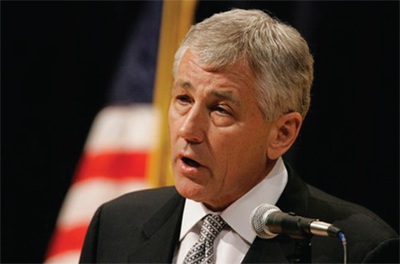
    The salary of the US President is $400,000 per annum (over Rs 2 crore) and in a show of solidarity he will return $20,000 (over Rs 10 lakh). “Obama instructed his staff he wanted to do this when the sequester took effect,” White House press secretary Jay Carney said on Wednesday. “The salary for the President, as with members of Congress, is set by law and cannot be changed. However, the President has decided that to share in the sacrifice being made by public servants across the federal government that are affected by the sequester, he will contribute a portion of his salary back to the treasury,” Carney said. Obama plans to write checks to treasury on a monthly basis, effective March 1, but will cut the first check in April.A day earlier, US defense secretary Chuck Hagel had announced a similar move. Senator Mark Begich also announced that he would voluntarily give back part of his salary and that more than half of his staff members would have their pay cut this year.

  • US military to return some Okinawa land to Japan: Reports

    US military to return some Okinawa land to Japan: Reports

    TOKYO (TIP): Japan and the United States have agreed on a plan that will see some land occupied by the US military returned to the islands in a bid to break the deadlock in a long-stalled deal, reports said on Friday. Prime Minister Shinzo Abe and US ambassador John Roos were expected to sign off on the pact later on Friday, in a deal that involves five US military facilities and other areas on Okinawa’s main island, Kyodo News said. Tokyo and Washington have also agreed they will return land currently occupied by the controversial Futenma airbase in 2022 or later, Jiji Press said. The reported deals come after years in which a plan to move the US Marine Corps’ Futenma base from a crowded residential area have been stuck in stasis because of vocal opposition from islanders.

    Locals want the base moved off Okinawa altogether, arguing that the island bears an unequal burden hosting the lion’s share of the 47,000 US service personnel stationed in Japan. The central government says the US military presence in the strategic island is a key for maintaining security at a time of increasing selfassertiveness from China and an unpredictable North Korea. Tokyo and Washington originally agreed to move the base in 2006. Prime Minister Shinzo Abe, who took office late December, met US President Barack Obama in February and confirmed the two countries would go ahead with the planned relocation of Futenma, despite local opposition.

  • Approval rating of Bobby Jindal drops to 38%: US poll

    Approval rating of Bobby Jindal drops to 38%: US poll

    WASHINGTON (TIP): Amid speculation over a 2016 presidential bid by Louisiana’s Indian-American Governor Bobby Jindal, his approval rating has dropped to a low 38 per cent. According to a latest poll released on Tuesday, Jindal is even running behind US President Barack Obama, in his own state, where in recent weeks he has come up with some innovative measures like elimination of income tax and increasing sales tax.

    Into the second term of his governorship, 41-year-old Jindal, who is receiving great attention at the national level, has an approval rating of 38 per cent. There has been quite a substantial drop from his 51 per cent approval rating in October, the poll said. Surprisingly, according to the poll conducted by Southern Media and Opinion Research, both Lieutenant Governor Jay Dardenne and US Senator David Vitter – both possible candidates for Jindal’s job in 2015 – had approval ratings near 60 per cent. “A number of issues contributed to Jindal’s low performance (in the poll), including state cuts to higher education and health care, plans to privatise the charity hospital system and the governor’s proposed state tax overhaul,” Southern Media and Opinion Research said in a statement.

    Jindal’s spokesman said that the governor is focused on creating more jobs and improving the states’ economy. “We care more about the unemployment numbers than approval numbers, and right now, we still have too many Louisianans unemployed and underemployed,” Jindal’s spokesman Kyle Plotkin said. “That’s why our number one focus is growing the economy and creating jobs so that we can make Louisiana the best place in the world to raise a family and find a good paying job,” he said.

  • Obama nominates Indian-American to National Council on Arts

    Obama nominates Indian-American to National Council on Arts

    WASHINGTON: US President Barack Obama, March 22, nominated Indian-American Renee Ramaswamy, a Bharatanatayam exponent, to the prestigious National Council of the Arts for a five year term. Ramaswamy founded the Ragamala Music and Dance Theatre in Minneapolis, Minnesota in 1992 and has been popularizing this classical Indian dance form in America.

  • Iran will ‘annihilate’ cities if Israel attacks: KHAMENEI

    Iran will ‘annihilate’ cities if Israel attacks: KHAMENEI

    TEHRAN (TIP): Iran will “annihilate” the Israeli cities of Tel Aviv and Haifa if it comes under attack by the Jewish state, supreme leader Ayatollah Ali Khamenei warned on March 21. “Every now and then the leaders of the Zionist regime threaten Iran with a military attack,” Khamenei said in a live televised speech from the northeastern holy city of Mashhad, referring to Israel. “They should know that if they commit such a blunder, the Islamic republic will annihilate Tel Aviv and Haifa,” he said. Iran is said to possess ballistic missiles capable of reaching Israel.

    It also has close relations with Israel’s foes in the region, including Lebanon’s Hezbollah and Palestinian militants in the Islamist-ruled Gaza Strip. Khamenei spoke with little sign of an easing in Tehran’s position in its confrontation with the West over its disputed nuclear programme of uranium enrichment.

    Israel, widely believed to be the Middle East’s sole but undeclared nuclear power, suspects that Tehran is seeking atomic arms, a fear shared by the United States and Western powers, and has not ruled out a military strike. Washington has also refused to rule out the military option, but insists it prefers a diplomatic solution to the nuclear stand-off. US President Barack Obama in Israel on Wednesday accepted that the Jewish state would not cede its right to confront Iran’s nuclear threat to the United States.

  • My Goal On This Trip Is To Listen: Obama On His Forthcoming Visit To Israel And Palestinian Territories

    My Goal On This Trip Is To Listen: Obama On His Forthcoming Visit To Israel And Palestinian Territories

    JERUSALEM (TIP): US President Barack Obama said on Thursday his forthcoming trip to Israel and the Palestinian territories was to “listen” to both sides and hear their views on how to move forward after over two years without peace talks. His remarks came in an exclusive interview with Israel’s Channel 2 television broadcast a week before the US leader starts his first visit to Jerusalem and the West Bank town of Ramallah since being elected president in 2008. During the visit, starting March 20, Obama will meet with Israeli Prime Minister Benjamin Netanyahu in Jerusalem and Palestinian president Mahmud Abbas and his premier Salam Fayyad in Ramallah to hear their perspective on how to resolve the decadeslong conflict. “My goal on this trip is to listen.

    I intend to meet with Bibi (Netanyahu) … I intend to meet with Fayyad and Abu Mazen (Abbas) and to hear from them what is their strategy, what is their vision, where do they think this should go?” With Israel in the throes of establishing a new coalition government, which is due to be sworn in just days before he flies in, it was “unlikely” there would be any breakthrough, Obama acknowledged. But he would press both sides “to recognise the legitimate interests” of the other. “To Abu Mazen, I will say that trying to unilaterally go to, for example, the United Nations, and do an end run around Israel, is not going to be successful,” he said, referring to Palestinian attempts to secure UN recognition as a state that have angered Israel. “To Bibi (Netanyahu) I would suggest to him that he should have an interest in strengthening the moderate leadership inside the Palestinian Authority…” “For example, making sure that issues like settlements are viewed through the lens of: Is this making it harder or easier for Palestinian moderates to sit down at the table,” he said. The Palestinians have said they will only return to peace talks if Israel halts its settlement activity and recognizes 1967 lines as the basis for negotiations. But Israel is insisting it will only return to the negotiations if there are no preconditions. “I think we’re past the point where we should be even talking about pre-conditions and steps and sequences.

    Everybody knows what’s going to be involved here in setting up two states, side by side, living in peace and security,” he said. “How we get into those conversations, whether they can happen soon or whether there needs to be some further work done on the ground, that’s part of what I’ll explore when I’ll get there,” he said.

    In Washington, senior Obama aides said that the president wanted to speak directly to young Israelis, so had chosen to deliver a speech at a Jerusalem conference center and not to the Israeli legislature, the Knesset. They billed the speech as a complement to an address he delivered to the Muslim world in Cairo in 2009. “We thought it was very important for him to speak directly to Israelis,” said Ben Rhodes, a deputy national security advisor. While it may lack diplomatic ‘deliverables,’ Obama’s visit will not be short in symbolism.

    As soon as he arrives at Tel Aviv airport on Wednesday, Obama will inspect a battery in the Iron Dome air defense system that was largely funded by the United States and credited with saving lives in Israel’s showdown with Hamas last year. On Thursday, he will inspect the Dead Sea Scrolls, biblical texts seen as a testament to an ancient Jewish connection to Israel.

    Before he leaves Israel on Friday, Obama will travel to Mount Herzl, where he will lay wreaths at the graves of assassinated Israeli prime minister Yitzhak Rabin and Theodor Herzl, the founder of modern Zionism. Also on the trip, Obama will be feted at a state dinner by Israeli President Shimon Peres, visit the Yad Vashem Holocaust memorial and tour the Church of the Nativity in Bethlehem. In Jordan on Friday, Obama will meet King Abdullah II and hold a press conference before visiting the ancient ruins of Petra a day later.

  • US: Storm strikes mid-Atlantic; 250,000 lose power

    US: Storm strikes mid-Atlantic; 250,000 lose power

    WASHINGTON (TIP): A winter storm marched into the Mid-Atlantic region on Wednesday, dumping nearly two feet of snow in some places and knocking out power to about 250,000 homes and businesses. It largely spared the nation’s capital, which was expecting much worse and had all but shut down. Officials in Washington didn’t want a repeat of 2011, when a rush-hour snowstorm stranded commuters for hours, so they told people to stay off the roads and gave workers the day off. Dubbed the ” snowquester,” the storm closed federal government offices, just as the automatic budget cuts known as the sequester were expected to do. The storm pummeled the nation’s midsection on Tuesday, killing at least four people in weather-related traffic accidents.

    It was forecast to head to the northeast on Thursday, bringing strong winds, more snow and the possibility of coastal flooding to New England. The National Weather Service was predicting up to 7 inches of heavy, wet snow in southeastern Connecticut through Friday morning and wind gusts that could hit 50 mph, bringing possible power outages. A coastal flood warning was in effect starting Thursday morning for eastfacing shores in Massachusetts, with up to a 3-foot surge at high tide in some areas.

    Central Massachusetts was bracing for 4 to 8 inches of snow, while Boston was expected to get a little less. In Washington, where as much as 10 inches had been forecast, the storm did little but drop harmless snowflakes that rapidly melted amid warmer-than-expected temperatures. Federal offices in the region will be open Thursday. “They just say that it might snow and the whole city shuts down,” said Sheri Sable, who was out walking her two dogs in light rain and marveled at how even the dog park she frequents failed to open at 7am. There were bigger problems elsewhere in the region, though. On the Jersey Shore, still recovering from Superstorm Sandy, winds gusted past 60 mph in some parts.

    Winds raked the beachfront in Point Pleasant Beach, blowing drifts of sand onto Ocean Avenue, and shredding the decorative entrance canopy at a hotel across the street from the beach. Lashing winds also blew off part of the roof of a Stone Harbor, N.J., condominium complex and Ocean City officials advised residents to move their cars to higher ground in preparation of possible flooding. Maryland’s Bay Bridge, which connects Maryland’s Eastern shore with the Baltimore-Washington region, closed in both directions, because of wind gusts of up to 60 mph.

    A tractor-trailer overturned on the bridge and leaned against the guardrail. Kelly Kiley, an interior designer, was driving on the span soon after the accident. “The travel on the bridge was extremely scary,” Kiley said. “The crosswinds were terrible. Some of the taller box trucks were swaying.” The bridge reopened Wednesday evening. In North Carolina, state officials said high winds led to sound side flooding along N.C. 12 and brought the Hatteras-Ocracoke ferry run to a halt. In Virginia, governor Bob McDonnell declared a state of emergency and about 50 National Guard soldiers were sent out to help clear roads. Up to 20 inches of snow piled up in central and western parts of the state. More than 200,000 people in Virginia alone lost power and another 40,000 in New Jersey were left in the dark. Hundreds of wrecks were reported around the region. “Stay off the roads, stay inside, enjoy the day off,” McDonnell implored residents at an early-afternoon news briefing.

    In Richmond, most commuters appeared to be headed home by midday with the exception of Clint Davis, an attorney who was needed in US Bankruptcy Court. “Unless they canceled court, I had to be here,” said Davis, who was wearing a hooded slicker over his suit to shield himself from gobs of snow blown from trees. “I’ll be here for two or three hours and come out to a snow-covered car.” The storm dumped 2 feet of snow in parts of West Virginia, closing schools in more than half the state and leaving more than 20,000 customers without power. Some communities in Washington’s outer suburbs saw significant accumulation too, including in Loudoun County, which had 9 inches in some places.

    In Sterling, Va., a glaze of slush and snow coated major roads and side streets, but traffic was relatively light and plow trucks passed through repeatedly. Many retailers were closed. Only a handful of customers patronized the Glory Days Grill. Carolyn Donahue was working from home and trekked out with her husband, Tom, for a lunch break without any trouble on slushy but passable roads. “I don’t consider this a big storm,” he said. Downtown Washington was unusually quiet. Officials eager to avoid a repeat of 2011 pre-emptively shut down federal offices and canceled public schools. Nonemergency federal employees were treated to a paid snow day for the number of hours they were scheduled to work.

    Some congressional hearings were postponed, but the House of Representatives managed to approve legislation to prevent a government shutdown on March 27 and President Barack Obama was set to have dinner with GOP senators at a hotel on Wednesday night. “So far, knock on wood, we’ve dodged on this one,” said DC Homeland Security director Chris Geldart. “We’re keeping our fingers crossed that it remains the way it’s been.” The Baltimore-Washington area’s last major snowstorm struck Jan. 26, 2011. It hit Washington during the evening rush hour, causing some motorists to be stuck in traffic nearly overnight. It dropped 5 inches on Washington and 7.8 inches on Baltimore, knocked out power to about 320,000 homes and contributed to six deaths.

    The federal government later changed its policies to allow workers to leave their offices sooner or to work from home if major storms are expected. The current storm led to at least four deaths. A semi-trailer slid off a snowcovered interstate in western Wisconsin, killing two people. A central Indiana woman died when a semi-trailer plowed into her car after she lost control merging onto the highway, and a man from Columbia City in northeast Indiana was killed when his snowmobile left the road, headed across a field and crashed into a wire fence.

    The storm brought around 10 inches of snow to weather-hardened Chicago on Tuesday, prompting the closing of schools and the cancellation of more than 1,100 flights at the city’s two major airports. Hundreds more flights were canceled Wednesday at Dulles and Reagan National airports in the Washington area, according to FlightAware.com. In Pennsylvania and Ohio, many areas had 4 to 6 inches of snow. The weather service issued a winter storm warning for the Philadelphia area and parts of central Pennsylvania through morning.

  • US House votes to prevent March 27 federal shutdown; Obama reaches out to Senate

    US House votes to prevent March 27 federal shutdown; Obama reaches out to Senate

    WASHINGTON (TIP): Legislation easily passed the US House of Representatives on March 06 to avert another partisan budget battle and a possible government shutdown, and a dinner meeting between President Barack Obama and Senate Republicans offered signs of a thaw in relations. By a vote of 267-151, the House passed a measure to fund government programs until the end of the fiscal year on September 30. The Democratic-controlled Senate is expected to pass a similar bill next week. Without such legislation, federal agencies would run out of money on March 27. The bill to continue funding the government without last-minute drama occurred as Obama took the unusual step of inviting Republican senators to a dinner on Wednesday night at a Washington hotel a few blocks from the White House that lasted about an hour and a half.

    Attendees emerged optimistic about the prospects for the elusive big deal to put the nation’s finances on a more sustainable track in a way that satisfies both Democrats and Republicans. “It was a really good conversation,” Republican Senator John Hoeven said. “It was candid,” he said. “We really talked about how do we get to a big agreement in terms of the debt and deficit.” An administration official told Reuters before the dinner that Obama had been hoping to take advantage of a lull in a series of budget crises to launch a dialogue with Republican lawmakers with the goal of reaching a broad deficit reduction deal.

    While the meal was not intended to be a negotiation, it was an opportunity for Obama to make clear he is willing to consider some difficult spending cuts that are unpopular with his fellow Democrats in Congress, the official said.

    Those could include cuts to programs that include the Social Security pension system and Medicare for the elderly. Obama is due to discuss his other legislative priorities, including immigration reform, gun control and tackling climate change, at meetings with members of both political parties on Capitol Hill next week. The dinner may have been a chance to reverse some of the angry partisan rhetoric that has stood in the way of compromise in recent weeks. “The president greatly enjoyed the dinner and had a good exchange of ideas with the senators,” a senior administration official told reporters. Asked how the soiree had gone, Senator John McCain told journalists outside the hotel, “Just great. Fantastic.” Attendees included Senators Lindsey Graham, Bob Corker, and Kelly Ayotte and nine others.

    Graham drew up the guest list, the White House said. The meetings between the president and lawmakers, whether or not they produce results, depart from what has been an at best a stand-offish relationship between Obama and Republicans in Congress. They suggest that Obama and Republicans are getting the message that public patience with Washington is wearing thin.

    This has become apparent as Americans read of inconveniences they may soon confront at airports and elsewhere as a result of across-theboard cuts to the federal budget that kicked in on Friday after lawmakers and the White House failed to agree on an alternative. “This is the first indication in really a long time that the president is willing to exert leadership and bring people together and that’s exactly what needs to be done,” said Republican Senator Susan Collins of Maine, who has spoken by phone in recent days with Obama. Republican doubters At the heart of the bitter US budget dispute are deep differences over how to rein in growth of the $16.7 trillion federal debt.

    Obama wants to narrow the fiscal gap with spending cuts and tax hikes. Republicans do not want to concede again on taxes after doing so in negotiations over the “fiscal cliff” at the New Year. Despite the scheduled dinners and meetings and the vote on funding the government, few expect those differences to be resolved any time soon. Some Republicans remain skeptical of Obama’s overtures. “This president has been exceptional in his lack of consultation and outreach to Congress,” said John Cornyn of Texas, the second-ranking Senate Republican. Cornyn, like Collins, was not invited to dinner with Obama, but he warned that talk of tax increases would be unwelcome. “I don’t know if the purpose of the meeting is social or if he has an agenda.

    But if it is about raising taxes, we’re done.” While Republicans have taken most of the beating in surveys in connection with the so-called sequestration, a Reuters/Ipsos online poll released on Wednesday showed 43 percent of people approve of Obama’s handling of his job, down 7 percentage points from February 19.

  • US Senate confirms Brennan as CIA director

    US Senate confirms Brennan as CIA director

    WASHINGTON (TIP): The US Senate has confirmed John Brennan as the next director of Central Intelligence Agency (CIA). Currently the counter terrorism adviser to the US President Barack Obama, Brennan was nominated by a vote of 63 to 34 on Thursday. The vote was delayed by a 13-hour long filibuster by Republican Senator Rand Paul of Connecticut in pursuit of more information about the administration’s domestic drone policy.

    Welcoming the nomination, Obama said that the Senate has recognised Brennan’s qualities and determination to keep US safe along with his commitment to work with Congress and build relationships with foreign partners. “With John’s 25 years of experience at the agency, our extraordinary men and women of the CIA will be led by one of their own. I am especially appreciative to Michael Morell for being such an outstanding acting director and for agreeing to continue his service as deputy director,” he said.

    He added that the timely accurate intelligence is absolutely critical to disrupting terrorist attacks, dismantling al-Qaida along with its affiliates and meeting the broad array of security challenges that we face as a nation. “John’s leadership and our dedicated intelligence professionals will be essential in these efforts. I am deeply grateful to John and his family for their continued service to our nation,” he said.

    The vote on confirmation was moved through the Senate as Paul lifted his filibuster after receiving response to his question from the attorney general, Eric Holder. “Does the president have the authority to use a weaponised drone to kill an American not engaged in combat on American soil? The answer to that question is no,” according to Holder’s letter to Senator Rand Paul. “This is a major victory for American civil liberties and ensures the protection of our basic Constitutional rights. We have separation of powers to protect our rights. That’s what government was organised to do and Constitution was put in place to do,” Paul said.

  • Hagel Committed To Ties With India, Says Pentagon

    Hagel Committed To Ties With India, Says Pentagon

    WASHINGTON (TIP): As Chuck Hagel took over as Barack Obama’s new defense secretary amid a controversy over his comments on India’s role in Afghanistan, Pentagon – the US defense department headquarters – said that Hagel will work to strengthen ties to India. Hagel’s strong commitment to fostering a close defense relationship was reported Wednesday, February 27, by Washington Free Beacon, the rightwing online newspaper that had disclosed a video-recording of a speech Hagel made in 2011 about Indian aid to Afghanistan. “Secretary Hagel is strongly committed to the US strategic partnership with India and to fostering an even closer defense relationship with India that builds upon the work of Secretary (Leon) Panetta, Deputy Secretary (Ashton) Carter, and their Indian counterparts,” Free Beacon quoted Pentagon spokesperson George Little as saying. “Secretary Hagel looks forward to working closely with Indian national security and defense officials,” Little told the newspaper that had dug out the controversial comments during Hagel’s contentious confirmation hearings with his former Republicans attacking him for his positions on Israel and Iran.

    In his previously unreleased 2011speech, Hagel had said: “India for some time has always used Afghanistan as a second front, and India has over the years financed problems for Pakistan on that side of the border. “And you can carry that into many dimensions, the point being (that) the tense, fragmented relationship between Pakistan and Afghanistan has been there for many, many years.” The remarks raised a furor in New Delhi. However, in a calibrated response to the Free Beacon, the India Embassy said that Hagel’s 2011 remarks were not grounded in “reality.” “Such comments attributed to Sen.

    Hagel, who has been a long-standing friend of India and a prominent votary of close India-US relations, are contrary to the reality of India’s unbounded dedication to the welfare of the Afghan people,” the embassy spokesperson said in an email to the newspaper. “India’s commitment to a peaceful, stable, and prosperous Afghanistan is unwavering, and this is reflected in our significant assistance to Afghanistan in developing its economy, infrastructure, and institutional capacities,” the spokesperson said. “Our opposition to terrorism and its safe havens in our neighborhood is firm and unshakeable.” The existence of the video of Hagel’s speech at Cameron University in Oklahoma was disclosed by the online newspaper hours before the decorated Vietnam veteran was confirmed by the Senate after weeks of severe criticism from former Republican colleagues. The former Republican senator from Nebraska, who won two Purple Hearts for his bravery as a soldier during the Vietnam War, was accused of being critical of Israel and weak on Iran’s alleged nuclear weapon ambitions.