Tag: Barack Obama

  • Obama administration to launch new effort on heroin crisis

    Obama administration to launch new effort on heroin crisis

    WASHINGTON (TIP): The Justice Department is preparing to launch a renewed strategy to address the unrelenting scourge of heroin and opioid addiction, in part by placing greater emphasis on identifying links between over-prescribing doctors and distribution networks across the country, reports USA TODAY.

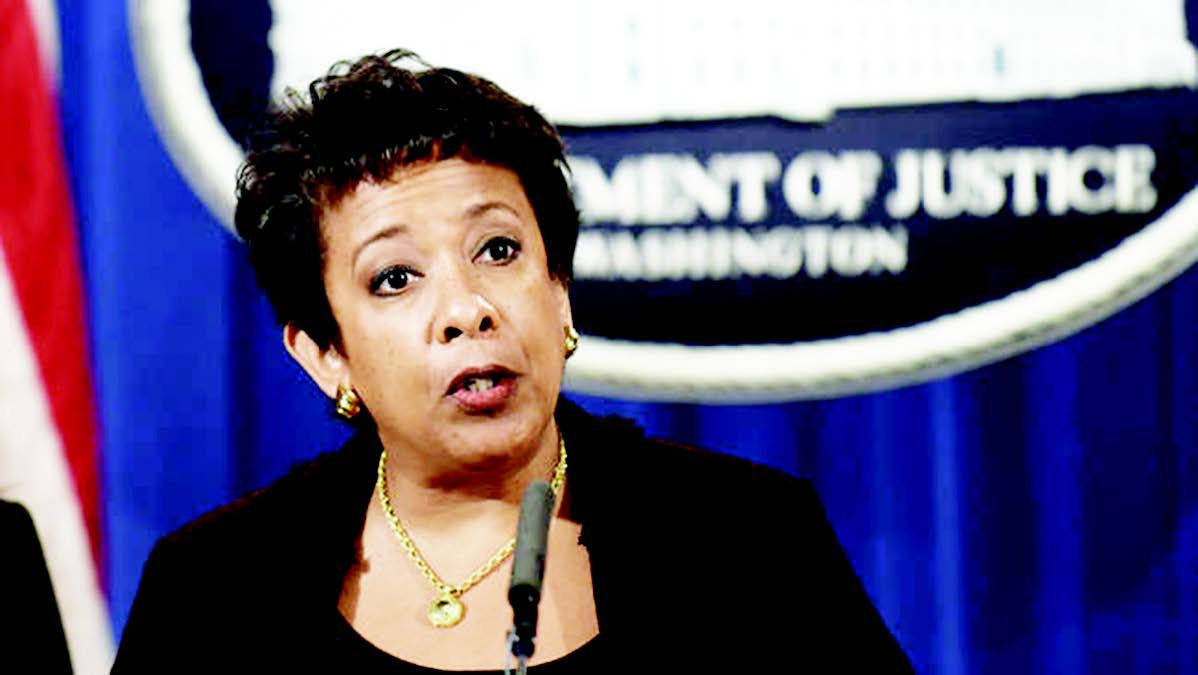
    The plan, outlined by Attorney General Loretta Lynch in an interview with USA TODAY, is part of an eleventh-hour push by the Obama administration against a public health crisis that continues to claim nearly 100 people each day in the United States.

    In a memo that is expected to be circulated next week to all 94 U.S. attorney offices, Lynch said prosecutors are being urged to more readily share information across state lines about prescription drug abuses by physicians that could identify traffickers and far-flung trafficking routes more quickly.

    At the same time, Lynch said federal prosecutors will be directed to coordinate their enforcement efforts with public health authorities in their districts as part of an overall strategy that puts equal emphasis on prevention and treatment.

    “I’m not calling anybody out, because I think the people who look at this problem realize quickly how devastating it has been to families, to communities, to public health dollars, to law enforcement resources,” the attorney general said. “There is no one magic bullet for this.”

    While opioid and heroin addiction have earned the distinction as the single greatest drug threat in the U.S., largely due to a casualty rate that has nearly quadrupled since 1999, the federal government’s effort to counter it – or even slow it – has been spotty.

    Earlier this year, the Obama administration requested nearly $1.1 billion as part of a plan to pay for drug treatment, invoking a common refrain that drug overdoses – driven increasingly by heroin and other opioids, such as oxycodone, hydrocodone and methadone – are responsible for more deaths than car crashes. Yet after Congress approved landmark legislation in July for expanded drug addiction treatment and prevention, it did not include the $181 million to actually fund the measure.


  • Obama talks about American Values on 9/11 anniversary

    Obama talks about American Values on 9/11 anniversary

    WASHINGTON: On the 15th anniversary of the 9/11 attacks, US President Barack Obama paid tribute to the victims of 9/11 at the Pentagon in Washington. He called on Americans to protect the ideals that made their country the diverse nation that it is, and said America would never give in to fear.

    “Our diversity, our patchwork heritage, is not a weakness. It is still and always will be one of our greatest strengths,” Obama said at a remembrance service at the Pentagon, one of the sites attacked on 9/11.

    “This is the America that was attacked that September morning. This is the America that we must remain true to.”

    President Barack Obama urged Americans to remain united in the face of terrorist attacks, in a barely-veiled jab at Republican White House nominee Donald Trump 15 years after 9/11.

    “In the face of terrorism, how we respond matters,” Obama said in his weekly radio and online address, delivered on the eve of the 15th anniversary of the September 11 terror attacks in the United States.

    “We cannot give in to those who would divide us. We cannot react in ways that erode the fabric of our society,” he added.

    “Because it’s our diversity, our welcoming of all talent, our treating of everybody fairly no matter their race, gender, ethnicity, or faith, that’s part of what makes our country great. It’s what makes us resilient,” Obama said.

    “And if we stay true to those values, we’ll uphold the legacy of those we?ve lost, and keep our nation strong and free.”

    On several occasions Obama has denounced Trump’s bombastic rhetoric towards Muslims.

    Following the December shooting rampage in San Bernardino, California for example, Trump called for a temporary ban on the entry to the United States of all Muslims.

    Obama was speaking two months before the presidential election in which real estate magnate Trump will face Democrat Hillary Clinton.

    The al-Qaida hijackings of September 11, 2001 – the first foreign attack on the US mainland in nearly two centuries – ruptured a sense of safety and plunged the West into wars still being fought today.

    More than 2,750 people were killed when two passenger jets destroyed the Twin Towers, the symbol of New York’s financial wealth and confidence. Another jet slammed into the Pentagon, and a fourth jet crashed in a field in Pennsylvania after those on board tried to overpower the hijackers.

    Evoking “one of the darkest (days) in our nation’s history,” Obama noted that much had changed over the past 15 years since the attacks.

    “We delivered justice to (al-Qaida leader) Osama bin Laden. We’ve strengthened our homeland security. We’ve prevented attacks. We’ve saved lives,” Obama said.

    But at the same time, he said, referring to attacks in Boston, San Bernardino, and Orlando, Florida, “the terrorist threat has evolved.”

    “So in Afghanistan, Iraq, Syria and beyond, we’ll stay relentless against terrorists like al-Qaida and [the Islamic State group] ISIS.

    “We will destroy them. And we’ll keep doing everything in our power to protect our homeland,” Obama said.

    Here are ten key points from his speech:

    1. 3,000 beautiful lives

    We will never forget the nearly 3,000 beautiful lives taken from us so cruelly. We honour the courage of those who put themselves in harm’s way to save people we never new.

    2. Families lost a piece of their heart

    15 years may seem like a long time, but for the families that lost a piece of their heart, I understand that it can seem like yesterday.

    3. 9/11 survivors and their kin an inspiration

    The survivors and families of 9/11—your steadfast love and faithfulness has been an inspiration to me and for our entire country.

    4. Justice delivered to Osama bin Laden

    Thanks to our security forces, we gave an appropriate response to al-Qaida. We have dealt devastating blows to al-Qaida. We delivered justice to Osama Bin Laden.

    5. Protecting America

    We resolve to continue doing everything in our power to protect this country that we love.

    6. Defending ideals

    We stay true to the spirit of this day by defending not just our country, but our ideals.

    7. Hateful ideologies leading to violence

    Fifteen years into this fight, the threat has evolved. With our stronger defenses, terrorists often attempt attacks on a smaller but still deadly scale. Hateful ideologies urge people in their own country to commit unspeakable violence. We’ve mourned the loss of innocents from Boston to San Bernandino to Orlando.

    8. Al-Qaida and ISIS can’t defeat us, so they try to stoke fear

    Groups like al-Qaida, like ISIS, know that they will never be able to defeat a nation as great and strong as America. So, instead they try to terrorize, in the hope that they can stoke enough fear that we turn on each other, that we change who we are, how we live.

    9. Our diversity is a strength

    And that’s why it is so important today that we re-affirm our character as a nation: a people drawn from every corner of the world, every colour, every religion, every background – bound by a creed as old a our founders – E Pluribus Unum. Out of many we are one. We know that our diversity, our patchwork heritage, is not a weakness. It is still and always will be one of our greatest strengths. This is the America that was attacked that September morning. This is the America we must stay true to.

    10. An enduring memorial

    The most enduring memorial to those we lost is ensuring the America we continue to be.

  • Barack Obama Nominates Indian-American Diane Gujarati to the US District Court bench in New York

    Barack Obama Nominates Indian-American Diane Gujarati to the US District Court bench in New York

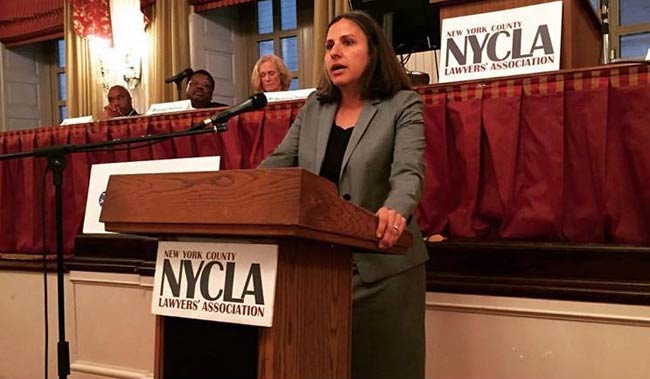
    US President Barack Obama has nominated a 47-year-old Indian-American woman attorney to the US District Court bench in New York, the White House has said.

    “I am pleased to nominate Diane Gujarati to serve on the United States District Court bench. I am confident she will serve the American people with distinction,” Obama said in a statement yesterday.

    Gujarati, the Deputy Chief of the Criminal Division of the US attorney’s office for the southern district of New York since 2012, has been nominated on the US District Court for the Eastern District of New York. She will serve as a federal judge after approval from the Senate.

    She is the daughter of Damodar M Gujarati, a professor of economics at the US Military Academy at West Point. Her father received M.Com degree from the University of Bombay in 1960 and Ph.D from the University of Chicago in 1965. Her mother is Ruth Pincus Gujarati.

    A well-known federal prosecutor, she served as an Assistant US Attorney in the Criminal Division since 1999.

    Prior to her tenure as Deputy Chief of the Criminal Division from 2008 to 2012, she served as Deputy Chief and then Chief of the White Plains Division of the United States Attorney’s Office for the Southern District of New York.

    From 2006 to 2008, Gujarati was Deputy Chief of the Appeals Unit in the Criminal Division of the United States Attorney’s Office for the Southern District of New York.

    She began her legal career as a law clerk to the Honourable John M Walker, Jr of the United States Court of Appeals for the Second Circuit from 1995 to 1996.

    Gujarati received her JD from Yale Law School in 1995 and her BA summa cum laude from Barnard College of Columbia University in 1990.

  • ITT Technical Institute to Close all Campuses

    ITT Technical Institute to Close all Campuses

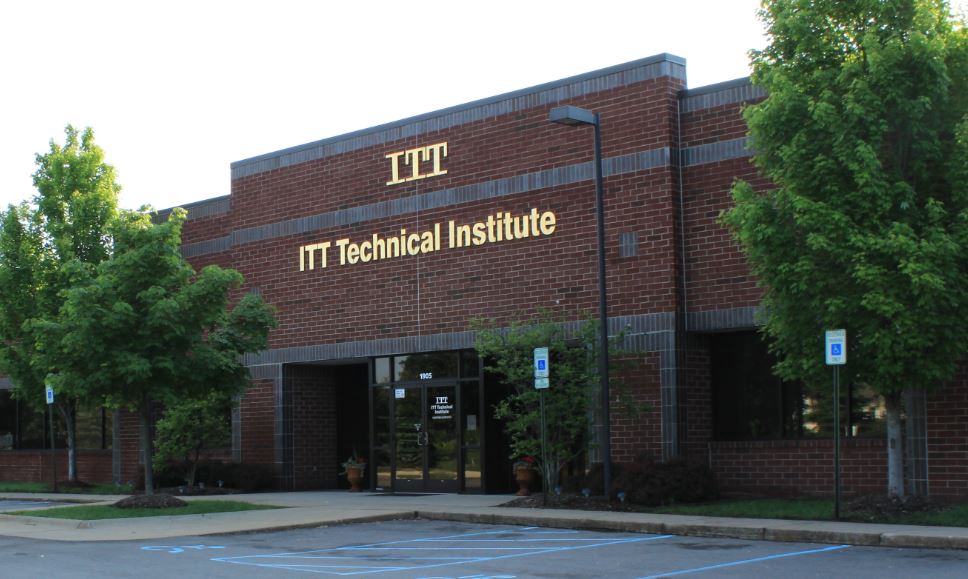
    DALLAS (TIP): The company that runs ITT Technical Institute announced Tuesday, September 6 that it was shutting down academic operations at all of its campuses and thousands of its employees will lose their jobs.

    The move comes after the federal government banned the for-profit chain last month from enrolling students who use federal loans to pay for classes.

    “It is with profound regret that we must report that ITT Educational Services, Inc. will discontinue academic operations at all of its ITT Technical Institutes permanently after approximately 50 years of continuous service,” ITT Educational Services, Inc. said in a release. “With what we believe is a complete disregard by the U.S. Department of Education for due process to the company, hundreds of thousands of current students and alumni and more than 8,000 employees will be negatively affected.”

    ITT operates vocational schools at more than 130 campuses in 38 states, often under the ITT Technical Institute name. Last year, it enrolled 45,000 students and reported $850 million in revenue.

    In Texas, ITT operated 10 campuses including locations in Arlington, Austin, DeSoto, Houston (3), Richardson, San Antonio (2) and Waco.

    Officials with the Department of Education announced on Aug. 25 the ban on enrolling students with federal loans and other measures against the Indiana-based chain, which has been the subject of state and federal investigations focusing on its recruiting and accounting practices.

    Among the measures, ITT was ordered to pay $152 million to the department within 30 days to cover student refunds and other liabilities in case the company closed. ITT is still paying another $44 million demanded by the department in June for the same reason.

    The education department also prohibited ITT from awarding its executives any pay raises or bonuses, and said it must develop “teach-out” plans that would help current students finish their programs at other colleges if the chain shut down.

    Under the new measures, current students would have been able to continue receiving federal grants and loans.

    “The actions of and sanctions from the U.S. Department of Education have forced us to cease operations of the ITT Technical Institutes, and we will not be offering our September quarter,” the company said on Tuesday. “We reached this decision only after having exhausted the exploration of alternatives, including transfer of the schools to a non-profit or public institution.”

    The firm said its focus and priority with remaining staff was “on helping the tens of thousands of unexpectedly displaced students with their records and future educational options.”

    Last month, a group that accredits ITT found that the chain failed to meet several basic standards and was unlikely to comply in the future.

    One of the biggest for-profit chains in the nation, ITT has been under increasing scrutiny from the education department following allegations of misconduct.

    The Massachusetts attorney general sued the company in April, alleging that it misled students about the quality of its programs. The federal government had previously sued the chain, saying that it pushed students into high-cost private student loans knowing they would likely end in default.

    Department officials have been closely monitoring ITT’s operations since 2014, when the chain was late to submit an annual report of its finances to the government.

    Under President Barack Obama, the Education Department has led a crackdown on for-profit colleges that have misled students or failed to deliver the results they promised. In 2014, the department cut off federal aid to the Corinthian Colleges chain amid allegations of fraud, leading it to close or sell all of its schools.

    “We were not provided with a hearing or an appeal,” ITT Educational Services, Inc. said of the government’s actions. “Alternatives that we strongly believe would have better served students, employees, and taxpayers were rejected. The damage done to our students and employees, as well as to our shareholders and the American taxpayers, is irrevocable.”

  • WHISTLING IN THE DARK: The new groupthink in Kashmir is misconceived

    WHISTLING IN THE DARK: The new groupthink in Kashmir is misconceived

    Three weeks after the Americans had elected him as their next President, Barack Obama met a group of reporters and shared his thoughts on pitfalls of decision-making. In the course of that interaction, he made this point: “One of the dangers in the White House, based on my reading of history, is that you get wrapped up in groupthink and everybody agrees with everything, and there is no discussion and there are no dissenting views.” There is no American monopoly on groupthink. It is a universal weakness. Historians can tell us of numerous instances of grave mistakes and gross misjudgments that resulted from groupthink. We in India seem to be on the verge of a new groupthink of our own on Kashmir.

    In this new thinking it is understood and unquestioningly accepted by all that the woolly-headedness of the past decades must be rolled back, and that it must be replaced by a new muscular approach to men and matters in Kashmir. This new mood is perhaps part of a larger rethink.

    The other day we got a glimpse of the new theology from a senior military functionary, Air Marshal Arup Raha, Chief of the Indian Air Force. The good Air Marshal was reported to have decried that India had allowed PoK to become “a thorn in our flesh” because the post-Independence leadership allowed itself to be governed by high ideals, rather than following “a very pragmatic approach” to security needs. In the new official wisdom, which the Air Chief unwittingly voiced, there are no strategic or other advantages in taking “a high moral ground.”

    In this emerging new groupthink, the ‘separatist’ has been coddled up for too long; he must now be made to feel the rough end of the Indian truncheon. A kind of easy acceptance is being sought for this tough stance, invoking strands of nationalism, patriotism and a kind of anti-Pakistanism. Tactical cleverness is being mistaken for strategic clarity and wisdom.

    It is being authoritatively whispered in our ears that the separatist leaders, especially those who are associated with the Hurriyat, will no longer be allowed to enjoy the protection of the Indian security forces. Enough is enough. This kind of no-nonsense assertiveness goes down very well with the middle classes back in the ‘mainland’.

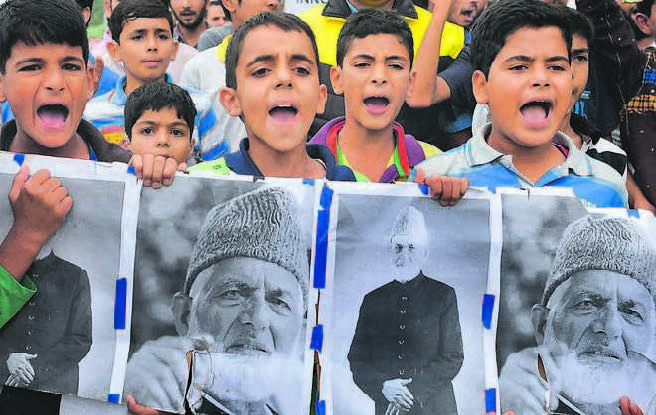
    Assuming – and this is a very crucial assumption – that we were ‘protecting’ Syed Ali Shah Geelani, we were presumably keeping him away from coming to harm at the hands of Pakistani agents and contract-killers. Somewhere, sometime there must have been a judgement – and, a mature and considered judgement at that -that it was probably worth providing protection to the Hurriyat leaders; otherwise, they would be easily eliminated and replaced by more radical, more intractable rabble-rousers. Perhaps we have concluded that we have lost control over the Hurriyat leaders, and that we are prepared to have a known devil displaced by an unknown devil.

    The only flaw in this seductive groupthink is that the Hurriyat leaders by themselves do not add up to anything; what makes them toxic is their capacity to summon mobs on the streets and to have people of the Valley respond to their calls for hartal.

    But a self-assured democracy should be able to ask whether by locking them up or by denying them permission to visit Delhi or Saudi Arabia, are we able to wean the crowds away from the difficult Hurriyat-wallahs?  And, while we are at it, we might as well ask ourselves why it is that suddenly the Hurriyat leaders seem to have acquired a greater traction than, say, two years ago. It is inexplicable that we deny the authenticity of the democratic energy we have witnessed on the streets in the Valley; it is inexcusable that we attribute authorship of the anger to Pakistan.

    The Pakistani meddlesomeness is older than the Shankaracharya Hills. But our new rulers in New Delhi seem to be confused. It will be naive to think that just because our Prime Minister allows himself to go and attend a wedding in Nawaz Sharif’s family, the Pakistani military establishment would surrender its assets and advantages in Kashmir. Just as it was a criminal neglect on the part of our intelligence establishment not to be prepared for an explosion after “Commander” Wani’s death in an encounter. Our policy, army, political and intelligence leadership cannot go on making errors of commission and omission and then blame Pakistan for taking advantage of our mistakes.

    The separatists were not born separatist. What drove very many Kashmiris over to the other side were our policies, postures and pretensions, and “our” politicians and their arrogance and aberrations. But then from time to time our democracy, too, has produced that magical illusion to induce the alienated and angry Kashmiris to come back to this side. After the Kargil War it was evident to every Kashmiri – as it was to every Pakistani – that Islamabad would never be able militarily to come to help them with the “struggle”. The so-called “struggle” project was over. All that remained was to enlarge the circle of participation and partnership between the Kashmiris and the Indian democracy, and its enormous capacity for accommodation and adjustment. We seem to have forgotten that an Indian Prime Minister had proclaimed and promised that “short of azadi, sky is the limit.”

    The only redeeming feature of the new groupthink on Kashmir is that the Chief Minister, Mehbooba Mufti, seems to be a very, very reluctant recruit. She is the only leader who appears to have the courage to contest and challenge the separatists and their arguments. Hers is perhaps the most demanding, most exacting as also the most dangerous job in India. She can, and does, question the Hurriyat’s pretensions precisely because she derives her legitimacy from a democratic mandate. Her efficacy critically hinges on her ability to showcase herself as the voice of the Kashmiris, rather than as New Delhi’s chosen nominee in Srinagar. And, if people in New Delhi and Nagpur cannot appreciate this delicate but absolutely necessary requirement, then we are in for serious trouble.

    Perhaps just to humor the high priests of the new groupthink, the Chief Minister did allow herself to suggest that if anyone can “solve” the Kashmir problem, it is Narendra Modi. We had heard the same tired mantra during Atal Bihari Vajpayee’s days, as if Kashmir is the personal jagir of this or that Prime Minister.

    The new groupthink notwithstanding, there is an old contradiction at work: an “imperial” Delhi has the constitutional obligation of the Centre to control, and coerce, if necessary, a recalcitrant periphery; but the “democratic” India flashes its moral badge and flaunts its openness and inclusiveness to blunt the separatist and his secessionist message. Kashmir will continue to test the relative effectiveness of the “imperial” Delhi and the “democratic” India.


  • Export of terror a threat to region: PM at ASEAN meet

    Export of terror a threat to region: PM at ASEAN meet

    VIENTIANE, LAOS (TIP): India’s Prime Minister Narendra Modi, in a veiled attack on Pakistan, raised the issue of terrorism at the East Asia Summit in Laos, September 8.

    Stating that most countries in the South Asian region were pursuing a peaceful path to economic prosperity, he said: “But, there is one country in India’s neighborhood whose competitive advantage rests solely in producing and exporting terrorism.” He added that it was crucial for countries to adopt an “isolate and sanction” attitude against Islamabad.

    “We need to target not only the terrorists, but also their entire supporting ecosystem,” Modi said, adding, “And, our strongest action should be reserved for those state actors who employ terrorism as an instrument of state policy.”

    “Rising export of terror, growing radicalization through ideology of hatred and spread of extreme violence define the landscape of common security threats to our societies. The threat is local, regional and transitional at the same time,” he said.

    India, of late, has been raising the issue of terrorism at international forums like the G20 and the East Asia Summit. The idea is to counter Pakistan which has been on the offensive as it is trying hard to internationalize the Kashmir issue globally and raise it at the level of the United Nations. At the G20 Summit, Modi had stated bluntly that there was one country in South Asia that was spreading terror. The clear reference to Pakistan was obvious.

    Modi Meets Obama, discusses climate change

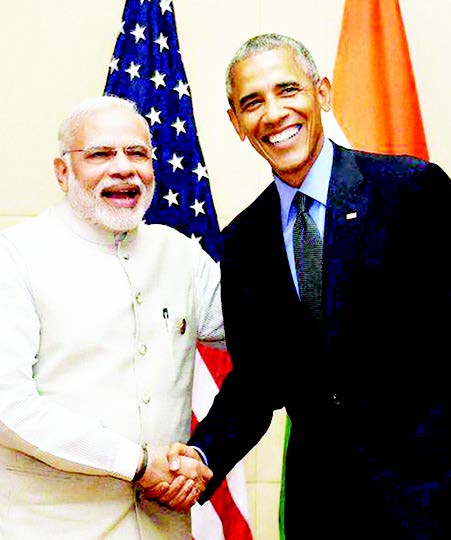
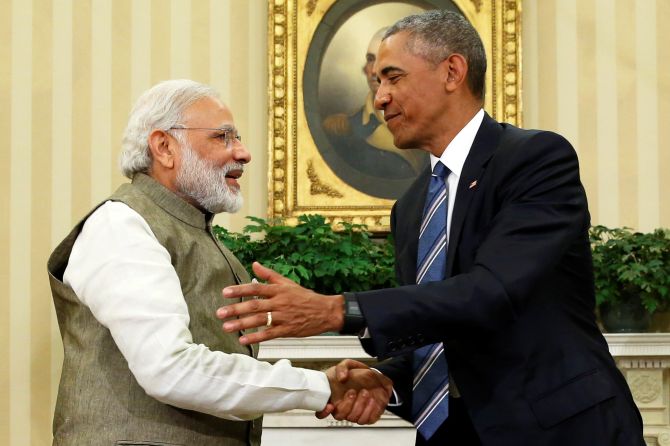
    Meanwhile, on the sidelines of the summit, Modi met United States President Barack Obama today. This was the eighth meeting between the two leaders and is probably the last one before Obama demits office. It is learnt that both leaders discussed climate change, energy co-operation and also reviewed progress on the Indo-US collaboration in nuclear energy, solar energy and innovation.

    President Obama is committed to the cause of climate change and it is one legacy that he wants to leave behind. Reports suggest that Modi informed Obama that India would adopt the Paris Agreement on climate change by year-end. However, there was no confirmation of it by India.

    (Read comment – Taking the Paris Process Forward)

  • Turkey, US ‘ready to work’ on ousting IS from Raqa

    Turkey, US ‘ready to work’ on ousting IS from Raqa

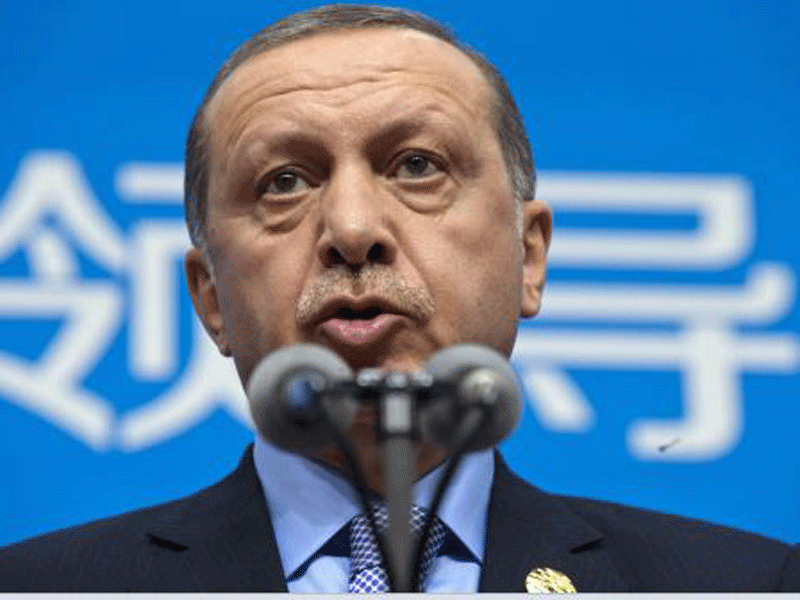
    ISTANBUL (TIP): Washington and Ankara are ready to work together to push Islamic State jihadists out of their de facto capital of Raqa in northern Syria, Turkish President Recep Tayyip Erdogan said in comments published on sept 7.

    Erdogan said he had agreed with President Barack Obama on the sidelines of the G20 meeting in China to do “what is necessary” to drive IS out of Raqa.

    “Raqa is the most important centre of Daesh,” Erdogan told Turkish journalists onboard his plane as he returned from China, using an Arabic acronym for IS.

    “Obama wants to do something together especially on the issue of Raqa,” he said. “I said there would be no problem from our perspective.”

    “I said ‘our soldiers should come together and discuss, then what is necessary will be done’,” Erdogan was quoted as saying by the Hurriyet daily.

    Without giving further details, he said: “What can be done will become clear after the discussions.”

    Forces loyal to President Bashar al-Assad’s regime were pushed out of Raqa, which lies on the Euphrates River, in 2013, making it the first provincial capital in Syria to fall out of government control. IS rapidly infiltrated the city, which is strategically located near the Turkish border, and declared a caliphate in 2014. Ousting IS from the city would be a turning point in the conflict and mark a huge blow to the jihadists.

    Erdogan’s comments came two weeks after Turkey launched an ambitious operation inside Syria, sending tanks and special forces to back up Syrian opposition fighters and remove IS jihadists and Kurdish militia from its frontier. Ankara-backed rebels seized the town of Jarabulus from IS militants within hours on the first day of the operation and Turkey says jihadists have now been removed from the entire border area.

    Loaded with luggage and possessions, hundreds of civilians began returning to Jarabulus on Wednesday, forming long queues at the border gate outside the Turkish town of Karkamis, an AFP photographer said.

    But Turkey on Tuesday sustained its biggest loss of life in the operation to date, with three soldiers killed in an IS rocket attack on their tanks.

    With the offensive still pressing on, the Turkish army said six more villages south of the town of Al-Rai had been retaken from IS jihadists on Tuesday, in a statement carried by state-run news agency Anadolu.

    Yet it remains unclear if the Syrian rebels backed by Turkey will proceed further south to take Al-Bab from IS jihadists and then Raqa itself, or to what extent the operation has US support. Long criticized for failure to stem the flow of foreign fighters joining ranks with IS, Turkey hopes the ouster of the jihadists from its frontier will drastically improve security.

    “Obviously, with ISIS (IS) removed from the border, we expect this development to have a positive impact on foreign fighters,” a senior Turkish official said, on condition of anonymity.

  • How 2 Indian-American Children Impressed Michelle Obama

    How 2 Indian-American Children Impressed Michelle Obama

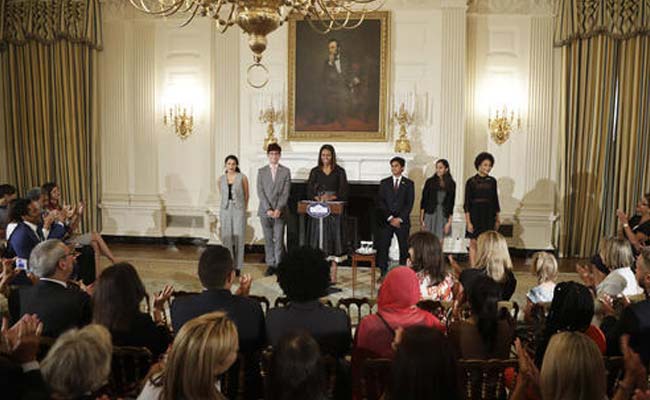
    WASHINGTON: An Indian-American girl attracted a sizeable audience at the White House when she narrated a poem that shared her experience as an immigrant and how it was painful to replace her mother tongue Tamil with English.

    Among the audience were the First Lady, Michelle Obama, who felicitated Maya Eashwaran and four others including another Indian-American Gopal Raman with the prestigious National Students Poet in recognition of their poetry skills.

    “I have lost more than I have ever lost in sixteen years.

    I have started shedding ethnicity like hair: Mother, I fear I’ll go bald,” Maya, 17, concluded reading her poetry. “Ma, I haven’t spoken (Tamil) in three years” amidst applause from the audience.

    She even received a shout out from the First Lady in her speech.

    “Maya — where’s Maya? You put it best. These are your words, I’m told: “On the stage, there is no way to leave unnoticed. Did you say that?” the First Lady asked.

    Maya, was born in the US to her Tamil parents.

    “My family is Tamil. I was born here. I write a lot of my poems based on my culture, my heritage,” she told PTI after her White House event.

    “The poem that I actually read at the White House linguistics is based on experience of losing my mother tongue and kind of replacing it with another, which is very painful thing to imagine to go through,” she said, adding that when she was in the middle school she stared getting interested in poetry.

    Gopal, 17, the other Indian-American budding poet who received national attention lives in Dallas and is a high school students.

    His parents — father from Chennai and mother from Kerala – moved to the US in the 1980s. He was born here. “It (love with poetry) started in seventh grade. I had a really great English teacher. He really pushed me in writing in more creative way. I choose poetry as my avenue of writing,” he said.

    “I am super honoured to meet the First Lady,” he said. “I also want to plan for pre-med. My dream job right now is some short of medical doctor” he added.

    At the event, Gopal read out the poem “This Apple”. The other three poets honoured at the White House are Stella Binion from Chicago, Joey Reisberg from Towson in Maryland and Maya Salameh from San Diego in California.

    Since its inception in 2011, the National Student Poets Program has showcased the essential role of writing and the arts in academic and personal success for audiences across the country.

    “This is the last time that we’re going to have the pleasure of welcoming a class of National Student Poets to the White House, at least under this administration. So I’m feeling a little melancholy here, because this has truly been an Honor and a privilege and a joy,” Michelle said.

    Recollecting how it all started, the First Lady said when they came here, they wanted to use this incredible platform of the White House to inspire young people to dream really big for themselves, to think about what their lives could look like beyond what their everyday existence is like.

  • US likely to make sale of Guardian drones to India: officials

    US likely to make sale of Guardian drones to India: officials

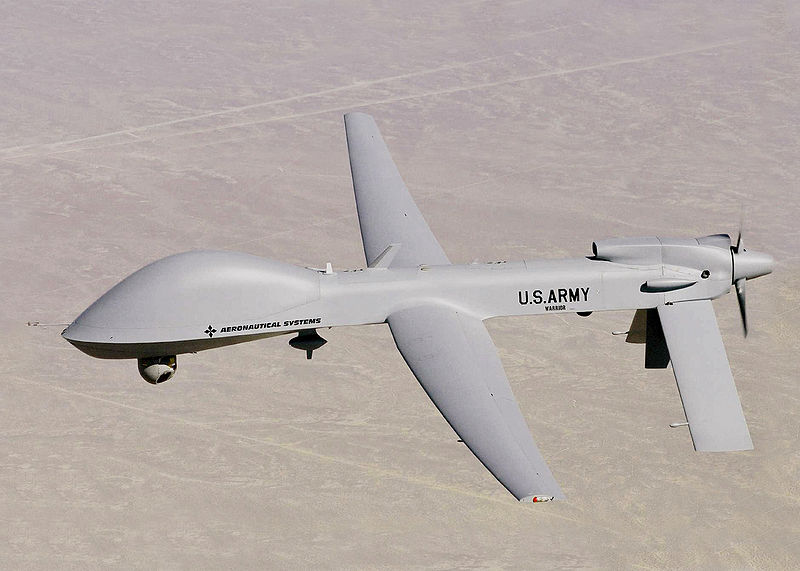
    The US is likely to make a positive decision on Indias request for state-of-the art unarmed Guardian drones for maritime surveillance, especially in the Indian Ocean.

    The move comes after India was designated a major defence partner of the US in June.

    Within weeks of that designation, after Prime Minister Narendra Modi met US President Barack Obama, at the White House in early June, the Indian Navy had sent an official letter of request (LoR) in February to Department of Defense towards purchase of 22 high-tech multi-mission Predator Guardian UAVs.

    This was the first major request of arms sale purchase by India after Obama designated New Delhi as a major Strategic Defence partner.

    The US government has not made a formal decision on it yet, but is believed to have started an inter agency process on the Indian request.

    According to sources, the administration believes that an approval of such a major military sale would help in “sealing Indian US defense relationship”, bring in “a new level of comfort” between the two militaries and would be considered as a lasting legacy not only for India but also for the Asia-Pacific pivot of the outgoing president.

    Officials here believe the sale of predator Guardian UAVs would act as a force multiplier for Indias maritime surveillance capabilities in the Indian Ocean region; which of late has become one of the key American objective in the Asia Pacific region.

    Top governmental sources confirmed that Defence Minister Manohar Parrikar and US Defence Secretary Ashton Carter had detailed discussions on predator Guardian UAV to fulfill maritime surveillance requirements.

    Parrikar was in the US last week and held meetings with Carter at the Pentagon on August 29.

    During the meeting, Carter is understood have assured Parrikar he would personally “champion” Indias request “within the system,” sources said.

    At General Atomics which has announced to office in India this year, the effort is being spearheaded by Dr Vivek Lall who had been also instrumental in Indias ability to procure advanced Boeing P8I aircraft for maritime domain awareness capability, they said.

  • US has elevated its ties with India across the board: Obama

    US has elevated its ties with India across the board: Obama

    Welcoming Indias growing role in the Asia-Pacific region, the US has said it will continue to work with other countries in the region for “addressing political and security challenges.”

    “Weve elevated our ties with India across the board, and we welcome Indias growing role in the Asia Pacific, Obama said in a major policy speech on Asia-Pacific region in Laos yesterday.

    This is for the first time that a US President has visited Laos.

    Obama said to keep the peace and deter aggression, the US has deployed more of its most advanced military capabilities to the region, including ships and aircraft to Singapore.

    “And by the end of the decade, a majority of our Navy and Air Force fleets will be based out of the Pacific. And our allies and partners are collaborating more with each other as well. So our alliances and defence capabilities in the Asia Pacific are as strong as theyve ever been,” he said.

    “Weve also forged deeper ties with emerging economies and emerging powers. With Indonesia and Malaysia, were promoting entrepreneurship. Were opposing violent extremism, and were addressing environmental degradation,” he said.

    “With my recent visit to Hanoi and Ho Chi Minh City, weve shown our commitment to fully normalising our relationship with Vietnam,” Obama said.

    “Weve deepened our cooperation with regional institutions, especially here in Southeast Asia. And as part of our new strategic partnership with ASEAN, weve agreed to key principles, including that ASEAN will remain central to peace, prosperity and progress in the Asia Pacific,” Obama said.

    “The US is now part of the East Asia Summit, and together weve made it the leading forum in the region for addressing political and security challenges, including maritime security,” he said.

    Obama said the US has worked to build a constructive relationship with China.

    “Our two governments continue to have serious differences in important areas. The US will remain unwavering in our support for universal human rights, but at the same time, weve shown that we can work together to advance mutual interests.

    The US and China are engaged across more areas than ever before — from preventing Iran from obtaining a nuclear weapon, to our shared commitment to denuclearizing the Korean Peninsula, to our historic leadership together on climate change,” he said.

    “So I will say it again:  The United States welcomes the rise of a China that is peaceful and stable and prosperous and a responsible player in global affairs, because we believe that will benefit all of us,” he added.

    “In other words, the US is more deeply engaged across the Asia Pacific than we have been in decades. Our position is stronger. And weve sent a clear message that, as a Pacific nation, were here to stay. In good times and bad, you can count on the United States of America,” Obama said.

  • 88 former military leaders write letter backing Donald Trump for president

    88 former military leaders write letter backing Donald Trump for president

    Donald Trump’s campaign released a letter Tuesday signed by 88 retired military leaders endorsing his presidential candidacy, including four four-star generals and 14 three-star flag officers, according to the campaign.

    The group, which was organized by Maj. Gen. Sidney Shachnow and Rear Admiral Charles Williams, praised Trump and declared that “the 2016 election affords the American people an urgently needed opportunity to make a long-overdue course correction in our national security posture and policy.”

    Also included in the letter was Gen. Burwell Bell, a retired four-star general who commanded US forces in Korea from 2006 until his retirement in 2008, and a notable inclusion in light of Trump’s rhetoric allowing for the possibility of nuclear proliferation in the Asia-Pacific region.
    “As retired senior leaders of America’s military, we believe that such a change can only be made by someone who has not been deeply involved with, and substantially responsible for, the hollowing out of our military and the burgeoning threats facing our country around the world. For this reason, we support Donald Trump’s candidacy to be our next Commander-in-Chief,” the group wrote in their letter.

    The former US military leaders were sharply critical of the Obama administration’s national security and foreign policy, warning that “enemies have become emboldened, sensing weakness and irresolution in Washington” and that “in our professional judgment, the combined effort is potentially extremely perilous.”
    “We support Donald Trump and his commitment to rebuild our military, secure our borders, to defeat our Islamic supremacist adversaries, and restore law and order domestically. We urge our fellow Americans to do the same.”
    One of the letter’s signers told CNN his endorsement for Trump was not unqualified, citing how the Republican presidential nominee’s comments about torture and his suggestion that the military should target terrorists’ families were cause for concern.
    “Yes, they did concern me and I’ll tell you why: a lot of times people say things not really understanding the consequences of their statements,” Brigadier General Remo Butler (Ret) told CNN’s Carol Costello on the “Newsroom.”
    However Butler, who last worked as chief of staff at Special Operations Command in Tampa, Florida, said his concerns were assuaged by the team of national security advisers Trump had assembled.
    “I would be a fool to give anyone my unqualified support,” Butler said. “I am listening to what he says. I am listening and watching his actions, and right now today, … I am supporting him.”
    Other Republican nominees in recent election cycles have managed to secure a larger number of generals and admirals as public backers.
    Sen. John McCain, a former Naval Aviator, was endorsed by 300 generals and admirals in his 2008 contest with Barack Obama.
    An even bigger number backed former Massachusetts Gov. Mitt Romney in 2012 via a full-page ad in the Washington Times.
    Clinton has yet to release a full list of senior officers backing her presidential bid, but several former generals have made their support for her public, including the former commander of US forces in Afghanistan, US Marine Gen. John Allen, as well as US Army four-star generals Bob Sennewald and David Maddox.
    Some of the most high-profile generals from recent conflicts, like David Petraeus, Stanley McChrystal, James Mattis and Raymond Odierno as well as Adm. William McRaven have not publicly said who they are voting for this election.
    And former chairman of the Joint Chiefs of Staff, retired Gen. Martin Dempsey, recently wrote an open letter lambasting generals for being overtly political.
    The other four-stars on the list, Gen. Alfred Hansen, Adm. Jerry Johnson, US Navy, Retired and Gen. Crosbie “Butch” Saint, all retired almost a decade before 9/11.
    Among the three-star generals on the list, Lt. Gen. Marvin Covault commanded the military’s response to the Rodney King riots of 1992 in Los Angeles. Covault has also publicly advocated for Common Core education standards, something Trump has regularly slammed on the campaign trail.
    Lt. Gen. William Boykin a former officer in the Army’s elite Delta Force encountered controversy when he expressed overt religious views while serving as a commanding officer during the Global War on Terror.
  • Pak-American nominated to federal judiciary bench by Obama

    Pak-American nominated to federal judiciary bench by Obama

    President Barack Obama has nominated a Pakistani-American, the first Muslim on the federal judiciary bench for the US District Court of Columbia.

    “I am pleased to nominate Mr Qureshi to serve on the US District court bench. I am confident he will serve the American people with integrity and a steadfast commitment to justice,” Obama said in a statement.

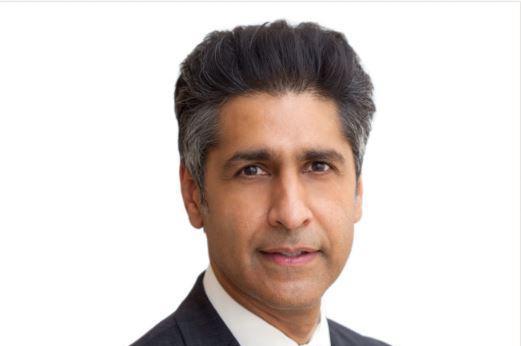
    Abid Riaz Qureshi is a partner in the Washington, DC office of Latham & Watkins LLP, where he specialises in cases involving the False Claims Act, health care fraud, and securities violations. He currently serves as the Global Chair of the firms Pro Bono Committee, a position he has held since 2012.

    From 2006 to 2011, he served as Co-Chair of the Litigation Department in the Washington, DC office. Qureshi has also served on the District of Columbia Bar Associations Legal Ethics Committee since 2015.

    Born in Pakistan, Qureshi earned his bachelors degree in 1993 from Cornell University and his law degree in 1997 from Harvard Law School. If confirmed, he would fill the seat left by US District Judge Rosemary Collyer, who took senior status in May.

    Obamas nomination of Qureshi has been hailed by the Muslim American community.

    “I commend President Obama for taking this important step in continuing to pick the best and brightest from every community to serve as part of our nations judiciary,” said Farhana Khera, former counsel to the US.

    Senate Judiciary Committee and executive director of Muslim Advocates, a national legal advocacy organization.

    “A judiciary that reflects the rich diversity of our nation helps ensure the fair and just administration of the law, and it is vital for American Muslims to be included. Qureshis profound commitment to the rule of law and justice for people of all backgrounds makes him an exceptional nominee,” she said.

  • Philippines’ Duterte calls President Obama ‘son of a whore’

    Philippines’ Duterte calls President Obama ‘son of a whore’

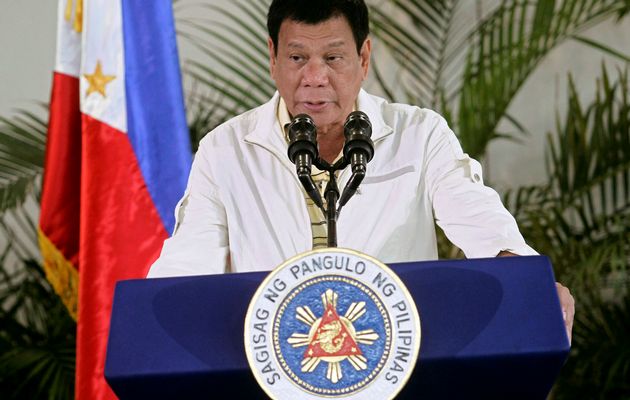
    Philippine President Rodrigo Duterte called Barack Obama a “son of a whore” on Monday, September 5, as he vowed not to be lectured by the US leader on human rights when they meet in Laos, where the Association of South-East Asian Nations summit is being held.

    The acid-tongued Duterte bristled at warnings he would face questioning by the US president over a war against drugs in the Philippines that has claimed more than 2,400 lives in just over two months.

    “You must be respectful. Do not just throw away questions and statements. Son of a whore, I will curse you in that forum,” Duterte told a news conference shortly before flying to Laos to attend a summit.

    “We will be wallowing in the mud like pigs if you do that to me.”

    Duterte was due to hold a bilateral meeting with Obama on Tuesday afternoon on the sidelines of a gathering of global leaders hosted by the Association of Southeast Asian Nations (ASEAN) in Vientiane, the Lao capital.

    But shortly after Duterte spoke, Obama appeared to cast doubt on whether such a meeting could take place.

    Calling Duterte “a colourful guy”, the US president said he has asked his staff to find out whether a meeting would be useful.

    “I always want to make sure if I’m having a meeting that it’s actually productive and we’re getting something done,” he told reporters.

    Speaking on the sidelines of the G20 summit in the Chinese city of Hangzhou, Obama said Washington recognised that drugs were a significant problem for the Philippines. But he insisted that he would not shy away from raising concerns about the way the issue was being handled under the new administration.

    “The issue of how we approach fighting crime and drug trafficking is a serious one for all of us. We’ve got to do it the right way,” he said.

    “Undoubtedly, if and when we have a meeting, this is something that’s going to be brought up. And my expectation, my hope is that it could be dealt with constructively.”

    Duterte has angrily rejected criticism from the Catholic Church, human rights groups, legislators and the United Nations.

    And he vowed Monday the bloodbath would continue as he pursued his goal of eradicating illegal narcotics in the Philippines.

    He has also branded Pope Francis and the US ambassador to Manila sons of whores.

    Duterte tells Obama ‘son of a whore’ remark wasn’t personal

    After Philippine president’s aides try to limit damage, saying he’d been addressing a reporter, he threatens to eat Islamist militias alive

    The president of the Philippines, Rodrigo Duterte, has expressed regret for calling Barack Obama a “son of a whore” – a remark that led to the US leader cancelling their meeting during a regional summit in Laos.

    In a statement read by his spokesman, Duterte said the remark was not intended as a personal insult. “While the immediate cause was my strong comments to certain press questions that elicited concern and distress, we also regret that it came across as a personal attack on the US president,” Ernesto Abella quoted Duterte as saying.

  • Obama Names Presidential Delegation for Canonization of Mother Teresa

    Obama Names Presidential Delegation for Canonization of Mother Teresa

    WASHINGTON (TIP); President Barack Obama has announced the designation of a Presidential Delegation to attend the Canonization of Mother Teresa in Vatican City on September 4.

    Lisa Monaco, Assistant to the President for Homeland Security and Counter terrorism, will lead the delegation and members of the delegation include Kenneth Hackett, U.S. Ambassador to the Holy See, Department of State; Suzy George, Deputy Assistant to the President and Executive Secretary and Chief of Staff, National Security Council, Sister Donna J. Markham, President and CEO, Catholic Charities USA and Dr. Carolyn Y. Woo, President and CEO, Catholic Relief Services.

  • Secretary Kerry’s visit: India unfurls its big power vision

    Secretary Kerry’s visit: India unfurls its big power vision

    The military agreement signed with the US (LEMOA) has stolen all the thunder in two recent high-level interactions with the US. The spin seems to make the agreement the epitome of Indo-US ties because of its outsized political weight. The Americans had actually offered a palette of four military agreements. India had earlier signed the end-user verification agreement which is theoretically more intrusive. The real test of Indo-US strategic closeness will be the other two military agreements that have been opposed by the Indian military.

    But the LEMOA, despite its strategic ordinariness, has created a climate of freshness in Indo-US ties. Its timing should give India considerable political capital when a new US President takes office. In India, US Secretary of State John Kerry uttered platitudes on terrorism that India likes to hear but Sushma Swaraj also evoked a phrase that is music to American ears — India’s willingness to be a net provider of security to the region. In other words, it means the Indian military will rise to the occasion in case of any trouble in the region. In the diplomatic world of give and take, US President Barack Obama has already assured US backing to India’s renewed quest for Nuclear Suppliers’ Group membership.

    That is not all. Kerry’s surprise suggestion of an India-US-Afghanistan trilateral can bring New Delhi back into the Kabul game. It also suggests increasing American exasperation with Pakistan that has been reflected in the US holding back funds for F-16 fighter jets as well as $300 million in military aid. And in a reminder to the world that India should not be hyphenated with Pakistan, India stood up to its G-20 stature when Sushma Swaraj reminded the Americans about the pending transfer of $100 billion to developing countries to battle climate change. The agreement for joint Indo-US research in the Arctic may not turn many heads but this will be the arena for resource grab in the coming decades. Taken together — net provider of security, NSG, Afghanistan, climate change and the Arctic — signal India’s long-term vision on the world stage in the coming years.

  • US Lawmakers appeal Obama to Support Dalai Lama’s return to Tibet

    US Lawmakers appeal Obama to Support Dalai Lama’s return to Tibet

    A group of 72 American lawmakers have asked US President Barack Obama to publicly support the right of the Dalai Lama to return to Tibet and call for an immediate and unconditional release of all Tibetan political prisoners languishing in China.

    “We write to ask that you redouble efforts in support of the Tibetan people during your remaining months in office. We believe it is critically important to move beyond words to actions,” the lawmakers said in a letter to Obama.

    “The Tibetan people view the US as their friend. It is time to honour that friendship with new, creative strategies to encourage meaningful dialogue, protect Tibetan rights, and preserve their unique cultural, religious and linguistic identity,” the three-page letter, dated August 17, said.

    The letter, organised by Congressman Jim McGovern, urged Obama to invite the Dalai Lama to every event, on every occasion, where his knowledge and decades of reflections would be helpful for addressing the world’s problems.

    The letter, released yesterday, call for the US government to facilitate the involvement of the Dalai Lama or his representatives in the global debate on climate change and its potential consequences given Tibet’s fragile environment, rapid warming and critically important reserves of freshwater.

    Urging the US government to publicly support the right of the Dalai Lama to return to Tibet, the letter asks Obama to publically and regularly call for the immediate and unconditional release of all Tibetan political prisoners held by the People’s Republic of China whose cases have been documented by the Congressional-Executive Commission on China.

    It seeks establishment of a US consular office in Lhasa, Tibet to help the US observe and address the obstacles to freedom of movement that affect both Tibetans within China, and US citizens, including Tibetan-Americans, who seek to travel to Tibetan areas of China.

    The letter also seeks enforcement of norms of reciprocity to ensure that senior Chinese officials responsible for restricting the access of US officials, journalists, Tibetan-Americans and other citizens to Tibetan areas of China are themselves restricted in their travel when they are in the US.

    Prominent among those who signed the letter are Congressman Eliot Engel, Ranking Member on the House Foreign Affairs Committee Nita Lowey among others.

  • Former RBI Deputy Governor Rakesh Mohan Named Senior Fellow At Yale Institute

    Former RBI Deputy Governor Rakesh Mohan Named Senior Fellow At Yale Institute

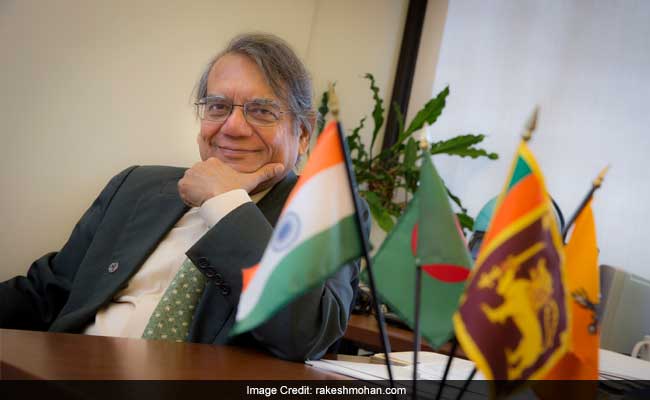
    NEW YORK: Top economist and RBI’s former deputy governor Rakesh Mohan has been named senior fellow at the prestigious Yale University’s institute for global affairs.

    Mr Mohan will join the 2016-2017 class of 15 Senior Fellows at The Yale Jackson Institute for Global Affairs. Senior Fellows are leading practitioners in various fields of international affairs who spend a year or semester at Yale teaching courses and mentoring students.

    At Jackson, Mr Mohan will teach courses on central banking and the Indian economy, the institute said in a statement.

    The institute described Mr Mohan as one of India’s “senior-most economic policymakers” and an expert on central banking, monetary policy, infrastructure and urban affairs.

    Most recently he was executive director at the International Monetary Fund in Washington, representing India, Sri Lanka, Bangladesh and Bhutan, and chairman of the Indian government’s National Transport Development Policy Committee.

    Reserve Bank of India’s deputy governor Urjit Patel has been appointed as the next Governor of the central bank after Mr Rajan demits office on September 4. However, Mr Mohan was reportedly among the front-runners to bag the coveted job.

    Mr Mohan has previously taught at Yale as Professor in the Practice of International Economics of Finance at its School of Management. He has also been a past Senior Fellow at the Jackson Institute.

    As deputy governor of India’s central bank from September 2002 to October 2004 and July 2005 to June 2009, he was in charge of monetary policy, financial markets, economic research and statistics.

    In addition to serving in various posts for the Indian government, including representing India at a variety of international forums such G20, Mr Mohan has worked for the World Bank and headed prestigious research institutes. He is also a Non Resident Senior Research Fellow of Stanford Centre for International Development, Stanford University, and Distinguished Fellow of Brookings India.

    Mr Mohan holds a B Sc in Electrical Engineering from Imperial College, University of London, a BA from Yale University and a PhD in Economics from Princeton.

    During the period October 31, 2004, to July 2, 2005, he was Secretary, Department of Economic Affairs. He has held several positions in the Indian government and was Chief Economic Advisor in 2001-02.

    The other senior fellows include Blair Miller, who leads impact investing for the office of Ray Chambers, the UN Secretary-General’s Special Envoy for Malaria, where they are developing a large scale impact investment fund for emerging markets and Ambassador Dennis Ross, former special assistant to President Barack Obama and National Security Council senior director for the Central Region.

    The new fellows will be joining returning fellows — Director of the Financial Stability Department at the Central Bank of Iceland Sigridur Benediktsdottir, former CEO of the Clinton Foundation Eric Braverman, New York Times op-ed columnist David Brooks, former US Deputy Permanent Representative to the United Nations Ambassador Rosemary DiCarlo, former Ambassador to Syria Ambassador Robert Ford, former International President of Doctors Without Borders Unni Karunakara and former Chairman of Morgan Stanley Asia Steve Roach.

    The Jackson Institute for Global Affairs promotes education and scholarship on global affairs at Yale.

    It serves the entire university through courses and core teaching programmes in global affairs, career counselling, and public lectures, according to the institute’s website.

  • WHY TRUMP’S CRAZY TALK ABOUT OBAMA AND ISIS MATTERS

    WHY TRUMP’S CRAZY TALK ABOUT OBAMA AND ISIS MATTERS

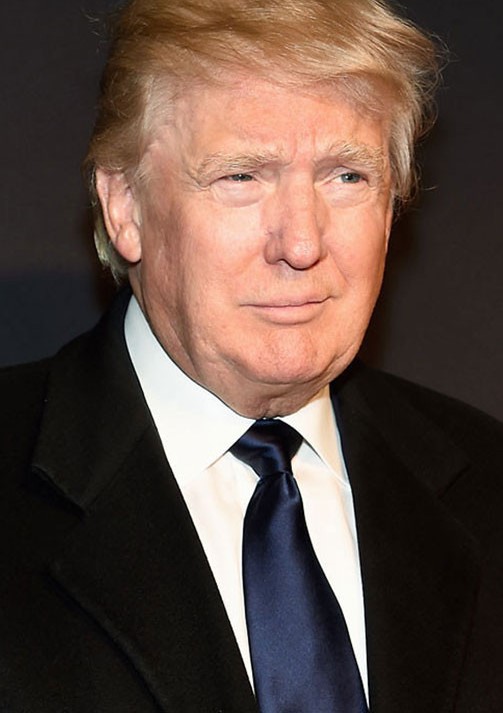
    On Thursday, August 11 morning, Donald Trump doubled down on his latest verbal outrage: the claim that President Obama was the “founder” of ISIS Actually, the Republican Presidential nominee tripled down. Appearing on CNBC’s “Squawk Box,” he described himself as “a truth teller” and went on to say that the President was “the founder of ISISabsolutely, the way he removed our troops.” Referring to Hillary Clinton, Trump added, “I call them co-founders.”

    Peripatetic as ever, Trump gave another interview, a short time later, to Hugh Hewitt, the conservative radio host, who said to him, “Last night, you said that the President was the founder of ISIS. I know what you meant. You meant that he created the vacuum, he lost the peace.”

    Trump wasn’t having it. “No. I meant that he’s the founder of ISIS,” he said. “He was the most valuable player. I gave him the Most Valuable Player award. I give her”-Clinton-“too, by the way.” Hewitt evidently thought that this was unfair to Obama. “But he’s not sympathetic to them,” he said. “He hates them; he’s trying to kill them.” Trump was unabashed. “He was the founder,” he said, referring to Obama. “His, the way he got out of Iraq, that was the founding of ISIS.”

    What are we to make of all this? At this stage, some will argue that it isn’t worth the effort to interpret Trump’s misstatements, or to point out the truth of the matter-in this case, that a Jordanian named Abu Musab al-Zarqawi founded ISIS, in 2004. At the very least, it should be obvious to everyone by now that Trump doesn’t deal in reality; he deals in mythmaking, demagoguery, and carnival barking.

    When he’s not tied to a teleprompter, Trump often seems to say the most provocative thing that comes into his head, with little thought for the consequences for his campaign, or for the campaigns of other Republicans. He’s like a small child, trying to be the center of attention, even if that means he has turned himself into an object of outrage and ridicule.

    If you take this view of Trump, there isn’t much more to be said. He’s the melting figure on the cover of this weeks’ Time magazine: a reality-television shyster who somehow captured the nomination of a major political party and is now dissolving in front of us. The only remaining questions for you are how big a majority Clinton will rack up, and whether the Republicans can limit the damage in the Senate and the House of Representatives.

    I’ve got a lot of sympathy for this interpretation. But, just for the sake of argument, let’s assume that Trump is smarter and less myopic than he seems. Let’s assume that what he’s really focused on isn’t winning this year’s election, a task he now realizes is beyond him, but creating a long-term Trumpian movement. A nationalistic, nativist, protectionist, and authoritarian movement that will forever be associated with him, but which also has the capacity to survive beyond him. A movement that in some ways would resemble other right-wing political parties around the world, such as France’s National Front, Austria’s Freedom Party, and the U.K. Independence Party, but which would also harken back to earlier moments in American history, such as the rise of the anti-immigrant Know Nothing movement of the eighteen-forties, and the formation, a century later, of the isolationist America First Committee, which sought a negotiated peace with Hitler.

    If establishing such a following, and bringing about a historic realignment on the right, was Trump’s real intention-rather than moving into the Oval Office next January-some of what he has been saying lately would be more comprehensible. Not more accurate or less odious, but more explicable on its own terms.

    History tells us that for right-wing populist movements to succeed, a number of things need to be in place. For one thing, they need a narrative that mainstream political leaders, and political parties, are guilty of not merely incompetence but betrayal. The most notorious example is the “stab-in-the-back” myth, widely believed in Germany after 1918. That narrative held that the German military didn’t really lose the First World War; the soldiers were betrayed by traitorous civilian politicians who signed an armistice. Later examples include the conviction in French conservative circles, during the nineteen-sixties, that Charles de Gaulle, in giving up Algeria, had betrayed France, and the accusation, thirty years later, that François Mitterrand and other French leaders had turned their backs on la Mère-Patrie by supporting the Maastricht Treaty, which created the European Union.

    Trump has been arguing for months that the Obama Administration, in withdrawing almost all U.S. troops from Iraq, helped bring about the conditions that enabled ISIS to seize territory and create a self-styled caliphate. (He fails to point out that the Bush Administration initiated the troop withdrawal.) He first suggested that Obama and Clinton created ISIS seven months ago, long before this week’s comments. At a rally in January, he said, “They’ve created ISIS. Hillary Clinton created ISIS with Obama.”

    At the time, Trump’s comments attracted some attention and criticism, but not very much. His principal adversaries then were his rivals in the Republican primary, and there was something of a competition going on to demonize Obama and Clinton. In returning to this sort of language now that he’s got the nomination-and escalating it with his use of the phrase “founder of ISIS”-Trump is, on the face of it, harming his prospects for November. He certainly doesn’t sound like he’s trying to win over the soccer moms in Columbus, or the office workers in Tampa, that he needs to win the election. He sounds like he is talking to his angry base, and supplying them with an inflammatory narrative that can be trotted out for years, and decades, to come. It’s a tactic that politicians outside the United States, such as Jean-Marie Le Pen and Jörg Haider, have used to good effect in building up far-right nationalist movements.

    Then there are Trump’s increasingly frequent references to the likelihood of his losing in November, and to the possibility that foul play will be responsible. “I’m afraid the election’s gonna be rigged, I have to be honest,” he told a rally in Ohio, on August 1st. A day later, talking to Fox News’s Sean Hannity, Trump returned to the theme, saying, “I’m telling you, November 8th, we’d better be careful because that election is going to be rigged. And I hope the Republicans are watching closely or it’s going to be taken away from us.”

    It is, of course, a staple of extremist parties of the left and right that democracy is a sham, and that elections count for nothing. And once you have delegitimized an election result, or an elected leader, you can justify all sorts of extra-electoral, and indeed anti-democratic, actions.

    In the wake of Trump’s remarks, some commentators pointed this out. “Suggesting an election is going to be stolen, this is Third World dictatorship stuff,” CNN’s Brian Stelter said. “The problem for Trump is that his supporters believe what he says,” Vox’s Dara Lind wrote. “If he says a Trump loss means the election has been stolen, there are millions of people prepared to believe it.” Just as there are many people who are willing to believe-or to internalize and accept, anyway-that Obama created ISIS, even though it was founded four years before he came to office.

    So is this what Trump is up to-diligently seeking to create an enduring America First movement that will eventually supplant the Republican Party? I wouldn’t give him that much credit. He’s precisely the self-centered, shortsighted, and insecure figure he appears to be, and he’s now flailing around for excuses to explain a humiliating defeat in the making. In his interview with CNBC, he said, “If, at the end of ninety days, I’ve fallen short . . . it’s O.K. I go back to a very good way of life.”

    But even if Trump is just along for the ride, that doesn’t excuse what he is doing. Four years from now, or eight years from now, a more disciplined and self-controlled figure could take up where he left off. If at that time the United States were facing a serious economic or national-security crisis, more Americans-conceivably even a majority of them-might be willing to accept the argument that regular politicians have failed and betrayed them, and that drastic measures are called for. Healthy democracies don’t decay overnight. They gradually rot from within, with termites like Trump undermining their foundations.

    (Source: newyorker.com)

  • India’s Independence Day belongs to all Indians and all people who wish India well

    India’s Independence Day belongs to all Indians and all people who wish India well

    As an American proud of my Indian ancestry, and my name unchanged, I am more than merely delighted that these United States and India have found a durable rhythmic tune, geopolitical and strategic in nature, bound by common notes and dreams of our bilateral citizenry in their enlightened self-interest-based pursuit of happiness guaranteed by separated powers regimes.

    2015 is special for many reasons. We overcame the unexpected bilateral pain that became known as the Devyani incident with Hours of Immunity successfully negotiated by FM Salman Khurshid with Secretary John Kerry, to then witness PM Modi rock Madison Square Garden. Later, as I wished, President Barack Obama held a Chai Summit in India. But, then it got better. President Obama did for Indian-Americans and India what he did for Chinese-Americans and China – as he had appointed Gov. Gary Locke as our ambassador to China in 2011, in the past year he appointed Senate Leader Harry Reid’s right hand Richard Rahul Verma as our ambassador to India. For good measure, he also appointed talented diplomat Atul Keshap as our ambassador to Sri Lanka. Recently, Nisha Desai Biswal, Assistant Secretary of State for Central and South Asia, visited India’s Consulate General in New York to personally plant eternal-goodwill where Devyani used to be DCG. Such an act serves to repair even frayed feelings and is worthy geometrically – as there is an implied promise that all will be well between our two nations.

    That India produced a man such as Dr. Kalam – who rose to be India’s 11th President – an Indian Muslim – and who was so loved by Indians and who so loved India -seems to me to be a clarion call for all good people everywhere to stand up to religious oppression everywhere with humility-based good deeds that serve their nation above all else, and with respect for all faiths. Earlier, the world experienced the slaughter and splatter of precious ink at Charlie Hebdo – the home of cherished Voltaire who prodded many a monarch to better serve the public good – and Paris became Ground Zero for unity of all nations’ leaders walking arm-in-arm seeking tolerance of free speech as a “core” right and obligation of global citizenship. Dr. Kalam, methinks, singlehandedly well honored Mahatma Gandhi’s love for Muslim Indians, Christian Indians, Buddhist Indians, Jewish Indians and inter alia, Hindu Indians. 68 years ago Pandit Jawaharlal Nehru rose to say these immortal words: “Long years ago we made a tryst with destiny, and now the time comes when we shall redeem our pledge, not wholly or in full measure, but very substantially. At the stroke of the midnight hour, when the world sleeps, India will awake to life and freedom. A moment comes, which comes but rarely in history, when we step out from the old to the new, when an age ends, and when the soul of a nation, long suppressed, finds utterance.”

    Dr. Kalam answered India’s Tryst With Destiny – excellence with humility, nation above religion, peace above war. India belongs to everyday Indians who recall the sacrifices made by so many to be a free nation, and live their lives as homage to those who sacrificed so much.

    That Indian Tea played a starring role in the Boston Tea party of 1773, and today India and United States find themselves in a vortex that cannot be denied – of unity of interest – one may be forgiven to say it was so decreed even by natural law without the need of being a Calvinist. May we continue to be worthy of God’s grace at the stroke of the midnight hour and every hour thereafter.”

  • Trump calls Obama founder of ISIS and Hillary Clinton the co-founder

    Trump calls Obama founder of ISIS and Hillary Clinton the co-founder

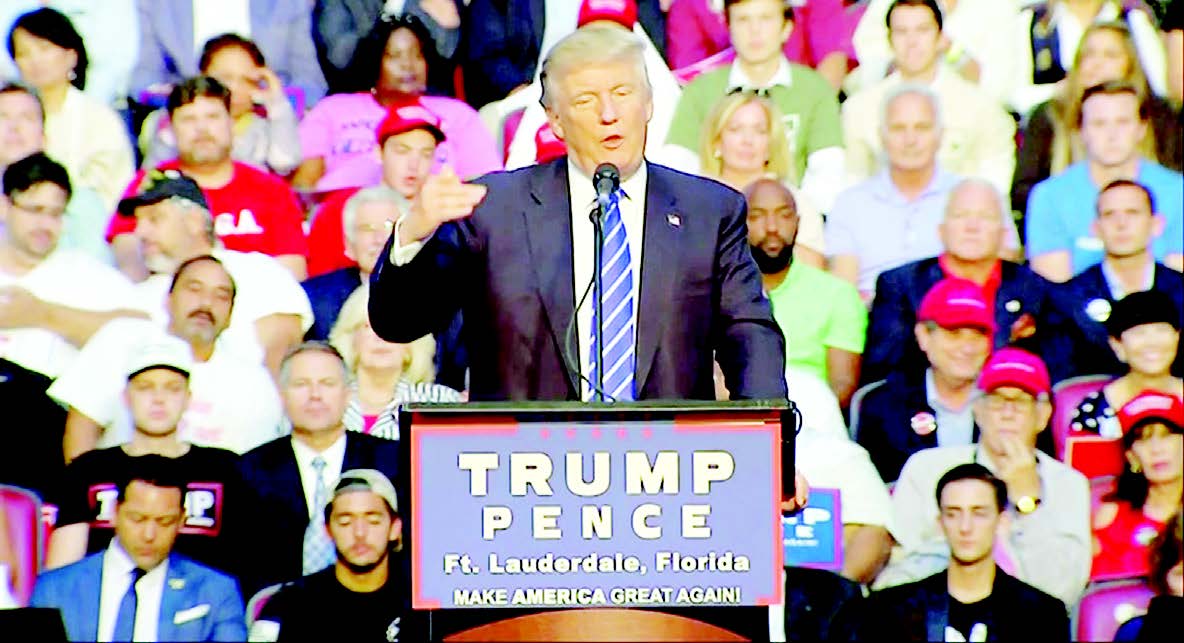
    SUNRISE, FLORIDA (TIP): “They honor President Obama,” he told a rally inSunrise, Florida on Wednesday, August 10. “He is the founder of Isis “.

    Trump also attacked his Democratic rival for the White House, Hillary Clinton, calling her a “co-founder”.

    Hillary responded by accusing him of “trash-talking” the US and echoing the talking points of Russian President Vladimir Putin. Trump stood by his remarks on Thursday, August 11, using a sports phrase to say Obama and Clinton were the Islamic State’s “most valuable players”.

    The Republican presidential nominee has endured 10 days of negative headlines after a string of controversial comments.

    Most recently, he appeared to urge his supporters to take up arms against Clinton to stop her from appointing liberal judges to the US Supreme Court if she wins the election.

    The hotel developer-turned-politician denied he was inciting violence, but the daughter of former President Ronald Reagan, who was shot in 1981, condemned his “verbal violence”.

    Trump’s unfounded off the cuff comments have received wide disapproval, including from Republican politicians who are increasingly getting worried that Trump’s adventures with his tongue may alienate voters and bring them suffering.

    IS can trace its roots back to the late Abu Musab al-Zarqawi, a Jordanian who formed al-Qaeda in Iraq (AQI) after the US-led invasion in 2003. It became a major force in the insurgency, carrying out dozens of attacks a month.

    After Zarqawi’s death in 2006, AQI created a militant umbrella organization, Islamic State in Iraq (ISI). Over the next four years, it was steadily weakened by a US troop surge and Sunni Arab tribal fighters who rejected its brutality.

    Abu Bakr al-Baghdadi became leader in 2010 and began rebuilding ISI. The following year, ISI joined the rebellion in Syria, which offered it a safe haven and easy access to weapons, some of them supplied by US allies opposed to President Bashar al-Assad.

    The group also exploited withdrawal of US troops from Iraq at the end of 2011 and widespread Sunni anger at the sectarian policies of the country’s Shia-led government.

    ISI changed its name to Islamic State in Iraq and the Levant (Isis or Isil) in 2013 and began seizing territory in Syria. In 2014, Isis overran large swathes of northern and western Iraq, proclaimed the creation of a “caliphate”, and became Islamic State.

    The White House has not commented on the “IS founder” claim but a spokesman for Clinton said: “This is another example of Donald Trump trash-talking the United States.

    “What’s remarkable about Trump’s comments is that once again, he’s echoing the talking points of Putin and our adversaries to attack American leaders and American interests, while failing to offer any serious plans to confront terrorism or make this country more secure.”

    In recent weeks, several leading Republicans have deserted Trump over his outspoken attacks.

    Most recently, Senator Susan Collins said she would not be voting for him, pointing to a time he seemed to mock a disabled journalist.

    Time Magazine on Thursday reported that the chairman of the Republican National Committee, Reince Priebus, had threatened to withdraw funding from the Trump campaign, and instead direct it to Congressional campaigns.

    Trump denies that this conversation ever took place.

    Polls suggest support for the embattled candidate has been falling in key battleground states in recent weeks.

  • Democratic Convention, Philadelphia July 25-28, 2016Obama Steers 2016 Presidential Election away from Trumpism

    Democratic Convention, Philadelphia July 25-28, 2016

    Obama Steers 2016 Presidential Election away from Trumpism

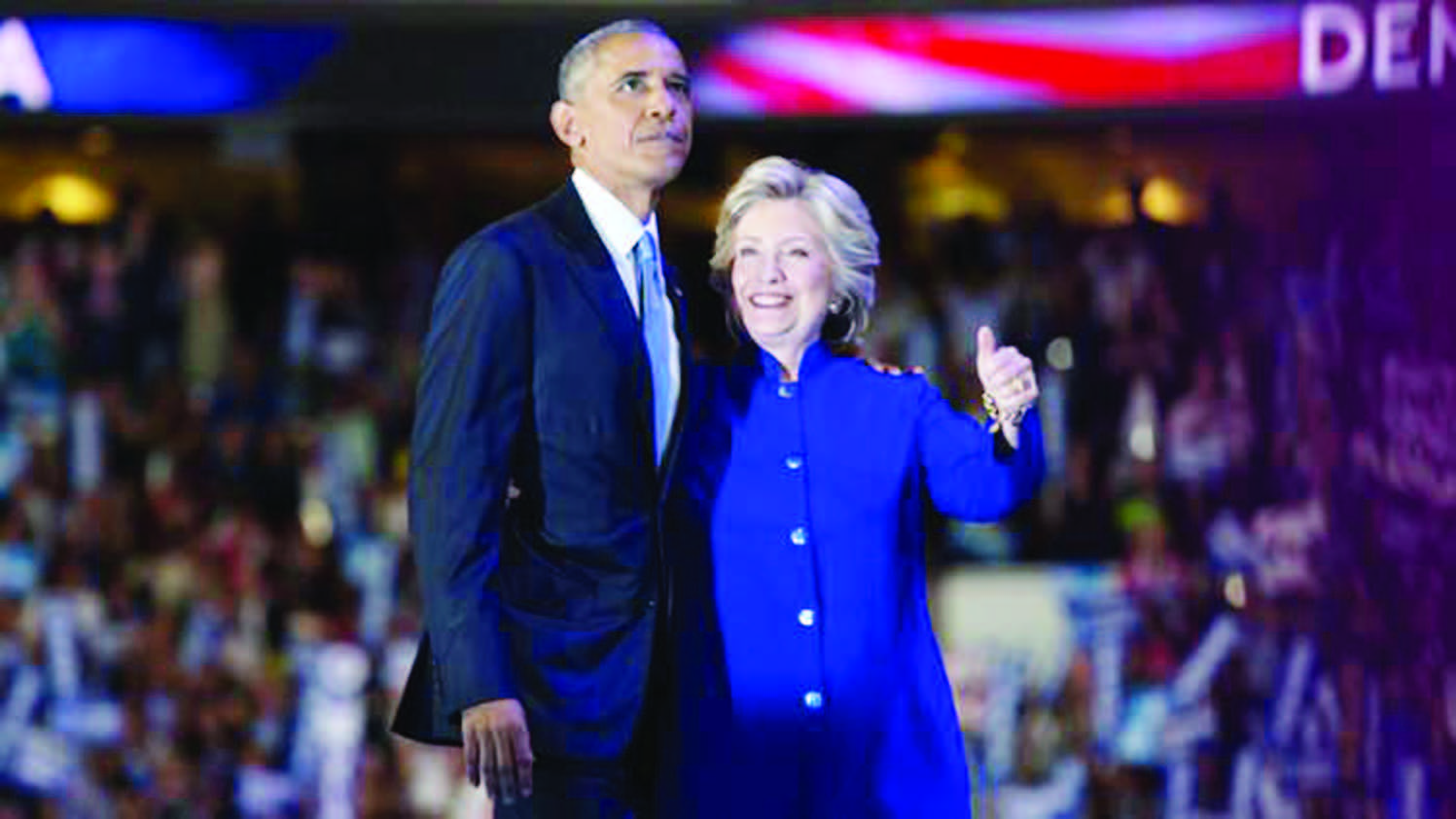
    PHILADELPHIA (TIP): Barack Obama, July 27 made a powerful endorsement of Hillary Clinton as the next US President, saying no one including himself was ever more qualified than his former secretary of state, as Democrats united against “homegrown demagogues” like Republican rival Trump who sell “fear and cynicism”.

    The two-time president, also the first black to have occupied the top post, said he was “ready to pass the baton” to his rival in 2008 as he painted an optimistic picture of an “already great nation”.

    “I can say with confidence there has never been a man or a woman-not me, not Bill (Clinton), nobody-more qualified than Hillary Clinton to serve as president of the United States of America,” Obama said amid deafening cheers from thousands of delegates and guests packed into a sports arena here.

    In his 45-minute fiery speech, the most high-profile in the ongoing Democratic national convention, Obama asked Americans to shun “cynicism and fear” being propagated by the 70-year-old reality TV star.

    “And now I’m ready to pass the baton and do my part as a private citizen. So this year, in this election, I’m asking you to join me, to reject cynicism and reject fear and to summon what is best in us; to elect Hillary Clinton as the next president of the United States and show the world we still believe in the promise of this great nation,” he said.

    Obama, 54, said the November 8 presidential elections were a “fundamental choice” about what the country is and the very “meaning of our democracy”, and “not just a choice between parties or policies; the usual debates between left and right.”

    He endorsed Clinton for having a first-hand knowledge of the challenges that come with the job and contrasted it with the lack of experience of the Republican nominee – a non-politician.

    “You know, nothing truly prepares you for the demands of Oval Office. Until you’ve sat at that desk, you don’t know what it’s like to manage a global crisis, or send young people to war. But Hillary’s been in the room; she’s been part of those decisions.

    “He (Trump) is not really a plans guy. Not really a facts guy, either. He calls himself a business guy, which is true, but I have to say, I know plenty of businessmen and women who’ve achieved success without leaving a trail of lawsuits, and unpaid workers, and people feeling like they got cheated,” he said.

    The third day of the convention also witnessed Vice President Joe Biden making an emotional valedictory speech and Virginia Senator Tim Kaine formally nominated as vice-presidential candidate.

    “Ronald Reagan called America ‘a shining city on a hill’. Donald Trump calls it ‘a divided crime scene’ that only he can fix. It doesn’t matter to him that illegal immigration and the crime rate are as low as they’ve been in decades, because he’s not offering any real solutions to those issues. He’s just offering slogans, and he’s offering fear. He’s betting that if he scares enough people, he might score just enough votes to win this election,” he added.

    “That is another bet that Donald Trump will lose. Because he’s selling the American people short. We are not a fragile or frightful people,” Obama said.

    Obama said democracy doesn’t work if people constantly demonize each other.

    “She (Hillary) knows that for progress to happen, we have to listen to each other, see ourselves in each other, fight for our principles but also fight to find common ground, no matter how elusive that may seem,” he said.

    Making a passionate plea to elect Hillary as his successor, Obama said time and again, they have elected him. “Tonight, I ask you to do for Hillary Clinton what you did for me. I ask you to carry her the same way you carried me,” he said.

    Indian-Americans in spotlight at democratic convention

    The growing clout of Indian-Americans in US politics came to spotlight as three leaders from the community took the center stage at the ongoing Democratic National Convention that anointed Hillary Clinton as party’s presidential nominee

    Neera Tanden
    Neera Tanden

    Neera Tanden in her political debut at the national stage of the Democratic party, made a strong case for Clinton as the next president of the US

    Ami Bera
    Ami Bera

    Ami Bera, an Indian-American Congressman, in his brief appearance said: “As the only South Asian member of Congress, as a member of the Foreign Affairs Committee, I support Hillary Clinton because she is the only candidate that understands the complexity of the world and is prepared from day one to lead America.”

    Raja Krishnamoorthi
    Raja Krishnamoorthi

    Raja Krishnamoorthi, an Indian-American Democratic Congressional candidate from Illinois, has been introduced as one of the party’s emerging leaders during the convention.


    Tim Kaine Accepts Vice-Presidential Nomination  

    Tim Kaine is the running mate of Hillary Clinton
    Tim Kaine is the running mate of Hillary Clinton

    Democrats gathered in Philadelphia formally selected Tim Kaine as their US vice-presidential candidate, completing the party’s ticket for the November election. Kaine, a 58-year-old senator from the battleground state of Virginia, was nominated by voice vote

    The tickets are now set for both parties: Hillary Clinton and running mate Kaine for the Democrats, with Republicans Donald Trump and running mate Mike Pence, both of whom were nominated last week and their party’s convention in Cleveland.

    With working-class roots and a spotless record both as Virginia governor and senator, he is seen as helping Clinton garner support among reluctant independent male voters-although at the risk of alienating the party’s progressive left wing.

    Prez Trump? God help us: Bloomberg to voters 

    Former New York Mayor Michael Bloomberg labeled Trump a conman
    Former New York Mayor Michael Bloomberg labeled Trump a conman

    Independent former New York mayor Michael Bloomberg told divided Americans it was time to unite behind Hillary Clinton in order to defeat “demagogue” Donald Trump “Trump says he wants to run the nation like he’s running his business? God help us,” Bloomberg, who like Trump is a billionaire businessman, told the Democratic National Convention in Philadelphia

    “I’m a New Yorker, and I know a con when I see one.” He issued stinging rebukes to Trump, describing him as singularly unfit for the presidency and calling his business plan “a disaster in the making.”

  • The finest Obama Moment:  Lessons in Leadership in Times of Trouble

    The finest Obama Moment: Lessons in Leadership in Times of Trouble

    Thursday (July 28) morning, many of us found ourselves riveted to television screens, listening to President Barack Obama deliver one of the most substantive and wise speeches by any world leader in recent years. Of course, he was speaking at the Democratic Party’s National Convention in Philadelphia. Such conventions in American politics are primarily tribal gatherings, with well-honed rites and rituals of endorsement, denunciation and demonization. Expectedly, Obama did all that – and, then a bit more. He ended up educating the Americans and the rest of the world in the principles and practices of leadership.

    Obama, in his speech at the Democratic Convention in Philadelphia said leadership meant "creating the possibility for people of goodwill to join and make things better".
    Obama, in his speech at the Democratic Convention in Philadelphia said leadership meant “creating the possibility for people of goodwill to join and make things better”.

    In outlining differences between Hillary Clinton and her Republican opponent, Donald Trump, President Obama reflected on what constitutes leadership, particularly in these troubled times when the world order is looking somewhat frayed. These reflections were worth every penny because this is the time when political leaders, especially in the West, are being fashionably run down as unable and ill-equipped to address the concerns of their disillusioned, disenchanted and disenfranchised citizens. The masses are supposed to be in some kind of ‘revolt’ against the political classes. Suddenly, the world over, there appears be a clamor for the boorish demagogue, who does not care for the so-called elites and their expertise and addresses himself, instead, directly to the modern equivalent of the unwashed millions. The damage such demagogues can inflict on a society’s political and social stability was very much evident in the recent British referendum on the European Union. Britain is no exception. All over, inciters and imposters are finding victims among gullible and confused citizens.

    In Philadelphia, Obama spoke up against this global current of demagogic sales-pitch. In endorsing Hillary Clinton and indirectly depreciating Donald Trump, Obama sought to wean the Americans and other citizens the world over from the seductive charm of the slogan-mongers. (We in India are not unfamiliar with this phenomenon and its bewitching potential. We have even coined a name for it, too: jumala-baazi). Obama courageously cautioned against those who seek to use the pulpit to fan “resentment, and blame, and anger, and hate.” The demagogue preys on the citizens’ anxieties about a world the national governments are no longer able to cope with, leave alone control and coerce.

    President Obama has the experience and the credentials to be critical of Donald Trump for “not offering any real solutions” and, instead, “just offering slogans, and offering fear.” Despite being a partisan at a patently partisan show, Obama’s censure does underscore the complexities of the modern-day government.

    Presiding over a country – any country – is a complicated affair. Everyone wants change and every two-penny bit of a politico promises change with a capital C. But what Obama managed to underline was the stark reality: there are no teach-it-yourself manuals for the business of government, the science of governance and the art of governing. It is easy to promise and not all that easy to deliver. He was warning not just the Americans but also the voting citizens all over the world: beware of the man who sells a quick-fix. There are no quick-fixes, as we have been discovering for ourselves since May 2014.

    Democratic voices and forces all over the world would be grateful to President Obama for reminding us once again that a democracy does not depend upon one person. Instead, the beauty of democracy is that its resilience and resourcefulness empower one and all: “Our power does not come from a self-declared savior promising that he alone can restore order. We don’t look to be ruled.” In making this assertion, Obama raised his voice against the ever-present weakness for the megalomaniac and against the shaman and his black bag of magic medicines.

    A democratic polity, be it in India, America or England, is an arrangement of institutions and processes and protocols. A democratic system intrinsically frowns upon potential Caesars and other purveyors of personality cult. Authority in democracy can only be an institutionalized exercise of power.

    Leadership means not just arousing the passions and animosities of your followers; it means enlisting the support and cooperation of your rivals once the vote is over. “It’s creating the possibility for people of goodwill to join and make things better,” Obama proposed.

    An essential corollary of this proposition is that a true leader is not intimidated by talent around him or her, is not afraid of other brilliant and bright men and women, and does not surround himself with mediocrities and second-raters. In our own case, at the most critical moment of modern history, Jawaharlal Nehru and Sardar Patel, though rivals, made a formidable diarchy; and, with the Mahatma’s blessing, they were willing to -and, did – share power and space and public gaze with those who were not their political associates in the fight against the British. The post-Independence leadership felt secure enough to invite ‘rivals’ and outsiders to be part of the Cabinet and become partners in the great task of rebuilding the new Indian State.

    An essential element of leadership has to be a capacity to work with other people. Not a one-man show. As Obama noted that “even when you’re 100 per cent right, getting things done requires compromise. That democracy does not work if we constantly demonize each other.” (His admonition can well be directed at Arvind Kejriwal’s AAP government and its equally unsparing rivals in the Modi sarkar).

    As Obama would tell us, leadership is not about instigating followers to a civil war; nor is it about deepening society’s divisions and fault-lines. Leadership is about tapping collective positive impulses and energy. Or, as Obama put it, cultivating and nurturing “bonds of affection; that common creed.” Leadership is about summoning citizens to rise above their petty animosities and prejudices. Invoking inclusiveness is a primary obligation for any leader because every country is a divided society. Obama was brilliant and courageous in acknowledging the diversity among the Americans “whether they wore a cowboy hat or a yarmulke; a baseball cap or a hijab.” We should certainly be able to feel the import of these words at a time when the majority in India feels itself empowered enough to beat up the minorities. But Obama argued that politics of togetherness will always trump the politics of divisiveness. “We are stronger together,” he intoned.

    And, summoning togetherness is not at all easy a task. Because that involves offering a moral leadership. Obama exhorted the Americans to “reject cynicism, reject fear, to summon what’s best in us.” This is not just an American requirement; this is an axiom that has to be valid and relevant in every country around the world.

    (Yale alumnus author is a former Media Advisor of the Indian Prime Minister. He remained in Prime Minister's Office from June 2009 to January 2012)
  • Michelle Obama hosts three Young Indian American Cooking Contest Winners at State Dinner

    Michelle Obama hosts three Young Indian American Cooking Contest Winners at State Dinner

    WASHINGTON, DC (TIP): Usually it’s the parents advising their kids to steer clear of junk food and stick to healthy stuff. But what happens when the kids are great cooks and stir up healthy recipes? They get invited to the White House.

    Eight-year-old Shakthi Ramachandran from Indiana, 11-year-old Abhijith Jenkins from Missouri and 10-year-old Priya Patel from Texas were the only Indian Americans among 56 kids representing each U.S. state, five territories, and the District of Columbia, who were invited for the annual ‘State Dinner’ hosted by First Lady Michelle Obama July 14.

    These young chefs were winners of a nationwide recipe challenge for U.S. students that promoted cooking and healthy eating. The Healthy Lunchtime Challenge, part of Michelle Obama’s “Let’s Move” initiative, selected the winners for their original recipes that included fruits, vegetables, whole grains, lean protein and low-fat dairy. Ramachandran made ‘Chicken Tikka Pita’ with cucumber raita, Jenkins prepared ‘Tropical Vacation with Catfish and Quinoa’ and Patel cooked ‘Tex-Mex Veg-Head Lasagna.’ The kids, who got a tour of the White House kitchen garden, were also entertained with a performance by the cast of Walt Disney World Resort’s “The Jungle Book.”

    Over 1,200 entries were submitted to this year’s Healthy Lunchtime Challenge. The winning recipes were selected based on their healthfulness, taste, originality, affordability, and following USDA’s MyPlate nutrition guidance. In addition, the challenge encouraged entries to include local ingredients grown in the entrant’s state, territory, or community.

    PTI adds: “Since 2012, as part of Let’s Move!, we’ve hosted five of these Kids’ State Dinners here at the White House. And altogether, we’ve reviewed over 6,000 recipe submissions. We’ve welcomed more than 270 young people and their families. And, of course, we ate a whole lot of good food,” the First Lady said in her address to the kids. The event is not just about eating well today, she said.

    “It’s setting kids like all of you up for a lifetime of healthy choices. Because here’s what we know: Eating healthy foods can affect how well you do in school. That’s right,” she said.

    According to Ramachandran, one day she asked her father how she could make her favorite food, chicken tikka masala, into a sandwich. “I love chicken and I also like to eat a lot of vegetables,” she said. “This recipe combines all these things and is very tasty and delicious. In the summer most of the vegetables we eat are from our garden. The cucumber raita dressing makes it delicious.” Patel said she was inspired by her mom to make this recipe.

    “She always tells us to add vegetables to everything we make and to experiment,” she said. “I love Tex-Mex food and also lasagna, so we thought this was a good way to combine both. My mom also tells us to be flexible so we use canned or frozen vegetables if we’re out of fresh,” she said. “You can substitute any veggies and fruits you like. The possibilities are endless. My mom says not having or liking one ingredient is not an excuse to not try a recipe or to buy fast food!”

    (Source India West) 

  • Barack Obama, Joe Biden Endorse Kamala Harris for Senate

    Barack Obama, Joe Biden Endorse Kamala Harris for Senate

    LOS ANGELES (TIP): President Obama and Vice President Joe Biden on Tuesday, July 19, 2016, announced they are backing state Atty. Gen. Kamala Harris, a longtime political ally of the president, in California’s historic Democrat-on-Democrat U.S. Senate race. Barack Obama praised 51-year-old Kamala Harris as a “lifelong courtroom prosecutor” who has fought international gangs, oil companies and the big banks responsible for the mortgage crisis.

    “Kamala Harris fights for us. That’s why I’m so proud to endorse her for United States Senator,” the president said in a statement released by the Harris campaign and the Democratic National Committee. Harris faces fellow Democrat Loretta Sanchez, a 10-term congresswoman in the November polls.

    “And if you send her to the Senate, she’ll be a fearless fighter for the people of California – all the people of California – every single day,” Barack Obama said. Vice President Joe Biden said the Senate “needs people like her – leaders who will always fight to make a difference and who never forget where they come from.”

    For Sanchez, the Orange County congresswoman, the endorsements are a stinging rebuke and another political obstacle to the many she must overcome by the November election, the Los Angeles Times reported. Kamala Harris, who was born in Oakland, California, is the daughter of an Indian mother who emigrated from Chennai in 1960 and a Jamaican American father.

    The president’s nod caps a string of major endorsements for Harris, the candidate of choice among the Democratic Party’s power barons and some of the left’s most influential interest groups. It also sends a clear signal to Democratic donors, many of whom have stayed on the sidelines this election, the paper said. Kamala Harris already has won the support of California Governor Jerry Brown and the California Democratic Party, along with Senator Elizabeth Warren (Democract from Massachusetts), a favorite of the left.

    Kamala Harris said she was honored to receive the support of the president and vice president, calling them “incredible leaders for our nation.” She has more than a 3-to-1 edge over Sanchez in fund-raising and easily topped a crowded field of Senate candidates in the June primary. The attorney general also held a 15-percentage-point lead over Sanchez in the latest Field poll, the paper said.

    The two Democrats will face off in the November election, setting the stage for the highest-profile contest between two members of the same party since California adopted a top-two primary election system. Kamala Harris’ ties to Obama and his administration stretch back more than a decade, even before he burst onto the national political scene. While she was still the San Francisco district attorney, Harris supported and raised money for Obama when he ran for the US Senate in Illinois. She later served as the California co-chair of his upstart 2008 presidential campaign.

    Barack Obama reciprocated by helping to launch Kamala Harris into the national spotlight when he gave her a speaking role at the 2012 Democratic National Convention in North Carolina.

  • US must improve probes of police use of force, Barack Obama says

    US must improve probes of police use of force, Barack Obama says

    WASHINGTON (TIP): US President Barack Obama on July 12 said more must be done to build trust that police violence against blacks and Hispanics will be properly investigated.

    “We’re going to have to do more work together in thinking about how we can build confidence that after police officers have used force, particularly deadly force, that there is confidence in how the investigation takes place and that justice is done,” Obama said after a meeting with activists, lawmakers and law enforcement leaders.

    Obama said there might be a need to develop a set of practices to ensure that investigations are carried out effectively and fairly for all parties involved.

    The meeting on Wednesday focused on how to bridge the divide between police officers and the black and Hispanic communities after a series of high-profile police killings of black men in the past two years sparked angry protests throughout the country.

    Obama has called for the country to come together and not give in to despair and division after the shooting deaths of five police officers in Dallas and the police killings of black men in Louisiana and Minnesota. He laid out a series of steps that could help to improve relations between law enforcement and communities, including improving data collection and updating police training practices.

    Attendees at the meeting included Louisiana governor John Bel Edwards, the president of the National Association of Police Organizations, Michael McHale, and leaders of the #BlackLivesMatter movement.

    A White House task force released a report last year recommending various reforms for local law enforcement in the United States, but Obama said more action is needed.

    “What’s been apparent is that it’s not enough just for us to have a task force, a report and then follow up through our departments, we have to push this out to communities so that they feel ownership for some of the good ideas that have been floating around this table,” he said.