Tag: Barack Obama

  • Bill Introduced to Block Indian Firms from Hiring H-1B, L-1 Visa Workers

    Bill Introduced to Block Indian Firms from Hiring H-1B, L-1 Visa Workers

    WASHINGTON — A bipartisan group of two U.S. lawmakers has introduced in the House of Representatives a legislation, which if passed by Congress would prevent Indian companies from hiring IT professionals on H-1B and L-1 work visas.

    Since the revenue model of the majority of big Indian and U.S. IT companies is heavily dependent on H-1B and L-1 visas in the U.S., such a bill is likely to have a major impact, if not sound a death knell, on their business.

    The “H-1B and L-1 Visa Reform Act of 2016” introduced by Reps. Bill Pascrell, D-N.J., and Dana Rohrabacher, R-Calif., would prohibit companies from hiring H-1B employees if they employ more than 50 people and more than 50 percent of their employees are H-1B and L-1 visa holders.

    Before the bill is signed into a law by President Barack Obama, it needs to be passed by the Senate, wherein it has not been tabled so far. Notably, the two sponsors of the bill come from the two American states that have the maximum concentration of Indian Americans.

    “America is producing many skilled, high-tech professionals with advanced degrees and no jobs. By ‘in-sourcing’ and exploiting foreign workers, some businesses are abusing the visa programs and undercutting our workforce to reap the rewards,” Pascrell said. “Without the critical reforms our bill proposes, American workers will continue to be unfairly displaced and visa workers will continue to be mistreated — both of which are unacceptable.”

    Noting the foreign outsourcing companies are the top users of the H-1B and L-1 visa programs, a media statement issued by the congressman’s office said over the years a number of concerns have been raised about how certain companies have been using these visa programs, including a 2011 report from the Government Accountability Office calling for reform.

    Pascrell and Rohrabacher had introduced a similar version of this bill in 2010, which could not gain enough support in Congress.

    The lawmakers said the H-1B and L-1 Visa Reform Act of 2016 would close loopholes in the H-1B and L-1 visa programs, reduce fraud and abuse, provide protections for American workers and visa holders, require more transparency in the recruitment of foreign workers and increase penalties on those who violate the law.

    That would require employers to make a good faith effort to recruit and hire American workers before bringing in visa workers, and prohibit employers from replacing American workers or giving preference to visa holders when they are filling open positions, they said.

    It would provide more authority to the departments of Homeland Security and Labor to investigate fraud and abuse in the H-1B and L-1 programs.

    Modifying existing H-1B wage requirements and established wage requirements for L-1 workers, the bill would provide visa holders with a list of rights before they enter the U.S. so that they are better protected against mistreatment or underpayment of wages.

    The American Federation of Labor and Congress of Industrial Organizations and the Institute of Electrical and Electronics Engineers have endorsed the bill.

    “We applaud (the) long-term commitment to addressing the glaring gaps in protections in our current skilled visa programs,” AFL-CIO government affairs department director William Samuel wrote in support of the bill. “These loopholes have resulted in the mistreatment of H-1B workers and U.S. workers alike, and have led to the egregious displacement scandals that continue to make headlines and discredit these programs.”

    Added IEEE president Peter Eckstein, “It is more than clear that the H-1B and L-1 visa programs are being used by major companies across our economy to hire cheap, disposable workers in place of their American employees. Reports of Americans being fired and replaced by non-Americans, who will never be invited to become Americans, can no longer be dismissed as mere ‘anecdotes.’ Rather, outsourcing companies dominate the H-1B and L-1 programs, annually costing America tens of thousands of good, middle-class jobs,” he added.

  • Most Americans Agree on ‘No Fly, No Buy’ Gun Law: Poll

    Most Americans Agree on ‘No Fly, No Buy’ Gun Law: Poll

    WASHINGTON (TIP): People on the national terrorist watch list should not be allowed to purchase guns, an overwhelming number of voters say -including among households where there is a gun – according to a new Quinnipiac University poll released Thursday, June 30 and published in Newsmax.

    According to the poll of 1,610 voters surveyed nationwide between June 21-27:

    ● 86-12 percent overall said there should be a “no fly, no buy” ban;
    ● 83-14 percent from gun-owning households agreed;
    ● 64-28 percent said it’s possible to make new laws without interfering with gun rights;
    ● 59-33 percent in gun-owning households agreed;
    ● 93-6 percent support background checks for all gun buyers;
    ● 92-8 percent among gun-owning households agree.

    Overall, support for universal background checks has ranged from 88 percent to 93 percent in eight Quinnipiac University national polls that have been conducted since the Sandy Hook Elementary School massacre in December 2012, but “nothing changes,” said Tim Malloy, assistant director of the Quinnipiac University Poll.

    “American voters clearly are worried about guns,” he continued. “They want to make it harder for bad people to get them and believe it can be done without penalizing legitimate gun owners.”

    In addition, the poll points out:
    ● Voters support stricter gun laws in the U.S. 54 – 42 percent, the highest level of support ever for this generic question;
    ● Women support stricter gun laws, 63- 33 percent;
    ● Men oppose stricter laws, 51-45 percent;
    ● Voters in gun households oppose stricter laws, 56-39 percent.

    And in more specific questions:
    ● 59-37 percent support a nationwide ban on the sale of assault weapons;
    ● 47-49 percent say an assault weapons ban would help reduce gun violence;
    ● 62-35 percent believe that expanding background checks would help reduce gun violence;
    ● 57-36 percent say it’s too easy to buy a gun;
    ● 52-40 percent say the U.S. would be less safe if more people carried guns;
    ● 38-36 percent have a favorable opinion of the National Rifle Association.

    The poll also quizzed opinions on Muslims:
    Voters oppose 52-40 percent a temporary ban on Muslim immigrants;
    Republicans support a ban 73-22 percent
    ● Democrats oppose 80 – 13 percent;
    ● Independent voters oppose 52 – 38 percent.
    ● White voters: Divided 47-47 percent;
    ● Black voters: Oppose 73-16 percent;
    ● Hispanic voters: Oppose 61-31 percent.

    In other findings:
    ● 62-26 percent say government anti-terror policies have not gone far enough;
    ● 55-28 percent say mainstream Islam is peaceful;
    ● 65-29 percent disagree with presumptive GOP nominee Donald Trump’s suggestion that President Barack Obama may sympathize with terrorist organizations;
    ● 55-33 percent of Republicans agree with Trump;
    ● 51-43 percent agree with presumptive Democratic nominee Hillary Clinton’s suggestion that making inflammatory anti-Muslim remarks is what terrorists want.

    The poll carried a 2.4-point margin of error.

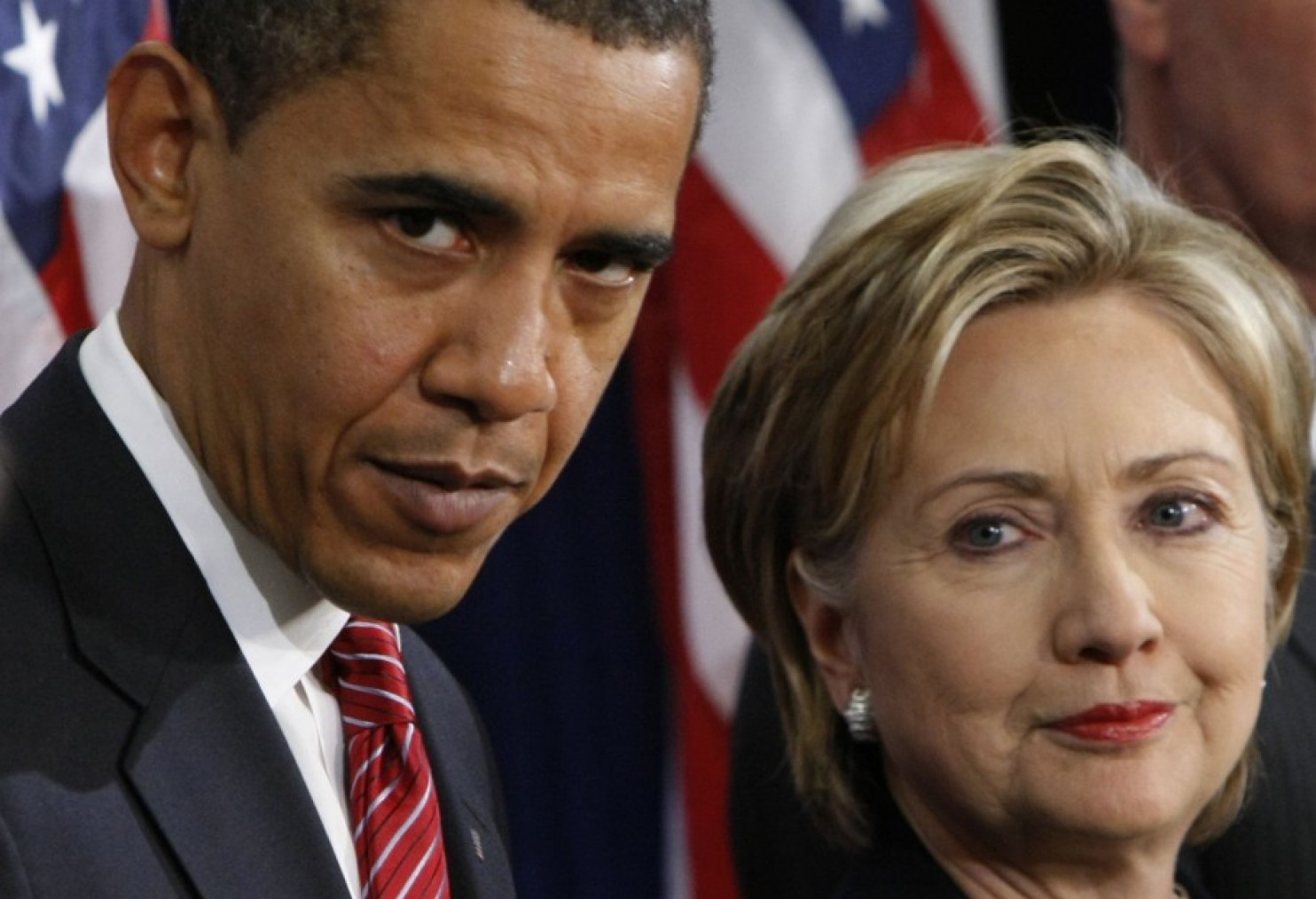
  • President Obama, Hillary Clinton to campaign together, with first stop in NC on July 5: Staff

    President Obama, Hillary Clinton to campaign together, with first stop in NC on July 5: Staff

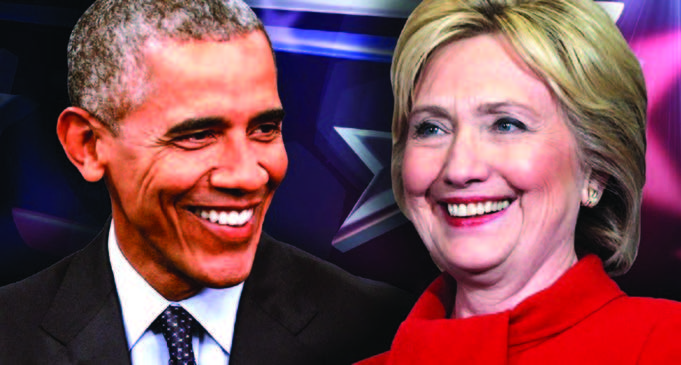
    WASHINGTON (TIP): US President Barack Obama will hit the campaign trail for the first time with presumptive Democratic White House nominee Hillary Clinton next Tuesday, July 5, in North Carolina, her staff announced.

    “In Charlotte, President Obama and Hillary Clinton will discuss building on the progress we’ve made and their vision for an America that is stronger together,” Clinton’s campaign said in a statement. Their debut joint campaign appearance for the 2016 election had been scheduled for June 15 in the state of Wisconsin, but was postponed due to the massacre in Orlando, Florida — the worst mass shooting in US history.

    Obama came out and endorsed Clinton on June 9 after months of assiduously avoiding tipping the scales of the Democratic presidential primaries.

    “I don’t think there’s ever been someone so qualified to hold this office,” Obama said in a video message that day as he offered his full-throated endorsement of the former secretary of state, senator and first lady.

    “I’m with her, I am fired up, and I cannot wait to get out there and campaign for Hillary,” added Obama, who won a brutal, months-long Democratic primary battle against Clinton in 2008.

    Their joint appearance comes with US Senator Bernie Sanders refusing to bow out of the race for the Democratic nomination, despite rival Clinton amassing the necessary number of delegates to clinch it outright at next month’s party convention.

    Clinton, aiming to make history as the nation’s first female commander in chief, is expected to square off against Republican billionaire businessman Donald Trump in November’s general election.

  • Freida Pinto, Michelle Obama join hands for ‘Let Girls Learn’ initiative

    Freida Pinto, Michelle Obama join hands for ‘Let Girls Learn’ initiative

    @letgirlslearn

    @letgirlslearn


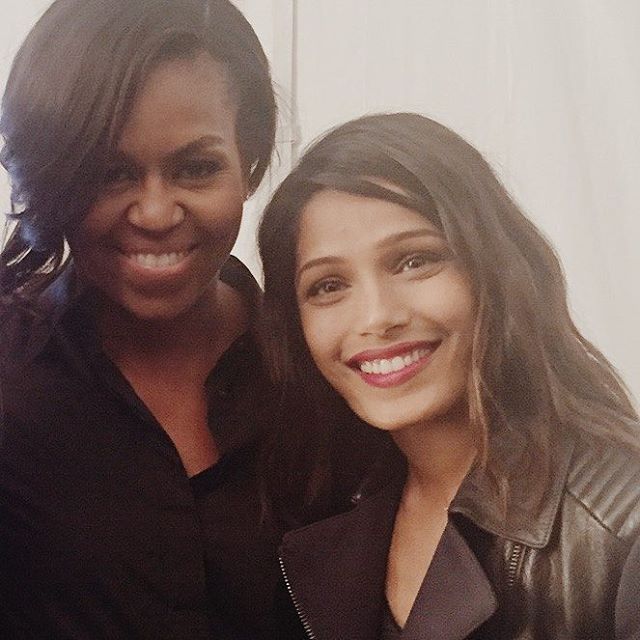
    Actress Freida Pinto has joined hands with the Michelle Obama, the First Lady for Let Girls Learn – a government initiative aimed at helping girls obtain quality education. Freida, along with Michelle Obama, her daughters Sasha and Malia, their grandmother Marian Robinson – will travel to Liberia, Morocco and Spain at the end of June and early July as part of the Let Girls Learn initiative, a statement issued on behalf of the ‘Slumdog Millionaire’ actress, stated.

    The focus of the trip, which includes Monrovia, Marrakesh and Madrid, is for them to speak to young girls about the importance of education and staying in school. Starting with Liberia, Freida and Michelle will take part in a discussion which will cover the educational barriers girls face in the country.

    In Liberia, Pinto, 31, and Obama will take part in a discussion, which will cover the educational barriers girls face in the country. President Ellen Johnson Sirleaf will meet with the First Lady and Pinto. Next, in Morocco, Hollywood star Meryl Streep will be seen joining Michelle and Freida to discuss the challenges women in the African country deal with on a regular basis.

    Freida Pinto, Michelle Obama join hands for ‘Let Girls Learn’ initiativePinto, who became popular after her award winning role in Slumdog Millionaire, recently launched a women’s empowerment project at the 69th Cannes International Film Festival. As Plan International’s Girls’ Rights Ambassador, Freida Pinto is fast following in the humanitarian footsteps of Hollywood starlets like Angelina Jolie, Emma Watson and Beyonce, using their fame to help shine a spotlight on issues affecting women and girls around the world.

    In a recent interview, Pinto said, “There are events in history that should have shaped the future for women differently, but they haven’t so far and that’s been frustrating. But now there’s a huge amount of awareness and technology has made it possible for people to come together and not isolate their struggles. The struggles of a girl from Africa aren’t that different to those of a girl in India, and in turn, a girl in America. No matter how modern and educated she might think her community or society is, there’s still sexual violence against women, there’s still rape. I think technology has made it easier for people to come together, and their voices are united and louder than ever before.”

    Acknowledging that she always knew that she was “born more privileged than some of the girls who I’ve met through Plan,” Pinto believes that she feels “that protection, comfort and privilege I had growing up is something that every girl should have. We’re not asking for a luxury car or a big home, we’re just saying that girls should be able to go to school. That’s not a big ask. There’s a domino effect that may start small but before we know it, we can have an impact on a whole community, then a whole nation, then the world will catch up. We have to start small though.”

    Pinto, who had travelled to some of the poorer nations advocating for women’s ruights and education, recalls her earlier trip to Sierra Leone, “where I met one little girl at a school, during a class discussion about what the children wanted to become when they were older. This girl said to me that she’d like to become a finance minister. I was like, ‘Wow, that’s kinda boring but great!’ I asked her why and she said: ‘Because my country does not know how to spend their money on what they should be spending it on, and I would like to help them do that.’ These girls have no choice but to be aware of what’s going on around them and so many of them are using this knowledge to their advantage, which is really inspiring.”

  • Sanders admits he’s unlikely to become Democratic nominee

    Sanders admits he’s unlikely to become Democratic nominee

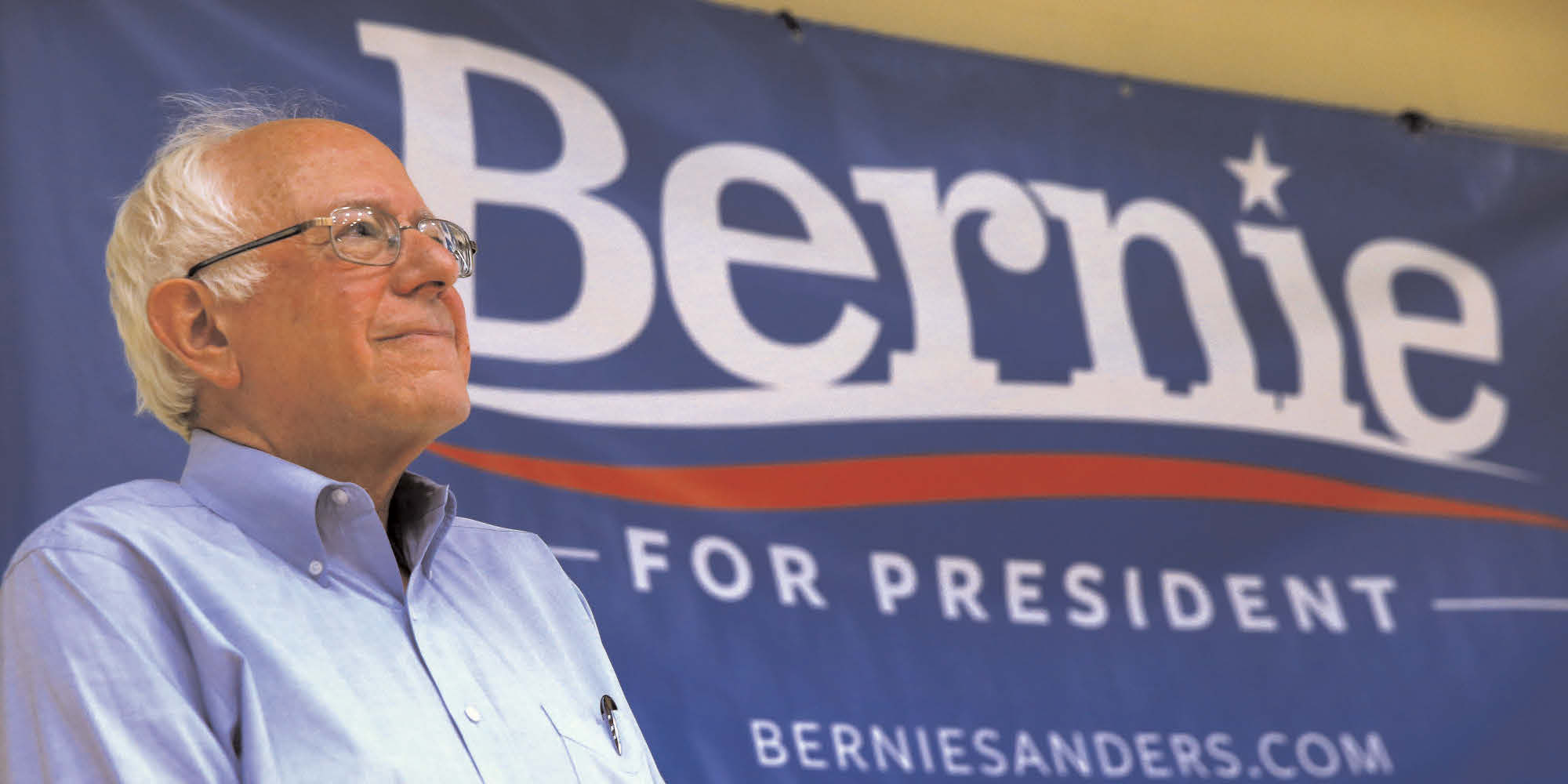
    WASHINGTON (TIP): Vermont Senator Bernie Sanders admitted that he will not be Democratic candidate for the White House as he indirectly recognised Hillary Clinton’s victory in the race for the party’s presidential nomination for the first time in public.

    “It doesn’t appear that I’m going to be the nominee, so I’m not going to determine the scope of the convention in July in which the party nominee will be officially named,” Sanders said on Wednesday during an interview with C-SPAN TV channel.

    The Vermont senator, 74, advises Clinton to choose “the most progressive candidate that she can find” for vice president, while several media published a short list of candidates for the position which excluded Sanders, EFE news reported.

    “It would be a terrible mistake for her to go to a candidate who has roots from Wall Street or has been backed by Wall Street,” underlined Sanders, a self-proclaimed democratic socialist, who campaigns against the excesses of large corporations.

    On June 14, the Democratic presidential hopeful met with Clinton at a hotel in Washington near the White House, but he still has not announced his endorsement of the former US Secretary of State.

    The Senator has not explicitly suspended his campaign, arguing that he wishes to continue until the party’s convention in Philadelphia slated for July 2 to voice his political agenda.

    Sanders has also offered to help defeat the unofficial Republican nominee, real-estate magnate Donald Trump, in the November elections.

    Democratic leaders such as US president Barack Obama and Vice President Joe Biden have officially endorsed Clinton as the presumptive Democratic presidential nominee for the White House following her victory in the California and New Jersey primaries on June 7.

    Sanders praised the intelligence of the former First Lady but stressed that “there are areas where we have strong disagreements”.

  • Supreme Court Tie a Jolt to Obama Immigration Policy

    Supreme Court Tie a Jolt to Obama Immigration Policy

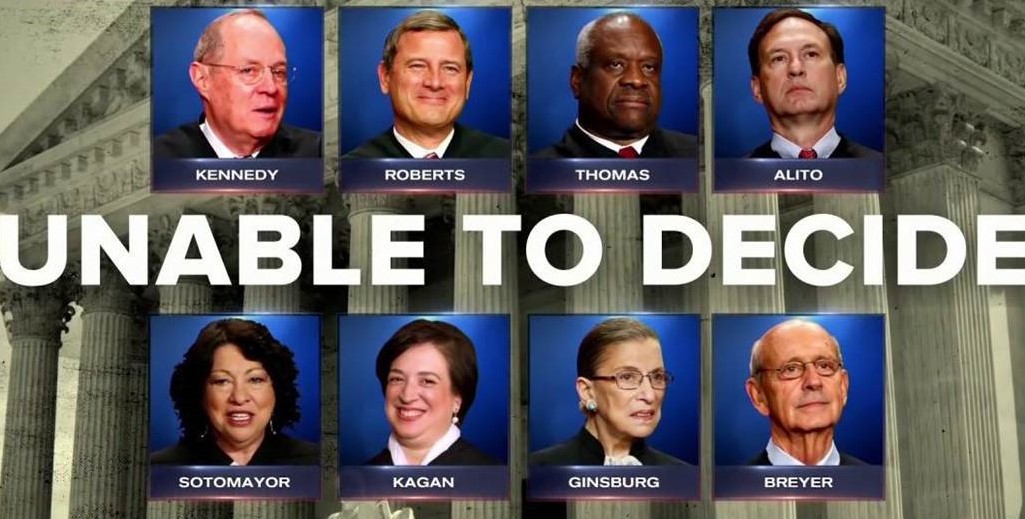
    WASHINGTON (TIP): The U.S. Supreme Court split 4-4 Thursday, June 23 over a challenge to President Barack Obama’s immigration policy, a result that prevents the administration from putting the program into effect during the rest of his term.

    The split was reflected in a one-sentence statement from the court: “The judgment is affirmed by an equally divided Court.”

    Announced in late 2014, the policy sought to shield more than 4 million people — mostly Latinos — from deportation. But lower courts blocked its implementation after Texas and 25 other states sued, claiming the president had no power to order the changes.

    The ruling deals a blow to both a White House that has used executive measures to push forward immigration reform in the wake of congressional inaction and to Obama, who has sought to rewrite a legacy that had some in Latino activist circles calling him “the deporter-in-chief.”

    There have been more than 2 million deportations in Obama’s tenure.

    The president on Thursday stressed that people who have been in the country for a long time and are otherwise law abiding will remain lower deportation priorities.

    He added that the tie was “heartbreaking” for millions of immigrants.

    Of those who opposed his executive actions, the president said: “I guarantee you at some point, every one of us has somebody in our background who people didn’t want coming here.”

    However, the tie “takes us further from the country we aspire to be,” Obama added.
    And ultimately, the president said, the nation has a choice to make.

    “We’re going to have to make a decision about whether we are a people who tolerate the hypocrisy of a system where the workers who pick our fruit or make our beds never have the chance to get right with the law — or whether we’re going to give them a chance, just like our forebears had a chance, to take responsibility and give their kids a better future,” he said.

    The death of Justice Antonin Scalia left the Supreme Court evenly divided on the issue. Thursday’s tie vote means the justices were unable to announce a ruling, an outcome that leaves in place the lower court rulings against enforcing the plan.

    The lack of a decision by the Supreme Court, Obama said, is a direct result of Congress failing to confirm his Supreme Court nominee, Judge Merrick Garland, to the bench.

    Under the proposal, adults in the United States illegally could remain if they meet certain residency requirements and have children who are American citizens or lawful permanent residents. It would also expand another program, now in effect, that allows young people to stay in the country if they were brought here under age 16.

    With 11 million undocumented migrants living in the U.S., the administration argued that it’s impossible to deport everyone here illegally. The policy was based on setting priorities — concentrating on criminals and terrorists and deferring removal for others who have established ties to the U.S.

    It would not offer permanent legal status but would defer for three years any effort to seek deportation for those qualified.

    The states argued that Congress has never given presidents a blank check for granting lawful status to people here illegally. They said the policy would do far more than simply abandon removal proceedings by converting illegal presence into lawful status and granting permission to seek work permits.

    Sixteen other states urged the justices to let the policy take effect.

    Thursday’s tie vote does not strike down the Obama proposal. In bringing the case to the Supreme Court, the government sought authority to begin enforcing the policy while the lawsuit brought by the states works its way through the lower courts.

    That process will play out for at least another year, and the next president would decide whether to continue defending it in court. Presumptive Democratic nominee Hillary Clinton has vowed to expand the program, but her GOP rival Donald Trump has said he would abandon it.

    House Speaker Paul Ryan, a Republican, applauded the effect of the split vote.

    “This is a win for the Constitution, this is a win for Congress,” he said. “Presidents don’t write laws, Congress writes laws.”

  • Sustainable Development Goals can accelerate action towards achieving gender equality: Lakshmi Puri

    Sustainable Development Goals can accelerate action towards achieving gender equality: Lakshmi Puri

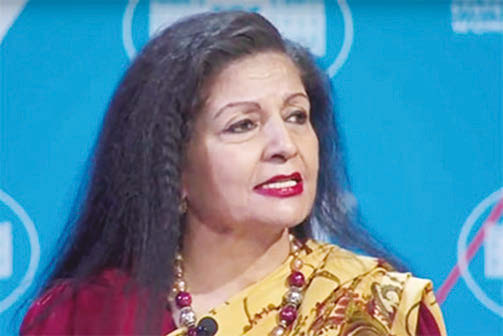
    WASHINGTON (TIP): UN Women Deputy Executive Director Lakshmi Puri spoke at the first-ever United State of Women Summit on 14 June 2016. Convened by President of the United States Barack Obama and First Lady Michelle Obama, the Summit gathered inspirational speakers and aimed to discuss key gender equality issues, including women’s economic empowerment and violence against women.

    Ms. Puri took part in the second plenary, on economic empowerment. The only high-level United Nations official attending the White House Summit, she spoke about how the Sustainable Development Goals can accelerate action towards achieving gender equality, and the importance of engaging youth and men and boys in the work to achieve gender equality.

    In her speech at the summit, Ms. Puri said: “Promising to ‘leave no one behind’, the 2030 Agenda and its 17 Sustainable Development Goals address a fundamental environmental, economic and social issues and position the achievement of gender equality and women’s empowerment as a precondition and necessary outcome of sustainable development”.

    Read More

  • Sikh-Americans fear backlash after Orlando shooting

    Sikh-Americans fear backlash after Orlando shooting

    Sikh-Americans, who have faced hate crimes after every major terror attack, are fearing a backlash following the Orlando gay club shooting, even as the Obama Administration has assured them of their safety.

    In a bid to allay growing concerns within the community, the White House sent one of its top officials to a gurdwara in the suburb of Washington DC yesterday to meet members of the Sikh community and local leadership to assure them about their safety and interest.
    (Follow The Tribune on Facebook; and Twitter @thetribunechd)

    “We know, this is a time when some in the community fear unease,” Cecilia Munoz, Director of the Domestic Policy Council at the White House, said after her interaction with the Sikh community at the oldest gurdwara of Maryland—Guru Nanak Foundation of America. She also attended ‘sangat’ with its members.

    “I shared the work that the federal government is doing to make sure that every child is safe and secure, every person is feeling safe and secure in the places of worship and the places where they work and the places where they study,” Munoz said, adding that there was no need to be fearful.

    Her visit to the gurdwara was planned a few days ago but her presence was very timely in terms of the new wave of fear that has gripped the community because of the Orlando incident—the deadliest mass shooting in America’s history.

    Omar Mateen, an Afghan-origin gunman who carried an assault rifle and a pistol into the gay club in Orlando in the wee hours of yesterday and killed 50 people while injuring 53 others, was later shot dead by the police.

    “This is a country of great diversity. We cherish that diversity. We celebrate it. We feel great gratitude to the Sikh community for the many, many contributions to the United States,” Munoz said.

    “It is fundamental to our democracy that people have freedom of worship, but also have freedom from fear,” she said, adding that the Obama Administration has taken steps to address these challenges.

    Paramvir Singh Soni, chairperson of the Guru Nanank Foundation of America, acknowledged that there is a sense of fear in the community and said the Sikh-Americans are touched by the steps being taken by US President Barack Obama in this regard.

    “We are still looking for stronger actions against hate crimes. I think there we need to do some more work, but we are making progress,” he said.
    Singh said the community wants to have the next President as one who can address its challenge.

    “Someone who is more open to the Sikh community, somebody who is more engaged,” he said.

    Dr Rajwant Singh, Washington-based chairman of the Sikh Council on Religion and Education, said the Sikh community is very concerned about the possible backlash from the Orlando killings.

    “We are thankful to the White House for sending Cecilia Munoz to the Sikh congregation in Silver Spring in Maryland. As we were thrilled by this kind gesture, our hearts were broken with the terrible news about the merciless killings of so many innocent people in Orlando,” Singh said.

    “We have had several incidents of violence after the San Bernardino killings last December. We are praying for the victims but at the same time very concerned that how this would impact the Sikh community across the nation,” he said.

    “We have conveyed that this needs to be spelled out by the White House and we request that President Obama include and mention Sikhs, particularly in his remarks, while issuing a statement about the Orlando tragedy. Sikh congregations across the world need some security assistance and capacity building resources,” Singh said.

    The Sikh Coalition in a statement condemned the Orlando shooting as a terrible act of terror, hate and bias-based violence and bigotry against minority communities, including the LGBTQ community.

    “In the aftermath of such events, minority religious communities are acutely vulnerable to backlash, and we urge every Sikh to exercise extra vigilance and caution during this period of heightened anxiety,” it said.

    In another statement, the Sikh American Legal Defence and Education Fund (SALDEF) condemned the hateful attack on the lesbian, gay, bisexual,and transgender (LGBT) community in Orlando Florida.

    American Sikh Council (ASC) said it is extremely distressed by the indescribable act of mass murder at the ‘Pulse’ nightclub in the city of Orlando

    “As a result of such events, religious communities like the Sikh-Americans are acutely vulnerable to backlash, and we urge everyone to exercise vigilance and caution during this period of heightened anxiety. Please notify the local law enforcement in case of any threats of violence,” it said in a statement.

  • Orlando Shooting: IS Claims Responsibility; Shooter’s Father Apologises, Obama Calls It ‘Act Of Hate’

    Orlando Shooting: IS Claims Responsibility; Shooter’s Father Apologises, Obama Calls It ‘Act Of Hate’

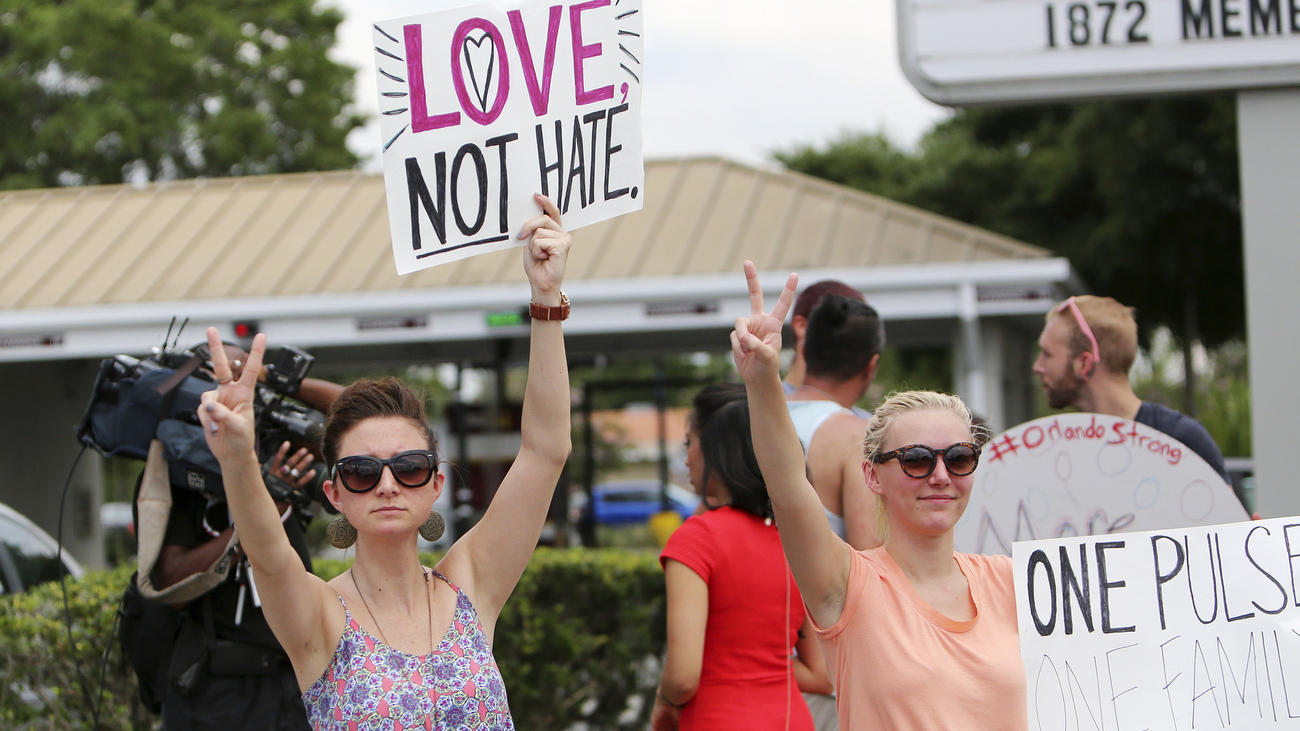
    Islamic State (IS) terrorist group has claimed the responsibility for the shootings in which at least 50 people were killed and 53 others injured when a “lone wolf” gunman opened fire early on Sunday in a gay nightclub in Orlando, Florida, where a state of emergency has been declared.

    In a message published on the group’s semi-official news agency, Amaq, it described gunman Omar Mateen as a “soldier of the caliphate”, The Telegraph (UK) reported.

    Although the statement did not clarify Mateen’s relation to the group, but the language appeared to suggest he was viewed as a lone wolf attacker.

    The gunman Omar Mateen, 29, was killed by a SWAT team after he took hostages at Pulse, a popular gay night club.

    It is believed that the suspect, who was a US citizen from the Florida town of Port St Lucie and was of Afghan descent, was not on a terrorism watch list, although he was being investigated for an unrelated criminal act, BBC reported.

    Officials said the killings were likely to be ideologically motivated, though there was no information that the gunman was associated with a particular group.

    He was armed with an assault rifle, a handgun and an unspecified “device”, said officials.

    “It appears he was organised and well-prepared,” Orlando Police Chief John Mina said.

    The shooter’s father told NBC News: “This has nothing to do with religion.”

    Mir Seddique said Omar Mateen had been angry when he saw two men kissing in Miami recently.

    “We are saying we are apologising for the whole incident. We weren’t aware of any action he is taking. We are in shock like the whole country,” Seddique told NBC News .

    US President Barack Obama was briefed on the mass shooting, which police described as an act of terrorism.

    “Our thoughts and prayers are with the families and loved ones of the victims. The President asked to receive regular updates as the FBI, and other federal officials, work with the Orlando Police to gather more information,” said a statement by Barack Obama’s press secretary.

    US Congressman Alan Grayson said it was “no coincidence” the attack happened in a gay club.

    Relatives were gathering at local hospitals desperate for news of their loved ones.

    Many had received calls and texts from loved ones inside the club as the siege began, and some have heard nothing since.

    The death toll given by Mayor Dyer means that the Orlando attack surpasses the 2007 massacre at Virginia Tech which left 32 people dead.

    “Today we are dealing with something that we never imagined and is unimaginable,” he said, adding that there was “an enormous amount of havoc” and “blood everywhere”.

    “Because of the scale of the crime I’ve asked the [Florida] governor to declare a state of emergency,” he said.

    “We’re also issuing a state of emergency for the city of Orlando so that we can bring additional resources to bear to deal with the aftermath.”

  • President Obama Speaks on Tragic Shooting in Orlando

    President Obama Speaks on Tragic Shooting in Orlando

    At around 2:00 pm ET, President Obama spoke about the tragic shooting that took place overnight in Orlando, Florida.

    We have to decide if that’s the kind of country we want to be — – President Obama, speaking to the nation following the worst mass shooting in U.S. history

    ——

    Accused attacker called 911 before Orlando shooting and declared allegiance to Islamic State, official says

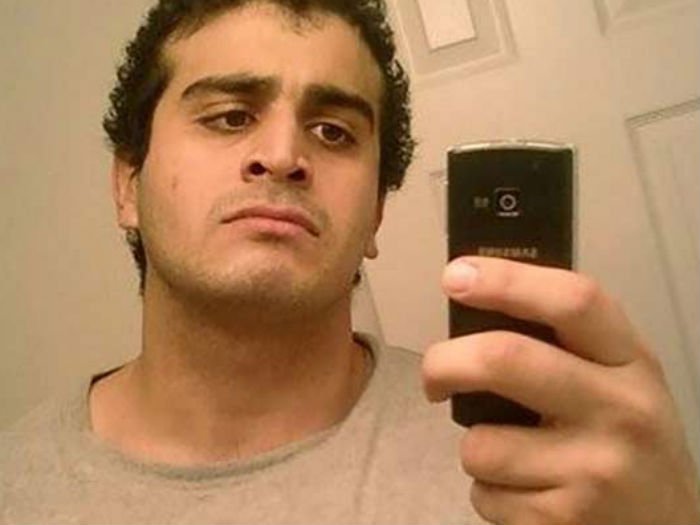
    Omar Mateen called 911 moments before the attack, pledging allegiance to the Islamic State, a federal law enforcement official told The Times, confirming earlier reports. Federal investigators believe the selfie photos of Mateen taken from his MySpace page and being circulated on the Internet are of him, but emphasized the investigation was in its early stages.

    In a suspected terrorist attack that could shake up the presidential campaign, President Obama and Hillary Clinton reacted with caution and prayers Sunday to the mass shooting at a nightclub in Florida, while Donald Trump called the tragedy “really bad.”

    Fifty people were killed and 53 were injured when the shooter, identified as Omar Mateen, opened fire at the crowded Pulse Orlando nightclub early Sunday morning. Authorities were investigating his motive and working to identify the victims on Sunday afternoon.


    Statement from Press Secretary Josh Earnest:

    The President was briefed this morning by Lisa Monaco, Assistant to the President for Homeland Security and Counterterrorism, on the tragic shooting in Orlando, Florida. Our thoughts and prayers are with the families and loved ones of the victims. The President asked to receive regular updates as the FBI, and other federal officials, work with the Orlando Police to gather more information, and directed that the federal government provide any assistance necessary to pursue the investigation and support the community.


    Statement from Vice President Joe Biden’s spokesperson:

    The Vice President was briefed this morning by his national security advisor on the heinous attack that took place overnight at a nightclub in Orlando, Florida. Vice President Biden offered his prayers for all those killed and injured in the shooting and sends his condolences to all the families and loved ones of the victims.  He is closely monitoring the situation and will continue to receive regular updates as we know more.


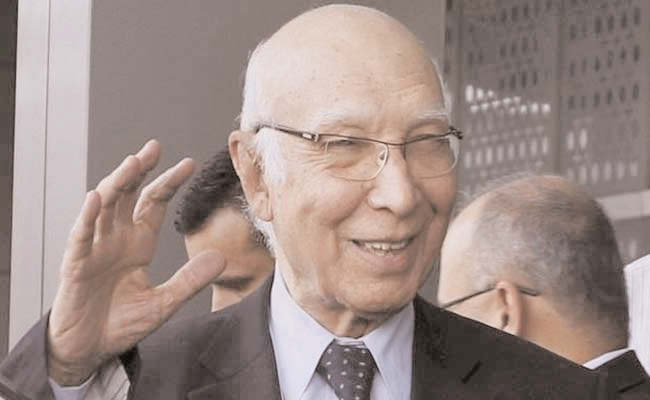
  • Pakistan concerned over growing India-US ties: Sartaj Aziz

    Pakistan concerned over growing India-US ties: Sartaj Aziz

    ISLAMABAD (TIP): Pakistan on June 9 expressed concern over “growing strategic ties” between India and the US, with a top official accusing Washington of using Islamabad “whenever it needs it”.

    The outburst by Sartaj Aziz, the adviser to the Prime Minister on foreign affairs, came after the US strongly backed India’s bid for membership to the NSG.

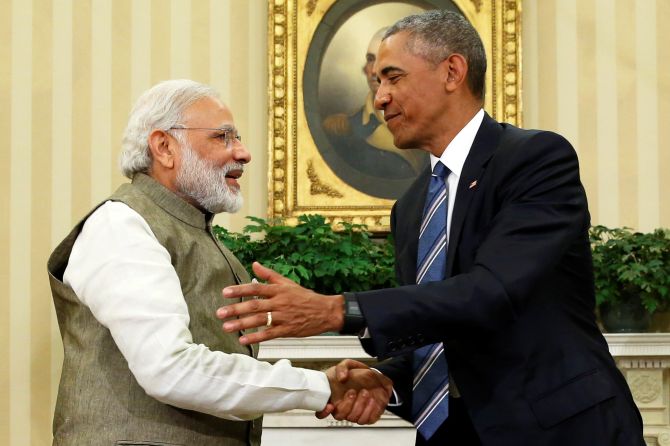
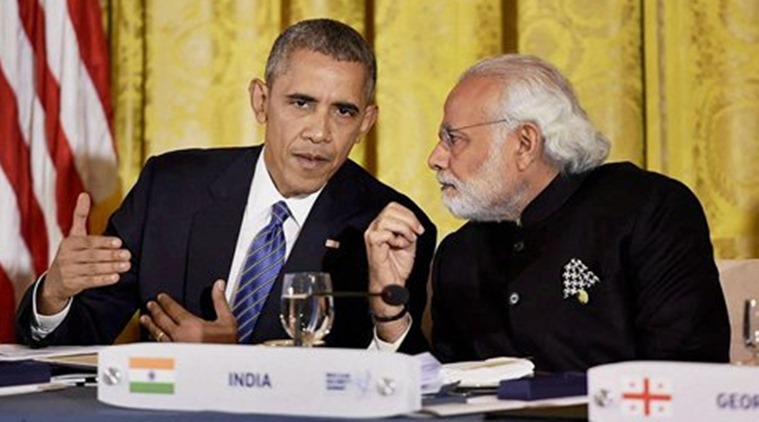
    The US backing came at a meeting between Indian Prime Minister Narendra Modi and President Barack Obama in Washington on Tuesday during which the two sides also inked agreements to boost security and defence cooperation.

    Addressing the media here, Aziz said: “The US approaches Pakistan whenever it needs it and abandons it when it does not need Islamabad.

    “Pakistan will convey its concerns to US over the latest issues in the bilateral ties,” Aziz said, adding that a high-level meeting was planned between Pakistan and US officials on June 10 in Islamabad.

    “We firmly conveyed to the US that maintaining effective nuclear deterrence is critical for Pakistan’s security and only Islamabad can determine how it should respond to growing strategic imbalance in South Asia.”

    Aziz maintained that Islamabad was ready for cordial relations with other countries including India.

    Aziz’s statement comes as Islamabad stepped up its diplomatic outreach among members of the Nuclear Suppliers Group in a bid to stall New Delhi’s chances of gaining membership to the NSG.

    The Pakistan foreign ministry’s UN desk on Wednesday held a briefing in Islamabad for diplomatic missions of NSG member-countries to put forward its argument against India’s membership and to push for its own entry to the elite group.

    At the meeting, Pakistan warned that country-specific exemptions could negatively impact strategic stability in South Asia.

    Both Pakistan and India have applied to be members of the 48-member NSG that regulates global nuclear commerce.

    India is being backed in its bid by several major NSG members, including the US .

    However, China is backing Pakistan . Beijing maintains that if India, a non-signatory to the Nuclear non-Proliferation Treaty, is given membership, then Pakistan too should be taken on board.

    (IANS)

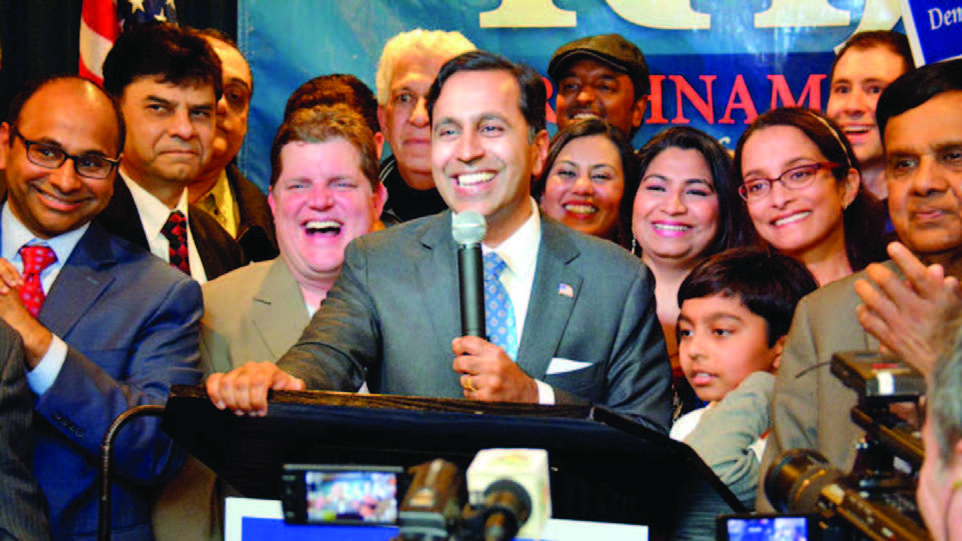
  • President Obama endorses Raja Krishnamoorthi in Congressional bid

    President Obama endorses Raja Krishnamoorthi in Congressional bid

    CHICAGO (TIP): Raja Krishnamoorthi’s bid for US Congress contesting from the 8th Congressional District of Illinois got one of the biggest boosts with the US President Barack Obama endorsing his candidacy.

    Raja, a Democratic nominee, is in this year’s open-seat race in the constituency which includes west and northwest Chicago suburbs. He has already elicited support from a number of Federal, State and local level leasers besides massive support from Indians, Pakistanis and Bangaldeshi voters in the area.

    If elected, he will become the 2nd India-born Congressman after Dalip Singh Saund, D-California, who served in the House of Representatives 1957-1963. Two other Indian-Americans in Congress include former Representative and later Governor of Louisiana Bobby Jindal, who was born in Louisiana, and current incumbent Rep. Ami Bera, D-California, who is running for re-election. “I’m elated to have the President’s support,” Krishnamoorthi told the media. “He’s put working families front and center as President and that is what I intend to do if elected.” “As the son of immigrants who worked their way into the middle-class, Raja understands both the challenges facing America’s working families and the opportunities their work makes possible,” President Obama said. “I know he’ll fight hard in Congress to create more good jobs, empower more Americans to start businesses, and help working families afford to put their children through college.”

    Raja served Obama as issues director in the President’s successful U.S. Senate campaign in 2004 when Raja helped shape policy proposals that Obama embarked on in federal office.

    “I am honored and humbled to have the support of President Obama in my race for Congress,” Raja said of the endorsement. “It only seems like yesterday that the two of us ate dinner in my childhood home in Peoria before the beginning of his historic rise to the US Senate and the White House. A few gray hairs later, that dinner table conversation continues as we are focused on standing up for the middle class and working to make sure that we come together as a country instead of casting stones and insults at our fellow Americans.”

    Raja grew up in Peoria, Illinois where he graduated as a valedictorian of Richwoods High School. After college and law school, he served as a founding prosecutor in Illinois Attorney General Lisa Madigan’s anti-corruption unit and as Deputy Treasurer of Illinois.

    A lifelong progressive, Raja is running for Congress to stand up for middle class families and fight against attempts by House Republicans to cut Social Security and Medicare that are benefits his parents and millions of other Americans rely on.

    Raja Krishnamoorthi currently serves as president of Sivananthan Labs and Episolar, Inc., small businesses that sell products in the national security and renewable energy industries. He is a co-founder of InSPIRE, a non-profit organization that provides training to Illinois students and veterans in solar technology.

  • Feminine Divinity, Symbolism of Shakti and Women’s Empowerment in Contemporary India

    Feminine Divinity, Symbolism of Shakti and Women’s Empowerment in Contemporary India

    Since 1947, India has been somewhat isolated globally because it stands alone and is not part of any of the usual groups or clubs. India is not a white or western country, it is not an Islamic country, it is not an Arabic country, it is not a communist country and it is certainly not a military dictatorship. It was part of non-aligned movement which did not have any natural commonality in its members. India still remains isolated because it stands alone on many international fora owing to India’s unique ancient history. India was described as a “functioning anarchy” by a former US ambassador to India John Kenneth Galbraith. Break-up or disintegration of India has been ritually predicted and invoked by so many western analysts and thinkers. Numerous international conspiracies have been hatched since 1947 to materialize support for further partition of India. Some have even refused to accept the nation-hood or statehood of India in a geo-political sense. Others have erroneously credited the British colonial empire for bestowing the sense of nationhood on India as a unique colonial contribution.

    As India changes its direction and gathers some self-confidence, there has been resurgence of talk in the mainstream media and academia for the last two years about the threats facing the so-called “Idea of India”. The terms like “Idea of India” and “Intolerance” have been utilized as code-words or proxy to pillory Hindu traditions and Indian Renaissance. There seems to be an obvious nexus between Indian mainstream media and the western mainstream media in an exercise in bashing India, Indian tradition and Indian growth trajectory. Isolated incidents have been magnified. Indeed, the naysayers and the “Nattering Nabobs of Negativism” have predicted impending doom for India. Heinous crimes against women, though very unfortunate, have been given so much prominence in the media as if they were normative occurrence in India without taking into consideration the positive aspects of Indian society and Indian traditions. The movie “India’s Daughter” by Leslee Udwin was a prime example of this India bashing exercise. The western protagonists and their Indian acolytes, owing to an inherent Hindu-phobic and anti-India bias, have failed to take into consideration the frequency of such crimes in US or UK or elsewhere in the world presenting a very sensational and distorted picture of India. Powerful international and local forces are at work to portray our Hindu tradition as sexist, anti-women, misogynist and anti-feminist. India’s leftists, liberals, card-carrying communists, caste-ists, Islamists and feminists have built up a de facto “alliance of convenience” and a political “coalition of the willing” in conjunction with the western NGOs that funnel monies to these local groups. There is a method to this madness. Alliance of Indian feminists, nay, Femi-nazis with their western sponsors poses a real national security threat to the fabric of the Indian nation. Women are the real fabric of the nation. A nation can be defeated only if its women are subjugated by fraud, deception or brute force. While pillorying Indian (read Hindu) society as patriarchal, misogynist and anti-women, these groups fail to appreciate the plurality and the extreme diversity of Indian traditions with still prevalent matriarchal subcultures in the contemporary Indian society, e.g.; the Nairs in Kerala, some sections in Kinnaur, Himachal Pradesh and the Khasis in Meghalaya. People in Kinnaur, HP follow a matriarchal system; they also practice polyandry following the historical example of the Pandavas from Mahabharata times.

    Ancient India and Concept of Devi, the Divine Femininity:

    In this article we will recapitulate the venerable place, honor and respect given to women in the ancient Hindu tradition. We will also review the historical vicissitudes of the status of women in ancient, medieval, colonial eras and in modern India. We also delineate and emphasize those foreign factors that adversely influenced the status of women in the Indian society and subjugated them in the colonial era that lasted approximately one thousand years. We also discuss the very uniquely Hindu concepts of Devi (female divinity), Shakti and the veneration of Shakti as the ultimate mother and its symbolic use in women’s empowerment in the contemporary Indian society. Female divinity is unique to Hinduism. The word Devi in Sanskrit means the illuminated or the illustrious one. Like the holy trinity of Brahma, Vishnu and Mahesh or Shiva, there is divine female trinity of Saraswati, Lakshmi and Uma, all three equally holy, divine and worthy of worship in their own right. Woman always comes first in various Hindu traditions, be they Vaishnava, Shaiva, Tantra, Vama-marga, Vedanta etc. That is why we have expressions like Sita-Ram, Radhey-Shyam and Gauri-Shankar. It is never Ram-Sita, Shyam-Radha, Narayan-Laxami or Shankar-Gauri. Shakti comes first, and Shiva comes afterwards. Hindu Males always follow, venerate and vow to protect the females, as the divine mother who gives birth, as loving daughter to be given away as kanyadanam during marriage (the ultimate danam a Hindu male can do for the perpetuation of human race), as sister to be protected or as wives to be cherished as ardhangini. The concept of mother-goddess is so deeply enshrined in Hinduism that per Bhagwat Purana there are seven mothers: the one who gives birth (biological mother), wife of your teacher (gurupatni), wife of priest (brahmani), queen (rajpatni), cow (dhenu or gaumata), one who raises you (foster-mother or dhatri) and earth (Prithavi). There is a saying: mata prithavi, putroham prithivyam!

    All Hindu rituals are conducted primarily by women, men have to sit quietly and follow the women. Woman is the leader; man is the follower and the participant. A Hindu man is incomplete without his wife during religious rituals and yajanas just as even Rama was incomplete without Sita during the ashwamedha yajana!  He had to have a statue of Sita sit by his left side while performing the yajana. During the festival of Navaratras, the Devi, the feminine divinity, the Goddess is worshipped in her nine different forms! These nine different forms are Durga, the invincible mother, Bhadrakali, the mother of fortune and wealth, Amba, the universal mother, Annapoorna that feeds the world by providing Anna, Sarvamangala that brings peace and joy to the world, Bhairavi, the divine mother that brings good to good people & evil to bad people, Chandika, the fierce one, Saraswati, the goddess of learning & beauty, Bhavani, the Goddess of mercy, and Mookambika, the Goddess of Shiva and Shakti. The symbolism that woman comes first and the man just follows her becomes apparent when one watches the contemporary Hindi TV serials be it Kum Kum Bhagya, Pavitra Rishta, Suhasini or Woh Rahane Waali Mahlon ki! The female lead character always epitomizes the Hindu woman as Shakti, as a warrior princess or Durga who fights for her rights, defeats the evil and always protects the good but in that arduous, long-drawn journey, she also sacrifices her personal needs while nurturing others in her family!

    Let us make no mistake. There are enormous cross-cultural differences in the gender roles and gender behaviors in Indian society versus western societies. However, in Hindu context the women have traditionally exercised tremendous political power through their fertility, i.e. progeny unlike the West where women exercise their power and autonomy using their sexuality and art of seduction. Indian society has historically emphasized dignity and honor of women instead of a pseudo-equality and gender role substitutability. The concept of the divine mother as the originator of the srishti is so unique to Hinduism only. Invoking divine qualities in the mother Goddess gives a unique and special status to Hindu women who have attained motherhood and in no way diminishes them for exercising their fertility unlike so in Western societies. In fact, the suffix or the title Sreemati in Sanskrit literally means the lady who possesses wealth and prosperity!

    A famous quote from Manu Smriti, that has been demonized by the leftist cabal as anti-women, states:

    यत्र नार्यस्तु पूज्यन्ते रमन्ते तत्र देवता: ।

    यत्रैतास्तु न पूज्यन्ते सर्वास्तत्राफला: क्रिया: ।।

    Yatra Naryastu Pujyante Ramante Tatra Devata


    Yatraitaastu Na Pujyante Sarvaastatrafalaah Kriyaah

    Meaning: “Where Women Are Honored, Divinity Blossoms There; And Where They Are Dishonored, All Action Remains Unfruitful.”

    That is the essence of and epitome of the exalted status given to women in ancient Indian culture and Hindu tradition.

    Concept of Shakti in Hindu Tradition:

    Shaktism is the worship of the Supreme being as the Divine mother in the form of Shakti or Devi. Etymologically, the word Shakti in Sanskrit is derived from the “shak” dhatu or root which literally means “CAN DO”! Shakti literally means one who “CAN DO”! Shakti is the eternal supreme power. Shaktiman is the one who has Shakti, who is endowed with Shakti, i.e. energy! Shakti is the one who can accomplish victory over evil by the virtue of her creative energy force. In Hindu traditions, woman is the vessel of Shakti. The identification with Shakti stipulates woman as a fountainhead of both creative and destructive power. Each Hindu God has his Shakti, Brahma has Saraswati, Vishnu has Lakshmi and Shiva has Gauri or Parvati. Each is incomplete without his Shakti. Unlike Hinduism, in Christianity the myth has been created that Jesus was celibate and his historically acknowledged wife Mary Magdalene was a fallen woman. A prostitute who had merely become his disciple! In Islam, the woman has just one-fourth the value of a man in testamentary capacity! Shakti, the supreme energy force, is the personification of God in all the Indic traditions including Hinduism, Sikhism, Jainism and Buddhism. The Tibetan New Year Losar is essentially a celebration of Shakti. Even the 10th Sikh Guru, Govind Singh worshipped goddess Durga and named his fighting sword Chandi as a symbolism of Shakti.

    There are four Adi Shaktipeethas in Shakti tradition. Fifty-one Shaktipeethas are located all over the entire Indian subcontinent. In ancient Indian history and literature (carried through oral traditions), there are honorable mentions of women as Shakti, a divine feminine energy force or Urja. Examples are Mahishasur Mardini or Kali, Chandi, Durga a warrior goddess. There are other examples of women warriors in ancient Indian history. Kekayi, the youngest wife of King Dashratha obtained those infamous three boons from him by saving his life in the battlefield. Naturally, the question arises as to what Kekayi was doing in the battlefield except for combat!

    In tantric tradition, the woman is considered of higher status than the man. Tantra stipulates that mortal women are “life-itself” and Goddess-like because they embody the principle of Shakti. The institution of Bhairavi in Tantra and Vamamarga tradition does not suggest exploitation or anti-women attitude of Indian society. Bhairavi in Tantra tradition epitomizes the powerful feminine achievement by embarking a journey of supreme spirituality, sublime sensuality and symbiotic sexuality with her Bhairava who just follows her and is by her side, every step of the way, in her raising the kundalini energy! And yes, Bhairavi is not ashamed of her symbiotic sexuality because it is the ultimate life-force and she is the protagonist, she is the leader (and not the cheer-leader), she is initiator! Bhairavi, in that particular tradition, is neither repressed nor oppressed nor exploited!

  • President Obama endorses Hillary Clinton for President

    President Obama endorses Hillary Clinton for President

    WASHINGTON (TIP): US President Barack Obama formally endorsed Hillary Clinton’s White House bid on Thursday, June 9, and called for the Democratic Party to unite behind her after a protracted battle with Bernie Sanders for the party nomination.

    Clinton, the presumptive Democratic nominee, said it “means the world” to her to have Obama’s support.

    “It is absolutely a joy and an honor that President Obama and I over the years have gone from fierce competitors to true friends,” Clinton told Reuters in an interview.

    Obama defeated Clinton in the 2008 Democratic primary and she went on to serve as secretary of state. Obama, who enjoys strong approval ratings after nearly eight years in office, will campaign with Clinton next week in Wisconsin, her campaign said.

    “I don’t think there’s ever been someone so qualified to hold this office,” Obama said of Clinton in a video. “I’m with her. I am fired up, and I cannot wait to get out there and campaign for Hillary,” Obama said. Sanders, who met with Obama at the White House earlier on Thursday, said afterward he would work with Clinton to defeat Trump.

    In his endorsement video, the president took time to say that Sanders had run “an incredible campaign,” and that he had shone “a spotlight on issues like economic inequality and the outsized influence of money in our politics.”

    In fact, Obama said, those are messages the Democrats should embrace for the general election. And while Clinton and Sanders may have been rivals during the primary season, “they’re both patriots who love this country and they share a vision for the America that we all believe in.”

    “This has been a hard-fought race,” Obama said. “I know some say these primaries have somehow left the Democratic Party more divided: Well, they said that eight years ago, as well.”

    And just as Democrats’ victory in that election paved the way for significant national initiatives, Obama said he expects his party “won’t just win in November, we’ll build on the progress that we’ve made and we will win a brighter future for this country that we love.”

    Although the declarations of Clinton’s presumptive victory were based on her delegate haul, Sanders is not technically eliminated from the race because he could theoretically sway the Democrats unbound “super” delegates to his side. Still, that would be a tough sell for the senator: Clinton won more primary contests, more of the popular vote and more regular pledged delegates.

    The endorsement increases pressure on Sanders, a US senator from Vermont, to concede the race so the party can focus on campaigning against Donald Trump, the Republican presumptive nominee for the Nov. 8 election.

  • Modi in US | Highlights from India-US joint statement after Modi-Obama meet

    Modi in US | Highlights from India-US joint statement after Modi-Obama meet

    New Delhi: Support for India becoming a member of the exclusive Nuclear Suppliers Group, agreement on building six nuclear power plants in Andhra Pradesh, backing for India’s stand on terrorism vis-a-vis Pakistan and financial assistance for India’s clean energy initiatives are some of the key takeaways in an exhaustive India-US joint statement released in Washington on Tuesday.

    The document, issued at the end of talks between US President Barack Obama and Prime Minister Narendra Modi, who is on his fourth visit to the US in less than two years, also lays out a road map for broad-ranging India-US collaboration in areas such as defence, trade and cyber security.

    According to the statement, India and the US “pledged to pursue new opportunities to bolster economic growth and sustainable development, promote peace and security at home and around the world, strengthen inclusive, democratic governance and respect for universal human rights, and provide global leadership on issues of shared interest”.

    Obama and Modi noted the “increasing convergence” in the strategic perspectives of India and the US and “emphasized the need to remain closely invested in each other’s security and prosperity”, the statement said.

    On India’s entry into exclusive non-proliferation groups and regimes, the statement said India and the US “looked forward” to India’s imminent admission into the Missile Technology Control Regime.

    “President Obama welcomed India’s application to join the Nuclear Suppliers Group (NSG)… The United States called on NSG participating governments to support India’s application when it comes up at the NSG plenary later this month,” it said.

    In the area of nuclear power production, Obama and Modi welcomed the start of preparatory work for six reactors to be built by Westinghouse Electric Co. in Andhra Pradesh. India and the US Export-Import Bank are to work together on a financing package for the project, the statement said.

    “Once completed, the project would be among the largest of its kind, fulfilling the promise of the US-India civil nuclear agreement and demonstrating a shared commitment to meet India’s growing energy needs while reducing reliance on fossil fuels… the two sides will work toward finalizing the contractual arrangements by June 2017,” the statement said.

    Acknowledging India’s role in the accord agreed to at the Paris climate change talks in November, it said the US was committed to supporting India’s renewable energy programme and was working to spur greater investment in the area. Together, the two countries announced the creation of a $20 million US-India Clean Energy Finance (USICEF) initiative, equally supported by the US and India, which is expected to mobilize up to $400 million to provide clean and renewable electricity to up to 1 million households by 2020.

    The statement also said that Modi and Obama “resolved that the United States and India should look to each other as priority partners in the Asia-Pacific and the Indian Ocean region”.

    In maritime security, India and the US called for ensuring the freedom of navigation and overflight and exploitation of resources as per international law, including the United Nations Convention on the Law of the Sea, and settlement of territorial disputes by peaceful means. This oblique reference is aimed at China which is locked in maritime disputes with its smaller South East Asian neighbours in the South China Sea. China claims the entire South China Sea as its exclusive domain and has imposed flight restrictions and embargoed maritime routes through the disputed area.

    In the area of defence cooperation, which “can be an anchor of stability”, the statement said the US “hereby recognizes India as a major defence partner”. The joint statement said India and the US would “explore agreements which would facilitate further expansion of bilateral defence cooperation in practical ways. In this regard, they welcomed the finalization of the text of the Logistics Exchange Memorandum of Agreement,” which would allow the two countries to provide logistics support, refuelling and berthing facilities for each other’s warships and aircraft.

    The US will “continue to work toward facilitating technology sharing with India to a level commensurate with that of its closest allies and partners. The leaders reached an understanding under which India would receive licence-free access to a wide range of dual-use technologies in conjunction with steps that India has committed to take to advance its export control objectives,” the statement said.

    In a boost for Modi’s Make in India programme, the US would support the Indian initiative to develop defence industries through the export of goods and technologies consistent with US law.

    In the area of cyber security, Obama and Modi said they would deepen cooperation and were committed to enhancing cyber collaboration on critical infrastructure, cyber crime, and malicious cyber activity by state and non-state actors.

    On terrorism, Obama and Modi condemned “the recent terrorist incidents from Paris to Pathankot, from Brussels to Kabul” and “resolved to redouble their efforts, bilaterally and with other like-minded countries, to bring to justice the perpetrators of terrorism anywhere in the world and the infrastructure that supports them”.

    The two countries pledged to work together to combat terrorist threats from extremist groups such as Al Qaida, Da’esh/ISIL (Islamic State), the Pakistan based Jaish-e Mohammad and Lashkar-e-Taiba, besides Indian gangster Dawood Ibrahim and his group and their affiliates “including through deepened collaboration on UN terrorist designations”.

    The two countries have finalised an arrangement to facilitate the sharing of terrorist-screening information and “called for Pakistan to bring the perpetrators of the 2008 Mumbai and 2016 Pathankot terrorist attacks to justice”, the statement said.

    To boost trade, India and the US resolved to “break down barriers to the movement of goods and services, and support deeper integration into global supply chains, thereby creating jobs and generating prosperity in both economies”, the statement said.

    The two leaders agreed to facilitate the freer movement of people of both countries. The US also welcomed India’s interest in joining the Asia Pacific Economic Cooperation forum.

  • India Contradicts US Claim Over Signing Climate Deal This Year

    India Contradicts US Claim Over Signing Climate Deal This Year

    The US claim that India will ratify the Paris climate change agreement this year was contradicted on Wednesday, June 8, by Indian official sources.

    “We agreed to join as soon as possible and that is what is reflected in the Joint Statement as well,” said the sources indicating that India had not fixed a deadline to sign.

    After Prime Minister Narendra Modi’s talks with President Barack Obama here, the US had said that India will try to sign this year the landmark accord to limit greenhouse gases.

    The accord will become binding when at least 55 countries representing 55 per cent of global emissions formally join.

    India’s signature is crucial as it will guarantee that the agreement will go into effect before the next US President takes over in January, with Republican presumptive nominee Donald Trump threatening to re-negotiate it.

    The Joint Statement said that both India and the US recognised the urgency of climate change and share the goal of enabling entry into force of the Paris agreement as early as possible.

    It said the US reaffirmed its commitment to join the agreement as soon as possible this year.

    “India similarly has begun its processes to work toward this shared objective. The leaders reiterated their commitment to pursue low greenhouse gas emission development strategies in the pre-2020 period and to develop long-term low greenhouse gas emission development strategies,” it said.

    Foreign Secretary S Jaishankar yesterday said there were regulatory and legal issues to be addressed and that the Indian government was “looking at ways and means” to take the agreement forward.

  • Aggressive China triggers Asia arms race

    Aggressive China triggers Asia arms race

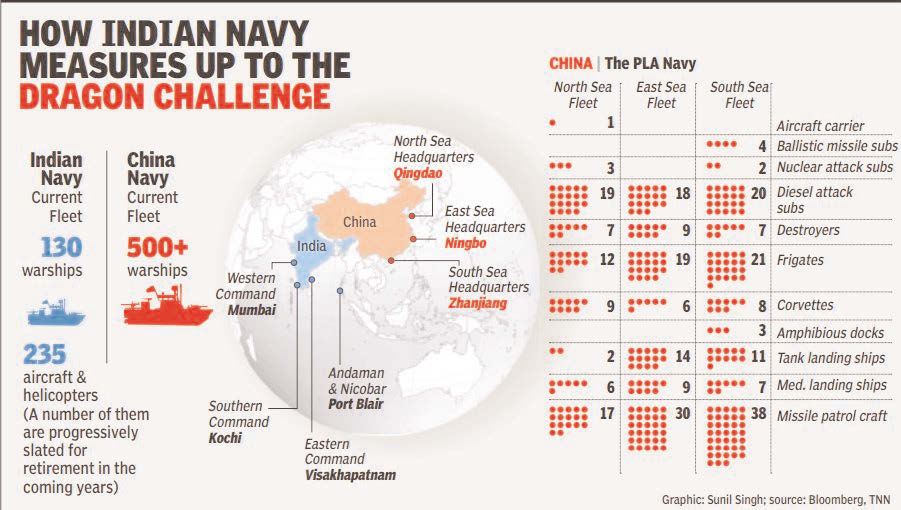
    BEIJING (TIP): Global defence contractors are circling for business in Asia, with countries from Australia to Vietnam upgrading and adding everything from submarines to fighter jets as China expands its military reach.

    According to consultancy IHS Jane’s report, the combined defence budgets in the Asia-Pacific region will grow from $435 billion last year to $533 billion in 2020, furthering a shift in global military spending away from Western Europe and North America toward emerging markets, especially in Asia. The figure will put Asia-Pacific on par with North America, which is expected to account for a third of global defence spending by then, from almost half now.

    The report attributes the rise to growing tensions in the South China Sea. “A number of the South China Sea’s littoral states appear to be responding to China’s more assertive stance in the region and there is no sign of this trend coming to an end,” Janes’ principal analyst, Craig Caffrey, said in the report. China had the region’s biggest defence budget at $146 billion last year, according to the government. Jane’s said it expects China’s budget to rise by about 5% to $233 billion by 2020.

    While military spending in Asia is coming off a low base – especially in Southeast Asia -and remains a small proportion of gross domestic product, nations that for years relied on old and at-times outdated ships and planes are starting to renovate their fleets. “There is a wide-ranging need for modernization across most of the armed forces in the region,” said Dan Enstedt, chief executive officer of Saab Asia Pacific, whose products include submarines, missiles, radars and fighter jets. “There are many examples of old and obsolete equipment fleets that are unable to keep pace with changing national security needs.”

    Military outlays in Asia and Oceania -which includes Australia and New Zealand -grew 5.4% in 2015, outpacing a 1% rise in global spending, according to the Stockholm International Peace Research Institute. Indonesia boosted spending last year by 16%, the Philippines by 25% and Vietnam by 7.6%.

    Much of the spending is on air and naval capacity amid China’s assertiveness in the East China Sea, where it claims islets contested by Japan, and the South China Sea, where its land reclamation programme has spooked other claimants. “The growth of China’s national power, including its military modernization, means China’s policies and actions will have a major impact on the stability of the Indo-Pacific,” according to Australia’s Defence White Paper published in February.

    A quarter of Australia’s defence investment over the next decade will be devoted to maritime capabilities.

    China triggers Asia arms race 2US President Barack Obama’s recent trip to Vietnam may lead to business opportunities, as he lifted a four-decade ban on the sale of lethal weapons. The US embassy has hosted two defence contractor symposiums in Hanoi, attended by companies including Boeing Co. and Lockheed Martin Corp. Doug Greenlaw, a vice president at Lockheed, said in an interview in February that Asia is at the core of the company’s strategy. “The economies in Asia are growing faster than in the rest of the world – that tends to really drive security spending, so we see Asia as a growth market,” Greenlaw said. “We have great partnerships with the countries across Asia.”

    Still, much of the spending comes off a low base. The Philippines spent 1.3% of GDP last year, up from 1.1% in 2014, according to Sipri, while Vietnam was largely flat at 2.3% of GDP.

    China’s outlays were 1.9% of its economy, well below US expenditure last year of 3.3% of its economy.

    Thailand may be one growth center this year. Defence spending will increase 7.3% and account for 7.6% of the overall budget, the Bangkok Post reported last month. On Thailand’s shopping list: 12 MI-17 transport helicopters from Russia, and four South Korean-made T-50 TH training aircraft.

    Australia in April awarded an A$50 billion ($36 billion) contract for 12 submarines to France’s DCNS Group, in one of the world’s biggest defence deals. The government is considering tenders for nine warships worth A$35 billion and a A$3 billion deal for 12 offshore patrol vessels.

    Indonesia, Japan, China, Vietnam, Singapore, Pakistan and Vietnam are building or buying submarines. Pakistan last year agreed to buy eight diesel electric submarines from China for an undisclosed price.

    The greater reach of China’s air force is helping driving sales of planes. China has deployed combat aircraft on Woody Island in the disputed Paracel chain.

    India needs dozens of warplanes after it scaled back a big order for Dassault Aviation SA’s Rafale jets to 36. Though no quantity has been announced, Boeing, Lockheed Martin and Saab have made pitches to build combat planes in India. About a third of India’s 650 fighter jets are more than 40 years old.

  • Ro Khanna confident of winning Primary in California

    Ro Khanna confident of winning Primary in California

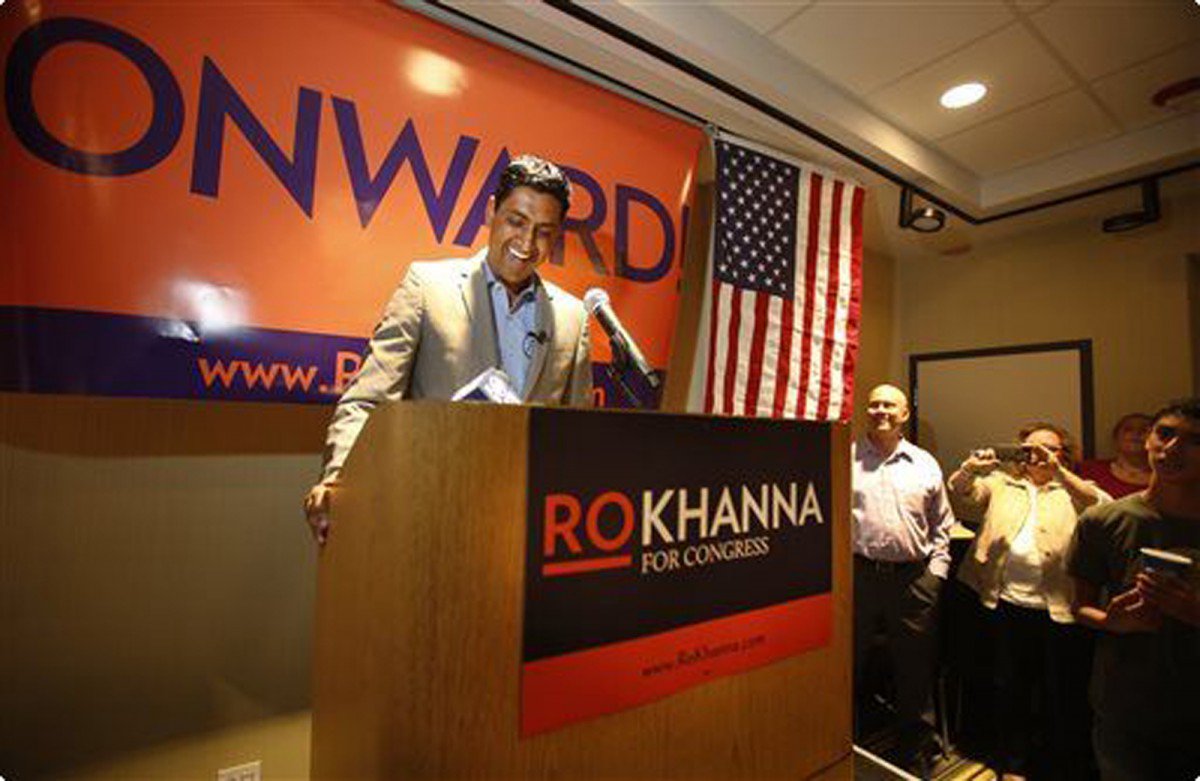
    Ro Khanna is in a pitched battle against an eight-term Democrat, who has been in public office for 35 years, is confident of winning the California’s 17th Congressional District Primaries on June 7.

    According to a San Francisco Bay Area CBS affiliate, KPIX polls, the already hotly-contested race for the highly contested seat may be tighter than expected. Honda is said to have had 31 percent sup port and 25 percent polled for the challenger Ro Khanna, shrinking the lead to 6 percent. In 2014, Honda outpaced Khanna by 20 percentage points.

    Ro Khanna is a Lecturer in Economics at Stanford University and was part of the Obama Administration. He is running for Congress against Mike Honda in Silicon Valley and seen by Roll Call and Politico as likely to win.

    Several Indian Americans are running for local, state, congressional and other seats throughout California in the June 7 primary, keep reading The Indian Panorama for regular updates.

    Honda, who is now entrenched in an ongoing ethics investigation by the House Ethics Committee, had narrowly beat the Indian American attorney from Fremont, Calif., in the 2014 race for the same seat. “Congressman Honda and his office gave special favors to donors,” Khanna said in the KPIX report. “So it started as this investigation about the mingling of staff but it became something much worse.”

    Throughout the campaign, Khanna has steadfastly turned away donations from lobbyists, corporations and Political Action Committees, signing a pledge in refusal of their money. That comes at a cost, with funding increasingly hard to come by, Khanna said in the report. He added that only nine people running for federal offices throughout the country are doing what he is doing.

    Despite that, Khanna has outraised Honda and holds nearly $2 million in the bank while Honda, needing to spend much of his raised money on legal fees, has roughly $800,000 cash in hand. Khanna has been endorsed by many who previously sided with Honda in 2014, such as California Secretary of State Alex Padilla and San Jose Mayor Sam Liccardo. President Barack Obama abstained from making an endorsement, previously having endorsed Honda.

    “The difference between this cycle and last is Ro Khanna now has a new line of attack, and he was only within striking distance last election,” said one Bay Area Democrat who has not endorsed in the race. “It’s going to be close.”

    Santa Clara County District Attorney Jeff Rosen, a Khanna supporter, believes that Silicon Valley voters are paying close attention to the Honda ethics probe. “For the people that come to this Valley to start businesses, they know the big competitive advantage is the rule of law, transparency, honesty, a level playing field and merit — not who you know,” Rosen said. “It’s merit that rises to the top, and Ro is a person of merit.”

    Khanna, who spent a couple of years in Washington as a deputy assistant secretary in Obama’s Commerce Department, lost to Honda last cycle by just 3.6 percentage points. But for Khanna, the son of Indian immigrants, there is a risk of going too negative this time around.

    Meanwhile, it was ironic that some members of the Indian American community gathered at the Zutshi home on May 15 for a “meet and greet” event supporting Mike Honda. The event was cohosted by state Senator Bob Wieckowski, Toni Shellen and Jeevan Zutshi. “Unlike his competitor, a perennial candidate, Mike Honda has a fabulous record of service,” Jeevan Zutshi told the gathering.

    His views were echoed by other Indian Americans present who felt that Indian American candidates must not run against those who have served the Indian American community for decades, according to a press release. Other activists who spoke were Tara Sreekrishnan, Jean Holmes, Henry Hutchins, Tejinder Dhami, Bridgette Hendrikson and Kameshwar Eranki.

    California’s 17th Congressional District includes much of California’s Silicon Valley cities such as Sunnyvale, Cupertino and Santa Clara, as well as north San Jose, Milpitas, Fremont and Newark. Khanna and Honda are expected to have a rare intraparty battle in November, with both progressive candidates expected to advance past California’s June 7 primary, in which the top two candidates move on to the general election regardless of party.

  • Tom Lantos commission to hold hearing on human rights violations in India during Modi trip

    Tom Lantos commission to hold hearing on human rights violations in India during Modi trip

    NEW YORK (TIP): Sant Gupta, an alum of IIT Delhi, based now in Virginia, and who has worked for the cause of #Hinduism and inter-faith dialogue for many years in the US, has lambasted a hearing organized by the Tom Lantos Human Rights Commission (TLHRC) that intends to examine the current state of human rights in India, challenges to fundamental freedoms, and opportunities for advancement, at Capitol Hill, on June 7th, to coincide with the visit of Indian Prime Minister Narendra Modi.

    Sant Gupta lambasts hearing on Capitol Hill, scheduled on June 7th.

    The hearing, organized by the Tom Lantos commission, named after the late congressman, is titled ‘Challenges & Opportunities: The Advancement of Human Rights in India’. The panel for the hearing has the following individuals listed: Jeff King, President, International Christian Concern; John Sifton, Asia Advocacy Director, Human Rights Watch; Musaddique Thange, Communications Director, Indian American Muslim Council; and T. Kumar, Asia Advocacy Director, Amnesty International.

    In an e-mail detailing the hearing, the commission wrote that “a wide variety of serious human rights concerns persist” in India.

    “Despite Constitutional provisions abolishing the legal existence of “untouchable” or Dalit castes and tribes, the caste system remains deeply ingrained within Indian society, leading to ongoing discrimination. Dalit communities, which make up a quarter of India’s population, are also disproportionately at risk of suffering from another major human rights concern in India, that of human trafficking. Tens of thousands of individuals, including children, are believed to be trafficking annually within India for the purposes of commercialized sexual exploitation or forced labor,” the e-mail said.

    It added: “Religious minorities also face growing challenges. According to the U.S. Commission on International Religious Freedom’s most recent report, “In 2015, religious tolerance deteriorated and religious freedom violations increased in India. Minority communities, especially Christians, Muslims, and Sikhs, experienced numerous incidents of intimidation, harassment, and violence, largely at the hands of Hindu nationalist groups.

    “Meanwhile, a large number of international non-governmental organizations supporting a range of causes, including human rights, have been added to government watch lists or had funding cut off by Indian officials. These actions, coupled with perceived crackdowns on groups or individuals critical of the Indian government, have many concerned that the rights to freedom of speech and freedom of association are being increasingly curtailed.”

    The hearing, the e-mail said, will “examine these and other issues, while seeking to provide concrete recommendations for how U.S. policy makers can most effectively encourage the protection of human rights given the strategic importance and continued growth of the U.S. – India bilateral relationship.”

    Gupta, who emigrated to the US over four decades ago, and works as a Business Development Executive for the federal government, has expressed his displeasure with the hearing. Gupta has over the years served on the executive Board of the World Hindu Council of America, and supports organizations like Life in Yoga Institute, Hindu American Foundation and Indian American Forum for Political Education.

    In an e-mail sent to the commission, in response to the hearing, a copy of which is with The American Bazaar, Gupta, said: “…TLHRC want to embarrass the PM Modi with this sham display of its biased, distorted and distasteful character. You quote USCIRF who in turn will quote you in their hearings and reports. This a classical circular argument to reinforce already established verdict. Neither of these entities have any interest to be fair, seek the truth or being helpful to those whom you pretend to assist.”

    Gupta came down hard upon not just the commission, but the entire Congress, too.

    “No wonder the US Congress has such a low approval rating among American public. Hope, you will stop wasting American tax $$ and do something good for the people here. Your actions amount to interfering in the internal affairs of other countries and jeopardizing good India-US relationship which will benefit both countries.”

    He also noted that “IAMC (Indian American Muslim Council) is a well-known Hindu and India hater. To give them stage is a poor reflection on TLHRC about their inability or lack of desire to hear multiple points of view to really convey the truth. And the Christian representative will probably cry about the untold (and in many cases unsubstantiated) atrocities committed by Hindus especially since Modi came to power. Somehow, there is little expectation of fairness from the representative of Amnesty International when it comes to conveying concerns of Hindus. So, the deck is stacked up against Modi, Hindus and India. And you expect no one to see through it!!”

    Gupta also wrote: “It appears that one of the primary goals of TLHRC is to build up atrocity literature against Hindus and India. Sooner it repurposes its mission better it would be for the genuine Human Rights.”

    He then asked some questions of the organizers: “Would you hold hearings on:

    “1. Deceptive and immoral practices by various Christian denominations in India for conversion. They pray on human vulnerability and take undue advantage of their plight while denigrating their way of life, religion and civilization. Any attempts to expose or stop such illegal practices is promptly labeled by USCIRF and your commission as Hindu Nationalists, Hindu Fundamentals and many other derogatory terms.

    “2. The hatred and disharmony spread by Muslims organizations, Madrassas or Mosques in India and elsewhere in the world. Please do not immediately label me as Islamophobic. Radical Islam is causing harm to the Western countries.”

    Gupta ended his e-mail with these strong words: “How can a body like TLHRC be so blatantly political and a constructive force for change? You have no business to be in such business.”

    Modi is scheduled to be in Washington, DC, on June 8-9, at the invitation of President Barack Obama.

  • G7 LEADERS PLEDGE COLLECTIVE ACTION ON SAGGING GLOBAL GROWTH

    G7 LEADERS PLEDGE COLLECTIVE ACTION ON SAGGING GLOBAL GROWTH

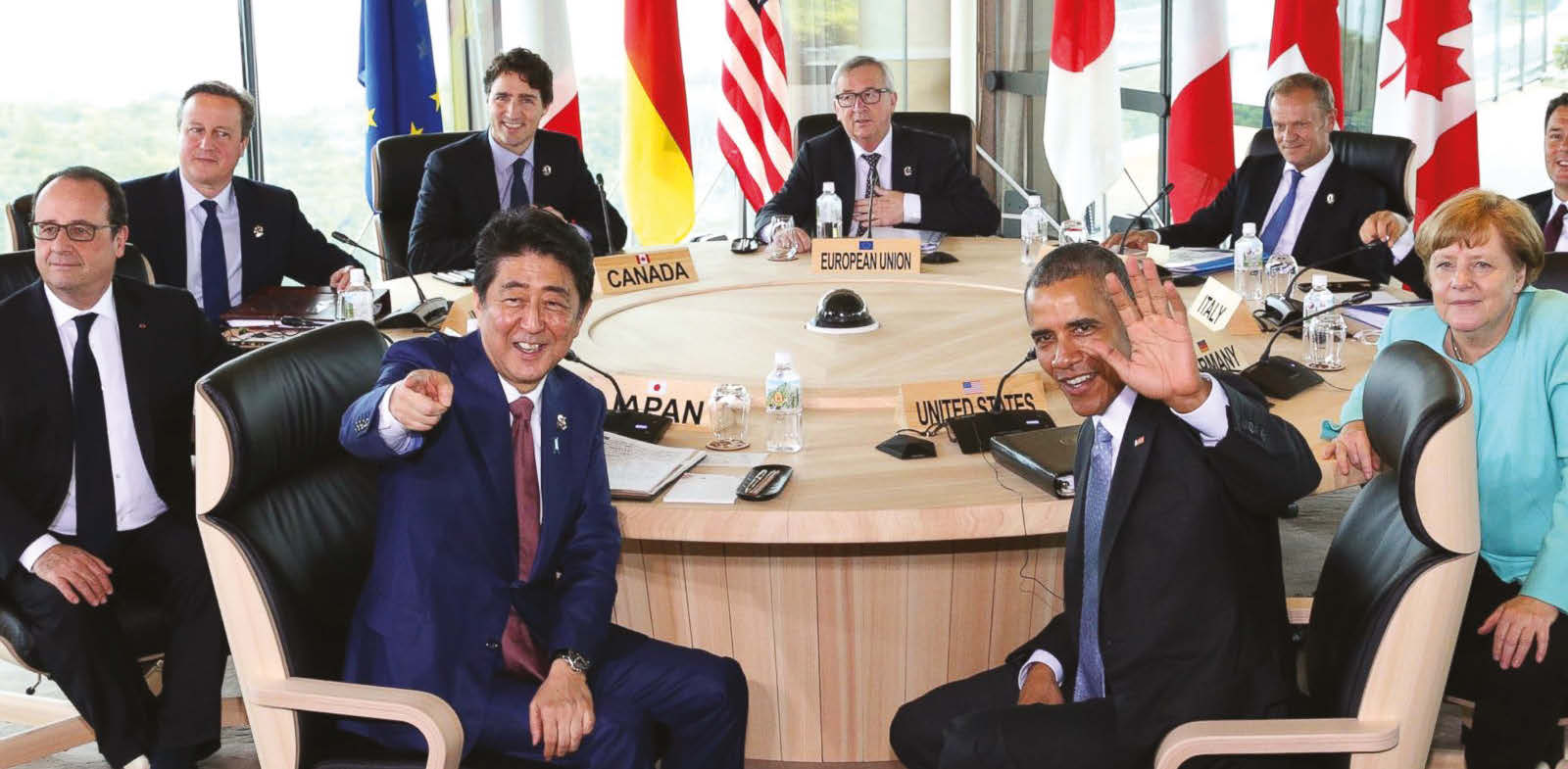
    SHIMA (TIP): The leaders of the Group of Seven rich economies pledged on May 27, Friday, to “collectively tackle” major risks to global growth, including direct political threats to the international order from terrorist attacks, violent extremism and refugee flows.

    Meeting at a seaside resort with expansive views of a scenic bay and emerald-green islands, G7 leaders wrapped up their annual summit Friday in central Japan claiming a
    “special responsibility” for leading international efforts to cope with those challenges. They also committed to a cooperative approach in beefing up policies to stimulate and sustain growth of their sluggish economies.

    “Weak demand and unaddressed structural problems are the key factors weighing on actual and potential growth,” they said in a declaration. “We have strengthened the resilience of our economies in order to avoid falling into another crisis and to this end commit to reinforce our efforts to address the current economic by taking all appropriate policy responses in a timely manner.”

    “We remain committed to ensuring that growth is inclusive and job-rich, benefiting all segments of our societies,” it said.

    The wording of the leaders’ declaration glosses over differences on the issue of fiscal stimulus by saying each will take into account “country-specific circumstances” in committing to stronger policies to support their economies. Germany, in particular, has balked at committing to expansionary fiscal policy.

    In a nod to such concerns, the declaration includes a reference to the need to ensure debt is “on a sustainable path.”

    While Japan is moving toward more public spending, and the likely postponement of a sales tax increase next year, to revive faltering growth, its own gross public debt is more than twice the size of its economy.

    The G7 host, Japanese Prime Minister Shinzo Abe appealed to his fellow leaders to act to avert another global crisis, comparing the current global economic situation to conditions just before the 2008 financial crisis.

    Vigilance is crucial for averting a relapse, he said: “We learned a lesson that we failed to respond properly because we did not have a firm recognition of the risks.”

    President Barack Obama backed Abe’s call, saying it was crucial not just to put people back to work but also raise wages and maintain the momentum of the recovery.

    “We’ve all got a lot of work to do and we agreed to continue to focus on making sure that each country, based on its particular needs and capacities, is taking steps to accelerate growth,” Obama said.

    G7 countries denounced protectionism and trade barriers. They also noted the negative impact from overcapacity in some industries and government subsidies and other incentives that tend to make such problems worse.

    During talks on the sideline of the summit, the US, EU and Japan reiterated their determination to reach agreement on various trade agreements meant to expand mutual market access.

    In their declaration, the summit leaders cited a possible departure of Britain from the European Union, depending on the outcome of a June 23 vote, as one of many potential shocks for the global economy .

    The leaders also expressed concern over territorial tensions in the East and South China seas. The declaration does not mention China and its expansion into disputed areas specifically, but calls for respecting freedom of navigation and of overflight and for resolving conflicts peacefully through law. The summit declaration also highlighted joint efforts on corruption, cybercrimes, terrorism, global health and migration — which has become a huge headache especially for European nations — as other top priorities.

    It said a global response was needed to cope with the surge in refugees, migrants and other displaced people to its highest level since World War II and committed to increasing assistance to meet their immediate and long-term needs. But there were no specific, concrete offers of extra help.

    Earlier, Donald Tusk, president of the European Council, said the EU was creation of resettlement schemes and expansion of other forms of legal migration around the world.

    Expanding their discussions to issues of “inclusive” growth, the group met Friday with leaders of seven developing countries. The “outreach” session invited leaders from some of Asia’s poorest countries, such as Laos and Papua New Guinea, and also some of its biggest, most dynamic emerging economies, like Vietnam and Indonesia. The president of Chad, Idriss Deby, was representing the African union, and top international leaders such as Christine Lagarde of the IMF also attended.

    Read More

  • Barack Obama leases 9 bedroom mansion as post- presidential pad

    Barack Obama leases 9 bedroom mansion as post- presidential pad

    WASHINGTON: President Barack Obama will lease a 9 bedroom mansion in Washington, DC’s wealthy Kalorama neighborhood after he leaves the White House next year, US media reported on Thursday.

    The real estate is reportedly owned by Joe Lockhart, who served as White House press secretary under former President Bill Clinton.

    The house was built in 1928 and has nine bedrooms and eight-and-a-half bathrooms. It was sold in 2014 for more than$5 million, CNN reported.

    Obama, 54, has said he and his family will remain in Washington home after he departs 1600 Pennsylvania Avenue in January 2017, a change from most former presidents.

    “We’re going to have to stay a couple of years in D.C. probably so Sasha can finish,” he said in March about his youngest daughter. “Transferring someone in the middle of high school? Tough.”

    Obama, the 44th US President, will demit office on January 20, 2017 after serving two terms.

  • TWO YEARS OF MODI GOVERNMENT

    TWO YEARS OF MODI GOVERNMENT

    On May 26, two years back, President Pranab Mukherjee administered the oath of office to Prime Minister Narendra Modi and his Cabinet. The lavish ceremony was attended by Premiers of SAARC nations, several Chief Ministers, Opposition leaders, besides a host of celebrities, corporate honchos and religious heads.

    For the first time in 30 years, the BJP came to power with an absolute majority and the swearing-in ceremony gave a hint that Team Modi was ready with a game-changing plan for the country. Two years into governance, we look back at the Centre’s performance.

    HITS

    Yemen evacuation

    This was one of the biggest evacuations during the times of war, since the Gulf War I. MoS Gen. (Retd) V.K. Singh personally oversaw the operation. The External Affairs Minister headed by Sushma Swaraj earned laurels for helping the Indians living abroad, be it for rescuing Kerala nurses from war-torn Libya or bringing back differently-abled Geeta from Pakistan.

    Jan Dhan Yojana

    Anyone can now open an account in a bank, thanks to this financial inclusion scheme. Barely a fortnight after the launch, the yojana entered the Guiness Book of World Records for the maximum number of accounts opened in a week. The scheme is a big boost in moving towards direct subsidy transfer.

    LPG subsidy reforms

    Initially started as a ‘Give It Up’ campaign, the Petroleum and Natural Gas Ministry headed by Dharmendra Pradhan barred LPG subsidy to customers who earn more than Rs. 10 lakh per annum. The amount saved was used to give over five lakh new LPG connections to those who still use firewoods or kerosene stoves for cooking.

    TWO YEARS OF MODI GOVERNMENT1Swachh Bharat Mission

    A pet project of Mr. Modi, sanitation ministry’s Swachh Bharat mission got wide public support, especially on social media after celebrities joined the Clean India challenge. Not just stopping with cleaning the locality, the government has taken initiatives such as building more toilets, waste management and waste segregation. Real success, will however happen, when manual scavenging is completely eradicated.

    India-Bangladesh land boundary pact

    When India is facing boundary disputes with every neighbour, this agreement gives optimism that issues can be amicably solved over diplomacy. The people living in the enclaves that were recently annexed to India even exercised their franchise in the recently concluded West Bengal Assembly elections.

    Bankruptcy code

    At a time when bankers were grappling with huge rise in non-performing assets and government eyeing to create more entrepreneurs, the amendment of existing bankruptcy laws was necessary. With the support from Congress, the law was passed in Rajya Sabha during the Budget Session where the ruling party was short of numbers.

    Real Estate regulation

    Apart from making the process transparent and keeping checks and balances in the form of a Real Estate Regulatory Authority, the law drafted by Housing Ministry headed by M. Venkaiah Naidu gave confidence to home-buyers. When housing sector contributes to nine per cent of GDP, this law, if effectively implemented by the States, is a game-changer in the housing sector.

    Yoga Day

    India’s lobbying got success when the United Nations declared June 21 as International Yoga Day. The mass yoga performance at Rajpath, which was led by Mr. Modi himself, set the record of most number of people participating in such an event.

    Mann Ki Baat

    A first such initiative in India where a top leader addresses millions, that too periodically. The programme even featured U.S. President Barack Obama during his visit to India.

    Digital India

    This flagship programme of Ravi Shankar Prasad’s Communications Ministry aiming to create a knowledge economy and good governance is travelling in the right path. Every minister and every ministry is now on Twitter. A slew of e-governance measures like digital locker and feedbacks through mygov.in are some notable initiatives.

    MISSES

    Pathankot attack

    The attack at IAF air base, just few hours from the National Capital, is the first of its kind after the 26/11 Mumbai attacks. There were differences of opinion over the way in which the encounter was handled, Home Minister Rajnath Singh was kept out of key meetings at the time of attacks and to make things worse, there was confusion over the number if terrorists sneaked in to carry out the attack. The attack raised questions on the security-level at India’s military bases.

    Masood Azhar

    India’s efforts to add the name of Masood Azhar, the chief of JeM, in the UN list of proscribed terrorists failed as China raised objections to it. This is a major setback to India as Azhar is believed to be behind the Pathankot attack.

    India-Pak relations

    Much to the hype of Pakistan Prime Minister Nawaz Sharif attending the swearing-in ceremony or the saree diplomacy, both governments couldn’t re-start the dialogue process nor has the firing across the Line of Control came down. Mr. Modi’s surprise stop-over at Lahore too failed to cut the ice.

    India-Nepal relations

    Anti-India protests flared up in Nepal after trade movements through the border were not allowed for many days. Nepal called it ‘India’s blockade’ as it followed protests by Madhesis. All of these happened within a year of the Himalayan quake, when Nepal thanked India’s help in rescue and rehabilitation. Also, India couldn’t keep away Nepal from moving closer to China.

    TWO YEARS OF MODI GOVERNMENT2Dissidence in Central Universities

    Smriti Irani and the Union Ministry of Human Resource and Development was in news for all wrong reasons. The suicide of a Dalit Research Scholar at Hyderabad Central University, sedition charges against students of Jawaharlal Nehru University, the FTII students’ strike, decision of not to support off-campus centres of Aligarh Muslim University, closing down Ambedkar-Periyar Study circle in IIT-Madras, the list goes on. And some avoidable controversies such as competition for schoolchildren on Christmas or scrapping German being taught at CBSE schools.

    Blackmoney

    Bringing back money stashed in off-shore accounts was one of BJP’s poll promises. The government gave a three-month window for compliance, but only 644 declarations were made. Finance Minister Arun Jaitley once said the bulk of blackmoney is within India, but little has been done to contain the feeders of parallel economy – higher education, real estate and mining.

    GST Bill/Land ordinance

    The government is unable to pass the GST Bill in Rajya Sabha for the past two years. Touted as the biggest tax reform in Independent India, the government is unable to bring consensus. Same is the fate of land bill. Though the Centre took the ordinance route to clear the bill, it was re-promulgated twice and lapsed on August 31, 2015.

    Uttarakhand fiasco

    The pre-mature imposition of President’s Rule in Uttarakhand, and victory of Harish Rawat in the Supreme Court-monitored floor test, is not only an embarrassment to the ruling government but also to the BJP, whose attempt to gain from dissidence in Uttarakhand Congress misfired.

    Silence on fringe right-wing groups

    Law and order could be a State subject. Murders of rationalists and attacks on minority community by fringe right-wing elements may not be limited to the BJP-ruled states. But the Centre as well as the Prime Minister’s refrains from condemning or making comments against such attacks didn’t go well with the public.

    Women’s Bill

    The bill seeking one-third representation for women in Parliament and State Assemblies is an almost-forgotten topic now. Cleared in Rajya Sabha in 2010, the Bill is pending in the lower House, in which the BJP front enjoys comfortable majority.

  • Indian American Neera Tanden Appointed To Democratic Party’s Policy Panel

    Indian American Neera Tanden Appointed To Democratic Party’s Policy Panel

    Democratic National Committee Chairwoman Debbie Wasserman Schultz announced the appointment of the party Platform Drafting Committee’s 15 members who will draft its policy agenda for the November presidential election.

    Among the members is Indian American Neera Tanden, 45, who has been a long-time associate of Democratic presidential front-runner Hillary Clinton, is being touted as a potential cabinet member if Clinton is elected as the US president in the November general elections.

    The panel is responsible for developing and managing the process through which the platform is established which is similar to the election manifesto parties have in India.

    Tanden, the president of the Center for American Progress (a top US think-tank), has served as a Clinton surrogate and worked as policy director for Clinton’s presidential campaign in 2008. She was a key protagonist in developing President Barack Obama’s healthcare reform proposals – the Affordable Care Act – during her tenure in the Obama administration.

    U.S. Democratic Party
    U.S. Democratic Party

    “We are delighted to bring together this talented group of Democrats. These individuals represent some of the best progressive thinking from across the nation. I am confident that the members of this committee will engage Americans in a substantive dialogue of ideas and solutions that will inform our Party Platform,” Democratic National Committee Chairwoman Debbie Wasserman Schultzshe said.

    Congressman Elijah Cummings has been appointed as chair of the drafting committee.

    The committee’s members are Rep. Elijah Cummings, Howard Berman, Paul Booth, Carol Browner, Rep. Keith Ellison, Rep. Luis Gutierrez, Rep. Barbara Lee, Bill McKibben, Deborah Parker, State Rep. Alicia Reece, Bonnie Schaefer, Ambassador Wendy Sherman, Neera Tanden, Dr. Cornel West, and James Zogby.

    Sanders said he was satisfied with the way the committee’s seats were distributed.

    “We believe that we will have the representation on the platform drafting committee to create a Democratic platform that reflects the views of millions of our supporters who want the party to address the needs of working families in this country and not just Wall Street, the drug companies, the fossil fuel industry and other powerful special interests,” he said in a statement.

    Clinton campaign press secretary Brian Fallon also said their camp is happy with the fact that Sanders will have more input in the party platform.

    “We’re pleased that the upcoming Democratic Convention will ensure supporters of Senator Sanders are well represented in the drafting of the party’s platform,” Fallon said. “The Democratic Party historically has been a big tent, representing a diverse coalition, and Hillary Clinton is committed to continue welcoming different perspectives and ideas.”

  • Obama confirms Taliban leader Mullah Akhtar Mansour’s death in US strike

    Obama confirms Taliban leader Mullah Akhtar Mansour’s death in US strike

    President Barack Obama confirmed Taliban chief Mullah Akhtar Mansour was killed in a US air strike, hailing his death as an “important milestone” in efforts to bring peace to Afghanistan — but the strike was also an illustration of the tangled relationship between Washington and Islamabad.

    Saturday’s bombing raid, the first known American assault on a top Afghan Taliban leader on Pakistani soil, marks a major blow to the militant movement, which saw a new resurgence under Mansour.

    “He is an individual who as head of the Taliban was specifically targeting U.S. personnel and troops inside of Afghanistan who are there as part of the mission I have set to maintain a counterterrorism platform and provide assistance,” Mr. Obama said during a news conference in Hanoi, Vietnam. Killing Mullah Mansour, Mr. Obama said, sent a message that “we’re going to protect our people.”

    “We have removed the leader of an organisation that has continued to plot against and unleash attacks on American and Coalition forces, to wage war against the Afghan people, and align itself with extremist groups like Al-Qaeda,” the US president said in a statement.

    To many outside experts, it sent an equally powerful message to Pakistan.
    “The administration is no longer worried about blowing up anything,” said Vali Nasr, a former State Department official who worked on Pakistan. “This is literally carrying out an operation, not against an Arab terrorist leader, but against a Pashtun ally of Pakistan, inside Pakistani territory.”

    On Monday, May 23, the Pakistani Foreign Ministry summoned the American ambassador, David Hale, to lodge a protest for what it said was a “violation of Pakistan’s sovereignty.” The killing would obstruct multiparty efforts to negotiate a settlement between the Taliban and the Afghan government, it said.

    Obama, who is on a three day visit to Vietnam, said Mansour had rejected efforts “to seriously engage in peace talks and end the violence that has taken the lives of countless innocent Afghan men, women and children.”

    He called on the Taliban’s remaining leadership to engage in peace talks as the “only real path” to ending the attritional conflict.

    Mansour was elevated to the leadership of the Taliban in July 2015 following the revelation that the group’s founder Mullah Omar had died two years earlier.

    He was killed on Saturday near the town of Ahmad Lal in Pakistan’s south western Balochistan province, when missiles fired from a drone struck the car he was travelling in.

    It was believed to be the first time the United States has targeted a senior Taliban figure in Pakistan.


  • 2 Years of Modi Government Show We Should Be Worried

    2 Years of Modi Government Show We Should Be Worried

    When a new government takes over, people have a lot of expectations. The government’s success is measured in terms of initiatives it has taken to permanently alter the fundamentals in social, political and intellectual domains.

    Seeds of such changes are mostly sown in the first year of the assumption of power. Narasimha Rao ushered in economic reform by de-licensing industries in his first budget presentation, the results of which were far-reaching. Rajiv Gandhi brought in Sam Pitroda and created C-Dot. The present telecom revolution owes a lot to that initiative of Rajiv Gandhi. Barack Obama reached out to Muslims by giving a speech at Al-Azhar University, clearly making a policy statement that the US was no longer interested in continuing Bush’s foreign policy while hinting at the withdrawal of US forces from Iraq and Afghanistan.

    Narendra Modi is completing two years in the government and without any exception, making efforts which have the potential to permanently change the fundamentals of the Indian system and its value structures.

    The social system’s liberal tradition has been confronted with the one-dimensional behavior pattern led by RSS’s ideological zealots. The killing of Akhlaq in Dadri by BJP leaders because of his alleged eating habits is symptomatic of that assertion. Beef has been banned in Maharashtra despite protests by minority communities. The Kerala House in Delhi, which has been serving beef for decades, was raided by the Delhi police. Haryana Chief Minister ML Khattar has advocated that girls should not wear jeans. “Love Jihad” and “Ghar Wapsi” are excuses to stop Hindus and Muslims from inter-mingling. Aamir Khan and Shah Rukh Khan have been hounded for statements on intolerance.

    Activists Kalburgi and Pansare were killed by people who could not tolerate them speaking their minds. The social atmosphere has been so vitiated that the President of India, Pranab Mukherjee has publicly prodded the government many times about its responsibilities, but without any substantive results.

    On the political front, the Modi government has been ruthlessly pursuing the agenda of making India “Congress mukt (free)”, or rather, devoid of any opposition whatsoever. Two Congress governments were toppled without any constitutional validity. The Supreme Court still has to decide about the Arunachal case, but its decision on Uttarakhand is a slap on the face of the Modi government and a warning for any future misdemeanors. But the simple fact that such attempts were made despite protests from all corners is proof that other opposition-led states will bear the wrath of the Modi government in days to come.

    The Modi government has been rigorous in its pursuit of denigrating Nehru, not just as an individual, but also in the context of his legacy. Modi knows that the Congress derives its ideological sustenance and legitimacy from Nehru and his liberal thoughts. To permanently discredit the Congress, Nehru’s legacy has to be discredited. The legends of Subhas Chandra Bose, Vallabhbhai Patel, Baba Saheb Ambedkar and Bhagat Singh are being resurrected in an attempt to diminish the historical contributions of Nehru and erase him from the collective consciousness. The Rajasthan government has tried to remove Nehru from its school curriculum. The chairman of the Nehru museum has been replaced by a Nehru baiter.

    Modi also knows that one liberal political discourse should not be replaced with another. So along with the Congress, other liberal political formations also have to suffer. Therefore, the Arvind Kejriwal government and its leaders are targeted by central agencies because the Aam Aadmi Party brand has the power to grow into a national alternative. A very powerful Chief Minister confided in me that the plan was that by 2019, many senior leaders of opposition parties would be in jail and there would be no opposition to Modi.

    The JNU episode is probably the most important indicator that the third sector I spoke of – the intellectual domain – has to make way for the militant right. Let’s not forget that Modi is not an ordinary politician. He represents the historical ideological ambition of the RSS which wants to create militant Hinduism, take revenge for the past and to establish the rule of the “pure” Hindu Race. The RSS was born in 1925 as a revolt to the Gandhian philosophy which it perceived as making Hindus weak, and the reason for civilizational dominance of other faiths over Hindus. But after independence, the Gandhian discourse was replaced by the Left ideology thanks to Nehru and that dominatedoverwhelmingly till India was opened to the world market in 1991.

    Such was the dominance of the Left in the academic and intellectual universe in India that the RSS was relegated to the margins. JNU or Jawaharlal Nehru University in Delhi was the epitome of the Left’s intellectual prevalence. To establish Hindutva ideology, that has to be discredited, broken and replaced. The RSS and the BJP did not mince words in calling Left intellectuals “anti-nationals”, accusing them of colluding with terrorists, and describing universities like JNU and Jadavpur inBengal as dens of terrorists. These varsities are the knowledge leaders of the country, and very highly rated globally. They have to be demolished in order to stitch a new intellectual paradigm. Kanhaiya got caught in that cross fire. He is an accident of history.

    Many argue that Modi has not fulfilled the promises he made during the 2014 elections. That kind of yardstick is applied to measure the success and failure of mere mortals. Modi is not one. He thinks he is a special child of history with a civilizational project. Those who thought that he would change the course of the economy are disappointed. Despite India being the fastest-growing economy, job growth is at its lowest in the last six years, eight core industries are shrinking, inflation is down but export figures are discouraging, the rupee is highly stressed, and social conflict is growing. The Jat and Patidar movements have been examples of civil unrest, but the Modi government is oblivious. Modi is busy laying the foundations of a new ideological edifice. In communist parlance, once the base is solidified, the super structure will take care of itself.

    Two years of Modi in government tell a singular story which looks strange and intimidating to many, but for his supporters and ideological friends he is doing a good job. Paul Eldridge, famous writer, said, “Man is ready to die for an idea, provided that idea is not quite clear.” There were many, other than his ideological friends, who were willing to die for Modi in 2014; for them he was a refreshing idea. For many of them, that idea is now losing its sheen. Or maybe the idea is getting clearer.

    (Ashutosh, a well-knownjournalist, joined the Aam Aadmi Party in January 2014.)