Tag: Barack Obama

  • Atomic bomb survivors want Obama to meet, apologize in Hiroshima

    Atomic bomb survivors want Obama to meet, apologize in Hiroshima

    TOKYO (TIP): A group representing Japanese survivors of US atomic bombings has asked US President Barack Obama to hear their stories and apologize when he visit Hiroshima .

    Two leaders of the Tokyo-based nationwide group said Thursday many survivors want an apology though they avoided an outright demand for one.

    US atomic bombings on Hiroshima and Nagasaki at the end of the World War II killed more than 200,000 people and nearly destroyed the cities.

  • China demands end to US surveillance after aircraft intercept

    China demands end to US surveillance after aircraft intercept

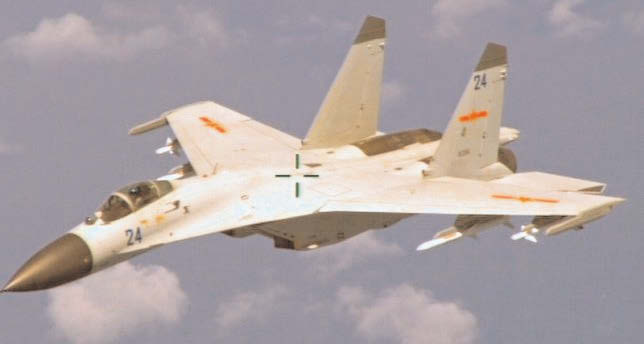
    WASHINGTON/BEIJING (TIP): Beijing demanded an end to US surveillance near China on Thursday after two of its fighter jets carried out what the Pentagon said was an “unsafe” intercept of a US military reconnaissance aircraft over the South China Sea .

    The incident, likely to increase tension in and around the contested waterway, took place in international airspace on Tuesday as the plane carried out “a routine US patrol,” a Pentagon statement said.

    A US defense official said two Chinese J-11 fighter jets flew within 50 feet (15 meters) of the US EP-3 aircraft. The official said the incident took place east of Hainan island.

    “Initial reports characterized the incident as unsafe,” the Pentagon statement said.

    “It must be pointed out that US military planes frequently carry out reconnaissance in Chinese coastal waters, seriously endangering Chinese maritime security,” China’s foreign ministry spokesman Hong Lei Hong told reporters.

    “We demand that the United States immediately cease this type of close reconnaissance activity to avoid having this sort of incident happening again,” Hong said.

    Speaking at a regular press briefing, he described the Pentagon statement as “not true” and said the actions of the Chinese aircraft were “completely in keeping with safety and professional standards.”

    “They maintained safe behavior and did not engage in any dangerous action,” Hong said.

    The encounter comes a week after China scrambled fighter jets as a US Navy ship sailed close to a disputed reef in the South China Sea.

    Another Chinese intercept took place in 2014 when a Chinese fighter pilot flew acrobatic maneuvers around a US spy plane.

    The intercept occurred days before President Barack Obama travels to parts of Asia from May 21-28, including a Group of Seven summit in Japan and his first trip to Vietnam.

    China claims most of the South China Sea, through which $5 trillion in ship-borne trade passes every year. The Philippines, Vietnam, Malaysia, Taiwan and Brunei have overlapping claims.

    Washington has accused Beijing of militarizing the South China Sea after creating artificial islands, while Beijing, in turn, has criticized increased US naval patrols and exercises in Asia.

    The Pentagon statement said the Department of Defense was addressing the issue through military and diplomatic channels.

    China’s defense ministry said in a fax that it was looking into reports on the incident.

    “Dangerous intercepts”
    In 2015, the United States and China announced agreements on a military hotline and rules of behavior to govern air-to-air encounters called the Code for Unplanned Encounters at Sea (CUES).

    “This is exactly the type of irresponsible and dangerous intercepts that the air-to-air annex to CUES is supposed to prevent,” said Greg Poling, director of the Asia Maritime Transparency Initiative at Washington’s Center for Strategic and International Studies think-tank.

    Poling said either some part of China’s air force “hadn’t gotten the message,” or it was meant as a signal of displeasure with recent US freedom of navigation actions in the South China Sea.

    “If the latter, it would be very disappointing to find China sacrificing the CUES annex for political gamesmanship.”

    Zhang Baohui, a security expert at Hong Kong’s Lingnan University, said he believed the encounter highlighted the limitation of CUES, and shows that Chinese pilots would still fly close to US surveillance planes if needed.

    “Frankly, we’re always going to see these kinds of incidents as China will always put the priority on national security over something like CUES whenever it feels its interests are directly threatened,” he said.

    The encounter took place in international airspace about 100 nautical miles south of mainland China and about 50 nautical miles east of Hainan island, a Pentagon spokesman said in a statement issued later on Thursday.

    Regional military attaches and experts say the southern Chinese coast is a military area of increasing sensitivity for Beijing.

    Its submarine bases on Hainan are home to an expanding fleet of nuclear-armed submarines and a big target for on-going Western surveillance operations.

    The Guangdong coast is also believed to be home to some of China’s most advanced missiles, including the DF-21D anti-ship weapon.

    The Pentagon last month called on China to reaffirm it has no plans to deploy military aircraft in the Spratly Islands after China used a military plane to evacuate sick workers from Fiery Cross Reef, where it has built a 9,800-foot (3,000 meter) runway.

    In April 2001, an intercept of a US spy plane by a Chinese fighter jet resulted in a collision that killed the Chinese pilot and forced the American plane to make an emergency landing at a base on Hainan.

    The 24 US air crew members were held for 11 days until Washington apologized for the incident. That encounter soured US-Chinese relations in the early days of President George W Bush’s first administration.

    Last month, the Pentagon said that Russia had intercepted a US Air Force aircraft over the Baltic Sea in an “unsafe and unprofessional” way.

  • US Senate Confirms Indian-American Deven Parekh For Key Post In OPIC

    US Senate Confirms Indian-American Deven Parekh For Key Post In OPIC

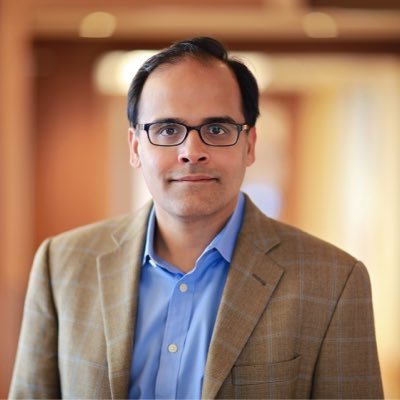
    The US Senate has confirmed the nomination of Deven J Parekh (@djparekh), Indian-American by President Barack Obama to the board of directors of the Overseas Private Investment Corporation.

    Nominated by the US President Barack Obama in August 2014, Mr Parekh is currently a managing director at Insight Venture Partners, a position he has held since 2001.

    Overseas Private Investment Corporation (OPIC) is the US government’s development finance institution. It mobilises private capital to help solve critical development challenges and, in doing so, advances US foreign policy.

    A major fund raiser for Mr Obama’s presidential campaigns, Mr Parekh held a number of roles at Berenson Minella & Company between 1992 and 2000, including Principal and Vice President. Previously, from 1991 to 1992, he was a financial analyst for the Blackstone Group.

    He has served as a Member of the Technological Advisory Council of the Federal Communications Commission since 2011. He is a Member of the Board of Publicolor, which he chaired from 2007 to 2012.

    Mr Parekh is Treasurer and Member of the Board of Governors of the National Academy Museum, a Member of the Board of the Tisch MS Research Center of New York, and a Member of the Greater NY Partnership.

    He is also a Member of the Council on Foreign Relations and the Economic Club of New York.

    From 2010 to 2012, he was a Member of the Advisory Board of the Export-Import Bank of the United States. In 2006, he was named a Henry Crown Fellow of the Aspen Institute. Mr Parekh received a BS from the Wharton School of the University of Pennsylvania.

  • Barack Obama Appoints Indian American Sikh To Key Administration Post

    Barack Obama Appoints Indian American Sikh To Key Administration Post

    US President Barack Obama has appointed an Indian-American engineer to a key administration post, the White House said.

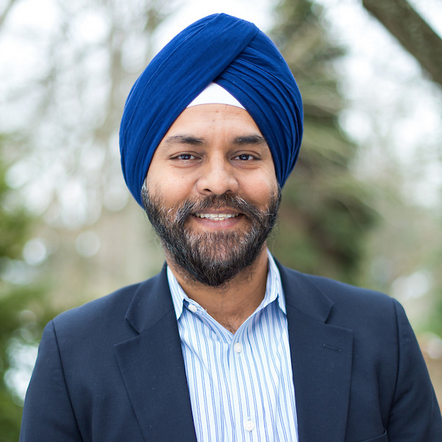
    Manjit Singh, (Twitter – @supermanjit) co-founder of the Sikh American Legal Defense and Education Fund has been appointed as the member of President’s Advisory Council on Faith-Based and Neighborhood Partnerships.

    The announcement came along with several other appointments made by the US President yesterday.

    “These fine public servants bring a depth of experience and tremendous dedication to their important roles. I look forward to working with them,” President Obama said in a statement.

    President of Agilious, a software technology consulting firm he founded in 2013, Mr Singh is also the co-founder and chairman of the Board of Directors of the Sikh American Legal Defense and Education Fund, a national Sikh American media, policy and education organization.

    He served as a member of the Board of Directors of the Guru Gobind Singh Foundation and also as a Member-at-Large of The Board of the Interfaith Conference of Metropolitan in Washington.

    Mr Singh received a Master of Science degree from the State University of New York at Albany and a Bachelor of Engineering from the University of Bombay in India.

  • Obama appoints transgender woman, Sikh and Baha’i to faith advisory council

    Obama appoints transgender woman, Sikh and Baha’i to faith advisory council

    A transgender woman will join representatives from the Sikh and Baha’i communities as new advisers to President Obama on faith-based issues.

    The White House announced the additions to the President’s third and final advisory council on faith-based and neighbourhood partnerships last week.

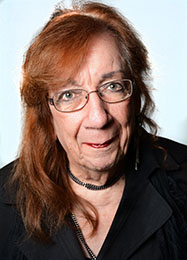
    Barbara Satin is the assistant faith work director for the National LGBTQ Task Force and a member of the United Church of Christ (UCC). She was the first openly transgender member of the UCC’s executive council and has served on the board of a number of other LGBT community groups.

    Of her appointment, Satin said: “Given the current political climate, I believe it’s important that a voice of faith representing the transgender and gender non-conforming community — as well as a person of my years, nearly 82 — be present and heard in these vital conversations.”

    The other appointments included Naseem Kourosh, human rights officer at the US Baha’i office of public affairs and Manjit Singh, co-founder and chairman of the Sikh American Legal Defence and Education Fund.

    Along with a number of other appointments, Obama said Satin, Kourosh and Singh were “fine public servants” and would bring “depth of experience and tremendous dedication” to their roles.

    “I look forward to working with them,” he said.

    The President’s advisory council is charged with making policy recommendations to the administration as well as suggesting improvements and best practices for services that relate to faith-based groups. The council currently has fifteen members, most of whom are Christian.

  • Obama To Present National Medal Of Science To Indian American Prof. Rakesh K Jain

    Obama To Present National Medal Of Science To Indian American Prof. Rakesh K Jain

    A 65-year-old Indian American scientist will receive the prestigious ‘National Medal of Science’ award from US President Barack Obama this week, the White House has said.

    Rakesh K Jain, is a prominent member of the Harvard Medical School faculty has been recognized with the nation’s highest honor for achievement and leadership in advancing science.


    Jain, a professor of tumor biology at Massachusetts General Hospital in the Harvard Medical School, will receive the award from Obama along with 16 other recipients of the ‘National Medals of Science and National Medals of Technology and Innovation’ on May 19.

    The award function was initially scheduled for January 22 but was postponed due to a major snow storm.

    Awarded annually, the Medal of Science recognises individuals who have made outstanding contributions to science, engineering and mathematics.

    The National Medal of Technology and Innovation recognises those who have made lasting contributions to America’s competitiveness and quality of life and helped strengthen nation’s technological workforce.

    Jain’s distinguished career includes being elected to the National Academy of Sciences, the Institute of Medicine and the National Academy of Engineering.

    “Science and technology are fundamental to solving some of our nation’s biggest challenges,” President Obama said in a statement released Dec. 22 announcing the awards. “The knowledge produced by these Americans today will carry our country’s legacy of innovation forward and continue to help countless others around the world. Their work is a testament to American ingenuity.”

    Mr Jain, an IIT-Kanpur alumnus, has received numerous awards for his work on tumour biology, particularly research on the link between tumour blood vessels and improving the effects of chemotherapy and radiation treatment.

    He received his B Tech degree from the IIT-Kanpur in Chemical Engineering in 1972.

    The National Medal of Science was created by statute in 1959 and is administered for the White House by the National Science Foundation.

  • Obama is more popular than Reagan

    Obama is more popular than Reagan

    For a leader regularly written off by the press as a lame duck 18 months ago, President Obama has tallied some major wins during his second term, and voters have taken notice. He’s normalized relations with Cuba, implemented a historic Iranian nuclear deal, signed a global climate pact with nearly 200 nations, overseen the continued success of Obamacare, all while the economy has recorded 73 straight months of job growth.

    No wonder that polls point toward a Democrat succeeding him in the White House.

    So why isn’t there more media credit directed his way? Is the press making the mistake of reading off the Republican campaign script this year, which insists America is teetering on collapse? (Obama joked at the White House Correspondents Dinner: “The end of the Republic has never looked better.”)

    Whatever the reasons, let’s note there hasn’t been a media rush to document Obama’s strong standing in recent weeks. CNN last month timidly suggested, “there’s some evidence that the public is viewing Obama … more fondly.” The first clue?Obama’s approval rating hit a three-year high of 53 percent, according to Gallup. (He boasts a staggering 66 percent approval rating today among voters 18-29.)

    Obama’s strong showing has remained steady since March: Gallup on Monday pegged his approval rating at 52 percent.

    Note that the president’s approval rating dropped down to 40 percent just 18 months ago during the midterm election cycle in 2014, which means he’s ridden a 13-point surge over the last year-and-a-half. Doesn’t that qualify as news?

    The president averaged a nearly 50 percent approval rating from January 20 through April 19, his 29th quarter in office, according to Gallup. That 29th quarter represents “one of the higher quarterly averages in his presidency to date.” That’s especially remarkable considering second terms are not traditionally kind to presidential approval ratings.

    Recall that our previous two-term president left office with a 22 percent approval rating, while his vice president signed off with a thumbs-up from 13 percent of voters.

    What’s also impressive is that in today’s hyper-partisan environment, Obama has been able to boost his standing while getting almost no support from Republican voters.

    “Obama is the first president since polls existed to have never gone above 25 percent approval from the other side,” noted Paul Waldman at the American Prospect. Obama’s approval among Republicans currently stands at just 14 percent, according to Gallup. Given today’s rugged political terrain, “If a president can stay at 50 percent, he should be counted a remarkable success,” Waldman argued.

    But don’t look for lots of media tributes. The truth is, during his two terms the press has repeatedly worked to depict Obama’s standing as being on the decline, and often downplaying his success. (Also, good news is no news.) As Media Matters noted in 2010, “Beltway scribes today have made it plain that when it comes to Obama and polling, good news is no news.”

    And when Obama’s standing did fall, the press eagerly piled on, as I laid out after Democratic losses in 2014: Right after the election, a November Economist editorial announced, “Mr. Obama cannot escape the humiliating verdict on his presidency.” Glimmers of hope after the midterms were no reason to think Obama had “somehow crawled out of the dark place that voters put him,” the Washington Post assured readers. (Post columnist Dana Milbank has recently tagged Obama as a hapless “bystander” who’s “turning into George W. Bush.”) And a McClatchy Newspapers headline declared, “President Obama Is Now Truly A Lame Duck”.

    So it’s not surprising the same press corps is in no rush today to detail Obama’s recent surge in popularity, and in fact seems to tiptoe around it.

    In January, The New York Times looked ahead to Obama’s final year in office and stressed, “polls show doubts about his handling of critical issues.” Contrasting his second term with Bill Clinton’s and Ronald Reagan’s, the Times insisted Obama began the year “without the advantages of popularity that Reagan and Mr. Clinton had.”

    In other words, both Reagan and Clinton were very popular during their final year in office, but Obama was not. Yet recently, Obama’s Gallup approval rating slightly exceeds Reagan’s from the same point in the Republican’s eighth year in office.

    Obama’s Gallup rating April 25-May 1, 2016: 51 percent. Reagan’s Gallup rating May 2-May 8, 1988: 50 percent.

    So where are the media acknowledgements? (In the press, Reagan is often used as shorthand for a universally popular president.) In recent months, the Times has made only a few passing references to Obama’s approval ratings, according to Nexis.

    In early March, a Washington Post-ABC News poll found that Obama’s approval rating had risen to 51 percent, up from 45 percent in December. Big news, right? Nope. The Post reported that 51 percent fact in the ninth paragraph and devoted just one sentence to his surge.

    Here’s another example: Last June when a CNN poll found that Obama’s approval rating dipped to 45 percent, CNN played the data as big news (“President Barack Obama’s job approval numbers are sinking”), complete with the taunting headline “Bush Now More Popular Than Obama.”

    But more recently, when CNN polling pegged Obama’s approval at 51 percent, CNN downplayed the news. CNN’s polling write-up about the survey included just one sentence noting the president’s surge.

    And in a recent 8,000-word opus, Politico outlined what it claims to have been Obama’s “failure” to communicate his agenda, and what “went wrong” inside the White House. It wasn’t until 7,000 words into the feature that Politico acknowledged Obama’s approval rating recently hit a three-year high. Politico also never mentioned that Obama’s approval today matches that of Reagan’s, who was known as The Great Communicator.

    To date, Obama’s second term has been a broad success, and lots of voters agree. When’s the press going to take note?

    (The author, a former senior writer for Salon, is the author of “Lapdogs: How the Press Rolled Over for Bush.”)

  • Obama Honours Indian American Teacher Revathi Balakrishnan

    Obama Honours Indian American Teacher Revathi Balakrishnan

    HOUSTON, UNITED STATES:  An Indian-American woman elementary teacher from Texas has been honored by US President Barack Obama at the White House for her excellent work in the field of education.

    Revathi Balakrishnan, a gifted teacher at Patsy Sommer Elementary School, was also named 2016 ‘Texas Elementary Teacher of the Year’.

    “It is not work for me. It is actually a passion,” said 53-year-old Austin-based Ms Balakrishnan who has taught in the district’s talented and gifted programmes for nine years.

    Currently teaching math classes in third through fifth grade at Sommer, Ms Balakrishnan, who was honoured last week, will now represent Texas in the ‘National Teacher of the Year’ competition.

    “I’m an Indian-American, so I think the Indian community is feeling a lot of pride and joy,” Ms Balakrishnan said, adding that about 30 per cent of the students at ‘Sommer Elementary’ are Asian or Indian.

    “I feel proud to represent those and I can convince a lot of younger generation Indian kids to turn to teaching for a career. So I feel I can actually have some impact on that,” she said.

    Ms Balakrishnan has taught at ‘Sommer Elementary’ for six years before teaching at Forest North Elementary for three years.

    Originally from Chennai, Ms Balakrishnan was a systems analyst with Liberty Mutual, managing databases and programming for about 12 years before becoming a teacher.

    Terming her style of teaching as “no nonsense”, Ms Balakrishnan, who earned her economics degree from University of Madras, attributes her success in the field of education to her love of teaching.

    She said the excitement of teaching, learning with students and the opportunity to shape students who are the “leaders of tomorrow” drives her.

    “Not one day is the same, which is what I like. I don’t like structure. I just go with the flow and I love what happens,” Ms Balakrishnan said.

    The ‘National Teacher of the Year Programme’ identifies exceptional teachers in the country, recognises their effective work in the classroom, engages them in a year of professional learning, amplifies their voices and empowers them to participate in policy discussions at the state and national levels.

  • Barack Obama Reappoints Indian-American To Key Administration Post

    Barack Obama Reappoints Indian-American To Key Administration Post

    WASHINGTON:  US President Barack Obama has reappointed Indian-American Sachin Dev Pavithran to a key independent government agency devoted to accessibility for people with disabilities.

    Mr Pavithran has been reappointed as a Member of the Architectural and Transportation Barriers Compliance Board, the White House said as it announced other key administration appointments.

    Created in 1973 to ensure access to federally-funded facilities, the Board is now a leading source of information on accessible design.

    “These dedicated individuals bring a wealth of experience and talent to their new roles and I am proud to have them serve in this Administration. I look forward to working with them in the months and years to come,” Obama said in a statement yesterday.

    Mr Pavithran was first appointed to Architectural and Transportation Barriers Compliance Board in 2012 and has served as Chair since 2015. He is Programme Director of Utah Assistive Technology Programme at Utah State University’s Centre for Persons with Disabilities, a position he has held since 2011.

    He has served in a variety roles at the Centre since 2002, including Programme Coordinator and Disability Policy Analyst. He has more than 15 years of experience as a consultant in developing, testing, and training users of assistive technology and accessible websites.

    He serves on the Association of Assistive Technology Act Programs National Board, the Research and Development Committee of the National Federation of the Blind, and the National Multicultural Council of the Association of University Centres for Disabilities.

    In 2016, Mr Pavithran was selected as one of Government Technology’s Top 25 Doers, Dreamers & Drivers for his accomplishments in using technology to improve government operations.

  • Modi to address a joint session of the U.S Congress and meet U.S. investors, CEOs in June

    Modi to address a joint session of the U.S Congress and meet U.S. investors, CEOs in June

    NEW DELHI (TIP): Prime Minister Narendra Modi will attend a dinner hosted by the U.S – India Business Council (USIBC) on June 7 that will bring together around 400 CEOs, investors and business leaders during his two-day visit to the U.S capital.

    The Prime Minister is scheduled to address a joint session of the U.S Congress on June 8, and will also attend an event of the Indian community.

    USIBC dinner event will honor Amazon founder Jeff Bezos and Dilip Shanghvi, founder and managing director of Sun Pharmaceuticals.

    Details of the Prime Minister’s address to the joint session of the Congress is still being worked out by Speaker Paul Ryan’s office, and the community event that will also have several U.S lawmakers participating, will be finalized after Mr. Modi’s schedule on the Capitol is final, it has been learnt.

    Curiously, India has not formally announced the PM’s visit yet, which is taking place at the behest of President Barack Obama. Details of prime minister’s White House engagement are also not yet final, but it is unlikely that there will be a state banquet, it has been learnt.
    The photo-op of the visit could the signing of the first commercial agreement under the Indo-U.S. civil nuclear deal, between the Westinghouse Electric and the Nuclear Power Corporation India Ltd(NPCIL), to build six nuclear reactors in Gujarat.

    Westinghouse CEO Daniel Roderick had told Reuters in March that he hoped sign the deal in June, after the negotiations could not conclude by the time of Mr. Modi’s visit to attend the Nuclear Security Summit on March 31 and April 1. A source familiar with the development said the price of electricity is the lingering issue, and it could be resolved before Mr. Modi’s visit.

  • ‘I Love the Guy’: Obama says of Churchill

    ‘I Love the Guy’: Obama says of Churchill

    LONDON (TIP): As if to assuage the hurt feelings of Britons over a perceived notion that U.S. President Barack Obama had disrespected the wartime British leader Sir Winston Churchill because of a grudge against Britain linked to his Kenyan ancestry, Obama now on a visit to the UK told Britons on Friday, April 22 that he loved Winston Churchill.

    “I love Winston Churchill, I love the guy,” Obama said when asked at a news conference about Johnson’s article.

    Obama was visiting London to press Britons to vote to stay in the European Union and noted that the U.K. will go to “the back of the queue” for trade deals with the U.S. if Britain votes to leave the E.U..

    The Churchill issue arose after London Mayor Boris Johnson, who is campaigning for an “Out” vote, brought it up in an article criticizing Obama.


  • Obama’s 3 nation tour to Saudi Arabia, Germany, UK to focus on fight against ISIS and Defense

    Obama’s 3 nation tour to Saudi Arabia, Germany, UK to focus on fight against ISIS and Defense

    WASHINGTON (TIP): President Obama embarked Wednesday, April 20, on a 3 nation tour of Saudi Arabia, Germany and the UK. It is widely believed that Obama’s visit is intended as a damage control exercise in view of his statements on Saudi Arabia and the UK in an interview he gave to The Atlantic magazine.

    Politico says that people who have recently spoken to Saudi officials say Riyadh’s annoyance with Obama has spiked since last month’s publication of a much-discussed Atlantic magazine article on Obama’s worldview, which described the president as “clearly irritated that foreign-policy orthodoxy compels him to treat Saudi Arabia as an ally.”

    Obama also told the magazine that Saudis will need to learn to “share” the Middle East with their archrival, Iran.

    “This is kind of an awkward visit for Obama in the wake of his confessions in The Atlantic,” said David Ottaway, a Middle East scholar at the Wilson Center in Washington. “These are fighting words back in Riyadh, so I’m sure they’re going to ask him about what he means by these comments -and they will defend themselves.”

    The same Atlantic article also caused a fuss in London -hardly a capital accustomed to gibes from Washington -thanks to some less-than-reverential Obama comments about British Prime Minister David Cameron.

    The magazine reported that Obama had recently insisted to Cameron that Britain contribute its “fair share” to NATO’s budget (an agreed-upon minimum of 2 percent of British GDP) or endanger the famed “special relationship” with Washington; Obama partially blamed Cameron for the chaos of post-Qadhafi Libya, saying the British leader became “distracted” by other issues when he should have been playing a leading role in rebuilding the country; and he cited Cameron’s “failure” to win parliamentary approval for action supporting Obama’s 2013 airstrikes in Syria as a key reason why Obama aborted his planned military action.

    Obama officials quickly sought to mitigate the damage, issuing statements and tweets about the value of the “special relationship.” But London wasn’t buying it.

    “Britain’s ‘special relationship’ with the US comes under threat,” declared the Daily Mail. “Obama Savages Cameron on Libya,” blared London’s Independent. “Obama leaves Iraq in a mess, disengages from the Mid East, does nothing in Syria, Libya or Palestine & then blames us. Not much of a legacy,” tweeted Alan Duncan, a senior member of Cameron’s Conservative Party.

    Rhodes noted that, since the “fair share” conversation between Obama and Cameron, the UK has increased its defense spending to 2 percent of GDP, meeting its NATO commitment. He called Britain “the opposite of a ‘free rider,’” a label Obama also seemed to apply to Britain in the article.

    Obama can offer his own views when he holds a Friday news conference with Cameron at 10 Downing Street after lunch with Queen Elizabeth II. Obama is also likely to weigh in – at the news conference and at a town hall with young Britons the next day – on the country’s upcoming referendum on whether to withdraw from the European Union, a proposal that Obama opposes.

  • Obama nominates Indian-American woman as US envoy to Chad

    Obama nominates Indian-American woman as US envoy to Chad

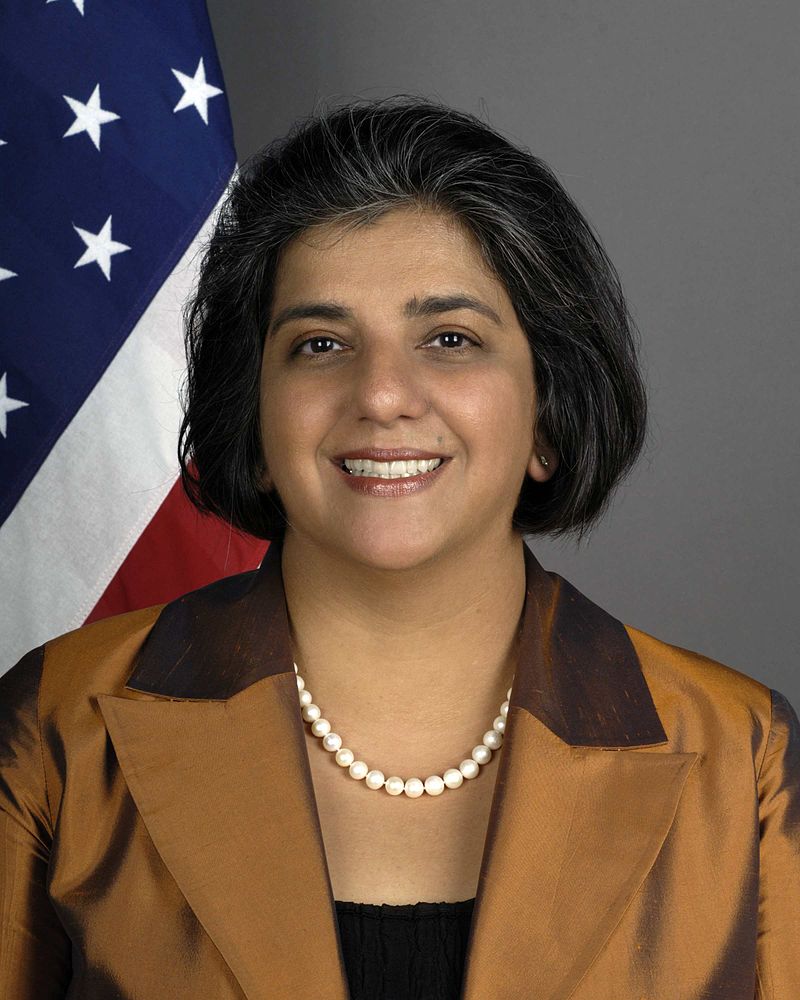
    WASHINGTON: US President Barack Obama has nominated Indian-American Geeta Pasi, a career foreign service officer, as the country’s next envoy to Chad.

    Ms Pasi, who served as US Ambassador to Djibouti from 2011 to 2014, is a career member of the Foreign Service, Class of Minister-Counsellor. She is at present the Director of the Office of Career Development and Assignments in the Bureau of Human Resources at the Department of State.

    Announcement for Ms Pasi’s nomination as the next US envoy to the central African nation of Chad came along with several other appointments to key administration post.

    “I am pleased to announce that these experienced and committed individuals have decided to serve our country. I look forward to working with them,” US President Obama said in a statement issued by the White House yesterday.

    Ms Pasi was also the Director of the Office of East African Affairs in the Bureau of African Affairs from 2009 to 2011, Deputy Chief of Mission at the US Embassy in Dhaka, from 2006 to 2009, and Deputy Principal Officer at the US Consulate in Frankfurt, Germany from 2003 to 2006.

    Since joining the Foreign Service in 1988, Pasi has also served at posts in Cameroon, Ghana, India and Romania.

    Ms Pasi received her BA from Duke University and a MA in French Studies from New York University.

  • Donald Trump and ‘Official Racism’ era in politics

    Donald Trump and ‘Official Racism’ era in politics

    The Republican Party and the “conservative establishment” do not disagree with Trump’s racism, xenophobia, prejudice and bigotry toward Hispanic and Latino immigrants, non-whites, Muslims and women. They are just embarrassed and aghast that Donald Trump has dropped the mask of racist gentility and exposed the racist id of today’s Republican Party and movement conservatism for the world to see.

    Republican Party elites are nervous about Donald Trump because he has taken their “polite” “dog whistle” racism and replaced it with a loud speaker.


    Donald Trump

    As the world looks on askance at the freakishness of the US presidential election, it is worth bearing in mind that a large number of Americans feel much the same sense of unease.

    To outside eyes, the rise of Donald Trump especially looks like the ultimate “Only in America” story, but many of his compatriots wish it was a “Not in America” phenomenon.

    For all the billionaire’s dominance in the Republican race, for all the free airtime lavished upon him by the media, polls repeatedly suggest that he is the most unpopular presidential candidate in modern history.

    A recent survey conducted for the Washington Post and ABC News showed that 67% of voters have an unfavorable view of him.

    What’s also striking about the polling data is that the more exposure the billionaire gets, the higher his negatives soar, whether it is women angered by his misogyny, Latinos upset by his racial demagoguery, African-Americans who don’t take kindly to being called “the blacks” or fellow Republicans who believe he will lead their party off a cliff.

    Donald Trump is the preferred candidate of white supremacists. Online and in other spaces, they have anointed him their champion in the 2016 presidential race.

    [inlinetweet prefix=”” tweeter=”” suffix=””]

    Trump & KKK (David Duke) Connection, that he knows nothing about…


    [/inlinetweet]

    LIAR LIAR – “Just so you understand, I don’t know anything about David Duke, OK?” Trump said. Trump was pressed three times on whether he’d distance himself from the Ku Klux Klan — but never mentioned the group in his answers.

    “I don’t know anything about what you’re even talking about with white supremacy or white supremacists,” he said. “So I don’t know. I don’t know — did he endorse me, or what’s going on? Because I know nothing about David Duke; I know nothing about white supremacists…”

    Despite what he said, Trump apparently did know Duke in 2000 — citing him, as well as Pat Buchanan and Lenora Fulani — in a statement that year explaining why he had decided to end his brief flirtation with a Reform Party presidential campaign.

    “The Reform Party now includes a Klansman, Mr. Duke, a neo-Nazi, Mr. Buchanan, and a communist, Ms. Fulani. This is not the company I wish to keep,” Trump said in a statement reported then by The New York Times. …

    Politics is not about people but about parties and their ideology; political parties are a type of “brand name” that voters associate with a specific set of policies, ideas, personalities and moral values. Consequently, the types of voters who are attracted to a given political party also tells us a great deal about how it is perceived by the public. And in a democracy, the relationship between voters, elected officials and a given political party should ideally be reflected by the types of policies the latter advances in order to both win and stay in power.

    By these criteria, the post-civil rights era Republican Party is the United States’ largest white identity organization, one in which conservatism and racism are now one and the same thing.

    In the 2012 election, 89 percent of Republican voters were white. While the Republican Party routinely anoints a professional “best black friend” (Herman Cain in 2012; Ben Carson in 2016; Republican National Committee chairman Michael Steele in 2009) who serves in the role as human chaff to deflect charges of racism, non-whites are a minuscule part of the GOP’s electoral coalition and base. This is reflected by how Republican voters are much more likely to be racially resentful toward black Americans and also manifest what is known as “modern” or “symbolic racism.”

    Even more troubling, research by Brown University political scientist Michael Tesler demonstrates that “old-fashioned racism” has actually increased among Republican voters since the election of Barack Obama.

    New Tactics but same old agenda – Birth of The Southern Strategy

    The Southern Strategy, with its mix of coded and overt anti-black and brown racism, is a script that is closely adhered to by the broader right-wing news entertainment propaganda machine.

    The Southern Strategy was desperately deployed against the United States’ first black president, Barack Obama. From “birtherism” to claims that Obama is “traitor” who “hates Americans,” the rampant disrespect and obstructionism that Republicans have shown toward him, as well as the panoply of both overt and subtle racist attacks by conservatives against Obama’s person (and family) are all outgrowths of the Southern Strategy.

    The Age of Obama also gave rise to the Tea Party movement. As an extreme wing within an already extremist and revanchist Republican Party, Tea Party members and their sympathizers were/are extremely hostile to Barack Obama and the symbolic power of a black man leading “their” White America. The Tea Party demand that “they want their country back” is both a direct claim of white privilege and constitutes a worldview where whiteness is taken to be synonymous with being a “real American.”

    Not all Republicans are racists. But racists are more likely to be Republicans.

    Donald Trump knows this to be true. He has built a political campaign around that fact.

    Ultimately, Republican Party elites are nervous about Donald Trump because he has taken their “polite” “dog whistle” racism and replaced it with a loud speaker.

    The Republican Party and the “conservative establishment” do not disagree with Trump’s racism, xenophobia, prejudice and bigotry toward Hispanic and Latino immigrants, non-whites, Muslims and women. They are just embarrassed and aghast that Donald Trump has dropped the mask of racist gentility and exposed the racist id of today’s Republican Party and movement conservatism for the world to see.

  • A tango with US

    A tango with US

    US Defense Secretary Ashton Carter’s visit had promised more than it delivered. Or so it appears from the publicly released outcomes of his visit. At the last moment, India appears to have hung back from inking an agreement to allow access to each other’s military bases. But the decade-long magnetism for each other in the security sphere remains undiminished. Plans remain on course to jointly develop an aircraft carrier, a Bill in the US Congress seeks to bring India on a par with NATO in the transfer of sensitive defense technology and equipment while South Block is weighing an American proposal to assemble fighter planes in the country. Defense trade also remains vibrant and Indian orders have helped keep the American military-industrial complex humming.

    The defense agreements, the proposed legislation and plans to assemble American fighter planes in India add up to a sharp turn in India’s foreign policy. The implications of marching step-in-step with the Americans will resonate far and wide in India’s extended neighborhood. Moscow has already sent a warning shot by threatening to stop cooperation in nuclear submarines if the Indian tango with the US gets too intimate. China is already miffed with a US-India joint statement -the honorarium for Barack Obama gracing the Republic Day celebrations – that all but speaks of a lockstep by the two in South China Sea. As a result, Chinese plans for massive investment in India have disappeared in thin air.

    While the US policymakers are forthcoming on their expectations of a quasi-military alliance with India, there is a deafening silence from the Indian side. Parliament should have dissected and analyzed the policy implications like the spirited debates that took place on the Indo-US nuclear agreement. The Congress and the BJP are convinced that Western help is indispensable for India to achieve big power status. They differ only on the extent of flexibility in such a partnership. A public debate and willingness to enlist the public endorsements would only deepen the sustainability of our security policies.

  • Modi may visit US in June to meet Obama

    Modi may visit US in June to meet Obama

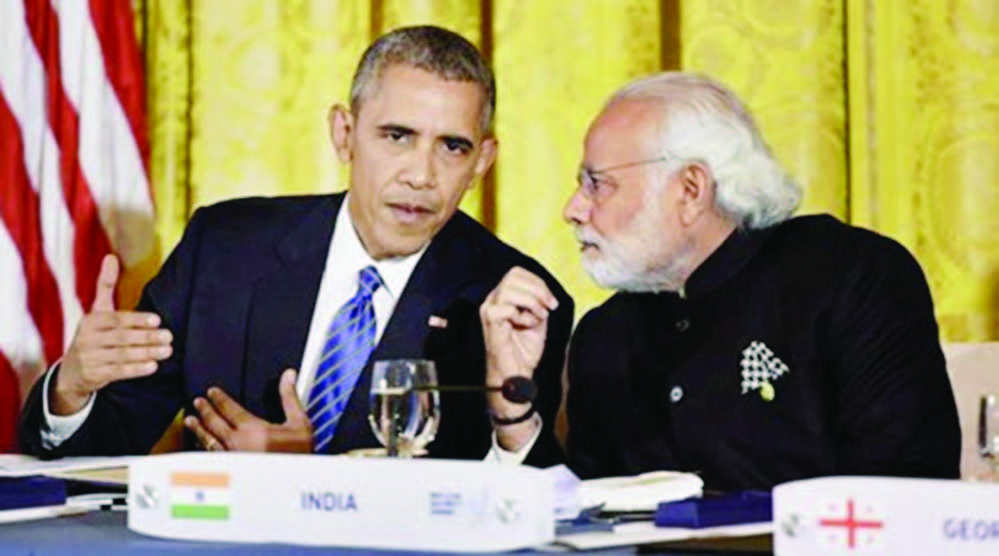
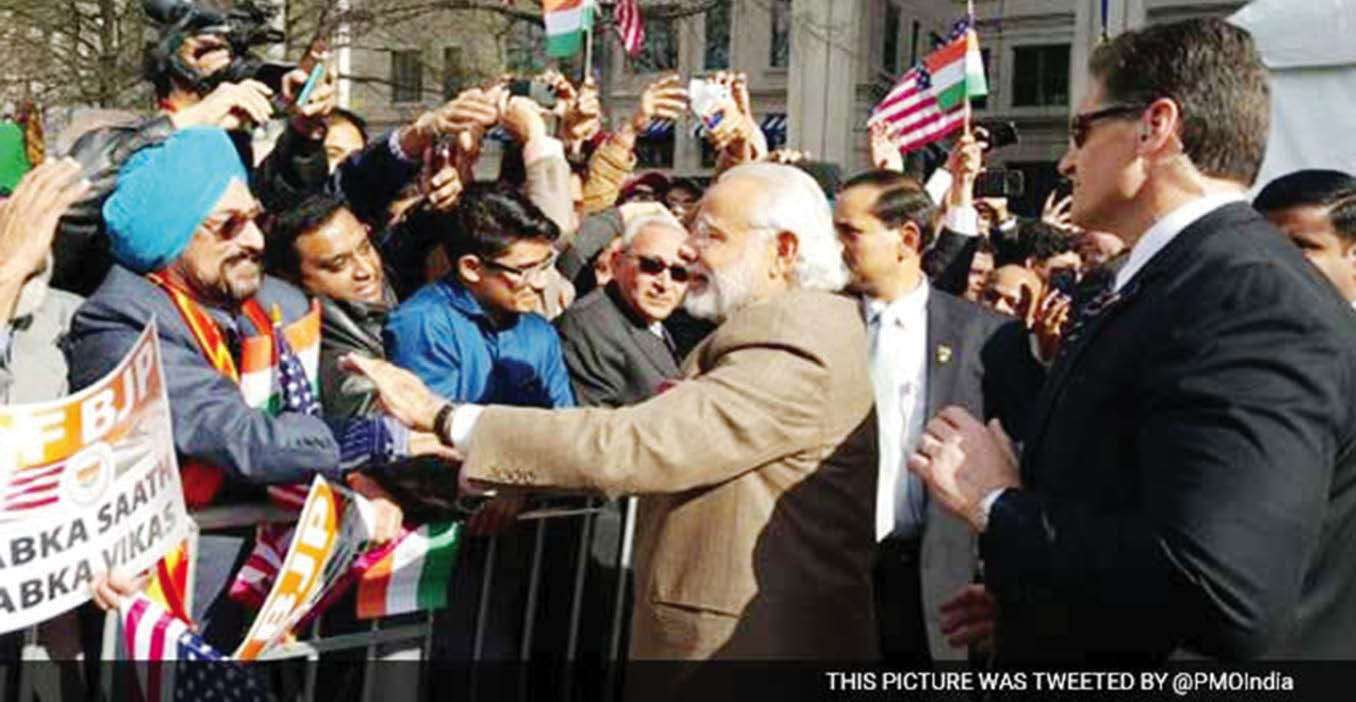
    WASHINGTON (TIP): Prime Minister Narendra Modi is likely to visit the US in June to hold a bilateral meeting with US President Barack Obama before he demits office in January next year.

    Sources confirm that the US has reached out to India on this matter and the dates are being sorted out. Sources say if dates can’t be worked out for June, Modi may then travel to the US in September. Obama is keen on meeting some world leaders before stepping down and the US is in the process of reaching out to these leaders.

    Obama will be demitting office in January next year after two four-year terms. His presidency has seen its fair share of highs and lows. Modi and the US President were able to develop a good rapport, which resulted in Obama accepting the invitation to be the Chief Guest at the Republic Day parade in 2015. That also helped Modi score a diplomatic coup on the home front.

    Besides the personal camaraderie between the two leaders, the US today has great interests in India, which it wants to safeguard. The US wants to build India as an ally in the region vis-a-vis China.

  • Sanders tops Time’s poll of 100 most influential

    Sanders tops Time’s poll of 100 most influential

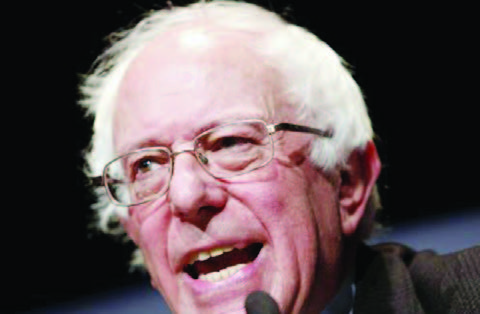
    NEW YORK (TIP): Democratic presidential hopeful Bernie Sanders has won Time magazine’s readers’ poll of the world’s 100 most influential people, garnering more than three times as many votes as his rival Hillary Clinton.

    Prime Minister Narendra Modi, tennis icon Sania Mirza and actor Priyanka Chopra are also among the probable contenders named by the magazine for its annual list. In the readers’ poll, Modi got 0.7% of the ‘yes’ votes while Mirza got 0.5% and Chopra 0.8%.

    Sanders had been leading the readers’ poll from the start and finished with 3.3 per cent of the total ‘yes’ votes when the poll closed midnight yesterday.

    The Vermont senator not only beat Clinton, 68, who has finished with one per cent of the ‘yes’ votes but also a host of world leaders and cultural figures.

    Sanders edged out the South Korean boy band Big Bang which got 2.9% votes. Myanmar pro-democracy leader Aung San Suu Kyi came in third with 2.2% votes followed by US President Barack Obama with 2%.

  • ARE REPUBLICANS RACISTS?

    ARE REPUBLICANS RACISTS?

    The Republican Party and the “conservative establishment” do not disagree with Trump’s racism, xenophobia, prejudice and bigotry toward Hispanic and Latino immigrants, non-whites, Muslims and women. They are just embarrassed and aghast that Donald Trump has dropped the mask of racist gentility and exposed the racist id of today’s Republican Party and movement conservatism for the world to see.

    Republican Party elites are nervous about Donald Trump because he has taken their “polite” “dog whistle” racism and replaced it with a loud speaker.


    Donald Trump

    As the world looks on askance at the freakishness of the US presidential election, it is worth bearing in mind that a large number of Americans feel much the same sense of unease.

    To outside eyes, the rise of Donald Trump especially looks like the ultimate “Only in America” story, but many of his compatriots wish it was a “Not in America” phenomenon.

    For all the billionaire’s dominance in the Republican race, for all the free airtime lavished upon him by the media, polls repeatedly suggest that he is the most unpopular presidential candidate in modern history.

    A recent survey conducted for the Washington Post and ABC News showed that 67% of voters have an unfavorable view of him.

    What’s also striking about the polling data is that the more exposure the billionaire gets, the higher his negatives soar, whether it is women angered by his misogyny, Latinos upset by his racial demagoguery, African-Americans who don’t take kindly to being called “the blacks” or fellow Republicans who believe he will lead their party off a cliff.

    Donald Trump is the preferred candidate of white supremacists. Online and in other spaces, they have anointed him their champion in the 2016 presidential race.

    Trump & KKK (David Duke) Connection, that he knows nothing about…

    LIAR LIAR – “Just so you understand, I don’t know anything about David Duke, OK?” Trump said. Trump was pressed three times on whether he’d distance himself from the Ku Klux Klan — but never mentioned the group in his answers.

    “I don’t know anything about what you’re even talking about with white supremacy or white supremacists,” he said. “So I don’t know. I don’t know — did he endorse me, or what’s going on? Because I know nothing about David Duke; I know nothing about white supremacists…”

    Despite what he said, Trump apparently did know Duke in 2000 — citing him, as well as Pat Buchanan and Lenora Fulani — in a statement that year explaining why he had decided to end his brief flirtation with a Reform Party presidential campaign.

    “The Reform Party now includes a Klansman, Mr. Duke, a neo-Nazi, Mr. Buchanan, and a communist, Ms. Fulani. This is not the company I wish to keep,” Trump said in a statement reported then by The New York Times. …

    Politics is not about people but about parties and their ideology; political parties are a type of “brand name” that voters associate with a specific set of policies, ideas, personalities and moral values. Consequently, the types of voters who are attracted to a given political party also tells us a great deal about how it is perceived by the public. And in a democracy, the relationship between voters, elected officials and a given political party should ideally be reflected by the types of policies the latter advances in order to both win and stay in power.

    By these criteria, the post-civil rights era Republican Party is the United States’ largest white identity organization, one in which conservatism and racism are now one and the same thing.

    In the 2012 election, 89 percent of Republican voters were white. While the Republican Party routinely anoints a professional “best black friend” (Herman Cain in 2012; Ben Carson in 2016; Republican National Committee chairman Michael Steele in 2009) who serves in the role as human chaff to deflect charges of racism, non-whites are a minuscule part of the GOP’s electoral coalition and base. This is reflected by how Republican voters are much more likely to be racially resentful toward black Americans and also manifest what is known as “modern” or “symbolic racism.”

    Even more troubling, research by Brown University political scientist Michael Tesler demonstrates that “old-fashioned racism” has actually increased among Republican voters since the election of Barack Obama.

    New Tactics but same old agenda – Birth of The Southern Strategy

    The Southern Strategy, with its mix of coded and overt anti-black and brown racism, is a script that is closely adhered to by the broader right-wing news entertainment propaganda machine.

    The Southern Strategy was desperately deployed against the United States’ first black president, Barack Obama. From “birtherism” to claims that Obama is “traitor” who “hates Americans,” the rampant disrespect and obstructionism that Republicans have shown toward him, as well as the panoply of both overt and subtle racist attacks by conservatives against Obama’s person (and family) are all outgrowths of the Southern Strategy.

    The Age of Obama also gave rise to the Tea Party movement. As an extreme wing within an already extremist and revanchist Republican Party, Tea Party members and their sympathizers were/are extremely hostile to Barack Obama and the symbolic power of a black man leading “their” White America. The Tea Party demand that “they want their country back” is both a direct claim of white privilege and constitutes a worldview where whiteness is taken to be synonymous with being a “real American.”

    Not all Republicans are racists. But racists are more likely to be Republicans.

    Donald Trump knows this to be true. He has built a political campaign around that fact.

    Ultimately, Republican Party elites are nervous about Donald Trump because he has taken their “polite” “dog whistle” racism and replaced it with a loud speaker.

    The Republican Party and the “conservative establishment” do not disagree with Trump’s racism, xenophobia, prejudice and bigotry toward Hispanic and Latino immigrants, non-whites, Muslims and women. They are just embarrassed and aghast that Donald Trump has dropped the mask of racist gentility and exposed the racist id of today’s Republican Party and movement conservatism for the world to see.

  • NATO critical to security of United States: Barack Obama

    NATO critical to security of United States: Barack Obama

    WASHINGTON (TIP): US President Barack Obama has said Nato is “critical” to the security of America and its allies in Europe, a virtual rejection of Republican frontrunner Donald Trump’s views that the intergovernmental military alliance has outlived its utility.

    “Nato continues to be the linchpin, the cornerstone of our collective defence and US security policy,” Obama told reporters on Monday along with Nato secretary general Jens Stoltenberg in the White House.

    The Obama-Stoltenberg meeting came in the wake of Trump’s remarks.

    White House press secretary Josh Earnest has termed such remarks as “ill-advised”. Obama, however, did not make any direct comment on Trump’s comments.

    Obama said he had an excellent discussion that started with marking the tragedy that had taken place in Brussels, and reinforcing the importance of us staying focused on Islamic State (ISIS/ISIL) and countering the terrorism that has seeped up into Europe and around the world.

    “We agreed that one of the most important functions that Nato is performing and can continue to perform is to help in the training and assisting process for troops in Iraq, in Jordan, in many of the areas in the region.

    “And we are continuing to cooperate on an ongoing basis about operations potentially in areas like Libya, where you have the beginnings of a government and we can I think provide enormous help in helping to stabilize those countries,” Obama said. Obama and Stoltenberg also discussed situation in Afghanistan, Russia and Ukraine. “We continue to be united in supporting Ukraine in the wake of Russian incursions into Ukrainian territory. We continue to work in a train-and-assist fashion in helping support Ukraine develop its military capabilities defensively,” he said.

    Stoltenberg said Nato is as “important as ever”.

    “Because Nato has been able to adapt to a more dangerous world. We stand together in the fight against terrorism. Terrorism affects us all, from Brussels to San Bernardino, and all Nato allies contribute to the US-led efforts to degrade and destroy ISIL. And just last week, we started training Iraqi officers, and we will continue to support the efforts of the United States and other countries to fight ISIL,” he said.

    The US value the contributions it received from the large number of Nato members who are a part of counter-ISIL coalition, Earnest said.

  • Shortage of Primary Care Physicians is a Threat to Nation’s Health

    Shortage of Primary Care Physicians is a Threat to Nation’s Health

    American medicine has long had the reputation ofbeing the most advanced in the world. But the UStoday faces a looming shortage of the versatiledoctors who form the backbone of its health system -generalists known as “primary care physicians” – a trendthat industry experts call a threat to the nation’s health.

    If you look worldwide at the countries that have muchbetter scores on health care quality measures than theUnited States, almost all of them have a higher percentageof their physicians engaged in primary care. The US is projected to have 52,000 fewer primary carephysicians than needed by 2025, according to a reportpublished in the current issue of the medical journalAnnals of Family Medicine.

    The shortage threatens to exacerbate alreadyskyrocketing medical costs in the US by diminishingaccess to the crucial preventative care offered by primarycare physicians and prompting patients to turn to priceyspecialists to treat routine maladies, health industryexperts say.

    What’s more, such higher costs may actually result inworse outcomes for patients. If patients are bouncing fromspecialist to specialist, not only are the costs enormous,they get uncoordinated care. They get unnecessary tests,chase spurious information, and can get drug interactionsbecause people get some medication from one physician,and other medicine from another.

    The value in primary care, medical professionals say, isthe holistic approach the doctor takes when assessing apatient’s health. Building a stable relationship with aprimary care doctor can help a person head off chronicdiseases that incur significant financial and quality-of-lifecosts, they say. There’s something to be said for having a place to go anda therapist who knows who the patient is. They don’t haveto go to see 20 different doctors and see 20 differentrecords. The knowledge about you is all in one place.

    The increasing scarcity of primary care physicians isdriven in part by the projected population growth in theUS over the next two decades, as well as by the medicalneeds of an aging population and the tens of millions ofAmericans expected to be newly insured under theAffordable Care Act, US President Barack Obama’ssignature health care reform.

    It is also driven by the growing income gap betweenprimary care physicians and their counterparts in morefinancially lucrative specialist fields such as cardiology,medical professionals say.

    For many medical students weighed down withescalating levels of student debt, opting for a career as aspecialist is a no-brainer. When young people graduatefrom medical school $250,000 in debt and see they can make$150,000 a year as a primary care physician, or be acardiologist and make $450,000 a year, which one do theypick?

    The average salary for a primary care doctor in the USin 2010 was $202,392 compared to $356,885 for medicalspecialists, according to the US Bureau of Labor andStatistics. The reasons for this disparity are varied. Onekey factor, however, is that the primary care is holistic andconsists of time-consuming patient encounters. Thesevisits, however, have lower reimbursement rates than mostmedical procedures.

    According to a study published this week in theAmerican Medical Journal, just 22 percent of medicalstudents said they are planning a career in generalinternal medicine. Meanwhile, 64 percent of the 17,000students polled said they wanted to become a specialist infields such as oncology and dermatology.

    It’s a sad picture because primary care is veryimportant. And it’s going to become even more importantover the next 20 to 30 years.

  • ‘Terrorism is globally networked. But we still act only nationally to counter this threat’: PM Modi

    ‘Terrorism is globally networked. But we still act only nationally to counter this threat’: PM Modi

    WASHINGTON (TIP): India’s Prime Minister Narendra Modi who is on a three-nation visit of Belgium, the US and Saudi Arabia, arrived March 31 in Washington where, among many  other engagements, he is attending the Nuclear Security Summit.

    Speaking at the summit, Narendra Modi said: “Terrorism is globally networked. But, we still act only nationally to counter this threat. The reach and supply chains of terrorism are global, but genuine cooperation between nation states is not.”

    “Drop the notion that terrorism is someone else’s problem and that “his” terrorist is not “my” terrorist. Nuclear security must remain an abiding national priority for every country”, he added

    PM Modi praised President Obama for his vision and effort for nuclear security and said: “this legacy of President Obama must endure.”

    During his two-day stay in Washington, PM Modi is scheduled to interact with a number of world leaders including the host President Barack Obama.

    Prime Minister Narendra Modi had arrived in Washington DC on 31 March where he was received at the airport by US Ambassador to India, Richard Verma.

    Earlier in the day, Modi met a team of scientists, including 3 Indians, from the Laser Interferometer Gravitational Wave Observatory (LIGO), who proved gravitational waves theory.

    The team of scientists, was led by Dr France Cordova, Director of the National Science Foundation, who explained how India was extremely important for the future of the LIGO project. An MoU on the establishment of LIGO project in India was signed by Dr Cordova and Dr Sekhar Basu, Secretary, Department of Atomic Energy, India, which was witnessed by the Prime Minister himself.

    Brussels Visit

    Earlier, on March 30, Prime Minister Narendra Modi, arrived on his maiden state visit to Belgium and expressed India’s solidarity with the European nation for the tragedy that struck Brussels on 22 March.

    His daylong schedule in the city, which is still recovering from a terror attack last week that killed dozens of people, included attending the 13th India-European Union Summit and visiting a memorial at the Maalbeek metro station for the victims of the Brussels attacks, which included Indian engineer Raghavendra.

    Speaking in Brussels, Modi said, “India stands in full support and solidarity with Belgium.” He offered his sincere gratitude for the warm welcome he received despite it being a tough time for the country.

    Modi and Belgian Prime Minister Michel also had a bilateral meeting. The bilateral meeting between the two premiers was aimed at expanding trade, investment and high technology partnership with this important EU member. The meeting was also focused on stalled trade talks between the two sides as well as on investment, energy, climate, water and migration.

    Counter-terrorism was a key focus, particularly in the aftermath of the Brussels bombings. “We stand shoulder to shoulder with the people of Belgium in the wake of the horrific attacks in Brussels and share the grief of those who lost their loved ones,” Modi said.

    Over lunch, Modi met with a delegation of Belgian businessmen, an “opportunity for the him to encourage Belgian foreign direct investment into India.”

    Modi also met the Indian community outside his hotel on his arrival in Brussel.

    Saudi Arabia Visit 

    The Middle East, especially Saudi Arabia, has always played an important role in the India’s economic growth as well as relations with its querulous neighbor Pakistan.

    Prime Minister Narendra Modi and his government have been serious about cultivating ties with the middle east and within eight months of his visit to the United Arab Emirates, Modi is scheduled to visit the region again, this time to Saudi Arabia to strengthen Delhi’s close relations with the kingdom and loosen Saudi-Pakistani ties in the process.

    India is a major trade partner in the region, and Modi aims to position India globally so as to isolate Pakistan’s military-industrial complex and its policy of using terrorism as an instrument of state policy. The Saudis hope to leverage Indian expertise in IT and services to modernize and diversify a single-source economy dependent on oil.

    India’s ties with Saudi Arabia have grown over the last two decades based on burgeoning energy ties and the Indian diaspora – the largest group of foreign workers in the Saudi kingdom.

    Modi has already met King Salman of Saudi Arabia twice, and Saudi help was critical in the evacuation of Indian nationals from the Yemeni war zone. The 2012 deportation by the Saudis of Sayed Zabiuddin, also known as Abu Jundal, a suspect in 2008 Mumbai terrorist attacks, signaled a sea change in Saudi Arabia’s counterterrorism priorities.

    Saudi Arabia too is cautious in balancing ties between Pakistan and India. Ahead of Modi’s visit, Saudi Foreign Minister Adel al-Jubeir tried to alleviate concerns in Pakistan about budding Indo-Saudi ties and insisted that Saudi Arabia’s “relations with Pakistan do not come at the expense of [its] relations with India.” Adel al-Jubeir and Mohammad bin Salman, deputy crown prince and defense minister, visited Pakistan in January despite growing anger at Islamabad’s refusal to commit troops in Yemen and join the Saudi-led “coalition against terrorism” of 34 Islamic nations.

    For Indian strategists, any ally that can act as a counterweight to Pakistan in the Islamic world is useful. Saudi Arabia does the same with Iran, the two nations long competing for power and influence in the Gulf. As the regional balance of power between the two threatens to unravel in Iran’s favor, India has repeatedly emphasized a desire for stabilization in the region’s extant balance of power.

    The huge Indian diaspora in the country, nearly 3 million, makes India the largest recipient of foreign remittances from the kingdom at an estimated $11 billion. Pakistan, Bangladesh and Indonesia each send about 1.5 million foreign workers to Saudi Arabia

    Indian IT companies are building capacity in Saudi Arabia, including an all-women business process operations center run by TCS as one example.

    A hallmark of Modi’s foreign policy has been a self-confident assertion of Indian interests, marking a distinct break from unnecessary and counterproductive diffidence of the past. The prime minister is keen to see that Pakistan’s close allies apply pressure on Pakistan – and after limited success with the UAE, he will press the Saudis. While it’s unlikely that the Saudis will break with Pakistan, a declaration of opposition to state-sponsored terrorism would be considered a major step.

    To win such support, Modi most likely won’t be vocal about Saudi support for Wahhabism, a fundamentalist branch of Islam blamed by many in the international community for contributing to a spread of global terrorism.

  • Obama, Turkey’s Erdogan discuss security in meeting: White House

    Obama, Turkey’s Erdogan discuss security in meeting: White House

    WASHINGTON (TIP): US President Barack Obama on March 31 reaffirmed the US commitment to Turkey’s security during a meeting with Turkish President Tayyip Erdogan, while also discussing both countries’ efforts to fight Islamic State, the White House said. “The president extended condolences to President Erdogan on behalf of the American people for those killed and injured in today’s terrorist attack in Diyarbakir, and reaffirmed the support of the United States for Turkey’s security and our mutual struggle against terrorism,” the White House said. “The leaders also discussed how to advance our shared effort to degrade and destroy ISIL,” it said, using an acronym for Islamic State.

  • The Obama Doctrine: Middle East out, Asia in

    The Obama Doctrine: Middle East out, Asia in

    “God, grant me the serenity to accept the things I cannot change, the courage to change the things I can, and the wisdom to know the difference,” the 20th-century theologian Reinhold Niebuhr once famously wrote. Arguably, this very much sums up the United States President Barack Obama’s foreign policy doctrine and his valuation of American priorities in various regions.

    In fact, the president has been always open about the profound influence of Niebuhr’s works, affectionately declaring in an interview, “I love him. He’s one of my favorite philosophers.”

    Obama saw himself as a perfect antithesis to the George W Bush administration, which combined coercive unilateralism with a missionary zeal to supposedly spread US-style democracy in the Middle East and beyond.

    The Bush era disasters heavily undermined neo-conservatism, paving the way for the rise of more calibrated realists such as Obama, who appreciated the limits of US power and the virtues of strategic patience.

    As the Obama administration enters its twilight months in office, questions over its legacy and long-term historical significance have gained momentum.

    The most salient aspect of Obama’s foreign policy, one could argue, is his gradual retrenchment from the Middle East, where the US has been hopelessly overstretched, in favor of an accelerating pivot to Asia, where booming economies and a rising China are reshaping the global order.

    Not long ago, prominent journalists such as James Traub were quick to portray Obama as a deflated, demoralized idealist, who “has been well and truly mugged by reality”.

    Multiple crises, from Russia’s annexation of Crimea to the rise of Islamic State of Iraq and the Levant (ISIL, also known as ISIS), seemed to have undermined the US power, and extinguished Obama’s hopeful vision of an orderly, rule-based international order.

    Asia is simultaneously a region where there is the greatest opportunity for expanded trade and investments and also where the US confronts its greatest rival, China.

    In the Middle East, the Arab winter and the deadlock in Israeli-Palestinian negotiations swept away the wellspring of optimism generated by Obama’s historic Cairo speech, where he unsuccessfully promised a new relationship between the US and the Muslim world. But soon it became clear that Obama had some foreign policy tricks up his sleeve.

    Obama managed to pull off an improbable and highly controversial nuclear agreement with Iran, while normalizing relations with communist Cuba and becoming the first US president to visit Cuba in almost a century.

    True to his early promise of reaching out to historical foes, Obama oversaw a qualitative shift in Washington’s approach to former foes such as Tehran. But as Obama admits in his long interview with Jeffrey Goldberg, he has been committed to decouple from the conflict-ridden Middle East.

    Recognizing the US failures in Iraq, Afghanistan, and Libya, where its military interventions have created failed states and havens for extremism, Obama refused to even enforce his own redline on Syria, when the Bashar al-Assad regime was accused of using chemical weapons against its own population. Clearly, he had little appetite for additional US military entanglements in the region.

    Amid rising Saudi-Iranian rivalry, he has even encouraged Arab allies “to find an effective way to share the neighborhood [with Iran] and institute some sort of cold peace”, giving birth to a post-American order in the region.

    Instead, Obama, who was raised in Indonesia and Hawaii, has been primarily interested in augmenting US strategic footprint in the Asia-Pacific region, where “[the US] can do really big, important stuff”, which have “ramifications across the board.”

    Under Obama, who has visited Asia more than any of his predecessors in recent memory, the US has established cordial ties with former foes such as Vietnam and Myanmar, built strategic partnership with key Muslim countries such as Indonesia and Malaysia, upgraded high-level dialogue with China, negotiated a major regional trade pact – the Trans-Pacific Partnership agreement -and overseen a major improvement in its approval ratings.

    The revived interest of the US in Asia is based on a belief that “the relationship between itself and China is going to be the most critical” in the 21st century. More fundamentally, Obama believes that the future of the US and the world will be decided in the Asia-Pacific region, which is “filled with striving, ambitious, energetic people”.

    Exasperated by persistent anti-Americanism in the Middle East, Obama enthusiastically cites how Asians are pragmatists who are willing to work with the US and are committed to “build businesses and get education and find jobs and build infrastructure.”

    In short, Asia is, simultaneously, a region where there is the greatest opportunity for expanded trade and investments and also where the US confronts its greatest rival, China.

    There are, however, concerns that the US may have missed the train, for it faces an uphill battle in maintaining its hegemony in Asia, especially as a resurgent Beijing gradually carves out a new Sino-centric order in East Asia.

    In economic terms, China is the leading trading partner of almost all East-Asian countries, while it is set to transform into the pillar of infrastructure development in Asia, thanks to major development initiatives such as the Asian Infrastructure Investment Bank and the Maritime Silk Road plan. China is the new economic pivot around which Asia revolves.

    Overseeing decades of rapid military modernization, Beijing is also progressively pushing US naval forces out of its adjacent waters, upending centuries of Western military hegemony in Asia.

    Some of Obama’s likely successors are far from helpful. Demagogues such as Donald Trump, who is calling for a return to 19th-century American mercantilism, is undermining Asia’s confidence in the US and its reliability as a superpower.

    Ultimately, it remains to be seen whether Obama’s renewed focus on the region has been enough to prevent a post-American order in Asia. Yet one should credit him for becoming the first truly Pacific president in the White House, reorienting US foreign policy from the troubled Middle East to a promising Asia. This will be his greatest foreign policy legacy.


    The author is a specialist in Asian geopolitical/economic affairs and author of Asia’s New Battlefield: US, China, and the Struggle for Western Pacific. He can be reached at @Richeydarian


  • Narendra Modi, Priyanka Chopra, Sania Mirza are Contenders for TIME’s ‘Most Influential’

    Narendra Modi, Priyanka Chopra, Sania Mirza are Contenders for TIME’s ‘Most Influential’

    NEW YORK (TIP): Prime Minister Narendra Modi, tennis star Sania Mirza and actor Priyanka Chopra are among the probable contenders for TIME magazine’s annual list of the most influential people in the world., says a PTI report

    peeceeMirzaNarendra ModiTIME will announce its annual list of the world’s 100 most influential people, ‘TIME 100,’ this month.

    While its editors will determine the ultimate honorees, the publication has asked readers to vote from 127 “world leaders, great minds in science and technology, outstanding figures in the arts and other icons of the moment,” on who they think deserves the recognition.

    TIME said “Modi remains a powerful voice on the world stage,” and while he saw his domestic agenda “sidetracked by political squabbles” in 2015, his country still leads the world in economic growth.

    Modi was named among TIME’s 100 Most Influential People in the World last year and President Barack Obama had written a profile for him for the magazine.

    For Mirza, TIME said India’s best female tennis player secured the number one ranking in the world for women’s doubles “while helping to redefine the role of female athletes in her home country.”

    TIME said Chopra, one of the highest paid actors in Bollywood, has “caught Hollywood’s attention” for her role in the drama series “Quantico” and “will continue to do so in the ‘Baywatch’ remake.”

    India-born CEOs of the world’s top technology companies, Google and Microsoft, are also among the list of 127 probables for the annual honor.

    TIME said Google CEO Sundar Pichai, who is co-founder Larry Page’s “right hand,” now oversees core businesses such as Android and YouTube for the tech giant.

    Under Microsoft CEO Satya Nadella, the publication said, Windows 10 launched “successfully,” the cloud business is “booming” and new technologies like the HoloLens have industry analysts “excited.”

    Indian-origin actor Aziz Ansari has also found a place on the list.

    The list also includes SpaceX CEO Elon Musk, singer Rihanna, Jamaican sprinter Usain Bolt, Harry Potter author J.K. Rowling, Facebook CEO Mark Zuckerberg and his wife Priscilla Chan, Myanmar’s pro-democracy leader Aung San Suu Kyi, German Chancellor Angela Merkel, Pope Francis, reality TV star Kim Kardashian, Russian President Vladimir Putin and Fox News anchor Megyn Kelly.

  • NORTH KOREA FIRES PROJECTILE INTO SEA: REPORT

    NORTH KOREA FIRES PROJECTILE INTO SEA: REPORT

    SEOUL (TIP): North Korea has fired a suspected ballistic missile into the sea on Friday, a news report said, hours after US President Barack Obama urged closer security ties among its Asian allies and increased cooperation with China to discourage Pyongyang from further advances in nuclear weapons.

    A projectile believed to be a ballistic missile flew into waters off the North’s east coast, South Korea’s Yonhap news agency reported, citing an unidentified military official. It had no further details.

    South Korea’s Defense Ministry said it couldn’t immediately confirm the Yonhap report.

    The launch, if confirmed, is the latest in a series of weapons launches the North has carried out in an apparent response to ongoing military exercises between the United States and South Korea. North Korea views the drills as an invasion rehearsal.

    This year’s drills, set to run until late April, are the biggest ever, and come after North Korea’s nuclear test and long-range rocket test earlier this year.

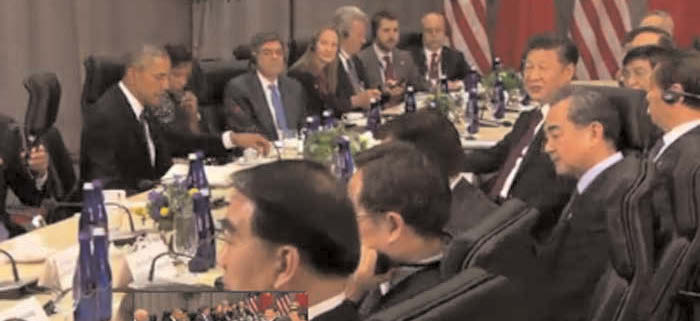
    In Washington, Obama met with the leaders of South Korea, Japan and China in Washington on Thursday ahead of a nuclear security summit and discussed ways to discourage Pyongyang from further pursuing nuclear weapons.

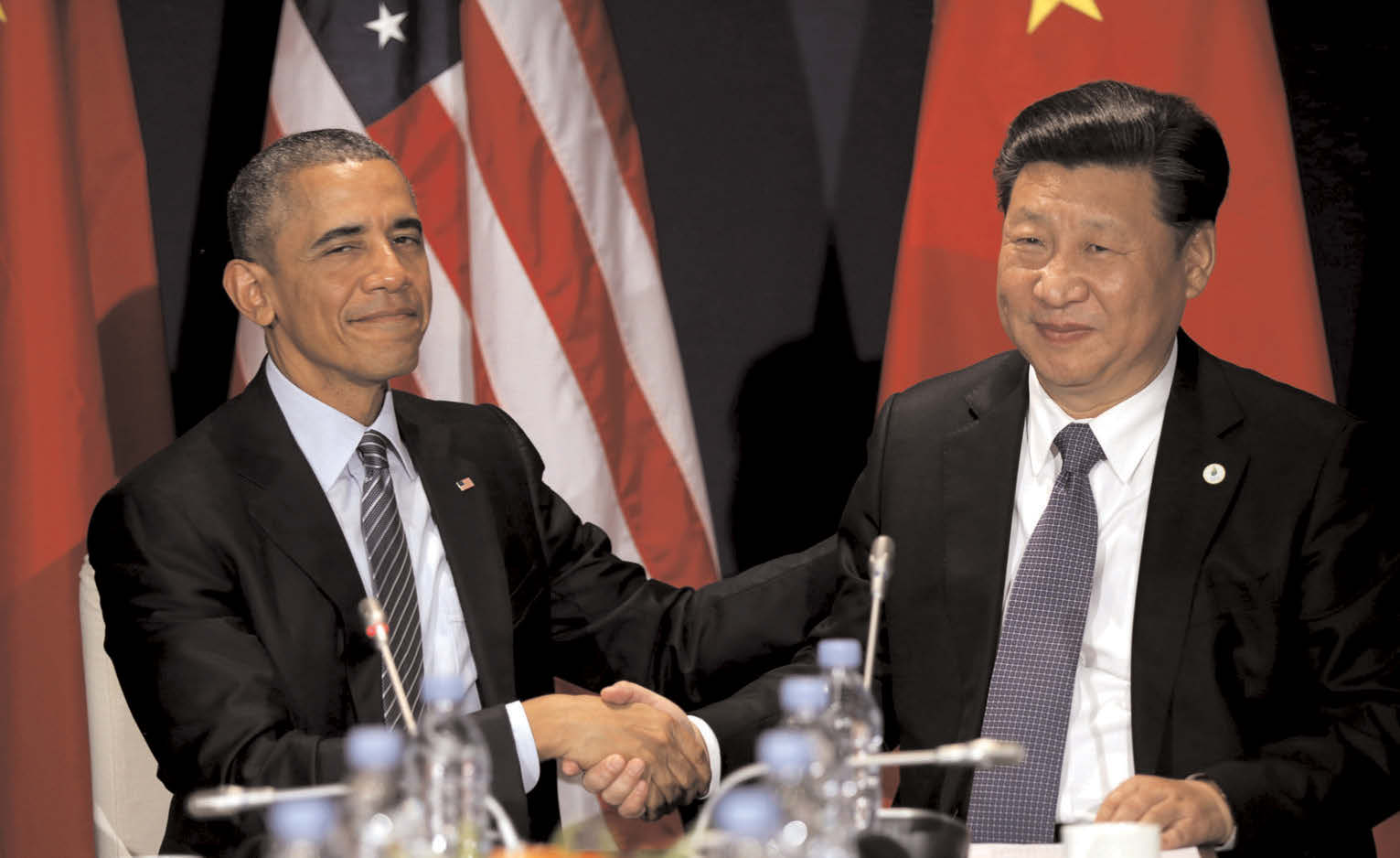
    “Of great importance to both of us is North Korea’s pursuit of nuclear weapons, which threatens the security and stability of the region. President Xi and I are both committed to the denuclearization of the Korean Peninsula,” Obama said at the start of his meeting with Chinese President Xi Jinping, who said the country was ready to implement in full the latest economic restrictions imposed by the U.N. Security Council against Pyongyang.

    On Tuesday, North Korea fired a short-range projectile that crashed into land in the North’s northeast, according to South Korean defense officials. The launch prompted media speculation in South Korea that Pyongyang may have tested a land target to test the accuracy of its weapons because the country has usually launched missile, artillery shells and rockets into the sea in the past.

    Earlier this month, North Korea fired its first medium-launch missile into the sea since early 2014.