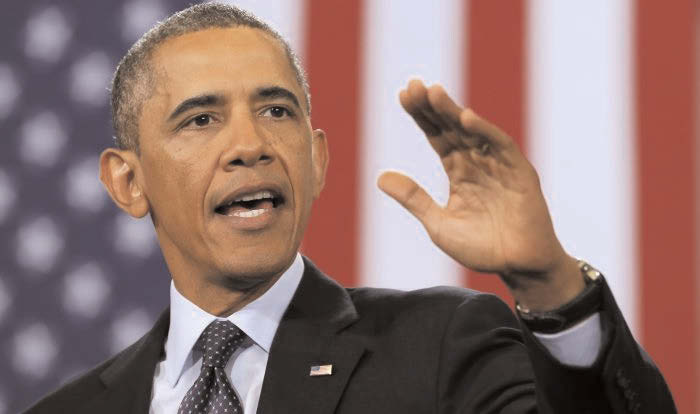
WASHINGTON (TIP): US President Barack Obama will host Chinese President Xi Jinping on March 31 for a bilateral meeting alongside the Nuclear Security Summit, the White House said on March 24.
In a statement, the White House said the meeting would provide an opportunity for the two nations to advance cooperation on a range of issues as well as address areas of disagreement.
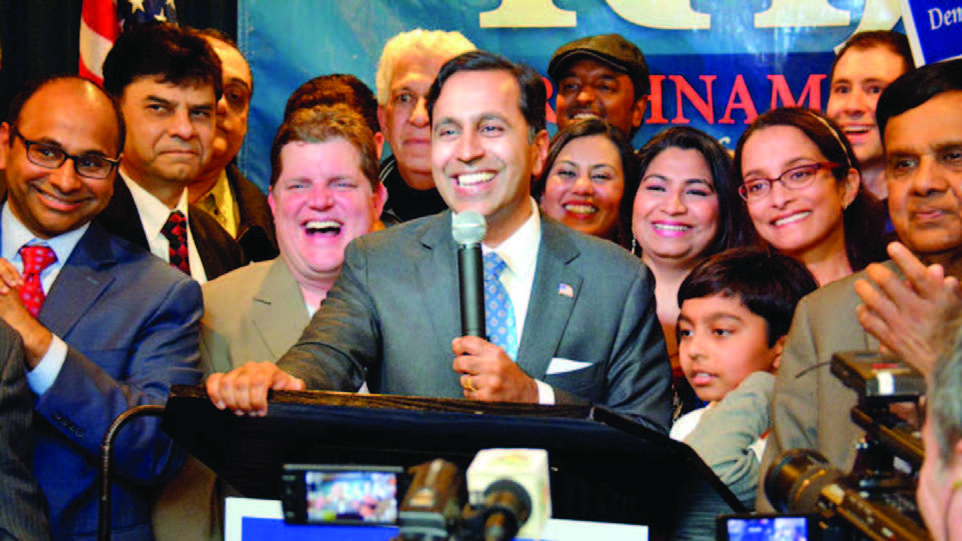
CHICAGO (TIP): Indian-American Raja Krishnamoorthi, who was an adviser in President Barack Obama’s 2008 poll campaign, has registered a big win in the Democratic Congressional primary in the US state of Illinois, 8th Congressional District including Chicago suburbs, by defeating the state Senator.
Raja enjoyed a huge lead in fundraising over his two rivals in Tuesday’s election, reporting a total of nearly $1.7 million in campaign contributions through February 24, records show. That amount was more than four times the combined total raised by Noland and Bullwinkel.
Krishnamoorthi’s win brightens the chance of yet another person of Indian-origin to be elected to the US House of Representatives in the November general elections.
Born in New Delhi, 42-year-old Krishnamoorthi, an attorney and entrepreneur, polled 57% of the votes in the eighth Congressional District of Illinois as against his two other rivals State Senator Mike Noland (29 per cent) and Deb Bullwinkel (13 per cent). The district has a sizable Indian-American population. “Thank you! I’m honored to be the Democratic Party Nominee for Congressman of Illinois’ 8th District,” he tweeted late last night after results were out.
Krishnamoorthi seeks to replace his party man Tammy Duckworth who decided against seeking re-election and instead run for the US Senate against incumbent Republican Mark Kirk.
Duckworth won the Democratic primary for the Senate seat. In the November 8 general elections, Krishnamoorthi now faces Peter DiCianni of Republican party who ran unopposed during the primary. If elected, Krishnamoorthi would join Ami Bera, 51, the only Indian-American lawmaker in the current US House of Representatives in the next Congress beginning January next year. Bera is seeking his third-term in the November general elections.
Ahead of the primary elections, Krishnamoorthi was endorsed by Nancy Pelosi, the former Speaker of the US House of Representatives and Congressman Jan Schakowsky. Krishnamoorthi was previously the policy director and a senior adviser for Barack Obama’s 2004 US Senate campaign and also an adviser to Obama’s 2008 Presidential campaign. He served as Deputy Treasurer of Illinois from 2007-2009 under Illinois Treasurer Alexi Giannoulias and in 2010 ran for the Democratic nomination for Illinois State Comptroller, losing to David E Miller by less than one per cent votes.
Born in New Delhi in 1973, Krishnamoorthi’s parents immigrated to New York when he was three months old. He is currently the president of Sivananthan Labs and Episolar, Inc, small businesses that develop and sell products in the national security and renewable energy industries.
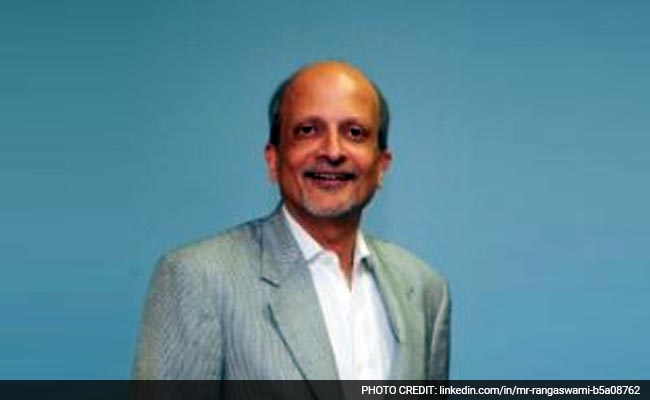
WASHINGTON: An Indian-American software executive, investor and philanthropist has been felicitated in the US with the inaugural Asians in America Award in recognition of his efforts to strengthen Indo-US ties.
Silicon Valley-based Madhavan Rangaswami and a Chinese-origin Philanthropist, shipping magnate Dr James S C Chao were honoured by the US China Education Trust yesterday for their efforts to strengthen ties between US-China-India trilateral relationship.
In his acceptance speech Rangaswami underlined on the need of “giving back” to the society, which he said is the most gratifying thing in life.
“Giving back is where I enjoy the most,” he said, adding that the other thing is to connect people without expecting anything back. The small but powerful Indian-American community can collectively achieve a lot.”
Founder of Indiaspora, Rangaswami had organised the first Indian-American presidential ball in January 2013 before the second swearing of the US President Barack Obama.
He and his team have started preparation for the second Indian-American ball for the next president which is set for January 18, 2017, said community leader and philanthropist Frank Islam in his introductory remarks.
In 1997, Rangaswami co-founded the Sand Hill Group based in Silicon Valley. Sand Hill was one of the earliest software “angel investing” firms.
Because of his success there, Forbes has recognised him on its “Midas” list of investors.
In 2007, he established a new venture called Corporate Eco-Forum a by-invitation only membership organisation for Global 500 companies that demonstrate a serious commitment to the environment as a business strategy.
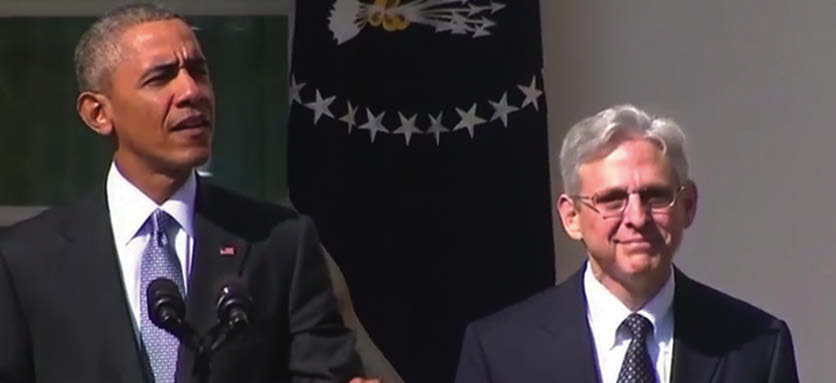
WASHINGTON (TIP): Much to the chagrin of the Republicans who have vowed to block any replacement for the late Justice Antonin Scalia until a new president takes over, President Barack Obama, on Wednesday, March 16, nominated Judge Merrick Garland, who is respected across political lines.
CNN comments that GOP leaders, caught in the undertow of an election in which the conservative grass-roots are already in revolt, immediately renewed their refusal to consider Garland, 63, saying their reservations were not personal but motivated by a desire for the American people to weigh in on Scalia’s replacement. The showdown is even more fraught than most Supreme Court fights, since Obama’s choice could tilt the ideological balance of the court away from conservatives — possibly for years.
In a speech in the evocative ceremonial surroundings of the White House Rose Garden, Obama praised Garland as “one of America’s sharpest legal minds,” making a case that he was so eminently qualified for the job in terms of legal learning, experience and temperament that any attempt to ignore his appointment could only be the result of base political motivations.
“I have selected a nominee who is widely recognized not only as one of America’s sharpest legal minds, but someone who brings to his work a spirit of decency modesty, integrity, evenhandedness and excellence,” Obama said. These qualities and his long commitment to public service have earned him the respect and admiration from leaders from both sides of the aisle.”
Senate Republicans do not plan to vet or have hearings on Garland, let alone a vote on his nomination. Obama and Democrats argue that with 10 months left in his term, there is plenty of time for the Senate to take up and confirm a new justice. The gravity of Obama’s announcement on Wednesday was part of an attempt to pressure Republicans, especially senators with an eye on their own legacies or those who face tough re-election fights, to peel away from their leadership.
But Senate Majority Leader Mitch McConnell and the GOP chairman of the Senate Judiciary Committee, Chuck Grassley of Iowa, have both expressed little leeway in their determination to forgo hearings for Obama’s nominee.
“The American people may well elect a president who decides to nominate Judge Garland for Senate consideration,” McConnell said Wednesday. “The next president may also nominate someone very different. Either way, our view is this: Give the people a voice in the filling of this vacancy.”
Garland, the chief judge for the U.S. Court of Appeals for the District of Columbia Circuit, has been on short lists before. An appointee of President Bill Clinton, Garland is a graduate of Harvard and Harvard Law School. As a Justice Department lawyer, he supervised investigations in the Unabomber case as well as the Oklahoma City bombing.
His voice cracking with emotion, Garland called Obama’s decision to nominate him “the greatest honor of my life.”
“For me, there could be no higher public service than serving as a member of the Supreme Court,” Garland said.
Obama’s announcement amplifies the ongoing political battle over the precedent and propriety of considering a Supreme Court nomination amid a heated presidential election.
Trump on Supreme Court: ‘The next president should make the pick’
New York based eminent attorney Ravi Batra commented on the nomination to The Indian Panorama. “President Obama honored his Oath to support & defend the Constitution by nominating a legal luminary – Merrick Brian Garland to J. Scalia’s seat. The Senate must give the nominee a fair hearing, as part of its Advice& Consent Clause obligation.
Majority Leader McConnell’s announced intention to ignore the nomination is a violation of his Oath, and an impeachable offense, and subjects Majority Leader to legal liability. It is a shame that this is occurring when the seat being filled was graced by the Prince of the Law, Originalist and strict constructionist, J. Scalia.
While I would have loved to have Sri nominated, to pay down America’s debt of honor to India from Boston Tea Party in 1773 going forward, still CJ Garland, with a longer life, actually has a longer and more documented history of dedicated public service and is an honor to our Republic that he has been so nominated.”
WASHINGTON (TIP): US President Barack Obama signed an order Wednesday implementing UN-backed sanctions on North Korea after a nuclear test and missile launch this year, as Pyongyang promised reprisals.
The White House said Obama had signed an executive order targeting the volatile hermit state’s energy, financial and shipping assets.
The measures were agreed to at the United Nations in response to the January 6 nuclear test and February 7 ballistic missile launch.
“The order is not targeted at the people of North Korea, but rather is aimed at the government,” said the document signed by Obama.
Among the entities targeted are the “propaganda and agitation department” of the Workers’ Party of Korea and mining firms that provide the regime with much-needed revenues.
The US treasury department estimates that coal revenues alone generate over $1 billion a year for the government of Kim Jong-Un.
In response to the UN sanctions and a US-South Korean drill, Kim has already ordered an upcoming nuclear warhead test and multiple ballistic missile launches.
US officials say the threats are concerning, but fit a pattern of sabre rattling by the regime.
Analysts and diplomats have said that loopholes in the UN sanctions leave room for China, Pyongyang’s key economic supporter, to continue business as usual.
In 2014, China accounted for more than 90 percent of North Korea’s $7.61 billion in total trade, according to the latest available figures from South Korea’s state-run Korea Trade-Investment Promotion Agency.
In response to Obama’s executive order, Beijing said Thursday that it “opposes any country’s unilateral sanctions.”
“We have stressed that the unilateral actions taken by any country must not undermine the lawful rights and interests of China,” foreign ministry spokesman Lu Kang told a regular briefing.
On Wednesday, North Korea jailed a 21-year-old American student.
Otto Warmbier was sentenced to 15 years’ hard labor for stealing a propaganda banner from a hotel.
White House spokesman Josh Earnest accused Pyongyang of using US citizens as “pawns to pursue a political agenda” and called for his release.
“We strongly encourage the North Korean government to pardon him and grant him special amnesty and immediate release,” Earnest said.
“The allegations for which this individual was arrested and imprisoned would not give rise to arrest or imprisonment in the United States or in just about any other country in the world.”
In announcing the sentence, state news outlet KCNA said Warmbier had committed his offense “pursuant to the US government’s hostile policy” toward North Korea.
DALLAS: President Barack Obama today gave a mocking rebuke of Republican frontrunner Donald Trump for his incendiary language on the campaign trail.
At a Democratic party fundraising event in Dallas, Texas, Obama offered a blunt condemnation of the “divisiveness” fomented by Trump on the campaign trail, including his motto “Make America Great Again.”
“We are great right now,” Obama retorted, in remarks that came one day after skirmishes broke out at a scuttled Trump rally in Chicago.
“What the folks who are running for office should be focused on is how we can make it even better — not insults and schoolyard taunts and manufacturing facts, not divisiveness along the lines of race and faith. Certainly not violence against other Americans,” Obama said.
A Trump campaign event was canceled in Chicago yesterday when throngs of protesters — many of them blacks and Latinos angered by Trump’s anti-immigrant rhetoric — massed outside and inside the venue, mingling and in some cases brawling with the candidate’s supporters.
Critics warned that Trump’s inflammatory language set the tone for the violence, and urged him to tone down the campaign rhetoric.
As Trump has edged further ahead of the once-crowded Republican field, Obama has sharpened his criticisms of him.
In Dallas, he also took a swipe at the mogul’s antics in showcasing his wine label at a recent press conference.
“Has anybody bought that wine?” Obama joked. “I want to know what that wine tastes like. I mean, come on, you know that’s like some USD 5 wine. They slap a label on it, they charge you USD 50, saying this is the greatest wine ever. Come on!”
Obama’s ever-more direct criticism of Trump reflects a belief that the bellicose businessman may be the main thing standing between Democrats and a third consecutive White House term.
Obama is expected to campaign vociferously for the eventual Democratic nominee, wielding his status as one of the country’s most popular politicians to fire up the party faithful and make the case to young, black and Latino voters.
According to a recent Gallup poll, he has a 50 per cent approval rating, as high as it has been in three years and above average for a president in the last year of a two-term administration.
A Republican victory would throw much of Obama’s legacy into doubt — from landmark health care reforms to the detente with Cuba.
WASHINGTON (TIP): President Barack Obama believes that Saudi Arabia, one of America’s most important allies in the Middle East, needs to learn how to “share” the region with its archenemy, Iran, and that both countries are guilty of fuelling proxy wars in Syria, Iraq and Yemen.
In a series of interviews with the magazine Atlantic published on Thursday, Obama said a number of US allies in the Persian Gulf — as well as in Europe — were “free riders,” eager to drag the United States into grinding sectarian conflicts that sometimes had little to do with US interests. He showed little sympathy for the Saudis, who have been threatened by the nuclear deal Obama reached with Iran.
The Saudis, Obama told Jeffrey Goldberg, the magazine’s national correspondent, “need to find an effective way to share the neighbourhood and institute some sort of cold peace”. Reflexively backing them against Iran, the president said, “would mean that we have to start coming in and using our military power to settle scores. And that would be in the interest neither of the United States nor of the Middle East.”
Obama’s frustration with much of the Arab world is not new, but rarely has he been so blunt about it. He placed his comments in the context of his broader struggle to extract the United States from the bloody morass of the Middle East so that the nation can focus on more promising, faster-growing parts of the world, like Asia and Latin America.
“If we’re not talking to them,” he said, referring to young people in those places, “because the only thing we’re doing is figuring out how to destroy or cordon off or control the malicious, nihilistic, violent parts of humanity, then we’re missing the boat.”
Obama also said his support of the Nato military intervention in Libya had been a “mistake,” driven in part by his erroneous belief that Britain and France would bear more of the burden of the operation. He defended his refusal not to enforce his own red line against Syria’s president, Bashar Assad, even though Vice-President Joe Biden argued internally, the magazine reported, that “big nations don’t bluff.”
The president disputed criticism that he should have done more to resist the aggression of President Vladimir Putin of Russia in Ukraine. As a neighbour of Russia, Obama said, Ukraine was always going to matter more to Putin than to the United States. This meant that in any military confrontation between Moscow and the West, Russia was going to maintain “escalatory dominance” over its former satellite state.
“The fact is that Ukraine, which is a non-Nato country, is going to be vulnerable to military domination by Russia no matter what we do,” he said. “This is an example of where we have to be very clear about what our core interests are and what we are willing to go to war for.”
Obama, who has spoken regularly to Goldberg about Israel and Iran, granted him extraordinary access. The portrait that emerges from the interviews is of a president openly contemptuous of Washington’s foreign-policy establishment, which he said was obsessed with preserving presidential credibility, even at the cost of blundering into ill-advised military adventures.
“There’s a playbook in Washington that presidents are supposed to follow,” Obama said. “And the playbook prescribes responses to different events, and these responses tend to be militarized responses.” This consensus, the president continued, can lead to bad decisions. “In the midst of an international challenge like Syria,” he said, “you are judged harshly if you don’t follow the playbook, even if there are good reasons.”
Although Obama’s tone was introspective, he engaged in little second-guessing. He dismissed the argument that his failure to enforce the red line in Syria, or his broader reticence about using military force, had emboldened Russia. Putin, he noted, invaded Georgia in 2008 during the presidency of George W Bush, even though the United States had more than 100,000 troops deployed in Iraq.
Similarly, the president pushed back on the suggestion that he had not been firm enough in challenging China’s aggression in the South China Sea, where it is building military installations on reefs and islands, some of which are claimed by the Philippines and other neighbours.
“I’ve been very explicit in saying that we have more to fear from a weakened, threatened China than a successful, rising China,” Obama said.
The president refused to box himself in as a foreign-policy thinker.
“I suppose you could call me a realist in believing we can’t, at any given moment, relieve all the world’s misery,” he said.
But he went on to describe himself as an internationalist and an idealist. Above all, Obama appeared weary of the constant demands and expectations placed on the United States.
WASHINGTON(TIP): The doubling of H-1B visa fee would impact India’s purchase of defense equipment from the US as the move would affect the country’s IT exports that generate money to buy the American military hardware, a top American industry advocacy group has warned.
“If India’s export gets impacted because of H-1B issue, then it would have an impact on India’s purchase of defense equipment from the US, because India is (one of) the largest buyer (of military hardware in the world),” told Mukesh Aghi, president of US India Business Council.
“For India IT services in the US is slightly over $60 billion. It is the largest export of India into the US,” he said.
“And if it (India) does not earn foreign exchange then how it will pay. So I think, it does have an impact directly or indirectly on job creation in the US,” Aghi said responding to a question on the recent discriminatory policies of US against Indian IT companies.
Indian companies, he said have invested over $19 billion in the United States creating large amounts of jobs. “Secondly the (Indian) IT workers do make US companies much more competitive on a global basis. And classic example is the banking industry in the US after 2008 financial crisis a big chunk of our work is being done by Indian companies and they become world class stronger,” he said.
“We are very much against the imposition of this discriminatory penalty on Indian companies,” Aghi said in response to a question.
Meanwhile, the Senate Judiciary Committee has scheduled another hearing on ‘Impact of High Levels of Immigrations on US Workers’. This is the second such similar hearing in less than a fortnight.
The hearing has been convened by Senator Jeff Sessions, Chairman of the Senate subcommittee on Immigration and National Interest of the Senate Judiciary Committee.
Sessions had recently endorsed Donald Trump the Republican presidential front runner.
During a Congressional hearing on February 25, Senator Jeff Sessions and Senator Dick Durbin agreed on need to reform two temporary work visas, the H-1B and L-1, because corporations use them to keep wages low.
Last year, US President Barack Obama had signed into law a $1.8 trillion spending package which among other things introduces a hefty $4,000 fee for certain categories of H-1B visa and $4,500 for L1 visa. Companies having more than 50 employees and having more than 50 per cent of their US employees on H-1B and L1 visas would have to pay the new fee when the next visa application session kicks off on April 1. India alleged that the recent US measures “appear to raise the overall barriers for service suppliers from India seeking entry into the United States.”
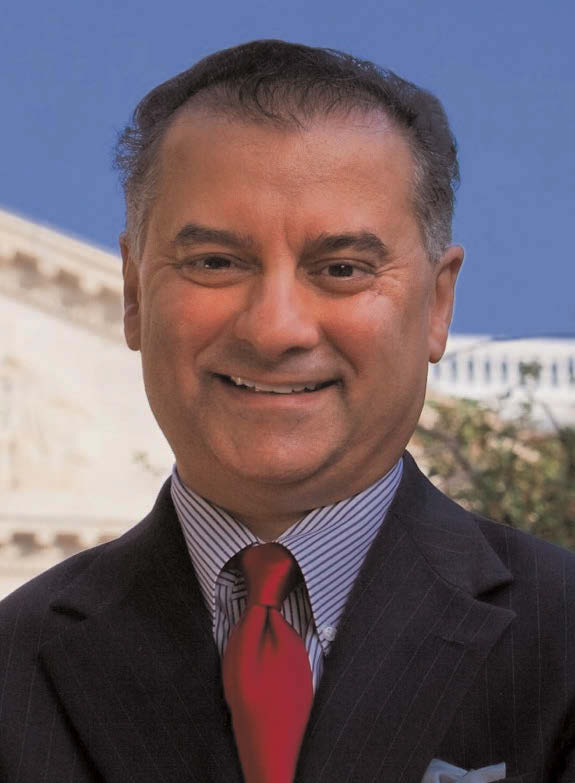
WASHINGTON (TIP): Independent investor Sunil Sabharwal has become the first Indian-American to occupy a key administration post at the IMF, three weeks after he was confirmed by the Senate.
Sabharwal, who was confirmed by the US Senate after a long waiting, assumed the position as Alternate Executive Director of the International Monetary Fund on Wednesday, March 2.
Given that the US commands more than 16.81 per cent of the total IMF voting share; this is one of the most powerful positions in the International Monetary Fund.
US President Barack Obama nominated Sabharwal for the post in April 2014 and then re-nominated in March 2015.
Born to an Indian father and a Hungarian mother in New Delhi, his parents separated when he was 9 years old and he later moved to Budapest.
Sabharwal served as board chairman of Ogone, a European e-commerce payment services firm, from 2011-13 and advised Warburg Pincus on its acquisition of easy cash, a German network services company, subsequently becoming a board adviser there from 2006-2009.
From 2003-2006, he was senior vice president, strategic investments, at First Data Corp/Western Union and from 1997-2003, held executive posts at GE Capital, including managing director.
From 1992-96 Sabharwal worked at the European Bank for Reconstruction and Development, lastly as principal banker.
He has a BS from Ohio State University and an MS from the London Business School.
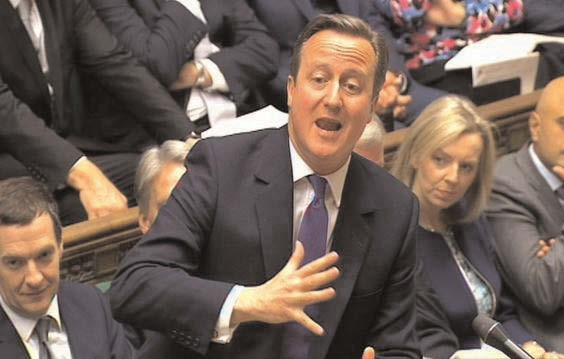
LIBYA (TIP): Barack Obama has accused David Cameron of being “distracted” in the aftermath of the invasion of Libya – contributing to the current deadly “mess” in the north African country.
In a wide-ranging interview with The Atlantic magazine the US president partly blamed Britain and France’s leaders for the chaotic situation in the country.
US and British airpower helped oust dictator Muammar Gaddafi from power in 2011 – but an apparent lack of a workable post-conflict planning has seen the Isis militant group take hold in the country’s central costal areas.
The internationally recognised Libyan government does not now control the capital Tripoli and various Islamist groups and local fighters control scattered regions and municipalities.
UN attempts last year to form a national unity government re-uniting the country have so far failed.
The so-called Islamic State controls the central port of Sirte, the birthplace of Muammar Gaddafi and a former hold-out of regime loyalists.
Obama told the magazine that Cameron had stopped paying attention to the conflict after becoming “distracted by a range of other things”.
In March 2011 coalition jets started started enforcing a no-fly zone above Libya.
The no-fly zone intervention came to an end in November 2011, months ahead of the London Olympics and after a summer of rioting in London.
The president also reportedly told the magazine that in private he referred to the conflict as a “s*** show”
He also recalled telling Cameron that Britain had to pay its “fair share” on defence spending and meet a 2 per cent Nato spending target.
Last year a book recounting the recolections of Tory chairman Michael Ancram said the White House had felt “f***ed over” by the PM’s approach to Libya.
In December 2015, years after the intervention, Cameron told the Spectator magazine that Libya was “better off without Gaddafi”.
“What we were doing was preventing a mass genocide. Then, as you say, the coalition helped those on the ground to get rid of the Gaddafi regime and it’s very disappointing that there hasn’t been an effective successor regime,” he said.
“We did a lot to try and help it, I remember taking the Libyan Prime Minister—as then was—to the G8 meeting in Northern Ireland, getting lots of support but the Libyan political leadership up until now—although there have been some good developments overnight—haven’t been able to put together a comprehensive government.”
With regards to Obama’s comments to the Atlantic, a Downing Street spokesperson said: “I think we would share the President of the United States’ assessment that there are real challenges in Libya, that’s why we are continuing to work hard with our international partners to support a process in Libya that puts in place a government that can bring stability to that country and why we are talking about how we can support such a government in the future.”
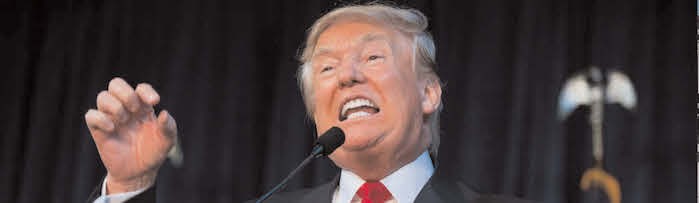
Republican presidential front-runner Donald Trump says that, as president, he would push to change laws that prohibit waterboarding and other enhanced interrogation methods, arguing that banning them puts the US at a strategic disadvantage against Islamic State militants.
During the past week, in a series of interviews and events, Trump has articulated a loose, but expansive set of principles that, if enacted, would mark a fundamental shift in US foreign policy from the limits put in place by Democratic President Barack Obama and the Republican-led Congress. In addition to arguing in favor of reinstating waterboarding, a technique that mimics the sensation of drowning, and “much more than that,” Trump has advocated the killing of suspected terrorists’ wives and children, which appears in violation of international law.
“We have to play the game the way they’re playing the game,” Trump said in an interview on CBS’s “Face the Nation” Sunday, one day after he told an audience in Florida that he would fight to expand and broaden the laws that regulate interrogation.
“I would like to strengthen the laws,” he added Sunday, “so that we can better compete.”
Trump’s comments come as the U.S. continues its uphill battle against IS militants across the Middle East. Trump has repeatedly pointed to the tactics used by the group, including public beheadings and drownings in locked cages, as evidence that the U.S. needs to dramatically escalate the tactics it uses.
During a press conference Saturday in West Palm Beach, Florida, to mark his latest election wins, Trump refused, however, to articulate specifically which techniques he would like to see added, despite repeated questions. Instead, he said: “It’s very hard to be successful in beating someone when your rules are very soft and their rules are unlimited, they have unlimited, they can do whatever they want to do.”
Pressed Sunday on why he believed waterboarding had been banned, Trump said the U.S. was being “weak” by not employing the militants’ tactics.
“Because I think we’re a weak – I think we’ve become very weak and ineffective. I think that’s why we’re not beating ISIS. It’s that mentality,” he said using an acronym for the militant group.
“Isn’t that what separates us from the savages?” ”Fact the Nation” host John Dickerson asked.
“No, I don’t think so,” answered Trump. “No, we have to beat the savages.”
“We have to play the game the way they’re playing the game. You’re not going to win if we’re soft and they’re – they have no rules,” he said.
In 2009, Obama issued an executive order saying all U.S. government personnel and contractors – not just those in the military – are prohibited from using any interrogation techniques that aren’t in the Army Field Manual. That was reaffirmed last June, when many Republicans joined all 44 Senate Democrats in a 78-21 vote months after a Senate intelligence committee report denounced brutal interrogation methods, arguing they had proven ineffective.
However, other former CIA officials, including former deputy CIA director Mike Morell, maintain that waterboarding and other harsh methods have yielded vital intelligence.
Trump appeared, at least briefly, to soften his stance after nearly 100 foreign policy experts signed an open letter denouncing him, saying his “embrace of the expansive use of torture” was “inexcusable.”
Former CIA Director Michael Hayden and others also have weighed in, saying military officials would refuse to carry out any Trump order that violated the law.
During the last Republican debate, Trump insisted that U.S. military officials would obey any orders he gave them, saying, “They’re not going to refuse me. Believe me.”
The next day, his campaign released a statement clarifying that Trump would “use every legal power” to stop “terrorist enemies.” But it said that he recognized the U.S. is bound by laws and treaties and that, as president, he would not order the military or other officials to disobey the law.
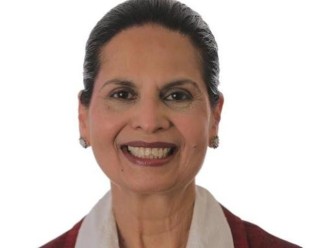
Indian American politician Swati Dandekar, who was nominated as executive director to Asian Development Bank (ADB) with ambassadorial rank by US President Barack Obama in November last year, began her Congressional hearings by Senate Committee on Foreign Relations on February 11. If confirmed by the US Senate, Dandekar will replace Robert M. Orr who held the position since 2010.
Obama announced his intention to nominate Dandekar to the top position in Asian Development Bank (ADB) along with eight other key administration posts. “I am confident that these experienced and hardworking individuals will help us tackle the important challenges facing America, and I am grateful for their service. I look forward to working with them,” Obama said.
Dandekar, a Nagpur and Bombay University alumni, is a former Iowa state legislator and a member of the Iowa Utilities Board, according to her White House biography. She was the first Indian-American citizen to win a state legislature seat in the United States. Dandekar was a Democratic candidate for the United States House of Representatives in the 2014 elections in the 1st Congressional District of Iowa, but lost in the primaries.
Dandekar, the nominee for U.S. Executive Director for the Asian Development Bank with Rank of Ambassador U.S., in a prepared statement before the Senate Committee, stated, “I am honored to have been nominated by President Obama to be the next United States Executive Director with the rank of Ambassador to the Asian Development Bank.”
Recalling her immigration to this land of opportunities, Danekar, who came to the United States as an immigrant in 1973 after she I married her husband of 43 years, Arvind Dandekar , who is is President of Fastek International, a software development company, said, “During my nine years in the Iowa House and Senate, from 2003 until 2011, I had the chance to work at the state level. I am excited by the potential opportunity to work internationally as the U.S. Executive Director of the Asian Development Bank (ADB).”
Stating that as a legislator, she has always worked with both sides of the aisle to develop consensus positions that were acceptable to all interested parties. Over the years, she gained insight in to state finances and budgets, and she also has had extensive experience serving on a variety of boards in Iowa, such as the Linn-Mar School Board, Vision Iowa Board, Iowa Values Fund, Iowa Power Fund, and Iowa Utilities Board. “These experiences have provided me with a firsthand look at the transformative power of appropriate use of development funds. My extensive background in managing projects and cultivating partnerships will help me to carry out the responsibilities of the U.S. Executive Director at the ADB, which is dedicated to reducing poverty in the Asia Pacific region through sustainable and inclusive economic growth, investments in human capital, and good governance,” she said.
“If confirmed, my first priority will be to advance U.S. policy interests at the ADB. Additionally, I will work to ensure that the U.S. Commerce Department and other entities that publicize opportunities for U.S. businesses to compete for business overseas include information on how to compete for contracts from the ADB,” Dandekar said.
She also credited her upbringing in India to provide her with an excellent understanding of the Asian culture, pointing to her ability to speak in English and Hindi, Gujarati and Marathi, as well as having working knowledge in Urdu, Punjabi and Bengali languages. “My language skills and cultural awareness will position me well to address challenges facing the ADB and communicate how ADB is fueling positive economic development and stability throughout the region,” she said. Dandekar said, “I look forward to representing the United States at ADB and ensuring that our country’s priority initiatives are advanced.”
WASHINGTON (TIP): Two Indian American hopefuls for Congress have received key endorsements, strengthening their position. Kumar Barve, who has served for 24 years in the Maryland General Assembly and as majority leader from 2003 until early 2015, is running to claim Maryland’s 8th Congressional district seat. He was endorsed by the UNITE HERE International Union in the race to fill Chris Van Hollen’s seat.
KRISHNAMOORTHIBARVE
Indian American politicians Kumar Barve, Democrat from Maryland (RIGHT) and Raja Krishnamoorthi, another Democrat (LEFT) have received key endorsements in their quest to earn a seat in Congress.
“Our union is made up of a majority of immigrants, women and people of color,” Roxie Herbekian, international vice president of UNITE HERE International Union and president of UNITE HERE Local 7, said in a statement. “As the first Indian American elected to a state legislature in American history, Kumar Barve is an inspiration to our members.”
In Illinois, Raja Krishnamoorthi is looking to take over the seat being vacated by Tammy Duckworth, a Democrat, who is running for Senate in 2016. Chicago-area newspaper the Daily Herald’s support added weight to Krishnamoorthy’s candidature.
On Feb. 23, the Chicago Sun-Times also endorsed Krishnamoorthi. “Our endorsement goes to Krishnamoorthi,” wrote the editorial board of the Chicago Sun-Times. “We’re impressed by Krishnamoorthy’s highly specific legislative agenda. He wants to raise the minimum wage, guarantee access to paid maternity and sick leave for all workers and provide overtime protections to workers earning less than$50,000.”
Additionally, Krishnamoorthi received an endorsement from the Sierra Club. Illinois Sierra Club political chair Barbara Hill said, “Raja is the best-qualified, most reliable candidate to protect the environment and advance renewable energy technology in Congress.”
In a recent GBA Strategies poll, taken Feb. 9 through Feb. 11, 400 likely Democratic voters in the 8th Congressional district sided with Krishnamoorthi. Roughly 41 percent said it would vote for the Indian American if the election were held today, outpacing his opponents by 14 percent.
A graduate of Princeton University and Harvard Law School, Krishnamoorthi, the son of Indian immigrants, previously was policy director for Barack Obama’s U.S. Senate campaign.
WASHINGTON: Six Indian-Americans are among a talented group of 106 scientists and engineers who will be honoured by US President Barack Obama with a prestigious award, the highest US government prize for young independent researchers.
The Indian Americans selected for the Early Career Awards for Scientists and Engineers are Milind Kulkarni (Purdue University), Kiran Musunuru (Harvard University), Sachin Patel (Vanderbilt University Medical Centre), Vikram Shyam (NASA), Rahul Mangharam (University of Pennsylvania) and Shwetak Patel (University of Washington), according to a White House statement.
“These early-career scientists are leading the way in our efforts to confront and understand challenges from climate change to our health and wellness,” President Obama said, who will present the awards at a ceremony this spring.
“We congratulate these accomplished individuals and encourage them to continue to serve as an example of the incredible promise and ingenuity of the American people,” he said.
Established in 1996, the Presidential Early Career Awards highlight the key role that the Administration places in encouraging and accelerating American innovation to grow economy and tackle greatest challenges.
Milind Kulkarni, an associate professor with the School of Electrical and Computer Engineering at Purdue University.
His research focuses on Programming Languages and Compilers that support efficient programming and high performance on emerging complex architectures.
Dr. Vikram Shyam, a technical innovation in fundamental aeronautics; at NASA’s Glenn Research Center in Cleveland, is among the six NASA scientists to receive this award. Shwetak Patel, Washington Research Foundation Entrepreneurship Endowed Professor in Computer Science and Engineering and Electrical Engineering, Patel, is a nationally recognised expert in sensor systems research.
Rahul Mangharam from University of Pennsylvania was selected for inventing a new formal methodology to test and verify the correct operation of medical device software, saving lives and reducing care costs, the National Science Foundation said.
Dr. Kiran Musunuru, Assistant Professor of Stem Cell and Regenerative Biology at Harvard University and Associate Physician at Brigham and Women’s Hospital, has developed a “genome editing” approach for permanently reducing cholesterol levels in mice.
Sachin Patel, an Assistant Professor of Psychiatry, and Molecular Physiology and Biophysics Vanderbilt University Medical Centre, through his research is offering a glimmer of hope to alcoholics who find it hard to remain sober.
“The awardees are outstanding scientists and engineers,” said the National Science Foundation Director France Cordova.
“They are teacher-scholars who are developing new generations of outstanding scientists and engineers and ensuring this nation is a leading innovator,” he said.
The untimely demise of Mr. Justice Scalia is a grave loss to our Republic, as he, single-handedly, made us honor the Constitution as our collective Founding Fathers originally intended. J. Scalia, of Sicilian ancestry, was a great American and enhanced the American Dream for all – even if I didn’t agree with him in every holding. But, he was a Jewel in the Crown of Justice, and he will be sorely missed.
I write to applaud your honoring the Constitution, exact-ly as J. Scalia ruled we all must, by stating that you will nominate a successor. In addition, I write in support of certain great Americans – with immigrant roots like J. Scalia: USA Preet Bharara, AG Kamala Harris and CJ Sri Srinivasan. That Senate Majority Leader Mitch McConnell has announced that he will violate the Constitution this year, while in February 1988 he voted in President Reagan’s last year for J. Anthony Kennedy is an insult to J. Scalia’s cherished Originalist doctrine. While politics is a necessary vehicle for democracy to function, a blanket promise to breach the Oath by Leader McConnell is as appalling, as it is illegal.
Still, politics being politics, and Senate being in Republican control, this solitary fact aids in tempering your choice of nominee – and among the three I proudly mention – only CJ Srinivasan has been voted up 97-0 -and the fact that he clerked for the revered Justice Sandra Day O’Connor and has, like myself, defended other nations’ sovereignty by preventing extra-territorial jurisdiction of our courts, makes him a Centrist – worthy of prompt Senate confirmation. Your nomination will delight every Indian-American, including those serving in our military, and indeed, 1.2 billion Indians, that America has finally seized the moment of destiny to join at the legal hip two natural allies, under law – a destiny that has been beckoning, by my thinking, since Lord Charles Cornwallis lost these Colonies to General George Washington and upon landing in Bombay decreed 5000 Indians – men, women and children killed – as he was going to rule with an iron fist and not lose the Empire’s then-crown jewel – India. That CJ Srinivasan will continue to honor, in his reserved and non-activist way, our cher-ished Constitution is a known fact. I urge you to nomi-nate CJ Srinivasan and make America stronger and J. Scalia proud. You have a patriot’s and a lawyer’s heart-felt thanks. The validation of an entire community inci-dentally results.
WASHINGTON(TIP): President Barack Obama will become the first sitting U.S. President to visit Cuba in 88 years, when he visits Havana, Cuba in March as part of a broader trip to Latin America.
He will be only the second sitting US president in history to travel to the island’s capital of Havana.
US Republicans have criticized the visit, saying it should not take place while the Castro family is in power.
Washington and Havana restored diplomatic ties last July and the US relaxed travel and trade restrictions after a 54-year freeze.
The US president confirmed his Cuba trip in a post on Twitter, saying: “14 months ago, I announced that we would begin normalizing relations with Cuba – and we’ve already made significant progress,” he tweeted. “Our flag flies over our Embassy in Havana once again. More Americans are traveling to Cuba than at any time in the last 50 years.”
“We still have differences with the Cuban government that I will raise directly. America will always stand for human rights around the world,” he tweeted. “Next month, I’ll travel to Cuba to advance our progress and efforts that can improve the lives of the Cuban people.”
He will be joined by his wife, Michelle, travelling to the island on 21 to 22 March, before embarking on a two-day visit to Argentina, the White House said in a statement.
“This historic visit – the first by a sitting US president in nearly 90 years – is another demonstration of the president’s commitment to chart a new course for US-Cuban relations and connect US and Cuban citizens through expanded travel, commerce, and access to information.”
He will be the first US president to visit Havana since Calvin Coolidge in 1928 – President Harry Truman visited the US-controlled Guantanamo Bay in 1948, and former President Jimmy Carter has visited Cuba several times since leaving office.
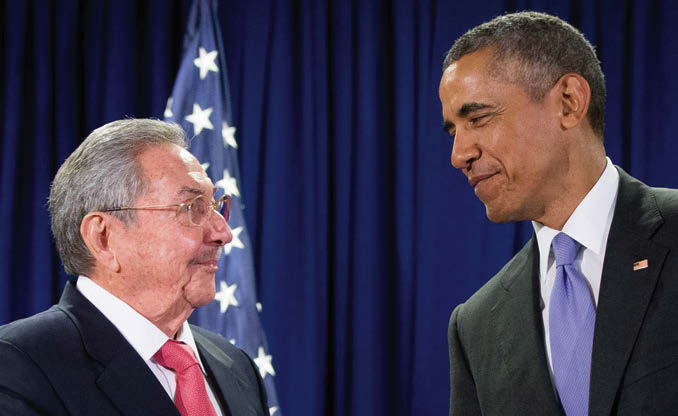
The White House also announced that the President will meet with Cuban President Raul Castro, as well as members of civil society, entrepreneurs and “Cubans from all walks of life”
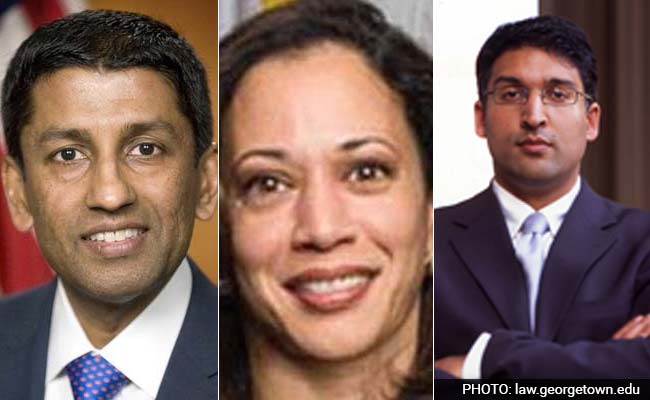
WASHINGTON: Three Indian-American legal luminaries may be among the possible candidates whom US President Barack Obama could nominate as a Supreme Court judge following the sudden death of conservative icon Justice Antonin Scalia.
Within hours of the death of Mr Scalia at a ranch in Texas, the name of Chandigarh-born Sri Srinivasan popped up as the top contender to the post.
Sri Srinivasan, 48, is currently the US Circuit Judge of the United States Court of Appeals for the District of Columbia Circuit which many call as a stepping stone to the Supreme Court.
He is not only considered as a favourite of Barack Obama, who has called him as a trailblazer, but also his nomination to the Court of Appeals was confirmed by a record 97-0 votes, which is an achievement given the bitter political divide in the US Senate.
The White House yesterday refused to give any indication of the list of persons President Obama is looking into to zero in on his nomination for the next Supreme Court judge.
But given his track record – wherein he has appointed a record number of Indian-American judges to various US courts – and him publicly praising some of them, it would not be a big surprise that in addition to Mr Srinivasan a few other individuals from the community too figure up in his list.
Among them could be his home town resident Neal Katyal, who served as Acting Solicitor General of the US from May 2010 until June 2011 and California Attorney General Kamala Harris, who is considered to be very close to President Obama.
Ms Harris, who traces her roots to Chennai, is currently running for the US Senate seat in California.
On Monday several media outlets mentioned Ms Harris as among the potential ones who could replace Mr Scalia in the Supreme Court.
Ms Harris, 51, who was among the six people mentioned by New York Times, has not reacted to the speculation so far.
In 2011, she became the first African-American, Asian-American, Indian-American and woman to hold the post of California attorney general.
Many say Mr Katyal, who would turn 46 on March 12, could emerge as a dark horse in the process.
With extensive experience in matters of patent, securities, criminal, employment, and constitutional law, he has orally argued 27 cases before the Supreme Court of the United States, with 25 of them in the last six years.
Barack Obama intends to nominate someone as Supreme Court judge who honours constitutional responsibilities, have impeccable credentials and understands how laws affect the daily realities of people’s lives, the White House said.
“I would not anticipate an announcement this week, especially given that the Senate is out on recess,” White House Press Secretary Eric Schultz told reporters. Schultz refused to engage in speculation about lists and names.
When asked about what kind of individual President Obama is looking to nominate someone to be the next Supreme Court judge, Schultz said President’s judicial nominees should adhere to a number of basic principles.
“Number one, I’d say the President’s judicial nominees are all eminently qualified with a record of excellence and integrity. The President looks for individuals who have impeccable credentials,” he said.
“Number two, the President intends to nominate individuals who honor constitutional responsibilities. These are individuals who have a commitment to impartial justice, respect the integrity of the judicial process, and adhere to precedent. The President seeks judges who will faithfully apply the law to the facts at hand,” he said.
“And lastly, the President is also mindful that there are rare cases where the law is not clear, and we acknowledge that those incidents occur most often at the Supreme Court,” he said, adding that in those times, a judge will have to bring his or her own ethics and moral bearings into a decision.
Washington: US President Barack Obama is set to appoint an Indian American philanthropist to a key administration post at the prestigious John F Kennedy Centre for the Performing Arts.
Ranvir Trehan, who holds a degree of Bachelors in Electrical Engineering from Birla Institute of Engineering and Science (BITS), Pilani, is set to be nominated as a general trustee at the Kennedy Centre.
Trehan is among six individuals to be nominated to various administration jobs, an official statement said yesterday.
“These fine public servants bring a depth of experience and tremendous dedication to their important roles. I look forward to working with them,” Obama said.
The Kennedy Centre is among the busiest arts facility in the US as it annually holds about 2,000 music, dance and theatre festivals.
Trehan, who came to the US in 1964 and after various stints in companies like Apptis Holdings and SETA Corporation as a technocrat and an entrepreneur, recently turned philanthropist. He is the chairman of the Trehan Foundation.
Previously, Trehan was vice chairman of Apptis Holdings from 2005 to 2011 and was founder and chief executive officer of SETA Corp from 1987 to 2005, according to the statement.
He has a BS from the BITS, an MSE from the University of Michigan, and an MBA from the University of Dayton.
Trehan was a department head of Information and Communications Systems from 1985 to 1987 and a member of the technical staff from 1969 to 1985 at The MITRE Corporation. He is also a former member of the board of the Wolf Trap Foundation for the Performing Arts.
He currently serves on the Board of Directors at CARE which aims to ‘efficiently help’ the poor.
It would be worth watching how America would manage the contradictions between economic multipolarity and military unipolarity in the years to come. Its sustenance as a global hegemon will be largely determined by both domestic and geopolitical actors notwithstanding its near successful sojourn from colony to superpower in its long history
How enduring is “American hegemony” or “empire” in a world with a “rising China”, globally “assertive Putin” and an endemic crisis in West Asia and Africa wherein the US is being constantly projected more as an imperialist power than as a champion of liberal democracy and global justice? This overarching question gives rise to a number of subsidiary questions through which America’s continued legacy of “unipolar world” could be seriously examined.
Immanuel Wallerstein rightly notes, “Since the end of the Second World War, the geopolitics of the world-system has traversed three different phases. From 1945 till 1970, the US exercised unquestioned hegemony in the world-system. The period from 1970-2001 was a time in which American hegemony began to decline, but the extent of its decline was limited by the strategy that the US evolved to delay and minimize the effects of its loss of ascendancy. In the period since 2001, the US has sought to recuperate its standing by more unilateral policies, which have, however, boomeranged -indeed actually accelerating the speed and depth of its decline.”
Even it is strongly argued that America has unwittingly morphed into a new and strange kind of a political system where both the economic and political powers are increasingly conjoined. It is gradually losing the power to respond to its own populace the way it did in the recent past and virtually leading to a kind of inverted totalitarianism, leaving no space for the ever-growing home for the world’s most promising liberal democracy. The Summer Issue of the Journal of the American Academy of Political Science in 2011 brought out that “it is a common theme that the US, which only a few years ago was hailed to stride the world as a colossus with unparalleled power and unmatched appeal, is in relative decline, ominously facing the prospect of its final decay”. The business of America, is business as Calvin Coolidge once proudly remarked, has now turned this statement into a mere tautology. Currently America is either engaged in direct or proxy wars around the world to secure its narrow interests and it is finally leading to its decline than many pundits believe it to be.
However, the interesting part is that how long American hegemony will last will not be determined by China’s rise or an ever-growing threat of global terrorism. Noam Chomsky arguably notes, “the commonly drawn corollary that power will shift to China and India is highly dubious. They are poor countries with severe internal problems. The world is surely becoming more diverse, but despite America’s decline, in the foreseeable future, there is no competitor for global hegemonic power.” It is true that emerging global powers like India and China are pressed to be seriously involved at their homeland because of their chronic problems than America in the years to come. Their journey to claim global ranks has very recently begun unlike the US, as historian Geoffrey Warner recorded how President Roosevelt was aiming at United States hegemony in the postwar world. By then China and India were just planting their roots for homegrown nascent political systems to just begin their nationhood. It seems an uphill task for both these nations at least for some good decades though they may keep growing faster than a declining US economy at the moment.
The American empire is not a traditional empire, but rather a sui generis one which it has acquired inadvertently in course of time with its sheer economic, military, political and finally, through its technological might. “No other country in the world possesses, has ever possessed, or is likely to possess, in this century such a world straddling vehicle for the enforcement of its will. More to the point, the US-dominated system shows no signs of falling apart. Even the revelations that America and its English-speaking allies have been spying on the leaders of their NATO peers have not led to calls for the dissolution of NATO. The American system may not last forever, but its remaining life may be measured in centuries rather than decades. Cycles of hegemony turn very slowly because systems of hegemony are very robust. The American power network is much bigger, much stronger and much more resilient than the formal American state as such” (Babones).
Indeed, it would decline, but this duration of fall would be longer than expected. Even experts like Barry R Posen states that the US enjoys the “command of the commons” – command of the sea, space and air. But technically, air space belongs to respective countries and commons in the case of sea, but space are areas that don’t belong to one nation, though there are limits assigned as per international norms. But when it comes to command of these commons either forcefully or through mutually beneficial ways, it is only the US that can steer the wheel further and can make it operational. In “contested zones”, around the world like “South China Sea”, the US military might have a disadvantage and it is always advisable to engage its power selectively in such cases.
Unlike the US, China is constantly facing tough resistance and competition from its immediate neighbors like Japan, South Korea and India on all fronts while trying to emerge as a global power and from the Asian baggage. It is likely and historically recorded that the Asian powers would more welcome a US leadership than a Chinese one. The recent escalations of conflict in the South China Sea underline how China’s adversaries are willing to engage or trying to resort directly to the US assistance. Thus the strategic challenge posed by China is exaggerated and the lasting impact combined with acceptability of its authoritarian growth model may not permeate across. China’s alarming human rights violation records and an authoritarian political system have its own perennial problems which might shake the Middle Kingdom in the years to come. But for now China is managing its global clout with a relatively peaceful and stable political system, though a sustained demand for change and transparency are rising every passing day. Moreover, despite China’s call for a multipolar reserve currency system, it seems the lack of stable alternatives might help dollar continuing to dominate the global financial system at the moment.
Barack Obama, the 44th President of the US, has brought a new age into the history of the country by successfully closing the “tumultuous era” during which his Republican predecessor George W Bush had primarily set the nation on a confrontational course in its global relations both with its allies and enemies. But in true sense of the term, close on the heels of his two terms of presidency, Obama could hardly come out of the burden of the past.
Tall claims that US hegemony is coming to an end seem absolutely premature. When many in global politics thought about the replacement of the Washington Consensus with an immediate rise of the Beijing Consensus, experience shows that the Chinese annual growth rate is not very encouraging. Also the emergence of the China model in contrast to the free market liberal democratic paradigm constantly promoted by the US leadership with a mega agenda is not deepening across the nations, though there has been a regular and potential disdain developed about the way the US is behaving. Experts feel that the US will surely demonstrate great resilience as the country is best endowed with economic flexibility, highly luring to the migration of the best of the skilled manpower; granary of the best universities of higher learning and finally it possesses “the most networked society and economy in the world” (Anne-Marie Slaughter). Though China might grow much faster than the American economy, yet it remains to be seen how long it would continue.
The US has the option of more margins to choose from a big basket than any other nation in the world and that is where its leverage lies in global politics. Acclaimed American intellectual Joseph S Nye Jr advocates that “power in a global information age is distributed like a three dimensional chess game. The top military board is unipolar, with the United States far outstripping all other States, but the middle economic board is multipolar, with the United States, Europe and Japan accounting for two-thirds of world product, and the bottom board of transnational relations that cross borders outside the control of governments has a widely dispersed structure of power”.
With this scenario in mind and an effort to intensify the prospect of a multipolar world under the rubrics of BRICS, ASEAN and a large array of international NGOs and civil society organizations which play a significant role in global governance, it is really impossible for the US to go alone or even with its allies in remaining as the hegemon for a longer period.
It would be worth watching how America would manage the contradictions between economic multipolarity and military unipolarity in the years to come. Its sustenance as a global hegemon will be largely determined by both domestic and geopolitical actors notwithstanding its near successful sojourn from colony to superpower in its long history. It remains a contested and open question how long America will rule at the top or will there be an imminent fall in the days to come.
NEW YORK (TIP): Alarmed over the detection of fake US Green Cards submitted to obtain Travel Documents to India, the Indian Consulate in New York have brought to matter to the notice of the Immigration authorities and the police who have launched an investigation in to the working of Service Providers to the Indian Consulate here. They are said to be examining their possible nexus with people and agencies involved in the racket.
There are two official service providers appointed by the Indian Embassy in the US. One is BLS International which provides Passport services, and the other is Cox & King which provides Visa services, among others. There have been complaints against BLS International ever since it started operations some years ago. It is reported that almost every Consulate, and Embassy of India in the US, have expressed dissatisfaction with the working of the company but it continues to be in business. BLS is believed to have strong political connections in India and its patrons there ensured the company remains in business in spite of all adverse reports.
It has been known for some time now that there are agents who claim to provide services to seekers of travel documents, for a price. On the face of it, there is nothing wrong in it. However, these agents also indulged in faking documents to get travel documents to those not eligible for obtaining those documents, for some reason. In such cases, these agents charged hefty fees, from $3500.00 upwards, according to some who paid the sum. They disclosed the information to The Indian Panorama on condition of anonymity. A gentleman from Queens who came from India sought political asylum here and went on to become a citizen, made fun of the Consulate authorities who had told him that he would not get visa to travel to India because he had sought political asylum. An official in the Consulate explained to him that since he had in his asylum petition claimed that his life was in danger in India, there was ample justification to deny him visa to travel to India. He flaunted his US Passport with the Indian Visa and said he got it through a Visa and Passport Service Center for “only $5000.00”. And he is not the only one. Every day there are people visiting these centers and other agents to obtain travel documents to India.
It is mostly Indians. There are two categories. One, those who came illegally and are still illegal here. They want passport. Then there are those who came from India, sought asylum here and ultimately got a status here and want visa to travel to India. As for the first category, they have been living in hope that one day they will get a status. They expected a repeat of 1986 Reagan amnesty. They expected President George W Bush would grant legal status to nearly 11 million illegal aliens. Then they pinned their hope on President Barack Obama who sounded passionate about comprehensive Immigration Reforms and giving dignity to millions who lived in shadows. But it has been decades of wait and nothing happening.
Meanwhile, those who had sought asylum without knowing that it will foreclose their option to visit home, grew restless. They had made money here. They have been supporting families back home. But there was no way for them to unite with their families. One can easily understand their agony. They were keen to unite with their families from whom they had wrenched themselves years ago, simply to make a better living in the US, “the land of opportunity”. They had left behind parents who have grown old now and needed care. They had left behind small children who are grown up now and hunger for father’s love. There were some who lost a family member and wanted to travel home. There were some who wanted to travel home to bless their children getting married. There were some who wanted to visit home to share the joy of the family on the arrival of a grandchild. But they could not go.
I recall Consul General of India, Mr. Dnyaneshwar Mulay’s visit to a local Gurdwara a year or so ago. The community gave him a rousing welcome. He, too, was happy to be among the Sikh community, which has the largest number of asylees in the US, and elsewhere in the world, too. He was asked why the Consulate was denying passport and visa to the asylees. Mr. Mulay explained that it was a rule framed by the government of India and that it was for the government to change the rules. Obviously, the Consul General’s reply did not satisfy them nor did it solve their problem.
The Sikh community in particular has been sore that every time a minister or a politician came from India, they pleaded with the visiting dignitary to lobby with the government for a change of rule and each promised to do so but nobody ever bothered after leaving the US.
So, what would they do? Consulates would not give them passport. Consulate would not give them visa. And some felt compelled to travel. So, they looked for someone to help out. And, as we always have in every community, people intelligent enough to play on the weakness of others, we had a group of “agents” and “middlemen” waiting to help the helpless. Of course, it was for a price. These agents knew seekers of passport or visa had enough money and, given their desire to make it to “home” they would be ready to pay any price.
Thus started, a long time ago, the business of passport and visa services. Of course, the operators then did not put up sign boards. It was known by word of mouth who the agents were and people would go over to them. Sometimes, the agents themselves would approach prospective customers. It went on for years. The network was very wide. Some 6 years ago, while I was in Sacramento, a travel agent undertook to get a man a passport from New York Consulate. The Indian Panorama has the information that there is a strong network of agents all across the US who work in close cooperation with each other and with the service providers, without the help of whom it will be well-nigh impossible to do the thriving business on such a large scale. In fact, it is a multimillion dollar industry and New York has the distinction of being the headquarters of this business.
For years now, various organizations of Indian Americans and individuals have been from time to time, bringing to the notice of the New York Consulate the various malpractices going on with regard to passport and visa services. And every time, a consulate would ask for evidence. I myself raised the issue in formal interviews of the Consul General Mr. Mulay and also in private conversations a couple of times and was stonewalled with the question of evidence. I must give credit to Mr. Mulay that once he came to know about a Consul’s involvement in unethical conduct, he saw to it that the official was sent back to India, even though the said Consul had his powerful patrons in Delhi.
India’s Deputy Consul General Mr. Manoj Mohapatra who has taken, under the command of the Consul General, a bold step to uncover the racket
And Mr. Mulay and his deputy Manoj Mohapatra must be congratulated that they took a courageous step to bring to the notice of US Immigration authorities the issue of submission of fake US Green Cards to obtain travel documents to India. Instead of sleeping over the matter, they realized the far reaching and damaging consequences of the travel documents falling in the hands of the wrong people. They probably had a David Coleman Headley in mind.
Whatever, when they detected at their level 7 suspicious looking US green cards, they sent the green cards to the US Immigration for verification. US Immigration found 6 of them were fake. And then the Immigration authorities swung in to action.
An Immigration official visited the Consulate on last Friday, February 5 to speak with the Consulate authorities. Accompanied by the Consulate officials, the officer from the Immigration visited the offices of BLS International, located at 28 West 30th Street, Suite 202, New York, NY10001. As the official reached there he found in the BLS complex the Notary who had notarized the “fake Green Cards”. The officer asked him a couple of questions and went in to speak with the BLS officials about the presence of the Notary in the building. It was when the Notary, reported to be named Husain, picked up his stuff and bolted.
The US Immigration is now believed to be looking in to the issue not as a solitary affair of faking of some US green cards by just a few to obtain travel documents to India but as a much wider racket, involving many all over the US.
Meanwhile, the local police are separately looking in to the case of “fraud”. Till the time of writing this report it is not known if any arrest has been made in this connection.
Reports pouring in to the office of The Indian Panorama suggest a fear wave has gripped those running the passport and visa centers who are keeping away from their offices and not meeting new customers. Some are said to be fearing sting operations.
The Indian Panorama which is a community service and information providing medium would like to caution community not to fall a prey to the temptation of easy acquisition of a passport or a visa and avoid any illegal method to acquire a travel document.
WELLINGTON (TIP): The Trans-Pacific Partnership, one of the world’s biggest multinational trade deals, was signed by 12 member nations on Thursday in New Zealand, but the massive trade pact will still require years of tough negotiations before it becomes a reality.
The TPP, a deal which will cover 40 percent of the world economy, has already taken five years of negotiations to reach Thursday’s signing stage.
The signing is “an important step” but the agreement “is still just a piece of paper, or rather over 16,000 pieces of paper until it actually comes into force,” said New Zealand Prime Minister John Key at the ceremony in Auckland.
The TPP will now undergo a two-year ratification period in which at least six countries – that account for 85 percent of the combined gross domestic production of the 12 TPP nations -must approve the final text for the deal to be implemented.
The 12 nations include Australia, Brunei, Canada, Chile, Japan, Malaysia, Mexico, New Zealand, Peru, Singapore, the United States and Vietnam.
Given their size, both the United States and Japan would need to ratify the deal, which will set common standards on issues ranging from workers’ rights to intellectual property protection in 12 Pacific nations.
Opposition from many US Democrats and some Republicans could mean a vote on the TPP is unlikely before President Barack Obama, a supporter of the TPP, leaves office early in 2017.
US Trade Representative Michael Froman has said the current administration is doing everything in its power to move the deal and on Thursday told reporters he was confident the deal would get the necessary support in Congress.
In Japan, the resignation of Economics Minister Akira Amari – Japan’s main TPP negotiator – may make it more difficult to sell the deal in Japan.
WASHINGTON: US President Barack Obama today cited the humanitarian work done by the Sikh community as he spoke about the strength that comes from uniting all faiths against fear.
“When the Earth cleaves in Haiti, Christians, Sikhs, and other faith groups sent volunteers to distribute aid, tend to the wounded, rebuild homes for the homeless,” Mr Obama said in his annual address to the national prayer breakfast in the presence of religious and global leaders in Washington.
“Whether fighting global poverty or working to end the scourge of human trafficking, you are the leaders of what Pope Francis calls ‘this march of living hope’,” he said as he mentioned the work done by Sikhs during various natural disasters across the globe.
“When Ebola ravaged West Africa, Jewish, Christian, Muslim groups responded to the outbreak to save lives. As the news fanned the flames of fear, churches and mosques responded with a powerful rebuke, welcoming survivors into their pews,” Mr Obama said.
When nine worshippers were murdered in a Charleston church basement, it was people of all faiths who came together to wrap a shattered community in love and understanding, he said.
“When Syrian refugees seek the sanctuary of our shores, it’s the faithful from synagogues, mosques, temples, and churches who welcome them, the first to offer blankets and food and open their homes,” he said.
“Seeing God in others. We are driven to do this because we’re driven by the value that so many of our faiths teach us — I am my brother’s keeper, I am my sister’s keeper. As Christians, we do this compelled by the Gospel of Jesus – the command to love God, and love one another,” said the US President.
“And so, yes, like every person, there are times where I’m fearful. But my faith and, more importantly, the faith that I’ve seen in so many of you, the God I see in you, that makes me inevitably hopeful about our future. I have seen so many who know that God has not given us a spirit of fear. He has given us power, and love, and a sound mind,” he said.
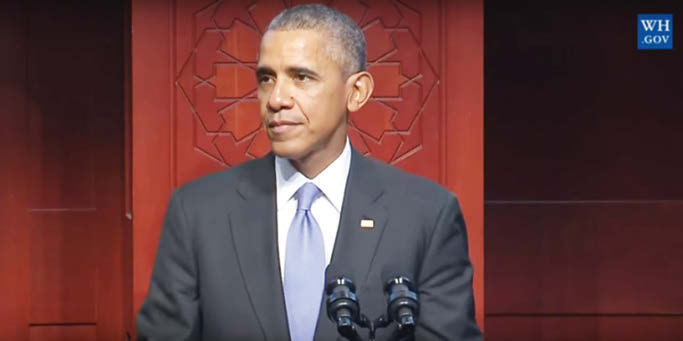
NEW YORK (TIP): President Barack Obama, in his first presidential visit to a mosque in the United States, said Wednesday, Feb 3, he was seeking to rebut “inexcusable political rhetoric against Muslim-Americans” from Republican presidential candidates.
Speaking to a packed house at the suburban mosque, Obama noted that violence against the Muslim American and Sikh American communities has surged in the aftermath of the Paris terrorist attacks last November – in which extremists affiliated with the Islamic State killed 183 people – and the San Bernardino shootings in December, when a Muslim American couple killed 14 people at a rehabilitation center for handicapped people.
Attempting to recast what he said was a warped image of Islam while encouraging members of the faith to speak out against terror, Obama described Muslims as essential to the fabric of America.
As he decried GOP counterterror plans that would single out Muslims for extra scrutiny, Obama insisted that applying religious screens would only amplify messages coming from terrorist groups. In his final year in office, Obama has sought to use his public platform — however waning –to advocate against what he sees as dangerous threads in the political discourse.
“We can’t be bystanders to bigotry,” Obama said. “Together, we’ve got to show that America truly protects all faiths. As we protect our country from terrorism, we should not reinforce the ideas and the rhetoric of the terrorists themselves.”
“I know that in Muslim communities across our country, this is a time of concern and, frankly, a time of some fear. Like all Americans, you’re worried about the threat of terrorism,” said the president, who removed his shoes before entering the mosque, in deference to Islamic custom. “But on top of that, as Muslim Americans, you also have another concern – that your entire community so often is targeted or blamed for the violent acts of the very few,” he said.
“I’ve had people write to me and say, ‘I feel like I’m a second-class citizen.’ I’ve had mothers write and say, ‘my heart cries every night,’ thinking about how her daughter might be treated at school. A girl from Ohio, 13 years old, told me, ‘I’m scared.’ A girl from Texas signed her letter ‘a confused 14-year-old trying to find her place in the world,’” said Obama.
“These are children just like mine. And the notion that they would be filled with doubt and questioning their places in this great country of ours at a time when they’ve got enough to worry about – it’s hard being a teenager already – that’s not who we are.”
“We’re one American family. And when any part of our family starts to feel separate or second-class or targeted, it tears at the very fabric of our nation,” said the president, thanking Muslim Americans for serving the U.S.
Obama stated that hate crimes must be reported and punished. He encouraged the community to speak out against hateful rhetoric and violence against any faith, and to reject religious extremism.
The president rejected the notion that America is ‘at war with Islam’, stating: “We can’t be at war with any other religion, because the world’s religions are a part of the very fabric of the United States, our national character. And we can’t suggest that Islam itself is at the root of the problem. That betrays our values. It alienates Muslim Americans.”
Obama said law enforcement should not use engagement with the Muslim American community as a tool for surveillance. He noted, however, that several government agencies are specifically targeting Muslim youth.
“We’re going to have to be partners in this process. There will be times where the relationship is clumsy or mishandled. But I want you to know that from the president to the FBI director, to everybody in law enforcement, my directive and their understanding is that this is something we have to do together. And if we don’t do it well, then we’re actually not making ourselves safer; we’re making ourselves less safe,” he said.
White House press secretary Josh Earnest told reporters Feb. 2: “It’s certainly true that we’ve seen an alarming willingness on the part of some Republicans to try to marginalize law-abiding, patriotic Muslim Americans.”
“I think it’s just offensive to a lot of Americans who recognize that those kinds of cynical political tactics run directly contrary to the values that we hold dear in this country. And I think the president is looking forward to the opportunity to make that point,” Earnest told reporters, as reported by PTI.
Trump chided Obama for the mosque visit. “He can go to lots of places. I don’t know, maybe he feels comfortable there,” Trump told Fox News.
Republican presidential candidate Marco Rubio also lashed out against Obama’s mosque visit, criticizing the president for “pitting people against each other.”
“He’s basically saying that America is discriminating against Muslims,” said Rubio during a town hall meeting in New Hampshire, acknowledging that there was discrimination, but radical Islam is a bigger threat.
WASHINGTON (TIP): US President Barack Obama directed his national security advisers on Thursday to counter efforts by Islamic State to expand into Libya and other countries, the White House said.
Islamic State militants have taken advantage of chaos in Libya to establish themselves in the city of Sirte, and they have carried out several attacks on oil installations this month.
“The President directed his national security team to continue efforts to strengthen governance and support ongoing counterterrorism efforts in Libya and other countries where ISIL has sought to establish a presence,” the White House statement said, using an acronym for Islamic State.
Earlier on Thursday, Defense Secretary Ash Carter told a news conference that Islamic State was establishing training sites in Libya and welcoming foreign fighters the way it had done in Iraq and Syria in years past.
“And we don’t want to be on a glide slope to a situation like Syria and Iraq. That’s the reason why we’re watching it that closely. That’s the reason why we develop options for what we might do in the future.”
On Wednesday, Pentagon spokesman Peter Cook said the Unied States had already sent “a small number of military personnel” into Libya to try to “to engage in conversations with local forces to get a clearer picture of exactly what’s happening there.”
“We’re looking at military options,” Cook said, according to a transcript of his news conference on the Department of Defense website.
The political chaos in Libya has slowed the international community’s ability to partner with the loose alliances of armed brigades of rebels who once fought veteran leader Muammar Gaddafi, who was overthrown in 2011. (Reuters)
WASHINGTON (TIP): A new advanced version of ‘The Beast’, the heavily armoured bomb-proof limousine of the US President, has been spotted undergoing secret tests so that it is ready for Barack Obama’s successor.
The Department of Homeland Security began the process of commissioning a new presidential limousine in 2013, and now a camouflaged prototype of the next generation machine has been spotted for the first time.
Although the current vehicle is designed to look like a Cadillac sedan, it is understood to be a heavily armoured machine built on a medium duty diesel-powered truck chassis, but its detailed specifications remain a national secret, the Fox News reported.
The vehicle, seen in a spy photo published by Autoblog, is dressed unmistakably like a Cadillac. It appears to be the same size and shape as Obama’s car, while featuring the brand’s latest grille and headlight design.
Public records indicate that General Motors (GM) has been awarded three contracts for the project.
President Obama, talking about his car, recently told comedian Jerry Seinfeld that it is “a Caddy, basically on a tank frame”. Its nickname is ‘The Beast’.
The US Secret Service reportedly maintains a fleet of 12 identical limousines that are used in Washington DC, and transported around the world to support the President’s activities.
The specific cost for each vehicle is undisclosed, but has been estimated to be USD 1-1.5 million. So far, the total paid to GM for work on the 2017 model is USD 15,800,765, the report said.
The new car will likely make its public debut on Inauguration Day, January 20, 2017.
(PTI)
Signup to our Newsletter!
Don’t miss out on all the happenings around the world