Tag: Barack Obama

  • MASTER CARD CEO AJAY BANGA AMONG 4 IN THE US GET A PADMA AWARD

    MASTER CARD CEO AJAY BANGA AMONG 4 IN THE US GET A PADMA AWARD

    NEW YORK (TIP): Three Indian Americans and a former U.S. ambassador to India were announced Jan. 25 as this year’s recipients of the coveted Padma awards.


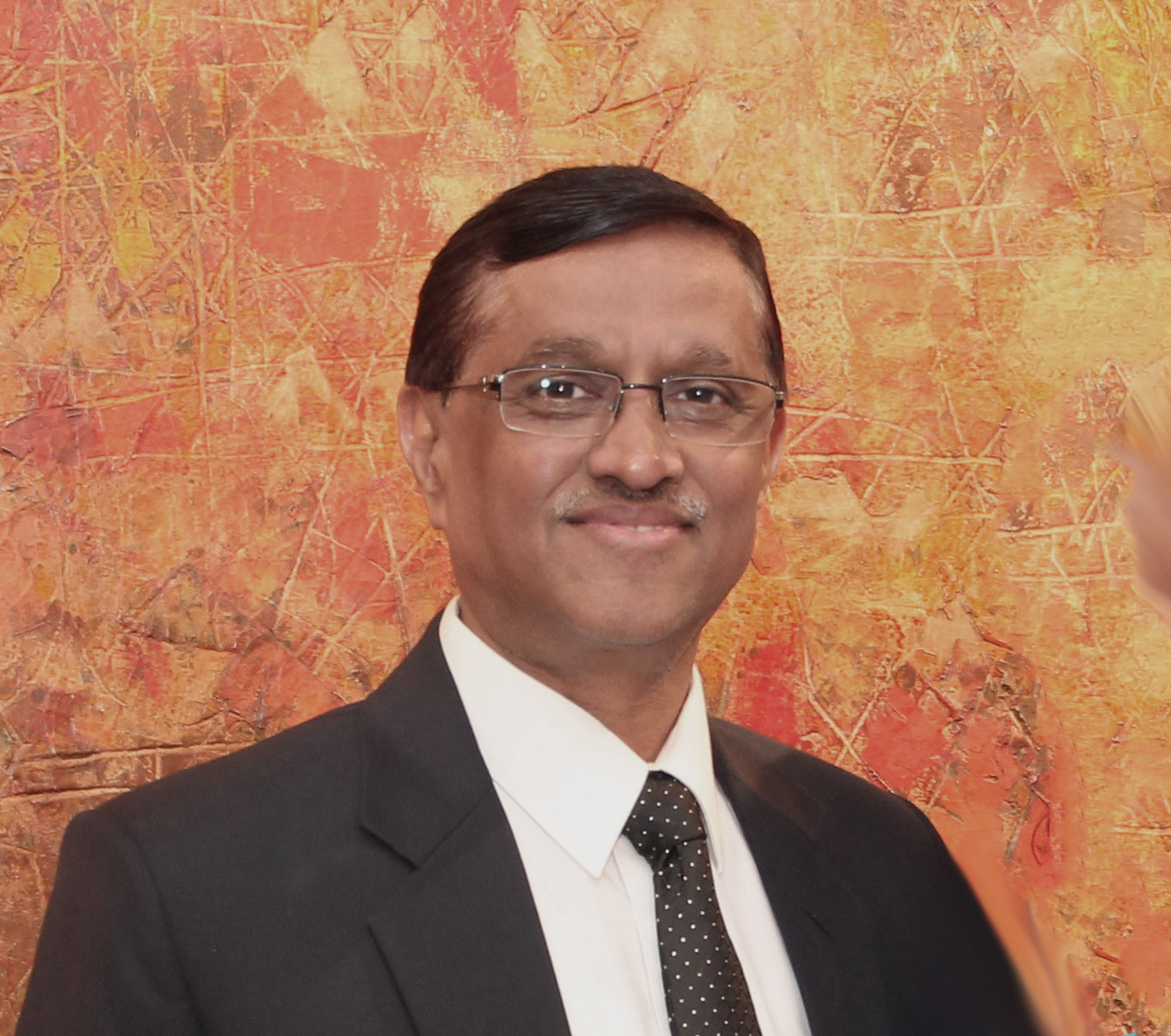
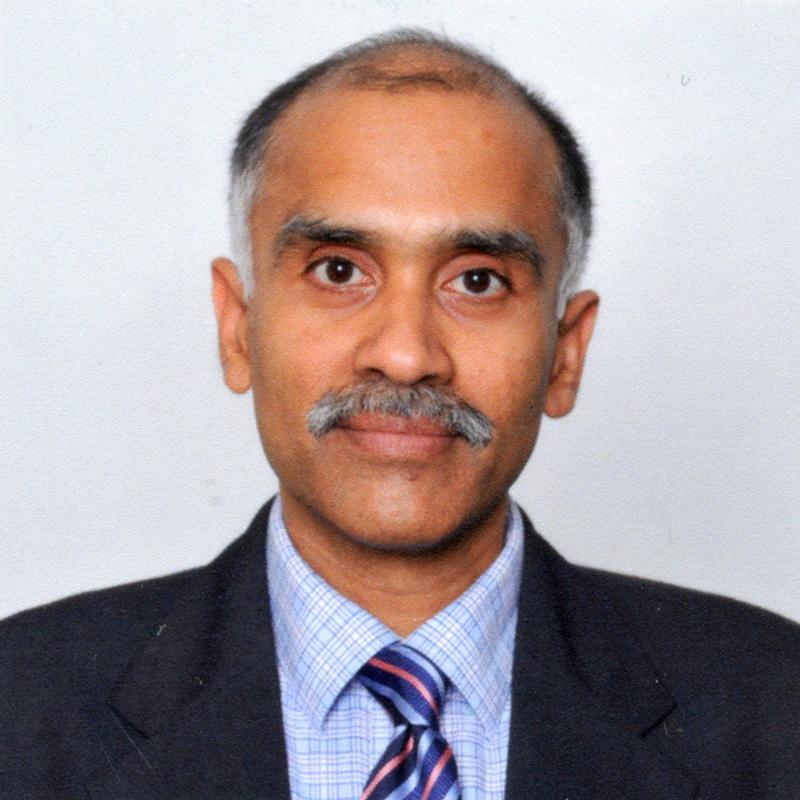
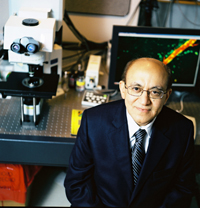
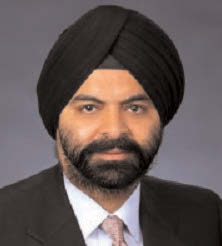
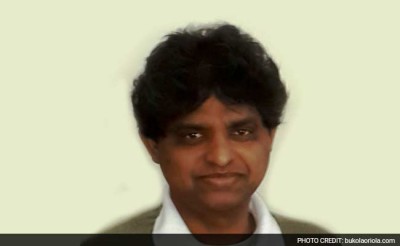
    Avinash Dixit, Robert Blackwill, Salman Amin Sal Khan and Ajaypal Singh Banga
    Avinash Dixit, Robert Blackwill, Salman Amin Sal Khan and Ajaypal Singh Banga

    Retired diplomat Robert Blackwill – who served as the U.S. ambassador to India from 2001 to 2003 – was awarded the Padma Bhushan, India’s third-highest civilian honor. Indian American economist Avinash Dixit bagged a Padma Vibhushan. American teacher Salman Amin Sal Khan, and Ajaypal Singh Banga, President and CEO of MasterCard have been selected for Padma Shri awards. The awards are given in various disciplines/ fields of activities, art, social work, public affairs, science and engineering, trade and industry, medicine, literature and education, sports, civil service, etc.

    ‘Padma Vibhushan’ is awarded for exceptional and distinguished service; ‘Padma Bhushan’ for distinguished service of high order and ‘Padma Shri’ for distinguished service in any field. The awards are announced on the occasion of Republic Day every year.

    Indian American economist Avinash Dixit was awarded the Padma Vibhushan, India’s second-highest civilian honor. Dixit, one of the world’s leading economists developed the Dixit-Stiglitz model with Nobel laureate Joseph Stiglitz in 1977.

    Education entrepreneur Salman ‘Sal’ Khan was awarded the Padma Shri award, India’s fourth-highest civilian award. Khan founded the Khan Academy in 2009. In 2012, Time magazine named Khan in its annual list of the 100 most influential people in the world.

    Ajaypal Banga was awarded the Padma Shri award; Singh ascended to the role of MasterCard’s CEO and president in July 2010. He had previously served as the global credit card company’s president and chief operating officer. Banga formerly served for four years as the chairman of the U.S. India Business Council, which aims to forge new markets and business opportunities between the two countries. He stepped down in September 2015 as John Chambers, executive chairman of Cisco, was elected the USIBC’s next chairman.

    Last year, President Barack Obama appointed Banga to serve as a member of the President’s Advisory Committee for Trade Policy and Negotiations.


  • 4 Indian Americans Nominated To Democratic Convention Standing Committees

    4 Indian Americans Nominated To Democratic Convention Standing Committees

    Four eminent Indian-Americans, including two women, have been nominated to the Democratic Party’s 2016 Convention Standing Committees which would formally announce its candidate for the presidential polls.

    Smita Shah
    Smita Shah

    Topping the list of Indian-Americans is Smita Shah, president and CEO of Chicago-based Spaan Tech, who has been nominated as vice chair of the Rules Committee.

    Shefali Razdan Duggal
    Shefali Razdan Duggal

    One of the top fund raisers for President Barack Obama and now Hillary Clinton, California-based Shefali Razdan Duggal has been nominated a member of the Rules Committee.

    Dr Sreedhar Potarazu
    Dr Sreedhar Potarazu

    Renowned ophthalmologist and entrepreneur, Dr Sreedhar Potarazu has been nominated to the Credentials Committee, according to the list released by the Democratic National Committee (DNC) Chairwoman Debbie Wasserman Schultz.

    Saif Khan
    Saif Khan

    Saif Khan, an Iraq war veteran who had served as a Combat Engineer in the Iraqi city of Mosul as part of Operation Iraqi Freedom, was nominated to the Rules Committee. He hails from Mysore and currently lives in Washington, DC.

    DNC rules provide for the Chair to appoint 75 Party Leader and Elected Official Members to the three Convention Standing Committees to be held in Philadelphia in July, which would formally announce party’s presidential candidate.

    These Party Leader and Members serve in addition to and together with the over 160 members that are elected in every state to those same committees.

    “This slate represents the great variety of perspectives, backgrounds, and experiences that make up our party. We wanted to make sure that the diversity of our party was reflected at the highest levels in terms of race, gender, age and geography,” Ms Schultz said.

    A Clinton White House staffer, Ms Shah was a delegate at the 1996 and 2004 Democratic National Conventions and was on the DNC’s Rules Committee in 2000 and 2004.

    In 2012, she become the first Indian-American to serve as a Democratic National Convention parliamentarian.

    Ms Duggal is a presidential appointee to the US Holocaust Memorial Council, which supervises the United States Holocaust Memorial Museum, for a term expiring in January 2018.

    She is one of the top fund raiser for the Clinton campaign and also serves on the National Finance Committee for Hillary for America, Clinton’s 2016 presidential campaign.

    Dr Potarazu is the founder of VitalSpring Technologies Inc., a privately held enterprise software company focusing on providing employers with applications to empower them to become more sophisticated purchasers of health care.

    Saif Khan is the Founder & Managing Director of Khanections. He is one of the founders of American Veterans Committee and a member of the American Legion, Iraq and Afghanistan Veterans of America and a life member of the Veterans of Foreign Wars.


    (CORRECTION: An earlier version of this article incorrectly referred to Mr. Saif Khan, as a Pakistani-American appointment to one of the Democratic Convention Standing Committees. This version has been corrected – 01/27/2016 – 12:09:30 PM EST.)

  • Supreme Court agrees to review challenge to Obama immigration action

    Supreme Court agrees to review challenge to Obama immigration action

    WASHINGTON (TIP): The Supreme Court on Tuesday, January 19, agreed to review a challenge to President Obama’s plan to shield more than 4 million illegal immigrants from deportation, a unilateral executive action he took in 2014 to bypass the Republican-led Congress.

    The justices said they will consider undoing lower court orders that blocked the plan from taking effect in the midst of a presidential campaign. The case will be argued in April and decided by late June, about a month before both parties gather for their nominating conventions.

    The dispute will be one of the centerpiece cases of the court’s current term. Obama’s executive action was blocked by lower courts after Texas and 25 other Republican-governed states sued to stop it, contending he exceeded his presidential powers under the U.S. Constitution.

    The administration said Texas and the other states don’t even have the right to challenge the plan in federal court. The lower courts decided that Texas does have the right, or standing, to sue because at least 500,000 people living in Texas would qualify for work permits and thus become eligible for driver licenses, the cost of which are subsidized by the state. “Texas would incur millions of dollars in costs,” the state said in its brief to the Supreme Court.

    The nine justices will review a November ruling by the New Orleans-based 5th U.S. Circuit Court of Appeals that upheld a February 2015 decision by U.S. District Judge Andrew Hanen in Brownsville, a city along the Texas border with Mexico, to halt Obama’s action. The justices also said they would consider whether Obama exceeded his authority under federal laws and the Constitution.

    “President Obama’s executive actions rely on well-established constitutional authority, and I have full confidence that the Supreme Court will rule that these programs can be implemented,” Senate Minority Leader Harry Reid said in a statement.

    Democratic presidential candidate Hillary Clinton also voiced her support for Obama’s policy tweeting “action should be upheld so families can stay together and live without fear of deportation.”

    But Republican presidential candidate Marco Rubio responded to the Supreme Court review news on Twitter, saying “I’m confident SCOTUS will agree Obama executive orders are unconstitutional,” adding “regardless, as president, I will end them.”

    With some of his major legislative initiatives suffocated by Republican lawmakers, the Democratic president has resorted to executive action to get around Congress on issues including immigration, gun control and the Obamacare healthcare law. The most recent executive action came this month when he acted unilaterally to expand background checks for certain gun purchases.

    His executive actions have antagonized Republicans who accuse him of unlawfully taking actions by executive fiat that only Congress can perform.

    The future of the estimated 11 million immigrants living in the country illegally has been much discussed by Republican and Democratic presidential candidates. Clinton has pledged to go further than Obama to protect large groups of immigrants from deportation.

    Republican candidate Donald Trump has proposed deporting all people who are living in the U.S. illegally, an idea embraced by some of his rival GOP candidates but dismissed by others. Obama said he was spurred to act on his own by Congress’ failure to pass comprehensive immigration legislation. An earlier program that is not being challenged, Deferred Action for Childhood Arrivals, shields immigrants brought to the country illegally as children. More than 720,000 young immigrants have been granted permission under that program to live and work legally in the United States.

    The White House also has shifted its enforcement actions to focus on criminals, those who pose a threat to national security or public safety, and recent border-crossers.

    The change means that people who are here illegally but who are not otherwise violating the law are less likely to face deportation. About 235,000 people were deported in the federal fiscal year that ended Sept. 30, according to the Department of Homeland Security. That was the smallest number since 2006 and a 42 percent drop since a record high of more than 409,000 in 2012.

    Still, the administration drew criticism from Democrats and immigration advocates for raids this month that resulted in the arrest of more than 120 immigrants from Central America who came to the country illegally since 2014. Those recent arrivals are not among immigrants who would benefit from Obama’s plan.

    The immigrants who would benefit from the administration’s plan are mainly the parents of U.S. citizens and lawful permanent residents.

    Those eligible to avoid deportation under Obama’s action would be able to work legally and receive some federal benefits. States were not required to provide any benefits. The order expanded on a 2012 program that provided similar relief for people who became illegal immigrants as children.

    The case is one of the most important the Supreme Court will decide this term, along with a challenge to a restrictive Texas abortion law. It could have repercussions beyond immigration because it would set a precedent for the circumstances under which states can sue the federal government over a whole range of executive actions. Future presidents, Republican or Democratic, could face new constraints on their power if the states win.

    If the court sides with the Obama administration, Obama would have until his term in office ends in January 2017 to implement the immigration plan. With the U.S. presidential election looming in November, it would be up to the next president to decide whether to keep it in place.

  • 67th Republic Day of India | Greetings from Dnyaneshwar M Mulay

    67th Republic Day of India | Greetings from Dnyaneshwar M Mulay

    I am happy to note that the Indian Panorama is bringing out a fully illustrated issue to mark the 67th Republic Day of India. On this occasion, I congratulate the Indian community based in US and convey my greetings and best wishes to the readers of The Indian Panorama.

    India in these 67 years of existence as a Republic has made tremendous strides at the national level as well as on the international stage. With its regular elections since 1952 and successful transfers of power, it has established an unmatched legacy as the largest democracy of the world.

    In our ever complex and increasingly challenging global environment, India with its strong heritage and equally strong capabilities has been playing an important role on the world stage. Whether it is peace keeping operations of the UN or technical assistance under its development partnership program (ITEC), India has always been ready to take on her responsibilities towards both international and regional partners. Towards this end, India has proactively cooperated with the major countries of the world and built strategic partnerships both at bilateral and multilateral levels.

    India-US relations have also reached a new high with cooperation extending to diverse fields such as nuclear energy, space, cyber security, counter-terrorism, science & technology, health and education as well as high level visits including two visits by the Hon’ble Prime Minister of India Shri Narendra Modi in 2014 and 2015 and the visit of the President of the United States Mr. Barack Obama as the Chief Guest at the Republic Day celebrations in 2015.

    The Indian Diaspora needs a special mention on this occasion. Overcoming formidable multiple challenges, over 4 million people of Indian origin have already created a strong imprint in the US. Their contributions in the fields of economic, culture, education, health and medical services, media and IT industry have been commendable and have built a strong bridge between their country of origin and their country of adoption.

    Through this Special Issue of the Indian Panorama, I once again convey my greetings and best wishes to the Indian Diaspora proud and auspicious occasion of the 67th Independence Day of India.

    ज्ञानेश्वर म. मुळे

  • 67th Republic Day of India | Greetings from Harish Parvathaneni

    67th Republic Day of India | Greetings from Harish Parvathaneni

    I extend my greetings and best wishes on the joyous occasion of Republic Day, through this Special Illustrated Issue of The Indian Panorama commemorating the 67th Republic Day of India, to Indian Citizens, the Indian American community and Friends of India in Texas and other States of USA served by the Consulate General of India, Houston.

    The Republic day is an occasion to rededicate ourselves to the values and ideals of the Indian constitution and the vision of the leaders of our Freedom Struggle.  These values have helped consolidate our democracy, strengthened our diverse society, nurtured our plural polity and bind our countries and peoples.

    I am fortunate to be serving in Houston at a time of a huge upswing in bilateral relations cemented by high level visits undertaken by Prime Minister Shri Narendra Modi and President Mr. Barack Obama. Texas has been the focus state for Indian investments in the US with the largest share of inbound Indian investments and jobs created in the US. Texas and Houston are home to numerous Indian oil and gas companies and manufacturing sector industries, and Dallas hosts numerous Indian companies in the Information Technology sector. We look forward to the first shipments of LNG from the US to India next year from Sabine Pass Terminal, further strengthening our energy sector cooperation.

    We have had a successful high level trade delegation led by the then Mayor of Houston Honorable Annise Parker in April 2015 and look forward to arranging a high level visit and accompanying trade delegation to India this year led by Texas Governor Honorable Greg Abbott.

    This is a special occasion for members of the Pravasi Bharatiya community who have distinguished themselves in India and the US by their hard work, contributions to nation building and community service. I specifically mention the numerous Indian students and faculty in institutions of higher learning in our consular jurisdiction who by their efforts and personalities bring together academia and research communities in India and US.

    On this joyous occasion of Republic Day, my best wishes to all for peace, progress and prosperity!

    Harish Parvathaneni


  • Barack Obama To Present National Medal Of Science To Indian American Dr Rakesh K Jain

    Barack Obama To Present National Medal Of Science To Indian American Dr Rakesh K Jain

    WASHINGTON:  US President Barack Obama would present the prestigious National Medal of Science to an Indian-American scientist on January 22 for his outstanding contribution to science.

    Dr Rakesh K Jain is among 17 scientists, engineers, mathematicians and innovators who will be awarded by Obama at a White House ceremony.

    Awarded annually, the Medal of Science recognises individuals who have made outstanding contributions to science, engineering, and mathematics.

    Jain, an IIT-Kanpur alumnus, is professor of tumor biology at Massachusetts General Hospital in the Harvard Medical School.

    He has received numerous awards for his work on tumor biology, particularly research on the link between tumor blood vessels and improving the effects of chemotherapy and radiation treatment.

    The National Medal of Science was created by statute in 1959 and is administered for the White House by the National Science Foundation.

  • MasterCard CEO Ajay Banga Named to 2016 FSR Board of Directors

    MasterCard CEO Ajay Banga Named to 2016 FSR Board of Directors

    NEW YORK (TIP): Indian American president and chief executive officer of MasterCard Ajay Banga has been named the chairman of the board of directors for 2016 by the Financial Services Roundtable.

    The Financial Services Roundtable (FSR) announced its 2016 Officers and Board of Directors FSR, in a Jan. 6 statement.

    “Ajay Banga is a highly respected financial services leader and we’ll benefit tremendously from his vision and experience as he serves as FSR’s 2016 chair,” FSR president and CEO Tim Pawlenty said in a statement.

    Amer Sajed, Barclaycard Also a member of President Barack Obama’s advisory committee for trade policy and negotiations, Banga was previously director of Kraft Foods and has served on the board of trustees at the Asia Society, New York Hall of Science and National Urban League. Prior to MasterCard, Mr. Banga was chief executive officer of Citigroup Asia Pacific.

    FSR’s 2016 Chairman-Elect is Brian T. Moynihan, chairman and CEO of Bank of America Corporation.

    William H. Rogers, Jr., chairman and CEO of SunTrust Banks, Inc., will serve as chairman of BITS, FSR’s cybersecurity and technology policy division through 2017.

    Kessel Stelling, chairman and CEO of Synovus, will continue as FSR’s 2016 Treasurer.

    The following will also join the FSR Board as Directors:

    Christopher B. Begy, BMO Financial Corp., Executive Committee Member
    John P. Barnes, People’s United Bank
    William Emerson, Quicken Loans
    David I. McKay, Royal Bank of Canada
    Richard McKenney, Unum
    Robert L. Reynolds, Putnam Investments

    A graduate of Delhi University and the Indian Institute of Management in Ahmedabad, Banga began his career at Nestlé India in a variety of roles. He also spent time at PepsiCo, helping launch fast food franchises in India.

  • Indian-American Nikki Haley wins the White House admiration for her ‘courage’

    Indian-American Nikki Haley wins the White House admiration for her ‘courage’

    WASHINGTON (TIP): In a rare gesture, the White House has praised Indian-American South Carolina governor Nikki Haley for showing “courage” in her response to President Barack Obama’s State of the Union Address in which she appeared to jab Republican presidential aspirant Donald Trump.

    “Her willingness to stand up for some important principles was noted, and it took courage. And for that, she deserves credit,” White House press secretary Josh Earnest told reporters during a press gaggle aboard Air Force One.

    Obama, himself did not personally watch her address which was on Wednesday discussed by the mainstream American media throughout the day but was aware of Haley’s response to his last State of the Union Address, Earnest said.

    “The President did not get a chance to watch it live. We were still traveling back from the Capitol while she was delivering the response. The President has read news accounts of it, so he certainly is aware of her response,” he said.

    “I think, at the White House we took note of it. She was willing to do something that a lot of other leading Republicans have been unwilling to do, which is to actually articulate a commitment to some core American values that some leading Republican presidential candidates are speaking out against, or at least speaking in a way that contradicts those values,” Earnest said.

    “And her willingness to stand up and speak out against that took some courage, and it was rather conspicuous, given the willingness of a lot of other leading Republicans to either ignore it or to try to sweep it under the rug. In some cases, we’ve seen leading Republicans be totally co-opted by it,” the White House Press Secretary said.

    In her impressive nine-minute speech that launched her into national politics, Haley criticised Obama’s policies but also tried to jab her party’s White House front-runner Trump by urging Americans to resist “the siren call of the angriest voices” on immigration.

    Meanwhile, Republican presidential candidate Jeb Bush said Haley did a remarkable job with in her speech.

    “I thought she was remarkable, actually. I thought it’s always a difficult thing to be, the Republican speaker after President Obama, but she did an extraordinary job,” Bush told MSNBC .

    “I think she talked about a more broader hopeful, optimistic Republican message, a conservative message that draws people, the great diversity of our country, towards our cause. That’s how you win and that’s how you have to govern when you’re a governor, and I thought she did a great job,” Bush said.

  • President Obama’s 2016 State of the Union Address | Full Text

    President Obama’s 2016 State of the Union Address | Full Text

    Mr. Speaker, Mr. Vice President, Members of Congress, my fellow Americans:
    Tonight marks the eighth year I’ve come here to report on the State of the Union. And for this final one, I’m going to try to make it shorter. I know some of you are antsy to get back to Iowa.

    I also understand that because it’s an election season, expectations for what we’ll achieve this year are low. Still, Mr. Speaker, I appreciate the constructive approach you and the other leaders took at the end of last year to pass a budget and make tax cuts permanent for working families. So I hope we can work together this year on bipartisan priorities like criminal justice reform, and helping people who are battling prescription drug abuse. We just might surprise the cynics again.

    But tonight, I want to go easy on the traditional list of proposals for the year ahead. Don’t worry, I’ve got plenty, from helping students learn to write computer code to personalizing medical treatments for patients. And I’ll keep pushing for progress on the work that still needs doing. Fixing a broken immigration system. Protecting our kids from gun violence. Equal pay for equal work, paid leave, raising the minimum wage. All these things still matter to hardworking families; they are still the right thing to do; and I will not let up until they get done.

    But for my final address to this chamber, I don’t want to talk just about the next year. I want to focus on the next five years, ten years, and beyond.

    I want to focus on our future.

    We live in a time of extraordinary change — change that’s reshaping the way we live, the way we work, our planet and our place in the world. It’s change that promises amazing medical breakthroughs, but also economic disruptions that strain working families. It promises education for girls in the most remote villages, but also connects terrorists plotting an ocean away. It’s change that can broaden opportunity, or widen inequality. And whether we like it or not, the pace of this change will only accelerate.

    America has been through big changes before — wars and depression, the influx of immigrants, workers fighting for a fair deal, and movements to expand civil rights. Each time, there have been those who told us to fear the future; who claimed we could slam the brakes on change, promising to restore past glory if we just got some group or idea that was threatening America under control. And each time, we overcame those fears. We did not, in the words of Lincoln, adhere to the “dogmas of the quiet past.” Instead we thought anew, and acted anew. We made change work for us, always extending America’s promise outward, to the next frontier, to more and more people. And because we did — because we saw opportunity where others saw only peril — we emerged stronger and better than before.

    What was true then can be true now. Our unique strengths as a nation — our optimism and work ethic, our spirit of discovery and innovation, our diversity and commitment to the rule of law — these things give us everything we need to ensure prosperity and security for generations to come.

    In fact, it’s that spirit that made the progress of these past seven years possible. It’s how we recovered from the worst economic crisis in generations. It’s how we reformed our health care system, and reinvented our energy sector; how we delivered more care and benefits to our troops and veterans, and how we secured the freedom in every state to marry the person we love.

    But such progress is not inevitable. It is the result of choices we make together. And we face such choices right now. Will we respond to the changes of our time with fear, turning inward as a nation, and turning against each other as a people? Or will we face the future with confidence in who we are, what we stand for, and the incredible things we can do together?

    So let’s talk about the future, and four big questions that we as a country have to answer — regardless of who the next President is, or who controls the next Congress.

    • First, how do we give everyone a fair shot at opportunity and security in this new economy?
    • Second, how do we make technology work for us, and not against us — especially when it comes to solving urgent challenges like climate change?
    • Third, how do we keep America safe and lead the world without becoming its policeman?
    • And finally, how can we make our politics reflect what’s best in us, and not what’s worst?

    Let me start with the economy, and a basic fact: the United States of America, right now, has the strongest, most durable economy in the world. We’re in the middle of the longest streak of private-sector job creation in history. More than 14 million new jobs; the strongest two years of job growth since the ’90s; an unemployment rate cut in half. Our auto industry just had its best year ever. Manufacturing has created nearly 900,000 new jobs in the past six years. And we’ve done all this while cutting our deficits by almost three-quarters.

    Anyone claiming that America’s economy is in decline is peddling fiction. What is true — and the reason that a lot of Americans feel anxious — is that the economy has been changing in profound ways, changes that started long before the Great Recession hit and haven’t let up. Today, technology doesn’t just replace jobs on the assembly line, but any job where work can be automated. Companies in a global economy can locate anywhere, and face tougher competition. As a result, workers have less leverage for a raise. Companies have less loyalty to their communities. And more and more wealth and income is concentrated at the very top.

    All these trends have squeezed workers, even when they have jobs; even when the economy is growing. It’s made it harder for a hardworking family to pull itself out of poverty, harder for young people to start on their careers, and tougher for workers to retire when they want to. And although none of these trends are unique to America, they do offend our uniquely American belief that everybody who works hard should get a fair shot.

    For the past seven years, our goal has been a growing economy that works better for everybody. We’ve made progress. But we need to make more. And despite all the political arguments we’ve had these past few years, there are some areas where Americans broadly agree.

    We agree that real opportunity requires every American to get the education and training they need to land a good-paying job. The bipartisan reform of No Child Left Behind was an important start, and together, we’ve increased early childhood education, lifted high school graduation rates to new highs, and boosted graduates in fields like engineering. In the coming years, we should build on that progress, by providing Pre-K for all, offering every student the hands-on computer science and math classes that make them job-ready on day one, and we should recruit and support more great teachers for our kids.

    And we have to make college affordable for every American. Because no hardworking student should be stuck in the red. We’ve already reduced student loan payments to ten percent of a borrower’s income. Now, we’ve actually got to cut the cost of college. Providing two years of community college at no cost for every responsible student is one of the best ways to do that, and I’m going to keep fighting to get that started this year.

    Of course, a great education isn’t all we need in this new economy. We also need benefits and protections that provide a basic measure of security. After all, it’s not much of a stretch to say that some of the only people in America who are going to work the same job, in the same place, with a health and retirement package, for 30 years, are sitting in this chamber. For everyone else, especially folks in their forties and fifties, saving for retirement or bouncing back from job loss has gotten a lot tougher. Americans understand that at some point in their careers, they may have to retool and retrain. But they shouldn’t lose what they’ve already worked so hard to build.

    That’s why Social Security and Medicare are more important than ever; we shouldn’t weaken them, we should strengthen them. And for Americans short of retirement, basic benefits should be just as mobile as everything else is today. That’s what the Affordable Care Act is all about. It’s about filling the gaps in employer-based care so that when we lose a job, or go back to school, or start that new business, we’ll still have coverage. Nearly eighteen million have gained coverage so far. Health care inflation has slowed. And our businesses have created jobs every single month since it became law.

    Now, I’m guessing we won’t agree on health care anytime soon. But there should be other ways both parties can improve economic security. Say a hardworking American loses his job — we shouldn’t just make sure he can get unemployment insurance; we should make sure that program encourages him to retrain for a business that’s ready to hire him. If that new job doesn’t pay as much, there should be a system of wage insurance in place so that he can still pay his bills. And even if he’s going from job to job, he should still be able to save for retirement and take his savings with him. That’s the way we make the new economy work better for everyone.

  • ‘The State of Our Union is Strong’: President Obama

    ‘The State of Our Union is Strong’: President Obama

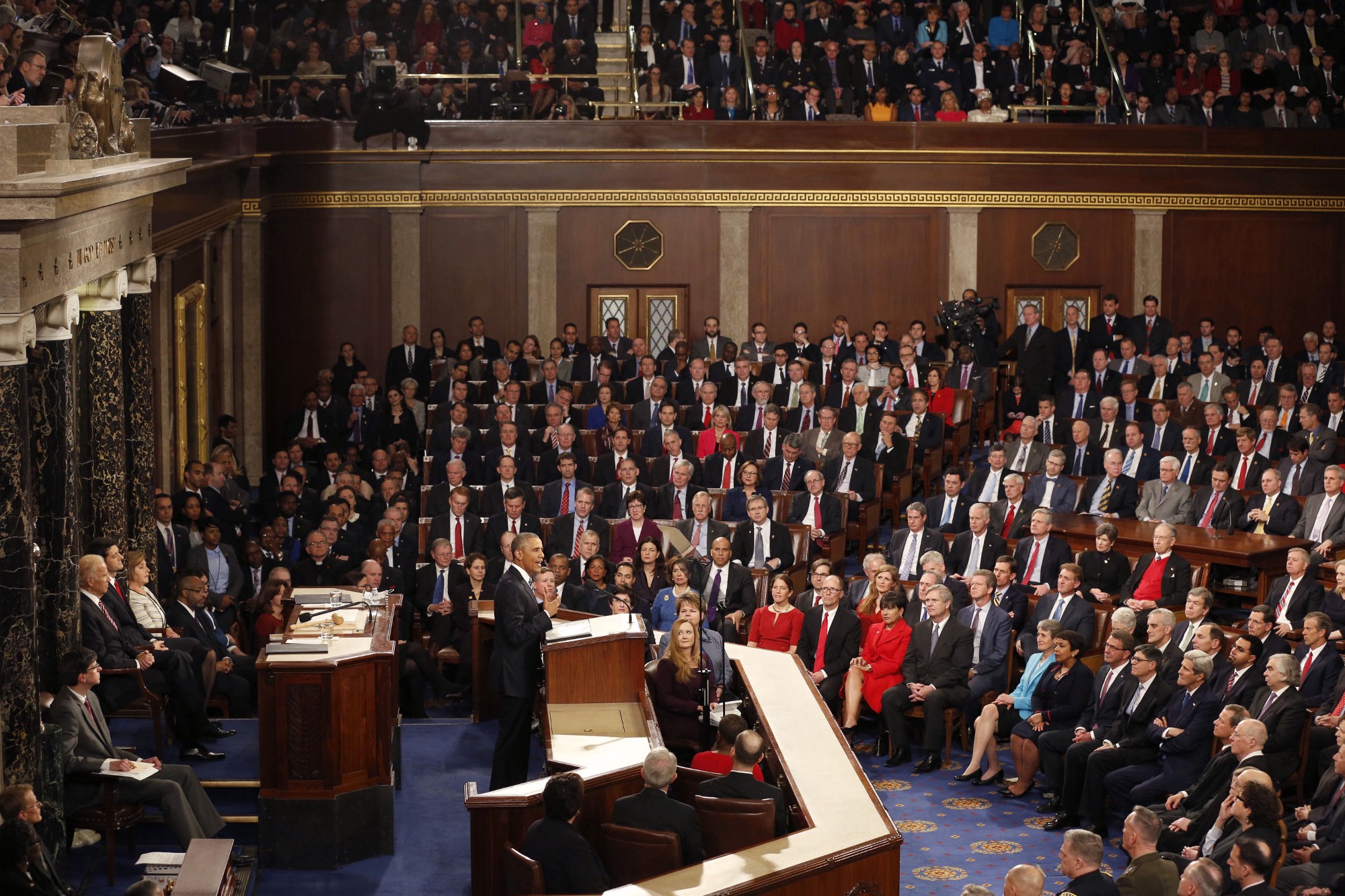
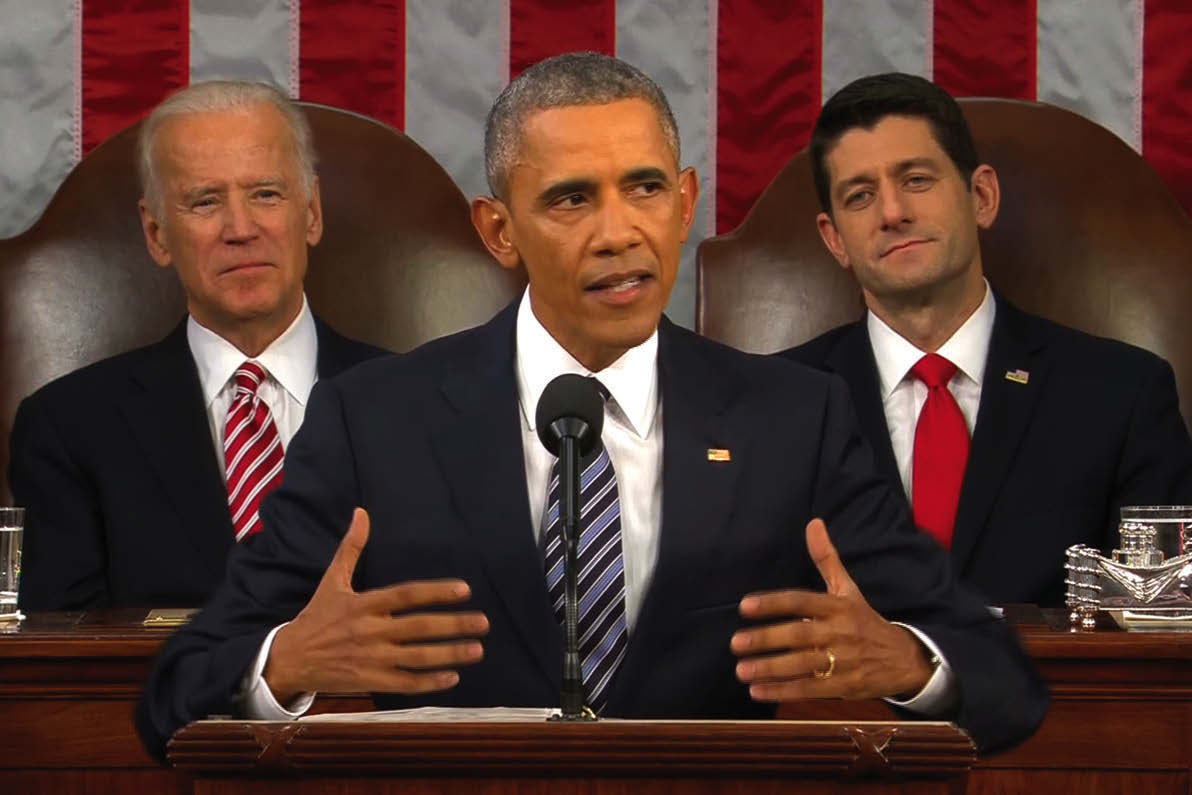
    WASHINGTON (TIP): President Barack Obama was probably at his best when he delivered his seventh and final State of the Union address on Tuesday, January 12 at a joint session of Congress.

    “Tonight marks the eighth year I’ve come here to report on the State of the Union. And for this final one, I’m going to try to make it shorter. I know some of you are antsy to get back to Iowa.”

    Obama emphasized the need for politicians to have a conciliatory approach to the issues and not remain divided along party lines. He spoke of good people on both sides of the aisle who have understood the need to have a bipartisan approach. This helps in solving many a knotty issues, he said.

    Instead of talking about his immediate concerns he focused on his vision of a future America -what America has to be in the coming years and decades. He took credit for disengaging America from conflicts abroad, without compromising the country’s position as the most powerful nation of the world and as the leader of the world.

    He recalled that when he became President, America was reeling under a terrible economic crisis. In the years that followed America recovered, with deficit going down, economy improving and jobs being created.

    There’s no way Obama’s final State of the Union wouldn’t mention his most significant legislation. In spite of its controversy, Obama said the Affordable Care Act
    (Obamacare) has led to nearly 18 million more people gaining health insurance and has helped to slow health care cost inflation. He added that the law didn’t destroy the job market, despite pessimistic predictions from critics. “Our businesses have created jobs every single month since it became law,” he said.

    While Obama took legitimate pride in his achievements, he did not forget to target the prophets of doom in the Republican Party. He appeared to relish the chance to take on Republican critics who have lambasted his performance as President of America.

    He pushed back against GOP critics who sketch a gloomy picture of an America in economic decline and weakened on the world stage.

    “All the talk of America’s economic decline is political hot air. Well, so is all the rhetoric you hear about our enemies getting stronger and America getting weaker. The United States of America is the most powerful nation on Earth. Period. It’s not even close.”

    Yet even as he defended his seven years as commander in chief, Obama acknowledged he didn’t deliver on his campaign promise to bring a more civil tone to a sharply divided Capitol Hill.

    “It’s one of the few regrets of my presidency – that the rancor and suspicion between the parties has gotten worse instead of better,” Obama said. “There’s no doubt a president with the gifts of Lincoln or Roosevelt might have better bridged the divide, and I guarantee I’ll keep trying to be better so long as I hold this office.”

    Obama rebuked politicians who draw congressional districts to protect safe seats and vowed to launch a national effort to secure voting rights, an issue particularly important to minority communities.

    He said a future of peace, prosperity and opportunity is only attainable “if we fix our politics.”

    Specific problem areas identified by Obama: reducing barriers to voting, limiting the influence of money in politics, ending the drawing of congressional districts to benefit politicians’ interests.

    Obama took indirect swipes at GOP presidential candidates for bluster on fighting terrorism.

    “Our answer needs to be more than tough talk or calls to carpet bomb civilians. That may work as a TV sound bite, but it doesn’t pass muster on the world stage.”

    The first African-American president also offered a detailed rebuttal of the kind of politics that alienates people rather than unites them. At times, Obama was almost pleading with his audience to embrace the vision of hope and change that swept him to power and then was sullied by the bitter realities of polarized politics over a darker vision of America’s character.

    “What I am asking for his hard. It’s easier to be cynical; to accept that change isn’t possible, and politics is hopeless, and to believe that our voices and actions don’t matter,” Obama said.

    “But if we give up now, then we forsake a better future.”

    It seemed clear that the President had Trump in his thoughts.

    “As frustration grows, there will be voices urging us to fall back into tribes, to scapegoat fellow citizens who don’t look like us, or pray like us, or vote like we do, or share the same background,” Obama said, voicing a familiar critique of Democrats and some Republicans at the rhetoric of the billionaire real estate mogul whose populist campaign has taken American politics by storm.

    “We can’t afford to go down that path. It won’t deliver the economy we want, or the security we want, but most of all; it contradicts everything that makes us the envy of the world.”

    The man who burst on the political scene by rejecting the notion that there was a red America or a blue America owned up to one regret in an otherwise optimistic address: That average people feel the system is rigged “in favor of the rich or the powerful or some narrow interest.” and diagnosed it as a sick political system.

    “It doesn’t work if we think the people who disagree with us are all motivated by malice, or that our political opponents are unpatriotic,” Obama warned, and even accepted a share of the blame for not uniting warring political factions.

    “It’s one of the few regrets of my presidency — that the rancor and suspicion between the parties has gotten worse instead of better. There’s no doubt a president with the gifts of Lincoln or Roosevelt might have better bridged the divide, and I guarantee I’ll keep trying to be better so long as I hold this office.

    Obama pledged to keep working on that “so long as I hold this office.”

    President likened administration’s push against cancer to a new “moon shot.” Assigned Vice President Joe Biden to lead a new push to fight cancer, building on a large increase in federal financing for the National Institutes of Health.

    “Let’s make America the country that cures cancer once and for all.”

    He identified a number of areas where Democrats and Republicans might be able to find common ground: pursuing criminal justice reform, promoting trade, fighting opioid abuse. Made an overture to new House Speaker Paul Ryan by highlighting his interest in fighting poverty. “I’d welcome a serious discussion about strategies we can all support, like expanding tax cuts for low-income workers without kids.”

    Obama promised resolve in fighting terrorism and the Islamic State group, but dismissed “over-the-top claims that this is World War III.” Rejected the idea that IS threatens “our national existence.”

    “We just need to call them what they are. Killers and fanatics who have to be rooted out, hunted down and destroyed.”

    Hitting out at those who do not consider climate change an important issue, he predicted that those who dispute the science of climate change will end up “pretty lonely.”

    “You’ll be debating our military, most of America’s business leaders, the majority of the American people, almost the entire scientific community, and 200 nations around the world who agree it’s a problem and intend to solve it.”

    “Our brand of democracy is hard. But I can promise that a year from now, when I no longer hold this office, I’ll be right there with you as a citizen – inspired by those voices of fairness and vision, of grit and good humor and kindness that have helped America travel so far. Voices that help us see ourselves not first and foremost as black or white or Asian or Latino, not as gay or straight, immigrant or native born; not as Democrats or Republicans, but as Americans first, bound by a common creed. Voices Dr. King believed would have the final word – voices of unarmed truth and unconditional love.”

    “That’s the America I know. That’s the country we love. Clear-eyed. Big-hearted. Undaunted by challenge. Optimistic that unarmed truth and unconditional love will have the final word,” Mr. Obama said.

    “That’s what makes me so hopeful about our future. Because of you. I believe in you. That’s why I stand here confident as I have ever been that the State of our Union is strong.”

  • Highlights | President Obama Delivers The State of the Union Address

    Highlights | President Obama Delivers The State of the Union Address

    [vc_row][vc_column][vc_video link=”https://www.youtube.com/watch?v=WweX6_cAV5Q” title=”President Obama Delivers The State of the Union Address”][vc_column_text]Lamenting the nation’s persistently deep divides, President Barack Obama will declare Tuesday night that opportunity and security for American families “will only happen if we fix our politics.”

    In excerpts released ahead of his final State of the Union address, Obama says that while better politics doesn’t mean all parties are in agreement, “democracy does require basic bonds of trust between citizens.”

    Obama’s election-year call for political civility amounts to an admission that he’s failed to make good on the lofty promises to bring Democrats and Republican together that were at the core of his political rise nearly eight years ago.[/vc_column_text][/vc_column][/vc_row][vc_row][vc_column][/vc_column][/vc_row]

  • Obama State of Union address to focus on ‘big things’ to make US stronger, more prosperous

    Obama State of Union address to focus on ‘big things’ to make US stronger, more prosperous

    WASHINGTON (TIP): US President Barack Obama has promised his final State of the Union address next week will focus on issues “beyond the next election” and skip the traditional list of the year’s legislative goals.

    Facing an ultra-hostile Republican-controlled Congress with its attention fixed on the 2016 election, Obama released a video message Wednesday, January 6 promising the address will break with tradition.

    Sitting on his Oval Office desk, with his jacket off and shirt sleeves rolled up, Obama said the annual Washington prime-time showpiece will focus on
    “what we all need to do together in the years to come — the big things that will guarantee an even stronger, better, more prosperous America for our kids.”

    White House chief of staff Denis McDonough indicated Obama will draw a contrast between now and his first State of the Union, when the country was mired in the Great Recession.

    “We still have work to do, but there’s no question: Together, we’ve brought America back,” McDonough said in an email message.

    “But what we have left to do is bigger than any one policy initiative or new bill in Congress. This is about who we are, where we’re headed, and what kind of country we want to be.”

  • Gun Lobby Cannot Hold America ‘Hostage’, says Obama

    Gun Lobby Cannot Hold America ‘Hostage’, says Obama

    WASHINGTON  (TIP): Wiping his tears as he remembered first grader children killed in  a mass shooting, at Sandy Hook Elementary School, Newton, CT , an emotionally charged President Barack Obama on Tuesday, January 5 ordered stricter gun control rules that he could  impose without Congress and urged American voters to reject pro-gun candidates. Obama made it clear that he does not expect gun laws to change during his remaining year in office, but pledged to do what he can to make gun control a theme in the months leading up to the November elections to replace him.

    In a powerful address in the White House, surrounded by family members of people killed in shootings, Obama’s voice rose to a yell as he said the constitutional rights of Americans to bear arms needed to be balanced by the right to worship, gather peacefully and live their lives.

    Obama has often said his toughest time in office was grappling with the December 2012 massacre of 20 children and six adults at an elementary school in Newtown, Connecticut.

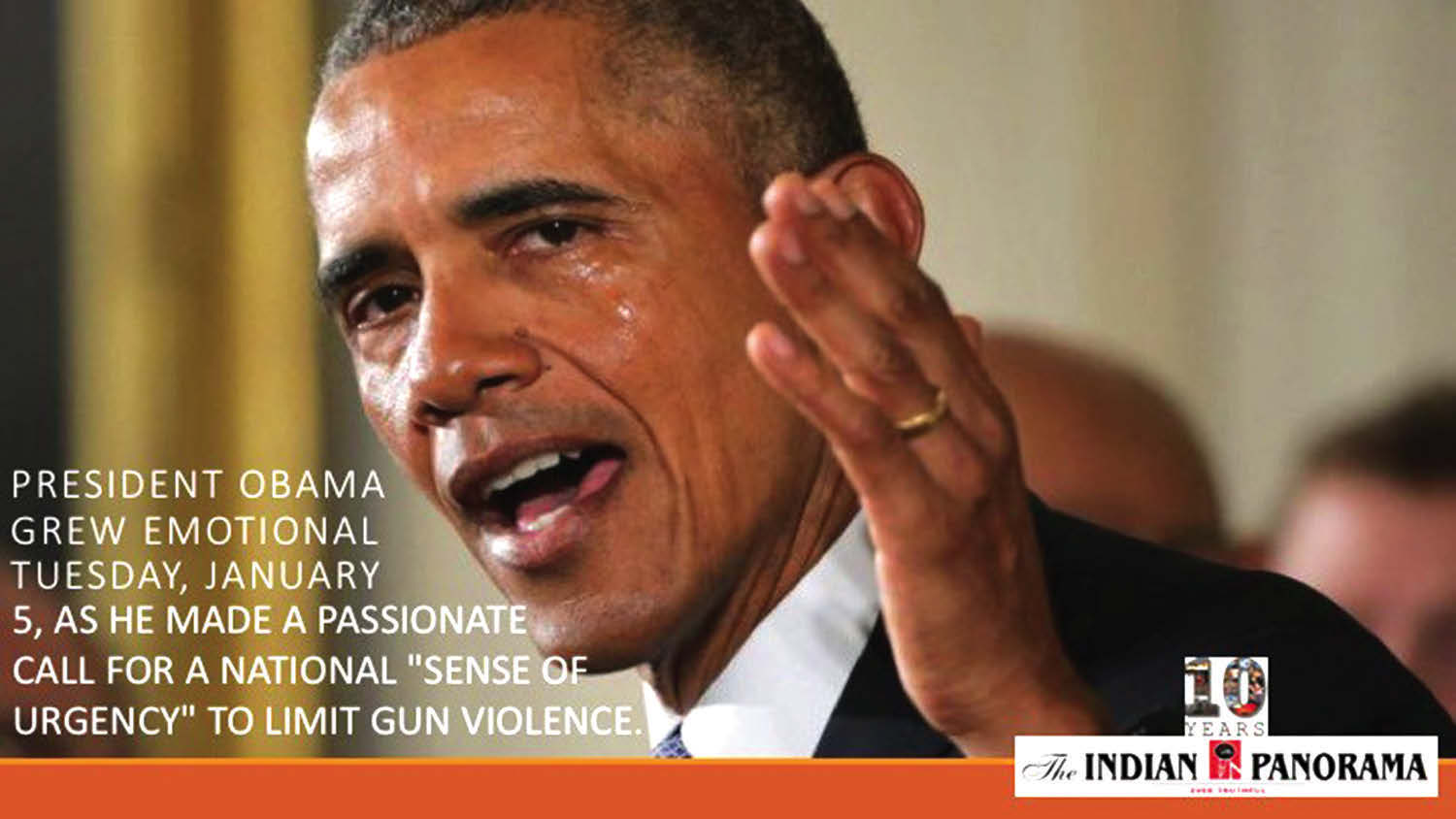
    “Every time I think about those kids, it gets me mad,” Obama said, tears rolling down his cheek.

    “That changed me, that day,” he said, after being introduced by Mark Barden, whose 7-year-old son was killed in the shooting. “My hope earnestly has been that it would change the country.” After that tragedy, the Democratic president failed to persuade Congress to toughen U.S. gun laws. He has blamed lawmakers for being in the thrall of the powerful National Rifle Association gun lobby group.

    Obama, comparing the issue to the great civil rights causes of his time, is set to discuss gun violence again during his State of the Union address next Tuesday.

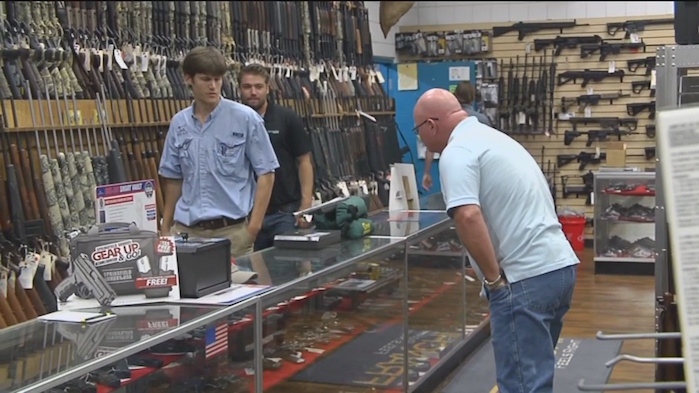
    Obama laid out executive action he is taking to require more gun sellers to get licenses and more gun buyers to undergo background checks. Under the changes, the U.S. Bureau of Alcohol, Tobacco, Firearms and Explosives (ATF) is issuing guidelines intended to narrow exceptions to a system that requires sellers to check with the Federal Bureau of Investigation to determine whether buyers have criminal records, are charged with crimes or have mental health conditions that would bar them from owning a gun.

    The proposal is “ripe for abuse” by the government, said Chris Cox, an official with the NRA, in a statement, adding that the group will continue to fight to protect Americans’ constitutional rights.

    Legal challenges to the changes, which are contained in guidance from the ATF, are expected.

    The crucial question in any direct legal challenge will be whether the ATF guidance creates new obligations, or merely clarifies existing law.

    The more the Obama administration acts as though the guidance has created a new legal requirement, the more legal trouble it might invite, said Lisa Heinzerling, administrative law professor at Georgetown University.

    The stocks of gunmakers Smith & Wesson Holding Corp and Sturm Ruger & Co Inc have climbed since the announcement. On Tuesday, Smith & Wesson ended up 11.1 percent to $25.86 a share and Sturm Ruger closed up 6.8 percent at $65.54.

    REPUBLICANS VOW TO FIGHT

    Republican leaders were quick to denounce Obama’s gun changes, with most Republican candidates for the 2016 presidential race promising to reverse his actions if they win the White House.

    Reince Priebus, the head of the Republican National Committee, said the changes were “all about burnishing the president’s legacy and boosting Democrat enthusiasm in a presidential election year.”

    Republicans who control Congress made it clear that they oppose the changes, although some downplayed their significance.

    “Ultimately, this executive ‘guidance’ is only a weak gesture -a shell of what the president actually wants,” said Kevin McCarthy, leader of the Republican majority in the House of Representatives.

    Democratic candidates praised the moves

    Chris Murphy, U.S. Senator, Cheshire, Connecticut said, “I’m proud to stand with President Obama on the actions he’s taking to prevent gun violence”.

    He made an impassioned plea for supporting President Obama’s move and for making Congress to  act to  control guns. : “For three years, Congress has failed the families of Newtown and victims of gun violence across the country”, Murphy said. .

    “While Congress, bitterly divided over partisan politics, has been stalled on this issue, the rest of America has continued to grieve. Countless families have felt the pain and heartache of losing a loved one to gun violence — the same horrifying sting felt by those 26 families in Newtown on December 14, 2012.

    “I represent those families in Congress. There isn’t a day that goes by that I don’t witness their pain, or share their utter bewilderment in our failure to do something about it.

    “But we also remember the strength and resiliency of the Newtown community. We remember the teachers who protected those kids, who died shielding them with their bodies. We remember the first responders who rushed in to help. And we remember the millions of acts of kindness and gifts and phone calls that came in from the rest of the world.

    “This is the spirit behind President Obama’s executive actions to reduce gun violence. He is doing what he can to prevent future gun violence because he knows that, as Americans, we cannot just close our eyes and blindly accept this as the status quo — especially when it threatens the safety of our children.

    “Some of my colleagues in Congress have already raised their objections over these steps. Here’s my message to them: Stop listening to the gun lobby. If they listened to gun owners instead, the vast majority of whom support sensible steps to keep guns out of the wrong hands, this debate would be over already.

    “We would have already acted. We would have passed universal background check legislation. We would have made straw purchasing and gun trafficking federal crimes to give law enforcement the tools to combat the flood of illegal weapons across state lines. We would have passed a ban on high-capacity magazines. We would have made it impossible for those on the FBI’s terror watch list to purchase a deadly firearm. Instead, we’ve done nothing.

    “We should be listening to victims and families across the country who have been calling on us to act and do what we can to make the world safer for their children.

    “But the President can only do so much — it’s up to Congress to do more. We must stand up to the gun lobby and do we what we can to prevent what happened in Newtown from ever happening again.

    “What greater responsibility do we have?”

    What Obama  Executive action aims to do? 

    Keep guns out of the wrong hands through background checks

    • The Bureau of Alcohol, Tobacco, Firearms and Explosives (ATF) is making clear that it doesn’t matter where you conduct your business-from a store, at gun shows, or over the Internet: If you’re in the business of selling firearms, you must get a license and conduct background checks.
    • ATF is finalizing a rule to require background checks for people trying to buy some of the most dangerous weapons and other items through a trust, corporation, or other legal entity.
    • Attorney General Loretta E. Lynch has sent a letter to States highlighting the importance of receiving complete criminal history records and criminal dispositions, information on persons disqualified because of a mental illness, and qualifying crimes of domestic violence.
    • The Federal Bureau of Investigation (FBI) is overhauling the background check system to make it more effective and efficient. The envisioned improvements include processing background checks 24 hours a day, 7 days a week, and improving notification of local authorities when certain prohibited persons unlawfully attempt to buy a gun. The FBI will hire more than 230 additional examiners and other staff to help process these background checks.

    Make our communities safer from gun violence

    • The Attorney General convened a call with U.S. Attorneys around the country to direct federal prosecutors to continue to focus on smart and effective enforcement of our gun laws.
    • The President’s FY2017 budget will include funding for 200 new ATF agents and investigators to help enforce our gun laws.
    • ATF has established an Internet Investigation Center to track illegal online firearms trafficking and is dedicating $4 million and additional personnel to enhance the National Integrated Ballistics Information Network.
    • ATF is finalizing a rule to ensure that dealers who ship firearms notify law enforcement if their guns are lost or stolen in transit.
    • The Attorney General issued a memo encouraging every U.S. Attorney’s Office to renew domestic violence outreach efforts.

    Increase mental health treatment and reporting to the background check system

    • The Administration is proposing a new $500 million investment to increase access to mental health care.
    • The Social Security Administration has indicated that it will begin the rulemaking process to include information in the background check system about beneficiaries who are prohibited from possessing a firearm for mental health reasons.
    • The Department of Health and Human Services is finalizing a rule to remove unnecessary legal barriers preventing States from reporting relevant information about people prohibited from possessing a gun for specific mental health reasons.

    Shape the future of gun safety technology

    • The President has directed the Departments of Defense, Justice, and Homeland Security to conduct or sponsor research into gun safety technology
    • The President has also directed the departments to review the availability of smart gun technology on a regular basis, and to explore potential ways to further its use and development to more broadly improve gun safety.
  • Gun Control | President Obama’s Executive Action on Federal Gun Control

    Gun Control | President Obama’s Executive Action on Federal Gun Control

    POTUS unveiled new restrictions on gun purchases at the White House, saying the “constant excuses for inaction” have to stop. He was introduced by Mark Barden, whose son Daniel was killed in the 2012 massacre at Sandy Hook Elementary School in Connecticut. (Obama circled back to that shooting in the final moments of his speech)

    The White House has outlined his plans for executive action, which focus on background checks.

    Most of the actions can be carried out without Congressional approval.

    “That’s why we’re here, not to do something about the last mass shooting, but to prevent the next one,” he said.

    “The gun lobby may be holding Congress hostage right now, but they can’t hold America hostage,” Mr Obama said.

    He gave his remarks surrounded by survivors and relatives of victims of shootings, recalling mass shootings in the US in the past few years and everyday gun violence in cities like Chicago.

    The White House is seeking to expand background checks for buyers. The measure clarifies that individuals “in the business of selling firearms” register as licensed gun dealers, effectively narrowing the so-called “gun show loophole,” which exempts most small sellers from keeping formal sales records.

    The executive actions include:

    • Background checks for all gun sellers, overturning current exemptions to some online and gun show sellers
    • States providing information on people disqualified from buying guns due to mental illness or domestic violence
    • Increased workforce for the FBI to process background checks, hiring more than 230 new examiners
    • Congress being asked to invest $500m (£339m) to improve access to mental healthcare in the US
    • The departments of defence, justice and homeland security exploring “smart gun technology” to improve gun safety

    The announcement is already shaping up to be an issue in the 2016 presidential election.

    Leading Democratic candidate Hillary Clinton tweeted: “@POTUS is right: We can protect the second Amendment while protecting our families and communities from gun violence. And we have to.”

    Republican candidate Senator Ted Cruz tweeted that the executive actions are unconstitutional, with a link to sign up for his campaign correspondence on a webpage that says “Obama wants your guns” with a photo of the president in an army jacket and hat.

    Former Florida governor Jeb Bush tweeted that he would repeal the actions and protect the Second Amendment.

    Speaker Melissa Mark-Viverito “Tragedy after terrible tragedy has proven beyond doubt that the time for stringent federal gun control is long overdue. While Republicans in Congress stalled and squalled, thousands of men, women, and young children in our country have suffered and died because of lax regulations that allow these deadly weapons into the wrong hands. Consistently backward and shameful efforts to block sensible gun reform make Washington Republicans complicit in these tragedies – but we as a nation cannot and should not allow the lives of those we lost to be in vain. The executive action signed by President Obama will close dangerous loopholes in our current gun laws and tighten reporting requirements so that fewer guns end up on our streets and in our communities. This is a critical step on the path to ending the fatal epidemic of gun violence in our nation. I thank President Obama for taking action.”

    President Barack Obama grew emotional Tuesday, January 5, as he made a passionate call for a national “sense of urgency” to limit gun violence.

    Slide1 copy


    Gun violence is significantly higher in the US than in other advanced countries, killing about 30,000 people each year.

    Congress has been reluctant to pass any laws restricting gun ownership, facing pressure from gun owners and the powerful National Rifle Association.

    Mr Obama tried to pass expanded background check legislation in 2012 after the shooting in Newtown, Connecticut, that left 20 children and six adults dead but it failed in Congress.

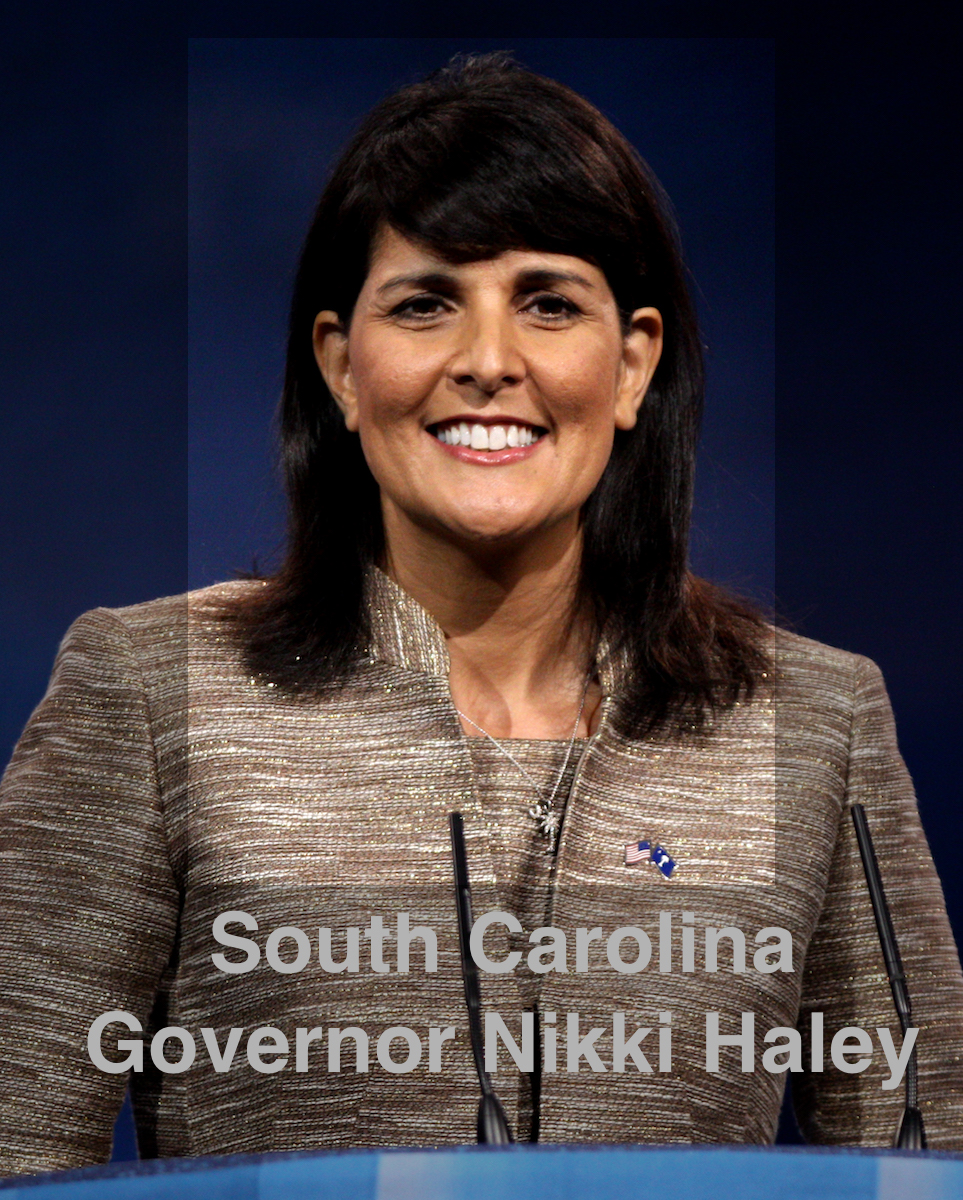
  • South Carolina’s Indian-American Governor To Give Republican Response To Key Obama Address

    South Carolina’s Indian-American Governor To Give Republican Response To Key Obama Address

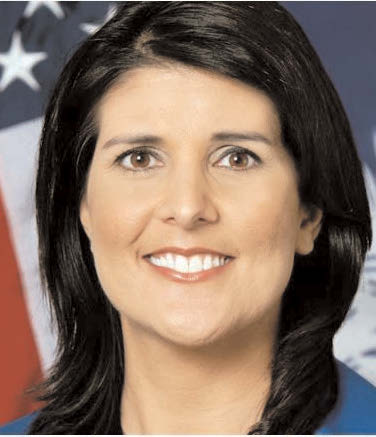
    WASHINGTON (TIP): South Carolina Governor Nikki Haley, who has been mentioned as a possible 2016 vice presidential pick, will deliver the Republican response to President Barack Obama’s final State of the Union address.

    Haley, the first female and first minority governor in her state’s history, will address the nation on the night of January 12 after Obama’s speech, congressional leaders said on Tuesday.

    She surged into the spotlight last year during a bitter debate over the Confederate flag, when she ordered the divisive and controversial banner be taken off state capitol grounds in the wake of a church shooting in Charleston.

    Several observers said Haley, who is 43 and in her second term as governor, used the opportunity as a political launch pad, securing her image as the face of the new South and helping her party’s profile in the process.

    “Nikki Haley has led an economic turnaround and set a bold agenda for her state, getting things done and becoming one of the most popular governors in America,” House Speaker Paul Ryan said in announcing her as the person to deliver the Republican address.

    “Governor Haley knows the American Dream and wants to see every American share in it, and we’re pleased that she will be delivering this year’s Republican Address,” added Senate Majority Leader Mitch McConnell.

    Haley is one of two Indian American governors in the United States. The other, Bobby Jindal of Louisiana, briefly ran for president before dropping out in November.

    “This is a time of great challenges for our country, but also of great opportunities.  I intend to speak about both,” Haley said in a statement.

    The speech comes in the run up to the highly anticipated Iowa caucuses and New Hampshire primaries, the first two state-wide votes in the process to determine the Democratic and Republican nominees for president.

  • NEW OBAMA ACTION COULD INCREASE PERMANENT WORK PERMITS

    NEW OBAMA ACTION COULD INCREASE PERMANENT WORK PERMITS

    President Obama issued a new executive action that would grant work permits to foreign workers who are in the country on temporary work visas and have applied for employment-based green cards if implemented.

    The action would also extend the length of work permits for foreign STEM students who participate in the Optional Training Program (OPT).

    The President issued the proposed 181-page executive action just before the New Year’s holiday in an attempt to avoid public pushback.

    The proposed action would override current visa caps established in the Immigration and Nationality Act (INA) of 1952.

    The executive action would offer extensions to high-skilled foreign H-1B workers, providing more time to be approved for a permanent employment-based green card.

    The INA states that no country may receive more than 7 percent of the total number of green cards available in a given year. The executive action would bypass the INA per-country caps for H-1B workers, essentially providing them with a fast track to U.S. citizenship.

    The executive action would also offer a 180-day extension to any foreign student participating in the OPT program. The OPT program is often called the “mini H-1B program” since many of the students are hired on the H-1B visa once their OPT work permit expires. This extension would give more time for foreign students to stay and work in the country until issued a H-1B visa.

    This action comes after the 17-month OPT extension for STEM students is set to expire in February unless the federal courts provide DHS with a 3-month extension of the program in order to complete the process to replace the rule.

    The new DHS rule will be published in the Federal Register on Thursday, Jan 7, with a public comment period running through the end of February. At that time, DHS must respond to every comment submitted before finalizing and implementing the rule.

  • Barack Obama was made to look ‘blacker’ in Republican Party campaign ads

    Barack Obama was made to look ‘blacker’ in Republican Party campaign ads

    WASHINGTON (TIP): The new study shows that negative ads targeting President Obama in 2008 depicted him with very dark skin, and that these images would have appealed to some viewers’ racial biases.

    The finding reinforces charges that some Republican politicians seek to win votes by implying support for racist views and ethnic hierarchies, without voicing those prejudices explicitly. The purported tactic is often called “dog-whistle politics” — just as only canines can hear a dog whistle, only prejudiced voters are aware of the racist connotations of a politician’s statement, according to the theory.

    That debate has been prominent in the 2016 campaign, primarily targeting Donald Trump, but it has existed in almost every recent presidential election. To hear their opponents tell it, when Republican politicians say they oppose a generous welfare system, they really mean black beneficiaries are lazy. If they endorse strict immigration enforcement, they really mean that Latinos are criminals, critics say.

    A study published online this month in Public Opinion Quarterly provides new evidence that one GOP campaign —intentionally or not — has aired advertisements that exacerbate viewers’ racial biases.

    Analyzing 126 advertisements from the presidential campaign in 2008, the authors first digitally measured the darkness of the two nominees’ skin in each spot, then sorted the ads into categories based on themes. President Obama and his opponent, Senator John McCain (respresentatiove of Arizona), looked very different in various advertisements depending on how the footage was edited and produced.

    That was particularly the case in negative advertisements, in which each campaign manipulated the images of its opponent to shadow or wash out his face for dramatic effect.

    Interestingly, though, when McCain’s campaign aired spots that connected Obama with alleged criminal activity by liberal groups, the producers almost always used images that made Obama’s skin appear very dark. You can watch one of those spots here.

    Eighty-six per cent of these ads contained an image of the president in which the his skin tone was in the darkest quartile of all ads studied.

    Likewise, as the election approached, images of Obama in spots aired by McCain’s campaign became gradually darker.

    Images of McCain campaign’s own candidate, meanwhile, became somewhat lighter.

    Whether this was a conscious strategy on the part of McCain’s campaign is impossible to say. The Washington Post contacted the Republican National Committee and McCain’s Senate office. They did not immediately respond to requests for comment.

    Yet a large body of evidence shows that racial prejudices are stronger against African Americans with darker skin. For example, jurors are more likely to sentence to death black defendants with stereotypically African facial features, even when accounting for the severity of the crime.

    The authors of this study — Solomon Messing of the Pew Research Center; Maria Jabon, a software engineer who works for LinkedIn; and Ethan Plaut, a postdoctoral fellow at Stanford University — confirmed that darker images of Obama did indeed affect the way viewers perceived him. (Messing conducted the research at Stanford before joining Pew.)

    The researchers showed subjects manipulated images of Obama and then asked them to play a game resembling a crossword puzzle. The subjects had to fill in blanks, such as “C R _ _ _.” One respondent might write “C R O W D,” while another might write “C R I M E.” Given the letters “L A _ _,” a respondent could write “L A Z Y.”

    (The Independent)

  • Frantic US fight against record floods

    Frantic US fight against record floods

    CHICAGO (TIP): Soldiers and volunteers packed sand bags Wednesday in a frantic effort to stave off floodwaters in the US state of Missouri, where 13 people have been killed and several towns have been engulfed.

    The Mississippi River is already more than 14 feet (4.2 meters) above flood stage in some areas and is forecast to rise another eight feet before cresting on Friday, according to the National Weather Service.

    “We’ve never seen water this high,” Missouri Governor Jay Nixon told CNN. “We’re in a massive flood fight.”

    Don Smith, the mayor of Rockaway Beach, a small resort town in the southern part of the state, calling the flooding “absolutely devastating” and pleaded for help.

    “I don’t even know how we’re going to deal with the clean-up,” Smith told CNN. “One of the business owners has an antique shop: there were minnows inside.”

    The images shown by local media were dramatic.

    Muddy water inundated homes and businesses nearly to the rooftops. Hundreds of volunteers formed human chains to spread sandbags on levees before the rapidly rising water could overflow them.

    A man and his dog were rescued by boat from the roof of a home that was almost completely submerged near the Missouri town of Eureka. Another man was towed out of the floodwaters with his legs dangling out the back window of his pickup.

    Nixon urged residents to stay out of the frigid and fast-moving waters. Most of the 13 victims in Missouri died when their cars were swept away.

    “It’s cold,” the governor said. “It’s dangerous.”

    President Barack Obama called Nixon from Hawaii, where he is on vacation, to offer federal assistance if it is needed.

    “The president thanked the governor for his leadership during this challenging time and expressed condolences on behalf of the First Lady and himself for those who lost their lives,” spokesman Eric Schultz said.

    The United States has been hit by a wave of wild weather — tornadoes, floods and rain — that has claimed at least 51 lives in the past week and stranded millions trying to get home after the Christmas holiday.

    So far, the flooding in Missouri has only affected small towns and rural areas.

    But the Mississippi is forecast to approach or even exceed record highs in the heavily-populated St. Louis area on Thursday, and Nixon said he is “very concerned” about the safety of residents there.

    “You don’t know where that water is going to go,” he said.

    It could take about a week for the river to drop back down below flood level, the weather service forecast.

    The flooding began last week after a massive storm system dumped as much as 10 inches (25 centimeters) of rain in some parts of the state.

    Nixon declared a state of emergency on Sunday and called in the National Guard Tuesday to help local officials deal with the rare winter flooding — the result of a monster storm system that also unleased tornadoes and freezing rain.

    Neighboring Illinois has also been hard-hit. The storm claimed the lives of five people swept away while driving on a flooded roadway, and a state of emergency was declared in seven counties.

    The wild winter weather has killed 11 people in Texas, 11 people in Mississippi and six in Tennessee.

    Alabama and Arkansas each reported two storm-related deaths while Georgia blamed one death on the nasty weather.

    More misery came Wednesday as heavy rain led to renewed flash flood warnings in Alabama, Florida, Georgia, North and South Carolina and West Virginia. (AFP)


  • Obama invites Modi, Sharif to Washington

    Obama invites Modi, Sharif to Washington

    WASHINGTON (TIP): US President Barack Obama has invited Prime Minister Narendra Modi and his Pakistani counterpart Nawaz Sharif to attend the Nuclear Security Summit from March 31 to April 1 next year in Washington.

    According to The Express Tribune, there has been no official announcement regarding the invitation as yet.

    The conference would offer the first planned opportunity of 2016 to carry forward bilateral ties between India and Pakistan which have seen some icy lows and relative heights this year.

    The fourth Nuclear Security Summit had been announced by Obama during the previous edition in 2014.

  • Barack Obama To Present National Medal Of Science To Indian American Professor

    Barack Obama To Present National Medal Of Science To Indian American Professor

    President Barack Obama will present the National Medal of Science to Dr. Rakesh K. Jain, an Indian-American professor at Harvard Medical School and director of tumor biology laboratory at Massachusetts General Hospital.

    Dr. Jain, a B. Tech in Chemical Engineering from the Indian Institute of Technology-Kanpur, will receive the honour along with 16 other winners of the National Medal of Science and National Medal of Technology and Innovation at a White House ceremony early next year.

    A White House announcement on Tuesday described the medals as “our nation’s highest honours for achievement and leadership in advancing the fields of science and technology.”

    “Science and technology are fundamental to solving some of our nation’s biggest challenges,” Mr. Obama said.

    “The knowledge produced by these Americans today will carry our country’s legacy of innovation forward and continue to help countless others around the world. Their work is a testament to American ingenuity.”

    Awarded annually, the National Medal of Science created in 1959 recognizes individuals who have made outstanding contributions to science and engineering.

    Dr. Jain is regarded as a pioneer in the area of tumour micro-environment and widely recognized for his seminal discoveries in tumor biology, drug delivery, in vivo imaging, bioengineering, and bench-to-bedside translation.

    These include uncovering the barriers to the delivery and efficacy of molecular and nano-medicines in tumors; developing new strategies to overcome these barriers; and then translating these strategies from bench to bedside.

    A mentor to more than 200 master’s, doctoral and postdoctoral students from over a dozen different disciplines, he has received more than 75 awards from engineering and medical professional societies/institutions.

    Dr. Jain is a member of all three branches of the US National Academies – the National Academy of Medicine, the National Academy of Engineering and the National Academy of Sciences – and the American Academy of Arts and Sciences.

    In 2014, he was chosen as one of 50 Oncology Luminaries on the occasion of the 50th anniversary of the American Society of Clinical Oncology.

    In 2015, he received honorary doctorates from Duke University, KU Leuven, Belgium and IIT-Kanpur, India.

    Dr. Jain received his bachelor’s degree in 1972 from IIT, Kanpur, and his MS and PhD degrees in 1974 and 1976 from the University of Delaware, all in chemical engineering.

  • Assad Can Stay, for Now | US changes stance for peace

    Assad Can Stay, for Now | US changes stance for peace

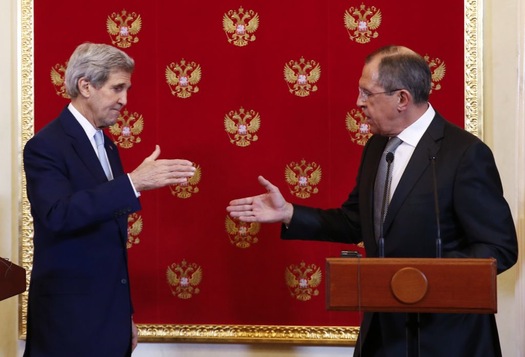
    WASHINGTON (TIP): U.S. Secretary of State John Kerry on Tuesday, December 15, accepted Russia’s long-standing demand that President Bashar Assad’s future be determined by his own people, as Washington and Moscow edged toward putting aside years of disagreement over how to end Syria’s civil war.

    Kerry announced this critical shift in Moscow where he met Russian President Vladimir Putin and Foreign Minister Sergey Lavrov to discuss the ongoing conflicts in Ukraine and Syria.

    “The United States and our partners are not seeking so-called regime change,” Kerry told reporters in the Russian capital after meeting President Vladimir Putin.

    This means Assad can stay in power for a bit longer if Russia and America cooperate together in overseeing the transition from Assad’s chaos to peace.

    A major international conference on Syria would take place later this week (Friday) in New York, Kerry announced.

    Assad is the very kind of “dictator” the US prides itself in fighting to remove. For the past four years, President Obama has called for Assad to step down. From Assad’s alleged use of chemical gas to barrel bombs to ISIS overtaking Syrian territory, Assad attracts a very diverse response from world leaders on how to achieve peace because the situation in Syria is so complex.

    But after a day of discussions with Assad’s key international backer, Kerry said the focus now is “not on our differences about what can or cannot be done immediately about Assad.” Rather, it is on facilitating a peace process in which “Syrians will be making decisions for the future of Syria.”

    Within the United States, where political debates are increasingly revolving around foreign policy — especially to do with Assad and ISIS — the presidential candidates (as well as politicians in general) find themselves equally divided on the Syrian solution. In fact, shifting positions on Assad seems to be the norm.

    The world is better off when Russia and the U.S. work together, Kerry added, calling Obama and Putin’s current cooperation a “sign of maturity.”

    “There is no policy of the United States, per se, to isolate Russia,” Kerry stressed.

    Below is a brief timeline of major American politicians on their stances regarding Assad and Syria, especially in relations to Putin and Russia.
    August 2011

    Secretary of State Hillary Clinton tells the press “it’s not going to be any news if the United States says, ‘Assad needs to go.’”

    A week later, US President Barack Obama announces for the first time — after weeks of political pressure — that Assad “must step down”.

    The American announcement happened in coordination with key allies’ announcements: Germany, France, and the UK, amongst others, also called for Assad’s departure from his presidency position around this time.

    February 2012

    Western powers reportedly ignore a Russian proposal to securely remove Assad from his position, as the US, French, and British leaders believe the Syrian president would not last much longer in power.

    September 2013

    President Obama addresses the nation, detailing the brutalities of the Assad regime and announces the US will strike Assad’s forces to deter the regime from the use of chemical weapons.
    The US and Russia then pushed for Syria to become party to the Chemical Weapons Convention, which banned the use of chemical and biological weaponry in warfare.

    November 2014

    President Obama states at the G20 press conference that “there’s no expectation that we are going to in some ways enter an alliance with Assad. He is not credible in that country.”

    The US president continues on to say that “we are looking for a political solution eventually within Syria that is inclusive of all the groups who live there — the Alawite, the Sunni, Christians. And at some point, the people of Syria and the various players involved, as well as the regional players — Turkey, Iran, Assad’s patrons like Russia — are going to have to engage in a political conversation.”

    August 2015

    Four years later, increased diplomacy between major powers — especially the US and Russia — start to cause US leaders to soften their “Assad must go” position.

    The New York Times quotes an unnamed senior American official as saying, “It’s encouraging, but we’re still a long ways off [on a solution for Assad].”

    September 2015

    Donald Trump tells Americans to let Russia take care of Assad and ISIS.

    “Let Syria and ISIS fight. Why do we care? Let ISIS and Syria fight. And let Russia, they’re in Syria already, let them fight ISIS. Look, I don’t want ISIS. ISIS is bad. They are evil. When they start doing with a head chopping … these are really bad dudes. … Let Russia take care of ISIS. How many places can we be? … Russia likes Assad seemingly a lot. Let them worry about ISIS. Let them fight it out.”

    October 2015

    Hillary Clinton, now a presidential candidate and no longer Secretary of State (since 2013), states removing Assad is America’s top priority, four years after she said it wouldn’t make US news.

    December 2015

    A month after the Paris attacks, a week after the San Bernardino attack, the day Los Angeles shut down its public schools due to a bomb threat, and the last Republican debate of the year before the holidays. Also the day Kerry meets Putin and Lavrov in Moscow.

    The Secretary of State officially reverses the position of the US on Assad, while Republican contenders for the 2016 election spar over what to do. The more memorable quotes are anti-Russian and anti-intervention.

    Donald Trump: “Spend the money [used in striking in the Middle East] in the US… It’s a tremendous disservice to humanity, and for what? [The Middle East is] a mess, [a] total and complete mess.”

    John Kasich: “In regard to Syria, understand that Assad is an ally of Iran who wants to extend that Shi’i radicalism all the way across the Middle East. He has to go. And for the Russians, frankly, it’s time to punch the Russians in the nose. They’ve gotten away with too much in this world, and we need to stand up against them, not just there, but also in Eastern Europe where they threaten some of our most precious allies.”

    Rand Paul: “We need to confront Russia from a position of strength.”

    Chris Christie: “Reckless was inviting Russia into Syria.”


    As of now, President Obama has yet to make an official statement confirming Kerry’s comments in Moscow. Kerry maintained that it is in the best interest for the world when Russia and the US cooperate, and that this cooperation is “a sign of maturity” between the two presidents.

    While it’s great for the US and Russia to be on slightly better terms again, time will only tell if this rekindling of relations will bring Assad to justice and peace to the Syrian people.

  • Obama Names Indian American Labor Trafficking Survivor to U.S. Advisory Council on Human Trafficking

    Obama Names Indian American Labor Trafficking Survivor to U.S. Advisory Council on Human Trafficking

    President Barack Obama, Dec. 16, announced several administration posts in the Advisory Council on Human Trafficking.

    One of the new appointed members include Indian American Harold d’Souza who himself had been a victim of Human Trafficking when he came to the United States in 2003.

    Other members of the council are Evelyn Chumbow, Minh Dang, Tina Frundt, Ima Matul Maisaroh, Ronny Marty, Florencia Molina, Bukola Love Oriola, Suamhirs Piraino-Guzman, Sheila White and Shandra Woworuntu, reports India West.

    The International Labour Organization estimated the total market value of human trafficking to be $32 billion in 2005. Those profits have since ballooned to $96 billion globally, according to a study released by the Ricky Martin Foundation in May.


    Mr Obama announced his intent to appoint the several individuals to key Administration posts.

    “I am honoured that these talented individuals have decided to serve our country. They bring their years of experience and expertise to this Administration, and I look forward to working with them,” Mr Obama said in a statement.

    Currently, D’Souza is a senior supply chain associate for Cincinnati Children’s Hospital Medical Center in Cincinnati, Ohio, a position in which he has held for the last 6 years.

    He is also a founding member of the National Survivor Network and is active with End Slavery Cincinnati.

    Earlier in his career, he served as a Sales Manager in India.

    Mr D’Souza received an LLB and M Com from Maharaja Sayajirao University in Vadodara.

    “I am a survivor of labour trafficking and debt bondage and a dedicated advocate against human trafficking,” he wrote on his LinkedIn page.

    This year, the Greater Cincinnati Human Trafficking Conference 2015 invited him to be an advocate for creating awareness about human trafficking in the community.

    “My personal philosophy is to fix the problem and not continuing cycles of blame. I show this attitude by serving individuals in the Greater Cincinnati area through community service. Many would describe me as self-disciplined, responsible, and courteous; and, it my intent to never fall short of these expectations,” he wrote on his LinkedIn profile.

    The National Human Trafficking Resource Center can be reached at (888) 373-7888.

    Read : The D’Souza family’s story of human trafficking


  • East Texas town’s police chief, others urge citizens to arm themselves

    East Texas town’s police chief, others urge citizens to arm themselves

    HUGHES SPRINGS, TX (TIP): A Texas police chief who warns President Barack Obama in a social media video that trying to disarm Americans would “cause a revolution in this country” is the latest law enforcement official to urge citizens to arm themselves in the wake of mass shootings.

    Randy Kennedy, longtime chief in the small East Texas town of Hughes Springs, about 120 miles east of Dallas, says in the video posted this week on his personal Facebook page that the Second Amendment was established to protect people from criminals and “terrorists and radical ideology.”

    “It’s also there to protect us against a government that has overreached its power,” Kennedy says in the video. “You are not our potentate, sir. You are our servant.”

    He warned people in his town to prepare themselves: “Be ready when the wolf comes to the door, because it’s on its way.” Law enforcement officials in Arizona, Florida and New York also have recently prompted citizens to arm themselves – some using similar comments aimed at terrorism. Kennedy said his call to arms was the result of his disappointment with Obama’s Oval Office speech Sunday in which the president vowed the U.S. will overcome a new phase of the terror threat that seeks to “poison the minds” of people here and around the world. The police chief told The Associated Press on Wednesday that he’s not asking residents to turn into vigilantes or “become super action heroes.”

    He said feedback on his video has been supportive for the most part. “There have been a few extremely nasty comments, calling me basically a backwoods redneck hick creating monsters that don’t exist,” he said.

    Wayne Ivey, the sheriff in Brevard County, Florida, said in a video post on the department’s Facebook page over the weekend that political leaders appear more interested in being politically correct than protecting people. He urged residents to arm themselves as a first line of defense against an active shooter.

    “The only thing that stops a bad guy with a gun is a good guy with a gun,” Ivey said.

    Another Florida sheriff, Steve Whidden in Hendry County, this week encouraged more people to carry weapons because “we as a nation are under attack by radical Islamic terrorists.”

    Maricopa County Sheriff Joe Arpaio in Arizona issued a statement Tuesday asking “legally armed citizens to take a stand, and take action during a mass shooting/terrorist event until law enforcement arrives.”

    And last week, Ulster County Sheriff Paul Van Blarcum in upstate New York called for licensed gun owners in his county to arm themselves when leaving home, citing mass shootings in Paris and San Bernardino, Calif.

    John Moritz, spokesman for the Combined Law Enforcement Associations of Texas, said he assumes the comments from Kennedy, the Texas chief, reflect the views held in his community. But Moritz said caution should be used when giving such instructions to people who have no law enforcement training.

    “Most times citizens are going to be best served and best protected by calling trained law enforcement officers whenever they feel their lives or property are in danger,” Moritz said.

    The FBI said last week that it processed a record number of firearms background checks on Black Friday, the busy shopping time the day after Thanksgiving. The agency processed 185,345 background checks – roughly two per second – the same day that three people were killed and nine others wounded in an attack at a Planned Parenthood office in Colorado.

    The previous record for the most background checks in a single day was Dec. 21, 2012, about a week after 20 children and six adults were shot to death in a Connecticut elementary school. The week following the massacre at Sandy Hook Elementary saw the processing of 953,613 gun background checks.

  • President Obama’s address on the San Bernardino terror attack and the war on ISIS | Transcript

    President Obama’s address on the San Bernardino terror attack and the war on ISIS | Transcript

    President Barack Obama on Sunday, December 6 issued his most passionate denunciation yet of ISIS, vowing to “destroy” the group in a relentless, strong and smart campaign that is consistent with the nation’s values.

    Obama, speaking in the symbolic surroundings of the Oval Office, unequivocally told millions of television viewers in prime-time that last week’s mass shooting in San Bernardino, California, was a terrorist attack by a couple who had gone down the “dark path of radicalization” and embraced a “perverted” form of Islam.

    For our readers who missed the speech, transcript of the speech is below:

    THE PRESIDENT: Good evening. On Wednesday, 14 Americans were killed as they came together to celebrate the holidays. They were taken from family and friends who loved them deeply. They were white and black; Latino and Asian; immigrants and American-born; moms and dads; daughters and sons. Each of them served their fellow citizens and all of them were part of our American family.

    Tonight, I want to talk with you about this tragedy, the broader threat of terrorism, and how we can keep our country safe.

    The FBI is still gathering the facts about what happened in San Bernardino, but here is what we know. The victims were brutally murdered and injured by one of their coworkers and his wife. So far, we have no evidence that the killers were directed by a terrorist organization overseas, or that they were part of a broader conspiracy here at home. But it is clear that the two of them had gone down the dark path of radicalization, embracing a perverted interpretation of Islam that calls for war against America and the West. They had stockpiled assault weapons, ammunition, and pipe bombs. So this was an act of terrorism, designed to kill innocent people.

    President Obama: 'This was an act of terrorism'

    Our nation has been at war with terrorists since al Qaeda killed nearly 3,000 Americans on 9/11. In the process, we’ve hardened our defenses — from airports to financial centers, to other critical infrastructure. Intelligence and law enforcement agencies have disrupted countless plots here and overseas, and worked around the clock to keep us safe. Our military and counterterrorism professionals have relentlessly pursued terrorist networks overseas — disrupting safe havens in several different countries, killing Osama bin Laden, and decimating al Qaeda’s leadership.

    Over the last few years, however, the terrorist threat has evolved into a new phase. As we’ve become better at preventing complex, multifaceted attacks like 9/11, terrorists turned to less complicated acts of violence like the mass shootings that are all too common in our society. It is this type of attack that we saw at Fort Hood in 2009; in Chattanooga earlier this year; and now in San Bernardino. And as groups like ISIL grew stronger amidst the chaos of war in Iraq and then Syria, and as the Internet erases the distance between countries, we see growing efforts by terrorists to poison the minds of people like the Boston Marathon bombers and the San Bernardino killers.

    For seven years, I’ve confronted this evolving threat each morning in my intelligence briefing. And since the day I took this office, I’ve authorized U.S. forces to take out terrorists abroad precisely because I know how real the danger is. As Commander-in-Chief, I have no greater responsibility than the security of the American people. As a father to two young daughters who are the most precious part of my life, I know that we see ourselves with friends and coworkers at a holiday party like the one in San Bernardino. I know we see our kids in the faces of the young people killed in Paris. And I know that after so much war, many Americans are asking whether we are confronted by a cancer that has no immediate cure.

    Well, here’s what I want you to know: The threat from terrorism is real, but we will overcome it. We will destroy ISIL and any other organization that tries to harm us. Our success won’t depend on tough talk, or abandoning our values, or giving into fear. That’s what groups like ISIL are hoping for. Instead, we will prevail by being strong and smart, resilient and relentless, and by drawing upon every aspect of American power.

    Here’s how. First, our military will continue to hunt down terrorist plotters in any country where it is necessary. In Iraq and Syria, airstrikes are taking out ISIL leaders, heavy weapons, oil tankers, infrastructure. And since the attacks in Paris, our closest allies — including France, Germany, and the United Kingdom — have ramped up their contributions to our military campaign, which will help us accelerate our effort to destroy ISIL.

    Second, we will continue to provide training and equipment to tens of thousands of Iraqi and Syrian forces fighting ISIL on the ground so that we take away their safe havens. In both countries, we’re deploying Special Operations Forces who can accelerate that offensive. We’ve stepped up this effort since the attacks in Paris, and we’ll continue to invest more in approaches that are working on the ground.

    Third, we’re working with friends and allies to stop ISIL’s operations — to disrupt plots, cut off their financing, and prevent them from recruiting more fighters. Since the attacks in Paris, we’ve surged intelligence-sharing with our European allies. We’re working with Turkey to seal its border with Syria. And we are cooperating with Muslim-majority countries — and with our Muslim communities here at home — to counter the vicious ideology that ISIL promotes online.

    Fourth, with American leadership, the international community has begun to establish a process — and timeline — to pursue ceasefires and a political resolution to the Syrian war. Doing so will allow the Syrian people and every country, including our allies, but also countries like Russia, to focus on the common goal of destroying ISIL — a group that threatens us all.

    This is our strategy to destroy ISIL. It is designed and supported by our military commanders and counterterrorism experts, together with 65 countries that have joined an American-led coalition. And we constantly examine our strategy to determine when additional steps are needed to get the job done. That’s why I’ve ordered the Departments of State and Homeland Security to review the visa (waiver) program under which the female terrorist in San Bernardino originally came to this country. And that’s why I will urge high-tech and law enforcement leaders to make it harder for terrorists to use technology to escape from justice.

    Now, here at home, we have to work together to address the challenge. There are several steps that Congress should take right away.

    To begin with, Congress should act to make sure no one on a no-fly list is able to buy a gun. What could possibly be the argument for allowing a terrorist suspect to buy a semi-automatic weapon? This is a matter of national security.

    We also need to make it harder for people to buy powerful assault weapons like the ones that were used in San Bernardino. I know there are some who reject any gun safety measures. But the fact is that our intelligence and law enforcement agencies — no matter how effective they are — cannot identify every would-be mass shooter, whether that individual is motivated by ISIL or some other hateful ideology. What we can do — and must do — is make it harder for them to kill.

    Next, we should put in place stronger screening for those who come to America without a visa so that we can take a hard look at whether they’ve traveled to warzones. And we’re working with members of both parties in Congress to do exactly that.

    Finally, if Congress believes, as I do, that we are at war with ISIL, it should go ahead and vote to authorize the continued use of military force against these terrorists. For over a year, I have ordered our military to take thousands of airstrikes against ISIL targets. I think it’s time for Congress to vote to demonstrate that the American people are united, and committed, to this fight.

    My fellow Americans, these are the steps that we can take together to defeat the terrorist threat. Let me now say a word about what we should not do.

    We should not be drawn once more into a long and costly ground war in Iraq or Syria. That’s what groups like ISIL want. They know they can’t defeat us on the battlefield. ISIL fighters were part of the insurgency that we faced in Iraq. But they also know that if we occupy foreign lands, they can maintain insurgencies for years, killing thousands of our troops, draining our resources, and using our presence to draw new recruits.

    The strategy that we are using now — airstrikes, Special Forces, and working with local forces who are fighting to regain control of their own country — that is how we’ll achieve a more sustainable victory. And it won’t require us sending a new generation of Americans overseas to fight and die for another decade on foreign soil.

    Here’s what else we cannot do. We cannot turn against one another by letting this fight be defined as a war between America and Islam. That, too, is what groups like ISIL want. ISIL does not speak for Islam. They are thugs and killers, part of a cult of death, and they account for a tiny fraction of more than a billion Muslims around the world — including millions of patriotic Muslim Americans who reject their hateful ideology. Moreover, the vast majority of terrorist victims around the world are Muslim. If we’re to succeed in defeating terrorism we must enlist Muslim communities as some of our strongest allies, rather than push them away through suspicion and hate.

    That does not mean denying the fact that an extremist ideology has spread within some Muslim communities. This is a real problem that Muslims must confront, without excuse. Muslim leaders here and around the globe have to continue working with us to decisively and unequivocally reject the hateful ideology that groups like ISIL and al Qaeda promote; to speak out against not just acts of violence, but also those interpretations of Islam that are incompatible with the values of religious tolerance, mutual respect, and human dignity.

    But just as it is the responsibility of Muslims around the world to root out misguided ideas that lead to radicalization, it is the responsibility of all Americans — of every faith — to reject discrimination. It is our responsibility to reject religious tests on who we admit into this country. It’s our responsibility to reject proposals that Muslim Americans should somehow be treated differently. Because when we travel down that road, we lose. That kind of divisiveness, that betrayal of our values plays into the hands of groups like ISIL. Muslim Americans are our friends and our neighbors, our co-workers, our sports heroes — and, yes, they are our men and women in uniform who are willing to die in defense of our country. We have to remember that.

    President Obama: ‘Freedom is more powerful than fear’ 

    My fellow Americans, I am confident we will succeed in this mission because we are on the right side of history. We were founded upon a belief in human dignity — that no matter who you are, or where you come from, or what you look like, or what religion you practice, you are equal in the eyes of God and equal in the eyes of the law.

    Even in this political season, even as we properly debate what steps I and future Presidents must take to keep our country safe, let’s make sure we never forget what makes us exceptional. Let’s not forget that freedom is more powerful than fear; that we have always met challenges — whether war or depression, natural disasters or terrorist attacks — by coming together around our common ideals as one nation, as one people. So long as we stay true to that tradition, I have no doubt America will prevail.

    Thank you. God bless you, and may God bless the United States of America.

  • Obama vows to destroy ISIL & any other organization that ‘tries to harm us’

    Obama vows to destroy ISIL & any other organization that ‘tries to harm us’

    WASHINGTON (TIP): President Barack Obama on Sunday, December 6 issued his most passionate denunciation yet of ISIS, vowing to “destroy” the group in a relentless, strong and smart campaign that is consistent with the nation’s values.

    “This was an act of terrorism designed to kill innocent people,” Obama said. “Here’s what I want you to know. The threat from terrorism is real, but we will overcome it. We will destroy ISIL and any other organization that tries to harm us.”

    But “freedom is more powerful than fear,” said President Obama, warning that falling prey to divisiveness in American society would play into the hands of extremists.

    He also said the US must make it harder for potential attackers to obtain guns.

    Obama, speaking in the symbolic surroundings of the Oval Office, unequivocally told millions of television viewers in prime-time that last week’s mass shooting in San Bernardino, California, was a terrorist attack by a couple who had gone down the “dark path of radicalization” and embraced a
    “perverted” form of Islam.

    Obama vowed that the US would overcome the evolving threat of terrorism, but warned that Americans “cannot turn against one another by letting this fight be defined as a war between America and Islam”.

    “If we’re to succeed in defeating terrorism, we must enlist Muslim communities as some of our strongest allies, rather than push them away through suspicion and hate,” Mr. Obama said. He reminded his audience that Muslim-Americans were part of US society.

    “And, yes, they are our men and women in uniform who are willing to die in defense of our country. We have to remember that,” he said.

    The president warned that turning against America’s Muslim communities would be exactly what Islamist extremists in the so-called Islamic State group want.

    “We will prevail by being strong and smart, resilient and relentless,” Obama said, calling on Congress to take action to outlaw anyone on a terrorist “no fly list” from buying weapons and asking lawmakers to pass a final authorization for U.S. armed forces to wage war on the group.

    And in an appeal that will likely anger conservatives, Obama demanded tougher gun control, saying it was a key part of combating ISIS. He said it is currently too easy for people who want to harm Americans to buy guns.

    “Congress should act to make sure no one on a no-fly list is able to buy a gun. What could possibly be the argument for allowing a terrorist suspect to buy a semiautomatic weapon?This is a matter of national security,” Obama said, and also argued it should be harder to buy powerful assault weapons like those used in the San Bernardino attacks that killed 14 people.

    “What we can do, and must do, is make it harder for them to kill,” Obama said.

    But in a Congress dominated by Republicans, passing a force authorization bill or revisiting gun laws could prove nearly impossible.

    While the speech was mostly a reiteration of Obama’s existing strategy against terrorism, it unfolded against a highly political context.