Tag: Barack Obama

  • US military opens all combat roles to women

    US military opens all combat roles to women

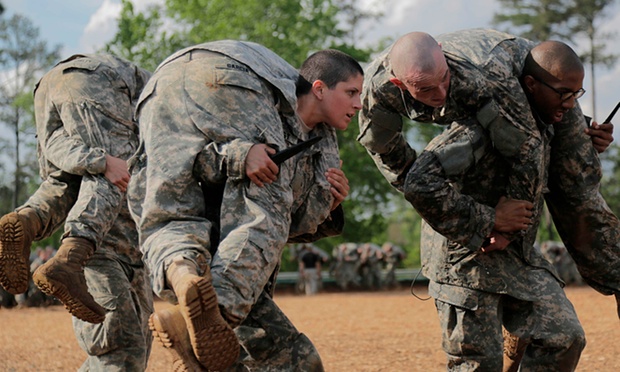
    WASHINGTON (TIP): The US military will let women serve in all combat roles, Defense Secretary Ash Carter said on Thursday in a historic move striking down gender barriers in the armed forces.

    “As long as they qualify and meet the standards, women will now be able to contribute to our mission in ways they could not before,” Carter told a Pentagon news conference.

    “They’ll be allowed to drive tanks, fire mortars, and lead infantry soldiers into combat. They’ll be able to serve as Army Rangers and Green Berets, Navy SEALS, Marine Corps infantry, Air Force parajumpers and everything else that was previously open only to men,” he said.

    President Barack Obama called the move a “historic step forward,” saying it would “make our military even stronger.”

    “Our armed forces will draw on an even wider pool of talent. Women who can meet the high standards required will have new opportunities to serve,” Obama said in a statement

    Carter said the opening to women would take place following a 30-day review period, after which they would be integrated into the new roles in a “deliberate and methodical manner” as positions come open. The waiting period enables Congress to review the decision and raise any objections.

    He acknowledged the decision could lead to more debate over whether women would have to register for the draft, an issue he said was already under litigation. The U.S. military is currently an all-volunteer force, but young men are still required to register in case the draft is reactivated.

    Asked whether the decision opened the door to women being required to serve in front-line combat positions, Carter said members of the military had some choices but not “absolute choice.”

    “People are assigned to missions, tasks and functions according to need as well as their capabilities,” he said. (Reuters)

  • America’s exploding gun violence issue

    America’s exploding gun violence issue

    The recent attack on the Planned Parenthood clinic in Colorado Springs, CO, that claimed three lives and wounded nine, highlights yet again the enormity of the gun violence problem in the US. Gun running, with the attendant travesty of police action and behaviour, has already raised considerable alarm in American civil society, campus groups, media players and the cantankerous international community. The American toe-hold in public imagination requires more than a facelift, as, the wars in West Asia and North Africa have muddied the dictums of pre-emptive action, the Responsibility to Protect and imminent threat doctrine, disrupting the swan song of the American Dream.

    The rising number of gun crimes bedevil the holier than thou idiom of a nation which places its entire policy premise on democratic peace. No society can be polemically sacrosanct and every nation state is bedeviled with the firestorms of sociological controversies. But here the situation requires urgent measures. The viscerally attuned imagery of homeless bearded men sleeping disconsolately over plastic wraps, and the staple scenario of black mothers scurrying around small houses to prepare breakfast for four children, remains embedded in the public mind.

    In the last few decades, lawyers have played a significant role in spawning a legal front against gun-violence. The incidents at Waco in Texas, the far-reaches of the Sinaloa drug cartel in the sandkissed twilight zones of the United States and Mexico, point to American enforcement agents who have been the prime protagonists of the debate for a while. The practice of letting the guns ‘walk’ and then following the investigative trail in the badlands of Chicago have led to a few fiascos which have questioned the strategy of enforcement instruments in the US.

    Some sportspersons and Hollywood stars go all the way with their support for the gun lobby in the US. The way the anti-gun grouping arranged for finances and solicited the support of law firms spread all across the nation, in order to create a national legal and civil society against the gun lobby, earned them much public support. The activists won important legal battles and created a much needed awareness amongst the citizenry.

    In the contemporary context of the many gun shootings this year alone, US President Barack Obama has come out openly against the menace. He has evoked a war cry imagery to shake the American citizens out of a stupor. He said, “We have to make a credible political choice. When Americans are killed in a mine disaster, we work to make mines safer. When Americans perish in hurricanes, we strengthen the communities but the notion that gun violence in different is rather questionable.”

    The idea that Americans love their freedom and the sanctity of the Constitution too much to resist gun control regulations, allows derelicts and mentally challenged delinquents take the law unto their own hands. Police apathy too adds to the problem when fake gun violators are mistreated or race transgressions are committed by the authorities. Data compiled by the crowd-sourced site Mass Shooting Tracker shows that there have been 294 mass shootings one mass shooting being defined as an incident in which four or more people are shot  in the 274 days sinceJanuary 1. Another agency, Gun Violence Archive, has recorded, as of December 1, as many as 47, 956 incidents of gun violence. The need of the hour is a gun control regulation as the American President has declared in disgust.

  • San Bernardino shooting: At least 14 killed, 17 injured in California

    San Bernardino shooting: At least 14 killed, 17 injured in California

    SAN BERNARDINO , CA (TIP): Gunmen opened fire on a holiday party on Wednesday, December 2, at a social services agency in San Bernardino, California, killing 14 people and wounding 17 others, then fled the scene, triggering an intense manhunt that ended several hours later in a police firefight that left two suspected shooters dead.

    By the end of the carnage, investigators tallied 14 victims and 21 wounded – considered the worst mass shooting in modern U.S. history since Newtown, Connecticut, in December 2012.

    A Timeline of chaos in San Bernardino, California

    Wednesday, December 2, 11 a.m. PT | Initial 911 calls report shots fired at the InlandRegionalCenter, a state-run facility that serves people with developmental disabilities. Police say the shooting took place during a holiday party and lasted only a few minutes before the suspects fled. They had fired some 75 rifle rounds.

    One of the suspects – later identified as county health inspector Syed Rizwan Farook, 28 – had attended the party that morning, according to reports, but reportedly left after a dispute. Police believe between 10 and 30 minutes went by between Farook’s departure and the suspect’s return to the conference room.

    11:07 a.m. | Firefighters begin arriving at the scene within seven minutes of the first 911 calls.

    11:20 a.m. | Julie Paez, an inspector with the county’s Department of Health attending the holiday party, sends a text to her family, the Los Angeles Times reported: “Love you guys. Was shot,” it read. Paez survived two gunshot wounds and a broken pelvis.

    11:40 a.m. | Police begin reporting multiple victims shot at the scene. Several roads are shut down in the area.

    12:25 p.m. | Police say they are looking for as many as three shooters after sweeping the building and determining the suspects fled. Emergency responders are also seen treating people outside and ambulances rush in and out to take the injured to the hospital.

    12:30 p.m. | President Obama is briefed on the shooting by Homeland Security. “It does appear that there are going to be some casualties, and obviously our hearts go out to the victims and the families,” he later tells CBS News.

    1:05 p.m. | Police confirm at least three people were killed. Reports come out from family members of survivors who say the shooters were wearing “military-style” attire.

    2 p.m. | Police confirm at a news conference that there are 14 dead and 17 wounded. Area buildings are on lockdown as authorities search for the suspects.

    2:30 p.m. | San Bernardino Police Chief Jarrod Burguan declines to say what kind of weapons were used, but that the shooters “were on a mission” and “came in with a purpose.”

    3:05 p.m. | Reports come in of police in pursuit of a black SUV that had fled the scene. A shootout with police ensues a few miles away.

    3:20 p.m. | Police aim guns at a dark-colored SUV with shattered windows on a residential street. A firefight ensues. Nearly two dozen officers fired some 380 rounds at the suspects. The suspects return fire with 76 rounds. Local media reports say a person appears to be on the ground, but it is unclear who they are or what their injuries may be.

    3:30 p.m. | Police confirm shots have been fired and a suspect is down near the SUV. According to reports, a male suspect’s body is on the street, while a female suspect’s body has been pulled from the car. Some 1,600 unused rounds are found on the two suspects, police would later say.

    San Bernardino police Sgt. Vicki Cervantes said one officer suffered non-life-threatening injuries during the shootout.

    5:05 p.m. | Police serve a search warrant on a home in Redlands in connection with the shooting. An Associated Press reporter watched as a half-dozen vehicles carrying helmeted police drove into the area. One officer carrying an assault rifle ordered reporters to clear the area, and an armored vehicle parked outside a row of homes.

    5:50 p.m. | Police say a person was detained who was seen running near the gunbattle, but it was not clear if that person is connected to the shooting.

    7:40 p.m. | A law enforcement official has identified Farook as one of the suspects in a mass shooting in Southern California. Police also confirm that the two suspects – Farook and a woman – were killed in the gunbattle.

    8:55 p.m. | The brother-in-law of Farook says at a news conference that he was stunned to hear of his relative’s alleged involvement in the shooting. Farhan Khan, who is married to the sister of Farook, spoke to reporters at the Anaheim office of the Council on American-Islamic Relations.

    Khan says he last spoke to Farook about a week ago. He added that he had “absolutely no idea why he would do this. I am shocked myself.”

    10:10 p.m. | Police say they believe the man and woman killed in the gunbattle were the only two shooters. Burguan identifies the woman killed as 27-year-old Tashfeen Malik, who is described as Farook’s wife.

    The couple had been living in Redlands with Farook’s mother.

    No motive is known, but terrorism has not been ruled out.

    Thursday, December 3 (Updated till the press time)

    7:35 a.m. PT | Loma Linda University Medical Center CEO Kerry Heinrich says of the five patients being treated at its facility, two remain in critical condition and three are in stable condition.

    8:10 a.m. | Obama says the FBI is leading the investigation, and that it’s still unclear whether the shooting was either terrorism-related or workplace-related.

    He adds that legislators and all Americans have a part to play to make sure that “when individuals want to do harm, we make it a little harder for them to do it.”

    9:30 a.m. | Law enforcement officials tell NBC News that the SUV in which Farook and Malik made their getaway, and in which they were killed in a gunbattle with police, was a rental with Utah plates.

    Officials say Farook rented it “recently,” which they believe was another step in preparation for the attack.

    9:45 a.m. | Police at a news conference say the suspects fired as many as 75 rounds at the InlandRegionalCenter, and then another 76 rounds during the pursuit with police. A remote-controlled car with three pipe bombs was also found at the social services center but it did not detonate, Burguan says.

    Officials add that a second officer was wounded during the police shootout. The overall number of wounded rises to 21 from 17.

    The search of the Redlands home, where the couple’s name was on the lease, also turns up an additional 12 pipe bomb devices and thousands of rounds of ammo, police say.
    “Clearly they were equipped” to launch another attack if they wanted to, Burguan adds.

    The FBI confirms that Farook had rented the SUV – a black Ford Expedition – about three or four days ago, and it was supposed to be returned on the day of the rampage.

    10:15 a.m. | Farook appears to have been radicalized, authorities tell NBC News. The extent of his radicalization wasn’t immediately clear, but he had been in touch with persons of interest in the Los Angeles area who have expressed jihadist-oriented views.

    The Inland Regional Center is one of 21 facilities set up by the state and run under contract by non-profit organizations to serve people with developmental disabilities, said Nancy Lungren, spokeswoman for the California Department of Developmental Services.

    STRING OF SHOOTINGS

    So far in 2015, there have been more than 350 shootings in which four or more people were wounded, according to the crowd-sourced website shootingtracker.com, which keeps a running tally of U.S. gun violence.

    The shooting in California comes less than a week after a gunman killed three people and wounded nine in a shooting rampage at a Planned Parenthood clinic in Colorado Springs, Colorado. In October, a gunman killed nine people at a college in Oregon, and in June, a white gunman killed nine black churchgoers in South Carolina.

    Gun control advocates, including Democratic President Barack Obama, say easy access to firearms is a major factor in the shooting epidemic, while the National Rifle Association and other pro-gun advocates say the Second Amendment of the U.S. Constitution guarantees Americans the right to bear arms.

  • Obama lights national tree, remembers California victims

    Obama lights national tree, remembers California victims

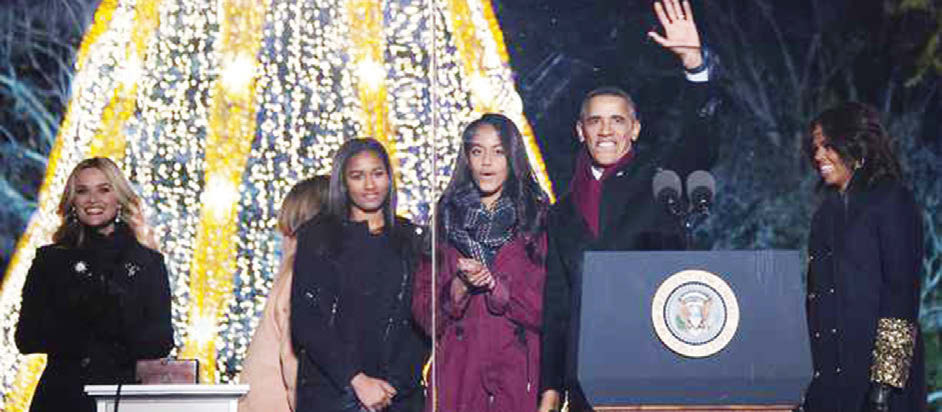
    WASHINGTON (TIP): US President Barack Obama and his family led the lighting of the National Christmas Tree on Thursday, December 3, with charity, thanks, and a moment of reflection for the victims of Wednesday’s shooting.

    “Now, this is, of course, the most wonderful time of the year. But we would be remiss not to take a moment to remember our fellow Americans whose hearts are heavy tonight – who grieve for loved ones, especially in San Bernardino, California,” Obama said in reference to the rampage that left 14 dead and 21 wounded.

    “Their loss is our loss, too, for we’re all one American family. We look out for each other in good times, and in bad. And they should know that all of us care about them this holiday season,” he said.

  • House votes to close doors to Syrian & Iraqi refugees, snubs Obama veto threat

    House votes to close doors to Syrian & Iraqi refugees, snubs Obama veto threat

    WASHINGTON  (TIP): The bill, which would effectively bar Syrian and Iraqi refugees from entry, received enough support to override a veto.

    In a stinging rebuke to President Obama by Republicans as well as members of his own party, the House ignored a veto threat Thursday and overwhelmingly approved Republican legislation erecting fresh hurdles for Syrian and Iraqi refugees trying to enter the United States.

    The vote was 289-137, with 47 Democrats joining 242 Republicans in favor of the bill, creating a majority that could override President Barack Obama’s promised veto. That margin exceeded the two-thirds majority required to override a veto, and it came despite a rushed, early morning visit to the Capitol by top administration officials in a futile attempt to limit Democratic defections for the measure. It also faces an uncertain future in the Senate, where Minority Leader Harry Reid said he will try to block the bill.

    The high number of Democrats voting against the White House is a clear sign Obama is increasingly isolated in his position on refugees in light of the ISIS terrorist attacks on Paris.

    During his trip abroad this week, Obama has offered a forceful defense of the program and derided Republican opponents as being scared of “widows and orphans.”

    “We are not well served when, in response to a terrorist attack, we descend into fear and panic,” Obama said in the Philippines on Wednesday. “We don’t make good decisions if it’s based on hysteria or an exaggeration of risks.”

    Republicans were determined to move quickly. House Speaker Paul Ryan told reporters “this is urgent. We cannot and should not wait to act, not when our national security is at stake.”

    The administration’s veto threat “baffles me,” Ryan said, “especially given the fact that his own law enforcement top officials came to Congress and testified that there are gaps in this refugee program.”

    Republicans also used the debate to criticize the president’s approach to fighting terrorism.

    “The real problem is ISIL and the lack of a strategy,” House Majority Leader Kevin McCarthy said, adding it was “astounding” the president has yet to lay out a comprehensive approach to the threat in the Middle East.

    Thursday’s vote came six days after a burst of bombings and shootings in Paris killed 129 people, wounded many more and revived post-9/11 jitters in the U.S. and Europe. The attacks have turned the question of admitting people fleeing war-torn Syria and Iraq into a high-stakes political issue in both the United States and Europe, and many congressional Democrats were willing to vote against their party’s lame duck president for fear of angering voters nervous about security at home.

    The few Democrats opposing the GOP bill said the U.S. has no business abandoning its age-old values, including being a safe haven for people fleeing countries racked by violence. The Islamic State in Iraq and the Levant (ISIL) has claimed responsibility for the Paris attacks and controls vast swathes of Syria and Iraq, despite a growing military campaign against them by the U.S. and other nations.

    “Defeating terrorism should not mean slamming the door in the faces of those fleeing the terrorists. We might as well take down the Statue of Liberty,” said Rep. Jerrold Nadler, D-N.Y.

    Republicans said that in dangerous times, the government must first protect its own.

    “It is against the values of our nation and the values of a free society to give terrorists the opening they are looking for” by not tightening entry restrictions, said House Majority Leader Kevin McCarthy, R-Calif.

  • Indian origin Swati Dandekar is named ADB director

    Indian origin Swati Dandekar is named ADB director

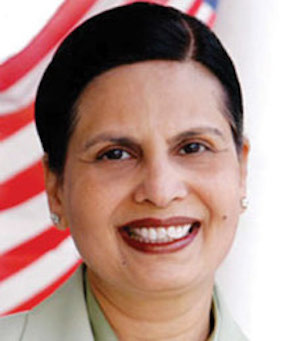
    WASHINGTON (TIP): President Barack Obama has nominated India-born Swati A. Dandekar, a Nagpur and Bombay University alum, to be United States director of the Asian Development Bank, with the rank of ambassador.

    The nomination of Dandekar who will replace Robert M. Orr was announced by the White House along with eight other key Administration posts:

    “I am confident that these experienced and hardworking individuals will help us tackle the important challenges facing America, and I am grateful for their service. I look forward to working with them,” Obama said

    Dandekar, who received a BS from Nagpur University and a Post-Graduate Diploma from Bombay University, is a former Iowa state legislator and member of the Iowa Utilities Board, according to her White House biography.

    She served on the Iowa Utilities Board from 2011 to 2013. Prior to joining the Utilities Board, Dandekar served in the Iowa State Senate from 2009 to 2011 and in the Iowa State House of Representatives from 2002 to 2008.

    From 2000 to 2003, she was a member of the Vision Iowa Board of Directors. Dandekar also served on the Linn-Mar Community School District Board of Education from 1996 to 2002 and was a member of the Iowa Association of School Boards from 2000 to 2002.

  • India, APEC and the US

    India, APEC and the US

    The major focus during the Asia Pacific Economic Cooperation (APEC) meeting in Manila, Philippines on November 18th and 19th would be on the Paris terror attacks though it is a trade promotion group that does not delve into security issues. The regional tensions in the South China Sea would be coming to some sort of attention indirectly despite Chinese efforts to block any discussion.  The issue of enlarging the membership and India’s pending membership application will most probably again be relegated to the background. Both China and the US will raise their pitch to sell their version of free trade blocks. China will try to sell its proposal for the Free Trade Area for Asia-Pacific (FTAAP) which excludes India and the US will do the same for the Trans-Pacific Partnership (TPP) which currently excludes China. Prime Minister Narendra Modi had raised the issue of Indian membership in the APEC with President Barack Obama in January 2015, when Obama visited India as the guest of honor for India’s Republic Day parade. President Obama expressed verbal support for India’s membership in the APEC at that time.


    The APEC was initially floated in 1989 by an Australian initiative and had 12 founding member economies: Australia, Brunei Darussalam, Canada, Indonesia, Japan, Korea, Malaysia, New Zealand, the Philippines, Singapore, Thailand and the United States. In 1991, China, Hong Kong, China and the Chinese Taipei (Taiwan) joined the APEC as a regional package. Mexico and Papua New Guinea followed in 1993. Chile was allowed to join the APEC in 1994.  Peru, Russia and Viet Nam joined the APEC in 1998, taking its full membership to 21 economies. The group acts with consensus in making decisions. APEC is more a trade promotion group and its recommendations are not binding on the member economies.


    The APEC’s mission statement reads: “Our primary goal is to support sustainable economic growth and prosperity in the Asia-Pacific region. We are united in our drive to build a dynamic and harmonious Asia-Pacific community by championing free and open trade and investment, promoting and accelerating regional economic integration, encouraging economic and technical cooperation, enhancing human security, and facilitating a favorable and sustainable business environment. Our initiatives turn policy goals into concrete results and agreements into tangible benefits.”


    The APEC put a moratorium on new memberships in 1997 for a period of 10 years though India’s membership application was pending. The moratorium was extended for another three years in 2007. However, for inexplicable reasons the APEC economies have not bothered to deal with the issue of further enlargement.  Especially India’s application for the membership has been pending with the APEC for last 20 years without approval. Every year since 2010, India has been looking expectantly for the APEC to consider India’s application for membership but nothing concrete has materialized owing to passive obstruction and stonewalling.


    Mainly, two arguments are used against India’s membership that India is not part of Asia-Pacific region and that India has proved to be an obstacle during negotiations in various international trade reforms/regimes. India had bargained tough during the Doha round and the Bali round of the WTO negotiations. Both these arguments are fallacious and self-serving. One fails to understand where countries like Thailand and Brunei have either land or sea borders with the Pacific Ocean? Or being a member of the ASEAN qualifies these two countries for the APEC membership! One also needs to ask a rhetoric question if India is an Asian country or not?  India is not located on the moon! Since the concept of Asia-Pacific has already been substituted by a larger strategic concept of the Indo-Pacific, there is no reason to continue to withhold India’s membership of the APEC on geographical grounds alone. Without India’s participation, there is no Indo-Pacific economy and hence no Asia-Pacific economy!


    India introduced market reforms initially in 1991 when China was allowed to join as a member. India has gradually introduced more market reforms & liberalization and that is the reason India applied for the membership of the APEC. It is true that Indian economy was largely socialistic prior to 1991 but so were China’s, Russia’s and Vietnam’s. Indian membership of the APEC would provide an incentive to continue further deeper economic liberalization. India has been a founding member of the WTO as well as of its previous incarnation of the GATT (General Agreement on Trade and Tariffs) since its inception. Interestingly, Russia is a part of the APEC since 1998 though it still does not qualify for the WTO membership as a market economy. China was allowed to join the WTO only in year 2000 despite being a member of the APEC since 1991. There seems to be some sort of unstated cooperation between both the US and China to continue to go slow on India’s membership of the APEC.

    A number of US based analysts have exhorted the US to champion India’s cause in the APEC for membership as a step toward eventual inclusion in the TPP.  Kevin Rudd, the former Australian PM and head of the CII-Asia Society Task Force  opined that the APEC misses much by not having India on board. Clarifying that APEC is not a free-trade body, Rudd said, “APEC is not a platform for market access negotiations, or a trade negotiating forum, but voluntary association of economies”. We, in India, can understand China’s reflexive and habitual pattern of opposition to India’s membership for any international arrangement with strategic implications because China is an adversary and a strategic threat. India does not perceive the US as an adversary in the post-cold war scenario. In fact, Pew Research on public opinion has consistently shown Indian public considering the US as one of the most  friendly nations.


    The US Deputy Assistant Secretary of State and Senior Official for the APEC Matt Matthews on November 2nd 2015 dampened cold water on India’s membership by categorically stating that it is not on the agenda of the APEC meeting in Manila in Philippines, on November 18 and 19. He further stated: “I do not believe there is any active consideration within APEC for expanded membership in the current time”. When reminded that President Obama had “supported” India’s desire for membership of the APEC during his 2015 visit to India on Republic Day, Matthews said the US had so far only welcomed “India’s interest” in joining the APEC. “It is important to be careful and accurate about describing President’s comment. President welcomed India’s interest in the APEC. That speaks for itself. We welcome India’s examination of APEC. We have not entered [into any] discussion about it. I do not believe India is formally pressing for actual membership now in APEC,” he said.


    India needs to hold the US to its words. The US must stop playing word games like China. The US expects too many unilateral concessions from India without delivering anything in return. The US, after signing the civil nuclear deal in 2005 and after ratifying the same in 2008, has not been able to shepherd India’s membership of the NSG, the MTCR, The Australia Group and the Wassenaar arrangement. The US has also made verbal promises to support India’s permanent membership of the UNSC. However, there is no concrete effort or will to make it implemented into reality despite a lot of rhetoric from the US. The proof of the US goodwill should reflect in active and actual support for India’s membership for the most benign of these international arrangements. Being an active member of the APEC will help India transform its domestic economy into full-fledged market economy. It will also prepare India for additional economic reforms so to obtain eventual membership of the RCEP or the TPP or the FTAAP.


    India and the US have had a legacy of trade disputes within the WTO. US trade representatives have invoked the Special 301 Priority Foreign Country designation for India. If the US continues to show a pattern of passive indifference and obstruction to India’s membership of the APEC while using the flowery rhetoric akin to China, India may have to utilize more aggressive marketing and trading strategies. Let it be known to everyone including the US that trade wars and denial of market access is as a detrimental as a hot war in the modern context. If you don’t support us, you are against us in our pursuit of market access. Since India and the US have now formalized an annual Strategic and Commercial dialogue, perhaps, the US performance in its active support to India’s membership of the APEC needs to be carefully monitored annually. Preferential trade access to Indian market for the US must be made contingent upon US behaviors towards India’s membership in the APEC and other free trade groups.

    To paraphrase and plagiarize Carla Anderson Hills, the former US trade representative: We (India) will be ready to open the APEC and other trade-blocks with a crowbar if necessary, but with a Namaste if possible!


    (The author is President, The Council for Strategic Affairs, New Delhi, India, an independent and privately funded Indian think-tank. He can be contacted at adityancsa@gmail.com)

  • Obama to huddle with European leaders on Islamic State fight

    Obama to huddle with European leaders on Islamic State fight

    WASHINGTON (TIP): President Barack Obama will huddle with the leaders of Germany, Britain, Italy and France next week in hopes of making “incremental progress” in the fight against the Islamic State group, the White House said Thursday.

    The leaders will gather in Turkey on the sidelines of the Group of 20 economic summit, regrouping after diplomats emerge from a second round of talks on Syria’s crisis over the weekend in Vienna. But Susan Rice, Obama’s national security adviser, suggested a major breakthrough was unlikely.

    “I don’t think anybody expects a single outcome that all of a sudden readily resolves all of these difficult issues,” Rice said.

    Russia, which is circulating a new proposal to end the Syrian conflict, won’t participate in the meeting in Turkey, and Obama had no plans to hold a formal meeting with Russian President Vladimir Putin while both are in Antalya, Turkey, for the G20 summit. Still, Rice said Obama and Putin would have “ample opportunity for discussion” during informal run-ins at the summit.

    Obama’s longtime antagonist, Putin is coming to the annual gathering of the world’s 20 largest economies in a stronger position than last year, when he left the summit early as world leaders took turns railing against his actions in Ukraine.

    Efforts by the US and European countries to punish Russia with economic sanctions have done little to change Putin’s approach in Ukraine. And in recent weeks, Putin has re-emerged as a key player in the Syria conflict, opening an air campaign against groups fighting Syria’s government and now drafting a plan for a lengthy political transition.

    The White House said Ukraine was also on the agenda when Obama meets with Western European leaders.

    The president departs on Saturday for a trip to Turkey, Malaysia and the Philippines, aimed in large part at bolster his campaign to realign U.S. engagement overseas toward Asia. Aside from attending a trio of economic summits, Obama’s key goal for the trip is to promote the Trans-Pacific Partnership trade deal the US recently struck with nations in the Asia-Pacific and in North America. He also hopes to rally support for a global climate deal that world leaders hope to finalize in Paris within weeks.

    With those priorities in mind, Obama will also squeeze in a series of smaller sit-downs with leaders of other countries also attending the summits. In Antalya, Obama will meet with Turkish President Recep Tayyip Erdogan, whose party pulled off a surprise victory in recent elections but who faces criticism for a crackdown on media freedoms. In Asia, Obama will hold his first meetings with the newly installed prime ministers of Canada and Australia, and hold separate meetings with the leaders of Malaysia, Japan, Laos, Singapore and the Philippines.

    Although Obama won’t meet individually with Chinese President Xi Jinping, the two leaders will cross paths in Manila, amid ongoing tensions over China’s territorial claims in disputed waters off its coast. Ahead of the trip, the White House called for a global “code of conduct” to govern maritime disputes in the South China Sea and elsewhere, with Rice pledging it would be “a central issue of discussion.”

    Another pressing theme for Obama’s 9-day trip is the refugee crisis in Europe, which has been inundated by hundreds of thousands of migrants in recent months many of them from Syria. European leaders have struggled to develop a coordinated response, with some countries building fences, reintroducing border controls and fighting among themselves about the relative burden each host nation should bear.


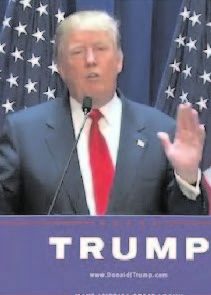
  • China, India taking advantage of US: Donald Trump

    China, India taking advantage of US: Donald Trump

    WASHINGTON (TIP): Terming China as “number-one abuser”, leading Republican presidential candidate Donald Trump has alleged that the Communist nation, along with India, is taking advantage of the US through its economic policies.

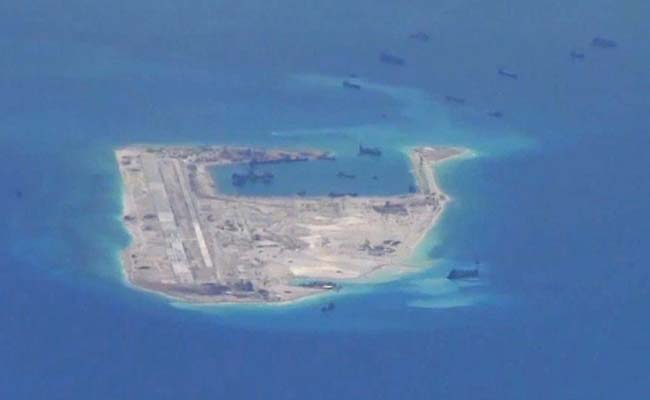
    Trump said China was becoming a “major force” and is now creating problems both economically and through its behaviour in the South China Sea.

    “If you look at the way China and India and almost everybody takes advantage of the US – China in particular, because they’re so good. It’s the number-one abuser of this country,” Trump said during the fourth debate of the party.

    “China is a problem, both economically in what they’re doing in the South China Sea, I mean, they are becoming a very, very major force,” Trump said.

    He said that it was through “currency manipulation” that does not even find a mention in almost 6,000-page (TPP) agreement that the countries were taking advantage of the US.

    While several other Republican candidates joined Trump on the China issue, there were no takers for his allegations against India, which was mentioned only once in the debate.

    “We lose a fortune on trade. The US loses with everybody. We’re losing now over USD 500 billion in terms of imbalance with China, USD 75 billion a year imbalance with Japan,” Trump said.

    John Kasich, governor of Ohio, said China did not own the South China Sea.

    “I give the (US) President some credit for being able to move a naval force in there to let the Chinese know that we’re not going to put up with it any more,” he said.

    Russia and president Vladimir Putin too figured prominently during the debate.

    “What we have to recognise is that Putin is trying to really spread his influence throughout the Middle East. This is going to be his base. And we have to oppose him there in an effective way,” said presidential candidate Ben Carson.

    “We also must recognise that it’s a very complex place. You know, the Chinese are there, as well as the Russians, and you have all kinds of factions there,” he said.

    Jeb Bush said President Barack Obama and Hillary Clinton both do not believe the US has a leadership role to play.

    “And we are now paying a price, and it will have a huge impact on the economy of this country if we don’t deal with this,” he said.

    He favoured a no-fly zone in Syria.

    “We should have a support for the remnants of the Syrian Free Army, and create safe zones. If you want to deal with the four million refugees that are leaving Syria because of the devastation there, then we ought to create safe zones for them to stay in the region rather than go to Europe. And, that requires American leadership,” Bush said.

    (Source: PTI)

  • Barack Obama calls Paris attacks ‘outrageous attempt to  terrorise’ civilians

    Barack Obama calls Paris attacks ‘outrageous attempt to terrorise’ civilians

    WASHINGTON: US President Barack Obama pledged his government’s support to France on Friday after a series of attacks in Paris, but said he did not yet know the details of what had happened and that the situation was still unfolding.

    “Once again we’ve seen an outrageous attempt to terrorise innocent civilians,” Obama told reporters at the White House.

    “We stand prepared and ready to provide whatever assistance that the government and the people of France need,” he said, and pledged to “bring these terrorists to justice and go after any terrorist networks” involved.

    “Those who think that they can terrorise the people of France or the values that they stand for are wrong,” Obama said. (Source: Reuters)

  • SGPC set the precedent to appont killer as jathedar

    SGPC set the precedent to appont killer as jathedar

    CHANDIGARH: It is not for the first time that a convicted killer has been ‘appointed’ as jathedar of the highest temporal body of Sikhs — the Akal Takht. Ironically, it was the Shiromani Gurdwara Parbandhak Committee (SGPC), which is now facing a similar situation, that had set the dangerous precedent in 1990.

    Serving life sentence for the murder of Nirankari sect leader Gurbachan Singh in 1980, Ranjit Singh was appointed as the Akal Takht jathedar in 1990 by the Shiromani Akali Dal-backed SGPC, then led by Gurcharan Singh Tohra. Though Parkash Singh Badal and Tohra were then on the same side, it was Tohra who had masterminded the move to get Akalis to group around him by proving his Jagtar Singh Hawara far-right credentials. In a curious replay of the earlier situation, former Punjab chief minister Beant Singh’s assassin Jagtar Singh Hawara has been declared as the Akal Takht “jathedar” by the radicals during their recent Sarbat Khalsa. Hawara, like Ranjit Singh then, is lodged in Delhi’s Tihar Jail and is serving a life sentence after his death penalty was commuted to life sentence by the Punjab and Haryana high court in October 2010. After appointing him as jathedar, Tohra, backed by the SAD and BJP, had lobbied hard for the release of Ranjit Singh and a petition seeking remission of his sentence was sent to then President KR Narayanan, who later signed the order commuting the remainder of Ranjit Singh’s sentence in November 1997 during the IK Gujral government at the Centre.

    Now, it’s the release of “jathedar Hawara” that is being sought by over 20,000 people through an online petition on the White House website seeking help of US President Barack Obama. The petition has been launched by US-based separatist group, Sikhs For Justice. However, unlike the 1990 precedent, now it is the SGPC which is at the receiving end of radicals’ religio-political move.

    Ranjit Singh was released after serving 13 years for murdering the Nirankari sect leader over a violent clash on Baisakhi day in 1978, when individuals at a Nirankari gathering in Amritsar had opened fire on protesters belonging to the fundamentalist Damdami Taksal led by Jarnail Singh Bhindranwale and the Akhand Kirtani Jatha led by Fauja Singh.

  • Indian-American Appointed Head of Minneapolis Federal Bank

    Indian-American Appointed Head of Minneapolis Federal Bank

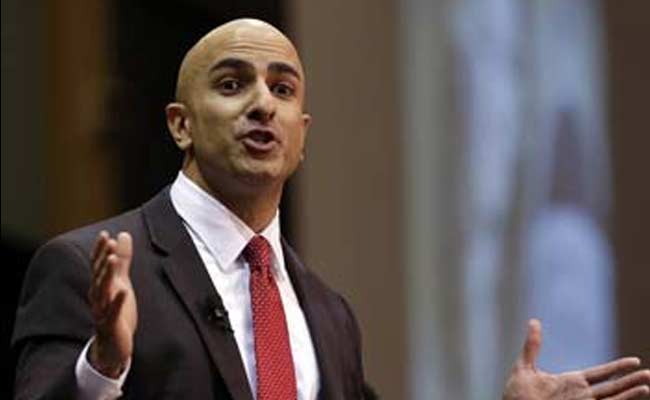
    WASHINGTON:  Prominent Indian-American business executive Neel Kashkari was today appointed as the head of the US Federal Reserve’s regional bank in Minneapolis.

    Mr Kashkari, who was once a Republican gubernatorial candidate in California, would replace another Indian-American Narayana Kocherlakota whose tenure as CEO and president ends on December 31.

    “Kashkari is the right person to build on the Minneapolis Fed’s core strengths and successfully lead the Bank into the future,” said Randall Hogan, chairman of the Minneapolis Fed’s board of directors and co-chair of the search committee.

    As president of the Minneapolis Fed, the 42-year-old will participate on the Federal Open Market Committee in the formulation of US monetary policy.

    He will oversee 1,100 employees. “I am truly honoured to have the opportunity to lead the Federal Reserve Bank of Minneapolis. I look forward to working with the Bank’s dedicated staff and continuing the Bank’s long-standing tradition of excellent service to the Ninth Federal Reserve District and to the nation,” Mr Kashkari said.

    “The Minneapolis Fed has built a strong reputation for economic research and thought leadership as well as excellence in Bank operations. I am delighted that I will be working with the Federal Reserve Bank of Minneapolis team to build on the Bank’s many achievements,” he said.

    Mr Kashkari had earlier served in the US Department of the Treasury from 2006 to 2009, first as senior adviser to Secretary Henry Paulson and then as assistant secretary of the Treasury.

    In the latter role, he established and led the Office of Financial Stability and oversaw the Troubled Asset Relief Program (TARP) for both Presidents George W Bush and Barack Obama.

    Mr Kashkari holds an MBA from the Wharton School of the University of Pennsylvania and bachelor’s and master’s degrees in mechanical engineering from the University of Illinois at Urbana-Champaign.

    The Federal Reserve Bank of Minneapolis is one of 12 regional Reserve Banks that make up the Federal Reserve System, the nation’s central bank.

  • Pakistan bans media coverage of Jamaat-ud-Dawa, Falah-e-Insaniyat (FIF) and Lashkar-e-Taiba (LeT)

    Pakistan bans media coverage of Jamaat-ud-Dawa, Falah-e-Insaniyat (FIF) and Lashkar-e-Taiba (LeT)

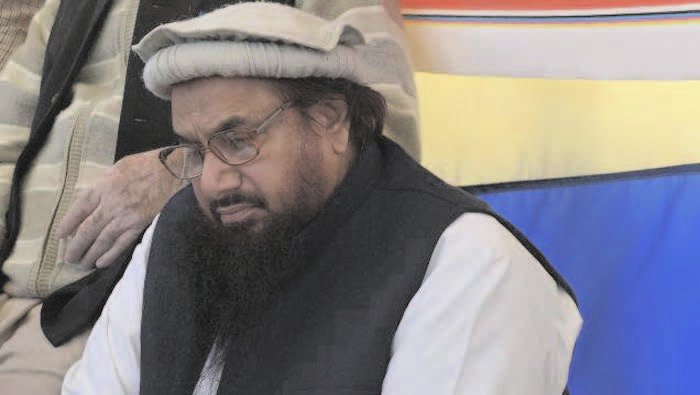
    ISLAMABAD: Interior Ministry has imposed a ban on the media coverage of Jamaat-ud-Dawa, Falah-e-Insaniyat (FIF) and Lashkar-e-Taiba (LeT) under the National Action Plan (NAP), media reports.

    It should be noted Jamaat-ud-Dawa’s name has already been included in the list of terrorist organizations by the United States of America and United Nations in December 2008. The United States has also put $10 million bounty on the head of Saeed.

    Pakistan Electronic Media Regulatory Authority (PEMRA) has issued the notification in this regard.

    The National Action Plan was devised in January 2015 after the heinous attack on Peshawar’s Army Public School in which the federal government and military decided to carry out operations in the tribal areas and take action against all terrorist organizations and their facilitators across the country.

    It was not clear whether the move was linked to Prime Minister Nawz Sharif’s assurance to US President Barack Obama last month to take “effective action” against UN-designated terrorist individuals and entities, including LeT and its affiliates, as per its international commitments and obligations under UN Security Council resolutions.

  • OBAMA PRAISES US SOCCER’S INDIAN-AMERICAN CHIEF OVER WORLD CUP WIN

    OBAMA PRAISES US SOCCER’S INDIAN-AMERICAN CHIEF OVER WORLD CUP WIN

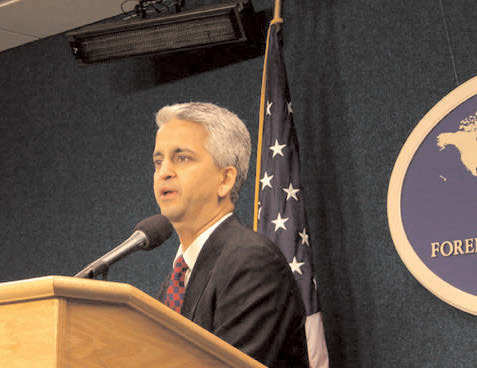
    WASHINGTON (TIP): US President Barack Obama showered praises on US Soccer Federation’s (USSF) Indian-American President Sunil Gulati as he welcomed the triumphant American women’s World Cup team to the White House to celebrate their victory after 16 long years on Tuesday, Oct 27.

    “I want to recognize a lot of people who made these incredibly talented women – put them in a position to be able to showcase their talent so effectively. First of all, U.S. Soccer President Sunil Gulati. Please give him a big round of applause,” Obama said, according to a press release.

    The US women’s soccer team, after a devastating loss in 2011 at the hands of Japan, dominated the World Cup final this year as it defeated Japan by 5-2.

    All 23 players, coaches and backroom staff filed in to the East Room, greeted by a loud ovation from the invited guests. Obama was joined by vice-president Joe Biden, Gulati and a 13-year-old girl Ayla from Massachusetts.

    Ayla shared a letter she wrote to President and the first lady towards the end of Canada 2015 with the crowd, explaining her anger after her brother told her that ‘boys are so much better at soccer than girls’, and that she wanted the White House’s help to prove him wrong.

    Obama hailed young Ayla’s courage and used her letter to frame his congratulatory remarks to the recent Women’s World Cup champions.

    “Girls like Ayla (were told that) they weren’t somehow supposed to be as good at sports as boys. And Ayla got mad, and she should be mad with those attitudes.

    “These champions deserve all the attention that they’ve been getting. After 16 long years, too much heartbreak, they flew north to put America back on top of the soccer world. And they did it in style. It was a victory that took all 23 players. It took Christie Rampone’s leadership, Alex Morgan’s playmaking, Heather O’Reilly’s game face. It took Becky Sauerbrunn’s quiet dominance. And Abby Wambach’s not-so-quiet dominance,” said Obama.

    Sunil Gulati was unanimously re-elected to a record third four-year term as United States Soccer Federation president in March 2014.

  • How 4 federal lawyers paved the way to kill Osama bin Laden

    How 4 federal lawyers paved the way to kill Osama bin Laden

    WASHINGTON (TIP): Weeks before President Barack Obama ordered the raid on Osama bin Laden’s compound in May 2011, four administration lawyers hammered out rationales intended to overcome any legal obstacles — and made it all but inevitable that Navy SEALs would kill the fugitive Qaida leader, not capture him.

    Stretching sparse precedents, the lawyers worked in intense secrecy. Fearing leaks, the White House would not let them consult aides or even the administration’s top lawyer, attorney general Eric Holder. They did their own research, wrote memos on highly secure laptops and traded drafts hand-delivered by trusted couriers.

    Just days before the raid, the lawyers drafted five secret memos so that if pressed later, they could prove they were not inventing after-the-fact reasons for having blessed it. “We should memorialize our rationales because we may be called upon to explain our legal conclusions, particularly if the operation goes terribly badly,” said Stephen W Preston, the CIA’s general counsel, according to officials familiar with the internal deliberations.

    While the bin Laden operation has been much scrutinized, the story of how a tiny team of government lawyers helped shape and justify Obama’s high-stakes decision has not been previously told. The group worked as military and intelligence officials conducted a parallel effort to explore options and prepare members of SEAL Team 6 for the possible mission.

    The legal analysis offered the administration wide flexibility to send ground forces onto Pakistani soil without the country’s consent, to explicitly authorize a lethal mission, to delay telling Congress until afterward, and to bury a wartime enemy at sea. By the end, one official said, the lawyers concluded that there was “clear and ample authority for the use of lethal force under US and international law.”

    Some legal scholars later raised objections, but criticism was muted after the successful operation. The administration lawyers, however, did not know at the time how events would play out, and they faced the “unenviable task” of “resolving a cluster of sensitive legal issues without any consultation with colleagues,” said Robert M. Chesney, a law professor at the University of Texas at Austin who worked on a Justice Department detainee policy task force in 2009.

    “The proposed raid required answers to many hard legal questions, some of which were entirely novel despite a decade’s worth of conflict with al-Qaida,” Chesney said.

    This account of the role of the four lawyers — Preston; Mary B. DeRosa, the National Security Council’s legal adviser; Jeh C. Johnson, the Pentagon general counsel; and then-Rear Adm. James W. Crawford III, the Joint Chiefs of Staff legal adviser — is based on interviews with more than a half-dozen current and former administration officials who had direct knowledge of the planning for the raid. While outlines of some of the government’s rationales have been mentioned previously, the officials provided new insights and details about the analysis and decision-making process.

    The officials described the secret legal deliberations and memos for a forthcoming book on national security legal policy under Obama. Most spoke on the condition of anonymity because the talks were confidential.

    ‘The biggest secret’

    “I am about to read you into the biggest secret in Washington,” Michael G Vickers, the undersecretary of defense for intelligence, told Johnson.

    It was March 24, 2011, about five weeks before the raid. Not long before, officials said, Preston and DeRosa had visited the Pentagon to meet with Johnson and Crawford, the nation’s two top military lawyers. The visitors posed what they said was a hypothetical question: “Suppose we found a very high-value target. What issues would be raised?”

    One was where to take him if captured. Johnson said he would suggest the Guantanamo Bay prison, making an exception to Obama’s policy of not bringing new detainees there.

    But the conversation was necessarily vague. The Pentagon lawyers needed to know the secret if they were going to help, Preston told DeRosa afterward.

    By then, the two of them had known for over six months that the CIA thought it might have found bin Laden’s hiding place: a compound in Abbottabad, a military town in northeastern Pakistan. Policymakers initially focused on trying to get more intelligence about who was inside. By the spring of 2011, they turned to possible courses of action, raising legal issues; Thomas E. Donilon, national security adviser to Obama, then allowed the two military lawyers to be briefed.

    One proposal Obama considered, as previously reported, was to destroy the compound with bombs capable of taking out any tunnels beneath. That would kill dozens of civilians in the neighborhood. But, the officials disclosed, the lawyers were prepared to deem significant collateral damage as lawful, given the circumstances.

  • Michelle Obama will travel to Qatar and Jordan next month

    Michelle Obama will travel to Qatar and Jordan next month

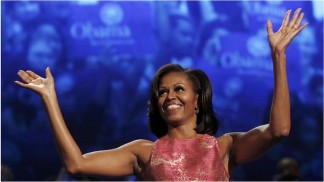
    WASHINGTON (TIP): First lady Michelle Obama will travel to Qatar and Jordan in the Middle East next month, the White House has said.

    Her solo overseas visit from November 1 to 7 is part of her ‘Let the Girl Learn campaign’.

    In Doha, Qatar Michelle will deliver remarks at the 2015 World Innovation Summit for Education (WISE), addressing an audience of education leaders from the region and around the world about global girls’ education and the Let Girls Learn initiative.

    Since 2009, WISE has brought together leaders annually to explore concrete steps to improve education worldwide. She will also visit service members stationed at Al Udeid Air Base.In Amman, Jordan, the first lady will visit a school constructed with USAID funding and technical support. She will meet with adolescent girls attending the school, deliver remarks and commend Jordan for its generosity and commitment to educating all children living within its borders.

    “Due to the conflict in Syria, many schools in Jordan are educating increasing numbers of Syrian students alongside the children of the Jordanian communities hosting them,” the White House said.

    “Girls in countries affected by conflict are nearly twice as likely to be out of secondary school, and the United States is working closely with Jordan to support this influx through ongoing educational cooperation and assistance,” it said.

    While in Jordan, the first lady will visit Petra — one of the most famous archaeological sites in the world — where she will highlight Jordan’s rich history and cultural heritage.

    (Source : PTI)

  • Women like burqas as they don’t need to wear makeup: Donald Trump

    Women like burqas as they don’t need to wear makeup: Donald Trump

    NEW YORK: In yet another controversial jibe, Republican presidential front-runner Donald Trump has said women in the Islamic world like wearing burqas because it is easier as they do not have to wear makeup.

    During a New Hampshire rally, Trump briefly spoke about his belief that the United States imposes its own version of Western democracy upon cultures that do not necessarily want it.

    Citing failed interventions in Libya and Iraq, Trump suggested it has been futile to try to export “freedom” to Muslim countries.

    “I saw somebody say ‘We want it over there where the women don’t have to wear the you-know-what,’” Trump told the crowd, wiping his hand in front of his face to mimic the look of a burqa.

    “And then I saw women interviewed. They said, ‘We want to wear them, we’ve worn them for thousands of years. Why would anyone tell us not to?’ They want to!” he was quoted as saying by CNN.

    “Fact is, it’s easier. You don’t have to put on makeup. Look how beautiful everyone looks. Wouldn’t it be easier? Right? Wouldn’t that be easy?” the real-estate mogul joked.

    “I tell ya, if I was a woman, I don’t want to. I’d be like, bwah (gesturing the burqa), ‘I’m ready, darling, let’s go.’ It’s true!” he said.

    Trump has a history of making controversial remarks about immigrants and other groups.
    Earlier on in his campaign, Trump had made controversial statements about Mexican immigrants and did not dispute a man’s assertion that US President Barack Obama was a Muslim.
    Last week Trump said the world would be a better place if dictators such as Saddam Hussein and Muammar Gaddafi were still in power.


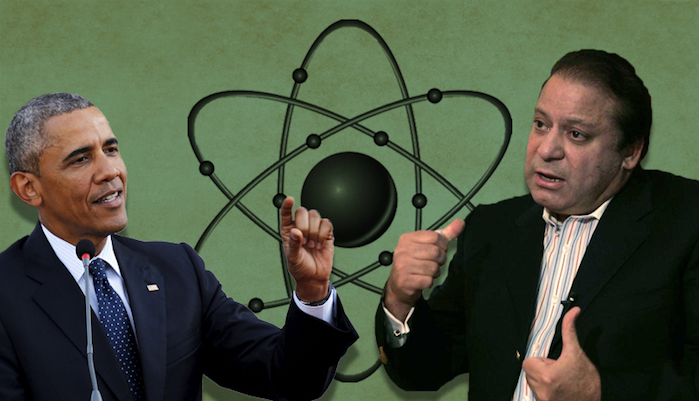
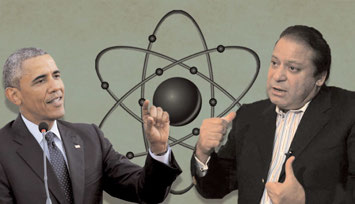
  • Pakistan PM fails to win US support against India

    Pakistan PM fails to win US support against India

    WASHINGTON (TIP): Pakistan Prime Minister must be a disappointed man. His bilateral with US President Barack Obama is being viewed as a diplomatic failure. India has watched the Sharif-Obama summit in Washington keenly, and while it is clear that Prime Minister Nawaz Sharif returns to Islamabad without any big announcement to show for the bilateral, and no progress on US-Pakistan civil nuclear negotiations, there are many parts to the 2015 joint statement issued by the two that could  be worrisome for India.

    Here are the key statements in the US-Pakistan joint statement which may cause concern to India.

    1.  Hydroelectric projects in PoK/Gilgit-Baltistan 

    President Obama expressed support for Pakistan’s efforts to secure funding for the Diamer Bhasha and Dasu dams to help meet Pakistan’s energy and water needs.

    India has opposed the construction of hydro-electric projects in the disputed region of Kashmir that includes PoK and Gilgit-Baltistan. Most recently, External Affairs Minister Sushma Swaraj had called the China-Pakistan Economic Corridor (CPEC) unacceptable because it includes these projects, while India had told the UNGA that “India’s reservations about the proposed China-Pakistan Economic Corridor stem from the fact that it passes through Indian territory illegally occupied by Pakistan for many years.”

    In recent years, the 4,500 m W Diamer Bhasha dam (DBD) project, that the Pakistan government says will halve its electricity shortfall when constructed, had come to a standstill over funding. In 2013, prospective investors – the ADB, China and Russia – had asked Pakistan to obtain an NOC (No objection certificate) from India before they could proceed on loans. Even after the announcement of the China-Pakistan Economic Corridor by President Xi Jinping for projects including dams in PoK in April 2015, China has shown a preference for the $1.6 billion Karot project, rather than DBD, which would now cost an estimated $14 billion. It is significant that the US wants to play ‘White Knight’ on these two dams, and for India, the construction of major projects like these endorsed by the US would be a blow to its claim on PoK. Earlier this month, reports suggested India had protested over a USAID event aimed raising funding for DBD, where US firm Mott McDonald has been contracted to perform a technical engineering review.

    2.  Talks with the Taliban
    President Obama commended Pakistan for hosting and facilitating the first public talks between the Afghan government and the Taliban in July 2015 and highlighted the opportunity presented by Pakistan’s willingness to facilitate a reconciliation process that would help end insurgent violence in Afghanistan.

    India has felt cut out of the Taliban peace process, and relations with President Ghani’s government underwent a strain when New Delhi learned that Pakistan would be allowed to host the talks in Murree. “This is an open acknowledgement that Pakistan controls the Taliban,” a senior official had told The Hindu at the time, “And rather than castigate Pakistan for not curbing the Taliban’s violence, these talks will legitimize its actions.”

    When the talks collapsed over the announcement of Mullah Omar’s death, it was felt Pakistan’s claim of being a ‘peacemaker’ rather than a sponsor of Taliban-terror would end. However, despite a surge in violence by the Taliban, including the brutal siege of Kunduz that was overthrown by Afghan and US special forces last month, the Joint statement seems to indicate the US is prepared to let Pakistan host the talks again.

    3.  Resume India-Pakistan talks
    President Obama and Prime Minister Sharif stressed that improvement in Pakistan-India bilateral relations would greatly enhance prospects for lasting peace, stability, and prosperity in the region. The two leaders expressed concern over violence along the Line of Control, and noted their support for confidence-building measures and effective mechanisms that are acceptable to both parties. The leaders emphasized the importance of a sustained and resilient dialogue process between the two neighbors aimed at resolving all outstanding territorial and other disputes, including Kashmir, through peaceful means and working together to address mutual concerns of India and Pakistan regarding terrorism.

    For over a decade, the US has stayed away from openly pushing India towards talks with Pakistan. In the period between 2003-2008, this was because India and Pakistan were engaging each other, and both the composite dialogue and back-channel diplomacy yielded many important confidence building measures between them. After the Mumbai 26/11 attacks, the US recognized India’s legitimate anger over the attacks being planned and funded in Pakistan, and abstained from making any comments on the resumption of India-Pakistan dialogue, restricting itself only to “welcoming” talks between their leaders in Thimphu, Delhi, New York and Ufa. The US-Pakistan joint statement doesn’t just put the importance of “sustained and resilient dialogue process” (codeword for comprehensive dialogue) back in focus, it makes a new mention of “violence along the LoC” which India squarely blames Pakistan for initiating. India believes ceasefire violations are aimed at “infiltrating terrorists”, a charge the government repeated when the NSA talks were cancelled. Of particular worry for India will be the US-Pakistan joint statement’s reference to “mutual concerns of terrorism”, as it comes in the wake of Pakistan’s latest claims of Indian support to terrorism inside Pakistan. Pakistan NSA Sartaj Aziz had told the press that Indian agency “involvement” in Balochistan and FATA would be taken up during the summit.

    4.  Action on LeT?
    In this context, the Prime Minister apprised the President about Pakistan’s resolve to take effective action against United Nations-designated terrorist individuals and entities, including Lashkar-e-Tayyiba and its affiliates, as per its international commitments and obligations under UN Security Council resolutions and the Financial Action Task Force.

    Action against the LeT has been India’s most sustained demand from Pakistan, especially after the 26/11 attacks, when the LeT’s top leadership was charged with planning and executing the carnage in Mumbai. Yet years later, chief Hafiz Saeed is free, LeT operations chief Zaki Ur Rahman Lakhvi is out on bail, and there seems little evidence that Pakistani forces have conducted any sort of crackdown on the Lashkar e Toiba, especially when compared to action against other groups after the Peshawar school attack of December 2014. While the US-Pakistan joint statement doesn’t note President Obama’s acceptance of Pakistan’s claims of keeping its “international commitments and obligations”, it is significant that the US has not raised the obvious violation of the UNSC and FATF requirements earlier this year during the bail process of Lakhvi. Despite Indian representations to the US and UN, there has been little pressure on Pakistan how Lakhvi raised the funds when according to the UNSC 1267 Committee rules, a designated terrorist cannot be allowed recourse to finances.

    5.  Nuclear talks
    The leaders noted Pakistan’s efforts to improve its strategic trade controls and enhance its engagement with multilateral export control regimes. Recognizing the importance of bilateral engagement in the Security, Strategic Stability and Non-Proliferation Working Group, the two leaders noted that both sides will continue to stay engaged to further build on the ongoing discussions in the working group.

    Both, the US and Pakistan, have denied a report in the Washington Post that they had planned what it called a “diplomatic blockbuster”: negotiations over a civil nuclear deal on the lines the US and India signed in 2005. Pakistan’s foreign secretary reacted to the report with a detailed account of Pakistan’s “low-yield tactical nuclear weapons” aimed at India, to calm fears in Pakistan that the government was giving up its weapons program. Even so the details in the Post have left lingering doubts over what the US intends, including pushing for a possible NSG waiver for Pakistan in exchange for limiting Pakistan’s missile capability. The report goaded the MEA into counseling the US on taking a closer look at Pakistan’s past on supplying nuclear weapons to North Korea and Iran, “Whosoever is examining that particular dossier should be well aware of Pakistan’s track record in proliferation. And when India got this particular deal, it was on the basis of our own impeccable non-proliferation track record,” the MEA spokesperson said on October 9, given that India will watch this space closely, particularly the phrase on “engagement with multilateral export regimes” mentioned in the US-Pakistan joint statement.

  • Obama vetoes $612 bn defense bill citing Gitmo, ‘gimmicks’

    Obama vetoes $612 bn defense bill citing Gitmo, ‘gimmicks’

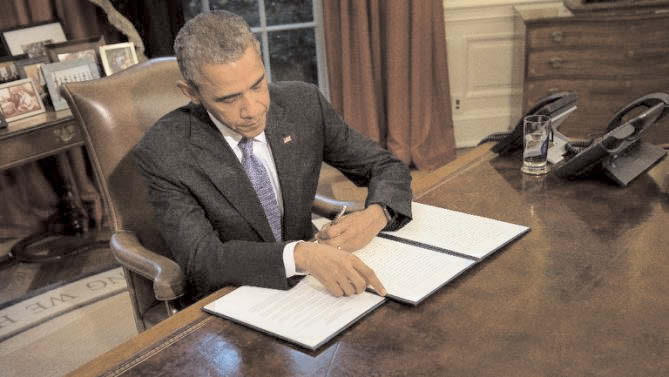
    WASHINGTON (TIP): US President Barack Obama vetoed a $612 billion defense spending bill Oct 22, saying it prevented the closure of Guantanamo Bay prison and wasted money on unwanted programs.

    Making a rare public show of rejecting a law, Obama said the text agreed by the Republican-controlled Congress “falls woefully short” in key areas.

    Obama said the bill did “a number of good things,” including reforming military retirement and funding cyber security, but “resorts to gimmicks” and funded unwanted programs.

    He zeroed in on provisions that would restrict the transfer of prisoners from Guantanamo Bay on the tip of Cuba, to the United States.

    “This legislation specifically impedes our ability to close Guantanamo,” he said.

    “Guantanamo is one of the premier mechanisms for jihadists to recruit, it is time for us to close it. It’s outdated, it’s expensive.”

    After embarrassing false starts, Obama is making a final push to close Guantanamo prison.

    But to fulfill that glaringly incomplete campaign promise he faces unpalatable compromises and internal resistance.

    But the fate of those deemed too dangerous to release — but too difficult to prosecute — has stymied his efforts.

    The administration is looking at military facilities like Fort Leavenworth, Kansas or the Navy Brig in Charleston, South Carolina as possible destinations for inmates.

    But Congress wants to have control of any transfer and to ensure that prisoners do not have full rights afforded to American civilians.

    The American Civil Liberties Union, which has campaigned for the prison’s closure, welcomed the move.

    “The president clearly did the right thing by rejecting the bill’s restrictions on transferring Guantanamo prisoners who have been locked up without charge or trial for years on end,” said executive director Anthony Romero.

    “Now Congress needs to send back the president a bill that will let him close Guantanamo and end indefinite detention, and he needs to take decisive action to make his promise to close the prison a reality.”He needs to do this soon, before his legacy is irreparably tarnished by the stain of Guantanamo.”

    Obama also said the budget “prevents a wide range of reforms that are necessary for us to get our military modernized.”

    “We have repeatedly put forward a series of reforms eliminating reforms that the Pentagon does not want, Congress keeps stuffing ’em back in,” he said. (Source: AFP )

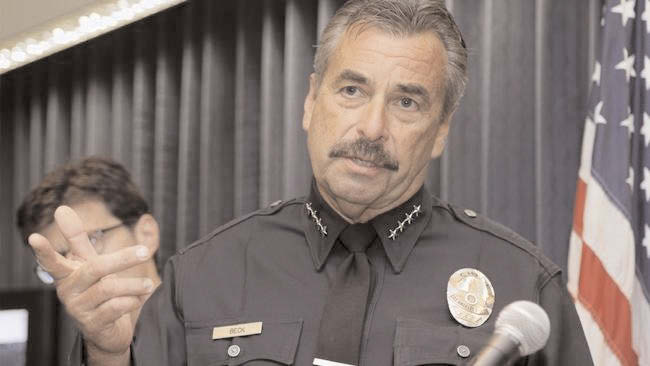
  • US police chiefs call for reducing prison population

    US police chiefs call for reducing prison population

    WASHINGTON (TIP): A group of 130 police chiefs, prosecutors and sheriffs from around the United States called for reforms that would to reduce the US prison population.

    The top cops are adding their voice as a group to others – including President Barack Obama – who want to lower the incarceration rate, which is the highest among developed countries.

    “We can say from experience that we can bring down both incarceration and crime together,” said Chicago police department superintendent Garry McCarthy, speaking at the group’s first meeting in Washington.

    While the US population has increased by 30 per cent since 1980, the country’s prison population jumped 800 per cent during the same period, largely due to sentences that are disproportionately harsh compared to other countries.

    US prison cells are often packed with drug addicts, non-violent petty criminals, or prisoners with psychiatric problems, and are serving sentences that are so long that they often lose any chance for rehabilitation.

    “Those individuals that can be saved, that want to do something positive to not recidivate and keep going to jail or prison – we’ve got to have an avenue to allow them to do that and for them to become productive members in our society,” said Houston, Texas police chief Charles McClelland.

    “It is cheaper to keep someone out of jail and prevent a crime. In the state of Texas, it costs almost USD 60,000 a year to keep one inmate locked up,” he said.

    Several members of the group, which includes the police chiefs of Washington DC, New York and Los Angeles, will meet with the president today.

    The United States is preparing to release in November thousands of prisoners considered at low risk of returning to crime, as part of an effort to ease prison overcrowding and redress overly harsh sentences.

    The release comes after the US Sentencing Commission, which sets policy for federal crimes, reduced its sentencing guidelines for drug possession.

    In his weekly radio address on Saturday, Obama urged reforming the US criminal justice system, saying much of it “remains unfair” and that punishments should correspond to the severity of crimes. (Source: AFP )

  • Obama lauds two time Google Science Fair Indian American champion ‘Pranav’

    Obama lauds two time Google Science Fair Indian American champion ‘Pranav’

    WASHINGTON (TIP): Another Indian American kid has created history by becoming the first person to earn a second time Global Finalist award in the 2015 Google Science Fair. But what made this accomplishment even more special was the shout-out to this kid by US President Barack Obama at White House Astronomy Night where bright young kids were present.

    Obama lauds two time Google Science Fair Indian American championUS President Barack Obama has lauded a budding Indian-American astronomy buff who has the distinction of being the first person to be a Global Finalist in Google Science Fair twice. The Astronomy Night was held Monday, Oct 19, at the White House.

    “Pranav was a global finalist in the Google Science Fair — not once, but twice. So you know he’s going to do some important things. Give him a big round of applause,” Obama said.

    Pranav at the Astronomy Night at the White House, October 19.
    Pranav at the Astronomy Night at the White House, October 19.

    Pranav, 15, was chosen out of only 10 students in his age category, 7 Americans, and 20 total students worldwide to make the finals of this year’s Google Science Fair. His research addressed resolvable image configurations of quasars in the Sloan Digital Sky Survey, allowing him to identify 109 new high probability quasar candidates. Pranav has also won the Astronomical League’s National Young Astronomer Award, two National Semi-finalist awards in the Siemens Competition in Math, Science, and Technology, taking second place in the Scripps National Spelling Bee.

    “When Pranav Sivakumar was six years old, he found an encyclopedia about famous scientists lying around the house.

    At least he thinks it was lying around there. Actually, his parents probably were setting it out hoping he was going to run into it,” Obama said.

    “And he’s been fascinated with outer space ever since. For years, every Saturday morning, his parents drove him an hour to an astrophysics lab for ‘Ask-A-Scientist’ class. And before long, he teamed up with researchers he met there to study the ‘gravitational lensing of quasars’. That is not what I was thinking about at his age,” the US President said.

    An eighth grader at the Illinois Math and Science Academy in Aurora, Illinois, Pranav is one of 20 teens from across the world to be named a finalist in Google’s online science and technology competition.

    He received the Virgin Galactic Pioneer Award last month for researching objects called quasars that appear unusually bright in the night sky.

    Pranav, a runner up in the 2013 National Spelling Bee, is working to find galaxies dominated by dark matter with a professor at the University of Chicago.

    As part of winning the Virgin Galactic Pioneer award, he gets to tour the company’s Mojave Air and Spaceport to meet the company’s engineers, and also gets a personal tour of Virgin Galactic’s new spaceship.

    “It has been an exciting journey,” Pranav, who hails from Obama’s hometown of Chicago, said in a recent press release.

    “I plan to continue this research for many years, hoping to contribute at least a little to our understanding of dark matter and dark energy, which make up 95 per cent of the universe and determine its future,” he said.

  • A US-Pak nuclear deal would be a threat to India’s security

    A US-Pak nuclear deal would be a threat to India’s security

    If a report in a US newspaper is to be believed, a US-Pakistan nuclear deal might be on the cards. The report says that such a deal is being considered around Prime Minister Nawaz Sharif’s visit to Washington this month.

    The report would not have appeared credible but for the evasive comment of the State Department on the subject and the official reaction of the spokesperson of our Ministry of External Affairs cautioning the US authorities against any such decision.

    Ever since the India-US nuclear deal was signed, the Pakistanis, obsessed with the idea of parity with India, have been seeking a similar deal.

    Besides calling the India-US nuclear deal discriminatory, Pakistan has condemned it as threat to its security and warned that it would take all necessary steps to safeguard its interests. Pakistan’s Foreign Affairs Adviser Sartaj Aziz aggressively reiterated this on the occasion of President Barack Obama’s visit to India in January this year.

    By remaining silent, the US has only encouraged this absurd posturing by Pakistan.

    US soft on Pakistan

    Some western nonproliferation specialists have been advocating for some time a nuclear deal with Pakistan in order to remove its sense of grievance. They feel it would give Pakistan an incentive to limit the expansion of its nuclear arsenal and stabilize the nuclear situation in the sub-continent.

    Such advocacy is largely prompted by negative attitudes towards India which, with its historical opposition to the NPT, is seen as the one responsible for nuclearizing South Asia. In their eyes, this is one way of denying India any one-sided advantage in nuclear status.

    Until now, the US Administration has been differentiating India’s case from that of Pakistan and disclaiming any move to offer the latter a similar deal, thought the tenor of its statements has not been sufficiently convincing.

    In fact, both the US and China, to different degrees, have aided Pakistan in achieving its nuclear and missile ambitions.

    A US-Pak nuclear deal will erode the strategic importance of the Indo-US nuclear deal

    In the past, knowing the China-Pakistan nuclear and missile nexus, the US has waived the application of its laws for larger geopolitical reasons linked to the combat against the Soviets in Afghanistan. The Afghanistan factor has, unfortunately, continued to condition US thinking on Pakistan’s nuclear and other errant behavior.

    The US was remarkably soft with Pakistan on the AQ Khan case. It has tolerated Pakistan’s tactics to obstruct discussions on the FMCT at Geneva at a time when fissile material control was still on the US agenda.

    It has overlooked supplies of additional Chinese nuclear reactors to Pakistan in violation of China’s NSG commitments.

    One could speculate that having settled the nuclear question with India, this was one way for the US to allow Pakistan to be a beneficiary of external cooperation in its nuclear sector, as part of the traditional policy of “hyphenation”.

    US agencies and think tanks have been propagating information about the frenetic pace at which Pakistan has been expanding its nuclear arsenal, without any visible reaction from the US government.

    At one time, worried about the rise of radicalism in the country, the US was expressing concern about the security of Pakistan’s nuclear arsenal. But such fears are no longer being expressed.

    US conduct over the years suggests that it has favored the idea of a Pakistani nuclear capability to balance India’s. Remarkably, its complaisance towards the Pakistani nuclear program has continued long after the end of the Cold War.

    Adding to all this, US treatment of Iran’s nuclear ambitions contrasts strikingly with its handling of Pakistan’s nuclear transgressions. While draconian sanctions have been applied on Iran, in Pakistan’s case the US has argued that sanctions might hasten its slide towards failure as a state and increase the risk of its nuclear assets falling into the hands of religious extremists.

    This is specious logic as the US has not taken any precautionary step to curb the development of Pakistan’s nuclear assets, including its decision to introduce tactical nuclear weapons in the subcontinent. An expanded Pakistani nuclear arsenal is even more likely to fall into the wrong hands.

    US reaction to Pakistan’s loose talk about using nuclear weapons against India has been, moreover, notably mild. It could and should have been much stronger.

    The hesitation to impose sanctions on Pakistan contrasts also with the willingness to impose sanctions even on a powerful country like Russia, including its most senior leaders and functionaries.

    What inhibits the US to strong arm Pakistan despite its provocations remains unclear.

    The argument that for dealing with the situation in Afghanistan the US needs Pakistan’s assistance is not convincing. The US needs Russia even more for dealing with yet more complex and fraught problems as Iran and West Asia in general, including the rise of the Islamic State, not to mention the fall-out of mounting tensions in Russia-West relations.

    China-Pakistan axis

    It is mystifying why the US should want to politically legitimize Pakistan’s nuclear conduct through an India-like nuclear deal.

    In India’s case, the US wanted to make a geopolitical shift with the rise of China in mind. It saw India as a counterweight to China in Asia, but for this the nonproliferation issue which inhibited India’s international role had to be resolved.

    Pakistan is in fact China’s closest ally. The geopolitical purpose of a nuclear deal with Pakistan will only legitimize the China-Pakistan nuclear and security relationships and undermine India’s strategic interests vis-a-vis both these adversaries.

    The US has wanted to build a strategic relationship with India largely around shared interests in the Indian Ocean and Asia-Pacific regions in view of mounting signs of Chinese political and military assertiveness and its ambitious naval expansion program.

    Through the China-Pakistan Economic Corridor and the development of Gwadar, Pakistan is facilitating an increased Chinese strategic presence in the Indian Ocean, which contradicts this US strategy.

    Shocking rationale

    According to reports, the underlying reasoning offered by the US, if correctly reported, is almost shocking. In return for an NSG waiver, Pakistan will be asked to restrict its nuclear program to weapons and delivery systems that are appropriate to its actual defense needs against India’s nuclear threat, and not to deploy missiles beyond a certain range.

    This implies that the US accepts that India’s nuclear program is Pakistan-centric and that it poses a threat to Pakistan.

    The Chinese threat to India is being overlooked and the fact that India faces a double Pakistan-China nuclear threat – in view of the close nuclear collaboration between the two countries- is being ignored.

    The US, it appears, would be comfortable if only India would be exposed to the Pakistani nuclear threat, not others.

    US has been consistently soft on Pakistan’s errant behavior in matters like nuclear weapons

    But then, Pakistan’s nuclear arsenal, according to its own leaders, is India-centric. Pakistan is not threatening China, Iran or Saudi Arabia with its nuclear weapons. Which are the countries that the US wants to protect against the use of nuclear weapons by Pakistan?

    Pakistan is developing delivery systems to reach any point in India. The US would apparently be comfortable with that, but not if it developed missiles of longer range. But whose security is US worried about if Pakistan did that? US itself, Japan, Australia, Singapore, China, Iran, Saudi Arabia, Israel?

    China, we know, opposes India’s NSG entry without Pakistan. It would seem the US would be willing to accommodate both China and Pakistan if the latter limited its nuclear threat to India.

    By implication then, the US has no stakes in India’s security from an unstable and adventurous Pakistan, despite our so-called strategic partnership.

    A reward for Pakistan’s military

    The timing of a nuclear deal would be odd too. It is now universally recognized that it is General Raheel Sharif and not Nawaz Sharif who really hold the reins of power in the country. A nuclear deal will be a reward for the Pakistan military and not the civilian power, as Pakistan’s nuclear program is under military control.

    Does the US want to reward the Pakistan military for its operations in North Waziristan against the Pakistani Taliban and is this considered meritorious contribution to the fight against Al Qaeda and terrorism?

    One would have thought far more important for the US and the West is the rise of the Islamic State and its ideology. Compared to which North Waziristan is a side-show. In any case, the Pakistani military is not fighting the Haqqani group.

    Worse, while Pakistani is being accepted as an honest mediator in the Afghan reconciliation process, the Taliban showed its mounting force by occupying Kunduz.

    One hopes that the US report does not accurately reflect President Obama’s thinking.

    If it does, it will show how hollow is the strategic relationship between India and the US, and why it would not be wise to trust the US.

    The India-US nuclear deal will be eroded of much of its strategic importance bilaterally, as result. The US would have, in addition, administered a big political blow to Prime Minister Narendra Modi who has gone out of his way to improve strategic understanding with the US.

    But then, news reports are news reports, and they could merely be political kite-flying. In which case, the India-US relationship will not receive a big jolt for all the reasons mentioned in this article.

    (The author is a former foreign secretary of India. He has also served as India’s ambassador to Turkey, Egypt, France and Russia. He can be reached at sibalk@gmail.com)

  • Pentagon looking for new site for Guantanamo prisoners

    Pentagon looking for new site for Guantanamo prisoners

    MIAMI (TIP): A team of Pentagon officials began scouting sites in Colorado on Tuesday as potential alternatives to hold prisoners from Guantanamo Bay as part of the long-stalled effort to close the controversial detention center on the US base in Cuba.

    The team planned to assess facilities at the Federal Correctional Complex in Florence and the state penitentiary in Canon City as alternatives for a “limited” number of detainees from Guantanamo, said Navy Cmdr. Gary Ross, a Pentagon spokesman. They are looking at what changes would be needed to the facilities in Colorado to detain the prisoners and to hold proceedings for those facing trial by military commission, Ross said.

    The Pentagon team also has also surveyed the Disciplinary Barracks at Fort Leavenworth, Kansas, and the Naval Consolidated Brig in Charleston, South Carolina. President Barack Obama has sought to close Guantanamo since taking office but has been thwarted by Congress, which has banned transferring prisoners to the U.S. and placed restrictions on sending them abroad.

    The Obama administration is seeking to lift the ban but faces opposition in Congress, including from members opposed to moving prisoners to their districts. Human rights groups and detainee advocates say they also object to continuing to hold prisoners indefinitely without charge at any location.

  • US mulls sailing near disputed South China Sea islands: Pentagon official

    US mulls sailing near disputed South China Sea islands: Pentagon official

    WASHINGTON (TIP): The United States is considering sailing warships close to China’s artificial islands in the South China Sea to signal it does not recognize Chinese territorial claims over the area, a US defense official said on October 8.

    The Financial Times newspaper cited a senior US official as saying US ships would sail within 12-nautical-mile zones, that China claims as territory around islands it has built in the Spratly chain, within the next two weeks.

    The Navy Times quoted US officials as saying the action could take place “within days,” but awaited final approval from the Obama administration.

    A US defense official declined to confirm that any decision had been made, but referred to remarks in congressional testimony last month by US Assistant Defense Secretary David Shear, that “all options are on the table.”

    “We are looking at this,” the official said, on condition of anonymity.

    US Defense Secretary Ash Carter said last month, in reference to China’s South China Sea claims, that the United States would “fly, sail, and operate wherever international law allows, as US forces do all over the world.”

    The White House declined to comment on potential classified naval operations.

    In May, the Chinese navy issued eight warnings to the crew of a US P8-A Poseidon surveillance aircraft when it conducted flights near China’s artificial islands, according to CNN, which was aboard the US aircraft.

    China watching closely

    Chinese foreign ministry spokeswoman Hua Chunying told a regular news briefing on Thursday that China was paying attention to the reports of impending US naval action, and that it and the United States have maintained “extremely thorough communication” on the South China Sea issue.

    “I believe the US side is extremely clear about China’s relevant principled stance,” she said. “We hope the US side can objectively and fairly view the current situation in the South China Sea, and with China, genuinely play a constructive role in safeguarding peace and stability in the South China Sea.”

    US President Barack Obama said he told Chinese President Xi Jinping he had
    “significant concerns” about the islands when Xi made his first state visit to Washington late in September.

  • McCarthy Quits Speaker Race leaving House Republicans Shell shocked

    McCarthy Quits Speaker Race leaving House Republicans Shell shocked

    WASHINGTON (TIP): House Republicans were shell shocked on Thursday, October 8, when California Representative Kevin McCarthy, the favorite to succeed retiring House Speaker John Boehner, dropped out of the race in a surprise that adds to concerns about the party’s ability to govern effectively, news reports said.

    McCarthy, the No. 2 Republican in the House, faced opposition from more conservative lawmakers who now could be emboldened to take a more confrontational approach toward Democratic President Barack Obama on legislation and policy.

    McCarthy’s decision leaves House Republicans without a leader at a time when they face difficult decisions about the spending and national debt that could threaten the country’s ability to pay its bills and keep its government running.

    Florida Rep. Daniel Webster, who is seeking the speaker’s post himself, told CNN’s “The Situation Room with Wolf Blitzer,” he was “shocked” at the announcement, saying McCarthy seemed excited about running not long before.

    “I don’t know why he dropped out, because we just had a member session where all the members came together and he and myself and the other two candidates were there, Kevin was there,” Webster said. “And he was passionate about it. This was just an hour and a half before he announced he wasn’t going to do it.”

    Even under the leadership of Boehner, who relied on McCarthy as an ally, Republicans stumbled into a 16-day government shutdown in 2013 and brought the country to the brink of default in 2011, leading to the United States’ first-ever debt rating downgrade.

    The next speaker will have to answer to a newly assertive conservative wing at a time when the party is trying to appeal to a broad swath of voters in the campaign for the November 2016 presidential elections.

    In several closed-door meetings this week, McCarthy told lawmakers he would not be like Boehner, some lawmakers said afterward, but few seem to have found this convincing.

    Boehner, who announced Sept. 25 that he would step down at the end of October, said on Thursday that he would stay on the job until a replacement is elected.

    Both the secret-ballot vote to nominate a Republican candidate for speaker and the full House vote, which was set for Oct. 30, have been postponed until further notice.

    House Republicans’ inability to merely pick a leader comes after Boehner and Senate Majority Leader Mitch McConnell, also a Republican, had gone to great lengths all year to demonstrate that their party can effectively run Congress.

    “If we are going to unite and be strong, we need a new face to help do that,” McCarthy told reporters. He said he would stay on in his current post as majority leader.

    McCarthy’s ability to effectively communicate Republican initiatives was called into question last week when he made a connection between a special House committee investigating a 2012 attack in Benghazi, Libya, and Democratic presidential candidate Hillary Clinton’s falling public opinion poll numbers.

    One possible successor to Boehner, Wisconsin Representative Paul Ryan, said he was not interested in becoming speaker. The party’s 2012 vice presidential nominee is widely admired among Republicans but said he wanted to remain as chairman of the tax-writing Ways and Means Committee.

    The two lawmakers who had challenged McCarthy for the post, Representatives Jason Chaffetz of Utah and Daniel Webster of Florida, said they were still in the race.

    “It was just absolutely stunning what happened,” Chaffetz said. “I don’t know if I am the right person. I put my name in the hat because I do want to unite this party internally.” Webster said he expected other candidates to enter the contest.

    The Republicans were tossed into upheaval just a few weeks before the United States is due to reach the limits of its borrowing authority. The Treasury department has estimated that the United States will hit its$18 trillion debt cap around Nov. 5, and the White House urged Congress to raise the limit before then to avoid a possible default.

    Lawmakers are also struggling with Obama on spending levels before government funding runs out on Dec. 11.

    White House spokesman Josh Earnest said there had been several instances in the past few years in which a Republican-dominated House of Representatives has managed to raise the debt ceiling without political brinkmanship.

    “And we’re hopeful that in spite of this chaos, that Republicans and Democrats in the House will do the same thing again,” Earnest said at a news briefing.

    McCarthy was elected to Congress from California in 2006 and had been one of Boehner’s lieutenants in House Republican leadership since 2011. He has been majority leader since August 2014.

    Webster had drawn the backing of the House Freedom Caucus, a bloc of about 40 conservatives. These Tea Party-aligned members noted that Webster, 66, led efforts that “empowered” individual lawmakers while he was speaker of the Florida House from 1996 to 1998.