Tag: Barack Obama

  • Rupert Murdoch apologizes for ‘real black President’ tweet

    Rupert Murdoch apologizes for ‘real black President’ tweet

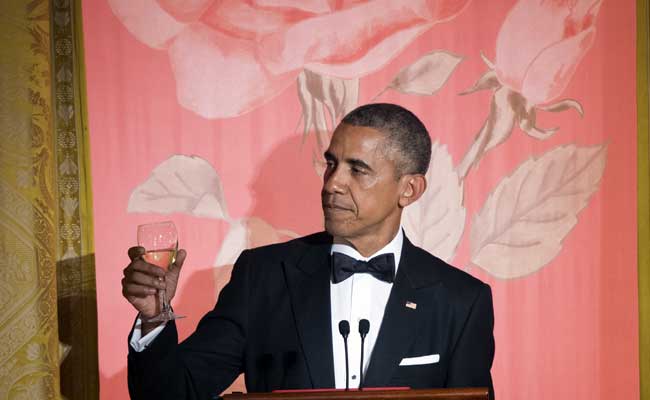
    NEW YORK (TIP): The founder of the global News Corp media empire, Rupert Murdoch, issued an apology on Thursday after he faced social media backlash following his suggestion that President Barack Obama isn’t a “real black President.”

    Apologies! No offence meant. Personally find both men charming. – Rupert Murdoch (@rupertmurdoch) October 8, 2015

    Murdoch was praising Republican presidential candidate Ben Carson and his wife on Twitter on Wednesday when he wrote: “Ben and Candy Carson terrific. What about a real black President who can properly address the racial divide?”

    Ben and Candy Carson terrific. What about a real black President who can properly address the racial divide? And much else. – Rupert Murdoch (@rupertmurdoch)

  • India, US and a New moment

    India, US and a New moment

    Prime Minister Narendra Modi’s visit to the United States has taken place at a moment of significant opportunity for India. The Chinese economy, which had seemed invincible, has faltered and is facing deep structural problems. India is poised to become the world’s best performing economy, though there are still signs of sluggishness and it is imperative that both domestic and foreign investment be accelerated for its full potential to be reached. Against this backdrop, Modi’s program, replete with high-profile meetings with CEOs of US financial, media and technology companies and a well-attended public function with the Indian community, addressed the business and diaspora constituencies that have been central to the prime minister’s foreign outreach since he assumed office.

    American technology companies see India as the next big growth opportunity, given the difficulties in operating in China and the fast growth of the smartphone market and e-commerce in India.

    This was evident from the enthusiasm with which Modi was received in Silicon Valley by the chief executives of America’s best known technology companies, several of whom, like Satya Nadella and Sundar Pichai, hail from India. India’s goal to harness the digital revolution to skill its people, improve infrastructure and delivery of goods and services opens up exciting possibilities. For India, the challenge is to leverage these opportunities to create employment for the millions who enter the job market each year, and develop domestic technical and manufacturing capabilities.

    In the last years of the previous government, American investors had become wary of doing business in India on account of slow decision-making and the unpredictability of the regulatory environment. But the high expectations that the new government, with a solid majority in the Lok Sabha, would be able to smoothen out these tangles quickly and expedite reform have been moderated as several key initiatives like the land amendments and GST have been abandoned or failed to make progress. The unpredictability of the tax regime has been a major concern of foreign investors and this is still a work in progress. India needs to step up its game to create a conducive business environment. Equally, high US visa fees for Indian software engineers deployed there for short periods, numerical quotas and the absence of a tantalization agreement constrain the business of Indian IT companies in America. These issues need to be addressed if businesses are to build on their synergies.

    The three million-strong Indian American community has come of age and is a vital bridge connecting the people of the two countries. Modi has paid special attention to the overseas Indian community as an asset for India’s development and a force-multiplier in India’s diplomacy. This was again visible at the public function in San Francisco with the Indian American community.

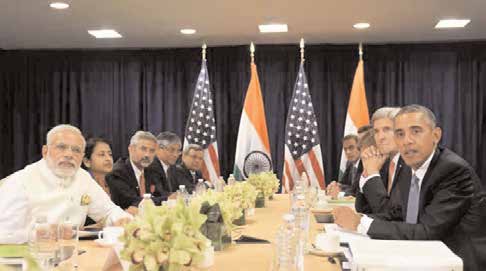
    This was not a bilateral visit, though Modi and President Barack Obama did meet – for the fifth time – on the sidelines of the UN. Climate change was uppermost on Obama’s agenda in the run-up to the Paris conference. With China having announced its intention to cap its emissions in 2030, there is pressure on India to announce its emission-reduction goals. Modi underlined that India will be a constructive player in Paris while keeping open avenues for meeting its developmental needs. In setting our national goals, Delhi needs to ensure that it does not disproportionately add to the costs of doing business in India. Affordable clean and renewable energy and energy efficiency hold the key to a less carbon-intensive future for India and it is here that an India-US partnership can bring real value to the table.

    Afghanistan faces an uncertain future post the withdrawal of US combat forces. The US, along with China, co-chaired a meeting on Afghanistan to which India was not invited. The US and Chinese efforts to stabilize Afghanistan with Pakistan’s cooperation should not lead to a situation that exacerbates terrorism challenges for India and the region. Continued support for strengthening the capacities of the Afghan government, particularly the army and the police, would be critical. There is need for candid discussions on Afghanistan between India and the US, and they have agreed to strengthen their consultations.

    Modi and Obama welcomed the progress made in giving shape to the joint strategic vision on the Asia Pacific and Indian Ocean regions and the joint engagement with regional powers like Japan. The upgraded trilateral ministerial consultations between India, the US and Japan were initiated on the sidelines of the UN. Japan is expected to participate in the Malabar naval exercise. Modi sought US support for India’s membership of the Asia-Pacific Economic Cooperation. Both India and the US have convergent interests in shaping an Asian balance grounded in international norms and conducive to peace and prosperity.

    The PM participated in the important UN Summit that adopted the Sustainable Development Goals. These set out an ambitious new agenda to end poverty by 2030 and promote shared economic prosperity, social development and environmental protection. India’s record on the Millennium Development Goals has been mixed, with considerable success in poverty reduction but more work to be done in health and education. The 17 new goals are in line with India’s national agenda for development, but achieving these would require renewed and sustained efforts by the government, civil society and the private sector over the next 15 years.

    The meeting of G-4 leaders shone a spotlight on UN Security Council reform, which has been languishing despite the growing recognition that the council, as it exists today, reflects the world as it emerged after World War II and needs to change to represent current realities and better fulfill its objectives. Four of the five permanent members of the Security Council, including the US, have expressed support for India’s candidature for permanent membership, while China has been ambivalent. Reform is likely to be a difficult process. The P-5 have been resisting change. A bottom-up approach -garnering support from members of the General Assembly combined with pressure from outside – would be required to generate momentum for Security Council reform.

  • Ajay Banga, Indra Nooyi, Satya Nadella Attend Barack Obama’s State Dinner for Xi Jinping

    Ajay Banga, Indra Nooyi, Satya Nadella Attend Barack Obama’s State Dinner for Xi Jinping

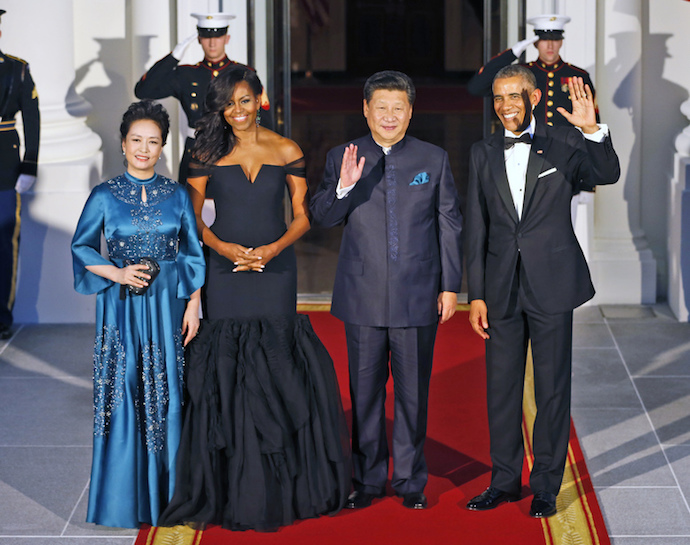
    WASHINGTON (TIP): Three Indian-American CEOs, Ajay Banga of Master Card, Indra Nooyi of PepsiCo and Satya Nadella of Microsoft, attended President Barack Obama’s lavish state dinner for Chinese President Xi Jinping.

    Mr. Banga, Ms Nooyi and Mr. Nadella, along with their spouses, were the only Indian-Americans invited by Obama for Xi’s state dinner in the White House, September 24 night.

    The 200-plus guest list included top brass from Apple, Microsoft, Facebook, Disney, DreamWorks and more.

    Many of the CEOs who attended the state dinner had either met Prime Minister Narendra Modi in New York a day earlier or will be meeting over a dinner in Silicon Valley.

    Mr. Banga and Ms Nooyi had also attended a dinner hosted by Fortune for an interaction with Modi in New York.

    Inspired by the harvest of the late summer and fall, chef Cris Comerford and Chef Susie Morrison, in collaboration with Chef Anita Lo, created original dishes that highlight American cuisine with nuances of Chinese flavors.

    Guests dined on wild mushroom soup, poached Maine lobster, grilled cannon of Colorado lamb and poppyseed bread and butter pudding.

  • US support for Syria rebels illegal, Putin says ahead of Obama meeting

    MOSCOW (TIP): Russian President Vladimir Putin on Sunday branded US support for rebel forces in Syria as illegal and ineffective, saying US-trained rebels were leaving to join Islamic State with weapons supplied by Washington. In an interview with US networks recorded ahead of a meeting with US President Barack Obama, Putin said Syrian President Bashar al-Assad deserved international support as he was fighting terrorist organizations. Obama and Putin are scheduled to talk on Monday after Putin addresses the United Nations, although White House and Kremlin officials have disagreed on what the two leaders will discuss and even who initiated the meeting.

  • Israel PM calls for peace talks with Palestinians

    Israel PM calls for peace talks with Palestinians

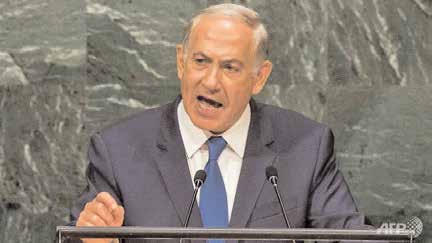
    UNITED NATIONS (TIP): Israel’s prime minister went to the United Nations on Oct 1 to call for an immediate resumption of peace talks with the Palestinians and to savage the international community’s nuclear deal with Iran.

    “I am prepared to immediately, immediately resume direct peace negotiations with the Palestinians without any conditions whatsoever,” Benjamin Netanyahu told the general assembly.

    Addressing Palestinian leader Mahmud Abbas directly, he said:

    “President Abbas, I know it’s not easy. I know it’s hard.”But we owe it to our peoples to try. To continue to try. Because together … if we actually sit down and try to resolve this conflict between us … we can do remarkable things for our people,” Netanyahu added.His remarks come with Netanyahu scheduled to speak with US President Barack Obama at the White House in November — their first meeting after a deep row about the Iranian nuclear row.Their frosty relations plummeted further during Netanyahu’s re-election campaign when he rejected a two-state solution for peace with the Palestinians.

    With the peace process in deep freeze, there are growing fears that tensions like those flaring at Jerusalem’s flashpoint Al-Aqsa mosque compound could spark a broader Palestinian uprising.Abbas told the United Nations on Wednesday that Israel’s refusal to release Palestinian prisoners and stop settlement activity, meant that Palestinians could no longer feel bound by past agreements.

    “They leave us no choice but to insist that we will not remain the only ones committed to the implementation of these agreements, while Israel continuously violates them,” he said.

    “We cannot continue to be bound by these signed agreements with Israel and Israel must assume fully all its responsibilities as an occupying power,” Abbas added, saying Palestinian patience “has come to an end.”

    Netanyahu used the first part of his speech to criticize the international community for reaching the nuclear deal with Iran.

    During his speech, he fell silent for 45 seconds after slamming the UN general assembly’s “deafening silence” in the face of repeated calls from Iran for the destruction of the Jewish state.

    “The response from this body,” he said, “has been absolutely nothing. Utter silence. Deafening silence.”

    Israel will do whatever it takes to defend itself and will not allow Iran to develop nuclear weapons, Netanyahu said.

    “Israel will not permit any force on earth to threaten its future,” he said. “Israel will do whatever it must do to defend our state and to defend our people.”

  • Ajay Banga, Indra Nooyi, Satya Nadella Attend Barack Obama’s State Dinner for Xi Jinping

    Ajay Banga, Indra Nooyi, Satya Nadella Attend Barack Obama’s State Dinner for Xi Jinping

    NEW YORK:  Three Indian-American CEOs, Ajay Banga of Master Card, Indra Nooyi of PepsiCo and Satya Nadella of Microsoft, attended President Barack Obama’s lavish state dinner for Chinese President Xi Jinping.

    Mr Banga, Ms Nooyi and Mr Nadella, along with their spouses, were the only Indian-Americans invited by Obama for Xi’s state dinner in the White House last night.

    The 200-plus guest list included top brass from Apple, Microsoft, Facebook, Disney, DreamWorks and more.

    Many of the CEOs who attended the state dinner had either met Prime Minister Narendra Modi in New York a day earlier or will be meeting over a dinner in Silicon Valley.

    Mr Banga and Ms Nooyi had also attended a dinner hosted by Fortune for an interaction with Modi in New York.

    Ms Nadella would be meeting the Prime Minister over a dinner when he travels to San Jose.

    Inspired by the harvest of the late summer and fall, chef Cris Comerford and Chef Susie Morrison, in collaboration with Chef Anita Lo, created original dishes that highlight American cuisine with nuances of Chinese flavours.

    Guests dined on wild mushroom soup, poached Maine lobster, grilled cannon of Colorado lamb and poppyseed bread and butter pudding.

  • Barack Obama Names 3 Indian Americans to Advisory Council on Faith-Based and Neighborhood Partnerships

    Barack Obama Names 3 Indian Americans to Advisory Council on Faith-Based and Neighborhood Partnerships

    President Barack Obama is naming three Indian Americans to an advisory council on faith-based and neighbourhood partnerships that brings together religious and secular leaders as well as scholars and experts in their fields.

    The President’s Advisory Council on Faith-Based and Neighborhood Partnerships brings together religious and secular leaders as well as scholars and experts in fields related to the work of faith-based and neighborhood organizations.The charge for this Council focuses on steps the government should take to reduce poverty and inequality and create opportunity for all, including changes in policies, programs, and practices that affect the delivery of services by faith-based and community organizations and the needs of low-income and other underserved persons.

    Naming Preeta Bansal, Nipun Mehta and Jasjit Singh and 14 others President Obama said: “I am confident that these outstanding men and women will serve the American people well, and I look forward to working with them.”

    Bansal is a lecturer at the Massachusetts Institute of Technology (MIT) Media Lab and a Senior Advisor at MIT’s Laboratory for Social Machines.

    She is also President of Social Emergence Corporation, a not-for-profit founded in May 2015, which focuses on empowering human networks and community relationships.

    Bansal served as a member of the US Commission on International Religious Freedom from 2003 to 2009, and as Chair from 2004 to 2005. She was Solicitor General of the State of New York from 1999 to 2001.

    Early in her legal career, she served as law clerk to US Supreme Court Justice John Paul Stevens.

    Bansal is a Henry Crown Fellow at the Aspen Institute and a Member of the Council on Foreign Relations. She received a BA from Harvard-Radcliffe College and a JD from Harvard Law School.

    Nipun Mehta, is the founder of ServiceSpace, a non-profit organization established in 1999. From 1998 to 2001, he was a software engineer at Sun Microsystems.

    Mehta is a member of the Advisory Circle of the Seva Foundation, the International Advisory Council of the Dalai Lama Foundation, and the Advisory Board of the Greater Good Science Centre.

    He has received numerous awards for his community work, including the Jefferson Award for Public Service, the President’s Volunteer Service Award and Wavy Gravy’s Humanitarian Award. Mehta received a BA from California University.

    Jasjit Singh is Executive Director of the Sikh American Legal Defence and Education Fund (SALDEF), a position he has held since 2012.

    Singh first joined SALDEF as the Associate Executive Director in 2009. Prior to joining SALDEF, he worked at Deloitte & Touche.

    He also founded the Sikh Student Association at the University of Illinois, and served as its President from 2000 to 2002. Singh is a BS from Illinois University.

    Source: White House Website – https://www.whitehouse.gov/the-press-office/2015/09/24/president-obama-announces-more-key-administration-posts

  • “Mission 2022” Launched by Indian Americans & CII

    “Mission 2022” Launched by Indian Americans & CII

    WASHINGTON (TIP): The Indian diaspora in the US has launched “Mission 2022” in partnership with the Confederation of Indian Industries to make US-India partnership a defining partnership of the 21st century.

    “We have set a goal called Mission 2022, which is to have a series of dialogues with the diaspora over the next seven years as India turns 75,” entrepreneur M R Rangaswami said during a reception hosted by CII and Indian diaspora, which among others was attended by US Commerce Secretary Penny Pritzker and Commerce Minister Nirmala Sitharaman.

    These dialogues would be held every six months.

    “The goal is that by 2022, the US-India partnership is a defining partnership of the 21st century,” he said yesterday.

    Highlighting the significant positive change taking place within India, CII president Sumit Sumter invited the diaspora to invest in India’s transformation, avail the immense opportunities available today and be part of the mutual growth story.

    Mr. Sitharaman applauded the vision of President Barack Obama and Prime Minister Narendra Modi and highlighted the significant deepening of commercial ties between the two nations and their businesses.

    Mr. Pritzker stressed on the work cut out by both the governments to make this into a USD 500 billion economic engagement between the oldest and the largest democracies in the world.

    Together the two leaders highlighted the substantial steps taken by the two governments in the direction of boosting trade and investments.

    Amidst the ongoing wave of optimism and promising developments surrounding US-India Strategic and Commercial Dialogue as well as PM Modi’s anticipated second visit to the US major stakeholders joined in the reception to celebrate the flourishing Indian diaspora and to place them front and centre within the context of the overall bilateral partnership.

    Stressing the positively evolving commercial relationship between the countries, both Mr. Sitharaman and Mr. Pritzker invited the business community to help shape and deepen the economic relationship still further.

    The growing Indian-American diaspora is heavily invested in the American system and can not only rise to be the backbone of this critical partnership but can help fuel US & India’s mutual growth story.

  • ‘US MUST TREAT CHINA AS AN EQUALLY STRONG NATION’

    BEIJING (TIP): Visiting Chinese president Xi Jinping on Tuesday asked the US to treat China as an equally strong nation in what he called “a new model of major country relationship”.

    He demonstrated China’s economic strength by placing an order for 300 Boeing aircraft, something closely related with employment in the US.

    Xi contradicted some experts, who have talked about a Thucydides trap where an emerging power like China causes fears for an established power like the US leading to a war like situation.

    “There is no such things as the so-called Thucydides trap in the world. But should major countries time and again make the mistakes of strategic miscalculation, they might create such traps for themselves,” he warned while speaking at a banquet hosted by the local government of Washington State and local groups.

    Xi’s visit comes soon after China organized a massive military parade exhibiting sophisticated weapons in Beijing.

    Many American senators have complained about China’s recent devaluation of Yuan, which might hit US exports.

    “We want to see more understanding and trust, less estrangement and suspicion, in order to forestall misunderstanding and miscalculation,” the president said.

    “The two countries should unswervingly boost win-win cooperation and foster friendship between the two peoples in an extensive manner.”

    China has been developing its idea of “major country relationship” as it has emerged as an economic power while Russia has gradually lost its superpower status resulting in a vacuum

    Xi will visit Boeing’s main plane factory in Washington State on Wednesday. Besides placing the new order, the State-owned Commercial Aircraft Corporation of China signed an agreement with Boeing to establish a completion centre for 737 airliners in China.

    A Chinese company recently placed another order for 50 aircraft with Boeing.

    Xi has scheduled his meeting with US President Barack Obama at the White House in the later part of the trip.

    “We want to deepen mutual understanding with the US on each other’s strategic orientation and development path,” Xi said.

    He suggested the two countries should respect each other, seek common ground while reserving their differences and spare no effort to turn differences into areas of cooperation.

    China will stay committed to steady economic growth, reform, opening-up, rule of law, anti-corruption endeavors and the path of peaceful development, Xi said.

    “China’s economy will stay on a steady course with fairly fast growth … The key to China’s development lies in reform … China will never close its open door to the outside world,” the president pledged.

  • Iran Deal Survives GOP Threat | Senate Dems vote 58 to 42

    Iran Deal Survives GOP Threat | Senate Dems vote 58 to 42

    WASHINGTON (TIP): Dealing a decisive defeat to Republicans’ attempts to derail the controversial Iran deal, Senate Democrats on Thursday, September 10, successfully blocked a measure meant to kill President Barack Obama’s nuclear deal with Iran

    With a 58-42 vote, Democrats filibustered the disapproval resolution that Republicans and other deal opponents had tried to send to Obama’s desk, where it would have been vetoed. But with more than enough support from Democrats to sustain that veto, the fight largely turned to the minutiae of Senate procedure and the suspense of whether Democrats would halt the bill from reaching the White House altogether.

    Republicans immediately branded Democrats as obstructionist for using the Senate’s supermajority requirement to kill the disapproval resolution. Senate Majority Leader Mitch McConnell (R-Ky.) moved to set up a do-over for next week, but Senate Minority Leader Harry Reid (D-Nev.) said the result will be the same.

    “He’s lost the vote,” Reid said of McConnell. “Any future attempts to re-litigate this issue in the Senate will meet the same outcome and will be nothing more than wasted time.”

    Obama cheered the vote from the White House, saying he was “heartened that so many Senators judged this deal on the merits, and am gratified by the strong support of lawmakers and citizens alike.”

    Meanwhile, a chagrined Boehner threatened to sue Obama on Nuclear deal with Iran.

  • US judge rules Republicans can pursue Obamacare lawsuit

    US judge rules Republicans can pursue Obamacare lawsuit

    WASHINGTON (TIP): A US judge said on Wednesday congressional Republicans could move forward with parts of a lawsuit that alleges executive overreach by President Barack Obama’s administration in implementing his signature healthcare law.

    US District Judge Rosemary Collyer, appointed by former President George W Bush, a Republican, said the House of Representatives has standing to pursue claims that the secretaries of health and human services and of the Treasury violated the Constitution by spending funds Congress did not appropriate.

    At the same time, Collyer determined they could not pursue claims that the Treasury secretary improperly amended the healthcare law, as those concerned only the implementation of a statute and not adherence to any congressional requirement.

    Collyer did not rule on the merits of the claims, only on the administration’s motion to dismiss the lawsuit on the issue of standing, a requirement in US law whereby plaintiffs have to show they have been directly harmed.

    On that issue, “the constitutional trespass alleged in this case would inflict a concrete, particular harm upon the House for which it has standing to seek redress in this court,” Collyer wrote in her opinion.

    The Department of Justice will appeal the court’s ruling, said spokesman Patrick Rodenbush. An appeal could further delay proceedings on the merits of the claims.

    White House spokeswoman Jennifer Friedman called the decision unprecedented.

    “This case is just another partisan attack, this one, paid for by the taxpayers; and we believe the courts will ultimately dismiss it,” she said in a statement.

    House Republicans filed the lawsuit in November, saying administration officials overreached in authorizing Treasury payments to healthcare insurers and delaying the law’s employer mandate.

    In a statement, US House Speaker John Boehner, a Republican, said the ruling showed the Obama administration’s “historic overreach can be challenged by the coequal branch of government with the sole power to create or change the law.”

    The 2010 Affordable Care Act, the Democratic president’s biggest domestic policy achievement was bolstered by a Supreme Court decision in June that upheld federal tax subsidies that helps millions of Americans afford coverage.

  • Obama, Biden to lead high decibel US engagement with India

    WASHINGTON (TIP): US President Barack Obama along with vice president Joe Biden and several of his cabinet ministers are all set for a high-level engagement with the Indian leadership in a series of meetings later this month.

    This would be the highest level of engagement between the two countries after Obama’s trip to New Delhi in January to attend the Republic Day parade as the chief guest of Prime Minister Narendra Modi.

    Obama and Modi are expected to meet in New York on September 28.

    While no official announcement has been made yet, the proposed meeting itself is a reflection of the seriousness and commitment of the two leaders to this bilateral relationship.

    On a day, which is said to be one of the busiest days for the US President given his address to the UN General Assembly on the first day of the annual session, Obama’s schedulers had a tough time in creating space for his meeting with Modi.

    Modi, on the other hand for all practical purpose would be taking an overnight flight – although it would be Air India One – from Silicon Valley on September 27 after addressing the Indian-Americans at the SAP Center in San Jose to be back to Big Apple for his likely meeting with Obama, sources said.

    Notably in the January joint statement, the two leaders had committed themselves for a more regular meeting.

    Modi-Obama meeting in New York would cap more than a week of high level India-US engagement – most of which would be held in Washington DC, the sources said.

    It is learnt that Vice President Biden is himself keen to be part of this highest level of India-US engagement. It was Biden who, during his visit to India a few years ago, had set the ambitious goal of increasing the bilateral trade from the current USD 100 billion to USD 500 billion per annum.

    It is in this backdrop, it might not be surprising that Biden is seen taking a lead once again when it comes to the economic dimension of the India US relationship.

  • Barack Obama’s big plans to engage with Modi’s India

    Barack Obama’s big plans to engage with Modi’s India

    US President Barack Obama along with Vice-President Joe Biden and several of their government officials are all set for a high-level engagement with the Indian leadership in a series of meetings later this month. This would be the highest level of engagement between the two countries after Obama’s trip to New Delhi in January to attend the Republic Day parade as the chief guest of Prime Minister Narendra Modi.

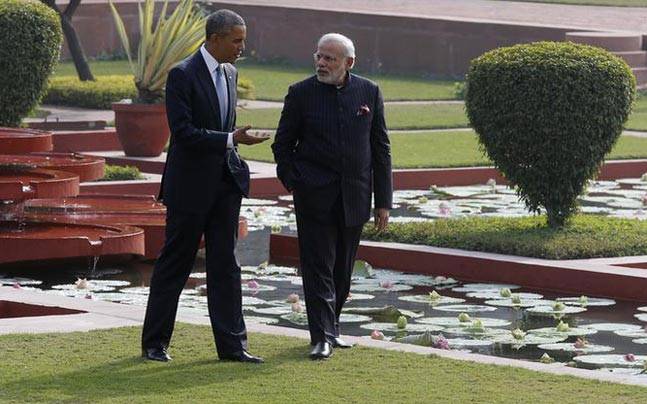
    Obama and Modi are expected to meet in New York on September 28. While no official announcement has been made yet, the proposed meeting itself is a reflection of the seriousness and commitment of the two leaders to this bilateral relationship.

    On a day, which is said to be one of the busiest days for the US President given his address to the UN General Assembly on the first day of the annual session, Obama’s schedulers had a tough time finding a slot for his meeting with Modi.

    Modi, on the other hand, is likely to take an overnight flight to New York in his Air India One from Silicon Valley on September 27 after addressing the Indian-Americans in San Jose for his likely meeting with Obama.

    Notably, in their joint statement in January, the two leaders had committed themselves for a more regular meeting. The Modi-Obama meeting in New York would cap more than a week of high-level India-US engagement, most of which would be held in capital Washington DC.

    It is learnt that Vice-President Biden is himself keen to be part of this highest level of India-US engagement. It was Biden who, during his visit to India a few years ago, had set the ambitious goal of increasing the bilateral trade from the current USD 100 billion to USD 500 billion per annum.

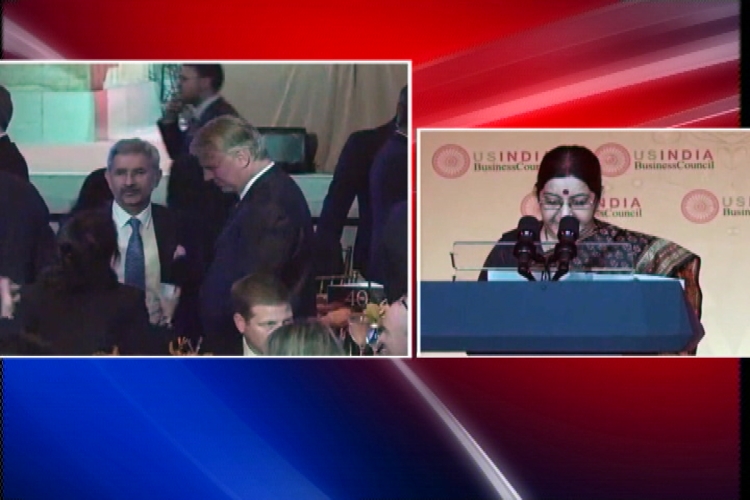
    It is in this backdrop that Biden has been seen taking a lead once again when it comes to the economic dimension of the India US relationship. Several cabinet ranking officials along with corporate leaders from both the countries are expected to be present at the 40th Anniversary Leadership Summit of the US-India Business Council (USIBC) on September 21.

    Among others, it would be attended by Energy Minister Piyush Goyal and Commerce Minister Nirmala Sitharaman and US Commerce Secretary Penny Pritzeker along with who’s who of corporate leaders from the two countries. The next day, TERI North America would host the 6th India-US Energy Partnership Summit.

    However, it is the first ever India-US Strategic and Economic Dialogue to be hosted by Secretary of State John Kerry that will be the center of attraction when Modi is in the US. While the dates of this dialogue has not been announced yet, it is most likely to be held on September 22. The decision to expand India-US Strategic Dialogue to Commercial one was taken during Obama’s January visit to India.

    Kerry along with Pritzeker would lead the US delegation, while the Indian delegation would be led by External Affairs Minister Sushma Swaraj and Sitharaman. Foreign Secretary S Jaishankar will also expected to be part of the Indian delegation. Indian Ambassador to the US Arun K Singh and his American counterpart in India Richard Verma would also be part of their respective terms.

  • Pulitzer Prize winner Indian American author Jhumpa Lahiri to be conferred top US award

    Pulitzer Prize winner Indian American author Jhumpa Lahiri to be conferred top US award

    U.S. President Barack Obama will award Indian-American Pulitzer Prize winning author Jhumpa Lahiri, the 2014 National Humanities Medal, which honors those who have widened the public’s engagement with literature and “deepened the nation’s understanding of the human experience.”

    Writer Jhumpa Lahiri will be presented the prestigious Medal by US President Barack Obama next week. Jhumpa, 48, has been selected for the award for enlarging the human story, the White House said yesterday.

    “In her works of fiction, Lahiri has illuminated the Indian-American experience in beautifully wrought narratives of estrangement and belonging,” the White House said in a statement.

    The citation that the President will read at next week’s presentation ceremony, which will be attended by the First Lady as well, will commend Ms. Lahiri for “enlarging the human story,” noting, “In her works of fiction, Dr. Lahiri has illuminated the Indian-American experience in beautifully wrought narratives of estrangement and belonging.”

    Ms. Lahiri’s novel, whose premise was described by The New York Times as “startlingly operatic,” is a tale of two brothers growing up in Calcutta in the 1960s, of whom one is killed, and the other marries his pregnant widow and moves to the U.S.

    Along with Ms. Lahiri, others honoured by the White House include actress Sally Field and author Stephen King.

    Among other awardees include historians, writers, a philosopher, scholar, preservationist, food activist and an education course.

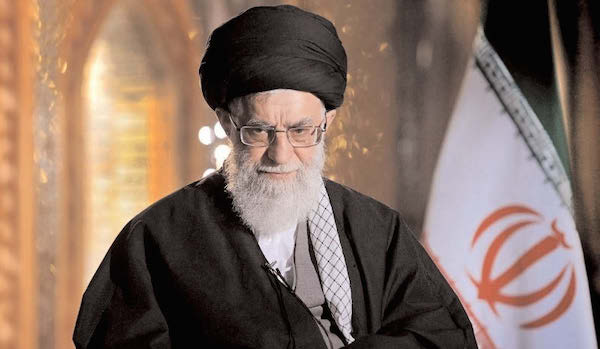
  • Iran’s Khamenei backs parliamentary vote on nuclear deal with powers – state TV

    Iran’s Khamenei backs parliamentary vote on nuclear deal with powers – state TV

    ANKARA (TIP): Iran’s supreme leader said on September 3 he favoured a parliamentary vote on its nuclear deal reached with world powers and called for sanctions against Tehran to be lifted completely rather than suspended, state television reported.

    President Hassan Rouhani, a pragmatist whose 2013 election paved the way to a diplomatic thaw with the West, and his allies have opposed such a parliamentary vote, arguing this would create legal obligations hampering the deal’s implementation.

    “Parliament should not be sidelined on the nuclear deal issue … I am not saying lawmakers should approve the deal or reject it. It is up to them to decide,” said Ayatollah Ali Khamenei, who has the final say on all state policy in Iran.

    “I have told the president that it is not in our interest to not let our lawmakers review the deal,” he said in remarks broadcast live on state television.

    Khamenei himself has not publicly endorsed or voiced opposition to the Vienna accord, having only praised the work of the Islamic Republic’s negotiating team.

    A special committee of parliament, where conservative hardliners close to Khamenei are predominant, have begun reviewing the deal before putting it to a vote. But Rouhani’s government has not prepared a bill for parliament to vote on.

    The landmark deal, clinched on July 14 between Iran and the United States, Germany, France, Russia, China and Britain in July, curbs Iran’s nuclear activities to help ensure they remain peaceful in exchange for a removal of economic sanctions.

    US president Barack Obama appeared to secure enough Senate votes on Wednesday to see the nuclear deal through Congress, but hardline Republicans pledged to pursue their fight to scuttle it by passing new sanctions on Tehran.

    Khamenei said that without a lifting of sanctions that have hobbled Iran’s economy, the deal would be jeopardised.

    “Sanctions …. should be lifted and not only suspended … If not, then we will only suspend our nuclear activities … and there would be no deal if the sanctions are only suspended.”

    Khamenei also criticised the United States’ Middle East policy, ruling out normalisation of ties with Iran’s arch-foe. “Our officials held only nuclear (negotiations) with America. We will never support America’s policies on Syria and Iraq.”

  • Five Chinese ships in Bering Sea as Obama visits Alaska

    Five Chinese ships in Bering Sea as Obama visits Alaska

    WASHINGTON (TIP): Five Chinese Navy ships are sailing in international waters in the Bering Sea off Alaska, the Pentagon said, in an apparent first for China’s military that came as US President Barack Obama toured the US state.

    Pentagon spokesman Captain Jeff Davis said it was the first time the United States had seen Chinese navy ships in the Bering Sea.

    “We respect the freedom of all nations to operate military vessels in international waters in accordance with international law,” Davis said.

    China’s defence ministry, in a short statement sent to Reuters, said the ships were in the Bering Sea as part of a routine drill following the completion of exercises with Russia.

    “This is a routine arrangement as part of annual plans, and is not aimed at any set country or goal,” it said, without providing any other details.

    The appearance of the ships is an example of the expanding reach of China’s navy and overlapped with a three-day visit by Obama to Alaska as part of his efforts to raise awareness about climate change.

    Two US defence officials, speaking on condition of anonymity, said the United States had identified a Chinese amphibious ship, a replenishment vessel and three surface combatant ships.

    None of the ships had been seen acting in an unprofessional or unlawful manner, the officials said, adding that the United States had become aware of their presence in recent days.

    White House spokesman Josh Earnest said no threatening activity had been detected, and added that the Pentagon was monitoring the movement of the ships “but the intent of this is still unclear.”

    China has ramped up defense spending to modernize its forces and wants to develop an ocean-going “blue water” navy capable of defending its growing interests as the world’s second-largest economy.

    On September 3, China held a massive military parade featuring some 12,000 troops and new equipment like ballistic missiles capable of taking out aircraft carriers, the highlight of events there marking 70 years since World War Two ended in Asia.

    Dean Cheng, a China expert at the Heritage Foundation think-tank in Washington, DC, said the presence of the ships in the Bering Sea was designed to send a message.

    “It is living up to what the Chinese have been saying, ‘We are now a blue water navy. We will operate in the far seas and we are a global presence’,” Cheng said.

    Melting sea ice has spurred more commercial traffic and China has sought to become more active in the Arctic, where it has said it has important interests.

    Shorter shipping routes across the Arctic Ocean would save Chinese companies time and money.

    While the world’s two largest economies have important mutual interests, like trying to rein in North Korea’s nuclear program, disagreements exist between them including over China’s claims in the South China Sea.

    China’s military buildup, which includes developing stealth fighters and anti-satellite missiles, has unnerved the Asia-Pacific region and Washington, especially since President Xi Jinping took office in 2013 and started taking a tougher line on maritime territorial disputes.

    Xi is expected to spend about a week in the United States during the second half of September.

    The Heritage Foundation’s Cheng said the presence of the ships in the Bering Sea sent a message ahead of Xi’s visit, which has been preceded by threats of US action over cyber attacks.

    “That message is, in a nutshell, ‘Stop pushing us. We are not going to be lectured’,” Cheng said.

  • Obama finds the 34th vote to save Iran deal

    Obama finds the 34th vote to save Iran deal

    WASHINGTON (TIP): It is all but assured the international agreement, which took years to craft, will play out at least for the rest of Obama’s presidency.

    When the Senate returns from its August recess after Labor Day, it will vote on a resolution disapproving the Iran deal.

    With that measure virtually guaranteed to be defeated – whether by filibuster or presidential veto – it removes the final major hurdle standing in the way of the deal being implemented.

    On Oct. 18, a date known as adoption day, the parties will begin taking steps to put the agreement into place.

    For the U.S. and its negotiating partners, that means issuing waivers to roll back crippling economic sanctions on Iran once international inspectors certify Tehran is abiding by limits on its nuclear program. Republicans in Congress and many pro-Israel groups sought to use the congressional review process to kill the deal, which they argue fails to permanently cut off Iran’s path to a nuclear weapon while providing billions of dollars in sanctions relief that could be funneled to terrorist groups.

    Obama was determined to prevent Congress from derailing the nascent agreement, warning of a “historic mistake” that would do permanent damage to the U.S.’s credibility abroad.

    The White House mounted an intense lobbying campaign this summer to win support for the deal. The goal was to secure enough Democratic votes to prevent Republicans from amassing a veto-proof majority against the agreement.

    The president has gotten personally involved, speaking with more than 100 lawmakers in individual or small-group settings since the deal was reached, according to a White House official.

    That effort has largely been a success. During the August recess, dozens of Democratic lawmakers declared that they back the deal, blunting critics’ efforts to build broad bipartisan opposition against it.

    “We are encouraged by the growing number of lawmakers who have announced support for the deal in the past weeks,” White House spokesperson Jennifer Friedman said. “We remain confident that ultimately a strong majority of Democrats in both the House and the Senate will support of the deal, and if necessary, sustain the president’s veto.”

    Known for his distant relationship with lawmakers, the president has given an unprecedented amount of one-on-one attention to fence-sitting Democrats.

    He hosted them for receptions in the East Room of the White House, made 30 calls from his Martha’s Vineyard vacation rental and wrote them lengthy letters to answer their concerns about the deal.

    Coons said that he has spoken with Obama, Vice President Biden and other members of the administration within the past 10 days, and gotten them to agree to a handful of measures including increasing military support for Israel, fully funding the International Atomic Energy Agency and briefing Congress on how it plans to combat Iran’s support for terrorism.

    The Delaware senator, an important swing vote, said he received a letter from Obama answering his concerns on Tuesday – just before he was scheduled to give a speech announcing his position.

    He indicated the response played a decisive role in his announcement.

    “I spent time last night thinking about delaying the speech,” he said.

    Coons said a lengthy conversation with Biden, who previously occupied his Senate seat, helped win his support.

    Obama’s tactics also succeeded with Rep. Jerrold Nadler, the only New York Jewish Democrat to back the deal, and seen as an important counterweight to Schumer.

    He sent Nadler a three-and-a-half-page letter answering his concerns about the agreement a day before the congressman announced his support.

    The president used his bully pulpit in speeches and interviews to rally Democrats around the deal, lumping critics together with those who supported the Iraq War.

    Liberal groups responded by giving Obama cover at town halls and meet-and-greets with lawmakers, even as the American Israel Public Affairs Committee poured tens of millions of dollars into television ads against the deal to bolster its in-person lobbying.

    Even if Obama succeeds in stopping Congress from killing the agreement, opponents are still claiming a symbolic victory.

    “Unfortunately we’re now going to have a deal that goes forward with a large majority vote of the Senate and the House against it and a large majority of the American people against it,” Sen. Tom Cotton (R-Ark.) said Tuesday on MSNBC. “And that truly is unprecedented.”

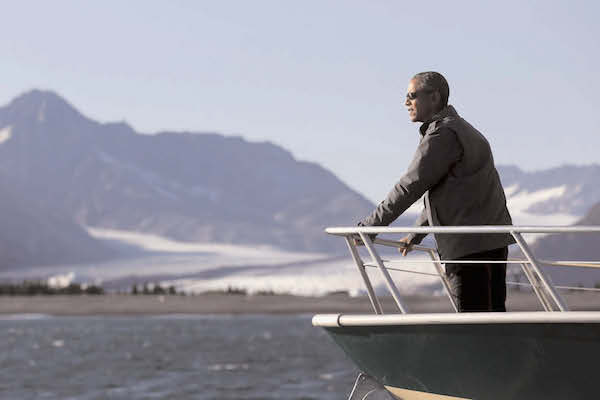
  • US renames tallest peak in N America ‘Denali’

    WASHINGTON (TIP): Meeting the long pending demand of native Americans in Alaska, US President Barack Obama has decided to rename the highest mountain in North America as ‘Denali’ instead of its existing name of ‘Mt McKinley’.

    “This designation recognizes the sacred status of Denali to generations of Alaska Natives,” the White House said on eve of Obama’s travel to Alaska where he would formally announce his decision in this regard. In 1896, a prospector emerged from exploring the mountains of central Alaska and received news that William McKinley had been nominated as a candidate for President of the US. In a show of support, the prospector declared the tallest peak of the Alaska range as “Mt McKinley” — and the name stuck.

    McKinley became the 25th President of the US, and was tragically assassinated just six months into his second term. “But he never set foot in Alaska — and for centuries, the mountain that rises some 20,000 feet above sea level had been known by another name — Denali,” the White House said.

  • Obama secures major foreign policy victory on Iran deal

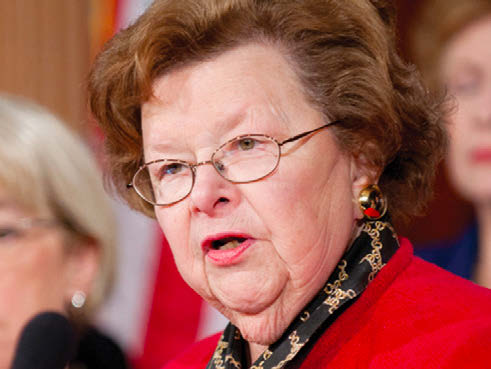
    WASHINGTON (TIP): President Barack Obama secured a landmark foreign policy victory over ferocious opposition from Republicans and the government of Israel when Democratic Sen Barbara Mikulski became the 34th vote in favor of the Iran nuclear deal.

    Mikulski’s backing gives supporters the margin they need to uphold an expected Obama veto of a congressional resolution of disapproval that Republicans hope to pass later this month.

    And it spells failure for opponents of the international agreement who sought to foil it by turning Congress against it.

    Leading that effort were Israel and its allies in the US, who failed to get traction after spending millions of dollars trying.

    The agreement signed by Iran, the US and five other world powers limits Iran’s nuclear program in exchange for relief from hundreds of billions of dollars in sanctions.

    Republicans and Israeli leaders contend that concessions made to Iran could empower that country, which has sworn to destroy Israel.

    “No deal is perfect, especially one negotiated with the Iranian regime,” Mikulski said in a statement. “I have concluded that this Joint Comprehensive Plan of Action is the best option available to block Iran from having a nuclear bomb. For these reasons, I will vote in favor of this deal.” Secretary of State John Kerry is sending a letter to all members of Congress outlining U.S. security commitments to Israel and the Gulf Arab states in light of the nuclear deal. The letter comes as Kerry delivers a major policy speech Wednesday in Philadelphia that focuses on how the international agreement makes the US and its allies safer and how the deal is being mischaracterized by some opponents. “I really believe the fastest way to a genuine arms race in the Middle East is to not have this agreement,” Kerry said in a nationally broadcast interview on Sept 2.

  • Pentagon probing alleged distorting of war intelligence

    Pentagon probing alleged distorting of war intelligence

    WASHINGTON (TIP): The Pentagon’s inspector general is investigating an allegation that the U.S. military command overseeing the anti-Islamic State campaign distorted or altered intelligence assessments to exaggerate progress against the militant group, a defense official said Wednesday.

    The official was not authorized to discuss the probe publicly and so spoke on condition of anonymity.

    The investigation was first disclosed by The New York Times. The paper reported that the investigation began after at least one civilian Defense Intelligence Agency analyst told authorities that he had evidence that officials at US Central Command were improperly reworking conclusions of assessments prepared for policy makers, including President Barack Obama.

    Details of the allegations were not available. A spokeswoman for the inspector general’s office, Bridget Serchak, declined to comment.

    Pentagon press secretary Peter Cook said he could not confirm the probe. The Pentagon typically does not publicly comment on the work of the inspector general’s office, which is an independent arm of the Defense Department.

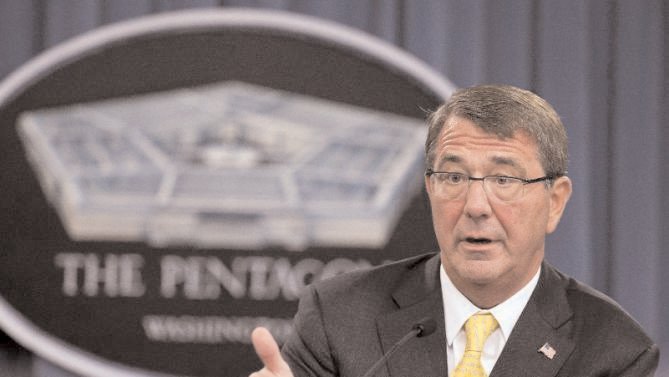
    Cook said defense secretary Ash Carter “counts on independent intelligence and analysis from a variety of sources to help him make critical decisions about the nation’s security.”

    A Pentagon spokesman, Navy Capt. Jeff Davis, said Pentagon and Central Command officials have been publicly candid about the difficulty of the war against the Islamic State. At times, however, they have painted a rosier picture than was reflected by developments on the ground.

    On May 15, for example, Brig. Gen. Thomas Weidley, who at the time was chief of staff to the military headquarters running the war, told reporters that the Islamic State was
    “losing and remains on the defensive.” Even as he spoke, Iraqi officials were saying that IS fighters had captured the main government compound in Ramadi, the capital of Anbar province. Two days later the city fell, marking a significant victory for IS and a setback for the US and Iraq.

    Air Force Col. Patrick Ryder, a spokesman for Central Command, said he could not discuss ongoing investigations.

    “The (inspector general) has a responsibility to investigate all allegations made and we welcome and support their independent oversight,” Ryder said.

    Ryder said the government’s numerous intelligence agencies routinely produce a wide range of “subjective assessments related to the current security environment,” and that it is customary for agencies to comment on others’ draft assessments.

    “However, it is ultimately up to the primary agency or organization whether or not they incorporate any recommended changes or additions. Further, the multi-source nature of our assessment process purposely guards against any single report or opinion unduly influencing leaders and decision-makers,” Ryder said.

  • US civil rights activist Amelia Boynton Robinson dies at 104

    US civil rights activist Amelia Boynton Robinson dies at 104

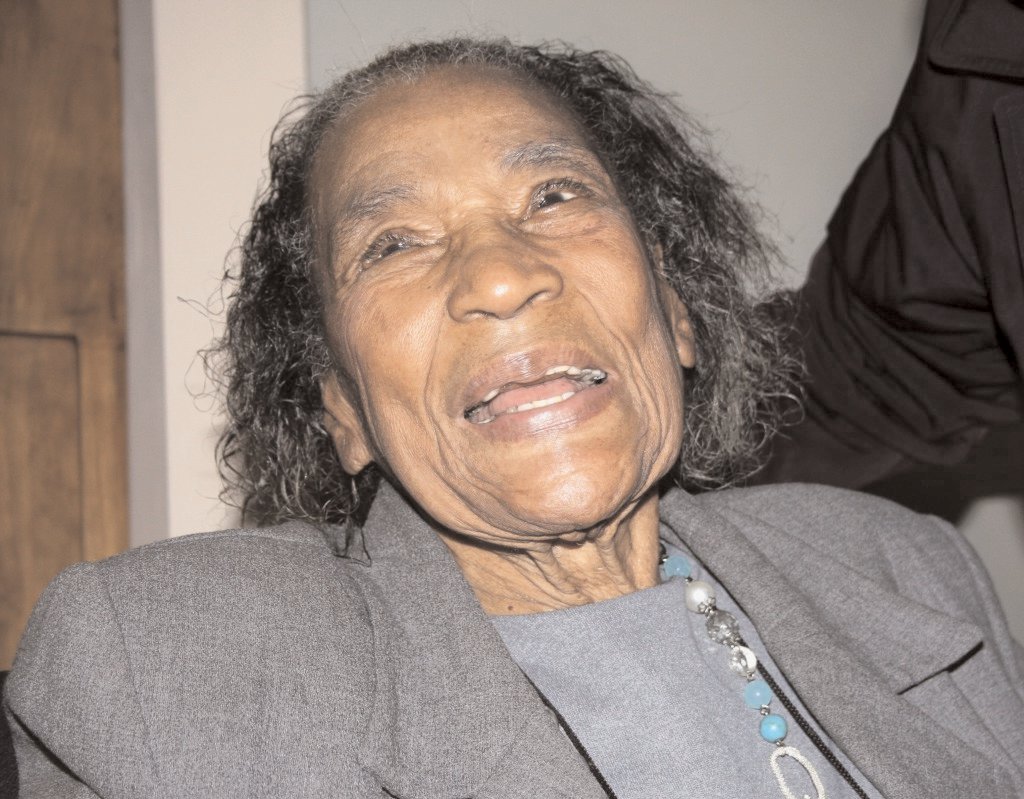
    MONTGOMERY: Amelia Boynton Robinson, a US civil rights activist who nearly died while helping lead the Selma, Alabama civil rights march in 1965, championed voting rights for blacks and was the first black woman to run for Congress in that southern state, died today at age 104, her son Bruce Boynton said.

    Boynton Robinson was among those beaten during the voting rights march across the Edmund Pettus Bridge in Selma in March 1965 that became known as ‘Bloody Sunday’. Fifty years later, Barack Obama, the first black president of the United States, pushed her across the span in a wheelchair during a commemoration.

    Boynton Robinson, who was hospitalized in July after having a major stroke, turned 104 on Aug 18.

    In January, she attended the State of the Union address as a special guest of Democratic Alabama Rep Terri Sewell, who said Boynton’s 1964 run for Congress paved the way for her. Sewell is Alabama’s first elected black congresswoman.

    Boynton was the first woman to run on a Democratic ticket in Alabama and the first black woman to run for Congress in the state, according to the Encyclopedia of Alabama.

    “Mrs Boynton Robinson suffered grave injustices on the Edmund Pettus Bridge in Selma at the hands of state troopers on Bloody Sunday, yet she refused to be intimidated,” Sewell said in January 2015.

    “She marched with Dr Martin Luther King, my colleague Rep John Lewis and thousands of others from Selma to Montgomery and ultimately witnessed the day when their work led to the passage of the historic Voting Rights Act of 1965.”

    Boynton Robinson asked Martin Luther King Jr to come to Selma to mobilize the local community in the civil rights movement. She worked with the Southern Christian Leadership Conference and helped plan the Selma to Montgomery march.

    Her role in the event was recaptured in the movie ‘Selma’ where she was portrayed by actress Lorraine Toussaint. She was invited as a guest of honor to attend the signing of the Voting Rights Act of 1965 by President Lyndon B Johnson.

  • Obama caught between Clinton, Biden ambitions

    Obama caught between Clinton, Biden ambitions

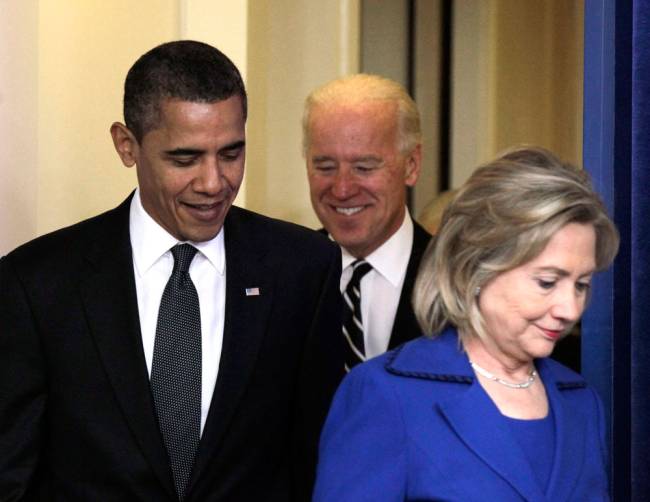
    WASHINGTON (TIP): President Barack Obama is caught between the White House aspirations of two of his closest advisers: Vice President Joe Biden and former Secretary of State Hillary Rodham Clinton.

    For months, White House officials expected Clinton to be the Democratic nominee in the 2016 election. Some of Obama’s top political advisers moved to New York to run her campaign and Obama appeared to give his tacit approval, saying she would be an “excellent president.”

    But that bet on Clinton suddenly looks less certain. With Biden weighing his own presidential run more seriously amid signs of weakness in Clinton’s campaign, the White House faces the prospect of a family feud over who will become heir to Obama’s legacy.

    “Certainly he’s got something at stake here,” White House spokesman Josh Earnest said Monday of Obama’s interest in the 2016 election.

    Biden’s recent overtures to donors and Democratic officials have led to palpable awkwardness in the West Wing as aides _ many with close ties to Clinton, the vice president or both try to maintain impartiality.

    Earnest raised the prospect that Obama could endorse a candidate in the Democratic primary, though others close to the president say it’s unlikely he’d publicly put his thumb on the scale if Clinton and Biden were locked in a close contest. In picking between Biden and Clinton, Obama would be making a choice between two of the most influential members of his administration.

    Obama and Clinton long ago turned their political rivalry from the 2008 primary into an alliance. Clinton left the administration in early 2013 after four years as Obama’s secretary of state, but she and the president still get together for occasional meetings.

  • Obama to seek unity with Pope Francis on many issues

    Obama to seek unity with Pope Francis on many issues

    WASHINGTON (TIP): Sweeping into office in 2009, President Barack Obama captured near rock-star status around the world among millions who saw him as the embodiment of a new sense of social purpose. Now, that baton has largely been passed to Pope Francis, whose visit to the White House next month will put his common cause with Obama on vivid display.

    Obama has made no secret of his affection for the outspoken pope, calling him a “transformative leader” whose influence has transcended the Roman Catholic community. The pope has embraced many of the issues Obama has sought to advance, including global warming, poverty and diplomacy with Iran and Cuba.

    Vice-President Joe Biden, a Catholic, said the pope’s Sept 23 visit will mark an important moment not only for Catholics but also for all Americans.

    “Pope Francis has breathed new life into what I believe is the central mission of our faith: Catholic social doctrine,” Biden said in a statement to The Associated Press. Invoking key elements of Obama’s agenda, Biden added that Francis “has become a moral rudder for the world on some of the most important issues of our time, from inequality to climate change.”

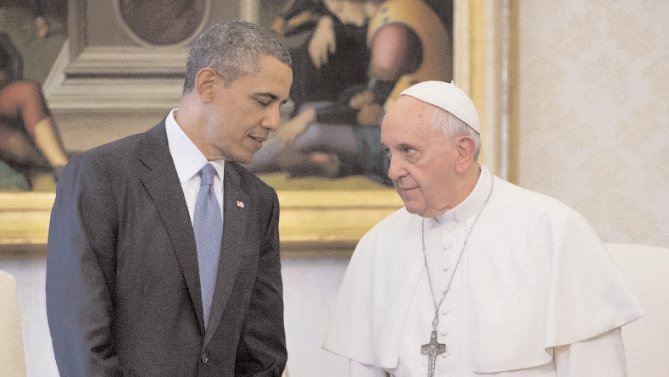
    The pope’s brief visit to the White House is part of his highly anticipated trip to the US and Cuba. It’s a reunion of sorts for Obama and Francis, who first met when the president visited the Vatican last year.

    Despite deep differences on some social issues such as abortion, Obama and the pope are expected to focus on areas of agreement. The White House said economic opportunity, immigration and refugees, and protection of religious minorities were high on the agenda.

    “It’s going to be a come-to-Jesus moment _ no pun intended _ for the many politicians who want to claim the mantle of Pope Francis,” said Michael Wear, a former White House official who led faith outreach for Obama’s 2012 campaign.

    For Obama, the visit offers a chance to imbue his remaining goals with a sense of moral authority as he approaches the end of his presidency.

    Viewed as largely above politics, Francis is extremely popular in the US. Tickets to his speech to Congress are such a hot commodity that an overflow crowd of thousands is expected to watch on Jumbotrons from the National Mall, the grassy expanse that leads to the Capitol.

    “In a way, Pope Francis has become a conscience for this age of the world. When President Obama came to office, he too had that aura for at least the first couple of years,” said Stephen Schneck, who runs the Catholic politics institute at Catholic University of America. “But Pope Francis’ message is moral and religious. He’s not going to be talking about legislation.”

    The White House has praised Francis for involving himself in issues usually left to politicians. In a rare move, Francis personally intervened to help the US and Cuba restore relations, writing leaders of both countries and hosting their delegations at the Vatican for final talks. And on climate change, a cornerstone of Obama’s desired legacy, Francis added the weight of the pulpit by publishing a landmark encyclical calling climate change real and man-made.

    Yet there are risks for Obama if he glosses over other, stark differences in views.

    When he visited Francis early last year, Obama contradicted the official Vatican account of their meeting by saying they hadn’t discussed social issues in any detail. Papal aides insisted the two leaders indeed discussed religious freedom, life and conscientious objection _ buzzwords for abortion, birth control and parts of Obama’s health care law.

    “That’s the delicate dance,” said Julian Zelizer, a presidential historian at Princeton University. “The idea is to point out common areas of concern, rather than say, `We are total allies.”‘

  • Obama will raise cyber security concerns with China’s Xi

    WASHINGTON (TIP): The White House said on August 26 that President Barack Obama will “no doubt” raise concerns about China’s cyber security behavior when he meets with Chinese President Xi Jinping next month.

    Obama will host Xi at the White House in September for a state visit.

    The United States has alleged Chinese hackers have stolen information from US computer servers.

  • Modi-Obama hotline becomes operational

    Modi-Obama hotline becomes operational

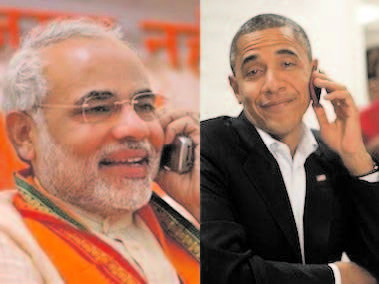
    WASHINGTON (TIP): The hotlines or secure lines of communication between Prime Minister Narendra Modi and US President Barack Obama and their national security advisers have recently become operational, though it has not been put to use during its short lifespan so far.

    “It (hotline has) just recently been established,” Peter R Lavoy, special assistant to US President and senior director for South Asian Affairs at the National Security Council of the White House, told media.

    “It (hotline) has not been used so far,” he said when asked if the two leaders have used this latest tool of secure communication.

    The decision regarding Obama-Modi hotline was made during Obamas’s historic visit to New Delhi to attend Republic Day on January 26, as its chief guest.

    “Hotline has connotation of some crisis management phone or system that was used during the cold war to defuse crisis. That’s not what we have,” Lavoy explained. “This is a secure line between two very very close partners so that they can exchange views at the heads of state level…exchange views and co-ordinate approaches to solving real problems,” said the top White House official.

    With this India becomes only the fourth country- after Russia, Great Britain and China – with which the US has a hotline.

    For India this is the first hotline at the level of head of state.

    In 2004, India and Pakistan agreed to establish hotlines at the level of foreign secretaries, and in 2010 New Delhi and Beijing announced to establish a hotline at the foreign minister level.

    According to publicly available information the hotline between India and Pakistan was established with the help of US military.

    India-China hotline is yet to become operational.

    The establishment of hotline or secure line of communication between leaders of the two largest democracies of the world is part of efforts of Obama and Modi to increase the frequency of level of communication and frequent discussion between them on key bilateral, regional and global issues.

    At a joint press meet with Obama in New Delhi on January 25, after their meeting, Modi said the two leaders have decided to give this critical partnership its due trust and sustained attention.

    “For this, we have agreed that India and the United States must [have] regular summits at greater frequency. And we also established hotlines between myself and Barack and our national security advisors,” Modi had told reporters at the Hyderabad House on January 25. During their New Delhi meeting the two leaders also decided to meet frequently. The two are most likely to meet in New York late September when Modi comes to the US to attend the annual session of the United Nations General Assembly.