Tag: Odisha

  • Odisha: The gem of East India

    Odisha: The gem of East India

    A true extraordinaire, Odisha is the quiet and serene part of India. Fringed by the Bay of Bengal, and flaunting a long coastline, this east Indian gem has some of the most stunning beaches that are often less-frequented. Home to a plethora of Hindu and Buddhist pilgrimage sites, Odisha is a place that will take you back to the glorious time of Ashoka the Great. Explore the majestic Jagannath Temple at Puri and learn about its many mysteries, view the medieval architecture of Odisha’s temple and Buddhist monasteries, attend the annual Sand Art Festival, go boating in the Chilika Lake, or walk on the sea at Chandipur Beach. There’s so much to do in Odisha.
    At this time, Odisha remains the center of attraction for the country, because the Jagannath Rath Yatra is going to take place on 7th July.
    On the day when the Jagannath Rath Yatra starts from the holy land of Odisha, Krishna devotees from every corner of the country and the world reach here to join the Yatra. Apart from joining this Yatra which takes place in July, many people also come here to enjoy the monsoon.
    Yes, July is such a month of the year when it rains heavily along the sea coasts from West Bengal to Odisha. In this article, we are going to tell you about some such places where you can enjoy the monsoon to the fullest.
    Chilika Lake
    When it comes to visiting a beautiful place in Odisha during drizzling rains, many people first name Chilika Lake. Many people also know this beautiful lake by the name of Chilika Lake.
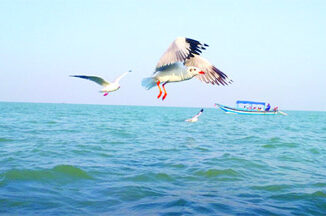
    Chilika Lake is said to be Asia’s largest and the world’s second largest saltwater lagoon. This lake is also considered home to migratory birds. It is said that during monsoon, birds come here from places like Siberia, Australia, Russia, Canada, France, Iran, Iraq and Afghanistan.
    Daringbadi
    Daringbadi, located in the Kandhamal district of Odisha, is a beautiful and charming tourist destination. Many people also consider this beautiful place as a popular hill station of Odisha . It is the dream of many people to explore Daringbadi in monsoon.

    The high mountains, dense forests and lakes and waterfalls add to the beauty of Daringbadi. For your information, let us tell you that this beautiful place is called ‘Kashmir of Odisha’. This place is considered a paradise for nature lovers. Here you can enjoy monsoon trekking.
    Khandadhar Waterfall
    If you want to see the beauty of a magnificent and famous waterfall during your trip to Odisha, then you should reach Khandadhar Waterfall. This beautiful waterfall is located in Nandapani of Bonaigarh in Sundargarh district. It is said about Khandadhar waterfall that when water falls here from a height of 800 feet, one feels like just watching the surrounding scenery. The greenery around this waterfall also attracts a lot of tourists. For your information, let us also tell you that Khandadhar waterfall is considered to be the 9th highest waterfall in India.
    Konark
    It is very rare to talk about visiting any wonderful and popular place in Odisha during monsoon and not mention Konark located in Puri district. Konark, located at a short distance from the Jagannath temple, is considered a world famous tourist destination.
    Konark is not only known for its beauty but also for the world famous Konark Sun Temple. Thousands of domestic and foreign tourists visit Konark Sun Temple every month. Being located on the beach, there is a different fun in visiting Puri and Konark during monsoon. You can also visit Lord Jagannath Temple in Puri.
    The Land of Unique Temples
    Jagannath Temple
    The Jagannath Temple at Puri, Odisha is among the most revered Hindu temples in India and is dedicated to Lord Jagannath, an incarnation of Lord Vishnu. Being among the 4 Char Dham temples, Jagannath Temple attracts hordes of people every year who come to visit this religious site. Built in the 10th century, the holy temple is equally puzzling as it is lovely and is known for its unexplained mysteries.
    Panchalingeswar Temple
    Named after the 5 Shivalingas within the temple, the Panchalingeswar Temple is located near the Nilagiri Hill and is dedicated to Lord Shiva which makes it a popular pilgrimage site for the Shaivites. The temple has a perennial stream through which the shiva lingas are forever bathed. According to legends, the shiva lingas were installed here by Goddess Sita, the wife of Lord Rama during their exile whereas another story tells that they were put here by the demon king Banasure to appease Lord Shiva.
    Ghanteswari Temple
    The beautiful Ghanteswari Temple is dedicated to the Goddess Ghanteswari and is adorned with bells all over, which the devotees have offered to the Goddess as a prayer. A must visit place in Odisha, the temple is based along the River Mahanadi, and its bells made it work as a lighthouse in the past. Since the river near the temple could get rough and cause boats to drown, the bells in the temple alerted the boats beforehand during strong winds caused by the sound of the bells.

  • India Gears Up for Historic General Elections: A Test of Democracy’s Integrity

    By Prof. Indrajit S Saluja

    As India braces itself for what is anticipated to be the largest and longest general election in its history, the significance of the democratic process reverberates not only within the nation’s borders but resonates globally. With the Election Commission’s notification for the 18th Lok Sabha elections, slated to span from 19th April 2024 to 1st June 2024, India is poised to witness a monumental exercise in democratic participation.

    The sheer scale of these elections is unprecedented. Covering a vast electorate of approximately 960 million eligible voters out of a population of 1.4 billion, this election surpasses any previous in terms of sheer magnitude. Seven phases will unfold over 44 days, excluding the first general election in 1951–52, marking a testament to the democratic ethos entrenched within the Indian polity.

    Key to this election is the incumbent Prime Minister Narendra Modi, seeking a third consecutive term in office. Having completed two terms, Modi’s leadership faces scrutiny and endorsement from the Indian electorate once again. However, amidst the fervor of electoral campaigns and political rallies, a crucial aspect has emerged — the integrity of the electoral process.

    In recent times, doubts have been cast upon the fairness of elections, with concerns surrounding Electronic Voting Machines (EVMs) and allegations of tampering to sway electoral outcomes. The Election Commission, tasked with safeguarding the sanctity of the electoral process, has faced mounting pressure to address these concerns. Calls for voter verification mechanisms and enhanced transparency in the electoral process have gained traction, echoing across the political spectrum.

    Even India’s sitting Supreme Court Chief Justice, Chandrachud, has underscored these concerns, emphasizing the imperative of ensuring a transparent and accountable electoral process. In a democracy, elections serve as the cornerstone of representation, reflecting the will of the people. Thus, ensuring the integrity and fairness of elections is paramount to upholding the democratic fabric of the nation.

    Simultaneously, the general elections coincide with legislative assembly elections in several states, including Andhra Pradesh, Arunachal Pradesh, Odisha, and Sikkim. These concurrent elections further underscore the magnitude and complexity of the electoral exercise, as millions of voters across the country prepare to cast their ballots. Moreover, the inclusion of by-elections for 35 seats across 16 states adds another layer of significance to the electoral landscape. These by-elections present an opportunity for constituents to voice their preferences and influence the composition of legislative bodies at both the state and national levels.

    As the world watches with anticipation, the spotlight shines brightly on India, heralded as the largest democracy in the world. The forthcoming elections are not merely a domestic affair but hold implications for global democracy and governance. The manner in which India conducts its elections sets a precedent for other democracies worldwide, reaffirming the principles of transparency, accountability, and electoral integrity.

    In the lead-up to the elections, political parties are engaged in a frenetic battle of ideas, canvassing support and articulating their vision for the future of the nation. From grassroots mobilization to high-profile rallies, the electoral landscape is awash with fervent political discourse and spirited campaigning.

    However, amidst the cacophony of electoral politics, it is imperative to prioritize the integrity of the electoral process. Electoral malpractices, tampering with EVMs, and disenfranchisement of voters undermine the very foundation of democracy. Therefore, all stakeholders, including political parties, the Election Commission, and the incumbent government, must demonstrate a collective commitment to ensuring free, fair, and transparent elections.

    Furthermore, the role of civil society, media, and international observers assumes heightened significance in safeguarding the integrity of the electoral process. Vigilance, accountability, and transparency must be upheld at every stage of the electoral cycle, from voter registration to the declaration of results.

    The forthcoming general elections in India represent a pivotal moment in the nation’s democratic journey. As the world’s largest democracy, India has a responsibility to uphold the sanctity of the electoral process and set a precedent for democratic governance globally. With the eyes of the world upon it, India stands at the cusp of history, poised to reaffirm its commitment to democracy, justice, and the rule of law. As the electorate prepares to exercise its franchise, let us collectively strive to ensure that these elections reflect the true spirit of democracy — a celebration of diversity, inclusion, and the power of the people.

  • Eyes on youngsters as Craig Fulton looks to finalise India’s Olympic Games squad in Odisha

    Eyes on youngsters as Craig Fulton looks to finalise India’s Olympic Games squad in Odisha

    The dossiers are getting thicker. And training drills are being designed basis that. As much time is spent indoors – in the meeting rooms of hotels, stadiums, and training centers, plotting the downfall of every opponent – as the minutes spent on the field, where the plans will be put into motion.
    Every move will be analysed and each match will be an audition. “It’s test matches now. Home stretch,” says coach Craig Fulton. “We are looking to confirm our Olympic squad.”
    With that, the South African laid down the marker for India’s hockey players. Over the next fortnight, the eight games that India play against the Netherlands, Australia, Spain, and Ireland in the FIH Pro League in Odisha will, in essence, be the selection trials for the Paris Olympics squad.
    The matches later this year, Fulton adds, will be used to build the bench strength so that ‘if there are injuries then we have depth.’
    This gives the Pro League matches, otherwise seen as glorified exhibition games, an edge. And for the players who have been on the periphery of the national team, a final chance to impress the coach.
    Especially the quartet that has made the progression from juniors to senior side in the last couple of years.
    Chance for youngsters
    Drag-flicker Sanjay, midfielders Vishnukant Singh and Rabichandra Moirangthem, and forward Araijeet Hundal have been seen as good enough to be included in a bloated 24-man squad for the matches in Bhubaneswar and Rourkela. The next two weeks will determine if all or any of them have taken enough strides to displace some of the established names, Olympic medallists no less, for a place on the Paris-bound flight.
    Each one has something unique to offer.
    With drag-flicker and defender Varun Kumar out of the squad for the Pro League after he was accused of rape, Sanjay – who has featured consistently in Fulton’s sides including the Asian Games – has a chance to cement his spot. Source: The Indian Express

  • Zwigato: Kapil Sharma’s Film Made Tax-Free In Odisha

    Zwigato: Kapil Sharma’s Film Made Tax-Free In Odisha

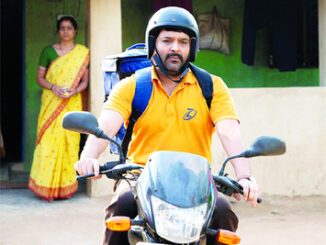
    The Odisha government has declared actor-filmmaker Nandita Das’ latest film Zwigato tax-free. A special screening of Zwigato was held for Chief Minister Naveen Patnaik on Wednesday after which the official handle of the Chief Minister’s Office announced that the movie has been made tax-free. “CM @Naveen_Odisha has approved a proposal to waive off the entertainment tax for ‘Zwigato’, a film based on the struggling life of a food delivery boy and his family. The Hindi language film has been directed by @nanditadas and its entire shooting has been done in #Bhubaneswar,” CMO Odisha tweeted.
    The Bhubaneswar-set movie, which released across the country last week, features actor-comic Kapil Sharma as a food delivery person exploring the world of the gig economy.

  • India finds 5.9 million tonnes lithium deposits in Jammu and Kashmir

    The Union Government on Thursday, February 9,  said that 5.9 million tonnes of lithium reserves have been found for the first time in the country in Jammu and Kashmir. Lithium is a non-ferrous metal and is one of the key components in EV batteries. “Geological Survey of India for the first time established Lithium inferred resources (G3) of 5.9 million tonnes in the Salal-Haimana area of the Reasi district of Jammu and Kashmir,” the Ministry of Mines said on Thursday. It further that 51 mineral blocks including Lithium and Gold were handed over to respective state governments.

    “Out of these 51 mineral blocks, 5 blocks pertain to gold and other blocks pertain to commodities like potash, molybdenum, base metals etc. spread across 11 states of Jammu and Kashmir (UT), Andhra Pradesh, Chhattisgarh, Gujarat, Jharkhand, Karnataka, Madhya Pradesh, Odisha, Rajasthan, Tamil Nadu, and Telangana,” the ministry added. The blocks were prepared based on the work carried out by GSI from field seasons 2018-19 to till date. Apart from these, 17 reports of Coal and Lignite with a total resource of 7897 million tonnes were also handed over to the Ministry of Coal.                 Source: ANI

  • Men’s Hockey World Cup 2023: Tournament gets underway in Odisha with stunning opening ceremony

    Men’s Hockey World Cup 2023: Tournament gets underway in Odisha with stunning opening ceremony

    Cuttack (TIP)- Men’s Hockey World Cup, 2023 got underway on Wednesday, January 11,  evening with a spectacular opening ceremony at the picturesque Barabati Stadium in Cuttack that was witnessed by thousands of hockey lovers in attendance from across the country and abroad. Union Sports Minister Anurag Thakur, Odisha Chief Minister Naveen Patnaik, International Hockey Federation president Tayyab Ikram and Hockey India chairman Dilip Tirkey were present at the glittering ceremony to welcome members of all the 16 participating teams. Ikram, in his address, complimented Odisha for hosting the mega event twice consecutively, the last one being in 2018, and called the state the “Land of Hockey”.

    Thakur thanked the Odisha government for successfully hosting the event in grandeur and said the enthusiasm of the people of India and the state showed their love for the game.

    He said the Centre will always extend support to states for hosting such sporting events. Patnaik said Odisha has long been known for its hospitality and hoped every visitor takes back good memories of their stay in the state. The hour-long opening ceremony was preceded and succeeded by colourful cultural programmes that kept mesmerising the packed audience. The celebration began with a stunning tribal dance art of the state, which was a fusion of at least six local dance forms choreographed by eminent dance guru Aruna Mohanty. Sixteen fan parks were set up at important locations across the city where thousands of hockey lovers and enthusiasts witnessed the opening ceremony on giant screens. Hundreds of singers from Bollywood and local artists sang the Hockey World Cup theme song that was composed by music director Pritam, who also performed on the stage along with some other singers.

    The matches will be held at two venues – Birsa Mundra Hockey Stadium in Rourkela and Kalinga Stadium in Bhubaneswar — from January 13 to January 29. While 20 matches will be played at Rourkela, 24 matches, including the final, will be held in Bhubaneswar.

    The state government has built a new hockey stadium in Rourkela ahead of the event. Odisha is hosting the international event for the second consecutive time, the previous one having been held in Bhubaneswar in 2018.    Source: PTI

  • Odisha – Sanctuary for Olive Ridely Turtles

    Odisha – Sanctuary for Olive Ridely Turtles

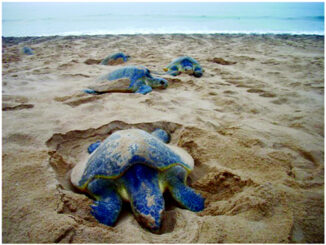
    Murli Menon : There are seven types of sea turtles in India. These include the Green Turtle, Hawksbill, Loggerhead, Leatherback and Olive Ridley.  The Olive Ridley turtle indulge in mass nesting, once a year, on a full moon night every March. There are only three beaches in the world, where Olive Ridley’s choose to nest. Coincidentally, all these three beaches are located in Odisha state in India.  These mass nesting sites are located at Rushikulya beach in Ganjam District, Devi beach in Puri district and Gahirmatha beach in Kendrapara district of Odisha.Mass nesting of Olive Ridley turtles usually take place placein March at Rushikulya, April at Gahirmatha and May at Devi. I was there at all these three beaches to videotape and photograph these turtles.

    One has just returned after a close encounter with nature at Rushikulya beach at Ganjam District in Odisha State.  Ganjam is a three hour drive away from Bhubaneshwar, near Berhampur, on the fringes of the “Chilka Lake.”  After Rushikulya, one also witnessed  the mass nesting at Gahirmatha and Devi beach. The Olive Ridley turtles are an endangered species and they need to be protected at all costs.

    One passes the historical village of Balugaon along the way from Bhubaneshwar to Ganjam.  We are welcomed by a group of flamingoes flying in formation,  as  soon as we enter Ganjam Town.  We start our trek to Rushikulya Beach which is 3 km. away  and soon find ourselves in the middle of a flat beach with rust coloured sand as far as eye can see.  After thirty minutes of cruising through the beach, one sees a large water body in the distance. We are informed by our guide that the water body is the Rushikulya River which meets the sea at Ganjam.  The nearest village is Gokharguda which is about a kilometer away from Rushikulya beach. The other villages on the periphery of the beach include Purunabandha, Palibandha and Nuagaon.Devi beach is an uninhabited beach which stretches to about 10 km. at Jahania village located about 100 km. away from Bhubaneshwar. Gahirmatha beach lies inside the Bhitarkanika wildlife sanctuary and is accessible only by boat. We come to the edges of the beach to find hundreds of cattle egrets lined up on the edge of the water.  It is a pleasure to watch a multitude of colourful birds at close quarters, as they flock to the edge of the water.  The water is shallow and the sand is swampy. The unique feature about Rushikulya beach is the softness of the sand. As the river empties into the sea here, the beach is made up of soft sand. It is possible to dig deep into the soil with one’s bare hands.  The deep blue sky, reflected in the crystal clearness of the waters is a joy to behold. Watching the crimson sunrise over the rust coloured sands is the highlight of the visit to Rushikulya. Every year, between  January and March, about 300,000 Olive Ridely sea turtles land at Devi, Rushikulya and Gahirmatha beaches for mass nesting! These giant turtles are 70 cm. in length and weigh 45 kg.   They travel from the the depths of the Pacific Ocean near Ecquador in South America and travel 9000 km. across the Pacific to reach the Bay of Bengal. This mass turtle migration over 9000 km. is a miracle of nature which happens on three days of every year in the first three weeks in the month of March.  The sea turtle is a marine reptile which has to surface in the ocean to breathe.  Sea-turtles spend a large part of their lives in the ocean but as they lay eggs, the females  have to come to the shore once a year. It is no coincidence that every year these turtles choose Rushikulya beach for mass nesting. The other two sites where one can witness mass nesting are Devi river mouth near Puri and Gahirmatha Beach in Bhitarkanika sanctuary in Kendrapada district of Odisha.  There are few events in the history of Indian wildlife which is worth watching and seeing thousands of turtles crawl out of the sea and laying their eggs after digging a deep pit and covering the pit with sand to protect the eggs from predators is a miracle which tops the list. Thousands of Olive Ridely turtles emerge from the sea at the same time and nest on the beach together, for two to three days. Only the females come ashore. The males continue to remain in the ocean. Nesting takes place in pitch darkness between 12:00 midnight and 4:00 a.m. The female digs out a deep pit, using her hind flippers to dig the soft sandy soil. She digs a two feet deep pit, lays her eggs into this pit and covers it with sand with her front flippers. Every female lays about 80 to 100 eggs at a time in  a time period of 45 minutes. The mother turtle returns to the sea and after 45 days the eggs hatch at dawn, the infant turtle breaks the shell and crawls on its own into the ocean to join his parents. The baby turtle breaks out of the egg and burrows through the sand, reaches the surface and opens its eyes to see the reflection of the stars on the ocean and moves in that direction to enter the ocean. The sex of the hatchling depends on the temperature. More females are born at higher temperatures and more males are born at lower temperatures.

     Sea turtles return to the place they were born to nest.  It is indeed amazing , how these turtles manage to find their way back to the beach they were born after migrating thousands of kilometers away from their “natal beach.”  Watching thousands of infant turtles hatching from their eggs and entering the ocean enmass at the exact moment the first rays of the sun strike the earth, is an extremely emotional experience, which demonstrates the interconnectedness of man, animals and nature. The turtle hatchlings break the shell of their eggs with a tooth designed for the purpose and emerge out of the shells and sense the reflection of the stars on the ocean and move towards the brighter horizon and enter the ocean.  The nesting turtle is sensitive to light and needs pitch darkness for nesting. Any natural or artificial lighting on the beach, disorients the turtles, who may return to the ocean without laying eggs if disturbed. Hence is is imperative to ensure minimum movement on the beach, especially during the nesting season.

    Olive Ridley turtles come to nest on a full moon night after midnight, till 4:00 a.m. To watch the nesting one has to sleep on the starlit beach in temporary straw huts, scanning the coastline for unusual movement. As soon as one sights a turtle crawling away to the soft sands or spots the tracks of the turtle on the sands, one follows the tracks to spot the turtle, who lays about 100-140 eggs in a space of about 45 minutes and returns to the sea, only to return the following year!  Olive Ridley turtles have a life span of 100 years and nest after once they turn 25.

    After spending a week each at Rushikulya, Devi and Gahirmatha beaches, observing the mass nesting of the turtles, one can suggest the following remedial measures to protect these gentle and delicate darlings.  Jackals should be prevented from entering the beach and eating the turtle eggs by fencing off the mass nesting sites. Developmental activities including ports, oil refineries and steel plants should be located far away from the three turtle nesting sites in Odisha. All commercial activity, including movement of ships and boats should be restricted during the three months when mass nesting takes place. No offshore drilling must be allowed along the route of the turtle migration.

    Illegal sand mining on these beaches should be stopped with immediate effect. The female sea turtle requires absolute privacy and should be undisturbed while laying her eggs. As mass nesting always takes place after midnight in pitch darkness, all flashlights, torches and camera flashes should be avoided while observing the turtles.  The female turtles return without laying the eggs if they are disturbed slightly! Radio-tagging of turtles for research purposes should be banned too! All mechanized fishing should be banned on the Odisha coast with immediate effect. The enemies of the Olive Ridley turtle includes a port which has come up near Gahirmatha sanctuary, two offshore drilling platforms which are directly in the middle of the migration route of the turtles, 50 km. away from Devi mouth and Rushikulya beaches.

    Large trawlers which kill mother and beby turtles in a heartless manner. As turtles come up to breathe every 45 minutes, they are caught in the fishing nets of these large trawlers who fish in the waters off the Odisha coast. The trawler owners kill the pregnant mother turtle by first blinding it by piercing their eyes with hot iron rods heated in the boiler room of the boat.  Then they pour hot water on the mother turtle to stun it and then in a macabre ritual, the behead the mother turtle with a giant knife and throw the dead turtle into the sea. Every year 100,000 dead turtles are found on the beaches of Odisha. Everyfish-eater is directly responsible for killing these innocent, pregnant, mother turtles when you eat fish.

    As I return after spending a memorable stay at Rushkulya,Devi and Gahirmatha I am reminded of an ancient saying of the Oriyas:

    “Turtles are my friends,

    Make them your friends today

    Together we can save them”

    How to get there?

    By road: Rushikulya Beach is 140 km. away from Bhubaneshwar. The non-stop drive from Bhubaneshwar to Rushikulya should not exceed three hours.  Devi beach is 100 km. away from Bhubaneshwar and Bhitarkanika sanctuary is located about 150 km. away from Bhubaneshwar. Gahirmatha beach can be accessed only by boat and forest department permits are mandatory before entering the sanctuary. These permits have to be obtained from the Forest Office at Bhubaneshwar, a week prior to your intended date of visit.  By air: The nearest airport to reach Rushikulya Beach is at Bhubaneshwar. Bhubaneshwar is connected by direct flights from most Indian cities.

    By train: Ganjam is the nearest railhead to reach Rushikulya.  From Ganjam taxis ply to Rushikulya.Most trains going from Bhubaneshwar to Vishakhapatnam stop at Ganjam.

    (Murli Menon, is a travel writer, stress management consultant and author-based at Ahmedabad, India. He is the author of “ZeNLP-Learning through stories” published by The Written Word Publications, “ZeNLP-the power to succeed” published by Sage publications and “ZeNLP-the power to relax” by New Dawn Press. He can be reached at zenlp@rediffmail.com)