
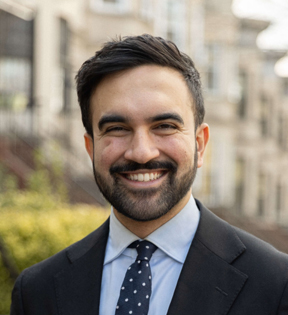

Come January 1, 2026, and Zohran Mamdani will formally assume charge of New York City, the most complex, influential, and unforgiving city in the United States. No other mayoralty carries such weight. No other city so relentlessly exposes the strengths and weaknesses of those who govern it. As the calendar turns and the New Year begins, it is both appropriate and necessary to extend good wishes to Mayor-elect Mamdani—while also offering an unvarnished reminder of the promises he made and the perils that await him.
Mr. Mamdani’s victory was a conscious, calculated choice by New Yorkers. This was not a default election. It was not an accident of turnout or a quirk of division. The people of New York deliberately turned away from familiar political “war horses” and entrusted their future to a new leader, a new political vocabulary, and a new promise of governance. That decision was born of frustration, aspiration, and impatience—frustration with a city that feels unaffordable, aspiration for fairness and dignity, and impatience with leaders who seemed unable or unwilling to confront systemic problems.
This mandate, therefore, is not symbolic. It is specific. It carries expectations, timelines, and accountability.
During his campaign, Mr. Mamdani made clear and repeated promises. He promised to take on the affordability crisis that is hollowing out the middle class and crushing working families. He promised meaningful action on housing—not rhetoric, not pilot programs, not endless studies, but visible relief for tenants burdened by rent increases and displacement. He spoke forcefully of economic justice, insisting that a city built by workers must not be governed solely by the wealthy. He pledged safer streets achieved through trust, reform, and professionalism—not through fear or abandonment. He committed to transparent governance and to listening to communities too often spoken about but rarely heard.
These words won him the election. They must now guide his administration.
For New York is a city where broken promises are remembered long after political victories fade. New Yorkers are a demanding electorate not because they are cynical, but because they are deeply invested in their city. They live with the consequences of municipal decisions every day—on overcrowded subways, in underfunded schools, in neighborhoods transformed by gentrification, and in the rising cost of simply staying put.
Mayor-elect Mamdani must therefore understand a fundamental truth: goodwill has a short shelf life. The honeymoon period in New York is brief, sometimes imaginary. The grace extended to new leaders evaporates quickly when rhetoric outpaces results.
One immediate source of pressure will come from within his own ranks. Those who mobilized passionately for his victory will now demand speed, scale, and ideological purity. They will press him to move fast, to disrupt aggressively, to prove that this victory was not merely symbolic. While such energy is understandable, it can also become a trap. Governing a city of more than eight million people cannot be conducted as an activist campaign. Policy made in haste, without institutional grounding, risks unintended harm—especially to the very communities it intends to serve.
Leadership will require Mr. Mamdani to occasionally disappoint his most fervent supporters in order to protect the broader public interest. That is not betrayal; it is governance. Courage in office often means resisting applause when prudence demands caution.
The second pressure will come from seasoned political opponents and entrenched interests. New York City is home to powerful unions, vast real-estate interests, financial institutions, lobbyists, and deeply rooted bureaucracies. Many of these actors will test the new mayor early—not necessarily through open confrontation, but through delay, resistance, selective cooperation, and quiet obstruction. Others will actively hope for failure, waiting to declare that idealism cannot govern.
Mr. Mamdani must not mistake opposition for illegitimacy. He has won fairly. But he must also not underestimate the sophistication of those who have long navigated City Hall. Moral clarity alone will not overcome institutional inertia. Strategy, negotiation, and administrative competence will be equally essential.
Public safety is likely to become the earliest and most decisive measure of his leadership. No political philosophy survives prolonged insecurity. New Yorkers want safety without brutality, policing without prejudice, and accountability without chaos. This is not an abstract debate; it is about whether parents feel safe letting children ride the subway, whether seniors can walk to the store without fear, whether small businesses can operate without being preyed upon.
Mayor-elect Mamdani must remember that reform is not the same as retreat. A city that surrenders its streets to disorder abandons its most vulnerable first. Balancing justice and safety will require firm resolve, clear standards, and unwavering support for lawful, professional public servants—alongside serious reform where reform is due.
Equally critical will be fiscal discipline. The mayor of New York is the steward of one of the largest municipal budgets on the planet. Every promise must ultimately be paid for. Compassion divorced from arithmetic becomes irresponsibility. Progressive aspirations must be matched with credible funding mechanisms, realistic timelines, and transparent trade-offs. New Yorkers are willing to debate priorities; they are far less forgiving of fiscal recklessness disguised as virtue.
Mr. Mamdani must also guard against the intoxicating pull of symbolism. New York is a global stage. Every statement echoes far beyond its borders. But headlines are not governance, and gestures are not substitutes for sustained administrative work. Cities are improved quietly—by fixing systems, appointing capable commissioners, enforcing standards, and insisting on measurable outcomes.
Perhaps the greatest temptation facing the new mayor will be ego—the belief that electoral victory confers infallibility. History offers ample warning here. Power isolates. Advisors flatter. Social media amplifies applause and outrage alike. The strongest leaders are those who remain grounded, who listen to uncomfortable truths, and who remember that authority is borrowed, not owned.
Mr. Mamdani must never forget this: the trust placed in him was not blind allegiance. It was conditional confidence.
The voters who elevated him did so in hope—but they also did so with watchful eyes. They will measure his success not by ideology, but by impact. Are rents stabilizing? Are neighborhoods safer? Are services more reliable? Are opportunities expanding for those long excluded from prosperity?
As the New Year arrives, therefore, we wish Mayor-elect Zohran Mamdani well—but not lightly. We wish him wisdom equal to his ambition, patience equal to his passion, and humility equal to his authority. Walk carefully, Mr. Mayor. Govern cautiously, but decisively. Remember that every policy choice touches millions of lives.
New York has entrusted you with its present and a large part of its future. Honor that trust—not with slogans, but with steady, principled, competent leadership.
Happy New Year, Mayor-elect Mamdani! The city is watching and hoping.


Be the first to comment