

In its own interests, and in this year of India’s BRICS leadership, Delhi would have been so much better served by declaring that it backs all efforts to restore peace, irrespective of which country is involved, instead of mocking Pakistan’s efforts. After all, India stands to benefit, along with the rest of the world, if these efforts succeed.

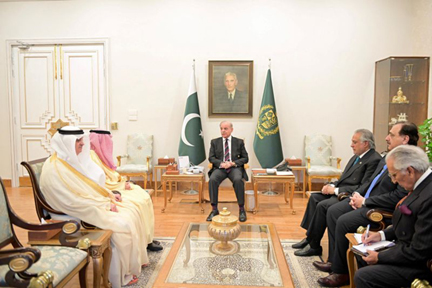
India has focused much attention in recent days on Pakistan’s role in efforts to end the US-Israel war on Iran. Pakistan, working with Egypt and Turkiye, appears to have carried messages between the Iranian leadership and the US. The process is clouded by uncertainties.
On the one hand, the US is asserting that the two sides are close to a deal even as Trump also continues to say preparations are on for a ground invasion. On the other hand, Iran, which has presented a 15-point list of demands, says there is no deal yet. The war may or may not end soon.
In India, Pakistan’s role has evoked two kinds of reactions — outrage that Pakistan could assume any role of importance in the world, and following from this, the second reaction — the dismissal or mockery of the role Pakistan is playing. External Affairs Minister S Jaishankar went so far as to describe the role as that of a “dalaal”.
For the record, India has not called any of the others — Oman, Turkiye or Egypt —who tried or are trying to mediate as dalaals or dismissed their efforts as dalaali. Nor has any Indian official used that word for anyone else trying to defuse any other crisis in the world. For instance, Norway’s role in West Asia in the 1990s.
Will the government add “dalaali” to the list of alleged wrongs that India’s first Prime Minister Jawaharlal Nehru committed when he waded into the Korean War in 1950?
Why do countries offer themselves as mediators? For Norway, which hosted the Nobel Peace Prize and played a major role in seeking a settlement to the Israel-Palestine conflict and later in Sri Lanka, mediation is a prestige project, through which it seeks more leverage in the world. Credibility is important for such efforts, and in its interventions, Norway projected itself as an honest broker. It is another matter that those efforts failed.
Nehru believed his peace efforts in the Korean War would prove that non-alignment had the power to bring the two superpower blocs closer. Pakistan, which has been associated with hosting Osama bin Laden and other notorious terrorist groups, senses an opportunity for image repair.
In a conflict like the one raging in West Asia, whose impact is being felt across the whole world, every country wants the war to end. Some believe they have what it takes to knock sense into the warring sides. Pakistan is uniquely positioned for such a role among the countries that are facing several second-order consequences of this conflict. Apart from the impact on its already fragile economy, Pakistan shares a nearly 1,000-km border with Iran on its south-western flank. Some 20% of Pakistanis are Shia, religiously affiliated to the Iranian state. Shias are the country’s largest majority. What happens if Iran reaches into Pakistan. The assassination of Iran’s Supreme Leader Ayatollah Ali Khameini by US-Israel set off deadly violence in Pakistan’s predominantly Shia areas, and protests across all its cities.
The Balochistan province of Pakistan borders Baloch regions in Iran. Any US-Israeli attempt to involve this Sunni minority in regime change or a ground invasion of Iran would have repercussions on the Pakistani side of the border. Pakistan is also beholden to the Sunni monarchies who rule the Gulf states and whose petrodollars bail out its economy from time to time.
If the war continues, Pakistan’s “strategic mutual defense agreement” with Saudi Arabia, signed last year, could compel it to put boots on the ground against Iran. It can do this only at its own peril. The reported Saudi prodding of the US that it cannot walk away until Iran is conclusively defeated increases that risk. Pakistan, thus, needs the war to end in its own interests.
Any country can pitch itself as a mediator in a conflict, provided it is fully trusted by all parties in the conflict, and has the consent of all parties to intervene. Since the start of this war, Islamabad has walked a shaky tightrope between Iran, with which it keeps mostly cordial but careful ties, and US President Donald Trump, with whom Pakistan’s de facto leader Field Marshal Asim Munir has a special relationship.
Unlike the Gulf countries, it does not host US bases. Moreover, as a nuclear-armed state, it carries heft in the Islamic world. China has also backed its effort.
The entire project may fail, given the unpredictability of Trump and with Iran not giving in on its conditions. But fear of failing has never come in the way of mediation. Last weekend, the foreign ministers of Egypt, Pakistan, Saudi Arabia and Turkiye met in Islamabad, signaling a serious effort by this Islamic quadrilateral for a diplomatic intervention in the war, which is now in its fifth week.
If Israel does not play spoiler — according to a Reuters report, it was asked by the US, on Pakistan’s request, to stand down from a planned assassination of Iranian foreign minister Abbas Araghchi and Speaker Mohammed Bagher Ghalibaf — and the new quad’s efforts progress, Pakistan may host peace talks.
The last time Pakistan played the role of international facilitator was for the US-China detente. Coming during the throes of Pakistan’s failing attempts to hold on to East Pakistan and India’s involvement in the Bangladesh liberation war, Henry Kissinger’s secret visit from Islamabad to Beijing in July 1971, announced by President Richard Nixon soon after his return, shocked India as much as the rest of the world. The rapprochement was among the drivers of the Indo-Soviet Treaty of Peace, Friendship and Cooperation the same year, giving Delhi the confidence for its December 1971 military campaign that led to the final breakup of Pakistan and the liberation of Bangladesh.
India’s strategic environment is changing rapidly once again, underlining Delhi’s diplomatic loneliness that began with Operation Sindoor. Mocking Pakistan for its efforts to make peace does not help India at all. Impressing domestic constituencies with word play may be politically satisfying. But as other commentators have noted, it shows up Delhi in poor light, as more bitter about Pakistan than interested in the peace in West Asia.
In its own interests, and in this year of India’s BRICS leadership, Delhi would have been so much better served by declaring that it backs all efforts to restore peace, irrespective of which country is involved, instead of mocking Pakistan’s efforts. After all, India stands to benefit, along with the rest of the world, if these efforts succeed.
(Nirupama Subramanian is an independent journalist who has worked at The Indian Express and The Hindu. Her X handle is @tallstories)

Be the first to comment