Online searches for ‘Naatu Naatu’ on Google skyrocketed by a whopping 1,105 per cent worldwide after the super-hit song from the Telugu blockbuster ‘RRR’ won the Best Original Song at the 95th Academy Awards.
The finding by Japanese online casino guide 6Takarakuji, after sifting through Google Search trend data, revealed that online interest for ‘Naatu Naatu’ multiplied over 10 times the average volume, just hours after the Telugu-language film swept the Oscar award. “The Indian song has become a popular sensation on TikTok, with 52.6 million views since its release in March last year,” the findings showed. The song presents a high-tempo rhythm and a dance battle between the legendary revolutionaries and their colonial masters.
“History was made during this year’s Oscars ceremony, as aNaatu Naatu’ became the first song from an Indian film to win in the Best Song category,” said a spokesperson for 6Takarakuji.
The song won over the likes of music legends such as Lady Gaga and Rihanna, which is a testament to the song’s huge popularity, as highlighted by the huge spike in this data.
“During the Oscars ceremony, the electrifying live performance of the song by singers Rahul Sipligunj and Kaala Bhairava received a standing ovation from the crowd, and this historic win will give ‘RRR’ and ‘Naatu Naatu’ some well-deserved exposure,” the spokesperson added.
Bhairava and Rahul were on cloud nine after meeting Rihanna on the sidelines of the 95th Academy Awards.
Bhairava shared a picture taken with the nine-time Grammy Award winner. Sipligunj and choreographer Prem Rakshith were also seen with the superstar singer.
Prime Minister Narendra Modi also congratulated music director M.M. Keeravani and lyricist Chandra Bose after their song won the prestigious Oscar award. Source: IANS
Tag: Oscar
-

Google searches for ‘Naatu Naatu’ skyrocket 1,105 percent after Oscar feat
-

Oscars won, Indian cinema poised for greater glory
Naysayers are likely to attribute reasons other than quality to India’s ascent on the Oscars stage. That we are not only a huge movie-producing country but also a voracious entertainment-consuming one is often attributed as the trigger behind our growing eminence. That this is why Hollywood ropes in our big stars in its films and, now, series too, is not a statement but almost an aspersion. In Netflix looking for new markets, too, we can sense a plan behind the India push.

By Nonika Singh India shines at the Oscars — the words seem surreal. In a dream-come-true moment as India has picked up not one but two Oscars (Best Original Song and Best Documentary Short) out of three nominations, it’s not just the makers of RRR and The Elephant Whisperers who stand proud. The electrifying feeling of joy in sync with the infectious beats of Naatu Naatu, composed by MM Keeravani, has spread across the country and the whisper is loud and clear — India can do it.
RRR roars once again and Guneet Monga, producer of the Kartiki Gonsalves-directed The Elephant Whisperers, beams, “We as two women from India stood on that global stage making this historical win! 1.4 billion Indians, this is for you. We’ve all manifested this together.”
Indeed, magical! How and why? Before we answer that, the more important question is why India, one of the largest film producers in the world, couldn’t crack the code earlier.
Year after year, we have lamented over why India can’t win an Oscar and reams have been written about our dismal (near blank) record at the prestigious Academy Awards, often considered the hallmark of excellence and gold standard of recognition. Experts have time and again rued that if countries like Iran and South Korea can take home Oscars, what stops India, where there is no dearth of quality cinema. If India-centric films such as Life of Pi, the survival saga of an Indian boy, could win its director Ang Lee the coveted Best Director statuette, why can’t our storytellers get it right?
Often, the blame has been laid at the door of our official selections. This year, too, much hue and cry was made when Pan Nalin’s acclaimed film Last Film Show was chosen as India’s official entry to the Oscars. Objections were raised by certain sections to the film, which, after making it to the shortlist, fell out of the race. In fact, similar has been the fate of our entries each year, leaving us to draw comfort in the few that have come our way.
Costume designer Bhanu Athaiya, composer AR Rahman, lyricist Gulzar, sound engineer Resul Pookutty and legendary filmmaker Satyajit Ray, who received an honorary award, are part of the select Oscar club.
But what makes this year’s win truly delicious is that, for once, Oscars are for Indian films by Indian production houses. So far, our Oscar victories have been limited to India-centric films by foreign producers and directors. If back in time, it was Richard Attenborough’s Gandhi that fetched costume designer Bhanu Athaiya an Oscar, making her the first Indian to get it, Danny Boyle’s Slumdog Millionaire gave us the chance to chorus Jai Ho. But Naatu Naatu gives us a greater reason to rejoice and break into a hook step that has the world hooked in pure frenzy. In fact, the world has been dancing to the tunes of the ebullient Telugu song for quite some time now.
Prior to its Oscar win, SS Rajamouli’s blockbuster RRR picked up the Golden Globe award for Best Original Song, too. The resounding success of the song is not hard to decode. From lilting lyrics to its catchy beats and dance steps and the way it has been picturized, all elements tick the right boxes. What is even sweeter is that it puts to rest all skepticism about India’s naach-gaana brand of cinema and proves that music and dance are our USP, not Achilles’ heel.
But, does the twin Oscar victory mean India has arrived on the world map of cinema? Judging by the standing ovation that the Naatu Naatu performance by its singers Rahul Sipligunj and Kaala Bhairava got at the 95th Academy Awards, one is tempted to say yes. The Elephant Whisperers’ maiden victory for India in the Documentary Short Subject category, too, makes us nod emphatically.
Of course, naysayers are likely to attribute reasons other than quality to India’s ascent on the Oscars stage. The fact that we are not only a huge movie-producing country but also a voracious entertainment-consuming one is often attributed as the trigger behind our growing eminence. That this is why Hollywood ropes in our big stars in its films and, now, series too, is not a statement but almost an aspersion. In Netflix, a major OTT player, looking for new markets, too, we can sense a plan and method behind the India push.
Add to it the fact that diversity and inclusivity have been pushed to the forefront in Hollywood for quite some time now. More than one Oscar ceremony has created history. In 2020, South Korean film Parasite became the first foreign language film to win the Best Picture Award at the Oscars, thus breaking the “one-inch-tall barrier of subtitles.” Take this year’s Best Film Award-winning Everything Everywhere All At Once. The Best Actress trophy for its lead actress Michelle Yeoh makes her the first woman of Asian descent to win the award. Clearly, India could not have been ignored for too long. RRR makers have been making the right kind of noises ever since the film figured in the Oscar nomination list. Let’s admit it — winning an Oscar is as much a marketing strategy, perhaps popular appeal too, as it is a litmus test of excellence.
Of course, the tumultuous response that RRR has generated overseas can’t be orchestrated through a media blitzkrieg alone. India might still be far from winning the best film in even the International Feature category, let alone the overall one. The closest we have come are Lagaan, Salaam Bombay and Mother India making it to the prestigious final-five list of nominees.
Thus, there is no discounting the history we have created this year. It is more than heartening that Naatu Naatu beat top contenders like Rihanna’s Lift Me Up from Black Panther: Wakanda Forever and Lady Gaga’s Hold My Hand from Top Gun: Maverick among other nominees and The Elephant Whisperers defeated acclaimed competitors like Jay Rosenblatt’s How Do You Measure A Year? To borrow from the words of Michelle Yeoh, the new tidings at the Academy Awards “is indeed a beacon of hope and possibilities” and, as our very own star of RRR, Jr NTR, said, “It’s only a beginning.” On the red (sorry, champagne) carpet, his co-star Ram Charan remarked, “We are not just coming as ourselves but we are coming as India today.”
So, watch out, world, here we come! With our diversity, cultural specificity and inclusivity intact.
(The author is an Assistant Editor of The Tribune, Chandigarh) -
INDIA MAKES HISTORY AT GOLDEN GLOBES, 3 FILMS SHORTLISTED FOR ‘OSCARS’
- By Mabel Pais
What a wonderful way to ring in 2023!
India has made history as the first Asian song with ‘Naatu Naatu’ (film, ‘RRR’) winning the Golden Globe Award for BEST ORIGINAL SONG – MOTION PICTURE, SONGWRITER M.M. KEERAVAANI for 2022!
Further, films from India have been Shortlisted by The Academy of Motion Picture Arts and Sciences (The 95th – ‘Oscars’) in three categories: Documentary Feature Film, International Feature Film and Music (Original Song).
The ten categories are Documentary Feature Film, Documentary Short Film, International Feature Film, Makeup and Hairstyling, Music (Original Score), Music (Original Song), Animated Short Film, Live Action Short Film, Sound and Visual Effects.
The nominees for ‘The Oscars’ will be announced by The Academy on Tuesday, January 24 and the Awards Ceremony will take place on Sunday, March 12.
In the Documentary Feature film category, ‘All That Breathes’ has not only won several awards and recognitions at several film festivals and organizations (see poster) but was also shortlisted in the Documentary Feature Film category by the Academy of Motion Picture Arts and Sciences.
‘OSCAR’ SHORTLISTS
DOCUMENTARY FEATURE FILM
‘All That Breathes’
Dir/Co-Prod: Shaunak Sen l Co-Prods: Aman Mann and Teddy Leifer l 2022 l India/USA/UK l 1h 34m

‘All that Breathes,’ poster (Credit / allthatbreathes.com) In one of the world’s most populated cities, two brothers – Nadeem and Saud – devote their lives to the quixotic effort of protecting the black kite, a majestic bird of prey essential to the ecosystem of New Delhi that has been falling from the sky at alarming rates. Amid environmental toxicity and social unrest, the ‘kite brothers’ spend day and night caring for the creatures in their makeshift avian basement hospital. Director Shaunak Sen (Cities of Sleep) explores the connection between the kites and the Muslim brothers who help them return to the skies, offering a mesmerizing chronicle of inter-species coexistence.
Gotham Film Awards, in presenting the Best Documentary Feature Award to Shaunak Sen commented – “a sublime mix of social issue focus and poetic artistry that embraces the interconnectedness of all living things in this portrait of a pair of Muslim brothers who tend to sick birds (primarily predatory kites) that fall from the polluted sky in New Delhi and are nursed to health in their small basement clinic.”
‘All That Breathes’ took the top prize for Outstanding Achievement in Non-Fiction Feature Filmmaking as well as the award for Cinematography.
INTERNATIONAL FEATURE FILM
‘Last Film Show’
Dir/Writ: Pan Nalin l Gujarati l 1h 51m

Last Film Show (Credit / lastfilmshow.net) In the ‘Last Film Show,’ Samay, a 9-year-old boy living with his family in a remote village in India discovers films for the first time and is absolutely mesmerized. Against his father’s wishes, he returns to the cinema day after day to watch more films, and even befriends the projectionist, who, in exchange for his lunch box, lets him watch movies for free. He quickly figures out that stories become light, light becomes films, and films become dreams. Samay and his wild gang of friends move heaven and earth to catch and project light to achieve a 35mm film projection. But little do they know that soon they’ll be forced to make heartbreaking choices as an era is approaching to annihilate everything they love about their 35mm dreams…
MUSIC (ORIGINAL SONG)
“Nattu Nattu” (from film “RRR”)
Dir: S.S. Rajamouli l 2022 l India l Telugu w/Eng subs l 3h 2m
The music for “Naatu Naatu” is composed by M.M. Keeravani with Lyrics by Chandrabose.

Naatu Naatu dance scene. (Credit /RRR.) From writer-director S. S. Rajamouli (Baahubali) comes the international blockbuster that has enchanted movie audiences of all ages with its jaw-dropping action sequences, swooning romantic intrigue, infectious musical numbers— including the sensation “Naatu Naatu”—and rousing central friendship between two pre-Independence revolutionaries, played by Telugu-language megastars Ram Charan and N.T. Rama Rao, Jr. (better known as Jr. NTR).
From an original story by V. Vijayendra Prasad, the historical action epic RRR (short for Rise, Roar, Revolt) follows the fictionalized paths of real-life freedom fighters Alluri Sitarama Raju (Charan) and Komaram Bheem (Rama Rao) as they come together in 1920s Delhi to battle the nefarious British Raj for the rescue of a kidnapped girl from Bheem’s tribe.
(Mabel Pais writes on The Arts and Entertainment, Social Issues, Health & Wellness, Cuisine and Spirituality)
-
OSCAR CONTENDERS
- By Mabel Pais
FEATURES
RRR
Dir/Writ: S.S. Rajamouli l 2022 l India l Telugu w/Eng subs l 3h 2m

‘RRR,’ dance scene. (Photo: Courtesy ‘RRR.’) ‘RRR,’ from writer-director S. S. Rajamouli (Baahubali) is the international blockbuster that has enchanted movie audiences of all ages with its jaw-dropping action sequences, swooning romantic intrigue, infectious musical numbers— including the sensation “Naatu Naatu”—and rousing central friendship between two pre-Independence revolutionaries, played by Telugu-language megastars Ram Charan and N.T. Rama Rao, Jr. (better known as Jr. NTR).
From an original story by V. Vijayendra Prasad, the historical action epic RRR (short for Rise, Roar, Revolt) follows the fictionalized paths of real-life freedom fighters Alluri Sitarama Raju (Charan) and Komaram Bheem (Rama Rao) as they come together in 1920s Delhi to battle the nefarious British Raj for the rescue of a kidnapped girl from Bheem’s tribe.
Watch the trailer –player.vimeo.com/video/709590385?autoplay=1&h=a79303822a
Opening: Check local listings for re-release dates.
HIDDEN LETTERS
Dirs: Violet Du Feng & Qing Zhao l 2022 l China/USA/Norway/Germany l
1h 26m
Women in China were historically forced into oppressive marriages and forbidden to read or write by their households for thousands of years. To cope, they developed and shared a secret language among themselves called Nushu. Written in poems or songs with bamboo pens on paper-folded fans and handkerchiefs, these hidden letters bonded generations of Chinese women in a clandestine support system of sisterhood, hope and survival. Spanning between past and present, from sunken rice fields and rural villages to bustling metropolitan cities, ‘Hidden Letters’ follows two millennial Chinese women who are connected by their fascination with Nushu and their desire to protect its legacy.
In Jiangyong, Hu Xin works as a Nushu museum guide and aspires to master the ancient script following the breakup of her marriage. In Shanghai, Simu is passionate about music and Nushu, but marital expectations threaten to end her pursuit of both. Influenced by Nushu’s legacy of female solidarity, the two women struggle to find balance as they forge their own paths in a patriarchal culture steeped in female subservience to men. Learn more at hiddenlettersfilm.com
Opening: Watch on major streaming platforms.
ALL IN: MIRACLE AT ST. BERNARD’S
Dirs: Gregg Backer & Evan Kanew l 2022 l USA l 1h 35m
‘All In: Miracle at St. Bernard’s’ is about faith, family and football. This documentary chronicles a tiny, 100-year-old Catholic school in Fitchburg, Massachusetts struggling with insolvency yet defying the odds at a time when the Church was shuttering similar institutions nationwide.
It’s the underdog story of a working-class community and the state’s smallest football program rallying in pursuit of an impossible goal: to save their school from closure by the Church.
The Bernardians faithful needed a miracle. So they set about creating one. All In follows the dramatic campaigns to raise money and enrollment as well as a magical football season that together saved a beloved institution.
Opening: Watch on Prime Video
DOC SHORTS
BAREFOOT EMPRESS
Dir: Vikas Khanna l 2022 l USA l 15m

‘Barefoot Empress,’ Amma in class (Photo: Courtesy’ Barefoot Empress.’) ‘Barefoot Empress’ follows the remarkable journey of 96-year-old Karthyayani Amma as she joins a first grade class, realizing her lifelong dream of receiving an education. Amma went to school for the first time at 96 and became the top of her class. In the trailer she can be seen soaking up a lesson amidst a classroom of girls a tenth of her age. “I’m not ashamed to be sitting in a classroom with students of my great-grandchildren’s age,” she says.
Watch the trailer: youtu.be/7LZ1w8KvD_U
The film is Executive Produced by world-renowned speaker and author, Dr. Deepak Chopra, directed by Michelin Star Chef and social impact filmmaker Vikas Khanna, and produced by Academy Award nominated Doug Roland.
Inspired by Vikas Khanna’s own grandmother who was not given an opportunity at an education, Khanna has partnered with non-profit Leap to Shine to use the film to raise funds in service of providing high quality education for girls in underserved communities in India. To date, ‘Barefoot Empress’ has helped rehabilitate eleven classrooms in India, with many more on the way. Speaking about the film, Dr. Chopra said, “‘Barefoot Empress’ carries a universal message of hope and perseverance that has the power to move viewers, and the momentum to impact the lives of thousands of girls in India.” Learn more at barefootempress.com
FAVORITE DAUGHTER
Dir: Dana Reilly l 2022 l USA l 19m
Winner – Audience Award for Best Docu Short – Sidewalk Film Festival
“‘Favorite Daughter,’ is an endearing, funny, and poignant look at aging, sex, cooking, finding love, and of course the mother-daughter bond.” – Tribeca Citizen
‘Favorite Daughter’ is an intimate portrait of the director’s grandmother Sylvia Weinstock and mother Janet Isa, sheltering in place together in a lower Manhattan apartment during the COVID-19 pandemic. Sylvia was living alone for the first time in her life when after her partner of 69 years, (the director’s grandpa), Ben, passed away. Then her youngest daughter, Janet, moved in.
This short documentary is both raw and charming, melancholy and funny — a portrait of two women with vastly different experiences coming together and supporting one another through the uncertainty of spending the next chapters of their lives “alone,” without a partner.
View the trailer: player.vimeo.com/video/711406850
Opening: Running on Paramount+.
HOLDING MOSES
Dirs: Rivkah Beth Medow & Jen Rainin l 2022 l USA l English l 17m
WORLD PREMIERE – 2022 San Francisco International Film Festival
SFFILM Festival 2022 – Winner – Golden Gate Award
SF Jewish Film Festival 2022 – Winner – Best Short Documentary
‘Holding Moses’ focuses on Randi, who studied Butoh dance in Japan before performing in the show ‘Stomp,’ forging a deep connection with movement and her body. Randi is visually striking, with close-cropped salt and pepper hair, and presents as very masculine of center, defying most people’s image of a mother. Birthing her son felt triumphant, then confusing as he was whisked away to the neonatal intensive care unit (NICU) . When doctors shared that Moses was profoundly disabled and faced a tenuous future, Randi fell into a well of grief before unearthing a new language by which to learn and love her son – one born and honed in the body. Learn more at franklyspeakingfilms.com/projects/holding-moses
Opening: Streaming on the New Yorker Documentary
(Mabel Pais writes on The Arts and Entertainment, Social Issues, Health & Wellness, Cuisine and Spirituality)
-

OSCAR® WINNERS, FILMMAKING LEGENDS HEADLINE OLLYSHORTS FEST

‘Embarrassed.” (Photo: hollyshorts.com) 
‘Found.’ (Photo: hollyshorts.com) Features
NAMAN GUPTA’S ‘COMING OUT WITH THE HELP OF A TIME MACHINE’
GAURI ADELKAR’S ‘A WOMAN OF NO IMPORTANCE’
ZAHIDA PIRANI’S ‘EL CARRITO’
REENA DUTT’S ‘FOUND’
DEEPAK RAUNIYAR’S ‘FOUR NIGHTS’
By Mabel Pais
The annual Academy Awards® Qualifying HOLLYSHORTS FILM FESTIVAL (HSFF), co-founded by Theo Dumont & Daniel Sol, celebrates its 18th year, August 11-20, 2022. The HollyShorts Film Festival (HSFF) screenings will take place in-person at the TCL Chinese Theaters in Hollywood, at 6801 Hollywood Blvd. 3rd Level, Hollywood, CA, 90028 and virtually through the official festival streaming platform BITPIX TV; with the annual Awards Gala set to take place on August 20, 2022. The Oscar® Qualifying HOLLYSHORTS FILM FESTIVAL returns for its much-anticipated 18th edition with a fantastic selection of about 400 films screening this year from an impressive 5000 entries.
RECOGNITION
The winners of HollyShorts’ three top prizes, as previously, will be eligible for nomination at the 2023 Oscars®. Six HollyShorts films were nominated for the 2022 Academy Awards® with two wins for AneilKaria and Riz Ahmed’s ‘THE LONG GOODBYE’ and Ben Proudfoot’s ‘THE QUEEN OF BASKETBALL.’ HollyShorts (HSFF) brings together top creators, industry leaders, and companies and has launched many filmmakers into the next stages of their careers. HollyShorts, a regular on the MovieMaker Magazine Top 50 Festivals Worth the Entry Fee list, also engages its community and spotlights short films year-round through monthly screenings, panels, and networking events.
MESSAGE FROM CO-FOUNDERS & MANAGING DIRECTOR
Nicole Castro (Managing Director), Daniel Sol (Co-Founder, Co-Director) and Theo Dumont (Co-Founder, Co-Director) said in a joint statement: “It’s truly a pleasure to announce this year’s official selections for HollyShorts as we embark on our 18th anniversary of the Oscar-qualifying festival with 2 Academy Award winners this past year and 6 nominees. This year, we have a record of 41 countries represented in the official selections, which truly speaks to the global impact short films are having. We can’t wait to share these incredibly talented short films at this year’s festival and thank all the filmmakers who have submitted along with all of our amazing staff and incredible sponsors for supporting us.”
JURY
The talented jury members are AdakuOnonogbo, Blair Underwood, Bryan Cranston, David Dastmalchian, Janina Gavankar, Jeremy Swift, Jennifer Morrison, Joanna Quin and Stephanie Laing. Filmmakers and stars include double OSCAR® winner Ben Proudfoot, British legend Sir Steve McQueen, Academy Award® winner Travon Free, Jamie Lee Curtis and Gemma Arterton.
OPENING NIGHT PROGRAM – AUGUST 11, 7:30 PM @ Auditorium #1
Includes
Ticket to After Party
(1) Ticket to Opening Night Screening Block of Films
@ TCL Chinese 6 Theatres
(1) Ticket to the After Party @ Madame Tussauds
MINK!
Double OSCAR® winner Ben Proudfoot’s ‘MINK!’ tells the story of Patsy Takemoto Mink, the first woman of color elected to the U.S. House of Representatives.
EMBARRASSED
Sir Steve McQueen’s prostate cancer documentary ‘EMBARRASSED’ which stars Idris Elba who shares “the stats are shocking”, fellow star Morgan Freeman insists “get on your duff, and go and get your exam”, and Chiwetel Ejiofor CBE adds “it’s really important to get the message out there”.
BUMP
Rory Keenan’s ‘BUMP’ stars British fan favorite Gemma Arterton, Frank Chi’s 38.
CROSSHAIRS
Coral Amiga’s ‘CROSSHAIRS’ shares the story of two boys whose friendship is derailed
THE PROBLEM WITH TIME TRAVEL
‘THE PROBLEM WITH TIME TRAVEL’ touches on climate change.
TRIGGERED
Tara Westwood’s ‘TRIGGERED’ stars Isiah Whitlock Jr. and Law and Order’s SVU Robert John Burke.
THOUGHTS AND PRAYERS
‘THOUGHTS AND PRAYERS’ all-star cast includes Adrianne Palicki and Zachary Levi.
38 AT THE GARDEN
Frank Chi’s ‘38 AND THE GARDEN’ is produced by OSCAR® winner Travon Free and revisits an Asian American athlete’s story.
COMPLETE FILM LINEUP
To view the full list of films, visit hollyshorts.com/official_selections_2022
Besides the film lineup,to learn more about the other programs and events of the Festival, visit hollyshorts.com
TICKETS
To purchase Tickets, visit Hollyshorts.com or for an All Access Badge, visit Hollyshorts2022.eventive.org/passes/buy
HollyShorts Film Festival (HSFF) #HSFF2022 (hollyshorts.com)
The annual Academy Awards® Qualifying HollyShorts Film Festival celebrates its 18th year this month. HollyShorts, regular on MovieMaker Magazine’s “Top 50 Festivals Worth the Entry Fee list”, also engages its community and spotlights short films year-round through monthly screenings, panels, and networking events. Learn more at hollyshorts.com
Bitpix (bitpixtv.com)
Born out of the Oscar® Qualifying HollyShorts Film Festival, Bitpix is a new Premium AVOD platform, featuring the world’s best short films. Learn more at bitpixtv.com.
(Mabel Pais writes on The Arts and Entertainment, Social Issues, Health & Wellness, Cuisine and Spirituality)
-

Indian American producer Joseph Patel is the first Patel to ever win an Oscar
LOS ANGELES (TIP): “Summer of Soul” producer Joseph Patel, an Indian American, said he became the 10th South Asian to ever win an Academy award after the film bagged the Oscar in the best documentary feature category.
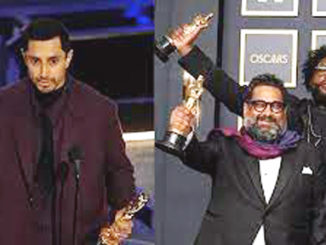
Patel, who produced the film with director Ahmir “Questlove” Thompson, Robert Fyvolent and David Dinerstein, also acknowledged fellow South Asian Riz Ahmed’s win in his backstage Q and A session with journalists.
Ahmed and director Aneil Karia won the live-action short Oscar for their film “The Long Goodbye”.
“I’m in a room full of journalists so I have to say this because I would be remiss not to. Riz Ahmed earlier tonight became the ninth South Asian to ever win an Academy Award. I became the 10th. Tonight, two South Asians won an Academy Award. Also, this will please my mother I’m the first Patel ever to win an Oscar. So, I am very proud of that,” Patel said during the backstage interview post his win on Sunday night.
Roots front man Thompson, best known by his stage name Questlove, arranged the never-seen-before archival footage of the Harlem Cultural Festival, celebrating African American music and culture, and promoting Black pride and unity, attended by 300,000 people in the summer of 1969.
“Summer of Soul (…Or When the Revolution Could Not Be Televised)” was nominated alongside India’s “Writing with Fire”, “Ascension”, “Flee” and “Attica”. Sadly, the documentary’s moment of glory was eclipsed due to the slap gate that happened just before its win was announced. In a moment that shocked everyone, actor Will Smith slapped comedian Chris Rock for cracking a joke about wife Jada Pinkett Smith’s health condition. Rock was on the stage to announce the best documentary feature winner. Thompson declined to talk about the incident and instead shared his happiness for the documentary’s win. In his acceptance speech on the stage, Thompson said the win for the movie was about “the marginalized people in Harlem that needed to heal from pain”. “It’s not lost on me that the story of the Harlem Cultural Festival should have been something that my beautiful mother and my dad should have taken me to when I was five years old,” Thompson added.
-

Indian American producer Joseph Patel is the first Patel to ever win an Oscar
LOS ANGELES (TIP): “Summer of Soul” producer Joseph Patel, an Indian American, said he became the 10th South Asian to ever win an Academy award after the film bagged the Oscar in the best documentary feature category.
Patel, who produced the film with director Ahmir “Questlove” Thompson, Robert Fyvolent and David Dinerstein, also acknowledged fellow South Asian Riz Ahmed’s win in his backstage Q and A session with journalists.
Ahmed and director Aneil Karia won the live-action short Oscar for their film “The Long Goodbye”.
“I’m in a room full of journalists so I have to say this because I would be remiss not to. Riz Ahmed earlier tonight became the ninth South Asian to ever win an Academy Award. I became the 10th. Tonight, two South Asians won an Academy Award. Also, this will please my mother I’m the first Patel ever to win an Oscar. So, I am very proud of that,” Patel said during the backstage interview post his win on Sunday night.
Roots front man Thompson, best known by his stage name Questlove, arranged the never-seen-before archival footage of the Harlem Cultural Festival, celebrating African American music and culture, and promoting Black pride and unity, attended by 300,000 people in the summer of 1969. “Summer of Soul (…Or When the Revolution Could Not Be Televised)” was nominated alongside India’s “Writing with Fire”, “Ascension”, “Flee” and “Attica”. Sadly, the documentary’s moment of glory was eclipsed due to the slap gate that happened just before its win was announced.
In a moment that shocked everyone, actor Will Smith slapped comedian Chris Rock for cracking a joke about wife Jada Pinkett Smith’s health condition. Rock was on the stage to announce the best documentary feature winner.
Thompson declined to talk about the incident and instead shared his happiness for the documentary’s win.
In his acceptance speech on the stage, Thompson said the win for the movie was about “the marginalized people in Harlem that needed to heal from pain”.
“It’s not lost on me that the story of the Harlem Cultural Festival should have been something that my beautiful mother and my dad should have taken me to when I was five years old,” Thompson added.
-

Oscar winner and groundbreaking star Sidney Poitier dies
Before Poitier, few Black actors were permitted a break from the stereotypes of bug-eyed servants and grinning entertainers
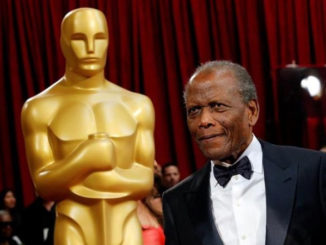
NEW YORK (TIP): Sidney Poitier, the groundbreaking actor and enduring inspiration who transformed how Black people were portrayed on screen, became the first Black actor to win an Academy Award for best lead performance and the first to be a top box-office draw, has died. He was 94.
Poitier, winner of the best actor Oscar in 1964 for “Lilies of the Field,” died Thursday, January 6he Bahamas, according to Eugene Torchon-Newry, acting director general of the Ministry of Foreign Affairs in the Bahamas.
Few movie stars, Black or white, had such an influence both on and off the screen. Before Poitier, the son of Bahamian tomato farmers, no Black actor had a sustained career as a lead performer or could get a film produced based on his own star power.
Before Poitier, few Black actors were permitted a break from the stereotypes of bug-eyed servants and grinning entertainers. Before Poitier, Hollywood filmmakers rarely even attempted to tell a Black person’s story.
Messages honoring and mourning Poitier flooded social media, with Whoopi Goldberg writing on Twitter: “He showed us how to reach for the stars.” Tyler Perry on Instagram wrote: “The grace and class that this man has shown throughout his entire life, the example he set for me, not only as a Black man but as a human being will never be forgotten.” Poitier’s rise mirrored profound changes in the country in the 1950s and 1960s. As racial attitudes evolved during the civil rights era and segregation laws were challenged and fell, Poitier was the performer to whom a cautious industry turned for stories of progress.
He was the escaped Black convict who befriends a racist white prisoner (Tony Curtis) in “The Defiant Ones.” He was the courtly office worker who falls in love with a blind white girl in “A Patch of Blue.” He was the handyman in “Lilies of the Field” who builds a church for a group of nuns.
In one of the great roles of the stage and screen, he was the ambitious young father whose dreams clashed with those of other family members in Lorraine Hansberry’s “A Raisin in the Sun.” Debates about diversity in Hollywood inevitably turn to the story of Poitier. With his handsome, flawless face; intense stare and disciplined style, he was for years not just the most popular Black movie star, but the only one.
“I made films when the only other Black on the lot was the shoeshine boy,” he recalled in a 1988 Newsweek interview. “I was kind of the lone guy in town.” Poitier peaked in 1967 with three of the year’s most notable movies: “To Sir, With Love,” in which he starred as a school teacher who wins over his unruly students at a London secondary school; “In the Heat of the Night,” as the determined police detective Virgil Tibbs; and in “Guess Who’s Coming to Dinner,” as the prominent doctor who wishes to marry a young white woman he only recently met, her parents played by Spencer Tracy and Katharine Hepburn in their final film together.
Theater owners named Poitier the No. 1 star of 1967, the first time a Black actor topped the list. In 2009 President Barack Obama, whose own steady bearing was sometimes compared to Poitier’s, awarded him the Presidential Medal of Freedom, saying that the actor “not only entertained but enlightened … revealing the power of the silver screen to bring us closer together.” His appeal brought him burdens not unlike such other historical figures as Jackie Robinson and the Rev. Martin Luther King Jr. He was subjected to bigotry from whites and accusations of compromise from the Black community. Poitier was held, and held himself, to standards well above his white peers.
He refused to play cowards and took on characters, especially in “Guess Who’s Coming to Dinner,” of almost divine goodness. He developed a steady but resolved and occasionally humorous persona crystallized in his most famous line — “They call me Mr. Tibbs!” — from “In the Heat of the Night.” “All those who see unworthiness when they look at me and are given thereby to denying me value — to you I say, I’m not talking about being as good as you. I hereby declare myself better than you,’” he wrote in his memoir, “The Measure of a Man,” published in 2000.
But even in his prime he was criticized for being out of touch. He was called an Uncle Tom and a “million-dollar shoeshine boy.” In 1967, The New York Times published Black playwright Clifford Mason’s essay, “Why Does White America Love Sidney Poitier So?” Mason dismissed Poitier’s films as “a schizophrenic flight from historical fact” and the actor as a pawn for the “white man’s sense of what’s wrong with the world.” Stardom didn’t shield Poitier from racism and condescension. He had a hard time finding housing in Los Angeles and was followed by the Ku Klux Klan when he visited Mississippi in 1964, not long after three civil rights workers had been murdered there. In interviews, journalists often ignored his work and asked him instead about race and current events.
“I am an artist, man, American, contemporary,” he snapped during a 1967 press conference. “I am an awful lot of things, so I wish you would pay me the respect due.” Poitier was not as engaged politically as his friend and contemporary Harry Belafonte, leading to occasional conflicts between them. But he participated in the 1963 March on Washington and other civil rights events, and as an actor defended himself and risked his career. He refused to sign loyalty oaths during the 1950s, when Hollywood was barring suspected Communists, and turned down roles he found offensive.
“Almost all the job opportunities were reflective of the stereotypical perception of Blacks that had infected the whole consciousness of the country,” he recalled. “I came with an inability to do those things. It just wasn’t in me. I had chosen to use my work as a reflection of my values.” Poitier’s films were usually about personal triumphs rather than broad political themes, but the classic Poitier role, from “In the Heat of the Night” to “Guess Who’s Coming to Dinner,” was as a Black man of such decency and composure — Poitier became synonymous with the word “dignified” — that he wins over the whites opposed to him.
His screen career faded in the late 1960s as political movements, Black and white, became more radical and movies more explicit. He acted less often, gave fewer interviews, and began directing, his credits including the Richard Pryor-Gene Wilder farce “Stir Crazy,” “Buck and the Preacher” (co-starring Poitier and Belafonte) and the Bill Cosby comedies “Uptown Saturday Night” and “Let’s Do It Again.” In the 1980s and ’90s, he appeared in the feature films “Sneakers” and “The Jackal” and several television movies, receiving an Emmy and Golden Globe nomination as future Supreme Court Justice Thurgood Marshall in “Separate But Equal” and an Emmy nomination for his portrayal of Nelson Mandela in “Mandela and De Klerk.” Theatergoers were reminded of the actor through an acclaimed play that featured him in name only: John Guare’s “Six Degrees of Separation,” about a con artist claiming to be Poitier’s son.
In recent years, a new generation learned of him through Oprah Winfrey, who chose “The Measure of a Man” for her book club. Meanwhile, he welcomed the rise of such Black stars as Denzel Washington, Will Smith and Danny Glover: “It’s like the cavalry coming to relieve the troops! You have no idea how pleased I am,” he said.
Poitier received numerous honorary prizes, including a lifetime achievement award from the American Film Institute and a special Academy Award in 2002, on the same night that Black performers won both best acting awards, Washington for “Training Day” and Halle Berry for “Monster’s Ball.” “I’ll always be chasing you, Sidney,” Washington, who had earlier presented the honorary award to Poitier, said during his acceptance speech. “I’ll always be following in your footsteps. There’s nothing I would rather do, sir, nothing I would rather do.” Poitier had four daughters with his first wife, Juanita Hardy, and two with his second wife, actress Joanna Shimkus, who starred with him in his 1969 film “The Lost Man.” Daughter Sydney Tamaii Poitier appeared on such television series as “Veronica Mars” and “Mr. Knight.” His life ended in adulation, but it began in hardship. Poitier was born prematurely, weighing just 3 pounds, in Miami, where his parents had gone to deliver tomatoes from their farm on tiny Cat Island in the Bahamas. He spent his early years on the remote island, which had a population of 1,500 and no electricity, and he quit school at 12 1/2 to help support the family.
Three years later, he was sent to live with a brother in Miami; his father was concerned that the street life of Nassau was a bad influence. With USD 3 in his pocket, Sidney traveled steerage on a mail-cargo ship.
“The smell in that portion of the boat was so horrendous that I spent a goodly part of the crossing heaving over the side,” he told The Associated Press in 1999, adding that Miami soon educated him about racism. “I learned quite quickly that there were places I couldn’t go, that I would be questioned if I wandered into various neighborhoods.” Poitier moved to Harlem and was so overwhelmed by his first winter there he enlisted in the Army, cheating on his age and swearing he was 18 when he had yet to turn 17. Assigned to a mental hospital on Long Island, Poitier was appalled at how cruelly the doctors and nurses treated the soldier patients.
In his 1980 autobiography, “This Life,” he related how he escaped the Army by feigning insanity.
Back in Harlem, he was looking in the Amsterdam News for a dishwasher job when he noticed an ad seeking actors at the American Negro Theater. He went there and was handed a script and told to go on the stage. Poitier had never seen a play in his life and could barely read. He stumbled through his lines in a thick Caribbean accent and the director marched him to the door.
“As I walked to the bus, what humiliated me was the suggestion that all he could see in me was a dishwasher. If I submitted to him, I would be aiding him in making that perception a prophetic one,” Poitier later told the AP.
“I got so pissed, I said, I’m going to become an actor — whatever that is. I don’t want to be an actor, but I’ve got to become one to go back there and show him that I could be more than a dishwasher.’ That became my goal.” The process took months as he sounded out words from the newspaper. Poitier returned to the American Negro Theater and was again rejected. Then he made a deal: He would act as janitor for the theater in return for acting lessons. When he was released again, his fellow students urged the teachers to let him be in the class play. Another Caribbean, Belafonte, was cast in the lead. When Belafonte couldn’t make a preview performance because it conflicted with his own janitorial duties, his understudy, Poitier, went on.
The audience included a Broadway producer who cast him in an all-Black version of “Lysistrata.” The play lasted four nights, but rave reviews for Poitier won him an understudy job in “Anna Lucasta,” and later he played the lead in the road company. In 1950, he broke through on screen in “No Way Out,” playing a doctor whose patient, a white man, dies and is then harassed by the patient’s bigoted brother, played by Richard Widmark.
Key early films included “Blackboard Jungle,” featuring Poitier as a tough high school student (the actor was well into his 20s at the time) in a violent school; and “The Defiant Ones,” which brought Poitier his first best actor nomination, and the first one for any Black male.
The theme of cultural differences turned lighthearted in “Lilies of the Field,” in which Poitier played a Baptist handyman who builds a chapel for a group of Roman Catholic nuns, refugees from Germany. In one memorable scene, he gives them an English lesson.
The only Black actor before Poitier to win a competitive Oscar was Hattie McDaniel, the 1939 best supporting actress for “Gone With the Wind.” No one, including Poitier, thought “Lilies of the Field” his best film, but the times were right (Congress would soon pass the Civil Rights Act of 1964, for which Poitier had lobbied) and the actor was favored even against such competitors as Paul Newman for “Hud” and Albert Finney for “Tom Jones.” Newman was among those rooting for Poitier. When presenter Anne Bancroft announced his victory, the audience cheered for so long that Poitier momentarily forgot his speech. “It has been a long journey to this moment,” he declared.
Poitier never pretended that his Oscar was “a magic wand” for Black performers, as he observed after his victory, and he shared his critics’ frustration with some of the roles he took on, confiding that his characters were sometimes so unsexual they became kind of “neuter.” But he also believed himself fortunate and encouraged those who followed him. “To the young African American filmmakers who have arrived on the playing field, I am filled with pride you are here. I am sure, like me, you have discovered it was never impossible, it was just harder,” he said in 1992 as he received a lifetime achievement award from the American Film Institute. “Welcome, young Blacks. Those of us who go before you glance back with satisfaction and leave you with a simple trust: Be true to yourselves and be useful to the journey.”
(Agencies)