Tag: OXFORD

  • In her Oxford address, Mamata says her governance model doesn’t allow discrimination

    In her Oxford address, Mamata says her governance model doesn’t allow discrimination

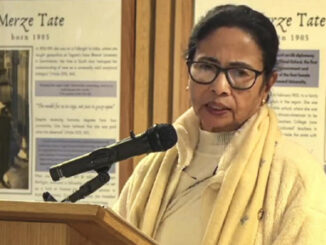
    LONDON (TIP): Addressing a gathering at Kellogg College at the University of Oxford on March 27, 2025, West Bengal Chief Minister Mamata Banerjee stressed the importance of inclusive development and stated that division in society is counterproductive

    Ms Banerjee said her governance model does not allow discrimination and she prioritizes the welfare of all sections of society.

    “If I die, before my death, I want to see unity. Unity is our strength, and division leads to our fall. This was Swami Vivekananda’s belief. Keeping unity is a difficult task, but dividing people takes only a moment. Do you think the world can sustain such divisive ideology?” she asked.

    “When I am in the chair, I cannot divide society. I have to look after the weaker sections and the poor. We have to work hard for them. At the same time, we must work for all religions, castes, and creeds together, move forward with them, and help them,” she said.

    Ms. Banerjee, who heads the Trinamool Congress, was speaking on ‘Social Development – Girl, Child and Women Empowerment in West Bengal’. Pointing to West Bengal’s diversity, she said people in the state celebrate all festivals together without discrimination.

    “We have about 11 crore people in our state — almost like a big country. Our beauty lies in the fact that more than 33 per cent of our people belong to minority communities, including Muslims, Christians, Buddhists and Gorkhas. Around 6 per cent are tribals, and 23 per cent belong to Scheduled Castes. People of every caste, creed, and religion love each other,” she said.

    Ms. Banerjee underlined the need for a human-centric approach to governance.

    “Our mission is to ensure that there is no discrimination among students, women, farmers, and workers. We must consider all people as human beings. Without humanity, this world cannot run, continue, or sustain — I firmly believe so,” she said.
    (Source: PTI)

  • Mark Carney takes over as the 24th PM of Canada; He may give up his British and Irish citizenships

    Mark Carney takes over as the 24th PM of Canada; He may give up his British and Irish citizenships

    By Prabhjot Singh

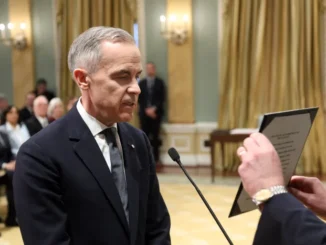
    OTTAWA (TIP): Mark Carney, who was sworn in as Canada’s 24th Prime Minister on Friday, has three citizenships: Canada, Ireland, and Great Britain. He has already initiated steps to renounce the last two. Earlier, Justin Trudeau resigned as the 23rd Prime Minister of Canada. Born in Fort Smith, NWT, and raised in Edmonton, the 59-year-old renowned banker is an economist who attended Harvard and Oxford. He has led two countries’ central banks: Canada’s from 2008 to 2013 and Britain’s from 2013 to 2020.

    His wife, Diana Fox Carney, is a British economist. They first met at Oxford and have four daughters: Sophia, Amelia, Tess, and Cleo. Has never run for Parliament but is known to many people in the Liberals who held key portfolios in the Trudeau government.

    Interestingly, one of his Oxford friends married Chrystia Freeland, who was Justin Trudeau’s finance minister. Catherine McKenna, the former environment minister, and Anita Anand, the current Transport Minister, are also counted among friends of the new Prime Minister.

    The role he played in weathering the 2008 financial crisis in Canada and the 2016 Brexit shock in Britain made him a sought-after expert on another emergency, the pandemic. It led to his installation as an informal adviser on COVID-19 economic strategy.

    He became so indispensable that Justin Trudeau toyed with the idea of making him finance minister in place of Chrystia Freeland. However, the move created ripples. Chrystia Freeland surprised everyone with her resignation hours before she was to present the fall Financial Report in the House of Commons. It also helped trigger the leadership race that brought Mark Carney the top job. Chrystia Freeland has known Mark Carney for years, as has her husband, Graham Bowley, who studied with him at Oxford.

    In his run for the Liberal Party leadership, Mark Carney maintained that he would retaliate dollar for dollar against U.S. tariffs and help Canada weather the shock by reducing its internal trade barriers and exploring new international markets. He also declared that he would phase out carbon pricing at the consumer and business level but not the industrial level.

    Before his carnation, Mark Carney has divested all assets, other than cash and real estate, into a blind trust, a spokesperson told media without divulging how much those assets were worth, so it was not clear how wealthy the former corporate executive was before entering politics.

    Going by indications, he is likely to call a snap election within days, setting up a fierce battle of ballots between his Liberals and Pierre Poilievre’s Conservatives in late April or early May for political supremacy in Canada for the next four years. Soon after assuming office, he is expected to travel to London and Paris for talks, including with British Prime Minister Keir Starmer, as Europe and Canada have much to discuss to retaliate against steel and aluminium tariffs by the United States.

    Meanwhile, before relinquishing office, Justin Trudeau posted a goodbye video to social media, saying he leaves the prime ministership “proud to have served a country full of people who stand up for what’s right.”

    After braving two no-confidence motions in November and December last year, Trudeau announced his decision to step down as Prime Minister after his party had chosen his successor this past weekend. Mark Carney, as expected, downsized his Cabinet, while retaining Mélanie Joly in Foreign Affairs, David McGuinty in Public Safety, and Dominic LeBlanc in Finance so that they continue to concentrate on the Canada-U.S. trade dispute. In January, the Governor-General had, at Justin Trudeau’s request, prorogued Parliament until March 24, suspending all House business that could bring the minority government down while the leadership race was in progress.

    The new Prime Minister has the option to call a snap election before the House of Commons resumes its sitting. He may do this the week before the prorogation ends.

    Political circles are agog with speculations that April 28 or May 5 may be election dates under consideration, giving parties just more than a month on the campaign trail, a fairly standard length for federal elections.

  • UK study finds long-term lung damage after COVID-19

    UK study finds long-term lung damage after COVID-19

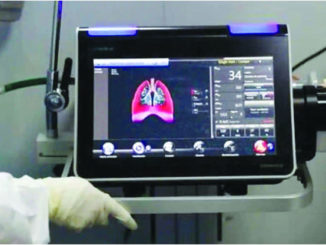
    Researchers in the UK have identified persistent damage to lungs in COVID-19 patients at least three months after they were discharged from hospital, and in some cases the duration is even longer. The study, conducted by Sheffield and Oxford researchers using a cutting-edge method of imaging, said the damage was not detected by routine CT scans and clinical tests, and the patients would consequently normally be told their lungs are normal. Early research by the team has shown that patients who have not been hospitalised with COVID-19 but who are experiencing long-term breathlessness may have similar damage in their lungs, and a larger study is needed to confirm this, a release by the Sheffield University said on May 26. In a paper published in Radiology, the world’s leading radiology journal, the researchers from the University of Sheffield and the University of Oxford said that hyperpolarised xenon MRI (XeMRI) scans had found abnormalities in the lungs of some COVID-19 patients more than three months and in some cases, nine months – after leaving hospital, when other clinical measurements were normal. Lead author of the study, Professor Jim Wild, Head of Imaging and NIHR Research Professor of Magnetic Resonance at the University of Sheffield, said, “the findings of the study are very interesting. The 129 Xe MRI is pinpointing the parts of the lung where the physiology of oxygen uptake is impaired due to long standing effects of COVID-19 on the lungs, even though they often look normal on CT scans. It is great to see the imaging technology we have developed rolled out in other clinical centres, working with our collaborators in Oxford on such a timely and clinically important study sets a real precedent for multi-centre research and NHS diagnostic scanning with 129Xe MRI in the UK,” the release quoted him as saying.

    Source: PTI

  • Indian- origin Sikh fighter pilot memorial in UK to honor Indians who fought in World Wars

    Indian- origin Sikh fighter pilot memorial in UK to honor Indians who fought in World Wars

    Nirpal Singh Shergill

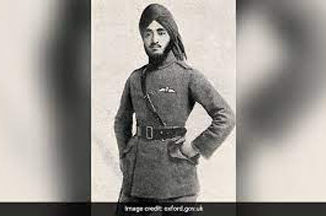
    LONDON (TIP): The design for a sculpture of an early 20th century Sikh fighter pilot, cricketer and golfer from Oxford University has been approved for a new memorial to be erected in the England port city of Southampton in memory of all Indians who fought in the World Wars. Hardit Singh Malik first arrived in the UK in 1908 as a 14-year-old to Balliol College at the University of Oxford and went on to become a member of the Royal Flying Corps during World War I. As the first Indian and turbaned pilot with a specialized helmet, he became famous as the “Flying Sikh”.

    “As such the statue to the legendary World War I hero, Hardit Singh Malik, the world’s first Royal Flying Corps (now the Royal Air Force) Sikh, turbaned fighter pilot will be emblematic for the broader Sikh contributions in the British armed forces of World War I and II, with Malik’s extraordinary accomplishments as a ‘touchstone’ for the whole Sikh community and other of its lesser-known heroes,” notes the One Community Hampshire & Dorset (OCHD) organization behind the campaign for the memorial, which was approved by the Southampton City Council last year.

    Malik also played cricket for Sussex and was also the Indian Ambassador to France after a long and distinguished career in the Indian Civil Service. But it is as a fighter pilot during 1917-19 that he is best known.

    “I am truly overwhelmed by the striking beauty and power of the exceptional design of the memorial, which captures the spirit and endeavor of this great RAF fighter pilot, Hardit Singh Malik, so well. It gives me great happiness to learn that the design is approved by the community,” said Lord Rami Ranger, Chairman of the British Sikh Association and Chief Patron of OCHD. “This project certainly speaks for itself; strongly furthering community cohesion and integration, and testifying to the major contribution our Sikh and broader ethnic minority communities make to our country, as we live in such a vibrant multicultural society here in Southampton,” said Pritheepal Singh, OCHD CEO and Director. The memorial will be created by English sculptor Luke Perry, who is associated with other memorials such as the “Lions of the Great War” monument in Smethwick in the West Midlands region of England, which depicts a turbaned Sikh soldier to honor the sacrifices made by millions of South Asian service personnel who fought for Britain in the World Wars. His design for the latest memorial was finalized earlier this month and also received the backing of the Council of Southampton Gurdwaras. “Monuments such as this are a vital part of the fight for equal representation. These artworks are long overdue thanks and recognition to the communities from around the world who have supported Britain in its past and continue to do so in vital roles, not just in the armed forces but our health care and every aspect of modern life,” said Perry. “The public statue of Hardit Singh Malik embodies the spirit of inclusivity — representing the will to ‘breaking the glass ceiling’ at the intersection of two World Wars and minority enrolment in the RAF: a significant feat for an Indian at the time,” added Dr Sanjukta Ghosh, Artistic Director at the School of Oriental and African Studies (SOAS) South Asia Institute and OCHD Advisor. An online Go Fund Me fundraiser is also inviting funds for the memorial, the unveiling of which is expected to be accompanied by educational resources, a book and a documentary covering several educational themes.


  • Oxford vaccine shows protection against COVID-19 in monkeys: Study

    Oxford vaccine shows protection against COVID-19 in monkeys: Study

    Preliminary results from this research were used to facilitate the start of clinical trials of the vaccine in humans, the researchers noted

    LONDON (TIP): A COVID-19 vaccine candidate developed by the University of Oxford in the UK elicits an immune response and reduces the viral load in monkeys exposed to SARS-CoV-2 virus, according to a study published in the journal Nature on Thursday, July 30.

    The researchers from National Institute of Allergy and Infectious Diseases in the US and the Oxford University found that the ChAdOx1 nCoV-19 vaccine protects the macaques from COVID-19 pneumonia — a complication of SARS-CoV-2 infection in which the lungs become inflamed and may fill with fluid.

    Preliminary results from this research were used to facilitate the start of clinical trials of the vaccine in humans, the researchers noted.

    ChAdOx1 nCoV-19 is made from a weakened chimpanzee adenovirus — a group of viruses that can cause a range of illnesses, including the common cold — that expresses the SARS-CoV-2 spike protein, a structure that enables the coronavirus to enter human cells.

    The researchers show that a single dose of ChAdOx1 nCoV-19, given to six macaques 28 days before exposure to SARS-CoV-2, is effective in preventing damage to lungs and drastically reduces the viral load, when compared with six control animals.

    A further six macaques were given a booster course of two doses of the vaccine, at 56 and 28 days before challenge, which increased the immune response, the team found.

    The vaccinated animals showed no evidence of immune-enhanced inflammatory disease, which has been observed in some preclinical studies of vaccines against SARS-CoV-2, according to the researchers.

    They noted that there was no difference in viral shedding from the nose between vaccinated and control animals.

    This finding indicates that ChAdOx1 nCoV-19 may not prevent infection or transmission, but may reduce illness, the researchers noted.

    The study has led to clinical trials of the ChAdOx1 nCov-19 vaccine, which have enrolled more than 8,000 volunteers as of the beginning of July 2020, they said.

    Another study on 52 adult rhesus macaques published in the journal Nature on Thursday found that a single dose of a vaccine made from an adenovirus, a group of viruses that are linked to illnesses such as the mild cold, protected the animals against SARS-CoV-2.

    The optimal version of the vaccine is currently being evaluated in clinical trials, said the researchers of this study from Harvard Medical School in the US.

    (Source: PTI)