Tag: Oxford University

  • School and College Going Students Enlightened at GOPIO-CT’s ‘College and Beyond’ Event

    School and College Going Students Enlightened at GOPIO-CT’s ‘College and Beyond’ Event

    STAMFORD, CT (TIP): The Global Organization of People of Indian Origin – Connecticut Chapter (GOPIO-CT) hosted a highly engaging and insightful event designed to empower high school students as they navigate the critical transitions to college and professional life. The event, held on Tues, Dec 24th at Hamilton Inn and Suites, Stamford. It featured an impressive panel of speakers, including college students, recent graduates, early-career professionals, and a distinguished professor, who shared their real-world experiences and actionable advice.

    The program aimed to demystify the college application process, shed light on the realities of college life, and offer valuable strategies for academic and personal success. It also provided insights into the transition from college to the professional world, equipping attendees with practical tips to build a strong foundation for their future careers.

    The panel was moderated by Nandu Kuppuswamy, Head of Investor Relations, MCR Investors. The panelists were: Sraavani Akarapu – UPenn Graduate, Megha Gupta – Alum Purdue University, Dhruv Hill – Freshman, San Diego State University, Arnav Jhangiani – Junior, Finance Major, Arizona State University, Himani Narayan, Junior, Pace University, Amrutha Nandakumar – 1st Year, Oxford University, Brian Thomas – Sophomore at NYU Stern School of Business, Curren Iyer – Senior Product Operations Manager, Ramp (Harvard and HBS alum) and Cecil Nazareth, Faculty at Fordham University Business School, CPA, Author, Motivational Speaker

    Some of the highlights of the event were as follows:

    Dynamic Panel Discussions: Each panelist brought unique perspectives and expertise, creating a rich tapestry of advice tailored to students at different stages of their educational journeys. Topics ranged from crafting compelling college applications to managing priorities in college and establishing a successful professional path. Interactive Q&A Sessions: Attendees had the opportunity to engage directly with the panelists, asking questions about challenges and opportunities in higher education and beyond. This fostered a lively and interactive exchange of ideas.

    Real-World Insights: College students discussed balancing academics with extracurricular activities and building meaningful connections on campus. Recent graduates highlighted strategies for adapting to new environments, while early professionals shared advice on leveraging internships and networking to launch their careers.

    Expert Academic Guidance: The professor on the panel provided a comprehensive overview of how students can make the most of their college experience, emphasizing the importance of skills, purpose, and lifelong learning.

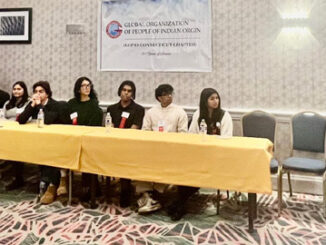
    Photo – GOPIO-CT Youth Panel in session, Moderator Nandu Kuppuswamy speaking. Sitting from l. to r. Sraavani Akarapu, Cecil Nazareth, Curren Iyer, Megha Gupta, Arnav Jhangiani, Himani Narayan, Dhruv Hill, Brian Thomas and Amrutha Nandakumar

    Key Takeaways for Attendees:

    Start Early: Begin college applications and research well in advance to identify institutions and programs that align with personal goals. Choose Early Decision & Early Action when clear about the choice of schools.

    Prioritize Self-Discovery: Use college as a time to explore interests, build skills, and develop a growth mindset.

    Focus on Balance: Manage academics, extracurricular activities, social connections, and time effectively to create a holistic and fulfilling college experience.

    Prepare for Professional Life: Gain real-world experience through internships, mentorship, alumni network, and active participation in industry-related activities.

    Memorable Quotes from the Panelists:

    Sraavani: ‘Don’t do something just for how it will look on college applications. Do something you are genuinely interested in, and that which shows your authentic self – e.g. gardening.’

    Dhruv: ‘As you receive responses to your college applications, remember that rejection is redirection. It is an opportunity to look at options you might not have considered and may turn out better for you.’

    Himani: ‘In the first year, get involved, but focus on losing FOMO as some event is happening every night. Go to events that matter.’

    Brian: ‘For your college application, create a unique and compelling story that differentiates you. Turn any negative energy to positive energy.’

    Amrutha: ‘When transitioning to college life, saying NO is important. Don’t say YES to everything.  It is okay to say NO’.

    Professor Nazareth: ‘Focus on 1) skills (what can you do?) and not just getting a degree, and 2) purpose (something that is bigger than yourself).’

    GOPIO-CT Youth Panel Audience and students interacting

    The event was graced by GOPIO officials including GOPIO International Chairman Dr. Thomas Abraham. After the panel discussion, Dr. Abraham briefly spoke on GOPIO International and the roles the various chapters are playing in community service and activities of wider interest to the local society.

    About GOPIO: The Global Organization of People of Indian Origin (GOPIO) is a non-profit organization dedicated to promoting the well-being and advancement of people of Indian origin worldwide. Over the last 18 years, GOPIO-CT, a chapter of GOPIO International has become an active and dynamic organization hosting interactive sessions with policy makers and academicians, community events, youth mentoring and networking workshops, and working with other area organizations to help create a better future. GOPIO-CT serves as a non-partisan, secular, civic and community service organization – promoting awareness of Indian culture, customs and contributions of people of Indian origin through community programs, forums, events and youth activities. It seeks to strengthen partnerships and create an ongoing dialogue with local communities.

    For more information about this event or to learn about upcoming GOPIO initiatives, please contact GOPIO-CT Board Member Nandu Kuppuswamy at 617-938-3639, email; nkuppuswamy@gmail.com

  • University of Oxford appoints Indo-British Dr Jaskiran Kaur Bhogal to Guru Nanak Research Fellowship

    University of Oxford appoints Indo-British Dr Jaskiran Kaur Bhogal to Guru Nanak Research Fellowship

    LONDON (TIP): Wolfson College, University of Oxford, has appointed Dr Jaskiran Kaur Bhogal to the newly established Guru Nanak Stipendiary Research Fellowship. This prestigious position, which will commence in February 2025, was made possible by a fundraising campaign primarily supported by the Punjabi Sikh community in Britain.
    Dr Bhogal, who holds a BSc in Economics and an MSc and PhD in Anthropology from the London School of Economics, will focus her research on exploring the preservation of intangible heritage in the Sikh community. Her project will examine how Sikh families in Britain maintain their connection to their spiritual and cultural heritage through childbirth, child-rearing, and homemaking practices.

    Dr Bhogal is going to research the preservation of intangible heritage, deeply rooted in the historical and spiritual context of Punjab, through childbirth, child-rearing, and homemaking practices, drawing upon traditions and the teachings of Guru Nanak Sahib. This project will explore how the Sikh community maintains a connection to their spiritual and cultural heritage in a British diaspora context. She will explore how Sikh families create Sikh spaces within their homes and everyday lives, where the cultural and spiritual heritage of Punjab is preserved and transmitted across generations.
    (Based on a press release issued by Wolfson College, University of Oxford)

  • Three Indian-origin candidates in final race for Oxford University Chancellor

    Three Indian-origin candidates in final race for Oxford University Chancellor

    LONDON (TIP): The University of Oxford on Wednesday announced the 38 finalists in the race to be elected the new Chancellor of the University of Oxford, which includes Indian-origin candidates but excludes former Pakistani prime minister Imran Khan.
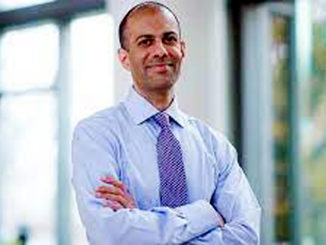
    Ankur Shiv Bhandari, the first Indian-origin Mayor of Bracknell Forest in Berkshire; Nirpal Singh Paul Bhangal, a Professor of International Entrepreneurship; and Pratik Tarvadi, a medical professional, will go head-to-head with academics, politicians, philanthropists and entrepreneurs.
    Former Conservative Party leader Lord William Hague and former Labor politician Lord Peter Mandelson are among the senior politicians selected, with Khan deemed to have been disqualified following the selection process.
    “Applications were considered by the Chancellor’s election committee solely on the four exclusion criteria set out in the university’s regulations. All applicants have been notified whether their submissions have been successful,” a university statement reads.
    Under some of the declared university criteria, candidates for the unremunerated role had to demonstrate outstanding achievements in their field and the ability to command respect beyond it.
    They also had to prove a deep appreciation for the university’s research and academic mission, its global community, its ambition to remain a world-class research and teaching university; and the ability and willingness to enhance the reputation of the university locally, nationally and abroad.
    While the university did not specify any reasons for individual disqualifications, some experts had indicated that Khan’s criminal convictions in his country may disqualify the former Oxford alumni.
    Members of the world-leading university’s convocation, consisting of staff and graduates of Oxford University, will now vote online to elect the successor of Lord Patten, a former governor of Hong Kong, who retires at the end of Trinity Term 2024 after 21 years as Chancellor.
    During the first round of voting, in the week commencing October 28, voters will have the opportunity to rank as many candidates as they choose. The top five candidates, who will be announced in the week commencing November 4, will proceed to the second round of voting – scheduled for the week beginning November 18. The University of Oxford’s new Chancellor will be announced in the week of November 25.
    The incoming Chancellor will be in post for a fixed term of no more than 10 years in accordance with amendments to university statues enacted earlier this year.
    The Chancellor is the titular head of Oxford University and presides over several key ceremonies and also chairs the committee to elect the Vice-Chancellor. In addition to these formal duties, the Chancellor undertakes advocacy, advisory and fundraising work, acting as an ambassador for the university at a range of national and international events.
    “University of Oxford has been a temple of learning, research, and a beacon of history over many centuries… It will be the honor of my life to be able to serve as the Chancellor of Oxford University, and I feel I am best suited for the role and to play a part in furthering the goals of this beloved institution,” reads Bhandari’s “Statement of Interest” for the role. Bhangal flags his international links and intimate knowledge of Oxford and Oxford University, as well as his “experience as a developer of new courses and visiting professor, excellent commercial acumen, multiculturally competent, with contacts in government in leading economies around the globe, I believe I can contribute to Oxford University during the 21st century”.
    For Tarvadi, the post offers an opportunity to bring a vision of inclusivity, innovation, and global impact.
    “My international experience and network would be instrumental in forging new alliances and enhancing existing ones, ensuring that Oxford remains at the forefront of global academic and research initiatives,” he states.
    The post has previously been held by former Conservative prime minister Harold Macmillan, former Labor home secretary and president of the European Commission Roy Jenkins, and most recently by Lord Patten.

  • Indian-origin medic Meghana Pandit named CEO of Oxford University Hospitals

    Indian-origin medic Meghana Pandit named CEO of Oxford University Hospitals

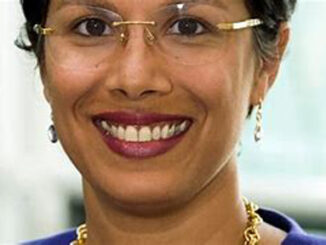
    LONDON (TIP): Professor Meghana Pandit, a leading Indian-origin medic was appointed the chief executive officer (CEO) of the Oxford University Hospitals NHS Foundation Trust, one of the UK’s largest teaching hospitals.
    Pandit becomes the trust’s first female chief, and she is also the first person of Indian heritage to be appointed CEO of any National Health Service (NHS) trust in the Shelford Group, which represents some of the biggest teaching hospitals in the country.
    Pandit, who was serving as the interim CEO at Oxford University Hospitals (OUH) since July 2022, was permanently appointed to the post following a “rigorous and competitive process,” which concluded after what OUH described as an extensive national and international recruitment search.
    “It is a privilege to be asked to lead OUH on a permanent basis and I look forward to continue working with colleagues at OUH, our partners in the health and social care system in Oxfordshire and across the BOB Integrated Care System, our partner universities, and Oxford Hospitals Charity, to ensure the highest quality of research and innovation enabled care for our patients and populations,” said Pandit.
    “I am proud to have the opportunity to continue leading with compassion and respect for others, with a desire for excellence,” she said.
    Pandit got trained in Obstetrics and Gynecology in the Oxford Deanery and was a visiting lecturer in Urogynecology at the University of Michigan in the US.
    She has served as Chief Medical Officer (CMO) within the NHS trusts and led the development of a clinical strategy with the responsibility of overseeing hundreds of doctors.
    She is an Honorary Professor at Warwick University and an Associate Fellow at Green Templeton College, University of Oxford.
    According to OUH, all members of the interview panel unanimously agreed that she was the preferred candidate for appointment and this recommendation was approved at a meeting of the Council of Governors earlier this week.
    The interview panel included the Trust’s Chair, Professor Sir Jonathan Montgomery, two other non-executive directors and lead governor, and also the chair of the Buckinghamshire, Oxfordshire and Berkshire West Integrated Care Board (BOB ICB) and the Regional Director for NHS England’s Southeast region.
    “I am delighted that Meghana has now been appointed to the CEO role on a permanent basis and I am looking forward to working with her personally in what promises to be an exciting new era under her leadership,” said Montgomery. “She gave an outstanding interview which demonstrated her preparation, passion, and desire to take on the role of Chief Executive Officer on a permanent basis,” Montgomery said.
    Meghana has a strong focus on staff engagement and building the patient voice into the strategic development of the Trust and her approach is strongly aligned with our trust values and with our vision of delivering compassionate excellence to our patients,” he said.
    The CEO of the NHS trust is personally responsible, along with the NHS Chief Executive, as the parliamentary accountable officer for ensuring that the organization works effectively in accordance with national policy and public service values and maintains proper financial stewardship.
    The CEO is also personally accountable for clinical governance and partnerships.

  • Indian American political scientist Vipin Narang takes up key Pentagon job

    Indian American political scientist Vipin Narang takes up key Pentagon job

    NEW YORK (TIP):Vipin Narang, an Indian American political scientist at the Massachusetts Institute of Technology (MIT), known for his research on nuclear weapons, conflict and proliferation has taken a key job at the Pentagon.

    Son of parents of Indian descent, Narang has been sworn in as the Principal Deputy Assistant Secretary of Defense for Space Policy at the Department of Defense, an office that looks after Pentagon’s space war-fighting policy.

    Narang announced Tuesday that he is “taking a public service leave” from the MIT to take up the high-level civilian post with work involving “nuclear, cyber, and missile defense policy”. “Some professional news: I am taking a public service leave from MIT,” he tweeted Tuesday. “Today, I was honored to be sworn in as Principal Deputy Assistant Secretary of Defense for Space Policy, which now includes nuclear, cyber, and missile defense policy. Very excited and humbled to work at OSD/P.” Born in the San Francisco Bay area, Narang is the Frank Stanton Professor of Nuclear Security and Political Science and member of the Security Studies Program at the MIT.

    His first book Nuclear Strategy in the Modern Era (Princeton University Press, 2014) on the deterrence strategies of regional nuclear powers won the 2015 ISA International Security Studies Section Best Book Award, according to his official bio. His second book Seeking the Bomb: Strategies of Nuclear Proliferation was published with Princeton University Press in 2022. His work has appeared in a variety of outlets including International Security, Journal of Conflict Resolution, The Washington Quarterly, International Organization, Foreign Affairs, The Washington Post, and The New York Times.

    He was the recipient of the 2020 ISSS Emerging Scholar Award from the International Studies Association awarded to the scholar who “had made the most significant contribution to the field of security studies.”

    He received his PhD from the Department of Government, Harvard University in 2010. He holds a BS and MS in chemical engineering with distinction from Stanford University and an M Phil with Distinction in international relations from Balliol College, Oxford University, where he studied on a Marshall Scholarship. He has been a fellow at Harvard University’s Olin Institute for Strategic Studies, a predoctoral fellow at Harvard University’s Belfer Center for Science and International Affairs, and a Stanton junior faculty fellow at Stanford University’s Center for International Security and Cooperation. His research interests include nuclear proliferation and strategy, North Korea’s nuclear weapons, South Asian security, and general security studies.

  • Indian-Origin Student Anvee Bhutani Elected Oxford Student Union President in Byelection 

    Indian-Origin Student Anvee Bhutani Elected Oxford Student Union President in Byelection 

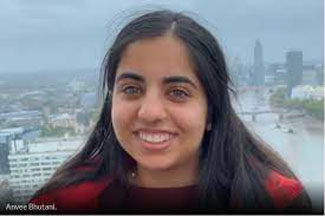
    LONDON (TIP): An Indian-origin Human Sciences student from Magdalen College at the University of Oxford has been declared the winner at the end of a Student Union (SU) byelection. Anvee Bhutani, Co-Chair Campaign for Racial Awareness and Equality (CRAE) at Oxford SU and President of the Oxford India Society, was in the fray for the byelection for the 2021-22 academic year, which attracted a record turnout.

    She was declared the winner on Thursday, May 2nd night.

    According to the ‘Cherwell’ student newspaper, Anvee Bhutani had used her manifesto to detail priorities of campaigning for the implementation of the Oxford living wage, delinking welfare services and disciplinary action, and diversifying the curriculum.

    “Use suggestions from student campaigns to work with initiatives like the Oxford and Colonialism hub to push for a more diverse curriculum,” reads her winning manifesto.

    “Lobby for more funding towards existing mental health support programs including for graduate students; work towards more access and lower wait times for university counselling services,” it notes.

    According to the student newspaper, the voting had the highest-ever turnout for a byelection and has also beaten the overall turnout for several past annual leadership elections as 2,506 people turned out to vote, a 146 per cent increase from the last byelection in 2019.

    The leadership contest also had the highest number of candidates ever in an Oxford SU President election, with 11 students running for the spot.

    The byelection followed the resignation of Indian student Rashmi Samant, who was forced to step down soon after her election to the post in February amid a row over her past social media posts.

  • Indian – Origin Rashmi Samant resigns as Oxford Student Union President-elect amidst row over her past remarks

    Indian – Origin Rashmi Samant resigns as Oxford Student Union President-elect amidst row over her past remarks

    Nirpal Singh Shergill

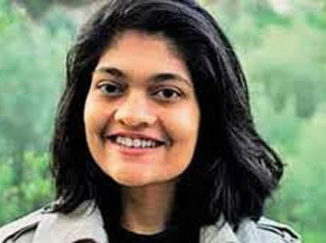
    LONDON (TIP)(TIP): Rashmi Samant, who made Oxford University history as the first Indian woman to be elected President of the Oxford Student Union (SU), has resigned from the post just days later amid controversy surrounding some of her past remarks and references. Some of Samant’s old social media posts had emerged, which were branded as “racist” and “insensitive”.

    These included a holocaust reference on a post during a visit to the Berlin Holocaust Memorial in Germany in 2017 and an Instagram caption on a picture of herself in Malaysia that read “Ching Chang”, which upset Chinese students.

    The 22-year-old also attracted criticism for a campaign post caption that separated women and trans women, with the Oxford LGBTQ+ campaign calling for her resignation.

    In an open letter published in the student newspaper ‘Cherwell’ earlier this week, Samant said: “Though the recent developments might make it hard for you to believe the sincerity of my apologies, it deeply pained me to note that I have lost the trust that the student community reposed in me with their votes and belief in my manifesto owing to my mistakes.

    “Regrettably, I alienated people within our wonderful student community to the extent that they deem me unfit to be the leader they rightfully deserve,” she said.

    “I sincerely apologize to every student who has been hurt by my actions or words and seek a chance to gain your trust in me again,” she added.

    However, the row continued to escalate and she found her position as President-elect untenable and stepped down.

    “In light of the recent events surrounding my election to the Presidency of the Oxford SU, I believe it is best for me to step down from the role. It has been an honor to be your President-elect,” she said in a statement on Facebook on Tuesday, later published in ‘The Oxford Student’.

    A by-election will now need to be held to elect a new president, with nominations re-opened, which means the fresh election will not be limited to just the previously unsuccessful candidates.

    The current 2020-21 officers of the Student Union said they “sincerely apologize for the hurt and discomfort caused by the actions of the President-elect”.

    “Oxford SU has a no-tolerance policy towards discrimination. Racism, trans phobia, and anti-Semitism have no place in our organization,” their statement read.

    Samant, from Udupi in Karnataka, has since left for India to be with her family amid deep regret and many of her social media accounts have since been deleted.

    Last week, the graduate student reading for an MSc in energy systems at Linacre College at Oxford University, scored a landslide win in the Oxford Student Union election.

    The Manipal Institute of Technology student’s Indian roots were referenced in her manifesto as she highlighted the need for greater “decolonization and inclusivity” on campus in the Oxford Student Union leadership election for the 2021-22 term.

  • Indian-Origin Oxford University  Academic Leads Criticism of UK’s COVID  Lockdown Approach

    Indian-Origin Oxford University Academic Leads Criticism of UK’s COVID Lockdown Approach

    LONDON (TIP): A prominent Indian-origin Oxford University academic leads a group of over 30 academics who have expressed their doubts over the UK government’s localized and national lockdown approach to tackling a second wave of the coronavirus pandemic.

    Professor Sunetra Gupta, Professor of Theoretical Epidemiology at the University of Oxford, co-authored a letter addressed to Prime Minister Boris Johnson, Chancellor Rishi Sunak and the Chief Medical Officers (CMOs) of England, Wales, Scotland and Northern Ireland this week as a “constructive input” into the government’s policy response to the rising number of coronavirus infections.

    The Gupta-led group recommends more targeted measures that protect the groups most vulnerable to the deadly virus.

    “In summary, our view is that the existing policy path is inconsistent with the known risk-profile of COVID-19 and should be reconsidered,” notes the open letter.

    “Instead, more targeted measures that protect the most vulnerable from COVID, whilst not adversely impacting those not at risk, are more supportable… Such targeted measures should be explored as a matter of urgency, as the logical cornerstone of our future strategy,” the group says.

    They argue that because 89 per cent of COVID-19 deaths are in the over 65 group and are also concentrated in people with pre-existing medical conditions, these are the groups at which interventions should be targeted.

    “This large variation in risk by age and health status suggests that the harm caused by uniform policies (that apply to all persons) will outweigh the benefits,” the letter reads, warning that the effect on cancer treatment is especially acute, with people delaying or missing screenings, tests, or treatments.

    However, Ms Gupta’s team goes head to head with a contrary scientific point of view put forward in an open letter by Trisha Greenhalgh, Chair of Primary Care Health Sciences at Oxford University, signed by Edinburgh-based Indian-origin academic Devi Sridhar, Chair of Global Public Health, Edinburgh Medical School, among 23 other academics.

    “We strongly support your continuing efforts to suppress the virus across the entire population, rather than adopt a policy of segmentation or shielding the vulnerable until “herd immunity” has developed,” reads the letter addressed to the CMOs.

    “Society is an open system. To cut a cohort of “vulnerable” people off from “non-vulnerable” or “less vulnerable” is likely to prove practically impossible, especially for disadvantaged groups… The goal of “herd immunity” rests on the unproven assumption that re-infection will not occur. We simply do not know whether immunity will wane over months or years in those who have had COVID-19,” they write.

    Their letter, published in the ‘British Medical Journal”, says that the UK may have to move flexibly between levels of restriction rather than either full lockdown or release, depending on how well the virus is controlled.

    They also flag that measures that would help control the virus while also promoting economic recovery include making face coverings mandatory in crowded indoor spaces, improving ventilation in schools and workplaces, continuing to require social distancing, and discouraging large indoor gatherings.

    The face- off within the scientific community comes as Johnson laid out a new set of restrictions to come in force from Thursday, which once again requires people to work from home where possible and for hospitality businesses to bring down their shutters hours earlier in the evening.

    Plans for a further easing up for sporting and exhibition venues, scheduled for next month, have also been halted as part of the tougher measures to be enforced via fines between 100 pounds and 10,000 pounds. Johnson has told Parliament that the country should expect the restrictions to remain in place for around six months.

    “The unstated objective currently appears to be one of suppression of the virus, until such a time that a vaccine can be deployed. This objective is increasingly unfeasible,” warns Prof. Gupta’s group in their letter.

    On the other hand, the group backed by Prof. Sridhar, notes: “Despite claims to the contrary from some quarters, there are no examples of a segmentation-and-shielding policy having worked in any country.”

    The two sets of open letters indicate a growing split across the UK over tackling the second wave of the pandemic, with rival camps divided between strict lockdowns and greater freedom on people’s movements and businesses.

    It comes as the R number, or the rate at which the infection is transmitted, remains above the preferred mark of one and the UK’s death count from the deadly virus edges towards 42,000.

  • Indian Film Maker Twinkle Khanna meets Malala for Pad Man promotion at Oxford University

    Indian Film Maker Twinkle Khanna meets Malala for Pad Man promotion at Oxford University

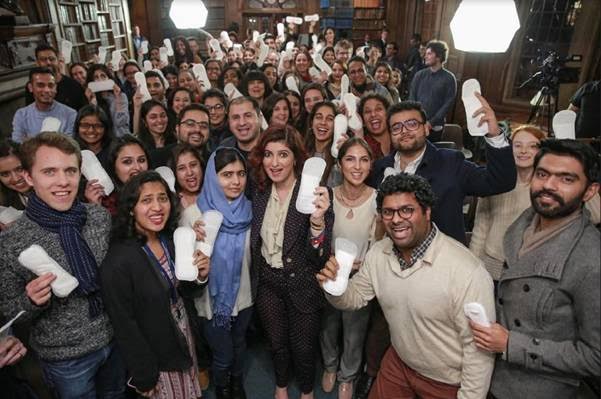
    LONDON (TIP): Indian actor Twinkle Khanna met Malala Yousafzai at Oxford University while promoting her husband Akshay Kumar’s upcoming movie ‘Pad Man’. The two ladies posed with other students and faculty members of the prestigious university while holding sanitary pads.

    During media interactions, the Pakistani women’s activist and Nobel Peace Prize winner praised the movie theme which revolves around menstrual awareness and women hygiene. Malala said that Pad Man has an inspiring message. She said, “I’m really excited to see the film Pad Man… because the message behind the film is truly inspiring.”

    Twinkle also spoke to the Oxford students in her speech. She complained that Indian school girls in villages have to sit with a rag cloth or a rolled-up sock or even wadded up newspaper between their legs. “Pads are still seen as a luxury item. It is odd that pads are taxed at 12 percent in India but brooms are tax free,” she resented.

    Pad Man is Twinkle’s maiden production. It stars Akshay Kumar, Sonam Kapoor and Radhika Apte. Pad Man will now release on February 9, 2018.

    Release Date: February 9

    Director: R Balki

    Cast: Akshay Kumar, Sonam Kapoor and Radhika Apte

    Producer: Twinkle Khanna

    Trailer: https://www.youtube.com/watch?v=-K9ujx8vO_A

    Official Site: https://www.facebook.com/PadManTheFilm/

    SYNOPSIS:

    Pad Man is a fictionalized account of Padmashri Arunachalam Muruganatham, the man who revolutionized the manufacture of the low cost sanitary napkin in India. Lakshmi is a newly married, humble welder from a rural village in the heart of India. Lakshmi’s incredible journey starts when he is shocked to discover that his wife uses an unhygienic cloth during her periods. Unable to afford a branded pad, he decides to make a sanitary pad himself. After several attempts, his irate wife refuses to be a part of his experiments. Lakshmi’s love and concern for his wife, his determination to make the pad, leads him into situations that cause so much shock and embarrassment that it compels his wife to leave him and his village to banish him.

    Lakshmi doesn’t give up. His simplicity of thought, his resilience, his focus and his complete disregard for convention finally leads him to his destiny. A machine that can make a pad! The revolution that follows…from spreading menstrual hygiene, to empowering women, to starting mini cooperatives, to a vision of making India a 100% Pad using country, to accolades, to international glory and to a final resolution of his personal life, makes the rest of the feature “PAD MAN”. His journey to make India a 100% pad using country goes on…even today.