Tag: P.D.T. ACHARY

  • The ECI’s ring fence is the Constitution and the law

    The ECI’s ring fence is the Constitution and the law

    The Election Commission of India has a constitutional obligation to carefully examine a complaint or a disclosure highlighting serious irregularities in electoral rolls

    By P.D.T. Achary

    Two major press conferences held in recent weeks have attracted a good deal of national attention. The first was held by the Leader of the Opposition (LoP) in the Lok Sabha, Rahul Gandhi, on August 7, 2025, in New Delhi, where he highlighted specific instances of manipulation of the voter list in the Mahadevapura Assembly segment of the Bangalore central parliamentary constituency during the 2024 general election. His disclosures included the fact that a large number of voters were enrolled in the voters list having the same address. In some cases, the ‘father’s name’ was given as ‘xyz’ and the house number as ‘0’. According to Mr. Gandhi, these facts were unearthed by his team after painstaking research of the Election Commission of India (ECI) documents over six months. These disclosures by Mr. Gandhi have created consternation among the citizens of India — if these are true, the entire electoral system in India would lose its credibility and India’s democracy will cease to be a genuine democracy.

    The second press conference, also in New Delhi, was held by the Chief Election Commissioner (CEC) and his colleagues on August 17, 2025. It was expected that the CEC would clarify the issues raised by the LoP. However, the statements made by the CEC were a kind of a pushback against what the LoP had said in his press conference. As a matter of fact, the press conference by the CEC left citizens none the wiser as many basic questions were just ignored. The press conference ended with the CEC issuing an ultimatum to the LoP — to either submit the details of his disclosures with a sworn affidavit or apologize to the nation. This unusual stand of the ECI shows that it too has joined the political slugfest. This is a stand that will continue to rattle political parties for a long time.

    The ECI is a high constitutional body that is entrusted with the task of superintending, directing and controlling the preparation of electoral rolls and conducting elections to Parliament, State legislatures and to the offices of the President and the Vice President of India. Article 324 of the Constitution vests enormous powers in the ECI to perform this task. It is mandated to conduct elections in a free and fair manner, which is a part of the basic structure of the Constitution. The Supreme Court of India has held that Article 324 is a reservoir of powers which the ECI can draw from in order to ensure that the elections are free and fair. However, it has to function within the Constitution and law.

    Issuing an ultimatum to the LoP is not a part of the exercise of power under Article 324 or the election statutes. It is also not a part of the exercise of the powers of the ECI to join the adversarial political discourse in India.

    The episode in Bangalore clearly points to the possibility of electoral lists being tampered with at some level. It is true that Mr. Gandhi’s disclosures months after the general election do not fit into the procedural mold created by the Representation of The People Act, 1950. This Act and the rules made thereunder contain a just, fair and transparent procedural framework which provides for multiple layers of scrutiny and public inspection and a just procedure for resolution of disputes. Further, the election statutes assume that there is a finality about elections. Therefore, these statutes cannot deal with the issues which Mr. Gandhi has raised.

    The question is how to deal with it. Attempts to counter it with senseless technicalities and a demand for sworn affidavits are non-productive. Article 324 confers enormous powers on the ECI so that it would prepare the rolls and conduct elections in a fair manner. Article 324 implies responsibilities and obligations to exercise that power judiciously. So, when a citizen makes a complaint or a disclosure highlighting serious irregularities in the preparation of the electoral rolls, it is the constitutional obligation of the ECI to examine this carefully and fix the faults in the system. How could 80 voters be registered under the same address when it is clear that they cannot be ordinarily resident there? They voted because their names were on the roll. Who enrolled them and under whose directions are serious questions which need an answer. A person can be registered in a voters’ list only if he is ordinarily resident there. This term has been defined as permanent stay at a place. Are all these 80 people residing at one address permanently?

    The Representation of The People Act 1950 provides for the revision of the electoral rolls. These rolls can be revised before every election or every year on the direction of the ECI or a special revision in a few constituencies or part thereof for which the ECI needs to record the reasons (Section 21 of The Representation of The People Act, 1950). Rule 25 of the Registration of Electors Rules, 1960 shows that the revision done annually can either be summary revision or intensive revision (intensively or summarily or partly intensively and partly summarily).

    The Bihar SIR

    The ECI is presently engaged in a special intensive revision (SIR) of electoral rolls in Bihar, a State where Assembly elections are due later this year. Actually, neither the Act nor the Rules contain any term such as special intensive revision.

    There are separate provisions for intensive revision and special revision. This writer is of the view that SIR suffers from certain legal infirmities. Intensive revision can be done only in January which is the qualifying date whereas a special revision can be done at any time; but this will be limited to certain constituencies or parts thereof.

    The Bihar SIR has the qualifying date as July 1, which is in violation of Section 14(b) in The Representation of The People Act, 1950, which says that the 1st day of January shall be the qualifying date. Qualifying date is the date on which the revision or preparation of the roll begins.

    There are a number of media reports on the chaotic conditions in Bihar as a result of the SIR. Intensive revision within a month is a contradiction in terms. Rule 25(2) of the Registration of Electors Rules, 1960, says that intensive revision means rolls have to be prepared afresh and Rule 8 says that the registration officer shall have to visit every dwelling house in the constituency to prepare the roll. It is anybody’s guess whether the registration officers would be able to visit every dwelling house in the whole State within one month and complete the enumeration formalities in accordance with the procedure. This has sparked off a huge political agitation in the State.

    The ECI claims that the enumeration process has been completed and 65 lakh voters have been deleted from the roll. Much against the wishes of the ECI, the Supreme Court, in an interim order, directed the ECI to publish the names and the reasons for their deletion. This order of the Court has been welcomed by all.

    Prescient words

    The ECI is a powerful constitutional authority. But the ECI does not have unfettered powers. The Constitution has not given anybody or any authority it created untrammeled powers which may be misused to the detriment of democracy.

    In A.C. Jose vs Sivan Pillai and Ors. (1984), Justice S. Murtaza Fazal Ali said, “If the Commission is armed with such unlimited and arbitrary powers and if it ever happens that the persons manning the commission shares or is wedded to a particular ideology, he could by giving odd directions cause a political havoc or bring about a constitutional crisis, setting at naught the integrity and independence of electoral process, so important and indispensable to the democratic system.” These are prophetic words.

    (P.D.T. Achary is former Secretary General, Lok Sabha)

  • It is for historians to dig for tell-tale remains, not bigots

    It is for historians to dig for tell-tale remains, not bigots

    It is unfortunate that judicial misdirection is stirring up the retaliatory instincts of people fed on the falsehoods of manufactured history

    By P.D.T. Achary

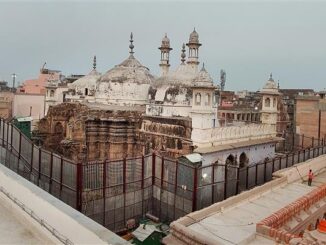
    Normally, digging at historic sites is done by an archaeologist and historians in search of a lost civilization or an ancient city or some signs of mythological events. But nowhere in the world, in the modern age, is an excavation done underneath a place of worship of one religion to find the remains of a place of worship of another religion. While digging in search of historical facts is a secular act, and is done using internationally recognized scientific methods, digging to establish the presence of a place of worship of one religion in a place of worship of another religion is, clearly, a non-secular act. Therefore, it is absolutely puzzling why the former Chief Justice of India (CJI), D.Y. Chandrachud found nothing objectionable or illegal in a survey in a place of worship of a particular religion by another religious group. In his oral observation, the former CJI, said, in 2022 (he was the CJI then), “a survey may not necessarily fall foul of the Places of Worship Act.” He made this tricky observation in the Gyanvapi mosque case.

    Clarity in the Act, yet challenged
    The Places of Worship (Special Provisions) Act was enacted by Parliament in 1991 in the background of a strident movement by Ram Janmabhoomi supporters which heightened communal tensions in Ayodhya and many other parts of north India. The government of the day apprehended the imminent outbreak of violence in different parts of the country due to the raising of claims over the places of worship of a particular minority community. This Act bars the conversion of places of worship of any religious community into a place of worship of a different religious community. It declares that the religious character of a place of worship existing on the 15th day of August 1947, shall continue to be the same as it existed on that day.

    The Act further provides that any suit and appeal seeking to convert the religious character of a place of worship existing on 15th August, 1947 pending before any court or tribunal shall abate on the commencement of the Act. It also states that no suit or appeal relating to this matter shall lie in any court after the commencement of the Act, and any suit alleging that the religious character of a place of worship has been converted after 15th August 1947 will be determined in terms of this Act.

    But the constitutionality of this Act is under challenge in the Supreme Court of India. A petition was filed in 2020 challenging the constitutional validity of the Act on the grounds that the date of August 15, 1947 was fixed arbitrarily and that this Act takes away judicial review.

    The contention that the date of August 15, 1947 was arbitrarily fixed in the Act to prevent the conversion of a place of worship is a specious one. This is the day when the transfer of power from the British government to the Indian government took place. Naturally, this was the earliest date the government could think of for the purpose of this Act. In any case, the Government of India could not have chosen April 21, 1526 when Babur defeated Ibrahim Lodhi in the battle of Panipat and captured Delhi and Agra and laid the foundation of the Mughal empire. Nor could it have chosen, arbitrarily, a later date and kept the field open for a set of religious fanatics to make reckless claims on the places of worship of another religion. Therefore, by all accounts, the date chosen by Parliament in this enactment was the most reasonable one.

    The second ground cited in the petition is that the Act takes away judicial review which is a part of the basic structure of the Constitution of India and any enactment which alters it is unconstitutional. This contention, needless to say, is without any merit. The Act declares that from the commencement of the Act, all pending suits, appeal or proceedings seeking to convert a place of worship of one religion existing as on August 15, 1947 into that of another religion or altering the religious character of a place of worship shall abate. It is the legislative policy of the government to declare through a law that certain types of suits shall abate under certain circumstances. It is not the same as stating that “no court shall have any jurisdiction in respect of any suit arising from the place of worship of any religion”. The latter legislative assertion can be interpreted as an exclusion of judicial review which would, no doubt, be unconstitutional. But that is not the case here.

    On the lower courts
    Subsequent to the above quoted observation of the former CJI, lower courts in the State of Uttar Pradesh are ordering surveys in mosques to determine their religious character with great alacrity. It has led to violence in Sambhal in Uttar Pradesh in which some lives were lost. The lower courts do not seem to have bothered to check whether it was an order of the Supreme Court or a mere observation of the CJI during the hearing. The fact is that such observations from the Bench have no significance as those are not a part of any judgment of the Court.

    Besides, it is a matter of common logic that when the law has barred any kind of conversion of the religious character of a place of worship as it existed on August 15, 1947, then what is the relevance of ordering or carrying out a survey to determine its character? Legally, its character is what existed on the date as above. So, where is the need for a fresh survey?

    A close reading of the provisions of the Act would reveal that what has been prohibited is not merely the act of conversion but also fresh surveys to establish the religious character of a place of worship. As that stands settled, any attempt to resurrect the dispute and get an order from the court would be clearly in violation of the Act.

    The Places of Worship Act 1991 has been hailed as a law which protects secularism in the Ayodhya judgment of the Supreme Court. Wisely, the Court has now put a blanket ban on all litigations relating to the places of worship till it finally determines the issue of the constitutionality of the Act.

    Protection of a fundamental right
    Quite apart from the issue of constitutionality or otherwise of the Places of Worship Act, a religious denomination has the fundamental right, under Article 26, to manage its own affairs in matters of religion. Worshipping in a mosque or a church is a matter of religion and any kind of interference by any outsider in that place of worship can be treated as a violation of the fundamental right of that religious denomination. The court, while ordering a survey of such a place of worship, is in fact committing a violation of Article 26 of the Constitution. The object of this Article is to protect the right conferred on a religious denomination. So, even if the Act was not in existence, a survey or excavation in a place of worship being used by a religious denomination for the purpose of finding out the religious character of that place would be a violation of Article 26.

    It is possible that beneath some mosques lie remains of temples. And beneath the remains of temples there may be the remains of Buddha or Jain viharas. History has sequestered in the womb of earth these tell-tale remains for an archaeologist and a historian to chronicle the history of this nation, and not for bigots to kindle revanchism and poison the minds of generations of unwary people. It is a great pity that judicial misdirection is refiring the retaliatory instincts of people fed on the falsehoods of manufactured history.

    (P.D.T. Achary is a former Secretary General of the Lok Sabha)

  • The misplaced move of ‘one nation one election’

    The misplaced move of ‘one nation one election’

    By P.D.T. Achary

    The idea of simultaneous elections, to the Lok Sabha, the State Assemblies and the local bodies, was thrown up by the Prime Minister a couple of years ago. Frequent Assembly and local body elections kept him busy on the campaign trail in some parts of the country most of the time. This experience may have been the trigger for the idea to hold elections at one time.

    This also led to the formation of a high-level committee on simultaneous elections, which was headed by the former President of India, Ram Nath Kovind. Other members of the committee included the Home Minister, Amit Shah, former Leader of the Opposition in the Rajya Sabha Ghulam Nabi Azad, former Chairman, Fifteenth Finance Commission N.K. Singh, former Secretary-General, Lok Sabha Subhash C. Kashyap, senior advocate Harish Salve and former Chief Vigilance Commissioner Sanjay Kothari. Minister of State (Independent Charge) Ministry of Law and Justice Arjun Ram Meghwal, was a special invitee. The committee’s report was submitted to the President of India in March this year. Thus, the recommendations were available to the public before the 2024 general election. Moreover, the idea of ‘simultaneous elections’ was a part of the ruling Bharatiya Janata Party’s manifesto (BJP) for this general election. If the ruling party had won a majority in this election it could have claimed that the idea had been endorsed by voters. But in the absence of a majority, it becomes difficult to assume that voters are in approval of it.

    Be that as it may, it is nothing less than a miracle that a high-level committee could come up with such a voluminous report (18,626 pages) within a relatively short time on an issue of great importance. With the Union Cabinet having approved the recommendation, the subject of ‘one nation one election’ has reached almost take-off stage. In the first phase, Lok Sabha and Assembly elections will be held simultaneously, while local body elections will be conducted within 100 days of the general election.

    An amendment Bill and its fate

    The recommendation on simultaneous elections involves amendments to various Articles of the Constitution. The crucial amendment is on the tenure of Assemblies which will no longer have fixity. Since the tenure of the Assemblies will have to be synchronized with that of the Lok Sabha, it is only natural that State Assemblies, which, under Article 172, have a fixed tenure of five years will lose it.

    But before going into further details, let us look at what the fate of the Constitution amendment Bill that will be introduced in the 18th Lok Sabha for this purpose will be. After the Bill is introduced, the next important stage is its consideration, which means a general debate on it. After the debate is concluded, the motion for consideration is put to the vote of the House. At that stage, the special majority, namely, the majority of the total membership of the House and a majority of not less than two-thirds of the members present and voting, will be required.

    Only if the motion for consideration is passed with the special majority will the House consider the subsequent stages, i.e., clause by clause consideration, and finally pass the Bill. If all 543 members are present in the House to vote then the support of 362 members will be required. It is understood that the ruling National Democratic Alliance has around 292 members at present. Thus, there is a wide gap between this number and the special majority number of 362. Since the Opposition parties are opposed to the ‘one nation one election’ proposition, perhaps the government will find it extremely difficult to mobilize the special majority. Thus, in such a situation, the fate of the Constitution amendment Bill will be decided at the stage of consideration itself. The simple message from all this is that without the support of the Opposition, no Constitution amendment Bill will be able to be passed in the Parliament of today. 

    The arguments are thin

    The high-level committee has recommended simultaneous elections for two reasons. First, the issue of savings in expenses given the humongous amounts of money spent in each election. If all elections are held only once in five years the savings will be enormous. But this is an argument that needs closer examination. Under Article 324, all elections to Parliament and the State legislatures are conducted by the Election Commission of India (ECI). The money required to hold elections is sanctioned by Parliament as a part of the Budget. For the financial year 2023-24, the total allocation made by Parliament to the ECI is ₹466 crore. Obviously, this allocation was made for meeting the expenditure in connection with the 2024 general election. For 2022-23, the total allocation was only ₹320 crore. Thus, the total amount allotted to the ECI for the general election — ₹466 crore — is not a very huge amount.

    Of course, expenditure is incurred also by the State governments to meet logistical requirements in connection with elections. Under Article 324(6), staff are required to be provided to the ECI on demand for the elections. Under Section 160 of the Representation of the People Act, 1951, State governments are empowered to requisition premises and even vehicles for election purposes. All these arrangements require money which the States will have to provide. But even after all these expenses are also considered, the total expenditure incurred by the Union and State governments cannot be categorized as being huge or enormous.

    Yes, the money spent by the political parties is mind boggling, but the point is that the money that would be saved by the political parties due to the holding of elections once in five years is not going to be spent on, for example, road building or the building of bridges or hospitals. No political party has ever done such things. After all, we had simultaneous elections from 1951-52 to 1967. There is no evidence that the political parties have ever built roads for instance during this long period. Therefore, the assumption that the money saved can be used for building infrastructure does not seem to be based on any empirical evidence.

    The second reason is that frequent elections will disrupt developmental plans and projects of the government because of the model code of conduct being in force most of the time. Once again there is no empirical evidence to prove this argument. After all, periodic or frequent elections have been held since 1967 till today. But it is not known that elections have stopped the developmental momentum. It is interesting to note in this context that demonetization of 85% of India’s currency was done close to the Uttar Pradesh Assembly election.

    A move against federalism

    Curtailing the tenures of State Assemblies to synchronize them with the tenure of the Lok Sabha is an act against federalism. Under the Constitution of India, State Assemblies are autonomous law-making bodies within the India federation and are independent of the federal parliament. A fixed tenure of the Assemblies independent of the tenure of the Lok Sabha is a key aspect of the federal setup. Under the Kesavananda Bharati decision, Parliament does not have the power to alter the basic structure. Federalism is a part of the basic structure. The proposed amendments which seek to do away with the fixity of tenure of the Assemblies would amount to altering the basic structure. Whether ratification by Assemblies will be necessary or not is not the key issue. If this amendment is carried out, some Assemblies will have a term of three years. It may be two years or so for others.

    As a matter of fact, frequent elections have many positive benefits. First, they will enhance the accountability of elected representatives. Frequent elections compel them to go back to the people and reconnect with them frequently. Elections once in five years would mean that representatives would not feel compelled to go to the people. They would slowly move away from them and try to reconnect with them only in the election year. Similarly, if elections are held only once in five years, political parties will slowly become lethargic and, in course of time, will cease to be the effective vehicles of peoples’ aspirations. From the angle of governments, frequent elections will show them which way the wind blows and a government in office can do course correction.

    In conclusion, simultaneous elections will alter the federal balance of the Constitution and it is not a priority issue for ordinary Indians. Therefore, the game is not worth the candle.

    (The author  is former Secretary General, Lok Sabha)

  • Opposition’s larger demography, Leader of the Opposition’s big responsibility

    Opposition’s larger demography, Leader of the Opposition’s big responsibility

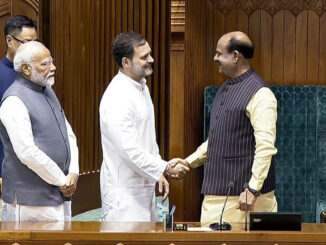
    The Leader of the Opposition in the 18th Lok Sabha must take his cue from the verdict of the 2024 general election — to restore normalcy in Parliament and highlight the government’s failures

    By P.D.T. ACHARY

    The 2024 general election is historic in as much as it resulted in the numerically largest Opposition in the Lok Sabha. It is perhaps the largest in the history of the House. With the Opposition securing over 234 seats, one also saw the debate on the Leader of the Opposition (LoP) come alive. In the 16th and 17th Lok Sabhas, there was no LoP because under a direction of the Speaker issued in the 1950s, in order to get recognition as a party in the House, it should have a minimum of 10% members in that House (Direction 121).

    This direction was issued for the recognition and categorization of parliamentary parties for the sake of providing them certain facilities in Parliament. But this direction does not deal with the recognition of the LoP. Later, Parliament enacted the Salary and Allowances of Leaders of Opposition in Parliament Act, 1977, which for the first time, defined the term Leader of the Opposition as “the Leader in that House of the party in opposition to the Government having the greatest numerical strength and recognized as such by the Chairman of the Council of States or the Speaker of the House of the People, as the case may be”.

    The definition shows that in order to recognize a person as LoP, there are two conditions that need to be fulfilled. First, the party should be numerically the biggest one in opposition to the government. Second, that party should be recognized by the Speaker as a party. As mentioned earlier, the Speaker can recognize a party as such only if it has 10% of the strength of the House. In other words, only a party which has 10% of the strength of the House can put forth its claim to the post of LoP. Under the direction cited, a party which has less than 10% members shall be categorized as a group which cannot claim the post of LoP. Thus, the Congress parliamentary party which had only 52 members, in 2019, in the Lok Sabha, two less than 54 which is the threshold, could not get this post.

    However, the enactment of the 10th Schedule has, in a way, rendered the categorization of parties into parties and groups by the Speaker/Chairman (Lok Sabha/Rajya Sabha) irrelevant. Under this schedule, all political parties, irrespective of the number of Members that they have in the Houses, are “parties”. The term ‘group’ is not recognized by the Schedule. So, in tune with the Schedule, necessary changes in the Leaders of Opposition Act should have been made to enable the Speaker to recognize the leader of the largest Opposition party in the House, irrespective of whether it has 10% Members or not. Anyway, the leader of the Congress party is now the Leader of the Opposition in the 18th Lok Sabha.

    In the Westminster system

    The post of Leader of the Opposition in the Lok Sabha has great political significance. In the British parliamentary tradition, he is called the Prime Minister-in-waiting as he is the one who the king turns to when the incumbent government falls, to form an alternative government. He, therefore, forms a shadow cabinet of his colleagues in his party. It is an interesting feature of the Westminster system of government.

    The shadow cabinet is formed under the leadership of the leader of opposition who will be called the shadow prime minister. According to this tradition, the shadow cabinet scrutinizes the policies and actions of the government and offers alternative policy. It is called the shadow cabinet because its members mirror the positions of the individual member of the real cabinet. As members of the shadow cabinet, these Opposition members familiarize themselves fully with the operations of the government. They can seek all relevant information about the entire gamut of the activities of the government. Erskine May, an international authority on parliamentary system says, “The Leader of the Opposition and some of the Leader’s principal colleagues in both Houses form a group, known as ‘the Shadow Cabinet’, each member of which is given a particular range of activities on which it is their task to direct criticism of the Government’s policy and administration and to outline alternative policies….”

    Although we have adopted the Westminster system, the practice of forming a shadow cabinet does not exist in Parliament or State legislatures. The post of the Leader of the Opposition in the Indian Parliament has been a statutory position since 1977. However, this statute does not define the functions of the Leader of the Opposition. Traditionally, he will be a very senior member of the principal Opposition in the House who commands great respect and has wider acceptability among the parties in the Opposition.

    With change in 2024, the challenges

    Since the Opposition in the Indian Parliament is not monolithic and is composed of multiple parties with divergent ideologies and programs, the role of the Leader of the Opposition is full of challenges. The biggest problem he faces is that he has no power. It is easy for a party in power to attract other parties and keep the alliance together through a power-sharing arrangement. Opposition to the policies and programs of the government is a major factor which keeps them together. In certain situations, the hope of bringing down the government acts as a unifying factor. In fact, the traditional role of the Opposition is to “oppose the government, to criticize it and to seek to replace it”.

    In the past 10 years, the Lok Sabha has seen a rather lean Opposition which could not mount any serious challenge to the government. A large majority enjoyed by the ruling party and its intimidatory postures overawed the Opposition which often felt helpless. But the 2024 general election has brought about a sea change in the political atmosphere and the demography of the House. It is perhaps for the first time that the Lok Sabha has such a huge number in the Opposition. With over 234 Members in the Opposition benches, the House is almost evenly divided. This has, no doubt, boosted the morale of the Opposition which, to a great extent, can influence the running of the House. It would be reflected in the admission of questions, the content of the answers, debate on Bills, general debates such as the debate on the motion of thanks, urgent matters of public interest, admission of adjournment motions, and reference of Bills to the committees for detailed scrutiny, to name a few.

    The Leader of the Opposition should be able to capture this new mood of the Opposition and present his views in the House in the most effective way. The LoP of the 18th Lok Sabha has the onerous task of serving the unity of the Opposition at all costs. As the prime minister in waiting, he has the responsibility to inform the nation about the failures of the government based on truth and with a great sense of responsibility. In the House he has primacy in debates and other interventions. It is the well-accepted parliamentary tradition that the Speaker permits the Leader of the Opposition to make interventions on any matter without any notice. He can demand the presence of the Prime Minister in the House when it debates serious issues. According to the British tradition, the Prime Minister directly informs the Leader of the Opposition about major policy initiatives. Thus, the channel of communication between the Prime minister and the Leader of Opposition is always kept open.

    The past has lessons

    In India too, this healthy tradition can be followed, which will certainly strengthen democracy. Jawaharlal Nehru had created certain traditions such as being present in the House during Question Hour on most of the dates and supplementing the replies given by Ministers whenever he felt that such replies were inadequate. Nehru is said to have pleaded with the Speaker to grant more time to the leaders of the Opposition and he would invariably be present in the House to listen to them. He used to say that it is only from the Opposition members that he would come to know about the real situation in the country, and not from his own party members who would only praise him and not speak the truth. The Indian Parliament evolved in its early stages in such an environment. There is much in the past which can be learned and emulated by the new generation of parliamentarians. Repudiation of the past will take us nowhere. Intolerance towards dissent was never a part of that tradition. The people of India have given the political class a great opportunity to restore normalcy in Parliament. The main function of the Leader of the Opposition is to constantly remind the ruling Benches of the need to normalize Parliament.

    (P.D.T. Achary is former Secretary General, Lok Sabha)