Tag: Pahalgam

  • 2025 in the Shadow of Fear: The Deadliest Terror Attacks That Shook India

    2025 in the Shadow of Fear: The Deadliest Terror Attacks That Shook India

    In 2025, India’s vibrant life was punctuated by moments of tragedy that reminded the nation of the persistent threat of terrorism. The year saw attacks that claimed lives, challenged security agencies, and left a deep emotional scar on the country. From scenic tourist valleys to the heart of the national capital, terror struck indiscriminately, leaving families, communities, and the nation to grapple with loss, grief, and the urgent need for heightened vigilance.
    This feature revisits the deadliest terror incidents of 2025, exploring the events, the human stories behind them, and their long-lasting implications.
    Pahalgam Massacre: Innocence Shattered in the Valley
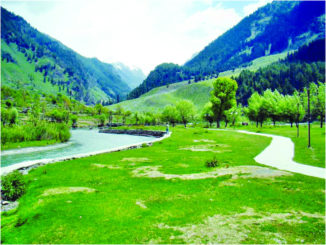
    On a bright spring afternoon of 22 April 2025, the picturesque Baisaran Valley in Pahalgam, Jammu and Kashmir, became the site of unimaginable horror. The valley, known for its rolling meadows, pony rides, and tourist gatherings, was suddenly invaded by armed militants. Witnesses later described the terrifying moments when automatic gunfire ripped through the tranquil air, turning laughter and leisure into panic and chaos.
    By the end of the assault, 26 civilians had been killed and over 20 injured. Most victims were tourists – newlyweds, families, and foreign visitors. A local pony operator, who reportedly tried to protect visitors, also lost his life. Survivors recounted the attackers asking victims about their religion before shooting, adding a chilling psychological layer to the brutality.
    The militant group The Resistance Front (TRF), allegedly linked to Lashkar-e-Taiba, initially claimed responsibility but later denied involvement. The attack sparked nationwide outrage, highlighting gaps in tourist security in conflict-prone regions and prompting questions about intelligence lapses.
    Aftermath and Response
    The federal government acted swiftly. Security forces launched extensive counter-terror operations, conducting raids and detaining over 175 suspects. Homes of suspected militants were demolished, while border and internal security were tightened to prevent further attacks. In a diplomatic move, the government temporarily suspended visas for Pakistani nationals, signaling serious concern over cross-border militant involvement.
    The tragedy also resonated internationally. Multilateral forums, including the Shanghai Cooperation Organisation, condemned the attack and called for collective action against terrorism, reflecting the global implications of local violence.
    Red Fort Car Bombing: Terror Strikes the Capital
    Less than seven months later, India witnessed another shocking attack – this time in its capital, New Delhi. On 10 November 2025, a car laden with explosives detonated near the Red Fort Metro Station, one of the city’s most iconic landmarks. The blast killed 15 people and injured more than 20, leaving debris scattered across streets and damaging nearby buildings.
    Investigators revealed that the attack was carefully planned to strike during peak hours, ensuring maximum casualties. The National Investigation Agency (NIA) swiftly took charge, arresting several suspects linked to the plot. Among them was Yasir Ahmad Dar, alleged to have pledged himself to a suicide mission, along with others reportedly affiliated with extremist networks across northern India.
    The Red Fort bombing prompted urgent debates on urban security preparedness. Lawmakers, security analysts, and civil society highlighted the need for enhanced surveillance, rapid emergency response, and intelligence integration to prevent attacks in densely populated areas. Internationally, the blast drew condemnation from world leaders, including the United States, which praised India’s methodical investigation and response.
    Other Violent Incidents: Insurgency and Extremism
    While Pahalgam and Red Fort were the deadliest attacks, other incidents underscored the multiplicity of security challenges in India. In Bijapur district, Chhattisgarh, Maoist insurgents detonated an improvised explosive device targeting a security convoy, killing eight personnel and a civilian driver in January 2025. This internal insurgency highlighted that terrorism in India is not only transnational but also deeply domestic, rooted in longstanding socio-political grievances.
    Collectively, these incidents exposed vulnerabilities across urban and rural India, prompting the government to reassess counter-terror strategies, resource allocation, and rapid response mechanisms.
    The Human Toll: Grief and Resilience
    The deadliest attacks of 2025 were not just statistics; they represented human lives, families, and dreams abruptly ended. In Pahalgam, parents mourned children, spouses lost partners on their honeymoon, and communities grappled with trauma. In Delhi, ordinary commuters, workers, and passersby became victims in an attack that shattered the sense of safety in the capital.
    Yet, amid the grief, stories of courage and resilience emerged. Locals who assisted the injured, citizens who volunteered for relief, and communities that organized vigils and memorials displayed the nation’s ability to unite in the face of terror.
    National Reflection and Security Lessons
    The attacks of 2025 prompted a national introspection on security and preparedness. Authorities enhanced urban surveillance, intelligence sharing, and coordination between central and state agencies. Public awareness campaigns encouraged citizens to remain vigilant and report suspicious activities.
    Furthermore, the incidents influenced diplomatic engagement, with India emphasizing the need to combat cross-border terrorism through international cooperation while balancing domestic policy and civil liberties.
    Looking Forward
    While 2025 will be remembered for these tragic attacks, it is also a testament to India’s resilience and resolve. The year underscored that terrorism, in its many forms, remains a potent threat, but collective vigilance, intelligence, and community solidarity can mitigate its impact.
    As India moves forward, the lessons of Pahalgam, Red Fort, and other attacks will continue to shape national security policy, urban preparedness, and public consciousness, ensuring that while terror may strike, the spirit of the nation endures unbroken.

  • G-7 Foreign Ministers condemn the egregious terrorist attack in Pahalgam

    G-7 Foreign Ministers condemn the egregious terrorist attack in Pahalgam

    • By Prabhjot Singh

    TORONTO (TIP): Canada and the US joined the foreign ministers of G-7 and the High Representative of the European Union in condemning the egregious terrorist attack at Pahalgam while appealing to both India and Pakistan to de-escalate military operations.

    The Foreign Ministers’ issued a joint statement on Friday, May 9 saying: ‘We, the G7 Foreign Ministers of Canada, France, Germany, Italy, Japan, the United Kingdom, the United States of America and the High Representative of the European Union strongly condemn the egregious terrorist attack in Pahalgam on April 22 and urge maximum restraint from both India and Pakistan. Further military escalation poses a serious threat to regional stability. We are deeply concerned for the safety of civilians on both sides.

    “We call for immediate de-escalation and encourage both countries to engage in direct dialogue towards a peaceful outcome. We continue to monitor events closely and express our support for a swift and lasting diplomatic resolution,” the statement said.

    Interestingly, Canada has refrained from issuing any statement or making its stand public on the ongoing armed conflict in the South Asian subcontinent.

    However, condemnation of egregious terrorist attack on innocent tourists at Pahalagam in Kashmir on April 22 has been well received in diplomatic circles.

    Prime Minister Mark Carney has exercised restraint in making any statement on contentious issues like Canada-India bilateral relations that touched a new low during his predecessor Justin Trudeau’s time. Early this week, he visited the US for a meeting with President Donald Trump.

    Canada has strong segments of immigrants from both India and Pakistan.

    Economists say an escalation in military operations would impact not only the economy of the Indian subcontinent but also have a cascading effect on geopolitics and the global economy.

    Though the G-7 Foreign Ministers have appealed to both India and Pakistan for exercising utmost restraint to de-escalate military operations, the situation continues to be grim and tense with neither of the sides willing to scale down the hostilities.

    The United States, the United Kingdom, France and other G-7 nations have been cautious and guarded in their statements without getting drawn into any controversy over blame game for the present crisis.

  • The fragmentation in the global fight against terror

    The fragmentation in the global fight against terror

    Gone are the days of a united fight against, and ‘zero tolerance’ to terror; a different yardstick applies when it comes to India, which is a victim of state-sponsored terror

    By T.S. Tirumurti

    The Pahalgam terror attack of April 22 has exposed, yet again, the fragmentation in the global fight against terror and Pakistan’s resort to terrorism when it fears normalcy in Jammu and Kashmir. While a number of countries have condemned the Pahalgam attack, they have, at the same time, called upon India and Pakistan to exercise restraint. The United States Secretary of State, Marco Rubio, went to the extent of calling on both parties to “work towards … a responsible resolution that maintains long term peace and regional stability in South Asia”. U.S. Vice-President J.D. Vance “hoped” that India’s response would not lead to a wider regional conflict. Russian Foreign Minister Sergey Lavrov has said that “settling disagreements” between New Delhi and Islamabad on a bilateral basis should be by political and diplomatic means. The European Union’s High Representative for Foreign Affairs and Security Policy Kaja Kallas could not even get around to calling it a “terror attack”.

    The end of a collective fight

    Gone are the days of “zero tolerance” to terror. Gone are the days when the perpetrators of terror were called out and accountability demanded. Some have even asked India for “proof” of Pakistan’s complicity, conveniently forgetting inter alia the Pulwama (2019) and 26/11 Mumbai (2008) terror attacks. In effect, they are calling on India, the victim, to be restrained and to not go after Pakistan, the perpetrator and backer.

    India should not be surprised. To begin with, the appetite for a flare-up in Asia is low after the raging wars in Ukraine, Gaza and West Asia. Moreover, successful elections in Jammu and Kashmir and tourists flocking to Kashmir are red flags for Pakistan. To top it all, the global fight against terror is no longer a collective fight. It is now left for each state to fend for itself. The consensus reached after the 9/11 terror attacks in the U.S. in 2001, to fight terror comprehensively, seems to have run its course. The world has gone back to the era of “my terrorist” and “your terrorist.”

    Europe is focused on “its” terrorists — right-wing extremism and terror. The U.S., under former President Joe Biden, focused on REMVE, or racially and ethnically motivated violent extremism. The Organisation of Islamic Cooperation (OIC) is keen only to use Islamophobia as an excuse to condone terror. Canada has told India that “your” terrorists are not “my” terrorists and that any terrorist threat against India from its soil is covered under its freedom of expression — in effect asking India to wait till a terror act is committed before approaching them. China has blocked proposals submitted by India in 2022 to “black-list”, under the UN Security Council 1267 sanctions regime, terrorists operating against India from Pakistani soil. Now that Pakistan is in the UN Security Council (UNSC) for 2025-26 (as a non-permanent member), these will remain blocked for at least two more years.

    The world is blindsided by the spread of terror in Asia and Africa. Terrorism in Africa has spread exponentially, from the Sahel to Mozambique. The Global Terrorism Index 2025 points out that the Sahel is now the epicenter of terrorism, accounting for over half of all terrorism deaths in the world. But the international community says they are “your” terrorists not “my” terrorists and is short-changing Africa.

    A different yardstick for India

    However, a different yardstick applies when it comes to India, which is the biggest victim of state-sponsored terror from Pakistan. First, it is about “regional stability” and not about fighting terror as Pakistan has successfully sold the “nuclear war” bogey to the world. Even as they egg Ukraine on in its war with “nuclear” Russia, the thought of two developing countries using nuclear arms scares the West enough to call on India to stop fighting cross-border terror. It is quickly forgotten that it was Prime Minister Narendra Modi who called on Russian President Vladimir Putin not to use nuclear arms in the Ukraine war for which he was thanked by the U.S. among other countries.

    Further, it is now common knowledge that in Pahalgam, the terrorists singled out the tourists based on religion and shot them. A Muslim pony ride operator was shot while trying to save the tourists. The terror attack, which The Resistance Front (a proxy of the Pakistan-based terror group Lashkar-e-Taiba) claimed that it had carried out — it retracted this statement later — was clearly done to raise tensions and create a communal divide in India.

    While the whole world cries hoarse in condemning Islamophobia, anti-Semitism and Christianophobia, why does it become silent when calling out the recent attack for what it is, i.e., Hinduphobia? When even protests in American university campuses are being dubbed anti-Semitic or Islamophobic and portrayed in religious terms, rather than contextualizing them in terms of the 52,000 Palestinians killed in Gaza or Israeli hostages still with Hamas, to maintain radio silence on Hinduphobic attacks is glaring, if not unexpected. Even U.S. presidential candidate Vivek Ramaswamy, was confronted with accusations of belonging to a “pagan, wicked” faith while on the campaign trail.

    But there has been a refreshing departure — the statement by the U.S. Director of National Intelligence, Tulsi Gabbard, who characterized the Pahalgam attack in religious terms, as a “horrific Islamist terrorist attack” and recognized that the targets were Hindus. A silver lining is the extradition of Tahawwur Rana from the U.S. to India for the Mumbai attacks, even if big fish, David Headley, is still in the U.S.

    Further, predictably, Pakistan used its presence in the UNSC to move for an emergency closed session on a “deteriorating regional environment and rising tension” posing “a serious risk of escalation”. In 2019, a similar closed meeting took place, at China’s behest, just after Article 370 was abrogated, but fizzled out. The meeting now was no different and no document was issued. It underlined once again that the P-5 (the five permanent UNSC member states), with the exception of China, is in no mood to play the “Kashmir” game, which it considers to be a bilateral matter between India and Pakistan (even if parts of it have been ceded by Pakistan to China).

    India’s move to keep the Indus Waters Treaty in abeyance has also been targeted by Pakistan at the UNSC. India will no doubt keep the pressure on the UNSC to stop any outcome document, unlike how a similar issue was dealt with in 2021 between Ethiopia and Egypt on the Grand Ethiopian Renaissance Dam. Any one country in the UNSC can stop a statement.

    The path ahead

    Consequently, if the world is so concerned about India not using kinetic options to fight terror from where it originates, should not India’s “strategic” partners demand accountability from Pakistan rather than substituting harsh words for real action or calling on “both sides” to “defuse” tensions? To deter Pakistan, India’s close Gulf partners, Saudi Arabia and the United Arab Emirates, which are themselves undertaking internal socio-religious reforms, need to step up. The international community must act to deter and sanction Pakistan, and not merely react episodically. If it refuses to act, India will act alone. Apart from the current slew of options, India will also have to think ahead

    Having built a strong international framework to combat terror, including terror financing and misuse of emerging technology, the international community cannot step back on combating terror, especially state-sponsored terrorism. Three years after raising it for the first time in the UN General Assembly in 2022, India has yet another opportunity to take the lead in combating religiophobia against non-Abrahamic religions. This time its campaign should go beyond the UN, where select Indian Missions should take up the issue bilaterally with their host countries.

    All this points to one thing. India should not only create geopolitical space for itself through its strategic autonomy and multi-alignment policy, but must also be prepared to use it when it matters. There is no doubt that such parleys are on.


    (T.S. Tirumurti was Ambassador/Permanent Representative of India to the United Nations, New York from 2020 to 2022)


  • Indian American TCS Employee from Florida Among 28 Killed in Pahalgam Terror Attack

    Indian American TCS Employee from Florida Among 28 Killed in Pahalgam Terror Attack

    TAMPA, FL (TIP): Bitan Adhikary, a U.S.-based engineer employed by Tata Consultancy Services (TCS), was among the 28 civilians who lost their lives in a brutal terrorist attack in Jammu and Kashmir’s Pahalgam on Tuesday afternoon. Terrorists targeted tourists relaxing at Baisaran meadow, a scenic destination near south Kashmir’s Pahalgam town.

    The confirmed death toll from the April 22, 2025, terrorist attack in Pahalgam, Jammu and Kashmir, stands at 28. This includes 24 Indian tourists, two local residents, and two foreign nationals from Nepal and the United Arab Emirates. The massacre is being described as the deadliest in the Valley since the Pulwama strike in 2019.

    Survivors described a terrifying sequence of events. According to multiple eyewitness accounts, the attackers interrogated their victims, asking names, before opening fire.

    Adhikary, who lived in Brandon, Florida with his wife Sohini and their three-year-old son, was visiting India on a family trip. He arrived in Kolkata on April 8 to spend time with his extended family. During the vacation, the family decided to travel to Kashmir for a few days. They had reached the Valley last week and were scheduled to return home on Thursday.

    Tragically, the family’s outing turned into a nightmare when terrorists stormed the meadow and opened fire on unsuspecting tourists. As per media reports, Adhikary was sitting on the grass with his wife and child when the gunfire erupted. He died on the spot. His wife and son reportedly survived the attack.

    Adhikary had relocated to the United States for work and served as a Test Manager at TCS. He earned his Bachelor of Technology in Electrical Engineering from the University of Technology in West Bengal.

    The Indian government has condemned the attack in the strongest terms, while the Indian diaspora and the global community have expressed solidarity with the victims and their families.

  • Pahalgam: Ideal destination for hiking, trekking, and fishing

    Pahalgam: Ideal destination for hiking, trekking, and fishing

    Pahalgam, popular as the valley of shepherds, is also the base camp for the pilgrims to the holy Amarnath cave. The place attracts tourists to explore its scenic beauty and the picturesque Liddar valley located in the high Himalayas. An ideal destination for hiking, trekking, and fishing, Pahalgam receives heavy snowfall from December to February. Its thick pine and cedar forests provide a natural habitat for the brown bear. During your vacations in Pahalgam, you may visit Hajan, a picnic spot, which lies on the way to Chandanwari.
    Here are some of the must see places in Pahalgam that make your tour quite memorable no matter when you visit:
    Baisaran Hills
    Known worldwide as the ‘Mini Switzerland’ owing to its long, dark meadows looking like those found in Switzerland, Baisaran is a picturesque glade, set just 5 km far from Pahalgam. The thick pine timberland that lends the green-carpet look to the glade gives a differentiating hue to snow-topped crests of the encompassing mountains. One of the top places to visit in Pahalgam, a trip to the knoll is really a treat for the senses. Furthermore, Baisaran is a perfect campground for trekkers who wish to travel further up to Tulian Lake. To get there you need to ride the ponies. An off-beaten track it lets one enjoy panoramic views of the Lidder Valley.
    Pahalgam Golf Course
    The Pahalgam fairway offers gorgeous views of the azure skies overhead a thick green turf and snow-covered peaks standing tall at the backdrop. For golf aficionados, playing their favorite sport here is a one of a kind experience. But novices too can try a hand at golf amidst the rich ambiance of the Pahalgam Green.
    Kolahoi Glacier
    A breathtakingly beautiful spot Kolahoi Glacier is one of the must see sightseeing places in Pahalgam. The lone way to get to the Kolahoi Glacier is through a laborious trek, not for the weakling. At 18,000 feet, the stunning views upon entry truly make the journey a memorable experience. The trek is flushed with dense green mountain vegetation & green glades. Thundering River Lidder, thick conifer backwoods with ice cold loquacious rivulets are all there to make the trek to the icy mass all the more memorable.
    Aru Village & Valley
    When in Pahalgam, take a tour of the town of the Lidder Valley, Aru. Just 15 kilometers away from Pahalgam, it’s the median location for any hike to the Kolahoi glacier, set at a height of 18,000 ft. The drive up to Aru is a scenic one so be ready with your cameras for some stunning shots of the Valley. On the way you’ll also see plenty of young fouls and calves. The blue canopy over the head, surreal surroundings, whispers of the local pines & conifer woodlands and wonderful green glades, make Aru an Idyllic honeymoon destination.
    Chandanwari
    Chandanwari, located on the periphery of Pahalgam, is one of the top tourist places having great religious importance. It is the initiation point of the Amarnath Yatra, an important pilgrimage held in the Hindu month of Sawan. Endowed with breathtaking beauty, this spot is a chief attraction for travelers coming to the Kashmir Valley. Undulating landscapes and sporadic greenery overhangs the topography of this little and picturesque hamlet.
    Tulian Lake
    Among the top tourist activities in Pahalgam, a visit to the Tulian Lake is a never to miss opportunity. Set in the midst of the Zanskar and Pir Panjal Mountain ranges the lake gives stunning views of the bordering snow-capped peaks that are for the most part 300 meters above its level. Primarily overlaid with snow, Tulian Lake journey is a perfect way to witness the natural beauty of Kashmir Valley. Its way from Baisaran is a bit weary, with unmarked trekking trails, but the barren hills and the eye-catching landscape make up for the tiredness.
    Betaab Valley
    Betaab Valley is a beautiful spot located in the upper east side of Pahalgam. This valley ascribed its name to the hit Bollywood film Betaab, which was shot in its picturesque surrounding. Sprawling lush meadows, snow-topped peaks and winding streams form the amazing topography of this valley. Aside from being a spot with noteworthy topography, the valley is a well known trekking base and campground for voyagers who are looking to scout the adjacent highland regions. The secluded settings, and the natural lush surroundings of the Betaab valley attracts many just-married couples, who are on a honeymoon trip to Kashmir.
    Mattan
    Mattan, located a couple of kilometers from Anantnag on the Pahalgam road, is a sacred Hindu pilgrimage site. The holy place attracts large number of devotees from all parts of the country. It is one of those religious spots in India where the ministers and savants used to assemble for worshiping the Sun God. The temple is well known for its lovely Shiva Lingam, which is safeguarded inside a captivating brick structure encompassed by clear blue water on all sides.

  • Pahalgam: Valley of the shepherds

    Pahalgam: Valley of the shepherds

    Situated in the Anantnag district of Jammu & Kashmir Valley, Pahalgam is a beautiful hill station and a popular tourist attraction. Pahalgam is located on the banks of the Liddar River and is famous for adventure activities like hiking, trekking, fishing. Pahalgam serves as the base of one of the most important pilgrimages in India – the Amarnath Yatra. Chandanwari, located 16.6 km. away from Pahalgam is the actual base camp of the Amarnath. Kolhoi Glaciers trek via a beautiful village named Aru is one of the most popular treks in the region. The local people also offer sledging on the frozen glaciers. In addition, the long stretches of rivers in Pahalgam are the perfect site for people who enjoy trout fishing.

    Pahalgam is where the famous Bollywood movie Betaab, starring Sunny Deol and Amrita Singh, was shot. The valley was consequently named Betaab Valley after that. Sheshnag Lake, situated near Pahalgam, is another bliss altogether. When in Pahalgam, buy authentic Kashmiri saffron from Pampore.

    Must Visit Places Aru Valley

    Juxtaposed against the snow-covered Himalayan peaks, Aru Valley is an enthralling village in Kashmir. Located around 11 km from Pahalgam, it is the base camp for trekking to the Kolhoi Glacier and the Tarsar-Marsar Lake. Aru lies beside the Aru river, a tributary of the Lidder river, and is known for its scenic meadows and activities like horse riding, hiking and trekking.

    During the winter months, Aru Valley becomes a winter wonderland covered with snow as far as the eyes can see. This makes it a perfect place for skiing. There is an entry fee for Aru Wildlife Sanctuary but it doesn’t have any fauna.

    Chandanwari

    Chandanwari, located 15 km from Pahalgam, is the starting point of the famous Amarnath Yatra. It is also famous for the snow sledging on a snow bridge. Surrounded by snow-dusted mountains and the Lidder River flowing by, Chandanwari is perfect to enjoy a picnic with your family and enjoy the natural beauty.

    Chandanwari remains covered in snow from November to May which makes it ideal for sledging. However, the best time to visit Chandanwari is April to June as the weather is perfect for sightseeing during this time.

    Betaab Valley

    Betaab Valley is one of the most popular tourist attractions in Pahalgam which is a breathtaking combination of picturesque surroundings encircled by tall deodar trees and pine forests, with the Lidder River flowing right through it. The valley is located at a distance of 15 kilometres from Pahalgam in the Anantnag district of Jammu and Kashmir. Betaab Valley got its name from the Bollywood movie Betaab starring Sunny Deol and Amrita Singh shot here. The valley falls between Pahalgam and Chandanwadi on the way to the Amarnath Temple Yatra and is one of the three angelic valleys of Pahalgam, the other two being Aru and Chandanwadi. Sprawling fertile pastures, snow-capped mountains and meandering streams are characteristic of Betaab valley. Apart from being well-known for this stunning landscape, the valley is also a renowned as a famous trekking base and camping site for travellers who want to explore the nearby regions or set out for the Amarnath Yatra.

    Baisaran

    Baisaran is a beautiful destination 6 kms away from Pahalgam in Jammu & Kashmir. With tranquil meadows, pristine lakes and picturesque setting, you can just stroll down the area or sit down to have a picnic. The place also has very many options of fun games and rides, pony rides, zorbing etc. The place is a popular tourist attraction in the area and you should definitely stop by if you are visiting here.

    Lidder River

    Located in the picturesque beauty of Jammu and Kashmir, the Lidder River is a 73-kilometre long glacial river that originates from the Kolhoi glacier. Flowing through the valleys of Pahalgam, Lidden River is a quaint picnic spot. Other adventure sports that you can indulge in are white water rafting, angling, horse riding, and fishing. Considered as one of the most important tributaries of the Indus, the Lidder River is the main water source for the nearby Anantnag region, which is only accessible by trekking.

    Kolahoi Glacier

    Situated over the Lidder River, Kolahoi glacier is a hanging glacier known for its breath taking views. While the only way of reaching this glacier is though trekking, one can also hire ponies or horses for some parts of the journey.

    The terrains to reach the glacier are extremely challenging and are not advised to be undertaken by inexperienced trekkers.

  • River rafting in Kashmir

    River rafting in Kashmir

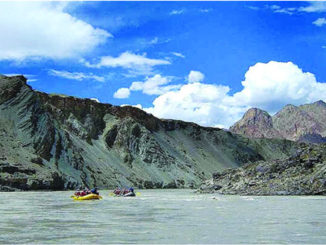
    There are so many things to do in Kashmir but nothing more challenging than rafting in the white waters of the many rivers that cut through the Kashmir. The two most famous rivers where you can go for this extreme sport is River Indus and Zanskar river. River Lidder also has few stretches that are good enough to keep you enthralled. The rivers run trough few of the most mesmerizing landscapes, giving you the opportunity to explore those wonders of nature, which are other wise unreachable through land routes. Few stretches are long enough that they take days to complete. And in between, you will stay in camps setup under the snow-capped mountains and hilltop monasteries, just by the sides of these roaring rivers. Though there are rafting options in Kashmir region but they don’t compare up to rafting in Ladakh region, especially in Zanskar. In other adventure sports, you get training sessions before you indulge in the real thing, but rafting is something where there can be no trial runs. All you get are few precaution tips and safety presentation. Here only the real thing prepares you for the real thrill.

    White River Rafting destinations in Kashmir

    The best place in Kashmir where you can indulge in River Rafting is in River Lidder near Pahalgam. The river hosts the two different stretches, which are quite suitable for river rafting. They are great for rafting but they cannot be called treacherous as the slopes are not that steep, and this attribute of the river is idle location for the tourist . One can go for a daylong excursion to the river. You can also take up white water canoeing in rivers like Sindh and Drass and Suru and in the many high altitude lakes like Gangabal, Kaunsarnag and Vishensar. Its worth the time and money that you will spend on it.

    White water Rafting destinations in Ladakh

    This is the place where you will be face to face with and the roaring and  thrashing beast, the Zanskar river. The Zanskar is graded as a class IV, extremely rough river. But the first look of the river will be deceiving and the thought that the said difficulty of the river seems exaggerated will definitely cross your mind. The rafting trip will be few days long and the first two days might not feel that adventurous.But hold on, the real test begins after two days of rapids. The next few days you will be hitting fast rapids in the deep gorges and reveal it yourself why this rated so high. Apart from Zanskar River, Indus River also is a great option for thrilling white water rafting. The best time for rafting in Kashmir is during summer time( May-September)when the rivers are full of water. In winters many rivers and lakes get frozen. Even in summers the water is freezing cold. Rafting is an extremely challenging sport so do not ignore the precautionary measures and warning signs that your tour guide tells you to look out for. Make sure that there are adequate rescue measures before you embark on this adventurous thrilling sport.

    Pahalgam

    The lush greenery and rocky terrain form an excellent spot for river rafting in Pahalgam. People love to participate in the annual competitions that challenge the rafting skills of participants. The river Lidder offers a great number of turns with challenging highs and lows, the participants are advised to be equipped with the proper gear.

    The place has garnered a high rating on the international rafting rating system. With ratings going to levels 4-5, it is indeed considered to be a tough one. To sum it up, white water rafting in Kashmir is best experienced in Pahalgam. A lot of people from around the globe have tested their skills on the river Lidder. Their experiences speak volumes of the thrills that come equipped with a tour like this one.

    Sonamarg

    Speaking of tough rivers to conquer, the river Sindh offers similar challenges like Lidder. Its harsh terrain, coupled with rapid turns, creates an experience like no other. Sindh is considered to be a dangerous river for its fast flow and white water characteristics. The rocky surface also makes it really hard to point the raft in a particular direction. Sonamarg has a plethora of challenges that can amp up your experience of river rafting in Kashmir. Make sure you go prepared and carry all the essentials with you on the trip.

    Kargil

    Zanskar is the site in the valleys of Kashmir that houses river rafting in Kargil. It’s said that this location offers an experience similar to the renowned river rafting of Colorado, USA. While gliding down during the activity, you’re going to witness the true beauty of Kashmir depicted by an array of monasteries, snow-clad mountain peaks, and deep gorges. This can be opted by rafters of all expertise levels, given that safety protocols are followed ardently.

    Tips For River Rafting In Kashmir

    Safety should be a primary concern for rafting in Kashmir. Rafting is a physically demanding sport, and it’s essential to be on the top of your health and take all necessary measures to safeguard yourself.

    n             Never remove the life jacket.

    n             Wear comfortable clothes and sports shoes.

    n             Always listen to your guide.

    Always keep your hands on the T-grip.

    n             Keep yourself hydrated.