Tag: Pakistan

  • Pakistan, Russian connections detected in Ahmedabad school bomb threat case

    The Crime Branch has uncovered a Pakistani link to the bomb threats which targeted 38 schools in Gujarat’s Ahmedabad on May 6, officials said on Friday, May 10. The officials said that this incident has links in Pakistan and a Russian server was used to create a sense of panic and fear in the city. The threat mail was sent from a Russian domain (.ru). More information is awaited.
    The threatening emails received a day before the May 7 Lok Sabha polls caused widespread panic among the public.
    The Crime Branch, Cyber Crime unit, Special Operations Group, and Ahmedabad Police launched an investigation soon after the threats. Despite the alarming nature of the threats, no suspicious or explosive materials were discovered after thorough inspections by bomb disposal squads and canine units. Director General of Police Vikas Sahay had said that the threats were a hoax and encouraged voters to proceed to the polls without fear. This incident follows a trend of hoax threats similar to those received by over 130 schools in the Delhi-NCR area.

  • Pakistan polls : Candidates backed by Imran’s party make gains

    Independent candidates backed by jailed former Prime Minister Imran Khan’s Pakistan Tehreek-e-Insaf (PTI) sprung a surprise in the general election, upstaging three-time premier Nawaz Sharif’s Pakistan Muslim League-Nawaz (PML-N). Even as the counting of votes and declaration of winners were marked by chaos and delays, Nawaz suffered a shock defeat to PTI-supported Shahzada Khan from the Mansehra seat. He, however, defeated another independent candidate, Yasmin Rashid, to clinch the Lahore seat.

    Members of the PTI contested as independents after they were not allowed to use the party symbol (cricket bat) in the February 8 polls, which were held amid a controversial countrywide mobile phone shutdown. The provisional results show that cricketer-turned-politician Imran, the founding chairman of the PTI, has made his presence felt despite being barred from contesting the elections due to his conviction and sentencing in multiple cases. Imran, who was ousted as PM in 2022, continues to be a popular leader. His arrest in May last year had sparked violence in many parts of the country; protesters had even targeted military installations, including the army headquarters in Rawalpindi.

    The PTI’s success is a setback to the Pakistani military, which had thrown its weight behind the Sharifs and gone all out to keep Imran out of the electoral contest. Confident of forming the government at the Centre, Imran’s party has ruled out forging an alliance with its main rivals — the PML-N and Bilawal Bhutto Zardari’s Pakistan People’s Party. Meanwhile, PML-N leader Ishaq Dar has claimed that some victorious independent candidates have contacted his party. An intriguing power tussle has begun in the beleaguered country, which is hoping for a stable and strong government that would pull it out of a prolonged economic crisis.
    (Tribune, India )

  • Suicide bomber attacks security convoy in NW Pakistan killing 9 soldiers, says military

    Suicide bomber attacks security convoy in NW Pakistan killing 9 soldiers, says military

    PESHAWAR, Pakistan (TIP): A suicide bomber riding on a motorcycle targeted a security convoy in northwest Pakistan on August 31, killing at least nine soldiers and wounding 20 others, the military and three security officials said, a sign of increasing militant violence.
    The attack happened in Bannu, a district of Khyber Pakhtunkhwa province bordering Afghanistan, the military said in a statement. It said five soldiers were wounded in the attack.
    However, security officials put the number of wounded persons at 20. They spoke on condition of anonymity because they were not authorized to speak to the media on the record.
    There was no immediate claim from any group, but the suspicion is likely to fall on the Pakistani Taliban, who have stepped up attacks on security forces since 2022. Authorities say the insurgents have found sanctuaries and have even been living openly in Afghanistan since the Taliban takeover, which also emboldened them,
    Bannu is located near the former militant stronghold of North Waziristan, which served as a base for insurgents until the army years ago announced that it had cleared the region of local and foreign militants. Occasional attacks have continued, however, raising concerns that the local Taliban, known as Tehrik-e-Taliban Pakistan, are regrouping in the area. The Pakistani Taliban are a separate group but allies of the Afghan Taliban, who seized power in Afghanistan in 2021 as the US and NATO troops were in the final stages of their pullout. (AP)

  • China, Pakistan resolve to extend CPEC into Afghanistan

    China, Pakistan resolve to extend CPEC into Afghanistan

    Islamabad (TIP): In yet another effort to build trust with the Taliban government, China and Pakistan agreed to include Afghanistan as part of the Belt and Road Initiative (BRI).
    Sources here pointed out that China had issued a joint statement with the earlier regime of Hamid Karzai and this latest reiteration comes soon after the Taliban government inked a MoU with a Chinese firm to prospect for oil in the Amu Darya basin in northern Afghanistan. It is estimated that Afghanistan has mineral resources estimated at $1 trillion. Seven Indian companies headed by SAIL had been allocated a huge iron ore mine in Bamyan district by the previous regime but the project now appears to have been mothballed.
    India is also building a communication route into Afghanistan from Iran’s Chabahar port. It has also built a road connecting Afghanistan’s Garland Highway with a town on the border with Iran. Another enduring road or rail link from that town of Zahedan to Chabahar will make it the shortest route from the sea into non-Pashtun areas.
    The latest announcement, however, did not involve the Taliban side because it is under economic sanctions. With Taliban Interim Foreign Minister Amir Khan Muttaqi was also part of the deliberations, the decision was presented as one taken between Chinese Foreign Minister Qin Gang and his Pakistani counterpart Bilawal Bhutto Zardari in Islamabad on Saturday, a day after the duo returned from the Shanghai Cooperation Organisation (SCO) meeting in Goa. In 2016, the joint statement had welcomed Afghanistan’s participation in the BRI and China agreed to support Kabul’s “integration into regional cooperation by taking advantage of its location as a natural continental bridge and the center of Asia”. The latest joint statement signed by China and Pakistan agreed to enhance development cooperation in Afghanistan, “including through extension of China-Pakistan Economic Corridor (CPEC)”. Last December, China began implementing zero tariff on 98 per cent of products from Afghanistan.
    The decision to extend the BRI into Afghanistan followed several meetings between Pakistan and China. The CPEC, however, has so far not lived up to its original intentions. IT has suffered delays and cost overruns due to the Covid pandemic, Pakistan’s bankruptcy, the regime turnover in Afghanistan and attacks on some of the projects.
    India too is attempting trust building with the Taliban regime, having provided huge amounts of humanitarian assistance. A ‘technical team’ now means its Embassy in Kabul which is attempting to maintain or complete projects financed by India. Recently, Afghan Foreign Ministry officials have been joining MEA’s training programmes for diplomats from developing countries. However, unlike China, India still recognises the previous regime’s envoy in Delhi. (TNS)

  • Attacks across Pakistan, including school shooting, kill 14

    PESHAWAR, Pakistan (TIP): Gunmen stormed a school in Pakistan’s volatile northwest on May 4, killing seven teachers and gunning down another teacher from the school in a separate attack. Earlier in the day, a shootout with militants elsewhere in the region killed six Pakistani soldiers.
    The violence underscores the challenges the government of Prime Minister Shahbaz Sharif is facing amid a surge in militant attacks across the country in recent months.
    In Kurram, a district in the northwestern Khyber Pakhtunkhwa province that borders Afghanistan, a group of gunmen stormed a government school where students were taking exams. The seven killed teachers were members of Pakistan’s minority Shiite community, which is frequently targeted by militants.
    Another teacher from the same school, a Sunni Muslim, was gunned down on the road in a separate attack earlier in the day in Kurram, according to local police official Abbas Ali. (AP)

  • Pakistan foreign minister Bilawal Bhutto Zardari leaves for India to attend SCO meeting in Goa

    Pakistan foreign minister Bilawal Bhutto Zardari leaves for India to attend SCO meeting in Goa

    ISLAMABAD (TIP): Pakistan’s foreign minister Bilawal Bhutto Zardari left for India on May 4 to attend a key multilateral meeting of the Shanghai Cooperation Organisation scheduled to take place in Goa on May 4 and 5.
    Bhutto Zardari, who would be the first foreign minister to visit India since 2011, is leading the Pakistan delegation to the Council of Foreign Ministers (CFM) of the Beijing-based Shanghai Cooperation Organisation (SCO).
    The Foreign Office (FO) has said that the invitation to the Pakistan Foreign Minister to attend the SCO-CFM was extended by India’s Minister for External Affairs S Jaishankar, as the current chair of the SCO.
    Mumtaz Zahra Baloch, the spokesperson for FO, said that Bilawal had departed for Goa from Karachi.
    “FM @BBhuttoZardari departs from #Karachi to participate in the #SCO Council of Foreign Ministers,” the spokesperson tweeted with a picture of his departure.
    Upon Pakistan’s request, Bhutto Zardari was granted special permission by the Indian civil aviation authority to use the Indian airspace, Duniya TV reported.
    “On my way to Goa, India. Will be leading the Pakistan delegation at the Shanghai Cooperation Organization CFM. My decision to attend this meeting illustrates Pakistan’s strong commitment to the charter of the SCO,” Bhutto Zardari tweeted before his departure.
    “During my visit, which is focused exclusively on the SCO, I look forward to constructive discussions with my counterparts from friendly countries,” he said.
    “The Foreign Minister of Pakistan Bilawal Bhutto Zardari will also meet with his counterparts of friendly countries on the sidelines of the CFM,” the FO said recently.
    Pakistan has said that the Pakistani foreign minister would not hold any meeting with his Indian counterpart.
    The visit is highly symbolic as it is the first by any Pakistani Foreign Minister since Hina Rabbani Khar travelled to India in July 2011 for peace talks.
    The FO also said that in addition to deliberating upon important regional and international issues and signing some of the institutional documents, the CFM would finalise the agenda and decisions to be adopted by the 17th SCO Council of Heads of State Meeting scheduled to take place in New Delhi on July 3 and 4.
    The CFM will also witness the signing of MoUs with five countries namely Bahrain, Kuwait Maldives, Myanmar and UAE to become Dialogue Partners of the SCO. Besides Pakistan, SCO member states include China, Russia, Kazakhstan, Kyrgyzstan, Tajikistan, Uzbekistan and India.
    Since becoming a member in 2017, Pakistan has been actively and constructively contributing to all SCO activities to realise its multi-sectoral aims and objectives in a mutually beneficial manner, the FO said.
    The ties between India and Pakistan came under severe strain after India’s warplanes pounded a Jaish-e-Mohammed terrorist training camp in Balakot in Pakistan in February 2019 in response to the Pulwama terror attack.
    The relations further deteriorated after India announced the withdrawal of special powers of Jammu and Kashmir and the bifurcation of the state into two union territories in 2019. (PTI)

  • Chinese foreign minister Qin Gang to visit Pakistan after attending SCO meet in India

    Chinese foreign minister Qin Gang to visit Pakistan after attending SCO meet in India

    BEIJING (TIP): China’s Foreign Minister Qin Gang will travel to Pakistan on May 5 on a two-day visit after attending the meeting of the SCO Foreign Ministers hosted by India in Goa, it was announced here on Thursday.
    Qin is attending the SCO (Shanghai Cooperation Organisation) Foreign Ministers meeting being held on May 4 and 5 at Panaji in Goa where his Pakistan counterpart Bilawal Bhutto Zardari too is taking part.
    Besides being the Foreign Minister, Qin is also the State Councillor, a higher rank associated with the ruling Communist Party of China (CPC). SCO bloc consists of China, India, Kazakhstan, Kyrgyzstan, Russia, Pakistan, Tajikistan and Uzbekistan. India holds the presidency of the grouping for this year.
    Significantly the Chinese Foreign Ministry while announcing the visit of Qin to Myanmar and India on May 2 did not include his visit to Islamabad though Pakistan media reported about it.
    Instead, the ministry announced his visit to Pakistan separately on Thursday during which he is due to take part in China-Afghanistan-Pakistan Foreign Ministers’ meeting.
    The trilateral is being held less than a month after the Neighbouring Countries of Afghanistan Plus Afghanistan Foreign Ministers meeting of China, Russia, Pakistan and Iran in Samarkand, in which Qin presided.
    Announcing Qin’s visit to Pakistan, the Chinese foreign ministry spokesperson said that this will be his first visit to Pakistan after taking charge and an important part of the recent close and frequent interactions between the high levels of China and Pakistan. The reference apparently was the just concluded maiden visit of Pakistan’s new Army Chief Asim Munir, here during which he held a series of meetings with top Chinese Generals and top diplomat Wang Yi who is the Director of the Office of the Foreign Affairs Commission of the CPC Central Committee.
    During Gen.Munir’s visit, China’s new Premier Li Qiang also held his first phone call with Pakistan Prime Minister Shehbaz Sharif and promised continued financial help for Pakistan which is facing a serious political and economic crisis. “In Pakistan Qin will meet with the leader of Pakistan and co-chair the fourth round of China-Pakistan Foreign Ministers’ Strategic Dialogue with Pakistani Foreign Minister Bilawal Bhutto Zardari”, the foreign ministry statement which included a Q&A posted on the website on Friday said.
    “The two sides will have in-person and in-depth communication on bilateral relations and the international and regional situation,” it said. “China and Pakistan are all-weather strategic cooperative partners and ironclad friends. The friendship is time honoured”, it further said recalling Sharif’s successful visit to China last November and Li’s April 27 phone call with him. The foreign ministry also hoped that the ties between the two nations would further deepen with the visit of the Chinese foreign minister.
    “China hopes that this visit will follow through on the important common understandings between the leaders of the two countries, further, deepen strategic communication and practical cooperation, promote the building of an ever-closer China-Pakistan community with a shared future in the new era, and contribute positive energy to the region and the wider world,” it said.
    About why the fifth China-Afghanistan-Pakistan Foreign Ministers’ Dialogue in less than a month of Samarkand meeting, it said, although the people of Afghanistan have tided over the most difficult time, they still face severe challenges at the moment and are in dire need of more support and help from the rest of the world.
    The international community need to step up contact and dialogue with the Afghan interim government, support its effort of reconstruction and development, and encourage it to build an inclusive government, exercise moderate governance, develop friendly relations with its neighbours and firmly fight terrorism, it said.
    The Foreign Ministers’ Meeting among the Neighbouring Countries of Afghanistan and the China-Afghanistan-Pakistan Foreign Ministers’ Dialogue are both important platforms for exchanges and cooperation on issues related to Afghanistan and conducive to more consensus among regional countries on the Afghan issue, it said.
    “China hopes to exchange views with Afghanistan and Pakistan on the situation in Afghanistan and tri-party cooperation at the Dialogue, so as to build up consensus, consolidate mutual trust, and jointly contribute to peace, stability, development and prosperity in the region,” it said. (PTI)

  • Sectarian strife in Pakistan

    Sectarian strife in Pakistan

    By G Parthasarathy

    Deobandi and Bareilvi alignments a challenge to governance and peace

     India has done well to establish a back channel for talks with Pakistan’s military. A major result has been the signing of an agreement for a ceasefire across the LoC in J&K.

    The two major schools of Islam, which emerged in the 19th century in the territories of present-day India, have traditionally been described as Deobandi and Bareilvi. The sects emerged from the efforts of many Muslim clerics and thinkers who fled from Delhi following their persecution by the British after the Mughal rule ended. Deobandi practices were widely adopted in Pakistan’s Khyber Pakhtunkhwa province, and by virtually all Pashtuns in Afghanistan. The Deobandis thus established a firm foothold amongst the Pashtun population in both Pakistan and Afghanistan. Most importantly, while the Bareilvis remained content with their influence in the subcontinent, the Deobandis reached out to people in the Arabian Peninsula in the 19th century. This was an initiative that has paid rich dividends through Saudi financial backing of Deobandi organizations.

    Thanks to the FATF and actions by the US and its allies, Pakistan is being squeezed to end support to such groups.

    The most far-reaching decision by India’s Deobandi leaders was to make common cause with the secular ideals of India, while supporting the struggle led by Mahatma Gandhi for India’s independence. The main center for study and learning of the Deobandi school of Islam was and remains the Darul Uloom, located at Deoband in UP. While sections of the Bareilvi leadership initially shared the views of their Deobandi compatriots, those mainly living in Pakistan, eventually chose to support the Partition. On November 3, 2009, Jamiat-i-Ulama-i-Hind, a group of Deobandi scholars, dedicated to the welfare of Muslims in India, met at Deoband and condemned suicide bombings and attacks targeting innocent civilians. This amounted to direct criticism of Pakistan’s propensity to use terrorism as an instrument of state policy.

    The Bareilvi population in Pakistan’s Punjab province soon found that it had little political space to operate in. The military extended support to groups like the Lashkar-e-Taiba (LeT), the Jaish-e-Mohammed (JeM) and the Afghan Taliban that worked jointly with the military establishment. While the JeM organized the attack on the Indian Parliament in 2001, the 2008 Mumbai terrorist attack was masterminded by the LeT. Moreover, the ISI midwifed the close relations of these groups with the Taliban in Afghanistan. The Bareilvis were soon finding that despite their influence and political support in Pakistani Punjab, they were losing political relevance in Pakistan. Ever since the Soviet invasion of Afghanistan, the Pashtuns, who are predominantly Deobandi, dominated the attention and patronage of the ISI, and, indeed, in the world. The Taliban also have what they believe to be Deobandi credentials and collaborate closely with Wahhabi-oriented groups like the LeT and the JeM.

    Pashtun Deobandis in Pakistan’s northwest and in southern Afghanistan became natural allies of Gen Zia-ul-Haq, after he overthrew and hanged ex-PM Zulfiqar Ali Bhutto. General Zia brought in a new phase of ‘Islamization’ of politics and developed close relations with radical Islamic elements in Pakistan, most notably the Jamaat-e-Islami in Punjab and Sind, and the Pashtun Deobandis in the north. The Soviet Union then made the folly of invading Afghanistan, enabling the US to join Pakistan in waging a Saudi-backed, Deobandi-oriented jihad against the Soviet forces. Wahhabi-oriented organizations in Pakistan joined this jihad. The ISI developed links with the Jamaat-e-Islami in J&K and used this Deobandi-oriented force to facilitate its jihad in J&K.

    Given Bareilvi practices of virtually worshipping the Prophet, Saudi Arabia treats them as heretics. According to Najam Sethi, the Editor of Pakistan’s Friday Times, the Bareilvis in Pakistan, and particularly in the majority Punjab province, have responded to critics by actions ‘borne of the religious passion to defend and uphold the Prophet of Islam, from blasphemy by Muslims and non-Muslims alike, at home and abroad’. This led to the establishment of a politically oriented, militant organization called the Tehriq-e-Labaik, which soon swept across towns and villages, preaching religious intolerance in Pakistan’s military-dominated Punjab.

    The first victim was a Punjabi Hindu woman, Asia Noreen, popularly known as Asia Bibi, who was convicted and sentenced to death for allegedly making blasphemous comments. She was arbitrarily handed the death sentence by hanging — a verdict that was overturned by the Supreme Court in 2011. She, thereafter, immediately fled to Canada.

    The Tehriq-e-Labaik attained notoriety, when one of its members, a security guard, assassinated the Governor of Punjab, Salman Taseer, for supporting Asia Bibi. The guard was treated like a revolutionary hero by the outfit. It now has substantial political clout in the Punjab province. It virtually brought Punjab to a standstill during recent demonstrations to demand the expulsion of the French ambassador, because of alleged disrespect shown in France to the Prophet.

    Thanks to the threats of sanctions by the Financial Action Task Force and strong actions by the US and its European allies, Pakistan is being squeezed to end support to such groups. Pakistan is also realizing that faith alone cannot hold a nation together, especially in the face of sectarian differences. Neither the Tehriq-e-Taliban, which is now waging a low-intensity conflict within Pakistan, or even the Taliban leadership in Afghanistan has ever recognized the Durand Line as an international border.

    India has done well to establish a back channel for talks with Pakistan’s military. A major result has been the signing of an agreement for a ceasefire across the LoC in J&K. Pakistan’s mercurial PM, Imran Khan, meanwhile, has rejected a proposal to import Indian agricultural products, which he had initiated and approved earlier. He certainly does not enjoy global popularity. The world has noted that it was General Bajwa who first met Crown Prince Salman in Saudi Arabia, before the Crown Prince gave an audience to Imran Khan last week. US President Biden is yet to meet or speak to Imran Khan.

    (The author is Chancellor, Jammu Central University & former High Commissioner to Pakistan)

  • Indian Americans top in family stability: Institute of Family Studies

    Indian Americans top in family stability: Institute of Family Studies

    CHARLOTTESVILLE, VA (TIP):  As a group, immigrant families tend to be more stable than families of native-born Americans with Indian Americans ranking at the top in family stability, according to new study.

    But not all immigrant families are equal when it comes to family structure, according to an analysis of census data by the Institute of Family Studies (IFS), a Charlottesville, Virginia, -based think tank.

    Among the 30 largest groups of working-age immigrants in the US, Indian Americans rank at the top in family stability, noted Wendy Wang, director of research at the IFS.

    Almost all (first-generation) Indian immigrants with children are stably married (94%), according to an IFS analysis of the 2019 American community survey. About 4% are remarried, and the share of unmarried Indian immigrants with children is only 2%. Family stability is also higher among immigrants from other parts of Asia, such as Bangladesh, Pakistan, Taiwan, Korea, China, and Japan, the study noted.

    More than 80% of immigrant families from these countries comprise two stably married adults with their children.

    The conventional wisdom that higher education and higher income drive family stability applies to immigrant families to some extent, says Wang, For example, immigrants from Asia tend to have higher educational levels than other immigrants and their family stability is also higher.

    More than six-in-ten Asian immigrants with children are college-educated (64%), compared with 13% of their Hispanic peers.And Indian immigrants not only top the list of family stability but also are one of the most highly educated and financially successful immigrant groups, IFS noted.

    Compared with native-born American parents, however, immigrants with children overall have lower levels of education and higher rates of poverty.

    Some 48% of immigrant parents have a high school or less education, compared with only 29% of native-born parents. And the poverty rate is 15% for immigrant families with children, compared to 11% for native-born American families. Yet, immigrant families are more stable than native-born American families.

    In fact, after controlling for education, income, race/ethnicity and age, immigrants with children are twice as likely to be in an intact family than native-born parents.

    Native-born Asian Americans with children are less likely to be in a stable marriage than first-generation Asian immigrants (78% vs. 85%), even though their income is higher. While Indian immigrants have the highest family stability: 94% of Indian immigrants with children are stably married, the share of intact marriage drops to 87% among native-born Indian Americans with children, the study noted.

    This is so despite the fact that they have higher incomes than the first-generation Indian immigrants, and their educational levels are equally high, Wang wrote. After controlling for education, income and age, Indian immigrants are more than twice likely to be in an intact family than native-born Indian Americans.

    “Obviously, education and income alone cannot explain this family advantage of first-generation immigrants. So, what is it that makes immigrants stand out?” Wang asked and suggested, “In a word: culture.”

    Immigrants are more likely than native-born Americans to embrace a family-first mindset when it comes to marriage and children.

    The families that immigrants embrace not only provides them a safe harbor when facing the challenges as newcomers, it also helps to provide a better environment for their children to advance in life, the study noted.

    According to a recent analysis by IFS senior fellow Nicholas Zill, children of immigrants are doing surprisingly well in school: they are more likely to get “As” and are less likely to have behavior problems.

    The reason for their academic success is not because these children are from better-off families (in fact, the majority of them are not), it is partly because they are more likely to live in intact families with two married parents, Wang wrote. With the share of immigrants in the US population near a historic high of about 14% or 45 million, the IFS study highlighting their cultural diversity noted the strength of immigrant families. Specifically, 72% of immigrants with children are still in their first marriage, whereas the share among native-born Americans is just 60%, it noted. Behind these numbers are the relatively higher marriage rates and lower divorce rates of immigrants in general. For every 1,000 unmarried immigrants ages 18 to 64 in 2019, 59 got married.

    The corresponding number for native-born Americans was 39. Likewise, only 13 out of 1000 married immigrants ages 18-64 got a divorce in 2019, compared with 20 out of 1000 among native-born Americans of same age.

    While immigrants represent a diverse array of cultures and traditions, what many new immigrants have in common is a dedication to family that translates into better performance in school and a stronger shot at realizing the American Dream, Wang wrote.

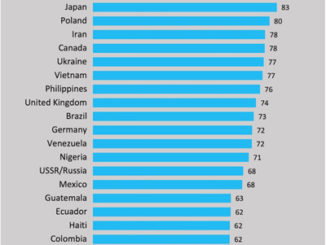
    Top 10 US immigrant groups leading in marriage stability:

    1. India – 94%
    2. Bangladesh – 90%
    3. Pakistan – 87%
    4. Taiwan – 86%
    5. Korea – 85%
    6. China – 84%
    7. Japan – 83%
    8. Poland – 80%
    9. Iran – 78%
    10. Canada – 78%

  • Armies of India, Pakistan agree to ceasefire along LoC

    Armies of India, Pakistan agree to ceasefire along LoC

    New Delhi (TIP): In a surprise development, Indian and Pakistani militaries announced on Thursday, February 25,  that they had begun observing a ceasefire along the Line of Control (LoC) in Jammu and Kashmir from the midnight of February 24. A joint statement issued by the armies of both countries said the move followed a discussion between India’s Director General of Military Operations (DGMO), Lt Gen Paramjit Singh Sangha, and his Pakistani counterpart, Maj Gen Nauman Zakaria, over their established telephone hotline. The move comes at a time when the Indian military is largely focused on the standoff with China in Ladakh sector of the Line of Actual Control (LAC), which emerged in the open in May last year, though there has been no let-up in counter-terrorism operations in Jammu and Kashmir. During their discussion on the hotline, the two sides “reviewed the situation along the Line of Control and all other sectors in a free, frank and cordial atmosphere”, the joint statement said. “Both sides agreed for strict observance of all agreements, understandings and cease firing along the Line of Control and all other sectors with effect from midnight 24/25 Feb 2021,” the statement added.

    The DGMOs also “agreed to address each other’s core issues and concerns which have propensity to disturb peace and lead to violence” in the interest of “achieving mutually beneficial and sustainable peace along the borders”.

    The two sides further said that existing mechanisms of hotline contact and border flag meetings will be used to “resolve any unforeseen situation or misunderstanding”.

    People familiar with developments said on condition of anonymity that the established convention of weekly contacts between officials of the Directorate General of Military Operations of the two countries had continued in recent months despite periodic flare-ups along the LoC. The DGMOs speak on the hotline when there is a specific request from one side, the people added.

    Troops from the two sides have traded fire since relations between the two countries hit a low after the Pulwama suicide attack in February 2019 and India’s decision to scrap Jammu and Kashmir’s special status in August 2019.

    The people said that while the Indian side had agreed on the ceasefire, there was no question of lowering the guard when it comes to operations to counter infiltration along the LoC or terrorism within Jammu and Kashmir.

    “The main idea is to have peace along the LoC so that the local population doesn’t suffer,” said one of the people cited above.

    India and Pakistan had agreed along a ceasefire on the LoC in November 2003 but it has been frequently violated in recent years. On Wednesday, the Indian Army chief, Gen MM Naravane, had said India wants peace and tranquillity along all its borders, be it the LAC, LoC or the frontier with Myanmar.

    “With our continuous engagement with Pakistan, we will be able to prevail over them (for border peace)…as unsettled borders help no one,” he told a virtual seminar.

    Naravane, however, said terror launchpads were active across the LoC, and the army will be prepared for a fresh influx of infiltrators in the summer.           Source: HT

  • Pakistan to hold elections for Senate on March 3

    Pakistan to hold elections for Senate on March 3

    Islamabad (TIP): Pakistan’s election authorities on Thursday announced that the elections for the Senate will be held on March 3, amidst a raging controversy about allowing open ballot papers in the polls to avoid corruption.

    A total of 52 senators in the 104-member upper house will retire on March 11 on completion of their six-year term. They will also include four of the eight senators from the erstwhile Federally Administered Tribal Areas (FATA). Since the areas have been merged with Khyber-Pakhtunkhwa, they will not be reelected and the Senate strength will shrink to 100. Therefore, polling will be held to elect 48 senators — 12 each from Khyber-Pakhtunkhwa and Balochistan, 11 each from Punjab and Sindh and two from Islamabad, the Election Commission of Pakistan (ECP) said in a notification. Polling will be held to elect seven members on general seats, two women and two technocrats in the four provinces. Besides, the election on one minority seat each in KP and Balochistan will also be conducted.

    The election for Senate or the upper house will be held as the country is torn apart by differences between the government and the Opposition whether to allow open ballot paper to avoid use of money.

    The problem stems from the system of election as senators are elected by the respective provincial assemblies on the basis of proportional representation. For example, in Balochistan a candidate may need just seven votes to become a senator.

    A few days back a video surfaced showing some members of Khyber-Pakhtunkhwa provincial assembly allegedly being bribed to vote against their Pakistan Tehreek-i-Insaf (PTI) party in 2018 elections. Then PTI chief Imran Khan had expelled about 20 lawmakers for voting against the party line.

    Khan has led the drive for open ballots but he is hamstrung by the Constitution of the country which asks for secret ballots. His government last month filed an application with the Supreme Court to allow an open ballots system for the Senate election.

    While the application is being heard, the PTI government first tried to amend the Constitution but failing to do so, it last week got the Elections (Amendment) Ordinance 2021 promulgated by President Arif Alvi to pave the way for Senate elections to be held via an “open and identifiable ballot”.

    The opposition parties have rejected the ordinance as well as the appeal in the Supreme Court by saying that PTI was trying to stuff the Senate with “friends of Imran Khan” against the wishes of several of its lawmakers.

    The ordinance has also been challenged in the top court as violation of the Constitution. As the Senate election has been announced, all eyes are set at the Supreme Court to decide the issue of open ballots. — PTI

  • No change in policy on Jammu and Kashmir, says U.S.

    No change in policy on Jammu and Kashmir, says U.S.

    WASHINGTON (TIP): The United States on Wednesday, Feb 10, said that there is no change in its policy on Jammu and Kashmir. “I want to be very clear there has been no change in U.S. policy in the region,” State Department Spokesperson Ned Price told reporters in view of a tweet from the South and Central Asia Bureau of the State Department which welcomed the resumption of 4G mobile internet in Jammu and Kashmir.

    “We welcome the resumption of 4G mobile internet in India’s Jammu & Kashmir. This marks an important step for local residents, and we look forward to continued political & economic progress to restore normalcy in J&K,” tweeted the South and Central Asia Bureau of the State Department. High-speed mobile internet was restored on February 5 in the entire union territory of Jammu and Kashmir, exactly one and a half years after it was snapped in August 2019 when the Centre had abrogated the special status of the erstwhile State. According to a 2019 Congressional Research Service report of August 2019, a longstanding goal of U.S. policy in South Asia has been to prevent India-Pakistan conflict from escalating to inter-state war. This meant the United States has sought to avoid actions that overtly favored either party. Over the past decade, however, Washington has grown closer to India while relations with Pakistan continue to be viewed as clouded by mistrust, CRS report said.

    On a question related to Twitter shutting down some accounts in India, Mr. Price said, “Well, I think what I would say generally is that around the world — and this goes back to what I was saying before — we are committed to supporting democratic values, including freedom of expression. I think when it comes to Twitter’s policies, we’d have to refer you to Twitter itself.”

    Responding to a similar question, White House Press Secretary Jen Psaki told reporters at her daily news conference: “of course, we always have concerns about crackdowns on freedom of speech, freedom of expression happening around the world and when it doesn’t allow people to communicate and peacefully protest.”

    (Source: PTI)

  • Indo-US relations under Joe Biden: Looking into the crystal ball

    Indo-US relations under Joe Biden: Looking into the crystal ball

    By Prabhu Dayal

    There are no doubt problems that will need to be overcome, such as those relating to bilateral trade and restrictions on H1B visas which adversely impact Indian professionals and Indian software companies. Biden may not immediately reverse the Trump administration’s policies which led to these problems, but we have better prospects now than with Trump who had himself formulated these policies. Biden has shown that he takes a broader view on issues such as foreign trade as compared to Trump with his infamous ‘America First’ policy. In a nutshell, my crystal-ball prediction is that the Biden Administration will seek to strengthen Indo-US relations, with China’s territorial and economic expansionism serving as a catalyst in this regard. Institutional linkages such as through Quad and the 2+2 dialogue will also be further cemented.

    • On his first day as US President, Joe Biden reversed a number of the Trump administration policies.
    • A question is being asked whether Joe Biden will also reverse some of Donald Trump’s policies towards India?
    • During the last two decades, the Indo-US relationship has been on an upward trajectory.

    Within minutes of entering the Oval Office for the first time on January 20, President Biden carried out a blitz by signing 17 executive orders.  Next day, he signed an additional 10 orders related to the coronavirus pandemic. These orders reversed a number of the Trump administration policies and covered areas Biden identified as his priorities on the campaign trail. Naturally, a question is being asked whether Biden will also reverse some of Trump’s policies towards India?In this regard, the remarks made yesterday, Jan 21, by Jen Psaki, the White House press secretary need to be noted. In response to a question at a news briefing, she said: “President Biden, who of course has visited India many times, respects and values the long, bipartisan, successful relationship between leaders in India and the United States. He looks forward to a continuation of that.”

    During the last two decades, the Indo-US relationship has been on an upward trajectory whether the White House occupant was a Republican or a Democrat. The Modi-Biden telephone conversation on November 17 endorsed the view that there is bi-partisan support in the US for strengthening what is not just a comprehensive political and economic relationship with India but also a strategic partnership reflecting the emerging global challenges for the world’s oldest and largest democracies, respectively.

    After his phone conversation with Prime Minister Modi, a statement from the Biden’s transition team said: “The President-elect noted that he looks forward to working closely with the prime minister on shared global challenges, including containing COVID-19 and defending against future health crises, tackling the threat of climate change, launching the global economic recovery, strengthening democracy at home and abroad, and maintaining a secure and prosperous Indo-Pacific region”. China was not specifically named, but one has to read between the lines. After all, the threat to the Indo-Pacific region emanates from which country if not from China?

    Retired Gen. Lloyd Austin, who has been nominated by President Biden as his Defense Secretary affirmed this when he told members of the Senate Armed Services Committee during his confirmation hearing on January 19:”If confirmed, my overarching objective for our defense relationship with India would be to continue elevating the partnership”. Responding to a question submitted before his confirmation hearing, Austin said. “I would further operationalize India’s ‘Major Defense Partner’ status and continue to build upon existing strong defense cooperation to ensure the US and Indian militaries can collaborate to address shared interests.”

    Tony Blinken, who is Biden’s nominee for the prestigious position of Secretary of State also expressed similar views during his own confirmation hearing when he told members of the powerful Senate Foreign Relations Committee on January 19: “India has been a bipartisan success story of our successive administrations”.

    It may also be recalled that during the virtual celebrations of India’s Independence Day organized by the Biden Campaign in 2020, Blinken had stressed that Biden has long been a champion of stronger ties with India. He had asserted: “If you go back 15 years, Joe Biden had a vision for the future of US-India relations. In 2006, he said, my dream is that in 2020, the two closest nations in the world will be India and the United States.” Blinken added: ”Well, we’re not quite there, but it’s a terrific vision, and one that I know he will act to realize, as president of the United States.” There are no doubt problems that will need to be overcome, such as those relating to bilateral trade and restrictions on H1B visas which adversely impact Indian professionals and Indian software companies. Biden may not immediately reverse the Trump administration’s policies which led to these problems, but we have better prospects now than with Trump who had himself formulated these policies. Biden has shown that he takes a broader view on issues such as foreign trade as compared to Trump with his infamous ‘America First’ policy.  It may also be mentioned that during his campaign, Joe Biden had taken up a position on issues like CAA and Jammu and Kashmir which was labelled as showing a lack of sympathy for India. These issues could come up in closed-door meetings, but it is unlikely that the Biden administration will raise them in public pronouncements. Working closely with India has become an important aspect of US foreign policy, and it will not be in US interests to undo the closeness in the present global scenario. Additionally, the fact that the Pentagon sees India as a potential purchaser of weapons systems would make it even more necessary for Biden to seek a closer relationship with the Indian political establishment. Therefore, in a nutshell, my crystal-ball prediction is that the Biden Administration will seek to strengthen Indo-US relations, with China’s territorial and economic expansionism serving as a catalyst in this regard. Institutional linkages such as through Quad and the 2+2 dialogue will also be further cemented.

    (The author is a retired diplomat) (Courtesy / OPOYI)

  • India fares poorly in hunger index

    India fares poorly in hunger index

    Country has the highest prevalence of ‘wasted children’; even Bangladesh and Pakistan score better

    NEW YORK (TIP): India has the highest prevalence of wasted children under five years in the world, which reflects acute undernutrition, according to the Global Hunger Index 2020. The situation has worsened in the 2015-19 period, when the prevalence of child wasting was 17.3%, in comparison to 2010-14, when it was 15.1%.

    Overall, India ranks 94 out of 107 countries in the Index, lower than neighbors such as Bangladesh (75) and Pakistan (88). 2020 scores reflect data from 2015-19. The Index, which was released on Friday, is a peer-reviewed report released annually by Concern Worldwide and Welthungerhilfe.

    It uses four parameters to determine its scores. India fares worst in child wasting (low weight for height, reflecting acute undernutrition) and child stunting (low height for age, reflecting chronic undernutrition), which together make up a third of the total score.

    Although it is still in the poorest category, however, child stunting has actually improved significantly, from 54% in 2000 to less than 35% now. Child wasting, on the other hand, has not improved in the last two decades, and is rather worse than it was decade ago.

    India has improved in both child mortality rates, which are now at 3.7%, and in terms of undernourishment, with about 14% of the total population which gets an insufficient caloric intake.

    In the region of south, east and south-eastern Asia, the only countries which fare worse than India are Timor-Leste, Afghanistan and North Korea.

    Pandemic effect

    Globally, nearly 690 million people are undernourished, according to the report, which warns that the COVID-19 pandemic could have affected the progress made on reducing hunger and poverty.

    “The world is not on track to achieve the second Sustainable Development Goal — known as Zero Hunger for short — by 2030. At the current pace, approximately 37 countries will fail even to reach low hunger, as defined by the Global Hunger Index Severity Scale, by 2030,” says the report. “These projections do not account for the impacts of the COVID-19 pandemic, which may worsen hunger and undernutrition in the near term and affect countries’ trajectories into the future … COVID-19 has made it clearer than ever that our food systems, as they stand, are inadequate to the task of achieving Zero Hunger.”

    (Source: The Hindu)

  • Pakistan govt to sell unused state properties at Dubai Expo

    Pakistan govt to sell unused state properties at Dubai Expo

    ISLAMABAD (TIP): The Pakistan government has decided to sell its precious unutilized state properties at the Dubai Expo to attract foreign and Pakistani investors, according to media reports on Thursday, as the cash-strapped country tries to overcome a ballooning balance-of-payments crisis and bolster its public finances.

    Prime Minister Imran Khan said that the precious government properties will be sold for better utilization of funds on public welfare projects.

    The funds generated through the exercise will be spent on public welfare schemes related to education, health, food and housing, Dawn newspaper reported.

    “These unutilized state properties will be marketed at the Dubai Expo to attract foreign and Pakistani investors to buy these assets,” Privatization Secretary Rizwan Malik informed the prime minister.

    “Unfortunately, criminal negligence was done by the previous governments as they did not utilize these valuable properties. Despite billions of rupees’ assets, various federal government institutions are bearing losses of billions of rupees every year,” Khan said.

    Khan also warned that stern action would be initiated against officers found to be creating hurdles in the identification of non-utilized government-owned properties, The News International reported.

    The International Monetary Fund in July approved a three-year USD 6 billion loan for Pakistan with tough conditions to address its balance of payment crisis and help the country’s ailing economy return to “sustainable growth”.

    Pakistan approached the International Monetary Fund (IMF) in August 2018 for a bailout package after the Imran Khan government took over.

    Pakistan has also received billions in financial aid packages from friendly countries like China, Saudi Arabia and the UAE.

    (Source: PTI)

  • US concerned about status of minorities in Pak: Ambassador

    US concerned about status of minorities in Pak: Ambassador

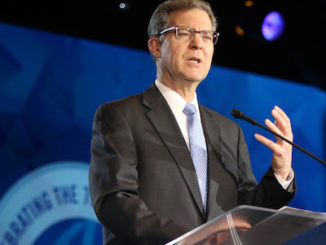
    WASHINGTON(TIP): The United States is concerned about the status of minorities in Pakistan, particularly the harshness of its persecution atmosphere and the number of people getting killed, US Ambassador at Large for International Religious Freedom Samuel Brownback said on Thursday.

    “We are concerned about Pakistan because of the harshness of the persecution atmosphere and the number of people getting killed or the inability of the Ahmadi Muslims to function in the country because they – the Pakistanis – won’t let them register as Muslims,” Brownback told a news conference here.

    “So, we’re looking at what we can do in that space,” he added.

    Responding to a question, Brownback said the administration had been working with a number of development organizations to ask them to consider if they could help religious minorities in countries, particularly where they are persecuted.

    “We do help certain groups, like we’ll have particular programs targeted towards women in some countries or the handicapped. I’ve asked a number of them to see if there is a chance” to help and support religious minorities, he said.

    (Source: PTI)

  • Parts of Gurdwara  Panja Sahib in  Pakistan gutted in Fire

    Parts of Gurdwara Panja Sahib in Pakistan gutted in Fire

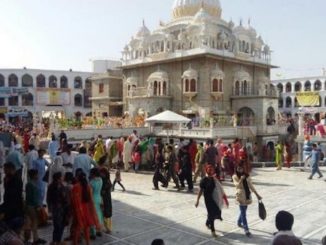
    HASAN ABDAL, PAKISTAN(TIP):  A fire broke out at the Gurdwara Panja Sahib in the Pakistani city of Hasan Abdal on Wednesday, October 16, Sajjad Azhar, a freelance journalist who has extensively covered the news of the place  said.

    The incident occurred on Wednesday evening when sparks from the ongoing welding work at the Gurudwara caused the blankets kept in the vicinity to catch fire, Adnan Anjum Raja, the Assistant Commissioner of Hasan Abdal, informed. The fire was soon put out and caused minor damage to the gurudwara. Construction work is underway at the Panja Sahib ahead of the opening of the Kartarpur corridor, when Sikhs from all across the world would visit the Gurdwara on the 550th birth anniversary of Guru Nanak Dev Ji.

  • India sought a solution while Pakistan was comfortable with continuing with cross-border terrorism: Dr. S Jaishankar

    India sought a solution while Pakistan was comfortable with continuing with cross-border terrorism: Dr. S Jaishankar

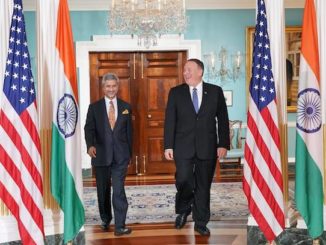
    WASHINGTON(TIP): External Affairs Minister (EAM), Dr. S Jaishankar concluded a comprehensive visit (28 September to 02 October 2019) to Washington DC, his first visit to Washington after his appointment as Minister for External Affairs of India.

    During the visit, EAM met his counterpart Secretary of State Mike Pompeo; Secretary of Defense Mark Esper; Acting Secretary for Homeland Security Kevin McAleenan; and newly appointed National Security Advisor Robert C O’Brien.

    EAM also addressedfive major think tanks (Carnegie Endowment for International Peace, The Atlantic Council, Center for Strategic and International Studies, The Heritage Foundation and the Brookings Institutions).

    Speaking on the on the topic ‘Preparing for a Different Era’ at Center for Strategic and International Studies, Dr. S Jaishankar cautioned that ‘a world of “all against all” is neither desirable nor indeed probable.’ “The weight of history and the compulsions of politics will make sure that convergences end up as some form of collectivism. Nor can beliefs and values be divorced from the behavior of states. Thus, even as we look at an era of more dispersed power and sharper competition, the way forward is more likely to be new forms of accommodation rather than pure transactions. While nations will naturally each strive to advance their particular interests, similarities and affinities will always remain a factor. So, while this is an exposition on changes in international affairs, I would emphasize that the direction is towards a new architecture rather than the absence of one”, he said.

    He also highlighted how for many years India sought a solution while Pakistan was comfortable with continuing with cross-border terrorism. “The choice as this Government came back to power was clear. Either we had more of past policies and the prospect of further radicalization. Or we had a decisive change in the landscape and a change of direction towards de-radicalization. The economic costs of the status quo were visible in the absence of entrepreneurship and shortage of job opportunities. The social costs were even starker: in discrimination against women, in lack of protection for juveniles, in the refusal to apply affirmative action and in denial of the right to information, education and work. All this added up to security costs as the resulting disaffection fed separatism and fueled a neighbor’s terrorism. At a broader level, these realities also contradicted our commitment that no region, no community and no faith would be left behind. The legislative changes made this summer put India and the entire region on the road to long-term peace. That is the reality today in the making. And this is the India that will navigate the world which I have described just now”, he said.

    Dr Jaishankar also emphasized that different era which we have entered also calls for both India and the United States to press the refresh button of their relationship.


  • Imran Khan at UN General Assembly demanded  India  lift ‘inhuman curfew’ in Kashmir

    Imran Khan at UN General Assembly demanded India lift ‘inhuman curfew’ in Kashmir

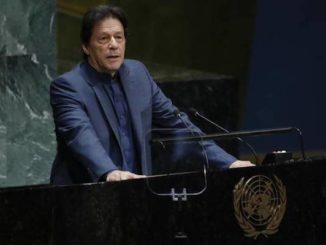
    UNITED NATIONS(TIP): Pakistan Prime Minister Imran Khan on Friday raised the Kashmir issue in his maiden address to the UN General Assembly and demanded that India lift the “inhuman curfew” in Kashmir and release all “political prisoners”.

    In his speech that went on for about 50 minutes, exceeding the 15-minute limit for UN speeches during the general debate, Mr. Khan devoted half of his address to the Kashmir issue, warning that if there was a face-off between two nuclear-armed neighbors, the consequences would be far beyond their borders.

    Article 370

    Mr. Khan spoke at length about India’s decision to revoke Article 370 in Jammu and Kashmir and criticized the government’s move to put in place a communication lockdown.

    He said India ended the special status of Jammu and Kashmir, flouting 11 resolutions of the UN Security Council, the Shimla agreement and its own Constitution.

    “What is the world community going to do? Is it going to appease a market of 1.2 billion, or is it going to stand up for justice and humanity,” the Pakistani Prime Minister asked.

    “…This is the time to take action. And number one action must be that India must lift the inhuman curfew” in Kashmir, he said. “It must free all political prisoners,” he added.

    Self-determination

    He went on to say that the world community must give the people of Kashmir the right to self-determination.

    Asserting that the situation in Kashmir will deteriorate once India lifts the curfew, Mr. Khan said, “You hope for the best but be prepared for the worst.”

    He said once the curfew is lifted, “there will be a reaction” and India would blame Pakistan.

    “Two nuclear-armed countries will come face to face, like we came in February,” he said, a reference to the stand-off between the two nations following the Pulwama terror attack on an Indian police convoy and India’s subsequent air strikes on terror camps in Balakot in Pakistan.

    (Source : PTI)

  • Trump has made it clear mediation offer on Kashmir not on table anymore: Shringla

    Trump has made it clear mediation offer on Kashmir not on table anymore: Shringla

    WASHINGTON (TIP): US President Donald Trump has made it clear that his offer of mediation on Kashmir is not on the table anymore, a top Indian diplomat said on Monday.

    India’s Ambassador to the US, Harsh Vardhan Shringla, said America’s decades-old policy on Kashmir had been no mediation but to encourage India and Pakistan to resolve their differences bilaterally.

    “President Trump has made it very clear that his offer to mediate on Jammu and Kashmir is dependent on both India and Pakistan accepting it. Since India has not accepted the offer of mediation, he has made it clear that this is not on the table anymore,” Shringla told Fox News.

    On July 22, during his joint media appearance with Pakistan Prime Minister Imran Khan at the White House, President Trump stunned India by saying that Prime Minister Narendra Modi sought his mediation/arbitration on the Kashmir issue.

    India asserted that no such request was made by Modi to the US President and all issues would have to be resolved with Islamabad bilaterally.

    A week later, Trump said he would “certainly intervene” between India and Pakistan on Kashmir if they wanted him to. He said it was up to India and Pakistan to resolve the Kashmir issue, but he was ready to assist if the two South Asian neighbors wanted him to help in resolving the issue.

    India made it clear to America that any discussion on the issue, if at all warranted, would only be with Pakistan and only bilaterally.

    Shringla said America’s policy on Kashmir had been no mediation but to encourage the two South Asian neighbors to resolve their differences bilaterally, including Kashmir, the pace and scope of which would be chosen by New Delhi and Islamabad.

    “That has been the United States’ longstanding policy,” he said in response to a question referring to America’s decades-old policy.

    UN Secretary General Antonio Guterres, the ambassador said, was also very clear on the issue.

    “He says this issue has to be resolved bilaterally between India and Pakistan in keeping with the agreements that the two countries have signed: the Simla Agreement and the Lahore Declaration,” he said.

    “So, this is not an issue that is to be settled with, third parties. I think that was something that President Trump clarified and made clear,” Shringla said.

    State Department Spokesperson Morgan Ortagus last week said there is no change in its policy on Kashmir as it called on India and Pakistan to maintain restraint and hold direct dialogue to resolve their differences.

    (Source: PTI)

  • WAKE UP CALL TO INDIA

    WAKE UP CALL TO INDIA

    By Ven Parmeswaran
    WILL INDIA CAPITALIZE ON “USA-INDIA CLOSE ALLY” STATUS?
    WILL INDIA SEIZE THE OFFER OF THE USA TO TRANSFER 100% OF US TECHNOLOGY?
    WHAT LESSONS INDIA LEARNED AFTER THE AIR SKIRMISHES  WITH PAKISTAN ON 26th and 27th FEBRUARARY?

    Prime Minister Modi must take full advantage of ‘CLOSE ALLY’ relationship and start doing business with the USA that will benefit both.  China opened its economy in 1979 and within 20 years it became the second economic power in the world.   India has excellent credit and therefore India can mobilize resources needed for modernizing India and its defense.    India must embrace capitalism as China did, and not continue to fool around with socialism.

    At the outset, I must say that this is the first time India received worldwide support since its independence in 1947.During the end of Harry Truman’s Presidency, Pakistan aligned with the USA by signing a Mutual Security Agreement.  President Trump changed this after his election.  He canceled aid to Pakistan and gave ultimatum to Pakistan to get rid of all terrorist organizations,  including Jaish-e-Mohammed and Lashhar-e-Taiba .These two major Pakistan’s homegrown terror organizations with the implied support of Pakistan’s military and the I.S.I. (intelligence agency) attacked the Indian Parliament in 2001.  In 2008, they tried to seize Mumbai and thru terror tactics killed 165 Indians and foreign nationals.  Since then, various governments of Pakistan refused to mete out justice to the assailants, the leaders of Jaish-e-Mohammed and Lashkar-e-Taiba.    Pakistan’s military and the I.S.I. have  been ruling Pakistan.  The military has installed Prime Minister Imran Khan.  The so-called civil government and its parliament are mere window-display.

    PAKISTAN HAS BEEN VIOLATING THE LINE OF CONTROL BETWEEN INDIAN KASHMIR AND PAKISTAN OCCUPIED KASHMIR

    Pakistan has been violating the Line of Control systematically resulting in thousands of deaths of Indian soldiers during the past two decades.  On 14th February, Pakistan used Jaish-e-Mohammed as its proxy and killed 41 Indian military police.  Prime Minister Modi said, “Enough is Enough.   India cannot and will not tolerate.” And he ordered his military to take action.

    USA-INDIA CLOSEST ALLY STATUS IN PLAY

    Before India took military action, India created a favorable political atmosphere in the world that pumped out political support from the sole superpower, the USA.  The National Security Adviser, John Bolton and the Secretary of State, Pompei extended vehement support.  This was followed immediately by discussion in the U.S.Congress. Several leaders of the U.S.Senate and the House of Representatives accused Pakistan and offered their overwhelming support to India.  There was a general consensus that Pakistan must take action to get rid of all terrorists. The leadership of the USA was followed by the European Union, Australia, Japan, Canada and many countries.  The United Nations discussed the matter and asked Pakistan to get rid of Jaish-e-Mohammed and Lashkar-e-Taiba.   I am explaining to show that India did not act hastily and alone.   It even had the implied support of China.

    INDIA NEUTRALIZED CHINESE SUPPORT OF PAKISTAN

    It must be pointed out that China chose not to support Pakistan against Indian attacks. Instead, China appealed to both India and Pakistan to use restraint and settle the differences.  But China emphasized that Pakistan must get rid of its terrorists.  It is also important to note that China refused to intervene or support Pakistan in 1971, when India used force to liberate East Pakistan and created Bangladesh. This is in spite of the historical fact that India and China had fought in 1962 on territorial differences.

    Pakistan had banked on Chinese support and was disappointed.  Significantly, China did not even mention the territorial violation of Pakistan by India.  Equally, Pakistan was furious that the U.N. was silent when India attacked Pakistan’s airspace and violated its sovereignty.

    It is interesting that India’s Foreign Minister, Sushma Swaraj timed her strategic meeting in Peking during the crisis, and she told her counterpart:

    “No military installations were targeted.  The limited objective of the preemptive strike was to act decisively against the terrorist infrastructure of Jaish-e-Mohammed in order to pre-empt another terror attack on India.  India does not wish to see further escalation of the situation.  India will continue to act with responsibility and restraint.”

    LESSONS LEARNED FROM THE AIR SKIRMISHES WITH PAKISTAN

    1. INTELLIGENCE: On the 26th attack on Balakot, Pakistan,  Indian intelligence failed to target the right place for bombing.
    2. TECHNOLOGY: On the 27th dogfight, the Indian pilot, Abhinandan Varthaman, was downed because his MIG-21 was no match to Pakistan’s F-16.  Even the latest MIG-35 is no match to  F-16. Thus, superior technology matters.
    3. PUBLIC RELATIONS: Public Relations is also very important.  P stands for Performance and R stands for Reporting.  Indian bureaucrats failed to report. The media and the public wanted to know when and where F-16 plane was downed and how.  The speculation is the Indian pilot before he was downed also inflicted damage to the F-16 forcing its pilot to go down.    Also, when India failed to identify the target in Balakot, India claimed it had destroyed the Jaish-e-Mohammed’s training camp of 300.

    RECOMMENDATIONS FOR ACTION TO CAPITALIZE ON “INDIA-USA CLOSE ALLY” RELATIONSHIP

    1. India must take bold steps to make its economy modern and grow its GDP @10% minimum for the next decade.This will create multi millions of jobs badly needed by the unemployed.
    2. Liberalize and open the economy.Make it most business friendly and create most favorable environment for foreign investment.
    3. Modern warfare is won using sophisticated technologies and superior intelligence.India must be prepared to make dynamic changes in its military preparedness. India must once and for all decide to buy the best and most superior military hardware from the USA.  India should be prepared not to depend on Russia. Indian factories that make Russian MIGs are outmoded and should be closed.   What is the use of buying cheap or paying in rupees if you cannot win the war?
    4. China’s defense budget is $175 billion, India’s is $45 billion  Out of India’s budget, $28 billion is allocated for salaries and pensions, leaving only $17 billion for military hardware.  To protect India’s sovereignty and its international standing, India has no choice but to increase its defense budget to $175 billion.
    5. India has ammunitions to last only for 10 days of war.This is precarious and not acceptable.
    6. India should immediately allocate $100 billion to buy sophisticated military hardware, especially, quantity fighter planes to defend against China and Pakistan.

    NEXT STEP:  Prime Minister Modi should make a definite schedule for President Trump to visit India for at least three days.  He will be accompanied by a large delegation of Fortune 500 corporations, investment banks  etc. During the visit Prime Minister Modi could discuss with President Trump, India’s requirements to build its economy and defense.  Instead of India negotiating to buy directly from American military hardware manufacturers, President Trump could negotiate as he is good at  cutting the price to the bottom.  He helped Vietnam finalize purchase of planes from Boeing during the North Korean summit held in Hanoi.

    President Trump’s grand strategy is to balance against the aggressive and growing Chinese influence in Asia.  He is interested in replacing China with India as a source for consumer and industrial goods.  However, today India does not have the necessary infrastructure to manufacture on large scale.  India must deliver water and energy to all for 24/7.    India has a large supply of engineers and managers.  India has a comparative advantage with China .  India must privatize its public sector corporations and release resources.  Lockheed Martin, United Technologies, Boeing, Raytheon and others are ready and willing to manufacture in India.  Making weapons in India has a comparative advantage especially with an oversupply of professional engineers and managers.

    Prime Minister Modi must take full advantage of ‘CLOSE ALLY’ relationship and start doing business with the USA that will benefit both.  China opened its economy in 1979 and within 20 years it became the second economic power in the world.   India has excellent credit and therefore India can mobilize resources needed for modernizing India and its defense.    India must embrace capitalism as China did, and not continue to fool around with socialism.

    (Ven Parameswaran, MBA, Columbia University, lives in Scarsdale, N.Y.  He is a Senior Adviser to Imagindia Institute, a think tank in New Delhi)


  • Give us back friendliness of late 1970s

    Give us back friendliness of late 1970s

    By Shahzad Raza

    Both nuclear rivals have almost tried all options — wars, dialogues and trade — but to no avail. The two sensitive issues, Kashmir and terrorism, have been hampering progress in other areas for long……… In 2009, at Sharm-el-Sheikh, Pakistan’s former Prime Minister Yousaf Raza Gillani and his Indian counterpart Manmohan Singh agreed to cooperate on fighting terrorism together. That was the most remarkable development after the deadly Mumbai attacks.

    Pakistani schoolchildren of the 1980s had a great fascination with Indian classic Mahabharat, which was telecast on Doordarshan and used to reach TV sets across the border through analogue antennas. The character of Bheem was quite popular among viewers.

    That generation of the late 1970s or early 1980s, which had no remorse watching Indian entertainment shows, transferred the same fascination to their children who had Chotta Bheem to enjoy. Those who had access to PTV in India would still remember the character of Chaudhry Hashmat Ali of one of the greatest Pakistani drama, Waris.

    People were then beginning to forget the horrific memories of the Partition and two unfortunate wars. Pakistani agencies were not meddling in the Kashmir affairs and their Indian counterparts were not colluding with Afghans to fan separatism in Balochistan. Osama bin Laden and his jihadis were preparing to defeat the Red Army. Uncomprehending then was the frequent stalemates on multiple issues, including Kashmir, water, visas, trade, etc. India granted Pakistan MFN status, vying for access to Afghanistan and Central Asia. However, Pakistani policy makers did not respond.

    Things changed drastically after the collapse of the Soviet Union, leaving Pakistan to bear the burden of refugees and radical ideologies. The jihadis had no inclination to return to their barracks like a regular army. Many of them joined Kashmir separatist groups, sparking serious tension between the two neighbors.

    The complexities of proxy war were not suitable for both India and Pakistan, given their proximity, economies and cultural bonds. Yet, the two countries have been exhausting themselves since the end of the first Afghan war.

    Both nuclear rivals have almost tried all options — wars, dialogues and trade — but to no avail. The two sensitive issues, Kashmir and terrorism, have been hampering progress in other areas for long. During Gen Pervez Musharraf’s regime, a remarkable progress was made on the Kashmir issue. The last People’s Party government almost convinced the then Indian government to stop accusing Pakistan of sponsoring terrorism. In 2009, at Sharm-el-Sheikh, former Prime Minister Yousaf Raza Gillani and his Indian counterpart Manmohan Singh agreed to cooperate on fighting terrorism together. That was the most remarkable development after the deadly Mumbai attacks.

    The successive PML-Nawaz government took several bold initiatives but for one reason or other things went back to square one. For a long time, Indian policy makers kept on pressing Pakistan to leave the issue of Kashmir until there was a congenial atmosphere. Pakistani establishment was not listening. Now both civilian and military leaderships in Pakistan are talking about building the same atmosphere through economic and cultural ties. The Indians are not listening, perhaps because of the impending General Election.

    Musharraf and his PM Shaukat Aziz envisioned if the bilateral trade was increased it would diminish the state-level animosity. They often cited the example of Germany and France that how the World War-II rivals rebuilt their relations through trade. The incumbent government of PTI in Pakistan feels the same. Germany and France are a classic example for the neighboring countries to repair the fractured relations. The South Asian rivals have their own Alsace-Lorraine — Kashmir. The nature of conflict and emotional attachment with the beautiful territory cannot be underestimated.

    Both have their stakes in Afghanistan. What if the two sides, somehow, start considering that barren land their Alsace-Lorraine. What if Pakistan and India take over the process of rebuilding Afghanistan together? Dialogue with the Taliban seems to have entered the final stage. Pakistan can still use whatever leverage left over Taliban. And India can pull strings and make Afghani establishment toe the line. Together, the two countries could do wonders in Afghanistan. While shifting their joint interests into a third country, both neighbors must revive once strong cultural ties.

    Warmongers need to take a back seat. The next course should be determined by the likes of late Asma Jehangir and Arundhati Roy. Can’t Pakistan’s real estate tycoon Malik Riaz build urban metropolises in Afghanistan, with steel provided by Lakshmi Mittal? Otherwise, dare one can say that sudden death is much better than prolonged and painful illness through slow poisoning.

    (Source: Tribune India)

  • Engaging Naya Pakistan

    Engaging Naya Pakistan

    Imran Khan offers a chance to deal with Pakistan’s deep state, but no outcome is likely before the Lok Sabha polls

    By Happymon Jacob

    The victory of Imran Khan’s Pakistan Tehreek-e-Insaf (PTI) in the recent general elections in Pakistan poses both challenges and opportunities for India. The challenge would be to engage a newly minted Pakistani Prime Minister who is yet to reveal his way of conducting diplomacy. The opportunity, even so, lies in the fact that the rise of Mr. Khan will enable India to deal with the Pakistani ‘deep state’ more effectively.

    Mr. Khan’s ‘victory speech’ had several well-meaning and conciliatory references to India which, if logically followed up, could potentially yield long-term benefits for the two countries. But it may be unrealistic to expect much movement in bilateral ties till India’s own general elections are concluded.

    A popular leader

    Despite allegations of a rigged election in Pakistan in which the army is said to have enabled Mr. Khan’s victory, it is widely recognized that there was a major groundswell of support for him. The fact that his PTI left the rival Pakistan Muslim League (Nawaz) far behind in terms of seat share, and that the PTI, until recently a provincial party, made stunning inroads in all of Pakistan’s provinces shows that the big story is also the rise of a charismatic Pakistani political leader seen as incorruptible and visionary by young voters.

    More significantly, despite concerns in India, religious parties have once again failed to convert their street power into political outcomes, which goes to highlight the sheer lack of mass base for terror outfits and their affiliates in Pakistan, and the moderate nature of its polity. This is not to say that Mr. Khan has a clean record: he has been a supporter of Pakistan’s blasphemy law and has in the past flirted with rightwing parties and terror outfits in Pakistan, which earned him the moniker ‘Taliban Khan’.

    The central Indian concern, and a legitimate one, about Mr. Khan’s victory is whether he can independently navigate a sustained policy process with New Delhi. India fears that the Pakistani deep state, i.e. the army and the Inter-Services Intelligence (ISI), will decide the India policy, and Mr. Khan will merely carry it out, if he is kept in the loop at all. A related concern is that the Pakistani deep state is not keen on a dialogue process with New Delhi. While it is difficult to predict the nature of the evolving relationship between an extremely popular Mr. Khan with the Pakistani deep state, let’s assume, for argument’s sake, that Mr. Khan will be subservient to the Pakistan army with regard to the country’s security policy. Whether that is desirable for the Pakistani state and its democracy is not a question that should detain us here.

    The question that should bother us is whether Mr. Khan being a puppet in the hands of the Pakistan army is detrimental to Indian interests or not. India’s grievance in regard to civil-military relations so far has been three-fold: one, the Pakistani deep state has a nefarious agenda vis-à-vis India; two, dialogue with the Pakistani political establishment has often not been successful since the Pakistani security establishment is often not on board the dialogue process; three, New Delhi’s desire for peace becomes a casualty in the turf war between Pakistan’s deep state and its political establishment.

    Logically then, one could argue that the only way India can have a steady dialogue process with Pakistan is when there is agreement between Pakistan’s deep state and its Prime Minister on what the country’s India policy should be. If so, Mr. Khan’s closeness to the Pakistan army should be viewed as an opportunity to have a fruitful dialogue with the Pakistani deep state without New Delhi’s message to Rawalpindi getting lost in Islamabad. New Delhi, while engaged in a dialogue with Islamabad, would not need to second-guess Rawalpindi’s intentions.

    Does the Pakistan army desire peace with India? Pakistan’s Army Chief, General Qamar Javed Bajwa, has on several occasions spoken of the need to build peace with India, underscoring that bilateral dialogue can lead to peace and stability in the region. There is, of course, no need to take it at face value. However, if the Pakistan army proposes dialogue and if the new Prime Minister is assumed to be on board such an objective, wouldn’t it suit Indian interests?

    This begets more questions. Can this new-found civil-military equation in Pakistan withstand the force of Mr. Khan’s personality traits and Pakistan’s political dynamics in the days ahead? Will Mr. Khan’s relationship with the deep state continue as expected or will his unpredictable temperament create more confusion? One would have to wait and watch.

    The China question

     Yet another angle that needs to be factored in while engaging Naya Pakistan is the rising regional influence of China and the further strengthening of China-Pakistan ties. Both the Pakistan army and the political class in Pakistan are upbeat about the China-Pakistan Economic Corridor (CPEC) and Chinese investments in Pakistan, notwithstanding Mr. Khan’s initial reservations about China. It is possible that China could pacify some of Pakistan’s revisionist tendencies towards both Afghanistan and India. In Wuhan, Prime Minister Narendra Modi and Chinese President Xi Jinping agreed to carry out joint projects in Afghanistan. This is perhaps the opportune time to implement them. If (and that’s a big ‘if’) Beijing can get the Pakistan army to agree to a reconciliation process in Afghanistan, and if New Delhi and Beijing can collaborate in Afghanistan, we may witness some move towards regional stability. This would be helped by Mr. Khan’s desire to improve Pakistan-Afghanistan relations.

    The Kashmir hurdle

    In this plausible scenario, Kashmir is likely to be the wild card. Two lessons stand out from earlier India-Pakistan negotiations: talks with Pakistan are unlikely to succeed if Kashmir continues to be a domestic challenge for India; and talks with Kashmiri separatists will not get anywhere without a parallel process with Pakistan. In other words, unless New Delhi reaches out to Kashmiri separatists and to Pakistan in parallel, a dialogue process with Pakistan is unlikely to succeed. Given that the Bharatiya Janata Party — after having pulled out of a difficult coalition with the Peoples Democratic Party in Jammu and Kashmir — is gearing up to use the Kashmir issue in the upcoming elections, there is unlikely to be much appetite in New Delhi to open a serious dialogue with Kashmiris, and Pakistan.

    In any case, Mr. Modi might not want to take a chance with Pakistan at this point since a failure to show anything substantive from a peace process with Pakistan could have domestic political implications, especially if ceasefire violations and terror attacks continue to take place.

    Therefore, notwithstanding the positive statements from Mr. Khan and Mr. Modi’s gracious phone call to him, we might not witness much progress in bilateral ties in the short term. The interlude between the general elections in Pakistan and India is a period of extreme caution and careful domestic calculations, and hence not conducive for bold foreign policy initiatives, especially on something as fraught as India-Pakistan relations.

    (The author is Associate Professor of Disarmament Studies at JNU, New Delhi)


  • Do sportspersons make good politicians?

    Do sportspersons make good politicians?

    Barring a few exceptions, they were all introduced on the political horizon as “bold and big game-changers”. Finding their wings clipped and sans all powers, they attempted to walk free, only to end up as “loners” and “failures”. What they did on playfields, they could not repeat even one per cent of that in politics. It is all the more intriguing that Indian sports is mired much deeper in politics than the politics of running the world’s biggest liberal democracy. But our sports personalities have failed on that front, too, says the author.

    Politics in sports and sportspersons in politics are two diverse, interesting and highly debatable issues. The emergence of former Test cricketer Imran Khan on the global political scenario has again activated an animated discussion on whether sportspersons make better politicians or not. Never before in the world has a Test cricketer been chosen to lead a country tormented by internal strife, economic turndown, corruption and armed conflict.

    For a sportsperson, building a career in politics on his athletic legacy may not be easy unless he has a high popularity profile, as the shift from the peak of being a sports celebrity to a political bigwig may not be possible without a deluge of publicity and unconditional support from the rank and file of the political outfit he intends to head or lead.

    There have been lots of Olympians and cricketing heroes who wandered into politics and made a name for themselves. Sportspersons-turned-politicians have held limelight all over, including the US, England, Australia, Canada, Japan, India.

    Sprinters Ralph Metcalfe and Jim Ryun, cagers Bill Bradley and Tom McMillen, decathlete Bob Mathias and judoka Nighthorse had successful innings in US politics after successful years in sports.

    Richard Charlesworth of Australia belongs to the rare category of people who excelled not only in more than one sport but also hogged limelight and honor as a trainer, a coach and politician. A Test cricketer, Olympic hockey gold medalist and MP, all made one Richard Charlesworth.

    Then there is Australian aboriginal Nova Perry, an Olympic gold medalist in hockey and Commonwealth Games gold medalist in athletics. She became the first indigenous woman to be elected to the Australian Parliament and later to the Senate.

    Ryoko Tami of Japan, a renowned judoka, who won silver in the Barcelona Olympic Games and gold medals in Sydney and Athens and a bronze in Beijing, turned to politics at the end of her career in sports. She won a seat in the House of Councilors of Japan.

    Before Imran Khan made it to the Pakistan National Assembly, his contemporaries in sports — Sarfraz Nawaz (cricket) and Akhtar Rasool (hockey) — also sat in the Punjab provincial Assembly and held ministerial posts.

    Sports stars-turned politicians: Kirti Azad, Navjot S Sidhu, Pargat Singh, Rajyavardhan S Rathore.

    India has a longer history of sportspersons in politics. There have been numerous instances of eminent sportspersons joining politics, both at the state and national levels. Olympian Jaipal Singh (hockey), Raja Karni Singh, Chetan Chauhan, Kirti Azad, Navjot Singh Sidhu, Sachin Tendulkar, Aslam Sher Khan, Mohammed Azharuddin, Pargat Singh, Dilp Tirkey and Rajyavardhan Singh Rathore are some of the stalwarts, who after or during their innings in sports, dabbled in politics. Their entry was either through established political parties or as independents.

    Kirti Azad (BJP) is a senior politician. His long innings in cricket and then in politics almost brought him to the brink for alleging wrongdoings in the DDCA.

    Why are sports stars damp squibs in politics? Or are they content with just a membership of Parliament or state assemblies?

    Athens Olympic medalist Rajyavardhan Singh Rathore and Test cricketer Navjot Singh Sidhu may be exceptions. Rathore is a part of the Modi ministry. His portfolio is sports. Sidhu is a minister in Punjab. But his portfolio does not include sports.

    It is more than a question of political rehabilitation for those leaving sports and opting for a new career. If politicians are not welcome to national sports federations, how can sports stars expect a warm welcome or assimilation in political administration, is a vexed question.

    The last election to the 15th Punjab Vidhan Sabha was, however, different as not only a large number of sportspersons, but also bureaucrats, technocrats, artistes, singers, academicians, journalists and realtors evinced a keen interest in politics.

    Besides Sidhu (cricket) and Olympian Pargat Singh (hockey), who were successful in the last Punjab Assembly elections, Asian Games gold medalist Kartar Singh (wrestling), Sajjan Singh Cheema (Olympian, basketball) and Gulzar Singh (kabaddi) were in the fray, while several others, including Olympians Surinder Singh Sodhi and Hardeep Singh Grewal and internationals Jagdeep Singh Gill and Asian Games gold medalist Rajbir Kaur Rai (all hockey), did not get a chance to enter electoral politics.

    In all previous instances, sportspersons may have stirred a hornet’s nest here and there, but in the long run, their actions have remained far too small to impact national or provincial politics.

    Barring a few exceptions, they were all introduced on the political horizon as “bold and big game-changers”. Finding their wings clipped and sans all powers, they attempted to walk free, only to end up as “loners” and “failures”. What they did on playfields, they could not repeat even one per cent of that in politics. It is all the more intriguing that Indian sports is mired much deeper in politics than the politics of running the world’s biggest liberal democracy. But our sports personalities have failed on that front, too.

    One may not be able to name a sport that is free from politics. Political affiliations apart, sports administrators defy rules, regulations and guidelines to monopolize state and national sports associations. Governments come and go, but our sports politicians, who have perfected the art of staying in office irrespective of the political party in power, remain indispensable.

    It is but natural to ponder that if our sports are so deep into politics, why sports personalities have been generally non-performers on the political scenario.

    (Source: Tribune)

    (The author is a Chandigarh based senior journalist. He can be reached at prabhjot416@gmail.com)

  • Imran Khan Favors Austere Oath Ceremony: No Foreign Leader will be invited

    Imran Khan Favors Austere Oath Ceremony: No Foreign Leader will be invited

    ISLAMABAD(TIP): A Pakistan Foreign Office spokesman, on Thursday, August 2, said that no foreign leader will be invited to the oath-taking ceremony of Imran Khan, as the prime minister in-waiting wants to keep the event very simple and dignified.

    Imran’s Pakistan Tehreek-i-Insaf (PTI) emerged as the single largest party in the elections held on July 25. The 65-year-old leader is expected to take oath on August 11.

    Foreign Office spokesman Dr Mohammad Faisal said a simple ceremony will be held at the President House for which no date has been fixed.

    “No dignitary from abroad except a few close friends of Chairman PTI Imran Khan would attend the simple and dignified oath-taking at Aiwan-e-Sadar (President House),” said Faisal.

    President Mamnoon Hussain will administer Khan the oath of the office.

    Imran’s party had initially planned to invite several foreign leaders and personalities, including Prime Minister Narendra Modi. However, in an apparent change of heart today, Khan has opted against a fancy ceremony.

    Faisal said that the PTI also announced that no foreign leaders would attend the oath-taking ceremony.

    In a tweet, the PTI announced that the oath taking will be a simple and dignified ceremony and “it has been decided not to invite foreign dignitaries”.

    (Source: PTI)