Tag: Pakistan related

  • Pulwama attack: Politicizing a conflict for electoral gains

    Pulwama attack: Politicizing a conflict for electoral gains

    What we have witnessed following the strike , from the Government and the BJP leaders would not only sully the image of India but also the nation’s credibility through overt politicization of this conflict, as the country is preparing itself for a critical election.

    By George Abraham

    Ever since the attack in Pulwama by a suicide bomber killing 42 of India’s security personnel, the country has been on the edge,  fearing an all-out war with Pakistan.  Any civilized person could view the barbarity of this dastardly terrorist act only with disgust and rage. However, a confrontation between these two nuclear powers is neither in the interest of these two nations nor does it bode well for the future of this turbulent region. Pakistan has been waging a proxy war with India over the Kashmir issue from the time of Independence, and a final solution to this crisis is not within sight.

    Some would argue that this is the time of war and everyone should keep their apprehensions about its conduct or any other questions they may have close to their chest.  However, a massive intelligence failure of this magnitude over the Pulwama tragedy should  not be missed. How did a young man in his twenties, who was already on the radar of the Security personnel, come to possess, pack & conceal, and then drive 300KG  explosives towards a military convoy undetected? Reports from the region suggest that a police advisory was already in effect a week before this, stating that the Central Reserve Police Force deployment would be targeted. Where is the accountability on these massive security lapses?

    A recent New York Times report paints a scathing image of India’s vintage military equipment and its impact on military readiness. “India’s armed forces are in alarming shape. If intense warfare broke out tomorrow, India could supply its troops with only 10 days of ammunition,  according to government estimates. And 68 percent of the army’s equipment is deplorably old. It is officially considered ‘vintage’”.  A swollen bureaucracy together with lack of funding obviously rendered these procurement and training processes anything but cumbersome.

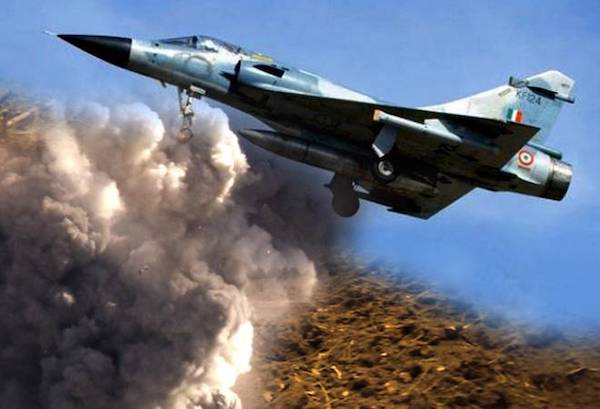
    Nevertheless, India was left with no choice but to retaliate. Pakistan has been aiding and abetting Jaish-e-Mohammed and its leader Masood Azhar for long despite the pressure from the U.N. and other international bodies. The Air Force was tasked to strike the  terror targets in Balakot region: an order that was carried out despite bad weather conditions. The Indian Military has been known for its professionalism and respect for civilian leadership in a democratic setup. Air Chief Marshal B.S. Dhanoa refused to give a casualty count saying  “IAF doesn’t count the number of dead” and the “casualty figure in an air strike on Balakot camp will be given by the government,” referring to the air strike it had carried out on February 26, 2019.

    Another shameful spectacle that is unfolding in India today is the blatant display of jingoism by the media and their networks to propel a wider war.  Instead of bringing together the nation at a time of crisis, some of these news channels are creating divisions, promoting hate and sowing discord.

    However, what we have witnessed following the strike , from the Government and the BJP leaders would not only sully the image of India but also the nation’s credibility through overt politicization of this conflict, as the country is preparing itself for a critical election. First, the leaked information from sources to the media put the casualty count at 300 to 350. Western intelligence sources and the International press immediately cast severe doubt on these numbers, and some reports directly from the ground characterized the damages as minimal.

    However, in public speeches, Amit Shah, the President of the ruling party BJP, talked about 250 terrorists being wiped out. Other BJP leaders like BS Yeddyurappa said  that his party would win 22 seats in Karnataka after the strike. It is as if BJP leaders are relishing these moments of war and salivating about the prospects of riding to victory in the fog of a protracted fight between the two  nations. It boggles one’s mind to believe that after the Pulwama attack, the terrorists associated with Jaish-e-Mohammed just gathered together to sleep in one place, making an easy target of themselves for the IAF!

    Anyone who questioned the veracity of the BJP leaders’ claims is called an anti-national and accused of doing Pakistan’s bidding. “At a time when our army is engaged in crushing terrorism, inside the country and outside, some people within the country are trying to break their morale, which is cheering our enemy,” Modi said at an election rally. “I want to know from Congress and its partners why they are making statements that are benefiting the enemies”, he added. Modi is apparently absent from the capital in managing the conflict. Instead, he is entirely taking advantage of the ongoing battle on his campaign trail, vilifying the opposition and questioning their patriotism for political advantage.

    Another shameful spectacle that is unfolding in India today is the blatant display of jingoism by the media and their networks to propel a wider war.  Instead of bringing together the nation at a time of crisis, some of these news channels are creating divisions, promoting hate and sowing discord. They broadcast manufactured news; shamelessly appropriate nationalism; and designate a segment as enemy’s  allies. Many of them have become vassals of special interests mostly controlled by crony capitalists aligned with the ruling party.

    It is also sad to hear that there is an atmosphere of fear and intimidation created for Kashmiri students across the country, as Sangh Parivar forces target them for revenge attacks. “It is no secret that the Bajrang Dal and the student wing of the Sangh were foremost in fomenting trouble against Kashmiri students in various parts of India. This was done keeping in mind the upcoming general election”, Omar Abdulla, former Chief Minister of Kashmir said. “It is obvious that  BJP sees an advantage in such environments. It helps them paper over Modi’s mistakes like demonetization, joblessness, India’s poor economic growth and the distress faced by the country’s agricultural sector” he added.

    We collectively admire the bravery and sacrifice of our armed forces. They are fighting to keep all Indians safe and protect the sovereignty of the nation from terrorists and a country that provides haven to them. Moreover, they are fighting to safeguard our democratic traditions and way of life. As Sashi Kumar, a commentator eloquently put it recently, “they are not fighting for this or that political party; they are not fighting for the electoral gains of the ruling party or of the opposition. However, they are, if anything,  fighting the religious fundamentalism of one kind but not to replace it with the rampant religious fundamentalism of another kind, even of the majoritarian variety”.

    The BJP’s strategy appears to be clear and straightforward: playing up Hindu nationalism; linking Kashmiri youth and Jihadi terrorists supported by an enemy, Pakistan; and providing ‘red meat’ to a large segment of the voting public, who are so disappointed with Modi’s failure to deliver his campaign promises. However, this is all at the risk of endangering India’s democratic and pluralistic values, and accelerating animosity between two armed nuclear neighbors, which may even put them on a path to potential disaster!

    (The author is a former Chief Technology Officer of the United Nations and current Vice-Chairman of the Indian Overseas Congress, USA)


  • US urges Pakistan to take ‘sustained and irreversible’ actions against terrorists

    US urges Pakistan to take ‘sustained and irreversible’ actions against terrorists

    WASHINGTON(TIP): The US has asked Pakistan to take “sustained and irreversible” actions against terrorist groups operating from its territory, according to a top State Department official.

    The State Department statement came as Pakistan, under global pressure after the Pulwama terror attack and India’s air strikes against a JeM terrorist camp in Balakot on February 26, has started taking actions against some of the terrorist outfits and their leaders over the past few days.

    In Islamabad, the Interior Ministry announced that a total of 121 members of the proscribed groups have so far been taken into “preventive detention” across Pakistan.

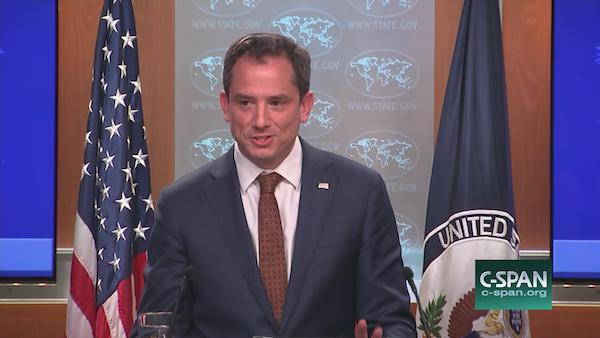
    State Department Deputy Spokesperson Robert Palladino told reporters at his biweekly news conference on Thursday, March 8, “I would say that we, the United States notes these steps and we continue to urge Pakistan to take sustained, irreversible actions against terrorist groups that will prevent future attacks and promote regional stability“.

    “We reiterate our call for Pakistan to abide by its United Nations Security Council obligations to deny terrorists safe haven and block their entry to funds,” he said.

    Responding to questions, Palladino refrained from giving a direct answer on the move in New York to designate Jaish-e-Mohammed (JeM) leader Masood Azhar as a global terrorist but said that the US and its allies in the UN Security Council want to update the UN list of terrorist organizations and leaders.

    “Our views on Masood Azhar and Jaish-e-Mohammed are well-known. Jaish-e-Mohammed  is a United Nations-designated terrorist group that has been responsible for numerous terrorist attacks and is a threat to regional stability. Masood Azhar is the founder and leader of JEM,” he said.

    Questions on United Nations sanctions committee deliberations are confidential and as such it is not something that the State Department is going to be able to comment on specific matters in that regard, he said.

    “But we will continue to work with the sanctions committee to ensure that the list is updated and that it is accurate,” Mr. Palladino said.

    At the US Capitol, India’s ambassador to the US Harsh Vardhan Shringla met Kevin McCarthy, the Republican leader in the House of Representatives.

    “We must stand strong against acts of terrorism and work together to improve trade between our nations,” the top Republican leader said after the meeting.

    Tensions between India and Pakistan escalated after a suicide bomber of Pakistan-based terror group JeM killed 40 CRPF personnel in Jammu and Kashmir’s Pulwama district in February 14.

    India launched a counter-terror operation in Balakot. The next day, Pakistan Air Force retaliated and downed a MiG-21 in an aerial combat and captured its pilot, who was handed over to India on March 1.

    ( Source:PTI )

  • Musharraf calls Jaish-e-Mohammed  a terror outfit, welcomes Pak action against it

    Musharraf calls Jaish-e-Mohammed a terror outfit, welcomes Pak action against it

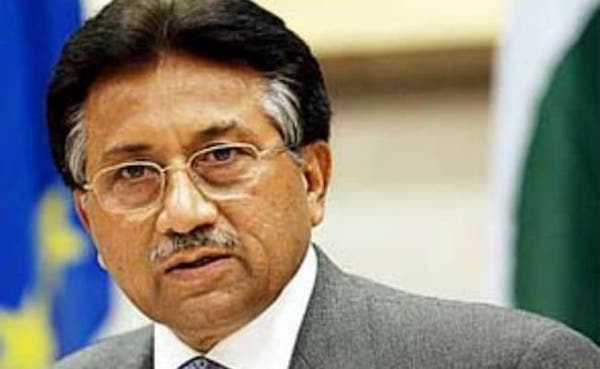
    ISLAMABAD (TIP): Former Pakistan President Gen. Pervez Musharraf (retd) on Wednesday, March 7,  said the Masood Azhar-led Jaish-e-Mohammed (JeM) was a terror outfit but indicated that his country’s intelligence had used it to carry out attacks in India during his tenure.

    In a telephonic interview to Pakistani journalist Nadeem Malik of Hum News in his talk show, Gen. Musharraf, 75, who is currently in Dubai, welcomed the action against the JeM. He said it had tried to assassinate him twice in December 2003, as per a video clip shared on the journalist’s Facebook and Twitter page.

    The JeM has claimed responsibility for the February 14 Pulwama attack that left 40 CRPF personnel dead.

    Last month, Foreign Minister Shah Mahmood Qureshi in an interview with CNN said Azhar was in Pakistan, but the government could act against him only if India presented “solid” and “inalienable” evidence that could stand in a court of law.

    The Pakistan military, however, has denied the terror group’s presence in the country.

    Amid mounting international pressure after the Pulwama attack, Pakistan on March 5 detained 44 members of the banned militant outfits, including Azhar’s son and brother.

    Gen. Musharraf said, “This is a good move. I have always said that the JeM is a terrorist organization and they only had carried out a suicide attack in an attempt to assassinate me. Action should be taken against them.”

    Gen. Musharraf, who also served as Pakistan’s army chief, said action against the JeM should have been taken earlier.

    “Those times were different”

    When asked why   he  had not taken action against the organization during his stint in power, he claimed those times were “different”. Both India and Pakistan were involved in a clandestine struggle, “carrying out bombings in each other’s territory”, he said, adding his country’s intelligence agencies were engaged in it.

    Amid all this, not much action was taken against the Jaish, he said, adding that he had also not insisted.

    Gen. Musharraf, who ruled Pakistan from 1999 to 2008, is facing the treason case for suspending the Constitution in 2007, a punishable offence for which he was indicted in 2014. He has been living in Dubai since March 2016.

    (Source: PTI)

  • Pak Prime Minister’s appeal for being given a chance

    Pak Prime Minister’s appeal for being given a chance

    By Gen. Dilawar Singh (Retd)

    “Modi can strike and  inflict casualties, allow continued conflict and win elections on the one hand, or give Imran a week’s time to handover the trio of Salahuddin, Masood and Hafeez, dismantle all camps and a genuine agreement on the three critical issues, and then strike as per plan,  if Imran Khan is unable to deliver. This would deprive him of the alibi that he would have, if  given a chance.”

    Recently, in response to the tough call for a strong action against the perpetrators of the Pulwama, Jammu and Kashmir terrorist attack on the CRPF convoy by an explosive laden, vehicle borne,  suicide bomber of Jaish e Mohammed, a Bahawalpur, Pakistan based terrorist organization, leaving 33 of the CRPF men martyred, Imran Khan, the Pakistani Prime Minister has appealed to India to give peace a chance.

    India has been  more than fair, transparent and patient in so far as giving a chance is concerned over the past almost three decades

    In doing so, India has repeatedly given information about numerous incidents carried out by the various terrorist organizations based in PoK and Pakistan, viz the Hizbul Mujahideen, the Lashkar e Taiba and the Jaish e Mohammad and sought necessary legal action against the named wanted persons as well as moved the UN Security Council to declare them as wanted/banned terrorist persons/ organizations, but due to denial by Pakistan and being supported by China not much success was achieved resulting in continued terrorist attacks and thousands of innocent civilian and security forces persons losing their lives.

    The incidents conducted by these organizations have been evidently clear cases of terror as seen in the incidents carried out by the terrorists belonging to these organizations at Akshardhaam, Mumbai, Bengaluru, Indian Parliament in New Delhi, Pathankot, Uri and Pulwama. In fact when evidence was sought by Pakistan,  India gave sufficient, well documented dossiers of evidence especially for the Parliament attack and Mumbai attacks. In these cases India went to the extent of giving both technical evidence and documentary evidence some of it being sourced from neutral third country.

    In case of Pathankot incident the Modi Government went beyond all past precedents across the world, to invite Pakistani investigation teams to the site of incident for early onsite evidence collection from  an Air Force base, a confidential layout location, at the cost of inviting criticism by the civilian population and certain quarters of the Security forces, under the hope that Pakistan would honor its  commitment and demonstrate fair and transparent legal action against the perpetrators of that attack, however, such hopes were bellied.

    On the other hand it was more than evidently clear that the responsibility for all these terrorist attacks lay across Indian borders as the leaders and headquarters of all those terrorist organizations carrying out terror attacks in India were on Pakistani side.

    Moreover those organizations had repeatedly themselves claimed responsibility of such terror attacks justifying them as jehadi actions.  Pervez Musharraf and other leaders on numerous occasions had admitted having raised, financed, trained and armed these terrorist organizations. In fact they claimed them as strategic assets.

    The tasking, coordination and monitoring of the terrorist actions of these organizations by the Pakistani ISI and well established support to them by the Pakistani Army in housing them at their border outposts both before and after infiltration as well as fire support and bombardment to assist their infiltration into Indian side and exfiltration back was admitted and confessed by both the terrorists and the Pakistani forces on number of occasions and has been well known.

    The visit by Pakistani senior Army officers including the self-confessed visit by Pervez Musharraf in Kargil before occupation by them prior to the Kargill conflict if 1999 is well documented.

    That Azhar Masood, the Chief of Jaish e Mohammed was a terrorist and was in Indian jail, and was sought to be released by the terrorist hijackers of the Indian aircraft was enough proof of him being an important terrorist leader and that after release he-established Jaish e Mohammad and continues to engage in masterminding terror attacks in India, most of which were self claimed by his organization are enough evidence of his continued terrorist activities at large scale using the Pakistani soil repeatedly, a violation of assurance given to India by Pakistani Government. A similar trend continues to be followed by the Lashkar e Taiba and Hizbul Mujahideen.

    Even after the Pulwama attack, almost on every day basis the terrorist attacks as well as incidents of cross border firing from Pakistani side towards Indian side are continuing even while Imran Khan is pleading for a chance for peace. This dilutes his credibility and genuineness on one hand and his ability to control either his Armed Forces, Pakistani ISI or the terrorist organizations.

    His actions to take control of the Bahawalpur camp of Jaish e Mohammad on the pretext of providing safety to so called students further dents his credibility and genuineness of his actual intentions.

    Imran Khan has a very critical and onerous duty to perform and that is to honestly weigh avoidable suffering to his millions of innocent population who may become victims of violence inadvertently on one hand and protect the rogue elements whose time has come in any way.

    The world opinion is against terror, it is against mass killings by terror groups operating out of Pakistani soil, the irreversible clamor for retribution among the billions of Indian populations is evident, numerous influential countries and the opposition has been taken into confidence, the intent to take a decisive action has been reiterated by Prime Minister Narendra Modi, hence Indian action is about to come. Where, when, how much and how will be known as it happens.

    In the very narrow keyhole opportunity for reconsideration, the leaders on both sides have that extremely critical opportunity to rise above the normal, usual, common stance and emerge as a global statesman and leader who could take the highest degree of risk of personal indulgence.

    Modi can strike and  inflict causalities, allow continued conflict and win elections on the one hand, or give Imran a week’s time to handover the trio of Salahuddin, Masood and Hafeez, dismantle all camps and a genuine agreement on the three critical issues, and then strike as per plan,  if Imran Khan is unable to deliver. This would deprive him of the alibi that he would have, if  given a chance.

    Imran has a choice to offer the trio, destruction of camps and a genuine agreement on critical issues, which may earn him the wrath of his people and the Army but give Pakistan a lasting solution and an opportunity to improve the health of its economy and the wellbeing of its population or be guided by the past and by its Army Commanders and risk heavy casualties of both Armed forces, terrorists and may be some innocent civilians, which will eventually earn him ridicule by history certainly. His position is precarious as he is between the devil and deep sea,  something like that of  Lt. Gen AAK Niazi in East Pakistan in 1971. Niazi earned the reputation of a person who surrendered but earned the blessings from the families of more than a lakh families. We wish both leaders the best and hope that they emerge as leaders of substance and not rhetoric. Remember  my dictum “Nation First Character Must”.

    Let the Nation win not the people and let posterity remember you respectfully as Statesman of Global order.

    I, as a veteran,  have volunteered to rejoin and serve my motherland in a manner desired out of me by my  leaders. Jai Hind.

    (The author, a  former Additional Director General of Rashtriya Rifles, has served six tenures in counter terrorist areas, commanded two Counter Terrorist Battalions and is the only officer to have received three citations . He holds unbroken record for academic and operational excellence as well as long term planning for the Indian Army) 

  • US regards India as the “Closest Ally” & will be ready to support its war on terrorism

    US regards India as the “Closest Ally” & will be ready to support its war on terrorism

    It is for India to take advantage of a sea of  US goodwill

    By Ven Parmeswaran

    The US has recommended that India must get rid of Jaish-e-Mohammed and Lashkar-e-Taiba thru surgical strikes.  It is implied that once India decides, both the U.S. and India would jointly formulate military strategy and execute it.

    Pakistan sponsored Jaish-e-Mohammed, a terrorist organization,  killed 41 Indian para  military personnel  on February 13th.  Immediately upon hearing the news, a  chain of successive events took place in Washington D.C.  The Secretary of State and the National Security Adviser issued statements of strongest support to India.  This was followed by discussion on the situation  in the U.S. Senate and the U.S. House of Representatives.  All important and leading senators and congressmen/women condemned Pakistan and extended political support to India.  The Chief of the US Central Command, General Joseph Votel  gave his assessment to  the Congress and offered support to India.

    The US has recommended that India must get rid of Jaish-e-Mohammed and Lashkar-e-Taiba thru surgical strikes.  It is implied that once India decides, both the U.S. and India would jointly formulate military strategy and execute it. Indian Ambassador Shringla said: “The designation of India as a Major Defense Partner was also codified into law by the US Congress in the National Defense Authorization Act of 2017, thanks to the unstinted  support of the members of the India Caucus.”

    President Trump has been demanding  that Pakistan dismantle all terror cells and organizations inside Pakistan.  He is the first US President  to cancel military aid to Pakistan. Prime Minister Imran Khan of Pakistan  has been wanting to meet President Trump to seek support for loans from the I.M.F. President Trump has told him that unless he gets rid of all terror outfits and terrorists from Pakistan, he would not support Pakistan’s request.

    Pakistan was defeated by India in three conventional wars.  India defeated Pakistan in its third war and Pakistan lost East Pakistan. Since then, Pakistan has been using the homegrown terrorist organizations, such as Jaish-e-Mohammed; Lashkar-e-Taiba; and others as proxy to fight India.  This resulted in attacks on the Indian Parliament, , New Delhi shopping mall, and the City of Mumbai that killed 165 Indians and foreigners.

    Pakistan is controlled by its military and the I.S.I.,  its intelligence agency.  The military has selected its Prime Minister and therefore the Parliament is a joke.  Because India so far has not retaliated, Pakistan has taken advantage and continues to use the terrorists to attack India.

    India’s new Ambassador to the U.S.A., Harsh Vardhan Shringla  after presenting his credentials to President Trump was given the most enthusiastic reception at the Capitol Hill.   This was attended by more senators and congressmen/women than ever before.   The grand reception given to Ambassador Shringla is a reflection of India-US relations, with India now  branded as “CLOSEST  ALLY”. The chain of events in Washington after Pakistan’s attack in Kashmir reinforces President Trump’s new policy towards South Asia.  India should be pleased because the “CLOSEST ALLY” status has bipartisan support. It is time for India to take full advantage of the US support and  draw up a plan to end the scourge of terrorism from inside Pakistan.

    (The author,  in  the U.S. for 65 years, lives in Scarsdale, N.Y. He  is a Senior Adviser to Imagindia Institute, New Delhi, a think tank. He can be reached at vpwaren@gmail.com)

  • US regards India as the  “Closest Ally” & will be ready to support its war on terrorism

    US regards India as the “Closest Ally” & will be ready to support its war on terrorism

    It is for India to take advantage of a sea of  US goodwill

    By Ven Parameswaran

    The US has recommended that India must get rid of Jaish-e-Mohammed and Lashkar-e-Taiba thru surgical strikes.  It is implied that once India decides, both the U.S. and India would jointly formulate military strategy and execute it.

    Pakistan sponsored Jaish-e-Mohammed, a terrorist organization,  killed 41 Indian para  military personnel  on February 14th.  Immediately upon hearing the news, a  chain of successive events took place in Washington D.C.  The Secretary of State and the National Security Adviser issued statements of strongest support to India.  This was followed by discussion on the situation  in the U.S. Senate and the U.S. House of Representatives.  All important and leading senators and congressmen/women condemned Pakistan and extended political support to India.  The Chief of the US Central Command, General Joseph Votel  gave his assessment to  the Congress and offered support to India.

    The US has recommended that India must get rid of Jaish-e-Mohammed and Lashkar-e-Taiba thru surgical strikes.  It is implied that once India decides, both the U.S. and India would jointly formulate military strategy and execute it. Indian Ambassador Shringla said: “The designation of India as a Major Defense Partner was also codified into law by the US Congress in the National Defense Authorization Act of 2017, thanks to the unstinted  support of the members of the India Caucus.”

    President Trump has been demanding  that Pakistan dismantle all terror cells and organizations inside Pakistan.  He is the first US President  to cancel military aid to Pakistan.   Prime Minister Imran Khan of Pakistan  has been wanting to meet President Trump to seek support for loans from the I.M.F. President Trump has told him that unless he gets rid of all terror outfits and terrorists from Pakistan, he would not support Pakistan’s request.

    Pakistan was defeated by India in three conventional wars.  India defeated Pakistan in its third war and Pakistan lost East Pakistan. Since then, Pakistan has been using the homegrown terrorist organizations, such as Jaish-e-Mohammed; Lashkar-e-Taiba; and others as proxy to fight India.  This resulted in attacks on the Indian Parliament, , New Delhi shopping mall, and the City of Mumbai that killed 165 Indians and foreigners.

    Pakistan is controlled by its military and the I.S.I.,  its intelligence agency.  The military has selected its Prime Minister and therefore the Parliament is a joke.  Because India so far has not retaliated, Pakistan has taken advantage and continues to use the terrorists to attack India.

    India’s new Ambassador to the U.S.A., Harsh Vardhan Shringla  after presenting his credentials to President Trump was given the most enthusiastic reception at the Capitol Hill.   This was attended by more senators and congressmen/women than ever before.   The grand reception given to Ambassador Shringla is a reflection of India-US relations, with India now  branded as “CLOSEST  ALLY”.    The chain of events in Washington after Pakistan’s attack in Kashmir reinforces President Trump’s new policy towards South Asia.  India should be pleased because the “CLOSEST ALLY” status has bipartisan support. It is time for India to take full advantage of the US support and  draw up a plan to end the scourge of terrorism from inside Pakistan.

    (The author,  in  the U.S. for 65 years, lives in Scarsdale, N.Y. He  is a Senior Adviser to Imagindia Institute, New Delhi, a think tank. He can be reached at vpwaren@gmail.com)

  • UN Security Council condemns Pulwama attack

    UN Security Council condemns Pulwama attack

    Sources at the UN said the UNSC statement was released after prolonged Security Council negotiations.

    UNITED NATIONS(TIP): The United Nations Security Council (UNSC) on Thursday, February 21,  issued  a statement condemning the Pulwama attack and underlining the need to hold those responsible, accountable. Significantly Jaish-e-Mohammed (JeM) has been named on the statement as having taken responsibility for the attack.

    “The members of the Security Council condemned in the strongest terms the heinous and cowardly suicide bombing in Jammu and Kashmir, which resulted in over 40 Indian paramilitary forces dead and dozens wounded on February 14, 2019, for which Jaish-e-Mohammed has claimed responsibility,” the statement said.

    Sources at the UN said the UNSC statement was released after prolonged Security Council negotiations. China had wanted additional time to think it through as it had some concerns, they said. France is also working, in parallel, to sanction JeM chief Masood Azhar at the UNSC. Similar action against Azhar in 2017 was blocked by China (India had moved the 1267 Sanctions Committee to ban Azhar twice before in 2009 and 2016). On Tuesday, UN Secretary General António Guterres had called on India and Pakistan to defuse tensions and for “meaningful mutual engagement.”

    Condemning terrorism in all its forms as one of the most serious threats to international peace, the UNSC offered its condolences to those impacted by the attack.

    “The members of the Security Council expressed their deepest sympathy and condolences to the families of the victims, as well as to the Indian people and the government of India and wished a speedy and full recovery to those who were injured,” the statement said.

    In what appears to be a thinly veiled reference to Pakistan, the Council has asked countries to cooperate actively with the Government of India.

    “The members of the Security Council underlined the need to hold perpetrators, organizers, financiers and sponsors of these reprehensible acts of terrorism accountable and bring them to justice, and urged all States, in accordance with their obligations under international law and relevant Security Council resolutions, to cooperate actively with the Government of India and all other relevant authorities in this regard,” the statement read.

    “The members of the Security Council reiterated that any acts of terrorism are criminal and unjustifiable, regardless of their motivation, wherever, whenever and by whomsoever committed. They reaffirmed the need for all States to combat by all means, in accordance with the Charter of the United Nations and other obligations under international law, including international human rights law, international refugee law and international humanitarian law, threats to international peace and security caused by terrorist acts,” it said.

  • Pak bans Hafiz Saeed-led JuD and its charity

    Pak bans Hafiz Saeed-led JuD and its charity

    ISLAMABAD(TIP): Pakistan on Thursday, February 21,  banned the 2008 Mumbai attack mastermind Hafiz Saeed-led Jamat-ud-Dawa and its charity wing Falah-e-Insaniat Foundation, amid intense global pressure to rein in the militant groups following the Pulwama terror attack that killed 40 CRPF jawans.

    A spokesman of the Interior Ministry said the decision to ban these groups was taken during a meeting of the National Security Committee (NSC) chaired by Prime Minister Imran Khan at his office on Thursday.

    “It was decided during the meeting to accelerate action against proscribed organizations,” the spokesperson said in a statement.

    “It was further decided that Jamat-ud-Dawa and Falah-e-Insaniat Foundation be notified as proscribed organizations by the Ministry of Interior,” he added.

    Earlier, the two outfits were kept on the watchlist of the interior ministry.

    According to officials, JuD’s network includes 300 seminaries and schools, hospitals, a publishing house and ambulance service. The two groups have about 50,000 volunteers and hundreds of other paid workers.

    The JuD is believed to be the front organization for the LeT which is responsible for carrying out the Mumbai attack that killed 166 people. It has been declared as a foreign terrorist organization by the US in June 2014.

    The US Department of the Treasury has designated its chief Saeed as a Specially Designated Global Terrorist, and the US, since 2012, has offered a USD 10 million reward for information that brings Saeed to justice.

    Saeed was listed under UN Security Council Resolution 1267 in December 2008. He was released from house arrest in Pakistan in November 2017.

    The NSC meeting also reviewed the National Action Plan against terrorism in detail. Services chiefs and key ministers were in attendance.

    “We need to move to ensure that militancy and extremism are rooted from the society and the State never becomes hostage to extremists,” Khan said as he directed both the interior ministry and the security institutions to immediately accelerate actions on ground.

    (Source: PTI)

  • Pakistan’s Nuclear Arsenal more worrisome than North Korea’s

    Pakistan’s Nuclear Arsenal more worrisome than North Korea’s

    Pakistan is more dangerous than North Korea as it does not have a centralized control on its nuclear weapons, making them vulnerable to theft and sale.

    By Ven Parmeswaran

    9/11 happened because Pakistan supported the Taliban and the Al Qaeda.  We discovered that Pakistan was the epicenter of global terrorism.  Almost all terrorists emanated from Pakistan and committed terrorism in the U.S.A. and Europe.  President George W Bush sent his Secretary of State, Gen. Collin Powell to Pakistan, with whom the USA had a Mutual Security Pact from 1954.  Powell met Gen. Musharraf of Pakistan and made a deal. Pakistan agreed to cooperate fully with the USA and provide all help in finding Osama bin Laden and other leaders of Al Qaeda.    

    President Obama had intelligence that Pakistan was hiding and protecting Osama Bin Laden in one of military cantonments.  In 2011, that is 10 years after 9/11, the U.S. secretly got rid of Osama Bin Laden. The Pakistani doctor who confirmed the identity of Osama Bin Laden has been held in jail by Pakistan.  Thus, Pakistan betrayed its ally, the U.S.A.  For ten years, Pakistan was trying to use Osama bin Laden’s leadership to stage terrorism in India.  The mutual trust between the USA and Pakistan was broken.  However, President Obama chose not to punish Pakistan.

    WAKE UP CALL BY PRESIDENT TRUMP

    President Trump is the first U.S. President to challenge Pakistan.  He wrote in his tweet: “The U.S. has foolishly given Pakistan more than 33 billion dollars in aid over the last 15 years, and they have given us nothing but lies, deceit, thinking of our leaders as fools.”   President Trump withdrew military aid and gave an ultimatum to Pakistan to stop supporting the Taliban in Afghanistan and to dismantle all terror organizations and terrorist sanctuaries in Pakistan.

    PAKISTAN’S ECONOMY IN SHAMBLES WITH NO FOREIGN EXCHANGE

    Mr. Imran Khan, the new Prime Minister of Pakistan has been elected with the tacit support and help of Pakistan’s military.  For his survival his first loyalty is to the military.   Pakistan is negotiating with the I.M.F. for a $12 billion loan.  The U.S. has leverage in the IMF being the largest investor.  The IMF cannot approve the loan without consent from the USA.    Pakistan has been devoting its scarce resources to keep on producing nuclear bombs.

    PAKISTAN’S NUCLEAR WEAPONS ARE VULNERABLE TO THEFT AND SALE

    Pakistan is more dangerous than North Korea as it does not have a centralized control on its nuclear weapons, making them vulnerable to theft and sale, former Senator Larry Pressler warned, describing both the nations as rogue states.    He feared that Pakistan’s nuclear weapons might be used against the US, warning of the possibility of someone buying these nuclear weapons from generals.    “The weapons could be transported to the US fairly simply.  Just as 9/11 was a very simple operation run by 20 or 30 people,” he said.  “The Pakistani nuclear bombs are not controlled.  They are subject to sale or stealing and they could be easily gotten out of Pakistan to just about anywhere in the world,” he said speaking at an event sponsored by The Hudson Institute, a top American think-tank.    The former top American Senator, however, said he does not think that Pakistan’s nuclear weapons are going to be used against India. I do not agree.   The Senator said “I think what North Korea needs is just a lot of attention and hand-holding.  Pakistan Is a different thing because you don’t really have one person in-charge.  I think Pakistan is more dangerous to the US,” he reiterated in response to a question.

    “We should declare Pakistan a terrorist state.  We should put certain sanctions on Pakistan,” he said.

    PAKISTAN’S GROWING ARSENAL WITHOUT CENTRAL CIVILIAN CONTROL IS THREAT TO GLOBAL SECURITY

    Why does Pakistan need to keep on increasing the number of bombs?  There are thousands of nuclear weapons in the world today.  According to the latest count from the Federation of American Scientists, the 5 original nuclear powers have a combined 15,465 nuclear weapons between them, most of which are divided amongst the US and Russia. Yet, the fastest growing arsenal in the world is not included in this number.  While Pakistan has a range of 100-120 nuclear weapons in its possession—a figure that pales in comparison to the US or Russia—Islamabad has devoted a tremendous amount of its military budget to growing its arsenal and producing the associated delivery systems that are needed to launch them.

    More alarming than Pakistan’s current stockpile is the projected growth of its arsenal over the next decade.  In a wide ranging report for the Council on Foreign Relations, professor Gregory D Koblentz of George Mason University assessed that Pakistan had enough highly enriched uranium to increase its stockpile to 200 nuclear weapons by 2020 if fully utilized.  Percentage wise, this would mean that Pakistan could have as many nuclear weapons as the U.K. by 2020.  Moreover, Pakistan falls outside the purview of the Nuclear Nonproliferation Treaty.

    To guarantee the ability to rapidly expand their stockpile, the Pakistani military is investing in reprocessing plutonium in addition to enriching uranium.  In January 2015, the Institute for Science and International Security reported that the Pakistanis opened up their fourth plutonium facility at Khushab, which provides Islamabad with an additional channel to construct nuclear bomb material in a relatively short period of time.  “Its expansion appears to be part of an effort to increase the production of weapons-grade plutonium,” the ISIS report (Pakistan’s intelligence agency) reads:  “Allowing Pakistan to build a larger number of miniaturized plutonium-based nuclear weapons that can complement its existing highly enriched uranium nuclear weapons.”

    PAKISTANI NUKES A MAJOR U.S. INTELLIGENCE PRIORITY

    To say that the U.S. Intelligence community is closely monitoring the development of Pakistan’s nuclear weapons program would be an understatement.  The U.S. government is doing more than just monitoring:  they are actively preparing for a terrible catastrophe and engaging Pakistani officials in the hopes that they will stop pouring resources into the expansion of their program.  The last thing Washington wants or needs is a nuclear crisis flashpoint in a dangerous and unpredictable region filled with an alphabet soup of Islamist terrorist groups.  The US government under both George W Bush and Barack Obama has been trying to prevent such a crisis scenario from occurring.

    THE BOTTOM LINE

    Despite all the attempts from the nuclear nonproliferation community, Pakistan will continue to develop and strengthen its nuclear deterrent as long as the high brass in the Pakistani military continues to have an India-centric mindset in its defense policy. India and Pakistan have fought three wars since independence in 1947, and in each case, the Pakistanis were either the losers or forced into a stalemate before acceding to a ceasefire (1971 breakaway of East Pakistan was an especially embarrassing defeat for the Pakistanis).  Islamabad has not forgotten these cases ever since.  And for the Pakistanis, the lessons of these past conflicts are all the same: we cannot repeat history.

    PRESIDENT TRUMP’S NEW WORLD ORDER: INDIA AND THE USA HAVE SIGNED A DEAL THAT MAKES THEM CLOSEST ALLIES ON A PAR WITH THE NATO MEMBERS

    The US and the IMF have told Pakistan that it cannot use IMF loan to repay China or divert the resources to increasing its nuclear arsenal.  President Trump, unlike George W Bush or Obama, is challenging Pakistan to behave.  In effect, Trump is saying that he will not tolerate Pakistan to betray again.  Trump is also anxious to withdraw from Afghanistan and he knows Pakistan is the bottleneck.  Based on his tough negotiations and policies towards his close allies, be it Canada or Western Europe, Trump means business.  Therefore, it is to be hoped that the U.S. will not allow Pakistan to mess up with international security.   I think President Trump is giving clear messages to Pakistan’s new Prime Minister and its military/ISIS leaders.

    (Scarsdale, New York based Ven Parameswaran is Chairman, Asian American Republican Committee founded in 1988)

  • The Albatross Around Pakistan’s Neck

    The Albatross Around Pakistan’s Neck

    The problem with religious laws is that they are easy to enact but difficult to amend or repeal

    By Anees Jillani

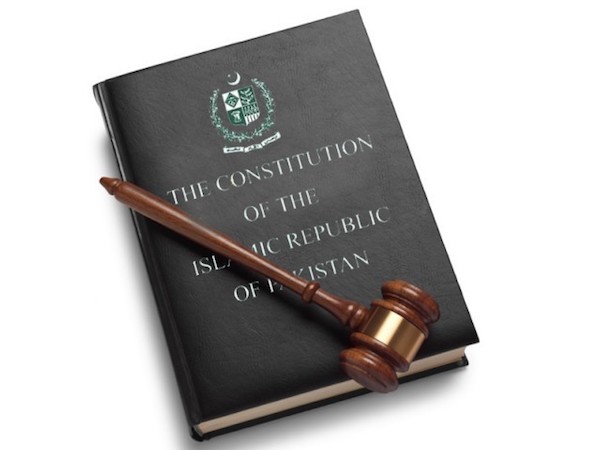
    This is the problem with religious laws. They are easy to enact but very difficult to amend or repeal. Consequently, one should move extremely cautiously while introducing a feature in the legal system which has religious connotations. It may earn one brownie points with the religious community in the short term but is not good for maintaining religious harmony in the long run. They become a tool in the hands of criminal-minded persons who start using them to embroil their opponents in highly questionable litigations that get so controversial during the course of trial that it becomes almost infeasible to decipher the truth.

    More wars have been fought in the name of religion than anything else in the history of our world. In other words, more people have been killed for causes that supposedly espouse peace. It is thus always advisable if one wishes to achieve peace and harmony to lower the religious sentiments. Ironically, this conflicts with the fact that it is always easier to exploit people’s feelings in the name of religion and attain popularity and what one wishes to gain politically or otherwise.

    I was in China a couple of years ago and was surprised when the youth I was talking to, gave me a blank expression when I raised the subject of God. They had absolutely no idea about it. There are few places left on our planet now where this is the case. Almost all communities have religions and they have to live together despite all their attempts to maintain homogeneity. Hindus, perhaps, have always been in majority in the Indian subcontinent, but Jains and Buddhists have lived along with them. The Muslims invaded India and most of the Muslim rulers had a liberal, if not totally secular approach towards other religious communities. However, the Muslims in India are now paying the price for some of the follies committed by them. The British brought Christianity and a set of laws and a system which continues to exist in all of their colonies. The Indian Penal Code 1860, which is called the Pakistan Penal Code across the border, is one such law that continues to remain in force despite a lapse of 157 years. Its Section 295 says:

    “Whoever destroys, damages or defiles any place of worship, or any object held sacred by any class of persons with the intention to thereby insulting the religion of any class of persons or with the knowledge that any class of persons is likely to consider such destruction, damage or defilement as an insult to their religion, shall be punished with imprisonment of either description for a term which may extend to two years, or with fine, or with both.”

    Section 295-A was added to the Penal Code by the British in 1927 to avert outraging of religious feelings of any community. It states: “Whoever, with deliberate and malicious intention of outraging the religious feelings of any class of the citizens of India, by words, either spoken or written, or by visible representations, insults or attempts to insult the religion or the religious beliefs of that class, shall be punished with imprisonment of either description for a term which may extend to ten years, or with fine, or with both.”

    As luck would have it, in 1986, when General Zia-ul-Haq was the President and a civilian government led by PM (Mohammad Khan) Junejo was in power, human rights activist Asma Jehangir, in a press conference, commented on the educational status of Prophet Muhammad. It led to a huge controversy and the government in panic inserted Section 295-C in the Penal Code which read as follows:

    “Whoever by words, either spoken or written, or by visible representation, or by any imputation, innuendo, or insinuation, directly or indirectly, defiles the sacred name of the Holy Prophet Muhammad (peace be upon him) shall be punished with death, or imprisonment for life, and shall also be liable to fine.”

    There was no looking back. The Federal Shariat Court, another creation of General Zia, in a subsequent ruling held that the words “or imprisonment for life” be deleted from this provision; it now carries the mandatory death penalty. At the time of addition of Section 295-C, the Criminal Procedure Code 1898 was also amended to state that an accused under this Section or under 295-B (dealing with defiling of the Koran), again inserted by General Zia, can be held without warrant, and that the court of session trying a case under Section 295-C must be presided over by a Muslim.

    In 2011, governor of Punjab province Salman Taseer and the Federal Minister for Minorities, Shahbaz Bhatti, were killed simply because they had talked of amending the above sections in the Penal Code.

    The governor was killed by his own guard and only a few dozen dared to attend his funeral prayers. As opposed to this, hundreds of thousands attended his assassin’s funeral after he was hanged. The judges in the present environment rarely feel secure to dispense justice; and they can hardly be blamed, particularly after the fate of Justice Arif Iqbal Hussain Bhatti, who was assassinated in October 1997 in Lahore. What was the judge’s fault? He had acquitted Salamat (a 14-year-old), Rehmat and Manzoor Masih, from the blasphemy charge in 1995. The judge who convicted the governor’s assassin had to leave the country for a couple of years.

    This is the problem with religious laws. They are easy to enact but very difficult to amend or repeal. Consequently, one should move extremely cautiously while introducing a feature in the legal system which has religious connotations. It may earn one brownie points with the religious community in the short term but is not good for maintaining religious harmony in the long run. They become a tool in the hands of criminal-minded persons who start using them to embroil their opponents in highly questionable litigations that get so controversial during the course of trial that it becomes almost infeasible to decipher the truth. No doubt more Muslims are tried under these laws than minorities but most of the convicted ones belong to the religious minorities. In other words, the laws have become a tool in the hands of a section of the population to crush the religious minorities; if the latter gets into any kind of dispute whatsoever with a Muslim, the easiest way to punish the adversary is by accusing him or her of blasphemy. The state machinery takes care of the rest.

    (The author is a lawyer in the Supreme Court of Pakistan)


  • Foreign Ministers of India and Pakistan to meet on the sidelines of UNGA in New York

    Foreign Ministers of India and Pakistan to meet on the sidelines of UNGA in New York

    India’s positive response to Pakistan PM Imran Khan’s call for a dialogue

    Swaraj to discuss Kartarpur corridor with Pak foreign minister

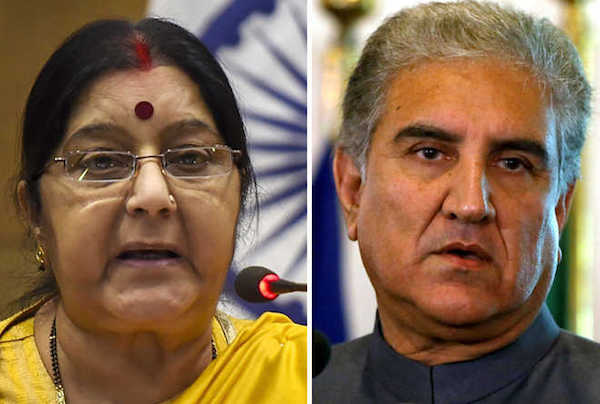
    NEW DELHI(TIP): India on Thursday, September 20, accepted Pakistan’s proposal for talks between the Foreign Ministers on the sidelines of the ongoing 73rdannual UN General Assembly session in New York.

    “On the request of the Pakistani side, a meeting between External Affairs Minister Sushma Swaraj and Foreign Minister Makhdoom Shah Mahmood Qureshi will take place on the sidelines of the United Nations General Assembly at a mutually decided date and time,” said Raveesh Kumar, spokesperson of the Ministry of External Affairs.

    India’s response came within hours of the news that Pakistan Prime Minister Imran Khan proposed talks between the two senior Ministers. However, India said the talks would not be aimed at a broader scheme of dialogue.

    The MEA spokesperson emphasized that despite agreeing to the meeting, India stuck to its position that talks and terror could not go together.

    He said, “This [the upcoming meeting] does not indicate any change as far as our policies on terrorism and cross-border terrorism are concerned.”

    Pakistan Prime Minister Imran Khan proposed the new round of talks in a letter to his Indian counterpart, handed over on September 17.

    “Building on the mutual desire for peace between our two countries, I wish to propose a meeting between Foreign Minister Qureshi and External Affairs Minister Swaraj, before the informal meeting of the SAARC Foreign Ministers on the sidelines of the UN General Assembly in New York,” he said, seeking resumption of the dialogue started by his predecessor Nawaz Sharif. The Comprehensive Bilateral Dialogue stalled after the January 2016 terror strike on the Pathankot airbase.

    In the letter, Mr. Khan also suggested that the Foreign Ministers discuss the holding of the SAARC summit in Islamabad, which has been delayed by India’s reluctance to join.

    However, the MEA spokesperson said India’s position on joining the SAARC summit in Islamabad remained unchanged.

    “Time and again we have said that the atmosphere in the region is not conducive. Under the shadow of cross-border terrorism, it is difficult to hold the summit that is to be hosted by Pakistan.”

    Minister of State for Agriculture Gajendra Singh Shekhawat, while addressing a presser at the BJP headquarters in New Delhi, responded to questions on the proposed meeting between the Foreign Ministers of the two countries, announced a day after the body of a Border Security Force jawan was found with obvious torture marks.

    “We must have faith in the Indian forces that they would retaliate at an appropriate time. There should not be any politics on the bodies of martyrs,” he said.

    Amid a political row over the Kartarpur Sahib corridor opening issue, India has announced that it will raise the matter formally with Pakistan once again next week.

    The issue will be flagged by India when External Affairs Minister Sushma Swaraj travels to New York for UNGA (United Nations General Assembly). Swaraj will hold a meeting with her Pakistani counterpart Foreign Minister Shah Mehmood Qureshi along the UNGA sidelines, announced India today. MEA spokesperson Raveesh Kumar clarified that no formal proposal for opening up of the nearly 4-km long corridor revered by Sikh pilgrims has been received from Islamabad.

    “Even now, we have not received any official communication that the Pakistani government is willing to consider this matter. EAM will, therefore, raise this issue in her meeting with the Pakistani Foreign Minister on the sidelines of UNGA,” said Raveesh Kumar.

    India also underlined that despite several requests, including during late PM Vajpayee’s Lahore visit in 1999, to consider a visa free visit to the Kartarpur Sahib Gurudwara, the shrine is still not a part of the list under the 1974 Protocol. The Protocol lists out the religious shrines between India and Pakistan to facilitate visits of pilgrims from each side. Subsequently the matter was raised between 2004 and 2005 by former PM Manmohan Singh, former Punjab CM Prakash Singh Badal and at the Foreign Secretary level talks.

    “In 2005, Pakistan agreed to allow visit to three shrines with visas, including to Kartarpur but did not include it in Protocol. In 2008, the then EAM (External Affairs Minister) raised the issue of Kartarpur Sahib corridor with the then Pakistani Foreign Minister Shah Mehmood Qureshi. However, there has not been any official response from Pakistani side since then,” said Raveesh Kumar.

    Incidentally, Qureshi is now back in the Imran Khan government as the Pakistani Foreign Minister.

    The matter snowballed into a fresh controversy following visit of Punjab Minister Navjot Sidhu to Islamabad for Imran Khan’s swearing in ceremony and his interaction with Pak Army chief Bajwa reportedly on the matter. Since then political parties have traded charges in the state while trying to stake claim as the credible interlocutor on the matter. Sidhu as well as Union Food Processing Minister Harsimrat Badal wrote letters to Swaraj on the matter.


  • Pakistan may become 5th largest nuclear state by 2025: Report

    Pakistan may become 5th largest nuclear state by 2025: Report

    LONDON (TIP): Pakistan is expanding its uranium-enrichment and plutonium production facilities, triggering fears that it may become the 5th largest nulcear-weapon state and have 220 to 250 warheads within the next seven years, a report has said.

    The report published on August 31 by the Bulletin of the Atomic Scientists authored by members of the Federation of American Scientists says that Pakistan was also developing several delivery systems.

    “Pakistan continues to expand its nuclear arsenal with more warheads, more delivery systems, and a growing fissile materials production industry. We estimate that the country’s stockpile could grow to 220 to 250 warheads by 2025, if the current trend continues,” said the 12-page report.

    The report first appeared in Jane’s Defense Weekly, a London-based magazine that reports on military and corporate affairs said on Wednesday.

    (Source: IANS)

  • Minorities in Pakistan cry for justice: SAMAF to highlight Pakistani atrocities on Minorities in Pakistan at the Hill on Sept. 5

    Minorities in Pakistan cry for justice: SAMAF to highlight Pakistani atrocities on Minorities in Pakistan at the Hill on Sept. 5

    WASHINGTON(TIP): South Asia Minorities Alliance Foundation (SAMAF) is hosting ‘ Day on The Hill ‘ at Capitol Hill on September 5.

    Members of the U.S. Senate and House of Representatives, members of think tanks and

    South Asia experts will attend this historic event at Capitol Hill.

    This event is aimed at highlighting the issue of religious freedom and minority rights in

    Pakistan as well as to show solidarity with the Afghan people and US troops and their

    families. The event will also recognize and honor Congressman Tom Garrett’s role in

    promoting minority rights.

    SAMAF, an IRS 501(c)(3) public charity foundation1 based in the USA, is striving to bring

    global attention to the injustices, persecution, and ethnic and religious cleansing that

    minorities are facing in South Asia. SAMAF provides these oppressed minorities a

    platform to speak as one voice on Human rights & religious freedom; Economic uplifting and security of minorities; Eradicating terrorism and ensuring stability in South Asia; Promotion of democracy and freedom of press.

    PROGRAM

    Date: 5th September 2018

    Time: 2:00 pm – 5:00 pm

    Address: Veterans Affairs committee room

    340 Cannon House Off Bldg.

    Washington D.C. 20515


  • Pakistan regurgitating failed approach on Kashmir, says India in the United Nations

    Pakistan regurgitating failed approach on Kashmir, says India in the United Nations

    UNITED NATIONS(TIP): Pakistan’s new government must not indulge in “polemics” but work to build a South Asian region free of terror and violence, India said after Pakistan raked up the Kashmir issue at the United Nations Security Council (UNSC).

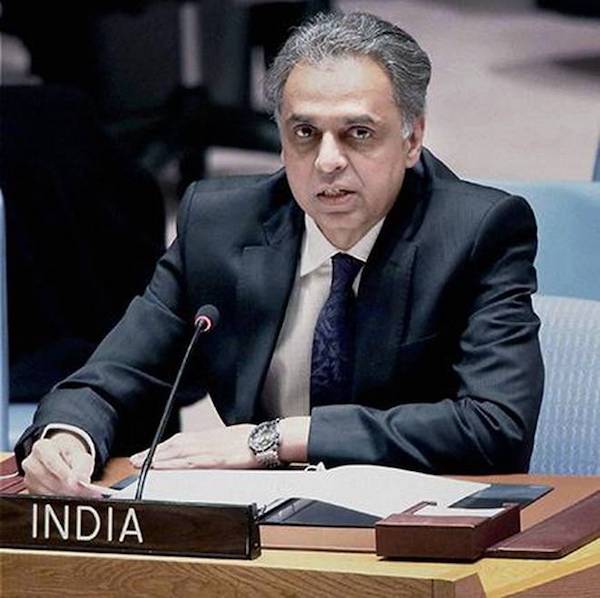
    Permanent Representative of India to the United Nations Syed Akbaruddin’s remarks came during the UNSC debate on Mediation and Settlement of Disputes.

    “I take this opportunity to remind — Pakistan — the one isolated delegation that made unwarranted references to an integral part of India, that pacific settlement requires pacific intent in thinking and pacific content in action,” Mr. Akbaruddin said at the debate on Wednesday.

    Pakistan’s Ambassador Maleeha Lodhi raked up the Kashmir issue during the debate, drawing a sharp reaction from Mr. Akbaruddin. He said Pakistan was “regurgitating a failed approach, which has long been rejected, is neither reflective of pacific intent nor a display of pacific content”.

    In a reference to the government in Pakistan under newly-elected Prime Minister Imran Khan, he said, “We hope that the new government of Pakistan will, rather than indulge in polemics, work constructively to build a safe, stable, secure and developed South Asian region, free of terror and violence.”

    ‘Resolutions remain unimplemented’

    In her remarks, Ms. Lodhi said the “Jammu and Kashmir dispute remains a long-standing issue” on the agenda of the Council. She said through its various resolutions, the Security Council has provided that the final disposition of the State of Jammu and Kashmir will be made in accordance with the will of the people “expressed through the democratic method of a free and impartial plebiscite” conducted under the auspices of the United Nations.

    She said the Security Council also instituted several mechanisms, including the U.N. Commission on India and Pakistan (UNCIP), the deployment of the U.N. Military Observer Group in India and Pakistan (UNMOGIP) and the appointment of U.N. representatives.

    “Sadly, these resolutions remain unimplemented to date. The international community cannot succeed in its efforts to strengthen conflict prevention and promote pacific dispute settlement if the Security Council’s own resolutions are held in abeyance, by some. What is, at stake is both the Council’s credibility as well as the objective of durable peace in our region. We must not fail these tests,” she said.

    U.N. and other actors concerned

     Mr. Akbaruddin said as recognized by the U.N. Charter, pacific settlement of disputes could be through a variety of mechanisms, and today, there were numerous actors and many forms of pacific settlement that may be better suited to address different issues.

    “Instead of putting the United Nations at the center of mediation efforts and exhorting States to support them, perhaps, the international community should lend encouragement to those most motivated and having the capacity to do so to settle these, as appropriate,” he said.

    “Of course, there could be many forms of division of tasks of pacific settlement of disputes between the United Nations and other actors concerned that can undoubtedly be devised. It is important, however, not to charge the United Nations with responsibilities that it maybe ill-suited to perform. Mediation, in every circumstance, is one such task, it is not geared to fulfil,” he said.

    Mediation, on the face of it, was based on the interest, consent and commitment by all parties for a peaceful settlement. He stressed that the issue was not whether mediation was a useful tool for peaceful settlement. “Where acceptable to all parties, it is, in a manner of speaking, settled international law,” he said.

    Mediation issue

    Mr. Akbaruddin said the questions to be addressed were whether the apparatus of the United Nations, as currently constituted, could perform many of the basic functions required for effective mediation and were the mechanisms at the disposal of the United Nations coherent and flexible to guide dynamic negotiations with an effective strategy.

    He pointed out that the United Nations, and in particular the Security Council, did not come to mediation unencumbered. The problems of the United Nations apparatus as a mediator were ingrained in the nature of inter-governmental organizations.

    “Inter-governmental organizations are hindered by complex decision-making procedures. Add to it the specificities of the U.N. Charter, that is premised on cooperation amongst the permanent members. That cooperation is clearly not evident. Where it does manifest, it invariably takes the form of the lowest common denominator,” he said.

    Further, policy-making within an international organization added another layer of bargaining and trade-offs, he said, adding that it required a time-consuming and uncertain process of consultation and coordination among a multiplicity of actors.

    “Such tortuous decision-making process, imbued with political trade-offs, saps the United Nations of necessary dynamism and flexibility in pursuing mediation. Once the U.N. authorized entities agree on a mediating proposal or framework, it cannot easily be modified in response to changing circumstances. Modification requires renegotiation,” he said.

    (Source: PTI)

  • Russia’s pro-Pakistan tilt: India must not allow old ally to slip away

    Russia’s pro-Pakistan tilt: India must not allow old ally to slip away

    The signs have been ominous for the past four years. By the time PM Modi arrived at his ‘Barack’ moment, Russia had read South Block’s signals of apathy and inked an agreement on defense cooperation with Pakistan. Meandering through a naval agreement and sale of Mi helicopters, the Russia-Pakistan security relationship has moved well past Cold War hostilities to enter a more intimate phase of training Pakistani troops in Russian institutes. Pakistan may have taken the plunge because the US, its steady pole of security cooperation, is more interested in a settlement in Afghanistan rather than shoring up Pakistan army’s arsenal.

    But for India’s policy planners this is a moment of reflection. Russia is not just a consistent supplier of cheap and sturdy military equipment. Both sides have taken comfort in the other’s company at times of international distress — India backed Moscow to the hilt on Afghanistan while Russia bailed out India on Kashmir with its vetoes. There was also a healthy dose of self-interest involved: Russia backed India in the 1971 war to pay back Pakistan for arranging a secret summit between Nixon and Mao. For India, Moscow provided a reliable hedge against geopolitical arm-twisting by the West during the Cold War.

    Indian diplomacy may be on the wrong side of history if it is steering away from Russia. Along with Iran and China, Russia has lately become indispensable in the region. In addition, much is going on with Russia to permit it to drift away. Moscow’s mediation, in fact, can prove useful in bringing together Pakistan and India on Afghanistan, which could lead to the breaking of the Indo-Pak diplomatic ice. PM Modi’s informal meeting in May with Vladimir Putin would have attempted a course correction, reflecting the unease in the Indian establishment over the current state of affairs. Russia is currently in a spot of bother; a helping hand at this juncture is likely to be more than appreciated.

    (Tribune, India)

  • On a positive note:Modi-Khan talk of peace and progress

    On a positive note:Modi-Khan talk of peace and progress

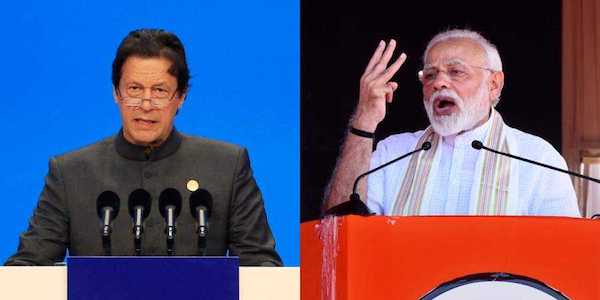
    With Imran Khan’s Pakistan Tehreek-e-Insaf emerging as the single largest party in the General Assembly, his becoming the Prime Minister of Pakistan is a foregone conclusion. Even as Khan extended an olive branch to the Indian establishment in his speeches, Prime Minister Modi too has responded in kind by calling him up and expressing hope for better relations between the two neighbors. This is a good beginning, although too much cannot be read in it.

    The lure of quick emotional appeal by blaming the other side for failures is de rigueur for political players. India and Pakistan have long been on a destructive streak of avoidable escalation of issues and mutual condemnation. Imran Khan’s appeal lies much in him being perceived as an outsider in the power structure of Pakistan, even though he enjoys the support of the most powerful political force in the country, the army. He has shown a willingness to change the narrative that had long confined itself to narrow partisanship. India must respond to it in kind.

    Indeed, Prime Minister Modi, with his penchant for out-of-the-box thinking, could be a willing partner in striving towards greater mutual understanding and peace, even though he has burnt his hands once with his impromptu birthday greetings to Khan’s predecessor. More than grand gestures, incremental gains, made by focusing on details and diplomatic processes, that are likely to yield long-lasting results. But then, the beginning is always in setting the tone, which the two leaders have done. Squandering away yet another chance to bring peace to the subcontinent would be a folly that both India and Pakistan can ill afford. Realistically, the two leaders have begun well, and that is all. They both will need to avoid the temptation of heeding to the hawks and the politician’s urge to seize the spotlight even as they allow diplomats to interact and to work out solutions that become building blocks which would enable the two countries to negotiate the burdens of history by focusing on the present and the future.

    (Tribune, India)

  • Imran Khan Favors Austere Oath Ceremony: No Foreign Leader will be invited

    Imran Khan Favors Austere Oath Ceremony: No Foreign Leader will be invited

    ISLAMABAD(TIP): A Pakistan Foreign Office spokesman, on Thursday, August 2, said that no foreign leader will be invited to the oath-taking ceremony of Imran Khan, as the prime minister in-waiting wants to keep the event very simple and dignified.

    Imran’s Pakistan Tehreek-i-Insaf (PTI) emerged as the single largest party in the elections held on July 25. The 65-year-old leader is expected to take oath on August 11.

    Foreign Office spokesman Dr Mohammad Faisal said a simple ceremony will be held at the President House for which no date has been fixed.

    “No dignitary from abroad except a few close friends of Chairman PTI Imran Khan would attend the simple and dignified oath-taking at Aiwan-e-Sadar (President House),” said Faisal.

    President Mamnoon Hussain will administer Khan the oath of the office.

    Imran’s party had initially planned to invite several foreign leaders and personalities, including Prime Minister Narendra Modi. However, in an apparent change of heart today, Khan has opted against a fancy ceremony.

    Faisal said that the PTI also announced that no foreign leaders would attend the oath-taking ceremony.

    In a tweet, the PTI announced that the oath taking will be a simple and dignified ceremony and “it has been decided not to invite foreign dignitaries”.

    (Source: PTI)

  • Prime Minister Imran Khan

    Prime Minister Imran Khan

    Can he mature fast enough for the requirements of his new office or will he need guidance?

    By S. Akbar Zaidi

    Mr. Khan, till now the vitriolic candidate and opposition leader, will have to mature to be a more sobering influence on government and on his many first-time, overly enthusiastic Ministers who are inexperienced in governance, much like himself. Probably the considerable influence of the military and the judiciary on him will go a long way in helping this. Or, perhaps, the current Mrs. Khan’s visions will now guide his and the country’s future”,says the author.

    While Imran Khan and his Pakistan Tehreek-e-Insaf (PTI) were fairly confident that they would emerge as the largest party in July 25 elections, they could not have imagined that they would make such a strong showing, resulting in Mr. Khan becoming Pakistan’s next Prime Minister. Even some academics, supposedly looking at empirical data, got it very wrong. Although all the results have been neither verified nor notified, and many seats will have to be given up since many contenders, including Mr. Khan who had been leading in all his five constituencies, contested and won from more than one seat, no one is going to dare stand in the way of his greatest, crowning moment.

    In many cases, the victory margins of the PTI are huge and impressive. The party has even made considerable inroads into former Prime Minister and Pakistan Muslim League (Nawaz) leader Nawaz Sharif’s fortress of the Punjab, coming a near second. It will probably form government there as well, with many of the Independents and breakaway members. Many key members of the PML(N), including former national and provincial ministers, have been defeated, including in the party’s core constituencies such as Lahore and Faisalabad. The PTI is the first party to be re-elected in Khyber Pakhtunkhwa, increasing its seats. Perhaps the biggest shock has been the rout of the Muttahida Qaumi Movement (MQM) in its perceived stronghold, Karachi, where again the PTI has made significant gains.

    The establishment’s man

    There are a number of reasons why the PTI has won. Some of these are part of Pakistan’s perpetual political economy and are more standard, and there is one possible explanation which is particularly bizarre. It has been clear for many months now that Pakistan’s military establishment, with support from the superior judiciary, did not under any circumstances want Mr. Sharif’s party to win. This establishment went out of its way to ensure that he was disqualified and imprisoned, and that many of his former allies and comrades either joined the PTI or contested as Independents. In southern Punjab, several of Mr. Sharif’s allies abandoned him en masse. Furthermore, the MQM in Karachi was broken up into many groups. There was much prepoll rigging by the military. Independent commentary in the media was controlled and censored and many journalists and media houses were threatened and shut down. Open discussion and those dissenting were threatened in unprecedented ways, reminiscent of Pakistan’s many martial laws.

    Despite being the military’s favorite representative, Mr. Khan must also be given credit for a forceful campaign. He could not have won without believing that he would. He traversed the country, speaking at multiple events on the same day in different cities. While the leaders of other parties did the same, he was more visible on electronic media and had a huge presence on social media. He was also told that it was important to have winnable candidates and advised to take many dubious candidates into his party who were considered electable. Pakistan’s demography — with a large proportion of young and first-time voters, called ‘youthias’, supporting the PTI — is also likely to have worked in Mr. Khan’s favor this time more than in 2013, given a considerably mauled PML(N).

    Another explanation?

    There is yet another reason being given for why Mr. Khan won so convincingly. Many months ago, a married woman and a mother of five, Bushra Riaz Wattoo, had a dream. A resident of Pakpattan in the Punjab, Ms. Wattoo was considered to be a pirni (female spiritual guide). She was believed to have been a ‘modern’ woman once who then turned to Sufism. She told her husband that Prophet Muhammad appeared in her dream one day and asked her to get married to Mr. Khan. This would not only remove all the hurdles in Mr. Khan’s way to become Prime Minister but would also eventually usher in a golden era for Pakistan, she said. It was reported in different newspapers at the beginning of this year that Ms. Wattoo met and told Mr. Khan that he would become Prime Minister only if he got married before January 5. It was later disclosed that having divorced her husband, she married Mr. Khan on or around January 1 this year, and by all accounts her prophecy has come through.

    Mr. Khan has shown himself to be abusive, derogatory, misogynistic, arrogant and dictatorial, all within a few weeks. He has said that feminism degrades motherhood and that liberals ‘seek blood’ and are the most dangerous constituency in Pakistan. At the same time, he has been soft on the Taliban. During his campaign, he stated that he would have a nationalist, anti-U.S. and anti-India foreign policy. He is a born-again Muslim now with a Tasbeeh (rosary) in his hands, a conservative Muslim nationalist who believes in neoliberal economic policies. Since his party has not won a complete majority, he will have to be conciliatory and show a far more inclusive attitude towards other groups in Parliament than he has during his vile campaign.

    On the day after the elections, seven losing parties called the elections rigged. One senior leader called them “the dirtiest polls in the history of Pakistan”, and the PML(N) rejected the results outright. An all-party conference to discuss the results as well as the next step has been called for Friday. It is possible that the opposition parties may have learnt from the tactics of Mr. Khan in the previous Parliament. First, he did not accept the results, and as the enfant terrible, made much of the claim that the 2013 elections were completely rigged. He took his case to the streets in his famous dharna of 2014, and to the Election Commission of Pakistan (ECP). The ECP found almost no rigging during the 2013 elections, and he had to reluctantly accept the results.

    In Naya Pakistan

    The elections might be over — sordid, controversial and rigged as they have been. It is also very clear that Imran Khan is Pakistan’s next Prime Minister. Whether his wife’s prophecy of Pakistan entering a golden era will come true or not in Naya Pakistan will depend, to start with, on how the Prime Minister-designate handles the immediate expected backlash from the political parties which have lost. Mr. Khan, till now the vitriolic candidate and opposition leader, will have to mature to be a more sobering influence on government and on his many first-time, overly enthusiastic Ministers who are inexperienced in governance, much like himself. Probably the considerable influence of the military and the judiciary on him will go a long way in helping this. Or, perhaps, the current Mrs. Khan’s visions will now guide his and the country’s future.

    (The author is a political economist based in Karachi. He teaches at Columbia University in New York, and at the IBA in Karachi)

  • Prime Minister Imran Khan

    Prime Minister Imran Khan

    Can he mature fast enough for the requirements of his new office or will he need guidance?

    By S. Akbar Zaidi
    Mr. Khan, till now the vitriolic candidate and opposition leader, will have to mature to be a more sobering influence on government and on his many first-time, overly enthusiastic Ministers who are inexperienced in governance, much like himself. Probably the considerable influence of the military and the judiciary on him will go a long way in helping this. Or, perhaps, the current Mrs. Khan’s visions will now guide his and the country’s future”,says the author.

    While Imran Khan and his Pakistan Tehreek-e-Insaf (PTI) were fairly confident that they would emerge as the largest party in July 25 elections, they could not have imagined that they would make such a strong showing, resulting in Mr. Khan becoming Pakistan’s next Prime Minister. Even some academics, supposedly looking at empirical data, got it very wrong. Although all the results have been neither verified nor notified, and many seats will have to be given up since many contenders, including Mr. Khan who had been leading in all his five constituencies, contested and won from more than one seat, no one is going to dare stand in the way of his greatest, crowning moment.

    In many cases, the victory margins of the PTI are huge and impressive. The party has even made considerable inroads into former Prime Minister and Pakistan Muslim League (Nawaz) leader Nawaz Sharif’s fortress of the Punjab, coming a near second. It will probably form government there as well, with many of the Independents and breakaway members. Many key members of the PML(N), including former national and provincial ministers, have been defeated, including in the party’s core constituencies such as Lahore and Faisalabad. The PTI is the first party to be re-elected in Khyber Pakhtunkhwa, increasing its seats. Perhaps the biggest shock has been the rout of the Muttahida Qaumi Movement (MQM) in its perceived stronghold, Karachi, where again the PTI has made significant gains.

    The establishment’s man

    There are a number of reasons why the PTI has won. Some of these are part of Pakistan’s perpetual political economy and are more standard, and there is one possible explanation which is particularly bizarre. It has been clear for many months now that Pakistan’s military establishment, with support from the superior judiciary, did not under any circumstances want Mr. Sharif’s party to win. This establishment went out of its way to ensure that he was disqualified and imprisoned, and that many of his former allies and comrades either joined the PTI or contested as Independents. In southern Punjab, several of Mr. Sharif’s allies abandoned him en masse. Furthermore, the MQM in Karachi was broken up into many groups. There was much prepoll rigging by the military. Independent commentary in the media was controlled and censored and many journalists and media houses were threatened and shut down. Open discussion and those dissenting were threatened in unprecedented ways, reminiscent of Pakistan’s many martial laws.

    Despite being the military’s favorite representative, Mr. Khan must also be given credit for a forceful campaign. He could not have won without believing that he would. He traversed the country, speaking at multiple events on the same day in different cities. While the leaders of other parties did the same, he was more visible on electronic media and had a huge presence on social media. He was also told that it was important to have winnable candidates and advised to take many dubious candidates into his party who were considered electable. Pakistan’s demography — with a large proportion of young and first-time voters, called ‘youthias’, supporting the PTI — is also likely to have worked in Mr. Khan’s favor this time more than in 2013, given a considerably mauled PML(N).

    Another explanation?

    There is yet another reason being given for why Mr. Khan won so convincingly. Many months ago, a married woman and a mother of five, Bushra Riaz Wattoo, had a dream. A resident of Pakpattan in the Punjab, Ms. Wattoo was considered to be a pirni (female spiritual guide). She was believed to have been a ‘modern’ woman once who then turned to Sufism. She told her husband that Prophet Muhammad appeared in her dream one day and asked her to get married to Mr. Khan. This would not only remove all the hurdles in Mr. Khan’s way to become Prime Minister but would also eventually usher in a golden era for Pakistan, she said. It was reported in different newspapers at the beginning of this year that Ms. Wattoo met and told Mr. Khan that he would become Prime Minister only if he got married before January 5. It was later disclosed that having divorced her husband, she married Mr. Khan on or around January 1 this year, and by all accounts her prophecy has come through.

    Mr. Khan has shown himself to be abusive, derogatory, misogynistic, arrogant and dictatorial, all within a few weeks. He has said that feminism degrades motherhood and that liberals ‘seek blood’ and are the most dangerous constituency in Pakistan. At the same time, he has been soft on the Taliban. During his campaign, he stated that he would have a nationalist, anti-U.S. and anti-India foreign policy. He is a born-again Muslim now with a Tasbeeh (rosary) in his hands, a conservative Muslim nationalist who believes in neoliberal economic policies. Since his party has not won a complete majority, he will have to be conciliatory and show a far more inclusive attitude towards other groups in Parliament than he has during his vile campaign.

    On the day after the elections, seven losing parties called the elections rigged. One senior leader called them “the dirtiest polls in the history of Pakistan”, and the PML(N) rejected the results outright. An all-party conference to discuss the results as well as the next step has been called for Friday. It is possible that the opposition parties may have learnt from the tactics of Mr. Khan in the previous Parliament. First, he did not accept the results, and as the enfant terrible, made much of the claim that the 2013 elections were completely rigged. He took his case to the streets in his famous dharna of 2014, and to the Election Commission of Pakistan (ECP). The ECP found almost no rigging during the 2013 elections, and he had to reluctantly accept the results.

    In Naya Pakistan

    The elections might be over — sordid, controversial and rigged as they have been. It is also very clear that Imran Khan is Pakistan’s next Prime Minister. Whether his wife’s prophecy of Pakistan entering a golden era will come true or not in Naya Pakistan will depend, to start with, on how the Prime Minister-designate handles the immediate expected backlash from the political parties which have lost. Mr. Khan, till now the vitriolic candidate and opposition leader, will have to mature to be a more sobering influence on government and on his many first-time, overly enthusiastic Ministers who are inexperienced in governance, much like himself. Probably the considerable influence of the military and the judiciary on him will go a long way in helping this. Or, perhaps, the current Mrs. Khan’s visions will now guide his and the country’s future.

    (The author is a political economist based in Karachi. He teaches at Columbia University in New York, and at the IBA in Karachi)


  • US won’t tolerate Pakistan becoming haven for terrorists: Nikki Haley

    US won’t tolerate Pakistan becoming haven for terrorists: Nikki Haley

    NEW DELHI(TIP): Pakistan becoming a haven for terror groups cannot be tolerated and the US has already delivered the message to Islamabad, US Ambassador to the UN Nikki Haley said here June 28.

    “We cannot turn a blind eye to those harboring terrorists… Communicating to Pakistan that this cannot be tolerated,” she said while delivering a lecture at the Observer Research Foundation- a Think Tank.

    She also said that India and the US must be global leaders in the fight against terrorism adding “we can and must do more.”

    Touching upon a variety of issues, she said freedom of religion is very important and that a nation such as “ours can only be held together by tolerance.”

    On China, she said the country was important but noted that its expansion in the region has been a matter of concern for the US and many other countries as Beijing does not share democratic values.

    Referring to Prime Minister Narendra Modi’s recent remarks at the Shangri-La dialogue in Singapore to ensure freedom of navigation and stability in the Indo-Pacific, she said President Donald Trump also believes in this vision.

    Haley said the US supports India’s membership in Nuclear Suppliers Group as it is a nuclear state which is widely respected.

    Haley who is on a 3-day visit to India called on Prime Minister Narendra Modi and External Affairs Minister Sushma Swaraj.

    She also visited a church, a mosque, a temple and the  Sikh Gurdwara Sis Ganj Sahib in Delhi where she and US Ambassador to India Kenneth Juster went to Langar Hall and rolled chapatis. Delhi Gurdwara Prabandhak Committee President Manjit Singh GK showed them round and explained how langar was being distributed free to thousands every day without any distinction of caste and creed.

    (Source: PTI)


  • Sikh leader shot dead in Pakistan’s Peshawar

    Sikh leader shot dead in Pakistan’s Peshawar

    He is survived by two sons, a daughter and wife

    AMRITSAR(TIP: A prominent Sikh religious leader Charanjit Singh Sagar was shot dead in Peshawar city of Khyber Pakhtunkhwa (KPK) province of Pakistan on Tuesday, May 29. Singh was not only a prominent Sikh voice of the community in Peshawar, but he was also a member of Jatha of Panj Pyare.

    President of Peshawar based Khalsa Peace and Justice Foundation of Pakistan Radesh Singh Tony told TOI that unidentified gunmen shot dead Charanjit Singh in Budhbir area while he was sitting in his grocery shop.

    He said being an affluent community Sikh’s often become the target of fundamentalist groups.

    Radesh said the targeted killing of Charanjit Singh who was a member of Gurdwara Bhai Joga Singh on the completion of assembly term of former cricketer turned politician Imran Khan led Pakistan Tehreek-e-Insaf (PTI) party has spread fear among the community.

    He informed that the PTI government in KPK had completed its term on May 28 midnight and the caretaker chief minister of KPK would take its charge on May 31 before country’s general elections scheduled for July 25.

    Singh was not only a prominent Sikh voice of the community in Peshawar, but he was also a member of Jatha of Panj Payara (five beloved ones) and would often lead the nagar kirtan in the streets of Peshawar on various religious occasions.

    He is survived by two sons, a daughter and wife informed Radesh Singh adding that his mortal remains would be cremated on Wednesday at Attock cremation ground.

    This was the first target killing of a Sikh after the assassination of Pakistani Sikh doctor and minister of minorities of KPK in 2016. The Pakistani Taliban’s had claimed his killing. In 2013-14 as many as ten Sikh’s were killed.

    “This is the first case of target killing in 2018 and we fear this may not be the beginning of a spate of target killings in KPK,” said another Sikh of Peshawar who didn’t want to give his name.

    In past, many Hindu and Sikh families from KPK and other restive frontier parts of Pakistan had migrated to India.