Tag: Pakistan

  • Retrieving ground in Afghanistan

    Retrieving ground in Afghanistan

    By Rakesh Sood

    The legitimacy of its institutions, including the unity government and the security forces, must be enhanced

    First week of June provided a grim reminder of the worsening security situation in Afghanistan. A suicide attack on May 31 in the heart of Kabul, with a truck bomb containing 1,500 kg of explosives, has left more than 150 persons dead and hundreds injured.

    No one has claimed responsibility and the Taliban issued a statement denying any involvement. Afghan intelligence have blamed the Haqqani network working together with the Pakistani Inter-Services Intelligence, a charge vehemently rejected by the Pakistani government.

    Two days later when over a thousand people collected near the site, the mood of the demonstrators was antigovernment. Banners and slogans were raised calling on the government to resign. As the demonstrators moved towards the presidential palace, police used water cannons and tear gas to break up the crowd. According to the police, some protesters were armed and began shooting, forcing the police to retaliate. Half a dozen protesters were killed. Among them was Salim Izadyar, son of Mohammed Alam Izadyar, a prominent Tajik and the Deputy Speaker of the Meshrano Jirga (Upper House).

    Fault lines exposed

    The following day, on June 3, at Izadyar’s funeral, three suicide attackers blew themselves up killing more than 20 and injuring over a hundred mourners. Among those present were Chief Executive Abdullah, Foreign Minister Salahuddin Rabbani and former intelligence chief Amrullah Saleh, who escaped any injuries. A fourth attacker was nabbed and has admitted to having been recruited and trained by the Taliban in Quetta.

    Coming in quick succession, these events have exposed the weaknesses of the National Unity Government (NUG), emboldening the opposition. Dr. Abdullah has appealed for calm and said that if it helps, he is ready to step down. It is clear that his support base has eroded. Meanwhile, Foreign Minister Rabbani hinted at conspiracies. Protesters have pitched a tent outside the hospital in the area, which has become a focal point for speeches by Tajik leaders, including former Vice- President Ahmad Zia Massoud, who hold the Pashtun-dominated government of President Ashraf Ghani responsible. The Tajik-led Jamiat is now reaching out to other ethnic groups, Uzbeks and the Hazaras. Meanwhile, Uzbek leader and Vice President Abdul Rashid Dostum left for Turkey last month for ‘medical treatment’ following growing public criticism after his security guards sexually assaulted a political rival.

    The NUG agreement, concluded in September 2014, with strong backing of the U.S., was more than just a means of resolving the electoral dispute between the two candidates, Ashraf Ghani and Abdullah. It was a power-sharing arrangement between the Pashtuns who have traditionally ruled Afghanistan and the non-Pashtuns (Tajiks, Uzbeks and Hazaras). The creation of the post of the Chief Executive, to be converted into the position of a Prime Minister within two years, was an attempt at moving away from the highly centralized presidential system introduced in 2003 towards a more federal arrangement. In 2003 too, the Northern Alliance had demanded the position of a PM but had to be content with the compromise of a President and two Vice-Presidents on the tacit understanding that the two Vice-Presidents would come from the smaller ethnic groups. The U.S. had strongly backed the idea of a strong American-style presidency, overlooking the fact that the institutional checks and balances of the U.S. system were missing in the war-ravaged country.

    The constitutional amendment for converting the position of the CEO into that of PM is still pending as parliamentary elections which were due in 2015 have not taken place; these elections were to be preceded by changes in the election procedures which were to be worked out by a special commission that would, in turn, be approved by a newly constituted Independent Election Commission. With this process having come to a halt and a change of administration in Washington, differences between President Ghani and Dr. Abdullah today can no longer be patched up. They keep erupting, reflecting a governance structure that is both under internal strain and external attack by the Taliban. The visible antigovernment sentiment is a worrying sign.

    Deteriorating security

    There is talk about pushing through a parliamentary election next year and advancing the presidential election by a year (it is due in 2019) to save costs. However, the deteriorating situation raises questions about the feasibility of elections. Today, less than 60% of Afghanistan’s territory is under government control; the rest is either contested by or under the Taliban. While putting its weight behind the NUG in 2014, the Obama administration also backed the idea of ‘a lasting political settlement between the Afghan government and the Taliban’. To this end, he announced that 8,400 U.S. troops would stay on in Afghanistan (together with another 5,000 from NATO partners) in an ‘assist, advise and train’ mission.

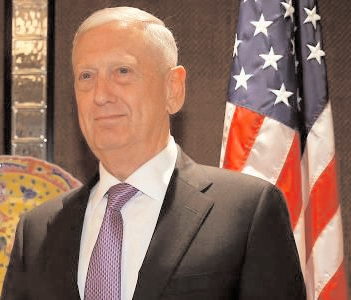
    The Trump administration has yet to announce its policy though indications are it might authorize an increase of 3,000-5,000 in U.S. troop levels. This is the figure mentioned by General John Nicholson in his testimony to the U.S. Congress in February and has been supported by both Defense Secretary Jim Mattis and National Security Adviser H.R. McMaster. Gen. Nicholson described the current situation as a ‘stalemate’ which needed to be tilted in favor of the Afghan security forces. Like his predecessors, he too held Pakistan responsible for the Taliban’s successes, pointing out that eliminating external sanctuary and support is essential to the success of the mission. Yet, other than calling for a ‘holistic response’, he failed to specify what this would entail.

    Since the U.S. has been unable to change Pakistan’s behavior despite having provided nearly $34 billion in economic and military assistance since 2002 accompanied by occasional threats to suspend or withhold the funds, enhancing capability of the Afghan security forces remains the only option.

    This means strengthening the Special Forces in both the Army and the Police as these are most effective in fighting the insurgency and providing air power and artillery. The U.S. provides $3.4 billion out of the NATO’s annual support of $4 billion for the Afghan National Security Forces. In addition, it spends nearly $18 billion on maintaining its troop presence (it costs slightly more than $2 million a year to deploy a U.S. soldier in Afghanistan). In comparison, raising and equipping a brigade of Special Forces would cost a billion dollars a year.

    Therefore Gen. Nicholson’s idea of a slight increase in international troop presence can only work only if it is coupled with practical ways of enhancing Afghan capabilities.

    Mirage of reconciliation 

    In recent years, numerous initiatives to bring the Taliban to the negotiating table have been attempted. A Taliban office in Doha was intended to get the Taliban negotiators away from the ISI’s control but turned out to be a nonstarter.

    The four-country quadrilateral group involving China along with Pakistan, the U.S. and Afghanistan came to an abrupt end when it was revealed that Mullah Omar was no longer alive and had died, possibly two years earlier. Russia is now promoting the idea of talks by playing up the idea of the larger threat of the Islamic State that has emerged in eastern Afghanistan in Nangarhar province though this has failed to carry much traction with the Afghan authorities. President Ghani is putting his faith in a new regional initiative, similar in composition to the Heart of Asia process. If the past is any guide, none of these will yield any concrete benefits because unless the ground situation is materially altered, any talk of reconciliation with the Taliban remains premature and ends up conveying mixed signals, to the Afghans, the Taliban and Pakistan.

    If the gains of the last fifteen years are to be preserved, the only option is to enhance legitimacy of the Afghan institutions: the NUG, the election process and the Afghan National Security Forces.

    (The author is a former Ambassador to Afghanistan and currently Distinguished Fellow at the Observer Research Foundation. He can be reached at rakeshsood2001@yahoo.com)

  • US says China likely to build military base in Pakistan

    US says China likely to build military base in Pakistan

    WASHINGTON (TIP): A Pentagon report released on June 3 singled out Pakistan as a possible location for a future Chinese military base, as it forecast that Beijing would likely build more bases overseas after establishing a facility in the African nation of Djibouti. The prediction came in a 97- page annual report to Congress that saw advances throughout the Chinese military in 2016, funded by robust defense spending that the Pentagon estimated exceeded $180 billion.

    That is higher than China’s official defense budget figure of 954.35 billion yuan ($140.4 billion). Chinese leaders, the US report said, appeared committed to defense spending hikes for the “foreseeable future,” even as economic growth slows. The report repeatedly cited China’s construction of its first overseas naval base in Djibouti, which is already home to a key US military base and is strategically located at the southern entrance to the Red Sea on the route to the Suez Canal.

    “China most likely will seek to establish additional military bases in countries+ with which it has a longstanding friendly relationship and similar strategic interests, such as Pakistan,” the report said.

    Djibouti’s position on the northwestern edge of the Indian Ocean has fueled worries in India that it would become another of China’s ‘string of pearls’ of military alliances and assets ringing India, including Bangladesh, Myanmar and Sri Lanka.

    The report did not address India’s potential reaction to a Chinese base in Pakistan. But Pakistan, the US report noted, was already the primary market in the Asian-Pacific region for Chinese arms exports. That region accounted for $9 billion of the more than $20 billion in Chinese arms exports from 2011 to 2015.

    Last year, China signed an agreement with Pakistan for the sale of eight submarines+ . Quantum satellite, cyber hacks :

    The Pentagon report flagged Chinese military advances, including in space and at sea. It cited China’s 2016 launch of the first experimental quantum communications satellite, acknowledging that it represented a “notable advance in cryptography research.” As in past years, the Pentagon renewed its concerns about cyber spying, saying US government-owned computers were again targeted by China based intrusions through 2016.

    (AP)

  • No proof against RAW in missing ex-Col case: Pakistan minister tells Parliament

    No proof against RAW in missing ex-Col case: Pakistan minister tells Parliament

    ISLAMABAD (TIP): The “kidnapping” case of a retired Pakistan army officer in Nepal could not be taken to the ICJ or the UN on the basis of “assumptions” as there is no “concrete evidence” suggesting India’s hand in it, a minister has told Parliament.

    Minister for states and frontier regions Gen (retd) Abdul Qadir Baloch said it was yet to be established that Muhammad Habib Zahir had been picked up by the Indian forces, the Dawn reported. “No final report suggesting that the Indian intelligence agency (RAW) or the Indian government was involved is available with the foreign office (FO) or the government,” he said while winding up a discussion on an adjournment motion in the Senate on Wednesday.

    Senate chairman Mian Raza Rabbani asked if the statement meant that the foreign office was exonerating India from the kidnapping of Habib as the minister had admitted “absence of concrete evidence”. Baloch replied in negative, saying: “We are hundred per cent sure that Indian intelligence agency RAW is behind the kidnapping, but the evidence to this effect is not final”. The issue appeared to have a link with the conviction of Kulbushan Jadhav, he said, but stressed that material was required to legally prove it.

    Baloch told the Senate that the issue of “kidnapping” of Habib in Nepal some two months ago could not be taken to the International Court of Justice (ICJ) or the United Nations “on the basis of assumptions”, the report said.

    The FO was trying to obtain solid evidence and the Nepalese government had been asked to get in touch with three Indians who had received Habib at the airport, Baloch said. He said it was still not clear whether the three people were Indian government employees or civilians or working for a private firm. (PTI)

  • US might take the hard option in Afghanistan

    US might take the hard option in Afghanistan

    KABUL (TIP): The US official policy on supporting a “peace process” in Afghanistan may change. In remarks at Canberra, US defence secretary James Mattis gave clear indication that the US may not give Taliban the space for a political “solution” in Afghanistan. The message from Rex Tillerson secretary of state and Mattis is the same – Taliban is a terror group, and they will be tackled militarily.

    Mattis said, “we’re up against an enemy that knows that they cannot win at the ballot box, and you think – we have to sometimes remind ourselves of that reality. That’s why they use bombs because ballots would ensure they never had a role to play…”

    Tillerson continued, “our commitment to Afghanistan is to ensure that it never becomes a safe haven for terrorists to launch attacks against the civilized world or against any other part of the world or any of their neighbors.”

    Thus far, the US has been pushing the Afghan government to set up a peace process with the Taliban, as the only way to end the war. Although the official US review of its Afghanistan policy is still pending, the remarks are a strong signal that the US may turn up the military heat on the Taliban. Certainly, there is no more the oft-repeated line that the US believes “there is no military solution” to the Afghan crisis.

    This used to be the line used by both former secretaries of state Hillary Clinton and John Kerry. That gave the Pakistanis the opportunity to set up all manner of arrangements starting with the Qatar process run by Taliban leader Tayyab Agha, who was quickly discredited. This was followed by the ill fated QCG between the US, China,

    Afghanistan and Pakistan which ended with two things: the announcement that Taliban leader Mullah Omar had died over two years prior, and the elevation of Sirajuddin Haqqani as deputy chief of Taliban, effectively joining the ISI supported Haqqani network with the Taliban. In more recent months, Russia and Iran have both joined the fray, this time using ISIS as a reason for bringing Taliban into the mainstream and power structure in Kabul.

    The US accuses Russia of supplying weapons to Taliban. But the horrific attacks in recent weeks by the Haqqani network appears to have made up US minds on how not to look for peace in Afghanistan. While the dilemma in Washington about another troop surge remains, it’s also clear that the US may step in to prevent Russia and Iran from becoming players in this particular conflict.

    The recent US MOAB (mother-of-allbombs)+ drop in Nangarhar has been widely seen as a signal for North Korea. But could there be a possibility of it being used again in Afghanistan, against the Taliban?

    (PTI)