Tag: Parkash Singh Badal

  • The life of a political giant

    The life of a political giant

    Five-time former Punjab chief minister Parkash Singh Badal passed away at 95 on Tuesday, April 25. He was admitted to Mohali’s Fortis Hospital over a week ago after he complained of uneasiness in breathing. Here are some lesser-known facts about him.

    The youngest and oldest CM
    – Parkash Singh Badal became the Chief Minister for the first time in 1970, he was the youngest Chief Minister of any state in the country i.e. 43 years.
    – Meanwhile, when he became the Chief Minister for the fifth time in the year 2012, he was the oldest CM of the country. This time he was the oldest candidate in the 2022 assembly elections.
    Wife, daughter, son
    – Born on December 8, 1927, in a village named Abul Khurana (now in Pakistan), he hailed from a Jat Sikh family.
    – Prakash Singh Badal and his wife Surinder Kaur have two children Sukhbir Singh Badal and Preneet Kaur.
    – His wife Surinder Kaur died in 2011 due to illness. Son- Sukhbir Singh Badal is an MLA from Fazilka constituency of Punjab and has also been the Deputy Chief Minister of Punjab.
    – Badal’s daughter is married to the son of former Punjab Chief Minister Pratap Singh Kairon.
    Parkash Singh Badal: Education
    – He received his education at the Christian College in Lahore. Badal began his political career in 1947.
    – In 1957, he was elected to the Punjab Legislative Assembly for the first time from the Congress. He became a legislator a total of 10 times.
    – In 1961, Parkash Singh Badal was included in the cabinet. He was the leader of the opposition in 1972, 1980 and 2002. He became the Chief Minister of Punjab for the first time in March 1970. Parkash Singh Badal is the eighth Chief Minister of Punjab.
    – But amid allegations and counter-allegations, he had to relinquish the post of Chief Minister and after being elected to the Lok Sabha in 1977, he became the Agriculture and Irrigation Minister at the Centre. In 1977 itself, Badal once again got the opportunity to become the Chief Minister of Punjab. He completed his term as the Chief Minister of Punjab only once from 1997 to 2002. In 2012, he became the Chief Minister of Punjab for the 5th time.
    Parkash Singh Badal: Contribution
    – Parkash Singh Badal has spent almost seventeen years of his life in jail for protecting Punjab, Punjabiyat and Punjabis and raising voice for their interests. Parkash Singh Badal has also been raising his voice against corruption.
    Parkash Singh Badal: Achievements
    – In 2015, he was awarded the Padma Vibhushan, the second-highest civilian award by the Government of India. In 2011, the Akal Takht conferred on him the title of Panth Ratan Fakhr-e-Kaum
    – The Shiromani Akal Dal fielded the patriarch again from home turf Lambi in Punjab’s Muktsar district for the assembly elections last year. He lost but entered the record books for being the oldest person to fight an election in the country.

  • Parkash Singh Badal: End of an era

    Parkash Singh Badal: End of an era

    Sarpanch of Badal village at 20, legislator at 30, chief minister at 43, and the last surviving member of a political generation that saw Independence, survived the Emergency, and saw Punjab politics take a surprising turn in 2022, Parkash Singh Badal, 95, a five-time chief minister of Punjab, died on Tuesday, April 25.
    He was admitted to Mohali’s Fortis Hospital after he complained of uneasiness in breathing.
    “Mr Badal passed away at around 8 pm on April 25,” hospital director Abhijeet Singh said.
    The hospital issued a medical bulletin shortly afterwards in which it detailed his health issues.
    “S Parkash Singh Badal, Former Chief Minister of Punjab, was admitted at Fortis Hospital Mohali on 16th April 2023 with acute exacerbation of bronchial asthma. He was shifted to the medical ICU on 18th April as his respiratory condition worsened.
    “He had been on NIV (non-invasive ventilation) and HFNC (high-flow nasal cannula) support along with medical management. He was being managed under Prof (Dr) Digambar Behera along with the Pulmonology and critical care team supported by Cardiology,” it said.
    “Despite appropriate medical management S Parkash Singh Badal succumbed to his illness. Fortis Hospital Mohali deeply condoles the death of S Parkash Singh Badal,” the bulletin said.
    Badal had been in the intensive care unit of the hospital and doctors were closely monitoring his health condition. Hospital sources said his health condition suddenly deteriorated during the day on Tuesday, April 25.
    The former chief minister was also hospitalised in June last year following complaints related to gastritis and bronchial asthma. In February 2022, he was taken to a private hospital in Mohali for a post-Covid health examination during which he underwent cardiac and pulmonary check-ups.
    He had tested positive for COVID-19 in January last year and was admitted to a hospital in Ludhiana.
    In the tumultuous terrain of a front-line Sikh majority state, Parkash Singh Badal was the quintessential moderate, a pragmatic practitioner of communal harmony, a liberal and secular man, and an avowed protagonist of and a fierce fighter for Punjab’s interests.
    He was deeply religious, but not dogmatic. Hindu-Sikh amity, to him, was not a mere political slogan but an article of faith – an abiding quality that endeared him to Punjab’s Hindus.
    In its 100-year-old history, Shiromani Akali Dal, one of the oldest regional parties, has not seen a figure as towering as Badal . He was the state’s longest serving chief minister, at 17 years across five terms. And he was president of Akali Dal from 1995 till 2017 when he handed over the mantle to his son and heir apparent Sukhbir Singh Badal.
    Badal went to jail multiple times during and after the Emergency in the mid- 70s and the 80s as a leading light of the Akalis’ agitational politics, faced death threats from Sikh extremists, and was imprisoned in corruption cases in 2004 by his colleague-turned-rival Capt Amarinder Singh. But the Akali stalwart unfailingly bounced back. On the morning of the day he died, the Punjab police filed charges against him in the 2015 Kokatpura firing case when two protesters agitating against the mutilation of the Sikh holy book died in police firing.
    The secret of Badal’s extraordinarily long political life lay in his tremendous grassroots connect. His staff diligently kept a diary of deaths of even ordinary Akali workers across Punjab. And, Badal would later visit their households to express his condolences – a simple but emotion-imbued gesture that people never forgot and that over the decades cemented his credentials as a truly mass leader
    In his moments of reflection, Badal often casually called himself an accidental politician. He revelled in regaling his supporters by narrating the delicious story of his political debut. It went like this: After graduation from Lahore’s Forman Christian College, Pash, as Parkash Singh was addressed in his family, prodded by his father, a landlord, met his uncle Teja Singh who then was a minister in Punjab with a request for direct appointment as tehsildar (a mid-level revenue official). A few days later, Teja Singh called him to Chandigarh and handed him an appointment letter to the post . An elated Badal finished reading the letter and profusely thanked his uncle who then asked Badal to return the letter and tore it, much to Badal’s shock. “Pash, I want you to be someone who will appoint tehsildars,” he told Badal.
    In 1947, Badal was barely twenty years old when elected sarpanch of his ancestral village in the politically crucial Malwa region. That was a stepping stone to the assembly which he entered for the first time as a Congress MLA in 1957. He later joined the Shiromani Akali Dal and emerged as a trenchant critic of the Congress, as he remained for the rest of his life.He suffered a setback when he shifted his base to the Gidderbaha assembly segment and lost to the Congress’s Harcharan Singh Brar in 1967, the first election after the reorganisation of Punjab a year before. Then on, his career saw a steady climb and never looked back. He went on to become the youngest chief minister of the state in 1970, at 43 (a record that still stands).
    He would become chief minister again in 1977, 1997, and then, for two successive five-year terms, in 2007 and 2012. When he was sworn-in in 2007, he was almost 80, but such was hid hold on the state’s Panthic pitch, that there was no talk of his son replacing him — not then, and not in 2017.
    People attributed his longevity to his mastery of the art of consensual politics that helped him tide over challenges . “He was a people’s politician and dedicated himself to the cause of peasantry and rural society,” said political observer Pramod Kumar. “He was the main architect of peace building and communal harmony in the 90s”.
    It was this approach that saw the SAD become an ally of the BJP in 1996, a partnership that would last a few years short of a quarter of a century. A pre-poll alliance with the BJP proved to be a formidable combination that changed the political and social dynamics of Punjab for next two decades. It stemmed as much from Badal’s pragmatism as from his chemistry with BJP stalwarts Atal Bihari Vajpayee and Lal Krishna Advani. More than a political pact, it was a social coalition of po wer sharing between two principal communities of the state.In 2021, the alliance broke after the SAD walked out citing the farm laws and the farmers’ protest — and Badal returned the Padma Vibhushan, the country’s second highest award that he was given in 2015 . But the damage was done. His party lost the 2022 election, and he himself, then 94, lost his Lambi seat. Battered by two successive defeats in assembly polls in 2017 and 2022, Badal in his last years saw his once-powerful party struggling with an unprecedented crisis of political survival, ironically in its 100th year. By then, after being wracked by Covid, he was a shadow of his former self.

  • His contribution to the nation is indelible

    His contribution to the nation is indelible

    By Narendra Modi

    During the turbulent 1970s and 1980s in Punjab, Badal Sahab put ‘Punjab First’ and ‘India First’. He opposed any plan that would weaken India or compromise the interests of the people of Punjab, even if it meant loss of power. He was a man deeply committed to fulfilling the ideals of the great Gurus. He also made noteworthy efforts to preserve and celebrate Sikh heritage. Who can forget his role in ensuring justice for the riot victims of 1984?

    On the evening of April 25, when I received the news of Sardar Parkash Singh Badal ji’s demise, I was filled with immense sadness. In his passing away, I have lost a father figure, someone who guided me for decades. In more ways than one, he shaped India’s and Punjab’s politics, and that can be described as unparalleled.

    That Badal Sahab was a big leader is widely accepted. But, more importantly, he was a big-hearted human being. Being a big leader is easier but being a big-hearted person requires a lot more. People across Punjab say — there was something very different about Badal Sahab! (‘Badal Sahab ki baat alag thi’). It can be confidently said that Sardar Parkash Singh Badal was among the tallest kisan netas of our times. Agriculture was his real passion. Whenever he spoke on any occasion, his speeches were filled with facts, the latest information and a lot of insight.

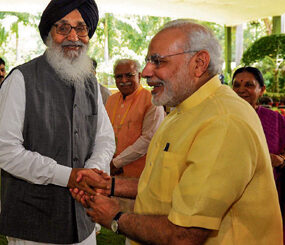
    I got to closely interact with Badal Sahab in the 1990s when I was involved in party work in North India. Badal Sahab’s reputation preceded him — he was a political stalwart who had been Punjab’s youngest Chief Minister, a Union Cabinet Minister and someone who held sway over the hearts of crores of Punjabis across the world. I, on the other hand, was an ordinary karyakarta. Yet, true to his nature, he never let this create a gap between us. He was filled with warmth and kindness. These were traits that remained with him till his last breath. Everyone who interacted closely with Badal Sahab would recall his wit and sense of humor.In the mid and late 1990s, the political climate in Punjab was very different. The state had seen much turmoil and elections were due in 1997. Our parties (SAD and BJP) went to the people together and Badal Sahab was our leader. His credibility was a key reason that the people blessed us with a resounding win. Not only that, our alliance successfully won the municipal elections in Chandigarh and also the Lok Sabha seat in the city. His persona was such that our alliance went on to serve the state for 15 years between 1997 and 2017!

    There is an anecdote I can never forget. After taking oath as CM, Badal Sahab told me that we would go to Amritsar together, where we would halt at night and the next day we would pray and have langar. I was in my room at a guest house but, when he got to know of this, he came there and began to pick up my luggage. I asked him why he was doing this, to which he told me that I would have to come with him to the room meant for the CM and stay there only. I kept telling him that there was no need to do this, but he insisted. Eventually, this is exactly what happened and Badal Sahab stayed in another room. I will always cherish this gesture of his towards a very ordinary karyakarta like me.

    Badal Sahab had a very special interest in gaushalas and kept cows of various breeds. During one of our meetings, he told me that he had a desire to breed cows from Gir. I arranged five cows for him and after that, when we would meet, he would talk to me about the cows and also joke that those cows are Gujaratis in every way — they never get angry, agitated or attack anyone, not even when children are playing around. He would also remark that no wonder the Gujaratis are so gentle… after all they drink the milk of the cows of Gir. After 2001, I got to interact with Badal Sahab in a different capacity — we were now Chief Ministers of our respective states.

    I was blessed to receive Badal Sahab’s guidance on numerous issues, especially those related to agriculture, including water conservation, animal husbandry and dairy farming. He was also someone who believed in tapping the potential of the diaspora, considering that there are so many hardworking Punjabis settled overseas.

    Once he told me that he wanted to understand what Alang Shipyard was about. Then he came there and spent the entire day at Alang Shipyard and understood how recycling took place. Punjab is not a coastal state; so, in a way, there was no direct relevance of a shipyard for him but such was his desire to learn new things that he spent the day there and understood different aspects of the sector.

    I will always cherish his words of appreciation for the Gujarat Government’s repair and restoration efforts of the holy Lakhpat Gurdwara in Kutch, which was damaged during the 2001 earthquake.

    After the NDA government came to power at the Centre in 2014, he once again provided valuable insights based on his rich governmental experience. He strongly supported several reforms, including the historic GST.

    I have highlighted just a few aspects of our interaction. At a larger level, his contribution to our nation is indelible. He was among the bravest soldiers for the restoration of democracy during the dark days of the Emergency. He himself suffered the highhandedness of the imperious Congress culture when his governments were dismissed. And, these experiences only made his belief in democracy stronger.

    During the turbulent period of the 1970s and 1980s in Punjab, Badal Sahab put ‘Punjab First’ and ‘India First’. He steadfastly opposed any plan that would weaken India or compromise the interests of the people of Punjab, even if it meant loss of power. He was a man deeply committed to fulfilling the ideals of the great Gurus. He also made noteworthy efforts to preserve and celebrate Sikh heritage. Who can forget his role in ensuring justice for the riot victims of 1984? Badal Sahab was a person who brought people together. He could work with leaders of all ideologies. He never associated any relationship with political gains or losses. This was particularly useful in furthering a spirit of national unity.

    The void left by Badal Sahab’s demise will be tough to fill. Here was a statesman whose life witnessed many challenges but he overcame them and rose like a phoenix. He will be missed but he will live on in our hearts and he will also live on through the outstanding work he has done over the decades.
    (The author is the Prime Minister of India)

  • A tribute to PS Badal

    A tribute to PS Badal

    He pioneered coalition politics in India

    By Prabhjot Singh

    If politics was his passion, contesting elections was his pastime. From panchayat to gurdwara elections, state legislature to parliament, he figured prominently in almost every election that took place in Punjab at least since the reorganization of the State in 1966. His slogan “raaj nahin sewa” met with the same overwhelming popularity as were his “atta-daal” and “free water for farmers” schemes.

    He was a master appeaser. He knew people’s pulse. Staying in power was his biggest ambition that he successfully achieved by serving this border State as Chief Minister for five times, besides leader of Opposition thrice and Member of Parliament and Union Agriculture Minister in Morarji Desai’s government.

    His demise at the age of 95 will make a huge difference not just to Punjab or Akali politics but also to national polity and coalition politics. He scripted the success of coalition politics in the country, first with the Jana Sangh, then during JP’s movement Janata Party and later with the Bharatiya Janata Party. Though subjects like center-state relations were dear to his heart, he died seeing Centre becoming more powerful than what it was at the early stages of his political career. The decision to walk out of the SAD-BJP coalition was not by choice but by compulsion. And the defeat in the 2022 assembly elections to an unknown political entity of Aam Aadmi Party (AAP) marked an end to a glorious political career that shaped the destiny of present Punjab.

    He was no different than most of other Akali stalwarts or “Taksali” leaders. He, too, started his political career as a Congressman. He, however, quickly moved to the Shiromani Akali Dal fairly early, but always remained a “moderate” without allowing himself to be swayed by the demand for a separate Sikh State or Khalistan. Though the Shiromani Akali Dal came out with the Anandpur Sahib resolution in 1973 for more rights to States, he was one leader who refused to give in to separatists. If the Shiromani Akali Dal, the oldest regional party in the country, witnessed divisions and partitions as the State of its influence, Punjab, did, he always stood for cordial center-state relations.

    Various initiatives of the Centre , including Indira Gandhi award, Shah Commission report and even the Rajeev-Longowal accord saw the moderates confronted both in Punjab and SGPC politics, he remained steadfast and was the last to get into politics of confrontations. It is why lots of criticism was heaped on him for not getting any of the long-standing demands of the State conceded by the center.

    He always believed that the Akali Dal was the political face of one of the most affluent, patriotic and hardworking minority communities that made more than 80 percent of total sacrifices in the freedom struggle and was not only left without a capital but also lost some of its prestigious projects it built after independence.

    As a staunch supporter of peaceful negotiations for resolving the long-standing demands, he was successful in carrying not only the Sikh community but also the Hindu community in the State as well. With the center dilly dallying on conceding any of the demands, he had the difficult job of representing the interests of a minority community that had at times the growing influence of hardcore elements demanding separate Sikh state without being in opposition to the majority community, or seeking to mobilize its own support in hostility to the majority community. This was a herculean task that not many Akali Dal leaders, including only other Akali Chief Minister in last more than four decades, Surjit Singh Barnala, tried to handle with tact while performing this balancing act.

    The demand for a separate Sikh state, Khalistan, even after more than 75 years of independence , has refused to die down. Governments of the time may have tried to dismiss it as an extremist slogan but none has ever tried to resolve it amicably. Sikh leaders, especially those representing the Shiromani Akali Dal, have never lent any support to the demand but also did nothing to get the other long-standing demands of the State, including transfer of Chandigarh and water works to Punjab.

    Parkash Singh Badal always played safe and subscribed to the philosophy of peaceful coexistence maintaining universal brotherhood, tranquility and peace after more than two decades of bloodshed that ravaged the State. Intriguingly, his name remained associated with some of the major controversies, including the start of Sikh-Nirankari clashes on Baisakhi day that ultimately pushed the State into militancy as the demand for the acceptance of Sri Anandpur Sahib resolution grew louder and clearer.

    He always believed that peace and progress would put behind the demand for Khalistan. He needed the center’s support that came at times but conditionally. Punjab is the only state in the country that has witnessed two partitions in the last 75 years. First of these came with the Independence, and second followed Sikhs’ continuous demand for a separate Punjabi speaking or lingual State.

    The Akalis, who in coalition with Congress were generally ruling the State between the first and the second partition in 1966, had their political aspirations upped and parted ways with Congress before an interim government was stalled in the State. As a sequel to that clarion call, many Sikh leaders came out of the Congress government and Parkash Singh Badal was one of them. After non-Congress governments took over from where Congress left before the 1966 reorganization, Akali’s started gaining political ground. After initial reluctance, the Centre too was forced to reorganize some states on a linguistic basis. The Centre, however, played a game by drawing a long list of concurrent subjects, in which the Centre and the states both have the right to legislate, and the automatic right of the Centre to prevail over a state in any concurrent legislation.

    Some of the demands Punjab subsequently raised were at the core of the 1973 Anandpur Sahib resolution. There was a lot of hue and cry after the resolution hit the public domain. It had several additional points that sought to placate more extreme elements which wanted to combine regional autonomy with religious exclusivity. In 1978, fresh resolutions that proclaimed themselves to be based on the Anandpur Sahib resolution were passed, but they eschewed ambiguous language that could lend itself to separatist interpretations. The Akalis became champions of states’ rights, and it was during this time that the baton passed into the hands of Badal.

    Events elsewhere in the country set in motion a debate over center-state relations. A few non-Congress governments supported the federal structure before various Opposition-led states came together to demand restructuring of Centre-state relations. This led to the appointment of the Sarkaria Commission. The recommendations were just shelved in the cold store. The only positive, though theoretical, was the creation of the Inter-State Council. Badal had been a votary of implementation of the Sarkaria Commission recommendations, especially with regard to the consultative appointment of a state’s Governor. But then his efforts bore no success and he continued to enjoy power.

    Badal’s alliance, first with the Jan Sangh, and later with its successor party, the BJP, stood at odds with his championing of states’ rights. Still, until last year, continued to stand by his alliance partners.

    Badal as a man had a multi-faceted personality. Reading newspapers was his very priority every morning. Clips of news reports were regularly filed and maintained at his instance.

    I used to interact with him regularly. He was not averse to criticism but at times insisted on getting his version played prominently. Sukhbir Singh Badal, after a brief stint in central politics wanted to make a flashy arrival in State politics. Those days, lots of stories were planted and played prominently about his imminent elevation as Chief Minister. He started calling meetings of bureaucrats and even Ministers and legislators. The old man stood cool and calm and made certain decisions that made it obvious who was the boss. Besides, it also cleared all speculations of his making room for his son. I did a special story saying that Badal remains firmly saddled. To my pleasant surprise I got a couple of calls early in the morning from CM’s house. Since I used to go for my morning game, and there were still no cell phones, I got a message that he wants to talk to me.

    I called and he quickly came on line to acknowledge my story saying that factual position has been highlighted.

    Otherwise, there were only a couple of other occasions when I got calls from him. One such occasion was when I was doing my story on how politicians were holding the public transport system to ransom. He called to say that he would love his version to go as prominently as parts of my serialized stories were going. Afterwards, the government went with full page ads in support of its transport policy rather than seeking a rejoinder to my series. Our relationship, as always, remained truly professional and criticism, if any, was taken sportingly.

    One of his programs, Sangat Darshan, though popular with the masses, provided a lever to opposition parties to criticize him for diverting public funds to serve the political constituencies of his party members. Since, some parties, including Congress, also held him responsible for accepting money for the controversial SYL canal, he tried to silence his critics by notifying the acquired land and returning it to original owners. It, however, did not end the ongoing dispute between Punjab and Haryana. Staunch supporter of ideology and commitment to public services, he always denounced vendetta politics. Whatever his critics may have to say, he was not one of but the tallest of all politicians the State has produced in the post-independence era. It is one reason he commanded respect from leaders of all opposition parties for his secular and national outlook. Tailpiece: He always held he was doing “sewa” and not “raaj”. Interestingly, this “sewa” mostly came when he was in “satta” (raaj).

    (The author is a senior journalist)


  • Akali patriarch Badal cremated with state honors, top leaders pay respects

    Akali patriarch Badal cremated with state honors, top leaders pay respects

    BJP chief Nadda, Union Minister Puri, Pawar visit family

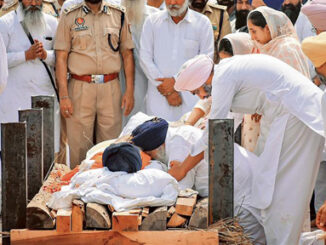
    BADAL, PUNJAB (TIP): Cutting across party lines, thousands bid tearful adieu to former Chief Minister Parkash Singh Badal, who was cremated with full state honors at Badal village in Muktsar district today.

    Badal, 95, died at a hospital in Mohali on Tuesday, April 25. The last rites of the grand old man of state politics were performed by his son and SAD chief Sukhbir Badal along with his daughters, Harkirat Kaur and Gurleen Kaur, and son Anantveer Singh at their orchard.

    Sukhbir’s estranged cousin Manpreet Badal’s son Arjun and daughter Rhea, sister Parneet Kaur Kairon’s son Jai also lit the pyre. The SAD leadership claimed that the family had given a message of women empowerment following the teachings of the Guru Sahibs. A few minutes before lighting the pyre, Sukhbir broke down.

    A brigade of policemen gave a gun salute to the former Chief Minister.

    Earlier, during the day, the mortal remains of Badal were kept in the courtyard of his house, so that people could have his last ‘darshan’. Senior BJP leadership, including its national president JP Nadda, Union Minister Hardeep Singh Puri and leader Tarun Chugh also visited the residence. Former Maharashtra CM Sharad Pawar too visited the family’s residence.

    Among the prominent persons who came to pay tributes to the leader included Union Minister of State Som Parkash, Punjab Governor Banwarilal Purohit, CM Bhagwant Mann, Speaker Kultar Singh Sandhwan, Rajasthan CM Ashok Gehlot, Deputy CM, Haryana, Dushyant Chautala, former CMs of Haryana Om Prakash Chautala and Bhupinder Hooda, J&K former CM Omar Abdullah, former Union Minister Pawan Bansal, Punjab Cabinet Ministers Aman Arora and Dr Baljit Kaur, Haryana Cabinet Minister Ranjit Chautala, Punjab Congress president Amarinder Singh Raja Warring, former minister Sukhjinder Singh Randhawa, former minister of Rajasthan Gurjant Singh Brar, Akal Takht Jathedar Giani Harpreet Singh, SGPC president Harjinder Singh Dhami, SGPC former presidents Hargobind Singh Longowal and Bibi Jagir Kaur, DSGMC chief Harmeet Singh Kalka, DSGMC former presidents Manjinder Singh Sirsa and Paramjit Singh Sarna, BSP state president Jasvir Singh Garhi, several leaders, including Bikram Singh Majithia, Dr Daljeet Singh Cheema, Sikander Singh Maluka, Maheshinder Singh Grewal, Sharanjit Dhillon.

  • Rest in peace , dear departed Badal Sahib

    The legendary politician Parkash Singh Badal has died at 95. In his death, Shiromani Akali Dal has lost its guiding Star; Punjab has lost a Statesman; the Sikh community has lost a powerful leader; and India has lost a sagacious politician.
    It is a personal loss to me, too, as I had known him since the 70’s and have had the opportunity to discuss Punjab and national issues with him. I recall him as a man who always talked straight without beating about the bush. Clear in his thoughts, he was extremely communicative. It was always a pleasure speaking with him. It is sad he is gone at a time when India needed him to forcefully pilot his view on the need for communal harmony, brotherhood and peace.
    In the pages that follow, we have carried tribute by Prime Minister Narendra Modi and Prabhjot Singh, a senior journalist who had been close to the late patriarch of the Shiromani Akali Dal. We pray for eternal peace to the departed soul.

  • Kejriwal as contender

    Kejriwal as contender

    Punjab’s tidal wave of anti-incumbency is against the entire privileged political class

    By Rajesh Ramachandran

    “The most shocking aspect of these results is how the mighty bit the dust, a lesson taught by angry voters to the feudal, tainted and rent-seeking leadership of Punjab. Among the banyan trees of political privilege that fell are four-time former CM and Punjab’s political patriarch Parkash Singh Badal, the “Maharaja” of Patiala, former CM Capt Amarinder Singh, ex-CM Rajinder Kaur Bhattal, sitting CM Charanjit Singh Channi, celebrity Punjab Congress president Navjot Singh Sidhu, Shiromani Akali Dal president and former deputy CM Sukhbir Badal, his controversial brother-in-law fighting drug cases, Bikram Singh Majithia, and his cousin and Congress’ finance minister Manpreet Badal. Most importantly, these weighty “lords” have been knocked out of the ring with a huge thud by first-timers — mobile phone repairmen, volunteers and other nobodies.”

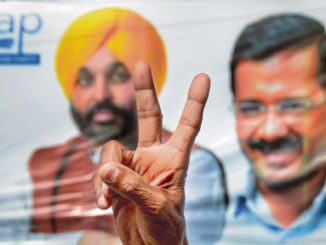
    It is always heartening to talk of hope. The angry, resilient, yet ebullient people of Punjab believe that things can and will change; this, in short, explains the political deluge that has drowned a sitting Chief Minister, three former Chief Ministers, the heads of two parties and the state’s most controversial politician. This tsunami of change has to be credited entirely to Delhi Chief Minister Arvind Kejriwal’s meticulous planning, patience and people-connect. Bhagwant Mann was declared the CM candidate only a few weeks ahead of the polls — till then, there was just Kejriwal representing the Delhi model of governance, seeking a vote for change. The first sign of this campaign’s effectiveness was Union Territory of Chandigarh’s local body polls in December, which resulted in the AAP emerging as the single largest party, dislodging the BJP. Kejriwal offers a national alternative as voters can break away from identity silos to get their lives improved.

    The most shocking aspect of these results is how the mighty bit the dust, a lesson taught by angry voters to the feudal, tainted and rent-seeking leadership of Punjab. Among the banyan trees of political privilege that fell are four-time former CM and Punjab’s political patriarch Parkash Singh Badal, the “Maharaja” of Patiala, former CM Capt Amarinder Singh, ex-CM Rajinder Kaur Bhattal, sitting CM Charanjit Singh Channi, celebrity Punjab Congress president Navjot Singh Sidhu, Shiromani Akali Dal president and former deputy CM Sukhbir Badal, his controversial brother-in-law fighting drug cases, Bikram Singh Majithia, and his cousin and Congress’ finance minister Manpreet Badal. Most importantly, these weighty “lords” have been knocked out of the ring with a huge thud by first-timers — mobile phone repairmen, volunteers and other nobodies.

    But mere free-floating anger would not have consolidated in favor of one party to cause this landslide of an election result. And this anger was not confined or focused against just the incumbent government. It was a sort of a tidal wave of anti-incumbency against the entire privileged political class. The rushing river of anger that was dammed in 2017 appears to have burst forth in 2022 to submerge the political landscape. Another factor that worked in favor of the AAP was that it became the sole beneficiary of the collective angst against the new farm laws. So, while Bharatiya Kisan Union leader Balbir Singh Rajewal lost his credibility and the polls, the anti-establishment vote that coalesced as a result of farm unions’ mobilization went into the AAP’s kitty.

    The results prove that rural Sikh farmers voted for the AAP in huge numbers, a fact further established by the decimation of the Akalis. From 15, the party’s strength has been reduced to three. Similar is the BJP’s drubbing. Despite all its dirty tricks — including Kumar Vishwas’ last-minute stab in the back — the Hindus of Punjab voted overwhelmingly for the AAP, helping the party sweep the urban seats. So, if in 2017 it was a backlash of the Hindus over unfounded fears of a Khalistani connection that defeated the AAP and made the Congress victorious on 77 seats, Kejriwal worked hard early in the campaign to allay those old apprehensions by launching the Tiranga Yatra to burnish his nationalist credentials. And it worked: the committed Hindu voter turned against the Congress and the BJP to emphatically support the AAP. Or rather, Hindus rose above sectarian interests and minority insecurities and voted along with other communities for hope and change.

    That leaves the famed Dalit voters of Punjab — 32 per cent of the population. The replacement of a lazy Maharaja with an enthusiastic Dalit as CM was thought to be a masterstroke by the Congress leadership. But angry Dalit voters treated the high command’s trump card as if it was the joker in the pack. And like Sikhs and Hindus, Dalits voted against the political establishment, proving yet again that anger overrides identity in Indian politics — for there was an attempt to split the Dalit votes in favor of the BJP and the Akalis through the discredited Dera Sacha Sauda. Neither Channi’s candidature nor Ram Rahim’s furlough seemed to have made any difference to the determined Dalit voter seeking revenge against corrupt tokens taken out of the cupboard at the last minute. The Enforcement Department raid seizing crores in cash from Channi’s nephew robbed him of all his “poor Dalit” sheen and Sidhu’s daily barbs against the government left Congress with nothing worth defending.

    If these elections have thrown up Kejriwal as a national contender for the top post, offering a credible alternative beyond Delhi, it is because voters are breaking away from their identity silos and coalescing to get their lives improved. The same logic applies to Yogi Adityanath’s victory, however unseemly his saffron robes may appear to the liberals. The Muslim-Yadav formula, with some non-Yadav OBCs thrown in, did read like a winning combination, but popular sentiment had forgiven Yogi and the BJP for the Delta deaths, floating graves on the Ganga, the farm laws and even the Lakhimpur Kheri killings. The law-and-order situation, free ration, direct benefit transfers and various targeted schemes improving the people’s lot seem to have caught the voter’s imagination. Yet, the Samajwadi Party’s performance only shows that there is simmering anger against the incumbent, which has not yet reached the boiling point. Its leader Akhilesh Yadav may also have to get out of the caste costume to look at the new realities of a changing India, in which the political capital of identity politics may just not be enough to win elections.

    The Congress’s failure as an alternative to the BJP is writ large over the results in Uttarakhand, Goa and Manipur. The party is steadily sliding into inconsequence, with its leadership refusing to re-engineer itself. In this context of a crisis of Opposition leadership steps in Kejriwal, with the amalgamation of two contemporaneously disparate political slogans of ‘Bharat Mata Ki Jai’ and ‘Inquilab Zindabad’. The 2024 contest just got hotter with Kejriwal’s promise of ‘inquilab’.