Tag: Parsa Venkateshwar Rao Jr

  • Fear of losing ground drives Nitish

    Fear of losing ground drives Nitish

    Kickerline: Bihar Chief Minister has survived despite being an overvalued political asset

    Nitish did not want to be number two in the Opposition ranks. In the NDA, his position is not in the front but he will continue to be the CM.

    “Nitish has literally returned to his den and there he has to remain, even as the BJP gains strength in the state and thinks of ways and means to replace him. But he has a fighting chance in Bihar and can hope to repel his opponents for the time being. INDIA is on a weak wicket for other reasons and this does not have much to do with Nitish leaving it. Nitish is not a strong and tall leader who can make a difference, and he knows it. He also remembers the outcome of the 2014 Lok Sabha elections in the state — the JD(U) fought against the BJP and won just two seats, while the saffron party bagged 22.”

    By Parsa Venkateshwar Rao Jr

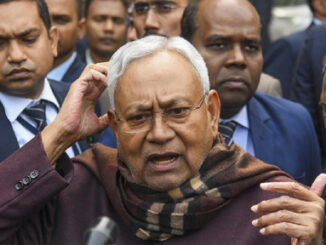
    Bihar Chief Minister Nitish Kumar is the proverbial cat with nine lives. He has remained at the helm in state politics for more than 20 years despite his shaky foundations. His party, the Janata Dal (United), is not formidable either in the state or at the national level. But he has tried to stay ahead of his competitors not through numbers but thanks to the fact that the BJP has not been too sure of itself in the state and has been willing to let him have the reins of power. This time, he has dumped the ruling Mahagathbandhan, which includes the Rashtriya Janata Dal (RJD), the Congress and Left parties.

    When Nitish senses that his plan to grow as a national leader does not seem to be working out, he wants to save his position as CM at whatever cost.

    The BJP and the JD(U) had together won 33 of the 40 Lok Sabha seats in Bihar in 2019; the former wants to do an encore in the upcoming General Election. It is for this reason that Nitish has snuggled back into the NDA’s fold. But how well is he placed on his home turf? It is the fear of losing ground that has been driving him hither and thither, first into the arms of the RJD and then the BJP.

    There is speculation that Nitish’s exit from INDIA would weaken Opposition unity so much that there would not be any contest in the parliamentary elections. It is presumed that Nitish was a sort of lynchpin for the bloc and his departure would leave it rudderless. Nitish has for long been an overvalued political asset. He has not stormed the national arena on his own, unlike George Fernandes, his old socialist comrade. Nitish, along with Lalu Yadav, Sharad Yadav and Ram Vilas Paswan, was a product of Jayaprakash Narayan’s protest movement of the early 1970s; they became recognizable faces of a new generation of leaders. But they remained where they were. They did not leverage their success to make an impact on the national stage. A similar thing happened with Jyotiraditya Scindia, Sachin Pilot and Milind Deora in the Congress; Scindia and Deora have since moved on.

    However, Lalu Yadav managed to consolidate his party (RJD) in Bihar, while Nitish’s JD(U) started lagging behind. And it is with the help of BJP that Nitish managed to stabilize his position in the JD(U) and lead it to victory. The JD(U) base in Bihar is not as wide as that of the RJD. In the 2020 Assembly election, the JD(U) had won only 43 seats, well behind the BJP (74) and the RJD (75).

    It is because of his long stay as chief minister that every once in a while, Nitish tries to break out of Bihar and look at the national scene. He thinks that his sobriety gives him an edge over Lalu Yadav’s image of a lovable maverick. But sobriety is not gravitas. Nitish has been overestimating his stature as a leader of national importance.

    And when he senses that his plan to grow as a national leader does not seem to be working out, he wants to save his position as chief minister at whatever cost. In 2013, he wanted to challenge Narendra Modi but soon realized that he was no match for him because the BJP had a larger footprint across the country and there was the RSS network of volunteers working quietly as foot soldiers of the party. The JD(U) could not match the BJP at the organizational level across the country. So, he went back to the NDA camp. When INDIA was being formed, he again sensed an opportunity and thought that he would be given due regard as the CM of Bihar, an important Hindi-speaking state. He expected to be given precedence over West Bengal CM Mamata Banerjee. He wanted to head INDIA, but the honor was denied to him because there was little doubt that the Congress had to be the spearhead, a fact that was realized even by Mamata. When Mamata mischievously proposed that Congress president Mallikarjun Kharge should be declared the prime ministerial candidate of the alliance, a JD(U) leader asked: ‘Who is Kharge?’ It was implied that being a politician from a non-Hindi-speaking state, Kharge could not stake claim to become a national leader, whereas Nitish was fit to play that role.

    Nitish did not want to be number two in the Opposition ranks. In the NDA, his position is not in the front but he will continue to be the CM.

    Notably, Nitish does not have much of a following in neighboring Uttar Pradesh, the hub of the Hindi heartland, and he can hardly hope that JD(U) will make inroads there. Modi made a superb move when he contested from UP in 2019, knowing very well the electoral importance of the state which sends 80 MPs to the Lok Sabha. Nitish and his supporters do not seem to realize that in the Hindi belt, a politician from Bihar does not stand much of a chance outside his state.

    Nitish has literally returned to his den and there he has to remain, even as the BJP gains strength in the state and thinks of ways and means to replace him. But he has a fighting chance in Bihar and can hope to repel his opponents for the time being. INDIA is on a weak wicket for other reasons and this does not have much to do with Nitish leaving it. Nitish is not a strong and tall leader who can make a difference, and he knows it. He also remembers the outcome of the 2014 Lok Sabha elections in the state — the JD(U) fought against the BJP and won just two seats, while the saffron party bagged 22.
    ( The author is a senior journalist)

  • Defend Constitution against predatory politicians

    Defend Constitution against predatory politicians

    “The issue of the ‘basic structure’ of the Constitution is a fight about the fundamental rights included in Part III of the Constitution. The Kesavananda Bharati case also shows that there is no conflict between the fundamental rights of Part III and the directive principles of state policy of Part IV, and that fundamental rights do not have to give way to create an egalitarian polity. The Preamble eloquently states the ideals of justice, liberty, equality and fraternity. The legal hair-splitting over the status of the Preamble, whether it is part of the Constitution or not seems unnecessary. The Constitution has served as a torchbearer of democratic freedoms in the last 72 years, and it is necessary to defend the Constitution against predatory politicians.”

    By Parsa Venkateshwar Rao Jr.

    Addressing the 83rd Presiding Officers’ Conference in Jaipur last month, Vice-President and Rajya Sabha Chairman Jagdeep Dhankhar said the legislature’s autonomy could not be encroached either by the judiciary or the executive. And it is in this context that he questioned the ‘basic structure’ doctrine that the Supreme Court had expounded in the 1973 Kesavananda Bharati case.

    Without offending the constitutional status that he holds as the Chairman of the Rajya Sabha, it seems that Dhankhar has misunderstood the intent and purport of the Kesavananda Bharati case, which spelt the ‘basic structure’ of the Constitution principle, and sought to make it into a criterion for reviewing the constitutional amendments passed by Parliament. It is not about the courts coming in the way of legislature and restricting the scope of the legislatures to enact laws. It is not about Parliament pitted against the judiciary or the other way round. It might sound like a doctrine, but it is not one. It is a thumb rule evolved by the Supreme Court for purposes of judicial review.

    The Kesavananda Bharati case also did not set out a new principle of interpretation. It was following the distinctions made in the earlier pronouncements of the Supreme Court in the cases of Sankari Prasad Deo vs Union of India and State of Bihar (1952), Sajjan Singh vs State of Rajasthan (1965), and the definitive direction laid down in the IC Golaknath vs State of Punjab (1965) case. The issue was whether Parliament can amend the fundamental rights of Part III of the Constitution. There were no unanimous answers from the court. While some of the judges felt that that powers of Parliament to amend the Constitution given in Article 368 were unrestricted, and that Parliament can abridge, and even abrogate, fundamental rights, there were others who felt that the fundamental rights should remain inviolable.

    It is necessary to remember that all these cases arose from challenges to the land reforms legislation in different states, and these laws were passed by the state legislatures, and these were protected by the constitutional amendments brought in by Parliament.

    Article 31, which was about the right to property, and which was part of Part III or fundamental rights, was removed from the section through the 44th Amendment of the Constitution in 1978, but the questions that came up before the court in the above cases were related to the ‘right to property’. The courts discussed it in terms of fundamental rights and not specifically about the right to property.

    In the Sajjan Singh case of 1965, then Chief Justice PB Gajendragadkar, who wrote the majority judgment, said: “The power conferred by Article 368 includes the power to take away the fundamental rights guaranteed by Part III…The fundamental rights guaranteed by Part III could not have been intended to be eternal, inviolate and beyond the reach of Article 368 for, even if the powers to amend the fundamental rights were not included in the Article, Parliament can by a suitable amendment of the Article take those powers.” It would seem that Gajendragadkar and the court were concerned about the social and economic challenges faced by a government in a developing country, and the view was that necessary social and economic reforms should not be obstructed by taking shelter behind fundamental rights. It was a dangerous position that the Gajendragadkar court had adopted. Fundamental rights were not just about the right to property.

    It is in the Golaknath case that the court of Chief Justice Koka Subba Rao took a firm position on the issue of fundamental rights, or was it confined to the issue of the right to property? The majority statement delivered by Subba Rao is crystal clear on the issue: “Our Constitution accepted the theory that the right to property is a fundamental right though perhaps it was an error to do so if socialization was desired. It treated property rights as inviolable except through law for public good and payment of compensation….As there is apprehension that the erosion of right to property may be practiced against other fundamental rights, it is necessary to call a halt. An attempt to abridge or take away fundamental rights by a constituted Parliament even through an amendment of the Constitution can be declared void. The court has the power and the jurisdiction to do so. The opposite view expressed in the Sajjan Singh’s case is wrong.”

    In the Kesavananda Bharati case, Chief Justice Sikri reiterated the essential point of the Golaknath case that fundamental rights are important and though Parliament has extensive powers to amend the Constitution, it cannot encroach upon the fundamental rights of the people. Sikri delivering the majority judgment wrote: “On a careful consideration of the various aspects of the case, we are convinced that Parliament has no power to abrogate or emasculate the basic elements or fundamental features of the Constitution such as the sovereignty of India, the democratic character of our polity, the unity of the country and the essential features of the individual freedoms secured to the citizens. Nor has Parliament the power to revoke the mandate to build a welfare state and egalitarian society. These limitations are only illustrative and not exhaustive.”

    Between Golaknath and Kesavananda Bharati judgments, it is the Golaknath judgment that underscores fundamental rights as the raison d’etre of a democratic polity in an unambiguous language. Indians will have to choose between Gajendragadkar who had argued that fundamental rights are not eternal and not inviolable on the one side, and Subba Rao and Sikri on the other who had underlined the importance of democratic rights of people against the potential political tyranny of parliamentary majorities.

    The issue of the ‘basic structure’ of the Constitution is a fight about the fundamental rights included in Part III of the Constitution. The Kesavananda Bharati case also shows that there is no conflict between the fundamental rights of Part III and the directive principles of state policy of Part IV, and that fundamental rights do not have to give way to create an egalitarian polity. The Preamble eloquently states the ideals of justice, liberty, equality and fraternity. The legal hair-splitting over the status of the Preamble, whether it is part of the Constitution or not seems unnecessary. The Constitution has served as a torchbearer of democratic freedoms in the last 72 years, and it is necessary to defend the Constitution against predatory politicians.

    (The author is a senior journalist)

  • Making diaspora invest in India a challenge

    Making diaspora invest in India a challenge

    “The unresolved issue with the NRIs is that the Indian government just does not know what it can do with them. The government wants their money, no doubt, and they are indeed sending money home, which accounts for 3 per cent of India’s GDP, according to the World Bank. The BJP’s foreign policy notion that the NRIs are its soldiers abroad to spread national glory is at best a delusion. And it could become a dangerous one if Indians abroad are seen as ‘fifth columnists’. Most NRIs have no interest in Indian politics nor are they motivated to push India’s case across the world. A time has to come when Indians need not migrate to other countries for better opportunities.”

    The NRIs remittances are higher than the foreign direct investment (FDI) that India is able to attract. The NRI remittances to India were $89.4 billion in 2021 and $100 billion in 2022.

    By Parsa Venkateshwar Rao Jr.

    The Bharatiya Janata Party (BJP), in its pursuit of overzealous nationalism, has looked upon the Indian diaspora across the world as an extension of India, politically as well as culturally. During the tenure of the then Prime Minister Atal Bihari Vajpayee, an attempt was made to woo overseas Indians, with the PM making it a point to interact with the Indians abroad rather than with other citizens of the host country. It was in 2002 that the first Pravasi Bharatiya Divas event was held in New Delhi.

    Prime Minister Narendra Modi intensified the outreach to the NRIs by addressing rallies in Madison Square Garden (New York) and then in Sydney after his party’s historic win in the 2014 Lok Sabha elections. But despite the enthusiasm to cultivate the NRI constituency in the past two decades, there is uncertainty and confusion over how to tap the potential of the NRIs to strengthen India at the global level or even at home.

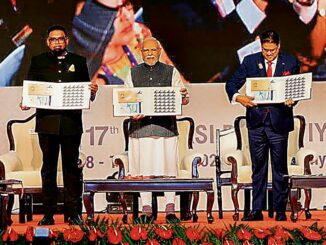
    The 17th Pravasi Bharatiya Divas event, held in Indore from January 8 to 10, reflected the confusion. The Indian government does not seem to be keen that the Indians living abroad should come back and help in the development of the country with the knowledge and expertise they have acquired abroad. It only wants that the NRIs invest in India. But it is in many ways a non sequitur.

    Indians settled abroad, whether in the Gulf countries, the UK, the US, Canada, Australia or Singapore, have been sending money home to their families. But they have not thought that it is profitable to do business in India or invest in India. Even today, the NRIs remittances are higher than the foreign direct investment (FDI) that India is able to attract. The NRI remittances to India were $89.4 billion in 2021 and $100 billion in 2022, higher than what the Chinese and Filipino emigrants send to their home countries.

    So, at successive conventions of the Pravasi Bharatiya Divas, the country’s leaders of the day give rhetorical messages to the few thousand delegates who attend the event. And this year seems to have been no different. PM Modi, Finance Minister Nirmala Sitharaman and Education and Entrepreneurship Minister Dharmendra Pradhan delivered homilies and the unintended ironies were there for all to see. PM Modi, in his inaugural speech on January 8, said, “In Pravasi Bhartiyas, we see myriad images of Vasudhaiva Kutumbakam and Ek Bharat Shreshtha Bharat,” and “Pravasi Bhartiyas echo the voice of a powerful and capable India.”

    Pradhan said, “We all agree that once upon a time India was a ‘Vishwaguru’, not in terms of military power but in terms of intellect.” And then he turned to the government’s programme of creating a skilled network in the country. He told the NRIs that India has a skilled workforce of 500 million. Sitharaman, echoing PM Modi’s statement of how cheap India’s Mars mission was, said, “The cost of the Chandrayaan, which goes to the moon, is far less than that of a Hollywood film.” And citing a NASSCOM (National Association of Software and Service Companies) report, she said Indian IT companies hired 2 lakh Americans at an average salary of $1,06,360 in 2021.

    These statements can only confuse NRIs. The government wants to woo them by telling them how good India has become since they left the country and what an attractive investment destination it is now. Surely, the NRIs would want to test the government’s claims on the ground and it will be reflected in the investment decisions they will make in the future.

    But there is also the fact that though Indians in the US are sending home more money than those in the Gulf countries, as was the case earlier, the Indian-Americans are less likely to return home and even start businesses in India. The Indians in Gulf countries will come back at some point of time because as yet there is no possibility of becoming citizens in those countries. In contrast, more Indians are getting the coveted Green Card in the US and they are more likely to become citizens there. Secondly, there are more billionaires in India than among the NRIs. Steel magnate Laxmi Narayan Mittal and metal magnate Anil Agarwal are among the exceptions. The NRIs in the US are prosperous but they are not super-rich yet. They do not have surplus capital to pump into India like Meta’s Mark Zuckerberg or Amazon’s Jeff Bezos.

    It is, however, true that more and more Indians in western countries are becoming part of the political mainstream of their adopted countries, and they are reaching positions of influence and power. Whether it is Indian-origin leaders such as US Vice-President Kamala Harris, British Prime Minister Rishi Sunak, President of Guyana Mohamed Irfaan Ali or President of Suriname Chandrikapersad Santokhi (the last two were special guests at the Pravasi Bharatiya Divas event in Indore), they owe nothing to India, and there is nothing that India can do to support or strengthen them. India is not the imperial power that the Modi government would imagine itself to be.

    The unresolved issue with the NRIs is that the Indian government just does not know what it can do with them. The government wants their money, no doubt, and they are indeed sending money home, which accounts for 3 per cent of India’s GDP, according to the World Bank. The BJP’s foreign policy notion that the NRIs are its soldiers abroad to spread national glory is at best a delusion. And it could become a dangerous one if Indians abroad are seen as ‘fifth columnists’. Most NRIs have no interest in Indian politics nor are they motivated to push India’s case across the world. A time has to come when Indians need not migrate to other countries for better opportunities.

    (The author is a senior journalist)