On Thursday, November 30, the list of most popular movies (theatrical and streaming) and webseries was unveiled by IMDb. The list of top 10 Indian movies released theatrically was dominated by Bollywood megastar Shah Rukh Khan, as two of his releases, after a hiatus of four years, found top spots in the list.
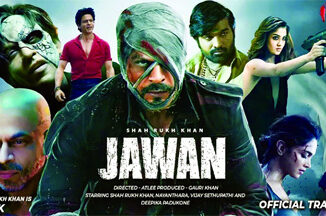
While Jawan clinched the first spot, Pathaan comfortably landed in the second spot followed by Karan Johar’s first directorial in seven years Rocky Aur Rani Kii Prem Kahaani.
Atlee, the director of Jawan, said, “Jawan is a captivating, emotional, action-entertainer that intricately portrays the profound emotional odyssey of a man who is determined to rectify societal injustices. This film holds a significant place in our hearts. Love from the audience worldwide is overwhelming.”
Reacting to the news, KJo expressed: “The team and I are overwhelmed with the love and warmth we have received for Rocky Aur Rani Kii Prem Kahaani. To be on the top 10 list of IMDb is a massive validation of the film’s reception. I am grateful and even more energised as a filmmaker.” Thalapathy Vijay-starrer Leo grabbed the fourth spot on the list of most popular theatrical movies.
With regards to the most popular streaming films, anthology Lust Stories 2 topped the list, followed by the Kareena Kapoor Khan-starrer Jaane Jaan and Sidharth Malhotra-starrer Mission Majnu. Farzi became the most popular Indian streaming series of 2023 in the Top 10 Most Popular Indian Web Series of 2023. Guns & Gulaabs landed on the second spot, followed by The Night Manager. Source: IANS
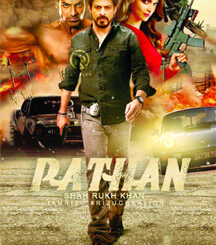
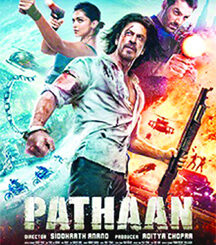
‘Pathaan’ has brought waves of happiness among Shah Rukh Khan’s fans once again. The film, on Friday, bagged People’s Choice Award at the 14th edition of Indian Film Festival of Melbourne (IFFM). Helmed by Siddharth Anand, ‘Pathaan’ starred Shah Rukh Khan alongside Deepika Padukone and John Abraham. The film is the highest-grossing film worldwide in the history of Hindi cinema with over Rs 1050 crore gross at the global box office. The IFFM Awards night saw honouring the remarkable talents of the Indian film fraternity, spanning across movies and OTT series.
Actor Rani Mukerji was named Best Actor for her performance in ‘Mrs Chatterjee Vs Norway’. Actor Mohit Agarwal took home the Award for Best Performance (Male) in Film for ‘Agra’.
Upon receiving the award, Rani said, “I feel incredibly proud and grateful that Mrs Chatterjee Vs Norway has been embraced and loved by audiences worldwide. It’s a universal story that showcases the power of a mother’s Shakti. Winning the Best Actress Award is a true honour, and I sincerely thank everyone for their applause and appreciation of my performance.”
Meanwhile, filmmaker Karan Johar was at the Indian Film Festival of Melbourne for completing 25 years in the Indian film industry.
Kartik Aaryan was also felicitated with ‘The Rising Global Superstar of Indian Cinema’ award.
Upon receiving the award, Rani said, “I feel incredibly proud and grateful that Mrs Chatterjee Vs Norway has been embraced and loved by audiences worldwide. It’s a universal story that showcases the power of a mother’s Shakti. Winning the Best Actress Award is a true honour, and I sincerely thank everyone for their applause and appreciation of my performance.”
Meanwhile, filmmaker Karan Johar was at the Indian Film Festival of Melbourne for completing 25 years in the Indian film industry.
Kartik Aaryan was also felicitated with ‘The Rising Global Superstar of Indian Cinema’ award.
Siddharth Anand’s Pathaan is out on Prime Video, almost two months after its theatrical release. The Shah Rukh Khan-starrer released on March 25 and became the biggest Hindi hits of all time, collecting more than Rs 1000 crore. The OTT version of the film came with four additional scenes and fans have been sharing and talking about them on social media.
One of the scenes shows Shah Rukh’s titular Pathaan getting tortured by the Russians. A particularly gory scene shows him strapped to a chair as an officer pulls a nails out of his fingers. Pathaan screams in agony as the officer says, “Batado Pathaan, tum jaante ho, end mein sab bolte hain (Speak up Pathaan, you know everyone speaks up in the end).” Pathaan jokes with him, “Teri Hindi bahut acchi hai. Teri maa Hindustan gai thi? Ya joint operation (Your Hindi is great. Did your mom go to Hindustan or were you part of joint operation)…” he says but gets a big punch in his face for it.
Another scene showed him making entry to a 50 Cent song. As he enters the JOKR facility, he is greeted by his team. A colleague rushes to give him a hug but he says, “Agar zindagi rahi toh gale milege (We will share a hug some other day).”
After a long smear campaign that tried to put it down, the highly-anticipated Shah Rukh Khan starrer Pathaan has finally hit the theatres the world over. For the fans of Shah Rukh Khan, it is nothing less than a carnival. They are coming to the theatres in huge numbers which is reflected by the long queues that can be seen outside the theatres everywhere. All this has resulted in a huge opening for Pathaan (with the domestic collection crossing the 55-crore mark on Day 1, making it the biggest opener ever for Indian cinema).The total India collection on Day 2 was 70.50 crore nett (82.94 crore gross). It thus became the first Hindi film to breach the 70 crore nett collection on a single day. Meanwhile, overseas collection was also incredible as it collected 30.70 crore gross.
‘Pathaan’ created more history on its second day when it beat its own record for the highest day ever which it set on the opening day — Rs. 55 crore in Hindi format + Rs. 2 crore in dubbed formats — amounting to a total of Rs. 57 crore nett on Day 1.
Shah Rukh Khan in a still from Pathaan.
Pathaan is a paean to the unsung heroes of India who day in and day out put their lives on the line in order to protect the glory of the motherland by guarding it against its countless enemies and forces that are trying to weaken it. These are spies, soldiers on covert operations, members of the intelligence network, whose sacrifices often go unnoticed. The Siddharth Anand-directed Pathaan in its unique own way takes us on a whirlwind global adventure with these selfless soldiers committed to the highest ideals of duty and sacrifice.
Shah Rukh Khan and Deepika Padukone in a still from Pathaan.
In terms of massy cinematic entertainment, Pathaan has everything that anyone can ask or hope for: adrenaline-pumping action, non-stop thrill and adventure, endless twists and turns, exotic locations, a-list actors at the top of their game, cutting edge CGI and VFX, and jaw-dropping stunts. Also, both the film’s songs are already chartbusters. The time-tested pairing of SRK and Deepika Padukone is another major crowd puller. Not to mention, John Abraham’s return to playing antagonistic badass characters after a long hiatus. Also, watch out for a surprise cameo from someone very special.
The mad rush to watch Pathaan at a Cinema Hall.
The soaring success of Pathaan is set change the face of Indian cinema. It will encourage more filmmakers to make big budget action extravaganzas and multi-starrers shot across very many different locations across the world, not unlike the James Bond, Fast and Furious, and Mission: Impossible films. Also, the birth of the YRF Spy Universe is set to usher in a new era of franchise-based storytelling unpinned by not just sequels but also crossovers and spinoffs. Henceforth, whenever we look at the Hindi cinema, it will always be marked by the following dichotomy: Bollywood before Pathaan and Bollywood after Pathaan.
(Murtaza Ali Khan is an Indian Film & TV Critic / Journalist who has been covering the world of entertainment for over 10 years. He tweets at @MurtazaCritic and can be mailed at: murtaza.jmi@gmail.com)
“There has also been a concerted effort to suppress projects which do not fit the BJP’s vision of and for India. Consequently, barring some notable exceptions, India’s film fraternity consciously self-censors itself, hoping to ride out the storm. Faced with a dispensation that stops at nothing, this self-preservation imperative is understandable. After all, why should an actor or producer or director stand up for constitutional values when they face boycotts and threats, when investigative agencies are unleashed on them, and when no one publicly stands with them?”
By Pushparaj Deshpande
In 1938, Charlie Chaplin started work on The Great Dictator. Even though it critiqued the Nazis, Chaplin was forced to self-sponsor, direct and write the project himself because most mainstream Hollywood studios were hesitant to disrupt ties to German finance, or risk making an overtly political project. Additionally, many in the establishment felt appeasing Adolf Hitler could work, so official censorship was also a real threat. Yet, showing tremendous personal and ideological fortitude, Chaplin forged ahead. The film belied expectations and became Chaplin’s biggest commercial success. It was nominated for five Academy awards and became a cult classic.
Contextualize the enormity of Chaplin’s achievement. Swimming against the tide, his film mocked Hitler’s fetish for photo-ops, self-aggrandizing schemes and critiqued the attacks against minorities to distract from economic failures. Most importantly, it exposed the futility of placating authoritarian figures. This was when Hollywood consciously eschewed taking an anti-Nazi stand on screen, even if it privately opposed Nazism.
A site of contestation
A similar situation has come to pass in India. India’s film industries are now a site of ideological and political contestation, as The Kashmir Files and Pathaan controversies highlight. The BJP is consistently leveraging films to sway mass audiences. Mixing religious imagery, patriotism and nationalistic ideals, these films methodically propagate key Sangh Parivar mythologies. The importance given to this endeavor is demonstrated by the fact that no less than the Prime Minister had multiple meetings with key film industry stakeholders, in an effort to prod them into producing “nation-building films”.
There has also been a concerted effort to suppress projects which do not fit the BJP’s vision of and for India. Consequently, barring some notable exceptions, India’s film fraternity consciously self-censors itself, hoping to ride out the storm. Faced with a dispensation that stops at nothing, this self-preservation imperative is understandable. After all, why should an actor or producer or director stand up for constitutional values when they face boycotts and threats, when investigative agencies are unleashed on them, and when no one publicly stands with them?
Coincidentally, this assault comes at a time when the nature of film consumption is undergoing a structural shift. As the DVD and retail business model has been rendered obsolete, filmmakers no longer get a second shot at turning a profit. This has been exacerbated by the unfortunate reality that confronting regressive values and uncomfortable truths is now a high-risk endeavor, for it could invite the wrath of regressive forces. Faced with these legitimate concerns, filmmakers are opting to churn out extravagant, high-budget films that are divorced from reality, or ‘safe’ films.
But India’s film industries do not have the luxury of escaping socioeconomic and political realities. First, the BJP is creating a ‘committed film sector’ by attacking the structural integrity of the film and television sectors. By marshalling the full resources of the state (the merging of four film media units ignoring criticism from the industry, subsidizing projects of aligned filmmakers, the censor board withholding clearances, etc.) and coaxing its core vote bank to support films that pander to its political and ideological projects, the BJP is gerrymandering the market. That is partly why films like The Kashmir Files and Tanhaji did well commercially.
Second, progressives are targeted not just for their project choices or because they dissent from the BJP, but for what they represent — an India where you could succeed no matter who you are or where you came from. Motivated by their ideological imperatives, these regressive forces need to constantly reinforce two things to their core vote bank, namely that broad-minded, outspoken and disruptive actors/filmmakers cannot shape India’s image of itself, nor do they have an equal space in films.
Third, audiences do not seem to be watching films as an escape from reality. An ideologically captive audience is seemingly endorsing films that mirror what they are force-fed daily through the electronic and digital media. This is not just an act of solidarity with populist mythologies connected to national, religious and community pride; it also enables them to exert illusionary control over those they don’t agree with.
However, following Newton’s third law, it follows that there is a liberal audience that spurns films with regressive values. That is why films like Samrat Prithviraj, Dhaakad, Manikarnika, etc. tanked at the box office, despite the initial leg-up they got from the BJP’s ecosystem. If viewership trends on OTT and digital platforms are anything to go by, a silent majority is desperate for films that do not propagate communal, casteist, xenophobic, racist and undemocratic values. In this reading, films that objectively and sensitively address socioeconomic and political realities can succeed commercially. These include Jai Bhim, Mandela, Article 15, Sardar Udham, Raazi, Mulk and Pink. Similarly, films on the farmers’/students’ movements; the lived realities of women, Sikhs, Muslims, Christians, Kashmiri Pandits, OBCs, Adivasis and Dalits; and India’s multiple successes since 1947 could resonate with, and bind Indians together positively.
Admittedly, actualizing these requires courage. But the film fraternity needs to realize that it is an equal partner in fostering a national consciousness. While it does not need to wade into polarized political debates, it can (and must) use its craft in defense of our shared values. Unless it spearheads films and serials that remind us to preserve our humanity, that weave a symphony from the many voices of India and that envision a better tomorrow (while being truthful about today), this tsunami of hatred will not pass.
The shared work of progressives
Yet, the onus of furthering constitutional values is not on India’s film fraternity alone. It is also on other progressive forces (including political parties). Given how insidiously regressive forces are colonizing the minds of our fellow Indians, all progressives need to support each other in this normative battle for India’s soul. We need to propagate our shared values creatively because high-sounding appeals to protect secular, democratic and liberal values do not sway the silent majority. Furthermore, given the state of a section of India’s media, we need to open up new fronts. Unless we display politico-cultural dynamism, the BJP will keep changing its goalposts and unleashing new culture wars that liberals will struggle to catch up to. That is why progressives need to support the film and television industries. Civil society/political action against outfits attacking film sets, raising their issues in the legislature, the media and the judiciary, and establishing new platforms and means of support are just a few ways in which India’s film industries can be tangibly supported.
B.R. Ambedkar had argued that “constitutional morality is not a natural sentiment. It has to be cultivated”. Seen in this light, it is incumbent on progressives to collaborate in the cultivation of mass emotions. Doing this would mean influencing social consciousness through soaring political rhetoric, disruptive movements like the Bharat Jodo Yatra, and the strategic use of popular culture. Notwithstanding the attack on India’s constitutional edifice, we must recognize that this is also a moment of possibilities — to redesign our operational methodologies, to shed ideological infirmities and to create a more liberal, just and compassionate India.
(Pushparaj Deshpande is the Director of the Samruddha Bharat Foundation, a multi-party platform that furthers India’s constitutional promise & the series editor of the Rethinking India series [Penguin] )
Pathaan featuring Shah Rukh Khan, Deepika Padukone, and John Abraham has been embroiled in controversies ever since glimpses of it started showing up online. From leaked pictures to their song releases, there has been a mix of good and bad responses, nevertheless, the excitement around it has stayed intact. Now the latest news suggests that Pathaan has been given a UA certificate post certain cuts in the films. This includes the close-up shots of Deepika Padukone which were deemed inappropriate along with the dialogues. Three cuts have been made in the Besharam Rang song that were too bold for the viewers. Whether the saffron outfit that wreaked havoc on viewers has been removed or not was mentioned in the report. Words such as RAW have been replaced with subtler terms like “Humare” and “Langde Lulle” with “Toote Foote.” Other words such as “Mrs. Bharatmata”, “Ashok Chakra”, and “scotch” were replaced with “Veer Puraskar”, “SBU” and “drink’ respectively. Also, any reference to Russia is also reported to have been eradicated.
Meanwhile, protesters tore down posters of Pathaan in Ahmedabad. In a video shared by the Bajrang Dal Gujarat on Twitter, people were seen shouting slogans as they tore posters and even huge cut-outs of Pathaan’s star cast. The incident took place at Alpha One mall in Vastrapur, Ahmedabad where members of Bajrang Dal created a ruckus.
Kartik Aaryan’s next Shehzada is gearing for a big launch before its release a few days before Valentine’s Day. Directed by Rohit Dhawan, the film will release on February 10, 2023. The film’s trailer, which is due to be released soon, will also be attached to the Shah Rukh Khan-starrer Pathaan on January 25, 2023. Kartik’s last theatrical release was the blockbuster hit Bhool Bhulaiyaa 2 in May.
The Hindi film also stars Kriti Sanon, Manisha Koirala, Paresh Rawal, Ronit Roy and Sachin Khedekar. Shehzada is the remake of the Allu Arjun’s 2020 Telugu hit, Ala Vaikunthapuramuloo, which also starred Tabu. A first look teaser of the film was launched in November 2022. Kartik’s character Bantu is seen beating up goons and stating, “Jab baat family pe aiye toh discussion nahi karte, action karte hai (When it comes to your family, you don’t stop to talk, you act first).”
Signup to our Newsletter!
Don’t miss out on all the happenings around the world