Tag: Patrick J. Buchanan

  • Is Global ‘Democracy’ America’s Mission?

    Is Global ‘Democracy’ America’s Mission?

    By Patrick J. Buchanan

    “America’s founding mission was not democracy, nor any other ideology. It was what we declared it to be in the document our fathers agreed to at the Constitutional Convention of 1787:

    “We the People of the United States, in Order to form a more perfect Union, establish Justice, ensure domestic Tranquility, provide for the common defense, promote the general Welfare, and secure the Blessings of Liberty to ourselves and our Posterity, do ordain and establish this Constitution for the United States of America.” “Democracy” is not even mentioned in the Constitution or in the Bill of Rights.”

    To pursue global “democracy” is thus a formula for endless interventions in the internal affairs of other nations, endless conflicts and eventual war

    “Is “democracy” really America’s cause? Is “autocracy” really America’s great adversary in the battle for the future?   Not all autocrats, after all, are our enemies, nor are all democrats our reliable friends.”

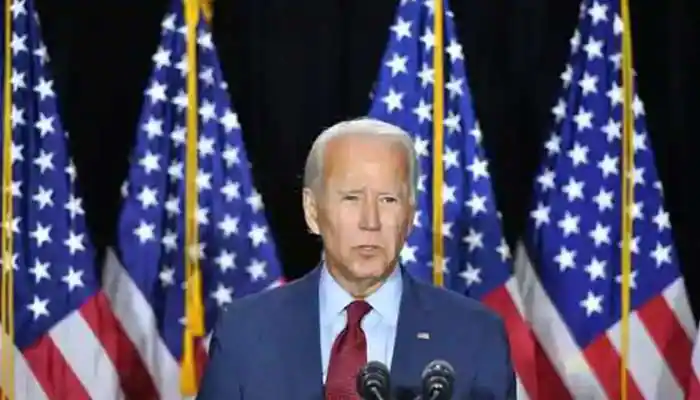
    “In the battle between democracy and autocracy, democracies are rising to the moment, and the world is clearly choosing the side of peace and security,” said President Joe Biden in his State of the Union address.

    “This is a real test. It’s going to take time.” Thus did Biden frame the struggle of our time as the U.S. leading the world’s democracies, the camp of the saints, against the world’s autocrats, the forces of darkness. But is “democracy” really America’s cause? Is “autocracy” really America’s great adversary in the battle for the future?

    Not all autocrats, after all, are our enemies, nor are all democrats our reliable friends.

    When Ukraine was invaded, the U.N. General Assembly voted on a resolution which “deplores in the strongest terms” Russia’s “aggression” against Ukraine. Among the 35 nations that abstained was India, the world’s largest democracy. Whose side is India on in the great struggle?

    Freedom House ranks Egypt, the United Arab Emirates, Bahrain, Qatar, Oman, Saudi Arabia and Jordan, all friends, partners and sometime allies of the United States, as “not free.”

    Have something to say about this column?

    Are we in a global struggle against all of these nations, all of these regimes, because all of them are autocracies?

    As for America’s own wars, democracy-versus-autocracy would seem to be a misguided way to describe any of them. In the Revolution, we were military allies from 1778 on with King Louis XVI of France, against Great Britain, the Mother of Parliaments. Our goal was not establishing a democracy, but our independence, separation, from the most democratic nation on earth.

    When we declared war on the kaiser’s Germany in April 1917, we allied ourselves with four of the greatest colonial empires on earth: the British, French, Russian and Japanese empires. When that Great War began, Germany’s Second Reich was a good deal more democratic than the czarist regime of Russia’s Nicholas II.

    In World War II, we allied with the world’s largest colonial empire, Great Britain, and the USSR of Joseph Stalin. Democracy was not the cause for which we went to war, but payback to Japan for the sneak attack on Pearl Harbor. Our most important ally in that Asian war was the Nationalist China of Generalissimo Chiang Kai-shek, no democrat.

    History, religion, race, culture, tribe and territory more often define the 100-plus nations of Africa, the Middle East and Asia than whether they are democracies or autocracies.

    During the Cold War, we collaborated openly with dictators — Rafael Trujillo in the Dominican Republic, Anastasio Somoza in Nicaragua, Chiang Kai-shek in China, Syngman Rhee in South Korea, Augusto Pinochet in Chile, Ferdinand Marcos in the Philippines, the shah of Iran, Ngo Dinh Diem, and a succession of generals after his assassination, in South Vietnam.

    If they stood with us against the Communists in the Cold War, we stood by them. “He may be a SOB, but he’s our SOB,” FDR said of Somoza.

    Communism was our ideological enemy, not autocracy. If you were an enemy of communism in the Cold War, autocrat or not, you were likely to be treated as a friend by the USA.

    If we make global “democracy” the measure of success in the great struggle of our time, our victory or defeat in that cause depends on political decisions and internal choices of scores of nations not our own.

    But when did the internal politics of other lands become either the business of the United States or the yardstick of our success as a nation?

    To make global democracy our goal in this century’s great “battle” is to allow America’s success or failure as a nation to be judged and measured by what other nations, not our own, succeed or fail in doing.

    America’s founding mission was not democracy, nor any other ideology. It was what we declared it to be in the document our fathers agreed to at the Constitutional Convention of 1787:

    “We the People of the United States, in Order to form a more perfect Union, establish Justice, ensure domestic Tranquility, provide for the common defense, promote the general Welfare, and secure the Blessings of Liberty to ourselves and our Posterity, do ordain and establish this Constitution for the United States of America.”

    “Democracy” is not even mentioned in the Constitution or in the Bill of Rights. If whether other nations are democratic or autocratic is the measure by which we judge America’s success, this must lead invariably to U.S. interference in the internal affairs of those nations not our own — to ensure success in the great struggle. To pursue global “democracy” is thus a formula for endless interventions in the internal affairs of other nations, endless conflicts and eventual war. The antidote is John Quincy Adams’ formulation:

    “(America) goes not abroad in search of monsters to destroy; she is the well-wisher to the freedom and independence of all; she is the champion and vindicator only of her own.”

    (The author is a political commentator, columnist, politician and broadcaster)

  • Did We Provoke Putin’s War in Ukraine?

    Did We Provoke Putin’s War in Ukraine?

    By Patrick J. Buchanan

    “President Joe Biden almost hourly promises, “We are not going to war in Ukraine.” Why would he then not readily rule out NATO membership for Ukraine, which would require us to do something Biden himself says we Americans, for our own survival, should never do: go to war with Russia?”

    “Whatever we may think of Putin, he is no Stalin. He has not murdered millions or created a gulag archipelago. Nor is he “irrational,” as some pundits rail. He does not want a war with us, which would be worse than ruinous to us both. Putin is a Russian nationalist, patriot, traditionalist and a cold and ruthless realist looking out to preserve Russia as the great and respected power it once was and he believes it can be again.”

    When Russia’s Vladimir Putin demanded that the U.S. rule out Ukraine as a future member of the NATO alliance, the U.S. archly replied: NATO has an open-door policy. Any nation, including Ukraine, may apply for membership and be admitted. We’re not changing that. In the Bucharest declaration of 2008, NATO had put Ukraine and Georgia, ever farther east in the Caucasus, on a path to membership in NATO and coverage under Article 5 of the treaty, which declares that an attack on any one member is an attack on all. Unable to get a satisfactory answer to his demand, Putin invaded and settled the issue. Neither Ukraine nor Georgia will become members of NATO. To prevent that, Russia will go to war, as Russia did last night.

    Putin did exactly what he had warned us he would do. Whatever the character of the Russian president, now being hotly debated here in the USA, he has established his credibility. When Putin warns that he will do something, he does it. Thirty-six hours into this Russia-Ukraine war, potentially the worst in Europe since 1945, two questions need to be answered:

    How did we get here? And where do we go from here?

    How did we get to where Russia — believing its back is against a wall and the United States, by moving NATO ever closer, put it there — reached a point where it chose war with Ukraine rather than accepting the fate and future it believes the West has in store for Mother Russia?

    Consider. Between 1989 and 1991, Mikhail Gorbachev let the Berlin Wall be pulled down, Germany be reunited and all the “captive nations” of Eastern Europe go free. Having collapsed the Soviet empire, Gorbachev allowed the Soviet Union to dissolve itself into 15 independent nations. Communism was allowed to expire as the ruling ideology of Russia, the land where Leninism and Bolshevism first took root in 1917. Gorbachev called off the Cold War in Europe by removing all of the causes on Moscow’s side of the historic divide. Putin, a former KGB colonel, came to power in 1999 after the disastrous decadelong rule of Boris Yeltsin, who ran Russia into the ground. In that year, 1999, Putin watched as America conducted a 78-day bombing campaign on Serbia, the Balkan nation that had historically been a protectorate of Mother Russia.

    That year, also, three former Warsaw Pact nations, the Czech Republic, Hungary and Poland, were brought into NATO.

    Against whom were these countries to be protected by U.S. arms and the NATO alliance, the question was fairly asked.

    The question seemed to be answered fully in 2004, when Slovenia, Slovakia, Lithuania, Latvia, Estonia, Romania and Bulgaria were admitted into NATO, a grouping that included three former republics of the USSR itself, as well as three more former Warsaw Pact nations. Then, in 2008, came the Bucharest declaration that put Georgia and Ukraine, both bordering on Russia, on a path to NATO membership. Georgia, the same year, attacked its seceded province of South Ossetia, where Russian troops were acting as peacekeepers, killing some.

    This triggered a Putin counterattack through the Roki Tunnel in North Ossetia that liberated South Ossetia and moved into Georgia all the way to Gori, the birthplace of Stalin. George W. Bush, who had pledged “to end tyranny in our world,” did nothing. After briefly occupying part of Georgia, the Russians departed but stayed as protectors of the South Ossetians.

    The U.S. establishment has declared this to have been a Russian war of aggression, but an EU investigation blamed Georgian President Mikheil Saakashvili for starting the war.

    In 2014, a democratically elected pro-Russian president of Ukraine, Viktor Yanukovych, was overthrown in Kyiv and replaced by a pro-Western regime. Rather than lose Sevastopol, Russia’s historic naval base in Crimea, Putin seized the peninsula and declared it Russian territory. Teddy Roosevelt stole Panama with similar remorse.

    Which brings us to today.

    Whatever we may think of Putin, he is no Stalin. He has not murdered millions or created a gulag archipelago.

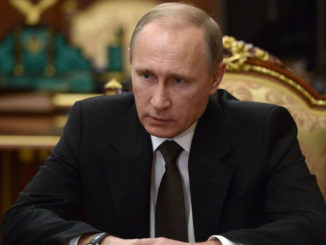
    Nor is he “irrational,” as some pundits rail. He does not want a war with us, which would be worse than ruinous to us both. Putin is a Russian nationalist, patriot, traditionalist and a cold and ruthless realist looking out to preserve Russia as the great and respected power it once was and he believes it can be again.

    But it cannot be that if NATO expansion does not stop or if its sister state of Ukraine becomes part of a military alliance whose proudest boast is that it won the Cold War against the nation Putin has served all his life.

    President Joe Biden almost hourly promises, “We are not going to war in Ukraine.” Why would he then not readily rule out NATO membership for Ukraine, which would require us to do something Biden himself says we Americans, for our own survival, should never do: go to war with Russia?

    (The author is a former White House Communications Director. Visit Buchanan.org to read his  articles and books)