Tag: Phumzile Mlambo-Ngcuka

  • UN’s largest gathering on women’s rights calls on enhancing women’s leadership in public life in the run up to the 2021 Generation Equality Forum

    UN’s largest gathering on women’s rights calls on enhancing women’s leadership in public life in the run up to the 2021 Generation Equality Forum

    Against the backdrop of the COVID-19 pandemic, the 65th session of the Commission on the Status of Women called for increasing women’s participation and leadership in decision-making to solve global challenges.

    NEW YORK (TIP):  The 65th session of the Commission on the Status of Women (CSW65), the UN’s largest gathering on gender equality and women’s rights, opened March 15,  as an almost entirely virtual session, with the devastating impacts of the COVID-19 pandemic in the foreground, and preparing the ground for the forthcoming Generation Equality Forum, which will kick off in Mexico City from 29-31 March.

    The two-week long gathering for UN Member States, civil society organizations, gender experts, and other international actors aims to build consensus and agree on a roadmap to advance gender equality, with the focus this year on the theme, “Women’s full and effective participation and decision-making in public life, as well as the elimination of violence, for achieving gender equality and the empowerment of all women and girls”.

    Recent reports on the theme have reconfirmed that the glass ceiling remains for women around the world, restricting their participation in decision-making, with women serving as Heads of State and/or Government in only 22 countries; women holding just 25 per cent of parliamentary seats, and 12 countries having no women ministers in cabinets at all. The COVID-19 pandemic has exacerbated existing inequalities – from increased reports of domestic violence, unpaid care responsibilities, rates of child marriage and millions of women plunging into extreme poverty as they lose their jobs in higher numbers than men.

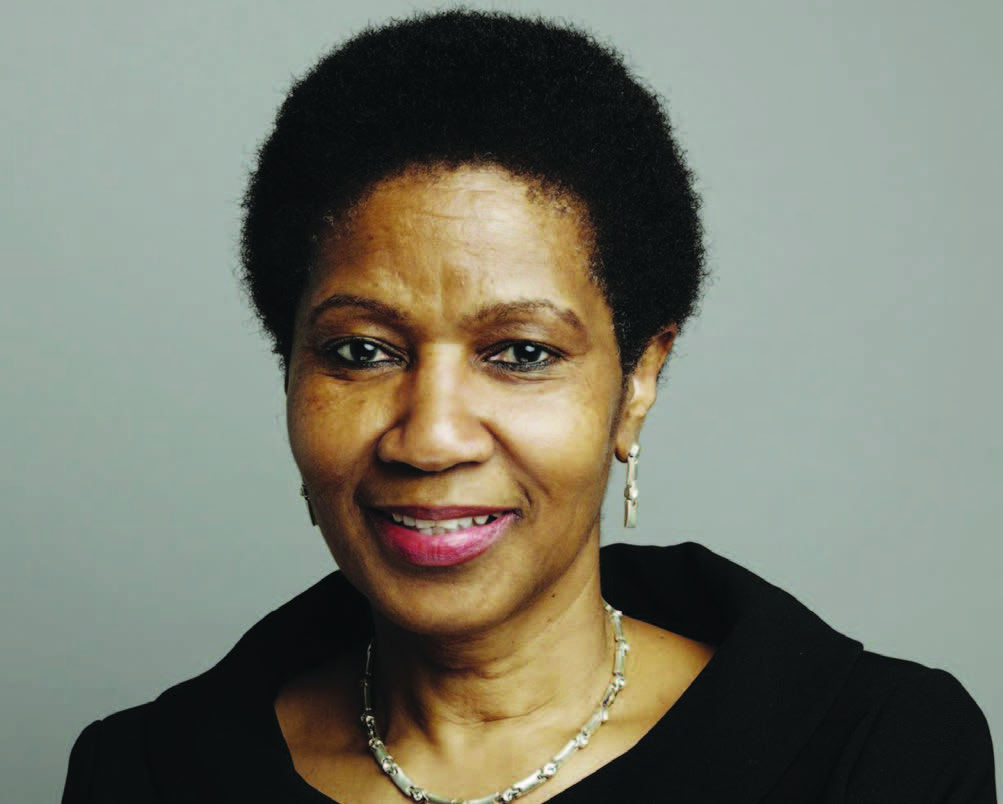
    UN Women Executive Director Phumzile Mlambo-Ngcuka said: “This pandemic has been the most directly discriminatory crisis the world has ever seen. It has treated most harshly those most deprived, and affected women’s lives across the world. But with firm political will to achieve fast-tracked, equal power-sharing, women and men can together address this and the other urgent challenges of our time, from climate change to conflict.”

    “This is the vision of the 2030 Agenda and the Sustainable Development Goals and the vision of the Beijing Declaration and Platform for Action. It is the vision of civil society and multitudes of young people who are already leading the way, and of all those who will join us in the Generation Equality Action Coalitions. It is surely also the vision of those assembled for the Commission on the Status of Women,” she added.

    As the UN Secretary-General report published on this year’s theme underlines, for power-sharing to become today’s reality, violence against women in public life must be significantly eliminated, and social norms, access to financing, and legal and institutional frameworks, have to be transformed, so that they support women’s equal participation and decision-making. Governments should also strengthen normative, legal, and regulatory frameworks, especially the implementation of gender quotas. Enhancing women’s civil society activism is also critical for transformative change at national and global levels.

    High-profile speakers including US Vice-President Kamala Harris, France Minister for Gender Equality, Diversity and Equal Opportunities Élisabeth Moreno, Mexico Vice-Minister for Multilateral Affairs and Human Rights Martha Delgado Peralta, European Commissioner For International Partnerships Jutta Urpilainen, among others, are expected to address the Commission this year. The full list of speakers is available here.

    CSW65 is an important bridge to the Generation Equality Forum, convened by UN Women and co-hosted by the Governments of Mexico and France, in conjunction with youth and civil society. The Forum will kick-off in Mexico City from 29 – 31 March, and culminate  in Paris from 29 June – 2 July.  It is designed to inspire urgent action, commitments and investments in gender equality. An interactive virtual side event on 19 March will be a curtain-raiser to the Generation Equality Forum kick-off in Mexico.

    As part of its efforts to catapult progress on gender equality, leaders of the Generation Equality Forum Action Coalitions – new and innovative partnerships including governments, feminist and youth movements and organizations, the private sector and international organizations – have unveiled the concrete action steps that they see as central to a new and bold feminist agenda within the next five years. These range from the accelerated introduction and implementation of laws and policies prohibiting all forms of gender-based violence to protect 550 million more women and girls worldwide, to introducing policy measures to recognize, reduce and redistribute unpaid care work and create at least 250 million decent care jobs or doubling the annual growth rate of funding for feminist, youth-led and grass-roots women’s groups.

    The opening session of CSW65 on March 15 featured statements from global leaders, including the Chair of the 65th Commission on the Status of Women MherMargaryan; the UN Secretary-General António Guterres; UN Women Executive Director Phumzile Mlambo-Ngcuka; civil society representative VirisilaBuadromo and youth leader Renata Koch Alvarenga.

    Along with the 18 official meetings that include Ministerial Round Tables, the general discussion and interactive dialogues, hundreds of side events and parallel events hosted by UN Member States, UN Agencies and civil society organizations will take place in the coming two weeks, mostly in a virtual format.

    Ahead of CSW65, UN Women supported partners to organize regional consultations with Ministers, gender equality experts and civil society organizations in Latin America and the Caribbean, Africa and Arab States, to build consensus and action priorities towards the Commission’s outcome, which is expected to be adopted at the conclusion of the second week.

  • WOMEN IN THE CHANGING WORLD OF WORK: PLANET 50-50 BY 2030

    WOMEN IN THE CHANGING WORLD OF WORK: PLANET 50-50 BY 2030

    INTERNATIONAL WOMEN’S DAY FEATURE

    Across the world, too many women and girls spend too many hours on household responsibilities – typically more than double the time spent by men and boys. They look after younger siblings, older family members, deal with illness in the family and manage the house. In many cases this unequal division of labor is at the expense of women’s and girls’ learning, of paid work, sports, or engagement in civic or community leadership. This shapes the norms of relative disadvantage and advantage, of where women and men are positioned in the economy, of what they are skilled to do and where they will work.

    This is the unchanging world of unrewarded work, a globally familiar scene of withered futures, where girls and their mothers sustain the family with free labor, with lives whose trajectories are very different from the men of the household.

    We want to construct a different world of work for women. As they grow up, girls must be exposed to a broad range of careers, and encouraged to make choices that lead beyond the traditional service and care options to jobs in industry, art, public service, modern agriculture and science.

    We have to start change at home and in the earliest days of school, so that there are no places in a child’s environment where they learn that girls must be less, have less, and dream smaller than boys.

    This will take adjustments in parenting, curricula, educational settings, and channels for everyday stereotypes like TV, advertising and entertainment; it will take determined steps to protect young girls from harmful cultural practices like early marriage, and from all forms of violence.

    Women and girls must be ready to be part of the digital revolution. Currently only 18 per cent of undergraduate computer science degrees are held by women. We must see a significant shift in girls all over the world taking STEM subjects, if women are to compete successfully for high-paying ‘new collar’ jobs. Currently just 25 per cent of the digital industries’ workforce are women.

    Achieving equality in the workplace will require an expansion of decent work and employment opportunities, involving governments’ targeted efforts to promote women’s participation in economic life, the support of important collectives like trade unions, and the voices of women themselves in framing solutions  to overcome current barriers to women’s participation, as examined by the UN Secretary-General’s High-level Panel on Women’s Economic Empowerment. The stakes are high: advancing women’s equality could boost global GDP by USD 12 trillion by 2025.

    It also requires a determined focus on removing the discrimination women face on multiple and intersecting fronts over and above their gender: sexual orientation, disability, older age, and race. Wage inequality follows these: the average gender wage gap is 23 per cent but this rises to 40 per cent for African American women in the United States. In the European Union, elderly women are 37 per cent more likely to live in poverty than elderly men.

    In roles where women are already over-represented but poorly paid, and with little or no social protection, we must make those industries work better for women. For example, a robust care economy that responds to the needs of women and gainfully employs them; equal terms and conditions for women’s paid work and unpaid work; and support for women entrepreneurs, including their access to finance and markets. Women in the informal sector also need their contributions to be acknowledged and protected. This calls for enabling macroeconomic policies that contribute to inclusive growth and significantly accelerate progress for the 770 million people living in extreme poverty.

    Addressing the injustices will take resolve and flexibility from both public and private sector employers. Incentives will be needed to recruit and retain female workers; like expanded maternity benefits for women that also support their re-entry into work, adoption of the Women’s Empowerment Principles, and direct representation at decision-making levels. Accompanying this, important changes in the provision of benefits for new fathers are needed, along with the cultural shifts that make uptake of paternity and parental leave a viable choice, and thus a real shared benefit for the family.

    In this complexity there are simple, big changes that must be made: for men to parent, for women to participate and for girls to be free to grow up equal to boys. Adjustments must happen on all sides if we are to increase the number of people able to engage in decent work, to keep this pool inclusive, and to realize the benefits that will come to all from the equal world envisaged in our Agenda 2030 for Sustainable Development.

    (Message of Executive Director, UN Women Phumzile Mlambo-Ngcuka)

  • UN TRUST FUND TO END VIOLENCE AGAINST WOMEN ANNOUNCES OVER USD 8 MILLION IN GRANTS IN 18 COUNTRIES AND TERRITORIES

    UN TRUST FUND TO END VIOLENCE AGAINST WOMEN ANNOUNCES OVER USD 8 MILLION IN GRANTS IN 18 COUNTRIES AND TERRITORIES

    NEW YORK (TIP): The United Nations Trust Fund to End Violence against Women (UN Trust Fund) announced, November 22, USD 8 million in grants to 17 initiatives in 18 countries and territories. First-time grant recipients include organizations from Antigua and Barbuda, Mauritania, Myanmar and Kosovo (under UNSCR 1244). These new grants are expected to reach 2.3 million beneficiaries between 2014 and 2017.

    “Violence against women and girls can be systematically addressed, and, with persistence, eliminated. The UN Trust Fund to End Violence against Women is dedicated to doing just this,” said Ms. Phumzile Mlambo-Ngcuka, Executive Director of UN Women. “Working with partners across the world, the Fund supports concrete action toward a world free of violence. The support of governments, corporations, foundations and individuals is crucial in achieving this goal.” Violence against women and girls continues to be one of the most pervasive human rights violations in the world, affecting as many as one in three women and girls during their lifetime.

    It severely impacts survivors and comes at tremendous emotional and economic costs for families and societies. “The sheer scale of prevailing violence against women and girls is an abomination as well as an obstacle to inclusive development,” said Ms. Lilianne Ploumen, Netherlands Minister for Foreign Trade and Development Cooperation, one of the UNTF’s multi-year donors. “There is urgent need for action to live up to the commitments made in Resolutions and at the Commission of the Status of Women. The Netherlands will continue to support the UN Trust Fund to End Violence against Women and encourages others to do so as well.”

    The grants announced today will support initiatives that respond to three priority areas of the UN Trust Fund: prevention, expanded access to services, and strengthened implementation of national laws, policies and action plans on violence against women and girls. Additionally, this year, funds will be used to address violence against adolescent and young girls, including through engaging school girls in Bangladesh and Viet Nam and developing the capacities of young girl leaders in the Ukraine.

    Other new UN Trust Fund grantees spearheading pioneering approaches include:

    o In South Africa, Grassroot Soccer will upscale and expand its innovative SKILLS Plus sports-based intervention to foster girls’ empowerment, expand girls’ awareness of sexual and reproductive rights and increase girls’ access to medical, legal and psychosocial services;

    o Medical Services in the Pacific will operate mobile clinics in seven rural market locations across Fiji, providing 18,000 women with improved access to sexual and reproductive healthcare, sexual assault counseling and referral services.

    o The Danish Refugee Council will empower displaced women through the provision of legal aid to survivors of violence by creating mobile legal clinics to serve communities hosting high concentrations of returnees and internally displaced persons in Afghanistan and refugee and asylumseekers in Tajikistan.

    The new grants are made possible with generous support from the Governments of Australia, Austria, Germany, Iceland, Ireland, Italy, Japan, Kazakhstan, Liechtenstein, the Netherlands and South Africa. The Fund is also grateful for the vital support of its partners in the private and non-profit sectors: the Saban Foundation; the United Nations Federal Credit Union, UN Women National Committees (Austria, Iceland, Japan, Singapore and the United Kingdom) and Zonta International.

    Administered by UN Women on behalf of the UN System, the UN Trust Fund has supported 368 initiatives in 132 countries and territories, delivering a total of USD 95 million since its establishment by the General Assembly in 1996. On 25 November, the International Day for the Elimination of Violence against Women, the Fund will also launch its next grant cycle with a global call for proposals to support country-level programs to end violence against women and girls in 2014. UN Women is the UN organization dedicated to gender equality and the empowerment of women.

    A global champion for women and girls, UN Women was established to accelerate progress on meeting their needs worldwide. For more information, visit www.unwomen.org. UN Women, 220 East 42nd Street, New York, NY 10017, New York. Tel: +1 646 781-4400. Fax: +1 646 781-4496.

  • Launch of pioneering nonformal curriculum to end violence against women and girls

    Launch of pioneering nonformal curriculum to end violence against women and girls

    UN Women and World Association of Girl Guides and Girl Scoutsput youth at the center of efforts

    NEW YORK, NY (TIP): On the occasion of the International Day of the Girl Child, UN Women and the World Association of Girl Guides and Girl Scouts (WAGGGS) launch “Voices against Violence”, a new nonformal education curriculum on ending violence against women and girls, putting young people at the heart of prevention efforts. A first of its kind, the “Voices against Violence” is a coeducational curriculum designed for various age groups ranging from 5 to 25 years. It provides girls, boys, young women and young men with tools and expertise to understand the root causes of violence in their communities, to educate and involve their peers and communities to prevent such violence, and to learn about where to access support if they experience violence. Working with youth organizations, UN partners and governments, UN Women and WAGGGS will roll out the curriculum to young people around the world.

    It will be adapted to national context, translated into local languages, and reach an estimated five million children and young people by 2020. “We need to expand quality education that empowers girls, breaks gender stereotypes, and achieves real social change. Education can play a key role in ending violence against women and girls and partnerships are critical to move this forward,” said Phumzile Mlambo-Ngcuka, Under-Secretary-General and UN Women Executive Director. “We are very excited about our partnership with the World Association of Girl Guides and Girl Scouts on this pioneering effort to prevent violence against women and girls worldwide,” she added. With 1 in 3 women and girls experiencing abuse in their lifetime, violence against women and girls is the most pervasive human rights violation. Gender-based violence starts early, and girls and young women are particularly vulnerable. Over 50 percent of sexual assaults are committed against girls under 16 years. Globally, one in three girls are married before the age of 18, and one in nine before they turn 15.

    “When we reached out to girls and young women around the world and asked what was important to them, they told us that they wanted to take a lead on tackling violence against girls and young women and that they wanted the World Association to work alongside them to do this”, said Mary Mc Phail, Chief Executive of the World Association of Girl Guides and Girl Scouts. “As part of our Stop the Violence campaign, Voices against Violence is our first response; and with this programme we aim to go from a whisper of resistance to a shout of outrage, to stop the violence.” The new curriculum stems from the understanding that prevention should start early in life, when values and norms around gender equality are formed, by educating girls and boys about respectful relationships and gender equality. Effective prevention efforts entail a cross-generational approach, working within schools and communities, and providing young people the tools they need to challenge gender stereotypes, discrimination and violence. Members of the Girl Guiding and Girl Scouting Movement can earn a ‘badge’ by completing a set of six age-appropriate sessions from the curriculum.

    Sessions can range from the youngest groups starting out with storytelling and games that prompt them to think about gender bias and stereotypes, while older age groups might organize poster competitions, visit and volunteer with local shelters, or develop local community-based campaigns and projects to address specific forms of violence against girls and women. For more information on Voices against Violence, visit http://www.unwomen.org/en/what-we-do/endingviolence- against-women/prevention#WAGGGS UN Women is the UN organization dedicated to gender equality and the empowerment of women. A global champion for women and girls, UN Women was established to accelerate progress on meeting their needs worldwide. For more information, visit www.unwomen.org. UN Women, 220 East 42nd Street, New York, NY 10017, New York. Tel: +1 646 781-4400. Fax: +1 646 781-4496.