Tag: Piyush Goyal

  • Canadian Energy Minister says he is pleased to work with India

    Canadian Energy Minister says he is pleased to work with India

    By Prabhjot Singh

    TORONTO (TIP): “As Prime Minister Carney says, we are in the midst of a rupture, not a transition. That means we must move quickly to deepen and enhance partnerships in every corner of the globe and use the natural advantages and resources we have to build Canada Strong.

    “As one of the largest and fastest-growing economies in the world, India is looking to us as a potential supplier of energy and minerals. I am pleased to work with India to build partnerships that advance bilateral trade and investment, global energy security, and the clean energy transition and generate revenue in Canada that we can use to pay for the public services we rely on. This is what being an energy superpower looks like,” says Tim Hodgson, Canadian Minister of Energy and Natural Resources, at the conclusion of his trip to India, where he attended India Energy Week and met with leaders of major Indian energy companies and his Indian counterparts to discuss opportunities to deepen bilateral trade and investment.

    He is the third Canadian minister, after Anita Indira Anand and Maninder Singh Sidhu, to visit India during the past few months. Canadian Prime Minister Mark Carney is also expected to visit India in the coming months.

    As Canada diversifies trade and attracts new investment to build the strongest economy in the G7, he says, “We are prioritizing broad engagement to maximize opportunities for our industries. That includes building new and enhanced relationships with Asian markets seeking long-term, reliable collaboration in energy and critical minerals.

    “As one of the world’s largest economies, India is expected to have the largest growth in global energy demand from now through to 2030—offering a significant opportunity for Canada to supply Indian partners and customers with world-class, low-cost, low-carbon Canadian resources,” he said.

    During India Energy Week, Minister Hodgson relaunched the Canada-India Ministerial Energy Dialogue (CIMED) alongside Hardeep Singh Puri, India’s Minister of Petroleum and Natural Gas, and endorsed the CIMED Action Plan. These initiatives mark a crucial first step for Canada toward a long-term, collaborative bilateral relationship with India that will serve as an important channel for sustained discussions on advancing Canada–India energy projects, potential long-term supply agreements, joint ventures, business-to-business deals, and targeted investments.

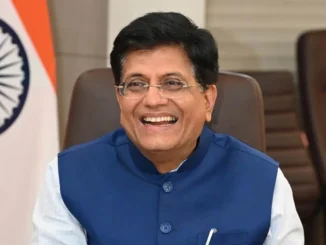
    Minister Hodgson also met Piyush Goyal, India’s Minister of Mines, in New Delhi following his participation in India Energy Week. The two ministers agreed to formalize Canada and India’s cooperation on critical minerals in the coming weeks, including a high-level Indian government and industry delegation coming to the Prospectors & Developers Association of Canada Convention in Toronto in March 2026.

    There is strong alignment between India’s ambitions and Canada’s push to begin building major energy and natural resource projects again, including LNG and recent investments under the G7 Critical Minerals Production Alliance. Rebuilding Canada’s relationship with India is key to achieving the Prime Minister’s goal of doubling exports to non-U.S. markets by 2035.

    Canada has what the world wants, from conventional and clean energy to critical minerals, and we are leveraging these strengths to build partnerships with major global players—creating economic opportunities at home to foster our position as an energy superpower worldwide. Recognizing the opportunities for enhanced economic cooperation, Canada’s participation in India Energy Week continues positive momentum and bilateral engagement with India toward more reliable supply chains and strategic stability, for the benefit of both countries.

    (Prabhjot Singh is a Toronto-based Senior Journalist. He can be reached at prabhjot416@gmail.com)

  • India, Canada to continue long-term supply chain partnerships

    India, Canada to continue long-term supply chain partnerships

    OTTAWA / NEW DELHI (TIP): After the exchange of visits of foreign ministers, the Indian and Canadian trade ministers reaffirmed the strength and continuity of the India–Canada economic partnership and reiterated their commitment to deepening bilateral cooperation through sustained dialogue, mutual respect, and forward-looking initiatives. A joint statement was issued at the conclusion of the joint bilateral between Canadian Trade Minister Maninder Sidhu and his Indian counterpart, Piyush Goel. The statement acknowledged robust growth in bilateral trade in goods and services that has reached US$23.66 billion in 2024, with merchandise trade valued at nearly US$8.98 billion, a substantial 10% increase over the previous year.

    Maninder Sidhu has become the first Canadian Trade Minister under the Mark Carney government, who, at the invitation of India’s Minister for Commerce and Industry Shri Piyush Goyal, undertook an official visit to India from November 11 to 14.

    Incidentally, he is the second Canadian minister of Indian descent, after Anita Anand, to visit India in recent months.

    The ministers reaffirmed the strength and resilience of the India–Canada economic partnership and emphasized the importance of continued engagement with the private sector to unlock new opportunities for trade and investment. They welcomed the steady expansion of two-way investment flows, including notable Canadian institutional investment in India and the growing presence of Indian firms in Canada, which together support tens of thousands of jobs in both economies. The ministers committed to maintaining an open, transparent, and predictable investment environment and to exploring avenues for deeper collaboration across priority and emerging sectors.

    Pursuant to the direction provided by the prime ministers of the two countries during their bilateral meeting on the sidelines of the G7 meeting in Kananaskis, Canada, as well as the Foreign Ministers Joint Statement, “Renewing momentum towards a stronger partnership,” of October 13, which identified trade as the cornerstone of bilateral economic growth and resilience, the two trade ministers held the 7th edition of the Ministerial Dialogue on Trade and Investment (MDTI).

    The ministers also noted strong complementarities between India and Canada across strategic sectors, driving sustainable growth and innovation and offering new opportunities for trade. Recognizing that these areas would require separate domain-level engagement between relevant stakeholders on both sides, the ministers agreed to encourage long-term supply chain partnerships in critical minerals and clean energy collaboration essential for the energy transition and new-age industrial expansion.

    They also agreed to identify and expand investment and trading opportunities in aerospace and dual-use capabilities partnerships, leveraging Canada’s established presence in India and the growth of India’s aviation sector.

    Recognizing the importance of supply chain resilience, the ministers exchanged views on global developments and reflected on lessons from recent disruptions. They underscored the relevance of strengthening resilience in critical sectors, including agriculture, and highlighted the need for diversified and reliable supply chains as essential for supporting long‑term economic stability.

    The ministers expressed satisfaction with the progress made in strengthening bilateral economic engagement and reaffirmed their shared commitment to elevating the economic partnership to reflect global developments and evolving supply chain and trade dynamics. They emphasized the importance of maintaining momentum in bilateral dialogue and supporting people-to-people ties, which provide a strong foundation for the partnership.

    The ministers agreed to sustained ministerial engagements with the trade and investment community in both Canada and India early next year. They agreed to remain in close communication as they consider next steps and concluded by acknowledging the constructive and forward-looking discussions held in New Delhi.

  • Trade thaw likely as Indian team heads to US after Gor’s Delhi talks

    Trade thaw likely as Indian team heads to US after Gor’s Delhi talks

    Analysts estimate that the tariffs could shave 0.5 per cent off India’s GDP

    NEW DELHI/WASHINGTON, D.C. (TIP): Signaling a potential thaw in trade relations, a team of senior Indian officials will visit the US this week to hold talks with the Trump administration on the proposed bilateral trade agreement, an official said in New Delhi.

    “The Indian team will visit the US this week,” the official said, adding that the trade talks are progressing well. The development follows meetings between US Ambassador-designate to India Sergio Gor and Prime Minister Narendra Modi, External Affairs Minister S Jaishankar and Commerce and Industry Minister Piyush Goyal.

    The trade pact was announced in February by PM Modi and President Donald Trump during Modi’s visit to the US, with the objective of doubling bilateral trade between the two countries to $500 billion.

    India and the US had agreed to conclude the first tranche of the proposed trade pact by the fall (October-November) of this year. The official said both sides remain hopeful of meeting that target. So far, five rounds of negotiations have been completed.

    In September, Goyal led an official delegation to the US, where he met with United States Trade Representative (USTR) Jamieson Greer and Gor. The Commerce and Industry Ministry said the delegation held constructive discussions with the US government on various aspects of the agreement. Both sides exchanged views on the possible contours of the deal and agreed to continue engagements to achieve an early, mutually beneficial conclusion.

    According to reports, India has offered concessions to the US, including easing some restrictions on the import of genetically modified corn and increasing purchases of American defense and energy products.

    These discussions have taken place amid heightened tensions following Washington’s imposition of a 25 per cent reciprocal tariff and an additional 25 per cent penalty on Indian goods in response to India’s purchase of Russian crude oil — resulting in a total 50 per cent import duty on Indian exports to the US.

    Analysts estimate that the tariffs could shave 0.5 per cent off India’s GDP. Bilateral ties hit a low in late August after a planned US delegation visit to New Delhi for the sixth round of talks (scheduled for August 25-29) was abruptly postponed amid escalating tensions.

    India’s exports to the US fell to $6.86 billion in August from $8.01 billion in July, according to Commerce Ministry data.

    Exporters said the higher tariffs would start biting now, as the extra 25 per cent duties came into force only at the end of August. September trade data is expected later this week.
    (Source: TNS)

  • There will be no change in policy on multi-brand retailing: Piyush Goyal in US

    There will be no change in policy on multi-brand retailing: Piyush Goyal in US

    WASHINGTON, D.C. (TIP): India’s Union Minister of Commerce and Industry Piyush Goyal on Thursday, October 3, categorically ruled out the entry of multi-brand retailing in India as such a move would destroy pop-and-mom stores like that of the US. Except for this, he said, India is open to all kinds of economic reforms necessary to take the country on an accelerated growth.

    “If the need arises, we can re-look at any of these (policies) or the government has the authority through cabinet approval to allow greater percentages (of foreign stakes in various sectors). Or we can go to Parliament and change it also, not a problem, though I do not think any of these requires parliamentary changes,” Goyal said in response to a question at the Centre for Strategic and International Studies think-tank here.

    “The important area where sometimes, and particularly in countries like the US, I hear voices is about multi-brand retail. And that is a no-no. I want to make it loud and clear that there will be no change in our policy on multi-brand retail. America has suffered the consequences of big tech and large retail and the interplay of the two leading to almost the annihilation of mom-and-pop stores across the length and breadth of the country,” he said.

    Goyal said the United States can afford it because its population is much smaller compared to India and there are alternative avenues for people to do jobs in.

    “And probably, you are satisfied that the rest of the youngsters are now just left to be sales delivery boys or delivery girls. That is a choice each country makes,” he noted.

    “India has nearly 100 billion small mom-and-pop stores in the length and breadth of the country. In every village that you will go to, there will be 10 or 12 small shops selling different types of products. There will be 10 or 12 small shops providing different services. There will be a pharmacy in almost every corner around the country,” the minister said.

    “We believe that they all play a very important role. We want them to be integrated with technology. We are happy if they get integrated with e-commerce or get a chance to withstand the business practices of the e-commerce companies. But we are not looking at changing the rules for e-commerce. Other than that, there is no sector left where we have any restrictions whatsoever,” he said. The senior leader from the ruling Bharatiya Janata Party (BJP) said even in defense, 100 per cent foreign ownership is allowed in India.

    “Space has been opened up to foreign ownership. It is a very open country. Money can move in and out pretty much easily with no stoppages, but there could be a process required just to make sure there is no money laundering or there is no round-tripping of money going out of India and coming back into the country as a tax arbitrage. A few safeguards are there,” he said, adding that today, nobody is telling him that they are not investing in India due to any of the government policies.
    (Source: PTI)

  • US Deputy Secretary of State Richard Verma meets Indian officials to advance global strategic partnership

    US Deputy Secretary of State Richard Verma meets Indian officials to advance global strategic partnership

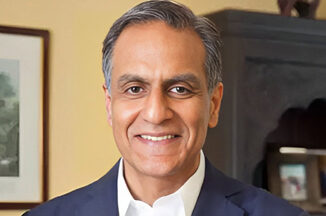
    WASHINGTON, D.C. (TIP): The US Deputy Secretary of State Richard Verma has met with senior Indian ministers and officials in New Delhi to advance the US-India global strategic partnership and ensure a free and open Indo-Pacific region, according to his spokesperson.

    Verma, the Deputy Secretary of State for Management and Resources, is the highest-ranking Indian American in the State Department. The former US Ambassador to India was on an official visit to India from February 19 to 21.

    He met External Affairs Minister S Jaishankar, Foreign Secretary Vinay Mohan Kwatra, Defense Secretary Giridhar Aramane, and Deputy National Security Advisor Vikram Misri in New Delhi, State Department Spokesperson Matthew Miller said here on Thursday.

    Verma’s meetings explored opportunities to strengthen US-India cooperation and people-to-people ties to ensure a free, open, secure, and prosperous Indo-Pacific region, Miller said.

    He also met with Minister of Commerce and Industry Piyush Goyal to discuss further expanding trade and economic ties between the US and India. “The Deputy Secretary and Indian officials further emphasized the benefits of close partnership on addressing global issues,” Miller said.

    Verma is on a six-day official visit to India, Sri Lanka and Maldives till Friday to strengthen bilateral ties with the nations, reaffirming America’s enduring commitment to a free, open, secure, and prosperous region.

  • India’s Minister Piyush Goyal interacts with the Indian American community, details his government’s achievements

    India’s Minister Piyush Goyal interacts with the Indian American community, details his government’s achievements

    EDISON, NJ (TIP): India’s Minister of Commerce & Industry, Consumer Affairs, Food & Public Distribution, Textiles , and Leader of the Rajya Sabha, Piyush Goyal interacted  here with the Indian American community on January 8.

    The minister was gracious enough to apologize for arriving late. Referring to the cultural presentation by the young artists, he said : “It’s very heartening to see India’s culture  and our traditions being  kept alive by all of you and I’d like to thank you for, in some sense, instigating Indian value systems in the youth. The Indians who are born here,  who are living here, were largely exposed to the American way of life, American lifestyle. That little bit of Indian tradition, value systems, family culture, I think will hold them in good stead as they grew up to be good citizens of the United States of America.” Praising Indians in the United States of America, he said they had performed exceedingly well in both  the US and India Speaking of the strong linkages and bonds of friendship between India and the US, Mr. Goyal said,  “We have very strong geopolitical ties, huge interests in  business and trade, and  in economic wellbeing of both countries. In fact, India is happy that the United States of America is our largest trading partner.”

    “As we mark the contribution of all of the overseas Indians across the world, we feel proud that Indians have contributed to the rest of the world through our rich traditions and culture, and our acumen and managerial skills, our  talent which is today helping Indians lead large corporations, helping Indians contribute to the economic wellbeing of almost all parts of the world. Indians have been blessed with a huge amount of wealth of knowledge. And I believe the positive impact that all of you are making to America is well recognized in the reception that we get when we come to America or we go to any country. It’s truly because we represent a country of 1.4 billion Indians that we are recognized and respected.

    The minister made a long oration about the progress India had made under the prime ministership of Mr. Narendra Modi. One of the achievements among the many he proudly cited was that Mr. Modi ensured that not even a single person died of starvation during the Covid-19 period. His claim was met with a little disbelief by many in the gathering, as stories about starvation deaths during the Covid -19 period  were doing the rounds in the media, even as the government of India reported no starvation deaths in India since 2016.

    Earlier, in his welcome address, Consul General of India at New York, Randhir Kumar Jaiswal observed that “Indiais on a transformative path under  the visionary leadership of the  prime minister. There are three things that today happen to be part of global conversation. One, the Indian growth story. Two, the Indian startup ecosystem bursting and booming at its seams and three,  the socio-economic initiatives that are transforming India from food distribution to digital goods, and so on so forth. Let me tell you in all these three areas that form part of global conversation today, our honorable  Minister has a very critical role. He has played a very critical role in all these areas.” Mr. Vikas Nangia, well known TV Asia anchor excelled as the master  of ceremonies. The cultural content was extremely rich, with a song each being sung by a young man and a young lady, and a group dance which was presented by a troupe from Sneh Arts.

  • Reboot to reset: On India-U.S. trade ties

    With Indo-U.S. trade deal off, it is time India reorients its global economic engagement

    India’s largest trading partner, and one with whom it has a significant trade surplus, the U.S., is no longer interested in securing a bilateral free trade agreement (FTA), as per indications from the Joe Biden administration. An official acknowledgement of this, from Commerce Minister Piyush Goyal, suggests that years of negotiations towards a ‘mini-trade deal’ followed by a full-blown trade pact that Mr. Biden’s predecessor oversaw may well be infructuous now. The Government will now seek to work on market access issues on both sides, he said, adding that lowering of non-tariff barriers, mutual recognition pacts and adopting common quality standards can also help Indian exports in the interim. There is a possibility that even these issues, which include long-festering dissonances over providing access to U.S. agricultural products or easing import duties on automobiles and Bourbons, would have to be discussed afresh. On Friday, the U.S. envoy to India met Mr. Goyal for what he said was a parley on attaining the $500 billion bilateral trade vision of the U.S. President. The trade target, set when Mr. Biden was the Vice-President in the Barack Obama regime, remains unchanged, but the tools for achieving it are no longer clear. India was pulled out of the U.S.’s Generalized System of Preferences (GSP) that granted some tariff relief to its exports by the Trump government in 2019 and hopes of its reinduction through a mini-trade deal now appear bleak. While India was expected to gain from the Sino-U.S. trade wars under the Donald Trump administration, its retaliation to the GSP status revocation with hiked tariffs on U.S. products had led to frictions that perhaps stymied the conclusion of a mini-trade deal before the change at the helm in the White House.

    The U.S.’s no-go stance on the FTA implies ambitions may have to be pared down but also provides an opportunity for India to holistically review its stance on global trade. It is refreshing that Mr. Goyal has signaled a revamped approach towards FTAs and reminded Indian industry there cannot be one-way traffic. This needs to be matched by actions that start unwinding India’s creeping walls of import tariffs. The Atmanirbhar Bharat campaign has further exacerbated that view — as the advent of a protectionist ‘closed market’ project. Strenuous exhortations that the self-reliance drive is one that seeks to integrate with global value chains can only go so far. Trade policy cannot be perpetuated in isolation and, in fact, affects investments too. Having walked out of RCEP, India needs to demonstrate to its potential FTA partners, including the EU and the U.K., with which rivals like Vietnam have already sealed a deal, that it is a viable alternative to China in a post-COVID world. To be a major trading and manufacturing nation, India can ill-afford to keep sending mixed signals.

    (The Hindu)

  • India, US agree to work towards resolving key bilateral trade issues

    India and the United States have agreed to work constructively to resolve key outstanding bilateral trade issues and to take a comprehensive look at ways to expand the trade relationship, the Biden administration has said.

    United States Trade Representative Katherine Tai discussed the important trade and investment relationship between the two countries during her maiden phone call with her Indian counterpart Commerce and Industry Minister Piyush Goyal. “They committed to strengthening cooperation on shared objectives and to revitalise engagement through the US-India Trade Policy Forum. They also agreed to work constructively to resolve key outstanding bilateral trade issues and to take a comprehensive look at ways to expand the trade relationship,” the United States Trade Representative (USTR) said in a readout of the call on Thursday.

    Tai, who was confirmed by the Senate only a few days ago, stressed the critical importance of cooperation on a broad set of issues, including digital trade, intellectual property, agriculture, labor, and climate and environment.

    Tai and Goyal agreed to hold the next ministerial-level meeting of the Trade Policy Forum during 2021, the USTR said. Supreme Court upholds Tata Sons’ appeal in Mistry case

    The Supreme Court on Friday set aside a 2019 order of the National Company Law Appellate Tribunal (NCLAT) which reinstated Cyrus Mistry as the executive chairman of the over $100 billion Tata Sons. It allowed Tata Sons’ appeal, holding that well-settled principles had been overturned by the NCLAT when it decided the dispute in the previous round.

    “All the appeals filed by Tata Sons against Cyrus Mistry are allowed,” the bench headed by Chief Justice of India (CJI) SA Bobde added.

    Mistry had succeeded Ratan Tata as chairman of Tata Sons in 2012 but was ousted four years later in a board meeti.

    About the issues relating to valuation of shares and the Shapoorji Pallonji (SP) Group pledging its shares in Tata Sons to raise funds, the top court maintained that both parties were at liberty to raise these before appropriate forum and that the court would not pass any order.

  • Farm Laws:  No headway in 11thRound of Talks between Government and Farmers

    Farm Laws: No headway in 11thRound of Talks between Government and Farmers

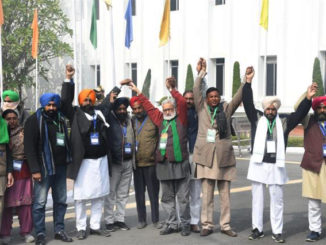
    NEW DELHI (TIP): Farmer unions on Friday, January 22, told the government that they wanted a complete repeal of three contentious farm laws even as the Centre asked them to reconsider its proposal for putting the Acts on hold for 12-18 months, as the two sides met for their 11th round of talks to resolve the nearly-two-month-long deadlock.

    The 11th round of farmer-government meeting lasted barely for 30 minutes. Broadly, the government has made it clear that the three controversial laws will not be repealed, and that the government has made its best offer.The Union Government has also urged the farmer leaders to consider building consensus around the proposal.

    Ending the meeting, Agriculture Minister Narendra Singh Tomar told unions that “the government is grateful for their cooperation”. “There is nothing wrong in the three laws. We gave the proposal, but you could not arrive at any decision. If you arrive at any conclusion please let us know, we will discuss again,” Tomar said.

    Sources say Union Ministers have told farmer leaders that they had given the “best proposal” and that they should try to build consensus around it. Meanwhile, farmer leaders said they were firm on their stated stance and have already decided that farmers would not settle for anything less than the repeal of the three laws. “We will now prepare for the January 26 parade,” they said, adding: “The government could not build a consensus and was wrong of them to accuse us of going to the media,” they said.While the morning session lasted for barely 20 minutes, the post lunch was also finished in 10 minutes after Tomar’s brief statement.The government has not set a date for the next meeting and has told the union leaders to think on its proposal. Notably, a section among Punjab unions were in the favor of accepting the government’s offer. They included some “small unions from Doaba” and similar organizations.Unions have claimed “threats” to union leaders namely Darshan Pal and Rakesh Tikait.

    In the last round of meetings held on Wednesday, the government had offered to put on hold the three laws and set up a joint committee to find solutions. However, after internal consultations on Thursday, the farmer unions decided to reject the offer and stick to their two major demands -the repeal of the three laws and a legal guarantee of the minimum support price (MSP). “We told the government that we would not agree to anything other than the repeal of the laws. But the minister asked us to discuss separately again and rethink on the matter and convey the decision,” farmer leader Darshan Pal told PTI during a break after the first session.

    BKU leader Rakesh Tikait said: “We conveyed our position clearly to the government that we want a repeal of the laws and not a suspension. The minister (Narendra Singh Tomar) asked us to reconsider our decision.”

    The eleventh round of talks between protesting farmer unions and three central ministers began at around 1 pm, but not much headway was visible in the first few hours of the meeting.

    Some leaders had apprehensions that the movement would lose its momentum once the farmers went away from Delhi borders.

    Harpal Singh, president of Bhartiya Kisan Union – Asli Arajnaitik, said: “Even if we accept the government’s offer, our fellow brothers sitting at Delhi borders will not accept anything other than a repeal of the laws. They will not spare us. What achievement will we show to them?”

    He also questioned the government’s credibility, alleging it was difficult to believe that they would keep their word on putting the laws on hold for 18 months.

    “We will die here but we will not return without getting the laws repealed,” Singh said. Along with Union Agriculture Minister Tomar, Railways, Commerce and Food Minister Piyush Goyal and Minister of State for Commerce Som Parkash are also participating in the talks with representatives of 41 farmer unions at the Vigyan Bhawan here. In a full general body meeting on Thursday, SamyuktKisanMorcha, the umbrella body of the protesting unions, rejected the government’s proposal.

    “A full repeal of three central farm Acts and enacting a legislation for remunerative MSP for all farmers were reiterated as the pending demands of the movement,” the Morcha said in a statement.

    Thousands of farmers, mainly from Punjab, Haryana and western Uttar Pradesh, are protesting at various border points of Delhi for over a month now against the three laws.

    Farmer groups have alleged these laws will end the mandi and MSP procurement systems and leave the farmers at the mercy of big corporates, even as the government has rejected these apprehensions as misplaced.

    On January 11, the Supreme Court stayed the implementation of the three laws till further orders and appointed a four-member panel to resolve the impasse.

    Bhartiya Kisan Union president Bhupinder Singh Mann had recused himself from the committee appointed by the apex court.

    ShetkariSanghatana (Maharashtra) President Anil Ghanwat and agriculture economists Pramod Kumar Joshi and Ashok Gulati, the other three members on the panel, started the consultation process with stakeholders on Thursday, January 21.

    (With inputs from PTI and TNS)