Tag: PMLA

  • From Principled Left to Power Without Purpose: The CPM’s Crisis in Kerala

    From Principled Left to Power Without Purpose: The CPM’s Crisis in Kerala

    By George Abraham

    The people of Kerala have spoken decisively in the recent Panchayat and Municipal elections, delivering a clear rebuke to the corrupt and authoritarian style of governance under Pinarayi Vijayan and his close coterie within the CPM. As one surveys the damage inflicted on a party that was once a credible voice for the poor and the disadvantaged, it is evident how far it has fallen and reduced to an empty shell, stripped of ideological coherence and moral authority.

    It is therefore worth revisiting whether the CPM’s past misjudgments continue to haunt it today, accelerating its steady decline and pushing the party toward political irrelevance. Once a formidable force in West Bengal since Independence, the CPM governed the state uninterrupted for 34 years. The turning point came during the final phase of its rule, when land acquisition controversy severely undermined its credibility. The violence in Nandigram proved to be a fatal blow, exposing a governance model increasingly associated with intimidation, favoritism, and corruption at both local and state levels.

    At the national level, the CPM remained a powerhouse even as the UPA-1 wrested power from the NDA in 2004. Together, the CPI and CPM commanded more than 61 seats in the Lok Sabha. With such significant representation, the Left could have demanded key portfolios in the Manmohan Singh cabinet, strengthening its national influence while delivering transformative projects to its strongholds in West Bengal and Kerala. Instead, the party squandered this historic opportunity by staying on the sidelines and ultimately withdrawing support from the government over the Indo–U.S. Civil Nuclear Agreement, a landmark deal that legitimized India’s entry into the global nuclear order.

    Prakash Karat, then General Secretary of the CPM, will likely be remembered as one of the principal architects of the party’s marginalization in national politics, having presided over decisions that sacrificed strategic influence at the altar of ideological rigidity. His insistence on party discipline culminated in the unfortunate and widely criticized action against a leader of immense stature, the then Speaker of the Lok Sabha, Mr. Somnath Chatterjee, an episode many viewed as a display of political arrogance that further eroded the party’s credibility. What we are witnessing today appears to be a continuation of that decline, now unfolding under the stewardship of Pinarayi Vijayan, with the CPM steadily losing its remaining footholds and diminishing its relevance in contemporary Indian politics.

    The Pinarayi Vijayan regime is not only eroding the party’s legacy as a populist force but is also widely perceived as one of the most corrupt administrations in Kerala’s history. It is a striking paradox that a leader who rose from modest beginnings is now seen as embracing luxury and fostering a culture of nepotism. Power is widely believed to be heavily centralized in the Chief Minister’s Office, with cabinet ministers and party functionaries frequently sidelined, thereby weakening collective decision-making. Critics further argue that transparency and accountability have been severely compromised, and that dissent or questioning of authority is met with little tolerance, marking a sharp departure from the Left’s traditional democratic ethos.

    Over time, a series of controversies have significantly dented the public image of the Pinarayi Vijayan administration. The gold smuggling case, which involved individuals with alleged links to the Chief Minister’s Office, raised serious questions about oversight and accountability. The LIFE Mission controversy further called attention to possible procedural violations, while irregularities in cooperative banks—allegedly involving party cadres—have reinforced perceptions of entrenched corruption within the system.

    Adding to these concerns, T. Veena, the Chief Minister’s daughter, has been named in an ongoing corporate fraud case linked to Cochin Minerals and Rutile Limited (CMRL). The Serious Fraud Investigation Office (SFIO) has alleged that Veena and her firm, Exalogic Solutions, received approximately ₹2.7 crore from CMRL without providing corresponding services, amounting to alleged fraudulent payments under the Companies Act. The Enforcement Directorate has also reportedly registered a case under the Prevention of Money Laundering Act (PMLA) in connection with these transactions. These matters remain under investigation.

    Equally troubling for the people of Kerala is what critics describe as economic mismanagement by the current government. Rising public debt and increasing dependence on borrowing point to a growing fiscal strain. The administration is accused of showing limited regard for fiscal discipline and offering little clarity on sustainable revenue generation. Despite repeated announcements of memoranda of understanding (MoUs), private investment, outside the consumer sector, has remained limited, resulting in inadequate job creation and continued migration of young Keralites in search of better opportunities elsewhere.
    Over the years, the CPM has been the principal nemesis of the BJP in Kerala, with youth cadres from both sides frequently engaging in violent clashes that have tragically resulted in loss of life. The CPM also positioned itself as the foremost proponent and defender of secularism, often castigating the Congress for what it perceived as ideological laxity. CPM leaders routinely and vociferously criticized the BJP’s policies and its Hindutva-driven politics.

    However, what has unfolded during the Pinarayi Vijayan regime has given rise to troubling accusations and narratives suggesting informal or tactical understandings, and even collaboration between the CPM and the BJP. Despite multiple corruption allegations involving Pinarayi Vijayan and his family, the BJP has adopted a noticeably soft approach, raising serious questions among political observers. Even the long-pending Lavalin case involving Pinarayi Vijayan has been deferred repeatedly, not at the behest of the defense but reportedly at the request of the prosecution. These developments prompt an uncomfortable question: whether knowingly or otherwise, the CPM has aligned itself with the BJP’s broader objective of creating a Congress-mukt Bharat.
    Such short-sightedness is deeply concerning. History shows that the BJP has consistently absorbed or marginalized its partners once it secures a foothold. A compromised and vulnerable Pinarayi Vijayan thus becomes a liability for Kerala, a complacent collaborator who risks opening the door for the BJP to inject communal poison into a state long known for its social harmony. Reports of closed-door meetings between CPM and BJP leaders have further fueled these suspicions. There is widespread speculation that vote transfers or tacit understandings may emerge in the upcoming Assembly elections, serving the interests of both parties. Similar patterns have been observed in West Bengal, where historical accounts from local and panchayat elections describe tactical cooperation between BJP and CPM workers at the grassroots level to counter the Trinamool Congress.
    Until now, BJP’s failure to gain a strong foothold in Kerala has largely been due to a vigilant electorate that instinctively shifts support between the UDF and the LDF whenever communal politics appears to gain ground. This delicate voter equilibrium, however, is being severely undermined by the CPM’s alleged attempts to protect the private interests of the Vijayan family.
    Pinarayi Vijayan and the present CPM leadership have strayed far from the values and principles upheld by stalwarts such as E. M. S. Namboothiripad and A. K. Gopalan, leaders who dedicated their lives selflessly to the upliftment of the poor and the marginalized without seeking personal gain. While I am not an admirer of communist philosophy, I have always respected those leaders for their idealism, personal sacrifice, and moral integrity, which deserve universal admiration. Pinarayi Vijayan, however, has rewritten that script, sacrificing ideological purity for personal and political survival, pushing the party toward irrelevance and plunging the state into deep uncertainty.

    The CPM today stands at a crossroads. Socialism in its classical form has failed across much of the world, and in Kerala the party appears increasingly devoid of a coherent political philosophy. Instead, it seems intent on perpetuating power through policies that erode the state’s financial stability, disturb social peace, and foster opportunistic alliances with communal forces for short-term gains, often accompanied by reckless populism and vote-oriented freebies.

    The verdict delivered by the people of Kerala in recent local body elections is not merely an electoral setback; it is a moral indictment. The people of Kerala are no longer blind to these ploys. History offers the CPM a sobering lesson. In West Bengal, prolonged rule bred arrogance, intolerance of dissent, and ultimately collapse. In national politics, ideological inflexibility squandered historic opportunities and hastened marginalization. Kerala now stands at a similar inflection point. The persistence of alleged compromises, whether ideological, ethical, or tactical, threatens not only the party’s future but also the delicate secular and social fabric of the state.
    (George Abraham is a former chief technology officer, United Nations. He is Vice-Chair of IOCUSA. He can be reached at gta777@gmail.com

  • Supreme Court of India curbs ED’s powers of arrest

    Supreme Court of India curbs ED’s powers of arrest

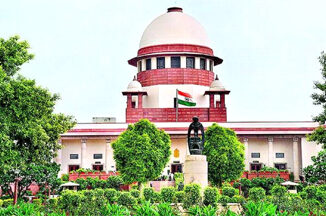
    NEW DELHI (TIP): A person accused of money laundering can’t be arrested by the Enforcement Directorate after the special court has taken cognizance of the probe agency’s complaint (chargesheet) and has issued summons to him under the Prevention of Money Laundering Act (PMLA), 2002, the Supreme Court ruled on Thursday, May 16, a TNS report said. A Bench led by Justice AS Oka, however, said: “If the ED wants custody of the accused who appears after service of summons for conducting further investigation in the same offence, it will have to seek custody of the accused by applying to the special court.”

    Must take court nod for custody

    Bench said if ED wanted custody, it could move a plea before special court, which could grant custody if satisfied custodial interrogation was required
    If ED wanted to conduct further probe for same offence, it could arrest person not shown as accused in complaint, provided requirements of Section 19 were met
    In case, an accused appeared before special court in response to summons after filing of ED complaint, he needn’t satisfy stringent twin test for bail
    Twin conditions for bail require court to first hear out public prosecutor; if satisfied accused isn’t guilty & won’t commit offence, court can grant bail.

    Amid criticism of its order granting 21-day interim bail to Delhi CM Arvind Kejriwal in a money laundering case linked to the excise scam, the Supreme Court on Thursday, May 16, said it didn’t make any exception for him. “We welcome critical analysis of the verdict… We specifically said we are not making an exception for anybody,” it said, refusing to go into charges and counter-charges made with regard to bail order.

    The Bench, which also included Justice Ujjal Bhuyan, said: “After hearing the accused, the special court must pass an order on the application by recording brief reasons. While hearing such an application, the court may permit custody only if it is satisfied custodial interrogation at that stage is required, even though the accused was never arrested under Section 19.”

    However, the top court said: “When the ED wants to conduct further investigation concerning the same offence, it may arrest a person not shown as an accused in the complaint already filed under Section 44(1)(b), provided the requirements of Section 19 are fulfilled.” It said: “If the accused was not arrested by the ED till the filing of complaint, while taking cognizance of a complaint under Section 44(1)(b), as a normal rule, the court should issue a summons to the accused and not a warrant. Even in a case where the accused is on bail, a summons must be issued.” The verdict came on a petition filed by Tarsem Lal challenging a Punjab and Haryana High Court order in a PMLA case against him. The HC had on December 19, 2023, dismissed his anticipatory bail plea, saying he didn’t satisfy one of the conditions under Section 45 of the PMLA.

    Section 45 requires the prosecutor to be given an opportunity to oppose the bail plea and says the court can grant bail to an accused only if it’s satisfied there are reasonable grounds for believing the accused is not guilty of such offence and that he is not likely to commit any offence while on bail.

    While setting aside the HC verdict, the top court cancelled the non-bailable warrants issued against Lal and asked him to furnish bonds before the special court and take part in the trial proceedings, unless specifically exempted.

    The Bench made it clear in cases where the accused has appeared before the special court in response to summons issued to him after filing of the ED complaint, he need not satisfy the stringent twin test for grant of bail under Section 45 that made it difficult for accused persons to get bail in money laundering cases.

    Noting that a bail bond furnished in terms of Section 88 of the Criminal Procedure Code (CrPC) was only an undertaking, the top court said an order accepting the bond didn’t amount to grant of bail and, therefore, the twin conditions of Section 45 of the PMLA were not applicable in such cases.

    “If the accused appears before the special court by summons, it can’t be treated that he is in custody… He is not required to apply for bail, and thus twin conditions of Section 45 of the PMLA are not applicable,” it said.

  • ED can’t arrest accused after special court has taken cognisance of complaint: SC

    ED can’t arrest accused after special court has taken cognisance of complaint: SC

    New Delhi (TIP)- The Supreme Court Thursday, May 16, held that the Enforcement Directorate (ED) cannot arrest an accused under Section 19 of the Prevention of Money Laundering Act (PMLA) after a special court has taken cognisance of the complaint of money laundering.
    A bench of justices Abhay S Oka and Ujjal Bhuyan said when an accused appears before a court in pursuance of a summons, the agency will have to apply to the court concerned to get his custody.
    “After cognisance is taken of the offence punishable under Section 4 of the PMLA based on a complaint under Section 44 (1)(b), the ED and its officers are powerless to exercise power under Section 19 to arrest a person shown as an accused in the complaint,” the top court said. If the accused appears before the special court by summons issued by the court, it cannot be treated that he is in custody, it said.
    “Accused who appeared before the court pursuant to the summons not required to apply for bail, and thus twin conditions of Section 45 of PMLA are not applicable,” the bench said in its judgment.
    The twin conditions state that when an accused in a money laundering case applies for bail, the court has to first allow the public prosecutor to be heard and only when it is satisfied that the accused is not guilty and unlikely to commit a similar offence when released, can bail be granted.
    The top court noted the submission that some of the special courts under the PMLA are following the practice of taking the accused into custody after they appear pursuant to the summons issued on the complaint.
    Therefore, the accused are compelled to apply for bail or for anticipatory bail apprehending arrest upon issuance of summons, it said.
    “We cannot countenance a situation where, before the filing of the complaint, the accused is not arrested; after the filing of the complaint, after he appears in compliance with the summons, he is taken into custody and forced to apply for bail. Hence, such a practice, if followed by some Special Courts, is completely illegal.
    “Such a practice may offend the right to liberty guaranteed by Article 21 of the Constitution of India. If the ED wants custody of the accused who appears after service of summons for conducting further investigation in the same offence, the ED will have to seek custody of the accused by applying to the Special Court,” the bench said.
    The apex court said the special court must pass an order on the application by recording brief reasons after hearing the accused.
    “While hearing such an application, the Court may permit custody only if it is satisfied that custodial interrogation at that stage is required, even though the accused was never arrested under Section 19. However, when the ED wants to conduct a further investigation concerning the same offence, it may arrest a person not shown as an accused in the complaint,” it said.
    The apex court judgment was pronounced on a question of whether an accused in a money laundering case has to meet the stringent twin test for bail even in cases where the special court takes cognisance of the offence.
    Issuing a slew of directions, the top court said once a complaint is filed, it will be governed by Sections 200 to 205 of the CrPC as none of the said provisions are inconsistent with any of the provisions of the PMLA.
    “If the accused was not arrested by the ED till filing of the complaint, while taking cognizance on a complaint under Section 44(1)(b), as a normal rule, Court should issue a summons to the accused and not a warrant. Even in a case where the accused is on bail, summons must be issued. “After a summons is issued under Section 204 of the CrPC on taking cognizance of the offence punishable under Section 4 of the PMLA on a complaint, if the accused appears before the Special Court pursuant to the summons, he shall not be treated as if he is in custody. Therefore, it is not necessary for him to apply for bail,” the bench said.

  • Political parties can be prosecuted for money laundering, rules Delhi High Court

    Political parties can be prosecuted for money laundering, rules Delhi High Court

    New Delhi (TIP)- The Delhi High Court’s verdict upholding the legality of Delhi Chief Minister Arvind Kejriwal’s arrest in a money-laundering case linked to the excise policy scam has wider ramifications for political parties as it ruled that a political party can be prosecuted under the Prevention of Money Laundering Act (PMLA).
    While dismissing Kejriwal’s petition challenging his arrest by the Enforcement Directorate, Justice Swarana Kanta Sharma held that the definition of ‘political party’ under the Representation of Peoples Act and definition of ‘company’ under the PMLA were identical.
    After examining the two definitions, Justice Sharma said, “This Court is of the opinion that the definition of ‘political party’ as per Section 2(f) of the Representation of Peoples Act is that a political party means an ‘association or body of individuals’. As per Explanation-1 of Section 70 of PMLA, a ‘company’ also means an ‘association of individuals’.”
    It upheld Kejriwal’s arrest as he was the National Convenor of AAP which has been accused of using proceeds of the crime in the 2022 Goa Assembly polls.
    “Thus, at this stage, the material placed on record, the statement recorded under Section 50 of PMLA of Sh. N.D. Gupta and the reply of the petitioner Sh. Kejriwal dated 18.01.2024 to the summons issued by the Directorate of Enforcement prima-facie make it clear that Sh. Kejriwal is in charge of and responsible for the conduct of the business of Aam Aadmi Party, and prima facie would be liable for affairs of the party so as to attract Section 70(1) of PMLA,” the High Court said in its April 9 judgment.
    Justice Sharma, however, noted that “as per proviso of Section 70(1), the petitioner Sh. Kejriwal will have the right to prove, at the appropriate stage, that he did not have any knowledge of the contravention of provisions of PMLA committed by his party or that he had exercised due diligence to prevent the same. This right, however, is not available as in all other criminal cases at the stage of arrest or remand as per existing law of the country.” The HC accepted the ED’s arguments that by virtue of Section 70 of PMLA, a ‘company’ also included within its ambit an ‘association of individuals’ and a political party was an association of individuals/citizens as per the RPA and thus, APP would be deemed to be a company for the purpose of Section 70 of PMLA. Kejriwal being its National Convenor would be in-charge of and responsible for its business, making him liable under Section 70(1) of PMLA.
    It rejected senior counsel AM Singhvi’s arguments on behalf of Kejriwal that the ED’s argument was misplaced. “… in his capacity as the National Convenor of Aam Aadmi Party as per Section 70(1) of PMLA, for use of proceeds of crime of Rs 45 crore in the election campaign of Aam Aadmi Party in Goa Elections 2022, which are prima facie apparent from the material relied upon by the respondent in this regard as well as the statement recorded on 08.03.2024 of one of the candidates of Aam Aadmi Party in Goa Elections 2022…,” the HC said. Source: TNS

  • The PMLA – a law that has lost its way

    The PMLA – a law that has lost its way

    The most serious aspect of the Prevention of Money Laundering Act is the inclusion of offences which have nothing to do with the original motive — namely, to combat the laundering of drug money.

    By P.D.T. Achary

    The Prevention of Money Laundering Act (PMLA), 2002 was enacted with a distinct objective. The humongous volume of black money generated through international drug trafficking posed a grave threat to the economy of many countries. There was widespread realization that the black money generated through the flourishing drug trade and integrated into the legitimate economy was likely to destabilize the world economy and endanger the integrity and sovereignty of nations.

    The background to the law is important
    The United Nations took serious note of this, and in 1988, held the United Nations Convention against Illicit Traffic in Narcotic Drugs and Psychotropic Substances. All countries were urged to take urgent steps to prevent the laundering of the proceeds of drug crimes and other connected activities. Subsequent to this, seven major industrial nations held a summit in Paris (July 1989) and established the Financial Action Task Force (FATF) to examine the problem of money laundering and recommend measures to tackle this menace. Thereafter, in 1990, the United Nations General Assembly adopted a resolution, namely, the Political Declaration and Global Programme of Action which called upon all member-countries to enact suitable pieces of legislation to effectively prevent the laundering of drug money.

    In pursuance of this resolution of the UN General Assembly, the Government of India used the recommendations of the FATF to formulate a legislation to prevent drug money laundering. As drug trafficking is a trans-border operation, the UN held a special session on June 10, 1998 on the theme ‘Countering World Drug Problem Together’ and made another declaration on the urgent need to combat money laundering. Accordingly, the Indian Parliament enacted the Prevention of Money Laundering Act in 2002. But it was brought into force in 2005.

    This narration of the history of this law is necessary in order to emphasize the original objective and the circumstances which lead to the enactment. As is clear from history, the main focus of the law is on combating the laundering of drug money. Accordingly, the Act of 2002 contained a few offences listed in the Indian Penal Code (IPC) and the Narcotic Drugs and Psychotropic Substances Act, 1985. The UN resolutions, and the FATF recommendations are all focused on the prevention of money from the laundering of drugs. However, the PMLA of India acquired a different character through amendments from time to time.

    The law on money laundering revolves around the “crime proceeds” which are laundered. Not only the persons involved directly in the crime and the generation of the crime proceeds but also persons who have nothing to do with the crime but who have some involvement at a later stage in the laundering process are also guilty under this law.

    But the most serious aspect of the PMLA is that it includes a large number of offences in the schedule which have nothing to do with the original purpose of this law — namely, combating the laundering of drug money. The UN resolution on the basis of which the law on laundering was enacted in India spoke only about the offence of the laundering of drug money. This was considered the most serious economic crime which had the potential to destabilize the world economy and endanger the sovereignty of nations, as highlighted above. The preamble to the PMLA endorses it. So, there was global consensus on the need to have a tough law to deal effectively with this crime. Thus, the raison d’etre of the PMLA is the crime of the laundering of a huge volume of black money generated from the international drug trade and the specter of destabilization of the world economy.

    The PMLA’s enactment
    Further, the PMLA was enacted by India’s Parliament under Article 253 which empowers it to make laws for implementing the international conventions. This Article indicates that a law Parliament makes to implement any decision of an international body will be confined to the subject matter of that decision. Item 13 in the Union list of the Seventh Schedule of the Constitution is specific on this point. Thus, the law on money laundering enacted under Article 253 and Item 13 of the Union list in the context of the UN resolution referred to above can only be on drug money. Various amendments made in this Act at different times bloated the schedule which now contains such offences which are either ordinary offences listed in the IPC or for which there are special laws in force. Since money laundering as an offence is linked to one of the scheduled offences, the offences contained in the schedule become the starting point of the whole process of operationalization of the PMLA.

    A close look at the schedule will convince a man of ordinary prudence that this law has deviated from its original scheme. The provisions contained in it are draconian which were meant to deal with the dangerous men involved in drug trafficking and the money chain. These provisions are now being used in other scheduled offences too without mitigating their rigor. Offences which by their very nature do not generate crime proceeds of a scale which can destabilize the economy and endanger the sovereignty of the nation are being tried under this law. One such example is the Prevention of Corruption Act, 1988 which is aimed at curbing corruption among public servants. This Act was added to the schedule of offences in 2009. The PMLA now applies with all its rigor to public servants. Thus, a public servant charged with corruption and a hard-core drug trafficker are treated alike. A very disturbing thing about the PMLA is that an accused under this law is presumed to be guilty until proved innocent.

    A fundamental principle of Anglo-Saxon jurisprudence is that a person is presumed innocent until proven guilty. PMLA turns this principle upside down. An accused will be denied bail by the entire hierarchy of courts because the bail provision contained in section 45 of the PMLA says that a judge can give bail only when he is satisfied that the accused is innocent. Which judge will take such a risk? So the person will rot in jail for years together without trial.

    The authority of ED and usage of PMLA
    The bail provision
    The bail provision of the PMLA Act (Section 45) is invested with a lot of political significance in present day India. It was held unconstitutional by a two-judge Bench of the Supreme Court of India in Nikesh Tarachand Shah vs Union of India (2018) as violating Article 14 and Article 21. However, Parliament, with great alacrity, restored this provision with certain amendments which was upheld by a three-judge Bench headed by Justice A.M. Khanwilkar in Vijay Madanlal Choudhary vs Union of India (2022). The top court held that this provision is reasonable and has direct nexus with the purposes and objects of the PMLA Act. Herein lies the problem.

    The object of the Act is to curb the laundering of black money and to save the economy from being destabilized. But what about less serious offences which have found a place in the schedule? The learned judges nearly said that inclusion of a particular offence in the schedule comes within the domain of the legislative policy.

    The present judicial approach to the issue of bail in PMLA cases appears to be very technical. The judicial perspective on bail was laid out by Justice V.R. Krishna Iyer back in 1978 under the following words in Gudikanti Narasimhulu And Ors vs Public Prosecutor, High Court Of Andhra: “Personal liberty, deprived when bail is refused, is too precious a value of our constitutional system recognized under Article 21 that the curial power to negate it is a great trust exercisable, not casually but judicially, with lively concern for the cost to the individual and the community”. From Justice V.R. Krishna Iyer to Justice A.M. Khanwilkar, the apex court has travelled a long distance.

    (The author is a former Secretary General, Lok Sabha)

  • ED names Sisodia accused in excise ‘scam’ for 1st time

    The ED on May 4 filed its fourth supplementary chargesheet in the Delhi excise policy “scam” case, naming former Delhi Deputy CM Manish Sisodia as an accused for the first time, officials said. Sisodia was arrested by the ED on March 9 from Tihar jail. The AAP leader was first arrested by the CBI, which is also probing the case and already named him as an accused. Sisodia is currently under judicial custody. The ED filed the chargesheet (termed as prosecution complaint under the PMLA) with a designated special court in Delhi. The 270-page chargesheet has annexures running into 2,000 pages, the officials said. The ED has called Sisodia a “key conspirator” in the case. The ED alleged the “scam” was initiated with the drafting of the excise policy by AAP leaders, led by Sisodia, to generate illegal funds through a nexus/understanding between key players of the “South Group”.

  • Govt amends anti-money laundering rules, brings ‘politically exposed persons’ under PMLA

    Govt amends anti-money laundering rules, brings ‘politically exposed persons’ under PMLA

    New Delhi (TIP)- The government has amended rules under the anti-money law, making it mandatory for banks and financial institutions to record financial transactions of politically exposed persons (PEP).
    Also, financial institutions or reporting agencies will be required to collect information about the financial transactions of non-profit organisations or NGOs under the provisions of the Prevention of Money Laundering Act (PMLA). Under the modified PML Rules, the Finance Ministry defined PEPs as “individuals who have been entrusted with prominent public functions by a foreign country, including the heads of States or Governments, senior politicians, senior government or judicial or military officers, senior executives of state-owned corporations and important political party officials”.
    The financial institutions will also have to register details of their NGO clients on the Darpan portal of the Niti Aayog and maintain the record for five years after the business relationship between a client and a reporting entity has ended or the account has been closed, whichever is later, the amendment said.
    Following this amendment, banks and financial institutions will now have to not only maintain records of financial transactions of PEPs and NGOs but also share them with the Enforcement Directorate, as and when sought. The amendments to PMLA rules also include tightening of the definition of beneficial owners under the anti-money laundering law and mandating reporting entities like banks and crypto platforms to collect information from their clients.
    As per the amendments, any individual or group holding 10 per cent ownership in the client of a ‘reporting entity’ will now be considered a beneficial owner against the ownership threshold of 25 per cent applicable earlier.
    Under the anti-money laundering law, ‘reporting entities’ are banks and financial institutions, firms engaged in real estate and jewellery sectors. They also include intermediaries in casinos and crypto or virtual digital assets.
    So far, these entities were required to maintain KYC details or records of documents evidencing the identity of their clients as well as account files and business correspondence relating to clients. They are required to maintain a record of all transactions, including the record of all cash transactions of more than Rs 10 lakh.
    They will now have to also collect the details of the registered office address and principal place of business of their clients. The powers of the ED stand vastly expanded by this move.
    In July 2022, in what the BJP had held as a “landmark judgment“, the Supreme Court bench headed by Justice A.M. Khanwilkar had already upheld the ED’s sweeping powers relating to arrest and attachment of property, and its ability to search and seize under the PMLA.
    The apex court also said the supply of Enforcement Case Information Report (ECIR) in every case to the person concerned is not mandatory. The ECIR is the ED’s equivalent of a police FIR.
    Several opposition parties – including the Congress, Trinamool Congress and Aam Aadmi Party – expressed “deep apprehension on the long-term implications” of the judgment.
    A bench headed by Chief Justice N.V. Ramana of the apex court, a month later, said that the same court’s judgement on the ED’s powers to take possession of a property before trial in exceptional cases leaves scope for arbitrary application and needed further explanation.
    The Supreme Court is also hearing the case against the tenure extension granted to ED director Sanjay Kumar Mishra in 2021. The Union government has called the petitions against the extensions “politically motivated”.
    Mishra was first appointed the ED director for a period of two years by an order on November 19, 2018. He was set to demit office in November, 2020, and in May that year, he had reached the retirement age of 60. But, through an office order on November 13, 2020, the appointment letter was modified retrospectively by the Union government and Mishra’s term of two years was replaced by three years.

  • Two years on, Kerala scribe Siddique Kappan walks out of jail

    Two years on, Kerala scribe Siddique Kappan walks out of jail

    Lucknow (TIP)- Kerala journalist Siddique Kappan walked out of jail on bail on Thursday, February 2, over two years after he was arrested for allegedly trying to instigate violence after the death of a woman at Hathras in UP.
    The release came almost six weeks after the Allahabad High Court granted him bail in a money laundering case filed by the Enforcement Directorate. In September, the Supreme Court granted him bail in another case under the Unlawful Activities (Prevention) Act (UAPA).
    Kappan was released from jail around 9.15 am, Lucknow district prison jailor Rajendra Singh said.
    A day earlier, his lawyer submitted two sureties of Rs 1 lakh each at the special PMLA (Prevention of Money Laundering Act) court here, fulfilling a bail condition.
    “I struggled,” Kappan said minutes after he walked out. “It has been 28 months. I am out after a lot of fight. I am happy,” he said.
    He said, “I am coming to Delhi. I have to stay there for six weeks.” The SC Bench headed by then Chief Justice Uday Umesh Lalit had directed Kappan to remain in Delhi for six weeks after his release from prison. Kappan and three others were arrested in October 2020 while they were going to Hathras where a Dalit woman died allegedly after being raped.
    “This is half-baked justice. Journalism is not a crime. I will continue my fight against draconian laws. They kept me in jail even after I got bail… 28 months after a long fight. I don’t know who’s benefiting from my being in jail. These two years were very tough, but I was never afraid,” he said after his release from the Lucknow jail.
    Kappan was accused of sedition and charged under the tough anti-terror law UAPA. In February 2022, the Enforcement Directorate filed a money laundering case against him, accusing him of receiving money from the banned People’s Front of India.
    In September last year, the Supreme Court granted him bail after observing that no formal charges were filed against him and a document named “Toolkit” recovered by the state police only propagated a call for justice in the rape case.

  • Surge in ED raids

    Financial probe agency’s credibility is at stake

    Amid the Opposition’s allegation that government agencies such as the Enforcement Directorate (ED) are being misused, the Centre has told the Rajya Sabha that raids carried out by the ED during 2014-2022 saw a nearly 27-fold increase as compared to the searches conducted between 2004 and 2014, when the Congress-led UPA was in power. The ruling NDA has attributed the surge to its ‘commitment to prevent money laundering’ and ‘improved systems for gathering financial intelligence as well as better inter-agency cooperation.’ It is commendable that the Centre’s twin purposes — disposing of pending investigation in old cases and completing the probe in new cases in a time-bound manner under the Prevention of Money Laundering Act (PMLA) — have led to 3,010 searches in the past eight years, resulting in the attachment of proceeds of crime to the tune of about Rs 99,356 crore and the filing of prosecution complaints in 888 cases. What’s worrying is the poor rate of conviction. Only 23 accused persons/entities have been convicted during this period, clearly pointing to investigative lapses and legal loopholes. The ED’s failure to build airtight cases in most instances gives room to allegations of ulterior motive and settling of political scores. It can’t be mere coincidence that these searches are largely confined to non-BJP-ruled states. The ED also owes an explanation for going slow in the Kerala gold smuggling case, which came to light in July 2020. It’s only now that the agency has approached the Supreme Court to seek transfer of the case to Karnataka; the long delay gave rise to speculation that political convenience prompted the Centre to spare the Congress’ arch-rival in Kerala.

    With the apex court backing the ED’s powers under the PMLA and upholding the constitutional validity of provisions dealing with the arrest and attachment of property of persons involved in money laundering, it has become even more important for the premier financial probe agency to ensure that its credibility is not undermined. The directorate’s functioning must be above board and the notion that it adopts a pick-and-choose approach should be firmly dispelled by letting it act freely and fairly.

    (Tribune, India)

  • Banks can sell Mallya’s properties, shares worth Rs 5,646 cr to recover dues

    Banks can sell Mallya’s properties, shares worth Rs 5,646 cr to recover dues

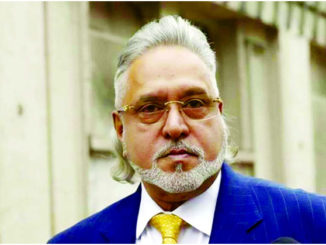
    New Delhi (TIP): Armed with court order, a consortium of lenders led by SBI can now sell certain real estate properties and securities belonging to fugitive Vijay Mallya to recover loans turned bad with failure of Kingfisher Airlines.

    A consortium of 11 banks that gave Mallya loans, led by State Bank of India (SBI), had approached a special Prevention of Money Laundering Act (PMLA) court seeking restoration of his properties seized by the Enforcement Directorate.

    The special PMLA court in Mumbai on Tuesday allowed the restoration of properties worth Rs 5,646.54 crore to banks.

    According to an official of lead bank SBI, symbolic possession of properties mentioned in the order would be taken by lenders after following due legal process.

    Recovery process in banks are guided by Securitisation and Reconstruction of Financial Assets and Enforcement of Security Interest (SARFAESI) Act, 2002, the official said, adding that auction or sale of those properties would be done as per the guidelines in due course of time.

    SBI has the highest exposure of Rs 1,600 crore out of original loan of Rs 6,900 crore to the defunct Kingfisher Airlines.

    Other banks that have exposure to the airline include Punjab National Bank (Rs 800 crore) and IDBI Bank (Rs 800 crore), Bank of India (Rs 650 crore), Bank of Baroda (Rs 550 crore), Central Bank of India (Rs 410 crore).

    Mallya is accused of fraud and money laundering allegedly amounting to around Rs 9,000 crore, which involved his defunct Kingfisher Airlines.

    Last year, Mallya offered to pay back 100 per cent of “public money” to various Indian banks and urged the government to accept his offer, days ahead of a UK court’s decision on his plea not to extradite him to India.

    The 65-year-old former Kingfisher Airlines boss has been on bail in the UK on an extradition warrant since his arrest in April 2019.

    Mallya’s extradition was ordered by former Britain Home Secretary Sajid Javid, in February 2019, after a prima facie case of fraud and money laundering was upheld by the UK courts, including on appeals. He remains on bail in Britain while a confidential legal matter, believed to be related to an asylum application, is resolved.

    Noting that banks have suffered losses, the PMLA Court on Tuesday said it was impossible to conclude the exact “quantifiable loss” at this stage.

    The court, however, said that the banks’ claim of losses of over Rs 6,200 crore was not “imaginary”.