Tag: politics

  • By taking the U.S. House of Representatives, Democrats can try to frame national agenda

    By taking the U.S. House of Representatives, Democrats can try to frame national agenda

    The Democratic Party made a comeback in Tuesday’s midterm elections after spending two years in the political darkness, when it seized control of the House of Representatives. Yet, predictions of a “blue wave”, as a backlash to the racially charged, polarizing campaign led by President Donald Trump, failed to materialize. The Democrats secured control of the 435-member lower chamber of Congress, flipping at least 26 seats from their Republican incumbents. This outcome, which will likely give the Trump administration pause for thought on the policy agenda for the remainder of its tenure, ends one-party rule in Washington. Yet, Mr. Trump hailed the results as a “tremendous success”, alluding to the fact that Republicans gained at least two seats in the Senate, giving them a clear majority in the 100-seat upper chamber. Results among the 36 gubernatorial races favored Democrats: although Mr. Trump’s support paid off in some swing States crucial to his 2020 re-election campaign, including Florida, Iowa and Ohio, his party failed to hold on to power in Wisconsin and Michigan. Democrats flipped seven States out of Republican control. While the 2018 midterm election results tracked the typical historical pattern of the party controlling the White House facing setbacks on Capitol Hill, the voter split appeared to reflect the legacy of Mr. Trump’s 2016 campaign. Republicans polled well in small towns and rural areas, while Democrats fared well in urban and suburban districts across the country. The Grand Old Party scored well in Senate races in Texas, Indiana, North Dakota and Missouri.

    Does this mean that the bitter polarization, racial hatred and culture wars that buoyed Mr. Trump’s prospects in 2016 have become entrenched in American society? Perhaps, but what the Democratic sweep of the House implies is that the constitutionally mandated system of checks and balances will be actively in force from January 2019. This could come in the form of House subpoenas to the White House, impediments to the progress of the additional tax cut proposals of the White House, or even putting the brakes on hardline stances impacting trade policies. Democrats under the likely leadership of Representative Nancy Pelosi may be tempted to lead the charge on inquiries into some of the Trump Organization’s murkier business dealings, or the Robert Mueller-led investigation into Russian interference in the 2016 election. But for now the Democrats are unlikely to go as far as attempting to impeach Mr. Trump. And rightly so, for a sober assessment of the midterm election mandate would focus on jobs, healthcare, and immigration, issues that matter most to the common American. If bipartisanship, and not belligerence, emerges between the two sides, that might then afford some space to discuss concerns about the functioning of the U.S. democratic machine, including campaign finance laws, redistricting and voter suppression.

    (The Hindu)

  • What  Resignation of Sessions Means for Robert Mueller

    What Resignation of Sessions Means for Robert Mueller

    By Natasha Bertrand

    His temporary replacement, Matthew Whitaker, has expressed skepticism over the scope of the Russia investigation—which he’ll now oversee.

    Intelligence and law-enforcement experts—as well as sitting members of Congress—have pointed out that the question of whether Russia has any kind of financial leverage over the president is highly relevant to determining whether Trump could have been coerced into conspiring with Moscow’s election interference in 2016. Indeed, several of the Justice Department and FBI officials who have investigated Trump’s campaign—and who have been attacked by Trump directly—have extensive experience in probing money laundering and organized crime, particularly as they pertain to Russia.

    President Donald Trump has forced out Attorney General Jeff Sessions just one day after the midterm elections and after nearly a year of berating him for recusing himself from the Justice Department’s Russia investigation. His  temporary replacement—Matthew Whitaker, his chief of staff—is now effectively Special Counsel Robert Mueller’s new boss. But he’s expressed repeated skepticism over the scope of Mueller’s inquiry in the past, raising immediate questions about whether he will try to limit it.

    Trump, who has been unsparing in publicly castigating his own Cabinet official, had been hinting that he would ask for Sessions’s  resignation following the elections. Privately, Trump has reportedly called him an “idiot” and said that hiring him was a mistake. He first asked Sessions to resign following Mueller’s appointment to lead the probe in May 2017, according to The New York Times, but then wouldn’t accept his resignation.

    Legal experts and political strategists who have either worked directly with the president or observed his behavior from afar attributed Trump’s reluctance to fire Sessions to two major considerations: fears in the White House that the move would cost the president support among GOP voters and members of Congress, who generally like and support Sessions, and the risk of provoking further allegations of obstruction of justice—both of which could deepen the challenges already facing the administration.

    Elie Honig, a former federal prosecutor in the Southern District of New York, told me that Trump’s decision to oust Sessions and replace him with Whitaker probably wouldn’t be considered an obstructive act in and of itself. But it could add to the “totality of the circumstances” surrounding a series of moves Trump has taken to try to stymie the Russia investigation since early last year, Honig said, including his firing of former FBI Director James Comey and his attacks on Sessions.

    David Kris, a founder of Culper Partners who served as the assistant attorney general for the DOJ’s National Security Division from 2009 to 2011, said it was “obvious” that Trump was motivated “by his well-expressed feelings of dislike toward the Mueller investigation. There can be no serious question about that.” Kris, like Honig, said that ousting Sessions and appointing Whitaker “could be another element in a bill of particulars” used by prosecutors to specify the ways that Trump “has used the powers of the presidency toward a corrupt end.”

    With the midterms out of the way, however, Trump evidently feels freer to make changes to his Cabinet, regardless of how it may be perceived by investigators who have been closely examining his behavior for signs of corrupt intent with regard to the Russia investigation over the last 18 months.

    Whitaker will be the acting attorney general until a permanent replacement is nominated, Trump tweeted on Wednesday, and he’ll be overseeing the Mueller investigation directly in his new post. While he has touted Mueller’s character—“There is no honest person that sits in the world of politics, in the world of law, that can find anything wrong with Bob Mueller,” he told CNN last year—he seems to have already formed an opinion on the probe itself. In a tweet, Whitaker said an article that characterized Mueller’s investigators as a “lynch mob” was a “must read,” and he told CNN that if Sessions were fired, his replacement could “reduce” Mueller’s budget in such a way that it would grind his investigation almost to a halt. He also shared an article on Twitter that explored the process by which Trump could fire Mueller, said in a radio interview that “there is no criminal obstruction-of-justice charge to be had” against Trump, and defended the Trump campaign’s decision to meet with Russian nationals to obtain dirt on Hillary Clinton—a meeting Mueller has been closely examining. “You would always take the meeting,” Whitaker told CNN last year. “You certainly want to have any advantage, any legal advantage you can.” Whitaker is also friendly with Sam Clovis—a key grand-jury witness in the Mueller probe—and chaired his state-treasurer campaign in 2014.

    Whitaker most clearly expressed his view of the Mueller probe in an op-ed last year, writing that the inquiry had gone “too far,” and arguing that the president’s personal finances were a “red line” that the special counsel had come “dangerously close to crossing.” (Mueller subpoenaed the Trump Organization earlier this year, but it is not clear which documents his team had requested. ) Whitaker added that “investigating Donald Trump’s finances or his family’s finances falls completely outside of the realm of his 2016 campaign and allegations that the campaign coordinated with the Russian government or anyone else. That goes beyond the scope of the appointment of the special counsel.”

    In reality, Deputy Attorney General Rod Rosenstein gave Mueller a fairly broad mandate when he appointed him following Sessions’s recusal in May 2017: Mueller was free to investigate not only Russia’s election interference and potential coordination between Trump’s campaign and Moscow, but “any matters that arose or may arise directly from the investigation” as well. Mueller has also been farming out aspects of the investigation to prosecutors in New York and Washington, D.C., that don’t fall squarely within his mandate.

    Moreover, intelligence and law-enforcement experts—as well as sitting members of Congress—have pointed out that the question of whether Russia has any kind of financial leverage over the president is highly relevant to determining whether Trump could have been coerced into conspiring with Moscow’s election interference in 2016. Indeed, several of the Justice Department and FBI officials who have investigated Trump’s campaign—and who have been attacked by Trump directly—have extensive experience in probing money laundering and organized crime, particularly as they pertain to Russia.

    David Laufman, a former high-ranking DOJ official who oversaw parts of the Russia investigation in his role as chief of the Counterintelligence and Export Control Section, said Trump’s “installation of a political loyalist who previously questioned the merits of the special counsel investigation must be viewed precisely for what it is: a preliminary assault on the special counsel’s latitude to complete his essential work and by extension on the rule of law.”

    Senate Minority Leader Chuck Schumer said on Wednesday, following Sessions’s resignation, that Whitaker “should recuse himself from” the Russia probe “for the duration of his time as acting attorney general” given his previous comments “advocating defunding and imposing limitations on the Mueller investigation.” Democratic Representative Elijah Cummings, who is set to chair the House Oversight Committee when the new Congress convenes next year, called Whitaker’s supervision of the Russia probe “wholly inappropriate” and told the Justice Department to preserve documents in preparation for an inquiry into his appointment. House Democrats could also opt to subpoena Whitaker to testify under oath once they take power in January.

    Trump’s move could still backfire. Without the administration’s protection, Sessions may now find himself both more vulnerable and more inclined to cooperate with Mueller, who has been investigating a period last summer when Trump privately discussed firing Sessions and attacked him in a series of tweets. At one point, the FBI opened an investigation into whether Sessions perjured himself in congressional testimony when he said he had no contact with Russians during the campaign. “It’s possible that Sessions will now be either angry or, at a minimum, no longer feel any need to curry favor with the president,” Kris said. Sessions’s conversations during the campaign with former Russian Ambassador Sergey Kislyak and the Trump campaign adviser George Papadopoulos have been closely scrutinized by the special counsel, moreover, and Sessions’s campaign-era interactions with Trump would not be covered by executive privilege, Kris noted.

    Sessions had mostly laid low in the face of the president’s taunts, but he’s not shied away from defending himself when necessary. “I took control of the Department of Justice the day I was sworn in,” he said in August. “While I am attorney general, the actions of the Department of Justice will not be improperly influenced by political considerations. I demand the highest standards, and where they are not met, I take action.”

    (The author is a staff writer at The Atlantic where she covers national security and the intelligence community)

    (First published in The Atlantic, Nov 7. Republished courtesy The Atlantic)


  • Trump sacks AG, ‘takes over’ Russia meddling probe

    Trump sacks AG, ‘takes over’ Russia meddling probe

    WASHINGTON(TIP): President Donald Trump on Wednesday, November 7,  sacked US Attorney General Jeff Sessions, virtually taking operational control of a sensitive probe into foreign interference in the 2016 election and the possibility of collusion between the Trump campaign and Russia.

    For months, Trump publicly attacked Sessions for recusing himself from overseeing the probe in 2017 and blamed his decision for allowing Deputy Attorney General Rod Rosenstein to appoint a special counsel.

    Trump said Sessions will be temporarily replaced by his chief of staff, Matthew Whitaker, who is a Republican loyalist. Now, with Whitaker at the helm, Trump has someone leading the Justice Department who has already suggested that Mueller’s probe should be reined in.

    CBS News reported that Deputy Attorney General Rosenstein is no longer leading the Mueller inquiry, and that Whitaker will now assume control.

    In a tweet on Wednesday Trump said: “We are pleased to announce that Matthew G Whitaker, Chief of Staff to Attorney General Jeff Sessions at the Department of Justice, will become our new Acting Attorney General of the US. He will serve our country well (sic).”

    “We thank Attorney General Jeff Sessions for his service and wish him well! A permanent replacement will be nominated at a later date,” he tweeted.

    Observers opine that Trump’s move will have potential implication on Special Counsel Robert Mueller’s probe as Whitaker has been overtly critical of the Mueller’s team to investigate beyond allegations Trump’s campaign colluded with Russia in 2016 and other ties between the President, his family and aides, and Kremlin.

    Questions are also being raised about the validity of appointment of Whitaker as Acting Attorney General.

    Meanwhile, thousands, on November 8, took to streets asking Whitaker to recuse himself from Mueller investigation.

    The coming days are likely to witness an interesting tug of war between Republicans and Democrats on the issue of Mueller Investigation.

    New York Attorney Ravi Batra described Jeff Sessions as a man of honor.

    “Attorney General Jeff Sessions is a man of honor – he honored his oath to the Constitution, and then he honored the president of the United States in faithfully discharging the laws of the United States. The uncomfortable tension between the attorney general and the president speaks to American exceptionalism. Indeed, it is dissent itself that serves to ‘check and balance’, so that we may form a more perfect nation.”


  • Democrats capture House, Republicans retain  Senate

    Democrats capture House, Republicans retain Senate

    Record number of women win; Four Indian Americans re-elected to House

    WASHINGTON(TIP): US President Donald Trump has described the midterm election results as a “tremendous success” even as opposition Democrats wrested the House of Representatives from the ruling Republican party, which managed to retain its majority in the Senate in the highly polarized polls.

    Trump, who campaigned aggressively in the last several weeks, Wednesday, November 7, offered an olive branch to Democrats, saying he wanted to work together with the Democratic leadership to continue delivering for the American people, including on economic growth, infrastructure, trade, lowering the cost of prescription drugs.

    “Last night the Republican Party defied history to expand our Senate majority while significantly beating expectations in the House for the midterm year,” Trump told reporters, hours after the Republicans lost control of the House for the first time in eight years.

    “These are some of the things that the Democrats do want to work on, and I really believe we’ll be able to do that. I think we’re going to have a lot of reason to do it,” he said as he termed the midterm poll results as a “tremendous success”.

    The Democrats now have majority in the 435-member House, while Trump’s party has retained majority in the 100-member Senate.

    At the time of going to press, late November 8 night, Democrats had won 229 House seats with Republicans getting 199, while 11 were still undecided.

    Democrats polled 52% of votes  in an election which has sent 99 women to the House, surpassing the previous record of  84 women elected to the House.

    In the Senate, Democrats won 46 seats, a  loss of 2 seats while Republicans won 51, a gain of 2 seats. 3 remain to be decided

    The statements from the Democratic party leaders after the results indicated it would make it tough for President Trump, who wants major legislative changes on some of his signature issues including immigration, tax and healthcare reforms.

    By capturing the House of Representatives, the Democrats may exert a major institutional check on Trump and break the Republican monopoly in Washington.

    In the House of Representatives, the Democrats seized at least 30 seats from Republican hands, enough for the majority in the 435-membered chamber. In the outgoing House, the Republicans had 235 seats while the Democrats 193.

    House Democratic leader Nancy Pelosi hopes to return as Speaker when the new Democratic majority takes over in January. After House win, the top Democrat in the US House of Representatives pledged a new era of congressional scrutiny over President Donald Trump, shrugging off White House threats of political warfare if Democrats launch investigations into his affairs.

    Emboldened Democrats want healthcare protected and Trump impeached.

    Democrats have a clear message for party leaders who will take control of the US House of Representatives next year, according to a Reuters/Ipsos national opinion poll: Protect their healthcare and impeach President Donald Trump.

    The poll released on Thursday, November 8,  found that 43 per cent of people who identified as Democrats want impeachment to be a top priority for Congress. That goal was second in priority only to healthcare

    Party leaders on Wednesday, November 7,  vowed to use their majority to impose a new level of scrutiny on the Trump White House, but said impeachment would require evidence of action to subvert the Constitution.

    A divided country has much to worry in the coming months, even as the Republicans and Democrats head for a collision course.

  • India under attack, says Sam Pitroda

    India under attack, says Sam Pitroda

    NEW YORK(TIP):  The Modi government’s actions are constantly undermining democratic institutions, and the very idea of India is under attack,” said Dr. Sam Pitroda, the Chairman of the Overseas Congress Department of AICC.

    He was addressing a leadership conference of Overseas Congress leaders held in New Hyde Park, New York. “Congress party always stood for inclusiveness, and bottom-up development and people of India aspire for a country they could live in peace and harmony” Pitroda added.

    He told the gathering that the NRIs have always played a significant role not only in liberating the country from the colonialists but also contributing to its development by bringing together every segment of the society.

    He cautioned that this is not the time to relax and a critical election is only a few months away. He urged everyone to help develop IOC as a powerful voice representing the NRIs in defense of freedom, democracy, and equal justice. He asked the gathering to reach out to the community and bring them in as members to strengthen the organization by enrolling new members.

    Dr. Sam Pitroda thanked the members and said he was impressed by how much they were au courant with the political situation in India. Delegate after delegate recounted to him a litany of failures and disappointments of the present government and narrated how badly the people were affected by the Modi policies and practices. In many instances, they said, the administration was falling apart, and the prevalence of joblessness and lack of proper healthcare or educational support was seriously affecting the people.  Several shared what efforts they had themselves embarked upon to boost voter growth

    Dr. Pitroda said that Rahul Gandhi was making strong and astounding progress in reaching out and establishing a dialogue with the disgruntled people and advised them to translate these sentiments into vote strength and bring about the change that the people desperately are demanding.

    In opening remarks Harbachan Singh Secretary-General of the Organization praised the great interest that the delegates had generated and urged that this interest be turned into action items immediately.  He added that the Congress wave was powerful in India and was gaining a stunning momentum progressively.

    Mohinder Singh Gilzian, President of Indian Overseas Congress, USA who was instrumental in organizing the event, said IOC should be strengthened and requested members to follow the advice of Pitroda and join this endeavor in creating an active IOC in the future.

    Ravi Chopra hosted the get-together at his residence and in his capacity as the Chairman of the Finance Committee urged the gathering to be generous in their giving to strengthen the organization as it requires resources to meet the ongoing demand. Vice Chairman of the Indian Overseas Congress George Abraham thanked the delegates for their continuing efforts.

    Phuman Singh and Tejinder Singh Gill, Senior Vice-Presidents, Gurmit Singh Mullanpur, Chairman, Campaign Committee and President of Punjab Chapter, Charan Singh, President, Haryana Chapter, Dr. Dayan Naik, President, Karnataka Chapter, Shalu Chopra, Chairperson, Women’s Forum, Rajinder Dichpally, General Secretary, Sawaran Singh, former President of Haryana Chapter, Chandu Patel, Ram Gadula, Leela Maret, Jayesh Patel, Harkesh Thakur, Sonia Sodhi, R. Jayachandran and others participated in the deliberations.

    (Press Release)


  • A Texas Democrat’s radical experiment in turning out Asian-American voters could become a model for the party

    A Texas Democrat’s radical experiment in turning out Asian-American voters could become a model for the party

    Sri Kulkarni’s innovative midterms strategy: campaigning in 16 languages.

    When Democrat Sri Kulkarni started campaigning in the deep-red Texas district once represented by Republican House Majority Leader Tom DeLay, consultants told him not to even bother trying to get the district’s Asian-American vote.

    “I was told, ‘Don’t chase after Asian voters, they don’t vote,’” Kulkarni said in a recent interview with Vox, adding: “Maybe they don’t vote because we don’t bother.”

    Kulkarni, a 40-year-old former foreign service official under the Bush and Obama administrations, is doing the opposite of what the consultants told him. “Why don’t we try reaching out in other languages, not just English?” Kulkarni thought. He’s running a campaign with volunteers speaking to voters in 16 languages — aggressively trying to convince the district’s Asian-American voters to cast their ballots for him.

    The district sits in the Houston suburbs, a rapidly diversifying part of Texas. The non-Hispanic white population has fallen to 40 percent, while the Asian community now makes up nearly 20 percent of the district.

    It’s a simple premise: greeting a voter in his or her native language builds a relationship with that voter and opens a door to the community. Kulkarni already proved it worked in the primary, emerging on top in a field of five candidates. His campaign’s internal numbers suggested their outreach had dramatically increased Asian-American primary turnout, from 6 percent in 2014 to 28 percent in 2018.

    “This thing that was a waste of time resulted in a 12-fold increase in people coming out in the Asian community,” Kulkarni told Vox.

    Winning against Republican Rep. Pete Olson on Election Day will be tough. But Kulkarni and his campaign believe he has a fighting chance, and are buoyed by the nonpartisan Cook Political Report recently shifting the race to merely “Lean Republican.”

    “I’d watch this one,” Cook’s Dave Wasserman tweeted.

    Though Kulkarni appears to be proving the political consultants wrong, there was a reason they advised him not to chase the Asian-American vote.

    Asian-American and Pacific Islander voters are a rapidly growing demographic; nationwide, the Asian-American population grew 72 percent between 2000 and 2015. They also have a tendency to register as Democrats. But the Democratic Party has had a tough time successfully courting this bloc.

    A recent Pew study found 65 percent of Asian Americans identify as Democrats or lean Democrat, compared to 27 percent who identify as Republicans or lean Republican. But they don’t turn out as often as white voters: In the 2016 election, 49 percent of eligible Asian-American voters cast ballots, compared to 64 percent of white voters.

  • Sardar, Nehru and British duplicity

    Sardar, Nehru and British duplicity

    By Vappala Balachandran

    Menon had said that the Political Department, instead of following Viceroy’s scheme of persuading the princes to accede, was secretly warning them of “the loss the rulers would suffer if they were to federate”.

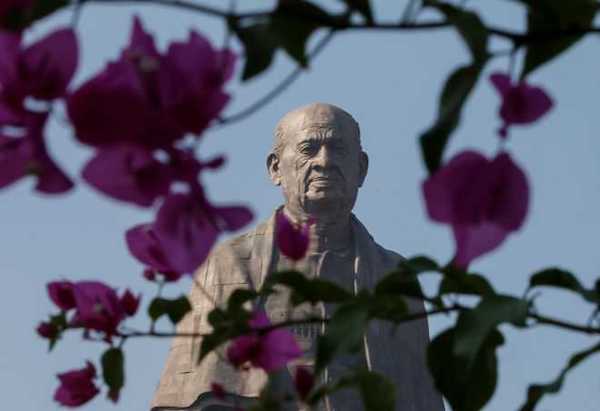
    There was something totally inappropriate about the idea of elevating a modest man like Sardar Patel to a Colossus of Hellenistic times. The Rhodians who built the statue for Sun God Helios, used to fling into the sea four horses and a chariot “for his use” every year.  Left to himself, it is doubtful whether Patel would ever have liked his grand statue against the protests of 22 villages when throughout his life he cared more for them than tall statues or glittering public rallies.

    That leads to a conclusion that the idea was to appropriate Patel into the BJP- Narendra Modi pantheon which Rajmohan Gandhi, the celebrated biographer of Patel, had rejected in 2013. He said, “The country’s first home minister would not have recognized Mr. Modi as his ideological heir and been very ‘pained’ with his behavior towards Muslims”. He said that Patel was a great “team builder” and “other people were prominent in his daily life”. On October 31, 2018, LK Advani who was the central figure during the foundation stone ceremony in 2013, was conspicuously absent.

    That Patel and the BJP could not have coexisted will be evident if we read Patel’s speech of February 27, 1947 on minority protection while accepting the chairmanship of the Advisory Committee to the Constituent Assembly on fundamental rights. His frank speech on August 11, 1947 at a public meeting why the Congress accepted Partition needs to be quoted verbatim:  “I would make no efforts to explain away the responsibility of the Congress for dividing the country. We took these extreme steps after great deliberation. In spite of my previous strong opposition to Partition, I agreed to it because I felt convinced that in order to keep India united, it must be divided now.”

    PM Modi in his Op-Ed piece on October 31 had quoted VP Menon on how Patel led “from the front” the integration of 550 Indian States. May I point out that this was just one problem that the Congress leadership had faced during the process of independence. More serious was the pernicious plotting by some elements in the Viceroy’s administration to leave India in tatters. This would be clear if we read VP Menon’s another landmark book “The Transfer of Power in India” (1957) and Mountbatten’s frank memoirs published in 1949 which has received scant attention in India.

    Menon was associated with constitutional developments since 1917. From 1942 till August 1947, he was Constitutional Adviser to the Viceroy. Mountbatten, who took over as Viceroy on March 22, 1947, had frankly admitted that his predecessor, Lord Wavell, had made secret plans of quick British withdrawal from India in 1946 with the anticipated chaos following the rejection of the Cabinet Mission’s plan “affecting the loyalty of the Indian Army”. If that had happened, it would have left a serious administrative vacuum in India since the superstructure was still with British civil and military officers although the “Interim Government” (Governor-General’s Executive Council) under Jawaharlal Nehru as Vice-President with Sardar Patel as Home Member had taken charge on September 2, 1946. The Constituent Assembly had first met from December 9, 1946.

    During this period, Menon was the link between the Viceroy and Congress leadership, including Nehru and Patel, and at times even Gandhiji, and he kept them informed of some secret planning by a coterie of British officers in the Political Department.

    The deliberate British mischief in our nation-building had started earlier. The 1935 Government of India Act on a “Federation” with three categories of constituents would have left the future Central government out of control of the Indian nation. While the British Indian provinces and Chief Commissioners’ Provinces would accede to India, the 562 Princely States would be entitled to decide their own accession.

    Menon had said that the Political Department, instead of following Viceroy’s scheme of persuading the princes to accede, was secretly warning them of “the loss the rulers would suffer if they were to federate”. He said that such scheming princes were rudely jolted when Nehru declared, while addressing the annual session of the All-India States People’s Conference on April 18, 1947 that “any state which did not come into the Constituent assembly would be treated by the country as a hostile state”.

    The British tried to stifle the process of nation-building even later. Their declaration to the Cripps Mission in 1942 gave the right to even British provinces to accede or not accede to the Union or to form a separate Union or Unions. Menon said, “This was really the death blow to Indian unity”. This trend continued even during Mountbatten Viceroyship. Mountbatten records one such difficult meeting on June 13, 1947 to discuss the “paramountcy” after the transfer of power and its effect princely states: “Pandit Nehru also attacked Sir Conrad Corfield, the political adviser, to his face and said that he ought to be tried for misfeasance”.

    In June 1947, Patel asked Menon to take charge of the States Department. In fact, it was Mountbatten who had created the department. He says: “Mr. V.P. Menon, my Reforms Commissioner was, much to my delight, appointed Secretary”. Pakistan’s nominee Ikramullah was appointed as Joint Secretary. From then on till August 15, 1947, all negotiations with the princes were under the leadership of Mountbatten who says the idea of accession of Indian states on three subjects (Defence, External Affairs and Communications) was Menon’s idea to get as many accessions as quickly before the transfer of power on August 15, 1947.

    Our independence was won under the leadership of Gandhiji with all top leaders like Nehru, Sardar Patel, Maulana Azad,  Rajendra Prasad, Jagjivan Ram and others assuming equally important roles. Our nation-building was done after August 15, 1947 with the participation of several non-Congress leaders like Dr Ambedkar, Dr SP Mukherjee, Dr John Mathai and others. They all had their differences but were united on the task of nation-building. It will be highly facile for a new BJP pantheon to claim in 2018 that only Sardar Patel was responsible for our nation-building.

    (The author is Ex-Special Secretary, Cabinet Secretariat. He is author of  ‘A Life in Shadow: The Secret Story of ACN Nambiar’)

  • A divisive statue of unity

    A divisive statue of unity

    Giving Patel his due to appropriate him for political ends

    Nearly seven decades after he passed away, the ‘Iron Man’ of India has received a tribute befitting his status as the unifier of India. The statue of unity is as imposing as the man who ignored advancing age to first battle the British and then set about the exhausting task of cajoling and persuading princely states to accede to the Union of India. A politician from the conservative streak, there was considerable ideological sparring with the progressive lot, right from 1936 when Nehru endorsed socialism as the guiding light of the yet-to-be-born free India.

    Patel-Nehru ideological differences have always encouraged the Hindu right wing to appropriate selectively; opting to pick his post-Independence legacy while overlooking his enormous contribution to the freedom struggle. This spawned a partly-correct narrative about the neglect of Patel’s legacy by the Nehru-Gandhi clan. Patel’s children were given Congress tickets for both Houses of Parliament, but Indira Gandhi was not enamored of either the man or his kin. Narasimha Rao’s conferment of Bharat Ratna was in fact an effort to draw a line with the Gandhi school of keeping his memory at a stand-off distance.

    The Congress’ reaction to the whittling of icons in its neglected gallery of greats is understandable. The other purpose behind the BJP’s highly embellished commemoration of his memory is to show the Nehru-Gandhi as overtly occupied with the promotion of its clan to the studied exclusion of other freedom fighters-cum-nation builders. The BJP, however, may be disinclined to dive deep into Patel’s thought process, for he was an unwavering follower of Gandhi, had no love lost for the RSS and was averse to Subhas Chandra Bose, another icon in the process of appropriation by the BJP. Patel’s homily to the RSS would have particularly hurt: ‘To say one thing and to do another is a game which will not do’. BJP’s fragmented assimilation of Patel may or may not bring electoral dividends to the BJP, but a united India could not have done without both Nehru and Patel.

    (Tribune, India)

  • US to allow 8 countries to continue buying Iran oil after sanctions on Nov 5: Pompeo

    US to allow 8 countries to continue buying Iran oil after sanctions on Nov 5: Pompeo

    India may be one of the countries to get exemption

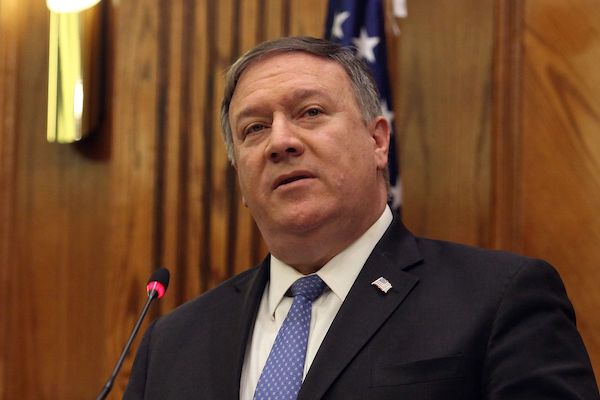
    WASHINGTON(TIP): The US has agreed to temporarily allow eight countries to continue buying Iranian oil after it re-imposes crippling sanctions on Tehran on November 5, Secretary of State Mike Pompeo said on Friday, citing “significant reductions” in imports of oil from the Persian Gulf nation.

    India is one of the countries expected to get the exemptions. But senior administration officials refused to spell out the names on Friday.

    The list of these exemptions would be announced on Monday, November 5,  Pompeo told reporters during a  conference call on Iranian sanctions, with US Treasury Secretary Steven Mnuchin.

    While the US had previously wanted countries including India to completely halt oil purchases from Iran by November 4 when its full sanctions against Tehran come into force, it seems to have relented considering the havoc the move to completely take out Iranian supplies from the market would have had on prices.

    Pompeo said that countries like India, if it gets the exemption, would be asked to bring down their oil imports from Iran to zero in six months’ time.

    Negotiations are still ongoing, he said explaining the reasons for not revealing the names of the countries that are expected to get exemptions from the US from this latest and so far the toughest American sanctions on Iran.

    “We expect to issue some temporary allotments to eight jurisdictions, but only because they have demonstrated significant reductions in their crude oil and cooperation on many other fronts and have made important moves towards getting to zero crude oil importation. These negotiations are still ongoing. Two of the jurisdictions will completely end imports as part of their agreements. The other six will import at greatly reduced levels,” Pompeo said.

    These economic sanctions are just a part of the US government’s total effort to change the behavior of the Iranian regime, he said.

    “On November 5th, the United States will re-impose sanctions that were lifted as part of the nuclear deal on Iran’s energy, shipbuilding, shipping and banking sectors. These sanctions hit at core areas of Iran’s economy. They are necessary to spur changes we seek on the part of the regime,” he said.

    “In order to maximize the effect of the president’s pressure campaign, we have worked closely with other countries to cut off Iranian oil exports as much as possible,” Pompeo said.

    The expected list of exemptions to eight jurisdictions, that too temporary, is far less than the 20 countries, including India, which were exempted from Iranian sanctions during the previous Obama administration, he said.

    “We will have issued, if our negotiations are completed, eight and have made it clear that they are temporary,” he said.

    “Not only did we decide to grant many fewer exemptions, but we demanded much more serious concessions from these jurisdictions before agreeing to allow them to temporarily continue to import Iranian crude oil. These concessions are critical to ensure that we increase our maximum pressure campaign and accelerate towards zero,” Pompeo said.

    As a result of the latest sanctions, he said the US expects to have reduced Iranian crude oil exports by more than 1 million barrels even before these sanctions go into effect. “This massive reduction since May of last year is three to five times more than what many analysts were projecting when President Trump announced our withdrawal from the deal back in May,” he said.

    “Starting today, Iran will have zero oil revenue to spend on any of these things. Let me say that again: Zero. 100 percent of the revenue that Iran receives from the sale of crude oil will be held in foreign accounts and can be used by Iran only for humanitarian trade or bilateral trade in non-sanctioned goods and services,” he said.

    Pompeo said the latest US sanctions are targeted at the regime, not the people of Iran who have suffered grievously under this regime.

    “It’s why we have and will maintain many humanitarian exemptions to our sanctions, including food, agriculture commodities, medicine and medical devices,” he said.

    India, which is the second biggest purchaser of Iranian oil after China, is willing to restrict its monthly purchase to 1.25 million tons or 15 million tons in a year (300,000 barrels per day), down from 22.6 million tons (452,000 barrels per day) bought in 2017-18 financial year, sources in New Delhi said.

    The US will also demand the Society for Worldwide Interbank Financial Telecommunication (SWIFT) global financial network stop supporting Iranian banks as part of enforcing sanctions over Tehran’s nuclear program and alleged support for terrorism.

    In May, President Donald Trump pulled the US out of the 2015 landmark Joint Comprehensive Plan of Action (JCPOA) terming it “disastrous”. Under the Obama-era deal, involving five permanent members of the UN Security Council and Germany, Iran agreed to stop its nuclear program in exchange for relief from economic sanctions.

    After the US’ withdrawal from the deal, Trump signed fresh sanctions against Iran and warned countries against any cooperation with Tehran over its controversial nuclear weapons program.

    Iran has dismissed these charges and maintains that its nuclear program is for peaceful purposes.

    (Source: PTI)

  • Heather Nauert is Trump’s top choice to succeed Nikki Haley as  UN ambassador

    Heather Nauert is Trump’s top choice to succeed Nikki Haley as UN ambassador

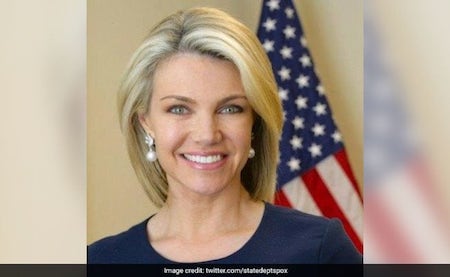
    WASHINGTON(TIP): President Donald Trump has told advisers that Heather Nauert, the State Department spokeswoman, is his leading choice to become US ambassador to the United Nations and he could offer the post as soon as this week, according to a CNN report

    If named Nauert, who met with Trump Monday, October 29,  would leave her role at the State Department to take over from Nikki Haley, who surprised White House officials last month when she announced her decision to step down at the end of the year.

    People close to the President cautioned that his pick is not final until it is formally announced. The White House declined to comment on the matter. Nauert has been keeping a low profile this week after meeting with Trump on Monday. Two of her daily briefings have been conducted by her deputy.

    Speaking at the White House on Thursday, November 1, Trump confirmed that Nauert is “under very serious consideration” to become the next US ambassador to the UN.

    “She’s excellent. She’s been with us a long time. She’s been a supporter for a long time. And she’s really excellent,” Trump said.

    “We’ll probably make a decision next week,” Trump said in his remarks. “We have a lot of people that want the job and they’re a lot of really great people.”

    Trump has eyed several people to replace Haley, including Ric Grennell, the US ambassador to Germany; Jamie McCourt, the US envoy in Paris; and Kelly Craft, the ambassador in Canada. One person initially considered a leading contender, former deputy national security adviser Dina Powell, withdrew from consideration early in the process. Trump has repeatedly told aides he wanted a woman to fill the role.

    Nauert, who came to government from Fox News, served as State Department spokesman for both Rex Tillerson and Mike Pompeo but has enjoyed a closer relationship with Trump’s second secretary of state than she did Tillerson, who was privately skeptical of her close ties with the West Wing.

    Her elevation to a top diplomatic role underscores the importance Trump has placed on having his top aides also serve as television surrogates. Nauert has briefed regularly from the State Department podium and had a long career in television news before that.

    Still, as a diplomat she lacks experience. Previous holders of the UN ambassador position — including current national security adviser John Bolton — came to the role with years of foreign policy experience. Nauert served briefly as Undersecretary for Public Diplomacy from March until October.

    Nauert would face what could be a contentious confirmation hearing, with Democrats quizzing her on her qualifications for the post.

    Instead, Nauert comes with something perhaps more valuable in the Trump administration: loyalty and a willingness to defend the President. That loyalty has at moments caused friction at the State Department. As Tillerson’s relationship with Trump began to deteriorate in his final months, he privately told allies he thought she was more loyal to the West Wing than the State Department. Chief of staff John Kelly informed Tillerson his time in the top diplomatic post was expected to end while on a multi-country sweep through Africa. Trump later announced his firing on Twitter.

    The UN ambassador role is viewed by some as a launching point for higher-profile positions. Both Bolton and Susan Rice, who served in the post under President Barack Obama, eventually became White House national security advisers.

    The position is based in New York, so is also viewed as having less direct oversight than a high-level post in Washington.

    Nauert’s move to the United Nations would take her out of the running for other roles in the West Wing, which has struggled at times to fill key positions and went without a communications director for months. Nauert was widely seen as the front-runner to replace Sarah Sanders as White House press secretary when she leaves which she is expected to do in the coming months after more than a year in the role, according to multiple officials.

  • Four days before US midterm polls, Trump admits Republicans could lose the House

    Four days before US midterm polls, Trump admits Republicans could lose the House

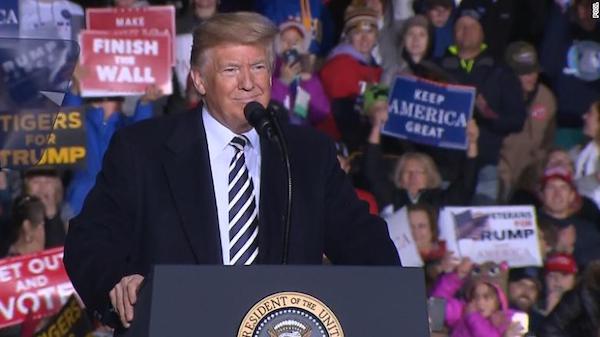
    WASHINGTON (TIP): At a “Make America Great Again” political rally in Iowa  President Trump said: “It could happen. Could happen. And you know what you do.  My whole life, you know what I say? ‘Don’t worry about it, I’ll just figure it out.’ Does that make sense? I’ll figure it out.”

    It was an uncharacteristic lack of confidence from the usually bombastic leader, but experts have predicted Democrats could win the 24 seats it needs to gain control of the lower house of Congress for the first time since 2010.

    The polling data shows, however, the Senate will still likely be controlled by conservatives.

    This year’s election will break all manner of records in terms of spending as well. According to the Centre for Responsive Politics, approximately $5.2bn will be spent in this year’s midterms.

    In one race alone $93m has been spent to get the Senate seat from Texas. Democrat and current US House Democrat Beto O’Rourke and Republican incumbent Ted Cruz have been trading barbs as poll numbers show a tight race.

    In Georgia, Democratic governor candidate Stacey Abrams looks to make history as the first female African-American governor in the country’s history. Controversy abounds as opponent Republican Brian Kemp is also the Georgia secretary of state who would be in charge of a possible runoff election should neither candidate receives 50 per cent of the vote.

    Barack Obama and Oprah have joined Ms Abrams on the campaign trail and former president Jimmy Carter has even asked Mr Kemp to resign from his current position in light of hiscandidacy.

    In Florida, Andrew Gillum, the current Democratic Mayor of Tallahassee, squares off with Republican Ron DeSantis in an important race for the president as he begins campaigning for his 2020 re-election bid.

    Amid the debates on healthcare policy and taxes, a migrant caravan of approximately 7,000 people still 1,000 miles away from the US-Mexico border has been in the headlines on the campaign trail.

  • Senator Avella’s Campaign Blasts North Shore Towers’ Political Affairs Committee for Purposely Excluding Senator Avella From Candidates Forum

    Senator Avella’s Campaign Blasts North Shore Towers’ Political Affairs Committee for Purposely Excluding Senator Avella From Candidates Forum

    QUEENS, NY(TIP):  Senator Avella’s campaign, October 25,  discovered that the North Shore Towers’ Political Affairs Committee has purposely decided not to allow Senator Avella to participate in its upcoming candidates forum on October 31st.  When Felice Hannah, Chairperson of the committee was contacted by Senator Avella’s campaign, she stated that only the Democrat and Republican candidates are invited to the forum and promptly hung up on Senator Avella’s campaign.

    “This is an absolute disgrace and Ms. Hannah should be ashamed of herself for stifling democracy. Senator Avella has represented the North Shore Towers community for eight years in the Senate.  He has fought to lower property taxes for co-op and condo owners, including passage into law of an increase in the J-51 tax break for capital repairs.  We ask the people of North Shore Towers to immediately call the management group for North Shore Towers and demand that Senator Avella be included so that all candidates in this senate race are heard,” said Avella campaign spokesman Jeff Frediani.

    Senator Avella is running for his fifth term for State Senate, having served eight years in the State Senate and eight years in the City Council representing the people of Northeast Queens.


  • SENATOR BROOKS ANNOUNCES SMART, LIRR WORKERS UNION, ENDORSES RE-ELECTION CAMPAIGN

    SENATOR BROOKS ANNOUNCES SMART, LIRR WORKERS UNION, ENDORSES RE-ELECTION CAMPAIGN

    Union Representing LIRR Workers Highlights Senator Brooks’ Commitment to Affordability

    LONG ISLAND, N.Y. (TIP): Senator John Brooks (D-Seaford) announced the endorsement of Sheet Metal, Air, Rail, Transportation (SMART) Workers, Transportation Division, the largest union that represents workers who work on the Long Island Rail Road. In their endorsement of Senator Brooks, the union highlighted his commitment to affordability and cracking down on public corruption.

    “Union values are Long Island values. We must keep our region affordable and I will work hard to make that happen,” said Senator John Brooks. “I appreciate the work of SMART’s members every day and appreciate their endorsement for re-election.”

    “When deciding who to support, a commitment to union workers and a safe, reliable transportation system is paramount,” said Anthony Simon, General Chairman of the SMART Transportation Division. “Senator Brooks’ priorities of taking on corruption, addressing taxation, and improving affordability for hard working Long Island families makes him the smart choice for our union.”

  • NYPD: Devices in New York appear to come from same person

    NYPD: Devices in New York appear to come from same person

    Mohammed Jaffer

    NEW YORK(TIP):  Authorities say suspicious packages, some with confirmed explosive devices, have been turning up at prominent locations in New York, Washington, and Florida.

    Initial reports indicated that a suspicious package had been intercepted en route to the White House, the Secret Service later announced that had not occurred.

    As the situation unfolded, the NYPD responded to a device at the Time Warner Center where CNN’s New York studio is located. The building was evacuated. Law enforcement officials later said that package was believed to be a pipe bomb addressed to former CIA Director John Brennan.

    During a news conference on Wednesday afternoon, NYPD Commissioner James O’Neill said the device had been secured and removed from the building.

    Gov. Andrew Cuomo confirmed that a suspicious package had been sent to his office, but it was later determined that it was not a bomb. Cuomo urged New Yorkers to remain calm as security would be heightened around the city.

    “You will see an increased police presence from the NYPD…you shouldn’t be alarmed…it’s just a precaution,” the governor said.

    A package at the Chappaqua home of Bill and Hillary Clinton was discovered late Tuesday, another package was discovered at the Obama family’s Washington home.

    On Wednesday afternoon, the FBI also confirmed that a suspicious package was sent to the Florida office of Rep. Deborah Wasserman Schultz.

    John Miller told 1010 WINS’ Juliet Papa that another device was sent to the former home of former Attorney General Eric Holder.

    New York City Mayor Bill de Blasio said no other credible threats had surfaced.

    “What we saw here today was an effort to terrorize. This clearly was an act of terror,” he said.

    The Trump administration was quick to condemn the activity on Wednesday.

    “This is an ongoing situation that President Trump and his admin are monitoring closely. Our condemnation of these despicable acts certainly includes threats made to CNN as well as current or former public servants. These cowardly acts are unacceptable and won’t be tolerated,” White House Press Secretary Sarah Sanders tweeted.

    House Speaker Paul Ryan joined the chorus of those condemning the attempts saying, “we can’t tolerate any attempt to terrorize public figures, and those behind this must be brought to justice.”

    Earlier this week a bomb was sent to the home of George Soror. Soros lives in Bedford, which is also in Westchester County.

    An employee noticed the package at Soros’ home, and put it in a wooded area before calling police.

    Miller is the NYPD’s Chief of Counterterrorism, he said the devices sent to CNN, Soros, the Clintons, and the Obamas appear to have been sent by the same person.

    The Secret Service has initiated a full scope investigation.

  • Bombs reach top U.S. porches: Trump calls for more civility in politics

    Bombs reach top U.S. porches: Trump calls for more civility in politics

    WASHINGTON(TIP): US President Donald Trump has called on people to be more civil in politics, after a series of suspected explosives were sent to high-profile U.S. figures just days ahead of the mid-term polls.

    None of the packages exploded. The Federal Bureau of Investigation has launched a hunt for their sender, the BBC reported.

    Mr. Trump was speaking after parcels were sent to top Democrats, including former President Barack Obama and Hillary Clinton, besides New York Governor Andrew Cuomo, and media offices of CNN and the San Diego Union — Tribune, who are all prominent targets of right-wing criticism.

    “Those engaged in political arena must stop treating political opponents as being morally defective,” he said. “No one should carelessly compare political opponents to historic villains, which is done often,” he added.

    Speaking at a Wednesday night rally in Wisconsin, Mr. Trump vowed to catch the perpetrator and called on the media to “stop endless hostility”. Critics called his latest remarks hypocritical, as he often uses vicious language against his opponents and the press.

    However, he made no specific reference to the intended recipients of the packages, the BBC reported

    Earlier CNN worldwide President Jeff Zucker criticized Mr. Trump and the White House Press Secretary Sarah Sanders for not understanding that “words matter”. “There is a total and complete lack of understanding at the White House about the seriousness of their continued attacks on the media,” Mr. Zucker said.

    Suspected bombs were sent to locations in New York, the Washington DC area and Florida, authorities said on Wednesday. All the apparent targets were regularly criticized by conservatives —— especially by President Trump.

    U.S. authorities are investigating this as a connected series, officials said.

    Sources told CNN that a suspicious package intended for California Democratic Maxine Waters was intercepted at a congressional mail screening facility in Maryland; New York Governor Mr. Andrew Cuomo received what he said was a device at his Manhattan office; and the San Diego Union—Tribune evacuated its building after “suspicious looking packages” were spotted outside.

    CNN’s New York bureau in the Time Warner Center was evacuated after a package containing a bomb, addressed to former CIA Director John Brennan, was discovered, city and local law enforcement officials said.

    Later Wednesday night, two law enforcement sources told CNN that law enforcement officials were trying to track down a package addressed to former Vice President Joe Biden considered suspicious because of similarities to other packages.

    The package was misaddressed and returned to sender.

    The developments, which unfolded rapidly and continued steadily into the afternoon, touched off fear and confusion and immediately invited questions about the motives of those responsible.

    Some Democrats have accused the president of inciting violence with his past rhetoric, while some of his supporters have said they believe the packages are part of a Democratic plot to win votes in the mid-term elections.

    There is no evidence for this and the police have not released any information about any suspects. The attempted attacks come just under two weeks before the mid—terms, with U.S. politics highly polarized.

    (Source: IANS)

  • Queens Borough President Melinda Katz names Phil Ballman as Director of Cultural Affairs and Tourism

    Queens Borough President Melinda Katz names Phil Ballman as Director of Cultural Affairs and Tourism

    QUEENS, NY – Borough President Katz  announced, October 18,  the appointment of Phil Ballman as the Borough President’s Director of Cultural Affairs and Tourism.

    “Phil is a valuable addition to our team here at Borough Hall,” said Borough President KATZ. “Mr. Ballman has extensive experience as a live event producer, arts programmer and project manager and understands the many strengths of our borough’s cultural institutions. He has an impressive dedication to serving our community and has the talent and determination to further the growth in interest that ‘The World’s Borough’ has recently been receiving as a culturally-rich tourism destination.”

    “It is a thrill and an honor to have been selected by Borough President Katz to fill this important position,” said BALLMAN. “I look forward to helping the Borough President implement her vision for maximizing the impact and reach of our borough’s great cultural institutions and its other fabulous attractions, which have made Queens a go-to destination for so many visitors and residents.”

    Ballman is an internationally-recognized cultural event producer with two decades of comprehensive experience presenting and producing world-class programming for major institutions and independent cultural organizations and artists.

    From 2015 to 2018, Ballman was Manager of Community Engagement and Partnerships for the College of Performing Arts at The New School. In that position, Ballman created ongoing partnerships and programming with external organizations that included the City Parks Foundation, Make Music New York, the Charlie Parker Jazz Festival, the World Music Institute, the Lincoln Center Atrium, the Union Square Partnership, The Morgan Library, and others.

    During the previous five years, Ballman was Coordinator of Special Programs for The New School for Jazz and Contemporary Music, where he curated, produced and coordinated all aspects of public programming, event scheduling and student professional development.

    Ballman was also the founder, producer and artistic director of the Otherground Music Festival, a free outdoor summer concert series that served the diverse Queens neighborhoods of Jackson Heights and Elmhurst with first-class, internationally-themed music performances in the summer of 2010.

    In addition, Ballman was a co-founder and agent with the Mondo Mundo talent agency from 2006 to 2010 and was Director of Publicity for the Sounds of Brazil music venue in Manhattan from 2004-2006. He previously was the manager and drummer for the band “Antibalas” from 1999 to 2003.

    Ballman has a Bachelor of Arts degree from The New School. He lives in Jackson Heights with his wife, visual artist Deborah Wasserman.


  • Indian American US Congress Candidates Raise $26 Million for Midterm Polls

    Indian American US Congress Candidates Raise $26 Million for Midterm Polls

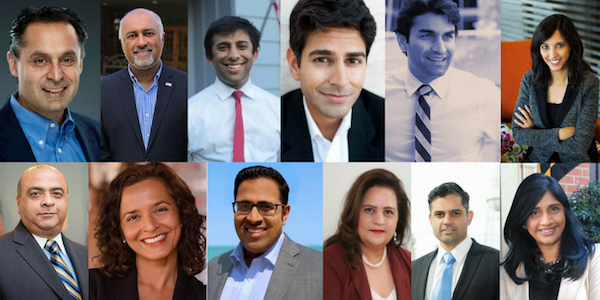
    WASHINGTON(TIP): More than 12 Indian Americans running for the US Congress have collectively raised over $26 million for their election campaign with six of them outraising their opponents, according to the latest official figures.

    Raja Krishnamoorthi, Ro Khanna, Pramila Jayapal, Ami Bera, Hiral Tipirneni, and Aftab Pureval have outraised their opponents in their respective seats for the US House of Representatives.

    For political pundits, funds raised by a candidate is considered the barometer of their popularity and one who raises more than his/her opponent is normally considered to win.

    Most of the fund-raising figures released by the Federal Election Commission (FEC) are till September 30 and the final number before the November 6 polls is likely to jump further.

    If they win the number of Indian Americans in the US House of Representatives could jump from the current four to six, with two of them being woman and one being of Tibetan origin.

    Raja Krishnamoorthi from the eighth Congressional District of Illinois till September 30, as per FEC figures, has raised more than $5 million, topping the list.

    His opponent, Jitender Diganvker also an Indian American has raised a paltry $35,817, which is also the lowest fund-raising figure among the dozen Indian Americans in the race for the Congress this time.

    Shiv Ayyadurai who is running for a Senate seat in Massachusetts against the powerful Democratic Senator Elizabeth Warren, has surprised many by raising $5 million. But political pundits give him very little chance against the Warren, who has raised $20 million so far.

    Indian American physician Hiral Tipirneni has raised over $3.76 million. Tipirneni lost to incumbent Debbie Lesko during the special elections early this year.

    The momentum looks like is with the Indian American woman in this eighth Congressional District of Arizona as her opponent so far has raised $1.8 million.

    And so has Aftab Pureval, who is seeking to enter the US House of Representatives from the first Congressional District of Ohio.

    The only Indian American to be endorsed by former US President Barack Obama, Pureval has raised $3.1 million, as against his Republican opponent and incumbent Steve Chabot of about  $1 million. Chabot’s latest figures with FEC are only till June 30.

    Three-time Congressman from seventh Congressional District of California Dr Ami Bera has raised $2.69 million as against  $373,000 by his Republican opponent Andrew Grant.

    All the previous three elections bids for him had been tough and all the three times he was declared elected only after recounting of votes.

    Representing Silicon Valley, Ro Khanna from the 17th Congressional District of California is pretty close with $2.62 million. He virtually has no contest at all.

    Pramila Jayapal, the first Indian American woman to be elected to the US House of Representatives has raised $1.66 million, according to the FEC figures till July 18. Her opponent Craig Keller has raised about $3,000 till the same period.


  • Indian Overseas Congress, USA Protests against Prime Minister Modi and the Minister of Defense, Nirmala Sitharaman’s Corrupt Involvement in Rafale Loot

    Indian Overseas Congress, USA Protests against Prime Minister Modi and the Minister of Defense, Nirmala Sitharaman’s Corrupt Involvement in Rafale Loot

    RICHMOND HILL, NY(TIP): Indian Overseas Congress, USA staged a protest in Richmond Hill, New York, September 30th, to highlight the corruption by the Modi Government in the purchase of Rafale jets in the biggest defense scam in history. This protest also expressed grave discontent amongst NRIs who are of the opinion that Hindustan Aeronautical Limited should have been the building partner of the Dassault Aviation rather than Modi’s handpicked friend Anil Ambani who stands to gain 30,000 Crores Rupees in this scam at the expense of the tax-paying public.

    Dr. Amee Yajnik, member of the Rajya Sabha while addressing the crowd, expressed grave discontentment with lack of transparency and accountability in this whole affair. “While our farmers are suffering and many of them are on the verge of despair, the Modi Government’s focus is only to increase the coffers of their crony capitalist friends. The money that is supposed to be used for economic and social development is stolen from the people of India” Dr. Yajnik added.

    ‘Corrupt role played by the Minister of Defense, Nirmala Sitharaman is also of great concern to us, and we are also concerned that she has converted the ministry of defense into a puppet institution which dancing to the tunes of crony capitalists without any concern being shown to the defense establishment of the country along with national security” said Mr. Mohinder Singh Gilzian, President of the Indian Overseas Congress, USA. “The secrecy by which Modi has dealt with this deal tantamount to organized loot, and we are asking for the resignation of the Prime Minister and the Defense Minister’, Mr. Gilzian added.

    George Abraham, Vice-Chairman of IOC, urged the Diaspora to become cognizant of the growing number of scandals plaguing the Modi regime and the secrecy with which Rafale Deal has been conceptualized. United Progressive Alliance first conceptualized the deal in the year 2012 when Government of India had agreed with Dassault Aviation, France to purchase a total of 126 Rafael fighter jet aircraft. This agreement was clinched with a cost of Rs. 526 for each aircraft.

    Initial 18 aircraft were to be purchased on an immediate fly-away condition and remaining 108 were agreed to be manufactured in India. Aircraft which were to be manufactured in India were agreed to be manufactured in association with Hindustan Aeronautics Limited under the transfer of technology agreement. However, altering the terms of the contract to benefit the Ambanis may result in the lost employment opportunities which could have benefited the unemployed youth of Karnataka.

    A view of protesters

    Crowd held placards and chanted that “Modi is corrupt – Stop Deception and Corruption”, “End all Corruption – Down with BJP and Crony Capitalism”, “IOC condemns Corruption”, “Rafale, biggest Defense scam”, and “Vigilance should investigate Modi”.

    Mr. Ravi Chopra, the chairman of the Finance Committee, John Joseph, Vice-President, Mr. Satish Sharma, Chairman of Punjab Chapter, Mr. Charan Singh, President of Haryana Chapter, Mrs. Shalu Chopra, chairperson of the Women’s forum also spoke. Mr. Devendra Vora of the Maharashtra Chapter honored the Chief Guest Dr. Yajnik with a Shawl.

    (Press Release)


  • Elections Matter, Our Republic, Boiling Senate, Senator Susan Collins, Dr. Ford and Godspeed Justice Kavanaugh.

    Elections Matter, Our Republic, Boiling Senate, Senator Susan Collins, Dr. Ford and Godspeed Justice Kavanaugh.

    Ravi Batra

    We need to save our Republic, to remain “Exceptional” and “American.” If we do that, harness SM to spread equality and fairness, then the politicians who weaponize mere majorities will fall, and the Supreme Court will not be called upon to settle Political or Societal disputes, and merely abstain as it gloriously did for almost two centuries, says the author.

    Elections matter; Lindsey Graham is right about that observation. The party that controls the White House gets to nominate; and the party that controls the Senate, the “Cooling Saucer” as George Washington then-correctly noted, gets to “Advise and Consent,” an act between Constitutional “partners.” Only in times when a single party is controlling both White House and Senate, that Separated Powers’ dissent-benefit is reduced – as in President Obama’s First Term and now in President Trump’s First Term.

    It’s on Harry Reid and Barack Obama that the Senate Rule of 60 for judicial confirmation was abandoned, and by so doing hyperpartisianship was allowed to affect the noble bench as the Senate became the “boiling pot” it now is, kept red hot by the disintermediating Social Media (SM) and each party having its own opinion-supporting media outlets. That, perhaps, is the worst of all: as the SM & Partisan Media-Genie may never go back in the bottle!

    We are now a nation sharply divided, as we were before the Civil War – but for very different reasons; one structural (SM), and the other temporal: economic (as for too many Americans, the American Dream has become impossible to achieve). Dealing now only with the structural – our representative form of government – aka a Republic – its very structure was designed to cool off, at each circuit breaker-level, “hot” public sentiment and prevent induced-Mob Rule. Mob Rule doesn’t mean the guillotine during the French Revolution, but rather to avoid the insufferable tyranny of simple majority – something tried and failed over 2000 years ago in the City-State of Athens during the time of Socrates. As termites can destroy the wooden structure of a house, social media is destroying our Republic, with each side fueled by their own media, and converting our Constitutionally-cool “representatives,” be it the president, senators or representatives, into “warriors. “Representatives” are expected to sit, talk, deliberate, and together make bipartisan deals as our Constitution was designed to do with the Separated Powers regime & cherished-Dissent, enshrined in the First of all Amendments and core of American Exceptionalism. Political “Warriors” have weaponized politics, make war and bipartisan coming together for the greater public good be damned. We all just saw in horror the Kavanaugh Confirmation, a scandal worse than what occurred 30-plus years ago or the emotional self-defense by a nominee to the most powerful bench in history, let alone its most powerful swing seat.

    What happed between then-teenagers, Dr. Ford and Justice Kavanaugh only a trial, without a statute of limitations’ bar, could have proven – with presumption of innocence and cross-examination, the perfectly balanced Ying and Yang core of American Rule of Law. What we just witnessed was the grant and imposition of Presumptive Innocence without grant of the Constitutional full & free right to Cross-Examine – before an independent & impartial jury and judge. Senator Collins’ historic confirmatory speech contains a core farce – as no Prosecutor could ever win a single case in similar setting, as the accused and his supporters imposed a straight-jacketed on the Prosecutor/Accuser by denying their Constitutional right to cross-examine and present all witnesses – let alone before an independent jury and judge. Transplanting “Presumption of Innocence,” without granting right to Cross-Examination and presentment of all relevant witnesses, and that too without an impartial Judge deciding what is relevant, and a verdict to be rendered by an impartial jury: believe 100% certain Accuser-Ford or 100% certain Accused who denies. Before a doctor transplants a heart, there has to be a full body into which the transplanted heart can beat. Here, the “heart” was made to beat without a body that included an impartial judge and jury.

    While the Senate isn’t a trial, as it lacked both an impartial & independent jury and judge, but their grant of presumptive innocence while denying the Prosecutor/Accuser right to cross-examine and present all witnesses was fundamentally un-American and fatally unjust.

    That said, I supported J. Brett Kavanaugh – as what he was alleged to have done with Ford & Ramirez, his own age group as over-zealous frolicking students can (very different from a fiduciary-Priest sexually assaulting a child), is perhaps of no moment to him and unworthy of memory; while the same event had a very different effect on the “girl.” A point made sharply by the different effect on Ford, as compared to Ramirez from two different allegations: in high school and at Yale. This is a societal issue for all of us together to be address: sensitizing our children (and adults) against Sexual Assault.  I expect Justice Kavanaugh in his opinions will rise to champion survivors of sexual abuse. It would be poetic justice.

    On September 20th, I tweeted: “Dr. Ford do NOT become Anita Hill – UNFAIR2 daughters/mothers; reject @Chuck Grassley KindOffer. It’s a fair4some: J. Kavanaugh ought not be held2TeenError.”

    The 50-48 Confirmation by a boiling, not cooling saucer, Senate is our larger problem as it robs us all – both sides – of what since 1776 we have rightfully claimed to be the very best in Humanity – well past the Magna Carta.

    Upon his confirmation, I tweeted: “Godspeed Mr. Justice Brett Kavanaugh – we wish your better angels to help guide you to find true & compassionate justice with logic for most of the distance and faith for the balance; and deliver on Lincoln’s Gettysburg Covenant of Govt FOR the People”

    We need to save our Republic, to remain “Exceptional” and “American.” If we do that, harness SM to spread equality and fairness, then the politicians who weaponize mere majorities will fall, and the Supreme Court will not be called upon to settle Political or Societal disputes, and merely abstain as it gloriously did for almost two centuries.

    (The author is a New York based attorney. He can be reached at ravibatralaw@aol.com)


  • Ambassador Nikki Haley Capitalizes on her Resignation and Builds Political Capital

    Ambassador Nikki Haley Capitalizes on her Resignation and Builds Political Capital

    By Ven Parameswaran

    Kathleen Parker, a columnist for The Washington Post wrote: “In decades of writing about politics, I have run across few with Haley’s innate talents.  She is a natural with people, whether crouching with children on the ground in Africa—reminiscent of Princess Diana on similar travels—speaking to leaders in the tense theater of the United Nations.

    Ambassador Nikki Haley sitting by President Trump in the White House oval office announced her resignation.   The event was followed by a press conference.  The story was a stunt and received the widest media coverage for a couple of days.  First, I must congratulate Nikki Haley for her modus operandi and political skills in getting President Trump and the public to listen to her story from the oval office.  Never before, a resignation of a cabinet official has received such importance.   The exchange Nikki Haley had with Trump proved that they have the best rapport and cordial and professional relationship.  Perhaps, having refined her diplomatic skills at the United Nations, she emulated them at the White House.

    Nikki Haley, 46 started her political career 14 years ago as State Senator in South Carolina.  At the end of her third term, Nikki Haley ran as a Primary candidate for the Governor of South Carolina.  This was a tough fight and she won.  She won the Governor’s race with a wide margin.  Her performance as Governor enabled her to win her second term in 2014.   President Trump appointed her as Ambassador to the U.N. in 2017.   Thus, Nikki Haley became a durable political timber and unchallenged national leader.

    PERFORMANCE AT THE U.N.

    P stands for Performance and R stands for Reporting in Public Relations. Nikki Haley’s performance as Ambassador was extraordinary and outstanding.  When she took up the job, everyone underestimated her and she prove them wrong.  Nikki Haley developed the  best diplomatic relations with China and Russia.  This helped her to get their consent when the U.S. imposed severe sanctions against these countries and also Iran and North Korea.  She represented the USA and President Trump admirably and commanded the highest respect at the United Nations.

    She came to the UN post without previous foreign policy experience.  The position often thrust her into the spotlight and enabled her to win favor among conservatives for her staunch defense of Israel and sharp criticism of Iran and Russia.

    For a time at the UN, diplomats saw her as the face of U.S. foreign policy, noting differences between Trump and then Secretary of State Rex Tillerson. She made a point at the UN to project the impression that she was close to Trump and that she “had his ears,” one diplomat said.

    WHY DID NIKKI HALEY RESIGN?  IS SHE SHOOTING FOR THE PRESIDENCY AFTER TRUMP?

    In 14 years, Nikki Haley has accumulated substantial political experience by representing South Carolina as a State Senator and Governor, and as Ambassador to the U.N.  She has proven legislative and executive  experience.  Everyone is speculating about her future potential, that is unlimited.  Nikki Haley is very popular.  Quinnipiac Poll gave her 75% approval rating by Republicans and 55% by Democrats.  President Trump sent her to Sudan and other African countries and India.  Ambassador Haley was well respected and received by one and all.  When Secretary of State Rex Tillerson’s resignation was imminent there was speculation that Trump was considering her for the Secretary of State.    When the reporters asked Haley whether she would be running for President in 2020, she said she would not be running but would be supporting Trump.    As a conservative Republican woman with seasoned experience one can say she has the necessary credentials to run for President in 2024.   There is speculation that Trump may fire Attorney General Sessions after the Mid Term elections and was considering Senator Graham of S.C. If so, there is a possibility that Nikki Haley could be tapped to finish the term of Senator Graham till 2020, and get reelected.  Senator Graham may also be interested in the U.N. Ambassador’s job.  There is also speculation that Trump may want a woman as his running mate in 2020 and could offer the V.P. slot to Nikki Haley.

    There is also a report that Nikki Haley may be interested in private industry.  Her personal finances are not that strong and she could very well serve as C E O of a Fortune 500 corporation.  Such an assignment could give her multimillion dollar salary.    Thus, she is in demand.

    Kathleen Parker, a columnist for The Washington Post wrote: “In decades of writing about politics, I have run across few with Haley’s innate talents.  She is a natural with people, whether crouching with children on the ground in Africa—reminiscent of Princess Diana on similar travels—speaking to leaders in the tense theater of the United Nations.  As Governor, she led the legislature to remove the Confederate battle flag from the statehouse grounds, while also guiding South Carolina through the shock and grief of the 2015 church massacre in Charleston.    It won’t  serve her presidential aspirations well to stay out of politics for long, as Haley surely knows.  Thus, the burning question—what is next?—has only one certain answer:  WHATEVER SHE WANTS?”

    The New York Times editorial wrote: “Ms. Haley, who is expected to pursue the presidency one day, may eventually find herself having to defend facilitating some of President Trump’s worst policies and instincts.  But she will also be able to point to more constructive roles she played. Indeed a replacement in her mold may be the best to hope for from Mr.Trump.”

    (The author based in Scarsdale, N.Y is Chairman, Asian American Republican Committee (founded in 1988). He can be reached at  vpwaren@gmail.com)


  • U.S. indicts seven Russian intel agents in hacking conspiracy

    U.S. indicts seven Russian intel agents in hacking conspiracy

    ‘Westinghouse, chemical weapons watchdog OPCW and FIFA were targeted’

    WASHINGTON (TIP): The U.S. Justice Department on Thursday, October 4, indicted seven agents of Russia’s GRU military intelligence agency as part of a joint crackdown with allies Britain and the Netherlands on a series of major hacking plots attributed to Moscow.

    The U.S. indictments were announced as Dutch security services said they had thwarted a Russian attack on the global chemical weapons watchdog, the OPCW, and after Britain blamed the GRU for plots that notably targeted the U.S. Democratic Party and world sport’s anti-doping authority

    John Demers, U.S. Assistant Attorney General for National Security, confirmed that known attack targets included the OPCW, sports bodies including FIFA and the World Anti-doping Agency (WADA), as well as U.S. nuclear energy company Westinghouse.

    “Nations like Russia and others that engage in malicious and norm-shattering cyber and influence activities should understand the continuing and steadfast resolve of the United States and its allies to prevent, disrupt and deter such unaccountable conduct,” Mr. Demers told a news conference.

    “The defendants in this case should know that justice is very patient, its reach is long, and its memory is even longer,” he said.

    The indictments include charges of money laundering, using virtual currencies like bitcoin, wire fraud and identify theft.

    Mr. Demers said the operations “involved sophisticated, persistent and unauthorized access into the victims’ computer networks for the purpose of stealing private or otherwise sensitive information.”

    While the latest case did not arise from Robert Mueller’s probe into Russian election meddling, it overlaps with it — including the identity of the individuals charged, Mr. Demers said.

    In July, Mr. Mueller indicted 12 GRU officers, accusing them of interfering in the U.S. polls in 2016.

    Canada confirmed on Thursday it believes itself to have been targeted by Russian cyber attacks, citing breaches at its center for ethics in sports and at the Montreal-based WADA.

    Cyber aggressor

    “The government of Canada assesses with high confidence that the Russian military’s intelligence arm, the GRU, was responsible” for these cyber attacks, the foreign ministry said in a statement.

    Meanwhile, Britain’s National Cyber Security Centre (NCSC) termed Russia’s GRU a pernicious cyber aggressor.

    GRU, Britain said, was almost certainly behind the BadRabbit and World Anti-Doping Agency attacks of 2017, the hack of the Democratic National Committee (DNC) in 2016 and the theft of emails from a U.K.-based TV station in 2015.

    “The GRUs actions are reckless and indiscriminate: they try to undermine and interfere in elections in other countries,” said British Foreign Secretary Jeremy Hunt.

    Though less well known than the Soviet Union’s once mighty KGB, Russia’s military intelligence service played a major role in some of the biggest events of the past century, from the Cuban missile crisis to the annexation of Crimea.

    Though commonly known by the acronym GRU, which stands for the Main Intelligence Directorate, its name was formally changed in 2010 to the Main Directorate of the General Staff (or just GU). Its old acronym — GRU —is still more widely used.

  • Health Minister J P Nadda hosted at a community reception at TV Asia in NJ

    Health Minister J P Nadda hosted at a community reception at TV Asia in NJ

    EDISON, NJ (TIP): J P Nadda, India’s Health and Welfare minister, was hosted at a community reception at the TV Asia auditorium in Edison, NJ, on Sept. 24, by the Overseas Friends of BJP (OFBJP), TV Asia and the India American community.

    Nadda was welcomed at the community interaction by H R Shah, TV Asia chairman and CEO; Krishna Reddy Anugula, OFBJP president; Jayesh Patel, past-president of OFBJP and Dr Sanjay Gupta, president of American Pain Association.

    Himachal-born Nadda, who was inducted as a minister in 2014 and is also a lawmaker from Rajya Sabha, is currently spearheading Narendra Modi government’s flagship Ayushman Bharat-National Health Protection Mission.

    During the interaction with members of the community, Nadda spoke fluently in English and Hindi, peppering his speech with easy-to-understand statistics.

    J P Nadda speaking at a community reception at the TV Asia auditorium in Edison, NJ. Others in the photo, from left, are, H R Shah, and Krishna Reddy Anugula

    Nadda thanked the Indian American community for their diligent work in enhancing India’s image in the US. While the Modi government, he said, was specially committed to uplifting the marginalized in India, there had been a gradual transformation in the political culture in the country. “Since the Modi government took over, we have seen a shift from political paralysis to political transparency,” he said to a thunderous applause from the audience.

    He said it was imperative that the world saw India as a country with the inherent strengths of “Democracy, Demographics and Demand.”

    “The stock market does not always necessarily indicate the health and wealth of a country,” he noted. “The real indicators are how the poor live and what the government is doing to uplift them into prosperity.”

    Nadda laid down his government’s achievements, including the many schemes that have been launched to expedite participation in the banking, social security, insurance and healthcare sectors in the country.

    A section of the audience.
    Photos /Gunjesh Desai

    Explaining the newly-launched “revolutionary” Ayushman Bharat-National Health Protection Mission by the Modi government, Nadda said the new scheme will bring a paradigm shift in the country’s health sector. Under the new scheme, health insurance up to Rs 500,000 for every poor family in the country will be totally cashless and no registration will be required. “The poor people will not have to pay money for hospitalization,” he said during his speech.

    A “golden card” will ensure their cashless treatment, he noted. In case a person does not have a card, he or she will be treated in any one of the 13,000 hospitals, which are part of the Ayushman Bharat scheme, after taking the person’s thumb impression, Nadda said.

    “In short, Ayushman Bharat will bring mega health reform in the country as it will cover 10.74 crore families across the country,” Nadda said, adding it was “a unique scheme which will eventually cover all poor people of the country.”

    Asserting that the world was keenly watching the Ayushman Bharat scheme, Nadda said, “It is a historic moment as a big leap in the health sector.”

    Ayushman Bharat rests on the twin pillars of Health and Wellness Centers for provision of comprehensive primary healthcare services and the Prime Minister’s National Health Protection Mission for secondary and tertiary care to 100 million families.

    Nadda said India firmly believed in the objective of attainment of the highest possible level of health, a state of complete physical, mental, spiritual and social well-being and not merely the absence of disease or infirmity.

    “Moving toward this objective, we have adopted the National Health Policy 2017 with the aim to provide affordable healthcare for all,” he asserted during his speech.

    He said that under the BJP government, 98 new government medical colleges have been built just in the last four years. The central government pays Rs 250 crore to each medical college in the country.

    Nada also pointed out that the Health Ministry had started a unique initiative called AMRIT Deendayal, an acronym for Affordable Medicines; Reliable Implants for Treatment – Centers that provide medicines for cancer; cardiovascular diseases and cardiac implants at significantly reduced prices.

    The government had also opened Jan Aushadhi (peoples’ medicines) stores to make available quality affordable essential medicines to people in need, he said.

    “India has always supported regional and global public health issues whether it be advocacy, technical collaboration, research and development, partnerships or improving the accessibility and affordability of health services and high quality essential medical products,” Nadda added.

    While welcoming Nadda, TV Asia’s H R Shah said TV Asia was built on the premise of helping the community and it was always there to assist in way possible. He called on Indian Americans to help the motherland and ensure the Modi government was elected for another 5 years, “for 5 years were not enough for any government to fully implement or produce results.

    OFBJP’s Krishna Reddy said it was imperative for every Indian American to work to re-elect the Modi government if India had any chance to become a global leader. He also mentioned that NRI voting may soon become a reality.

    Dr Jayesh Patel of OFBJP thanked all 21 chapters of OFBJP in ensuring NRIs and other countries were plugged into India’s progress.

    Toward the end of the event, a plaque commemorating Kumb Mela and the Pravasi Bharatiya Diwas, scheduled in Varanasi in January 2019, was presented by the guests to Minister Nadda.

    More than 300 guests, including several prominent members of the Indian American community, attended the event.

    After the event, Nadda was interviewed in a special segment to be aired subsequently on TV Asia across the US.


  • Is Democracy dying?

    Is Democracy dying?

    By David Frum

    America’s Slide Toward Autocracy

    Democracy has taken a beating under President Trump. Will the midterms make a difference?

    Restoring democracy will require more from each of us than the casting of a single election ballot. It will demand a sustained commitment to renew American institutions, reinvigorate common citizenship, and expand national prosperity. The road to autocracy is long—which means that we still have time to halt and turn back. It also means that the longer we wait, the farther we must travel to return home.

    Twenty-one months into the Trump presidency, how far has the country rolled down the road to autocracy? It’s been such a distracting drive—so many crazy moments! —who can keep an eye on the odometer?

    Yet measuring the distance traveled is vital. As Abraham Lincoln superbly said in his “house divided” speech: “If we could first know where we are, and whither we are tending, we could then better judge what to do, and how to do it.”

    Let’s start with the good news: Against the Trump presidency, federal law enforcement has held firm. As of this writing, Special Counsel Robert Mueller’s inquiry is proceeding despite the president’s fulminations. The Department of Justice is ignoring the president’s Twitter demands to prosecute his opponents. As far as we know, the IRS and other federal agencies are not harassing Trump critics. In July, a police department in Ohio retaliated against a Trump adversary, the porn actress known as Stormy Daniels, by arresting her on now-dismissed charges that she touched undercover officers while performing at a strip club. But evidence indicates that this was entirely a local initiative.

    Trump sometimes wins in court, as he did on his Muslim ban. He loses more often, as he did on separating immigrant children from their parents at the southern border. Politically charged cases are advancing through the legal system in traditionally recognizable ways.

    More generally, Trump has been noticeably constrained by his unpopularity. He inherited a strong and growing economy. Casualties from America’s military actions have remained low. A more normal president, facing the same facts, might expect approval ratings like those of Bill Clinton during his second term: mid-50s or higher. Instead, Trump scrapes by in the low 40s.

    In June, Gallup asked Americans to assess 13 aspects of Trump’s personality. Only 43 percent of respondents thought he cared about people like them. Only 37 percent found him honest and trustworthy. Only 35 percent said they admired him. Clearly, his erratic and offensive behavior, his overt racial hostility, and his maltreatment of women have taken a toll.

    The bulk of this magazine issue is given over to questions about liberal democracy’s long-term viability. Around the world, democracy looks more fragile than it has since the Cold War. But if it survives for now in America, future historians may well conclude that it was saved by the president’s Twitter compulsion. Had he preserved a dignified silence for a few consecutive months, he might have bled less support and inflicted more damage on U.S. institutions. Then again, a Donald Trump with impulse control would not be Donald Trump.

    Trump has built the worst-functioning White House in living memory, and its self-inflicted errors have slowed him down almost as much as his personality has. He traveled to Saudi Arabia, but never visited forward-deployed U.S. troops in the region. Potentially positive moments, like North Korea’s release of three detainees on May 10, 2018, are regularly squashed by stupidities, like the leak that day of a White House aide’s denigration of John McCain (“It doesn’t matter; he’s dying anyway”).

    Yet even as Trump ties his own shoelaces together and lurches nose-first into the Rose Garden dirt, he has scored a dismaying sequence of successes in his war on U.S. institutions. In this, Trump is not acting alone. He is enabled by his party in Congress and its many supporters throughout the country. Republican leaders and donors have built a coping mechanism for the age of Trump, a mantra: “Ignore the weird stuff, focus on the policy.” But the policy is increasingly driven by the weird stuff: tariffs, trade wars, quarrels with allies, suspicions of secret deals with the Russians. The weird stuff is the policy—and it is transforming the president’s party in ways not easily or soon corrected. Maybe you don’t care about the president’s party. You should, because a liberal democracy cannot endure if only one of its two major parties remains committed to democratic values.

    Here are the three areas of most imminent concern:

     ETHICS

    President Trump continues to defy long-standing ethical expectations of the American president. He has never released his tax returns, and he no longer even bothers to offer specious reasons, like a supposed audit. His aides shrug off the matter as something decided back in 2016.

    Meanwhile, the president continues to collect payments from people with a vested interest in decisions made by his administration, from foreign governments looking to influence U.S. policy, and even from his own party. Those who seek the president’s attention know to patronize his hotels and golf courses. Authoritarian China has fast-tracked trademark protections for his family’s businesses. Trump’s disdain for ethical niceties has infected his Cabinet and his senior staff. It’s no longer much of a story when his commerce secretary is revealed to have filed false financial disclosures or when his top communications aide turns out to have worked to intimidate alleged sexual-harassment victims at Fox News. Or when his son-in-law is shown to have sought financing for business ventures from investors in Qatar and the United Arab Emirates at the same time that he was participating in the administration’s discussion about which of those countries to back in a military confrontation. If one gauge of authoritarianism is the merger of state power with familial economic interests, the needle is approaching the red zone.

    SUBORDINATION OF STATE TO LEADER

    At a July 20, 2018, ceremony, CEOs gathered in the White House to offer personal job-creation pledges to the president. Watch the video if you have not already; the scene recalls a rajah accepting accolades from his submissive feudatories.

    Perhaps the most defining characteristic of modern autocrats such as Recep Tayyip Erdoğan, Viktor Orbán, and Vladimir Putin is the way they seek to subsume the normal operations of government into their cult of personality. In a democracy, the chief executive is understood to be a public employee. In an autocracy, he presents himself as a public benefactor, even as he uses public power for personal ends.

    Apparently to punish the Washington Post owner and Amazon CEO Jeff Bezos for his paper’s reporting, Trump has pressed the Postal Service to raise Amazon’s rates—thus warning other business leaders to be careful what they say. He has conscripted NFL team owners into his war against black football players who kneel during the national anthem to protest racism and police brutality.

    Trump’s tariffs personalize power too. They enable him to privilege some industries and hurt others. Some losers—farmers, say—may be compensated; others, such as aerospace manufacturers, will be disregarded. All economic sectors must absorb the new truth that executive action can send their profits soaring (in July, not long after Trump imposed new tariffs on steel and aluminum, America’s largest steelmaker reported its highest second-quarter profits ever) or tumbling (shares of Molson Coors, which relies on cheap aluminum to make its beer cans, dropped 14 percent this spring after Trump’s tariffs were announced).

    When Trump refers to “my” generals or “my” intelligence agencies, he is teaching his supporters to rethink how the presidency should function. We are a long way from Ronald Reagan’s remark that he and his wife were but “the latest tenants in the People’s House.”

    ALTERNATIVE FACTS

    Trump is hardly the first president to lie, even about grave matters. Yet none of his predecessors did anything quite like what he did in July: Travel to a U.S. Steel facility and brag that, thanks to his leadership, the company would open seven wholly new facilities. In reality, the company was reopening two blast furnaces at a single facility. You’d think his audience would know better, but the assembled employees cheered anyway.

    Trump may not be much of a manager or developer, but he is a great storyteller. He has substantially shaped his supporters’ worldview, while successfully isolating them from damaging news. The share of Republicans with a positive opinion of the FBI tumbled from 65 percent in early 2017 to 49 percent this past July. In the past three years, Vladimir Putin’s approval rating among Republicans has almost tripled, to 32 percent.

    To protect the president—and themselves—from the truth about Russia’s intervention in his election, Republican members of the House Intelligence Committee have concocted (and the conservative media have disseminated) an elaborate fantasy about an FBI plot against Trump. The party’s senior leaders know that the fantasy is untrue. That’s why they squelch attempts to act on the fantasy by opening a special-counsel investigation into the bureau. But they cheerfully allow their supporters to believe the fantasy—or to believe it just enough, anyway, to get revved up for the midterm elections.

    Many Americans want to believe that Democratic victories in November will reverse the country’s course. They should be wary of investing too much hope in that prospect. Should Democrats recover some measure of power in Congress, their gains could perversely accelerate current trends. As Republicans lose power in Washington, Trump will gain power within his party.

    Today, Republicans queasy about Trump can look to House Speaker Paul Ryan or Senate Majority Leader Mitch McConnell as alternative sources of power or patronage in Washington. But if the party loses hold of Congress, congressional Republicans’ clout will dwindle. Power will be divided in Washington between Trump and the Democrats. If legislative success becomes a vanishing possibility, the White House may begin testing the limits of its authority more aggressively.

    Trump will face more hearings, more investigations, and generally more trouble than he faces today. Partisan loyalties will be engaged as Republicans rally around their embattled leader. The conservative pundit M. Stanton Evans quipped, “I didn’t like Nixon until Watergate.” A joke then describes reality today. Among Trump supporters, “No collusion!” has already evolved into “Collusion is not a crime,” with “Collusion is patriotic” perhaps soon to follow. Trump supporters have no exit ramp. Party affiliation has hardened since the 1970s into a central aspect—in many ways the central aspect—of personal identity. If Trump is exposed and repudiated, his supporters will be discredited alongside him. If he is to survive, they must protect him.

    In an ultra polarized post-November environment, the Republican Party may radicalize further as it shrivels, ceasing to compete for votes and looking to survive instead by further changing the voting system. Donald Trump is president for many reasons, but one is the astonishing drop in African American voter participation from 2012 to 2016. It’s not surprising that Hillary Clinton inspired lower black voter turnout than Barack Obama did in 2012. It is surprising that she inspired lower black turnout than John Kerry did in 2004. But in the intervening years, the rules were changed in ways that made voting much harder for non-Republican constituencies, particularly black people—and the rules continue to be changed in that direction.

    You may know the story of American democracy as a series of suffrage extensions, culminating in the reforms of the 1960s and ’70s. But voting rights have just as often been rolled back at the state and local levels—the literacy tests and poll taxes of the Jim Crow South are the best-known examples. Since 2010, that history of state-pioneered ballot restrictions has repeated itself, and if Republican power holders feel themselves especially beset after 2018, the rollbacks may continue.

    We cannot blame democracy’s troubles in the United States or overseas on any one charismatic demagogue. Many of today’s authoritarians are notably uncharismatic. They flourish because they command political or ethnic blocs that, more and more, prevail only as pluralities, not majorities. So it is with Trump.

    Free societies depend on a broad agreement to respect the rules of the game. If a decisive minority rejects those rules, then that country is headed toward a convulsion. In 2016, Trump supporters openly brandished firearms near polling places. Since then, they’ve learned to rationalize clandestine election assistance from a hostile foreign government. The president pardoned former Sheriff Joe Arpaio, convicted of contempt of court for violating civil rights in Maricopa County, Arizona, and Dinesh D’Souza, convicted of violating election-finance laws—sending an unmistakable message of support for attacks on the legal order. Where President Trump has led, millions of people who regard themselves as loyal Americans, believers in the Constitution, have ominously followed.

    Once violated, democratic norms are not easy to restore, as Rachel Kleinfeld of the Carnegie Endowment for International Peace has observed. In the wake of Silvio Berlusconi’s corrupt tenure as prime minister, Italy is now governed by a strange coalition of extremist parties. Nominally of the right and the left, they share a dislike of the European Union, affinity for Putin’s Russia, and distrust of vaccines. Fate struck down the demagogic Louisiana governor Huey Long, but his family bestrode the state’s politics for decades after his death. Argentina, emerging from neo-Peronism, has stumbled on its way back to legality.

    Weakened institutions will be challenged from multiple directions: We are already hearing liberals speculating about 1930s-style court packing as a response to Trump’s cramming of the judiciary. The distrust of free speech on campus is being carried by recent graduates into their jobs and communities. We see in other countries, especially the United Kingdom, the rise of an activist left nearly as paranoid and anti-Semitic, as disdainful of liberal freedoms and democratic institutions, as the so-called alt-right in the U.S.

    It could happen here. Restoring democracy will require more from each of us than the casting of a single election ballot. It will demand a sustained commitment to renew American institutions, reinvigorate common citizenship, and expand national prosperity. The road to autocracy is long—which means that we still have time to halt and turn back. It also means that the longer we wait, the farther we must travel to return home.

    (The author is a staff writer at The Atlantic and the author of Trumpocracy: The Corruption of the American Republic. In 2001 and 2002, he was a speechwriter for President George W. Bush)

    (Source: The Atlantic)

  • The New Deals: U.S.-Mexico-Canada Pact

    The New Deals: U.S.-Mexico-Canada Pact

    After more than a year of intense negotiation, the U.S., Canada and Mexico managed to arrive at a revised trade agreement on Sunday to replace the quarter-century-old North American Free Trade Agreement (NAFTA). Even though the deal does not do anything new to promote the cause of free trade among the North American nations, it achieves the objective of averting any significant damage to the international trade system. Sadly, this is the best anyone could possibly hope for in the midst of the global trade war that began this year. When it comes to the finer details, the U.S.-Mexico-Canada Agreement (USMCA) makes several changes to NAFTA, which U.S. President Donald Trump had promised to scrap. The most prominent changes are the tweaks to production quotas applied to Canada’s dairy industry, which were intended to help protect it by restricting supply. Under the new deal, Canada will have to allow American dairy producers to compete against locals, a move that will favor Canadian consumers. The U.S. agreed to retain Chapter 19 and Chapter 20 dispute-settlement mechanisms as a compromise. This will help Canada and Mexico deal with protectionist duties imposed by the U.S., often under the influence of domestic business lobbies, against their exports.

    Not all the amendments, however, are congenial to the prospects of free trade. Many are simply hard compromises that Canada and Mexico may have made just to defuse trade tensions with the U.S. And not unlike other free trade deals entered into by governments, the present one attempts to micromanage trade in a way that benefits specific interest groups at the cost of the overall economy. The new labor regulations and rules of origin will add to the cost of production of goods such as cars, thus making them uncompetitive in the global market. The USMCA mandates a minimum wage that is above the market wage on labor employed in Mexico, yet another move that will make North America a tough place to do business. Foreign investors may now have fewer protections from unfriendly local laws as the accord does away with resolutions through multilateral dispute panels for certain sectors. But it is its potential to end up as a double-edged sword for the U.S.’s major trading partners that Indian policymakers may find instructive. Announcing the USMCA, Mr. Trump signaled he would now extend his ‘all or nothing’ approach to resetting trade ties with the European Union, China, Japan and India. Terming India “the tariff king”, he said it had sought to start negotiations immediately, a move he reckoned as a bow to the power of tariffs that a protectionist U.S. could wield. In dealing with an emboldened Trump administration, India’s trade negotiators will now have their task cut out if they want to protect exporters’ access to one of the country’s largest markets for its services and merchandise.

    (The Hindu)

  • India, Russia set to sign three major deals, ignoring U.S. threats

    India, Russia set to sign three major deals, ignoring U.S. threats

    NEW DELHI(TIP): Russian President Vladimir Putin landed in Delhi on Thursday, October 4, for the annual India-Russia summit which could see the signing of military deals totaling close to $10 billion; a 24-hour visit that could have lasting implications for the India-U.S. relationship as well.

    On Friday, India and Russia are expected to conclude three major military deals: for five S-400 missile systems estimated to cost about ₹39,000 crore (more than $5 billion), four stealth frigates and a deal for Ak-103 assault rifles to be manufactured in India. The U.S. has warned that the deals could attract sanctions under the Countering America’s Adversaries Through Sanctions Act (CAATSA) law that restricts defense purchases from Russia, Iran and North Korea.

    India has been in negotiations with the U.S. administration for a “sanctions waiver”, but American officials have given no clear signal they will provide one. Last month, President Donald Trump’s administration-imposed sanctions on China as it started taking delivery of Su-35 fighter jets and S-400 systems.

    The breadth of agreements, including the S-400 deal, during Mr. Putin’s visit is seen as a reiteration of India’s desire for “strategic autonomy” that was highlighted by Prime Minister Narendra Modi in a speech this year. It comes a month after the inaugural 2+2 dialogue with the U.S., in which India signed the third foundational agreement — Communications Compatibility and Security Agreement (COMCASA) — in addition to announcing several measures to operationalize the Major Defense Partner status, indicative of the difficult balance India hopes to maintain amid deepening U.S.-Russia tensions.

    On Wednesday Air Chief Marshal B.S. Dhanoa said that once the Defence Ministry signs the contract, deliveries of the S-400 systems would begin in 24 months. In October 2016, the two countries concluded Inter-Governmental Agreements (IGA) for S-400 systems and four stealth frigates after which the negotiations began to conclude a commercial contract.

    Mr. Putin and Mr. Modi will meet on Friday for a “working breakfast” followed by delegation-level talks. They are expected to witness the signing of at least 23 agreements, an official said, including Memoranda of Understanding for investment deals, a major agreement on space cooperation where Russia will assist India with its ‘Gaganyaan’ program to put a human in space, an MoU for Road Transport and the Road Industry, as well as one for cooperation on Micro, Small and Medium Enterprises.

    Officials say that nuclear power cooperation, one of the cornerstones of India-Russia ties, will be discussed, but the announcement of new sites for the next phase of Kudankulam reactors is yet to be finalized due to “land acquisition issues.”

    Both leaders will also meet with young Indian and Russian student “geniuses” who have excelled in studies, as part of an educational exchange program.

    Officials said a discussion on the way forward in Afghanistan, including Moscow’s push for talks with the Taliban is likely to come up for discussions as well. Mr. Putin and Mr. Modi will address a business summit in the capital before the Russian President departs on Friday evening.

    (Source: PTI)