Tag: politics

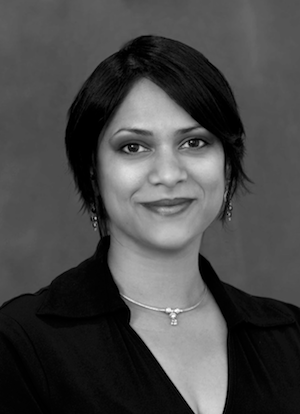
  • Indian American Jeremy Cooney is the NY 56th Senate District candidate

    Indian American Jeremy Cooney is the NY 56th Senate District candidate

    NEW YORK(TIP): Indian American Jeremy Cooney is one of the two such Democrats running for the New York State Senate this November. The other candidate is Kevin Thomas, who is challenging the NY 6th district incumbent Sen. Kemp Hannon, a New York state lawmaker since January 1977.

    Like Thomas, Cooney is also taking on an Albany “lifer”: Sen. Joseph Robach, who was first elected to the state assembly in 1991.

    Cooney’s incredible life story began with his adoption from an Indian orphanage by the late Anne Cooney, who worked as an English professor at Monroe Community College in upstate New York, for more than three decades.

    Raised by a single mother Ann Cooney, Jeremy went on to graduate from the liberal arts Hobart and William Smith Colleges in Geneva, NY, with a major in public policy and earn a JD from the Albany Law School.

    The lawyer and Eagle Scout is no stranger to local and state politics in New York, having served as an aide to a number of officials at all levels. They include serving as Downtown Community Relations official for Gov. Andrew Cuomo (2016-2017), as chief of staff to Rochester Mayor Lovely Warren (2014-2016), and as staff assistant to US Rep. Louise Slaughter, D-NY, (2004-2005).

    “I’ve spent the past few weeks meeting with people who are looking for change and for a representative that votes correctly on issues important to them, such as raising the minimum wage, common-sense gun safety, long-overdue bail reform, and providing educational opportunities for immigrant families,” Cooney said about his run from the 56th district in a press release. “For the past 15 years, we’ve been dealt short-term tax relief that’s no substitute for real economic growth — the type of growth that creates stable, good-paying jobs that give people the confidence to buy a house, start a family, and continue to call upstate New York home.”

    The 56th district includes the County of Monroe and parts of the City of Rochester.

    Cooney, who was named “Forty Under 40” by the Rochester Business Journal, has served in several leadership positions. While at the Albany Law School, he was a class president. For his other alma mater, Hobart Colleges, he served as a Manager for Campaign Leadership — a fundraising role.  He was also appointed to the Young Leaders Congress of New York.


  • Member of India’s Parliament Prof. Prem Singh Chandumajra Meets with SAD leaders

    Member of India’s Parliament Prof. Prem Singh Chandumajra Meets with SAD leaders

    Assures the Sikh community of solving passport and visa related issues

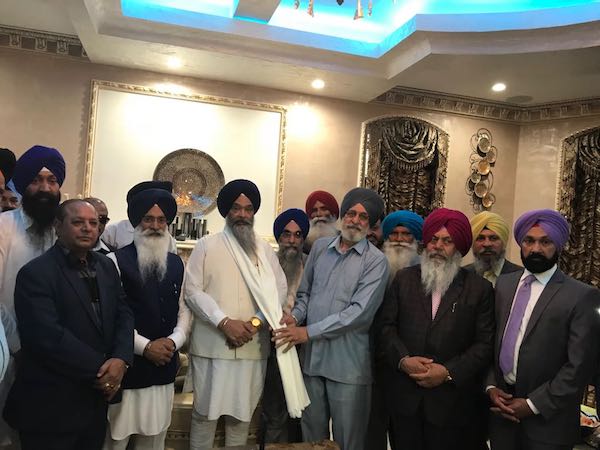
    NEW YORK(TIP): Prof. Prem Singh Chandumajra, Shiromani Akali Dal leader and Parliament Member from the historic Anandpur Sahib Parliamentary constituency visited New York recently and held a meeting with the local Shiromani Akali Dal leaders at the residence of SAD leader Raghbir Singh Subhanpur. A large number of party members attended the lunch meeting.

    Speaking on the occasion, Prof. Chandumajra said that he was aware of the problems the Punjabis, particularly, the Sikhs were having in respect of passport and visa and would take up the issue with the Consul General in New York. He said he had, on his visit to California, where he had gone to attend a wedding, taken up the matter with the Consul General in San Francisco, too. He blamed the government of India for not being sensitive to the difficulties the Sikhs faced for being denied the passport and visa.

    Speaking about the situation in Punjab under the Congress government of Captain Amarinder Singh, he said people were already fed up with the Congress government working. He accused the Punjab government of total inaction and said the State was being pushed in to deeper economic and social morass.

    Prof. Chandumajra with Subhanpur family

    Earlier, welcoming the visiting leader, SAD President Raghbir Singh Subhanpur said that the SAD leaders and workers in the US were always ready to support the party in Punjab. He spoke of the need to getting back in to the driver’s seat in Punjab in order to protect the interests of the Sikhs and the Sikh religion, which he said, was under threat from the present Congress government. He also spoke of the problems in getting passport and visa and requested the visiting leader to take up the issue with appropriate authorities here and in India.

    Speaking on the occasion, Master Mohinder Singh, one of the patrons of the SAD in USA had a long list of the infirmities of various systems in the State of Punjab. He bemoaned lack of basic infrastructure in schools and in hospitals. He spoke of the enormous inconveniences faced by NRI’s in courts in India, where cases were kept pending for long.

    Others who spoke on the occasion included Mohan Singh Khatra, President of New York unit of SAD, Himat Singh Sarpanch, one of the senior leaders of the party, and Kashmir Singh Pehowa, a general secretary of New York SAD.

    Sardar Ajit Singh Subhanpur, father of Raghbir Singh Subhanpur, honored the visiting leader with a siropao.

  • Byelection results: BJP needs another wave in 2019

    Byelection results: BJP needs another wave in 2019

    The loss in the Kairana Lok Sabha byelection has confirmed the erosion of voter enthusiasm towards the BJP in UP. As was the case in the election to the two Lok Sabha seats vacated by the UP CM and Deputy CM, respectively, well over 10 per cent of the 2014 voter in Kairana did not bother to vote. This dip in the BJP’s poll percentage in all the three UP parliamentary constituencies leads to the logical conclusion about a loss in ardor among the saffron party’s adherents after voting with their feet in the UP 2017 Assembly polls. This trend is confirmed by the 10 Assembly byelection results, exemplified by the Congress’ comprehensive sweep in Punjab’s Shahkot, Trinamool handsomely retaining the Maheshtala Assembly seat and the BJP’s severe loss of vote share in two Jharkhand seats, Kerala’s Chengannur and Karnataka’s Rajarajeshwari Nagar.

    The Lok Sabha election of 2019 may well tell a different tale because PM Narendra Modi, the BJP’s sole vote-catcher, can be counted upon to invest all his might instead of leaving the battle to the local satraps, who have obviously been unable to deliver. Yet the fact that a candidate who wasn’t fielded in 2014 because of poor performance in her previous term as Kairana MP handsomely won the seat suggests that it wasn’t about the choice of the candidate. Rather, Gorakhpur, Phoolpur and Kairana show that opposition unity and a lower polling percentage have swung the caste and religion arithmetic away from the BJP in the crucial state of UP.

    Another Lok Sabha polls which the BJP lost — Gondia-Bhandara in Maharashtra — has exposed the limits of poaching. The surprise resignation of the 2014 giant killer who had humbled Praful Patel and his joining the Congress had already put the BJP in a disadvantageous position. But the bottom-line in BJP’s tepid performance could be because the party was unable to move much beyond policy formulation on livelihood issues. It needs a wave again in the Hindi heartland, but the strategy may involve a Faustian bargain: focus more on bread and butter issues at the cost of its accent on religion.

    (Tribune, Chandigarh)

  • Mangano Corruption Case- U.S. District Judge Joan M. Azrack declares a mistrial

    Mangano Corruption Case- U.S. District Judge Joan M. Azrack declares a mistrial

    Jurors fail to reach a consensus on the charges against Edward and Linda Mangano. The judge set a June 28 status conference to schedule a new trial

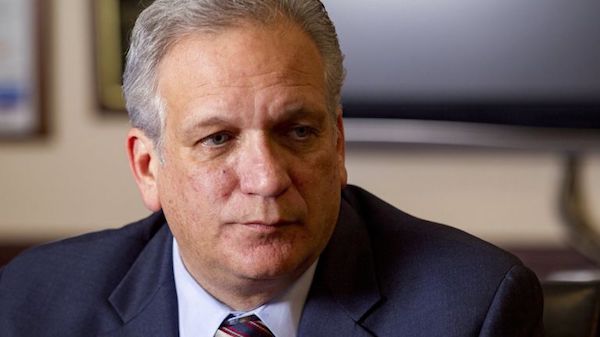
    CENTRAL ISLIP, NY(TIP): The federal corruption trial of former Nassau County Executive Edward Mangano and his wife, Linda, ended Thursday, May 31, in mistrial.

    The jury of seven women and five men failed to come to a consensus on the charges that Edward Mangano faced, including federal program bribery, honest-services wire fraud and extortion, after nine days of deliberations.

    U.S. District Judge Joan M. Azrack set a June 28 status conference to set a new trial.

     (Source: Newsday)

  • Texas Gov. Greg Abbott reveals plan to make schools safer

    Texas Gov. Greg Abbott reveals plan to make schools safer

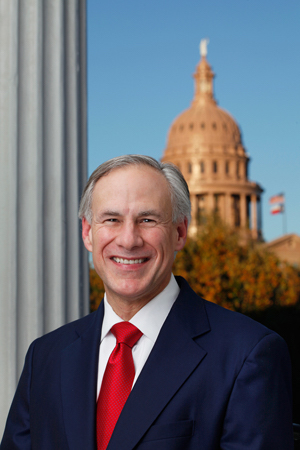
    DALLAS(TIP):  An Associated Press report says Texas Gov. Greg Abbott on Wednesday, May 30, called for schools to have more armed personnel and said they should put greater focus on spotting student mental health problems but he proposed only a few small restrictions on guns following a shooting at a high school near Houston that left 10 people dead.

    The Republican and staunch gun-rights supporter released a 43-page report following three days of mostly closed-door meetings last week organized with school district officials, shooting survivors and groups on both sides of the gun-control debate, among others.

    The recommendations are voluntary, and some would require changes to state laws that would need approval from the Legislature, which doesn’t come back into session until 2019. School districts wishing to make some of the changes could begin doing so, such as sending staff for free gun training this summer.

    The lack of major gun control measures is not surprising in a state that embraces its gun-friendly reputation and has more than 1.2 million people licensed to carry handguns.

    The only significant gun-related proposal was a possible “red flag” law, although Abbott gave it a tepid endorsement, asking leaders of the Legislature to “consider the merits.” Eight states have red flag laws that allow family, law enforcement and others to file a petition to remove firearms from a potentially dangerous person. Florida, Vermont and Maryland passed such laws after the mass school shooting in Florida in February.

    Abbott’s report does not appear to depart much from the playbook of the powerful National Rifle Association following school shootings.

    Alice Tripp, legislative director for the NRA-affiliated Texas State Rifle Association said Abbott’s proposals wouldn’t lead to weapons being seized without some protections for gun owners. “Gov. Abbott has pledged due process. He’s a gun owner himself,” Tripp said.

    Abbott is proposing a change to the state law that says guns can’t be accessible to children under 17, with exceptions such as hunting or parent supervision. He’s encouraging the Legislature to consider making the law also apply to 17-year-olds. Authorities have charged a 17-year-old student, Dimitrios Pagourtzis, with capital murder in the May 18 attack at Santa Fe High School. Pagourtzis is accused of using a shotgun and .38 revolver that belonged to his father.

    Abbott also wants a new law that would require gun owners to report a lost or stolen firearm within 10 days.

    The report says the state will have access to nearly $70 million through federal funding and state grants for the proposals. The state also expects to compete for an additional $40 million from federal programs, and Abbott says he’ll ask state lawmakers for a further $30 million.

    “We all share a common bond: And that is we want action to prevent another shooting like what happened at Santa Fe High School,” Abbott, who is campaigning for re-election, said during a news conference at Dallas school district headquarters.

    Abbott’s Democratic opponent for governor, Lupe Valdez, said it’s “astounding” how few of the proposals directly address gun violence.

    So far, the governor has not been enthusiastic about calls for a special legislative session on gun laws – a sharp contrast to the response in Florida following the February high school shooting there that killed 17 people. Florida lawmakers, who were already in session, passed a gun-control package three weeks later, thanks in part to a lobbying campaign led by student survivors of the attack.

    In Texas, any attempts to create a mechanism to seize weapons is likely to be met with skepticism in a Republican-controlled Legislature that has expanded the rights of gun owners in recent years and made it easier and cheaper to be licensed to carry a handgun.

    Also, unlike the students in Florida, several students at Santa Fe High School have been vocal opponents of increased gun control, including some who were invited to meet with Abbott last week.

    Kris Brown, the co-president of the Brady Campaign to Prevent Gun Violence, said: “The answer to preventing school shootings isn’t some deep-seated secret. It’s guns. It’s the fact that it’s frighteningly easy for dangerous people to get access to a gun, and this proposal does little to stop that.”

    Texas State Teachers Association President Noel Candelaria said he “strongly objects” to arming more teachers. “Teachers are trained to teach and to nurture, not double up as security guards,” Candelaria said.

    Abbott’s recommendations include measures to “harden” campuses such as creating vestibules where doors must by remotely unlocked before visitors enter, installing metal detectors and having an alarm that would signal there’s an active shooter.

    Abbott is also recommending an expansion of a program that identifies students at risk of committing violence and provides help for them. He also wants to increase the number of people trained to identify signs of mental illness and increase awareness of a state system that allows people to report people who may be a threat and suspicious activity.

  • BJP gets drubbing in Bypolls, losing 11 of 14 as regional players set new rules for 2019

    BJP gets drubbing in Bypolls, losing 11 of 14 as regional players set new rules for 2019

    NEW DELHI(TIP): Opposition unity got a booster dose on Thursday, May 31, as the BJP faced stunning defeats in 11 of the 14 byelections for which results were announced and regional forces emerged on top of electoral charts, signaling a new phase in Indian politics.

    The ruling BJP faced a crushing defeat in Uttar Pradesh’s Kairana parliamentary segment where Tabassum Hasan, the joint nominee of Rashtriya Lok Dal and Samajwadi Party — backed by Bahujan Samaj Party and Congress — defeated Mriganka Singh of the saffron fold by around 50,000 votes. BJP’s loss in the communally sensitive Kairana stood out considering it had won the segment by over two lakh votes in the 2014 General Election when the Narendra Modi wave swept UP.

    Of the four Lok Sabha seats where bypolls were held on May 28, the BJP managed to retain only Palghar in Maharashtra, where it defeated a Shiv Sena candidate. Kairana went to the kitty of a united Opposition; Congress’ UPA partner NCP snatched Bhandara-Gondia in Maharashtra from the BJP and the Nationalist Democratic Progressive Party, a BJP ally in the North-East, bagged the Nagaland segment.

    While the trend of BJP’s losses in parliamentary byelections is not new (it has only won five of 27 Lok Sabha bypolls since its historic 2014 landslide), shockwaves for the saffron party came from states where regional satraps convincingly halted the BJP in nine of the 10 Assembly byelections.

    The BJP managed to retain only Tharali in Uttarakhand. In UP, it lost the Noorpur seat to SP’s Naim-ul-Hasan, who was propped up by the joint Opposition. Lalu Prasad’s RJD claimed sweet revenge in Bihar by wresting the Jokihat seat from the Nitish Kumar-led JD(U), which deserted the Opposition ranks some time ago to go and settle with the BJP.

    Maheshtala in West Bengal went to the Mamata Banerjee-led TMC though the BJP was second, pushing the state’s old players CPM and Congress far behind. In Kerala’s Chengannur, the ruling CPM-led LDF won comprehensively while Silli and Gomia in Jharkhand went to the Jharkhand Mukti Morcha. In Punjab’s Shahkot also, the Congress dealt a severe blow to BJP ally Akali Dal.

    An emboldened Opposition saw a clear message in BJP’s multiple defeats. “Victory of a united Opposition,” said Congress’ Pramod Tewari. The results equally established the emergence of a new leader — RJD’s Tejashwi Yadav in Bihar.

    Though signaling a receding Modi wave, Home Minister Rajnath Singh put a spin on the saffron losses by saying, “You have to take two steps back for a big leap.” Overall, it was a day of defense for the BJP, whose spokesman Sambit Patra came up with this reasoning: “We won 325 seats in UP and formed a government. How did we lose bypolls and win later… because bypoll is fought on local issues.”

    That said, ahead of the 2019 General Election, Thursday’s most abiding message is that the time for bipolar politics may be over. A senior politician (name withheld) commented:” BJP ke acche din jaane wale hain”.

    (With inputs from Tribune, Delhi)

  • Trump imposes steel and aluminum tariffs on the E.U., Canada and Mexico

    Trump imposes steel and aluminum tariffs on the E.U., Canada and Mexico

    Tensions rise over potential Trade War-US Allies Retaliate, American Businesses and Farmers Upset

    WASHINGTON(TIP): President Trump on Thursday, May 31 imposed tariffs on imported steel and aluminum from the European Union, Canada and Mexico, triggering immediate retaliation from U.S. allies and protests from American businesses and farmers.

    The tariffs — 25 percent on steel and 10 percent on aluminum — take effect at midnight Thursday, May 31, giving rise to fears of a major escalation of the trade war between the United States and its top trading partners.

    The White House has said the U.S. tariffs — 25 percent duties on steel and 10 percent on aluminum shipments from Canada, EU member states and Mexico — are necessary to safeguard U.S. national security.

    Stung by the U.S. action, the allies quickly hit back.

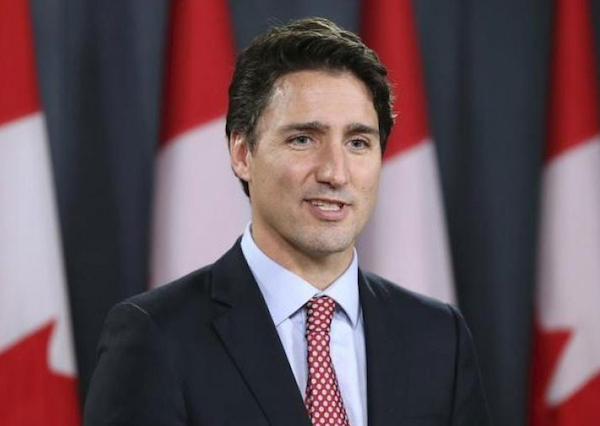
    In announcing his country’s response, Canadian Prime Minister Justin Trudeau said it was “inconceivable” that Canada “could be considered a national security threat to the United States,” noting that U.S. fighter planes and tanks contain Canadian steel.

    “These tariffs will harm industries and workers on both sides of the Canada-U.S. border and will disrupt supply chains that have made steel and aluminum from North America more competitive across the whole world,” he said in a press conference in Ottawa.

    Effective July 1, Canada will impose tariffs of 25 percent on shipments of U.S. steel and 10 percent on aluminum, as well as on other products, such as playing cards, inflatable boats and yogurt. Canada’s finance ministry estimated the value of the U.S. goods subject to those tariffs at up to C$16.6 billion ($12.8 billion),

    Jean-Claude Juncker, president of the European Commission, said the European Union also will apply news tariffs on American goods, with the trading bloc signaling it would target products made in states represented by key Republican leaders. The EU has said it would respond with tariffs on $3.3 billion in American imports as early as June 20.

    “The U.S. now leaves us with no choice but to proceed with a [World Trade Organization] dispute settlement case and with the imposition of additional duties on a number of imports from the U.S. We will defend the Union’s interests, in full compliance with international trade law,” Juncker said in a statement.

    The E.U. said it would impose import taxes on politically sensitive items like bourbon from Senate Majority Leader Mitch McConnell’s home state of Kentucky. Mexico said it would levy tariffs on American farm products, while Canada zeroed in on the same metals that Trump has targeted.

    The Mexican government said it would levy import taxes on U.S. exports of pork bellies, apples, cranberries, grapes, certain cheeses and various types of steel.

    Thursday’s action was driven by the president’s conviction that allies and adversaries routinely take advantage of the United States and that efforts to resolve trade disputes are doomed unless he wields a big tariff stick.

    “The United States has been taken advantage of for many decades on trade,” Trump said in a statement. “Those days are over. Earlier today, this message was conveyed to Prime Minister Justin Trudeau of Canada: The United State[s] will agree to a fair deal, or there will be no deal at all.”

    Officials from the three trading partners — among Washington’s closest allies for decades — have dismissed the idea that their shipments to American customers endanger the United States — and some prominent Republicans attacked the tariffs as wrongheaded.

    At home, some have expressed doubts about the position Trump has taken.

    Sen. Ben Sasse was blunter in criticizing the tariffs.

    “This is dumb. Europe, Canada and Mexico are not China, and you don’t treat allies the same way you treat opponents,” the Nebraska Republican said in a statement. “We’ve been down this road before — blanket protectionism is a big part of why America had a Great Depression. ‘Make America Great Again’ shouldn’t mean ‘Make America 1929 Again.’ “

  • Along the Borders

    Along the Borders

    By Mini Kapoor

    Unmindful, or perhaps too mindful, of the date, the U.S. inaugurated its new embassy building in Jerusalem last week, on May 14. Proceeding ahead full steam to shift its diplomatic mission in Israel from Tel Aviv to the disputed city, Washington sent Ivanka Trump to point proudly to the shiny plaque that had her father, U.S. President Donald Trump’s name in inordinately large font. The timing was significant as it was the eve of Nakba Day, on which Palestinians mark the forced exodus 70 years ago of hundreds of thousands from their homes in what became the state of Israel in 1948. Just a few miles away, thousands of residents of Gaza had surged in protest towards the barrier that marks the border with Israel — Israeli forces fired at the crowd, killing at least 60 Palestinians.

    The way borders operate

    In that overlay of cheer at the new embassy in Jerusalem and the bloodshed in Gaza could be found the different ways in which borders are heeded. Jerusalem is not just a disputed city, it was divided by the Green Line till the Six-Day War of 1967, when Israeli forces occupied East Jerusalem, where crucially some of the holiest sites of Judaism, Islam and Christianity are. Palestinians are firm that East Jerusalem be the capital of their state in the much recommended two-state solution. Many Israelis make a distinction between the West Bank and Gaza territories on the one hand and East Jerusalem on the other, contending that the city is an organic whole. The inauguration was a challenge to that old border. In Gaza, the barrier put up by Israel with inhumanely stern procedures to get past the checkpoints, and with the supplies of essential commodities so easily blocked in difficult times, the violence highlighted that fact that borders operate to the dictate of the militarily stronger party.

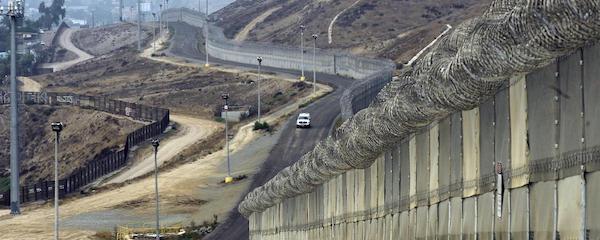
    The Israeli wall — or security barrier or separation barrier as it’s variously called, depending on your politics — is among the most contentious and photographed physical demarcations of a boundary, whether imposed or mutually agreed upon. In a new book Divided, Tim Marshall, a British journalist and writer, explains the theme in the subtitle: Why We’re Living in an Age of Walls. The data bear him out: “At least sixty-five countries, more than a third of the world’s nation states, have built barriers along their borders; half of those erected since the Second World War sprang up between 2000 and now. Within a few years, the European nations could have more miles of walls, fences and barriers on their borders than they were at the height of the Cold War.”

    Marshall’s analysis

    His analysis is sometimes unsatisfying, as he tries to see each wall (though in most parts they are not concrete walls, but fences, concertina wire, etc.) from the viewpoint of those who erect it as well as those it seeks to keep out, and the space is too limited for local nuances to be explored enough in this around-the-world tour. That equation in itself is a comment on the 21st century world, but Marshall’s tour of the great man-made barriers of today is instructive. Of course, he lingers at the Israeli wall — though as he points out, just 3% of the separation barrier is concrete. Other numbers are startling too: if the line drawn by the wall becomes a new fact on the ground, in a two-state solution, Palestinians would lose “at least 10 per cent of the West Bank land, as the wall’s current position lies well inside Palestinian land”. He describes the disparity in the checks that, say, Israeli settlers and Palestinian residents undergo, or those at the Palestinian end of the checkpoint and the Israeli. He explores the security dividend that’s accrued to Israel on account of the wall, and he also visits British graffiti artist Banksy’s Walled Off Hotel in Bethlehem overlooking, well, the wall.

    Around the world

    Marshall roams the globe, looking at “the longest border fence in the world” on the India-Bangladesh border, and also the issues of ethnicity, religion and humanitarian plight around the flight of the Rohingya from Myanmar to Bangladesh in the most fraught conditions to cross international boundaries. He looks at the wall Iran has built along its border with Pakistan. He describes the 1,700-mile Moroccan wall through Western Sahara. There’s the wall Trump wants to build/reinforce on the U.S.-Mexico border, the walls Hungary started building on its border with Serbia and Croatia. And so on.

    And there is the memory of that wall in Berlin that came down. Marshall doesn’t see the probability of a border-less world any time soon. But for now, he sees an antidote in the “great halls” that have been and are being built “to meet, discuss and try to resolve our differences”. Call it the alphabet soup of our hopes: “The United Nations, the EU, the African Union, ASEAN, MERCOSUR, OPEC, NATO, the World Bank…” Keep adding.

    (The author is a columnist with The Hindu)

  • Assembly Passes Weprin Anti-Hazing Bill-Legislation prompted by death of Baruch College student

    Assembly Passes Weprin Anti-Hazing Bill-Legislation prompted by death of Baruch College student

    ALBANY, NEW YORK(TIP):  Assemblyman David I. Weprin (D – Fresh Meadows, Richmond Hill) announced passage of legislation prohibiting physical contact or activity in any organization’s initiating ceremony. Introduced in 2014, after the hazing death of Michael Deng at Baruch College, A5200 aims to decrease the amount of dangerous hazing incidents that occur in New York each year.

    Deng, who was pledging the Baruch College chapter of Pi Delta Psi when he died during a December 2013 fraternity retreat at a house in Pennsylvania, was subjected to a hazing ritual known as ‘glass ceiling’, in which he suffered a massive head injury after he was blindfolded and forced to lug a knapsack loaded with 20 pounds of sand as fraternity members repeatedly took him down.

    Passage of Weprin’s bill follows a November 2017 Pennsylvania court ruling finding Pi Delta Psi Inc. guilty of involuntary manslaughter, hazing, and aggravated assault, as well as the January 2018 sentencing of 4 of 37 individuals charged with aggravated assault, hazing and murder in Pennsylvania after Deng’s death.

    “The best way for us to prevent hazing is to ensure that no student is ever put in a situation where their safety is in jeopardy,” said Assemblyman David I. Weprin. “By prohibiting reckless physical conduct and physical activities during initiation ceremonies, we can protect students and other individuals from the substantial risks caused by hazing. There is no better way to honor the death of Michael Deng, one of my constituents, by ensuring that this will never happen to another student again.”

  • Mondello steps down

    Mondello steps down

    HICKSVILLE, NY(TIP): An era ended with the resignation of Joseph Mondello, who has chaired the Nassau County Republican Party for the past 35 years.

    Although his announcement cites a desire to spend more time with his wife, kids and grandkids as the reason for stepping down, Mondello, 72, is up for an ambassadorship to Trinidad and Tobago, and has long been expected to give up the chairmanship.

    He went out with one last salute to his allies and a final barb to his antagonists in the media. “No matter what the future holds, or where that future takes me a big part of me will always be here – at 164 Post Avenue – where so much history was made – and no matter what the media says – so much good was done for the people of Nassau County,” he said in a statement.

    What now for the future of the Nassau County Republican Party and its leadership? The county committee is expected to meet Thursday and a vote on leadership could come then. But in some ways, the future is as uncertain as it was when Mondello took over after the conviction of his predecessor, the late Joseph Margiotta, on extortion and mail fraud charges.

  • A bang and a whimper- Trump scraps Kim summit, citing NK’s ‘open hostility’

    A bang and a whimper- Trump scraps Kim summit, citing NK’s ‘open hostility’

    Trump’s announcement came hours after North Korea carried out what it said is the demolition of its nuclear test site.

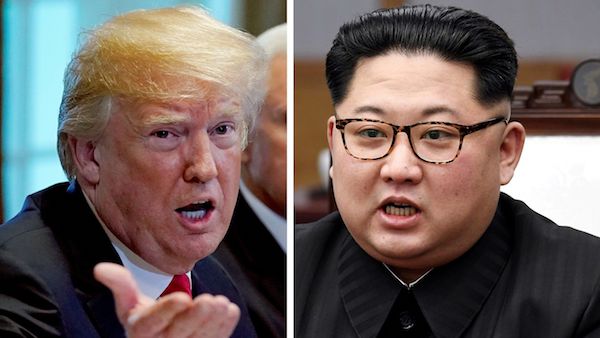
    WASHINGTON(TIP): US President Donald Trump on Thursday, May 24, called off a historic summit with North Korean leader Kim Jong Un scheduled for next month, even after North Korea followed through on a pledge to blow up tunnels at its nuclear test site.

    Trump announced his abrupt withdrawal from what would have been a first-ever meeting between a serving US President and a North Korean leader in Singapore on June 12 in a letter to Kim.

    A White House official said a North Korean official’s condemnation of US Vice-President Mike Pence as a “political dummy” was “the last straw” that led to cancelling the summit.

    “Sadly, based on the tremendous anger and open hostility displayed in your most recent statement, I feel it would be inappropriate, at this time, to have this long-planned meeting,” Trump wrote to Kim.

    “Please let this letter serve to represent that the Singapore summit, for the good of both parties, but to the detriment of the world, will not take place.” Trump called it “a missed opportunity” and said he still hoped to meet Kim someday. However, the chances for a quick rescheduling appear remote and cancellation of the summit will renew fears of a return to conflict on the Korean peninsula.

    Earlier on Thursday, North Korea had repeated a threat to pull out of the summit with Trump next month and warned it was prepared for a nuclear showdown with Washington if necessary.

    South Korea’s presidential Blue House appeared taken off guard by Trump’s letter and an official said it was “trying to figure out what President Trump exactly meant.” South Korean President Moon Jae-in had met with Trump at the White House on Tuesday, May 22, to urge him to follow through on the summit and not let a rare opportunity with reclusive North Korea slip away.

    A few hours before Trump announced the cancellation, a small group of international media selected by North Korea witnessed the demolition of tunnels at the Punggye-ri site on Thursday, May 24, which Pyongyang said was proof of its commitment to end nuclear testing.

    Meanwhile, alarm bells began to ring at the world body. Antonio Guterres, UN Secretary-General said, “I am deeply concerned by the cancellation of the planned meeting in Singapore between the President of the United States and the leader of the Democratic People’s Republic of Korea. Both the parties must continue their dialogue so as to find a path to the peaceful and verifiable denuclearization of the Korean peninsula”.

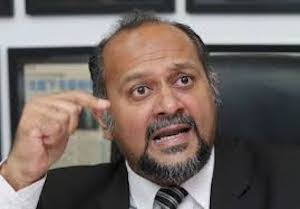
  • Indian Origin Gobind Singh Deo Becomes Malaysia’s First Sikh Minister

    Indian Origin Gobind Singh Deo Becomes Malaysia’s First Sikh Minister

    KUALA LUMPUR (TIP): An Indian origin Sikh politician in Malaysia, Gobind Singh Deo, has become the cabinet minister. He is the first member of the minority community in the country’s history to be appointed as a minister.

    Mr.Deo, 45, who has been given the communications and multimedia portfolio, is among the two politicians of Indian descent included in the Pakatan Harapan coalition’s Cabinet.

    The other Indian origin lawmaker is M Kulasegaran from the Democratic Action Party, who has been made the human resource minister.

    Mr. Deo represents Puchong constituency in the Malaysian Parliament and is the son of late Malaysian lawyer and politician Karpal Singh. He was sworn in during a ceremony at the National Palace yesterday after Prime Minister Mahathir Mohamad included him in the new cabinet.

    He was first elected as an MP in the 2008 general elections. Mr. Deo was re-elected to the lower house, with an increased margin, in 2013 and he again won this year’s election with a margin of 47,635 votes.

    The Punjabi community in the country has hailed the appointment of Mr. Deo as the minister.

    “It is good to see Gobind Singh, a member of the Punjabi community in the cabinet. It is a proud and happy occasion for our community. Other than being a recognition of his abilities, it is also a recognition for the long established Punjabi community in Malaysia, Miri Indian Association president, Councillor Karambir Singh was quoted.

    Malaysia has a Sikh population of nearly 1,00,000.

  • Indian Americans Appointed By New York Mayor To Board Of Advisors

    Indian Americans Appointed By New York Mayor To Board Of Advisors

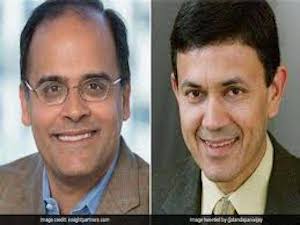
    NEW YORK (TIP):  Two Indian American executives are among 19 people appointed by New York City Mayor Bill de Blasio as members to an organization that addresses the city’s most pressing challenges, with a particular focus on improving the lives of vulnerable New Yorkers.

    Hotel Association of New York City President and CEO Vijay Dandapani and Insight Venture Partners Managing Director Deven Parekh, along with 17 other individuals have been appointed members to the Mayor’s Fund to Advance New York City Board of Advisors.

    Mr. Dandapani is a hotel industry veteran, recognized in 1998 as one of Crain’s New York Business top 100 minority business leaders in New York City.

    In 2002, the Asian American Business Development Center, New York selected him as one of 50 outstanding Asian Americans in Business. He is an alumnus of Cornell University’s School of Hotel Administration.

    According to its website, the Hotel Association of New York City is one of the oldest professional trade associations in the nation. Currently it represents 280 hotels, 80,000 rooms and about 50,000 employees.

    Mr. Parekh manages investments in vertical and horizontal software and consumer internet companies globally. He is also a member of the Council on Foreign Relations, the Economic Club of NY and the Greater NY Partnership.

    He was nominated by former president Barack Obama, and confirmed by the US Senate to serve on the Overseas Private Investment Corporation Board. In addition, he is chairman emeritus of Publicolor, a New York City based non-profit organization that focuses on inner city schools.

    During the period 2010 2012, he served as a Member of the Advisory Board of the US Export-Import Bank which is the official export credit agent of the United States. Mr. Parekh is regularly featured on Forbes’ list of the world’s top venture capitalists.

    For over 20 years, the Board of Advisors has provided expertise and critical support for the Fund as it pursues its goal of creating innovative and evidence-based approaches to address the City’s most pressing challenges, a press statement issued yesterday said.

    “To address the challenges facing our city, we need all New Yorkers pushing for progress together including those in our robust private sector,” de Blasio said.

    First Lady Chirlane McCray, Chair of the Mayor’s Fund to Advance New York City said the administration depends on New York City’s civic leaders to partner with government to make the city more vibrant and equitable.

    Founded in 1994, the Mayor’s Fund is a not-for-profit organization which annually works with an average of over 80 City programs, projects and initiatives; over 300 institutional funders; and more than 100 community-based organizations.

    The Mayor’s Fund and its partners work on a diverse set of initiatives that address needs across the city’s five boroughs, with a particular focus on improving the lives of vulnerable New Yorkers and New Yorkers in need.

    The Fund has made strategic investments to promote mental health services for all New Yorkers, increase workforce development opportunities for young New Yorkers, and meet the needs of New York City’s diverse immigrant community.

    Recently, the Mayor’s Fund has supported relief work in response to the unprecedented natural disasters that hit Puerto Rico, Texas and the Caribbean, including collecting USD 1.7 million in aid for residents displaced by Hurricane Maria.


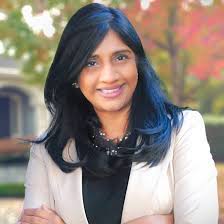
  • Indian American Aruna Miller Marlyland Democrat received another big endorsement courtesy the Former Obama Chief of Staff Denis McDonough

    Indian American Aruna Miller Marlyland Democrat received another big endorsement courtesy the Former Obama Chief of Staff Denis McDonough

    MARYLAND (TIP): Indian American Maryland Democrat Aruna Miller received another big endorsement on May 22nd courtesy Denis McDonough, former Chief of Staff to President Barack Obama.

    “I know first-hand what it takes to get things done in Washington,” McDonough, who served as chief of staff during Obama’s second term from 2013 to 2017. “Right now, we need experienced leaders who will stand up and fight for our values. Aruna came to this country as an immigrant and benefited from the American dream. I admire how she is giving back.” said Denis McDonough.

    “Denis McDonough led President Obama’s team defending the Affordable Care Act and protecting our environment,” Miller said. “I’m delighted to have his support. In Congress, I won’t let Donald Trump undo the progress we’ve made.”

    Last week, Montgomery County Council Vice President Nancy Navarro had endorsed Miller, who has bagged a series of high-profile endorsements.

    Among Democrats who have so far endorsed her include Sen. Kirsten Gillibrand, D-NY; US Reps. Pramila Jayapal, D-WA,  Ami Bera, D-CA, Ro Khanna, D-CA, and  Rep. Raja Krishnamoorthi; Montgomery County Executive Ike Leggett; former Maryland Lieutenant Gov. Kathleen Kennedy Townsend; and Maryland Del. Kumar Barve.

    The primary is on June 26.

    One of Miller’s primary rivals is millionaire David Trone, who spent more than $13 million of his money when he ran unsuccessfully from the 8th congressional district two years ago.

    Trone has so far raised more than $5.6 million and spent $4 million, according to the Center for Responsive Politics.

    Miller has remained competitive by doing well in a series of debates and also raising nearly $1.2 million, which is more than the combined amount raised by the five other candidates in the Democratic primary.

  • Indian Americans Sri Kulkarni and Chintan Desai win Democratic congressional primaries in two different states

    Indian Americans Sri Kulkarni and Chintan Desai win Democratic congressional primaries in two different states

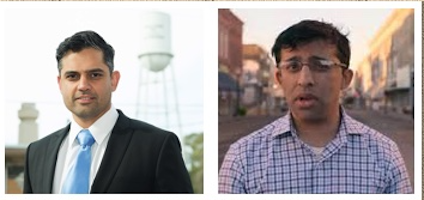
    TEXAS & ARKANSAS (TIP): Indian Americans Sri Kulkarni and Chintan Desai have won Democratic party primaries held on May 22ndin Texas and Arkansas respectively.

    Sri Preston Kulkarni, a former US diplomat, won the Democratic primary runoff for Texas’ 22nd Congressional District defeating Letitia Plummer, his only rival.

    In Arkansas, Chintan Desai, a school teacher, won the state’s first congressional district unopposed.

    In the 22nd dirstrict runoff on May 22nd, Kulkarni received 62.1 percent of the total votes polled, while Plummer got 37.88 percent votes.

    The runoff was required after no candidate was able to secure the 50 percent threshold in the primary held in March.

    Kulkarni and Plummer finished first and second in the primary with 31.81 percent and 24.30 percent votes respectively, resulting in a run-off to decide the Democratic nominee for the November election.

    Now Kulkarni will face Republican incumbent Pete Olson in November.

    Earlier, Olson had won the Republican primary in March defeating three candidates.

    “On May 22nd, we made history in District 22. Our movement, uniting diverse communities through shared values, took us across the finish line and helped me become your Democratic nominee for US Congress,” Kulkarni.

    “None of this would have been possible without our hundreds of volunteers, from middle schoolers to senior citizens, and, of course, the thousands of voters who participated in this election,” he thanked his volunteers for the unflinching support they provided, adding that” I am beyond thankful to be in this fight with you. I look forward to working with y’all to make sure our communities and our families get the representation they deserve in Congress.”

    Kulkarni, a former US diplomat, quit his State Department job to run for Congress.

    “According to media reports, Texas 22nd is a Republican leaning district. Olson, a four-term incumbent, has a 10-point advantage in the district. However, Democrats see the district as a pick-up opportunity.

    Arkansas 1st is a heavily Republican seat, which was carried by Trump by 35 points in the last presidential election. Desai’s November opponent, Rep. Rick Crawford has been representing the district since 2011.

  • Indian Overseas Congress, USA denounces BJP’s naked grab of power in Karnataka

    Indian Overseas Congress, USA denounces BJP’s naked grab of power in Karnataka

    NEW YORK(TIP): “BJP has dishonored the office of the Governor and denigrated the constitutional process in democracy in their incessant appetite to grab power at any cost,” said George Abraham, Vice-Chairman of the Indian Overseas Congress, USA. “Unless the people of India recognize the corrosive effect of their actions on institutions they hold dear, the Secular Democracy as we know it could be soon history” Mr. Abraham added.

    Karnataka Governor, Vajubhai Vala, a former Finance Minister under Modi in Gujarat has done a disservice to the nation by not inviting the Congress-JD(S) combine to form the Government. Although it is a post-poll alliance, it is quite evident that they have secured the simple majority that is necessary to claim the right to form the Government. On the other hand, BJP which is short of 8 MLAs might only succeed in their efforts, if they could engage in poaching or horse trading, which is illegal and at the minimum violates the spirit of the constitution.

    By swearing in BJP leader B.S. Yeddyurappa as the next Chief Minister, the Governor appears to have implicitly sanctioned illegal activities that may be already taking place behind the scenes. Janata Dal (S) leader HD Kumaraswamy alleged that Anand Singh, MLA is put under enormous pressure to defect. “Modi government is misusing institutions of the central government. I know they are threatening MLAs. A Congress MLA told me Anand Singh called him and told him ‘they are using ED (Enforcement Directorate), I had a case in ED, and they are going to screw me. I’m sorry I have to protect my interest’,” Mr. Kumaraswamy said, quoting Anand Singh. Previously, he had alleged that Rs. 100 crore and cabinet positions were being offered to his lawmakers”.

    Earlier, in a press briefing, Congress leader P. Chidambaram said the numbers of the Congress party and the Janata Dal-Secular (JD-S) established that the alliance had a majority in the Karnataka legislature. “The Governor, who is an exalted constitutional office, should not walk on a perilous path which is illegal,” Chidambaram said.

    Rahul Gandhi, the President of Congress Party, has also weighed in on the fast-moving developments in Karnataka.: “The BJP’s irrational insistence that it will form a Govt. in Karnataka, even though it clearly doesn’t have the numbers, is to make a mockery of our Constitution. This morning, while the BJP celebrates its hollow victory, India will mourn the defeat of democracy”.

    Congress Party may also partly to bear the responsibility for this debacle as their over-confidence bordering on arrogance by Siddaramaiya, the former Chief Minister, might have prevented them from forming a pre-poll alliance with Janata Dal (S). It should be noted that although Congress won only 78 seats, its vote-share (38%) was higher than that of BJP’s (36%). And combined with JD (S), the anti-BJP vote share amounts to 56% and thereby nullifies the argument that they have some mandate to govern for next five years.

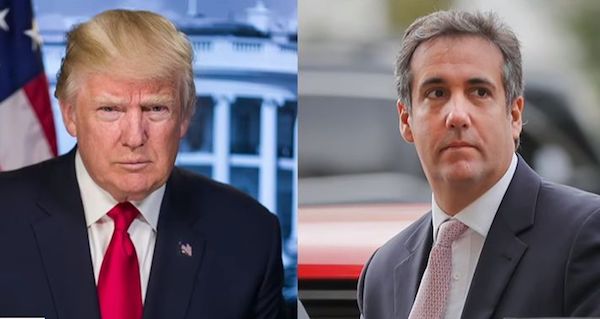
  • Trump lists Michael Cohen payment on federal form, raising legal concerns about Stormy Daniels payoff

    Trump lists Michael Cohen payment on federal form, raising legal concerns about Stormy Daniels payoff

    WASHINGTON(TIP): President Trump should have disclosed Michael Cohen’s hush payment to porn star Stormy Daniels as a financial liability last year, the government’s top ethics watchdog concluded Wednesday, potentially opening the President up to legal complications.

    David Apol, acting director of the Government Ethics Office, said in a letter appended to Trump’s 2018 financial disclosure form that a payment Cohen made to “a third party” on behalf of the President during the 2016 election meets the requirements for a reportable “loan.”

    The letter does not explicitly state what Cohen’s payment was for, but the President’s legal team and Cohen himself have previously acknowledged he paid Daniels $130,000 to keep quiet about allegedly having sex with Trump in 2006. Cohen has also admitted the hush payment was issued 11 days before Trump’s election.

    While Apol didn’t say so in his letter, the revelations mean Trump could have committed a crime by not disclosing the liability in his financial disclosure report last year. Apol referred his findings to Deputy Attorney General Rod Rosenstein for any “inquiry” the Justice Department may pursue into the matter.

    Trump acknowledged in the disclosure form for the first time that he fully reimbursed Cohen last year for “expenses” ranging between $100,001 and $250,000.

    Ex-Mayor Rudy Giuliani insisted Trump disclosed the repayments to Cohen in this year’s report out of “an abundance of caution.”

    “It’s not a loan, but he reported it anyway,” Giuliani, the latest addition to Trump’s legal team, told the Daily News, directly contradicting Apol’s findings. “It was in fact an expense, like paying a doctor. If you owe a doctor $2,000 and you pay him back, that’s not a liability.”

    Giuliani claimed Trump didn’t list Cohen’s payment to Daniels in last year’s form because he didn’t need to.

    “There’s nothing to report,” Giuliani said.

    Asked if Trump is worried, Giuliani delivered a one-word rebuke: “Nope.”

    Citizens for Responsibility and Ethics in Washington, a legal watchdog group that first flagged Trump’s disclosure omission in March, welcomed Apol’s findings and swiftly filed a criminal complaint against the President. They called on the Justice Department to look into whether he “knowingly and willfully” failed to report required information — an offense punishable by up to one year behind bars.

    “There is substantial evidence that President Trump had knowledge of the loan when he filed his public financial disclosures last year,” Noah Bookbinder, the watchdog’s executive director, said in a statement. “If the department is not already investigating the President’s failure to disclose the loan last year, it should open an investigation immediately.”

    A spokeswoman for the Justice Department declined to comment.

    Attorney Michael Avenatti, who represents Daniels in a civil lawsuit seeking to void her nondisclosure agreement with Cohen, said the financial form “conclusively proves” that Trump, Cohen, Giuliani and the White House deceived the “American people.”

    “This was NOT an accident and it was not isolated,” Avenatti tweeted. “Coverups should always matter.”

    Cohen, Trump’s longtime attorney and personal fixer, had his Manhattan office, home and hotel room raided by FBI agents last month as part of a criminal investigation launched by federal prosecutors in New York. The agents seized a cache of records, including communications between Cohen and his clients.

    Michael Cohen arrives at Manhattan Federal Court on April 16.

    Michael Cohen arrives at Manhattan Federal Court on April 16. (Alec Tabak)

    Whether Trump committed a crime by not disclosing the Cohen payments last year is a matter of whether or not he knowingly omitted them, according to experts.

    “Trump may be wondering today whether the information DOJ seized from Cohen’s office included any emails or other documents showing he knew of the debt when he filed last year’s report,” former Government Ethics Director Walter Shaub tweeted.

    Shaub, who served as the ethics czar between 2013 and 2017, noted that Apol’s letter to Rosenstein is tantamount to a “criminal referral.”

    Shaub also recalled that, while serving as ethics director, Trump attorney Sheri Dillon asked him if the President could submit his 2017 disclosure without certifying its contents as true.

    “The strangest moment in my entire career,” Shaub said.

    Wednesday’s financial disclosure dump also revealed First Lady Melania Trump raked in as much as $1 million last year in royalties from photos of her owned by Getty Images.

    It’s not clear what photos in particular she received royalties for, but her spokeswoman told The News the payments pertained to images taken before Trump took office.

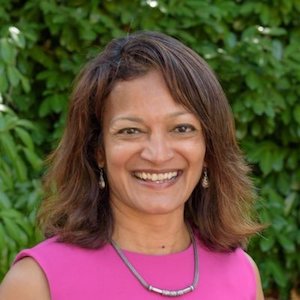
  • Indian American Susheela Jayapal elected as Oregon’s Multnomah County Commissioner

    Indian American Susheela Jayapal elected as Oregon’s Multnomah County Commissioner

    OREGON(TIP): Susheela Jayapal was elected as the Multnomah County Commissioner in Oregon on May 15th. Jayapal defeated construction contractor Sharon Maxwell, non-profit administrator Bruce Broussard and Maria Garcia.

    Fighting her first major election, Jayapal won a four-way race with 54 percent votes. She replaced the current commissioner Loretta Smith.

    Jayapal is an experienced attorney and advocate and is a long-time community volunteer.

    She was expected to win the election after her strongest opponent, Black Parent Initiative CEO Charles McGee, decided to end his campaign mid-way following a sexual harassment allegation.

    Congratulating her sister, Pramila Jayapal tweeted, “My sister, @SusheelaJayapal, just became the first #SouthAsian American elected in Oregon!!! #DiversityMatters”

    Jayapal was endorsed by the Indian American Impact Fund.

    “Tonight’s win by @SusheelaJayapal is our second big win of the cycle, following @RamForSenate’s sweeping primary victory which positions him to be the first Indian American to serve in the Illinois state legislature. This is what progress and history look like!” the Impact Fund tweeted.

    Susheela Jayapal holds an undergraduate degree in economics from Swarthmore College and a law degree from the University of Chicago Law School.

    She worked as a litigator at law firms in San Francisco and Portland. She also served as the General Counsel at Adidas America, serving as a member of the senior executive team responsible for the legal affairs of what was then a $1 billion company.

    As an attorney, Jayapal represented the government in taking on corrupt and negligent bank officers during the fiscal crisis of the 1980s; provided free legal services to people seeking political asylum in the U.S.; and worked on improving labor conditions at factories in Southeast Asia, developing and implementing adidas’ first set of labor standards.

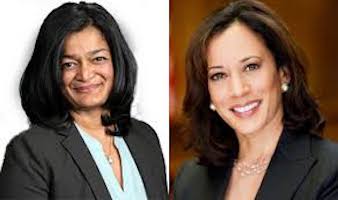
  • Indian American women lawmakers introduce a new bill to monitor the Immigration and Customs Enforcement (ICE) detention centers in the United States

    Indian American women lawmakers introduce a new bill to monitor the Immigration and Customs Enforcement (ICE) detention centers in the United States

    WASHINGTON(TIP): Indian American women lawmakers Rep. Pramila Jayapal and Sen. Kamala Harris on May 15thintroduced a new bill titled Detention Oversight Not Expansion (DONE) Act to monitor the Immigration and Customs Enforcement (ICE) detention centers in the United States.

    The bill is meant to keep a close watch of the ICE detention centers and proposes to halt the funding for any new construction, and expansion of such facilities.

    According to the two Democrats, over the last two decades, the number of non-citizens held at ICE detention centers in the United States has increased by 400 percent and the inmates of these centers include women, children and pregnant women.

    The bill’s text also says that these inmates are often mistreated by the ICE agents and are forced to live in deplorable conditions, in violation of their basic rights.

    “Even though the U.S. already houses the largest immigrant detention system in the world, the Trump Administration wants more detention beds without any oversight,” said Jayapal in an official release posted on her website.

    “The countless number of horrific assaults, senseless abuses and needless deaths of immigrants in detention prove that ICE isn’t able to police itself. Our bill demands a higher accountability of ICE and a stop to detention expansion because our nation doesn’t need more violence and further militarization – what we need is comprehensive and humane reform and real accountability,” she added.

    “ICE’s indiscriminate approach to immigration enforcement continues to sow fear and anxiety in communities across the nation and strict oversight is long overdue,” said Harris.

    “It is unconscionable to subject detainees to inhumane conditions that include cases of unchecked sexual abuse, outright medical negligence, lack of access to counsel, and in some cases, even death. It’s time to end the expansion of these facilities that divert these resources to address true public safety threats,” she added.

    The new bill proposed by Jayapal and Harris require the Secretary of the Department of Homeland Security to submit a report to Congress that includes a plan to decrease the number of detention beds by 50 percent of the number available as of the date of the enactment of this Act by using alternatives to detention that are less costly to the taxpayer and have been shown to be successful.

    It also proposes restoring and expanding the Family Case Management Program and calls for DHS’ Office of Inspector General to conduct unannounced inspections of all immigration detention facilities to ensure compliance with national standards, focusing on the health, safety and care of detainees, especially as it relates to pregnant women. The DHS OIG will be required to submit a report of its findings to Congress.

    Jayapal and Harris also recommend the DHS Office of Civil Rights and Civil Liberties to conduct similar investigations and submit a report of its findings to Congress.


  • A time to think fast: on the US exit from the Iran deal

    A time to think fast: on the US exit from the Iran deal

    The U.S.’s exit from the Iran nuclear deal puts India in a spot on many counts

    By Happymon Jacob
    The global non-proliferation regime has taken a direct hit from the U.S.’s decision to renege on the Iran deal. It is important to understand that norms, rules, persuasion and good faith make up the moral foundation of the non-proliferation regime, and the inability of the great powers to abide by them will dissuade non-nuclear weapons states from signing on to or abiding by new or existing agreements, protocols or regimes

    American President Donald Trump’s decision to withdraw from the Joint Comprehensive Plan of Action (JCPOA), popularly called the Iran nuclear deal, is bound to have serious implications for the international system, and for India. To be sure, the least affected will be the U.S.; European Union countries will be moderately affected due to the business ties with Iran; and the most affected will be countries closer to the region, in particular India. Moreover, for a U.S. administration that has made it a habit of accusing other countries of “undermining the rules-based order”, this action has severely undermined the rules-based global order.

    Unreasonable act

    Washington’s decision is unjustified and unreasonable for several reasons. For one, the International Atomic Energy Agency (IAEA) has consistently maintained that Tehran has complied with the strictures of the JCPOA without fail. Moreover, Iran has signed the Nuclear Non-Proliferation Treaty (NPT) which prohibits it from developing nuclear weapons and has agreed to ratify the IAEA’s Additional Protocol five years from now which will grant IAEA inspectors wide-ranging access to monitor nuclear-related activities in Iran. And yet Mr. Trump has thoughtlessly undone the outcome of negotiations that went on for close to two years.

    Second, the argument that since the provisions of the JCPOA will become less strict over the years enabling Iran to move towards nuclear-weapon capability is not a credible rationale for undoing the deal. In fact, if indeed there are concerns about Iran potentially moving towards a nuclear option, efforts should be made to engage Tehran in negotiations rather than undo what has already been achieved. This is a classic case of throwing the baby out with the bathwater.

    With regard to Iran’s involvement in the various West Asian conflicts and “promotion of terrorism”, Iran is not the only country engaging in them. And in any case the way out, again, is diplomatic engagement rather than further unsettle an already volatile region.

    The implications

    The global non-proliferation regime has taken a direct hit from the U.S.’s decision to renege on the Iran deal. It is important to understand that norms, rules, persuasion and good faith make up the moral foundation of the non-proliferation regime, and the inability of the great powers to abide by them will dissuade non-nuclear weapons states from signing on to or abiding by new or existing agreements, protocols or regimes. Second, even though Mr. Trump might think that playing hardball with Tehran will help him to extract concessions from Pyongyang, it is equally possible that the North Koreans will think twice before entering into any agreement with the untrustworthy Trump administration.

    Third, Washington’s unilateral and dictatorial withdrawal from the deal would create deep fissures in the time-tested but increasingly shaky trans-Atlantic security partnership. Not least because it implies potential secondary sanctions against those European companies which are engaged in business deals with Iran. Here again, the U.S. does not have much to lose given its almost non-existent business contacts with Iran.

    Besides, Mr. Trump’s Iran decision follows a pattern of similar unilateral steps — such as the withdrawal from the Paris climate accord and formal recognition of Jerusalem as Israel’s capital. Let alone the loss of face suffered by European leaders and the financial losses by their countries’ firms, U.S. unilateralism has deep-running implications for the global security and governance architecture, and other multilateral arrangements and regimes. It is in this context that what French Foreign Minister Jean-Yves Le Drian said becomes significant: “The deal is not dead. There’s an American withdrawal from the deal, but the deal is still there.” The argument has found support in several global capitals.

    Hassan Rouhani, the moderate President of Iran, who negotiated the nuclear deal, might lose his standing in the country as hardliners pitch for more aggressive steps, including developing a nuclear weapon capability and more military engagement in the neighborhood. The chief of staff of the Iranian Armed Forces, Maj. Gen. Mohammad Bagheri, has said that the “Iranian people never favored the nuclear deal”. This is an indication of the hardline Iranian responses in the offing as and when sanctions are reimposed.

    Iran’s refusal to fall in line might prompt Israel and the U.S. to carry out attacks against Iran leading to Iranian counter-strikes against American allies in the region, or even Israel. This would further destabilize a region already reeling under terrorism, wars and internal conflicts. Americans, and the international community, should remember how the misguided military campaign against the Saddam Hussein regime in Iraq turned out to be a huge geopolitical disaster.

    India’s Persian dilemmas

    While the U.S. has almost nothing to lose in reneging on the JCPOA, India has a lot to lose both economically and geopolitically, and it will take deft diplomacy to adapt to the changing alignments. A more unstable West Asia would ipso facto mean more difficult choices for New Delhi. More conflict in the region would adversely impact the welfare and safety of Indian expatriates in West Asia, leading to a sharp decline in the remittances they send home, and an assured hike in oil prices. Low crude oil prices had given India the much-needed economic cushion in the past few years — that phase of cheaper oil has now ended. Recall how the U.S. war on Iraq had a debilitating impact on Indian workers and the West Asian remittances. India also had to abandon the Iran-Pakistan-India pipeline in 2008 thanks to U.S. sanctions against Iran.

    The Narendra Modi government’s efforts to maintain a fine balance between India’s relations with Iran on the one hand and with the U.S., Israel and Saudi Arabia on the other will be seriously tested in the days ahead. The new warmth between Iran and India could attract American ire. What is even more worrying is that unlike the last time when the U.S. imposed sanctions on Iran, and India had to choose the U.S. over Iran, the geopolitical realities are starkly different this time. Not only are the Americans going it alone this time, but the regional ganging-up against the U.S. and in support of Iran will be more pronounced this time around, making India’s ability to make a clear choice more difficult.

    India’s dreams of accessing Central Asia via Iran could also be dashed with the return of American sanctions against Iran. India’s projects in Iran’s Chabahar port have been widely viewed in New Delhi as a crucial plank of its Iran-Afghanistan-Central Asia strategy. With U.S. sanctions again tightening around Tehran, New Delhi may find it hard to continue with this project. As a matter of fact, thanks partly to India’s dilly-dallying on Chabahar during the previous round of U.S. sanctions against Iran, Iran had invited Pakistan to the Chabahar project. Some have even suggested a potential link between Chabahar and Gwadar in Pakistan.

    Given that there is little consensus around Mr. Trump’s withdrawal from the JCPOA, several of the dissenting parties might look for ways of thwarting U.S. efforts at isolating Iran. Such efforts, especially those led by China and Russia, both parties to the JCOPA, would have implications for the Southern Asian region as well. If indeed China manages to bring together a group of regional powers, including Russia, Iran, Pakistan and interested others, to counter Washington’s influence in the region, New Delhi might find itself in a corner.

    (The author is Associate Professor of Disarmament Studies, Centre for International Politics, Organization and Disarmament, School of International Studies, Jawaharlal Nehru University)

  • Architecture of the Mandate

    Architecture of the Mandate

    The lesson from Karnataka: the parties opposed to the BJP must work together from the word go

    By Gopalkrishna Gandhi
    With the two parties having come together, and out-numbering the BJP MLAs, the real test of their political integrity lies in their staying together and defeating the Yeddyurappa government in the first confidence vote. There is only one way in which they can do that. And that is by staying together, staying determined, and voting on vote day unitedly. Will they let their unity and determination, numerical strength, numerical integrity be diminished?  How may that be done? We know the way that happens.

    Mathematics is about numbers, and mathematics is an exact science. The addition, subtraction, division and multiplication of numbers in ganita is about getting problems right. Just that. Right. And a satisfaction is derived, both mathematical and aesthetic, in getting the exercise right. Precision is its sole dharma. Numbers, after a problem is done, stand still. They do not pull at each other, jumping from a plus to a minus, from the times or multiplication sign into an obelus or division sign. A sum does not try to or want to alter itself. The problem-solver or sum-beholder derives satisfaction from the purity of its precision.

    Integrity of the arithmetic

    Elections too are about numbers and are an exact exercise. But only until the sum is reached. That is, until the Election Commission finishes its calculations and declares the ‘sum’. The Election Commission counts and then announces the counts, and once it has done that, retires. After that has been done, the President in the case of Lok Sabha elections or the Governor in the case of Vidhan Sabha elections takes over. It is in their hands that the result of the counting converts itself into the pattern of seats in the elected House. The President or Governor then becomes the keeper of the sum’s integrity and has to see that the pattern of the sum is honored by the pattern of the seats. In other words, the architecture of the sum is retained by the architecture of their power. The keeper has to see that the integrity of that architecture is not garbled to create a house different in shape from the blueprint of the sum’s design.

    What was the blueprint of the design that the people of Karnataka drew? The blueprint came in four folds. All of us know them now only too well.

    The first fold for the single largest party was the Bharatiya Janata Party, or BJP’s.

    The second fold for the second largest party was the Congress’s.

    The third fold for the third largest party was that of the Janata Dal (Secular), or JD(S).

    The fourth fold, which showed the first three in a pie, gave their relative shares: the first was smaller, if only slightly, than the second and third seen together.

    We have to switch now from designs, graphs, squares and pies to what the Governor had to make of this four-fold design. We have to switch from arithmetic and geometry to a kind of algebra, the study of mathematical symbols, the rules for their handling, their groups, rings, fields. In other words, we have to switch now from how to move from the numbers to their mandate and see how a House is to be made from out of its mandate, a House for the mandate of the gana to dwell in. In this task, though working on and with numbers, a President or a Governor cannot function like a calculator. His task is mathematics plus ethics.

    The Governor’s options

    The Governor of Karnataka saw and may well have felt somewhat like this: If only Party One had just crossed the halfway mark and got a simple majority, his task would have been simple. He would have called its leader to form the government. But that did not happen. The people of Karnataka voted in greater strength against Party Number One than for it.

    If only Party Two and Party Three had entered the election as a joint team, in what is called a pre-poll alliance, his work would again have been simple. He would have had to call that two-colored rainbow to name its leader and invite him to take the oaths of office. But that too did not happen. The majority of the people of Karnataka voted against the BJP but they did not vote cohesively for the Congress-JD(S) combine.

    So, the Governor did not get it all that simple. But was what he did get all that complicated? Not really.

    Though not a pre-poll alliance, Parties Two and Three did get together with a verve and vim they did not show before the elections to become one, and not only drew up a joint list of the newly elected MLAs to be but also chose a joint leader, unconditionally. There is nothing in any electoral law or court verdict to say that a post-poll alliance is ab initio null, void and to be disregarded. True, a pre-poll alliance is a neater, more up-front arrangement, but a post-poll one is not out of order.

    The numbers in Karnataka were clear. They showed the people’s integrated will, albeit in two frames hinged together requiring Parties Two and Three to be asked to form the government and seek the approval of the House by its users on its floor. If defeated, then ask Party One to try its luck.

    That has not happened.

    Had Party Two and Party Three not come together post-poll, Governor Vajubhai Vala could have ignored the fact that the non-BJP MLAs outnumber the BJP MLAs — and left it to the Chief Minister or the putative leader of the House to navigate his majority through the first confidence vote. But he has decided and that is that.

    What now? With the two parties having come together, and out-numbering the BJP MLAs, the real test of their political integrity lies in their staying together and defeating the Yeddyurappa government in the first confidence vote. There is only one way in which they can do that. And that is by staying together, staying determined, and voting on vote day unitedly. Will they let their unity and determination, numerical strength, numerical integrity be diminished? How may that be done? We know the way that happens.

    The principle of it

    With millions of other Indians I have a political position that opposes the ideology of the BJP and the Rashtriya Swayamsevak Sangh (RSS). But I also have a sense, again with millions of others, of a political ethics that tells me if the Congress had been in the position of single largest party in Karnataka as the BJP is in, and if the BJP and the JD(S) had got together post-poll as the single largest group, and if Governor Vala, citing the single largest party line, had called the Congress to form the government, I would have said exactly the same thing I have said here – in the reverse.

    The lesson of the Karnataka Kanda is this: the parties opposed to the BJP and RSS’s ideology must work together from the word go, and not let the imponderables of post-election decision-making imperil the will of the people.

    (The author is a former Governor of West Bengal)

  • Arbitrary, capricious: on Karnataka mandate

    Arbitrary, capricious: on Karnataka mandate

    The Governor has banked not so much on the count the BJP had, as on what it could engineer

    In summarily ignoring the claim of H.D. Kumaraswamy, Karnataka Governor Vajubhai Vala abandoned both propriety and common sense, acting in a politically partisan manner unbecoming of his office. Mr. Kumaraswamy was elected leader of the Janata Dal (Secular) Legislature Party and, with the declared support of the Congress, had the backing of a majority in the newly elected Assembly. The leader of the BJP Legislature Party, B.S. Yeddyurappa, offered no demonstrable proof of majority, but was invited to form the government, and given all of 15 days to prove he had the confidence of the House, solely on the basis of being the leader of the single largest party. Far from ushering in a stable government, the Governor unbolted the doors to allow room for the BJP to try to engineer defections. In situations such as these, the Constitution allows an element of discretion to the Governor, but this power was never meant to be used arbitrarily and capriciously. In defense of the Governor’s action, BJP leaders have cited the Bommai judgment, which ruled on the course open for the Governor in the event of a Chief Minister losing majority in the House, but offered no opinion on a post-poll situation, where it said the Governor had to “invite the leader of the party commanding majority in the House or the single largest party/group to form the government.” Nothing in the judgment privileges the single largest party over the largest group when it comes to being given the first shot at forming a government.

    The BJP leaders have now staked out positions that are at odds with those they adopted after the Assembly elections in Manipur and Goa, when the single largest party, the Congress, was denied a chance to form the government. Union Law Minister Ravi Shankar Prasad had a weak defense on this turnaround: the Congress, he claimed, had not staked a claim in those two States. The Congress has taken the fight to the Supreme Court, which has asked the Attorney General to produce the letters written by Mr. Yeddyurappa to the Governor in support of his claim. When the members of the Congress and the JD(S) together constitute a majority in the House, it is unclear what letters Mr. Yeddyurappa could have presented to the Governor. No matter how things turn out from here on, the BJP has emerged as a bad loser. The party played a smart hand in Goa and Manipur to deny the Congress but is unable to accept defeat in Karnataka when beaten at its own game. Politics is not always about reaching for power; sometimes it is also about learning to sit in the Opposition. After all, power is only one of the means of politics, not one of its ends. The BJP may have bested the Congress in Karnataka, but it may not have paid the price for this victory yet.

    (The Hindu)

  • Senate Confirms Gina Haspel as First Female director of CIA

    Senate Confirms Gina Haspel as First Female director of CIA

    WASHINGTON(TIP): History was made on May 17   when US Senate confirmed Gina Haspel as the first female director of CIA.

    After a protracted confirmation battle that resurrected a nationwide debate about the agency’s post-9/11 use of enhanced interrogation techniques — thought by many to have constituted torture — Gina Haspel will officially become director of the Central Intelligence Agency. She is the first operations officer in more than five decades – and the first-ever woman – to be named to the role. On Thursday, May 17, the Senate voted, 54-45, to confirm Haspel, one day after the Senate Intelligence Committee, in a 10-5 vote, reported her nomination favorably. Overall, six Democrats voted in support of her candidacy; two Republicans, Sens. Flake and Paul opposed it.

    President Trump nominated Haspel to the post in March, in a tweet, while announcing that her predecessor, former CIA director Mike Pompeo, was being tapped to lead the State Department.

    Much of Haspel’s 30-year career at CIA was spent in the clandestine service and remains classified. Her reported oversight, in 2002, of a secret “black site” in Thailand — where detainees were subjected to enhanced interrogation techniques, including waterboarding — generated widespread controversy and ardent condemnation from civil rights groups. Her involvement in ordering the destruction, in 2005, of 92 videotapes – some of which documented the interrogations — while serving as chief of staff to then-Director of the clandestine service Jose Rodriguez was also roundly criticized.

    Among those opposed was Sen. John McCain, R-Arizona, who survived years of torture as a POW in Vietnam, and who, as he undergoes treatment for brain cancer, was not present for the floor vote. Last week McCain issued a powerful statement opposing Haspel’s candidacy, calling her role in overseeing the use of torture by Americans “disturbing.”

  • Karnataka floor test at 4 pm on May 19th: Supreme Court of India Order

    Karnataka floor test at 4 pm on May 19th: Supreme Court of India Order

    NEW DELHI(TIP): The Supreme Court on May 18thordered that the Yeddyurappa government seek majority on the floor of the House at 4 pm on Saturday, May 19th.

    Earlier, Yeddyurappa had been given 15 days’ time, but then the Congress-JDS leaders challenged the decision.

    BJP leader BS Yeddyurappa placed before the Supreme Court the letters he had sent to Governor Vajubhai Vala in which he had staked claim to form the government in Karnataka.

    The Supreme Court was hearing a petition moved by the Congress-JDS combine challenging the governor’s decision to invite the BJP to form the government.

    Yeddyurappa, who was sworn in as the chief minister of Karnataka on Thursday, May 17, told a special bench headed by Justice AK Sikri that being the single largest party the BJP had the “mandate of people” of the state who had thrown out the Congress.

    Senior advocate Mukul Rohatgi, appearing for Yeddyurappa, told the bench that there was no pre-poll alliance between the Congress and JDS and they had formed an “unholy alliance” after the elections.

    In the May 12 polls, the BJP emerged as the single largest party with 104 members, while Congress secured 78, the JD(S) 37 and others three.

    (Agencies)


  • Himesh Gandhi Formally Claims Sugar Land Council Seat in Texas

    Himesh Gandhi Formally Claims Sugar Land Council Seat in Texas

    HOUSTON(TIP): A well-known Indian American community leader and a politician, Himesh Gandhi, formally won council seat in Sugar Land, Texas on May 5.

    The win is Gandhi’s fourth and final term. He received 100 percent of the 4,353 votes.

    “Thank you to the citizens of Sugar Land for your trust and confidence as I serve my fourth and final term. It has been an honor and a privilege to serve!” Gandhi wrote on Facebook.

    Gandhi was first elected in 2012, when he was 35, the youngest councilman to be elected in a citywide vote.

    He has served on numerous city council committees and was also a member of the task force that spearheaded development of the Smart Financial Center at Sugar Land—an iconic concert and performance hall that opened last year.

    Other successes and projects launched by the city during Gandhi’s previous term include the successful annexations of Greatwood and New Territory, the acquisition of a former prison site for redevelopment, the completion of drainage projects, and the return to normal operations after the devastating effects of Hurricane Harvey.

    In 2015, Gandhi was honored by the Houston Business Journal as one of the region’s 40 under 40 young leaders. The Indian Panorama had carried the news then.

    Gandhi earned a B.B.A. from Houston Baptist University and his law degree from the South Texas College of Law Houston. He, his wife Farrah and their son Jaiden live in the Telfair neighborhood.