Tag: politics

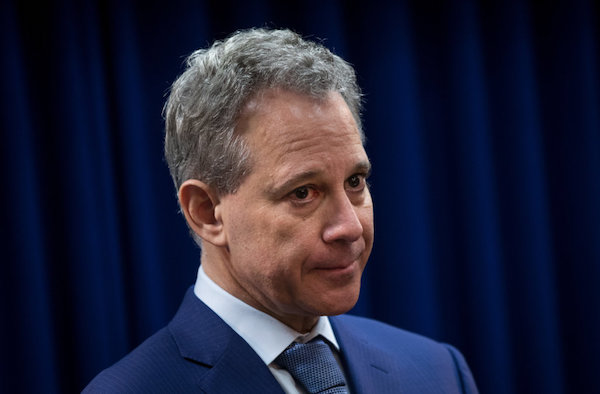
  • New York’s attorney general Eric Schneiderman who was pursuing Donald Trump, resigns in the face of a scandal

    New York’s attorney general Eric Schneiderman who was pursuing Donald Trump, resigns in the face of a scandal

    NEW YORK(TIP): New York State Attorney General Eric Schneiderman abruptly resigned on Monday, May 7 night just hours after the New Yorker published a bombshell report about his personal life alleging he was violent toward four different women. Schneiderman, who did not respond to a request for comment on this story, issued a statement saying he had merely engaged in sexual “role-playing.”

    Schneiderman, who was elected in 2010, had been pursuing Trump on several fronts — his personal business, the special counsel investigation into the 2016 election and on behalf of New York state against actions taken by the Trump administration.

    Trump allies — including his son Donald Trump Jr. and counselor Kellyanne Conway — celebrated the news of Schneiderman’s downfall.

    “Gotcha,” Conway tweeted.

    Schneiderman’s perch in the Empire State gave him jurisdiction over Trump’s company. He first took on Donald Trump in August 2013 when he sued Trump for fraud in conjunction with Trump University, a seminar series that the former attorney general called a “sham.”  Trump agreed to pay a $25 million settlement to students of the program who had brought their own lawsuit, claiming they had been misled with false claims that the costly courses would guarantee success in the real estate business.

    Since Trump took office, Schneiderman has been cooperating with Robert Mueller’s probe into Russia’s role in Trump’s election. That was a threat to Trump because the president could pardon anyone indicted by Mueller but has no pardon power over state charges. In Albany, N.Y., Schneiderman had been pushing to change New York law to close a double-jeopardy loophole that might have prevented him from bringing charges in that situation.

    Along with his work with Mueller, Schneiderman has filed a flurry of lawsuits against the Trump administration. This blitz included suits against each iteration of Trump’s travel ban, the repeal of DACA and rollbacks in emissions standards. Schneiderman’s office filed amicus briefs with the Supreme Court in cases involving the travel ban and LGBT discrimination. Other states also joined many of these suits, but Schneiderman often led the coalitions.

    It’s not known if Schneiderman has been conducting its own investigations into Trump’s affairs. His office has not commented.

    With Schneiderman stepping down, the solicitor general, Barbara Underwood, becomes acting attorney general. A new attorney general could be chosen by the state Legislature, with both houses meeting in joint session. Democrats, led by Assembly Speaker Carl Heastie, have the majority and would be able to pick Schneiderman’s replacement. Multiple sources have told Yahoo News that the leading contenders include New York City Public Advocate Letitia James, Lt. Gov. Kathy Hochul, Rep. Hakeem Jeffries, Rep. Kathleen Rice, state Sen. Michael Gianaris and state Sen. Jeffrey Klein. Heastie did not respond to multiple requests for comment.

    On Tuesday, the political buzz centered on James, who is known to be interested in the office and previously worked as an assistant attorney general. As public advocate, a nebulous position, she is New York City’s second-highest elected official and one of the state’s most prominent African-American women in office. A source familiar with the workings of the attorney general’s office predicted James would be a vocal opponent of Trump if she’s tapped for the job.

    “I think she would be aggressive and political in terms of going after Trump,” the source said.

    But any replacement picked by the Legislature will serve out only the remainder of Schneiderman’s term, which ends in December, unless that replacement runs for a full four-year term in November. Party primaries are on Sept. 13.

    A well-connected New York politico said legislators may forego naming a temporary replacement, leaving Underwood in the job and allowing voters to decide who should fill the office. Although there is already political pressure for the Legislature to choose this option, it would deprive legislators of the opportunity to reward a favorite and affect the shape of multiple upcoming races.

    The source familiar with the workings of the attorney general’s office predicted that, if Underwood remains in place, she would continue Schneiderman’s existing work.

    “If it’s Barbara Underwood, she’s like a lawyer’s lawyer,” the source said, noting she has argued before the Supreme Court.

    “I imagine she would continue all the Supreme Court actions, but I don’t know how aggressive she’d be in terms of going after new actions,” the source said.

    As for the election, New York’s statewide races generally lean Democratic, but Republicans are hoping Schneiderman’s woes could give them an opening. Republican Manny Alicandro, a corporate lawyer, launched a campaign shortly before the news broke. With Schneiderman out of the picture, more high-profile GOP candidates could also enter the fray. A Republican victory would be a major boon to Trump. Alicandro has criticized Schneiderman’s attacks on the White House as attention-seeking gamesmanship.

    There are at least two Democratic prospects eyeing that race who aren’t on the Legislature’s shortlist — former gubernatorial candidate Zephyr Teachout and ex-U.S. Attorney Preet Bharara.

    Teachout gained notoriety in the state by mounting a surprisingly successful progressive challenge to Gov. Andrew Cuomo in 2014. In a tweet on Tuesday, Teachout said she is “seriously considering running for Attorney General.” Bharara was fired by Trump last year and has since emerged as a major critic of the White House on Twitter and in a popular podcast.

    If Schneiderman’s successor takes on Trump, that person may have the advantage of putting in a full day at the office. The report detailing the abuse allegations also claimed Schneiderman drank heavily and used prescription drugs. Although all of the insiders who spoke to Yahoo News said they were stunned by the allegations, multiple sources who worked with Schneiderman said he regularly showed up to work several hours late.

    “We just thought he was lazy,” a source said.

    (Source: Yahoo)

  • Can the BJP wrest Karnataka from the Congress?

    Can the BJP wrest Karnataka from the Congress?

    “Yes”, says Muralidhar Rao; Rajeev Gowda says “No”; For Sandeep Shastri, “It’s Complicated”

    Yes | Muralidhar Rao

    The JD(S) and the Congress are two faces of the same coin. The BJP will win with a majority

    Yes, we will definitely wrest power from the Congress. The Bharatiya Janata Party’s preparation, both organizationally and politically, points to a victory for the party. We can also sense that the mood of the people in Karnataka has changed. People have problems, which the State government has failed to address. Whether it is in the agricultural sector, infrastructure, or urban management, mismanagement has become a major issue. People have been agitating for quite some time and their disillusionment with the ruling Congress is complete. The BJP leadership has worked hard to mobilize public opinion against the ruling party. The BJP will continue to do what it has been doing in the rest of the country, which is to fight against the Congress.

    Issues in Karnataka

    As far as the issues in the campaign are concerned, in the last two years, the farm sector has been in the grip of an acute crisis and the government has been unable to address and arrest the problem of farmers’ suicides. Close to 3,800 farmers have committed suicide in the last five years. The government has been insensitive to the issue. Even before the elections, we organized a special campaign for farmers, collected grains from them, and pledged to put an end to the crisis.

    Look at Bengaluru. It has become a city of crime. It is full of potholes. It faced floods. Even the Lokayukta, P. Vishwanath Shetty, is not safe in his office and the attack on him demonstrated how law and order has deteriorated in the State. Corruption, scams and scandals have added to people’s restlessness with the ruling party. The attitude of the State government to terror groups, particularly in coastal areas, is appalling. More than 24 activists have been killed by extremists. Not a single case has been pursued; arrests have not been made. The Congress’s silence on the Popular Front of India, which should have been banned a long time ago, appears to indicate that the PFI enjoys protection from the government.

    We have been accused of associating ourselves with the Bellary brothers. This has been completely misrepresented. Janardhana Reddy, who has been named in the FIR, has not been given a ticket and we have not used him in the campaign. His brother is a sitting MLA. There is no case against him. Also, don’t you think Chief Minister Siddaramaiah could have taken action against the two brothers? Why didn’t he?

    The BJP’s promises

    I think the promises made in our manifesto will persuade people to vote for us. In the farming sector, we have spelt out the issues we are going to pursue. For instance, to address the debt crisis, we have declared a ₹1 lakh loan waiver for farmers rom nationalized banks and co-operative banks.

    Bengaluru is a hub for translating the global ambitions of India. Instead, we now see the city being associated with crime and corruption. On the welfare front, we have conceptualized many programs for the people of Karnataka: free education for all students in government colleges, for BPL families, smartphones for women. We are working on a growth-centric plan and that’s our promise to the people of Karnataka. We will get more than 150 seats. I have no doubt that a massive majority will come to the BJP. The Janata Dal (Secular) and Congress are two faces of the same coin. Both are pursuing vote-bank politics and are family-driven parties. We will win on the promise of development alone.

    (Muralidhar Rao is a national general secretary of the BJP)

    (As told to Anuradha Raman)

     NO | Rajeev Gowda

    The voters prefer a stable government that has ensured inclusive growth

    Prime Minister Narendra Modi belatedly descended on Karnataka in a desperate attempt to revive the BJP’s collapsing campaign. Unfortunately for him, the ground reality will demonstrate that Karnataka is not Gujarat. Mr. Siddaramaiah’s inclusive welfare programs have ensured that voters remain steadfastly with the Congress.

    Achievements of the Congress

    Hunger will soon be history due to the Anna Bhagya scheme. Mathru Poorna is transforming the health of women, during and after pregnancy, while ensuring healthier children. Indira canteens help the urban poor access a nutritious meal at low cost. Dairy farmers received higher prices and children get milk in schools. Farmers gained from a loan waiver, subsidized rental equipment, and farm ponds. An integrated e-market increased farmer’s income by 38% in 2015-16, according to a Niti Aayog report.

    Karnataka leads India in investment intentions and follow through. The youth flock to Bengaluru, India’s start-up capital. A quarter of jobs created in India were in Karnataka, as reported in April 2016. Mainstays like IT and biotechnology crossed revenues of $50 billion. With an average GSDP growth of 8% over five years, people will be happy to stay with a government that works.

    Nightmare years of the BJP

    Voters have not forgotten the five nightmare years, which were marked by incompetence and instability, when the BJP ran Karnataka. Three Chief Ministers took turns to defend corruption on a scale that shamed the State. B.S. Yeddyurappa led his Cabinet colleagues, the Reddy brothers, Katta Jagadish, Krishnaiah Setty, Harta Halappa, etc. to jail. Mr. Modi’s rhetoric and flood of falsehoods cannot cover up that sorry track record, especially when the same crew is back helming the BJP’s election campaign.

    A track record in abetting instability is also true for the JD(S). Widely regarded as untrustworthy, it is now confined to the Old Mysore region. It will garner at least 10 seats less than its 40 in 2013. However, it has kept the BJP from gaining a foothold in Old Mysore. The BJP’s absence in Old Mysore means that in 10 of Karnataka’s 30 districts, it is likely to win only a handful of seats. Its old Hindutva laboratory, the coast, rejected it in 2013, and will do so again, turned off by polarization. The BJP won nearly half of Bengaluru Urban last time but will do worse now. It is in closely fought Mumbai-Karnataka and Central Karnataka that the BJP is hoping to gain seats. While it may be aided here by the Karnataka Janata Paksha and the Badavara Shramikara Raithara Congress coming back to the BJP fold, the chemistry has gone all awry owing to competing factions. In Hyderabad-Karnataka, it is counting on the eight seats given to the Reddy family to help it, but the leadership of Mallikarjun Kharge and the fact that the United Progressive Alliance granted 371(J) status to this region will ensure that the Congress stays ahead. Dalit anger at the BJP’s injustice nationwide is reflecting across Karnataka. In contrast, Mr. Siddaramaiah has allocated budgets in proportion to the population percentage of Scheduled Castes and Scheduled Tribes.

    Opinion polls show that Mr. Siddaramaiah remains the number one choice for Chief Minister. According to polls, voters consider the BJP to be the most corrupt party. A section of the Lingayats is expected to quietly vote for the party that responded to their aspirations. The Supreme Court awarding a larger share of Cauvery water to Karnataka has marked Mr. Siddaramaiah as a champion of the State’s interests. He has also highlighted Kannada pride. A stable government which has delivered to all sections and ensured inclusive growth is what the voters prefer. On May 15, the Congress will be back with a bang, setting the trend for 2019.

    (Rajeev Gowda is a Congress MP and chairman of the AICC’s research department)

     It’s Complicated | Sandeep Shastri

    In several constituencies, the BJP, JD(S) and the Congress are engaged in a three-way fight

    The Karnataka electoral contest seems to be heading for a photo finish and is fascinatingly complex and suspense-filled.

    Contradictory trends

    For the last three decades, Karnataka has never given a clear majority to the ruling party. This should make it easier to make predictions. The BJP could argue that it is the natural alternative to the Congress. Yet politics often defies logic. Karnataka was also witness to another trend during the same period: it has almost always gone against the national trend during Assembly elections. Karnataka seems set to negate one of these two trends, but the question is which one.

    The BJP is convinced that it will wrest Karnataka from the Congress and make a grand entry in the south on the strength of what it will term as an anti-incumbency vote. Even if one were to assume that there is anti-incumbency, the BJP does not become the natural beneficiary of that. Opinion polls have pointed to the split of the anti-Congress vote between the BJP and the JD(S). The BJP is also heavily banking on its star campaigner, Prime Minister Narendra Modi, to help it. The dependence of the party on the Prime Minister was evident in the last-minute increase in the number of rallies that Mr. Modi was scheduled to address. Yet, the impact of his campaign is still a matter of debate.

    This is the first major test of Mr. Modi’s capacity to sway an electorate in a State Assembly poll south of the Vindhyas. But can the faction-ridden State unit of the BJP and an increasingly sidelined chief ministerial candidate take the possible momentum generated by the Prime Minister’s whirlwind campaign to the ground and translate that into votes? More importantly, has the BJP pitched its campaign on appropriate and relevant State-level issues and has its chief ministerial candidate inspired the electorate to favor the party?

    The ruling Congress has its visible strengths but could well have peaked too early and lost the momentum in the crucial final week of the campaign. In the run-up to the campaign, it was clearly setting the agenda, pushing the BJP on the defensive. In its Chief Minister, the party found a campaigner who could bring together the diverse elements within the party to take on the opposition with a conscious focus on the local. Yet, there are factors that could halt this movement. The responsibility of defending the State government has virtually been left to the Chief Minister, with other Ministers busy managing their own small constituencies and contributing very little to the State-wide campaign.

    The JD(S) question

    Further, the unhappiness of the electorate with the track record of the State government on the key issues of tackling price rise, generating employment, and controlling corruption is visible. A key strategy of the Congress to win over the Lingayats by recommending them a minority religion status appears to have backfired.

    The presence of the JD(S) as a key player in select regions has converted the electoral battle in several constituencies into a three-way fight. By carving out for itself a segment of the anti-Congress vote, the JD(S) is surely eating into the BJP vote. Yet, the same could be said about the anti-BJP vote, which, especially in communally sensitive areas, could be split between the JD (S) and the Congress. The JD(S)’s efforts to be king-maker has led to a debate on whether Karnataka is once again heading for an Assembly with no party securing a clear majority.

    (Sandeep Shastri is a political scientist and the national coordinator of the Lokniti network)

    (Source: The Hindu)


  • 35th Annual Frederick Law Olmsted Awards Luncheon Raises Funds for Central Park Conservancy

    35th Annual Frederick Law Olmsted Awards Luncheon Raises Funds for Central Park Conservancy

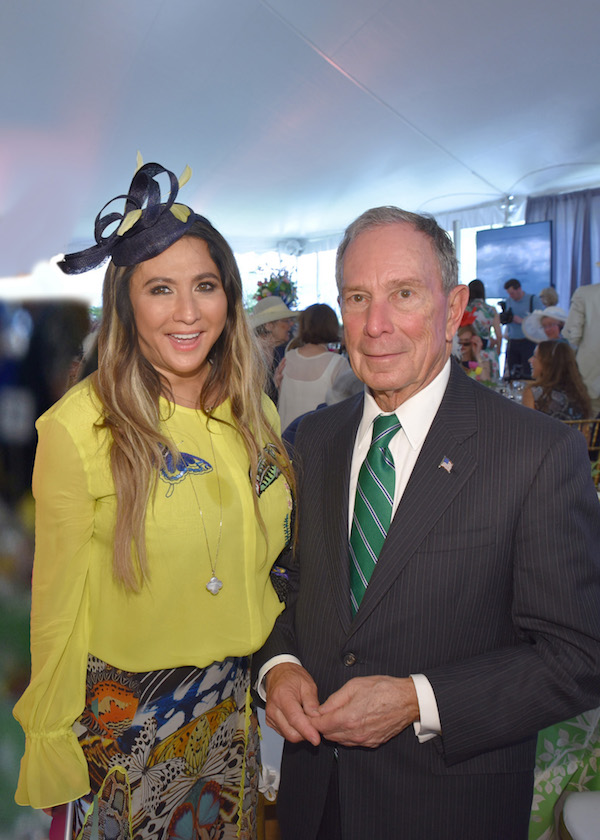
    Former Mayor Michael Bloomberg donates $4 million

    NEW YORK CITY(TIP): The Women’s Committee, founded in 1983, held their 35th annual Frederick Law Olmsted Awards Luncheon yesterday, which is also appropriately known as the hat luncheon. The Committee’s purpose is to raise money and awareness for the Central Park Conservancy.

    The Indian Panorama was informed of the plans of the Committee for this year. The Committee is planning to raise at least $5 million for a $10 million project to restore the Conservatory Garden, located at 5th Avenue and 105th Street. It was last restored in 1983, the same year the Committee was founded. The upcoming renovation is set to update the paths and plazas throughout the garden, in addition to infrastructural changes.

    Prior projects made possible by the Women’s Committee include the recreation of the urns at Bow Bridge, the reconstruction of the Charles A. Dana Discovery Center and the renovation of Safari Playground. The Women’s Committee is responsible for raising 15 percent of the Central Park Conservancy’s $67 million budget.

    Former New York City Mayor Michael Bloomberg donated $4 million.

  • Air India’s Pragmatism before Sale

    Air India’s Pragmatism before Sale

    By Harjap Singh Aujla

    Perhaps the most exploited airline in the world is our Air India. The powerful politicians and influential bureaucrats of our country have been overburdening this commercial venture with unqualified people of their choice far over and above the needs of the airline. Their emoluments were also on the higher end. This resulted in overstaffing of the venture. In addition, all the bigwigs in politics and bureaucracy were getting free rides in premium class at the expense of this national flag carrier. The cumulative losses kept mounting and at one point the government started toying with the idea of its privatization. But the lobby of the exploiters was so powerful, that every time, the government floated this idea, it was shot down by those very folks, who floated the idea. Such developments gave birth to indiscipline. The pilots frequently went on strike and so did the air crew and the ground staff. Accountability was a casualty. No one ever cared for the elusive profitability. Every exploiter posed as a God father. The previous prime minister was an economist, he thought the emancipation was in its disinvestment. But most within the corridors of power thought otherwise. This has been happening for half a century. Some of the redundant staff has retired long ago. Some are still on the payrolls and adding to the losses.

    The routes of operation were not as a result of legitimate research and analysis. The government made politically correct, but most of the time financially ruinous decisions and Air India was made to tamely implement and face the music. Due to the political decisions, some of the most profitable routes were discontinued in favor of populous loss-making routes. The justification invariably was that all routes were losing money. Even the routes with 90% passenger load were dubbed unprofitable. No one went into the reasons of such losses. The primary reason was terrible overstaffing and an army of free travelers. Some minor decisions with cumulative effect included expensive food from well-known places rather than cheaper, but more delicious food from lesser known places. It takes two hours between New Delhi and Mumbai, many times a full meal was served on this route too. Food from expensive cities was served even to passengers from cities known for their food. Most airlines run special cargo flights to business-friendly cities, which are profitable. Air India never explored such innovative ventures. On some of the important flights the routes were longer than required. As an example, the Bombay-Frankfurt-Los Angeles flight completed one way in 22 hours. Due to customary late flying by Air India the 24-hour cycle was always exceeded, this resulted in cancellation of a good profitable flight.  Air India was on the route of self destruction. In the most expensive cities like New York, there was excessive staff. The government too has finally realized the writing on the wall.

    When reality dawned on Air India that its sale price may not be enough to stay afloat. A long overdue course correction has started. But the all-powerful government was still in populous mode. Finally, it appears that Air India is putting its foot down and making decisions conducive to profitability. Some routes are being altered to touch load centers. Some routes on which profitable business was witnessed for six days a week, but there was scope for more flights, those routes are seeing augmentation of frequency. The hub and spoke system is not suitable for countries like India, there is scope for a change. Several flights have more passengers from specific spoke stations than hubs, they may get justice now. Such stations were so far ignored, and the hub system was brutally enforced. Now there is a scope for change. There is a possibility of Air India turning the corner during the period leading up to the fall of hammer. Such a scenario can potentially fetch a good price. There is plenty of real estate owned by Air India in the most expensive areas of India. That will help too. Let us keep our fingers crossed. Best of luck to Air India.

    (The author is a regular contributor to The Indian Panorama. He writes on diverse issues with equal felicity. He can be reached at harjapaujla@gmail.com)

  • Karnataka election: voters to choose between tainted leadership and clean governance

    Karnataka election: voters to choose between tainted leadership and clean governance

    By George Abraham

    “In contrast to the BJP rule, the Congress Party under the leadership of Siddaramaiah has fulfilled many of the promises that were made to the people of Karnataka. Key among them is the government’s social welfare policy”, says the author.

    Interacting with media during a tour of Lingayat and Dalit mutts in central Karnataka, Amit Shah, the national President of BJP began making allegations against the current Siddaramaiah government.

    “Recently, a Supreme Court judge said if ever there was a competition for the most corrupt government, then Yeddyurappa government will get number one,” shocking Yeddyurappa who was seated near him. It may have been a faux pas by Mr. Shah who immediately tried to control the damage. Congress Party wasted no time in seizing the original quote and expressing their total agreement.

    A few weeks later, Karnataka has witnessed the tainted Reddy brothers sharing a dais with Yeddyurappa and Madhya Pradesh Chief Minister Shivraj Chouhan at a rally in Molakalmur. It appears that Mr. Janardhana Reddy who came out of jail on bail from the noxious mining scam is back along with the Bellary gang asking people to vote for BJP. The party has also given tickets to his two brothers Somashekhara Reddy and Karunakara Reddy despite the statement by Mr. Shah that BJP has no links with Reddy brothers.

    In 2012, India’s Supreme Court ordered the CBI to probe charges of corruption against B S Yeddyurappa. That order followed a court-appointed committee’s suggestion that Mr. Yeddyurappa be investigated for alleged abuse of power. The anti-corruption report had indicted him in a mining scandal that cost the exchequer more than 3 Billion dollars. He also holds the distinction of being the first sitting Chief Minister of a State to spend time in jail.

    All the BJP talk about corruption in the opposition camps seem to fly in the face of what has happened under BJP rule in Karnataka. With openly courting the Bellary gang, Yeddyurappa is once again signaling to the Karnataka voters that nothing has been changed regarding their attitude towards corruption or abuse of power. Mr. Shivraj Chouhan, whose administration was embroiled in the VYPAM scandal in Madhya Pradesh, sharing the dais with Yeddyurappa and Janardhana Reddy may only reinforce the notion that corruption is endemic in the system and across the country and BJP pays merely lip service in countering it.

    Rahul Gandhi, President of the All India Congress Committee, tweeted the following in response to the latest developments: “When in power, Yeddyurappa and Reddy Brothers looted Karnataka. Our government brought them to justice. Now Modi is trying to take 8 of them from jail, into the Vidhan Sabha. This is an insult to every honest citizen, to Karnataka and to the spirit of Basavanna.”

    Congress High Command appears to be following a ‘Captain Model,’ strategy in Karnataka giving Chief Minister Siddaramaiah, enormous latitude in decision making as in regards the running of the election campaign. The decision may be based on the premise that strong regional and local leadership is critical in winning elections as in Punjab where Captain Amarinder Singh wrested away the power from Akali Dal in the last election where his charisma, leadership and independent decision making were all at full display.

    In contrast to the BJP rule, the Congress Party under the leadership of Siddaramaiah has fulfilled many of the promises that were made to the people of Karnataka. Key among them is the government’s social welfare policy.Within an hour of oath-taking as Chief Minister, he has implemented the food subsidy scheme to give 30kg rice per month at Re 1 per kg to 10.2 million families below poverty line across the State with a plan outlay of Rs.4300 crore. The State later on added Wheat, Ragi, and Jowar to the scheme. The State also started distributing 150ml milk thrice a week to 6.5 million children studying in state-run and aided schools across the state to check malnutrition and prevent dropouts.

    Under the Bhagyalakshmi and Kuteer Jyoti schemes, the state government waived off Rs.268 crore arrears due from two million energy consumers in the rural areas. It also waived off Rs. 1340 crore loans with interest borrowed by a million SCs, STs and OBCs and minorities for various economic activities and increased the housing subsidized loan to economically weaker sections to Rs. 120,000 per unit from Rs. 75,000 under the Rajiv Gandhi Housing Corporation.

    Programs and projects like the opening of the Indira Canteens, the introduction of the new economic policy that focused on Industries, construction of Medakettu Dam, Introduction of Bike Ambulance and the Scheme for Organ Donation etc. have shown the people of Karnataka that a government committed to the service of its people could still deliver results. Most importantly, there have been no significant financial scandals during its tenure that stands in stark contrast to the Yeddyurappa rule.

    Siddaramaiah in his tweet recently challenged Prime Minister Modi to walk the talk when it comes to dealing with corruption. He called on Modi to “appoint Lok Pal, investigate Judge Loya’s death, investigate the astronomical rise of Jay Shah, and appoint an untainted person as your CM candidate.”

    The fate of Karnataka is said to be hanging on the swing voters who are actively weighing in on the promises made on the campaign trail. Janata Dal (S), the third party in the puzzle may yet to play a critical role if there is a hung Assembly. For the Congress Party, stakes are very high in Karnataka. A win by the party in Karnataka will provide a huge momentum towards the upcoming elections in Madhya Pradesh, Rajasthan, and Chhattisgarh and eventually towards the 2019 general election. However, the party may require a better post-election strategy to prevent a repeat of what has been transpired in Goa, Manipur, and Meghalaya!

    (The author is a former Chief Technology Officer at the United Nations and Vice-Chairman of the Indian Overseas Congress, USA)


  • The Rocky Road to 2019

    The Rocky Road to 2019

    Concrete steps are needed to defuse crises that could disrupt India’s political and social equilibrium

    By M.K. Narayanan
    The authorities also need to be aware that as various State elections draw near, newer threats are likely to emerge. Among them are cyber threats. India is possibly the third most vulnerable country today from the point of view of cyberattacks. Many experts are of the view that as the digital economy expands, India will confront the specter of cyberattacks.

    As 2019 and the general election beckon, the situation within the country appears far from reassuring. Several events over the past few months seem to presage that there is worse to follow. Protests and agitations have a life of their own and underestimating their potential could be cause for grief. Hence, it might be worthwhile for the nation’s leaders to pay heed to the ancient Chinese proverb, “the wind sweeping through the tower heralds a storm rising in the mountain” and take anticipatory steps.

    Lowdown on internal security

    The authorities need to analyze why simultaneous upheavals are taking place on different planes across the country. Each day, a concatenation of events and situations are contributing to feelings of deep unease. Take internal security, for instance. The authorities may claim that the situation is stable, but the daily litany of violence tells a different story. Jammu and Kashmir is a good example where the situation has been steadily deteriorating. The past year has witnessed an increase in casualties, of civilians and security personnel, an upsurge in terrorist violence, a rise in cross-border terrorism and increased infiltration from Pakistan. Despite the surgical strikes by India, a palpable fear syndrome prevails in the areas bordering Pakistan.

    Likewise, claims made latterly of the eclipse of the Maoist menace — there are reports of scores of Maoists having been killed in Maharashtra’s Gadchiroli district in end-April — are clearly unconvincing. Maoist violence is not so prevalent in areas where it was once rampant; while the kill-ratio of Maoists to security force personnel appears to have gone in favor of the security forces, the capacity of Maoists in carrying out selective violence has not been significantly blunted, especially in their strongholds in Chhattisgarh, Odisha, Andhra Pradesh, Telangana and Maharashtra. As an ideology-based militant movement, Maoism needs to be countered by a sustained ideological campaign in rural and urban areas, but this is nowhere in evidence.

    Next is the growing specter of agrarian unrest. Over the past year, a series of protest movements by farmers have rocked the country. While the causes are varied, the basic issue remains the same, viz. the neglect of farmers and the agrarian community by those in authority. Large-scale protest marches by farmers such as the one in Maharashtra in March, evoke both concern and fear. More protests are in the offing. With cohesive leadership, the current peaceful agrarian protests could attain a dangerous dimension.

    Dalit identity and concerns

    An even bigger challenge confronts the nation today — on how to deal with the issue of Dalit “self-assertion”. This aspect was clearly manifest during the April 2 Bharat Bandh which was sponsored by different Dalit groups; its pan-India imprint was unprecedented. The bandh was to protest the judgment of the Supreme Court, amending the Scheduled Castes and Schedules Tribes (Prevention of Atrocities) Act. The outburst of violence, which resulted in some casualties and the destruction of property worth crores, went far beyond this aspect. There was and is no mistaking the pent-up resentment or the degree of mistrust.

    Anger and resentment have been building up within the Dalit community for quite some time. Growing numbers of atrocities against Dalits in recent years, which thanks to modern communications systems and social media have gained critical publicity, are undoubtedly the root cause of the pent-up anger. Instances in 2016, such as Rohith Vemula’s death at Hyderabad University, and, separately, in Una, have been triggers for the explosion of anger and violence.

    However, the recent outburst points to a new brand of Dalit “rejectionist politics” which should be a matter of utmost concern. Appeasement is no longer acceptable. Moderating or repealing cow protection laws will hardly matter or make a difference. More reservation in jobs is unlikely to assuage Dalit concerns. A group of alumni from the Indian Institutes of Technology have given up their jobs to form a political party to fight for the rights of the Scheduled Castes, the Scheduled Tribes and Other Backward Classes.

    Violence against children

     If the authorities have been found wanting or are being accused of their inept handling of the April 2 agitation, they are now being hauled over the coals for their inability to check the spate of incidents of rape across the country. The brutal assaults on young children have touched a raw nerve. Demands are being made to ensure that crimes of this nature end and that the administration sheds its helplessness and starts taking stringent action.

    Today, the place names, Kathua (Jammu) and Unnao (Uttar Pradesh), have become synonymous with the “epidemic” of rapes. But sexual violence still continues despite public outrage and the administration is seen to be helpless in preventing it, which is beginning to create a crisis of confidence in the ability of the administration and the government to deal with the situation. Questions are being asked as the administration is unable to fulfil one of its most basic responsibilities — to protect the honor and the dignity of women and children. Mere condemnation of rape by those in authority will not do.

    Cracks in the two pillars

     Distinct from these issues, but equally worrisome, is the extent of disruption seen in the functioning of Parliament. A disruption of parliamentary proceedings is not new, but the near total washout of the Budget session has shaken the faith of the nation.

    The view from the Treasury Benches that the Opposition is to blame for this has gained little traction. Most people believe that the responsibility to ensure the smooth functioning of Parliament rests equally, if not more, with the ruling dispensation, apart from the Presiding Officers of the two Houses. What the nation is demanding is a resolution of the impasse, and not the assigning of blame. A lack of demonstrable action is only adding to the sense of dismay.

    The prevailing dissonance in the higher judiciary, the display of divisions within the highest court of the land, and the charges levelled against the Chief Justice of India by Opposition parties which are seeking his impeachment, are again highly disturbing. There has been no precedent for such a situation. The persistence of such trends is giving rise to serious concerns as to where the nation is headed.

    Cyber concerns

    The authorities also need to be aware that as various State elections draw near, newer threats are likely to emerge. Among them are cyber threats. India is possibly the third most vulnerable country today from the point of view of cyberattacks. Many experts are of the view that as the digital economy expands, India will confront the specter of cyberattacks. Given that it is already struggling to deal with threats such as ransomware and cryptojacking, India will need to tone up its strategic mindset and increase its homegrown capabilities expeditiously; a devastating cyberattack could undermine public confidence in an election year.

    Finally, given the current resurgence in communal and caste aspirations, India cannot afford to overlook the danger of a rise in regional subnationalism, of which there are already some incipient signs. Such tendencies could gain a fillip, if as anticipated, the coming elections witness bitter electoral campaigns based on a variety of considerations that include caste and community.

    It is not that solutions for all these problems fall within the purview of the authorities or the government. However, it is in the nature of things that the responsibility for situations tends to devolve on the government. Hence, it is important that the road to 2019 is paved with not only professed good intentions but also concrete steps to mitigate and “defuse” a succession of crises that have the potential to disturb the political and social equilibrium in an election year.

    (The author is a former National Security Adviser and a former Governor of West Bengal)

  • When India and China Meet

    When India and China Meet

    By Nirupama Rao

    The message from Wuhan is: let us give each other space and rationalize our differences in a grown-up way.

    By Nirupama Rao
    The outcome statement from the Indian foreign office and from the Prime Minister’s social media network speaks about Mr. Modi and Mr. Xi having forged a common understanding in Wuhan on the future direction of India-China relations “built upon mutual respect for each other’s developmental aspirations and prudent management of differences with mutual sensitivity

    The path of India-China relations is strewn with the ghosts of summits past. The leaders of the two countries have met, expressed the loftiest of sentiments, gone their separate ways. No doubt, summits are good, nobody has a quarrel with them, the media at least loves them. The relationship has often benefited from such meetings.

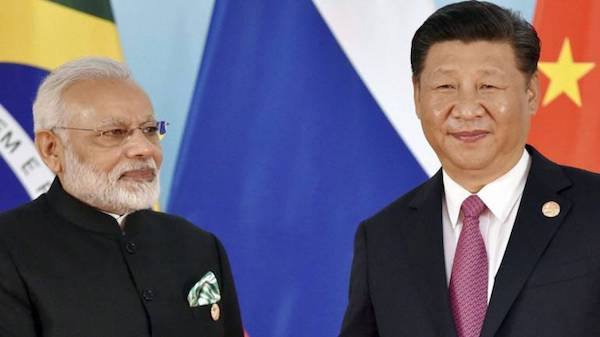
    A note of hope was therefore sounded when Prime Minister Narendra Modi flew into the Chinese city of Wuhan to meet with President Xi Jinping for an “informal” summit last week. The aim, as announced, was to build strategic communication and provide a long-term perspective for what is a complex and adversarial bilateral relationship.

    Cautious optimism

    For the duration of a day and a half, the leaders of the world’s two most populous countries held talks against a classic Chinese landscape of gardens and lakes, with and without aides. The optics were reassuring and optimism about the outcome of these conversations was implied. Only a year ago, on the high Himalayan plateau of Doklam on the borders of Bhutan, India and China, overlooking the vital Siliguri Corridor connecting ‘mainland’ India to the Northeastern States, Indian and Chinese troops engaged in a tense stand-off lasting 73 days. The visit of the Dalai Lama, exiled in India for nearly six decades, to Tawang in Arunachal Pradesh engendered deep Chinese resentment. The voluble Indian opposition to China’s flagship Belt and Road Initiative (BRI), especially the China-Pakistan Economic Corridor (CPEC) being developed in Pakistan-occupied Kashmir, was also a source of serious friction. China’s growing inroads in the form of high-profile projects and support for anti-Indian political interests in India’s South Asian neighborhood fueled Indian distrust. Hawkish and hyper nationalist voices in both countries raised tensions further, and the specter of armed conflict on a shared but disputed frontier lurked in the shadows.

    Last year was an annus horribilis for the India-China relationship. The Wuhan summit signaled that the two countries are working on restoring a much-needed equilibrium in a deeply disturbed relationship. This is a relationship in therapy. For Mr. Modi, whose scorecard on neighborhood policy has been underwhelming, a detoxifying policy facelift with China is certainly advantageous both in terms of his domestic political image, with the 2019 parliamentary elections drawing near, as well as in improving his global profile.

    The outcome statement from the Indian foreign office and from the Prime Minister’s social media network speaks about Mr. Modi and Mr. Xi having forged a common understanding in Wuhan on the future direction of India-China relations “built upon mutual respect for each other’s developmental aspirations and prudent management of differences with mutual sensitivity”. These are words that can be variously interpreted. Their distilled essence is: let us give each other space and let us rationalize our opposition to each other and our differences in a grown-up way. The takeaway buzzword from Wuhan appears to be “strategic communication” by both leaderships in order to provide a more cogent sense of purpose and direction that helps heal the relationship.

    Two statements

    The Indian statement (the separate statement from the Chinese foreign ministry is not so full-bodied) also makes it known that the two leaders have “issued strategic guidance” to their militaries to strengthen communication in order to especially “enhance predictability and effectiveness in the management of border affairs”. The intention is to prevent incidents in border regions of the Doklam variety, it is presumed. The situation bears watching. There are many pockets along the 3,500 km border between the two countries where the Line of Actual Control is disputed. Transgressions from both sides occur regularly and military establishments, Indian and Chinese, are trained not to yield an inch. Efforts to establish a clearly delineated Line of Actual Control have not succeeded, mainly due to Chinese reluctance. The summit at Wuhan coincided with news that India will build 96 more border outposts along the frontier with China.

    The summit has apparently not yielded (and neither was it expected to) any significant reduction of differences on the CPEC. The Indian government can ill-afford to give the impression of any concession on this question to China given the Pakistan factor — a perennial trigger for public hysteria. The announcement that China and India will jointly work on a project (details yet to be announced) in war-torn Afghanistan is a first and unlikely to give Pakistan comfort, although China will no doubt provide undercover assurances to the former that its interests will not be harmed.

    A sober prognosis for the future of India-China relations is warranted despite the euphoria of Mr. Modi’s visit to Wuhan. The potential for tension on the Himalayan piedmont is aggravated by the clash of Chinese and Indian ambition in the maritime environment of the Indo-Pacific. The growing alignment of interest among three democracies — India, the U.S. (now termed an “indispensable” partner) and Japan — is a source for Chinese insecurity, just as China-Pakistan strategic cooperation and China’s inroads in South Asia make India uneasy. Twenty-first century Asia is not a pacific place. It is multi-polar and multi-aligned and a testing ground for the security architectures of the future.

    Securing the Asian century

    Decades ago, India’s first Prime Minister, Jawaharlal Nehru, famously said that the challenge between India and China “runs along the spine of Asia”. As India and China re-emerge from the shadows of history, hopes for the so far elusive dream of an Asia united will be center on the progress and development of these two nations. At the same time, tension or conflict between the two takes away from the prospects of the Asian century that their leaders speak of. Perhaps it is this realization that prompted the rendezvous in Wuhan. The world should have no quarrel with India and China beating swords into ploughshares. We need a regular pattern of more informal summits between the leaders of the two countries. The challenge across the spine of Asia does no one good.

    (The author is a former Foreign Secretary of India and Ambassador to the United States and to China. Twitter: @NMenonRao)

  • India’s Minister of State for Social Justice and Empowerment Vijay Sampla lauds Modi’s Initiatives and Policies

    India’s Minister of State for Social Justice and Empowerment Vijay Sampla lauds Modi’s Initiatives and Policies

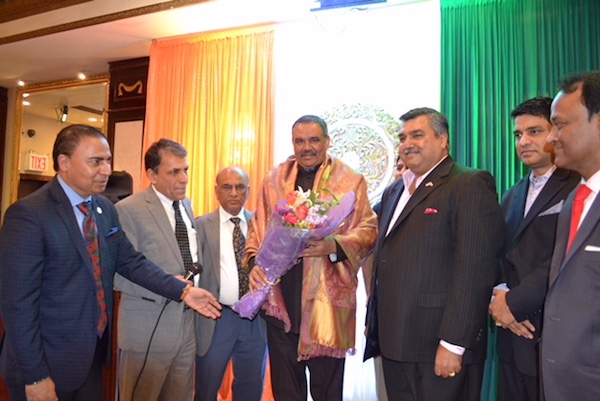
    NEW YORK(TIP): Vijay Sampla, Minister of State for Social Justice and Empowerment, who had stopped in New York City for a day, on his way back from Haiti, to India, met with a cross section of the Indian American community in New York.

    The Long Island Indian American community hosted a reception for the visiting minister, as did FIA which hosted a lunch.

    Addressing the Indian American community in Long Island, the visiting minister spoke at length about the achievements of NDA Government under the “charismatic leadership of Narendra Modi”. He said that Prime Minister Modi always has the good of the   common man in mind. He is always eager to work for empowerment of the weaker sections of society, and women.

    Sampla specifically spoke about the benefits of demonetization and GST, contrary the general belief that both schemes of government have done irreparable harm to the country. He emphasized that had the policies been wrong India would not have been growing as the fastest economy in the world. He gave credit to Modi for making India a highly respectable nation in the world.

    Community reception to Mr. Vijay Sampla on Long Island

    Earlier, Jagdish Sewhani, President, The American India Public Affairs Committee welcomed Mr. Sampla.

    In his opening remarks, Mr. Sewhani   thanked Prime Minister Narendra Modi for the historic Ordinance on Women’s Safety. He welcomed death penalty for rape of any girl below 12 years and increasing the punishment to 20 years if a girl below 16 years is violated.

    The proposed Ordinance sets a time-limit of two months for investigation and trial in rape cases to be completed and prescribes a time limit of six months for disposal of appeals in rape cases.

    Community reception to Mr. Vijay Sampla on Long Island

    Jagdish Sewhani also congratulated the Prime Minister Narendra Modi for ordinance to confiscate properties of fugitive economic offenders. The ordinance aims to deter economic offenders like Vijay Mallya and Nirav Modi from evading the process of Indian law.

    Introducing Mr Vijay Sampla, Sewhani said that Mr Sampla started his journey as a Plumber in Saudi Arabia and with his hard work, honesty and integrity today, he is a Minister in Modi’s Government.

    FIA honors the minister

    Mr. Sampla was honored with a shawl.

     At the FIA lunch, Mr.  Sampla spoke about Prime Minister Narendra Modi’s dream to build “New India – Clean India”, and asked for NRI community’s support in fulfilling that vision. He spoke about Disability laws and woman empowerment in India.

    The minister also met with the community at Ravi Dass Temple and Gurdwara Baba Makhan Shah Lobana where he was felicitated.

  • Indian American Aakash Patel received endorsement of Florida lawmaker Burgess

    Indian American Aakash Patel received endorsement of Florida lawmaker Burgess

    FLORIDA (TIP): Indian American Aakash Patel, a Republican running for Hillsborough County Commission, received the endorsement of Danny Burgess, a member of the Florida House of Representatives.

    “I am honored to offer my support and endorsement to Aakash,” Burgess said. “He is a very successful businessman and I know he will take his strong drive and dedication to our community to the County Commission.  I am certain he will apply his conservative ideals and objectives to important issues in Hillsborough County and I look forward to working with him in that capacity.”

    Last week, Patel had received the endorsement of District 2 Commissioner Victor Crest.

    Last month, former Speaker of the Florida House of Representatives Will Weatherford endorsed him.

    The election is being held for the District 1 seat, which is being vacated by Sandy Murman, who is running for a four-year term from District 7.

    Patel said, “I am honored to have Rep. Burgess support and endorse me in this county commission race. I have known Danny for a long time and I truly respect the work he has done to bring conservative policies to all levels of government he has served. From Zephyrhills City Hall to the Florida State Capitol, I appreciate all that he does, and I look forward to working with him on important conservative issues when I am elected to the county commission.”

    Patel, who earned his bachelor’s degree in Political Science and English Literature from Florida State University, worked at The Tampa Bay Times’ Tallahassee Bureau.

    He is also a graduate of the Greater Tampa Chamber of Commerce’s Leadership Tampa (2012), FBI Citizen’s Academy (2012), Tampa Police Citizen’s Academy (2012), Tampa Bay Public Leadership Institute (2013) Leadership Tampa Bay (2011), and Tampa Connection (2010), and College Leadership Florida (2005).

    He is enrolled in City of Tampa’s Mayor’s Neighborhood University, according to his LinkedIn profile.


  • Indian American Aruna Miller wins Kennedy Townsend’s endorsement

    Indian American Aruna Miller wins Kennedy Townsend’s endorsement

    MARYLAND(TIP): Indian American Aruna Miller, who is running for Congress from Maryland’s open 6th district, has won a key endorsement from Former Lt. Gov. Kathleen Kennedy Townsend.

     “Aruna Miller devotes her enormous energies and talents to her constituents, rising early, staying up late, all the while focused on results,” Kennedy Townsend said in a statement. “She has strong values and is able to work across the aisle. She is just the leader we need right now in Congress. I am proud to endorse her.”

    Miller replied in gratitude to the former lieutenant governor.

    “I am honored to have the endorsement of Kathleen Kennedy Townsend, an outstanding public servant who left an indelible mark as Maryland’s first woman Lieutenant Governor,” she said. “Kathleen is one of my heroes and role models, and I am excited to have her support. Following her example, I will never stop trying to make Maryland, and the world, a better place.”

    Kennedy Townsend is the daughter of Sen. Robert Kennedy and Ethel Kennedy.

    Earlier on Saturday, Miller won a Western Maryland straw poll by securing 140 votes against 76 gained by her Democratic primary rival David Trone. Last month, she had won “Our Revolution” candidate forum straw poll.

    She wrote on her Facebook page: “A deep gratitude to Western Marylanders, the voters, the Gubernatorial and Congressional candidates, and to the organizers of the Summit.”

    She added that the straw poll results have been accurately predicting the primary winner for the last 14 years and the victory margin for the 6th Congressional District straw polls have never been this large.

    “Thank you to the miracles in my life; my family, friends, the priceless volunteers, and the dedicated staff who poured their heart and soul into the exciting day,” she wrote on the post.

    The primary is scheduled for June 26.

    Miller has raised more than $1 million campaign donations so far. Her campaign said more than 97 percent of the contributions have come from individuals and it has “far outpaced her rivals in both the number of contributions (1,723) and individual donors (1,402).”

    Miller, who came to the United States from India at age 7, is a civil engineer by profession. The issues she has focused include women’s rights, children’s safety, environmental protection, and transportation.


  • Indian American lawmaker Pramila Jayapal welcomes court ruling on DACA

    Indian American lawmaker Pramila Jayapal welcomes court ruling on DACA

    WASHINGTON(TIP): Indian American Rep. Pramila Jayapal has applauded a ruling by US District Judge John Bates asking the Trump administration to continue accepting DACA applications without ending the program.

    “I’m thrilled that Judge Bares uphold the rule of law and force Trump administration to resume accepting DACA applications,” wrote Jayapal. “Donald Trump created this crisis. He single-handedly made DACA recipients deportable and rejected the bipartisan proposal that would have helped these young people.”

    The ruling of the federal judge is a blow to the Trump administrations, which decided to end the DACA program on April 24.

    In addition to overturning the move to end DACA, the judge also ruled that the government should accept new DACA applications.

    The DACA program allows those undocumented immigrants who were brought to the United States illegally as children by their parents to receive a renewable two-year period of deferred action from deportation.

    Urging Trump to stop trying to strip DACA recipients of their right to live in the United States, the Washington Democrat said she would continue to push for a clean Dream Act in Congress, so that these young people who know only the United States as their home can live without the fear of deportation.

    “Time and again courts have determined that the inhumane decision to end DACA was ‘arbitrary and capricious.’ We will continue to loudly say that immigrants are welcome here,” read Jayapal’s statement.

    Earlier, Trump had said that he will protect the DACA recipients and allow them to stay in the country if Congress approves his campaign promise to build the border wall and make changes to the immigration system.


  • Indian American Hiral Tipirneni loses a close race in Arizona special election

    Indian American Hiral Tipirneni loses a close race in Arizona special election

    ARIZONA(TIP): Indian American Tipirneni on April 24threceived more than 82,300 votes (47.4 percent), roughly 9,000 fewer than Lesko, who received nearly 91,400 (52.6 percent) .The Arizona Secretary of State’s websitereports that Democrat Hiral Tipirneni came within six percentage points of her Republican rival Debbie Lesko in special election to Arizona’s 8th Congressional District.

    The special election was warranted because Rep. Trent Franks, who represented the district for several terms, resigned in December after he was embroiled in a sexual misconduct scandal.

    Tipirneni wrote on twitter, “whatever happens tonight or tomorrow, we’re not giving up. Regardless of the outcome, we’re taking this to November.”

    That she came within 6 percentage point in a district that was carried by President Trump with more than 21 percentage points in the last presidential election should give Tipirneni a lot of momentum if she wins the Democratic Party nomination again.

    She did it without much of a support from the House Democratic campaign arm. On the other hand, Lesko received help from the GOP House campaign committee to the tune of $1 million. Trump also recorded robo calls urging voters to back Lesko.

    The narrow margin of Lesko’s victory leaves Republicans with much to ponder as they prepare for a tough midterm election in November.

    Tipirneni, a former emergency room physician, won her party’s nomination after defeating Brianna Westbrook in the primary.

    Tipirneni’s campaign had focused on issues such as affordable healthcare, strengthening the economy, retirement security, quality education, and government accountability.

    Tipirneni, born in India, came to the United States with her family at the age of three. According to her campaign website, she earned her medical degree through an accelerated, competitive program at Northeast Ohio Medical University. She chose to pursue emergency medicine because of the wide variety of challenges it presented, and it allowed her to be the first point of contact for patients.


  • Indian American Senate candidate Shiva Ayyadurai sues Cambridge, MA, for asking him to remove signage

    Indian American Senate candidate Shiva Ayyadurai sues Cambridge, MA, for asking him to remove signage

    CAMBRIDGE, MA(TIP): Indian American Shiva Ayyadurai, who is running for the US Senate from Massachusetts, has sued Cambridge city officials for sending him a notice to remove his campaign signs that called his Democratic opponent Sen. Elizabeth Warren a “fake Indian.”

    Ayyadurai is a staunch critic of the incumbent senator, has been attacking Warren for claiming Native American ancestry. He and GOP critics of Warren say the senator lied about her Native American heritage for securing jobs, including one as a Harvard law professor. Claiming that he is a real Indian from India, Ayyadurai terms Warren as a “fake Indian.”

    On April 22nd, he filed a suit against the City of Cambridge alleging that by asking him to take down the signage, the city is encroaching upon his constitutional right to free speech.

    Ayyadurai has a campaign bus with photos of himself and Warren with words juxtaposed saying “Only a REAL Indian Can Defeat the Fake Indian.”

    According to reports, the vehicle has been stationed for more than a month next to a building owned by Ayyadurai which also happens to be in the neighborhood of Warren.

    The Cambridge building inspector Branden Vigneault had earlier this month issued Ayyadurai a notice asking him to remove the inappropriate signage from the vicinity as it lacked prior “approvals and permits.”

    The Ayyadurai campaign said that the building inspector threatened to fine $300 per day and additional legal proceedings if the signs are not removed within a stipulated period.

    “We will not remove the slogan from our bus,” Ayyadurai told The Washington Times. “We will defend the First Amendment, and we will fight this egregious attack on the First Amendment, at any cost.”

    His campaign managers have told the media that building regulations don’t apply to the current circumstance as the signage is on a bus.

  • Former Indian Ambassador to US Jaishankar joins Tata Sons

    Former Indian Ambassador to US Jaishankar joins Tata Sons

    NEW YORK(TIP): Subrahmanyam Jaishankar, a former Indian Ambassador to the United States and former foreign secretary of India, has joined Tata Sons. He will serve as the group’s Global Corporate Affairs head.

    Jaishankar, who served as the Indian Ambassador to the United States from 2013 to 2015, served as the Foreign Secretary of India till January this year.

    He joined Indian Foreign Service in 1977 and has held several key positions over four decades. He played a key role in the negotiation of the US-India Civil Nuclear agreement.

    Jaishankar also served as the High Commissioner to Singapore and Ambassador to China.

    In his new role, the former diplomat will be responsible for the Tata group’s global corporate affairs and international strategy development and Tata Sons’ international offices will report to him. He will work with Tata companies to help them strengthen their business presence and positioning in their respective geographies globally.

    “I am delighted to welcome Dr. Jaishankar to the Tata group,” Natarajan Chandrasekaran, chairman of Tata Sons, said. “His extensive experience and knowledge on international affairs will be very valuable to the group as we work to reinforce our brand and leadership globally.”

    Jaishankar said, “The Tata group is an iconic institution known for its value-based leadership as well as India’s most respected brand globally. I look forward to being part of the Tata group and working with key stakeholders to make an impact.”

    Jaishankar is a graduate of St Stephen’s College at the University of Delhi. He has an MA in political science and an MPhil. and Ph.D. in international relations from Jawaharlal Nehru University.

    Tata Sons is the promoter of the major operating Tata companies and hold significant shareholdings in these companies. Notably, Tata Sons is the parent company that owns Tata Consultancy Services, which is one of the top Indian IT outsourcing companies. TCS along provides Tata Sons with 70% of its dividend.


  • Can the 3 Ms save Iran deal?

    Can the 3 Ms save Iran deal?

    By Arun Kumar

    The Macron-Merkel-May trio hopes to bear upon Trump to keep pact

    Besides the Europeans, the looming May 12 deadline also has India worried, as since the end of sanctions, it has greatly strengthened its bilateral relations and economic partnership with Iran. During Rouhani’s visit, the two countries signed nine agreements, including a crucial one on connectivity via the strategic Chabahar Port. India has also committed itself to completing the Chabahar- Zahedan rail link to provide an alternative route to Afghanistan, completely bypassing Pakistan, say the author.

    French President Emmanuel Macron has just ended a glitzy visit with President Donald Trump. German Chancellor Angela Merkel came calling today and British Prime Minister Theresa May has been burning the phone across the Atlantic. Their mission: to persuade the mercurial occupant of the White House not to tear up the Obama era 2015 landmark Iran nuclear deal as he threatened on the campaign trail.

    The wily Donald is not telling anyone what he would do on May 12 when he must either sign a fresh waiver on Western sanctions against Iran or walk away from what Trump has decried as an “insane” and “ridiculous” deal signed by P5+1 — the US, Russia, China, UK, France and Germany — world powers with Tehran to end its nuclear weapons program.

    But swept off his feet by what the American media called “Le Bromance” unleashed by Trump at the first State dinner of his presidency, Macron ended up calling for a new “big deal” with the old one limiting Iran’s uranium enrichment for 15 years serving as one of its four pillars.

    Or did the suave Frenchman charm the Manhattan mogul into buying these side deals he Merkel and May have been working on to convince Trump to stay on in the Iran deal? European leaders are also said to be crafting a “Plan B” to continue without the US. But Iran is unlikely on come on board without the US.

    The three new pillars that Macron suggested in Washington would rework the sunset clause in the accord to ensure there is no nuclear activity by Iran in the long run, as feared by the critics who have accused Europeans, particularly Germany, of putting business before security.

    The Macron proposal would also seek to limit Tehran’s ballistic missile program and curb its “regional influence” by ceasing support for militant groups across the Middle East, particularly Yemen and Syria.

    Even as he declined to show his hand, Trump suggested: “I think we will have a great shot at doing a much bigger maybe deal, maybe not deal” built on solid foundations. In an escalating war of words, he also cautioned Iran against restarting its nuclear program, warning it may “have bigger problems than they have ever had before.”

    Iranian President Hassan Rouhani, who during his February visit to India — the first by an Iranian head of state in 10 years — had dismissed Trump as a “haggler”, was quick to heap fresh insults on “a tradesman” with no understanding of diplomacy. Western powers, he asserted, had no right to make changes in the deal now.

    Earlier in February, Iranian deputy foreign minister Abbas Araqchi had assured that Iran’s commitment to not seek nuclear weapons is permanent and that there was no sunset clause in the deal.

    Besides the Europeans, the looming May 12 deadline also has India worried, as since the end of sanctions, it has greatly strengthened its bilateral relations and economic partnership with Iran. During Rouhani’s visit, the two countries signed nine agreements, including a crucial one on connectivity via the strategic Chabahar Port. India has also committed itself to completing the Chabahar- Zahedan rail link to provide an alternative route to Afghanistan, completely bypassing Pakistan.

    Chabahar Port, Rouhani declared, can serve as a bridge connecting India to Afghanistan, Central Asia and Eastern Europe.

    India, which backs “full and effective implementation” of the Iran nuclear deal, could use Afghanistan as a bargaining chip at the next India-US two plus two dialogue between Trump’s incoming Secretary of State Mike Pompeo and Defense Secretary James Mattis and their Indian counterparts, Sushma Swaraj and Nirmala Sitharaman. The dialogue earlier set for April 18-19 in New Delhi was postponed with the unceremonious dismissal of Trump’s previous chief diplomat Rex Tillerson.

    Pompeo, currently CIA Director, who is set to join Trump’s equally hawkish new National Security Adviser John Bolton, assured the Congress during his confirmation hearings that he would work to fix the “terrible flaws” in the Iran nuclear deal even if Trump walks away from it.

    Unlike Tillerson, who favored a somewhat softer approach towards Pakistan, Pompeo, Bolton and Mattis are all for ramping up US pressure on Pakistan to roll up its terrorism infrastructure to allow India to engage in institution building in Afghanistan.

    Trump’s declaration of a virtual trade war against friends and foes alike has sent diplomats across the world scrambling for new options. India and China, too, are coming closer with Chinese foreign minister Wang Yi declaring that the upcoming informal summit between Indian PM Narendra Modi and Chinese President Xi Jinping would be a “new starting point in relationship.” The two have, for long, put their vexed boundary dispute on the back burner to let their trade relations bloom. China has emerged as India’s largest trading partner with an 18 per cent growth, taking bilateral trade to $84 billion.

    The fate of the Iran deal would certainly cast a shadow on the upcoming nuclear summit between Trump and North Korean leader Kim Jong-un. If Trump tears up the Iran accord, can Kim trust him to keep his word on a peace pact with Pyongyang?

    Would the author of “The Art of the Deal”, who looks at every issue as a transaction, risk a legacy building landmark accord with Kim after bringing him to the negotiating table with threats of “fire and fury”?

    Not likely, as after a secret preparatory visit by Pompeo, a la Henry Kissinger, the legendary architect of Richard Nixon’s opening to China, he now sees Kim whom he once dismissed as the “Little Rocket Man” as “very open and very honorable.”

    At their joint presser, Macron declared that “together US and France would defeat terrorism, curtail weapons of mass destruction in North Korea and Iran and act together on behalf of the planet.” The last bit was seen as a hint that Trump may be open to revisiting the Paris Climate accord too.

    Earlier in January, Trump declared that he would reconsider joining the “terrible” Trans Pacific Partnership if the US got a “substantially better deal.”

    At his presser with Macron, Trump declared in a conspiratorial tone: “Nobody knows what I am going to do on the 12th (of May), although Mr President, you have a pretty good idea.” Macron responded with just a wink.

    It would, indeed, be hazardous to guess what Trump would or would not do. But given that he is open to revisiting every “terrible” deal in search for a “better” one, it may be safe to presume that the Iran accord will live another day.

    (The author is an expert on international affairs)

  • Senate approves Pompeo as US Secretary of State

    Senate approves Pompeo as US Secretary of State

    WASHINGTON(TIP): The US Senate voted on Thursday, April 26 to approve former CIA director Mike Pompeo as Secretary of State after a bruising battle by Democrats against President Donald Trump’s nominee.

    Pompeo, who was confirmed on a 57-42 vote, was sworn in early Thursday afternoon by Supreme Court Justice Samuel Alito, according to State Department spokesperson Heather Nauert.

    Trump applauded Pompeo’s confirmation, hailing him as a “patriot” with “immense talent, energy and intellect” who will be an asset for the United States.

    Pompeo, who has earned Trump’s confidence after a year at the CIA, was accused by Democrats as being too bellicose and harboring deep anti-Muslim and anti-LGBTQ sentiments.

    The approval came in time for Pompeo to arrange a summit between Trump and Kim in the coming months.

  • PM Modi Arrives in Wuhan for talks with Xi Jinping

    PM Modi Arrives in Wuhan for talks with Xi Jinping

    Both leaders are expected to define a pathway that could transform India-China ties into a major force for tackling global problems.

    WUHAN(TIP): Prime Minister Narendra Modi arrived in Wuhan late Thursday, April 26 night for a two-day informal summit with Chinese President Xi Jinping. He is due to hold one-to-one talks with Xi.

    “A special moment past midnight as PM @narendramodi was warmly welcomed in Wuhan for the 1st Informal Summit with Chinese President Xi. The two leaders will review the developments in our bilateral relations from a strategic and long-term perspective,” External Affairs Ministry spokesperson Raveesh Kumar tweeted.

    Both leaders are expected to define a pathway that could transform India-China ties into a major force for tackling global problems.

    The ambitious undertaking hopes to realign the underlying premises of India-China ties, so that festering irritants are removed, and the two countries can work together to fulfill common global aspirations.

    They will meet in the famous villa, which was once Mao Zedong’s retreat. The property — a total of three buildings–at the bank of the East Lake of Wuchang– is set amid pine, bamboo and plum trees. A boat ride by the two principals or a walk among the pines is expected during the two-day event.

    In a statement released ahead of his departure to Wuhan, Mr. Modi underscored that both leaders, during their upcoming dialogue, would be looking at the big picture.

    Discussions on “a range of issues of bilateral and global importance,” would be shaped by the “visions and priorities for national development, particularly in the context of the current and future international situation,” the dense statement said.

    It also highlighted that during the talks, both countries would take a long view of their ties. “We will also review the developments in the India-China relations from a strategic and long-term perspective.”

    Diplomatic sources said that the two leaders, in their free-wheeling dialogue, would discuss the border row, and look for underlying principles to resolve it.

    “This time the two sides have decided to hold the informal summit between the two leaders. This is because both our countries attach great importance to each other on external strategy and not because of boundary question that still remains unresolved, and we need talk about it during the informal summit,” Chinese vice Foreign Minister Kong Xuanyou said during a media briefing on Tuesday.

    Analysts say that China may be gradually shifting its position from “managing” and shelving the border issue, to a fledgling stance of resolving the China-India border dispute. Such a position would align well with Prime Minister Modi’s approach of seeking a final resolution of the boundary dispute.

    (Source: PTI)

  • The City of Immigrants stands by Immigrants

    The City of Immigrants stands by Immigrants

    Comptroller Stringer welcomes Inclusion of NYC Citizenship Fund in the City Council Budget Response

    NEW YORK CITY, NY(TIP): In an exclusive telephonic interview, NYC Comptroller Scott Stringer, said the City was concerned that a large number of City’s residents could not afford to pay for applying for citizenship for want of resources.

    Mr. Stringer who in May 2017 moved for NYC Citizenship Fund to help such people apply for citizenship welcomed the   inclusion of his NYC Citizenship Fund in its Budget Response. “It would subsidize citizenship applications for thousands of immigrants in New York City”, he said.

    The Comptroller added that the need is large: More than 670,000 New Yorkers – over 20 percent of the city’s immigrant population – are eligible for naturalization but have not taken the final step to citizenship.

    Costs are soaring: The fees associated with the naturalization form have increased from $60 in 1989 to $725 today, an increase of 500 percent when adjusted for inflation.

    Price matters: After it was announced that the form-filing fee would be increased from $400 to $675 at the beginning of FY2008, the number of citizenship applications surged 89 percent from the year prior. After that price increase took effect, applications plummeted by more than half.

    “When we first proposed this idea last year, we knew it would be a big, bold concept at a time when immigrants are under attack from the White House. Today, our proposal is taking a step forward. No family should have to choose between applying for citizenship and putting food on the table. But with the costs of the citizenship application rising, and with English classes, attorney’s fees, and more, that’s just what’s happening. We, in America, have put up arbitrary financial barriers to taking the final step towards citizenship. That’s why this is a smart, commonsense, policy-driven strategy that all New Yorkers can help support. Now, the idea is gaining real momentum. I would like to thank Speaker Johnson, Councilmember Dromm, and Councilmember Menchaca for fighting for this initiative. We are a city of immigrants — and we always will be,” Comptroller Stringer said.

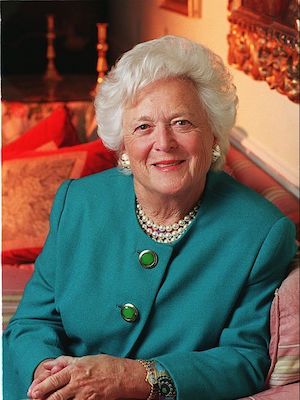
  • Barbara Bush, the former First Lady married to George H.W. Bush, has died at age 92

    Barbara Bush, the former First Lady married to George H.W. Bush, has died at age 92

    DALLAS(TIP): The Office of George H. W. Bush confirmed the death of Barbara Bush on Tuesday, April 17, saying in a statement, “A former First Lady of the United States of America and relentless proponent of family literacy, Barbara Pierce Bush passed away Tuesday, April 17, 2018 at the age of 92.

    “She is survived by her husband of 73 years, President George H. W. Bush; five children and their spouses, 17 grandchildren, seven great grandchildren; and her brother Scott Pierce. She was preceded in death by her second child, Pauline ‘Robin’ Bush, and her siblings Martha Rafferty and James R. Pierce.”

  • Giuliani Joining Trump’s Legal Team ‘For the Good of the Country’

    Giuliani Joining Trump’s Legal Team ‘For the Good of the Country’

    A beleaguered president seeks a close ally’s help to rescue him

    NEW YORK(TIP): Former New York City Mayor Rudy Giuliani said he is joining President Donald Trump’s personal legal team to help with Special Counsel Bob Mueller’s investigation into potential Russian meddling in the 2016 election, The Washington Post reported on Thursday, April 17.

    News that the two had been discussing a role was first reported by The Daily Beast earlier in the day.

    The New York Times, too, followed up with the news of Giuliani joining Trump’s legal team.

    Though talks had been ongoing, a formal announcement was delayed by a slew of foreign policy matters that took over much of the president’s time and agenda. A source familiar with the arrangement said that Trump had been preoccupied by North Korea and Syria, which limited his availability to speak with potential new members of his legal team.

    Giuliani told the Post that he was joining the team “because I hope we can negotiate an end to this for the good of the country and because I have high regard for the president and for Bob Mueller.”

    In a statement, the president said: “Rudy is great. He has been my friend for a long time and wants to get this matter quickly resolved for the good of the country.”

    And Trump lawyer Jay Sekulow added: “I have had the privilege of working with Mayor Giuliani for many years, and we welcome his expertise. Mayor Giuliani expressed his deep appreciation to the President for allowing him to assist in this important matter.” Sekulow additionally announced the hiring of Jane Serene Raskin and Marty Raskin—both former federal prosecutors—to join the president’s legal team.

    Trump has had notable difficulties in recruiting new lawyers. And in the former New York City Mayor, he has brought on board a close ally with strong roots in the legal world.

    Giuliani served as the United States Attorney for the Southern District of New York during the 1980s. But his past several decades have been spent predominantly in politics. During the 2016 election, Giuliani campaigned with Trump and gave an impassioned speech in favor of Trump at the Republican National Convention in Cleveland.

    “What I did for New York City, Donald Trump will do for America,” he said at the convention. “I have known Donald Trump for almost 30 years. And he has created and accomplished great things. But beyond that this is a man with a big heart. Every time New York City suffered a tragedy, Donald Trump was there to help.”

    After Trump’s victory, however, Giuliani wasn’t selected for any cabinet post, leaving him on the outside of an administration he’d helped elect. Axios reported last summer that Trump had considered replacing Attorney General Jeff Sessions with Giuliani. But that too never happened.

    The former mayor has largely stayed out of public view since then and has said little, if anything, about the Mueller-led investigation.

    Giuliani previously represented Reza Zarrab, a Turkish businessman charged with participating in a scheme to evade American sanctions on Iran. Zarrab testified in federal court last November that two of his lawyers––presumably Giuliani and Michael Mukasey––tried to negotiate his release through a prisoner swap with Turkey. A federal judge called one of Giuliani’s affidavits about Zarrab’s alleged crimes “surprisingly disingenuous.”

    Giuliani is not the only Trump campaign alum with Turkey ties. Former national security advisor Michael Flynn, who pleaded guilty to lying to the FBI, also cultivated close links with the country.

    This isn’t the first time Giuliani has found himself enmeshed in the president’s legal troubles. After Trump announced his first travel ban—restricting immigration from several, predominantly Muslim, countries— Giuliani bragged to Fox News’ Judge Jeanine Pirro that he came up with the idea for it.

    “When he first announced it, he said ‘Muslim ban,’” Giuliani told the host. “He called me up, he said ‘put a commission together, show me the right way to do it legally.’ I put a commission together.”

    That quote was referenced frequently by litigants who sued to block the ban as evidence it was motivated by anti-Muslim animus rather than national security concerns. Giuliani later walked back the statement.

  • North Korea offers to denuclearize without demanding withdrawal of US troops from peninsula

    North Korea offers to denuclearize without demanding withdrawal of US troops from peninsula

    Offer conveyed via South Korean president ahead of critical talks between Donald Trump and North Korean leader Kim Jong-un

    WASHINGTON(TIP): As a planned summit between Donald Trump and North Korean leader Kim Jong-un approaches, Pyongyang has indicated it would abandon its nuclear program without requiring American troops to leave the Korean Peninsula.

    “The North is expressing a will for a complete denuclearization”, South Korean president Moon Jae-in said to reporters. “They have not attached any conditions that the U.S. cannot accept, such as the withdrawal of American troops from South Korea. All they are talking about is the end of hostile policies against North Korea, followed by a guarantee of security”.

    Achieving a deal on those terms would represent a resounding success for Mr Trump, who months earlier had threatened to “totally destroy” North Korea during a United Nations speech to world leaders.

    North Korea has long decried the presence of US troops, and their regular joint drills with South Korean forces, as provocations that could presage an invasion and necessitate Pyongyang’s military buildup.

    But any demands for an exit of US troops would likely be a nonstarter for America. Despite nascent diplomatic efforts, the Trump administration has stuck by a campaign of “maximum pressure” and harsh sanctions on the North Korean regime.

    The commitment to denuclearize while allowing US forces to remain, conveyed via a South Korean leader who has prioritized better relations with the North, continued diplomatic maneuvering ahead of high-stakes talks. Earlier this month CIA director Mike Pompeo met with Mr Kim in Pyongyang, and Mr Trump said efforts are on pace to convene talks by June.

    After spending the first stretch of Mr Trump’s term threatening to devastate other countries and testing increasingly sophisticated ballistic missiles believed to be capable of hitting the US mainland, North Korea pivoted to talking with the South and extending Mr Trump an invitation to meet with Mr Kim.

    Paralleling the American-led efforts to end the North Korean nuclear threat, South Korea is hoping to use the diplomatic opening to achieve a lasting change to the status quo on the Korean Peninsula.

    Earlier in the week, South Korean officials said they hoped to also strike a peace accord to formally bring an end to the Korean War, which halted with a 1953 armistice but never again technically ended in the decades the north and the south spent warily watching each other across a heavily fortified border.

    Taken together, the efforts to conclude the war and dismantle Pyongyang’s weapons program offer the contours of a sweeping response to one of the world’s most intractable issues.

    Mr Trump expressed both hopefulness and a willingness to abandon the talks if they prove futile, saying earlier this week that the US would do “everything possible to make it a worldwide success” but adding that America might still walk away.

    “If I think that it’s a meeting that is not going to be fruitful, we’re not going to go”, Mr Trump told reporters. “If the meeting, when I’m there, is not fruitful, I will respectfully leave the meeting”.


  • Trump keeps everyone guessing on Syria attack- “Could be very soon or not so soon at all!”

    Trump keeps everyone guessing on Syria attack- “Could be very soon or not so soon at all!”

    WASHINGTON(TIP): US President Donald Trump cast doubt on Thursday, April 12, over the timing of his threatened strike on Syria in response to a reported poison gas attack, while France said it had proof of Syria’s guilt but needed to gather more information.

    Fears of confrontation between Russia and the West have been running high since Trump said a day earlier that missiles “will be coming” after the suspected chemical weapons attack in the Syrian town of Douma on April 7, and lambasted Moscow for standing by Syrian President Bashar al-Assad.

    “Never said when an attack on Syria would take place. Could be very soon or not so soon at all!” the US President said in his latest early morning tweet on Thursday, April 12.

    Prime Minister Theresa May recalled ministers from their Easter holiday to debate military action over what she has cast as a barbaric poison gas attack in Douma, then rebel-held, just east of the capital Damascus.

    May has ordered British submarines to move within missile range of Syria in readiness for strikes against the Syrian military that could begin as early as Thursday night, London’s Daily Telegraph newspaper said on April 11.

    The BBC reported that May was ready to give the go-ahead for Britain to take part in military action. She would not seek approval from parliament, the BBC said. Opposition Labour leader Jeremy Corbyn said parliament must be consulted.

    Parliament voted down British military action against Assad’s government in 2013 in an embarrassment for May’s predecessor, David Cameron. That then deterred the US. There were signs, though, of a global effort to head off a direct confrontation between Russia and the West. The Kremlin said a crisis communications link with the United States, created to avoid an accidental clash over Syria, was in use.

    “The situation in Syria is horrific, the use of chemical weapons is something the world has to prevent,” Britain’s Brexit minister David Davis said, adding, “But also it’s a very, very delicate circumstance and we’ve got to make this judgment on a very careful, very deliberate, very well thought-through basis.” — Agencies

    French President Emmanuel Macron said on Thursday “we have proof that chemical weapons were used last week, at least chlorine, and that they were used by the Assad regime”. He said they would decide whether to strike back when all necessary details has been gathered

    Macron said during an interview on France’s TF1 television said he was in daily contact with Trump and that they would decide on their response “at a time of our choosing”

    Keep US at peace: Carter to Prez

    Expressing pride in his own record of peace, former President Jimmy Carter has warned that President Donald Trump should steer clear of any military action involving Syria or other world hot spots and avoid a nuclear attack at all costs

    “I pray that he would keep our country at peace and not exaggerate or exacerbate the challenges that come up with North Korea, in Russia or in Syria,” Carter said in an interview on his new book — “Faith: A Journey for All”

    A lifelong Democrat, Carter has been critical of Trump, a Republican, on a number of fronts, and he said “a lot of people” have “realized they made a mistake” supporting Trump. Yet Carter made clear that his critique is not about the current occupant of the Oval Office

    Moscow to West: Consider consequences of Syria threats seriously      

    Moscow on Thursday called on the West to “seriously consider” the consequences of threats against Syria after the US and France said they would respond to an alleged chemical attack

    “We call upon… members of the international community to seriously consider the possible consequences of such accusations, threats and especially action (against Syria),” Russian foreign ministry spokeswoman Maria Zakharova said

    “Nobody has authorized Western leaders to take on the role of global police-simultaneously investigator, prosecution, judge and executor,” she said during a press briefing.

    (Source-Agencies)


  • Indian American Democrat Suraj Patel raises $1.1 million to challenge incumbent Carolyn Maloney

    Indian American Democrat Suraj Patel raises $1.1 million to challenge incumbent Carolyn Maloney

    NEW YORK(TIP): Indian American Democrat Suraj Patel, who is running for New York’s 12th District, has raised nearly $1.1 million ahead of his primary on June 26, 2018.

    In the Democratic primary, Patel along with three other democratic insurgents will challenge incumbent Carolyn Maloney, who has been representing the District since 2013. A member of Congress since 1993, Maloney now has a formidable challenger in Patel in the June 26 primary.

    The District 12 of New York, which has a long-standing tradition of electing Democrats over Republicans, is also one of the richest in the United States.

    Patel, a businessman and an adjunct professor at New York University’s Stern School of Business, is running the campaign in full throttle with 45 interns spreading the word across the 12th District.

    Patel, who has a law degree from NYU, is also an alumnus of the Stanford University and UK’s Cambridge University. He is the president of the Sun Group of Companies, a real estate development and investment firm specializing in the hospitality industry. Patel worked for the Obama campaigns in 2008 and 2013, and also served on the 2013 inauguration committee.

    “I’m not running against her; I’m running against apathy,” Patel said. “Something like 75 percent of young voters in this district voted for president in 2016, and something like 2 percent voted in the congressional primary. Why would you vote, if your only choice is a 25-year incumbent?”

    Even though a majority of Democrats back 72-year-old incumbent Maloney, Patel became her immediate challenger for the primary after he raised more than $500,000 in his first quarter.

    Patel once again surprised his opposition campaigners by raising $525,000, which stood slightly above Maloney’s fund of $500,000.

    Ever since Trump administration took charge of the White House, the prospects of Maloney have faded slightly as Patel campaign has been portraying her as someone who authorized the war in Iraq and as a representative who continues to oppose the Iran nuclear deal.

    Apart from this, the two Democrats have been engaged in social media war for some time.

    At present, Patel seems to be the only strong campaigner who is taking on incumbent Maloney even though two other Democrats, Sander Hick and Peter Lindner, have filed their nominations.


  • Speaker Paul Ryan Announces Retirement

    Speaker Paul Ryan Announces Retirement

    Does not want to be known by his children as “only a weekend dad”

    WASHINGTON(TIP): Congress’ most powerful lawmaker Speaker Paul Ryan said Wednesday, April 11th, he would not stand for another term in his Wisconsin district this November.

    Republicans already face a tough challenge from Democrats to keep control of the lower chamber.

    Ryan joins nearly 30 House Republicans who have announced this year they are retiring outright.

    Democrats need 23 seats to take over the House.

    In an April 11 morning news conference, Ryan said the decision was family-related.

    “You all know that I did not seek this job,” he said. “I took it reluctantly.

    “But I have given this job everything. I have no regrets whatsoever for having accepted this responsibility.”

    He continued: “But the truth is it’s easy for it to take over everything in your life and you can’t just let that happen.”

    The 48-year-old father-of-three said he did not want to be known by his children as “only a weekend dad”.

    Ryan said he would retire in January after finishing his congressional term.

  • The most interesting comment of the week

    The most interesting comment of the week

    Sure, making use of Donald Trump to keep Hillary Clinton from being president is a fascinating flourish by history’s Author, but the idea that the Almighty might use a porn star to make Mike Pence president represents, if anything, an even more amazing miracle. So, anyone interested in looking for the hand of God in history should probably welcome that miracle’s arrival, rather than resisting in the name of MAGA.”

    (Ross Douthat, Opinion Columnist, New York Times April 11, 2018)