Tag: politics

  • Disruptive Mr. Trump

    Disruptive Mr. Trump

    The consistent undermining of multilateralism by the U.S. must be countered

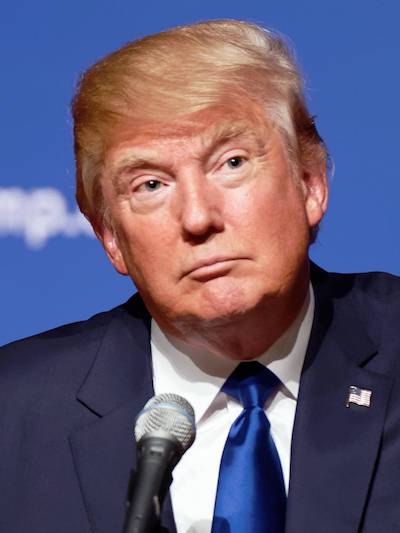
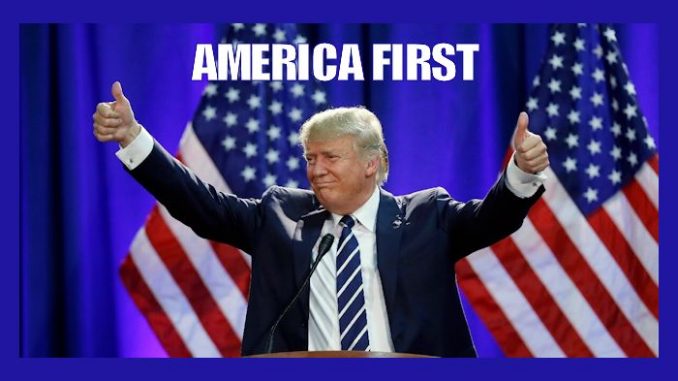
    This week has seen rounds of tit-for-tat tariffs between the U.S. and China, set off by U.S. President Donald Trump levying import duties of 25% and 10% on American steel and aluminum imports, respectively, in early March. Mr. Trump, who has repeatedly used the U.S. trade deficit of over $500 billion as a barometer for the country’s lot in the international trade order, has railed against the U.S. being treated “unfairly” by its trading partners, often singling out China. While it is true that China produces approximately half the world’s steel and that the European Union, India and other countries have complained about international steel markets being flooded with Chinese steel, only 3% of U.S. steel is sourced from China. Interestingly, among those exempted from the tariffs are Canada and Mexico, top sources for U.S steel imports. Mr. Trump has linked the threat of tariffs to the North American Free Trade Agreement, a trade deal among the U.S., Canada and Mexico that Mr. Trump has pried open for renegotiation. Earlier this week China retaliated with tariffs that would impact $3 billion worth of American goods. This was followed by the U.S. proposing tariffs on more than $50 billion of Chinese goods, including in the aerospace, robotics and communication industries — the outcome of an investigation of several months into whether Chinese policies were placing unreasonable obligations on U.S. companies to transfer technology and hand over intellectual property while setting up shop in China. Beijing responded with a second round of proposed tariffs impacting a similar value of U.S. imports into China. Mr. Trump has now asked the U.S. Trade Representative to examine if an additional $100 billion worth of goods can be taxed.

    Since the proposed tariffs have not kicked off, there may be room for negotiation. The economic ties between the countries are deep; China holds some $1.2 trillion in U.S. debt, and it is in everyone’s interest to avoid escalating matters. However, the larger cause for concern here is that Mr. Trump continues to undermine the World Trade Organisation and the international world trade order, now that it has served the West well and developing countries are in a significantly stronger position than when the WTO came into existence in 1995. Mr. Trump has pulled out of the Trans-Pacific Partnership, is pushing changes to NAFTA and has withdrawn from the Paris Agreement to combat climate change. While large-scale protectionism and unilateralism may please some of Mr. Trump’s constituents in the short run, undermining existing rules arbitrarily serves no nation, including the U.S., in the long run. In the current climate, it is therefore especially important for India to be a good steward for responsible globalization.

    (The Hindu)

  • America’s Taking on China is Good for the World

    America’s Taking on China is Good for the World

    By A.D. Amar
    His (Trump’s) taking on China for its flagrant violation of the trade and intellectual property rights has given courage to Europe and Japan to chime in the American challenge on China’s practices. The challenge will spread as Trump succeeds further in controlling China’s behavior, and that will benefit the whole world, says the author.     

    The implementation of China’s 75-year long project known as the “Great Trilogy of 21stCentury”that aims to erase the humiliating defeat China suffered at the hands of the British during the Anglo-Chinese trade wars or the Opium Wars of the 19thCentury and bring back its glorious past by taking the sole control of the world leadership. It started in 1978 and is to be completed by 2052. The strategy to achieve this populous goal involves benefiting from the laissez-faire policy of the free-market economies, particularly the USA and the countries in the Western Europe. Consequently, China decided to sell in these countries all types of products and services by applying predatory pricing policy with the goal to turn these countries into china’s captive markets.

    China devised policy to conduct its foreign trade as means to provide cash to fund its ambitious goal to displace the USA as the global leader. It has continued to build its cash reserves by selling but not buying or buying very little. To subvert the nations’ ability to export to China, it wrote or rewrote its laws and regulations more than 10,000 times a year, more that the rest of the world combined. The purpose has been to keep out competitive imports of any kind to preserve its huge cash reserves built by trade surpluses. While it worked to indigenize all products, services, processes, and technologies, it also worked to bring Chinese culture back to its past. This included displacing Buddha with Confucius by using the “Da Tong” that teaches achieving deals in the world with harmony.

    Since America is the world’s largest, freest market, China had larger designs to take over the US markets. It used its United Nations Security Council (UNSC) veto power as a strategy to achieve this goal. It used the veto power to negotiate the opening up of American import of goods from China whether it were apparels, consumer electronics, or whatever else. When so ever America got in conflict at any place in the world and went to the UNSC for its nod, China agreed to abstain from exercising its veto power against America for easing of Chinese imports into the USA. Also, this is how it made America have it become a member of the World Trade Organization and lift limits on import of apparel and other consumer goods that were supplied by many other smaller countries. In due course, it routed out other countries that competed against it in American market and turned America into China’s monopolistic market. Everything selling in the USA carried the China label.

    To maintain hefty cash reserves for its Great Trilogy of 21stCentury goal, globally, China imported one-dollar worth of goods for each five dollars of exports it made. This behavior became apparent in 2009 when it tremendously cut back on its imports to preserve its foreign cash reserves when its exports to some countries went down after the 2008-09 recession.

    In 2012, when the world was still going through an extended period of what was dubbed as “the greatest recession since the great depression”, China entered the global markets in a big strategic way with the cash it had preserved through the lopsided foreign trade. It started taking control of land and strategic natural resources and assets from mismanaged countries in Africa and Asia, and even in Europe by straightforward acquisition where possible or long-term leases. It started to build passageways to control its flow through the globe, building ports and strategic bases for monitoring and controlling global activities through international waters and to enhance the speed of its own movements along all continents. It started to claim its rights and, in some cases, forcibly take possession of lands based on its centuries, or in some cases millennia old dubious records.

    American presidents from the early seventies, starting with President Richard Nixon slowly but steadily, for one reason or another, gave in to China. This went on unchecked until President Bill Clinton. President George W. Bush, who had a strategy to reduce America’s dependence on China and get closer to India and other democratic countries, gave up on it after 9/11 as he decided to fight the Islamic terrorism for which he needed China’s support in the United Nations. President Barack Obama, as a candidate, had huge plans to confront China on its trade practices, the stealing of America’s intellectual property and constantly hacking into American business and government installations. After his election, in November 2009, during his first visit to China, he brought along plans to ask China to address its huge trade surplus with America and to open its markets to the USA to plug it. Instead, he was harangued by the Chinese President Hu Jintao on free trade. The meeting was so embarrassing for Obama that he did not have the courage to check on China for its trade imbalance, the stealing of intellectual property or the cyber hacking during any of his meetings with the Chinese for all of his eight years in the White House. He was afraid that China would carry forward its threat to withdraw its deposits at the US Treasury and cause a monetary havoc. Obama with the desire not to unravel the economy, kept low and China became bolder.

    No American president dared challenge China until President Donald Trump came in the White House. It is not just that Trump is bold to handle simultaneously problems along several fronts in the world but is smart and efficient to negotiate to get what is good for America. His taking on China for its flagrant violation of the trade and intellectual property rights has given courage to Europe and Japan to chime in the American challenge on China’s practices. The challenge will spread as Trump succeeds further in controlling China’s behavior, and that will benefit the whole world.

    (The author is Business Professor at Seton Hall University.  He can be reached at AD.Amar@shu.edu)


  • Kim in Beijing: His visit strategically brings China into North Korea’s hectic diplomatic calendar

    Kim in Beijing: His visit strategically brings China into North Korea’s hectic diplomatic calendar

    The timing of North Korean leader Kim Jong-un’s visit to China, his first foreign trip after assuming power in 2011, is not lost on anyone. After travelling to Beijing this week in an armored train, he held talks with Chinese President Xi Jinping and re-emphasized his commitment to the “denuclearization” of the peninsula, weeks before his scheduled April 27 summit with South Korean President Moon Jae-in. In May, Mr. Kim and U.S. President Donald Trump are expected to meet for a historic summit. By visiting Beijing now, Mr. Kim is sending a clear message: that he is serious about his offer of talks. The visit has also helped repair relations between Pyongyang and Beijing, which had come under some strain. China was not particularly happy with the North’s nuclear tests. Mr. Xi was under pressure from the West to exercise influence on Mr. Kim’s regime. And Beijing’s support for stringent UN sanctions on North Korea that have cut its exports of coal, seafood and other goods to China has dealt a blow to its already isolated economy. Mr. Kim reportedly rejected overtures from Beijing and purged officials who had close ties with the Chinese. But now, both leaders appear to have decided to set aside their differences.

    China has historically played a role in inter-Korean relations. In 2000, Mr. Kim’s father and predecessor, Kim Jong-il, had visited China shortly before a summit with South Korea. In 2003, China launched the Six-Party Talks aimed at peacefully resolving the North Korean nuclear crisis, which eventually failed. Mr. Kim’s visit to Beijing has reinstated China’s central role in talks over the Korean crisis, which both countries see as mutually beneficial. For the Kim regime, China’s experience and guidance could come in handy when it is preparing to engage with two of its biggest rivals. China, for its part, would not like to be bypassed by the U.S. and the North in any diplomatic process. If the Kim regime’s fundamental objective is its own survival, China’s interest lies in a peaceful resolution to the crisis in a stable political environment in its neighborhood. This enables convergence of interest for both in the diplomatic process. But there is still much uncertainty over the peace process. Mr. Trump may have agreed to meet Mr. Kim. But since then he has inducted into his team two officials with hawkish views on North Korea — Mike Pompeo as Secretary of State and John Bolton as National Security Adviser. As of now, it is anybody’s guess what the U.S. would do next if the Trump-Kim summit fails to produce a breakthrough. In such a volatile context, robust multilateral intervention would be needed to stay the diplomatic course. The Xi-Kim meet could be a step in that direction if China agrees to be a balancing force and a facilitator of talks between the North and the U.S.

    (The Hindu)

  • It’s Tit for Tat: Russia to expel 60 US diplomats, close US consulate in Saint Petersburg

    It’s Tit for Tat: Russia to expel 60 US diplomats, close US consulate in Saint Petersburg

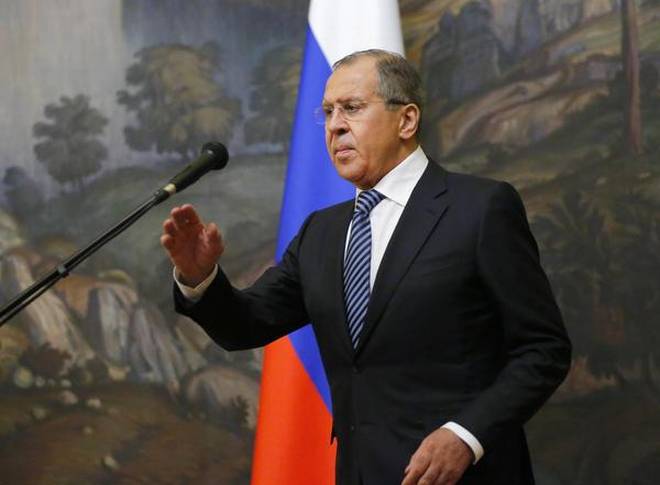
    MOSCOW (TIP): Russian Foreign Minister Sergei Lavrov said on Thursday, March 29, that Moscow would expel 60 U.S. diplomats and close its consulate in Saint Petersburg in a tit-for-tat expulsion over the poisoning of ex-double agent Sergei Skripal.

    Mr. Lavrov said the U.S. ambassador had been informed of “retaliatory measures”, saying that “they include the expulsion of the equivalent number of diplomats and our decision to withdraw permission for the functioning of the U.S. consulate general in Saint Petersburg”.

    Washington earlier ordered the expulsion of 60 diplomats and shut down the Russian consulate general in Seattle.

    Mr. Lavrov added that Russia would also issue tit-for-tat responses to the other countries that have expelled diplomats in a mass show of support for Britain which has blamed Moscow for the poisoning of ex-spy Sergei Skripal and his daughter Yulia with a nerve agent in the city of Salisbury.

    “As for the other countries it’s also all symmetrical measures as to the number of people who will be leaving Russia from diplomatic missions, and that’s all so far,” Mr. Lavrov said.

    He added that Russia was reacting to “absolutely unacceptable actions that are taken against us under very harsh pressure from the United States and Britain under the pretext of the so-called Skripal case.”

    He accused London of “forcing everyone to follow an anti-Russian course.”

    He said Britain had informed Moscow of the state of health of Yulia Skripal on Thursday and that Russia had asked again for access to her as a citizen.

    Mr. Lavrov vowed at the briefing in Moscow that “we want to establish the truth” over the poisoning and accused Britain of “making mockery of international law.”

    He said that Russia had asked for a meeting with the executive council of the Organisation for the Prohibition of Chemical Weapons on Tuesday to ask questions to “establish the truth.”

    “We are counting on our Western partners not evading an honest conversation,” Mr. Lavrov said.

    (Source: AFP)

  • Narendra Modi’s U.K. visit in April signals new goals

    Narendra Modi’s U.K. visit in April signals new goals

    ‘Bharat ki baat, sabke saath’ event on April 18

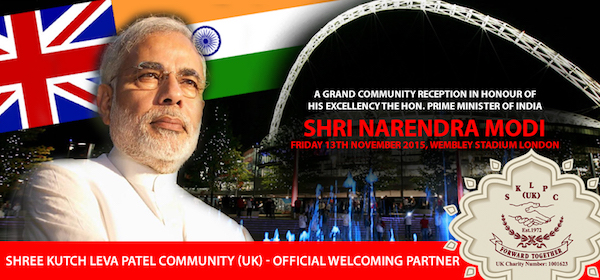
    NEW DELHI (TIP): Prime Minister Narendra Modi’s second visit to the U.K. in less than three years is due to take place in April, with a community event in central London planned alongside bilateral engagements, and the Commonwealth Heads of Government Meeting.

    A publicity campaign for the ‘Bharat ki baat, sabke saath’ event on April 18 kicked off on Wednesday, March 28. “A unique niche event… it will be a one of its kind live interactive conversation,” tweeted the BJP’s Vijay Chauthaiwale.

    The event will be held in central London, as against the Wembley Stadium, where Mr. Modi addressed a gathering of around 60,000 people, and will be a smaller affair, with around 1,500 to 2,000 people.

    Within the first hours of the website for free registration going live, the number of registrations had already exceeded this figure.

    The planned format highlights the different tone of the current visit and the audience Mr. Modi hopes to focus on — while the Wembley event was pitched very much as a “diaspora” event, with community performances — the April event is targeted at a more global audience, matching the aspirations of the visit, which is pegged around the ambitions of taking the Commonwealth to a new level. India’s active engagement is seen as key to the revival of the Commonwealth during the heads of government meeting on April 19 and 20, and the preceding Commonwealth Business Forum.

    Visiting London earlier this year, Suresh Prabhu touted the leadership role that India could adopt in the organization.

    However, others are hopeful the visit will also provide an opportunity for the U.K. government to express concerns over a number of developments in India. Earlier this month Foreign Office Minister Mark Field, responding to a debate in the House of Commons Westminster Hall, during which MPs expressed concerns, said the government would raise the issue of the treatment of Christian and Sikh minorities in India in the “appropriate manner” during CHOGM to ensure that Parliament’s voice was “properly heard.”

    “He will appreciate that diplomacy sometimes needs to be done behind closed doors, rather than with megaphones,” he told MPs.

    With the government of Theresa May touting a free trade deal with India as one of the ambitions of a “global” post-Brexit Britain, the visit will be a crucial, though sensitive one for the UK.

    Earlier this year Britain and India agreed to the terms of a memo on the swift return of Indian illegal immigrants from the U.K. – an issue that has repeatedly been raised by the British government and seen as an obstacle to immigration reform on the British side.

    India’s action will park the ball back in Britain’s court and strengthen calls for change from the U.K. when it comes to immigration and visa issues, particularly for business travelers, students and those in professional services.

    Protests and rallies are also expected to take place, as they did during Mr. Modi’s last visit. The Sikh Federation, U.K. said it expected large numbers to turn out for a protest rally during the visit. The protest will raise issues including the detention of U.K. citizen Jagtar Singh Johal by Indian authorities last year.

    (Source: The Hindu)

  • PAK AMBASSADOR TO INDIA RETURN FROM ISLAMABAD

    PAK AMBASSADOR TO INDIA RETURN FROM ISLAMABAD

    NEW DELHI (TIP): A week after he was called back for consultations amid raging row between India and Pakistan over harassment of diplomats, Pakistan High Commissioner to India Sohail Mahmood will return from Islamabad late in the evening and be present at Pakistan national day functions on Friday, a diplomat said.

    The ambassador will host a series of events to mark the ‘Pakistan National Day’ at the country’s mission in New Delhi, including a dinner reception. The envoy will also hoist the flag and deliver a speech, they said. Mahmood was called back to Islamabad for consultations after alleged incidents of “harassment” of its diplomatic staff in New Delhi with Pakistan Foreign Office spokesman Muhammad Faisal claiming that the Indian government failed to take notice of the increasing incidents of intimidation of Pakistani diplomats, their families and staffers by its intelligence agencies.

    India and Pakistan have accused each other of harassing diplomats and their families in Islamabad and New Delhi respectively.

    Source: HT

  • Arvind Kejriwal on apology spree: 3 down, 30 more to go?

    Arvind Kejriwal on apology spree: 3 down, 30 more to go?

    NEW DELHI (TIP): Aam Aadmi Party (AAP) national convener and Delhi CM Arvind Kejriwal has been humble pie.

    Kejriwal’s spree of apologies has generated mixed reactions, with some amused, some piqued and others downright infuriated.

    The AAP chief, with 33 defamation cases against him in 22 states, has crossed three cases off his list by saying sorry to the complainants.

    Kejriwal has tendered a series of apologies, starting with Akali Dal leader Bikram Singh Majithia, followed by Union minister Nitin Gadkari, and subsequently Congress leader Kapil Sibal and his son.

    Deputy chief minister of Delhi and senior AAP leader Manish Sisodia justified the apologies. “We are here to work for public. If someone is hurt by our remarks, we will apologise. We do not have time for courts. We do not want to indulge in battle of ego,” he said.

    In contrast to the moral high ground by AAP leaders in Delhi, cracks appeared in party’s Punjab unit after Kejriwal apologised to Majithia with AAP’s Punjab chief Bhagwant Mann quitting from the post in protest. Lok Insaaf Party, AAP’s alliance partner in Punjab, said it will snap ties with Kejriwal-led party.

    Kejriwal’s apologies have provided readymade ammunition to the Opposition to target AAP. Congress, taking a dig at the Delhi Chief Minister, said that Kejriwal should change his name to “Arvind Sorry Kejriwal”. Delhi BJP president Manoj Tiwari slammed Kejriwal for being a “regular and habitual offender”. Punjab Chief Minister Amarinder Singh dismissed Kejriwal’s apology as an “antic”.

    Kejriwal’s apology episode is the latest in a series of recent events that have earned the party criticism from several corners and could hurt its public image in the long run.

    However, things will be difficult for Kejriwal in the case involving Finance Minister Arun Jaitley.

    According to the sources, Kejriwal sent one of his newly inducted Rajya Sabha MPs as an emissary to Jaitley to discuss the possibility of an apology.

    “The finance minister hasn’t agreed with the apology proposal,” a source said.

    It’s also learnt that Jaitley wanted to know whether Kejriwal could ensure apologies from other AAP leaders Sanjay Singh, Kumar Vishwas, Ashutosh, Raghav Chadha and Deepak Bajpai against whom defamation case has been filed.

    The finance minister had filed a Rs 10 crore defamation suit against Kejriwal and five other AAP leaders. A civil defamation case was filed in Delhi High Court and a criminal defamation suit was filed in lower court in Delhi.Besides, a separate defamation case was filed against Kejriwal after certain remarks were made by his lawyer Ram Jethmalani during the trial. Kejriwal wanted to take the apology route with Jaitley as the next hearings in the high court and lower court are respectively on 3 April and 8 April.

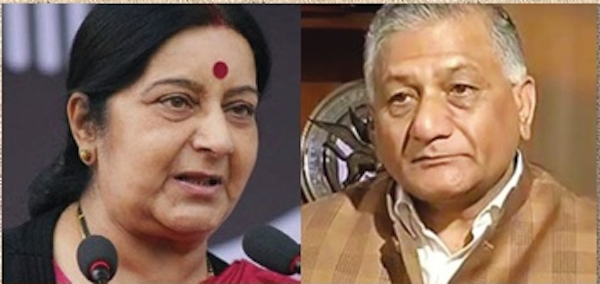
  • Iraq deaths: Cong moves privilege notice against Sushma, VK Singh N

    Iraq deaths: Cong moves privilege notice against Sushma, VK Singh N

    NEW DELHI (TIP): Congress members from Punjab on March 22 gave a breach of privilege notice in the Rajya Sabha against External Affairs Minister Sushma Swaraj and her colleague MoS VK Singh, accusing them of “deliberately misleading Parliament and the country on the status of 39 Indians who went missing in Iraq in 2014”, repoted The Tribune.

    Moving the notice, MPs Ambika Soni, Shamsher Singh Dullo and Partap Singh Bajwa said, “The External Affairs Minister and her colleague VK Singh deliberately misled families of 39 individuals who were slain in Mosul. For a period spanning between June 2014 and March 2018, the minister continued to state as a matter of fact that the individuals are not only alive, but that the government is also undertaking steps for their rescue. As such claims were made on the floor of Parliament and outside, this is a serious breach of Parliament privilege and a stringent action must be taken against the members for their gross acts of dereliction of public duty.”

    The Congress leaders said the government actively worked to conceal the truth from the families of those killed in Iraq. The trio said the information about the death of slain Indians came out at least seven months ago, but the government still did not disclose that. “It is a tragic and inexcusable breach of duty that the External Affairs Minister, being in possession of this information (of the killing of Indians), failed to share the same with the grieving families. In fact, it is now clear that the only reason the government has disclosed the information now is compulsion because the Iraqi government would have otherwise done so,” they said.

    Bajwa said, “It is also sad that Swaraj waited to come to Parliament to make the tragic announcement on March 20 when she knew it already. This could have been made known outside Parliament.”

    Family members grieve by a portrait of one of the 39 Indian workers from Amritsar killed in Iraq by ISIS. External Affairs Minister Sushma Swaraj in Rajya Sabha stated that the 39 bodies exhumed from a mount in Badoosh in Iraq have been identified.

    On March 20, Swaraj said that the 39 missing Indians in Iraq have been killed. She was speaking in Rajya Sabha. Forty Indians, mostly from Punjab, were originally abducted by terrorist organisation Islamic State from Mosul, Iraq. One of them escaped by posing as a Muslim from Bangladesh, Swaraj said in a statement in Rajya Sabha at 11 am, as soon as the House convened. The remaining 39 Indians were taken to Badoosh and killed. Swaraj said search operations led to a mound in Badoosh where locals said some bodies were buried by the ISIS. Deep penetration radars were used to establish that the mound indeed was a mass grave, she said, adding the Indian authorities requested their Iraqi counterpart to exhume the bodies.

    The external affairs minister added that the mass grave had exactly 39 bodies, with distinctive features like long hair, non-Iraqi shoes and IDs. The bodies were then sent to Baghdad for DNA testing.DNA testing by Martyrs Foundation has established identity of 38 Indians while there has been 70 per cent matching of the DNA for the 39th person, she said. Minister of State for External Affairs V K Singh will be flying to Iraq to bring back the bodies on a special flight.

  • Indian American Ram Villivalam wins Illinois State Senate District 8 primary

    Indian American Ram Villivalam wins Illinois State Senate District 8 primary

    CHICAGO (TIP): Former congressional aide Ram Villivalam won the Democratic primary for Illinois State Senate District 8, thereby running unopposed in the general election to be held on November 6, 2018.

    Villivalam, who challenged 20-year incumbent Ira Silverstein, won the primary getting 13,350 votes that account to a total of 51.86 percent.

    Incumbent Ira Silverstein could secure only 29.05 percent, giving a clear majority to Villivalam.

    Other Democrats who ran for the election were Caroline McAteer-Fournier and David Zulkeywas, who could only secure 13.81 percent and 5.28 percent votes, respectively.

    Interestingly, no Republican candidates filed to run for election and Villivalam will run unopposed. The last date for a candidate to file papers was on December 4, 2017.

    Speaking to his supporters at the 90 Miles Cuban Cafe in Lincolnwood, the first-time candidate Ram Villivalam, declared victory over incumbent Ira Silverstein in the 8th District State Senate race.

    “I am incredibly proud of – and humbled by – the coalition we’ve brought together and the work we’ve done over the last four months,” Villivalam told a group of supporters gathered at 90 Miles Cuban Café in Lincolnwood. “This win belongs to each of you.”

    The 8th Senate district has the highest concentration of Asian Americans in Illinois. It includes 21 Chicago neighborhoods, among them, all of Devon Ave.’s business district, popularly called “Little India” — and the suburbs of Lincolnwood, Skokie, Morton Grove, Niles, Des Plaines and Glenview.

    “This campaign was never about me. It has always been about working together to empower and raise the voices of the voters of the 8th State Senate District, one conversation at a time. Today, those voters spoke clearly: they’re ready for a new generation of effective progressive leadership. Thank you to my wife, Elizabeth, my family, my staff, and the hundreds of volunteers who have been a part of this campaign.” Villivalam added.

    Villivalam’s parents immigrated from India in the 1970s. He was born and raised on the Northwest side of Chicago, where he continues to live. The area is part of the 8th district.

    “As the son of Indian immigrants who came to this country to seek out a better quality of life and opportunities for their children, I feel the responsibility to step forward and speak out on the important issues that working and middle-class families are experiencing every day,” Villivalam told the Bazaar earlier.

    He had also attacked his opponent, Silverstein, saying he was reprimanded by an independent inspector general for violating the legislative ethics act and behaving in a manner “unbecoming of a legislator.”

    Villivalam’s experience includes working as a legislative coordinator for the Service Employees International Union (SEIU), where he fought to protect home care for seniors and people with disabilities, child care for working families, and Medicaid for those in need. Prior to that, Villivalam was the Outreach Director for Rep. Brad Schneider, D-IL, where he signed people up for the Affordable Care Act and put on job fairs.

  • Indian American Democrat Sameena Mustafa loses Illinois 5th District Primary

    Indian American Democrat Sameena Mustafa loses Illinois 5th District Primary

    CHICAGO (TIP): Sameena Mustafa, an Indian American democrat who challenged incumbent Mike Quigley in the 5th Congressional District of Illinois, was defeated in the Democratic primary election held on Tuesday, March 20.

    Mustafa finished second in the primary getting 23.87 percent votes against Quigley’s 62.3 percent, thus eliminating her chances to become the first Indian American Muslim representative in the Congress.

    Besides Mustafa, two other Democrats — Benjamin Thomas Wolf (9.66 percent) and Steve Schwartzberg (4.05 percent) — challenged Quigley, who’s held that office for nearly a decade.

    Mustafa is a real estate broker working with nonprofits and small businesses. She was also active in the city’s comedy scene. In 2015 she cofounded Simmer Brown, a South Asian comedy collective.

    She is graduate of Northwestern University.

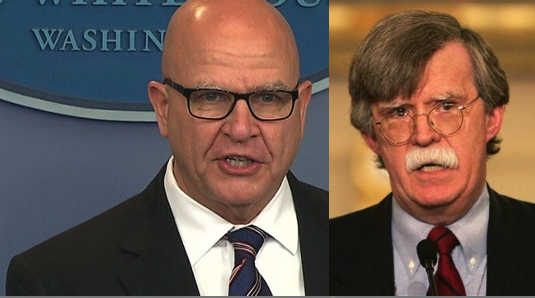
  • Trump replaces national security adviser McMaster with John Bolton

    Trump replaces national security adviser McMaster with John Bolton

    WASHINGTON (TIP): Readers of The Indian Panorama will recall the news we published last week that President Trump had made up his mind to give marching orders to his national security adviser H.R. McMaster. And we have been proved right, as Trump ousted McMaster who is to be succeeded by John Bolton, a former ambassador.

    The president announced the news in a tweet on Thursday, March 22, saying that Bolton would take the job starting April 9, making him Trump’s third national security adviser in the first 14 months of his presidency. In dismissing McMaster from the job, Trump praised the Army general for his “outstanding work” and said he would “always remain his friend.”

    Bolton, 69, served in the George W. Bush administration in a key arms-control job. Then-Secretary of State Colin Powell said he was strongly encouraged to take Bolton by Vice President Richard B. Cheney, who shared Bolton’s belief in American military power.

    On March 13, Trump had fired Secretary of State Rex Tillerson and signaled in recent days that a shake-up at the top levels of his administration was not over.

    “I’m really at a point where we’re getting very close to having the Cabinet and other things that I want,” Trump told reporters after Tillerson was fired.

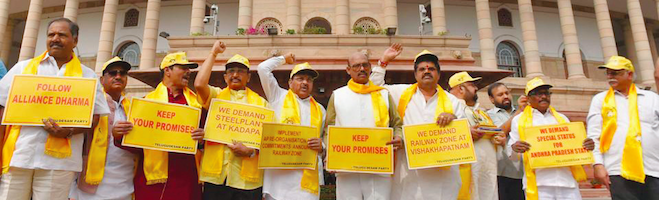
  • YSR Congress gives notice for no-confidence motion against govt

    YSR Congress gives notice for no-confidence motion against govt

    NEW DELHI (TIP): For the first time in its term, the Narendra Modi government may face a no-confidence motion on the floor of the house.

    Andhra Pradesh’s YSR Congress Party led by Jagan Mohan Reddy, has given a notice to move a no-confidence motion against the government in the Lok Sabha over the issue of not giving the so-called “special category” status to his state. But before any vote takes place, the notice needs the support of 50 MPs ‘in an orderly house’. It is not clear the notice will get that.

    With a comfortable majority in the house, the government is safe and will cruise through, even if the motion is admitted. The move is however expected to hasten the exit of The Telugu Desam

    Party (TDP), which pulled its ministers out of the Bharatiya Janata Party led government, from National Democratic Alliance. The YSRCP has nine MPs, but four have defected, leaving it with an effective strength of five; the TDP has 16 MPs, and it can’t risk not supporting a motion that purportedly has the state’s best interests in mind.

    TDP MP Thota Narasimham told PTI that the party will also support the motion. Later, Andhra Pradesh chief minister N Chandrababu Naidu too said the TDP would support the no-confidence motion.

    “We will support a no-confidence motion, whoever moves it. We will be ready for that and our 16-17 MPs will fully support that. We will cooperate with whoever fights for the state’s rights,” Naidu told the state assembly, according to PTI. YSRCP MP YV Subba Reddy submitted a notice with the Lok Sabha secretariat, desiring to move a no confidence motion on Friday. Reddy has also written a letter seeking support from all non-NDA parties. The party initially planned to the motion on March 21, but advanced it amid apprehension that Parliament might adjourn sine die early in the wake of disruptions.

    It has also suggested that its MPs will quit from Lok Sabha at the end of the session if the demands are not met.

    The budget session is scheduled to end on April 6. The Congress, with 48 MPs, and the Trinamool Congress, with 34, were yet to take a call on the no-confidence motion late on Thursday. “We will firm up our strategy by Friday morning,” Congress’ chief spokesperson Randeep Singh Surjewala said. A TMC leader said the YSRCP had not reached out to the party yet. The Biju Janata Dal is unlikely to support the notice. A party leader said, “It is for a parochial issue. We may not support it.”

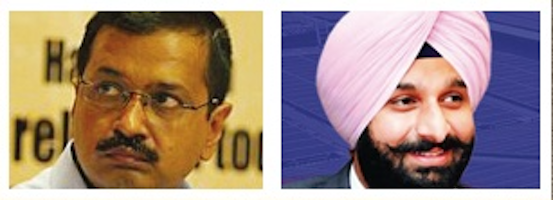
  • Kejriwal apologises to Majithia over drugs charge; AAP’s Punjab leaders term it ‘meek surrender’

    Kejriwal apologises to Majithia over drugs charge; AAP’s Punjab leaders term it ‘meek surrender’

    NEW DELHI (TIP): Delhi Chief Minister Arvind Kejriwal on March 15 apologized to former Punjab minister Bikram Singh Majithia for making “unfounded” allegations against him over his involvement in the illegal drug trade.

    Majithia, a senior Shiromani Akali Dal leader, had filed a criminal defamation case against Kejriwal and two other AAP leaders for allegedly “tarnishing” his reputation by levelling “false, baseless and malicious charges”.

    Following the apology, Majithia has decided to withdraw the court case against him.

    However, the “meek surrender” drew flak from AAP Punjab unit leaders who termed Kejriwal’s step a “letdown”.

    AAP leaders in New Delhi, however, said the move was to shed court cases, in which the party convenor finds himself mired, and hinted that a similar course could be adopted in the defamation case filed by Finance Minister Arun Jaitley.

    Kejriwal apology “In the recent past, I made certain statements and allegations against you regarding your alleged involvement in drug trade. These statements became a political issue. Now I have learnt that allegations are unfounded,” Kejriwal said in a letter addressed to Majithia.

    “I hereby withdraw all my statements and allegations made against you and apologies for the same,” the Aam Aadmi Party (AAP) chief said.

    The damage caused to your esteem, the hurt caused to you, your family, friends, well-wishers, followers and the loss caused to you is regretted, he said.

    Former Punjab minister Majithia claimed he was grateful that truth had won and Kejriwal had realized his mistake. Since the AAP leader had “tendered his apology”, he did not want to pursue the defamation case filed against him, Majithia said.

    Accusing Majithia of playing with the youth of Punjab by “unleashing narcoterrorism in the state,” Kejriwal had once declared that he would “drag” the then Punjab cabinet minister “by his collar” to jail for his alleged role in a multi-million rupee drug racket.

    Majithia, who was once probed by the ED in connection with the alleged Rs 6,000 crore money laundering drugs racket case, had often been at the receiving end of Kejriwal’s ire during the AAP convenor’s rallies in Punjab in the run-up to the Assembly election last year.

    Drug abuse was a major issue in the high-octane Punjab Assembly elections last year and Kejriwal, who was leading the AAP charge, accused Majithia, then a minister in the state government, of being involved in narcotics trade.

    Majithia had denied the charges against him.

    In May 2016, he filed a criminal defamation case against Kejriwal, Sanjay Singh and Ashish Khaitan. Majithia said Kejriwal, Singh and Khaitan have “made it a habit” to target their political opponents by resorting to statements “filled with lies with the sole motive of hoodwinking the people”.

    “I will not let anyone besmirch my and family’s honour. Anyone doing so will have to face the consequences. I am determined to make them face trial and be punished for their misdeeds,” the minister had said.

    Majithia ‘accepts’ Kejriwal’s apology Talking to reporters, Majithia said he had accepted the apology.

    “I thank Kejriwal for showing greatness in seeking apology for his remarks made against me. I have told my lawyers that from our side, this case ends as Kejriwal has sought apology. I have asked my counsels to withdraw the defamation case. Person makes mistake and with the grace of God, if I have the ability to forgive and I will forgive,” the SAD leader said.

    Majithia had filed a defamation case against Kejriwal and Ashish Khetan in May 2015.

    “I had said from the beginning that either he will say sorry or he will go to jail. Sending someone to jail is not my intention,” he asserted.

    It is indeed a historical moment that a sitting chief minister has submitted a written apology in court withdrawing all statements he made against me,”said Majithia.

    The SAD leader said although it was

    “very torturous journey” for him as he battled the allegations. “The AAP, however, did not benefit as their candidate lost his security forfeited in my constitutency,” he said.

    Majithia said the entire controversy

     had taken a toll on his mother because she could not understand this kind of politics.

    “My wife also went through a difficult phase, I thank the almighty that this chapter has ended and truth has prevailed,” he said, adding, “If my two little kids were asked in school that your father does such things, you can imagine what could have been my position. What answer I could have given to them.” AAP

    leader Ashish Khetan had apologized as well, he added.

  • UTTAR PRADESH BY-ELECTION:Samajwadi Party wins Yogi Adityanath’s Gorakhpur, UP CM says result ‘unexpected’ UTTAR PRADESH

    UTTAR PRADESH BY-ELECTION:Samajwadi Party wins Yogi Adityanath’s Gorakhpur, UP CM says result ‘unexpected’ UTTAR PRADESH

    LUCKNOW (TIP): Delivering a major blow to the BJP, the Samajwadi Party won Gorakhpur and Phulpur Lok Sabha seats in Uttar Pradesh by-election. Samajwadi Party’s Nagendra Pratap Singh Patel defeated BJP’s Kaushlendra Singh Patel by 59,613 votes in Phulpur. In Yogi Adityanath’s bastion, SP’s Praveen Kumar Nishad defeated BJP’s Upendra Dutt Shukla by 21000 votes.

    Gorakhpur and Phulpur are highprofile constituencies as both the seats were represented by BJP’s firebrand leader and current UP Chief Minister Yogi Adityanath and Deputy Chief Minister Keshav Prasad Maurya respectively. Adityanath represented Gorakhpur five times in the Lok Sabha, and it went vacant in 2017 when he was elected to UP Assembly to take over as the Chief Minister of the state.

    In 2014, BJP had won both the seats with over 3 lakh vote margin. In Gorakhpur, BJP’s Yogi Adityanath had defeated SP’s Rajmati Nishad by 31,2783 votes. And in Phulpur, BJP’s Keshav Prasad Maurya defeated SP’s Dharam Raj Singh Patel by 3,08,308 votes. However, currently the BJP is trailing on both the seats. Ten candidates are in fray from Gorakhpur and 22 candidates contested from Phulpur.

    ALARM BELLS IN BJP

    The defeat of the Bharatiya Janata Party in all six Lok Sabha seats where byelections were held this year has sounded alarm bells in the party in Uttar Pradesh ahead of the 2019 Parliamentary polls, while stoking speculation about the Opposition stitching an alliance together to take the BJP on after tasting success in the recent bypolls.

    The BJP failed to break the jinx of repeated failures in Parliamentary byelections in 2018 when it was defeated yesterday in Gorakhpur, the bastion of Chief Minister Yogi Adityanath, and Phulpur, earlier held by deputy Chief Minister Keshav Prasad Maurya.

    The ruling partys candidates in the two constituencies lost to the Samajwadi Party (SP), triggering a debate on whether political outfits opposed to the BJP could forge a mega alliance before the 2019 Lok Sabha polls.

    The SP, supported by the BSP, romped home in the bypolls.

    SPs Pravin Nishad defeated Upendra Dutt Shukla of the BJP by 21,961 votes in Gorakhpur, a seat which had been with the BJP since 1989. Nagendra Pratap Singh Patel of SP cornered the Phulpur seat, drubbing the saffron partys Kaushalendra Singh Patel by 59,460 votes.

    As the results of the two by-election were declared yesterday, Adityanath said there was a “lesson” to be learnt from the outcome, and cited over-confidence and the inability to understand the implications of the pact between SP and BSP as the prime reasons for the BJPs defeat.

    UP Congress spokesperson Ashok Singh told PTI the outcome had brightened the prospects of the formation of a “maha gathbandhan” (grand alliance) ahead of the 2019 polls to defeat the saffron party.

    “We will ponder seriously about a larger alliance keeping the next Lok Sabha polls in mind,” he said. The Congress had contested the 2017 UP Assembly polls jointly with the SP and might want to tackle the polls together next year, too, another senior party leader told PTI, requesting that he not be named.

    The outcome of the March 11 bypolls has sparked talk in political circles about a continuing pact between the SP and the BSP — once bitter critics in Uttar Pradesh.

  • Indian Overseas Congress, USA condemns vandalizing of statues in India

    Indian Overseas Congress, USA condemns vandalizing of statues in India

    NEW YORK (TIP): The IOC Vice Chairman George Abraham, in a statement to The Indian Panorama said that the Indian Overseas Congress strongly condemned the vandalizing of statues in India.

    “We strongly condemn the widespread vandalizing of statues across India to score cheap political points thereby exacerbating tension between communities and political parties’ said George Abraham, Vice-Chairman of the Indian Overseas Congress, USA. ‘attacking and defacing statues of Indian icons such as Mahatma Gandhi, B.R. Ambedkar, and Periyar Ramasamy is a symptom of growing intolerance in the society that is anathema to the basic tenets of the democratic tradition’ Mr. Abraham added. IOC also condemns the destruction of statues in Tripura and West Bengal and calls for the peaceful transition of power after an election.

    “Undoubtedly, under BJP rule, a climate of division and intolerance has been fostered for political gains. It is to be noted that these acts of vandalism are primarily directed at figures mostly revered by Dalits, whom some of the BJP supporters disdain. Emboldened by the BJP victory in Tripura, the vandals appeared to have destroyed the statue of a Lenin and ransacked the offices of the Communist Party of India.  While BJP is trying to woo the Dalits with their ‘Hindu card’ strategy, the true color of their attitude towards them is quite evident with their destructive and polarizing actions.

    “We welcome the statement by the Prime Minister condemning these pernicious acts by a few and call upon the authorities to bring those who are responsible for to swift justice”.

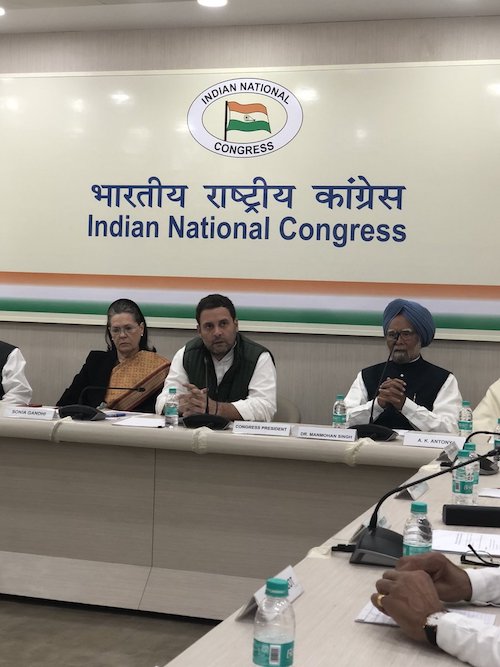
  • Indian National Congress Party Plenary Session to take place from March 16

    Indian National Congress Party Plenary Session to take place from March 16

    George Abraham and Mohinder Singh Gilzian from New York are special invitees to the Congress Party Plenary session.

    NEW YORK (TIP):  Indian National Congress will hold its plenary session to discuss and evolve the party’s future strategy in Delhi on March 16, 17 and 18.

    George Abraham, Vice-Chairman of the Indian Overseas Congress, USA and Mr. Mohinder Singh Gilzian, President of the INOC have been invited to attend the 84th plenary session of the Indian National Congress.

    This will be the first Congress Plenary session after the election of Rahul Gandhi as the President of the Indian National Congress. The leadership of the party from all states is expected to participate.

    George Abraham is the Founder-General Secretary of Indian National Overseas Congress and served as its President and Chairman. He is a former Chief Technology Officer at the United Nations and regularly writes on the political dynamics in India.

    Mohinder Singh Gilzian served as its Vice-President before assuming the post of the President.

    AICC recently has appointed Mr. Sam Pitroda as the Chairman of the newly created Overseas Congress department who also act as the Chairman of the Indian Overseas Congress, the newly reorganized wing of Congress Party in the USA.

  • Indian American Ram Villivalam  running for Illinois state Senate

    Indian American Ram Villivalam running for Illinois state Senate

    CHICAGO (TIP): Indian American, former congressional aide Ram Villivalam is challenging 20-year incumbent Ira Silverstein in the next week’s Democratic primary for the Illinois state Senate 8th district.

    If he wins, Villivalam will be the first Indian American elected to the Illinois statehouse.

    The primary will be held on March 20, next Tuesday.

    The 8th Senate district has the highest concentration of Asian Americans in Illinois. It includes 21 Chicago neighborhoods, among them, all of Devon Ave.’s business district — which is known as a “Little India” — and the suburbs of Lincolnwood, Skokie, Morton Grove, Niles, Des Plaines and Glenview.

    Villivalam, whose parents immigrated from India in the 1970s, believes Illinois needs more diversity in government and a new generation of elected officials like him to lead on challenging issues it faces at the moment.

    Villivalam was born and raised on the Northwest side of Chicago, where he continues to live. The area is part of the 8th district.

    “As the son of Indian immigrants who came to this country to seek out a better quality of life and opportunities for their children, I feel the responsibility to step forward and speak out on the important issues that working and middle-class families are experiencing every day,” said Villivalam.

    He added that his parents, who were professionals in India, had to work minimum wage jobs before going back to school. They retired with a combined 50 years in public service.

    Villivalam said, based on his own family’s experience, he believes in lowering taxes for middle-class families while raising them for millionaires and billionaires, reducing gun violence, equitably funding public schools, and ending discrimination based on race, gender and religion.

    He pointed out that, his opponent, Silverstein, was reprimanded by an independent inspector general for violating the legislative ethics act and behaving in a manner “unbecoming of a legislator.”

    The taxpayers of the 8th state Senate district deserve a senator who is solely focused on effective representation, he said.

    The candidate said he has both the advocacy and legislative experience to make progress on his agenda in Springfield.

    His experience includes working as a legislative coordinator for the Service Employees International Union (SEIU), where he fought to protect home care for seniors and people with disabilities, child care for working families, and Medicaid for those in need.

    Prior to that, Villivalam was the Outreach Director for Rep. Brad Schneider, D-IL, where he signed people up for the Affordable Care Act and put on job fairs.

    Villivalam said he has built a broad coalition of support, including from four members of the Illinois’ Democratic congressional delegation — Rep. Raja Krishnamoorthi, Jan Schakowsky, Mike Quigley and Brad Schneider. He also has the endorsement of the Chicago Tribune, Chicago Sun-Times, and the Indo-American Democratic Organization. These elected officials and organizations trust his to be the effective, proactive, and truly progressive our community deserves, said Villivalam.

    “As I knock on doors to speak with voters about the challenging issues we face, I hear the frustration people have with business as usual in Springfield,” he said. “Voters want a change. We can’t expect different results if we keep sending the same people down there.”

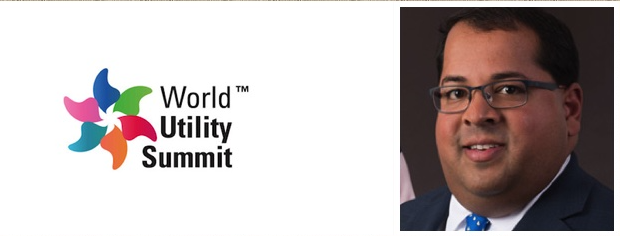
  • Indian American Neil Chatterjee to deliver keynote address at World Utility Summit

    Indian American Neil Chatterjee to deliver keynote address at World Utility Summit

    WASHIGNTON (TIP): US Federal Energy Regulatory Commissioner Neil Chatterjee will deliver a keynote address at the World Utility Summit in New Delhi.

    Chatterjee will talk on ‘Harmonizing the Regulatory Framework for Utilities’ on the first day of the World Utility Summit.

    While in Delhi, he will also meet various government officials and representatives from the energy industry to discuss various challenges facing the industry and its solutions.

    Chatterjee is the first Indian American to become a Commissioner of the Federal Electricity Regulatory Commission. He also served as its chairman for a short duration August 10 to December 7 last year.

    PTI

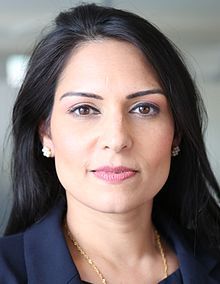
  • Indian Origin UK Lawmaker Says Labels For Minorities Are Patronizing Insulting

    Indian Origin UK Lawmaker Says Labels For Minorities Are Patronizing Insulting

    London (TIP): Indian Origin Conservative party MP Priti Patel said that she had made it clear to her political colleagues and civil servants that she does not like the term Black, Minority Ethnic (BME). She was the first Indian origin member of the UK Cabinet until she resigned last year.

    “I don’t like the labelling of people. I don’t like the term BME. I’m British first and foremost, because I was born in Britain,” she was quoted as saying by BBC.

    “I challenge all my colleagues in the Conservative Party and in Westminster: Don’t label me as a BME. I’ve said that to people in the Cabinet. I’ve said that to civil servants. I think it’s patronizing and insulting, she said.

    The 45-year-old former international development minister said the term was “totally unhelpful because we are people and everybody wants to be recognized for their individual merits”.

    The MP who represents Witham in Essex also expressed doubts over whether the UK could one day have a minority ethnic incumbent in 10 Downing Street.

    “Who knows?” she said, when asked if she could be Prime Minister.

    Ms. Patel was forced to resign from her Cabinet post in November 2017 after revelations of a series of undisclosed meetings with Palestinian officials had made her position in government untenable.

    In reference to the controversy, she said the “whole thing was incredibly messy” but that she had been “very clear with the Prime Minister and also I took responsibility for what she felt was not acceptable, so I think I did the right thing”.

    Ms. Patel, now as a backbench MP, continues to be among the most vocal pro-Brexit voices in the Conservative party.

  • United States Congressman Raja Krishnamoorthi urges Chicagoans to vote for Illinois primary election

    United States Congressman Raja Krishnamoorthi urges Chicagoans to vote for Illinois primary election

    As I have said many times, if you don’t have a seat at the table, then you are on the menu. Registering to vote and voting ensures at your voice is heard and you have a proverbial seat at the table when important decisions are made affecting you.”

    CHICAGO, IL(TIP): A Press Conference for media was held on behalf of United States Congressman Raja Krishnamoorthi, at Mysore Woodlands on 2548 W. Devon Ave. Chicago, IL. At this press conference Congressman Raja Krishnamoorthi covered a wide range of significant topics including his legislative accomplishments, future legislation agenda and other relevant current topics.

    Democratic Congressman Raja Krishnamoorthi of Illinois has urged suburban Chicago residents to vote for Illinois primary election.

    “Indian-Americans and all suburban Chicago residents must register to vote to allow their voices to be heard,” he said and added, “As I have said many times, if you don’t have a seat at the table, then you are on the menu. Registering to vote and voting ensures that your voice is heard, and you have a proverbial seat at the table when important decisions are made affecting you.”

    Volunteers and friends of Krishnamoorthi helped register voters at the Itasca temple last week. The efforts at the event will be replicated by him elsewhere to help increase the number of registered voters in the Indian-American community.

    Fund Raising Efforts

    Meanwhile, Raja Krishnamoorthi continued his incredible fundraising success by bringing in more than $650,000 in the 4th quarter of 2017.

    The first-term Member of Congress from the 8th District of Illinois that includes Chicago’s west and northwest suburbs has more than $3.31 million cash on hand to begin his re-election campaign as of the end of the fourth fundraising quarter that ended December 31.

    United States Congressman Raja Krishnamoorthi

    “My constituents sent me to Washington to work every day on growing and strengthening the middle class, and that’s what we’ve done,” Krishnamoorthi said. “These resources will help us amplify that message to continue our important work in Congress. Krishnamoorthi and Republican Congressman Glenn “GT” Thompson of Pennsylvania are the two lead sponsors of bipartisan legislation that passed the House of Representatives unanimously to improve career and technical education, as well as to help give Americans the skills they need to compete for in-demand jobs.

    The Strengthening Career and Technical Education for the 21st Century Act (H.R. 2353) reauthorizes the Carl D. Perkins Career and Technical Education Act and is the first major overhaul of the program since 2006.

    “As President Trump said in his State of the Union speech, career and technical education is going to be a critical part of our country’s economy, and this legislation will help strengthen and modernize it,” Krishnamoorthi said. “The bill works to close the skills gap by pairing businesses and educators together to establish training programs to prepare students for in-demand careers.” The son of immigrants, Krishnamoorthi was elected to Congress in November 2016 with nearly 60 percent of the vote against his Republican opponent.

    (Photographs and Press release by Asian Media USA)


  • Nirav Modi Scam: a case of deceit and plunder of the public exchequer

    Nirav Modi Scam: a case of deceit and plunder of the public exchequer

    There is a pattern to mega fraud cases- involvement of bank officials and government

    By George Abraham
    At present, the bad debt of these Banks is greater than that of the GNP of the 137 countries in the world
    The data shows that between years 2012-2013 and 2016-2017, Indian banks saw a total number of 22,949 instances of fraud, with total losses to the banks amounting to 10.8 billion dollars.
    The deep mystery surrounding some of the biggest fraud cases is that many of these perpetrators were simply allowed to flee the country, including this one! Nirav Modi and his accomplices appeared to have fled India just before Punjab National Bank filed the complaint with the CBI on 29th January 2018.
    The bankruptcy declarations by jeweler Nirav Modi’s companies — Firestar Diamond Inc, A Jaffe Inc and Fantasy Inc — may offer some clues to where the money went in the ₹12,622-crore Punjab National Bank.
    According to a Chapter 11 filing, A Jaffe owes more than $6 million to “unsecured creditors” in the United Arab Emirates (UAE) — Pacific Diamonds and Tricolor Diamonds FZE. The CBI FIR names these two as “exporters” who were beneficiaries of the letters of undertaking issued by the PNB employees accused of perpetrating the fraud along with Modi, his uncle Mehul Choksi, also a jeweler, and their companies.
     Punjab National Bank, India’s second-largest bank, is known as a Public Sector Bank (PSB) whose major shares are owned by the government. That means, when a bank accumulates NPA (non-performing assets) also known as bad debt, it is the Indian taxpayers and the shareholders that ultimately pay the price.

    The fraudulent financial behavior of some of the wealthiest people in India was once again on full display as the diamond jeweler Nirav Modi, a billionaire and the preferred jeweler of celebrities, was accused of orchestrating the biggest banking scam the nation has ever witnessed. He is now a target of the investigation by CBI after Punjab National Bank alleged that Modi and his uncle Mehul Choksi, defrauded the bank to the tune of 2 billion dollars using the cover of several shell companies abroad.

    According to the complaint by PNB, two junior officers of a Mumbai branch of the Bank issued “letters of undertaking” to firms linked to Modi and Choksi for them to obtain credit from overseas branches of other Indian lenders.

    A recent NDTV investigation has also unearthed links between money from Indian Banks allegedly embezzled by the Jeweler Nirav Modi and his US-based companies. In its formal charges, CBI claims that the loans Mr. Modi took from Punjab National bank to pay off his overseas suppliers may have been diverted elsewhere.

    The latest report from New York also indicates that Firestar Diamond Inc., a registered business by Nirav Modi in the U.S. has filed the Chapter 11 voluntary petition for the protection from its creditors. Prime Minister Modi who claimed to be the ‘chowkidar’ of the country has gone relatively silent on this matter other than to make a general statement.

    How is it possible for a businessman in India to defraud a bank of such a large sum of money? Where is the due diligence and what happened to the risk management mechanism? Was the Reserve Bank of India asleep on the wheel?  Why there was no oversight by the Finance Ministry dealing with such a huge transfer of reserve currency? Where is the accountability of the Modi government?

    The deep mystery surrounding some of the biggest fraud cases is that many of the fraudsters were simply allowed to flee the country, including this one! Nirav Modi and his accomplices appeared to have fled India just before Punjab National Bank filed the complaint with the CBI on 29th January 2018. It was reported that top officials including the Prime Minister were made aware of this case that included 42 FIRs on 22nd July 2016. Why then were these perpetrators not stopped from running away that included Choksi (Nirav’s uncle who ran the ‘Gitanjali Gems’) whose spurious activities were already exposed by a whistleblower and was under active investigation?

    This is not the first time since Modi took the reins of the government that a high flying billionaire has evaded justice by escaping abroad before he could be caught. Liquor magnate Vijay Mallya was accused of defaulting on 1.4 billion worth of loans before leaving the country in March 2016. It is not far-fetched to believe that these bad actors might have solicited some inside help that allowed them to leave the country and to stay beyond the reach of Indian jurisprudence.

    Punjab National Bank, India’s second-largest bank, is known as a Public Sector Bank (PSB) whose major shares are owned by the government. That means, when a bank accumulates NPA (non-performing assets) also known as bad debt, it is the Indian taxpayers and the shareholders that ultimately pay the price.

    The data shows that between years 2012-2013 and 2016-2017, Indian banks saw a total number of 22,949 instances of fraud, with total losses to the banks amounting to 10.8 billion dollars. In the last three-and-half years, the government pumped in more than Rs. 51000 crore capital to the public sector banks. They are expected to infuse PSBs with another Rs.2.11 lakh crore in the coming two years. Non-performing assets (bad debt) of the Public sector banks alone are calculated to be around Rs. 7.33 lakh crores as of June 2017, from Rs. 2.78 lakh crore in March 2015.

    Further analysis of the data reveals that the bad debt at these PSBs has increased almost fourfold in the last three years. Significant portions of these bank loans are from Corporates who have borrowed and now unwilling to pay back. Recent research brought out by Ernst and Young said the following: “While corporate borrowers have repeatedly blamed economic slowdown as the primary factor behind defaulting on bank loans, periodic independent audits on borrowers have revealed diversion of funds or willful default leading to stress situations.”

    How do we explain this massive level of willful default other than systematic manipulation of this institution by the rich and well-connected? We are asked to believe that two junior officers in a Mumbai branch of PNB made decisions to transfer 12000 crores of Rupees to a business entity especially dealing with Diamonds where Banks have little or no expertise!

    On the other hand, an ordinary Indian will have such an arduous task on hand if he ventures out into requesting a personal loan from one of these PSBs. Even farmers are often subjected to voluminous paperwork and harsh scrutiny before securing even a small amount in a loan. In case of delay or default, many of them are subjected to harassment, lien attachment on their primary residence and too often have witnessed auctioning off their property. Many of the ongoing suicides are directly attributed to these stressful situations.

    In the meantime, the crony capitalists are getting away with murder. They siphon off the taxpayer’s money often presenting bogus project plans using influential connections in the banking as well as in politics facilitating the process. Upon default, they tend to flee the country and spend their time abroad while enjoying the loot. Recently, it was also revealed that Mr. Vikram Kothari, of the ‘Rotomac Pen’ (a company that manufactures various types of pens), is charged with defrauding Rs 3695 crores from the public sector banks!

    When these banks finally reach a real crisis mode, the government steps in to ‘recapitalize’ or in other words get ‘bailed out’. The process is said to be as follows: through budgetary allocations, the government may buy so many crores of shares, then the banks will further raise additional crores from the market, and the government may issue Bank recapitalization bonds to buy even more shares of the banks.

    Under the Modi regime, the crony capitalism has flourished, and a high transfer of wealth is allowed to take place from the ordinary taxpayers to these wealthy billionaires; many of them hail from Gujarat, Prime Minister’s home state. While poor folks are penalized for not keeping a minimum balance in their government-mandated bank accounts, these so-called industrialists are accorded unprecedented access to public money, without any matching equity, which should have gone to building schools, bridges, health facilities and other infrastructure while creating prosperity for all its citizens.

    It is about time; the Modi government takes a serious look at this mushrooming scandal of deceit and plunder which has grave implications for the financial stability and the well-being of the nation. At present, the bad debt of these Banks is greater than that of the GNP of the 137 countries in the world and a thorough audit of many of these large loans for accountability will very much be in order. But it needs will on the part of the government.

    (The author is a former UN Technical Officer and is presently the Vice-Chairman of the Indian Overseas Congress, USA. He can be reached at gta777@gmail.com)


  • Indian American Aruna Miller wins Maryland 6th district straw poll

    Indian American Aruna Miller wins Maryland 6th district straw poll

    MARYLAND (TIP): Maryland Democrat Aruna Miller, who is running for Congress from the state’s open 6th district, won a straw poll held after the “Our Revolution” candidate forum on March 3.

    Miller, a Maryland statehouse delegate, thanked the party faithful who attended the forum. “It’s exciting to see so many people come out on a Saturday(March 3) afternoon to hear from candidates running in a Congressional primary,” she said. “It’s even more exciting to see that our message is resonating with these engaged voters.”

    “After a vigorous 3-hour debate involving six candidates, Delegate Miller won the post-debate straw poll,” the campaign said in a press release on March 6.

    The campaign also announced reaching the $1 million donations. It said the $1 million mark was reached as of February 28, 2018.

    The Miller campaign said more than 97 percent of the contributions have come from individuals and it  has “far outpaced her rivals in both the number of contributions (1,723) and individual donors (1,402).”

    “By comparison, in 2017, the other six Democrats in the CD6 race as a group only had raised approximately $600,000 in donations from 500 individual supporters and political action committees,” the campaign said.

    “Our campaign is continuing to gain momentum and strong support,” Miller said. “While the million-dollar milestone is notable, l am most excited about taking my issue-oriented message directly to the voters when the Maryland legislative session ends next month.”

    The campaign also cited a series of high-profile endorsement it received. Among the Democrats who endorsed Miller are Montgomery County Executive lke Leggett, former Maryland Democratic Party Chair Terry Lierman and Maryland House Speaker Michael Busch.

  • Indian American Sri Preston Kulkarni finishes first in Texas 22nd district

    Indian American Sri Preston Kulkarni finishes first in Texas 22nd district

    HOUSTON , TX (TIP): Indian American Sri Preston Kulkarni finished first in the Democratic primary in Texas’ 22nd congressional district with nearly 32 percent of the vote.

    He will now have to face fellow Democrat Letitia Plummer in the May 22 runoff to earn the right to take on the incumbent GOP Rep. Pete Olson.

    According to Texas election law, if a candidate doesn’t get more than 50 percent of the votes, there will be a runoff between the top two finishers.

    With all the 129 precincts reporting, Kulkarni received 9,466 votes, while Plummer got 7,230 votes (24.3 percent). Mark Gibson, the Democratic nominee in 2016, finished last in a field of five, with 3,046 votes (10.2 percent). The other two candidates in the race, Steve Brown and Margarita Johnson, received 6,246 (21 percent) and 3,767 (12.7 percent) votes, respectively.

    Olson, who has been representing the district since 2009, was the winner of the Republican primary, trouncing his nearest rival by nearly 65 percentage points.

    Kulkarni, a former US diplomat who served in Iraq and Russia, among other places, had expressed cautious optimism ahead of the primaries.

    But his acknowledgement, two weeks before the election, that he was arrested at the age of 18, in 1997, for possessing less than a gram of cocaine may have denied Kulkarni outright victory on March 6th  night.

    The charges were dropped after a two-year probation — which is usual for first-time drug offenders.

    Acknowledging the incident, the candidate said it was due to youthful indiscretion and he did it at a time when his father was terminally ill and he was going to through a difficult time.

    “We should not be stigmatizing our youth for the rest of their lives,” Kulkarni said.

    His father Venkatesh Kulkarni, a professor and novelist, died in 1998 after battling leukemia for a year. His mother Margaret Preston Kulkarni is from West Virginia.

    If elected, the biracial Kulkarni will become the first Indian American congressman from the state of Texas.

    He is one of the nearly two-dozen Indian Americans who are running for Congress this year.

  • Indian American Deep Sran is ending his campaign for the Democratic Party nomination

    Indian American Deep Sran is ending his campaign for the Democratic Party nomination

    MARYLAND (TIP): Indian American Deep Sran, who announced his candidature for the Virginia 10th Congressional District last summer, has announced that he is ending the campaign for the Democratic party nomination.

    In a press release posted on his official website, Sran thanked his supporters and family for helping him run the campaign.

    “I want to thank my wife, daughters, friends, staff, and community for all of their sacrifice and work. Together, we ran a campaign that was about listening to the people of the 10th District,” he said. “I was able to talk about vision and long-term solutions in a time of anxiety and division. And I had a chance to share how important a positive, shared vision is to the future of this country.”

    Sran, a teacher, technology entrepreneur and a lawyer, said the decision to run was made with a strong will and with a vision for the future and it is with the same optimism that he has decided to end the campaign.

    “I was able to talk about vision and long-term solutions in a time of anxiety and division. And I had a chance to share how important a positive, shared vision is to the future of this country,” he said.

    “I will continue to work for true education reform through innovation and greater equity, to prepare the next generation of leaders and to build a better world,” Sran said. “I will also continue to work for more representative government, so minority and marginalized communities are engaged and heard. I will build on the work we’ve done to show that politics must be about finding common ground to implement policies that leave our children and grandchildren a better world.”

    Sran was born and raised in Montgomery County, Maryland.


  • Indian American Hirsh Singh announces candidacy from New Jersey

    Indian American Hirsh Singh announces candidacy from New Jersey

    NEW JERSEY (TIP): Indian American businessman Hirsh Singh, who ran for the New Jersey governor last year, has announced his candidacy for the state’s open 2nd Congressional District.

    Singh, a Republican, has pledged to defend President Donald Trump’s agenda, while making the announcement.

    Rep. Frank LoBiondo, who has been representing the South Jersey district since 1992 unexpectedly announced his retirement on Election Day after serving 24 years in Congress.

    Trump carried the district in the last presidential election by more than 3 percentage points—only the second time a Republican won the district in the past seven presidential elections.

    “South Jersey deserves a conservative champion in Congress – someone who will defend the President’s agenda, fight to bring our fair share of tax dollars back to South Jersey, and stand up to Nancy Pelosi and the radical left,” he said. “The president’s agenda of slashing regulations, cutting taxes, and returning decision-making to state and local governments is working to grow the economy and must be supported.”

    Other candidates include former Atlantic County Freeholder Seth Grossman, Somers Point City Councilman James Toto, former FBI agent Robert Turkavage, defense and aerospace contractor Brian Fitzerhert and activist Mark McGovern.

    Last year, Singh had finished third in the Republican gubernatorial primary.

    He has also pledged to challenge House Minority Leader Nancy Pelosi (D-Calif.), if elected to Congress.

    Singh holds a degree in engineering from the New Jersey Institute of Technology. He has worked with several top government organizations such as NASA, the Department of Homeland Security, the Federal Aviation Administration, the Pentagon, and the United States military.

    “In the coming weeks, I look forward to meeting with the residents of the 2nd Congressional District, listening to their concerns and sharing my vision for a stronger and more prosperous South Jersey,” he said in a statement. “We need a new voice in Washington who will fight for all of the residents of South Jersey.”