Tag: politics

  • Furious over ‘special invitee’ tag, Mallikarjun Kharge boycotts Lokpal meet

    Furious over ‘special invitee’ tag, Mallikarjun Kharge boycotts Lokpal meet

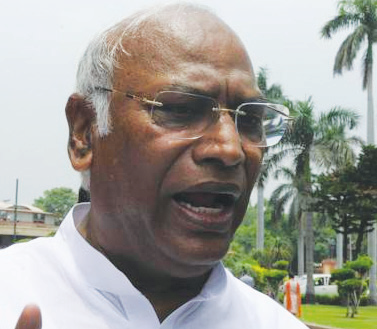
    NEW DELHI (TIP): Mallikarjun Kharge, leader of the Congress party in Lok Sabha on March 1 boycotted a meeting of the committee that will select an anti-corruption ombudsman, or Lokpal, in protest against being asked to attend as a “special invitee”.

    The selection committee is supposed to have the Prime Minister, Chief Justice of India, Lok Sabha Speaker, the opposition leader and an eminent jurist.

    Though Kharge leads the Lok Sabha’s largest opposition party, he is not the designated leader of the opposition since his party falls short of the minimum number required to claim that post.

    In a strongly worded letter to the Prime Minister, Kharge said he “respectfully denied” the invite as the process was being reduced to “political pretence”.

    Kharge charged that there was a concerted effort by the Union government to exclude the independent voice of the opposition from the Lokpal selection process.

    “A perusal simplicitor of the Lok Pal Act, 2013; its intent and objective reflects that Leader ‘of Opposition’ cannot be substituted as a Special Invitee’. It is a matter of surprise that your government is choosing to adopt this route as a mere paper formality rather than seek any meaningful and constructive participation,” Kharge said in the letter.

    The Lokpal and Lokayuktas Act was passed in 2013 to constitute a statutory body to inquire into allegations of corruption against public functionaries.

    “The Select Committee of Parliament had put its seal of approval on the amending bill, yet the government has failed to introduce and pass it. This amending bill continues to languish in cold storage for want to appropriate intent, commitment and objectivity on part of the government,” Kharge said in the letter.

    A party that lays claim to the leader of opposition post in Lok Sabha must have at least 10% of its 545 seats. Congress, which won 44 seats in the 2014 general election, currently has 48 seats.

    The meeting of the selection panel took place on Thursday evening at the official residence of the Prime Minister.

    “At the outset, let me state on behalf of myself, my party and the entire opposition that the ‘Special Invitee Invitation’ is a concerted effort to exclude the independent voice of the opposition altogether from the selection process of the most important anticorruption watchdog,” Kharge wrote in the letter to Modi.

  • INX Media case: Karti Chidambaram sent to five-day CBI custody

    INX Media case: Karti Chidambaram sent to five-day CBI custody

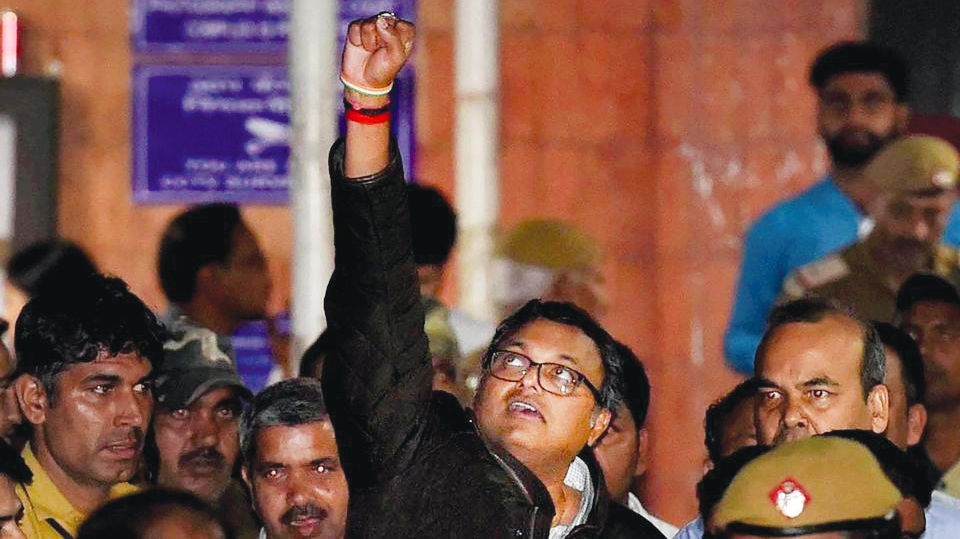
    NEW DELHI (TIP): Karti Chidambaram, arrested in the INX Media case, was on March 1 remanded to five days of CBI custody by a Delhi court.

    Special Judge Sunil Rana extended Karti’s custody till March 6 after the CBI contended that there were “very shocking evidences” of what he has done when he went abroad and alleging “when he went abroad, he closed bank accounts in which funds were received”.

    Karti was produced before the court on expiry of one-day CBI custody amidst the presence of his parents P Chidambaram and Nalini Chidambaram, both senior advocates, and were seen talking to him.

    Additional Solicitor General Tushar Mehta, appearing for CBI, maintained that this was “not a case of political vendetta” and the investigation was going on in accordance with Article 21 of the Constitution.

    “There are very shocking evidences of what Karti did when he went abroad,” he said, adding that “when he went abroad, he closed bank accounts in which funds were received”.

    Even though Karti did not complain of any uneasiness during his regular medical check up yesterday, doctors at Safdarjung Hospital last night sent him to cardiac care unit and he was brought to CBI office only in the morning.

    Due to his hospitalisation, the CBI’s one-day custody was virtually wasted as it got Karti’s custody only at 7:30 pm and he returned from the hospital this morning, he said.

    Senior advocate Abhishek Mani Singhvi, who is leading a team of lawyers for Karti, contended that in connection with the May 2017 FIR, CBI has spent roughly 22 hours with Karti in August last year and no fresh summons was issued to him after August 2017 till date, which shows the agency has nothing more to ask him.

    “The only way of establishing noncooperation is to issue summons. You never tested my non-cooperation.

    Sudden arrest after six months. Its bizarre, I am arrested as I stepped out of plane.

    “There is not an iota of evidence against Karti. He is being arrested despite complying with court orders repeatedly.” he said.

    Singhvi asked if Karti has done something illegal while being abroad, why didn’t CBI file a contempt petition before the court which allowed him to travel abroad.

    The CBI said that in May 2007, first FIPB approval was given to INX Media and in April 2008, this reference was made in the Finance Ministry.

    From June 2008 onwards, the payment of the bribe money was started. The second FIPB approval was given on November 2, 2008. We are investigating whether the April 2008 reference was a “pressure technique”, the CBI contended.

    “We have emails and invoices indicating money was given to Advantage Strategic Consultancy Private Limited (ASCPL), which is related to Karti, around the time period when INX Media received favours.

    “There is substantial evidence with the agency which needs to be confronted with Karti. Three mobile phones have been recovered from him which need to be examined. 14 days is the minimum time required to keep him in custody,” Mehta contended.

    Karti was arrested yesterday at Chennai Airport on his return from the United Kingdom in connection with the FIR lodged on May 15 last year alleging irregularities in the Foreign Investment Promotion Board (FIPB) clearance to INX Media for receiving overseas funds to the tune of Rs 305 crore in 2007 when P Chidambaram was the union finance minister.

    Source: PTI

  • New York banking regulator seeks Kushner Cos loan details

    New York banking regulator seeks Kushner Cos loan details

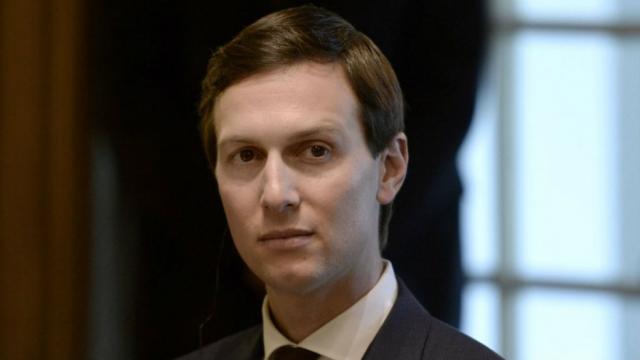
    NEW YORK (TIP): New York state has asked three banks to supply information about their relationships with the real estate business of Jared Kushner, a senior White House adviser and President Donald Trump’s son-in-law, a source said on Thursday, March 1.

    Maria Vullo, Superintendent of the Department of Financial Services (DFS), sent letters last week to Deutsche Bank, Signature Bank and New York Community Bank asking for details on their financial arrangements as well as loans made to or sought by Kushner Companies, the source told AFP.

    The lenders were given until March 5 to respond.

    The DFS has refused to comment on the matter, as has Deutsche Bank.

    But Kushner Companies said the inquiries were politically motivated and amounted to harassment.

    “We have not received a copy of any letter from the New York State Department of Financial Services,” a spokesman said.

    “Our company is a multi-billion enterprise that is extremely financially strong. Prior to our CEO voluntarily resigning to serve our country, we never had any type of inquiries.

    “These types of inquiries appear to be harassment solely for political reasons.”  Also, The New York Times reported Kushner Companies received major loans from Apollo Global Management, one of the world’s largest private equity firms, and Citigroup, shortly after Kushner held White House meetings with representatives from the two companies.

    The paper quoted Don Fox, the former acting director of the Office of Government Ethics during the Obama administration, as saying the loans raised questions about the appearance of conflicts of interest.

    Kushner met Joshua Harris, a founder of Apollo, multiple times over the course of 2017 and even discussed a potential White House position which never materialized, the paper said.

    In November 2017, the firm loaned Kushner Companies USD 184 million—triple the size of its average property loan.

    He also met Citigroup’s chief executive in the spring of 2017, Michael L Corbat, shortly before Kushner Companies received a USD 325 million loan from the firm, the Times reported.

    The White House referred questions to Kushner’s lawyer, Abbe Lowell, whom the paper said did not dispute that the meetings took place but denied any impropriety.

    Kushner, who is married to the president’s daughter Ivanka Trump, has been a key figure in the administration of his father-in-law, entrusted among other things with finding a peace deal between Israelis and Palestinians.

    A Harvard graduate with a law degree from New York University, Kushner took the reins of his family business before announcing in January 2017 — just ahead of his appointment to the Trump administration—that he was stepping down from his management role.

    While Jared Kushner voluntarily left high-level positions in more than 200 entities related to his family’s real estate empire, he still retains shares in most of these companies from which he is likely able to derive income, according to documents published by the White House in April 2017.

    It is not the first time Kushner’s business interests, which include real estate assets in the states of New York and New Jersey, have been in the spotlight.

    In May 2017, the company was forced to apologize for mentioning Jared Kushner during a presentation of one of its projects to a group of Chinese investors, in a possible breach of conflict of interest rules.

    (Source AFP)

  • Jared Kushner loses “Top Secret” security clearance: report

    Jared Kushner loses “Top Secret” security clearance: report

    The new security clearance level will restrict Kushner’s access to top secret intelligence

    WASHINGTON (TIP): Jared Kushner, son-in-law to President Donald Trump, is one of the many White House aides to have his security clearance downgraded, according to Politico. Kushner, along with other aides, received the news via a memo on Friday, Feb 23. The downgraded security clearance level will restrict access to highly classified intelligence, in contrast to the access Kushner enjoyed while operating under the highest interim security clearance – Top Secret/SCI-level.

    Concerns around interim security clearances surfaced after White House aide Rob Porter resigned due to domestic abuse allegations. Porter was also operating under an interim security clearance.

    Many insiders and pundits scratched their heads as to the reasoning behind Kushner receiving top secret security clearance in the first place. Indeed, Kushner’s background is in real estate and business; he has no previous government nor foreign policy experience. Democrats spoke of suspending his clearance back in 2017, after news leaked that Kushner omitted details of his meetings with Russians on his security clearance application.

    On Feb. 16, Chief of Staff John Kelly wrote a five-page memo addressing ongoing security clearance concerns regarding White House staff, in addition to ordering actions that would impact those operating under interim security clearances. In this memo, Kelly decreed that those with interim security clearances whose background investigations had been ongoing since June 1 should see those clearances revoked on Feb. 23. However, it was unclear how this would impact Kushner — especially since his father-in-law, President Donald Trump, had the power to grant Kushner a permanent clearance.

    Many suspected that the notoriously clannish president would intervene on behalf of his son-in-law. Yet Trump told reporters on Friday, according to Politico, that he would leave the fate of Kushner’s security clearance in the hands of Kelly.

    “I will let General Kelly make that decision,” Trump said. “I have no doubt he’ll make the right decision.”

    While Kelly did not sign the memo that was released on Friday that informed aides about the security clearance downgrades, Kelly’s previous memo from Feb. 16 was likely the trigger for the downgrades.

    The White House has declined to comment on Kushner’s security clearance; White House press secretary Sarah Huckabee Sanders brushed past the issue when speaking to reporters on Tuesday.

    “We actually haven’t commented on Jared’s issue indicated, but we have commented on his ability to do his job. Which, he’s a valued member of the team and he will continue to do the important work that he’s been doing since he’s started in the administration,” she told reporters.

    Kushner’s attorney Abbe Lowell told Politico in a statement the changes would “not affect Mr. Kushner’s ability to continue to do the very important work he has been assigned by the president.”

    However, others saw that as wishful thinking. Quoting exclusive sources, CNN reported:

    “Republican sources close to the White House said the clearance downgrade could undercut Kushner’s ability to influence policy decision-making in the West Wing. Without a top-level clearance, Kushner will be unable to attend meetings where the most sensitive national secrets are discussed.”

    Since Porter’s dismissal, Kushner’s security clearance has been scrutinized — even by some Trump loyalists.

    Fox News host Shepard Smith told viewers last week that there was “a Kushner problem at the White House.”

    “Jared Kushner submitted his application – his ‘SF-86’ as they call it – and did not include 100 contacts with foreigners, and then later had to go back and include them. But then later he did not include the meeting at Trump Tower with the Russian lawyer and the Russian translator. He didn’t include that. So that was another amendment to this thing,” Smith explained. “And that took this past June.”

    Officials can be imprisoned for omissions on a security clearance, as Salon previously reported.

    Kushner has not been able to receive a full clearance in part because of special counsel Robert Mueller’s probe into the dealings of Trump and his associates.

    (Source: Salon)

  • Deja vu in Pakistan

    Deja vu in Pakistan

    By Sharat Sabharwal
    The run-up to the 2018 election bears an eerie similarity to the events preceding the 2013 poll. The actors seeking to destroy Nawaz Sharif’s political future are the same, with the addition of the SC and Hafiz Saeed.
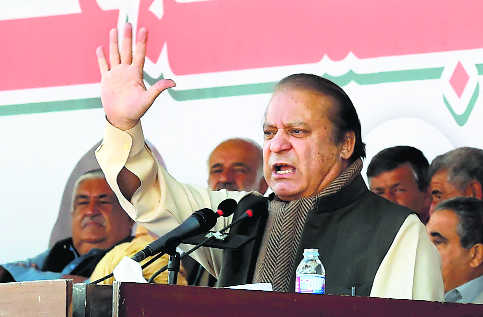
    Disqualified from holding the office of Prime Minister last year by the Supreme Court, Nawaz Sharif has now been barred by the same court from being the head of his party, PML (N). Ostensibly a matter of corruption in high places, his disqualification has a strong subtext of civil-military tussle in Pakistan.

    As the 2013 Pakistan election approached, the security establishment was concerned at the prospect of a Nawaz victory because of his popularity in Punjab that carries more than 50 per cent seats in the National Assembly. The anxiety stemmed from Nawaz’s tense relationship with his army chiefs during two tenures as Prime Minister, his bitterness against the army at his treatment after the 1999 coup and repeatedly professed desire to promote better relations with India. In 2011, Imran Khan, whose Pakistan Tehreek-e-Insaf had failed to make a mark since its founding in 1996, appeared on the scene out of nowhere to relaunch his political career by opposing American drone strikes in Pakistani territory and corruption in the ruling parties. The then DG, ISI, was reported to be the architect of his sudden rise, a move that subsequent events would prove to be farsighted in filling the gap left by the reluctance of the two major parties — PPP and PML (N) — wiser with the experience of the past, to collaborate with the army against each other. Closer to the election, Tahir ul Qadri, a Canada based cleric of Pakistan origin, landed up to push for its postponement. However, these machinations failed, and Nawaz won a third term with a comfortable majority in the election held in May, 2013.

    In this backdrop, the civil-military equation under Nawaz was expected to be anything but smooth. Differences emerged quickly on Musharraf’s trial, policy on terrorism and relations with India. The army managed to secure Musharraf’s exit from Pakistan, prevailed against Nawaz’s misplaced policy of dialogue with the anti-Pak terror groups and systematically undermined his agenda to improve relations with India.

    Imran’s agitation against the alleged rigging of the 2013 election, which kept Nawaz on the back foot vis a vis the army, came a cropper when a judicial commission ruled against him in July 2015. However, the linkage of some offshore companies to the Prime Minister’s family, revealed in the Panama papers, gave Imran and his mentors another opportunity to target Nawaz. In July 2017, the Supreme Court disqualified Nawaz from holding public office. Significantly, the decision was based on the report of a six-member joint investigation team, constituted by the court that included a representative each of the ISI and Military Intelligence. Since these highly disciplined individuals would not have approved the report without a nod from the army leadership, the damning report, combined with the track record of the Pakistan judiciary kowtowing to military dictators, had left little doubt about the fate of the Prime Minister and was an indicator of provenance of the decision to oust him.

    The run-up to the 2018 election bears an eerie similarity to the events preceding the 2013 election. The actors seeking to destroy Nawaz’s political future are the same, with the addition of the Supreme Court and Pakistan’s terror brand ambassador, Hafiz Saeed. The army would be loath to see his return to power. The PPP has sought to exploit Nawaz’s misfortunes for political gains in Punjab, but being an experienced party, would not go the extent of playing the security establishment’s game. That is not true of Imran. Egged on by his ambition, he is blind to the army’s design. Tahir ul Qadri is again around. The security establishment aims to deprive Nawaz of another victory by undermining him in Punjab. Hafiz Saeed’s services have also been enlisted for good measure by releasing him from preventive detention. Though the Election Commission has not recognized his party, Milli Muslim League, because of opposition of the PML (N) government, he could be expected to put up independent candidates to erode Nawaz’s vote.

    Nawaz and his children face charges in an accountability court, with the sword of conviction and imprisonment hanging over their head. Besides depriving him of the presidency of his party, all decisions taken by him in that capacity since July 2017 have also been declared null and void. However, counting on his popularity in Punjab, which he hopes to boost by playing the victim card, Nawaz refuses to desert the field. Attempts to cause any major fissures in his party and wean away his brother, Shahbaz Sharif, have failed so far. Nawaz, being the vote getter, is indispensable to the party. An efficient technocrat, Shahbaz complements Nawaz, but cannot replace him. Deprived of the presidency of PML (N), Nawaz threatens to lead it in the election in his individual capacity in the hope of ruling through a proxy, as he is doing now. If jailed, his loyalists could fight in his name. He thus dares the army to either go the whole hog and stage a coup, inviting international opprobrium, or face the prospect of seeing him rule, even if by proxy.

    The selective accountability that has claimed Nawaz’s head not only implies the departure of an individual from office, but can also target every politician, capable of winning popular mandate and consequently inclined to chart out a course independent of the worldview of the army. Nawaz, after all, was disqualified as per a Zia era constitutional amendment requiring elected representatives to be ‘sadiq’ (truthful) and ‘ameen’ (righteous), subjective criteria that can be used by the Deep State to throw out anyone not in agreement with them. The civil-military imbalance and the resulting dysfunctionality of the state that have become a curse for Pakistan and the region will get redressed essentially by opposition within Pakistan to the stranglehold of their army, with external pressure at best playing a supportive role. Therefore, though a matter internal to Pakistan, the ongoing tussle and its outcome should be of interest to us.

    (The author is India’s former High Commissioner to Pakistan)

  • Primary task at Cong plenary: Rescuing the polity from the creeping authoritarianism

    Primary task at Cong plenary: Rescuing the polity from the creeping authoritarianism

    By Harish Khare
    It is already a matter of considerable dismay that otherwise decent officials, educated aides and learned advisers have acquiesced in the organized worship of a man who grandiloquently pretends to know profoundly about everything, from gaming the examinations to disrupting the economy, even without the benefit of a Harvard education, and making a virtue of “hard work”. From senior most ministers to junior joint secretary, all find themselves subscribing to this “daddy knows best” syndrome, very much reminiscent of the Narayan Datt Tiwari hymns to Sanjay Gandhi during the Emergency days. 
    History of the last hundred years has taught us one simple lesson:  personality cults do introduce undesirable imbalances in the body politic. Personality cult produces very little democratic good; it always ends up badly, even disastrously.      
     The greatest danger we face is Narendra Modi is using all the accruements of democracy to de-legitimize democracy’s good practices and values, and, to turn all its bad habits to  make democratic arrangements look inadequate and unequal to the task of restoration of our national glory.

    The top Congress leaders are due to gather, in a fortnight from now, for their party’s plenary session. Apart from consecrating Rahul Gandhi’s election as the party president, the gathering will need to undertake far more serious a task: they will have to perform a duty to start a conversation with the nation and to take the citizens into confidence on how the entire political system is groaning under the weight of one man — his whims, his fancies, his attitudes and his limitations. The Congress and its leaders need to make a case before the nation as to why the current state of affairs is neither desirable nor acceptable. At the end of this three-day gathering, the Congress should have given the country a good enough reason to look beyond Narendra Modi, as and when the Lok Sabha elections get organized.

    Since it will be a political gathering, there will be plenty of partisanship and mouthfuls of philippics against Narendra Modi, the BJP and the Sangh Parivar. But it would be a waste of time and resources if the Congressmen confine themselves to abuses; it will be an even greater farce and greater shame if the Congressmen were to engage in their familiar weakness for sycophancy. Instead, they have to behave and speak as responsible and reasonable keepers of the best of the constitutional values. As those who claim to be committed to the Idea of India and who subscribe to the Nehruvian virtues, the Congressmen have a sober and serious task at their hands:  a democratic obligation to talk to fellow-citizens as to how we are all mindlessly getting sucked into the small-time viciousness of a small-time man; how as a nation and as a society we are getting infected with pettiness and small-mindedness.  More than that, the Congressmen need to convince the nation that they have the legacy, the leadership, and the experience to rescue us all from this quagmire of petty vindictiveness being palmed off as a new normal.

    We remain — for now — a constitutional democracy; but, all our constitutional arrangements stand diluted and all-out constitutional functionaries — be it the President of India or the Union Home Minister or External Affairs Minister —have been made to feel diminished. The Cabinet system of government has been reduced to a joke that no longer invokes a laugh. The country needs to be told that the fine architecture of checks and balances is in serious jeopardy.

    It is for the Congressmen to enlighten the citizens how all the key relationships in our national scheme of things are being  revised and reduced: first,  the majority-minority equation has been systematically reshaped and the secular commitments stand eroded; second, the Centre-States federal equation has tipped dangerously in favor of New Delhi and the state governments  are being reduced to whining tots; third, the State-Citizen balance has changed  drastically, an all-intrusive Aadhaar arrangement is demanding compliance and surrender of privacy, and, we are beginning to look like a misshapen  authoritarian setup; then, we have the creeping distortions  in the Civil-Army relationship, with the Army in danger of losing its institutional rectitude; and, lastly, the virtual governmental takeover of the electronic media. All these key equations are off the keel. And, our citizens need to be told how these institutional distortions are unknowingly putting the nation on a road to a totalitarian-lite experiment.

    When the Opposition fails to impart a democratic vibrancy to the polity, all other institutions of restraint — like the judiciary, the Election Commission — too feel discouraged; and, independent regulatory authorities like the Reserve Bank of India feel inclined to give in to the government’s unreasonable demands. The Congress, as the principal opposition party, has an obligation to create conditions for robust counterpoises.

    If nothing else, the country needs to be repeatedly educated about the whimsicality that has dictated the (mis) management of the economy, and how all the great projects — like Make in India — stand in tatters; and, more importantly, whether the Congress has an answer to jobless growth and whether the Congressmen can help the country find its way out of a deepening agrarian crisis.

    Notwithstanding the loud chanting of deshbhakti, and balidaan mantras, it is the Opposition’s task to inform the country that we stand isolated in our own backyard because we have needlessly and arrogantly alienated all our South Asian neighbors; and, the nation needs to be educated that India today is less safe than it was five years ago.  The Congress has to introduce the citizens to a new narrative that takes us away from this excessive preoccupation with national security and an unwarranted and unworkable flexing of muscles at home and abroad. We are losing our national self-assurance without making smaller nations in the neighborhood respect us.

    Then, there is a personality overload. A personality cult may have been “normalized” in New Delhi but it remains a personality cult, with all its unhealthy demands on men and institutions. It is already a matter of considerable dismay that otherwise decent officials, educated aides and learned advisers  have acquiesced in the organized worship of a man who grandiloquently pretends to know profoundly about everything, from gaming the examinations to disrupting the economy, even without the benefit of a Harvard education, and making a virtue of “hard work”. From senior most ministers to junior joint secretary, all find themselves subscribing to this “daddy knows best” syndrome, very much reminiscent of the Narayan Datt Tiwari hymns to Sanjay Gandhi during the Emergency days.

    History of the last hundred years has taught us one simple lesson:  personality cults do introduce undesirable imbalances in the body politic. Personality cult produces very little democratic good; it always ends up badly, even disastrously.

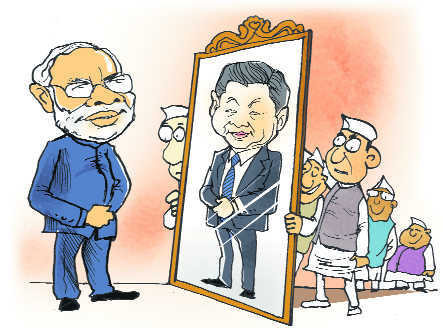
    The greatest danger we face is Narendra Modi is using all the accruements of democracy to de-legitimize democracy’s good practices and values, and, to turn all its bad habits to make democratic arrangements look inadequate and unequal to the task of restoration of our national glory.  Those associated with national security are already muttering that there-is-too-much-democracy claptrap. The next pit-stop in this journey would be to look temptingly at the Xi Jinping kind of authoritarian option.

    (The author is editor-in- chief of Tribune group of newspapers)

  • President’s longest-serving and closest aide Hope Hicks quits as WH communications chief

    President’s longest-serving and closest aide Hope Hicks quits as WH communications chief

    Hope Hicks’s first association with the Trump family was working with President Trump’s eldest daughter, Ivanka, on her personal apparel and licensing brand about six years ago.
     Hicks had no political experience when she joined Trump’s tumultuous campaign for the White House. She initially served as a press secretary within the White House, before taking on the role of communications director
    Hicks led strategic messaging for administration priorities such as the historic passage of tax reform and worked with Press Secretary Sarah Sanders to stabilize the press and communications teams after initial phases of transition

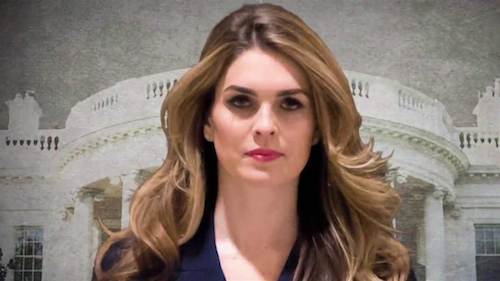
    WASHINGTON (TIP): Hope Hicks, one of Donald Trump’s longest-serving and trusted aides, on March 1, announced her resignation as the powerful communications director, in a major blow to the US President and the embattled White House amidst the intensifying inquiry into alleged Russian meddling in the 2016 election.

    The 29-year-old former model, though considered a political novice, was known as one of the few aides of Trump who understood his style and could influence his views. Her surprise resignation came a day after she testified before the House Intelligence Committee she testified for eight hours on allegations related to the Russian interference during the presidential campaign.

    During her testimony, Hicks told the panel that in her job, she had occasionally been required to tell white lies but had never lied about anything connected to the investigation into Russia’s interference in the election, US media reported.

    Although Hicks maintained an unusually low profile over the past three years, she recently attracted scrutiny after Special Counsel Robert Mueller escalated his probe into potential collusion between the Trump campaign and Russia.

    She is leaving the White House after serving Trump for three years in various capacities. This included being his campaign spokesperson and Director of Strategic Communication when Trump was sworn in as the President.

    “There are no words to adequately express my gratitude to President Trump,” Hicks said in a statement. President Trump praised Hicks for her outstanding work. The White House did not announce the exact day of her departure but said it could be sometime in the next few weeks.

    In a little over 13 months of the Trump administration, Hicks is the fourth individual to resign as the White House Director of Communications. The other three being Sean Spicer, Mike Dubke and Anthony Scaramucci.

    (With inputs from PTI)

  • Kamal Haasan launches political party

    Kamal Haasan launches political party

    CHENNAI (TIP): Kamal Haasan’s telegenic charm was on full display on Feb 21 night when he told a rapturous crowd of supporters in Madurai that his new party would be called the Makkal Needhi Maiam.

    The Tamil words roughly translate into People’s Justice Party, or People’s Justice Front, although technically, “maiam” means centre.

    “The newly founded Makkal Needhi Miram is your party. It’s here to stay, and to make the change we all aspire for. Guide us to serve you,” Kamal Haasan wrote on Twitter, even as he was joined on stage in Madurai by Delhi Chief Minister Arvind Kejriwal and the Aam Aadmi Party’s Tamil Nadu unit chief, Somnath Bharti.

    He explained that people had asked him if he was on the Right or the Left. Maiam means “centre,” and that’s why he named his party Makkal Needhi Maiam, he said.

    “Six hands is the representation of the six states and the star in the centre is you,” he added.

    Earlier, Kamal met former president APJ Abdul Kalam’s elder brother and other family members at the residence here.

    “Greatness can come from simple beginnings,” he said.

    “Actually it will come only from simplicity. Glad to start my journey from a great man’s simple abode,” the actor added in a tweet.

  • Congress will not name CM candidate before Rajasthan polls

    Congress will not name CM candidate before Rajasthan polls

    NEW DELHI (TIP): The Congress will not declare its chief ministerial face ahead of the Rajasthan Assembly polls, party general secretary in-charge for the state Avinash Pande said on Thursday, stressing that it has been the party’s “tradition”.

    He said the party’s Rajasthan leaders will put on a united performance to ensure victory “as they did” during the recently-held bypolls in Ajmer and Alwar parliamentary seats and Mandalgarh assembly segment in the state.

    “It has been the Congress tradition that it never declares a CM face, barring exceptional cases, ahead of assembly polls.

    The high command decides the chief minister after discussing it with elected MLAs. This tradition will be followed in Rajasthan too,” Pande said.

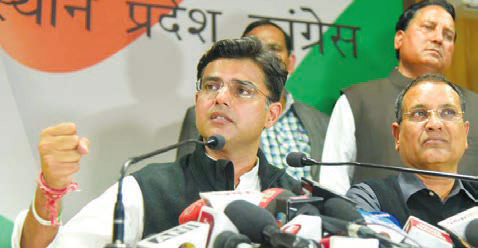
    Earlier in the day, Congress president Rahul Gandhi held a meeting with Rajasthan Congress leaders, including former Chief Minister Ashok Gehlot, state unit chief Sachin Pilot and others on the party’s activities for the next six months.

    Pande maintained that the leadership issue in connection with the state assembly polls, scheduled to be held later this year, did not figure during the meeting.

    “We sought the final approval for the party programme for next six months (from Gandhi). All the leaders in unison assured that the programme will be implemented jointly.

    Rahul ji wished them good luck,” he added.

    Pande also said that the leaders have decided that the state unit’s ‘Mera Booth, Mera Gaurav’ programme will be implemented in all the assembly segments of the state, which goes to polls later this year.

    “Hamara hoga ek hi agenda, Congress ka jhanda (Our only agenda is to see Congress flag flies high),” Pande added.

    Asked about the meeting with Gandhi, Pilot said it was decided that the party will undertake a mass outreach programme in all the 200 assembly segments of the state. “We have now a lot of weight on our shoulders (following the success in bypolls). Expectations are very high from the Congress and we must not rest and immediately start a mass outreach programme the youth, farmers, middle class, rural areas in 200 constituencies. The meeting discussed the details of the same,” Pilot added.

    Source: PTI

  • Indian American Vandana Jhingan removed from Illinois Republican primary ballot in Illinois

    Indian American Vandana Jhingan removed from Illinois Republican primary ballot in Illinois

    Illinois (TIP): Indian American Vandana Jhingan, the Republican Hindu Coalition-backed candidate , has been removed from the official list of Republican primary ballot in Illinois’ 8th Congressional District.

    Jhingan was one of the two Indian American Republicans vying for the GOP nomination to run against the incumbent Democrat Raja Krishnamoorthi in the November election.

    Jhingan was disqualified after a constituent, Steven Anderson, filed a complaint that many signatories to her nomination were not residents of the district.

    Nonresidents, who are not registered voters, cannot be considered as signatories while filing the nomination.

    According to election general counsel, Ken Menzel who spoke to the local Daily Herald, a second complaint was also filed against the Jhingan alleging improper circulation of the petition.

    The paper said she lacked enough signatures and thus failed to make it to the official ballot.

    Jhingan, a Chicago-based journalist, is the Midwest Bureau Chief of the Indian American cable network TV Asia.

    Another Indian American candidate Jitendra Digavker is on the ballot in the Republican primary. He is a businessman and runs a successful credit card process firm based in Schaumburg, which provides processing services to all types of businesses.

    Krishnamoorthi, an attorney-turned-businessman, was elected to the US House of Representatives from the district in November 2016, defeating Republican Peter DiCianni.

  • Indian American Himesh Gandhi is seeking a fourth and final term

    Indian American Himesh Gandhi is seeking a fourth and final term

    Gandhi, a longtime community leader, promised to continue his focus on improving the lives of residents in the thriving community.

    Sugar Land TX  (TIP): Indian American Himesh Gandhi has filed for re-election to a city council in the US state of Texas.

    He is a three-term incumbent of the At-Large Position 1 post on the Sugar Land, Texas, City Council and is seeking a fourth and final term in the May 5 election.

    Gandhi, a longtime community leader, promised to continue his focus on improving the lives of residents in the thriving community.

    “Sugar Land has been my home for most of my adult life. It is a diverse, growing city where we are successfully merging cultures, ideas and values,” Gandhi told PTI.

    “I am committed to maintaining quality development and robust city services while following smart spending practices,” he said.

    Himesh, first elected in 2012 at the age of 35, was the youngest councilman to be elected in a citywide vote. He has served on numerous City Council committees and was also a member of the task force that spearheaded development of the Smart Financial Centre at Sugar Land—an iconic concert and performance hall that opened last year.

    Other successes and projects launched by the city during his previous term include the successful annexations of Greatwood and New Territory, the acquisition of a former prison site for re-development, the completion of drainage projects and the return to normal operations after the devastating effects of Hurricane Harvey.

    “As a member of City Council, I will continue to listen to my constituents and work with my fellow council members and the city staff to ensure that Sugar Land remains a premier city with a solid vision for the future,” Gandhi said.

    “Together, with our forward-looking residents, we can accomplish even more great things for this city,” he said.

    Gandhi is an attorney and shareholder with the law firm ‘Roberts Markel Weinberg Butler Hailey PC’. He is board certified in commercial real estate law by the Texas Board of Legal Specialization. He has served leading roles in numerous community organizations.

    In 2015, he was honored by the Houston Business Journal as one of the region’s 40 Under-40 young leaders.

  • Indian American first Sikh mayor of New Jersey reminds all to take security seriously post receiving death threats

    Indian American first Sikh mayor of New Jersey reminds all to take security seriously post receiving death threats

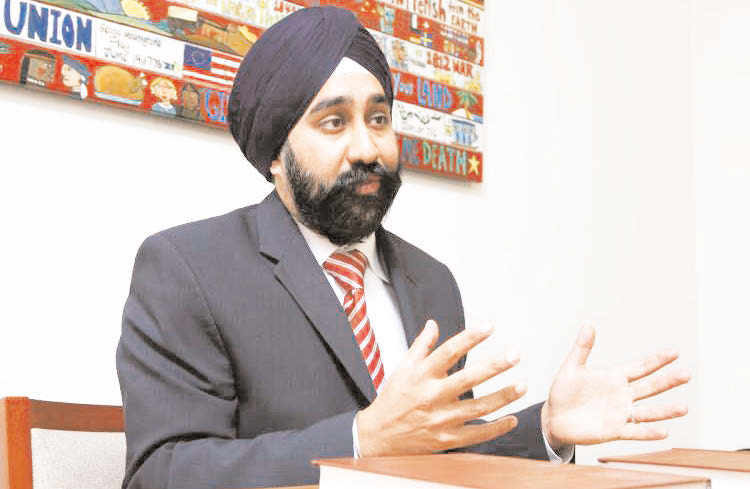
    HOUSTON, US (TIP) : Indian American Ravinder Bhalla, who became the first Sikh mayor of New Jersey’s Hoboken city, agrees to receiving death threats against him and his family recently.

    In a statement issued February 16th  afternoon following a security breach at City Hall, Mr. Bhalla said the city is working with the FBI’s Joint Terrorism Task Force to improve security at City Hall.

    “This incident, along with death threats to me and my family, is an unfortunate reminder that we need to take security seriously,” Ravinder Bhalla said, without elaborating on the threats.

    “The Joint Terrorism Task Force has evaluated City Hall, and we have been working to implement their recommendations for physical and procedural changes to improve security for all employees in the building,” he said.

    According to city spokesman Juan Melli, a man entered City Hall and told security he needed to use the restroom after going through the metal detectors.

    While Mr. Bhalla was not in his office at the time, his deputy chief of staff, Jason Freeman, observed the man throw a bag with an object in it towards the administrative assistant’s desk before running out of the office, Mr. Melli said in a statement.

    Hoboken Police Chief Kenneth Ferrante added that the department takes these matters very seriously.

    “We take incidents like these incredibly seriously and will continue working to ensure the security of the mayor and everyone who visits City Hall,” he said.

    Ravinder Bhalla became the first ever Sikh to hold office in New Jersey after stiff competition that turned ugly when he was called a “terrorist” on Twitter by a known supporter of Donald Trump.

  • Indian Origin Former Met Officer May Take Charge As Britain’s Anti-Terrorism Chief

    Indian Origin Former Met Officer May Take Charge As Britain’s Anti-Terrorism Chief

    LONDON (TIP):  A senior Indian origin metropolitan police officer is running for the charge of Britain’s anti-terrorism chief .The Scotland Yard’s National Lead for Counter Terrorism resigns next month.

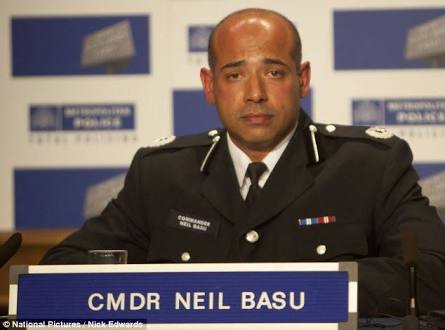
    Neil Basu, currently Metropolitan police deputy assistant commissioner and Senior National Coordinator for UK Counter Terrorism Policing, is tipped to take over one of the British policing s toughest jobs from Mark Rowley, The Sunday Times reported.

    Mr Basu, whose father is of Indian origin, is a former Met Police commander overseeing organized crime and gangs. He has specialized in anti-terrorism policing for the past three years and is currently Rowley’s deputy.

    He has been vocal about cracking down on British nationals who joined the ISIS terrorist group in Syria and Iraq.

    In a recent interview with the Combating Terrorism Centre in New York, he said that exclusion powers would be applied to about 200 of the 300 fighters in the war zone as he revealed that about half of the 850 who travelled from Britain to join ISIS had already returned and more than 100 were dead. Of the remaining 300, two-thirds would be blocked from the UK.

    Like other countries, we operate on the principle that we don’t want you back, and therefore we will deprive you of your British passport for those among these who end up coming back, we are absolutely waiting for them. That’s the bottom line, he said.

    The big threat for us now is the ideology that’s been diffused onto the internet and the calls for attacks by its followers in the West by ISIS online. The caliphate may have been defeated militarily, but it has now become a virtual network, he warned.

    Other possible candidates for the post of Britain’s anti-terror chief include Helen Ball, a Met Police assistant commissioner, and Dave Thompson, the West Midlands chief constable, from whose area numerous terrorist plots have emerged in the UK.


  • Indian American Danny Gaekwad appointed by Gov. Rick Scott to University of Central Florida Board of Trustees

    Indian American Danny Gaekwad appointed by Gov. Rick Scott to University of Central Florida Board of Trustees

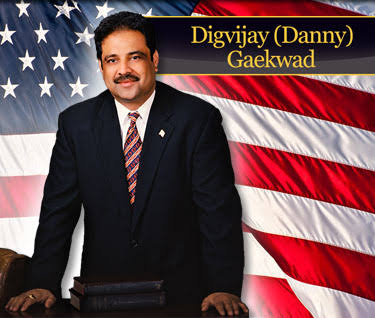
    Florida (TIP):  Indian American Danny Gaekwad has been appointed by Governor Rick Scott  to the University of Central Florida Board of Trustees. Gaekwad has been appointed for a five-year term starting February 2, 2018, through January 6, 2023. Scott announced Gaekwad’s new position with 11 other appointments on February 2.

    The twelve appointments to state boards announced by the Governor include 7 reappointments.

    Ocala, Florida,-based Digvijay “Danny” Gaekwad is a first-generation Indian American businessman. A serial entrepreneur with more than three decades of experience in setting up successful businesses, Gaekwad is the founder and CEO of NDS USA Information Technology, an IT firm, and Danny G Management that runs a chain of restaurants and hotels across Florida. He has founded businesses in diverse fields such as convenience stores, real estate, hospitality and information technology.

    Born in Baroda, Gujarat, Gaekwad has served on several boards including Enterprise Florida, Inc., Visit Florida, Florida Chamber of Commerce, Marion County Visitor and Convention Bureau, Marion County Tourism Development Council, Marion County Planning and Zoning Commissioner, Space Florida, Independence National Bank, and Taylor, Bean & Whitaker.

    A graduate in political science from Maharaja Sayajirao University of Baroda, India, Gaekwad has several accolades to his credit. Among these are Asian American Hotel Owners Association Chairman’s Award, ‘One Million Jobs’ certificate, Lion of the Year Award, Leaders Leader Award and Glorious India Chairman’s Award.

    Gaekwad lives in Ocala with his wife Manisha Gaekwad, and two sons Karan Gaekwad and Kunal Gaekwad.

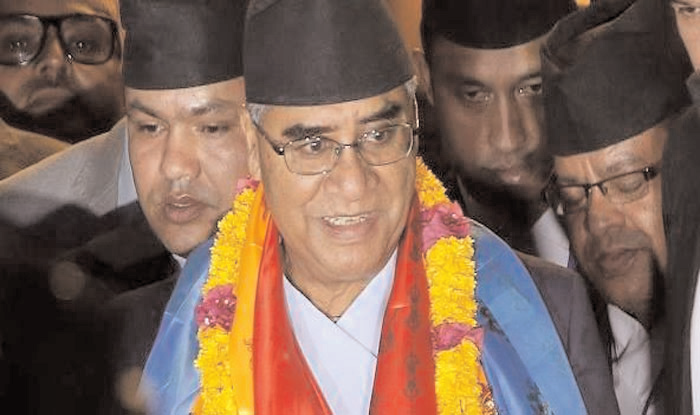
  • KP Sharma Oli sworn in as Nepal PM for second time

    KP Sharma Oli sworn in as Nepal PM for second time

    KATHMANDU (TIP): KP Sharma Oli was on Feb 15 sworn in as Nepal’s prime minister for the second time, weeks after his Left alliance with former Maoist rebels swept the historic parliamentary polls, kindling hopes for much-needed political stability in the Himalayan nation.

    President Bidya Devi Bhandari administered the oath of office and secrecy to 65-year-old Oli at a function held at President’s Office, Shital Niwas, in Maharajgunj. He is the 41st prime minister of Nepal.

    Known for his pro-China stance, Oli had served as the country’s prime minister from October 11, 2015 to August 3, 2016.

    His PM candidacy was supported by the UCPN-Maoists, Rastriya Prajatantra Party Nepal, and Madhesi Rights Forum-Democratic along with 13 other small parties.

    Earlier, former prime minister and Nepali Congress president Sher Bahadur Deuba had addressed the nation and submitted his resignation to the president.

    Deuba was elected as the 40th Prime Minister on June 6 with the support from CPN (Maoist Centre) which is now a part of Left alliance and opting for merger with CPN-UML.

    “The elections of three tiers of government have been successfully held under my leadership setting the foundation to long transition,” Deuba said in the television address.

    The Left alliance of the CPN-UML, led by Oli and CPN-Maoist Centre, led by Prachanda, secured almost two third majority in the Parliament during the parliamentary elections.

    Oli’s party CPN-UML secured 121 seats in the 275-member Parliament and became the largest party in the Parliament. The Nepali Congress has 63 seats while the CPN-Maoist Centre has 53 seats.

    The total strength of the CPN-UML and CPN-Maoist Centre was 174, sufficient to form a majority government at the Centre.

    The Madhesi parties – Rastriya Janta Party Nepal has got 17 seats and Federal Socialist Party Nepal secured 16 seats in the parliamentary elections.

    The elections were seen as the final step in Nepal’s transition to a federal democracy following a decade-long civil war till 2006 that claimed more than 16,000 lives.

    In 2015, when Nepal adopted a new Constitution that split it into seven states, dozens of people were killed in ethnic clashes over territory and rights.

    Following the adoption of the new Constitution, the ethnic Madhesi group, mostly of Indian-origin, protested for months, saying they were not getting enough territory in one of the provinces and were also facing discrimination.

    The polls are said to be a step forward in cementing democracy and providing political stability to Nepal, which has seen 10 prime ministers in as many years.

    Oli had served as deputy prime minister during the then interim government led by Girija Prasad Koirala in 2006 after the successful conclusion of the second Peoples Movement. He was elected as a member of Parliament in the House of Representatives for the first time from Jhapa district in 1991.

    He had also served as minister of home affairs in 1994-1995. He was re-elected to the House of Representatives from Jhapa electorate in 1999.

    (PTI)

  • Appeals court declares Trump travel ban unconstitutional

    Appeals court declares Trump travel ban unconstitutional

    4th U.S. Circuit Court of Appeals in Richmond concluded that it ‘second-guesses our nation’s dedication to religious freedom and tolerance’

    RICHMOND (TIP): President Donald Trump’s latest travel ban on travelers from six largely Muslim countries is “unconstitutionally tainted with animus toward Islam,” a federal appeals court ruled on Thursday, Feb 15, delivering another blow to the policy.

    In a 9-4 vote, the 4th U.S. Circuit Court of Appeals in Richmond said it examined statements made by Mr. Trump and other administration officials, as well as the presidential proclamation imposing the ban, and concluded that it “second-guesses our nation’s dedication to religious freedom and tolerance”.

    The 4th Circuit is the second federal appeals court to rule against the ban. In December, the 9th U.S. Circuit Court of Appeals found that Mr. Trump exceeded the scope of his authority with the latest ban.

    The 4th Circuit court upheld a ruling by a federal judge in Maryland who issued an injunction barring enforcement of the ban against people from Chad, Iran, Libya, Somalia, Syria and Yemen who have bona fide relationships with people in the U.S.

    The U.S. Supreme Court has already agreed to hear the travel ban case in April. In December, the high court said the ban could be fully enforced while appeals made their way through the courts.

    In its ruling, the 4th Circuit said the ban has a “much broader deleterious effect” than banning certain foreign nationals. The ban, the court said, “denies the possibility of a complete, intact family to tens of thousands of Americans”.

    “On a fundamental level, the Proclamation second-guesses our nation’s dedication to religious freedom and tolerance,” Chief Justice Roger Gregory wrote for the court in the majority opinion.

    American Civil Liberties Union Deputy Legal Director Cecillia Wang, who argued the case before the court, said she was not surprised by the ruling.

    “The Constitution prohibits government actions hostile to a religion,” Ms. Wang said.

    The International Refugee Assistance Project, one of the groups challenging the ban, said the policy has had a “devastating impact” on U.S. families waiting to reunite with their family members and foreign students seeking educational opportunities in the U.S.

    “Today’s ruling affirms that they are being unjustly targeted by this ban,” said Mariko Hirose, the group’s litigation director.

    The administration has said the ban is a legitimate measure to protect national security.

    During a hearing before the 4th Circuit in December, Deputy U.S. Assistant Attorney General Hashim Mooppan told the judges that the President has broad authority to bar foreign nationals he believes would be detrimental to the interests of the United States. He said the latest restrictions were the product of a global, multiagency review that found the specified countries do not share enough security-related information with the U.S. He said the ban is designed to protect the nation from terrorism and other threats.

    In a dissenting opinion, Judge Paul Niemeyer said the 4th Circuit’s ruling was an attempt to “second-guess U.S. foreign policy, in particular, the president’s discretionary decisions on immigration, implicating matters of national security”.

    Mr. Niemeyer said the majority should have based its decision on the text of the presidential proclamation alone and not considered statements Trump made on the campaign trial and after he became president.

    “At bottom, the danger of this new rule is that it will enable a court to justify its decision to strike down any executive action with which it disagrees. It need only find one statement that contradicts the official reasons given for a subsequent executive action and thereby pronounce that the official reasons were a pretext,” Mr. Niemeyer wrote.

    The ruling was the second time the 4th Circuit has rejected a travel ban. In May, the court cited Mr. Trump’s remarks on Muslim travelers while rejecting an earlier version of the ban, finding it “drips with religious intolerance, animus and discrimination”.

    Mr. Trump announced his initial travel ban on citizens of certain Muslim-majority nations shortly after taking office in January, bringing havoc and protests to airports around the United States. A federal judge in Seattle soon blocked it, and courts since then have wrestled with the restrictions as the administration has rewritten them.

    The latest version blocks travelers from the listed countries to varying degrees, allowing for students from some, while blocking other business travelers and tourists, and allowing for admissions on a case-by-case basis.

    (Source: AP)

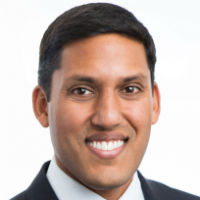
  • Indian American Rockefeller Foundation president to visit India to help the government electrify villages across the country

    Indian American Rockefeller Foundation president to visit India to help the government electrify villages across the country

    Cambridge, US (TIP) : Rajiv J Shah, the Indian American president of the Rockefeller Foundation, will visit India on February 12th  as part of the US-based philanthropic organization’s efforts to help the government electrify villages across the country.

    The Rockefeller Foundation is one of America’s largest and most influential philanthropies which commits USD 200 million every year towards social and philanthropic causes globally, including India.

    “We have been working on what we think is the next big challenge to end poverty in India and that is bringing power and energy to rural communities that otherwise don’t have sufficient access to power,” Shah, 44, told PTI ahead of his maiden India visit in this capacity.

    Formerly the head of USAID under former US president Barack Obama, Shah is the first-ever Indian American to serve as the president of the foundation which played a key role in India’s green revolution in the 1960s.

    “We have an effort called Smart Power India that is helping to electrify villages across the country. That works with the government and private entrepreneurs who are bringing a solar mini grids and other new technologies to help families move themselves out of poverty by using electricity,” he said.

    For several years, the foundation and its non-profit subsidiary Smart Power India have worked with a network of partners and private energy service companies to build rural mini-grids that serve off-grid populations for both domestic and productive uses.

    As of now, more than 130 mini-grids are energizing more than 5,000 enterprises in India’s most energy-starved states, transforming the lives of over 45,000 Indians.

    It’s the largest cohort of mini-grids in India and by some counts the world.

    He said the purpose of his India visit from February 12 to 15 is to review progress in the foundation’s effort in this regard and advance partnerships with the government and other funders to “ensure that we can work to really fulfil Prime Minister (Narendra) Modi’s vision to end energy poverty” in India.

    “And to make sure every single Indian family has access to power and electricity and therefore the ability to connect to a modern global economy,” Shah said.

    He is also planning to meet and work with new philanthropists across the country who would like to partner with the foundation to extend the reach of their own philanthropic effort.

    While in India, Shah will focus on engaging with the government, multilateral, corporate and philanthropists.

    The overarching theme of his visit will be to underline the power of partnerships and collaboration in helping achieve India’s development goals across various areas – from health, to energy access, to ‘Digital India’.

    His India visit will focus on ‘Power of Partnerships’.

    The Rockefeller Foundation has had a tremendous history in India for many years working to improve the lives of vulnerable children and families, he said.

    “We were a big part in helping India achieve green revolution that helped to dramatically improve food production and save millions of people from hunger and starvation many decades ago,” Shah said.

    During his four-day visit, he would travel to New Delhi, Bengaluru and Mumbai, and meet key government and political leaders and other significant philanthropists to discuss areas of interest such as energy, health, urban resilience and co- investment.

    He is scheduled to deliver a keynote address at the India Energy Access Summit where he will be making a couple of financial announcements in the energy sector and renewing the foundation’s commitment to working with the government’s Power for All agenda.

    Shah said the first thing that India needs to do is to set a very high ambition which also requires a very significant investment and participation from the government as well as the private sectors.

    “So, we hope that the State and the federal government in India will expand their approach to public-private partnerships and accelerate a collaboration with us and others in order to reach more families and difficult to reach areas with power, electricity,” he said.

    Observing that India is making tremendous progress in bringing new power generation to the grid system, Shah said while the foundation’s work right now focuses on community that don’t have access to the grid, he hopes India will expand its grid and transmission system more aggressively into lower income communities.

    India has dramatically increased the contribution of wind power and solar power to its total power sourcing, he said.

    In India last spring, wholesale solar power prices reached a record low, dropping 40 per cent in a year to only 2.62 Rs per kilowatt hour.

    Electricity can now be so abundant, low-cost and reliable that every person on the Earth should be able to access and consume as much as they need, he said, adding that it has also increased the use of coal.

    “When you look at it, the cost of renewable power, in India, the tariff is now for some of the solar projects three cents per kilowatt hour or lower. That is very, very inexpensive, very efficient power.

    “The technology curve in renewable energy is so powerful that in a few years it’s going to be so incredibly cheap and consistent and environmentally healthy to bring power to everybody that we really do believe that is the long-term and medium-term solution,” Shah said.

    India has the chance to be on the technology frontier in renewable energy and they have suggested they want to be for the last many years, he said.

    Renewable generation capacity has doubled over the last five years, with solar power capacity alone increasing more than 12-fold in that time.

    A decade ago India had only 12 gigawatt of renewable capacity, and last year that number rose to over 60 gigawatt.

    Overall, new capacity built under the 12th ‘Five Year Plan’ exceeded the target for the first time in decades – adding over 100 gigawatt of generation capacity against a goal of 89 gigawatt.

    This helped reduce India’s energy supply deficit so much that in 2017 India enjoyed an energy surplus for the first time.

    Source PTI

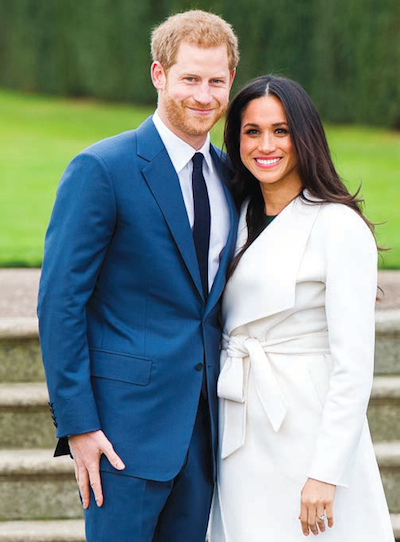
  • Prince Harry and Meghan Markle’s Pre-Valentine’s Day Plans Revealed

    Prince Harry and Meghan Markle’s Pre-Valentine’s Day Plans Revealed

    Valentine’s Day is just around the corner, and Prince Harry and Meghan Markle already have big plans for that week.

    Kensington Palace announced the couple will visit Edinburgh Feb. 13 for their first official joint visit to Scotland. It looks like the two already have a pretty packed itinerary.

    They will begin their day by visiting the Esplanade in front of the famous Edinburgh Castle. There, they will be greeted by the Royal Marines Scotland Band. Harry took over the role as Captain General of the Royal Marines from Prince Philip back in December. Then, the couple will watch the firing of the One O’clock Gun—a tradition that dates back to 1861.

    After witnessing the gun firing, the couple will head to Social Bite, a sandwich shop that donates its profits to social causes, such as homelessness. During their visit, Harry and Meghan will learn about the organization’s work, meet the staff and get a tour of the kitchen.

    At the end of their visit, the two lovebirds will attend a reception at the Palace of Holyroodhouse. There, they will celebrate the achievements of the country’s youth for Scotland’s Year of Young People 2018. The Year of Young People gives people 8 to 26 years old a platform to voice their opinions about social issues and showcase their talents.

    Kensington Palace did not reveal whether Harry and Meghan will stay in Scotland for Valentine’s Day. However, given his romantic proposal, we’re sure Harry has something special for his future bride. After all, Meghan is a big fan of the holiday. Even before her days as a future royal, the former Suits star celebrated the romantic occasion and encouraged others to do the same—even if it meant “being your own Valentine.”

    “I think you need to cook that beautiful dinner even when it’s just you, wear your favorite outfit, buy yourself some flowers, and celebrate the self love that often gets muddled when we focus on what we don’t have,” the actress wrote back in 2016 via her blog The Tig.

    This also won’t be the first time Meghan has traveled for the holiday. Back in 2016, the actress took a trip to New York to celebrate the occasion with her friends.

    “This Valentine’s Day I will be with friends, running amok through the streets of New York, likely imbibing some cocktail that’s oddly pink, and jumping over icy mounds in my new shoes through the salted snowy streets of the West Village,” she wrote via her blog.

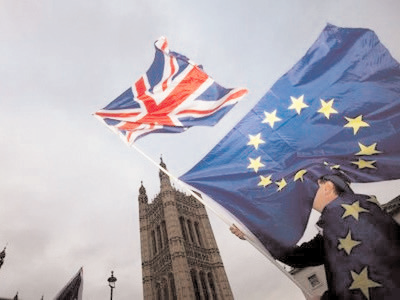
  • EU doubts 2020 Brexit vision, sees longer goodbye

    EU doubts 2020 Brexit vision, sees longer goodbye

    BRUSSELS (TIP): Senior EU figures have told Reuters Britain will not be ready to make a full break from the European Union by the end of 2020 as Brexit transition plans foresee and the bloc is bracing for a much longer goodbye.

    The British government may be thinking on similar lines.

    Several diplomats and Brussels officials familiar with the discussions said a host of unresolved issues, including the Irish border, and British in-fighting over what kind of future trade relationship to ask for left many convinced the transition will end up being longer.

    Two senior EU officials said British negotiators appeared to be sounding out other governments’ attitudes to an extension to the 21- month transition currently on offer, although others said they believed British Prime Minister Theresa May still aims to have a free trade deal negotiated to start in January 2021.

    May has publicly denied looking for extra time. The EU says it is willing to be “flexible”, though France and other EU governments have been clear they oppose Britain staying in the half-way house for years, fearing the arrangement would become permanent and a basis for a messy, long-term compromise.

    As formal talks on the transition got under way in Brussels this week, EU diplomats said any extension would be agreed only after Britain formally leaves in March 2019, so that London would remain under pressure to conclude a trade deal or face its economy going off a “cliff edge” from 2021.

    ‘LEVERAGE’: “Nobody believes in transition until the end of 2020,” one person said. “But we don’t want to propose an extension straight away – that is a leverage we have over London in the talks.”

    They acknowledge May cannot say she might prolong a transition which, by binding London to EU rules and budgets without having a say on them, is deeply unpopular with Brexit supporters: “To ask for an extension now would be to upset the Brexiteers who want out swiftly and at any cost.” Michel Barnier, the EU chief negotiator who will brief the media on Friday on the outcome of this week’s talks, has said he believes Britain can negotiate a free trade deal in under three years. EU and British officials note that while an EU deal with, say, South Korea took seven years, Britain has regulations in line with the EU now, substantially cutting the need for change.

    Concluding a transition deal by March was supposed to be an easy part of Brexit negotiations after months spent last year cajoling London into committing to pay tens of billions of euros in outstanding commitments to Brussels and hammering out a deal to give lifetime rights to 3 million EU citizens in Britain. (Reuters)

  • Donald Trump Jr to visit India later this month

    Donald Trump Jr to visit India later this month

    NEW DELHI (TIP): Donald Trump Jr, Executive Vice President of the Trump Organization, is expected to visit India in late February to officially launch Trump Towers in Gurugram and Kolkata.

    Trump Jr is scheduled to visit four Indian cities to cover the sprawling Trump portfolio. He will also attend Global Business Summit in the national capital.

    Global realty brand Trump Towers is making its debut in North India through real estate firms M3M India and Tribeca Developers, which launched a luxury housing project last month in Gurugram entailing investments of Rs 1,200 crore.

    Commenting on his upcoming visit, Donald Trump Jr said: “India is such an incredible country and our brand has enjoyed tremendous success in the region for many years”.

    “This trip is a celebration of all we have achieved, including the launch of the Trump developments in Kolkata and Delhi which have been underway for many months. The teams in India have been working very hard to deliver residences that are truly second to none and I am looking forward to visiting these spectacular projects very soon,” Trump Jr said.

  • UNION MINISTER GIRIRAJ BOOKED FOR LAND GRAB

    UNION MINISTER GIRIRAJ BOOKED FOR LAND GRAB

    ATNA (TIP): Union Minister Giriraj Singh has been booked for grabbing land belonging to a Dalit in his native Bihar, the police said today.

    The FIR against Singh and 32 others was lodged on February 2 on the orders of a special SC&ST court where the complainant had filed an application under Section 156(3) of the CrPC, seeking directions to the police for registering a case against the accused, SHO of Danapur police station in Patna district Sandeep Kumar Singh said.

    The BJP MP from Nawada is Union Minister of State (independent charge) for Micro, Small and Medium Enterprises. The complainant, Ram Narain Prasad, a resident of Asopur village, alleged that the accused grabbed 2.6 acres that he owned and abused him when he protested.

    Tejaswi Yadav, Leader of the Opposition in the Bihar Assembly, demanding the resignation of Chief Minister

    Nitish Kumar, whose party (JD-U) is a BJP ally, tweeted:

    “Nitish Kumar ji, don’t hesitate, speak up, awaken your inner voice and rush to the Governor’s house with your letter of resignation. Your dearest friend Giriraj Singh has grabbed three acres of land belonging to Dalits.” In another tweet, he took potshots at Bihar Deputy Chief Minister Sushil Kumar Modi.BJP spokesman Rajiv Ranjan said Giriraj Singh was a law-abiding citizen. “Attempts by some people to politicise the issue is deplorable.”

    Source: PTI

  • 1984 riots: Delhi Sikh body releases Jagdish Tytler’s ‘confessional’ video

    1984 riots: Delhi Sikh body releases Jagdish Tytler’s ‘confessional’ video

    NEW DELHI (TIP): The Delhi Sikh Gurdwara Management Committee (DSGMC) on Feb 5 released a video of a purported sting operation of former Congress MP Jagdish Tytler wherein he has allgedly admitted to killing 100 Sikhs during the 1984 anti-Sikh riots.

    While releasing a series of five video clips before the media in New Delhi, DSGMC president and Shiromani Akali Dal (SAD) national spokesperson Manjit Singh GK claimed that an unknown man on February 3 handed over an envelope to his security guards. The envelope had GK’s name written over it with the instruction “to be opened only by GK.” It contained a pen drive having the five video clips allegedly recorded in 2011 and some documents of transcripts thereof, he added.

    GK alleged that in clip 3, Tytler has admitted that he has killed 100 Sikhs and nothing happened to him except a sham inquiry.

    “This is Tytler’s confession to the crime he has committed during the 1984 anti-Sikh riots. He should be arrested,” he said.

    He added, “Tytler has audaciously confessed to his crimes like a proclaimed offender. In clip 1, Tytler has expressed remorse for not being able to recover Rs 150-crore cash from his friends. In clip 2, he has stated that his son is in a company which has accounts in Swiss bank and he also boasts about going to Rajya Sabha or being offered the chief ministership of Delhi.”

    GK further alleged, “Clip 3 is shocking wherein Tytler said he had lost faith in then PM Manmohan Singh. Clip 4 contains videos where Tytler boasts about being close to judiciary and how he got justice Pathak and his wife appointed to the court.”

    He warned that in case the investigation agencies fail to arrest Tytler within 24 hours, the DSGMC will launch protests against the police and other government agencies, besides raising the issue in Parliament.

    SUKHBIR SEEKS CASE AGAINST GANDHI FAMILY

    Meanwhile, SAD president Sukhbir Singh Badal demanded a case be registered against the Gandhi family for “engineering the massacre” of thousands of Sikhs in Delhi and in other parts of the country in the wake of the “evidence” on Tytler.

    Sukhbir alleged that the fact that Tytler was seen bragging that he was behind the murder of 100 Sikhs in Delhi in 1984 and boasting that he had been promised a Rajya Sabha seat or chief ministership of Delhi by the Congress high command proved the Gandhi family’s “direct involvement in the 1984 genocide”. He added, “Now it is incumbent that the courts of law to ask the Gandhi family to explain why it was offering such inducements to a criminal who had the blood of innocent Sikhs on his hands?”

    Tytler files police complaint against GK

    NEW DELHI (TIP): Senior Congress leader Jagdish Tytler has filed a complaint with the Delhi Police against Delhi Sikh Gurdwara Management Committee (DSGMC) president Manjit Singh GK and unknown persons, saying that they had released a doctored video which allegedly showed him admitting to killing hundreds of Sikhs in 1984.

    He asked the Delhi Police to register an FIR against Manjit Singh and remove the objectionable video from websites and social media.

    The complaint said: “Manjit Singh recently played several doctored video clips at a press conference claiming them to be of some sting operation. He falsely stated that I had confessed to having killed hundreds of Sikhs in the riots. The statement attributing the killing of Sikhs to me is false and outlandish and the video clips are doctored.”

    “GK could not convincingly state as to how he got the alleged video clips and/or who conducted the sting operation. His explanation was that an unidentified youth had left a sealed packet with a security guard at his residence is ridiculous,” the complaint reads.

  • Indian Civilian Padma awards for 16 foreigners

    Indian Civilian Padma awards for 16 foreigners

    Government of India keeps its promise to honor “Unsung heroes”.

    NEW YORK (TIP): Sixteen persons under the category of foreigners, NRI, PIO and OCI were among 85 individuals announced the winners of the Padma awards.

    Prominent among them were Alexander Mikhailovich Kadakin, former Russian ambassador to India, Sanduk Ruit, an eye surgeon from Nepal, and Nguyen Tien Thien, a badminton player from Vietnam. Kadakin, who was the Russian Ambassador to India from 2009 until his death in 2017, was given Padma Bhushan. Ved Prakash Nanda OCI (overseas citizenship of India), US, has also been awarded the Padma Bhushan. The Padma Shri recipients include Jose Ma Joey, the Philippines, Ramli Bin Ibrahim, Malaysia, Bounlap Keokangna, Laos, Tommy Koh, Singapore, Hun Many Cambodia, Nouf Marwaai, Saudi Arabia.

    Keeping its promise of honoring “unsung heroes”, the government of India announced Padma Shri awards for personalities who served the poor, set up free schools and popularised tribal arts globally.

    Lakshmikutty, a tribal woman from Kerala, who prepares 500 herbal medicines from memory and help thousands of people especially in snake and insect bite cases, is among the awardees.

    Arvind Gupta, an IIT Kanpur alumnus who inspired generations of students to learn science from thrash, has also been honoured. He has made 6,200 short films on toy-making in 18 languages and also hosted popular TV show Tarang in 1980s.

    Gond artist Bhajju Shyam has also been awarded the Padma Shri. Shyam is famous for depicting Europe through Gond paintings, a tribal style of painting of Madhya Pradesh. His ‘The London Jungle Book’ sold 30,000 copies and it was published in five foreign languages.

    West Bengal’s Sudhanshu Biswas, a  freedom fighter who serves poor, runs school and orphanages and set up free school for poor, is also among the winners. Kerala’s medical messiah to terminally ill, MR Rajagopal, has also been honoured with Padma Shri. Rajagopal has specialized in pain relief care for neo natal cases. Maharashtra’s Murlikant Petkar, India’s first Paralympics gold medalist who lost his arm in 1965 Indo-Pak war, is another winner of Padma Shri.

    Subhasini Mistry, from rural West Bengal who toiled 20 years as housemaid and daily labourer to build a hospital for poor, is another awardee. Nonagenarian farm labourer Sulagatti Narasamma, who provides midwifery services in the backward region of Karnataka, too was awarded Padma Shri. Another awardee is Yeshi Dhoden, monk physician of Tibetan herbal medicine working in remote areas of Himachal.

    (Source: PTI)


  • Bangladesh ex-PM Zia gets 5-year RI in graft case

    Bangladesh ex-PM Zia gets 5-year RI in graft case

    Son, tried in absentia, and 4 others jailed for 10 years

    DHAKA (TIP): Bangladesh’s former Prime Minister Khaleda Zia was, on February8, sentenced to five years’ rigorous imprisonment for corruption, a body blow for the main Opposition leader who may be disqualified from contesting the next election in December, as thousands of her supporters staged protests against her jailing.

    The 72-year-old three-time PM was sentenced by Dhaka’s Special Court in connection with the embezzlement of 21 million taka ($250,000) in foreign donations meant for the Zia Orphanage Trust, named after her late husband Ziaur Rahman, a military ruler-turned-politician.

    The verdict simultaneously sentenced Zia’s “fugitive” elder son and Bangladesh Nationalist Party (BNP) senior vice-president Tarique Rahman as he was tried in absentia. Rahman and four others have been sentenced to 10 years in prison.

    The case is one of dozens pending against Zia, who has been a rival of Prime Minister Sheikh Hasina for decades. The charges against her had already led to her boycotting polls in 2014, which triggered widespread protests.

    Zia, wearing a white sari, appeared in the heavily guarded courtroom amid heightened political tension. While sentencing Zia, the judge read out the abridged version of the 632-page verdict in 10 minutes.

    He said though all convicts played an identical role in the crime, Zia was given a lesser term taking into account her “age and social status”. The court also said that the defense tried their best to hinder the trial proceedings as they sought time on 35 occasions in the name of changing the court.

    The other convicts are former lawmaker Kazi Salimul Haque Kamal, businessman Sharfuddin Ahmed, ex-PM’s  principal secretary Kamal Uddin Siddiqui and her nephew Mominur Rahman.

    Zia became the second head of government after former dictator-turned-politician HM Ershad to be convicted in a graft case.

    “I will be back, there is no need to cry,” Khaleda Zia today told her weeping relatives and supporters, minutes before the three-time former Bangladeshi premier was sentenced to five years in jail related to a graft case.

    According to experts, Zia will have to stay in jail for at least three days until Sunday. It will depend on the High Court whether it will give Zia bail or not. The conviction means that Zia, could be barred from contesting the General Elections in December this year.

    The law says if someone is convicted for at least two years, he or she cannot contest the election for the next five years, The Daily Star said. n Zia’s case, if the high court gives her bail and yet upholds the sentencing, then she will be disqualified from the poll, it said. — PTI

    BNP stares at split

    Political analysts believe Bangladesh Nationalist Party may split as several senior leaders could disassociate them from Zia. Their grouse is Zia’s elder son Tarique Rahman, BNP senior vice-president, who is learnt to be wielding authority from London, ignoring the party veterans. Rahman has sought asylum in the UK as he is also facing several criminal charges.

    (With inputs from PTI)


  • Indian American lawyer is the primary author of Republican memo

    Indian American lawyer is the primary author of Republican memo

    WASHINGTON (TIP): A controversial Republican memo that accuses the FBI of political bias has primarily been written by Indian American lawyer Kashyap “Kash” Patel is ruling the news as according to a media report.

    The “Kash memo” portrays the FBI in a negative light, alleging that the agency helped the Democratic party and its presidential candidate Hillary Clinton against Donald Trump, the eventual winner of the 2016 presidential elections, The New York Times reported.

    The report said the explosive memo was primarily written by Patel, a committee staff member for Representative Devin Nunes, Republican of California and the chairman of the Intelligence Committee.

    The office of Congressman Nunes where Patel works has refuted the report that he is the author of the memo which they assert is a collective and team effort.

    “The problem is the lack of facts. Kash being the ‘driving force’ behind the memo is not a fact. Kash being the ‘pusher of the memo’ is not a fact. Unnamed people referring to ‘the Kash memo’ is not a fact,” Jack Langer, a spokesperson for Nunes was quoted as saying by the Daily Beast.

    Patel did not immediately respond to a PTI query on this.

    In an email to The New York Times, Damon Nelson, staff director of the House Select Committee on Intelligence said that no single member was responsible for the memo and that its creation was a “team effort” that involved investigators who had access to source material.

    “The clamor to identify ‘an author’ is indicative of an alarming trend by opponents of our investigation which is to promote spurious allegations against committee members and staff. They will not impact the committee’s focus and commitment to continue this investigation,” Nelson was quoted as saying.

    At the same time, he praised Patel, saying, “We value Kash’s dedication and his contributions to the committee’s oversight efforts”.

    Patel did not immediately respond to a PTI query on this.

    According to media reports, Patel attracted media attention early this summer when he travelled to London along with another staffer in search of Christopher Steele, author of a controversial dossier on Trump.

    However, he could not succeed in his effort.

    Patel, 37, who grew up in New York, graduated from the University of Richmond in 2002. He is the chairman of the House Select Committee on Intelligence. He is senior counsel on counter terrorism.

    Before joining the House Select Committee on Intelligence, Patel was a trial attorney in the National Security Division of the Justice Department.